
LEAD ANALYST
Utkarsh Khirodkar is a Lead Market Research Analyst at MetaStat Insight, specializing in market intelligence, technology sector assessments, and competitive strategy.

Prosthetic Heart Valve Market Size, Share, By Type (Biological/Tissue Heart Valves, Mechanical Heart Valves, and Transcatheter Heart Valves), By Application (Hospitals, and Ambulatory Surgery Centres), Industry Analysis, Growth, Trends, and Forecast, 2026-2033
Report ID
MSI-2308
Published
February, 2026
Pages
320 Pages
Format
Report Details
Choose Your License
Prosthetic Heart Valve Market
The prosthetic heart valve is an artificial heart valve. It is a one-way valve implanted into a person's heart to replace a valve which is not functioning properly. Prosthetic heart valves are divided into three broad classes including mechanical heart valves, bioprosthetic tissue valves and transcatheter heart valves.
Rising prevalence of heart valve disease is driving the market demand. For instance, more than five million Americans are diagnosed with heart valve disease each year. In the United States, there were 3,046 deaths due to rheumatic valvular heart disease and 24,811 deaths due to non-rheumatic valvular heart disease in 2017. Around 25,000 die due to heart valve disease each year in the United States. Further, regulatory approvals of the advanced prosthetic heart valve is a key driving factor of the market. For instance, Medtronic plc has received CE mark and U.S. Food and Drug Administration (FDA) approval of its new Avalus pericardial aortic surgical valve for the treatment of aortic valve disease. The Avalus valve is proven surgical bioprosthetic valve concepts with added features to enhance clinical performance, helping the contemporary needs of cardiac surgeons, as well as patients for aortic valve replacement. The Avalus valve is designed for implantability, an important factor during complex cases. However, the high cost of transcatheter heart valve device and transcatheter aortic valve replacement (TAVR) procedures might hamper the market growth. For instance, the cost of transcatheter aortic valve replacement (TAVR) device is approximately US$ 32,500 as, and the average cost of TAVR surgical procedure is roughly $60,000. Moreover, increasing investments by companies for prosthetic heart valve would provide lucrative opportunities for the market in the coming years.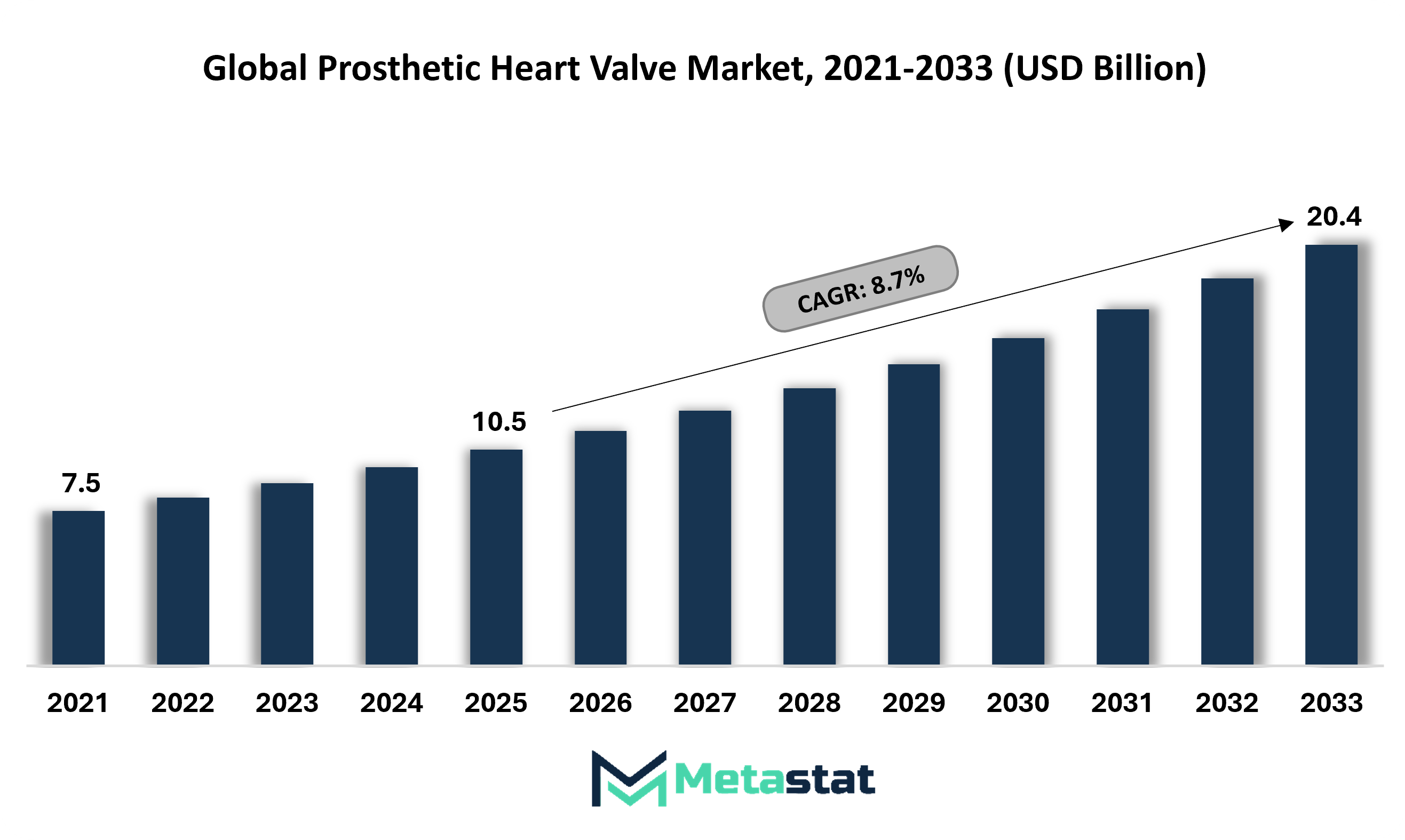
The global prosthetic heart valve market is mainly classified based on type and application. Type is further segmented into Biological/Tissue Heart Valves, Mechanical Heart Valves, and Transcatheter Heart Valves. By application, the market is divided into Hospitals and Ambulatory Surgery Centres.
Transcatheter Heart Valves was dominating the global prosthetic heart valve market in 2019, owing to the technological development in transcatheter heart valves, the collaboration between companies to develop and market transcatheter heart valves, and commercialization of regulatory approved transcatheter heart valves. For instance, Meril has received the CE approval for its indigenously researched and manufactured TAVR technology, Myval-THV system. The approval catapults Meril Life Sciences to the select list of Global Medtech organizations that market and distribute TAVR in European Union and other international geographies. The Myval is a balloon-expandable tri-leaflet, bovine pericardium THV.
Based on geography, the global prosthetic heart valve market is divided into North America, Europe, Asia-Pacific, South America, and Middle East & Africa. North America is further divided in the U.S., Canada, and Mexico, whereas Europe consists of the UK, Germany, France, Italy, and Rest of Europe. Asia-Pacific is segmented into India, China, Japan, South Korea, and Rest of Asia-Pacific. The South America region includes Brazil, Argentina, and the Rest of South America, while the Middle East & Africa is categorized into GCC Countries, Egypt, South Africa, and Rest of Middle East & Africa.
North America was dominating the global prosthetic heart valve market in 2019, due to the regulatory approval of prosthetic heart valve, commercialization of technologically advanced prosthetic heart valve, rising investment by the companies and government bodies to develop prosthetic heart valve, and collaboration between companies to develop and market prosthetic heart valve. For instance, Royal DSM, a global science-based company in Nutrition, Health and Sustainable Living, collaborated with Strait Access Technologies (SAT), a medical device company focused on innovations for the heart, has developed the world’s first durable and cost-effective transcatheter replacement heart valves with polymeric leaflets.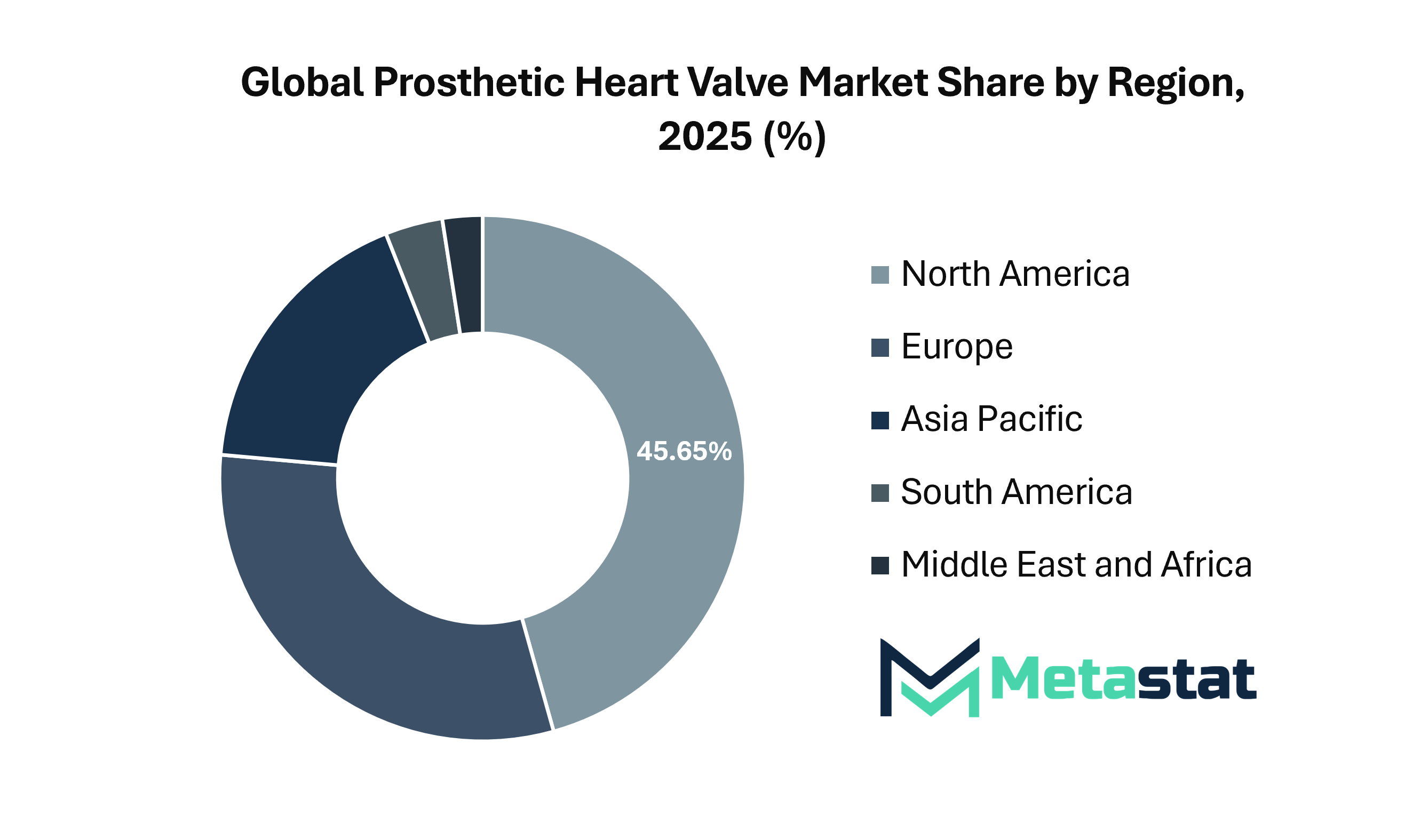
Major players operating in the prosthetic heart valve industry include Abbott, Medtronic Plc, Edwards Lifesciences Corporation, Boston Scientific Corporation, Neovasc Inc., LivaNova Plc, Symetis SA, Cryolife, Inc., Lepu Medical Technology Co., Ltd., and Meril Life Sciences.
The commercialization of technological advanced prosthetic heart valve, the partnership between companies to develop and distribute prosthetic heart valve, rising investment for the research, develop, and market prosthetic heart valve, and regulatory approval of prosthetic heart valve are some of the strategies adopted by the major companies. For instance, on January 30, 2020, Abbott has received CE mark approval for its Tendyne Transcatheter Mitral Valve Implantation (TMVI) system and is approved for use in Europe. It is a life-changing therapy treats significant mitral regurgitation (MR) in patients requiring a heart valve replacement and provides a safe solution for MR patients.
|
Report Attributes |
Details |
|
Study Period |
2021-2033 |
|
Base Year |
2025 |
|
Estimated Year |
2026 |
|
Forecast Period |
2026-2033 |
|
Historical Period |
2021-2025 |
|
Growth Rate |
CAGR 8.7% from 2026 to 2033 |
|
Revenue Unit |
USD billion |
|
Sales Volume Unit |
Thousand Units, Kilotons, Units |
|
Segmentation |
By Type, Application, , , and Region |
|
By Region |
North America (By Type, Application, and Country)
|
|
|
Europe (By Type, Application, and Country)
|
|
|
Asia Pacific (By Type, Application, and Country)
|
|
|
South America (By Type, Application, and Country)
|
|
|
Middle East and Africa (By Type, Application, and Country)
|
What Report Provides
Find answers to common questions about this report
The Metastat Insights study reveals that the Prosthetic Heart Valve market size was valued at USD 10.5 billion in 2025.
According to Metastat Insights analysis, the North America Prosthetic Heart Valve market size is estimated to reach USD 8.6 billion by 2033
The Prosthetic Heart Valve market is projected to grow at a CAGR of 8.7% during the forecast period from 2026 to 2033.
The analysts below cover Medical Devices research at Metastat Insights.
LEAD ANALYST
Utkarsh Khirodkar is a Lead Market Research Analyst at MetaStat Insight, specializing in market intelligence, technology sector assessments, and competitive strategy.

LEAD PRINCIPAL ANALYST, PHARMA AND HEALTHCARE
Food and Beverages · Healthcare · Healthcare IT · Medical Devices
Ajay Devgire is the Lead Healthcare Analyst at MetaStat Insight, leading strategic research and market intelligence initiatives across the global healthcare domain.

SENIOR RESEARCH ANALYST
Biotechnology · Food and Beverages · Medical Devices · Packaging
Snehal Pasalkar is a Research Analyst at MetaStat Insight, operating at the intersection of life sciences research, competitive strategy, and market intelligence.
Transitioning ultra-class mining haul trucks to alternative power requires concrete data on remote hydrogen refueling infrastructure economics. The report evaluated megawatt-scale electrolyzer installation expenses, onsite storage safety mandates, and heavy-duty fuel cell stack degradation under continuous duty cycles. That technical rigor helped our engineers benchmark realistic total operating cost horizons for off-highway fleet decarbonization.
Enterprise zero-trust network rollouts are often slowed down by multi-cloud transit latency and proprietary hardware retirement schedules. This study provided realistic total cost of ownership models comparing cloud-delivered security edge solutions against traditional hardware refreshes. The analysis of contract renewal lengths and software maintenance fees gave us clear visibility into enterprise replacement cycles over the next three to five years.
Scaling antibody-drug conjugate manufacturing hinges on contract manufacturing availability for high-potency active ingredients. The MetaStat Insight analysis looked closely at global cleanroom slot constraints, bioconjugation batch failure rates, and supply chain redundancies between the US, Europe, and India. The supplier capability matrix proved genuinely useful for our team when mapping secondary source options across our clinical pipeline.
Explore related market intelligence reports worth reading alongside this one.
Starting from
$2950