
LEAD ANALYST
Utkarsh Khirodkar is a Lead Market Research Analyst at MetaStat Insight, specializing in market intelligence, technology sector assessments, and competitive strategy.

Global RTD Cocktails Market Size, Share, By Type (Spirit-Based RTD Cocktails, Malt-Based RTD Cocktails, Wine-Based RTD Cocktails), By Packaging Format (Cans, Glass Bottles, PET and Plastic Containers, Pouches), By Flavor (Citrus, Berry, Tropical Fruit, Stone Fruit, Apple and Pear), By Distribution Channel (Supermarkets and Hypermarkets, Liquor and Specialty Alcohol Stores, Convenience Stores, Online Alcohol Retail and Direct-to-Consumer, Bars and Restaurants, Hotels and Resorts), Industry Analysis, Growth, Trends, and Forecast, 2026-2033
Report ID
MSI-3806
Published
October, 2026
Pages
267 Pages
Format
Historical
Base year
Forecast
Forecast period
Report Details
Market Valuation: Valued at $3,791.7 Million in 2025, projected to reach $10,895.6 Million by 2033 at a 14.1% CAGR.
Dominant Segment: Spirit-based RTD cocktails lead the market, driven by a growing consumer preference for premium quality and innovative flavor experiences. This segment is projected to grow from USD 2,566.4 million in 2026 to USD 6,737.9 million by 2033, reflecting a CAGR of 14.8%.
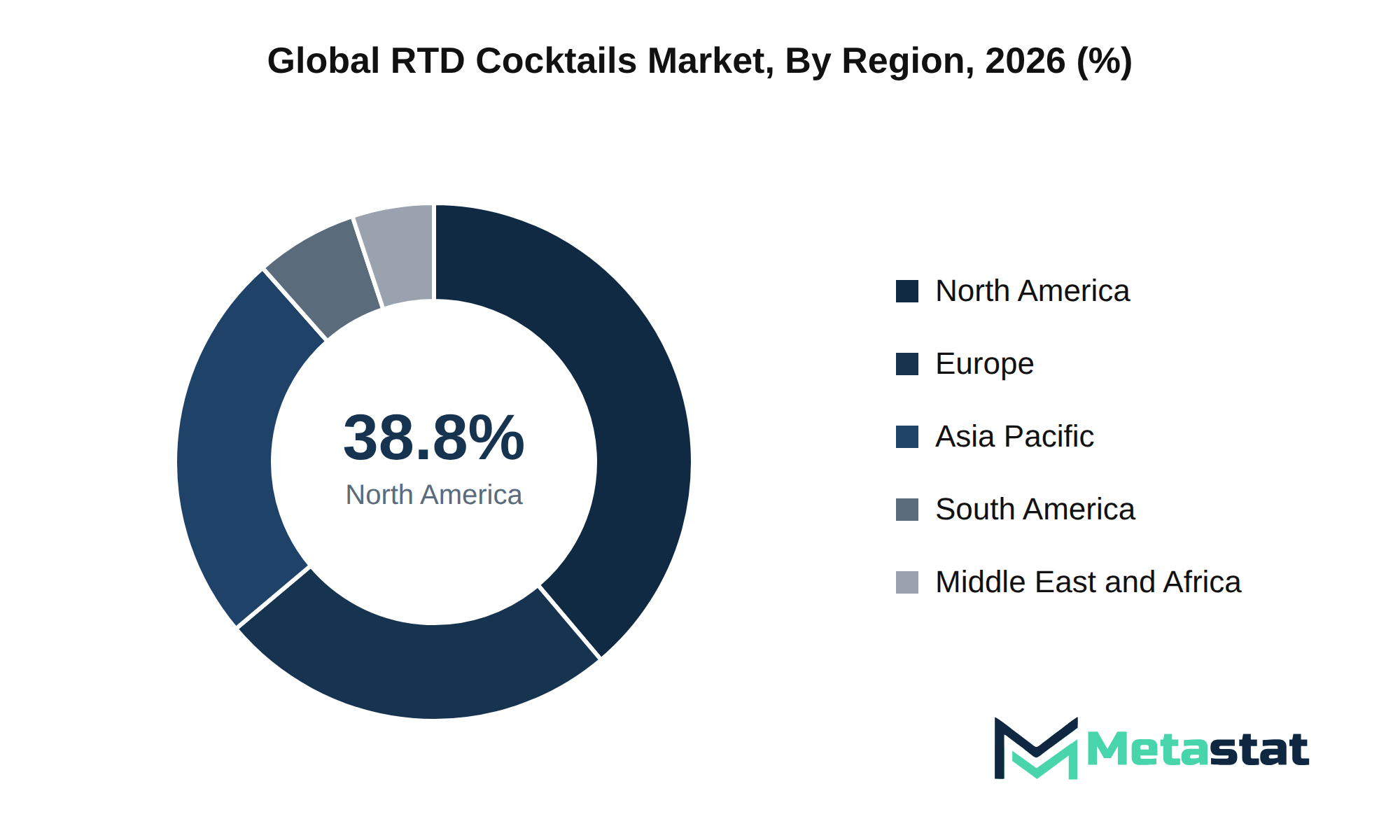
Geographic Lead: North America is the leading region, holding 38.8% of the market in 2025, with the US anticipated to dominate in 2026. The region's strong cocktail culture and trend towards premiumization significantly contribute to its market position.
What's Inside: The report includes comprehensive analyses of market dynamics, competitive landscape, and segmentation by type, packaging format, flavor, and distribution channel. It also provides growth forecasts through 2033, offering valuable insights for stakeholders.
Emerging Trends: The rise of canned formats is reshaping consumer preferences, with demand for convenience and portability driving growth. The canned RTD cocktails market is expected to expand from USD 2,755.8 million in 2026 to USD 7,291.4 million by 2033, at a CAGR of 14.9%.
Choose Your License
Global RTD Cocktails Market
The global RTD Cocktails market was valued at USD 3,791.7 million in 2025 and is projected to reach USD 10,895.6 million by 2033, growing at a CAGR of 14.1% over the forecast period.
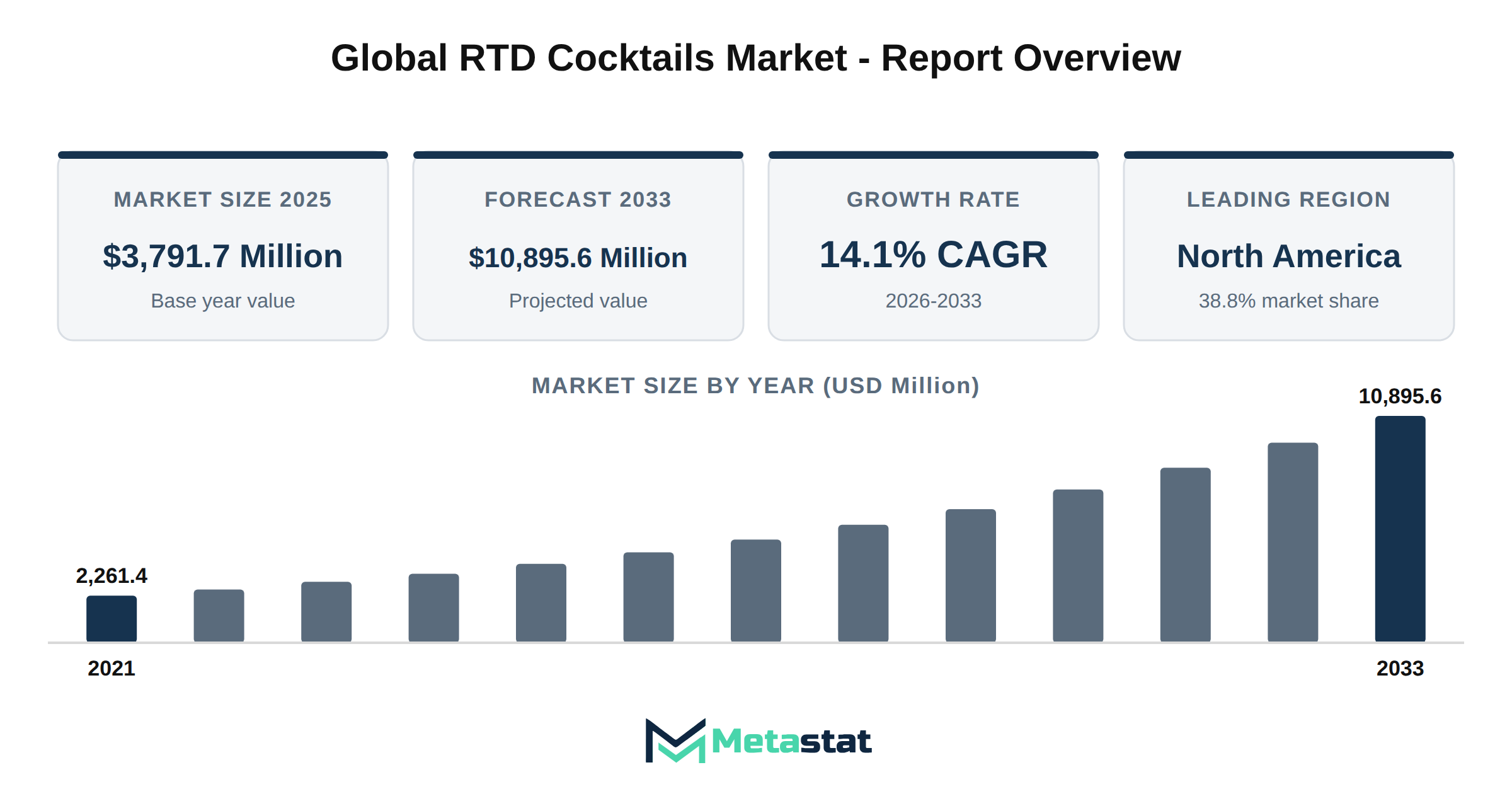
The RTD Cocktails market encompasses a diverse range of ready-to-drink alcoholic beverages that cater to various consumer preferences. Buyers increasingly invest in these products due to their convenience, variety, and innovative flavors. The appeal extends across multiple demographics, particularly among younger consumers seeking portable, enjoyable options for social occasions and casual consumption.
Growth in the market is primarily driven by the rising popularity of spirit-based cocktails, which offer complex flavors and premium experiences. North America holds 38.8% of the market in 2025, with the US leading in 2026. The region's robust demand stems from a strong culture of cocktail consumption, further supported by a growing trend of premiumization in alcoholic beverages. This shift mirrors wider consumer migration seen across the global beer sector toward premium and flavored alternative formulations.
Competition within the market intensifies as brands innovate to capture consumer interest through unique flavor combinations and eco-friendly packaging solutions. The increasing preference for canned cocktails supports the market expansion, with significant growth anticipated in the coming years. This shift reflects broader consumer trends favoring convenience and sustainability in beverage choices.
The RTD Cocktails market includes various alcoholic beverages designed for immediate consumption, emphasizing convenience and flavor appeal. A growing number of consumers are opting for ready-to-drink options due to their ease of use and the diverse range of flavors available. This shift in consumer preference drives increased spending, particularly among younger demographics seeking unique and innovative drinking experiences.
Growth in the market is primarily driven by the rising popularity of spirit-based cocktails, which account for the largest segment. The convenience of purchasing these beverages through supermarkets and hypermarkets further supports market expansion, as consumers appreciate the accessibility of their favorite products.
In addition, the trend towards online alcohol retailing continues to gain traction, reflecting changing shopping habits and the expansion of cross-border eCommerce channels that simplify home delivery. Consumers increasingly value the option to purchase drinks from the comfort of their homes. This preference aligns with the overall trend of convenience-driven consumption, positioning the market for significant growth in the coming years.
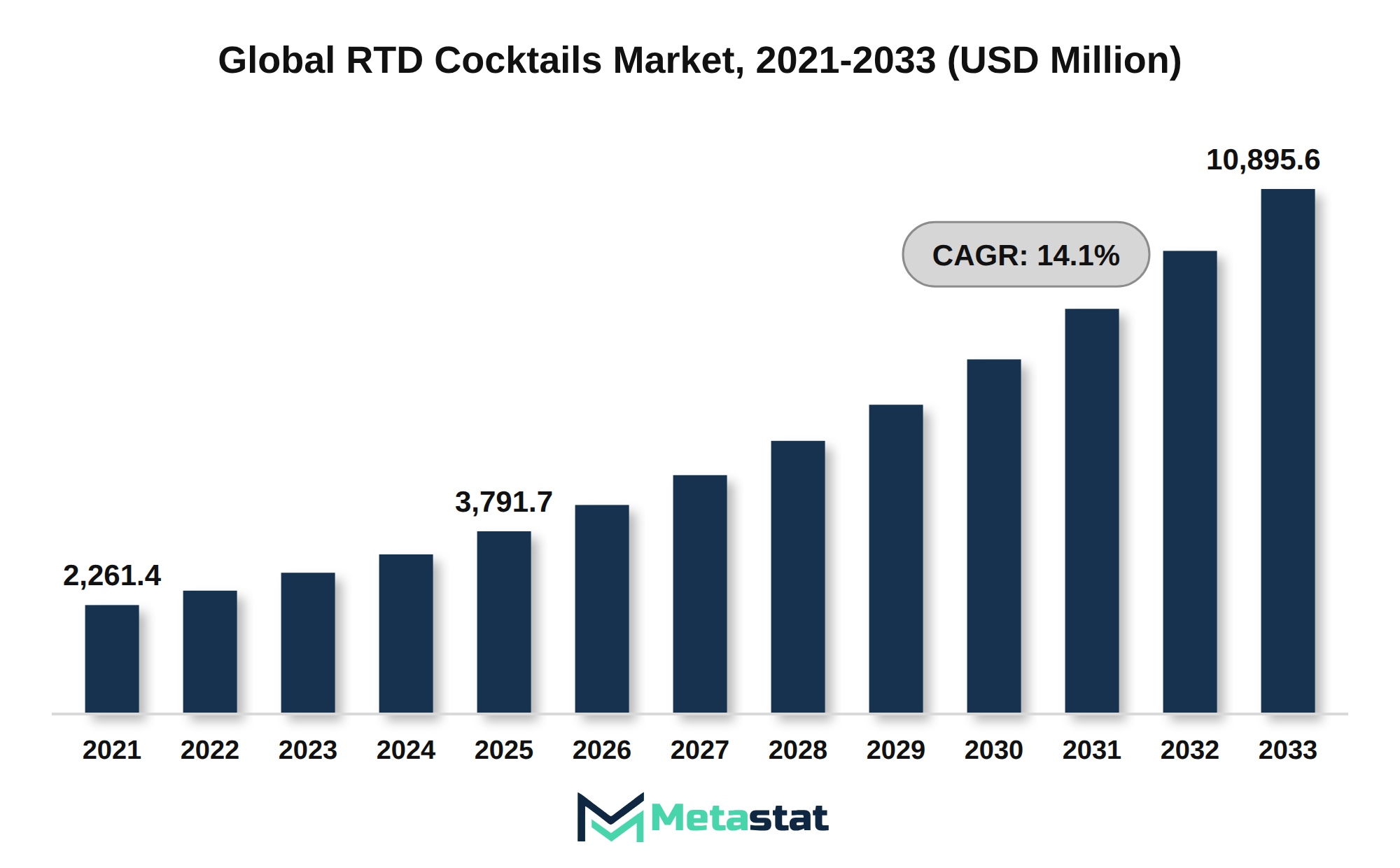
Premiumization in spirit-based RTD cocktails drives a shift in consumer preferences towards higher quality and unique flavor experiences. This shift reflects an increasing willingness to pay for premium products among younger demographics looking for innovative beverage options. In the forecast period, the segment of spirit-based RTD cocktails, expected to grow from USD 2,566.4 million in 2026 to USD 6,737.9 million by 2033, demonstrates a compound annual growth rate (CAGR) of 14.8%. This growth aligns with the rising trend of cocktail culture, where consumers increasingly seek out sophisticated and flavorful alternatives to traditional mixed drinks. Similar premiumization trends also influence buyer preferences across the traditional wine sector as consumers look for refined drinking occasions.
Flavor innovation is essential in attracting consumers to the spirit-based segment. Incorporating diverse and exotic flavor profiles, brands enhance product appeal and differentiate offerings in a competitive landscape. Unique flavor combinations not only cater to evolving consumer tastes but encourage trial and repeat purchases. The RTD cocktails market benefits from a larger consumer base willing to explore and invest in premium products. This trend enhances the position of spirit-based RTD cocktails within the broader market, promising substantial opportunities for brands that prioritize quality and flavor advancement. A comparable emphasis on artisanal recipe development and distinctive ingredients continues to propel growth in craft beer segments.
Canned formats drive a significant shift in purchasing behavior within the RTD Cocktails market. Consumers increasingly prefer the convenience and portability offered by these packaging options, resulting in a higher demand for canned cocktails. The market for canned RTD cocktails is projected to expand from USD 2,755.8 million in 2026 to USD 7,291.4 million by 2033, reflecting a compound annual growth rate (CAGR) of 14.9%. This growth is driven by lifestyle changes among consumers, particularly younger demographics who prioritize on-the-go consumption. In addition to cans, interest in flexible single-serve packaging has spurred investment in automated stand-up pouch packaging machines for portable beverage applications.
Pricing strategies play a crucial role in how buyers approach their purchases. The market features a range of price points that cater to various consumer segments, from affordable options to premium offerings. Promotions and discounts frequently attract price-sensitive buyers, while brand loyalty programs encourage repeat purchases among regular consumers. This pricing dynamic allows brands to establish a competitive edge, influencing market share and overall profitability.
Retailers increasingly adopt flexible contract models, facilitating easier access to these products for consumers. More retailers stock canned RTD cocktails as well as canned spritzer alternatives, enhancing visibility and availability. The emphasis on convenience packaging means that the market continues to align with evolving consumer preferences, emphasizing quick, hassle-free purchasing experiences.
Growth in online alcohol retail significantly influences the adoption of direct-to-consumer RTD cocktails. Shifting consumer preferences toward convenience and accessibility drive this trend. Increased internet penetration and the popularity of e-commerce platforms enable consumers to purchase a variety of ready-to-drink options from the comfort of their homes.
The online channel allows for a broad selection of RTD cocktails, catering to diverse consumer tastes. Data indicates that the online alcohol retail and direct-to-consumer segment is projected to grow at a compound annual growth rate of 19.2% through 2033. This rapid growth enhances competition among suppliers and encourages them to innovate continuously to meet consumer expectations.
Retailers targeting this segment often focus on delivering unique flavors and premium offerings, which attract discerning consumers. The ability to access a wider audience through online channels enables brands to expand their reach, ultimately driving growth in the market. Consequently, suppliers investing in e-commerce capabilities position themselves favorably to capitalize on the shifting landscape of consumer purchasing behavior, increasing demand for RTD cocktails.
Increased consumer preference for convenience significantly influences demand for ready-to-drink (RTD) cocktails. Busy lifestyles, particularly among millennials and younger demographics, drive the shift toward easy-to-consume beverages that require no preparation. This trend reflects a broader cultural change favoring convenience in food and beverage consumption. This segment's expansion highlights the rising popularity of mixed drinks available in ready-to-drink formats. In hospitality venues, this ongoing demand for cocktail consistency has similarly accelerated adoption of automated commercial drink mixers to streamline on-premise service.
Changing social dynamics support this demand. Consumers increasingly seek premium and innovative flavors, which RTD cocktails fulfill effectively. For instance, citrus-flavored RTD cocktails are expected to achieve a value of USD 3,251.3 million by 2033, driven by consumer interest in refreshing and flavorful options. Retailers, recognizing these shifting preferences, invest in expanding their RTD cocktail offerings to cater to growing market demand. This strategy enhances product variety and attracts a wider customer base, ultimately reinforcing market growth. Similar flavor-led purchasing patterns also drive demand in commercial fruit beverages where consumers prioritize authentic botanical and fruit blends.
Growing consumer preference for premium quality beverages drives significant growth within the RTD Cocktails market. The shift in focus towards high-quality ingredients and unique flavor profiles enhances brand loyalty and encourages consumers to spend more on these products. Younger demographics, particularly Millennials and Generation Z, increasingly seek out innovative and upscale options that align with their lifestyle choices. This trend results in higher sales volumes and higher price points while brands and modern distillery and liquor bottling facilities respond to these demands by offering a broader range of premium spirit blends. The market is projected to experience substantial growth, with the spirit-based segment anticipated to expand at a compound annual growth rate (CAGR) of 14.8% through 2033. Brands prioritizing quality and creativity in their offerings significantly influence consumer purchasing behavior, driving overall market expansion.
Regulatory compliance challenges significantly limit adoption among buyers in the RTD Cocktails market. Various regions enforce strict regulations concerning alcohol content, labeling, and health warnings, often resulting in slower product approvals. Smaller producers, in particular, face heightened scrutiny, which translates to increased operational costs. These constraints compel several companies to delay product launches or opt for fewer variations, ultimately resulting in reduced market participation.
Consumers exhibit cautious behavior towards new products due to compliance-related uncertainties. Buyers require assurances regarding product safety and legality before making purchases, which further contributes to slower uptake. The cumulative effect of these factors leads to a constrained growth trajectory for the market, affecting revenue potential and market entry strategies for new entrants and established players alike.
Rising production costs, influenced by fluctuating raw material prices, challenge profitability across the RTD Cocktails market. Suppliers respond by optimizing production processes and sourcing materials from cost-effective suppliers, ensuring competitive pricing strategies. For example, many suppliers invest in technology to streamline operations, enhancing efficiency while managing costs. This approach enables maintaining product quality while addressing cost concerns
Suppliers explore innovative packaging methods to reduce expenditure related to materials and logistics. Adopting alternative packaging formats, including pouches, assists in minimizing costs while appealing to evolving consumer preferences for convenience. The competitive environment necessitates continuous adaptation, driving suppliers to enhance their offerings and remain relevant. Effective cost management strategies are critical to maintaining profitability and ensuring sustained growth within the market. Suppliers focus on balancing quality with cost-effectiveness to meet consumer demands while navigating challenges specific to the RTD Cocktails market.
This segment's expansion aligns with an observable trend favoring premium and craft offerings among consumers. A shift toward higher quality ingredients and diverse flavor profiles attracts buyers seeking unique and sophisticated drinking experiences. The increasing interest in premiumization reflects broader consumer demand for distinct and flavorful products, positioning spirit-based cocktails as a favored choice. This upward trajectory in the segment is driven by evolving consumer preferences, highlighting the importance of innovation in flavors and presentation to capture market share. Sustained growth in spirit-based RTD Cocktails contributes to overall market expansion, offering suppliers the chance to enhance brand loyalty and profitability through strategic product development and marketing initiatives.
The Global RTD Cocktails market is segmented based on Type, Packaging Format, Flavor, and Distribution Channel.
These beverages cater to consumers who prefer convenient options without sacrificing quality, appealing to individuals seeking flavorful, ready-to-drink experiences. The segment's growth is driven by increasing consumer interest in premiumization and innovative flavor combinations, enhancing brand loyalty. Compared to malt-based and wine-based alternatives, spirit-based cocktails exhibit a faster growth rate, reflecting an increasing willingness among consumers to invest in higher-quality products. This shift toward premium offerings positions the segment as a key driver of overall revenue expansion in the market, highlighting its importance in meeting evolving consumer demands.
Malt-Based RTD Cocktails segment is estimated to reach USD 2,828.5 million by 2033, at a CAGR of 12.9% during the forecast period. This segment appeals to consumers seeking flavorful alternatives to traditional cocktails, often favored for their unique taste profiles. Growing enthusiasm for malt-based beverages among younger demographics drives demand, particularly in social settings and casual gatherings. The segment stands out due to its competitive pricing compared to spirit-based varieties, enhancing its appeal among budget-conscious buyers. In contrast to the higher growth rate projected for spirit-based options, malt-based cocktails exhibit steady growth, positioning them as a reliable choice for consumers. With increasing production innovations and flavor diversification, suppliers are well positioned to capitalize on the growing trend toward unique and accessible cocktail experiences, further strengthening the overall market.
Wine-Based RTD Cocktails segment is expected to reach USD 1,329.3 million by 2033. This segment appeals to consumers seeking a unique blend of wine flavors in ready-to-drink formats, often enjoyed at social gatherings or casual settings. The rise in popularity is driven by increasing consumer interest in diverse beverage options, with wine-based cocktails offering distinct taste experiences. Compared to other types, growth in this segment is projected at a CAGR of 12.9%, slower than the 14.8% rate seen in spirit-based options. This difference highlights a preference for spirit-based products among younger demographics, impacting the pricing strategies and market positioning of wine-based offerings. Distinct flavor profiles and innovation in product development continue to influence consumer choices in the RTD Cocktails market.
This packaging format is favored for its convenience, portability, and ease of consumption, particularly appealing to on-the-go consumers and social occasions. The rise in outdoor activities and gatherings drives increased demand for canned options, highlighting a shift in purchasing preferences. Compared to other formats, including glass bottles, cans exhibit faster growth, driven by an expanding consumer base that prioritizes convenience and sustainability. Growth in this segment reflects a broader trend towards ready-to-drink products that align with lifestyle changes and preferences for portable beverages. The market continues to respond to evolving demands from buyers who seek innovative and accessible options for their beverage needs.
Glass Bottles segment is estimated to reach USD 2,258.7 million by 2033, at a CAGR of 12.1% during the forecast period. This packaging format is popular among consumers seeking traditional and aesthetically pleasing options for ready-to-drink cocktails. Buyers include bars, restaurants, and retail outlets that prefer glass for its premium feel and ability to preserve flavor integrity. The segment benefits from growing consumer interest in premium beverage experiences, which drives higher demand for quality packaging. Compared to cans, glass bottles typically command higher price points, reflecting their perceived value. This segment's growth rate is slower than that of pouches, which are expected to grow at a CAGR of 16.4%. Continuous innovations in design and sustainability enhance demand further, positioning the Glass Bottles segment as a stable option within the market.
USD 676.6 million by 2033 characterizes the PET and Plastic Containers segment, which serves the consumer demand for convenient, portable packaging solutions. This segment is popular among consumers seeking ready-to-drink cocktails for on-the-go consumption, particularly during social gatherings and outdoor events. Increasing awareness of sustainability and recycling initiatives influences the growth trajectory of this segment. Compared to other packaging formats, PET and plastic containers exhibit a lower price point, appealing to budget-conscious buyers. The projected CAGR for this segment aligns at 16.4%, illustrating faster growth relative to glass and plastic formats, which cater to different consumer preferences and price sensitivities. Several market participants gravitate towards the convenience of plastic options, while the market continues to experience shifts in packaging preferences driven by the evolving landscape of health-conscious and environmentally aware choices.
Pouches are projected to grow at a CAGR of 16.4% during the forecast period. This packaging format offers convenience and portability to consumers seeking ready-to-drink options. With increasing demand for on-the-go beverages, younger demographics and busy professionals frequently choose pouches due to their lightweight and easy-to-carry nature. The growth of this segment is further driven by innovative flavors and unique blends introduced by suppliers. Compared to other formats, pouches typically have lower production costs, allowing for competitive pricing. Their rapid growth potential differentiates them from glass bottles and cans, which exhibit lower CAGRs of 12.1% and 14.9%, respectively. While the market expands, pouches are likely to gain more traction, appealing to consumers focused on convenience without sacrificing quality.
The sub-segment of Others (Cartons and Tetra Packs) encompasses packaging solutions that fulfill consumer demand for portability and convenience in RTD cocktails. These formats appeal to buyers seeking options that are easy to store and transport, particularly for on-the-go consumption. The rising demand for eco-friendly packaging options has prompted manufacturers to explore sustainable materials. This segment diverges from others by focusing on unique consumer preferences for lightweight and recyclable packaging without an established growth trajectory. Unlike cans and glass bottles, which exhibit higher growth rates driven by convenience factors, the Others segment faces challenges in attracting significant market share. Continuous innovations in packaging design and technology enhance its appeal, creating a potential resurgence in consumer interest. The evolution of the RTD Cocktails market reflects consumers' shifting priorities towards sustainable and functional packaging.
Citrus segment is valued at USD 1,351.6 million in 2026 and is projected to reach USD 3,251.3 million by 2033, at a CAGR of 13.4% during the forecast period. This segment appeals to consumers seeking refreshing and bold flavors in ready-to-drink cocktails. Primarily, younger demographics, including millennials and Gen Z, drive demand for citrus-flavored offerings due to their preference for innovative taste experiences. In addition, the growing trend of health and wellness influences purchasing behavior, driven by consumers associating citrus flavors with freshness and vitality. Compared to other flavor segments, Citrus exhibits a faster growth trajectory, outperforming the Berry segment, which has a CAGR of 14.4%. This growth reflects a broader shift within the market toward flavors that align with consumer expectations for quality and refreshment, further enhancing market dynamics.
Berry segment is estimated to reach USD 2,496.2 million by 2033, at a CAGR of 14.4% during the forecast period. This segment attracts consumers seeking refreshing flavor profiles and natural sweetness in ready-to-drink cocktails. Younger demographics, particularly millennials and Gen Z, frequently choose berry-flavored options due to their appealing taste and perceived health benefits. The rising trend toward low-sugar and more natural ingredients drives growth in the berry category. Compared to other flavors, including citrus, which is projected to grow at a CAGR of 13.4%, berry segment growth outpaces several alternatives. Increased visibility in retail environments supports its expansion, with consumers gravitating toward products that offer both taste and convenience. Suppliers continually innovate to incorporate new berry varieties, enhancing product appeal and diversifying consumer choices. This segment's unique flavor profile and ability to cater to health-conscious consumers differentiate it in the competitive environment of the RTD Cocktails market.
Tropical Fruit segment is expected to reach USD 2,258.7 million by 2033. This segment appeals to consumers seeking refreshing and lively flavors, often enjoyed in social settings and casual gatherings. Demand is driven by a shift toward fruity flavor profiles in ready-to-drink options, catering predominantly to younger demographics seeking variety and novelty. This segment is projected to grow at a CAGR of 14.6%, outperforming the Wine-Based RTD Cocktails segment, which attracts a more niche audience. The Tropical Fruit segment differentiates itself through a lively appeal, attracting consumers interested in exciting taste experiences, further enhancing its position in the market. The growing preference for exotic and tropical flavors aligns well with broader trends in the beverage sector, contributing to a robust demand trajectory.
Stone Fruit segment is projected to grow at a CAGR of 14.6% during the forecast period. This segment appeals to consumers seeking refreshing and fruity flavors in ready-to-drink options, often chosen for casual gatherings or outdoor events. The increasing trend toward fruit-forward flavors among younger demographics drives demand for this segment. Unlike other flavor segments, Stone Fruit exhibits a unique profile that attracts specific customer preferences, positioning it as a niche offering within the broader market. The growth of this segment reflects shifting consumer tastes, highlighting an appetite for innovative and diverse flavor profiles, which enhances the overall appeal of ready-to-drink cocktails.
Apple and Pear offers a unique flavor profile within the broader context of RTD Cocktails. This sub-segment caters to consumers seeking refreshing, fruit-forward options, appealing particularly to those who enjoy less traditional cocktail flavors. The growing preference for innovative flavor combinations drives interest in this segment, attracting a demographic that favors distinct taste experiences. This sub-segment's appeal differs from others, targeting consumers looking for lighter, sweeter options compared to the bolder profiles seen in other flavors including Citrus and Berry. Increased experimentation with flavors among consumers supports broader trends in the RTD Cocktails market, contributing to the segment's relevance in a changing beverage environment. Suppliers focus on enhancing the quality and variety of flavor offerings to meet changing demands, ensuring that Apple and Pear maintains its position as a sought-after choice.
Others (Herbal and Botanical, Ginger and Spice) encompasses unique flavors that cater to consumers seeking novel and diverse taste experiences in ready-to-drink cocktails. This segment appeals primarily to health-conscious buyers and those interested in artisanal products, enhancing the cocktail experience with unique flavor profiles. The growing trend of wellness and natural ingredients drives demand, with consumers increasingly favoring drinks that incorporate herbal and botanical elements. Compared to other flavors including Citrus or Berry, this segment experiences a different growth trajectory, influenced by niche market dynamics rather than mass-market appeal. Innovation in flavor development and the introduction of premium products distinguish this segment, aligning with evolving consumer preferences within the market. The market is expected to adapt to these trends, focusing on the integration of unique botanicals and spices to attract discerning customers.
Valued at USD 1,364.6 million in 2026, this segment is projected to reach USD 3,209.9 million by 2033, at a CAGR of 13% during the forecast period. Supermarkets and hypermarkets serve as primary distribution channels for consumers seeking convenience and variety in ready-to-drink cocktails. Increased consumer interest in diverse and innovative flavors drives demand in this segment, differentiating it from other distribution channels. The substantial growth is fueled by a shift toward one-stop shopping experiences, allowing consumers to purchase alcohol alongside groceries. This segment outpaces others due to its broad accessibility and the growing trend of casual entertaining at home. In contrast, channels including online retail and specialty stores do not capture the same volume, demonstrating the unique positioning of supermarkets and hypermarkets in the overall market.
Liquor and Specialty Alcohol Stores segment is estimated to reach USD 2,692.3 million by 2033, at a CAGR of 13.2% during the forecast period. This segment serves consumers seeking a curated selection of alcoholic beverages, including ready-to-drink cocktails. The growing preference for unique, premium-quality drinks drives demand in this channel, particularly among younger demographics. Liquor and specialty alcohol stores offer a wide range of products compared to conventional retail outlets, enhancing the customer experience and encouraging exploration of new flavors. In contrast to supermarkets and hypermarkets, which are expected to grow at a CAGR of 13%, the liquor and specialty alcohol stores segment exhibits relatively faster growth, indicating a shift in consumer purchasing habits toward specialized retail formats. Factors including brand loyalty and the desire for exclusive products contribute to this development, positioning the segment favorably within the overall market.
Convenience Stores segment is expected to reach USD 1,538.5 million by 2033. This channel caters to consumers seeking quick and accessible alcoholic beverage options, often frequented by younger demographics and urban dwellers. Growth in this segment is driven by increasing consumer preference for convenience and on-the-go consumption. The expanding trend of ready-to-drink products enhances the appeal of convenience stores as a purchase point. Compared to other distribution channels, this segment experiences a relatively rapid growth rate, with a forecasted CAGR of 13.2%. This contrasts with supermarkets and hypermarkets, which grow at a slower pace of 13%. The market adapts to consumer demands, further reinforcing the role of convenience stores in the broader RTD Cocktails market.
Online Alcohol Retail and Direct-to-Consumer segment is projected to grow at a CAGR of 19.2% during the forecast period. This segment serves consumers looking for convenient access to ready-to-drink cocktails, allowing them to purchase directly from brands or via online platforms. The rapid adoption of e-commerce has driven growth in this segment, appealing primarily to tech-savvy consumers who prefer the convenience of home delivery. Compared to traditional retail channels, this segment offers more competitive pricing and exclusive online promotions, contributing to its faster growth relative to others. The increasing trend toward digitalization in shopping habits supports the expansion of this segment, positioning it as a key contributor to the overall growth of the market. While consumers seek convenience, the potential for further penetration in this channel remains significant, enhancing market dynamics and competitive strategies.
Bars and Restaurants serve lively venues for socializing, often featuring RTD cocktails on their menus to enhance customer experience. These establishments offer ready-to-drink offerings due to their convenience and ability to cater to diverse consumer preferences. One driving force behind this segment involves the increasing trend of mixology, where consumers seek unique and innovative beverage options. This segment targets millennials and younger demographics who favor ready-to-drink solutions over traditional cocktails prepared on-site. Compared to other distribution channels, Bars and Restaurants typically offer higher-priced options, reflecting the value added by the atmosphere and service. The segment's growth aligns with broader trends in the RTD cocktails market, driven by consumer demand for quality, convenience, and variety.
Hotels and Resorts serve a vital distribution channel for cocktails, catering to guests seeking refreshing beverage options during their stay. This segment primarily attracts travelers and vacationers, who prefer the convenience of ready-to-drink options while enjoying leisure activities. Demand for these products is driven by an increase in travel and tourism trends, reflecting a growing consumer preference for quick and accessible drink solutions. Compared to other distribution channels, this segment's growth trajectory differs due to the seasonal nature of tourism and social events that influence consumption patterns. The market has experienced a notable shift toward premium offerings in this channel, with establishments aiming to enhance guest experiences through unique flavors and high-quality ingredients.
Club Stores and Independent Grocery Stores provide consumers with an alternative channel for purchasing ready-to-drink cocktails, appealing primarily to budget-conscious shoppers and families seeking convenience. This sub-segment serves various buyers who frequent these retail locations for bulk purchasing or unique selections not typically found in mainstream outlets. The evolving consumer preference for convenience and accessibility drives demand in this space, leading to increased traffic in these establishments. While growth rates in this sub-segment vary compared to others, including Supermarkets and Hypermarkets, it presents a unique opportunity for brands to penetrate new customer bases. Another factor influencing this segment involves promotional strategies aimed at enhancing visibility and availability in these stores, contrasting with more traditional distribution methods. Consumer trends toward experiential purchasing further distinguish this segment, creating a distinct position in the broader market.
Based on geography, the Global RTD Cocktails market is divided into North America, Europe, Asia-Pacific, South America, Middle East, and Africa.
The North American region exhibits strong demand for RTD cocktails, driven primarily by a growing preference for convenience and ready-to-drink options among consumers. The United States, Canada, and Mexico show significant adoption of these beverages, reflecting shifts in consumer behaviors toward on-the-go lifestyles. North America holds a notable market share in 2025, highlighting its importance in the global market. By the end of 2033, revenue in this region is projected to reach USD 3,861.4 million, indicating significant growth potential. Increased availability in supermarkets and hypermarkets enhances accessibility, contributing to higher sales volumes. The rise of online alcohol retail and direct-to-consumer channels facilitates the purchasing process, aligning with contemporary shopping trends. The combination of these factors positions the region favorably for ongoing expansion in the RTD cocktails market.
Demand for the RTD Cocktails market in Europe derives from a younger demographic seeking convenient and innovative beverage options. Countries like Germany, France, and the UK play significant roles due to their active nightlife and social culture, which encourage consumption in bars and restaurants. The growing trend of premiumization among consumers drives the demand for higher-quality products, particularly in the spirit-based segment. Regulatory frameworks surrounding alcohol distribution and sales influence market dynamics across the region, impacting pricing strategies and availability. The market share in Europe is projected at 25.00% in 2025, reflecting strong consumer interest and favorable buying conditions. Various flavors and packaging formats, including cans, contribute to enhancing shelf appeal and consumer engagement, fueling further growth in the region.
Demand for RTD Cocktails in Asia-Pacific shows significant potential, driven by a growing middle-class demographic in countries including China and India. Increased disposable income allows consumers to explore premium beverage options, leading to a rise in product variety and innovation. The region's share of the global market in 2025 stands at 24.6%, highlighting its importance. Enhanced distribution networks, especially in urban areas, facilitate market access and product availability, stimulating consumption rates. Regulatory support for alcoholic beverages promotes a favorable environment for market growth, particularly in Australia and Japan. The RTD Cocktails market in South Korea benefits from a lively nightlife and social culture, further boosting demand for convenient and ready-to-drink options. Overall, the region's diverse preferences and evolving lifestyles contribute to a dynamic market.
In South America, the RTD Cocktails market experiences growth driven by rising consumer interest in convenient and ready-to-drink beverage options. Brazil and Argentina serve as the primary markets, with increasing urbanization and changing lifestyles contributing to higher demand. Young consumers in these countries seek innovative flavors and packaging formats that enhance their social experiences. The market benefits from expanding distribution channels, particularly in supermarkets and liquor stores, which cater to the evolving purchasing preferences of consumers. The region is projected to become more prominent in the global market as local producers and international brands enhance their offerings to meet consumer expectations. Overall, South America presents significant opportunities for growth in the RTD Cocktails market.
The Middle East and Africa region represents a growing segment of the RTD Cocktails market, holding a market share of 5.1% in 2025. Countries like Saudi Arabia and the UAE exhibit increasing consumer interest in ready-to-drink options, driven by a young population and changing social dynamics. South Africa shows potential, with a rising trend toward convenience in beverage consumption. Infrastructure improvements, particularly in retail distribution channels, support market accessibility. The influence of social gatherings and nightlife culture in urban areas drives demand for innovative cocktail offerings. The market is expected to benefit from the increasing popularity of RTD cocktails among diverse consumer groups.
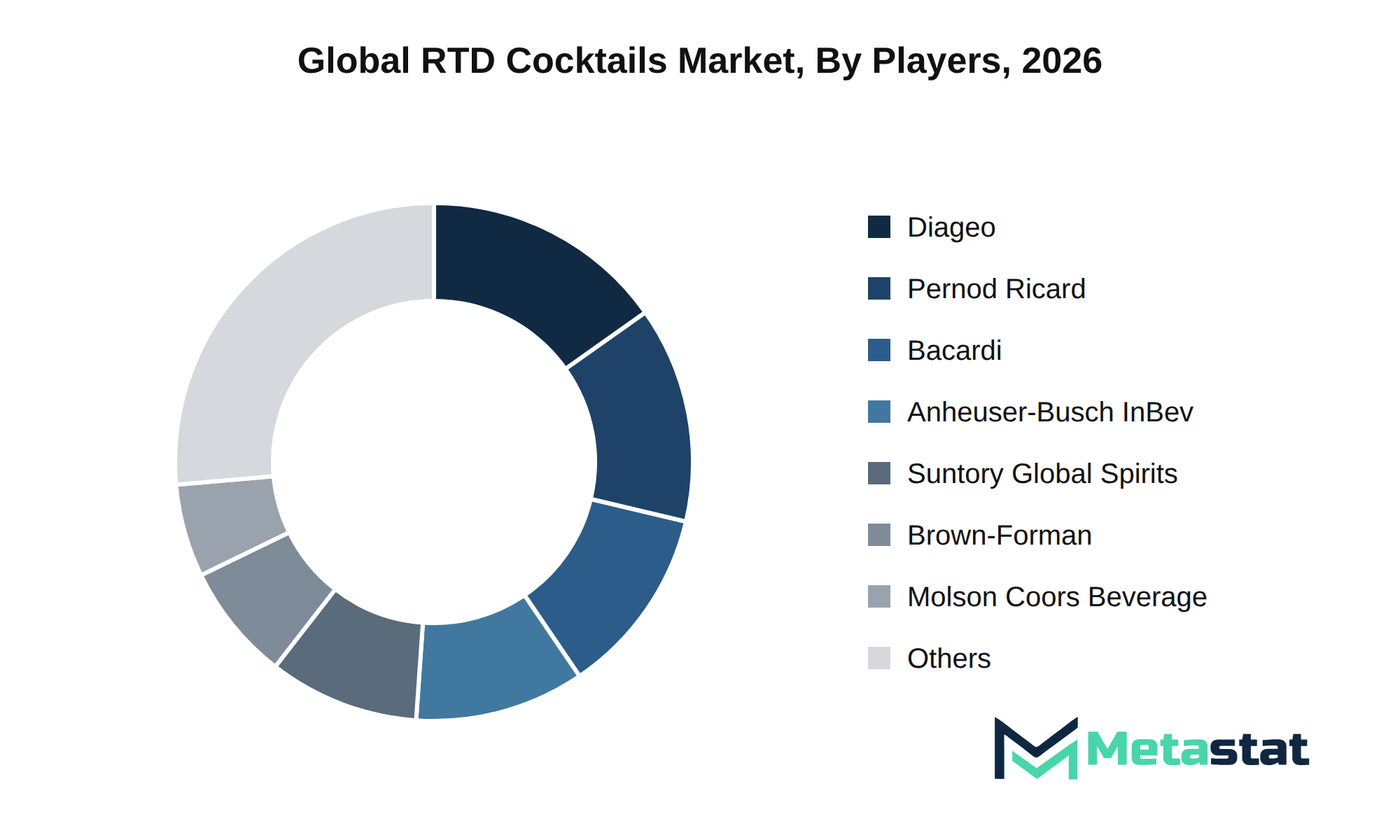
Companies in the RTD Cocktails market compete through various strategies, focusing on product differentiation, pricing, and distribution channels. Consumers select products based on flavor variety, packaging formats, and perceived quality, influencing purchasing decisions.
Diageo plc emphasizes a diverse range of spirit-based offerings, while Bacardi Limited targets flavor innovation and brand recognition to attract consumers. Crafthouse Cocktails specializes in premium, handcrafted options, appealing to the growing demand for quality and unique flavor profiles.
Achieving this growth requires several key developments in the RTD Cocktails market. First, the expansion of spirit-based RTD cocktails is projected to drive significant revenue, with a compound annual growth rate (CAGR) of 14.8%, reflecting changing consumer preferences toward premium products. Second, the rising popularity of ready-to-drink cocktails in cans, anticipated to reach USD 7,291.4 million by 2033, indicates a shift in purchasing behavior toward convenient packaging formats. Third, an increase in online alcohol retail and direct-to-consumer channels, with a CAGR of 19.2%, supports broader market access and consumer engagement. While these developments present a favorable outlook, risks including potential regulatory changes in the beverage industry could pose challenges to growth. These factors will influence the ability of the market to reach USD 10,895.6 million by 2033.
By Type: Spirit-Based RTD Cocktails, Malt-Based RTD Cocktails, Wine-Based RTD Cocktails
By Packaging Format: Cans, Glass Bottles, PET and Plastic Containers, Pouches, Others (Cartons and Tetra Packs)
By Flavor: Citrus, Berry, Tropical Fruit, Stone Fruit, Apple and Pear, Others (Herbal and Botanical, Ginger and Spice)
By Distribution Channel: Supermarkets and Hypermarkets, Liquor and Specialty Alcohol Stores, Convenience Stores, Online Alcohol Retail and Direct-to-Consumer, Bars and Restaurants, Hotels and Resorts, Others (Club Stores, Independent Grocery Stores)
The report strategically identifies and profiles the key market players and analyses their core competencies in each sub-segment of the RTD Cocktails market.
|
Report Attributes |
Details |
|
Study Period |
2021-2033 |
|
Base Year |
2025 |
|
Estimated Year |
2026 |
|
Forecast Period |
2026-2033 |
|
Historical Period |
2021-2025 |
|
Growth Rate |
CAGR 14.1% from 2026 to 2033 |
|
Revenue Unit |
USD million |
|
Segmentation |
By Type, Packaging Format, Flavor, Distribution Channel, and Region |
|
By Region |
North America (By Type, Packaging Format, Flavor, Distribution Channel, and Country)
|
|
|
|
Asia Pacific (By Type, Packaging Format, Flavor, Distribution Channel, and Country)
|
|
|
|
|
Middle East and Africa (By Type, Packaging Format, Flavor, Distribution Channel, and Country)
|
Find answers to common questions about this report
The RTD Cocktails market size was valued at USD 3,791.7 million in 2025.
The market is projected to grow at a CAGR of 14.1% during the forecast period from 2026 to 2033.
The North America RTD Cocktails market size is estimated to reach USD 3,861.4 million by 2033.
Spirit-Based RTD Cocktails lead the market with a projected value of USD 6,737.9 million by 2033, reflecting the highest growth rate among the segments. This segment's compound annual growth rate (CAGR) of 14.8% indicates strong demand compared to other types.
Key drivers for the RTD Cocktails market include growing consumer preference for premium quality beverages and the notable expansion of the spirit-based segment, projected to reach USD 6,737.9 million by 2033. This reflects a trend favoring premium and craft offerings among consumers.
North America holds the dominant share of the RTD Cocktails market, accounting for 38.8 percent of the total market in 2025. This region's significant share reflects its strong consumer demand and established distribution channels.
Regulatory compliance challenges restrain growth in the RTD Cocktails market. Strict regulations regarding alcohol content, labeling, and health warnings result in slower product approvals and increased operational costs for producers. This situation limits market participation and affects revenue potential.
Growing consumer preference for premium quality beverages is driving significant adoption in the industry. The shift towards high-quality ingredients and unique flavor profiles attracts buyers seeking innovative and upscale options, particularly among younger demographics.
The RTD Cocktails market is estimated to reach a valuation of USD 10,895.6 million by 2033.
Key players in the RTD Cocktails market include Diageo plc, Pernod Ricard SA, Bacardi Limited, Suntory Global Spirits Inc., Anheuser-Busch InBev SA/NV, and Brown-Forman Corporation. These companies are significant contributors to the industry's growth and development.
The analysts below cover Food and Beverages research at Metastat Insights.
LEAD ANALYST
Utkarsh Khirodkar is a Lead Market Research Analyst at MetaStat Insight, specializing in market intelligence, technology sector assessments, and competitive strategy.

LEAD PRINCIPAL ANALYST, PHARMA AND HEALTHCARE
Food and Beverages · Healthcare · Healthcare IT · Medical Devices
Ajay Devgire is the Lead Healthcare Analyst at MetaStat Insight, leading strategic research and market intelligence initiatives across the global healthcare domain.

SENIOR RESEARCH ANALYST
Biotechnology · Food and Beverages · Medical Devices · Packaging
Snehal Pasalkar is a Research Analyst at MetaStat Insight, operating at the intersection of life sciences research, competitive strategy, and market intelligence.
Our team was tracking whether regional recycling infrastructure could realistically absorb the growing volume of lithium iron phosphate batteries over the next decade. The report did a solid job separating announced hydrometallurgical plant capacity from active, permitted operational throughput. That distinction made the feedstock availability projections and regional recovery rate models far more credible than standard commercial overviews.
Tracking capacity expansion in single-use bioprocessing requires dependable data on raw material availability and cleanroom-grade polymer supply chains. The competitive landscape chapter gave a grounded evaluation of secondary component suppliers across North America and Asia-Pacific rather than simply reprinting press releases. Having that level of supplier benchmarking helped clarify dual-sourcing considerations for our clinical pipeline planning.
When evaluating distributed energy resource management systems, standard research summaries tend to gloss over the operational differences between front-of-the-meter utility deployments and behind-the-meter industrial sites. The MetaStat Insight report addressed those distinctions directly, especially regarding software interoperability standards and grid interconnection backlogs. The five-year market sizing across regional transmission organizations provided actionable context for our grid modernization strategy.
Explore related market intelligence reports worth reading alongside this one.