
LEAD ANALYST
Utkarsh Khirodkar is a Lead Market Research Analyst at MetaStat Insight, specializing in market intelligence, technology sector assessments, and competitive strategy.

Global Whiskey Tourism Market Size, Share, By Experience Type (Distillery Tours & Production Experiences, Guided Whisky Tastings, Visitor Centres & Whisky Museums, Warehouse, Cask & Maturation Experiences, Blending & Whisky-Making Masterclasses, Whisky Trails & Multi-Distillery Experiences, Whisky Festivals & Ticketed Brand Events, Distillery Hospitality & Stay Experiences and Others (Cooperage, Bottling & Heritage Experiences)), By Visitor Type (Domestic Visitors and International Visitors), By Sales Channel (Direct Brand-Owned Channels, Online Travel Agencies & Experience Marketplaces, Tour Operators & Destination Management Companies, Travel Agencies, Hotel & Concierge Partners, Corporate & Incentive Travel Agencies and Others (Cruise Excursion Operators, Tourism Pass Platforms)), Industry Analysis, Growth, Trends, and Forecast, 2026-2033
Report ID
MSI-5447
Published
October, 2026
Pages
279 Pages
Format
Historical
Base year
Forecast
Forecast period
Report Details
Market Valuation: Valued at $15.6 Billion in 2025, projected to reach $34 Billion by 2033 at a 10.2% CAGR.
Dominant Segment: Distillery Tours & Production Experiences is the leading segment by value, driven by strong visitor demand for behind-the-scenes access and hands-on involvement in whiskey production.
Geographic Lead: Europe holds the largest share of the market at 40.1%, supported by its established distillery heritage and the cultural significance of whiskey tourism in countries such as the UK, Ireland, and Scotland.
Fastest-Growing Segment: Warehouse, Cask & Maturation Experiences is the fastest-growing sub-segment, with a CAGR of 11.7%, fueled by visitor interest in exclusive access to aging processes and rare tasting opportunities.
Channel Shift: Online Travel Agencies & Experience Marketplaces are the fastest-growing sales channel, posting a 12.1% CAGR as digital platforms expand access and booking convenience for whiskey tourism experiences.
What's Inside: The report provides detailed segmentation by experience type, visitor type, and sales channel, regional analysis, competitive landscape, and market forecasts from 2026 to 2033.
Choose Your License
Global Whiskey Tourism Market
The global Whiskey Tourism market was valued at USD 15.6 billion in 2025 and is projected to reach USD 34 billion by 2033, growing at a CAGR of 10.2% over the forecast period.
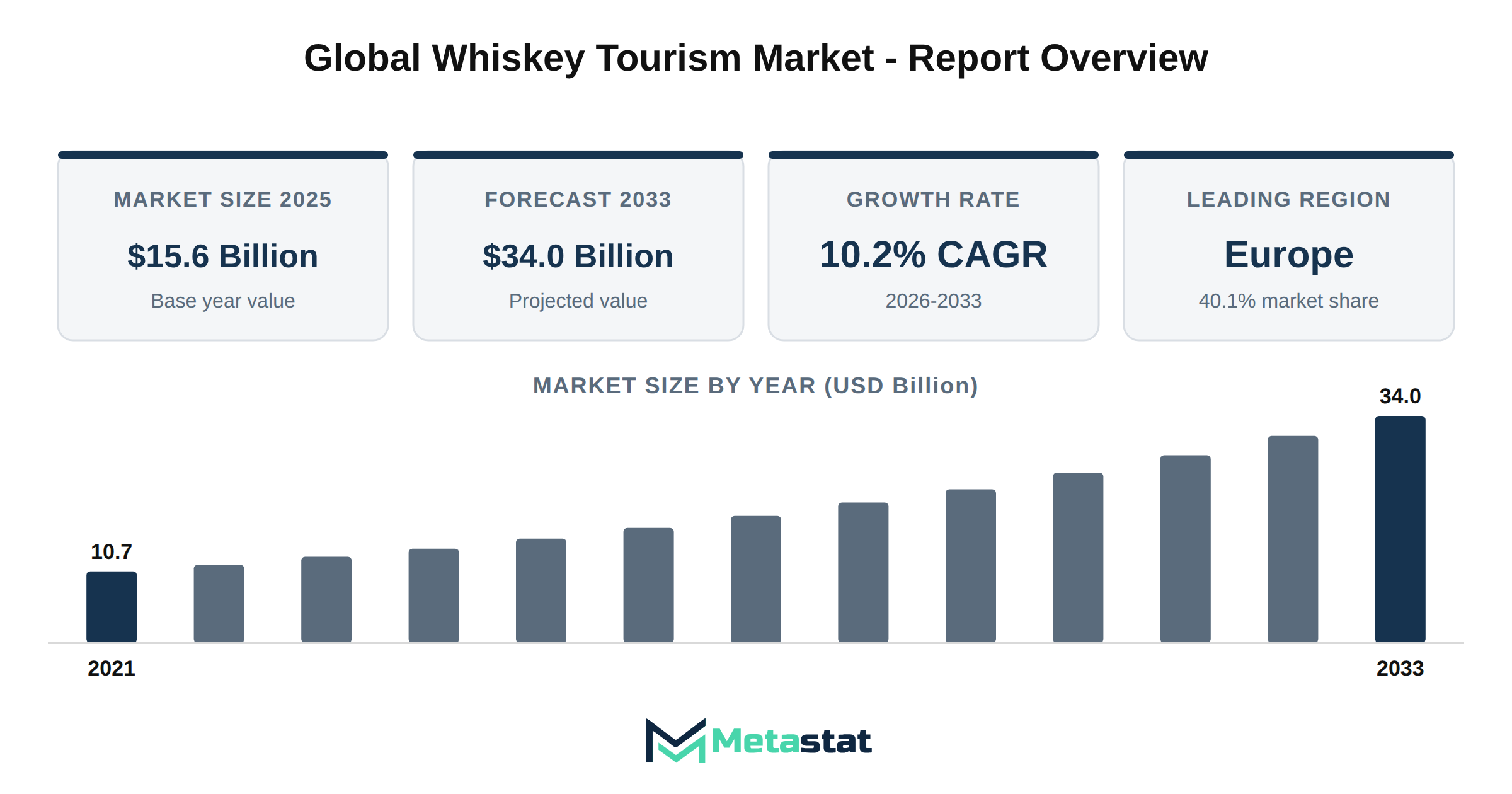
The Whiskey Tourism market delivers curated experiences for visitors seeking distillery tours, guided tastings, and immersive educational events centered on whiskey production and culture. Buyers include domestic and international tourists, enthusiasts, and corporate groups, with strong demand driven by a shift toward experiential travel and premium hospitality. Distilleries and brands invest in visitor centers, production tours, and exclusive tastings to differentiate their offerings and increase direct engagement with high-value guests.
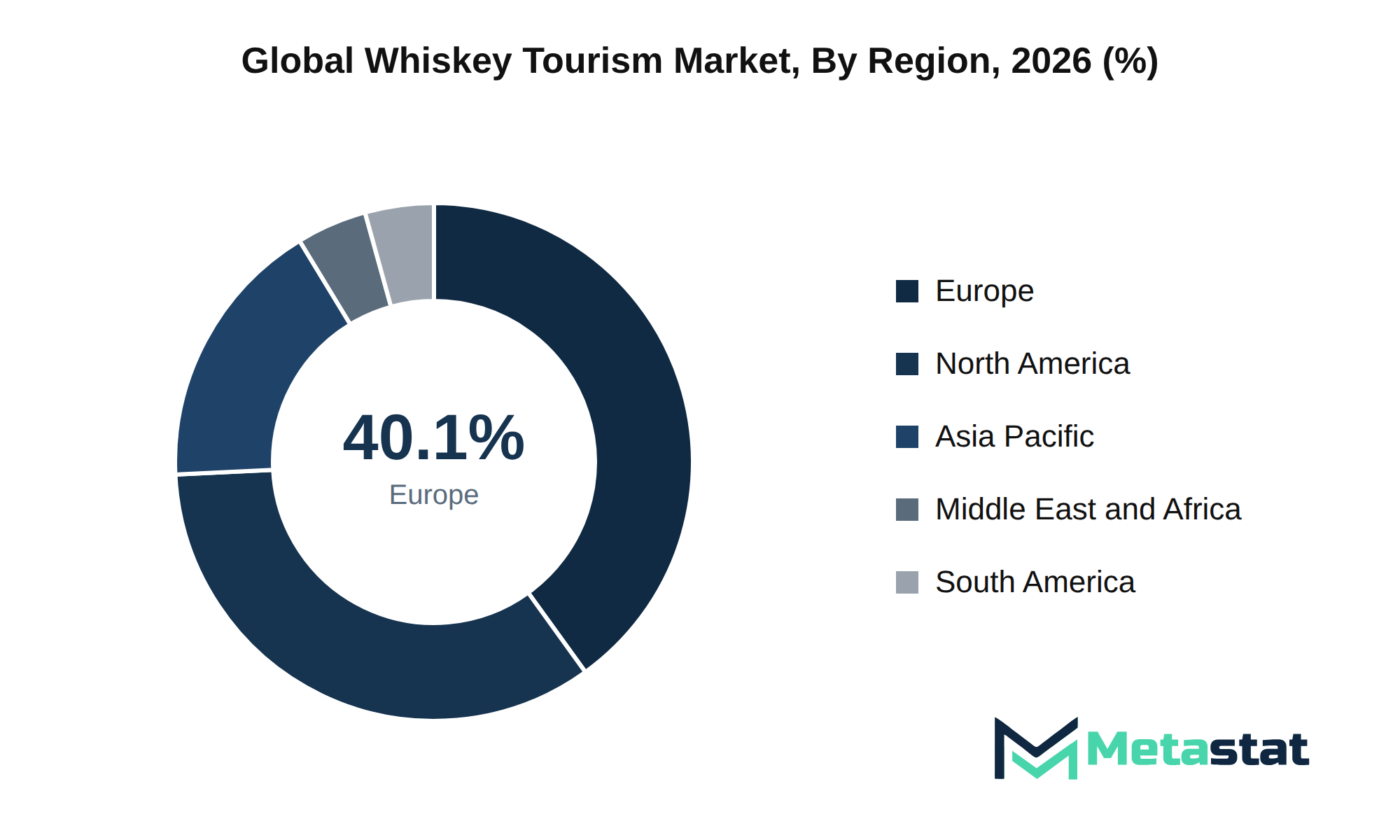
Europe holds the largest share, accounting for 40.1% of market value, anchored by its deep distillation heritage and the strong consumer base for European rum and whisky in historic production regions including the UK, Ireland, and Scotland. North America holds 34.2% of the market in 2025, with the US leading in 2026. Asia Pacific is emerging, supported by growing interest in Japanese and Indian whiskey experiences. Distillery Tours & Production Experiences is the segment with the highest value, driven by its appeal to visitors seeking behind-the-scenes insights and hands-on involvement in the production process.
Rising consumer preference for authentic, experience-driven travel drives demand in this market. Travelers increasingly spend on unique and immersive visits, expanding the visitor base and encouraging distillers to expand and upgrade their facilities. This shift is expected to accelerate growth for both established and emerging whiskey destinations worldwide.
Leading distillery tours and production experiences attract a wide spectrum of visitors seeking hands-on engagement with whiskey making, accounting for the highest segment value among all experience types. These experiences appeal to both enthusiasts and casual tourists, supported by a growing interest in local craftsmanship and heritage. The market covers interactive distillery visits, guided tastings, masterclasses, and specialized events, delivering educational and entertainment value that drives repeat visitation and higher per-visitor spending.
Europe holds the largest share among all regions, supported by its established whiskey-producing countries and a long tradition of distillery heritage tourism. Distillery clusters in Scotland, Ireland, and the rest of Europe sustain a strong pipeline of new visitor experiences, while emerging destinations in Asia Pacific and Latin America expand access to new audiences. The diversity of experiences across regions reflects local traditions and evolving consumer preferences for immersive travel.
The strongest growth driver for the market is rising demand for authentic, experiential travel among both domestic and international visitors. Increasing consumer interest in unique cultural exploration and broader food and beverage journeys translates into greater footfall at distilleries and related venues. With producers investing in upgraded facilities and curated guest offerings, the market delivers value to both established whiskey regions and new entrants.
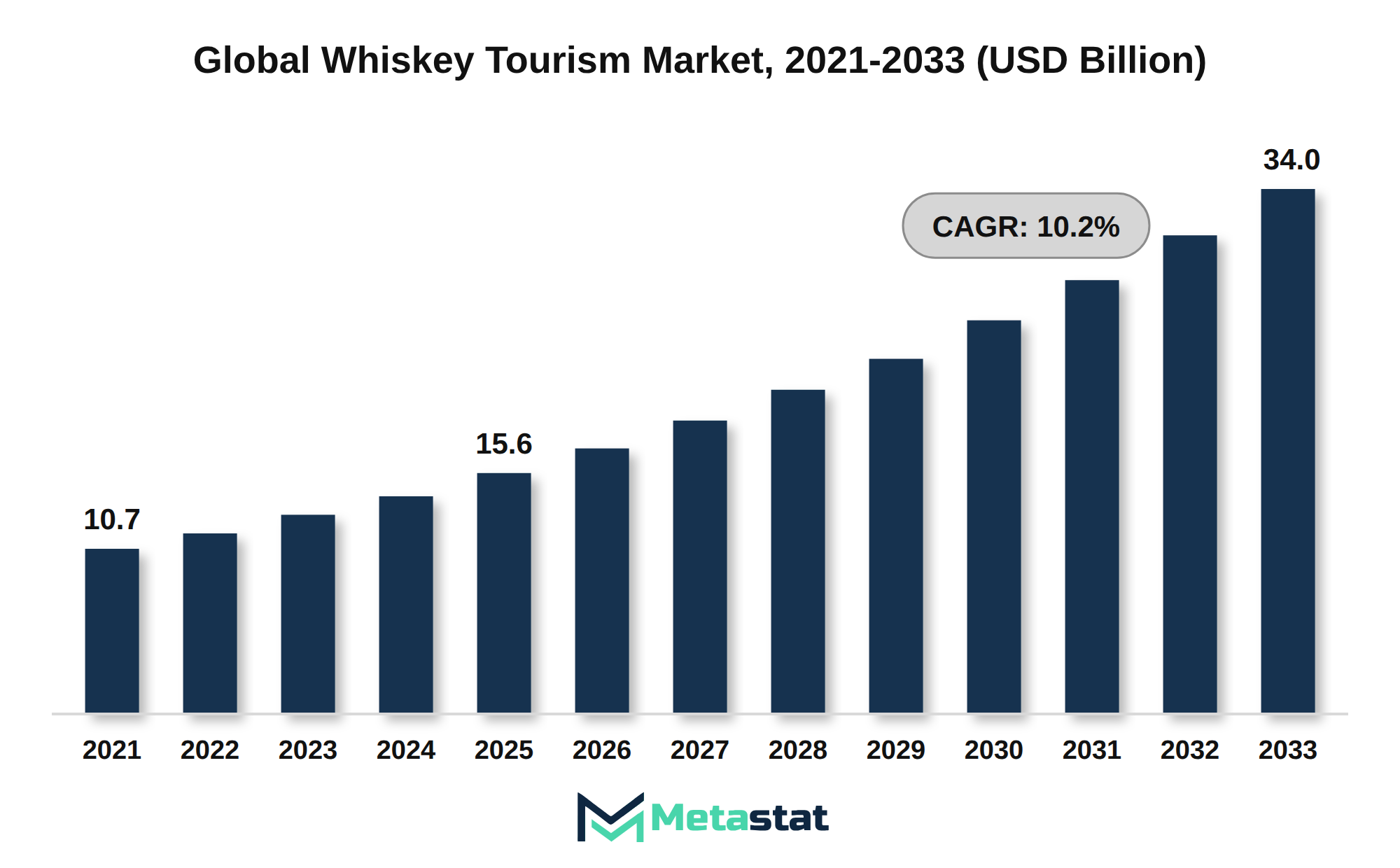
Premium distillery experiences and immersive attractions are reshaping the value proposition for whiskey tourism operators, with demand shifting towards offerings that combine education, interaction, and exclusivity. Distillery tours and production experiences represent the largest segment by value, projected to reach USD 10.1 billion in 2033 with a CAGR of 9.3% from USD 5.4 billion in 2026. This shift is driven by visitor appetite for behind-the-scenes access and hands-on participation, including blending masterclasses, warehouse visits, and cask maturation activities that go beyond standard tastings.
Operators increasingly invest in interactive facility design and digital storytelling to differentiate their venues, aiming to create memorable journeys through heritage spaces, production floors, and curated tasting rooms. Experiences now frequently integrate sensor-driven displays or augmented reality guides that enhance brand immersion and facilitate visitor engagement with production processes, regional histories, and flavor profiles. This mirrors commercial adoption across other high-tech interfaces where augmented reality systems drive interactive user engagement. These innovations support higher price points and longer dwell times, increasing average spend per visitor. The move towards premium, immersive formats stimulates partnership opportunities with local hospitality providers and supports tiered product strategies for both global brands and boutique distillers. Premiumization secures greater loyalty from affluent consumers and international travelers, reinforcing the sector’s expansion and underpinning the forecast growth through 2033.
Digital booking platforms are steadily transforming how visitors discover, compare, and purchase distillery experiences. In the Whiskey Tourism market, the rise of dedicated online travel agencies and experience marketplaces stands out for expanding consumer access to a broader range of offerings beyond traditional brand-owned channels. Platforms that aggregate tours, tastings, and unique events allow buyers to view real-time availability, secure tickets immediately, and explore new destinations through curated recommendations. This shift has reduced friction in the purchasing process and increased transparency in pricing and inclusions, supporting stronger conversion rates, particularly among international travelers unfamiliar with local brands or regions. Modern booking channels increasingly rely on automated revenue management software to optimize dynamic pricing and maximize tour capacity across peak travel seasons.
Segment data highlights this change: online travel agencies and experience marketplaces in the Whiskey Tourism market are projected to reach USD 8.5 billion by 2033, outpacing the growth rate of direct brand-owned channels. Their 12.1% CAGR reflects robust buyer engagement, with travelers favoring flexible booking, digital payment options, and personalized itineraries that these platforms enable. For distilleries and experience providers, digital channels lower customer acquisition costs and provide access to a global audience, while offering data-driven insights that shape product development and promotional strategies. The commercial significance lies in suppliers optimizing for digital discovery and efficient online transactions, capturing a growing share of visitor spending and gaining a measurable edge over competitors relying on legacy sales models.
International travelers are reshaping the Whiskey Tourism market by driving renewed interest in whisky trails and destination experiences. Easing travel restrictions and the rebound in long-haul leisure trips drive international visitors to seek immersive and multi-day itineraries that go beyond basic tastings. This shift is evident in the segment’s forecast trajectory: revenue from international visitors is projected to reach USD 14.3 billion in 2033, reflecting the highest growth rate among visitor types at an 11.4% CAGR from 2026 to 2033. These travelers often prioritize curated experiences including multi-distillery trails, blending masterclasses, and exclusive cask access, with activities that require both advance planning and a willingness to invest in premium, memory-driven offerings.
Operators and destination managers respond by expanding multi-distillery packages, coordinating with group travel hospitality providers to enhance stay experiences, and integrating local culture and gastronomy. Demand for tailored, high-value experiences prompts investments in multilingual guides, digital booking solutions, and partnerships with travel agencies specializing in international clientele. The market sees higher average spend per visit from this segment, supporting price premiums for signature events and rare offerings. The importance of international recovery influences strategy across distillery regions, with destinations in Europe and North America adapting their value propositions to attract this growing and lucrative audience. These shifts reinforce the focus on experience differentiation and destination appeal over volume-centric models.
Premium tastings and brand-owned experiences are reshaping the Whiskey Tourism market by delivering higher-value, immersive encounters that drive both spending and brand loyalty. Experiences including guided whisky tastings and distillery tours attract enthusiasts and support higher per-visit revenue compared to standard offerings. Brand-owned channels recorded a substantial position, with revenue expected to reach USD 12.3 billion by 2033, reflecting an expanding preference for direct engagement between visitors and producers. Guided whisky tastings are projected to generate USD 6.0 billion in 2033, showing robust interest in curated, expert-led sessions that deepen consumer appreciation and encourage premium purchases. Many on-site tasting rooms and distillery bistros now coordinate these premium seatings via online restaurant reservation systems to manage table turns and exclusive pairings.
This shift is driven by the increasing sophistication of visitors, who seek more than basic tours and show willingness to pay for behind-the-scenes access, hands-on blending masterclasses, and exclusive bottling opportunities. Such tailored experiences allow distilleries to differentiate their venues and create lasting connections with guests. The market therefore sees rising average spend per visitor, especially through direct brand-owned sales channels, where brands control the narrative and upsell limited-edition or exclusive releases. This transformation influences the commercial outlook for producers, since investment in high-quality, branded experiences supports both immediate transaction growth and long-term brand equity.
Growing demand for authenticity in travel is driving the market, with visitors seeking deeper connections with regional heritage and production practices. This shift has emerged most strongly among millennial and Gen Z travelers, who prioritize immersive storytelling, behind-the-scenes access, and unique hands-on encounters over conventional sightseeing. Distillery tours and production experiences hold the largest share within this segment, supported by this behavioral trend. In 2026, these experiences are projected to reach USD 5.4 billion, outpacing other segments in both participation and spending. Operators are responding by investing in interactive, educational offerings that highlight craftsmanship, provenance, and local traditions. This evolution supports higher ticket prices and expanded visitor volumes, strengthening revenue streams and reinforcing differentiation in a competitive tourism environment. The market is expected to benefit from this sustained appetite for authenticity, with travelers increasingly selecting destinations and itineraries that promise distinctive, locally-rooted experiences.
Higher travel costs constrain participation rates, particularly among international visitors and budget-conscious domestic tourists. Airfare, accommodation, and local transport combine to increase the total cost of a whiskey-focused trip, which deters price-sensitive segments from booking multi-day experiences or visiting multiple distilleries. This cost barrier results in smaller group sizes and lower frequency of return visits, which slows the growth projected for the market. Operators targeting international guests face more volatile demand, with discretionary travel spending fluctuating due to currency shifts and broader economic uncertainty, making revenue less predictable. These dynamics restrict the reach of immersive packages and premium offerings, limiting the sector’s ability to grow its audience and diversify its customer base. Competitive destinations with lower overall travel expenses divert potential visitors, creating a persistent headwind for operators in higher-cost regions.
Rising ingredient and operational costs challenge profit margins for suppliers in the Whiskey Tourism market. Distillery operators face higher expenses linked to raw materials, energy, and skilled labor, particularly for premium experiences that require small-batch production or heritage processes. Inflationary pressures have pushed input costs up, while price-sensitive segments remain less willing to absorb higher ticket prices for tours, tastings, and events. This environment restricts the ability of suppliers to pass on costs without risking visitor demand or competitive positioning. Suppliers in the Whiskey Tourism market are responding with efficiency measures, including optimizing staffing schedules, forming local sourcing partnerships, and scaling group experiences to spread fixed costs. These efforts help protect profitability, yet balancing quality with margin protection remains a persistent challenge for operators focused on delivering both authenticity and commercial viability.
Online travel agencies and experience marketplaces are creating a notable growth pocket within the Whiskey Tourism market. This segment exhibits the highest forecast CAGR at 12.1 percent, outpacing all other sales channels and signaling a rapid shift in how visitors plan and secure whiskey-themed experiences. These platforms streamline access to a broader inventory of distillery tours, guided tastings, and specialty events, appealing to both international and domestic travelers seeking convenience and customization. The market benefits from increased exposure and booking efficiency, driving incremental visitor volume and revenue across participating destinations. Providers prioritizing partnerships with online platforms position themselves to capture this expanding digital audience and respond to evolving consumer discovery behaviors. This approach addresses an underserved segment, reflecting changing expectations around transparent pricing, last-minute availability, and mobile-first engagement across travel sectors.
The Global Whiskey Tourism market is segmented based on Experience Type, Visitor Type, and Sales Channel.
Enthusiasts, tourists, and collectors drive demand for immersive education, direct access to distillers, and exclusive production insights. Rising consumer preference for interactive learning and heritage storytelling at the source shapes growth in distillery tours and production experiences. This segment attracts higher spending visitors seeking access to operations and expertise unavailable through generic tastings or museums. With a CAGR of 9.3%, distillery tours and production experiences grow at the same rate guided whisky tastings do, but outpace whisky museums, which are expected to reach USD 4 billion by 2033 without a published CAGR. The hands-on nature and direct engagement differentiate this segment from others, helping it retain the highest value among experience types.
Guided Whisky Tastings segment is estimated to reach USD 6 billion by 2033, at a CAGR of 9.3% during the forecast period. This segment centers on curated tasting events led by whisky experts, giving visitors the chance to explore regional flavour profiles, learn about distillation techniques, and deepen brand engagement. Demand is strongest among both dedicated enthusiasts and casual tourists seeking interactive, educational encounters that go beyond standard distillery tours. The segment stands out for its ability to attract a broad visitor base, including younger adults and international travelers pursuing unique cultural experiences. Compared to Distillery Tours & Production Experiences, which shares the same CAGR of 9.3%, Guided Whisky Tastings deliver comparable growth but often focus on higher frequency, lower individual spend per experience, and more flexible group formats. Operators use this segment to diversify product offerings, respond to evolving visitor preferences, and strengthen repeat visitation through memorable, tailored tasting sessions. Growth in this segment reflects increased consumer interest in flavour education and experiential travel linked to local heritage.
Visitor Centres & Whisky Museums segment is expected to reach USD 4 billion by 2033. These sites serve visitors seeking structured educational content, curated exhibits, and interactive learning about whiskey history and production heritage. Interest in this segment is driven by families, cultural tourists, and group travelers who prioritize accessible, informative experiences over production-floor immersion. Engagement often centers on interpretive displays, virtual modules, and heritage storytelling, contrasting with the hands-on focus found in production tours and guided tastings. Growth in the segment is supported by visitor demand for cultural enrichment and institutions’ ability to host year-round audiences, regardless of manufacturing schedules. The segment’s forecast value signals its stable, broad-based appeal, though its growth rate trails faster-moving segments including Warehouse, Cask & Maturation Experiences, which benefit from higher engagement and a CAGR of 11.7%. Investments in digital guides and interactive exhibits further expand the reach of the market by attracting audiences with varying backgrounds and interests, strengthening the ability to sustain footfall beyond peak travel periods.
Warehouse, Cask & Maturation Experiences segment is projected to grow at a CAGR of 11.7% during the forecast period, making it the fastest-growing sub-segment among Experience Types in the Whiskey Tourism market. These experiences provide visitors with in-depth access to whiskey aging processes, cask storage, and the nuances of maturation that directly influence flavor profiles - a draw for connoisseurs and enthusiasts seeking technical insight and exclusivity. Demand is driven by a growing segment of international travelers and dedicated whiskey collectors willing to pay premium prices for behind-the-scenes access and rare tasting opportunities. This distinguishes the segment from standard distillery tours or tasting events, which tend to attract broader audiences at lower price points. Interest in maturation experiences accelerates on the back of increased global whiskey appreciation and a shift towards experiential luxury travel, supporting a structural uplift in per-visitor revenue for operators. The segment’s growth outpaces Distillery Tours & Production Experiences and Guided Whisky Tastings, both of which post lower CAGRs of 9.3%.
Blending & Whisky-Making Masterclasses offer visitors hands-on participation in the creation process, enabling enthusiasts to craft their own blends under the guidance of experienced distillers. This experience appeals to both connoisseurs seeking to deepen their product knowledge and casual tourists drawn by interactive, educational activities. Demand in this segment is influenced by the rise in experiential travel, with buyers showing a willingness to pay premium prices for personalized and skill-focused engagements not available in more passive formats. Compared to guided tastings or standard tours, masterclasses typically draw smaller groups and attract visitors prepared for a higher spend, reflecting their intensive and instructional nature. While other experiences in the market reach broader audiences and expand their customer base, masterclasses differentiate themselves through exclusivity and a focus on skill development. The segment stands out for operators aiming to strengthen customer loyalty and brand affinity, especially in mature markets where repeat visitation depends on unique, high-engagement programming. Operators continue to invest in these advanced offerings to meet evolving visitor expectations. This experiential taproom approach mirrors the broader on-premise strategy observed across draught beer venues, where fresh, on-site dispensing fosters brand loyalty and higher beverage spend.
Multi-distillery routes and whisky trails link several production sites across a specific region, offering visitors curated journeys that combine tours, tastings, regional storytelling, and behind-the-scenes access across multiple distilleries. Enthusiasts and adventure-driven travelers use these experiences to compare distillation techniques, sample varied regional styles, and engage directly with local producers. In this segment, both repeat domestic visitors and international tourists seek in-depth immersion beyond single-location tours. Unlike standard distillery visits, whisky trails often require coordination between independent producers and regional tourism bodies, resulting in more complex pricing models and bundled ticket offerings. The segment appeals to high-engagement connoisseurs who prioritize depth and variety over introductory experiences, which differentiates it from guided tastings and museum visits focused on broader audiences. Regulatory support for regional cluster promotion strengthens the outlook for trail-based itineraries, which function as a tool for economic development in whiskey-producing regions.
Large-scale whisky festivals and ticketed brand events operate in high-visibility gatherings that attract both dedicated enthusiasts and curious newcomers seeking social, entertainment-driven experiences. These events are used for launching new expressions, deepening brand engagement, and facilitating direct interaction between producers and consumers. Buyers typically include younger urban professionals and international tourists who attend festivals to sample limited releases, participate in workshops, and network with fellow aficionados. Demand in this segment is driven by the growth of experiential travel and the pursuit of exclusive access, which differentiates it from distillery-focused tours or static museum visits. Unlike production-centric experiences, festivals often involve higher average ticket prices and feature event-driven collaborations or sponsorships with prominent brands in the market. Adoption rates reflect entertainment and lifestyle spending trends, with festival attendance influenced by seasonality and the marketing strategies of large distillers. The prominence of international visitors and urban festival locations delivers distinct buyer profiles compared to rural or heritage-centric experiences, creating nuanced commercial opportunities for suppliers operating in this segment.
Upscale overnight stays at working distilleries allow visitors to immerse themselves in the production environment and local culture over an extended period. This sub-segment attracts affluent travelers, spirits enthusiasts, and experience-driven tourists seeking exclusive access, private tastings, or themed accommodations. Such offerings stand apart by commanding premium price points and longer visitor dwell times compared to one-off tours or tastings. Demand in this segment is shaped by the desire for exclusivity and a growing preference for luxury experiential travel, especially among international guests. Many operators partner with hospitality brands or develop on-site lodging to capture additional revenue streams and differentiate from standard production experiences. Distillery hospitality stays target a distinct audience willing to pay for personalized service and authentic settings, supporting a higher revenue per guest than other experience types in the market.
Cooperage demonstrations, bottling line visits, and heritage-focused activities give enthusiasts access to the foundational processes behind whiskey craftsmanship. These experiences attract both hobbyists and heritage travelers who seek authenticity and a deeper understanding of the skills, equipment, and customs passed down through generations. This segment highlights the labor, tradition, and technical artistry that differentiate brands, supporting premium positioning and visitor engagement that pure tastings or guided tours do not fully deliver. Demand is influenced by consumer interest in craft production stories and the appeal of behind-the-scenes participation, particularly among culturally curious visitors and collectors. While this sub-segment usually draws a smaller, highly motivated audience, it stands out for its educational emphasis and lower crowd density compared to flagship tours. Pricing strategies frequently reflect the exclusivity and hands-on nature of these sessions, setting this offering apart in the competitive mix.
Domestic Visitors segment is valued at USD 10.5 billion in 2026 and is projected to reach USD 19.6 billion by 2033, at a CAGR of 9.4% during the forecast period. This segment covers individuals traveling within their own country to engage in whiskey-related activities, typically driven by regional pride, leisure travel, and repeat visitation. Domestic tourists often prioritize accessible locations and are influenced by local promotional campaigns and seasonal events, which support higher visit frequency compared to international travelers. Within the market, domestic visitors are the larger buyer group by volume but grow at a slower pace than international visitors, whose CAGR is 11.4%. Pricing for domestic visitors tends to be less influenced by currency fluctuations and international travel costs, resulting in steadier demand cycles. Operators target this segment with tailored offerings including loyalty programs and local heritage experiences to cultivate repeat business.
This segment focuses on travelers from outside the host country seeking curated whiskey experiences, cultural immersion, and high-profile distillery destinations. Demand within this group is driven by experiential travel trends and the growing appeal of heritage destinations, reflecting the market’s shift toward global audiences with higher discretionary spending. International visitors often prioritize exclusive or premium activities, favoring guided tours, tastings, and immersive learning opportunities that distinguish their trips from domestic excursions. With a CAGR of 11.4%, this segment is expanding faster than Domestic Visitors, which have a CAGR of 9.4%. The higher growth rate highlights greater demand elasticity and a willingness to invest in premium experiences among international travelers. Fluctuating exchange rates and evolving visa requirements introduce variability in demand, yet the market continues to benefit from sustained interest in cross-border cultural tourism across major whiskey-producing regions.
Direct Brand-Owned Channels segment is valued at USD 6.4 billion in 2026 and is projected to reach USD 12.3 billion by 2033, at a CAGR of 9.7% during the forecast period. These channels include on-site distillery shops, brand-operated ticketing platforms, and exclusive visitor experiences sold directly by whiskey producers. Purchasers are typically enthusiasts and collectors who seek distinctive, limited-run offers, and travellers motivated by direct access to flagship events and branded environments. The market benefits from these buyers, who demonstrate higher per-visit spend and interest in exclusive merchandise or experiences that reinforce brand affinity. Within the Sales Channel segmentation, Direct Brand-Owned Channels post a slower growth rate compared to Online Travel Agencies & Experience Marketplaces, which hold a 12.1% CAGR. Brand-owned routes remain attractive due to their ability to control visitor engagement, pricing structures, and cross-selling opportunities. This segment attracts distilleries and brand groups aiming to deepen customer loyalty while capturing a greater share of visitor spend.
Estimated to reach USD 8.5 billion by 2033, this segment is projected to expand at a CAGR of 12.1%, outpacing all other sales channels tracked in the Whiskey Tourism market. Online travel agencies and experience marketplaces serve digitally engaged travelers who prioritize convenience, real-time booking, and the ability to compare curated packages across multiple brands and locations. This buyer group often includes international visitors and younger demographics, both of whom drive higher online discovery and pre-trip planning. The surge in digital booking reflects shifting consumer habits and the influence of social media on travel decisions, placing this channel ahead of Direct Brand-Owned Channels, which show a slower growth rate of 9.7%. Providers in this segment differentiate through bundled experiences, loyalty rewards, and dynamic pricing, factors that support higher conversion among tech-savvy, price-sensitive visitors. The scalability and reach of online travel agencies enable rapid market penetration in both established and emerging destinations, which traditional travel agencies, with a 6.7% CAGR, struggle to match.
Tour Operators & Destination Management Companies segment is expected to reach USD 5.2 billion by 2033. This channel specializes in designing and packaging bespoke trips for both international and domestic groups, often combining distillery visits with broader regional experiences, accommodation, and logistics coordination. Group bookings and curated itineraries are favored by corporate clients, social clubs, and travel groups seeking streamlined, multi-site journeys. Demand from these buyers is driven by growing interest in experiential travel and the ability of operators to create themed group packages that individual travelers find difficult to arrange independently. Compared to Direct Brand-Owned Channels, this segment typically operates at a lower price per experience but achieves higher aggregate volumes through group sales. The segment’s growth is constrained relative to Online Travel Agencies & Experience Marketplaces, which expand at a faster CAGR of 12.1% since the latter excel at reaching global independent travelers through digital platforms. Suppliers targeting volume-based, itinerary-driven demand increasingly rely on these operators to access groups seeking immersive, region-spanning experiences.
Projected to grow at a CAGR of 6.7% during the forecast period, travel agencies serve both individual travelers and organized groups seeking structured whiskey-related experiences. This segment is leveraged by buyers who prefer traditional, offline booking processes or those who value personalized itinerary planning. Travel agencies cater to demographics less familiar with digital booking platforms and to visitors looking for bundled travel, accommodation, and experience packages. Compared with other sales channels, travel agencies are expanding at a slower rate, while online travel agencies and experience marketplaces are forecast to grow at a higher CAGR of 12.1%. The segment’s growth remains steady, sustained by ongoing demand from an older or less digitally native clientele and by family or corporate groups seeking frictionless, end-to-end travel solutions. Price sensitivity plays a more significant role than in digital-first channels, and commission-based pricing models influence the economics for both agencies and experience providers. Shifts in traveler expectations and increased competition from online channels continue to influence the position of travel agencies within this segment.
Hotel & Concierge Partners serve travel clients seeking premium and tailored whiskey experiences, providing curated distillery visits, tasting events, and exclusive access arranged through high-end accommodation providers. This sub-segment primarily attracts affluent leisure tourists and business travelers who value convenience and exclusivity in planning whiskey excursions. Demand in this area is driven by collaboration between luxury hotels and destination distilleries, offering packages that integrate unique experiences unavailable through standard travel agencies. Unlike Online Travel Agencies & Experience Marketplaces, which target a broader price-sensitive audience and are projected to grow at a CAGR of 12.1% in the Whiskey Tourism market, Hotel & Concierge Partners operate at a higher price point and focus on personalized service. Adoption accelerates with rising global interest in experiential luxury travel, with hotel brands seeking to differentiate their guest offerings. This dynamic positions Hotel & Concierge Partners as a specialized channel within the market, catering to travelers expecting tailored and premium service.
Group bookings for distillery experiences, tastings, and related events by corporate clients and incentive travel planners are the focus of this sub-segment. Corporations use these curated whiskey experiences to reward employees, strengthen client relationships, and build team engagement. Buyer demand tends to be cyclical, driven by annual incentive programs and seasonal business gatherings, distinguishing this segment from individual-focused sales channels in the market. These buyers typically require higher service standards, tailored itineraries, and exclusive access, placing upward pressure on product and service pricing relative to standard leisure travel purchases. Regulation around corporate hospitality varies by industry and region, influencing the mix of permissible experiences and spend thresholds. Compared to direct-to-consumer channels or online marketplaces, this sub-segment faces more complex approval cycles and longer planning horizons. The purchasing process involves greater collaboration between brands, agencies, and destination partners, making B2B negotiation central to growth strategies in this segment.
Cruise excursion operators and tourism pass platforms specialize in bundling whiskey-related experiences with broader travel or destination packages, targeting travelers seeking convenience and value. These offerings appeal to group travelers and cruise passengers whose itineraries include short stops in whiskey-producing regions, and independent visitors leveraging pre-paid, multi-attraction passes. In this sub-segment, incremental demand arises by making distillery visits and tastings accessible to audiences who do not plan a dedicated whiskey-focused trip. The segment differs from direct brand-owned channels and online travel agencies in that purchase decisions are often driven by broader tourism appeal rather than connoisseur interest, and the ticket price is typically integrated into larger travel or sightseeing packages. Growth in this channel is influenced by rising inbound tourism and the expansion of regional destination marketing organizations promoting whiskey trails within curated routes. Partnerships with cruise lines and city tourism boards support wider exposure, but competition from more specialized sales channels persists for high-value, enthusiast-driven experiences.
Based on geography, the Global Whiskey Tourism market is divided into North America, Europe, Asia-Pacific, South America, Middle East, and Africa.
Whiskey Tourism market growth in North America reflects high engagement from both enthusiasts and casual visitors, particularly in the United States, Canada, and Mexico. Regional demand is supported by a concentration of established distilleries offering immersive educational experiences and production-focused tours, which appeal to travelers seeking authenticity and heritage. Several distilleries drive visitor numbers by integrating interactive tasting rooms and educational sessions that highlight local production techniques. High disposable income levels in major cities and strong domestic travel trends contribute to increased participation, while premiumization of experiences supports higher ticket prices. The region is projected to reach USD 11.2 billion by the end of 2033, reflecting sustained investment in visitor experiences and evolving consumer preferences. Brand-owned visitor centers and partnerships with local cultural institutions further differentiate offerings and influence competition among distilleries in the region.
Europe commands the largest portion of the global Whiskey Tourism market, reflecting both its historical whiskey heritage and dense concentration of renowned distilleries. Demand is driven by affluent consumer segments seeking immersive educational experiences at established sites across the UK, Scotland, Ireland, and beyond. High-value visitors from Germany, France, and Italy prioritize production-focused tours and guided tastings, often motivated by interest in regional provenance and craftsmanship. Local government support for heritage tourism and preservation of whiskey-producing regions sustains long-term investment in visitor infrastructure and digital booking platforms. The region's blend of tradition, regulatory stability, and strong domestic and intra-European travel flows supports its lead, encouraging operators to tailor premium, multi-sensory experiences for both first-time and repeat enthusiasts.
Rising affluence among urban middle-class populations in China, India, and Southeast Asia has contributed to increased demand for premium spirits tourism. Exposure to global whisky brands and a growing culture of experiential travel encourage younger adult consumers to seek out educational and immersive distillery visits. Japan and Australia have become recognized for their domestic whisky production, drawing regional travelers interested in craftsmanship unique to local distilleries. Digital booking platforms serve tech-savvy tourists, streamlining access to both established and emerging facilities across Asia-Pacific. The region has expanded its presence in the global market, supported by expanding air connectivity and a wave of new distillery openings in secondary cities. Brand investment in interpretation centers and guest education programs further differentiates the visitor offer, increasing revenue per guest and strengthening the competitive position of Asia-Pacific destinations.
Brazil and Argentina stand out for their established spirits culture and a growing segment of urban travelers seeking premium experiences. Interest in whiskey-focused events and distillery visits has increased among affluent city dwellers and experience-driven tourists. Local brands in Brazil, in particular, have invested in interactive visitor centers and bespoke tasting events that blend regional gastronomy with whiskey education, differentiating the region’s offer from traditional European or North American destinations. Operators focus on delivering niche, culturally relevant experiences that appeal to both domestic and inbound travelers. Partnerships between distilleries and local hospitality providers support the integration of whiskey experiences into broader leisure itineraries, raising awareness of whiskey-focused tourism across Brazil, Argentina, and the rest of South America. Progress in event programming, combined with unique regional storytelling, is driving higher engagement and spend per visitor in this region, strengthening long-term demand for whiskey-related travel experiences.
Special interest travel in Saudi Arabia, the UAE, and South Africa has contributed to a modest but growing share, with the region seeing increased activity in 2025. Luxury hospitality groups and destination resorts in the UAE and South Africa increasingly partner with established whiskey brands to offer curated tastings and immersive production experiences, targeting affluent international and regional guests. Regulatory frameworks in Gulf countries limit on-site alcohol marketing, requiring operators to focus on private bookings and exclusive, invite-only tasting events to drive engagement in premium segments. The market in this region is shaped by a blend of controlled access, high-end positioning, and a preference for tailored experiences over large-scale public events, supporting steady demand among business travelers and high-net-worth individuals.
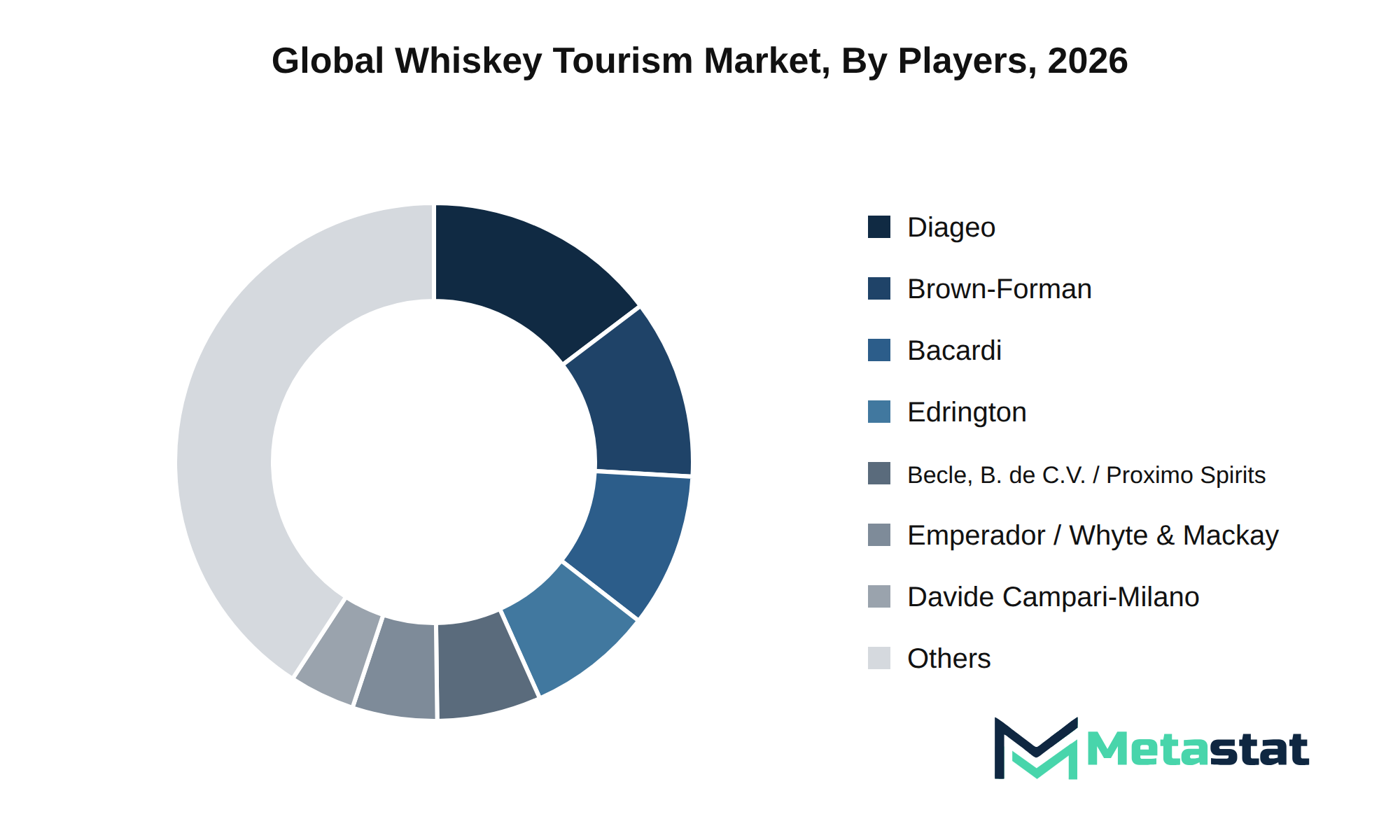
Competition in the Whiskey Tourism market centres on the breadth and depth of experience offerings, brand strength, and the ability to attract both domestic and international visitors. Companies on the player list segment their strategies by emphasizing distinct experience types, including distillery tours, guided tastings, and immersive production experiences. Buyers weigh their preferences by the uniqueness of the tours, opportunities for interaction with master distillers, and access to exclusive events or limited-edition releases. Pricing, service customization, and the reputation of the brand influence purchasing decisions for visitors seeking both educational and leisure components.
Brand-owned channels operate a primary sales route for many companies, allowing direct engagement with visitors and control over the guest experience. Diageo plc and Pernod Ricard S.A. focus on expanding visitor centre footprints and curating multi-faceted experiences that blend heritage and innovation. Bacardi Limited invests in guided whisky tastings and production experiences to appeal to enthusiasts seeking in-depth knowledge. Companies including William Grant & Sons Ltd. and Suntory Holdings Limited / Suntory Global Spirits prioritize storytelling and the integration of hospitality and distillery stays, further differentiating their offerings. The market rewards operators with strong heritage positioning and the ability to adapt to evolving visitor preferences, particularly those leveraging direct and experiential engagement channels.
Achieving this growth depends first on sustained expansion in experience-driven tourism, especially in segments including Distillery Tours & Production Experiences, which are expected to approach USD 10.1 billion by 2033. Increases in international traveler participation further drive the market, with international visitors projected to reach USD 14.3 billion by the end of the forecast period. Demand from Europe remains a primary factor, given its 40.1% share, reflecting deep-rooted whiskey heritage and a well-developed tour infrastructure that attracts both domestic and overseas tourists.
The adoption of digital sales channels is another essential contributor. This shift enables broader visibility and easier booking access, appealing to tech-savvy and younger demographics. The main risk to the outlook lies in potential disruptions to international travel, including regulatory changes or global economic uncertainty, which impact cross-border visitor flows and reduce discretionary spending. If these headwinds persist, the market is expected to grow more slowly, particularly in regions heavily reliant on international tourists.
By Experience Type: Distillery Tours & Production Experiences, Guided Whisky Tastings, Visitor Centres & Whisky Museums, Warehouse, Cask & Maturation Experiences, Blending & Whisky-Making Masterclasses, Whisky Trails & Multi-Distillery Experiences, Whisky Festivals & Ticketed Brand Events, Distillery Hospitality & Stay Experiences, Others (Cooperage, Bottling & Heritage Experiences)
By Visitor Type: Domestic Visitors, International Visitors
By Sales Channel: Direct Brand-Owned Channels, Online Travel Agencies & Experience Marketplaces, Tour Operators & Destination Management Companies, Travel Agencies, Hotel & Concierge Partners, Corporate & Incentive Travel Agencies, Others (Cruise Excursion Operators, Tourism Pass Platforms)
The report strategically identifies and profiles the key market players and analyses their core competencies in each sub-segment of the Whiskey Tourism market.
Report Attributes | Details |
Study Period | 2021-2033 |
Base Year | 2025 |
Estimated Year | 2026 |
Forecast Period | 2026-2033 |
Historical Period | 2021-2025 |
Growth Rate | CAGR 10.2% from 2026 to 2033 |
Revenue Unit | USD billion |
Segmentation | By Experience Type, Visitor Type, Sales Channel, and Region |
By Region | North America (By Experience Type, Visitor Type, Sales Channel, and Country)
|
| |
Asia Pacific (By Experience Type, Visitor Type, Sales Channel, and Country)
| |
| |
Middle East and Africa (By Experience Type, Visitor Type, Sales Channel, and Country)
|
Find answers to common questions about this report
The Whiskey Tourism market size was valued at USD 15.6 billion in 2025.
The projected CAGR is 10.2% for the forecast period from 2026 to 2033.
The North America Whiskey Tourism market size is estimated to reach USD 11.2 billion by 2033.
Distillery Tours & Production Experiences leads by value among experience types, reaching USD 10.1 billion in 2033. This segment holds the highest forecast value compared to other experience types.
Key drivers include rising demand for authentic, immersive travel experiences among millennial and Gen Z visitors, and the rapid growth of online travel agencies and experience marketplaces, which increase access, convenience, and booking efficiency for whiskey-focused tourism.
Europe holds the dominant share with 40.1 percent of the total, based on regional share percentages. North America follows with 34.2 percent.
Online travel agencies and experience marketplaces are supporting wider adoption by making whiskey-themed experiences more accessible and customizable for travelers. These digital platforms increase exposure, streamline booking, and attract visitors seeking convenience, transparent pricing, and last-minute availability.
The Whiskey Tourism market is estimated to reach a valuation of USD 34 billion by 2033.
Companies active in this industry include Asahi Group Holdings, Ltd., Bacardi Limited, Brown-Forman Corporation, Diageo plc, Pernod Ricard S.A., Suntory Holdings Limited, William Grant & Sons Ltd., and Edrington Group. These firms operate distilleries, organize visitor experiences, and promote whiskey tourism across key regions.
Online travel agencies and experience marketplaces are projected to grow at a CAGR of 12.1 percent through 2033, making this the fastest-growing sales channel in the sector.
The analysts below cover Food and Beverages research at Metastat Insights.
LEAD ANALYST
Utkarsh Khirodkar is a Lead Market Research Analyst at MetaStat Insight, specializing in market intelligence, technology sector assessments, and competitive strategy.

LEAD PRINCIPAL ANALYST, PHARMA AND HEALTHCARE
Food and Beverages · Healthcare · Healthcare IT · Medical Devices
Ajay Devgire is the Lead Healthcare Analyst at MetaStat Insight, leading strategic research and market intelligence initiatives across the global healthcare domain.

SENIOR RESEARCH ANALYST
Biotechnology · Food and Beverages · Medical Devices · Packaging
Snehal Pasalkar is a Research Analyst at MetaStat Insight, operating at the intersection of life sciences research, competitive strategy, and market intelligence.
Enterprise zero-trust network rollouts are often slowed down by multi-cloud transit latency and proprietary hardware retirement schedules. This study provided realistic total cost of ownership models comparing cloud-delivered security edge solutions against traditional hardware refreshes. The analysis of contract renewal lengths and software maintenance fees gave us clear visibility into enterprise replacement cycles over the next three to five years.
Scaling antibody-drug conjugate manufacturing hinges on contract manufacturing availability for high-potency active ingredients. The MetaStat Insight analysis looked closely at global cleanroom slot constraints, bioconjugation batch failure rates, and supply chain redundancies between the US, Europe, and India. The supplier capability matrix proved genuinely useful for our team when mapping secondary source options across our clinical pipeline.
Floating offshore wind feasibility relies heavily on specialized installation vessel availability and port crane limits, which most broad renewable energy forecasts ignore. The report delivered a thorough analysis of dry dock capacity, mooring chain supply constraints, and raw material pricing trends for deepwater anchor installations. It served as a solid independent sanity check for our offshore project capital expenditure assumptions.
Explore related market intelligence reports worth reading alongside this one.