
LEAD ANALYST
Utkarsh Khirodkar is a Lead Market Research Analyst at MetaStat Insight, specializing in market intelligence, technology sector assessments, and competitive strategy.

Southeast Asia eSports Market Size, Share, By Revenue Model (Sponsorship, Advertising, Media Rights and Broadcasting, Game Publisher Fees, Merchandise and Ticketing, Digital Goods and Esports Content Revenue), By Game Genre (Multiplayer Online Battle Arena, Battle Royale, First-Person and Tactical Shooters, Sports Simulation, Fighting Games, Strategy and Auto Battler Games, Racing Games), By Gaming Platform (Mobile, PC, Console, Cross-Platform), By Region (Indonesia, Philippines, Vietnam, Thailand, Malaysia, Singapore, Cambodia), Industry Analysis, Growth, Trends, and Forecast, 2026-2033
Report ID
MSI-5345
Published
September, 2026
Pages
270 Pages
Format
Historical
Base year
Forecast
Forecast period
Report Details
Market Valuation: Valued at $104.7 Million in 2025, projected to reach $194.2 Million by 2033 at a 8.0% CAGR.
Dominant Segment: The Multiplayer Online Battle Arena segment leads the Southeast Asia eSports market, driven by increasing user engagement and the popularity of competitive gaming.
Geographic Lead: Indonesia and the Philippines are identified as high-growth markets, with Indonesia projected to rise significantly in revenue due to its large youth population and affinity for competitive gaming.
What's Inside: The report provides comprehensive coverage of market dynamics, competitive analysis, and forecasts, including detailed insights into revenue models, game genres, and regional performances.
Rising Sponsorship and Advertising Spend: Sponsorship revenue is expected to grow substantially, reflecting the increasing investment from brands seeking to connect with the expanding eSports audience.
Expansion of Media Rights and Streaming: The media rights and broadcasting segment is set to expand, driven by the rise of streaming platforms and increased viewer engagement in eSports events.
Choose Your License
Southeast Asia eSports Market
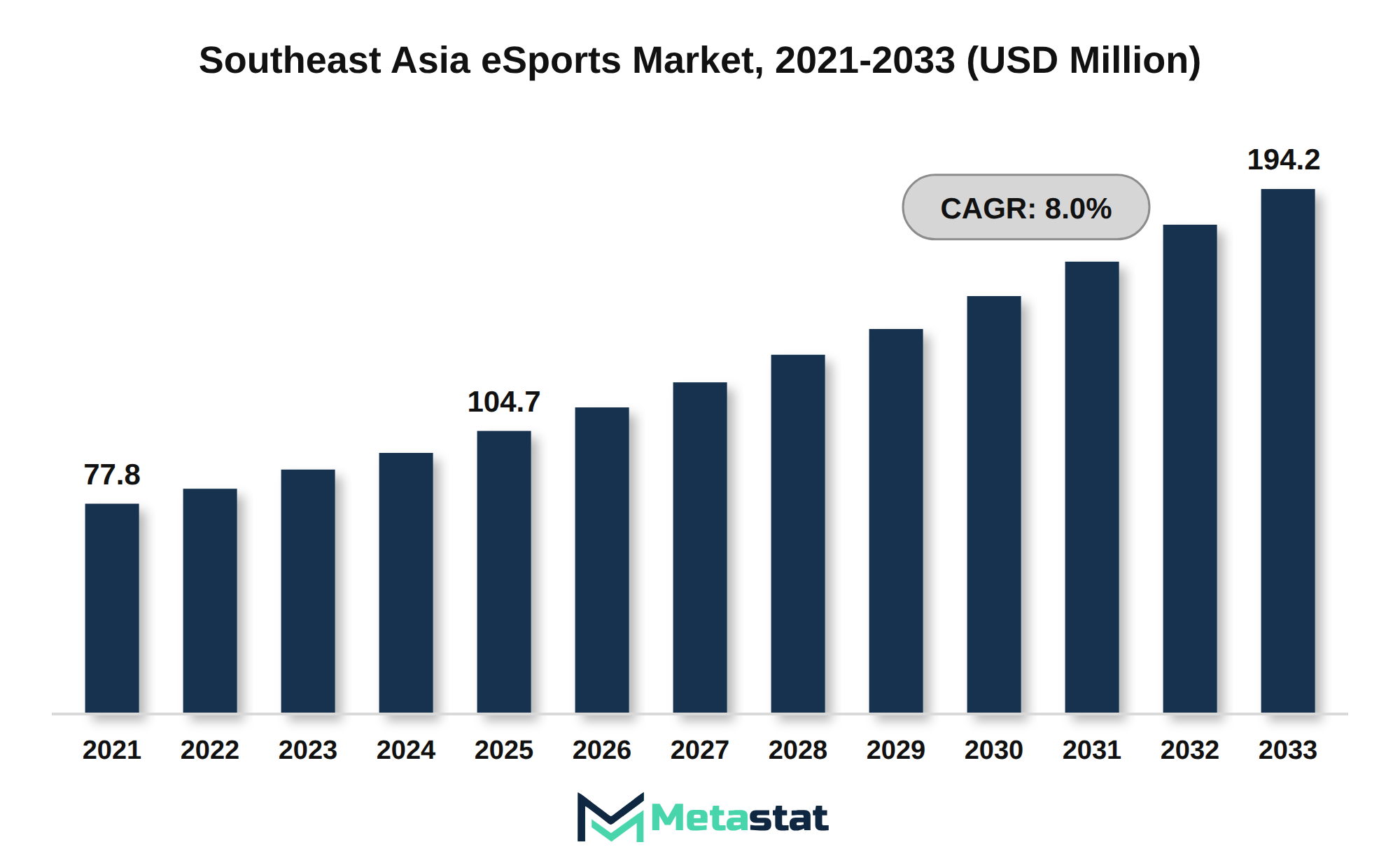
The Southeast Asia eSports market was valued at USD 104.7 million in 2025 and is projected to reach USD 194.2 million by 2033, growing at a CAGR of 8.0% over the forecast period.
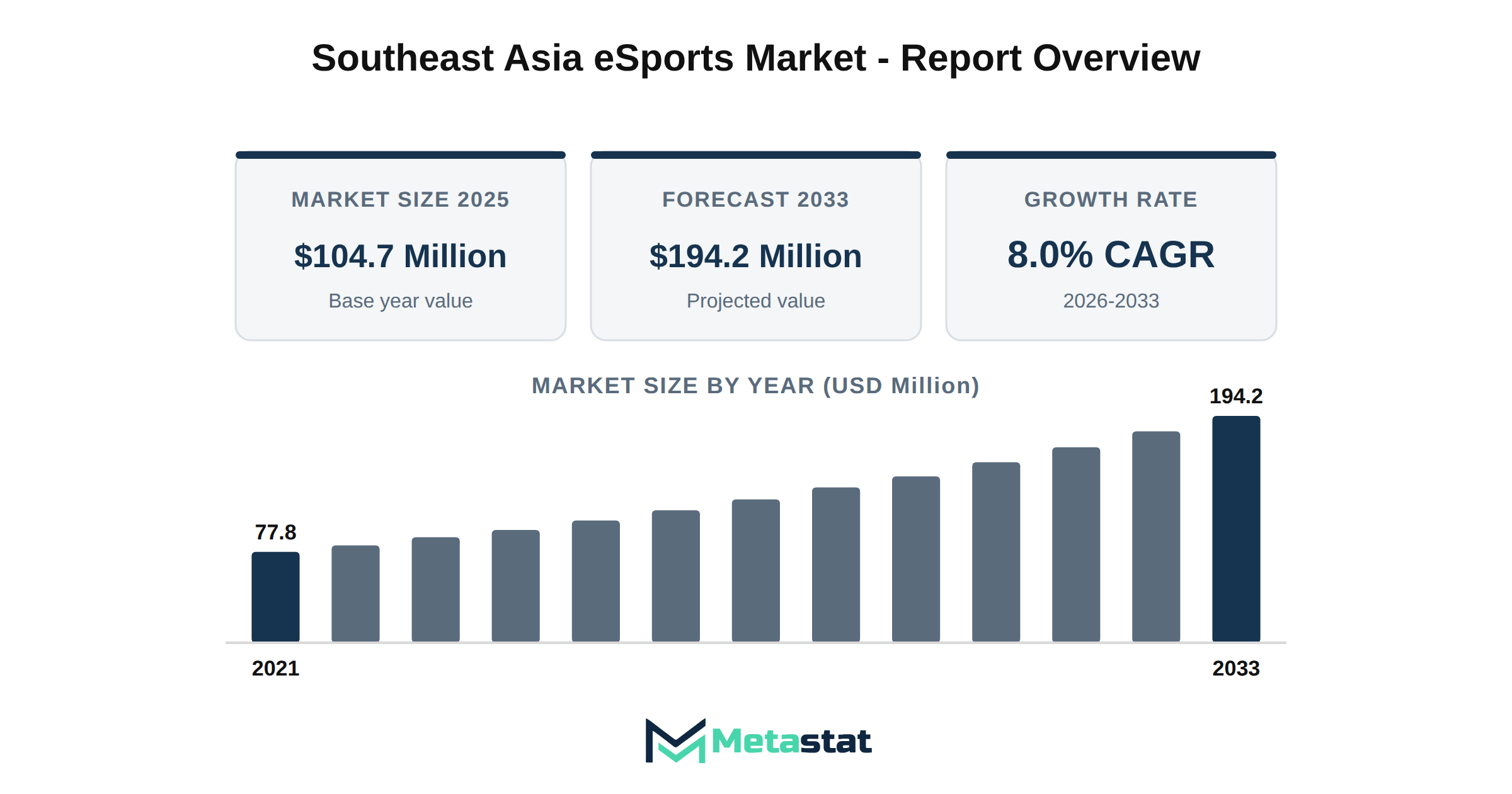
The Southeast Asia eSports market reached USD 104.7 million in 2025 and is projected to grow to USD 194.2 million by 2033, reflecting a compound annual growth rate (CAGR) of 8%. The market has shown consistent growth since 2021, when it recorded USD 77.8 million. Revenue growth is driven by multiple factors, including rising sponsorship and advertising spend, along with the increasing popularity of mobile gaming titles including Mobile Legends, PUBG Mobile, Free Fire, and VALORANT.
Mobile gaming significantly influences the Southeast Asia eSports market, with mobile platforms expected to dominate revenue streams through 2033. The trend towards mobile gaming aligns with growing smartphone penetration and improved internet connectivity in the region. This shift encourages competitive gaming among younger demographics, who increasingly engage in eSports events and tournaments.
Rising sponsorship and advertising expenditures in the eSports landscape highlight the growing appeal of competitive gaming. Companies recognize the potential audience reach and brand engagement opportunities offered by eSports, leading to increased investments in sponsorship deals. This trend not only benefits teams and publishers but enhances the overall visibility of the market.
The expansion of media rights and streaming monetization creates new revenue channels within the Southeast Asia eSports market. While audiences continue to flock to digital platforms for streaming tournaments, the value of broadcasting rights escalates, providing lucrative opportunities for both content creators and publishers.
Indonesia and the Philippines emerge because high-growth eSports markets, driven by large youth populations and a strong affinity for competitive gaming. The engagement levels in these countries create an environment ripe for investment and development of local leagues, enhancing competitive opportunities.
Vietnam, Thailand, and Malaysia offer additional growth opportunities within the Southeast Asia eSports market. The increasing investment in infrastructure and local teams supports the development of competitive gaming ecosystems, contributing to overall market expansion. The region's diverse gaming preferences further enhance the potential for various game genres to thrive.
The Southeast Asia eSports market experiences significant growth trends, driven by the increasing popularity of competitive gaming. Revenue projections indicate a shift towards mobile gaming, with mobile esports showing substantial dominance across the region. The market anticipates escalating investments in sponsorship and advertising, leading to enhanced monetization and engagement strategies for brands targeting the gaming audience.
Projected growth in the Southeast Asia eSports market reflects a compound annual growth rate (CAGR) of 8% from 2025 to 2033. This growth is underpinned by rising mobile gaming participation and viewer engagement, highlighting the region's potential for revenue generation.
Mobile esports continues to dominate the market with popular titles including Mobile Legends and PUBG Mobile attracting millions of players. The trend towards mobile platforms allows greater accessibility and engagement, particularly among younger demographics. This accessibility drives increased participation, enhancing overall market growth.
Brands increasingly allocate budget towards sponsorship and advertising within the esports ecosystem, capitalizing on the expanding audience. Sponsorship revenue is projected to grow from USD 41.5 million in 2026 to USD 64.6 million by 2033, reflecting strong investment in brand partnerships and promotional activities.
The media rights and broadcasting segment experiences notable expansion, with revenue expected to reach USD 41.5 million by 2033. The rise in streaming platforms creates new monetization opportunities, attracting both viewers and advertisers looking to connect with engaged audiences.
Titles like Mobile Legends, PUBG Mobile, Free Fire, and VALORANT drive competitive gaming engagement, contributing significantly to the market. These games build community and tournament participation, enhancing player and viewer interaction, which is essential for sustained market growth.
Indonesia and the Philippines stand out because high-growth markets within the Southeast Asia eSports sector. Indonesia's revenue is projected to rise from USD 34.1 million in 2026 to USD 61.4 million by 2033, while the Philippines anticipates reaching USD 38.3 million by 2033. These nations demonstrate a robust appetite for competitive gaming and esports events.
Vietnam, Thailand, and Malaysia present lucrative growth opportunities within the esports market. With evolving gaming demographics and increasing internet penetration, these countries are positioned to enhance their esports footprint, attracting further investments and development.
The competitive gaming audience expands rapidly, encouraging enhanced fan engagement through interactive platforms and community events. The growth of fan engagement is vital for sustaining interest and driving viewership, further strengthening the market's position in the entertainment sector.
Esports tournaments and regional leagues proliferate, creating competitive environments for players and enhancing the overall visibility of the esports scene. This expansion provides opportunities for local talent to shine and engage with larger audiences.
Publishers play a crucial role in developing the esports ecosystem within Southeast Asia. By investing in infrastructure and promoting tournaments, they enhance the competitive environment, building a dynamic community of players and fans.
Cross-platform gaming trends encourage diverse participation across different gaming devices, enhancing the accessibility of esports. This inclusivity drives increased engagement and facilitates connections between gamers, strengthening the community.
Digital goods and esports content represent significant monetization opportunities, with revenue derived from in-game purchases and exclusive content offerings. This segment allows brands to leverage their engagement with gamers, creating additional revenue streams.
Esports teams focus on commercialization, establishing brand partnership strategies to maximize revenue potential. Collaborations with brands enhance visibility and create unique promotional opportunities, benefiting both teams and sponsors.
Investment and funding trends indicate strong interest in the Southeast Asia eSports market. Investors recognize the growth potential and are eager to support emerging esports organizations, building a robust competitive environment.
Revenue from esports venues, events, and live tournaments is projected to rise because the demand for in-person experiences increases. These events serve because focal points for community engagement and brand visibility, enhancing overall market dynamics.
Streaming platforms play a significant role in expanding the esports audience, with creator-led content attracting viewers and driving engagement. This trend enhances the reach of esports, connecting creators with fans and advertisers.
Emerging business models within the esports sector provide innovative revenue opportunities for players, teams, and publishers. These models adapt to changing market conditions, ensuring sustainability and growth in the evolving market.
Competitive dynamics among esports publishers, teams, and tournament operators shape the market environment. These entities strive for dominance, influencing trends and establishing benchmarks for success within the industry.
Government support for esports development varies across Southeast Asia, contributing to the regulatory framework that shapes the industry. Supportive policies facilitate growth and attract investment, strengthening the overall market.
Youth demographics significantly contribute to esports adoption, with increasing engagement from younger audiences. This trend emphasizes the importance of targeting this demographic to drive participation and viewership.
Technological advancements including 5G and cloud gaming enhance connectivity, positively impacting esports growth. Improved access and reduced latency foster a more engaging gaming experience, driving further market expansion.
Talent development and professional player ecosystems expand, emphasizing the importance of nurturing skill and competitiveness within the market. This focus on talent cultivation supports long-term growth and sustainability for esports organizations.
Brand activation opportunities in esports broaden, with non-endemic brands seeking to engage with the gaming audience. These partnerships create innovative promotional strategies that enhance brand visibility and connect with consumers.
The Southeast Asia eSports market presents numerous opportunities through 2033, driven by technological advancements, evolving consumer preferences, and increased investment. Stakeholders capitalize on these trends to drive growth and enhance market dynamics.
Investment in digital transformation significantly influences the Southeast Asia eSports market. Expanding internet connectivity and increasing smartphone penetration create an environment conducive to engaging digital content consumption. Gamers and audiences increasingly demand immersive experiences, prompting eSports organizations to enhance their digital infrastructure. This transition focuses on adopting advanced technologies, including artificial intelligence and data analytics, which optimize operations and improve user experiences.
Rising venture funding supports the development of new platforms and technologies. Investors recognize the potential of the eSports sector, contributing to a surge in capital allocation for innovative game development and enhanced broadcasting capabilities. This financial support facilitates the emergence of new titles and formats, driving competitive growth within the market. The increase in operational efficiency and audience engagement leads to higher revenue streams, propelling market expansion.
While more players enter the ecosystem, competition intensifies, driving further investment in digital capabilities. The Southeast Asia eSports market benefits from this cycle of innovation and funding, establishing a robust framework for sustained growth over the forecast period. With a projected compound annual growth rate of 8 percent, the market's future remains promising, supported by continuous advancements in technology and digital engagement strategies.
Venture funding plays a significant role in the expansion of the Southeast Asia eSports market. Increased capital investment from both private and public sectors drives innovation and development within the industry. The influx of venture funding enables eSports companies to expand their portfolios, enhance their technological capabilities, and improve their marketing strategies. This dynamic investment environment encourages the launch of new gaming titles and platforms, driving user engagement and participation across diverse demographics.
The market benefits significantly from the growing interest in eSports, aligning with the rising popularity of competitive gaming among younger audiences. Enhanced funding levels support the development of tournaments, sponsorship opportunities, and extensive marketing campaigns. This creates an active ecosystem where brands seek to engage with the audience, thereby increasing revenue streams. The Southeast Asia eSports market is projected to realize substantial growth, with an anticipated compound annual growth rate of 8% through 2033.
Heightened venture funding facilitates the emergence of advanced technologies and innovative business models that transform the competitive gaming landscape. This trend positions the Southeast Asia eSports market for sustained growth and increased competitive advantage in the global arena.
Regulatory tightening significantly impacts the Southeast Asia eSports market, with compliance hurdles creating barriers for new entrants. Complex legal mandates complicate operations, particularly for smaller firms lacking the resources to navigate these requirements. This situation restricts competition, leading to a fragmented market where larger players maintain dominance.
Macroeconomic headwinds, including inflationary pressures, contribute to rising operating costs across the industry. Sustained inflation increases the cost of essential resources, adversely affecting profitability. Consequently, many companies face challenges in maintaining competitive pricing, limiting demand for eSports offerings.
Infrastructure gaps and connectivity deficits hinder market growth potential. Insufficient broadband coverage in certain regions affects user experience and participation rates. This limitation impacts player engagement and ultimately reduces market revenue opportunities. Development of robust infrastructure is crucial for enabling a quality experience for consumers.
Talent gaps create further challenges, with skilled labor shortages hindering the growth of the eSports ecosystem. A lack of qualified individuals in roles ranging from game development to marketing limits companies' ability to innovate and expand. This talent scarcity constrains operational efficiency and impacts the overall competitiveness of the market.
Geopolitical instability within the region introduces uncertainties that affect investment and business operations. Companies operating in politically volatile environments encounter risks that disrupt their strategies and long-term planning. These uncertainties create caution among investors, potentially stalling growth in the Southeast Asia eSports market.
The Southeast Asia eSports market faces significant challenges due to geopolitical fragmentation, which impacts trade relationships and increases uncertainty for stakeholders. Disruptions in diplomatic ties among countries lead to trade deficits and tariff friction, affecting the flow of goods and services essential for market operations. Such conditions pressure suppliers and game publishers, resulting in higher operational costs and reduced profitability.
Trade conflicts contribute to tariff barriers, which increase the cost of imported gaming equipment and technology. This scenario complicates the financial landscape for companies, forcing them to allocate resources toward compliance and adaptation strategies. The resultant pricing compression adversely impacts margins, compelling businesses to find innovative ways to optimize costs while maintaining competitive pricing in the Southeast Asia eSports market.
Technological disruptions present another layer of complexity, particularly in research and development. The rapid evolution of gaming platforms and genres necessitates continuous investment in R&D, creating challenges in resource allocation and talent retention. Companies grappling with evolving legal liabilities and intellectual property protection deficits encounter additional pressures that hinder growth and operational efficiency in the market.
Infrastructure gaps across the region present logistical challenges that affect market accessibility and consumer reach. Retrofitting existing systems to accommodate new technologies incurs significant costs, creating barriers to timely implementation. This situation intensifies competition among market players, making it essential for them to adapt quickly to changing conditions.
The Southeast Asia eSports market continues to evolve amid these challenges. Stakeholders strategically navigate this complex environment to seize opportunities for growth while mitigating risks associated with geopolitical fragmentation and its cascading effects on market operations.
The Southeast Asia eSports market experiences substantial opportunities driven by emerging regional demands and technological advancements. Increasing interest in competitive gaming across countries including Indonesia, the Philippines, and Vietnam generates a growing audience eager for new content and experiences. This expanding audience encourages investment in game development and digital platforms, creating a cycle of innovation and engagement aimed at meeting consumer expectations.
Infrastructure modernization in Southeast Asia enhances accessibility to high-speed internet and gaming facilities, increasing participation in eSports events. Improved connectivity facilitates streaming and online gaming, leading to a higher number of players and viewers. This shift drives revenue through advertising and sponsorships while enhancing the overall experience for gamers and fans alike.
Geographical expansion into underserved markets presents significant growth potential. Countries lacking established eSports ecosystems benefit from strategic investments aimed at building local talent and hosting events. This expansion attracts sponsors and advertisers seeking to engage with new demographics, thus increasing market revenue.
Technological disruptions, particularly in mobile gaming, reshape the industry. With a substantial portion of the audience engaging via mobile platforms, game developers target this segment effectively, resulting in rapid growth in mobile eSports revenues. The introduction of next-generation innovations, including augmented reality (AR) and virtual reality (VR), further diversifies gaming experiences and attracts new participants.
Digital transformation in payment systems and content delivery enhances user experience and accessibility, expanding the market reach. Evolving buying behaviors reflect a shift toward digital procurement methods, with consumers increasingly preferring online transactions for in-game purchases and merchandise. This trend highlights the importance of adapting to the changing preferences of the gaming community.
Strategic consolidation and cross-industry partnerships play a critical role in driving growth. Collaborations between gaming companies and technology firms or entertainment brands create synergistic opportunities that enhance product offerings and market penetration. This strategy allows stakeholders to leverage each other's strengths, resulting in better market positioning and increased competitiveness.
The Southeast Asia eSports market stands to benefit from these trends, positioning itself for sustained growth in the coming years. While the industry evolves, adaptability to emerging demands and technological advancements will define the future of eSports in the region.
The Southeast Asia eSports market is segmented based on Revenue Model, Game Genre, Gaming Platform, and Region.
The sponsorship segment is valued at USD 41.5 million in 2026 and is projected to reach USD 64.6 million by 2033, at a CAGR of 6.5% during the forecast period. Key demand drivers for this segment include an increasing number of viewers engaging with eSports events, which attracts brands seeking to enhance visibility and connect with younger demographics. High-profile tournaments and gaming events serve because significant platforms for sponsorship deals, maximizing brand exposure and engagement within the Southeast Asia eSports market.
The expansion of this segment hinges on the growing popularity of competitive gaming, where brands recognize the potential return on investment from sponsoring high-stakes tournaments. Brands continue to explore innovative marketing strategies through partnerships with eSports teams and organizations, creating deeper connections with consumers. This trend aligns with the overall growth trajectory of the market, where strategic sponsorships directly contribute to revenue streams for both event organizers and game publishers.
Increased participation in eSports tournaments and casual gaming creates a dynamic ecosystem, encouraging brands to leverage sponsorships because a means of capturing audience attention. The evolving environment of digital content consumption, where viewers engage with live streams and online events, enhances opportunities for sponsors to reach target audiences effectively. While the Southeast Asia eSports market matures, sponsorship will play a crucial role in shaping the financial dynamics of the entire industry.
Growth in the Southeast Asia eSports market reflects increasing demand for advertising within the sector. Brands recognize the potential of targeting the engaged and diverse audience within the gaming community. This recognition drives significant investment in advertising, creating a lucrative opportunity for advertisers aiming to connect with younger demographics who spend considerable time online, particularly on digital platforms.
The advertising segment is projected to reach USD 26.1 million by 2033, with a CAGR of 7.3% during the forecast period. This growth is fueled by the rise of streaming platforms, social media channels, and influencer marketing, which enhance brand visibility in the market. Brands leverage partnerships with popular eSports players and teams to create authentic connections with the audience, further propelling advertising investment.
Such strategies demonstrate a shift towards integrating brands within gaming environments, moving beyond traditional advertising methods. Enhanced analytics and targeting capabilities enable advertisers to reach specific audience segments effectively, optimizing campaign performance. While the market evolves, innovative advertising strategies shape the environment, offering brands new opportunities to engage with consumers in meaningful ways.
Sponsorship growth drives the Media Rights and Broadcasting segment within the Southeast Asia eSports market. The increasing number of eSports tournaments and leagues attracts substantial sponsorship investments from brands looking to tap into the youth demographic engaged in competitive gaming. These sponsorships create revenue streams that enhance media rights value, enabling broadcasting platforms to secure exclusive content and engage larger audiences.
The segment is projected to reach USD 41.5 million by 2033. Technological advancements in streaming and broadcasting facilitate wider dissemination of eSports content, further expanding audience reach. This increase in viewership encourages brands to invest significantly in advertising through these platforms, leading to heightened competition for media rights.
Regulatory changes regarding intellectual property protection and broadcasting rights contribute to the segment's growth. Compliance with evolving regulations supports a structured approach to media rights agreements, enabling stakeholders to secure their interests and enhance profitability. This trend results in increased confidence among investors and sponsors, driving revenue potential in the market.
The Southeast Asia eSports market continues to evolve, with consumer consumption shifting towards digital platforms for content consumption. Viewers increasingly prefer online streaming over traditional broadcast media, pushing broadcasters to adapt their strategies. This shift in behavior influences advertising strategies and enhances engagement metrics, which are critical for securing media rights deals.
Revenue generation through Game Publisher Fees plays an integral role in the Southeast Asia eSports market. This segment's projected growth at a CAGR of 7% during the forecast period indicates strong confidence in the ongoing demand for eSports titles. The continuous increase in the number of players and competitive gaming events drives publishers to establish and improve their monetization strategies. This results in a competitive environment where game publishers leverage various pricing strategies to maximize revenue.
Engagement in competitive gaming and community-driven online platforms creates a deeper connection between players and publishers. This interaction encourages publishers to invest in exclusive content, events, and partnerships, effectively expanding their reach and market presence. With increased viewership and participation, game publishers are positioned to benefit from both direct sales and ancillary revenue streams.
Investments in new technologies and platforms enhance the overall gaming experience, resulting in further adoption of eSports. Publishers are adapting their offerings to align with emerging trends, including mobile gaming and cross-platform capabilities, which expand their audience base. Strategic collaborations and innovative marketing tactics contribute to increasing visibility within the Southeast Asia eSports market.
The growing popularity of eSports reflects a shift in consumer behavior towards digital entertainment. This shift presents a strategic opportunity for game publishers to develop unique in-game experiences that cater to evolving player preferences. While the market continues to mature, insights gained from player engagement will inform future content development and monetization strategies.
Strong consumer engagement drives the growth of the Merchandise and Ticketing segment within the Southeast Asia eSports market. Enthusiasts increasingly purchase merchandise linked to their favorite games and teams, reflecting a growing trend toward fandom and brand loyalty. The rise of live events and tournaments creates opportunities for ticket sales, enhancing revenue streams for organizers and teams.
Adoption of digital platforms facilitates online purchasing options, streamlining access to both merchandise and event tickets. This shift supports a broader reach for brands, enabling effective connections with their audience. With increasing mobile and internet penetration across Southeast Asia, fans actively seek ways to interact with the eSports community through merchandise and live experiences.
Event organizers and game publishers play important roles in expanding this segment. Collaborations with local influencers and brands enhance visibility and accessibility, driving consumer interest. The segment's growth reflects a shift in consumer behavior, where fans prioritize experiences related to eSports over traditional leisure activities, indicating a strategic opportunity for businesses within the market.
Revenue from digital goods and esports content contributes significantly to the Southeast Asia eSports market. Factors driving demand include the increasing popularity of competitive gaming and the widespread adoption of mobile platforms. Gamers actively seek in-game purchases, which enhance their gaming experience and provide customization options. Trends indicate a shift towards digital content consumption, with audiences gravitating towards streaming platforms and engaging with esports events through various online channels.
Technological maturation influences the evolution of this segment. Advancements in mobile gaming and cloud gaming technology facilitate smooth experiences and boost user engagement. While game developers innovate, they continually introduce new content and updates, which sustains player interest and encourages ongoing spending. This dynamic environment promotes healthy competition among platforms and game publishers, driving them to improve their offerings.
End-use dynamics illustrate trends in consumer behavior, with younger audiences increasingly turning to esports because a form of entertainment. This demographic shift opens strategic opportunity windows for brands seeking to engage with the gaming community. Merchandising related to popular games, alongside exclusive content and virtual goods, enhances revenue streams while strengthening brand loyalty among gamers.
Pricing structures within this segment remain influential. Competitive pricing for digital goods, combined with promotions and bundles, attracts a broader audience. Meanwhile, game publishers are exploring alternative monetization avenues to offset potential margin pressures resulting from rising development costs. Such strategies contribute to a resilient supply chain that effectively responds to market demands.
Overall, the digital goods and esports content revenue segment presents significant growth potential within the Southeast Asia eSports market. Capital investment continues to flow into technology and marketing initiatives that improve user experience and create lasting connections with consumers. While the market evolves, ongoing innovations will further enhance engagement and revenue opportunities across the region.
Valued at USD 43.8 million in 2026, the Multiplayer Online Battle Arena segment is projected to reach USD 70.7 million by 2033, at a CAGR of 7.1% during the forecast period. Demand for this genre is driven by increasing user engagement and the popularity of competitive gaming. Growth in participation rates and viewer numbers enhances sponsorship opportunities, creating a strong revenue stream for developers and organizers within the Southeast Asia eSports market.
Technological advancements and continuous updates to game mechanics improve player retention and attract new participants. This environment of innovation contributes to the segment's expansion, encouraging investments from various stakeholders seeking to capitalize on the rising interest in eSports. Enhanced game experiences through improved graphics and gameplay options strengthen player loyalty, further supporting revenue growth.
While player interaction evolves, consumption patterns shift towards digital goods and in-game purchases, increasing revenue generation. Market dynamics demonstrate a clear trend towards mobile platforms, which are becoming increasingly popular for multiplayer online battle arenas, ensuring accessibility for a wider audience. The Southeast Asia eSports market reflects these changes, with mobile gaming platforms expected to significantly influence future adoption rates and revenue streams.
Significant growth in the Battle Royale segment stems from increasing consumer engagement and technological advancements. This genre attracts a diverse audience, enhancing its appeal and driving revenue growth within the Southeast Asia eSports market. The popularity of live streaming and community-driven content fuels demand, resulting in a surge of interest among gamers and spectators alike.
The Battle Royale segment is projected to reach USD 44.1 million by 2033, with a CAGR of 9% during the forecast period. Evolving gameplay mechanics and continuous updates from developers keep the audience invested, ensuring sustained interest and player retention. Emerging gaming platforms, particularly mobile, provide easy access to this genre, further expanding its reach.
Competitive tournaments and events centered around Battle Royale games generate substantial viewership and sponsorship opportunities. Brands recognize the value of aligning with popular titles, leading to increased investment in this segment. The Battle Royale genre remains a critical contributor to revenue and growth trajectory in the Southeast Asia eSports market.
In the Southeast Asia eSports market, the First-Person and Tactical Shooters segment experiences significant adoption driven by evolving consumer preferences and technological advancements. Engaging gameplay mechanics and competitive dynamics attract a dedicated player base, fueling revenue growth through in-game purchases and tournament participation.
Technological maturation enhances user experiences. Developers consistently release next-generation upgrades, ensuring improved graphics, gameplay fluidity, and immersive environments. This evolution keeps existing players engaged while attracting new audiences, contributing to the segment's growth.
Market dynamics shift towards competitive gaming, intensifying interest in eSports tournaments that feature First-Person and Tactical Shooters titles. High viewership and participation rates provide lucrative opportunities for sponsors and advertisers, driving revenue generation from diverse channels including sponsorships and advertising.
Participants in this segment, including Riot Games, Inc. and Electronic Arts Inc., continue to innovate within their franchises, enhancing the overall competitive landscape. This focus on product evolution facilitates sustained interest and community building, enhancing player retention and market share.
By 2033, the segment is projected to reach USD 36 million, reflecting the robust demand trajectory within the Southeast Asia eSports market. This growth aligns with the broader trends observed in eSports, indicating a promising future for First-Person and Tactical Shooters.
Growth in the Sports Simulation segment contributes significantly to the overall expansion of the Southeast Asia eSports market. This segment is projected to grow at a CAGR of 7.1% during the forecast period. Increasing participation in sports-related gaming and enhanced realism in game design cater to the preferences of competitive players and audiences. The rise of online platforms enables effective broadcasting of esports events, further boosting viewership and engagement in the sports simulation genre.
The evolution of gaming technology, including graphics and user interface improvements, increases the appeal of sports simulation games. Innovations enhance player experience and attract a diverse player base, shifting consumption patterns across age groups. Growing interest in competitive gaming has prompted game developers to invest in high-quality content and features that connect with users.
Revenue generation through advertising and sponsorship plays a critical role in supporting the growth of this segment. Advertisers recognize the potential of reaching targeted demographics through esports events and platforms. This trend is expected to create lucrative opportunities for both game developers and associated stakeholders within the market.
Market dynamics indicate a shift toward a more integrated approach, blending traditional sports with digital formats. This integration increases market penetration across different regions, including Southeast Asia, facilitating broader acceptance of sports simulation games. While technological advancements continue, the segment is poised for sustained growth driven by evolving consumer preferences and enhanced gaming experiences.
Fighting games represent a unique segment within the Southeast Asia eSports market, attracting a dedicated player base that values competitive play and community engagement. The primary demand drivers include the popularity of fighting tournaments, which generate significant interest and viewership. Influential titles in this genre maintain strong online and offline tournament circuits, creating a dynamic ecosystem that enhances player participation and spectator engagement.
Adoption of fighting games continues to expand, driven by the increasing availability of diverse platforms and accessibility for gamers. Enhanced graphics, refined gameplay mechanics, and innovative character designs contribute to heightened consumer interest. This evolution in product offerings creates opportunities for developers to attract new audiences while retaining existing players who seek continuous improvement in gaming experiences.
Downstream applications of fighting games extend beyond traditional gaming, influencing related sectors including merchandise sales and sponsorship opportunities. The growing esports culture supports partnerships with brands that aim to reach engaged demographics, further driving revenue streams for game developers and event organizers. Regulatory compliance standards in tournament organization ensure fair play and enhance industry credibility, attracting more participants and investors.
Cost structures associated with game development in this segment require ongoing investment in both technology and marketing. Pricing volatility arises from fluctuating consumer demand and the competitive landscape, emphasizing the importance of strategic pricing models and promotional activities. Margin pressures from rising development costs necessitate a focus on maximizing revenues through expanded distribution channels and targeted marketing efforts.
Strategic opportunity windows exist for developers to innovate and introduce new titles or updates within the fighting games genre. Capital investment outlook remains positive, reflecting a commitment to enhancing gameplay experiences and increasing market share. By leveraging trends in consumer preferences and technological advancements, stakeholders in the Southeast Asia eSports market navigate competitive dynamics and position themselves for long-term growth.
Interest in Strategy and Auto Battler Games demonstrates noticeable momentum within the Southeast Asia eSports market, fueled by the rise of competitive gameplay and engaging narratives. Gamers increasingly seek new experiences, driving demand for innovative titles that blend strategy with action. Enhanced graphics and gameplay mechanics contribute to this shift, enticing players to spend more time and resources on these games.
Adoption benefits from the growing online gaming community, with players sharing strategies and experiences through streaming platforms and social media. Such interactions not only strengthen community ties but increase the visibility of Strategy and Auto Battler Games, attracting both new players and dedicated fans. This phenomenon encourages game developers to refine their offerings further, enhancing engagement and participation.
Technological advancements play a crucial role, with improvements in mobile and internet connectivity allowing broader access to these games. The overall rise in smartphone usage in Southeast Asia supports this trend, enabling gamers to enjoy high-quality content seamlessly. Developers respond to this expanding audience by optimizing games for mobile platforms, ensuring compatibility across various devices and enhancing playability.
The competitive environment emphasizes strategic gameplay and skill development, creating a dedicated fan base willing to invest in game-related content, merchandise, and related events. This engagement boosts revenue across multiple channels, including advertising and sponsorship opportunities. Consequently, Strategy and Auto Battler Games position themselves because a vital segment within the evolving Southeast Asia eSports market.
Ultimately, a combination of evolving consumer preferences, technological progress, and robust community engagement underpins the future of Strategy and Auto Battler Games. The expertise gained in developing and marketing these games will shape their presence within the broader eSports ecosystem, driving sustained interest and participation.
Racing Games occupy a distinctive niche within the Southeast Asia eSports market. The segment benefits from a growing base of racing enthusiasts who engage with both casual and competitive gaming experiences. Technological advancements in gaming platforms enhance graphics and gameplay, attracting a broader audience and increasing player retention. Increased investment in eSports infrastructure facilitates major racing competitions, appealing to fans and raising the segment's profile. The integration of virtual reality and augmented reality into racing games introduces innovative gameplay mechanics, further improving user engagement and enjoyment.
Participation in racing games often extends beyond digital platforms into real-life automotive events, creating a connection that boosts both segments. This crossover strengthens brand partnerships and sponsorship opportunities, allowing publishers to capitalize on the large fan base. Shifts in consumption patterns show a preference for immersive and interactive experiences, positioning racing games because a vital component of the eSports ecosystem. Increased access to high-speed internet across Southeast Asia enhances online multiplayer experiences, enhancing the competitive nature of racing games.
Regulatory compliance and certifications for eSports events ensure fair play and safety standards, contributing to a more sustainable market environment. Evolving consumer expectations demand continuous innovation, prompting publishers to invest in next-gen upgrades and content evolution. The strategic opportunity windows present within the racing games sector indicate potential for growth because brands explore new collaborations and promotional strategies. Ongoing capital investment in game development and marketing will likely strengthen the segment's position within the larger Southeast Asia eSports market.
Emerging trends in the Southeast Asia eSports market highlight the increasing popularity of digital card games and arena brawlers. Engagement with these genres stems from their accessibility and the ability to appeal to diverse gaming audiences. The interactive nature of these games enhances community building, improving player retention and participation in competitive events.
Technological maturation in gaming platforms supports the integration of advanced graphics and gameplay mechanics. Continuous upgrades in mobile and cross-platform capabilities contribute to a richer user experience. Consumers increasingly seek smooth transitions between devices, emphasizing the importance of strategic development in this segment.
End-use dynamics reflect growing interest from younger demographics, who favor shorter gaming sessions that fit into their lifestyles. This shift influences game design and marketing strategies, focusing on quick, engaging gameplay experiences. Catering to these consumption shifts presents a significant opportunity for developers within the segment.
Competitive elements within digital card games and arena brawlers incentivize players to invest time and resources, resulting in stronger monetization strategies. In-game purchases and microtransactions play a critical role in revenue generation, driving profitability for publishers. The Southeast Asia eSports market recognizes the importance of this financial model, aligning with consumer engagement trends.
Valued at USD 74 million in 2026, the Mobile segment is projected to reach USD 131.9 million by 2033, at a CAGR of 8.6% during the forecast period. Increased smartphone penetration in Southeast Asia fuels user engagement, contributing to the mobile gaming segment's expansion. Young demographics drive demand for mobile gaming, since mobile devices offer accessibility and convenience not found in traditional gaming platforms.
Technological advancements in mobile hardware and network infrastructure enhance user experiences through improved graphics and faster connectivity. The rise of multiplayer mobile games with competitive elements appeals to consumers seeking social interaction and community engagement. This aspect aligns with the overall growth of the Southeast Asia eSports market, because mobile gaming creates a vibrant ecosystem of tournaments and events.
Investment from game developers in region-specific content and localized marketing strategies strengthens mobile market penetration. Diverse gaming genres, including Battle Royale and Multiplayer Online Battle Arena, attract a broad audience, further driving revenue growth. The successful integration of in-game purchases and advertising enhances monetization strategies, securing additional revenue streams for developers and publishers.
While competition intensifies, firms prioritize innovation in gameplay and user engagement to capture market share. The Mobile segment's continued growth results in a competitive environment, prompting companies to invest in next-generation upgrades and platform evolution. Strategic partnerships among developers, publishers, and eSports organizations encourage collaboration, enhancing content offerings and driving further adoption.
Forecasts indicate the PC segment is estimated to reach USD 39.6 million by 2033, at a CAGR of 6.5% during the forecast period. Growth in this segment aligns with the increasing popularity of competitive gaming and the demand for high-performance gaming experiences. Gamers increasingly seek enhanced graphics, faster response times, and immersive experiences, driving the adoption of powerful PC setups.
The evolution of gaming technology plays a critical role in segment expansion. Advancements in graphics processing units (GPUs) and central processing units (CPUs) enable developers to create more sophisticated and visually stunning games, appealing to both casual and competitive players. The Southeast Asia eSports market benefits from a rich ecosystem of game developers and hardware manufacturers, creating a competitive environment that spurs innovation and investment.
Consumption shifts towards digital distribution platforms further influence this segment. Gamers increasingly prefer purchasing games and in-game content digitally, reducing reliance on physical media. This trend enhances accessibility and convenience, allowing players to obtain titles and updates quickly. Consequently, gaming platforms experience increased demand for digital content, benefiting PC segment revenues.
Regulatory compliance and industry standards remain relevant considerations for market players. Ensuring adherence to local regulations regarding content and data protection is essential for sustained growth. This aspect encourages companies to invest in compliance measures, influencing cost structures and operational strategies. The forecast period presents opportunities for innovative solutions and enhanced gaming experiences within the PC segment of the Southeast Asia eSports market.
Growth in the Console segment reflects the increasing popularity of gaming consoles among consumers in Southeast Asia. This trend is driven by advancements in technology and the introduction of next-generation gaming systems, which enhance the gaming experience. Players exhibit strong interest in high-quality graphics and immersive gameplay, leading to greater engagement with the market.
Segment adoption relies on a combination of competitive pricing and appealing game titles designed for consoles. Developers and publishers focus on creating exclusive content to attract gamers, contributing to revenue generation. Console gaming faces challenges from mobile platforms, prompting companies to innovate and differentiate their offerings to maintain relevance.
Valued at USD 11.9 million by 2033, the Console segment presents a strategic opportunity for investment. Companies enhance their market positioning through partnerships, promotional strategies, and community engagement initiatives. The competitive environment emphasizes the need for ongoing technological evolution and consumer-centric approaches to ensure sustained growth.
Projected growth for the Cross-Platform segment stands at a CAGR of 9.2% during the forecast period, highlighting the increasing consumer preference for versatile gaming experiences. This growth results from the rising popularity of games that support cross-platform play, allowing gamers to engage seamlessly across various devices. The demand for more inclusive gaming environments drives investment from developers and publishers, enabling enhanced user experiences across platforms.
Technological advancements contribute significantly to the segment's expansion. The adoption of cloud gaming solutions enables smoother transitions between devices, enhancing gameplay accessibility. Players expect the ability to connect and compete with friends regardless of the platform, prompting developers to prioritize cross-platform capabilities in new titles.
Market dynamics reflect a shift in consumption patterns, with gamers seeking titles that offer flexibility and accessibility. This trend influences purchasing decisions and stimulates competition among developers, encouraging the creation of innovative, engaging content that appeals to a broader audience. The Southeast Asia eSports market benefits from these developments, driven by cross-platform gaming that attracts a diverse player base, including both casual and competitive gamers.
Cross-Platform gaming represents an essential segment within the market, contributing to its overall growth. Increased collaboration between gaming companies and technology providers creates a robust ecosystem that supports the development of cross-platform functionalities. While investment in this area continues, the segment is expected to maintain its position in the Southeast Asia eSports market.
Growth in the Indonesian segment drives notable expansion within the Southeast Asia eSports market. Valued at USD 34.1 million in 2026, it is projected to reach USD 61.4 million by 2033, at a CAGR of 8.8% during the forecast period. The rising popularity of eSports among Indonesian youth contributes significantly to this growth, with increasing participation in competitive gaming and heightened interest in both viewing and playing. Enhanced internet connectivity and affordable gaming devices facilitate access to eSports. The local gaming community has expanded rapidly, with numerous tournaments and events increasing brand engagement and sponsorship opportunities. Strategic partnerships between game developers and local esports organizations encourage innovation and content creation, driving revenue from sponsorship, media rights, and digital goods. Brand investments in this segment indicate a robust outlook and high potential for revenue generation in the Indonesian market.
Growth in the Philippines segment of the Southeast Asia eSports market reflects increasing engagement and investment from both local and international stakeholders. The segment is estimated to reach USD 38.3 million by 2033, at a CAGR of 8.5% during the forecast period. This upward trajectory arises from heightened interest among gamers and audiences, fueled by the proliferation of mobile gaming platforms and the popularity of eSports events. Enhanced infrastructure and internet connectivity play essential roles in enabling more players to participate and consume eSports content.
Technological advancements contribute significantly to the market's development, with ongoing upgrades in gaming hardware and software. These improvements enhance user experience and attract a broader audience. Partnerships with media companies and strategic collaborations with game publishers enable deeper market penetration and visibility for regional players. The increasing presence of local eSports organizations and tournaments further stimulates interest, driving up viewership and engagement.
Consumer behavior shifts, particularly among millennials and Generation Z, indicate a strong preference for interactive entertainment forms, including eSports. This trend results in higher advertising revenues, driven by brands targeting this demographic through sponsorships and promotions. Economic growth in the Philippines supports increased disposable income, further incentivizing eSports participation and consumption. Overall, these dynamics position the Philippines because a vital contributor to the overall growth within the Southeast Asia eSports market.
Vietnam demonstrates a growing interest in eSports, contributing to the overall expansion of the Southeast Asia eSports market. This segment is projected to reach USD 34.9 million by 2033, reflecting an increasing consumer base and engagement in competitive gaming. Factors driving this growth include the rise of mobile gaming, which aligns with the preferences of younger demographics, coupled with enhanced internet connectivity across the region. Technological advancements enable immersive experiences that attract both players and spectators.
Investment in local tournaments and events supports a competitive scene, encouraging sponsorship and advertiser interest. The participation of game publishers and platforms strengthens the ecosystem, promoting various genres that appeal to Vietnamese gamers. While demand evolves, a shift towards mobile platforms continues to gain traction, creating further growth opportunities. With a projected CAGR of 8.8 percent, the Vietnam segment signifies strong potential for stakeholders in the market.
Underpinning the expansion of the Thailand segment is a projected growth at a CAGR of 7.2% during the forecast period. Several factors drive this growth, including rising disposable incomes, increased internet penetration, and a growing appetite for competitive gaming among the youth population. The local gaming community actively engages in various eSports events, enhancing the overall market visibility.
The demand for mobile gaming platforms significantly influences the segment's performance. Mobile gaming enjoys popularity owing to its accessibility, allowing players to participate easily. This trend aligns with the rising smartphone adoption rates across Thailand, further propelling engagement within the Southeast Asia eSports market.
Investment in sponsorship opportunities has proven crucial for segment growth. A strong ecosystem of local and international brands seeks to partner with eSports teams, enhancing their visibility and brand loyalty among the gaming community. Sponsorship revenue is projected to increase, reflecting the growing recognition of eSports because a viable marketing platform.
Advertising revenue contributes to the overall financial health of the segment. Advertisers are increasingly directing their budgets towards eSports due to rising viewership. Effective targeting of young audiences through digital platforms affirms the market's attractiveness to brands looking to engage with tech-savvy consumers.
Technological advancements, alongside increased competition among game developers, are reshaping the gaming experience. Next-generation upgrades in graphics and gameplay mechanics create a more immersive environment for players. This dynamic environment invites greater participation and retention, positively affecting revenue streams within the market.
Consumer behaviors shift towards mainstream acceptance of eSports, with mainstream media coverage and event broadcasts gaining traction. Enhanced visibility through platforms like streaming services enhances overall audience engagement, reinforcing the segment’s position in the broader Southeast Asia eSports market. Continued investment in infrastructure and events will further support this upward trajectory.
Recent developments in the Malaysian eSports scene highlight a dynamic shift in audience engagement, driven by the increasing accessibility of gaming platforms and the proliferation of internet connectivity. The rise of mobile gaming has transformed consumer behavior, drawing in a broader demographic that includes both casual and competitive gamers. This trend aligns with the overall growth observed in the Southeast Asia eSports market, attributed to more players participating in various gaming genres.
Investment in local eSports infrastructure and events fuels segment expansion. Malaysian organizers focus on hosting tournaments and creating platforms for local talent, which enhances community engagement and promotes grassroots development. These initiatives attract sponsorship from brands eager to tap into the youthful and tech-savvy audience that gaming offers.
Regulatory compliance remains significant in shaping industry practices. The Malaysian government actively supports digital initiatives, providing a favorable environment for eSports to flourish. This support includes the establishment of frameworks that ensure fair competition and protect the interests of gamers and stakeholders involved in the market.
Technological advancements play a crucial role in the evolution of eSports in Malaysia. Developers invest in enhancing gaming experiences through high-quality graphics and immersive gameplay, appealing to both local and international markets. This evolution creates a competitive landscape that encourages continuous innovation, ensuring games evolve alongside consumer expectations.
Strategic collaborations between game developers and local businesses present new opportunities. Partnerships enhance content distribution and marketing strategies, driving revenue growth. While brands recognize the potential of eSports, the market experiences a surge in advertising and sponsorship deals, promoting further expansion and reinforcing Malaysia's position within the Southeast Asia eSports market.
Engagement in the Southeast Asia eSports market benefits from Singapore’s robust digital infrastructure and a tech-savvy population. Significant interest in gaming and competitive events fuels demand for eSports activities and related offerings. The gaming community thrives in Singapore, supported by a favorable regulatory environment and increased investment from local and international stakeholders. Technological advancements drive innovation in gaming platforms, enhancing user experience and attracting more players. Next-generation upgrades in hardware and software contribute to an evolving gaming landscape, creating an atmosphere conducive to eSports growth. Consumer behavior shifts toward online platforms for entertainment, with eSports events gaining popularity among a broader audience. Regulatory compliance and industry standards shape the operational framework for eSports, ensuring a secure environment for both players and sponsors. Investment in marketing and sponsorship opportunities strengthens the market presence of various gaming companies. Strategic collaborations among players in the eSports ecosystem enhance visibility and attract fans, ultimately boosting revenue streams.
Cambodia's participation in the Southeast Asia eSports market indicates significant potential for growth. Increasing internet penetration, coupled with a young and tech-savvy population, drives engagement in eSports. The rise of mobile gaming, particularly in developing regions, aligns well with local demographic trends. Enhanced access to affordable mobile devices facilitates participation in competitive gaming, providing an avenue for aspiring players and teams.
Investment in local eSports events and tournaments promotes community engagement, generating interest among fans and players. The establishment of local teams and gaming leagues enhances infrastructure and nurtures talent, contributing to a competitive scene. Collaboration with game publishers and sponsors opens avenues for revenue generation and further development of the market.
Regulatory frameworks influence market dynamics, shaping the environment for competitive gaming in Cambodia. Ongoing efforts to establish standards and regulations create a more structured environment, attracting investment and sponsorship opportunities. While the market matures, a focus on sustainability and the development of professional leagues enhances its appeal, driving further growth. The future of the eSports market in Cambodia holds promise, with strategic investments and increased participation likely to shape its trajectory in the coming years.
Growth in the Others segment, encompassing Myanmar, Brunei, Laos, and Timor-Leste, reflects increasing interest in competitive gaming within these countries. Factors driving demand include a youthful population, rising internet penetration, and the widespread use of mobile devices, which facilitate easy access to eSports content. Emerging local gaming communities promote engagement through tournaments and events, encouraging a competitive spirit among players.
Technological maturation is important in segment expansion, with advancements in mobile gaming technology enhancing user experiences. Local game developers are creating content tailored to regional preferences, increasing relevance and driving consumption shifts. Regulatory compliance standards related to digital platforms impact market dynamics, requiring adherence to local laws and guidelines while promoting responsible gaming practices.
Consumption shifts towards mobile platforms demonstrate user preference for accessible gaming experiences. This trend encourages investment in regional infrastructure to support competitive gaming events, enhancing the visibility of the Southeast Asia eSports market. Strategic opportunity windows emerge because brands seek partnerships with local influencers to reach younger audiences and create brand loyalty.
Market participants face challenges related to pricing volatility and margin pressures due to competition from international gaming companies. The relationship between local and global players influences market positioning and investment strategies. While the segment evolves, ongoing capital investment in the region will support continued development and enhance the overall environment surrounding the Southeast Asia eSports market.
The Southeast Asia eSports market experiences significant dynamics influenced by strategic consolidation, partnerships, and technological advancements. Companies including Riot Games, Inc., Garena, and Tencent Games / Level Infinite engage in collaborations that enhance their market presence and expand their customer base. These strategic alliances promote innovation and drive market penetration through shared resources and expertise.
Pricing architectures and commercial models exhibit variation among players in the market. Electronic Arts Inc. and Activision Publishing, Inc. leverage competitive pricing strategies to attract users, while KRAFTON, Inc. and Ubisoft Entertainment focus on product differentiation through unique game offerings. This approach allows them to maintain customer loyalty and enhance brand equity.
Investments in research and development are crucial for many companies, enabling them to create proprietary technology moats. Firms including Epic Games, Inc. and Bandai Namco Entertainment Inc. continue to develop advanced games that secure their competitive positioning. The market faces barriers to entry, driven by established companies protecting their intellectual property portfolios to safeguard against new entrants and startup disruptions.
With the evolving landscape of the Southeast Asia eSports market, companies like ESL FACEIT Group and ONIC Esports actively pursue customer retention strategies. These strategies include enhancing user engagement through community-building initiatives and offering exclusive content. Such efforts contribute to the overall stability and growth prospects of the market.
Market size is forecast to rise from USD 104.7 million in 2025 to over USD 194.2 million by 2033. This growth trajectory reflects an 8.0% CAGR, supported by several macroeconomic factors. In the bullish scenario, an uptick in consumer engagement and technological advancements results in accelerated demand for eSports, while a bearish outlook could arise from regulatory challenges or economic downturns impacting discretionary spending.
Changes in downstream demand will likely stem from evolving consumer preferences and increasing participation in competitive gaming. The maturation of core industries will further shape the Southeast Asia eSports market, driven by brands recognizing the potential of investing in eSports for targeted marketing strategies. Structural consumption shifts towards digital entertainment reinforce the eSports industry's position within the broader entertainment landscape.
Next-generation technology integration, particularly in mobile and cloud gaming platforms, enhances user experiences and expands access to eSports content. R&D commercialization timelines play a critical role in introducing innovative gaming experiences, which are essential for maintaining competitive advantage. The life-cycle of products within this sector will continue to evolve alongside changing consumer expectations and technological advancements.
Regulatory evolution and compliance milestones will influence market dynamics. While governments adapt to the rapidly changing landscape, policies surrounding eSports sponsorship and advertising will require ongoing adjustments, creating opportunities for compliant businesses. Geopolitical realignments and shifting trade corridors impact regional supply chains, necessitating agile responses from industry stakeholders.
Strategic capital allocation and infrastructure commitments will shape investment vectors within the market. Companies that identify and address emerging white-space opportunities, along with unmet enterprise needs, position themselves for growth in high-potential areas. Executive-level strategic imperatives will focus on developing defensibility roadmaps that cater to the evolving demands of the Southeast Asia eSports market.
Overall, the future outlook for the Southeast Asia eSports market remains positive, driven by a combination of consumer engagement, technological advancements, and strategic investments. Understanding these dynamics will be essential for stakeholders aiming to capitalize on the growth of this sector.
The report strategically identifies and profiles the key market players and analyses their core competencies in each sub-segment of the eSports market.
Report Attributes | Details |
Study Period | 2021-2033 |
Base Year | 2025 |
Estimated Year | 2026 |
Forecast Period | 2026-2033 |
Historical Period | 2021-2025 |
Growth Rate | CAGR 8.0% from 2026 to 2033 |
Revenue Unit | USD million |
Segmentation | By Revenue Model, Game Genre, Gaming Platform, Region, and Region |
Find answers to common questions about this report
The Southeast Asia eSports market size was valued at USD 104.7 million in 2025, according to the Metastat Insights study.
The eSports market is projected to grow at a CAGR of 8.0% during the forecast period from 2026 to 2033.
Sponsorship leads the Southeast Asia eSports market, generating USD 41.5 million in 2026 and projected to reach USD 64.6 million by 2033, representing a compound annual growth rate of 6.5%.
Investment in digital transformation and rising venture funding significantly drive the Southeast Asia eSports market. Expanding internet connectivity and increasing smartphone penetration enhance digital content consumption, while investor interest encourages innovation and development, leading to higher revenue streams and market expansion. The projected compound annual growth rate of 8 percent highlights the market's growth potential.
Regulatory tightening and complex legal mandates restrain growth in the Southeast Asia eSports market by creating barriers for new entrants and limiting competition. Macroeconomic headwinds, including inflationary pressures, increase operating costs, while infrastructure gaps and talent shortages hinder market potential. Geopolitical instability and trade conflicts further complicate the financial landscape, impacting profitability and investment.
Investment in digital transformation, expanding internet connectivity, and increasing smartphone penetration favor product adoption in the Southeast Asia eSports market. These factors create an environment conducive to immersive digital content consumption, enhancing user experiences and driving demand for innovative gaming titles and platforms.
The eSports market is estimated to reach a valuation of USD 194.2 million by 2033.
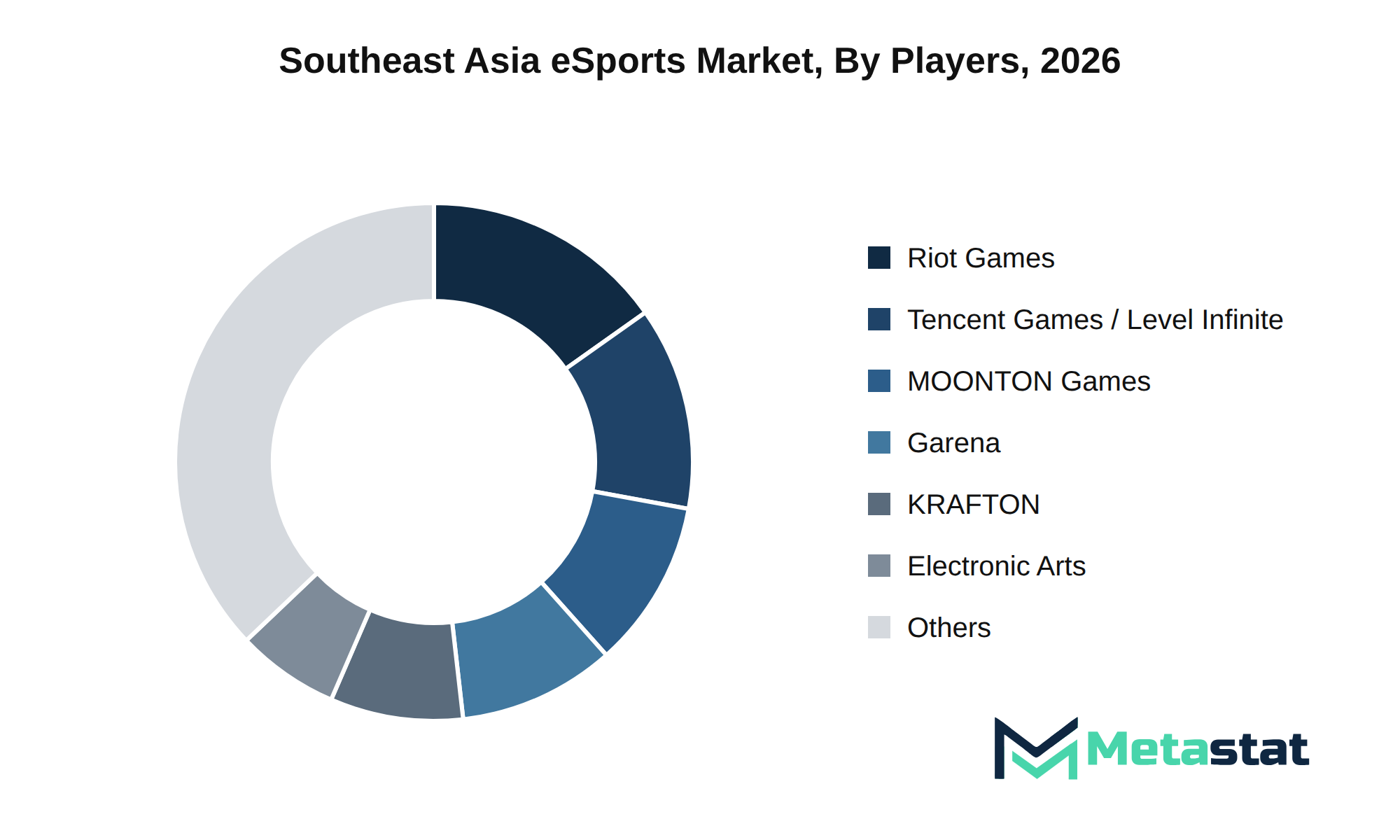
Key players in the Southeast Asia eSports market include Riot Games, Inc., MOONTON Games, Garena, Tencent Games / Level Infinite, KRAFTON, Inc., and Electronic Arts Inc. These companies significantly influence the industry through their popular titles and competitive events.
The revenue model breakdown includes sponsorship at 37%, media rights and broadcasting at 19%, advertising at 14.1%, game publisher fees at 11.4%, digital goods and esports content revenue at 11.1%, and merchandise and ticketing at 7.3%.
The mobile gaming platform leads revenue generation, with a projected increase from USD 74 million in 2026 to USD 131.9 million by 2033, reflecting a compound annual growth rate of 8.6%.
The analysts below cover Information & Technology research at Metastat Insights.
LEAD ANALYST
Utkarsh Khirodkar is a Lead Market Research Analyst at MetaStat Insight, specializing in market intelligence, technology sector assessments, and competitive strategy.

PRINCIPAL CONSULTANT - ENTERPRISE AI & EMERGING TECHNOLOGIES
Banking & Finance · Electronics and Semiconductor · Energy and Power · Healthcare IT · Information & Technology · Professional Services
Vijay Gunti is a Principal Consultant at MetaStat Insight, bringing over two decades of experience across enterprise digital transformation, technology strategy, and intelligent systems.

LEAD CONSULTANT - COMMUNICATION, TELECOM, AND IT
Electronics and Semiconductor · Information & Technology · Machinery & Equipment · Professional Services
Ravindra Sathe Consultants for Communication, Telecom, and IT at MetaStat Insight. He leads the firm's industry research initiatives across telecommunications infrastructure, digital connectivity, enterprise networking, and emerging information technology domains.
Assessing commercial microgrid software adoption requires looking past top-level installation numbers and examining utility interconnection queues. The research provided verifiable data on average permitting timelines, tariff structures, and battery storage integration costs across regional utility territories. That grounded perspective was valuable for our team when building five-year demand projections for industrial microgrid controllers.
Ambulatory surgical centers have very different purchasing cycles for robotic-assisted surgery platforms than major hospital networks. The MetaStat Insight study focused squarely on capital expenditure depreciation, procedural reimbursement pathways, and surgeon training overhead. That operational clarity made it much simpler to validate multi-year procedure growth forecasts against actual ambulatory center adoption patterns.
When planning edge sensor rollouts across refinery environments, generic IoT reports typically miss the harsh-environment certification bottlenecks. MetaStat Insight gave an objective evaluation of ATEX and Class 1 Division 2 hardware availability, along with realistic five-year maintenance cycle cost projections. The comparison of wireless mesh versus private cellular backhaul helped our team pressure-test network reliability models for remote processing facilities.
Explore related market intelligence reports worth reading alongside this one.
Starting from
$2950