
LEAD ANALYST
Utkarsh Khirodkar is a Lead Market Research Analyst at MetaStat Insight, specializing in market intelligence, technology sector assessments, and competitive strategy.

Global Sports Sponsorship Market Size, Share, By Sponsorship Type (Team Sponsorship, Event Sponsorship, Athlete Sponsorship and Facility Sponsorship), By Sports Category (Football, Cricket, E-sports and Others), By Sponsorship Property (International Competitions & Events, National/Domestic Competitions, Professional Leagues, Collegiate & University Sports, Amateur & Grassroots Sports and Others), By Sponsor Industry (Financial Services & Insurance, Automotive & Mobility, Technology & Telecommunications, Food & Beverages, Consumer Goods & Retail, Betting & Gambling, Travel, Hospitality & Airlines, Media, Entertainment & Streaming and Others), Industry Analysis, Growth, Trends, and Forecast, 2026-2033
Report ID
MSI-5123
Published
September, 2026
Pages
306 Pages
Format
Historical
Base year
Forecast
Forecast period
Report Details
Choose Your License
Global Sports Sponsorship Market
The global Sports Sponsorship market was valued at USD 91.6 billion in 2025 and is projected to reach USD 166 billion by 2033, growing at a CAGR of 7.7% over the forecast period.
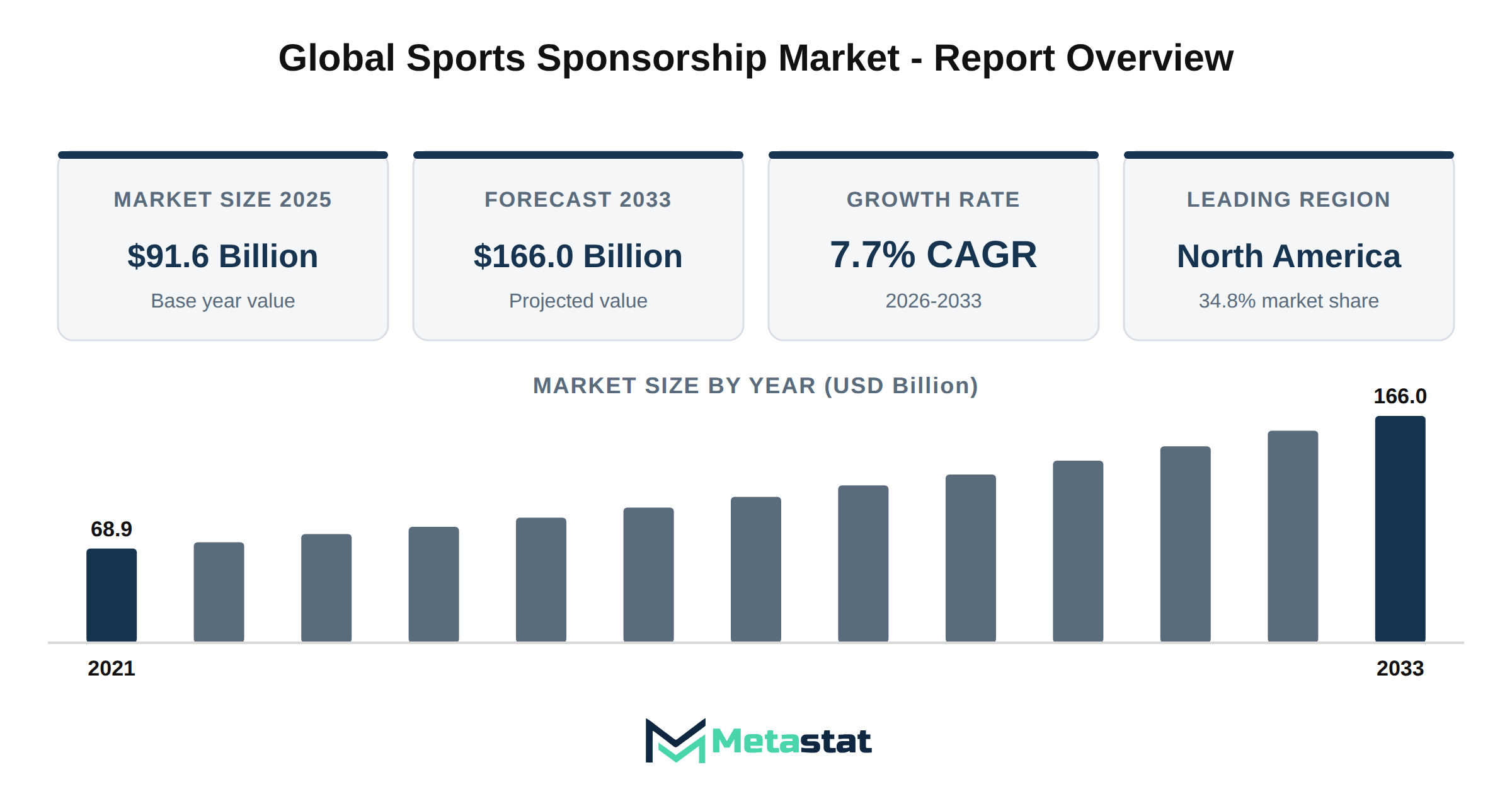
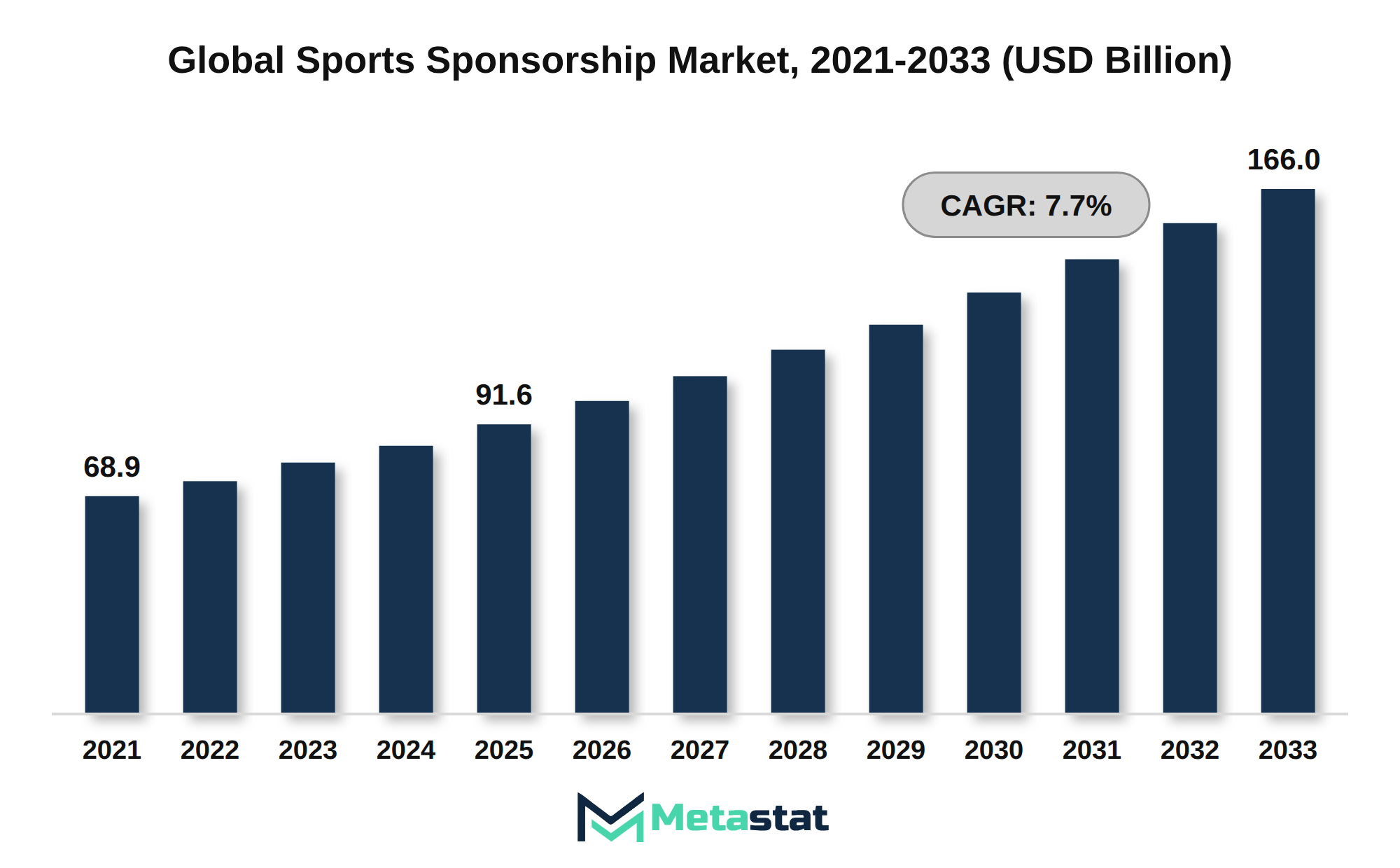
The Sports Sponsorship market experienced significant growth, with a base value of USD 91.6 billion in 2025. Historical data indicates an upward trend, starting from USD 68.9 billion in 2021 and reaching USD 84.8 billion by 2024. This growth trajectory highlights increasing investment in sponsorship opportunities across various sports categories. The market is projected to reach USD 166 billion by 2033, reflecting a compound annual growth rate (CAGR) of 7.7% during the forecast period from 2026 to 2033.
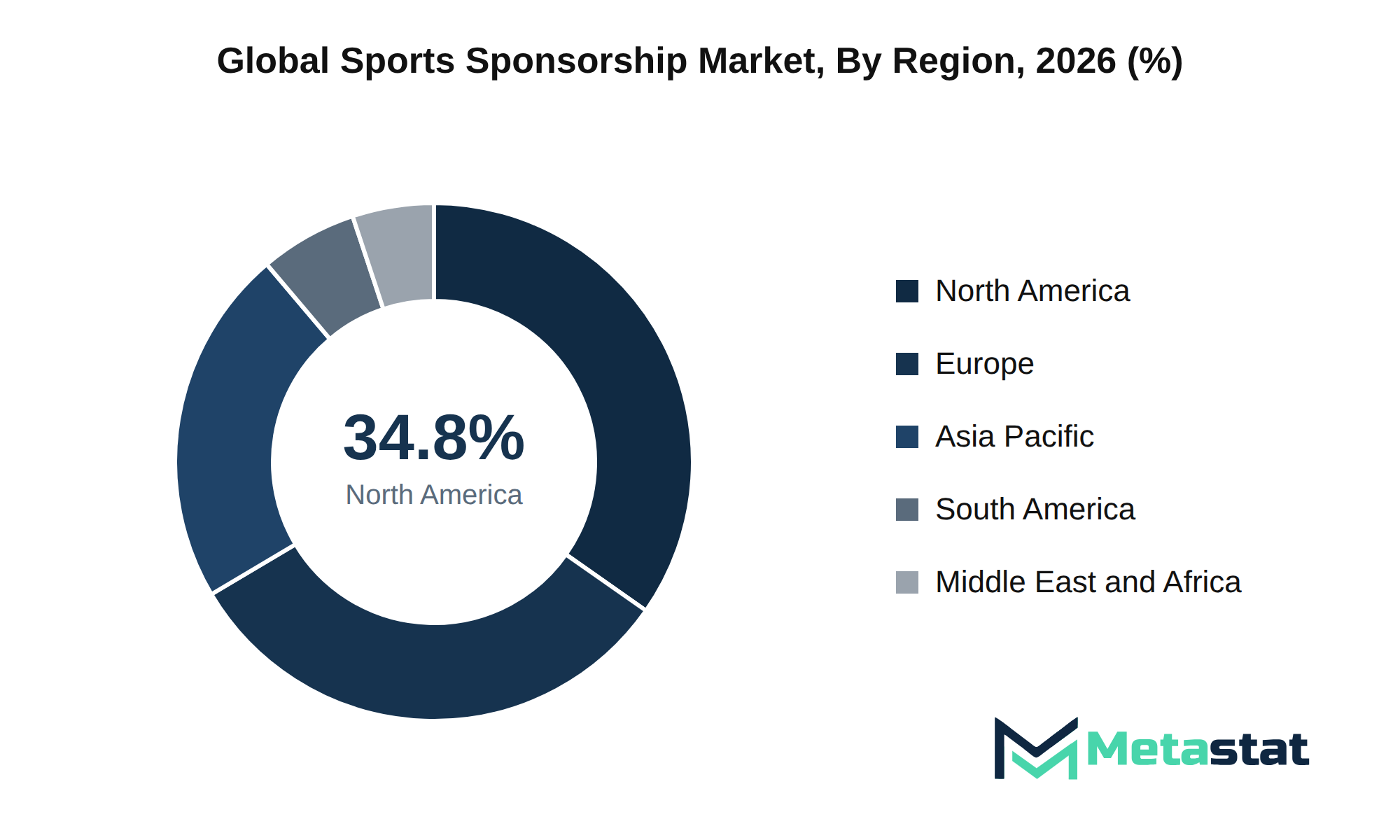
North America holds a 34.8% share of the market, driven by high-profile sponsorship deals and extensive media coverage. Europe follows closely with a 31.8% share, benefiting from a rich sports culture and a diverse range of sponsorship opportunities. The Asia Pacific region, with a share of 22.4%, demonstrates rapid growth potential, particularly in emerging sports and e-sports sponsorships. South America and the Middle East and Africa represent smaller shares at 6.1% and 5.1%, respectively, but are experiencing increasing interest from global brands seeking to enhance their reach in these markets.
Key segments within the Sports Sponsorship market include Team Sponsorship, Event Sponsorship, Athlete Sponsorship, and Facility Sponsorship. Team Sponsorship is expected to grow from USD 37.7 billion in 2026 to USD 60.8 billion by 2033, with a CAGR of 7%. Event Sponsorship anticipates a higher CAGR of 8.1%, reaching USD 53.5 billion by 2033, driven by the increasing popularity of global sports events.
In terms of sports categories, Football dominates the market, projected to increase from USD 40.4 billion in 2026 to USD 65.7 billion by 2033. Cricket and E-sports sponsorships are gaining traction, with Cricket expected to reach USD 24.7 billion by 2033. Other sports, including Baseball, Tennis, and Basketball, will continue to grow but at a slower pace.
The Sports Sponsorship market is characterized by an evolving environment influenced by various factors, including regulatory compliance and changing industry standards. Increased scrutiny on corporate sponsorships has prompted organizations to align their strategies with ethical practices and social responsibility initiatives. Companies actively adapt to these regulatory frameworks, which creates a more transparent and accountable sponsorship environment.
Innovation drives growth within the market, with R&D trajectories focusing on next-generation technologies that enhance fan engagement and sponsorship activation. Digital platforms and social media integration transform traditional sponsorship models, enabling brands to connect with audiences in more effective ways. This shift necessitates continuous investment in technology and creative strategies to stay competitive.
Sustainability emerges because a critical imperative in the Sports Sponsorship market. Brands increasingly prioritize decarbonization and circular economy dynamics, incorporating sustainable practices into their sponsorship agreements. This transformation not only appeals to environmentally conscious consumers but positions companies favorably in a market that values corporate responsibility.
The supply chain environment undergoes changes due to evolving consumer expectations and market fragmentation. Organizations seek agile logistics architectures to ensure timely and efficient delivery of sponsorship activations. Enhanced collaboration among stakeholders within the value chain is essential for optimizing procurement and improving overall customer journey experiences.
Capital allocation shapes the future strategic outlook of the market. Firms strategically invest in sponsorships that align with their core values and connect with target audiences. Infrastructure investments in sports facilities and community programs enhance brand visibility and create long-term relationships with consumers.
Corporate imperatives focus on high-value recommendations that address emerging trends and consumer demands. Brands that prioritize authenticity and engagement in their sponsorship strategies will likely see enhanced loyalty and market share. The Sports Sponsorship market presents opportunities for organizations to leverage innovative approaches and strengthen their positions in an increasingly competitive environment.
The Sports Sponsorship market benefits from heightened investments across various sectors, including financial services, technology, and consumer goods. Increased focus on brand visibility and engagement during live events encourages companies to pursue sponsorship opportunities actively. These investments enhance promotional strategies while allowing brands to connect with targeted audiences. Growing integration of digital platforms in sports events increases sponsorship effectiveness, attracting more firms to allocate budgets toward sponsorship spending.
Capital investment environments play a crucial role in shaping the market. Rising GDP and venture funding contribute to higher sponsorship budgets, enabling organizations to commit more resources. This influx of capital supports innovative campaigns that maximize brand exposure, further fueling market growth. Organizations that embrace these investment trends experience a competitive advantage, positioning themselves strategically within the sports sponsorship arena.
The evolution of consumer behavior directly influences the demand for sponsorships. Changing lifestyles, urbanization, and a shift towards experiential marketing make sports sponsorship an attractive avenue for companies. Brands increasingly prioritize authentic connections with consumers, leveraging sports to drive engagement. This trend reinforces sponsorship's position because a vital component of marketing strategies, enhancing the overall appeal of the Sports Sponsorship market.
Digital transformation significantly influences the Sports Sponsorship market by enhancing how brands connect with audiences. The ongoing shift towards digital platforms allows sponsors to engage fans through innovative content, personalized experiences, and real-time interaction. Brands invest in advanced technologies including artificial intelligence and automation, enabling integration of digital strategies into traditional sponsorship models. This integration improves data analytics capabilities, offering insights into consumer behavior and preferences, which helps refine marketing efforts.
Increased investment in digital tools leads to more effective promotional strategies, driving revenue growth and expanding market access. Brands leverage social media, streaming platforms, and interactive apps to reach a broader audience. The ability to analyze engagement metrics facilitates adjustments to campaigns, ensuring alignment with target demographics. While companies prioritize digital avenues, the Sports Sponsorship market experiences heightened demand for innovative sponsorship solutions that enhance visibility and create deeper connections with consumers.
The Sports Sponsorship market encounters several restraints that impede its growth trajectory. Regulatory compliance presents significant hurdles, particularly concerning sponsorship agreements and advertising standards. Complex regulations often lead to increased operational costs for sponsors, limiting their overall investment strategies.
Macroeconomic headwinds, including inflationary pressures and capital stagnation, pose additional challenges. These factors decrease the available budget for sponsorship, leading to cautious spending among brands. Consequently, reduced financial commitment from sponsors stalls growth within the market.
Supply chain disruptions and geopolitical instability further compound existing issues. Interruptions in logistics create uncertainty, pushing brands to reassess their sponsorship strategies. The market's reliance on international events increases this risk, because changes in geopolitical climates significantly affect sponsorship engagements.
Resource scarcity and high capital investment requirements deter potential entrants. The need for substantial financial commitment to establish effective sponsorship deals restricts participation from smaller players. This limitation leads to market fragmentation, where only a few large entities dominate sponsorship opportunities.
Infrastructure gaps and connectivity deficits hinder effective activation of sponsorships. Inadequate facilities or technology restrict audience engagement, reducing the effectiveness of sponsorship campaigns. The Sports Sponsorship market, therefore, faces ongoing challenges in maximizing the return on investment for sponsors amid these obstacles.
Concerns surrounding data security and privacy further complicate the landscape. Increased scrutiny over data handling practices restricts sponsorship opportunities, particularly in digital channels. Brands navigate these vulnerabilities carefully, because any breaches severely damage reputations and erode consumer trust.
Geopolitical fragmentation impacts the Sports Sponsorship market by disrupting international partnerships and limiting cross-border collaborations. Trade deficits and tariff friction create additional costs for companies engaged in sponsorship activities, forcing many to reassess their market strategies and budgets. This climate of uncertainty hinders investments in sponsorship, particularly for brands dependent on global visibility and engagement.
Technological disruptions further complicate the market, with rapid advancements requiring continuous adaptation from sponsors. Companies face challenges integrating new technologies into existing sponsorship frameworks, leading to interoperability issues that affect campaign effectiveness. The demand for innovative solutions increases, but tight budgets and margin pressures limit the ability to invest in new tools.
Supply chain instability and rising input costs present significant obstacles for the market. Fluctuations in feedstock and component availability delay promotional activities, negatively affecting brand visibility and consumer engagement. Increased pressure on logistics and implementation bottlenecks lead to missed opportunities and reduced sponsorship impact.
Compliance overhead from tightening global regulatory standards introduces complexities that deter companies from pursuing new sponsorship deals. Evolving legal liabilities require organizations to invest in risk management and compliance strategies, potentially diverting resources away from marketing initiatives. This situation results in a constrained market environment that challenges growth and innovation in the Sports Sponsorship market.
The Sports Sponsorship market experiences significant opportunities driven by emerging digital transformations that reshape engagement strategies. Advances in technology facilitate innovative platforms for connecting sponsors with audiences, allowing for targeted marketing and personalized interactions. Increased data analytics capabilities enable sponsors to measure and optimize their campaigns effectively. These technological disruptions generate favorable conditions for greater participation from diverse industries, driving revenue growth across the market.
Geographical expansion further taps into emerging regional demands, providing sponsors with access to new audiences and potential partnerships. Sponsorships adapt to local preferences and cultural trends, allowing the market to expand into previously underserved regions. This shift supports growth in sponsorship activities, attracting investments from global brands seeking to enhance their visibility in dynamic markets.
Sustainability imperatives influence sponsorship decisions, prompting companies to align their brand values with eco-friendly initiatives. These green transformations enhance brand reputation and appeal to a growing segment of environmentally-conscious consumers. Consequently, brands integrating sustainability into their sponsorship strategies experience a competitive edge, contributing to the market's overall growth.
The Sports Sponsorship market benefits from evolving buying behaviors, with brands prioritizing strategic partnerships that deliver measurable returns. Digital procurement shifts streamline the sponsorship acquisition process, enabling faster decision-making. Cross-industry mergers and acquisitions create new synergies and consolidate resources, enhancing the market's competitive landscape.
Overall, the convergence of technological advancements, regional expansions, and sustainability initiatives positions the Sports Sponsorship market for growth over the forecast period, creating a rich environment for investment and innovation.
The Global Sports Sponsorship market is segmented based on Sponsorship Type, Sports Category, Sponsorship Property, and Sponsor Industry.
Valued at USD 37.7 billion in 2026, the Team Sponsorship segment is projected to reach USD 60.8 billion by 2033, at a CAGR of 7% during the forecast period. Primary demand drivers include increasing fan engagement and the growing influence of social media, which increase the visibility of teams and their sponsors. Brands increasingly use team sponsorships to improve customer loyalty and enhance brand perception through association with popular teams.
Segment expansion catalysts involve the global rise of sports events and increased investment from both sponsors and teams. Technological maturation facilitates better measurement of sponsorship effectiveness, allowing brands to analyze return on investment more accurately. Next-gen upgrades in communication technology, including augmented reality and virtual reality, enhance fan experiences and create new opportunities for sponsors to interact with audiences.
Consumption shifts indicate a growing interest in team sports, particularly among younger demographics. This trend drives sponsorship deals, because brands target these audiences through strategic partnerships. Regulatory compliance standards and certifications help maintain the integrity of sponsorship agreements, providing security for both sponsors and teams.
Cost structures within this segment reflect the high value placed on prominent sponsorships, impacting pricing strategies. Pricing volatility occurs based on the popularity of specific teams or events, influencing deal sizes and terms. Strategic opportunity windows arise during major sporting events, where demand for sponsorship space surges, enhancing visibility for brands within the sports sponsorship market.
Overall, the Team Sponsorship segment demonstrates significant growth potential, fueled by evolving consumer preferences and innovative technological developments. Capital investment outlook remains strong, with brands recognizing the value of direct association with teams to drive engagement and loyalty, making this segment a key contributor to the overall Sports Sponsorship market.
Event sponsorship represents a crucial component of the Sports Sponsorship market, reflecting significant engagement from brands seeking visibility through live events. This segment is estimated to reach USD 53.5 billion by 2033, at a CAGR of 8.1% during the forecast period. Factors driving demand include increasing consumer engagement with live sports and entertainment, alongside brands aiming to align themselves with key cultural moments. Such alignment builds brand loyalty and enhances audience interaction, improving overall marketing effectiveness.
Technological maturation contributes to the growth of event sponsorship by enabling innovative promotional strategies. The integration of digital platforms allows real-time engagement and analytics, enhancing the effectiveness of sponsorship initiatives. Sponsors increasingly engage social media and streaming platforms to maximize their reach and ensure audience interaction, transforming traditional sponsorship paradigms.
Event sponsorship creates expansion opportunities across various sports categories, including football and cricket, where major events attract vast audiences. Brands targeting these sports leverage sponsorships to enhance their market presence and authenticity, resulting in increased investment from diverse industries. This strategic alignment enhances the visibility of brands among targeted demographics and strengthens their market positioning.
End-use dynamics within the market reflect shifts in consumer consumption patterns. The growing preference for immersive experiences drives sponsors to enhance their activation strategies, creating memorable experiences for attendees. This shift cultivates a deeper connection between brands and consumers, building loyalty and engagement over time.
Regulatory compliance standards and evolving consumer expectations shape sponsorship strategies. Brands navigate complex regulations while ensuring their sponsorship efforts connect with audiences. Successful compliance builds positive brand associations, allowing sponsors to capitalize on the benefits of event sponsorship while maintaining ethical standards.
Growth in the Athlete Sponsorship segment derives from various factors, including the increasing visibility of athlete endorsements and the rising popularity of sports globally. Brands recognize the value of associating with high-profile athletes who often act because influential figures within their communities and across social media platforms. This segment experiences significant expansion because companies build athlete partnerships to enhance brand affinity, ultimately boosting customer engagement and loyalty.
Investment in this segment remains robust, driven by the ongoing evolution of marketing strategies focused on personalization and direct consumer interaction. The rise of digital platforms enables sponsors to reach audiences in innovative ways, creating a dynamic environment for athlete sponsorships. Brands increasingly allocate budgets towards securing endorsements from athletes, recognizing the potential for substantial return on investment through expanded reach and heightened brand awareness.
Technological advancements support the growth of this segment, with data analytics providing insights that shape sponsorship strategies. Companies apply these insights to evaluate sponsorship effectiveness and fine-tune campaigns, capitalizing on fluctuating market trends. Investment in athlete sponsorship is projected to reach USD 33.3 billion by 2033, reflecting the growing commitment of brands to invest in these partnerships.
Consumer behavior shifts significantly influence the market, with a greater emphasis on authenticity and relatability in marketing. Consumers increasingly favor brands that support athletes who align with their values, pushing companies to carefully select sponsorships that match their target audience. This trend highlights the strategic importance of athlete sponsorship in the broader context of the Sports Sponsorship market, where alignment with consumer sentiment is critical for success.
Competitive pressures compel brands to continually enhance their sponsorship strategies, with a focus on integrating athlete endorsements into broader marketing campaigns. The segment stands to benefit from this emphasis on innovation and responsiveness, which drives engagement and builds brand loyalty. Overall, the Athlete Sponsorship segment represents a vital component of the market, characterized by evolving dynamics and substantial growth potential.
Facility sponsorship significantly influences the overall dynamics of the Sports Sponsorship market, with growth projected at a CAGR of 6.2% during the forecast period. This segment benefits from the increasing emphasis on branding and visibility within sports venues, leading to strong demand among sponsors seeking to enhance their market presence. Technological advancements, including digital advertising and innovative sponsorship activations, provide new avenues for engagement and audience interaction, which further fuels interest in facility sponsorship.
Investment in state-of-the-art facilities attracts major events and competitions, enhancing the appeal of sponsorship opportunities. The adoption of sustainability initiatives in sports facilities influences sponsor decisions, driven by brands aligning with environmentally responsible practices. This alignment increases brand loyalty among consumers who prioritize corporate social responsibility.
While the market evolves, competition among sponsors intensifies, leading to more strategic partnerships and creative collaborations. Regulatory compliance and safety standards for venues necessitate continuous investment and upgrades, further impacting sponsorship dynamics. Brands focusing on long-term relationships with facilities leverage these investments to create valuable experiences for fans and participants alike.
Valued at USD 40.4 billion in 2026, the football segment shows strong growth potential, projected to reach USD 65.7 billion by 2033, exhibiting a CAGR of 7.2% during the forecast period. This growth results from increasing global engagement in football, driven by rising fan bases, expanding media rights, and enhanced merchandising opportunities.
Investment in technology to improve fan engagement significantly influences the football segment. Digital platforms enhance the viewing experience, leading to higher sponsorship revenues. Brands utilize social media and streaming services to reach wider audiences, thereby increasing visibility and interaction with fans.
Football sponsorships have evolved, leading to an increased focus on partnerships that provide long-term value. Brands recognize the importance of aligning with teams and leagues that connect with target demographics. This alignment builds brand loyalty, translating into sustained revenue growth for the market.
The competitive landscape within the football segment attracts substantial investment from various industries, including financial services, automotive, and technology. These sectors seek to capitalize on the immense visibility and engagement associated with football, further driving market expansion.
Regulatory compliance shapes sponsorship agreements. Ensuring adherence to league guidelines and ethical standards enhances brand reputation and builds trust among consumers. This compliance mitigates risks and strengthens brand positioning within the market.
Cricket sponsorship has gained substantial attention, reflecting its prominence in global sports. This segment is projected to reach USD 24.7 billion by 2033, at a CAGR of 8.4% during the forecast period. Factors driving this growth include increasing viewership and the rising popularity of cricket leagues, particularly in regions including Asia-Pacific and Europe. Strong fan engagement and large television audiences enhance sponsorship value, attracting diverse brands aiming to connect with cricket enthusiasts.
Investment in cricket sponsorship is further fueled by strategic partnerships and technological advancements that enhance fan experiences. With the proliferation of digital platforms, brands leverage these channels for targeted marketing, facilitating deeper engagement with audiences. The integration of social media and streaming services increases brand visibility, driving competition among sponsors to secure high-profile endorsements and sponsorship deals.
Within the context of the broader Sports Sponsorship market, the cricket segment presents significant potential for growth, driven by its established fan base and lucrative media rights. This combination makes cricket an increasingly attractive platform for advertisers seeking to capitalize on emerging trends in sports consumption and brand interaction.
Valued at USD 18.2 billion by 2033, the E-sports segment experiences significant growth driven by increasing global interest in competitive gaming. Rising viewership and participation in E-sports events boosts sponsorship opportunities, attracting brands eager to connect with younger audiences. Enhanced technological infrastructure, including high-speed internet and advanced gaming platforms, facilitates the expansion of this segment, enabling smooth experiences for fans. The integration of E-sports into traditional sports events further strengthens its position within the Sports Sponsorship market, offering diverse platforms for brand visibility and engagement.
Investment in E-sports sponsorship stems from a strategic shift among brands looking to diversify their marketing efforts. Companies in the technology, automotive, and consumer goods sectors recognize the potential for high engagement and brand loyalty among E-sports enthusiasts. This evolving consumer landscape encourages increased competition among sponsors, leading to a more dynamic marketplace where innovative sponsorship models emerge. Regulatory frameworks surrounding E-sports promote legitimacy and stability, attracting additional investment and encouraging growth.
The market anticipates ongoing advancements in E-sports, including the development of next-gen gaming experiences and enhanced streaming capabilities. These innovations are expected to create further revenue opportunities, driven by brands seeking to capitalize on emerging trends within the gaming community. The strong demand for E-sports sponsorship reflects broader consumption shifts, with audiences increasingly valuing interactive and digitally-driven content. Consequently, the strategic opportunity window for brands within the E-sports segment expands, positioning it because a critical component of the overall Sports Sponsorship market.
Growth within the Others (Baseball, Tennis, Basketball) segment of the Sports Sponsorship market reflects an increasing interest in a diverse range of sporting events. Sponsorship in this segment is projected to grow at a CAGR of 6.8% during the forecast period. Factors driving this growth include the rising popularity of these sports, which attract a broad audience base, including younger demographics. Increased viewership correlates with enhanced advertising revenues, encouraging brands to invest in sponsorship opportunities that promote their products and services.
Shifts in consumer behavior towards more engaging and interactive viewing experiences contribute significantly to the segment's expansion. The integration of digital platforms enhances visibility and promotes higher engagement during live events. This convergence of traditional sports with digital advancements facilitates innovative sponsorship strategies, positioning brands to connect with fans more effectively.
Investment in sponsorship by companies across various industries, including Financial Services and Insurance and Technology and Telecommunications, strengthens the market's foundation. These industries recognize the potential for brand recognition and loyalty cultivated through strategic partnerships in sports. Sponsorships in this segment become more common, representing an essential avenue for brand promotion, driving continued investment and revenue generation within the market.
Valued at USD 22 billion in 2026, the International Competitions & Events segment is projected to reach USD 37.7 billion by 2033, at a CAGR of 8% during the forecast period. This segment benefits from growing global interest in major sporting events, driven by increased viewership and participation. Enhanced broadcasting capabilities and digital platforms expand access, allowing wider audiences to engage with international competitions.
Major sports leagues and event organizers actively seek partnerships with brands to improve visibility and engagement. These collaborations lead to innovative marketing strategies, aligning sponsors with prestigious events and building brand loyalty among consumers. The rise in disposable incomes in emerging markets contributes to the growing audience for international events, further stimulating demand in the market.
Technological advancements in event production and marketing create strategic opportunities for brands to integrate their sponsorship efforts with immersive experiences. Enhanced fan engagement through augmented reality and social media platforms strengthens brand connections, raising the overall sponsorship value. While brands focus on reaching diverse demographics, international competitions serve because effective platforms for delivering promotional messages.
Regulatory compliance and evolving consumer preferences influence sponsorship strategies. Brands navigate varying regulations across regions, ensuring alignment with local standards while maintaining global reach. The segment's growth reflects a strong response to these dynamics, establishing a resilient sponsorship framework that supports long-term partnerships within the broader Sports Sponsorship market.
Valued at USD 26.9 billion by 2033, the National/Domestic Competitions segment experiences a compound annual growth rate (CAGR) of 7.1% during the forecast period. Increased viewership and fan engagement within local markets drive demand for sponsorship in this segment. The rise of regional leagues and tournaments expands opportunities for brands to connect with audiences, enhancing brand visibility and loyalty. Localized marketing strategies and partnerships with community organizations strengthen sponsorship initiatives, leading to better engagement and return on investment for sponsors.
The market benefits from technological advancements that improve the presentation and promotion of domestic competitions, including enhanced broadcasting and digital platforms. These innovations attract a younger audience and facilitate interactions through social media, further increasing sponsorship value. Regulatory compliance and enhanced sports governance systems contribute to the attractiveness of investing in national and domestic competitions, ensuring accountability and transparency that appeal to sponsors.
Investment in the National/Domestic Competitions segment aligns with broader trends in consumer behavior, where fans increasingly seek localized experiences. This shift provides opportunities for brands to engage with consumers in meaningful ways, capitalizing on community pride and loyalty. The significant growth potential within the National/Domestic Competitions segment reflects evolving market dynamics in the Sports Sponsorship market.
Growth in the Professional Leagues segment reflects increasing investments from sponsors seeking to enhance brand visibility and engage with passionate fan bases. Valued at USD 64.4 billion by 2033, this segment experiences robust demand driven by the popularity of professional sports across various regions. High-profile events and competitions attract substantial audiences, providing sponsors with a unique platform for broad exposure. Technological advancements in broadcasting and digital platforms further increase audience reach, enabling sponsors to engage consumers effectively.
Factors contributing to the expansion of this segment include evolving consumer consumption patterns that favor live sports experiences over traditional media. This shift fuels the demand for immersive brand interactions during games and events, creating strategic opportunities for sponsors to leverage. Increased participation in professional leagues globally enhances competition among sponsors, prompting them to invest heavily in advertising and promotional activities that connect with fans.
Regulatory compliance and standards within the sports industry shape sponsorship dynamics. Adherence to these regulations ensures that sponsorships align with ethical marketing practices, influencing brand perception positively. Cost structures related to sponsorship agreements vary, with pricing volatility stemming from factors including market demand and competition for high-profile sponsorship packages. Overall, the Professional Leagues segment is poised for continued growth within the larger Sports Sponsorship market, driven by strategic investments and evolving consumer preferences.
Growth projections indicate an expansion of the Collegiate & University Sports segment at a CAGR of 9% during the forecast period. Rising participation in collegiate sports, driven by increased student engagement and institutional investment, significantly contributes to this growth. Universities invest in infrastructure and marketing strategies aimed at enhancing the visibility of their sports programs, attracting sponsorship deals from various industries. The influx of digital media platforms provides significant exposure, influencing brand partnerships and encouraging a diverse range of sponsors, including those in financial services and consumer goods. The importance of collegiate athletics in promoting community engagement and school spirit strengthens its position within the Sports Sponsorship market. The segment is expected to gain traction due to changing consumption patterns that emphasize value-driven sponsorships, which align closely with the demographics of college sports fans. Ultimately, these dynamics enhance the appeal of collegiate sports for sponsors, leading to a robust increase in market value.
Emerging interest in amateur and grassroots sports sponsorship aligns with a broader trend of community engagement and local support. Organizations increasingly recognize the potential for direct connection with target audiences, building brand loyalty through grassroots initiatives. Engagement at this level allows companies to create lasting relationships with consumers who value local involvement.
Investment in amateur sports facilitates deeper emotional ties to brands, driven by many consumers identifying with local teams and events. This connection enhances brand visibility and strengthens consumer trust. Companies looking to capitalize on this opportunity often seek partnerships with local clubs, schools, and community organizations.
Technological advancements enable better fan engagement and real-time interaction, driving demand for sponsorship in this segment. Digital platforms and social media enhance visibility and allow brands to connect with audiences in innovative ways. The market experiences shifts in consumption patterns, with consumers increasingly favoring brands that demonstrate commitment to community values.
Regulatory factors shape sponsorship strategies, particularly concerning youth sports. Compliance with local regulations ensures that campaigns connect positively within communities, mitigating potential backlash. Brands focusing on ethical sponsorship practices cultivate a favorable image in the market, aligning with the growing consumer demand for corporate social responsibility.
Strategic investment in amateur and grassroots sports represents a significant opportunity window for brands aiming to improve their market presence. Companies that engage effectively at this level create a foundation for long-term growth and enhanced brand loyalty, establishing a solid basis for future activities within the Sports Sponsorship market.
Interest in youth and community competitions within the Sports Sponsorship market reflects a growing recognition of the value of grassroots engagement. Factors driving this trend include increasing participation rates among young people in various sports disciplines, creating a sense of community and belonging. This segment provides a platform for brands to build loyalty and connect with potential customers at an early age, establishing long-term relationships that influence future purchasing decisions.
Adoption of sponsorship in youth and community events benefits brands by enhancing visibility in localized markets. Engaging with these competitions enables sponsors to align themselves with initiatives that promote health, wellness, and teamwork, positively impacting families and local communities. While brands invest significantly in this area, competition for sponsorship opportunities intensifies, driving innovation in how brands interact with these audiences.
Technological advancements enhance the engagement strategies employed by sponsors in this segment. Digital platforms and social media allow for more effective communication and interactive experiences, expanding the reach of sponsorship beyond traditional methods. This evolution in engagement strategies supports deeper connections between sponsors and participants, promoting a positive image of the brand while contributing to overall market growth.
Regulatory compliance and community support play critical roles in the sponsorship dynamics of youth and community competitions. Organizations navigate local regulations and community sentiments to ensure sponsorship initiatives align with societal values. Successful partnerships often lead to increased funding and resources for these events, enhancing their quality and reach. This growth attracts more sponsors and participants.
Investment in youth and community competitions presents strategic opportunities for brands looking to diversify their portfolio in the Sports Sponsorship market. This segment's potential for growth offers sponsors a unique avenue to connect with audiences who prioritize community involvement and social responsibility. By aligning with these competitions, brands strengthen their corporate image while making a meaningful impact on the communities they serve.
Within the Sports Sponsorship market, the Financial Services & Insurance segment holds significant value, projected at USD 17.6 billion in 2026 and anticipated to reach USD 28 billion by 2033, reflecting a CAGR of 6.8% during this period. This growth is largely driven by the increasing demand for brand visibility and strategic partnerships in the financial sector. Financial institutions recognize the potential of sports sponsorship to enhance their brand recognition and customer engagement.
Expansion catalysts include rising investment in high-profile sporting events, which provide substantial exposure to target audiences. The segment's appeal aligns with consumer interests, driving engagement among fans. Regulatory compliance standards within the financial services industry further boost sponsorship activities, because companies leverage sports partnerships to reinforce their commitment to community engagement and responsible practices.
Technological advancements play a crucial role in enhancing sponsorship experiences, enabling brands to engage consumers through innovative campaigns and interactive platforms. While digital transformation continues, financial services companies increasingly integrate technology into their sponsorship strategies, optimizing customer experiences and maximizing impact. Demand for authenticity in brand messaging has heightened, prompting financial institutions to align with respected sports figures and organizations.
Consumption shifts towards experiential marketing and personalized engagement methodologies enhance sponsorship effectiveness. These trends enable financial services companies to create deeper connections with their target demographics, ultimately driving growth in the market. The segment actively responds to competitive pressures by adapting sponsorship strategies to align with evolving consumer preferences and technological innovations.
The Financial Services & Insurance segment of the Sports Sponsorship market demonstrates growth potential, driven by strategic partnerships, technological maturity, and shifts in consumer engagement dynamics. Continued investment in this segment promises to yield significant returns for stakeholders involved.
Growth within the Automotive & Mobility segment of the Sports Sponsorship market aligns with increasing consumer demand for brand visibility and engagement through sports. This segment attracts substantial investment due to the automotive industry's focus on building strong relationships with target audiences, particularly among younger demographics.
Automotive sponsorships provide significant platforms for brands to highlight innovation, new models, and technological advancements. Partnerships with major sporting events and teams enhance brand recognition and loyalty, driven by consumer associations of automotive brands with prominent athletic performances.
Automotive & Mobility segment is estimated to reach USD 21.6 billion by 2033, at a CAGR of 6.8% during the forecast period. The anticipated growth reflects robust strategies that capitalize on emerging markets and environmental sustainability trends, including electric vehicles, which connect with today’s conscious consumers.
Technological advancements in automotive products drive next-gen upgrades, promoting a dynamic sponsorship environment. Brands leverage digital transformation strategies, creating interactive experiences that captivate audiences and extend their reach.
With efficient cost structures and targeted marketing approaches, the Automotive & Mobility segment is poised for significant expansion. Developing strategic partnerships within the Sports Sponsorship market enables brands to adapt to evolving consumer preferences while enhancing their competitive edge.
Investments in the Technology & Telecommunications segment reflect a strong alignment with digital trends and consumer engagement strategies. Sponsorship opportunities within this segment benefit from rapid technological advancements, enabling sponsors to leverage innovative platforms for reaching target audiences. While digital consumption continues to grow, brands actively seek partnerships that enhance visibility and connect with consumers in meaningful ways.
Technological maturation plays an essential role in shaping sponsorship strategies. Enhanced data analytics and targeted marketing tools allow sponsors to measure the effectiveness of campaigns, thereby optimizing return on investment. Increased competition among brands to establish a strong presence in the Sports Sponsorship market drives demand for effective and measurable sponsorship outcomes.
Market dynamics indicate a shift toward immersive experiences, including augmented reality and virtual reality integrations in sponsorships. These next-gen upgrades present strategic opportunities for brands aiming to engage consumers more effectively. The ability to create unique and interactive experiences significantly increases the value proposition of sponsorships within this segment.
The Technology & Telecommunications segment is expected to reach USD 32.4 billion by 2033. This growth is propelled by increasing digital adoption and the continuous evolution of communication technologies, ensuring brands remain relevant in a competitive landscape.
Consumer demands for high-quality digital content and reliable connectivity align with the strategic goals of many sponsors. Effective partnerships between technology firms and sports properties facilitate enhanced fan engagement, allowing sponsors to present brand attributes while capturing audience attention within the Sports Sponsorship market.
Growth within the Food & Beverages segment reflects robust demand for sponsorship, driven by increasing consumer engagement with sports events and the desire for brands to connect with active audiences. This engagement highlights opportunities for companies in the industry to leverage sponsorship for enhanced brand visibility and customer loyalty. By aligning marketing strategies with sporting events, brands benefit from heightened exposure and improved brand recognition.
The Food & Beverages segment is projected to grow at a CAGR of 6.8% during the forecast period. This expansion results from the industry's active participation in large-scale events and collaborations with popular sports teams, providing a platform for effective marketing campaigns. While sponsorship opportunities continue to evolve, brands increasingly focus on innovative promotions and experiences that connect with consumers.
Changes in consumer preferences, particularly the growing demand for healthier and sustainable food options, influence product offerings within the Food & Beverages segment. Companies adapt their strategies to align with these trends, ensuring their products meet the evolving demands of health-conscious consumers. Such adaptations enhance the value of sponsorships, connecting brands with positive associations that engage target audiences.
The competitive landscape within the Sports Sponsorship market highlights the importance of strategic partnerships. Collaborations between beverage brands and sports events facilitate access to large fan bases, allowing for targeted marketing initiatives. This collaboration leads to mutually beneficial relationships, driving growth for both brands and sporting organizations.
Engagement from the Consumer Goods & Retail sector in the Sports Sponsorship market demonstrates strong alignment with contemporary consumer preferences and brand loyalty strategies. Brands increasingly recognize the value of associating with sports properties that connect with their target demographics, leveraging emotional connections to enhance customer engagement. Sponsorships in this segment facilitate direct interactions between brands and consumers through events, teams, and athletes, creating a sense of community and shared experience.
Shifts in consumption patterns towards health-conscious and lifestyle-driven products influence sponsorship strategies. Brands increasingly align with sports that promote active lifestyles, ensuring their messaging connects with health-minded consumers. The expansion of social media platforms further enhances the impact of sponsorships, allowing brands to engage audiences in real-time and create immersive advertising experiences that improve brand visibility.
Technology plays an integral role in evolving sponsorship strategies. Innovations including augmented reality and personalized marketing enable brands within the Consumer Goods & Retail segment to create engaging and interactive promotional content. These advancements create deeper consumer connections, enhancing the effectiveness of sponsorship investments.
Economic factors, including pricing volatility and margin pressures, require brands to strategically assess their sponsorship investments. Companies prioritize partnerships that deliver measurable returns and drive brand awareness. This careful evaluation contributes to the overall growth of the market, resulting from organizations seeking to maximize the impact of their marketing budgets while maintaining flexibility in their sponsorship commitments.
Long-term investment in brand equity through strategic sponsorship leads to sustained growth in the Consumer Goods & Retail segment. By associating with reputable sports entities, brands enhance their credibility and visibility, ultimately translating into increased market share and consumer loyalty. The Consumer Goods & Retail sector's active participation in the Sports Sponsorship market will continue to evolve, driven by changing consumer preferences and technological advancements.
Growing interest in the Betting & Gambling sector within the Sports Sponsorship market aligns with a surge in the popularity of sports and increased engagement from bettors. This demand results from changing consumer preferences towards dynamic and interactive experiences, particularly among younger audiences. The proliferation of online betting platforms enhances accessibility, influencing the market's expansion, driven by more users engaging with various sports events.
Technological advancements in mobile and online betting solutions drive segment evolution, encouraging brands to invest in sponsorship opportunities that reach targeted demographics efficiently. Emerging technologies, including live betting and in-app purchasing, facilitate deeper consumer engagement, leading to increased sponsorship activity. While the market adapts to these innovations, brands face pressure to remain competitive by aligning their offerings with the latest industry trends.
Regulatory frameworks significantly impact the Betting & Gambling sector, with evolving compliance standards influencing sponsorship strategies. Regions with clearer regulations experience higher sponsorship revenues, while those with stringent policies hinder market growth. This regulatory landscape necessitates careful navigation by stakeholders, shaping how brands approach potential sponsorship opportunities.
Overall, the Betting & Gambling segment presents strategic opportunity windows for brands aiming to enhance their visibility in the Sports Sponsorship market. Firms focusing on creating unique, engaging experiences for consumers effectively leverage this segment's growth potential. By aligning with current trends and regulatory developments, brands position themselves favorably within the competitive environment.
Significant demand drivers in the Travel, Hospitality & Airlines segment stem from increasing consumer interest in travel experiences, especially in association with major sporting events. Companies within this segment frequently seek sponsorship opportunities to improve brand visibility and engagement with target audiences. This alignment with sports helps enhance brand perception, driving consumer loyalty and attracting new customers.
Adoption of sponsorships by travel and hospitality companies reflects a strategic focus on creating memorable experiences for consumers. These companies form partnerships with sports properties to create deeper connections with audiences, leveraging the emotional appeal of sporting events. This approach aligns well with marketing objectives aimed at enhancing customer engagement and increasing market share.
Expansion catalysts include the growing trend of sports tourism, where fans travel to attend live events. This trend encourages sponsorship investment, driven by brands pursuing opportunities to capitalize on the increased foot traffic and media exposure associated with major sporting events. The integration of personalized campaigns helps these companies improve customer experiences while increasing brand loyalty.
Technological maturation plays a role in shaping sponsorship strategies, supported by travel and hospitality companies increasingly adopting digital platforms for engagement. These advancements facilitate targeted marketing, allowing brands to connect with consumers through personalized content and experiences. This evolution leads to improved customer interaction and retention, making sponsorships more effective in achieving strategic goals.
End-use dynamics indicate a shift toward experiential marketing, where brands focus on creating memorable interactions rather than traditional advertising. Sponsorships in the Sports Sponsorship market allow companies to connect with audiences emotionally, enhancing brand recall and preference. This trend reflects a broader shift in consumer behavior, highlighting the importance of authentic connections between brands and consumers.
Regulatory compliance standards continue to shape sponsorship practices within the Travel, Hospitality & Airlines segment. Companies adapt strategies to align with evolving regulations and industry standards, ensuring responsible marketing practices. This compliance enhances brand reputation while mitigating potential risks associated with sponsorship activities.
Pricing volatility and margin pressures remain challenges for companies in this segment. Fluctuations in consumer spending patterns impact sponsorship budgets, necessitating careful financial planning. This environment requires brands to evaluate sponsorship opportunities critically, ensuring alignment with overall business objectives and financial performance.
Strategic opportunity windows arise from emerging markets and changing consumer preferences, prompting companies to explore sponsorships in new regions. By tapping into these markets, brands expand their reach and enhance their presence in the Sports Sponsorship market. Continued investment in these sponsorship opportunities supports long-term growth and a competitive advantage.
Engagement in the Media, Entertainment & Streaming sector within the Sports Sponsorship market reflects significant interest in connecting brands with audiences through diverse platforms. The proliferation of digital streaming services and social media channels has reshaped viewer habits, creating effective avenues for sponsors to reach targeted demographics. This transition drives demand for innovative and engaging sponsorship arrangements, where traditional advertising methods evolve to promote immersive experiences.
Increased investments from media companies into sports partnerships enhance visibility and reach. These organizations leverage their platforms to deliver comprehensive coverage of events while providing sponsors with high-value exposure to engaged audiences. The integration of sponsorship into content further strengthens brand recognition, forging deeper connections with consumers.
Technological advancements play a crucial role in shaping this segment. Enhanced analytics and data-driven strategies allow sponsors to tailor campaigns for maximum impact. Insights into viewer preferences lead to more effective sponsorship placements, connecting brands with specific consumer segments. This focus on personalized marketing strategies aligns sponsorship efforts with changing consumer behaviors and expectations.
Growth in the Media, Entertainment & Streaming sector creates new partnerships and collaboration opportunities. Brands in this segment explore novel approaches to sponsorship, including interactive campaigns and experiential marketing, which engage audiences and build brand loyalty. This trend contributes to the overall expansion of the Sports Sponsorship market, highlighting the sector's significant role in driving innovation and value for all stakeholders.
Interest in the "Others" sub-segment, encompassing Healthcare, Energy, Industrial, and Professional Services, stems from increasing investment in sports sponsorship driven by brands seeking to enhance visibility and consumer engagement. This sector has seen significant participation from various industries, leveraging sports platforms to connect with target audiences effectively.
Factors driving growth in this segment include heightened competition among brands for consumer attention and the need for innovative marketing strategies. Companies operating in these sectors recognize the value of aligning sponsorship with events that attract large audiences, thereby enhancing brand loyalty and customer interaction.
The importance of regulatory compliance in sponsorship activities shapes strategies within these industries. Adhering to compliance standards ensures that sponsorship agreements align with industry regulations, protecting brand reputation and facilitating smoother activation of sponsorship campaigns.
Looking ahead, the Sports Sponsorship market anticipates further engagement from the Healthcare, Energy, Industrial, and Professional Services sectors. Organizations prioritize brand visibility and customer outreach through strategic sponsorships, and overall market dynamics will reflect this evolving engagement.
Based on geography, the Global Sports Sponsorship market is divided into North America, Europe, Asia-Pacific, South America, Middle East, and Africa.
The North America Sports Sponsorship market displays a robust trajectory, driven by the increasing popularity of various sports and the engagement of corporate sponsors. The region's market share accounts for 34.8% of the global sports sponsorship market in 2025, reflecting strong investment potential. This growth stems primarily from the United States, Canada, and Mexico, where sponsorships across professional leagues and major sporting events attract significant funding.
Investment in the Sports Sponsorship market is supported by a well-established infrastructure and a cultural affinity for sports. Domestic brands and multinational corporations use sponsorship because a strategic marketing tool to enhance brand visibility and connect with diverse consumer segments. The expansion of athlete sponsorship and event sponsorship demonstrates considerable growth potential, driven by increased viewership and participation rates.
Trends toward localized manufacturing and procurement enhance the market's resilience, creating partnerships between sponsors and sports entities. The regional competitive landscape includes prominent players like WPP Media, Dentsu Sports International, and Procter & Gamble, contributing to a dynamic environment. These companies engage in various sponsorship types, leveraging their market presence to drive brand loyalty and consumer engagement.
The North America Sports Sponsorship market is set to expand at a CAGR of 7.7% within the forecast period, reaching a market size (TAM) of USD 53.9 billion by the end of 2033. This growth trajectory highlights the increasing significance of sports sponsorship because a powerful marketing avenue in the region.
Europe holds a significant position in the Sports Sponsorship market, accounting for 31.8% of the global share in 2025. Countries including Germany, France, the UK, Italy, Spain, and Russia exhibit strong demand for sponsorship opportunities across various sports categories. The region benefits from a rich sports culture, with passionate fan bases driving investment from brands seeking visibility and engagement through sponsorship deals.
Event sponsorship, particularly in major sports competitions and international events, receives considerable attention from sponsors. The rising popularity of football, alongside other sports including cricket and e-sports, fuels growth within the market, driven by organizations striving to leverage these platforms for brand promotion. Significant investments in international competitions and domestic leagues reflect the increasing value of sports sponsorship because a marketing strategy.
Brands in Europe prioritize localized engagement, tailoring their sponsorship strategies to align with regional preferences and cultural nuances. This localization enhances brand loyalty and drives deeper connections with target audiences, encouraging sustained investment in the market. Domestic market leaders continually adapt to shifts in consumer behavior, ensuring their sponsorship initiatives align with evolving trends and audience expectations.
With an emphasis on infrastructure modernization and enhanced regional connectivity, European markets are expected to experience incremental growth. Initiatives focused on improving local sports facilities and encouraging grassroots participation contribute to the overall environment, positioning Europe because a dynamic player in the global sports sponsorship arena.
Competitive environments in Europe feature a blend of established brands and emerging players, creating a robust ecosystem for sponsorship opportunities. Vendor consolidation trends further influence market dynamics, impacting how organizations approach sponsorship acquisitions. The interaction of cultural contexts and local procurement dynamics shapes strategies, ensuring alignment with consumer preferences and market demands.
The Asia-Pacific region represents a growing share of the Sports Sponsorship market, accounting for 22.4% in 2025. This region includes diverse markets including China, Japan, India, South Korea, Australia, Southeast Asia, and the Rest of Asia Pacific, each contributing distinct dynamics to sponsorship growth.
China emerges because a prominent player in the sports sponsorship landscape, driven by the rapid expansion of its sports industry and increasing investments in major sporting events. Japan benefits from its rich sports culture, creating strong corporate sponsorships, particularly in events like the Olympics. India experiences rising interest in cricket sponsorship, attracting major brands aiming to capitalize on the sport's substantial following, thus enhancing the market.
South Korea displays growth through active engagement in both traditional sports and e-sports sponsorship, offering unique opportunities for brands targeting younger demographics. Australia capitalizes on its sports enthusiasm, with rugby and cricket sponsorships driving strong returns for companies. Southeast Asia and the Rest of Asia Pacific present underpenetrated territories, where international brands see potential for growth through localized sponsorship strategies.
Infrastructure modernization in this region facilitates the hosting of international events, further increasing sponsorship opportunities. With increasing digital connectivity, brands are exploring innovative ways to engage audiences through social media and digital platforms, improving the visibility of sponsorship deals.
Competition across the Asia-Pacific market intensifies because domestic and international players vie for market share. Local compliance mandates and regional regulatory frameworks influence sponsorship dynamics, shaping how brands approach their marketing strategies. While local procurement dynamics evolve, brands adapt to cultural nuances, ensuring effective communication and engagement with their target audiences.
Investment in the Sports Sponsorship market within Asia-Pacific is projected to rise, fueled by emerging market front-runners and the increasing importance of localized manufacturing densities. This momentum positions the region favorably for future growth, because organizations seek to deepen their engagement with sports fans across various demographics.
The Sports Sponsorship market in South America reflects unique dynamics driven by regional cultural engagement with sports, particularly in Brazil and Argentina. These countries exhibit a growing participation in various sporting events, creating an environment conducive to increased sponsorship activities. The rise of digital platforms further enhances visibility for sponsors, attracting investment from diverse industries keen to capitalize on this interest.
Brazil and Argentina serve because key players in the market, with significant contributions to sponsorship revenues. The region's investment in sports infrastructure modernization supports the growth of sponsorship opportunities, particularly for major events and leagues. These developments attract a mix of local and international sponsors looking to connect with enthusiastic audiences.
Emerging market front-runners, including local companies and global brands, actively pursue sponsorship deals, particularly in football. Enhanced collaboration between sports organizations and corporate sponsors strengthens ties and creates new opportunities within the Sports Sponsorship market. The overall market growth is projected to continue because regional stakeholders align their strategies with consumer interests.
The Sports Sponsorship market in the Middle East and Africa exhibits unique characteristics shaped by regional dynamics and consumer behavior. Rising participation in sports, coupled with significant investment in infrastructure, promotes sponsorship opportunities across various sectors. Countries including Saudi Arabia and the UAE lead the region in sponsorship investments, driven by a growing appetite for international events and competitions.
In South Africa, the sports sponsorship landscape reflects established traditions in sports, with strong cultural ties to football and rugby. The ongoing modernization of facilities and the expansion of regional competitions contribute to the appeal of sponsorship partnerships. The influx of major international events into the region incentivizes brands to engage with target audiences through strategic sponsorships, enhancing visibility and market presence.
Underpenetrated territories within the region present further opportunities for growth within the Sports Sponsorship market. Emerging markets in the Rest of Middle East and Africa exhibit increasing interest from various sectors looking to capitalize on local enthusiasm for sports. Brands seek to establish a foothold in these markets, and strategies focusing on localized engagement and tailored sponsorship initiatives are essential.
With a projected market share of 5.1% in 2025, the Middle East and Africa region holds significant potential for future growth. The competitive landscape features a blend of local and international players, each vying for market share through innovative campaigns and sponsorship strategies. Recognizing and adapting to the cultural nuances of the region enables brands to forge stronger connections with consumers, ultimately driving demand and engagement in the market.
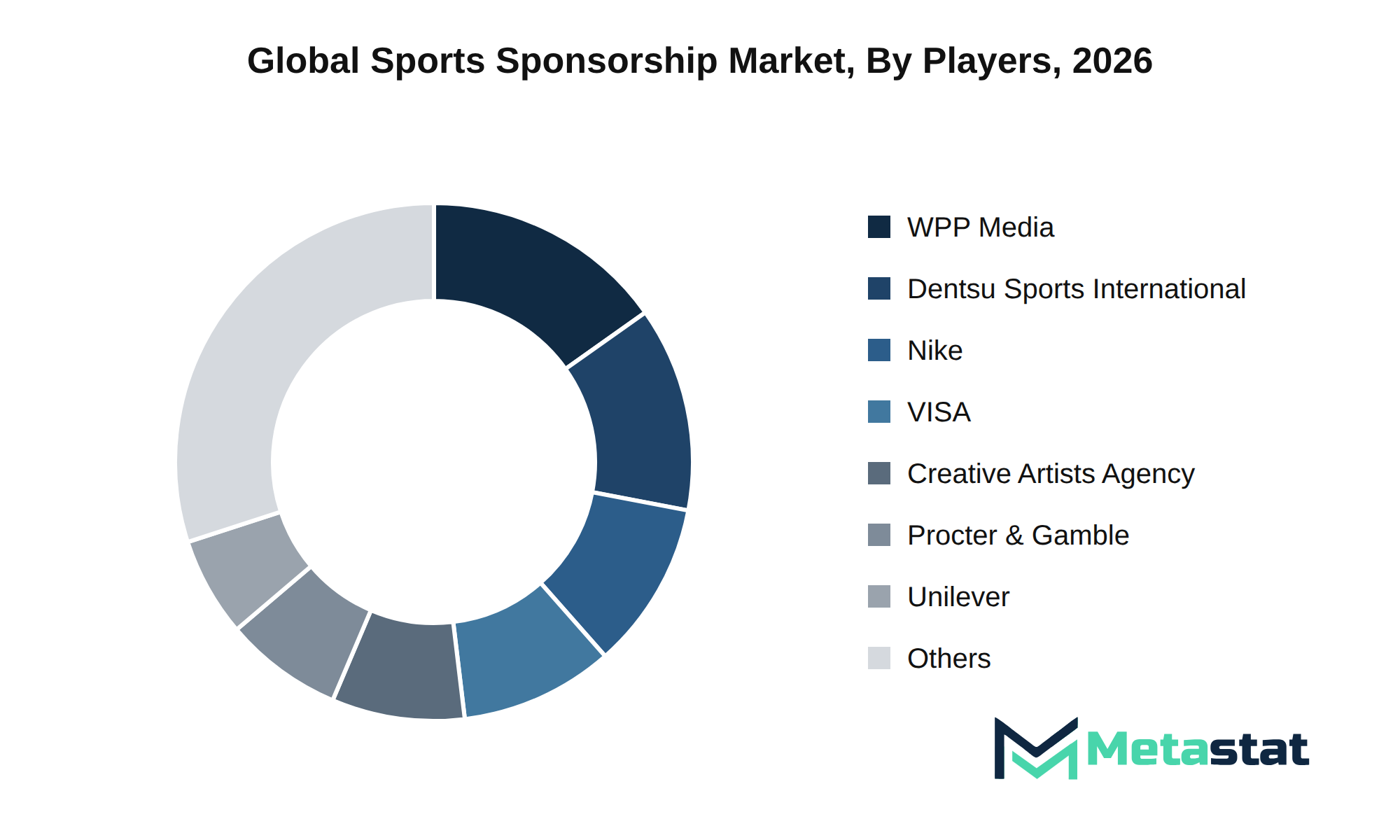
The Sports Sponsorship market features a diverse array of players employing various strategies to secure and enhance their market positions. Companies including WPP Media, Dentsu Sports International, and SPORTFIVE focus on strategic alliances and partnerships to extend their reach across multiple sports categories. These alliances enable firms to pool resources, share expertise, and deliver comprehensive sponsorship solutions that cater to brands seeking alignment with popular sports events.
Organizations including Nike Inc., Procter & Gamble, and Unilever leverage strong brand equity and extensive marketing capabilities to maintain a competitive edge. These companies invest significantly in brand reinforcement initiatives and customer retention strategies, ensuring sustained engagement with target audiences. The ability to integrate sponsorship initiatives with broader marketing campaigns enhances visibility and efficacy in the market.
Technological advancements play a critical role in shaping the competitive environment. Companies including Sony Group Corporation and Samsung invest in research and development to create innovative sponsorship experiences that appeal to younger demographics. Incorporating digital engagement platforms and immersive technologies, these firms differentiate their offerings and drive increased participation from fans and consumers.
Barriers to entry in the Sports Sponsorship market remain substantial, primarily due to established relationships between brands and sponsors, high switching costs, and the necessity for significant investment in marketing strategies. New entrants face challenges in competing against well-established players with robust networks and proven track records.
The future competitive outlook indicates a shift towards more integrated sponsorship models that encompass both traditional and digital platforms. Companies that adapt to these trends while maintaining core partnerships are likely to achieve sustained growth in the evolving Sports Sponsorship market.
Market size is forecast to rise from USD 91.6 billion in 2025 to over USD 166 billion by 2033. The base case reflects a growth trajectory, with a compound annual growth rate (CAGR) of 7.7%. Under a bull case scenario, heightened investment in global sporting events and enhanced marketing strategies by brands could accelerate growth beyond expectations. Conversely, a bear case scenario could arise from economic downturns or regulatory shifts that hinder sponsorship activities, potentially limiting market expansion.
The Sports Sponsorship market experiences dynamic shifts influenced by macroeconomic factors, including economic cycles and downstream demand changes. Core industry maturation signals a transition phase, necessitating strategic capital allocation to capture emerging opportunities. Organizations emphasize next-generation technology integration to enhance consumer engagement, further driving demand.
R&D commercialization timelines play a significant role in shaping product life cycles, with timely innovations attracting sponsorship investments. Regulatory evolution establishes compliance milestones, which businesses navigate to maintain market position. Geopolitical realignments and evolving trade corridors influence global supply chain shifts, impacting sponsorship strategies across regions.
Infrastructure commitments and capital expenditure investment vectors drive growth in high-potential markets, underlining the importance of executive-level strategic imperatives. Identifying unmet enterprise needs and high-growth pockets enables stakeholders to tailor offerings effectively. Developing defensibility roadmaps and future growth recommendations will ensure sustained competitiveness in the evolving Sports Sponsorship market.
The report strategically identifies and profiles the key market players and analyses their core competencies in each sub-segment of the Sports Sponsorship market.
Report Attributes | Details |
Study Period | 2021-2033 |
Base Year | 2025 |
Estimated Year | 2026 |
Forecast Period | 2026-2033 |
Historical Period | 2021-2025 |
Growth Rate | CAGR 7.7% from 2026 to 2033 |
Revenue Unit | USD billion |
Segmentation | By Sponsorship Type, Sports Category, Sponsorship Property, Sponsor Industry, and Region |
By Region | North America (By Sponsorship Type, Sports Category, Sponsorship Property, Sponsor Industry, and Country)
|
Europe (By Sponsorship Type, Sports Category, Sponsorship Property, Sponsor Industry, and Country)
| |
Asia Pacific (By Sponsorship Type, Sports Category, Sponsorship Property, Sponsor Industry, and Country)
| |
South America (By Sponsorship Type, Sports Category, Sponsorship Property, Sponsor Industry, and Country)
| |
Middle East and Africa (By Sponsorship Type, Sports Category, Sponsorship Property, Sponsor Industry, and Country)
|
Find answers to common questions about this report
The Sports Sponsorship market size was valued at USD 91.6 billion in 2025, according to the Metastat Insights study.
The Sports Sponsorship market is projected to grow at a CAGR of 7.7% during the forecast period from 2026 to 2033.
The North America Sports Sponsorship market size is estimated to reach USD 53.9 billion by 2033.
Team Sponsorship leads the Sports Sponsorship market with a projected value of USD 60.8 billion by 2033, reflecting a compound annual growth rate of 7.0% from USD 37.7 billion in 2026.
Heightened investments across sectors including financial services, technology, and consumer goods drive the Sports Sponsorship market. Increased focus on brand visibility during live events, along with the integration of digital platforms, enhances engagement and attracts companies to allocate larger budgets toward sponsorship spending.
North America holds the dominant share of the Sports Sponsorship market, with a value of USD 53.9 billion projected for 2033, representing 34.8 percent of the total market.
The Sports Sponsorship market faces several restraints, including regulatory compliance challenges that increase operational costs, macroeconomic headwinds like inflation that limit budgets, and supply chain disruptions that create uncertainty. Geopolitical instability impacts international partnerships and sponsorship strategies, hindering overall market growth.
Heightened investments across sectors including financial services and technology favor product adoption in the Sports Sponsorship market. Brands prioritize authentic connections with consumers, leveraging sports to enhance engagement, while the integration of digital platforms boosts sponsorship effectiveness, encouraging firms to allocate more budgets toward sponsorship spending.
The Sports Sponsorship market is estimated to reach a valuation of USD 166 billion by 2033.
Key players in the Sports Sponsorship market include WPP Media, Dentsu Sports International, SPORTFIVE, Creative Artists Agency, LLC - CAA Sports, Nike Inc., Procter & Gamble, and Coca Cola.
The analysts below cover Consumer Goods research at Metastat Insights.
LEAD ANALYST
Utkarsh Khirodkar is a Lead Market Research Analyst at MetaStat Insight, specializing in market intelligence, technology sector assessments, and competitive strategy.
Evaluating secondary resin quality across post-consumer packaging streams requires reliable technical segmentation. MetaStat Insight delivered an objective assessment that distinguished between extrusion-grade flake pricing and optical sorting throughput limitations across Western Europe. The competitive positioning breakdown for licensed depolymerization technology providers answered several questions during our feedstock feasibility audit. Their team clarified regional trade restrictions on mixed plastic scrap quickly when our team submitted follow-up requests.
Evaluating sovereign cloud deployments for core banking platforms demands a clear view of data residency regulations and migration exit strategies. MetaStat Insight delivered an exhaustive review of regional latency tolerances, mainframe decommission milestones, and third-party vendor concentration risk. The regulatory compliance mapping across European and Asian financial jurisdictions gave our team a dependable baseline for multi-cloud infrastructure discussions.
Replacing petrochemical surfactants with bio-based alternatives requires realistic timelines on industrial precision fermentation scaling. The market research broke down commercialization timelines, feedstock sugar price sensitivities, and regional cosmetic ingredient regulatory approvals in Europe and East Asia. That supplier readiness mapping gave our formulations team reliable context when comparing renewable chemical sourcing roadmaps.
Explore related market intelligence reports worth reading alongside this one.
Starting from
$2950