
LEAD ANALYST
Utkarsh Khirodkar is a Lead Market Research Analyst at MetaStat Insight, specializing in market intelligence, technology sector assessments, and competitive strategy.

Global Truck and Bus Tire Market Size, Share, By Tire Construction (Radial Tires and Bias Tires), By Vehicle Type (Trucks and Buses and Coaches), By Sales Channel (Original Equipment and Replacement), By Application (Long-Haul, Regional Haul, Urban and Bus Service, Mixed on-Road and off-Road), Industry Analysis, Growth, Trends, and Forecast, 2026-2033
Report ID
MSI-5710
Published
November, 2026
Pages
280 Pages
Format
Historical
Base year
Forecast
Forecast period
Report Details
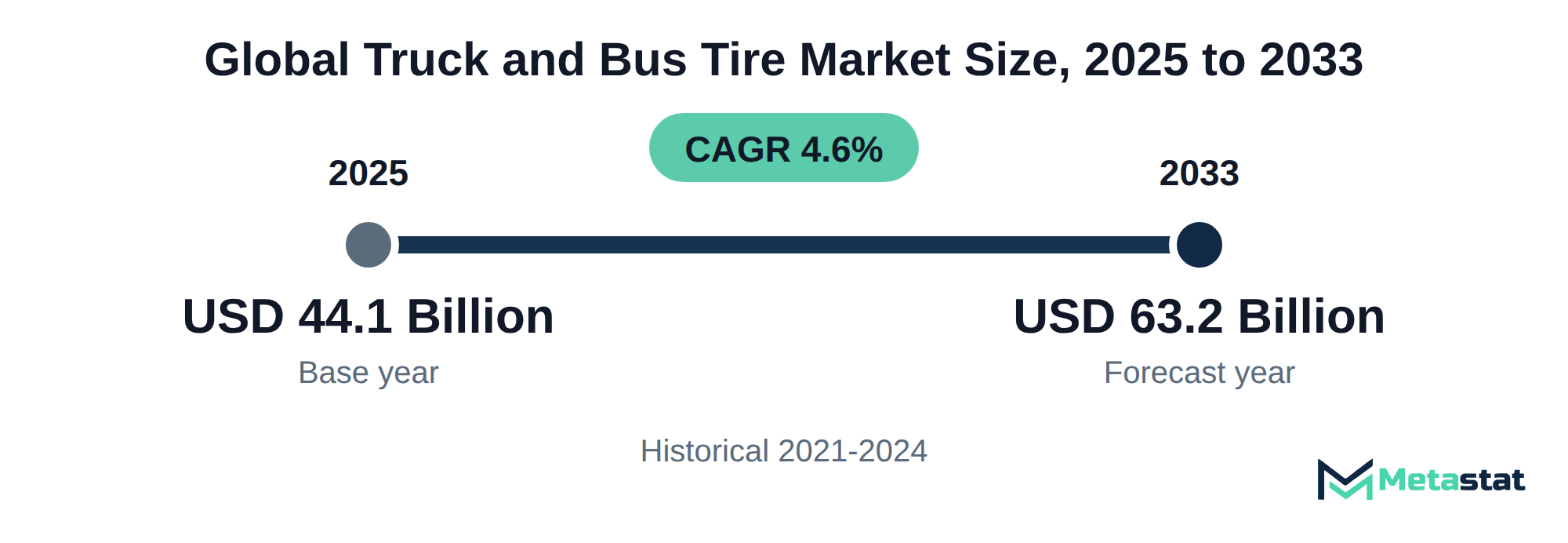
Market Valuation: Valued at $44.1 Billion in 2025, projected to reach $63.2 Billion by 2033 at a 4.6% CAGR.
Dominant Segment: Radial tires lead the Truck and Bus Tire market, driven by their superior fuel efficiency and durability, which are increasingly prioritized by fleet operators.
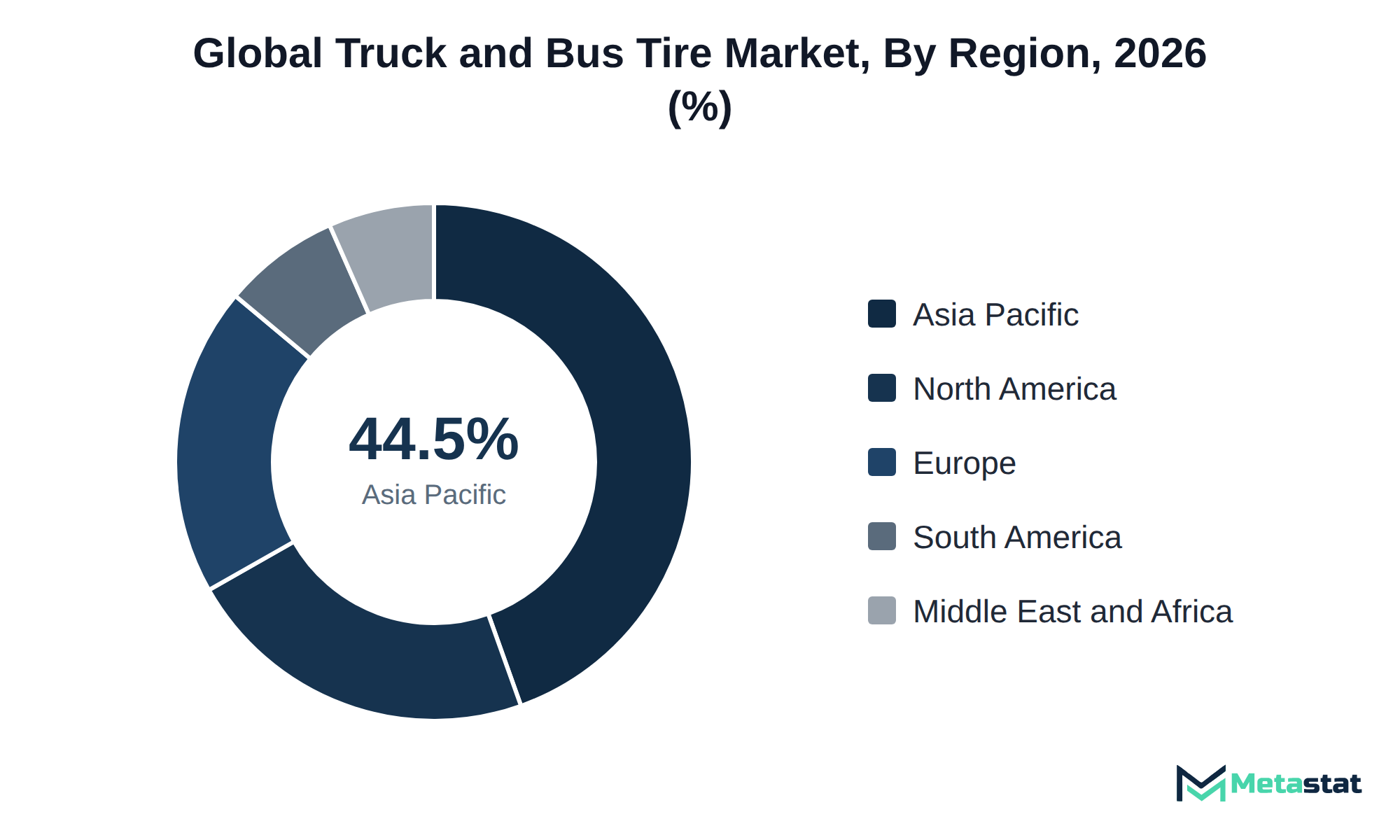
Geographic Lead: Asia Pacific dominates the market with a share of 44.5%, fueled by significant growth in logistics and transportation sectors, particularly in China and India.
What's Inside: The report provides a comprehensive analysis of market dynamics, competitive landscape, and detailed forecasts for various segments, including tire construction and application types.
Technological Advancements: Innovations in tire technology, such as smart tire systems, are enhancing performance and safety, presenting new opportunities for growth in the market.
Replacement Demand: The replacement segment is projected to reach USD 47.2 billion by 2033, driven by the aging fleet and the need for timely tire replacements to maintain operational efficiency.
Choose Your License
Global Truck and Bus Tire Market
The global Truck and Bus Tire market was valued at USD 44.1 billion in 2025 and is projected to reach USD 63.2 billion by 2033, growing at a CAGR of 4.6% over the forecast period.
The Truck and Bus Tire market encompasses the production and sale of tires specifically designed for trucks and buses. Buyers invest in these products primarily due to increasing demand for transportation services, which drives the need for reliable and durable tires. The market caters to various segments, including original equipment and replacement tires, ensuring that diverse customer requirements are met.
Growth in the market is propelled by several factors, with rising demand for trucks being a significant contributor. Trucks represent the largest segment in terms of value, reflecting robust expansion of logistics and freight services. In terms of regional share, Asia Pacific dominates with 44.5% of the market, highlighting its critical importance in global tire production and consumption.
North America holds 22.2% of the market in 2025, with the US leading in 2026. This strong presence indicates a well-established infrastructure and significant investment in transportation. The ongoing transition towards more efficient and sustainable tire solutions supports growth prospects in the Truck and Bus Tire market.
The Truck and Bus Tire market supports transportation by producing tires that improve vehicle performance and safety. Buyers prioritize these products due to their direct impact on operational efficiency, vehicle maintenance, and safety standards. The demand arises primarily from fleet operators, logistics companies, and public transportation services, all of which require reliable and durable tires that withstand various road conditions and heavy loads.
Growth in the market is driven by the increasing demand for commercial transportation, particularly in the Asia Pacific region, which holds the largest market share at 44.5%. The expansion of logistics networks, e-commerce, and urbanization contributes significantly to this demand. Among the segments, radial tires represent the highest value segment due to their superior performance characteristics, contributing to improved fuel efficiency and longer service life.
The steady demand in North America stems from established infrastructure and high transportation activity. Ongoing investments in road and fleet maintenance further support growth in the Truck and Bus Tire market, positioning it for continued expansion through 2033.
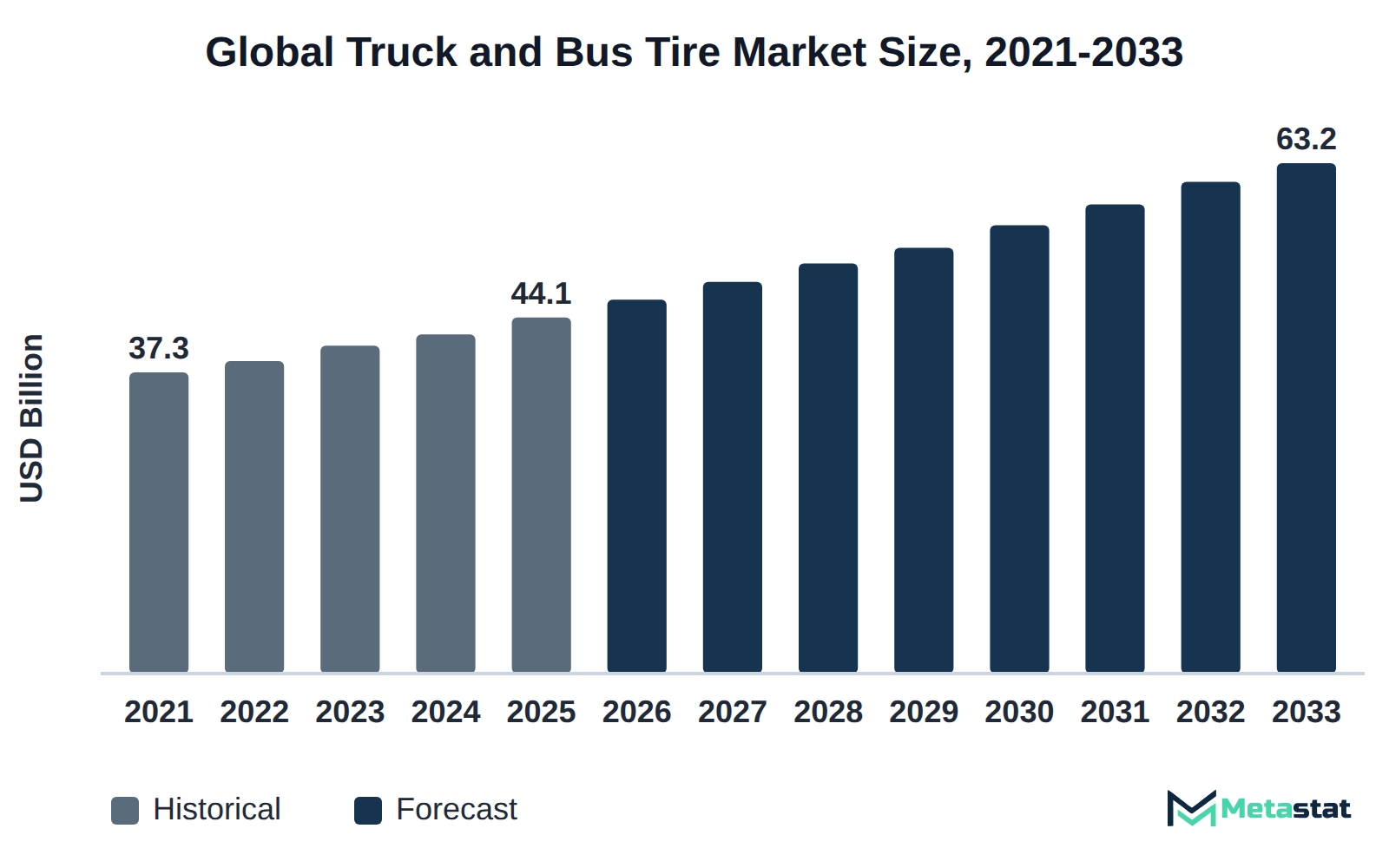
The adoption of radial tires in the Truck and Bus Tire market significantly impacts fleet operating costs. Radial tires exhibit enhanced fuel efficiency compared to bias tires, leading to lower fuel expenses for operators. By 2033, the radial tire segment is expected to reach USD 56.4 billion, reflecting a compound annual growth rate (CAGR) of 5% from 2026. This growth stems from the increasing preference for radial tires among fleet owners due to their superior performance characteristics, including better traction, improved wear resistance, and reduced rolling resistance.
Fleet operators prioritizing cost-effective solutions recognize the long-term savings associated with radial tires. The initial investment in radial tires exceeds that of bias tires; however, the extended lifespan and reduced maintenance costs contribute to overall financial benefits. Fleets adopting radial tires expect lower fuel consumption, translating to significant savings over time. The market continues to evolve, and the transition toward radial tires remains a crucial factor for fleet efficiency and cost management.
Replacement demand within the Truck and Bus Tire market is significantly influenced by the pricing strategies employed by suppliers and buyers. Original equipment and replacement segments feature distinct pricing models, with the original equipment segment projected to reach USD 16 billion by 2033, exhibiting a compound annual growth rate (CAGR) of 4.8%. In the replacement segment, the focus shifts to cost-effectiveness and supplier relationships, which play crucial roles in influencing purchase decisions.
Buyers negotiate contracts that reflect their unique operational needs, including volume discounts and long-term agreements that secure stable pricing over time. Such contracts provide predictability in budgeting and mitigate fluctuations driven by global material costs. This approach ensures that operators efficiently manage their expenses, particularly in industries reliant on consistent tire performance for logistics and transportation.
Structured purchasing improves operational efficiency and drives demand for reliable tire suppliers with favorable contract terms. The need for durability and reliability in tires further strengthens the preference for established brands within the market, ensuring that suppliers who adapt their pricing strategies accordingly capture a larger market share.
The Asia Pacific region exhibits significant demand for commercial truck and bus tires, largely driven by the growing logistics and transportation sectors. With a market share of 44.5% in the Truck and Bus Tire market, this region is the largest market globally. Increasing freight transport activities in countries like China and India fuel the need for durable and high-performance tires tailored for long-haul and urban applications.
Demand from trucking companies necessitates specialized tires that enhance efficiency and safety. The projected growth in the truck tire segment indicates an increase from USD 40.6 billion in 2026 to USD 55.7 billion by 2033, reflecting a compound annual growth rate of 4.6%. This growth highlights the urgency for tire manufacturers to innovate and provide products that meet the specific requirements of this dynamic sector. The competitive landscape in the region intensifies as suppliers strive to fulfill the evolving needs of logistics companies focused on optimizing operational costs and reducing downtimes.
Tire manufacturers are investing in advanced technologies to improve tire performance, longevity, and fuel efficiency. The Asia Pacific market for truck and bus tires is expected to continue its upward trajectory, driven by expanding logistics networks and increasing demand for reliable transportation solutions.
Fleets evaluate various factors when selecting truck and bus tires, focusing on tire construction and performance characteristics. This shift indicates a preference for radial tires among fleet managers due to their enhanced fuel efficiency and durability, which directly impacts operational costs. In contrast, bias tires, while available, project a much lower value of USD 6.9 billion by 2033, with a modest CAGR of 1.2%, suggesting lesser adoption in commercial fleets.
The choice of tire type influences maintenance schedules, safety standards, and compliance with regulatory requirements. Fleet operators prioritize tires that provide a balance of performance and cost-effectiveness. The movement towards radial tires in the Truck and Bus Tire market signifies a broader trend towards improved efficiency, leading to significant long-term savings. Consequently, fleets adopting radial tires enhance operational efficiency and reduce total cost of ownership, ultimately influencing their competitive edge in the market.
The aging of commercial truck fleets drives demand for new tires, resulting in higher replacement cycle rates. Fleet operators recognize the need for improved performance and safety, prompting investments in quality tires. This trend sees substantial spending from logistics companies and transportation firms, which prioritize tire reliability for operational efficiency. In 2026, the segment for replacement tires is anticipated to reach USD 47.2 billion, reflecting a consistent growth trajectory. The Truck and Bus Tire market benefits from this shift, with companies replacing aging assets with modern solutions that enhance fuel efficiency and reduce maintenance costs.
Industry participants have noted that older fleets often incur increased operating costs, prompting operators to invest in new tires to avoid breakdowns and downtime. This proactive approach contributes to robust replacement demand, directly influencing market dynamics and driving growth across the sector.
Innovations in tire technology drive improvements in performance, durability, and fuel efficiency. Enhanced tread designs and advanced rubber compounds play a significant role in catering to the specific requirements of commercial vehicles. Suppliers increasingly invest in research and development to create tires that meet the evolving demands of the industry. The introduction of smart tire technologies, which monitor tire pressure and temperature in real-time, offers fleet operators critical data to optimize tire usage and maintenance schedules.
These developments let the Truck and Bus Tire market expand its offerings and attract buyers focused on cost efficiency and performance. Fleet operators benefit from reduced operational costs and improved safety due to these technological advancements. The competitive landscape shifts as manufacturers strive to differentiate their products through technology, capturing more market share. Investments in technology not only enhance performance standards but align with the increasing emphasis on sustainability in the transportation sector.
Fluctuating prices of raw materials significantly constrain the Truck and Bus Tire market. Manufacturers face rising costs, leading to higher retail prices for tires. Fleet operators and commercial buyers express concern over these increased expenses, resulting in delayed purchasing decisions and smaller orders. Higher costs compel fleets to extend replacement cycles, opting to maintain older tires longer than planned. This trend particularly affects smaller fleets with tighter budgets and less financial flexibility. Demand for new tires consequently slows, which limits growth potential in the market. Price volatility disrupts the financial planning of fleet managers, further complicating the procurement process and hindering timely investments in new tire technologies.
Rising raw material costs significantly challenge suppliers within the Truck and Bus Tire market. Increased prices for essential inputs, including rubber and synthetic materials, impact profit margins, forcing manufacturers to reassess pricing strategies. Suppliers face the challenge of balancing competitive pricing with maintaining profitability, particularly in an environment of heightened cost pressures. In response, several suppliers implement cost-saving measures, including enhancing operational efficiency and exploring alternative materials to mitigate rising expenses. Several manufacturers invest in technology that improves production processes to reduce waste and lower costs. This strategic shift not only helps protect margins but positions suppliers to better navigate fluctuating input prices. Ultimately, these dynamics affect the overall competitiveness and sustainability of the market, influencing both suppliers' operational strategies and buyers' purchasing decisions across various regions.
The forecast for radial tires highlights an opportunity for growth within the Truck and Bus Tire market. This acceleration stems from fleet operators prioritizing fuel efficiency and lower long-term operating costs, driving their preference for radial over bias tires. The expansion in this segment aligns with the increasing demand for more efficient tire solutions, particularly in the trucking sector. The market is expected to see enhanced competition among manufacturers focusing on optimizing the performance of radial tires, which could result in further advancements in tire technology. Such dynamics indicate an essential growth trajectory, especially for players investing in this technology to capitalize on the shift toward radial tire adoption.
The Global Truck and Bus Tire market is segmented based on Tire Construction, Vehicle Type, Sales Channel, and Application.
These tires serve a crucial function in long-haul transportation and are favored by trucking companies due to their enhanced fuel efficiency and higher durability compared to bias tires. Demand for radial tires is driven primarily by the increasing need for cost-effective transportation solutions and the expansion of logistics networks. This segment exhibits faster growth than the bias tire segment, which anticipates a CAGR of 1.2% through 2033. The growing trend toward sustainability within the trucking industry highlights the importance of radial tires in reducing overall operational costs and environmental impact, reinforcing their position in the market. The market continues to evolve with advancements in materials and design, further supporting the adoption of radial tires.
This type of tire is primarily used in various commercial vehicles, including trucks and buses, where flexibility and weight distribution play crucial roles. The market for Bias Tires experiences slower growth compared to radial tires, which offer superior performance characteristics. Bias Tires serve specific applications, particularly in regions where rough terrain is common or where vehicles frequently operate under challenging conditions. Demand for Bias Tires is driven by cost considerations among fleet operators, who opt for these tires due to their generally lower price point compared to radial alternatives. Despite this price sensitivity, the segment faces competition from more advanced radial tire technology, which continues to gain traction in the market. This competitive dynamic shapes the evolution and strategic decisions of suppliers targeting this segment.
This segment primarily serves fleet operators engaged in long-distance transportation, logistics, and freight delivery. Growing demand for freight services and the expansion of e-commerce drive the need for efficient transportation solutions. The trucks segment experiences a higher growth rate compared to buses and coaches, supported by the increasing replacement cycle due to aging vehicle fleets. Replacement rates remain critical in this segment, with operators seeking durable tires that enhance fuel efficiency and reduce operational costs. The segment's performance significantly influences the broader Truck and Bus Tire market, shaping overall trends and investment strategies.
Buses and Coaches segment is estimated to reach USD 7.5 billion by 2033, at a CAGR of 4.2% during the forecast period. This segment primarily serves public transportation sectors and private coach operators, facilitating the movement of passengers across urban and intercity routes. Demand for buses and coaches is driven by increasing urbanization and the need for efficient public transport solutions. The focus on reducing traffic congestion and pollution pushes municipalities to invest in modern bus fleets, which directly influences the market. Compared to the Trucks segment, which values USD 40.6 billion in 2026, the Buses and Coaches segment exhibits relatively slower growth, reflecting differing investment dynamics and buyer profiles. Operators in this segment prioritize comfort and safety, which shapes purchasing decisions and overall spending.
This segment primarily supplies tires for new truck and bus manufacturing, catering to original equipment manufacturers (OEMs) who require high-quality tires that enhance performance and safety. Demand in this sector is driven by the growth of commercial vehicle production, particularly in regions experiencing increasing infrastructure development. This segment exhibits a faster growth rate compared to the replacement segment, primarily due to the steady rise in new vehicle registrations, which contribute to the overall expansion of the market. OEMs emphasize quality and safety, leading to a higher price point in this segment compared to replacement tires, which are typically driven by cost considerations and competitive pricing dynamics in the aftermarket.
Replacement demand is estimated to reach USD 47.2 billion by 2033, at a CAGR of 4.5% during the forecast period. This segment primarily serves fleet operators and logistics companies that require timely tire replacements to maintain operational efficiency. Factors driving this segment include the increasing number of commercial vehicles and their usage intensity, leading to accelerated wear and tear. Compared to the Original Equipment segment, which focuses on new tire installations, the Replacement segment emphasizes longevity and cost-effectiveness in tire selection. Continuous growth in e-commerce and freight transportation intensifies the demand for reliable tire replacements, directly influencing market dynamics. The market experiences heightened competition among suppliers who offer varied pricing strategies, making it crucial for buyers to consider durability and performance when selecting replacement tires. This segment’s growth trajectory aligns with broader trends in the transportation industry, reflecting its essential role in maintaining fleet productivity.
Long-Haul segment is valued at USD 14.6 billion in 2026 and is projected to reach USD 19.7 billion by 2033, at a CAGR of 4.3% during the forecast period. This segment primarily serves logistics and freight companies that require reliable tire performance over extended distances. Demand for Long-Haul tires is driven by the increasing need for efficient transportation solutions in the growing e-commerce sector, ensuring timely deliveries. Compared to other applications, the Long-Haul segment experiences a higher growth rate, supported by advancements in tire technology that enhance fuel efficiency and lifespan. This segment differentiates itself from Regional Haul tires, which focus on shorter routes and exhibit slower growth at a CAGR of 4.7%. The market sees a clear preference for Long-Haul tires among fleet operators seeking durability and performance in demanding conditions.
Regional Haul segment is estimated to reach USD 21.2 billion by 2033, at a CAGR of 4.7% during the forecast period. This segment caters primarily to logistics companies and freight carriers that operate over medium distances, requiring reliable tire solutions for efficiency. Demand within this segment is driven by the growing need for cost-effective transportation solutions, reflecting an increasing focus on operational expenses among fleet owners. Compared to other applications like Long-Haul, which has a slightly lower projected growth rate, Regional Haul offers competitive pricing advantages. Fleet operators prioritize durability and performance in tires for regional operations, leading to a distinct focus on tire specifications that enhance longevity while optimizing fuel efficiency. The significance of the Regional Haul segment stems from its role in supporting the supply chain, making it integral to the overall Truck and Bus Tire market dynamics.
Urban and Bus Service segment is expected to reach USD 9.3 billion by 2033. This segment serves urban transportation needs, catering primarily to municipal transit systems and bus operators focused on efficient service delivery. Demand increases due to urbanization trends, where higher population densities necessitate effective public transportation solutions. The segment is projected to achieve a CAGR of 4.3%, outpacing other applications in growth. This growth contrasts with the Regional Haul segment, which exhibits a CAGR of 4.7%. The distinct application of Urban and Bus Service tires involves durability and performance under frequent stop-and-go conditions, differing from long-haul tires designed for endurance over extended distances. Suppliers emphasize technology improvements tailored to urban environments, enhancing traction and reducing noise levels, aligning with regulatory standards aimed at improving urban air quality.
Mixed on-Road and off-Road segment is projected to grow at a CAGR of 4.3% during the forecast period. This segment caters to a diverse range of applications, used primarily by construction, agriculture, and logistics industries requiring versatile industrial tires that perform across varying terrains. Demand for this segment is driven by the increasing need for efficient and durable tires capable of handling both on-road and off-road conditions. Differentiating from other segments, this segment attracts buyers focused on multi-functional capabilities rather than specialized applications. The segment's growth trajectory remains robust compared to standard urban and regional haul segments, largely due to the rising number of operations in semi-urban and rural areas, which further enhances the need for mixed-use tires. The market provides solutions that balance performance characteristics, catering to a wide customer base while mitigating challenges posed by fluctuating prices in raw materials.
This sub-segment includes applications for winter service and waste haul, serving a niche but essential role in the Truck and Bus Tire market. Winter service tires provide enhanced traction and control in snowy or icy conditions, while waste haul tires are designed for heavy loads and rugged environments. These tires are used by municipal services, waste management companies, and logistics firms operating in harsh conditions. Demand for these specialized tires rises due to environmental regulations and the necessity for reliable performance under extreme weather. Compared to other segments, this sub-segment experiences slower growth due to its targeted nature and lower market share. Innovations in materials and tread designs specifically cater to the unique challenges posed by winter conditions and waste transport, distinguishing it from more generalized tire applications.
Based on geography, the Global Truck and Bus Tire market is divided into North America, Europe, Asia-Pacific, South America, Middle East, and Africa.
Growing investments in infrastructure and transportation in North America drive demand for the Truck and Bus Tire market. The region benefits from a robust logistics sector, which relies heavily on trucks for distribution and delivery. This reliance supports consistent purchasing of tires for both new vehicles and replacements. North America is projected to reach USD 13.4 billion by the end of 2033. The United States, Canada, and Mexico represent the primary markets, with a combined share of 22.2% of the global market in 2025. Tighter vehicle safety rules push manufacturers toward advanced tire technologies that improve performance and durability. These innovations position the market competitively, driving growth in various applications, including long-haul and urban services.
In Europe, the market benefits from a well-established automotive industry, where major players actively seek high-performance tires for trucks and buses. Countries including Germany, France, and the UK drive demand through their robust logistics and transportation sectors, emphasizing quality and durability in tire choices. Government regulations focusing on environmental sustainability influence tire performance standards, encouraging innovations in tire technology. The market share in Europe is projected at 19.3% in 2025, reflecting a solid foundation for growth. With a focus on advancements, suppliers adapt their offerings to meet changing customer preferences, enhancing competitiveness. Reliable and efficient transportation solutions position the Truck and Bus Tire market favorably for future expansion.
Asia-Pacific accounts for 44.5% of the Truck and Bus Tire market in 2025. The region's growth is driven by robust demand from the rapidly expanding logistics and transportation industries, particularly in countries including China and India. Ongoing investments in infrastructure development, including roads and highways, facilitate greater efficiency and reliability in freight transport. Increasing urbanization in South Korea and Southeast Asia contributes to the rising need for public transportation solutions, driving tire demand for buses and coaches. Regulatory measures in these countries emphasize improving vehicle safety standards, which further supports the market. Continuous advancements in tire technology, particularly for radial tires, align with the evolving needs of the transportation sector, enhancing performance and fuel efficiency.
In South America, the Truck and Bus Tire market is driven by the growth of the transportation sector, particularly in Brazil and Argentina. Increasing demand for efficient logistics and freight transport fuels tire purchases for trucks and buses. Infrastructure development projects, including road improvements and urban transit expansions, support this demand. The market share in South America is projected at 7.3% in 2025. Brazil, the largest economy in the region, contributes significantly to the market through its robust agricultural exports requiring long-haul transportation. Argentina follows with growing investments in public transportation, enhancing the need for buses and coaches. Overall, evolving transportation needs in South America contribute to the market expansion.
The Middle East and Africa account for 6.6% of the global Truck and Bus Tire market in 2025. Demand stems primarily from the growing transportation and logistics sectors in countries including Saudi Arabia and the UAE. Infrastructure developments, particularly in urban areas, lead to increased demand for durable and high-performance tires. Cost considerations related to import tariffs and local production capabilities influence buyer decisions in this region. The market features a combination of local manufacturers and global players, each adapting to unique regional requirements. This strategic focus on quality and performance is expected to drive growth in the market, particularly in urban service applications and long-haul transportation.
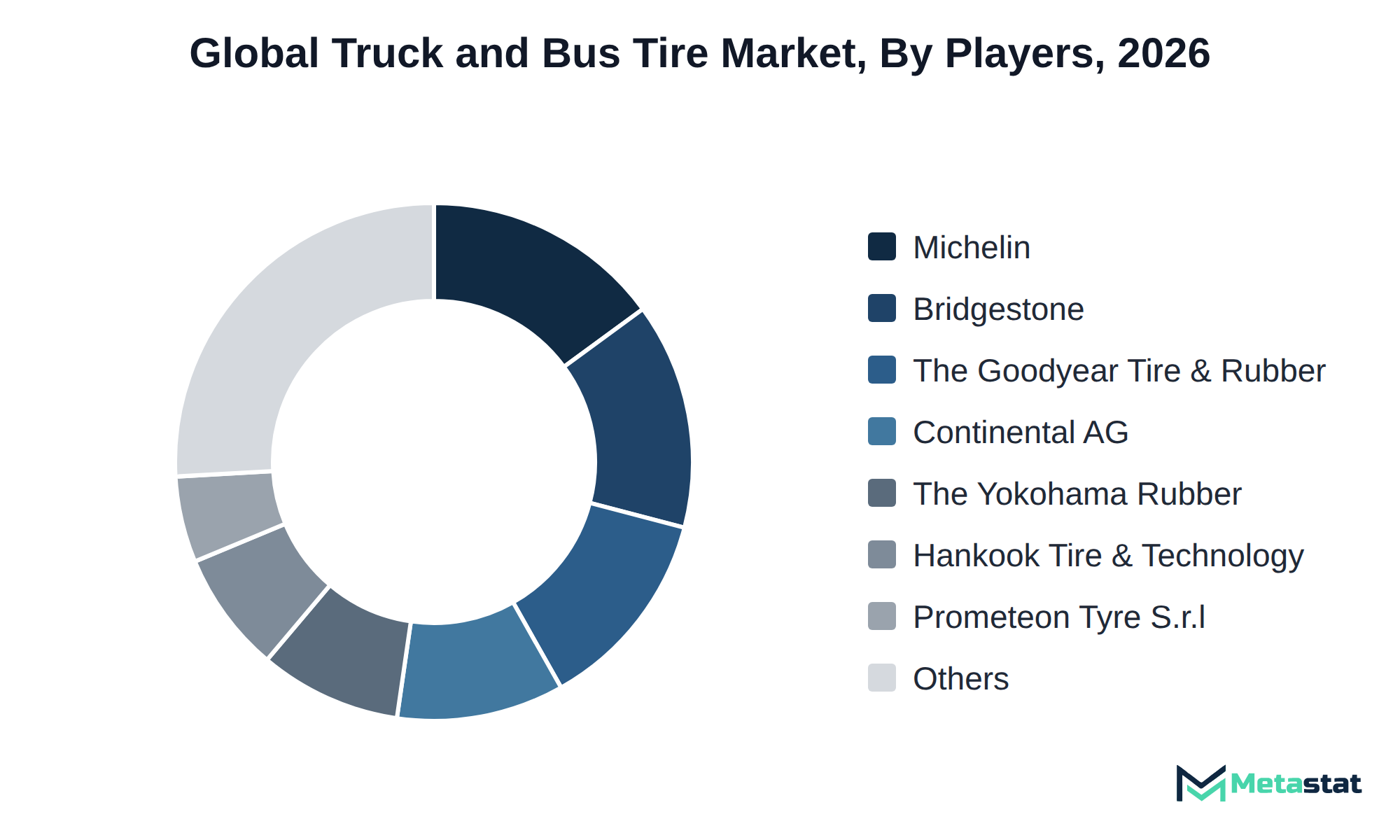
In the Truck and Bus Tire market, companies compete primarily through product differentiation, pricing strategies, and customer service. Buyers prioritize factors including price, certification, customization, and the overall service ecosystem when selecting tires. The ability to offer high-performance options at competitive prices significantly influences purchasing decisions.
Michelin focuses on innovation and sustainability, offering advanced tire technologies that enhance performance and reduce environmental impact. Bridgestone Corporation emphasizes a diverse product range tailored to specific customer needs, including custom solutions for various applications. The Goodyear Tire & Rubber Company prioritizes durability and performance, targeting long-haul trucking firms with products designed to withstand demanding conditions.
Achieving this growth hinges on several key developments. First, the increasing adoption of radial tires, anticipated to see a compound annual growth rate (CAGR) of 5%, will significantly enhance the tire construction segment, responding to rising demand from both trucks and buses. Second, the growth in original equipment sales, projected to expand from USD 11.5 billion in 2026 to USD 16 billion by 2033, reinforces the overall market, driven by a surge in vehicle production and transportation needs. Third, expanding urbanization in the Asia Pacific region will escalate demand for urban and bus service applications, promoting heightened tire consumption among commercial fleets. Risks exist that could impede this momentum. Fluctuations in raw material prices constrain profit margins for manufacturers, potentially influencing pricing strategies and overall market growth. Continued focus on innovation and sustainability will play a crucial role in mitigating these risks, ensuring the Truck and Bus Tire market remains resilient and competitive.
By Tire Construction: Radial Tires, Bias Tires
By Vehicle Type: Trucks, Buses and Coaches
By Sales Channel: Original Equipment, Replacement
By Application: Long-Haul, Regional Haul, Urban and Bus Service, Mixed on-Road and off-Road, Others (Winter Service, Waste Haul)
The report strategically identifies and profiles the key market players and analyses their core competencies in each sub-segment of the Truck and Bus Tire market.
Report Attributes | Details |
Study Period | 2021-2033 |
Base Year | 2025 |
Estimated Year | 2026 |
Forecast Period | 2026-2033 |
Historical Period | 2021-2025 |
Growth Rate | CAGR 4.6% from 2026 to 2033 |
Revenue Unit | USD billion |
Segmentation | By Tire Construction, Vehicle Type, Sales Channel, Application, and Region |
By Region | North America (By Tire Construction, Vehicle Type, Sales Channel, Application, and Country)
|
Europe (By Tire Construction, Vehicle Type, Sales Channel, Application, and Country)
| |
Asia Pacific (By Tire Construction, Vehicle Type, Sales Channel, Application, and Country)
| |
South America (By Tire Construction, Vehicle Type, Sales Channel, Application, and Country)
| |
Middle East and Africa (By Tire Construction, Vehicle Type, Sales Channel, Application, and Country)
|
Find answers to common questions about this report
The Truck and Bus Tire market size was valued at USD 44.1 billion in 2025.
The market is projected to grow at a CAGR of 4.6% during the forecast period from 2026 to 2033.
The North America Truck and Bus Tire market size is estimated to reach USD 13.4 billion by 2033.
Radial Tires lead the Truck and Bus Tire market with a projected value of USD 56.4 billion by 2033, significantly surpassing Bias Tires, which are expected to reach USD 6.9 billion in the same year.
The aging of commercial truck fleets drives demand for new tires, resulting in higher replacement cycle rates. Innovations in tire technology enhance performance, durability, and fuel efficiency, attracting fleet operators focused on cost efficiency and safety.
Fluctuating prices of raw materials significantly constrain market growth, as rising costs lead to higher retail prices for tires. This situation causes fleet operators to extend replacement cycles, resulting in delayed purchasing decisions and smaller orders, particularly affecting smaller fleets with tighter budgets.
The adoption of radial tires is favored by fleet operators prioritizing fuel efficiency and lower long-term operating costs. This shift signals a growing preference for advanced tire solutions that enhance performance and sustainability within the Truck and Bus Tire market.
The Truck and Bus Tire market is estimated to reach a valuation of USD 63.2 billion by 2033.
Key players operating in the Truck and Bus Tire market include Michelin, Bridgestone Corporation, The Goodyear Tire & Rubber Company, Continental AG, The Yokohama Rubber Co., Ltd., Hankook Tire & Technology Co., Ltd., Apollo Tyres Ltd, and Giti Tire.
The radial tire segment is projected to grow from USD 40 billion in 2026 to USD 56.4 billion by 2033, achieving a compound annual growth rate of 5%.
The analysts below cover Automotive and Transportation research at Metastat Insights.
LEAD ANALYST
Utkarsh Khirodkar is a Lead Market Research Analyst at MetaStat Insight, specializing in market intelligence, technology sector assessments, and competitive strategy.

ENERGY & INFRASTRUCTURE INDUSTRY CONSULTANT
Automotive and Transportation · Electronics and Semiconductor · Energy and Power · Machinery & Equipment
Saurabh Vasant Ganvir consults for Energy & Infrastructure Industry at MetaStat Insight, specializing in renewable energy, solar EPC, and electric vehicle (EV) infrastructure markets.
When evaluating distributed energy resource management systems, standard research summaries tend to gloss over the operational differences between front-of-the-meter utility deployments and behind-the-meter industrial sites. The MetaStat Insight report addressed those distinctions directly, especially regarding software interoperability standards and grid interconnection backlogs. The five-year market sizing across regional transmission organizations provided actionable context for our grid modernization strategy.
Most industry reports on warehouse automation bundle autonomous mobile robots and fixed conveyor installations into the same top-level numbers, which complicates advisory work. This study split the market cleanly by payload tiers, navigation technology, and fleet management software layers. The regional forecast for Western Europe gave our team defensible adoption benchmarks when evaluating capital allocation for logistics clients, saving us days of secondary data scrubbing.
Standard industry briefs frequently blur the operational distinctions between isobaric pressure exchangers and centrifugal turbines. In this study, MetaStat Insight categorized mega-scale desalination tenders across the GCC and Mediterranean basins by membrane replacement frequencies and salinity tolerances. Their primary research helped us evaluate local content requirements in Saudi Arabia and the UAE without relying on marketing literature. We found the segment-level equipment replacement estimates grounded and well-reasoned throughout.
Explore related market intelligence reports worth reading alongside this one.
Starting from
$2950