
LEAD ANALYST
Utkarsh Khirodkar is a Lead Market Research Analyst at MetaStat Insight, specializing in market intelligence, technology sector assessments, and competitive strategy.

Tumor Ablation Market Size, Share, By Technology (Radiofrequency, Cryoablation, Microwave, IRE, Ultrasound, Laser), By Mode of Treatment (Laparoscopic, Surgical, Percutaneous), By Application (Lung, Kidney, Liver, Breast, Bone Metastasis, and Prostate) Industry Analysis, Growth, Trends, and Forecast, 2026-2033
Report ID
MSI-2292
Published
February, 2026
Pages
312 Pages
Format
Report Details
Choose Your License
Tumor Ablation Market
Tumor ablation is a minimally invasive procedure that is commonly used in the treatment of tumors such as liver, kidney, bone, and lung. Ablation is a needle-based treatment that destroys cancerous or abnormal tissue.
Rising incidence of cancer is the major factor boosting the growth of the market. For instance, according to the American Cancer Society, in 2020 there were 191,930 new cases of prostate cancer and 33,330 deaths from prostate cancer in the United States. According to the World Health Organization (WHO), globally, lung cancer accounts for 2.09 million cases in 2018. According to the American Cancer Society, in 2020, around 228,820 new cases of lung cancer was diagnosed in the United States. According to the World Health Organization (WHO), globally, colorectal cancer accounts for 1.80 million cases in 2018. According to the American Cancer Society's (ACS), in 2020, around 147,950 adults in the United States are diagnosed with colorectal cancer. According to the American Institute for Cancer Research, breast cancer is the second most common cancer globally. Globally, around 2 million new cases of breast cancer are diagnosed in 2018. Around 627,000 women died from breast cancer, which is approximately 15% of all cancer deaths among women in 2018. Further, rising demand of minimally invasive surgeries is a key driving factor of the market. However, side effect of tumor ablation might hamper the market growth. The side effects of ablation therapy include abdominal pain, infection in the liver, fever and abnormal liver tests. There can be serious complications which are uncommon, but they are possible. Moreover, growing awareness about ablation procedures over conventional therapeutic and surgical procedures would provide lucrative opportunities for the market in coming years.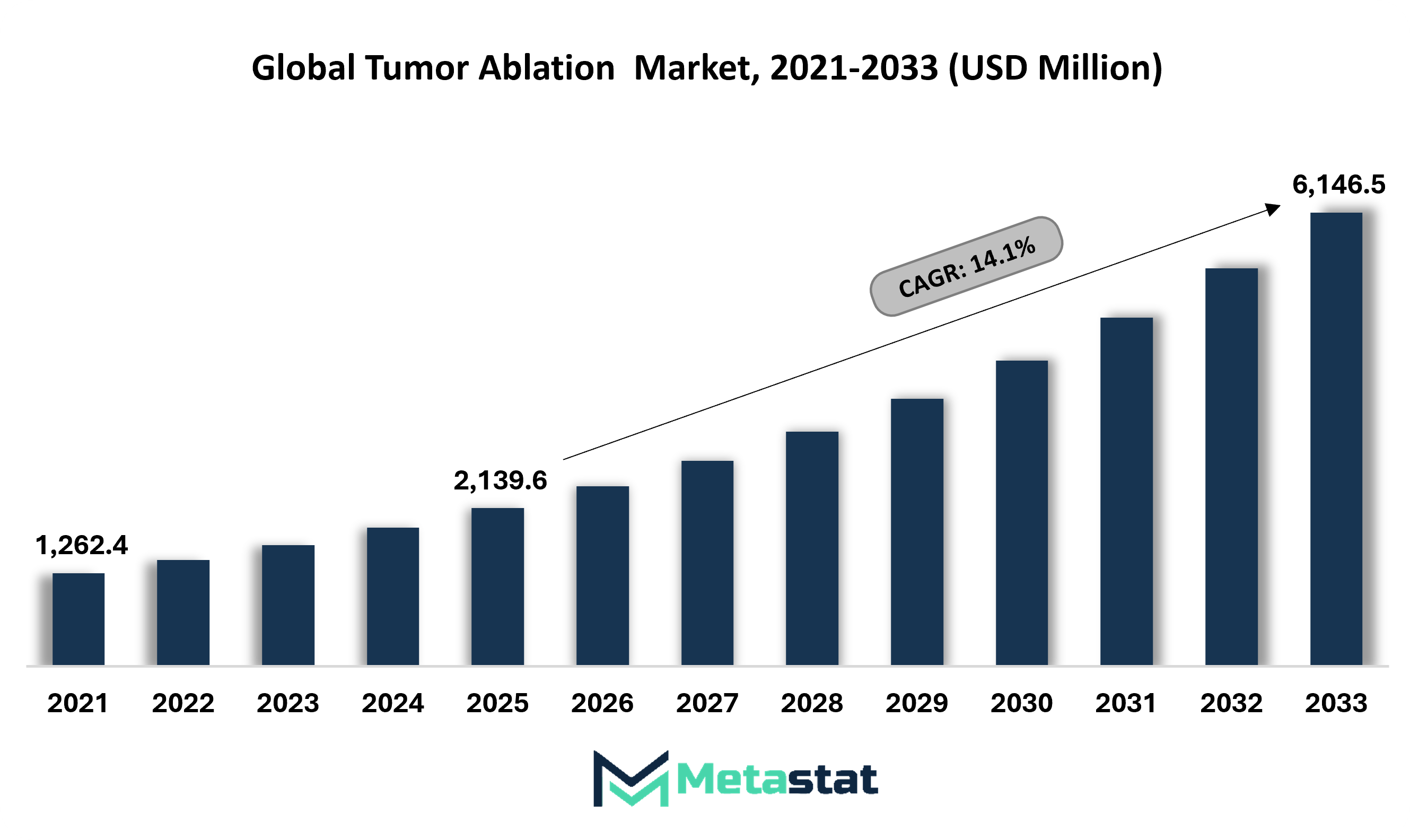
The global tumor ablation market is mainly classified based on technology, mode of treatment, and application. Technology is further segmented into Radiofrequency, Cryoablation, Microwave, IRE, Ultrasound, and Laser. By mode of treatment the market is divided into Laparoscopic, Surgical, and Percutaneous.
Radiofrequency segment is valued at USD 808.7 million in 2026 and is projected to reach USD 1751.7 million by 2033, at a CAGR of 11.7% during the forecast period.
By application the market is further divided into Lung, Kidney, Liver, Breast, Bone Metastasis, and Prostate.
Lung segment is projected to reach USD 1278.5 million by 2033.
Based on technology, the radiofrequency ablation accounted for the largest share in 2020, attributed to its proven clinical efficacy and safety profile, ease of treatment, the development & commercialization of technologically advanced radiofrequency tumor ablation systems, and increasing regulatory approval of radiofrequency tumor ablation systems. For instance, Medtronic plc has received U.S. Food and Drug Administration (FDA) 510(k) clearance for the Accurian RF ablation platform, which conducts radio frequency (RF) ablation of nerve tissues. RF ablation is a minimally invasive procedure in which current produced by radio waves heats up a small area of nerve tissue to stop it from sending pain signals, thereby reducing pain. The Accurian system offers independent channel management and advanced smart features that may support procedural efficiency.
Based on geography, the global tumor ablation market is divided into North America, Europe, Asia-Pacific, South America, and Middle East & Africa. North America is further divided in the U.S., Canada, and Mexico, whereas Europe consists of the UK, Germany, France, Italy, and Rest of Europe. Asia-Pacific is segmented into India, China, Japan, South Korea, and Rest of Asia-Pacific. The South America region includes Brazil, Argentina, and the Rest of South America, while the Middle East & Africa is categorized into GCC Countries, Egypt, South Africa, and Rest of Middle East & Africa.
North America was dominating the tumor ablation market in 2020, owing to the high prevalence and incidence of cancer, rising adoption of minimally invasive procedures by patients for cancer treatment, increasing government funding for cancer research, and collaboration between companies to develop and commercialize tumor ablation system. For instance, Auris Health, Inc. has entered into a cooperative development and commercialization agreement with NeuWave Medical, Inc., a subsidiary of Ethicon, Inc., with the goal of enabling robotically assisted bronchoscopic ablation of lesions in the lung.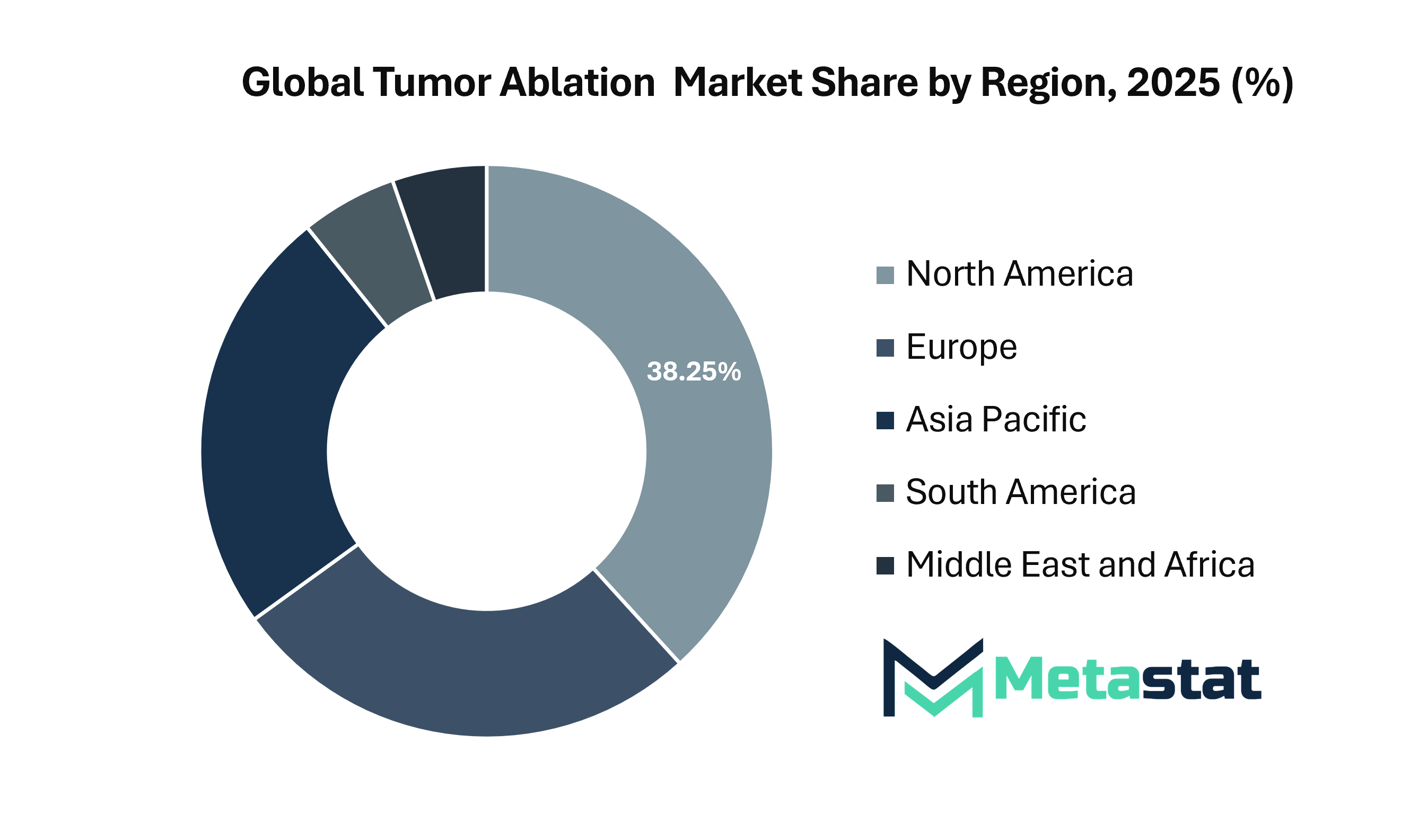
Key players operating in the tumor ablation industry include Boston Scientific Corporation, Medtronic, Plc, Angiodynamics, Inc., Misonix Inc., EDAP TMS S.A, HealthTronics, Johnson and Johnson, Mermaid Medical, Inc., Chongqing Haifu Medical Technology Co., Ltd., and SonaCare Medical, LLC.
Commercialization of tumor ablation system by the companies, partnerships between companies to develop tumor ablation system, mergers and acquisitions by the market players to sustain their position in the market, companies are investing in R&D to develop minimally invasive and innovative tumor ablative system, and increasing research studies on tumor ablation system. For instance, on December 15, 2020, Medtronic plc has conducted first 100 patients treatment with the OsteoCool Radiofrequency Ablation (RFA) System in the OPuS One Clinical Study. The study on OsteoCool technology showed patients had significant and swift improvement in pain relief at just three days post-procedure and sustained improvements in pain and quality of life out to six months.
Find answers to common questions about this report
The Tumor Ablation market is estimated to reach a valuation of USD 6146.5 million by 2033.
According to Metastat Insights analysis, the North America Tumor Ablation market size is estimated to reach USD 2157.4 million by 2033.
Top players operating in the Tumor Ablation industry includes Boston Scientific Corporation, Medtronic, Plc, Angiodynamics, Inc., Misonix Inc., EDAP TMS S.A, HealthTronics, Johnson and Johnson, Mermaid Medical, Inc., Chongqing Haifu Medical Technology Co., Ltd., SonaCare Medical, LLC.
The Metastat Insights study reveals that the Tumor Ablation market size was valued at USD 2139.6 million in 2025.
The Tumor Ablation market is projected to grow at a CAGR of 14.1% during the forecast period from 2026 to 2033.
The analysts below cover Healthcare research at Metastat Insights.
LEAD ANALYST
Utkarsh Khirodkar is a Lead Market Research Analyst at MetaStat Insight, specializing in market intelligence, technology sector assessments, and competitive strategy.

LEAD PRINCIPAL ANALYST, PHARMA AND HEALTHCARE
Food and Beverages · Healthcare · Healthcare IT · Medical Devices
Ajay Devgire is the Lead Healthcare Analyst at MetaStat Insight, leading strategic research and market intelligence initiatives across the global healthcare domain.
When planning edge sensor rollouts across refinery environments, generic IoT reports typically miss the harsh-environment certification bottlenecks. MetaStat Insight gave an objective evaluation of ATEX and Class 1 Division 2 hardware availability, along with realistic five-year maintenance cycle cost projections. The comparison of wireless mesh versus private cellular backhaul helped our team pressure-test network reliability models for remote processing facilities.
In the biological seed treatment space, registration timelines vary drastically between the European Union, Brazil, and North America. The MetaStat Insight research handled these cross-border regulatory barriers with genuine nuance, mapping commercialization pathways alongside historical field adoption rates. The segmentation between microbial strains and biochemical active ingredients was particularly well structured.
Our team was tracking whether regional recycling infrastructure could realistically absorb the growing volume of lithium iron phosphate batteries over the next decade. The report did a solid job separating announced hydrometallurgical plant capacity from active, permitted operational throughput. That distinction made the feedstock availability projections and regional recovery rate models far more credible than standard commercial overviews.
Explore related market intelligence reports worth reading alongside this one.
Starting from
$2950