
LEAD ANALYST
Utkarsh Khirodkar is a Lead Market Research Analyst at MetaStat Insight, specializing in market intelligence, technology sector assessments, and competitive strategy.

US Fluid Catalytic Cracking Market Size, Share, By Offering (Base FCC Catalysts, FCC Additives, Equipment & Spare Parts, Licensing & Engineering, Maintenance & Turnaround Services), By Feedstock Type (Vacuum Gas Oil, Atmospheric Residue, Atmospheric Gas Oil and Others), By Reactor-Regenerator Arrangement (Side-by-Side and Stacked), By Operating Objective (Gasoline Maximization, Light Olefins Maximization and Distillate Maximization), Industry Analysis, Growth, Trends, and Forecast, 2026-2033
Report ID
MSI-5628
Published
October, 2026
Pages
303 Pages
Format
Historical
Base year
Forecast
Forecast period
Report Details
Market Valuation: Valued at $1,447.2 Million in 2025, projected to reach $1,817 Million by 2033 at a 2.8% CAGR.
Dominant Segment: Vacuum Gas Oil leads the US Fluid Catalytic Cracking market, driven by its essential role in maximizing gasoline production and meeting rising fuel demands.
Geographic Lead: North America retains the largest market share, supported by advanced refining infrastructure and ongoing technological innovations in catalytic processes.
What's Inside: The report provides comprehensive competitive coverage, including detailed analyses of market dynamics, segment performance, and a forecast window extending to 2033.
Investment Drivers: Growth is significantly influenced by increasing gasoline and light olefins demand, prompting refiners to enhance production capabilities and invest in advanced catalytic technologies.
Emerging Trends: Light olefins maximization is projected to grow at a CAGR of 5.4%, reflecting the rising demand from the petrochemical industry and shifting consumer preferences toward sustainable materials.
Choose Your License
US Fluid Catalytic Cracking Market
The US Fluid Catalytic Cracking market was valued at USD 1,447.2 million in 2025 and is projected to reach USD 1,817 million by 2033, growing at a CAGR of 2.8% over the forecast period.
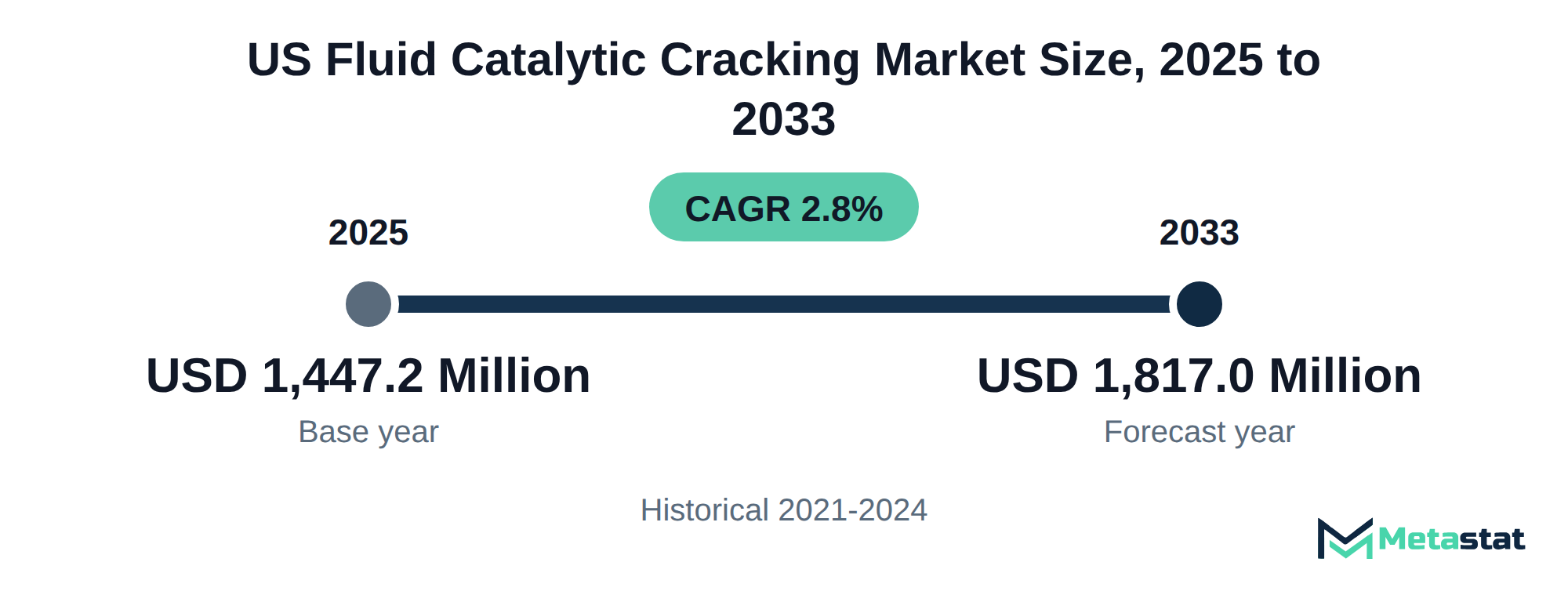
The US Fluid Catalytic Cracking market encompasses the production and supply of catalysts, additives, equipment, and engineering services vital for refining processes. Buyers invest in this market driven by the need for efficient hydrocarbon conversion, which enhances fuel quality and maximizes output. Key customers include oil refineries, petrochemical manufacturers, and companies focused on optimizing their production processes. The market's diverse offerings cater to various operational objectives, including gasoline maximization and the production of light olefins.
Growth in the market is primarily propelled by increasing consumption of gasoline and light olefins, driven by rising demand for transportation fuels and petrochemical feedstocks. Among the segments, Vacuum Gas Oil represents the largest share, reflecting its critical role in refining operations. The side-by-side reactor-regenerator arrangement stands out in terms of capacity and efficiency, contributing significantly to the market's performance.
North America retains a large share of the market, supported by advanced refining infrastructure and technological innovation. The anticipated growth in the US Fluid Catalytic Cracking market aligns with the global shift towards cleaner fuels and sustainable practices. The market is expected to experience steady growth, driving competition among key players in the industry.
The market covers essential components and services that support the fluid catalytic cracking process, impacting the refining of petroleum. Buyers invest in this market due to the necessity for efficient conversion of heavy hydrocarbons into valuable products including gasoline and diesel. The demand arises from various sectors, including oil and gas companies, which rely on advanced technologies to optimize operations and maintain competitiveness in an evolving industry.
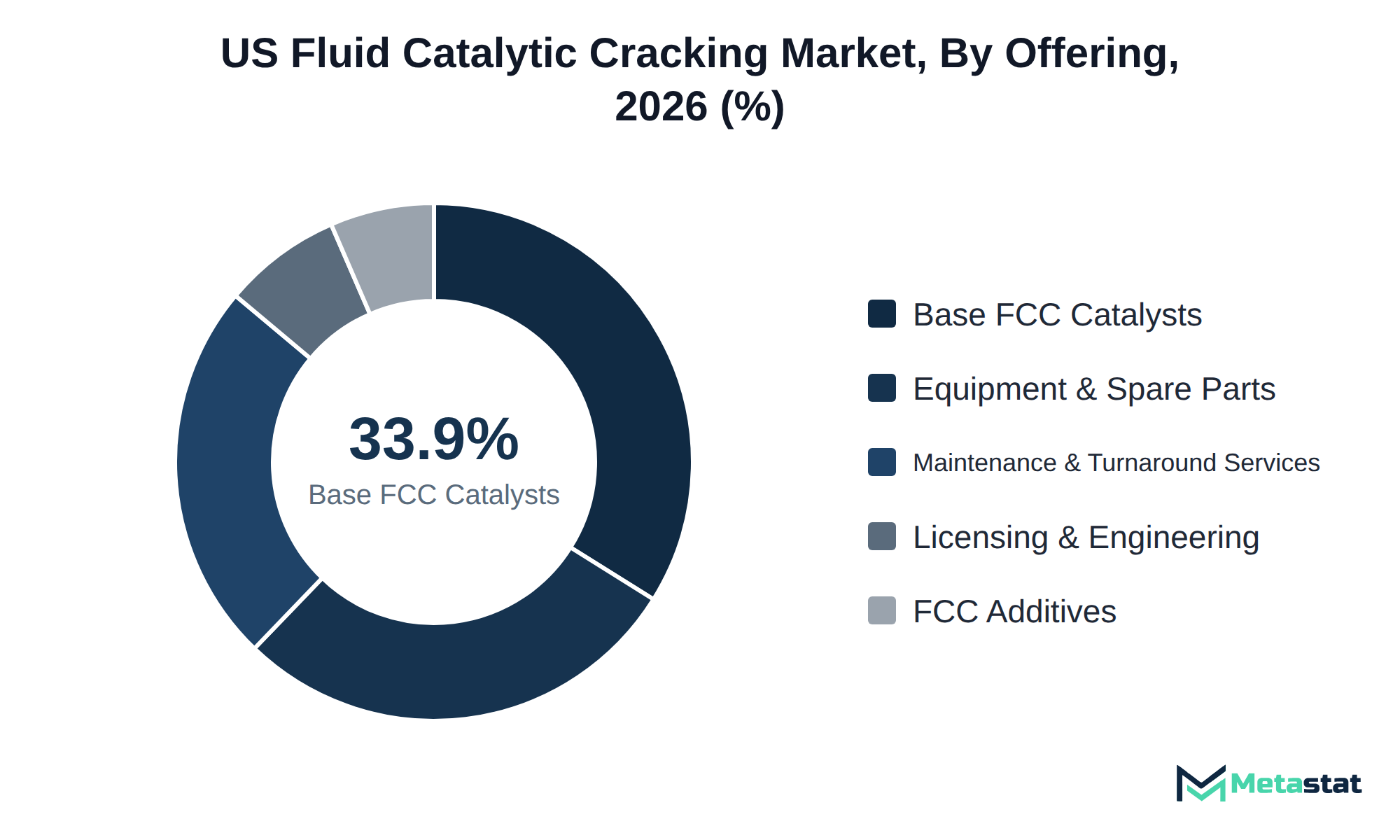
Growth in the market is significantly driven by the increasing emphasis on gasoline maximization, reflecting a shift in consumer preferences toward cleaner fuels. Base FCC Catalysts, the segment generating the most revenue, are central to this transformation. North America holds the largest market share, supported by established refining infrastructure and continuous technological advancements in catalytic processes.
Investment in innovative catalysts and additives drives market expansion, addressing the rising need for improved efficiency and reduced environmental impact. Players in the US Fluid Catalytic Cracking market focus on enhancing product performance to meet stringent regulatory requirements and evolving consumer demands. This focus supports growth and positions suppliers to capture emerging opportunities in a competitive environment.
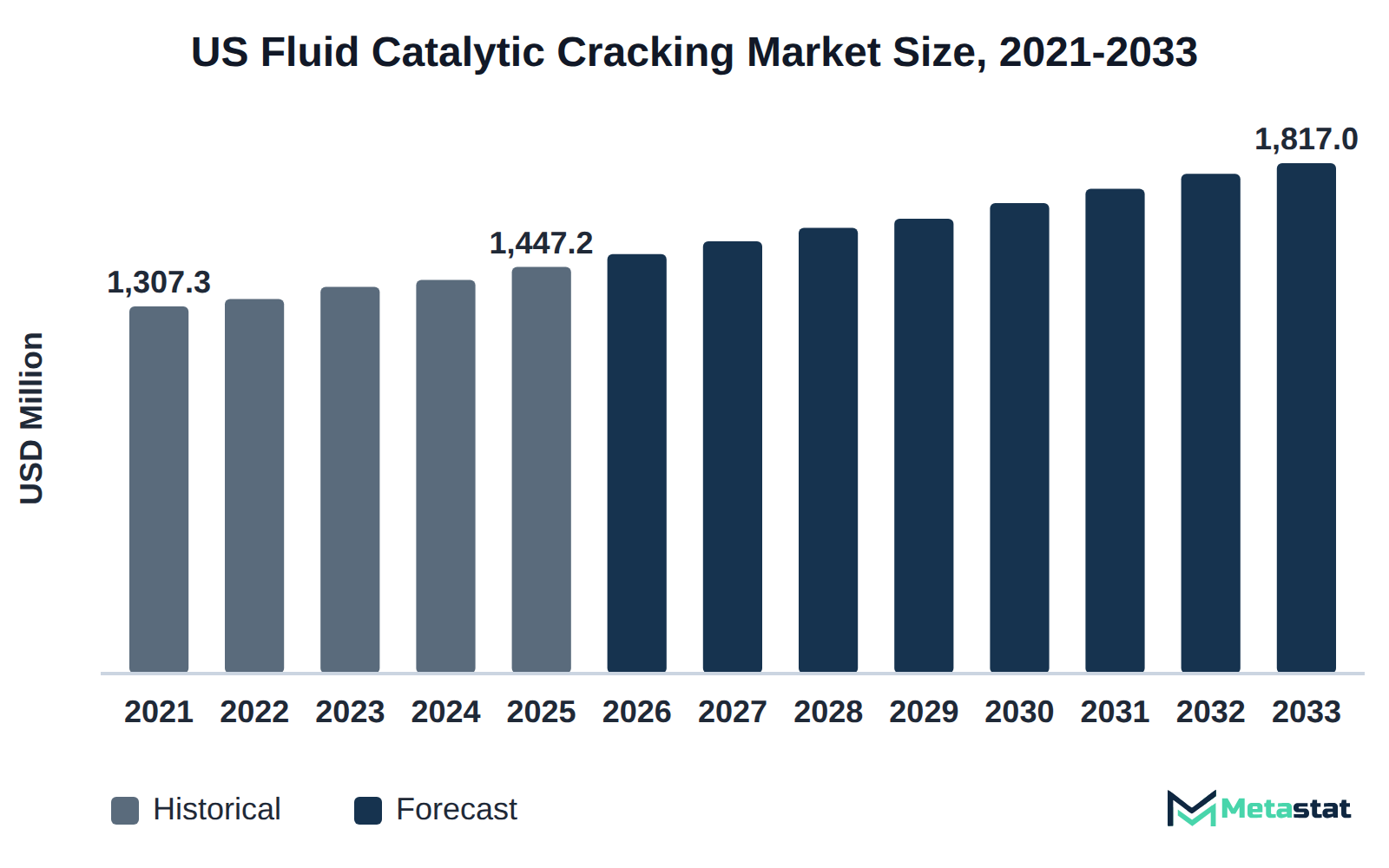
Selecting FCC catalysts suitable for processing residual feedstocks in U.S. refineries increasingly emphasizes metals tolerance. Residual feedstocks, particularly vacuum gas oil, present challenges due to their higher metals content, which leads to catalyst deactivation. Resid hydrotreating can lower the metals content of such feeds before they reach the FCC unit. In the forecast period from 2026 to 2033, the market for vacuum gas oil is projected to grow from USD 1,000.3 million to USD 1,186.2 million, reflecting rising demand for heavier feedstocks in refining processes.
To optimize performance, refiners prioritize catalysts that exhibit high resistance to metal deactivation. These catalysts enhance overall conversion rates and product yields while extending catalyst life, resulting in improved operational efficiencies. The increasing complexity of crude oil sources intensifies the focus on advanced FCC catalysts that effectively accommodate residual feeds without compromising performance.
This trend represents a significant shift in the U.S. Fluid Catalytic Cracking market, directing investments toward technologies that enhance metals tolerance. Efficient processing of residual feedstocks helps refiners maximize output, particularly in gasoline and light olefins, and provides a competitive edge.
Optimizing propylene yield through high-severity cracking technologies has gained traction among buyers in the US Fluid Catalytic Cracking market. This method enhances the conversion of feedstocks into propylene, a critical component in petrochemical production. The introduction of ZSM-5 additives further boosts this optimization process, significantly increasing yield and improving overall operational efficiency.
The demand for ZSM-5 additives has surged, driven by their ability to enable higher selectivity in propylene production. On pricing, suppliers adopt flexible contract models that let buyers negotiate terms based on volume commitments and delivery schedules. Such arrangements establish long-term relationships, ensuring stable supply and favorable pricing for both parties. ZSM-5 additives are projected to reach a valuation of USD 157.5 million by 2033, reflecting the increasing importance of these materials in optimizing propylene yields.
This growing emphasis on propylene yield optimization enhances operational efficiency and impacts profitability for refiners. Companies prioritizing advanced cracking techniques and additive utilization benefit from reduced feedstock costs and improved product margins, ultimately strengthening their competitive positioning within the market.
Cyclone reliability is essential to the efficiency of the US Fluid Catalytic Cracking market. A well-functioning cyclone system minimizes catalyst losses, which directly affects operational costs and overall profitability. Catalyst losses during processing reach significant levels, impacting the economic viability of turnaround operations. Effective cyclone designs reduce the likelihood of catalyst particles escaping, thereby enhancing material recovery and operational efficiency.
Recent figures indicate that the Equipment & Spare Parts segment is projected to reach USD 495 million by 2033. This growth highlights the increasing investment in high-quality cyclone equipment and spare parts to improve reliability and performance. Buyers in this market prioritize solutions that enhance cyclone efficiency, and these investments yield substantial long-term savings through reduced catalyst losses and improved energy recovery systems.
Addressing cyclone reliability optimizes immediate operational efficiency and also supports broader sustainability goals within the market. Improved cyclone performance enhances energy recovery processes, decreasing the environmental footprint associated with fluid catalytic cracking operations. Waste heat recovery from flue gas is a common way to achieve this. Facilities adopting advanced cyclone technologies experience a shift toward more sustainable and economically favorable practices, reinforcing the value of investing in reliable cyclone systems.
Reducing emissions from Fluid Catalytic Cracking (FCC) regenerators becomes increasingly critical for U.S. refiners seeking to comply with environmental regulations while maintaining operational efficiency. Effective strategies for emission reduction without sacrificing conversion rates focus on optimizing FCC processes and applying advanced technologies. The implementation of selective catalytic reduction (SCR) systems has gained traction, enhancing the ability to manage emissions efficiently. For example, FCC additives contribute to improving performance while reducing harmful emissions. These additives optimize the catalyst's activity, enhancing the conversion process and generating cleaner outputs.
Investment in innovative solutions, including low-emission reactors and advanced emission monitoring systems, aligns with the goals of the US Fluid Catalytic Cracking market. Enhancements in technology enable refiners to achieve dual objectives: maintaining high conversion efficiency and adhering to stringent emission standards. By prioritizing these technologies, refiners strengthen their competitive position, capitalize on regulatory trends, and maintain operational sustainability.
Gasoline maximization emerges as a primary objective for buyers in the refining sector, significantly influencing spending patterns. The shift toward more fuel-efficient vehicles and an uptick in travel increase gasoline consumption, prompting refiners to enhance production capabilities. This trend has led to heightened investment in catalytic cracking technologies, which optimize gasoline yield. The market anticipates a revenue increase from gasoline maximization, projected to rise from USD 1,144.5 million in 2026 to USD 1,338.8 million by 2033, reflecting a compound annual growth rate of 2.3%. Such enhancements in refining efficiency and yield improvement translate to competitive advantages for refiners, promoting further developments in the US Fluid Catalytic Cracking market.
Catalyst innovation in the US Fluid Catalytic Cracking market influences operational efficiencies and enhances product yields. Advancements in catalyst formulations, including those that improve selectivity towards desired products including gasoline and light olefins, attract refiners facing increasing competition and market pressures. These innovative solutions support refiners in optimizing their existing operations while minimizing downtime during transitions. The adoption of advanced catalyst technologies improves performance across various feedstock types, including Vacuum Gas Oil and Atmospheric Residue, which are crucial for the industry's growth. Suppliers focusing on the development and provision of next-generation catalysts gain a competitive edge, enabling them to capture more market share. The integration of new catalyst technologies aligns with evolving industry standards and refiners' objectives for maximizing profitability. These drivers encourage further investment in catalyst research and development and in production capacity, supporting overall market growth.
Rising costs associated with feedstock, particularly Vacuum Gas Oil, impose constraints on refining operations. This trend directly impacts refiners, who experience heightened operational expenses that lead to smaller order volumes. Consequently, refiners delay equipment replacements and upgrades, affecting their operational efficiency. Higher feedstock prices contribute to a more cautious purchasing environment, where buyers prioritize essential investments over discretionary spending. This restraint results in slower adoption of advanced Fluid Catalytic Cracking technologies, ultimately limiting revenue growth within the market. Increased costs influence decision-making processes, with refiners seeking to balance budget constraints with the need for efficiency improvements. Investing in innovative solutions becomes difficult, which risks lost competitiveness and reduced market share as operators adjust to changing conditions in the refining sector.
Suppliers experience significant pressure from rising costs of inputs, particularly raw materials necessary for catalyst production. This inflation has led to increased operational costs, impacting profitability margins across the sector. Recognizing these challenges, firms are exploring strategies including optimizing sourcing practices and investing in more efficient production technologies. These adaptations aim to mitigate the impact of cost increases while maintaining competitive pricing in the US Fluid Catalytic Cracking market. Suppliers enhance partnerships with key stakeholders to secure favorable terms and reduce volatility in supply chains. Despite these efforts, sustained input inflation continues to challenge overall profitability, necessitating ongoing strategic adjustments. The market's response to these cost pressures shapes future investment and operational decisions across the industry.
Light olefins maximization stands out as a significant growth opportunity within the US Fluid Catalytic Cracking market. This trend arises from the increasing demand for propylene and butylene, critical components for various petrochemical applications. The shift toward maximizing light olefins is supported by evolving consumer preferences and the expanding production of plastics and synthetic fibers, which generate substantial demand for these olefins. With a projected CAGR of 5.4%, this segment is expected to reach USD 299.3 million by 2033. Refiners are adapting their processes to focus on light olefins production, deploying specific catalysts and technologies tailored for this purpose. Consequently, investment in refining technologies that prioritize light olefins enhances operational efficiencies and profitability for refiners. This focus lets suppliers and refiners respond effectively to emerging market demand and strengthen their competitive position.
The US Fluid Catalytic Cracking market is segmented based on Offering, Feedstock Type, Reactor-Regenerator Arrangement, and Operating Objective.
Base FCC Catalysts segment is valued at USD 504.1 million in 2026 and is projected to reach USD 584.7 million by 2033, at a CAGR of 2.1% during the forecast period. These catalysts are central to refining processes, particularly in maximizing gasoline production. Key buyers in this segment include petroleum refiners focused on enhancing yield efficiency and optimizing operations. Demand for Base FCC Catalysts is driven by ongoing advancements in catalyst technology, which support higher product outputs and improved operational performance. Compared to other segments, including FCC Additives that exhibit a CAGR of 6.7%, Base FCC Catalysts demonstrate slower growth while maintaining significant market value. The stability in their demand reflects essential functions in refining, positioning them well among competing offerings in the market.
FCC Additives segment is estimated to reach USD 157.5 million by 2033, at a CAGR of 6.7% during the forecast period. These additives enhance the performance of catalysts in the refining process, serving a critical function for refiners seeking to optimize operational efficiencies and product quality. Demand primarily arises from refiners focusing on improving yield and reducing emissions. Strong regulatory pressures drive the adoption of additives that lower environmental impact, distinguishing this segment from others in the Offering category, which exhibit slower growth rates. For instance, while FCC Additives show a strong CAGR of 6.7%, Equipment and Spare Parts feature a lower growth trajectory. This differential growth reflects a significant trend among buyers toward maximizing product yield, aligning with the overall shifts observed in the US Fluid Catalytic Cracking market.
This segment encompasses the components crucial for maintaining and enhancing the efficiency of refining operations. Refineries rely on equipment and spare parts to ensure efficient operations and minimize downtimes. The need for regular maintenance drives demand, particularly in facilities with aging infrastructure. Strong growth in the Equipment & Spare Parts segment, at a CAGR of 3.6%, stands in contrast to the more modest growth rates of certain other segments. The demand stems primarily from refiners looking to optimize production processes and improve overall operational reliability. By facilitating better maintenance and reducing unexpected failures, this segment supports the broader dynamics of the US Fluid Catalytic Cracking market.
Licensing & Engineering segment is projected to grow at a CAGR of 3.6% during the forecast period. This segment provides specialized services and expertise to optimize the operations of fluid catalytic cracking units, catering primarily to refining companies. Engineering firms and technology providers engage in this segment to enhance operational efficiency, reduce turnaround times, and implement innovative solutions. The growing emphasis on refining profitability drives demand for consulting and engineering services, especially in complex refining environments. Compared to other segments, including Base FCC Catalysts, this segment experiences slower growth but serves a distinct customer base focused on technological advancements and regulatory compliance. Equipment & Spare Parts and FCC Additives influence operational capabilities. Licensing & Engineering instead emphasizes strategic planning and process optimization, which makes it a distinct contributor to the US Fluid Catalytic Cracking market.
Maintenance and Turnaround Services keep fluid catalytic cracking units efficient and reliable. Refineries employ these services to conduct planned maintenance and unscheduled repairs, which directly impacts production scheduling and equipment longevity. This work falls within the wider field of oil and gas equipment maintenance, repair, and operation services. The need for regular maintenance arises from the complexity of FCC units and the continuous demands placed on them. This segment experiences significant movement driven by the increasing emphasis on operational reliability and the minimization of downtime in refining processes. Compared to other segments including Base FCC Catalysts, which exhibit slower growth due to mature technologies, Maintenance and Turnaround Services address urgent operational needs, resulting in distinct pricing strategies and buyer dynamics. This segment remains essential for optimizing performance and ensuring that refineries achieve their production targets effectively.
This feedstock type serves an essential role in the production of gasoline and distillates, primarily by refineries aiming to optimize yield and efficiency. Demand for Vacuum Gas Oil is driven by the increasing need for high-quality transportation fuels with evolving consumer preferences, placing significant pressure on producers to enhance refining processes. This segment exhibits slower growth compared to others, including Atmospheric Residue, which has a CAGR of 4.1%. Refineries favor Vacuum Gas Oil for its favorable processing characteristics and availability, influencing purchasing decisions and operational strategies. The price stability of this feedstock, relative to other inputs, adds to its attractiveness among refiners focused on maintaining profitability in a competitive market.
Atmospheric Residue segment is estimated to reach USD 448.3 million by 2033, at a CAGR of 4.1% during the forecast period. This feedstock type finds applications primarily in refineries where it acts as a crucial input for fluid catalytic cracking processes aimed at maximizing fuel outputs. Refiners process Atmospheric Residue to derive valuable products like gasoline and distillates, responding to demand driven by ongoing shifts in consumer preferences and regulatory pressures for cleaner fuels. Compared to other feedstock types, including Vacuum Gas Oil, which is valued at USD 1,000.3 million by 2026, Atmospheric Residue experiences a more moderate growth rate. This slower expansion is attributed to challenges associated with processing heavier crude oils and the higher costs of refining operations, impacting overall profitability for refiners relying on this feedstock. Investments in technologies to enhance the processing of Atmospheric Residue could influence its market positioning.
The Atmospheric Gas Oil segment is expected to reach USD 97.4 million by 2033. This feedstock type is primarily used in the refining process to convert heavy fractions into valuable products. Refineries focusing on maximizing output of various petrochemical products use Atmospheric Gas Oil, which differs from other feedstock types due to its specific properties that support the production of high-quality fuels and chemical precursors. Growth in this segment is supported by increasing demand from the petrochemical industry, driving refineries to optimize their operations. The Atmospheric Gas Oil segment experiences slower growth compared to the Vacuum Gas Oil segment, which is projected to attain USD 1,186.2 million by 2033 at a CAGR of 2.5%. This difference highlights the varying dynamics and investment patterns across the different feedstock types in the US Fluid Catalytic Cracking market.
Others (Coker Gas Oil, Deasphalted Oil, Renewable Co-Feeds) segment is projected to grow at a CAGR of 4.3% during the forecast period. This segment primarily serves refiners seeking alternative feedstocks to enhance product yields and operational efficiencies. The increasing focus on sustainability drives demand for renewable co-feeds, appealing to environmentally conscious companies. Compared to other feedstock types, this segment differentiates itself with a higher growth rate, reflecting rising interest in renewable energy sources. Refiners using these alternative materials reduce reliance on traditional crude oil, aligning with market trends toward cleaner production processes. Higher pricing dynamics associated with renewable co-feeds attract investments aimed at expanding capabilities in the US Fluid Catalytic Cracking market.
Valued at USD 1,115.3 million in 2026, this segment is projected to reach USD 1,377.7 million by 2033, at a CAGR of 3.1% during the forecast period. The Side-by-Side arrangement is widely applied in refining operations to enhance efficiency and maximize product yields, particularly for gasoline and light olefins. Demand for this configuration is primarily driven by its effectiveness in optimizing the catalytic cracking process. Compared to the Stacked arrangement, which is estimated to grow at a CAGR of 2.2%, the Side-by-Side configuration offers superior operational flexibility and throughput, appealing to refineries aiming to increase output and adapt to varying feedstock qualities. The increasing need for operational efficiency and product yield enhancement drives investments in this arrangement, positioning it as a significant player in the market.
Stacked segment is estimated to reach USD 439.4 million by 2033, at a CAGR of 2.2% during the forecast period. This configuration is primarily applied in fluid catalytic cracking units to improve efficiency and maximize output. Refiners focused on high-capacity operations are the main users of this arrangement. Demand in this segment benefits from the ongoing need for enhanced processing capabilities, driven by the increasing complexity of crude oils. Compared to other arrangements, including Side-by-Side, the Stacked configuration offers distinct advantages in space efficiency, enabling higher throughput in facilities with limited footprints. The market shows a steady growth trajectory, supported by investments in upgrading existing units to meet evolving regulatory standards and consumer demands.
This segment focuses on producing high yields of gasoline from crude oil, primarily serving refineries aiming to meet increasing gasoline demand. Finished gasoline quality also depends on octane boosters blended into the fuel. Increasing fuel efficiency regulations drive refineries to prioritize gasoline production, leading to investment in advanced catalytic technologies. The segment distinguishes itself with moderate growth relative to others in the market, reflecting a balance between evolving regulations and the need for higher gasoline outputs. Compared to Light Olefins Maximization, which exhibits a higher CAGR of 5.4%, Gasoline Maximization experiences slower growth but maintains significant importance due to consistent demand for gasoline in transportation and industry.
Light Olefins Maximization segment is estimated to reach USD 299.3 million by 2033, at a CAGR of 5.4% during the forecast period. This segment focuses on producing light olefins, primarily used in the petrochemical industry for manufacturing ethylene, propylene, and other petrochemical intermediates. Significant demand for light olefins arises from the plastics and synthetic fibers industries, which rely on these outputs. A driving force for this segment is the increasing demand for lightweight and fuel-efficient vehicles, which often employ materials derived from light olefins. Compared to other operating objectives, this segment exhibits faster growth due to a higher CAGR of 5.4%, reflecting stronger alignment with current market trends and consumer preferences. The market supports investment into technologies that enhance light olefins production efficiency, further strengthening its position in the US Fluid Catalytic Cracking market.
Distillate Maximization segment is expected to reach USD 179 million by 2033. This segment focuses on optimizing the production of distillate fuels, primarily used in the transportation and heating sectors. Refiners and chemical manufacturers apply distillate maximization strategies to enhance yield from crude oil while meeting stringent regulations on emissions. The growth in this segment is driven by increasing demand for cleaner fuels and regulatory pressures aimed at reducing greenhouse gas emissions. With a CAGR of 2.3%, this segment experiences slower growth compared to light olefins maximization, which has a higher CAGR of 5.4%. This slower pace results from the relatively stable demand for distillates, contrasting with the rising interest in light olefins for petrochemical applications. Strategic investments in advanced refining technologies are expected to support this segment's growth trajectory in the US Fluid Catalytic Cracking market.
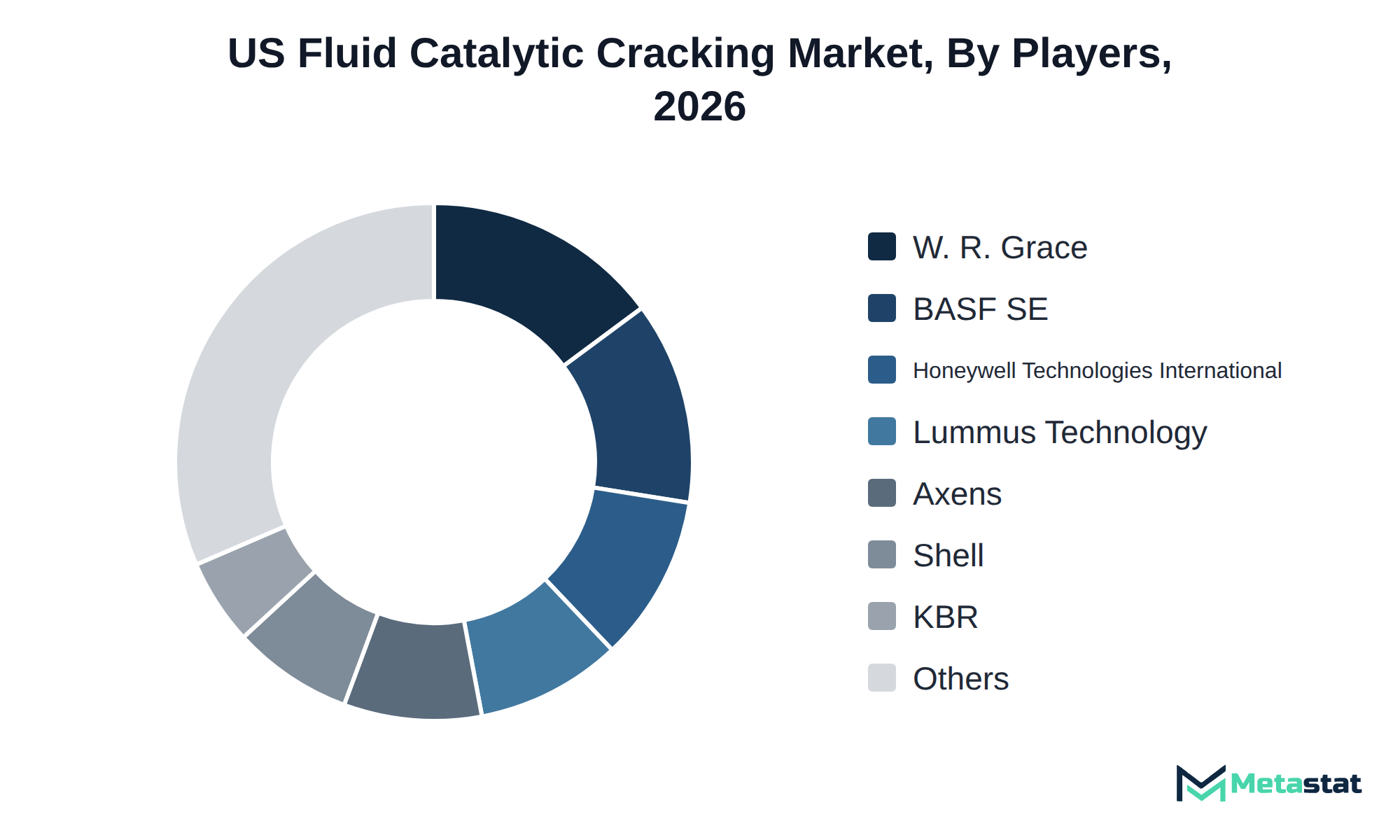
Companies in the US Fluid Catalytic Cracking market compete through various strategies, including product offerings, pricing, and service capabilities. Major players including W. R. Grace & Co. and BASF SE focus on providing high-quality FCC catalysts, which are essential for refining operations. Their emphasis on innovation and performance attracts clients seeking reliable solutions.
When selecting suppliers, buyers prioritize factors including price, service quality, and customization options. For example, Honeywell Technologies International Inc. and Lummus Technology LLC emphasize tailored solutions that meet specific operational needs. This approach enhances customer satisfaction and strengthens long-term relationships within the market.
The US Fluid Catalytic Cracking market needs several developments to achieve this growth. First, an increase in the adoption of FCC additives will drive demand, with a projected CAGR of 6.7% by 2033. This segment caters to refiners looking to enhance the performance of their catalytic cracking processes. This trend aligns with a push for more efficient and sustainable refining practices. The main risk that could hinder market growth involves fluctuations in crude oil prices, which impact refiners' operational costs and investment decisions. Such volatility leads to hesitance in adopting new technologies or feedstocks. Overall, the US Fluid Catalytic Cracking market shows promising potential, driven by industry advancements and economic stability.
By Offering: Base FCC Catalysts, FCC Additives, Equipment & Spare Parts, Licensing & Engineering, Maintenance & Turnaround Services
By Feedstock Type: Vacuum Gas Oil, Atmospheric Residue, Atmospheric Gas Oil, Others (Coker Gas Oil, Deasphalted Oil, Renewable Co-Feeds)
By Reactor-Regenerator Arrangement: Side-by-Side, Stacked
By Operating Objective: Gasoline Maximization, Light Olefins Maximization, Distillate Maximization
The report strategically identifies and profiles the key market players and analyses their core competencies in each sub-segment of the Fluid Catalytic Cracking market.
Report Attributes | Details |
Study Period | 2021-2033 |
Base Year | 2025 |
Estimated Year | 2026 |
Forecast Period | 2026-2033 |
Historical Period | 2021-2025 |
Growth Rate | CAGR 2.8% from 2026 to 2033 |
Revenue Unit | USD million |
Segmentation | By Offering, Feedstock Type, Reactor-Regenerator Arrangement, Operating Objective, and Region |
Find answers to common questions about this report
The Fluid Catalytic Cracking market size was valued at USD 1,447.2 million in 2025.
The market is projected to grow at a CAGR of 2.8% during the forecast period from 2026 to 2033.
The leading segment in the Fluid Catalytic Cracking market is Vacuum Gas Oil, with a value of USD 1,000.3 million in 2026. This segment surpasses others in terms of revenue generation.
Gasoline maximization and light olefins maximization drive growth in the Fluid Catalytic Cracking market. The increasing demand for gasoline and light olefins, critical for petrochemical applications, prompts refiners to enhance production capabilities and invest in advanced refining technologies.
Rising costs associated with feedstock, particularly Vacuum Gas Oil, restrain Fluid Catalytic Cracking market growth. Increased operational expenses lead refiners to delay equipment replacements and upgrades, which negatively impacts operational efficiency and slows the adoption of advanced technologies.
Factors favoring adoption in the US Fluid Catalytic Cracking market include the increasing demand for light olefins, particularly propylene and butylene, driven by the growth in petrochemical applications. Refiners are adapting processes and investing in technologies that enhance operational efficiencies and profitability.
The Fluid Catalytic Cracking market is estimated to reach a valuation of USD 1,817 million by 2033.
Key players operating in the Fluid Catalytic Cracking market include W. R. Grace & Co., BASF SE, Honeywell Technologies International Inc., Lummus Technology LLC, Axens, Shell plc, KBR, Inc., and Turner Industries Group, LLC.
Gasoline maximization is projected to generate revenue of USD 1,338.8 million by 2033, increasing from USD 1,144.5 million in 2026.
The increasing demand for propylene and butylene in various petrochemical applications drives the focus on light olefins, with this segment expected to reach USD 299.3 million by 2033.
The analysts below cover Chemicals and Materials research at Metastat Insights.
LEAD ANALYST
Utkarsh Khirodkar is a Lead Market Research Analyst at MetaStat Insight, specializing in market intelligence, technology sector assessments, and competitive strategy.

INDUSTRY CONSULTANT - CHEMICALS & ADVANCED MATERIALS
Chemicals and Materials · Machinery & Equipment · Packaging
Amit Gadhekar Consultant for Chemicals and Materials at MetaStat Insight, directing sector-specific intelligence, research, and strategic consulting across global chemical and processing markets.
The technical breakdown of ISO 20022 migration readiness across correspondent banking corridors was remarkably thorough. Rather than treating cross-border corporate payments as a single block, the report drew a useful distinction between multilateral netting platforms and domestic instant payment rails across ASEAN economies. MetaStat Insight highlighted regulatory constraints on foreign exchange liquidity management that many publications gloss over. The research material offered practical clarity for our platform development roadmap.
Our group needed clearer visibility into out-of-autoclave processing timelines for high-temperature thermoplastic composites. MetaStat Insight delivered an objective assessment that contrasted automated fiber placement scrap rates with traditional thermoset prepreg layup cycles. The supplier landscape mapped out primary resin suppliers and tape slitting capacity across France, Germany, and Japan with solid technical accuracy. Their analyst handled our questions on precursor supply risks during an unscheduled inquiry call, providing clear, unembellished context.
Evaluating sensor fusion reliability across harsh operating environments can be tricky without field-validated data. The study on agricultural autonomous guidance systems clearly separated stereo vision setups from automotive-grade solid-state LiDAR. We appreciated the regional infrastructure analysis, specifically around RTK network density across North America and South America. During our follow-up consultation, the MetaStat Insight team walked through tier-two perception software partnerships, giving our engineering leads a practical basis for vendor shortlisting.
Explore related market intelligence reports worth reading alongside this one.
Starting from
$2950