
LEAD ANALYST
Utkarsh Khirodkar is a Lead Market Research Analyst at MetaStat Insight, specializing in market intelligence, technology sector assessments, and competitive strategy.

US Foodservice Market Size, Share, By Foodservice Outlet Type (Full-Service Restaurants, Limited-Service Restaurants, Cafeterias and Food Courts, Catering Services, Hotels and Lodging Foodservice, Institutional Foodservice), By Location / Venue Type (Freestanding Locations, Retail & Shopping Centers, Business & Workplace, Education, Healthcare & Senior Living, Travel & Transportation, Sports & Entertainment, Hotels, Resorts & Leisure, Government & Corrections), By Restaurant Type (Chained Outlets and Independent Outlets), By Service Channel (Dine-In, Takeaway and Pickup, Delivery, Drive-Thru and Catering), Industry Analysis, Growth, Trends, and Forecast, 2026-2033
Report ID
MSI-5545
Published
October, 2026
Pages
269 Pages
Format
Historical
Base year
Forecast
Forecast period
Report Details
Market Valuation: Valued at $1,507.2 Billion in 2025, projected to reach $2,000.7 Billion by 2033 at a 3.6% CAGR.
Dominant Segment: Limited-service restaurants represent the highest value segment, driven by consumer demand for quick and affordable meal options.
Geographic Lead: North America leads the market, supported by a robust consumer base and established infrastructure that enhances foodservice operations.
What's Inside: The report includes comprehensive competitive coverage, detailed analyses of market dynamics, and a forecast window extending to 2033.
Emerging Trends: The increasing preference for takeaway and delivery services is a significant growth driver, reflecting changing consumer behaviors towards convenience.
Consumer Behavior: Shifts in consumer spending patterns emphasize a demand for convenience, influencing dining choices and driving growth in the foodservice market.
Choose Your License
US Foodservice Market
The US Foodservice market was valued at USD 1,507.2 billion in 2025 and is projected to reach USD 2,000.7 billion by 2033, growing at a CAGR of 3.6% over the forecast period.
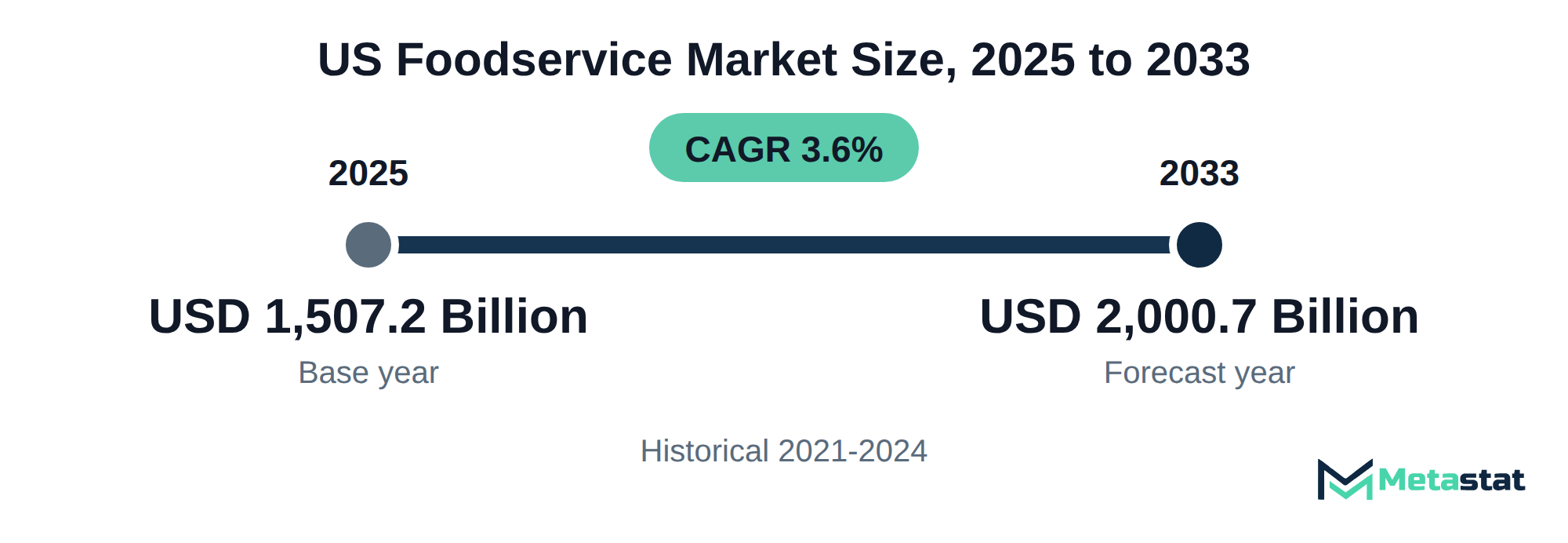
The US Foodservice market encompasses a diverse array of dining establishments, catering services, and food preparation venues. Buyers invest in this market for various reasons, including demand for convenient dining options and the growing trend of experiential eating. It serves varied consumer preferences and drives substantial spending across outlet types including full-service and limited-service restaurants.
Growing preference for takeaway and delivery services is a significant growth driver in the market. Among the various segments, limited-service restaurants represent the highest value, catering to consumers seeking quick and affordable meal options. North America holds the largest share, reflecting a strong consumer base and established infrastructure that supports foodservice operations.
While the market evolves, trends including health-conscious dining and integration of technology in service delivery enhance its growth potential. Ongoing demand for innovative dining experiences and the need for businesses to adapt to changing consumer behaviors contribute to the positive outlook for the market. Future expansions and investments are expected to focus on enhancing service channels and optimizing menu offerings to meet customer expectations.
The offerings within the US Foodservice market cater to various customer preferences, ranging from casual dining experiences to quick-service options. Buyers invest in this market to access diverse food options, convenience, and enhanced service quality, which align with evolving lifestyle trends. The demand for healthy and sustainable food choices further drives spending, owing to consumers becoming more health-conscious and environmentally aware.
Increasing consumer preference for convenience is a significant driver of market growth. Limited-Service Restaurants represent the segment with the highest value, reflecting a shift towards quicker dining solutions. North America holds the largest market share, while growth is notable in other regions due to expanding urban populations and changing food consumption patterns.
The market's expansion is projected to continue as businesses adapt to consumer demands and preferences. The trend towards diverse dining experiences fuels investment in innovative foodservice concepts, enhancing customer engagement and satisfaction. This evolving landscape positions the market for sustained growth, aligning with broader economic trends and consumer behaviors.
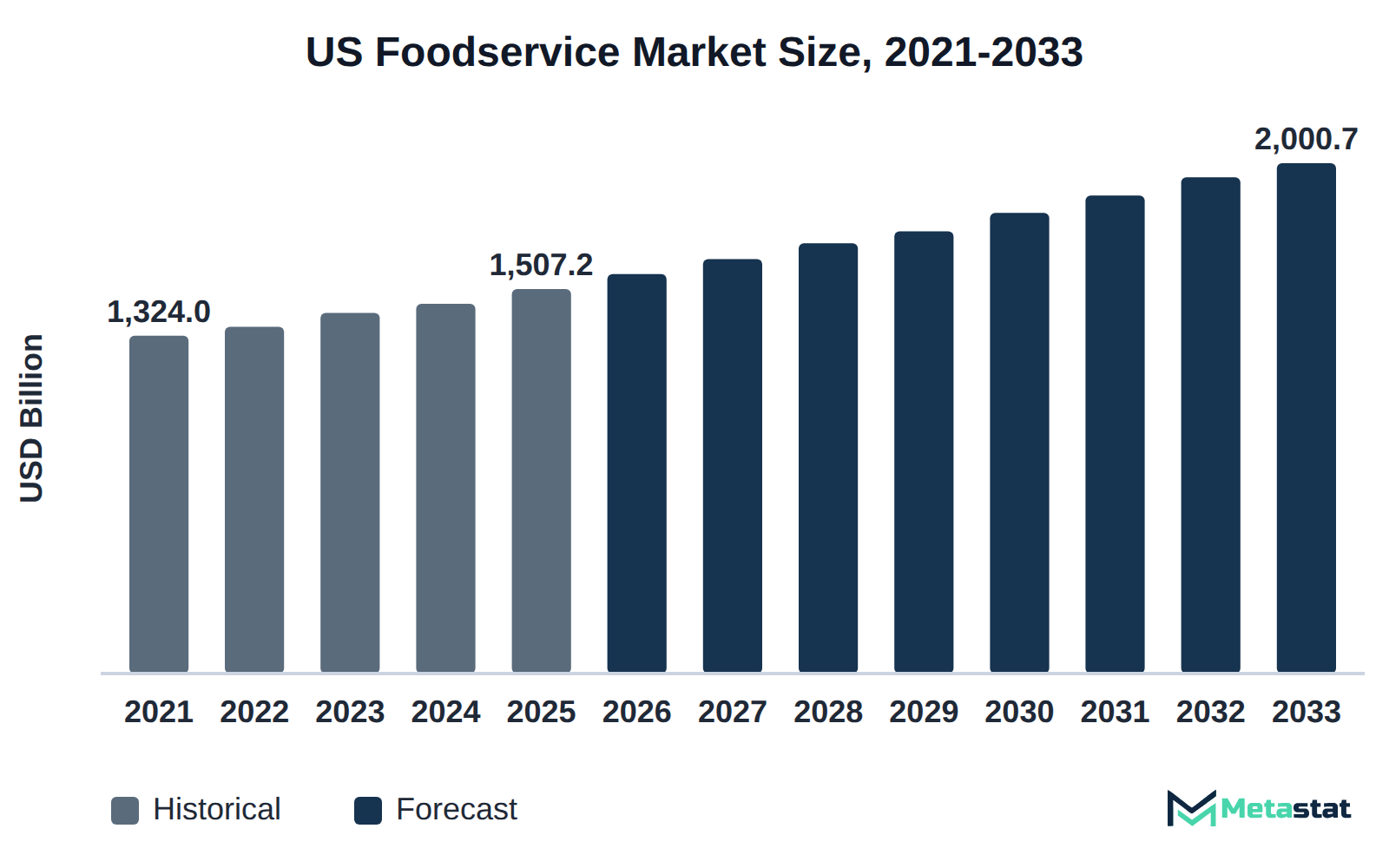
Technological innovations in the US Foodservice market reflect shifts in consumer behavior, particularly the preference for convenience and speed. Delivery services have surged in popularity, driving growth within the segment. By 2033, the delivery segment is projected to reach USD 317.7 billion, catering to the increasing demand for on-the-go dining options. This trend aligns with the broader evolution of consumer spending, where the emphasis on convenience directly influences dining patterns.
The rise of mobile ordering platforms and delivery apps has altered how consumers engage with foodservice providers. Rapid urbanization and busy lifestyles lead diners to prioritize speed and efficiency when selecting dining options. The increasing reliance on technology for ordering and delivery reflects a significant transformation in dining experiences, encouraging establishments to invest in digital solutions.
This technological shift generates opportunities for foodservice operators to enhance customer engagement and streamline operations. Establishments that use digital platforms effectively attract a broader audience, ensuring sustained growth in the competitive environment. Consequently, the evolution of consumer preferences towards convenience-driven dining solutions positions the market for continued expansion in the years ahead.
Digital ordering has transformed purchasing behaviors within the US Foodservice market, particularly in the area of off-premises sales. The shift towards this model has prompted a greater emphasis on flexible pricing and contract models that cater to the evolving needs of consumers. For instance, the delivery segment, which includes takeout and pickup options, is projected to reach USD 402.9 billion by 2033. Heightened demand for convenience drives this significant growth.
Buyers engage with foodservice providers through diverse contract structures, ranging from traditional fixed pricing agreements to dynamic pricing models that adjust according to demand fluctuations or promotional strategies. Such flexibility in pricing allows buyers to optimize their expenditures while ensuring access to desirable menu items, catering to consumer preferences for both quality and value.
The emergence of digital ordering systems has not only streamlined the purchasing process but has enhanced customer engagement through loyalty programs and targeted promotions. These strategies encourage repeat business, contributing to overall revenue growth in the market. In a competitive environment, foodservice operators focusing on adaptable pricing and contract models position themselves favorably for sustained success.
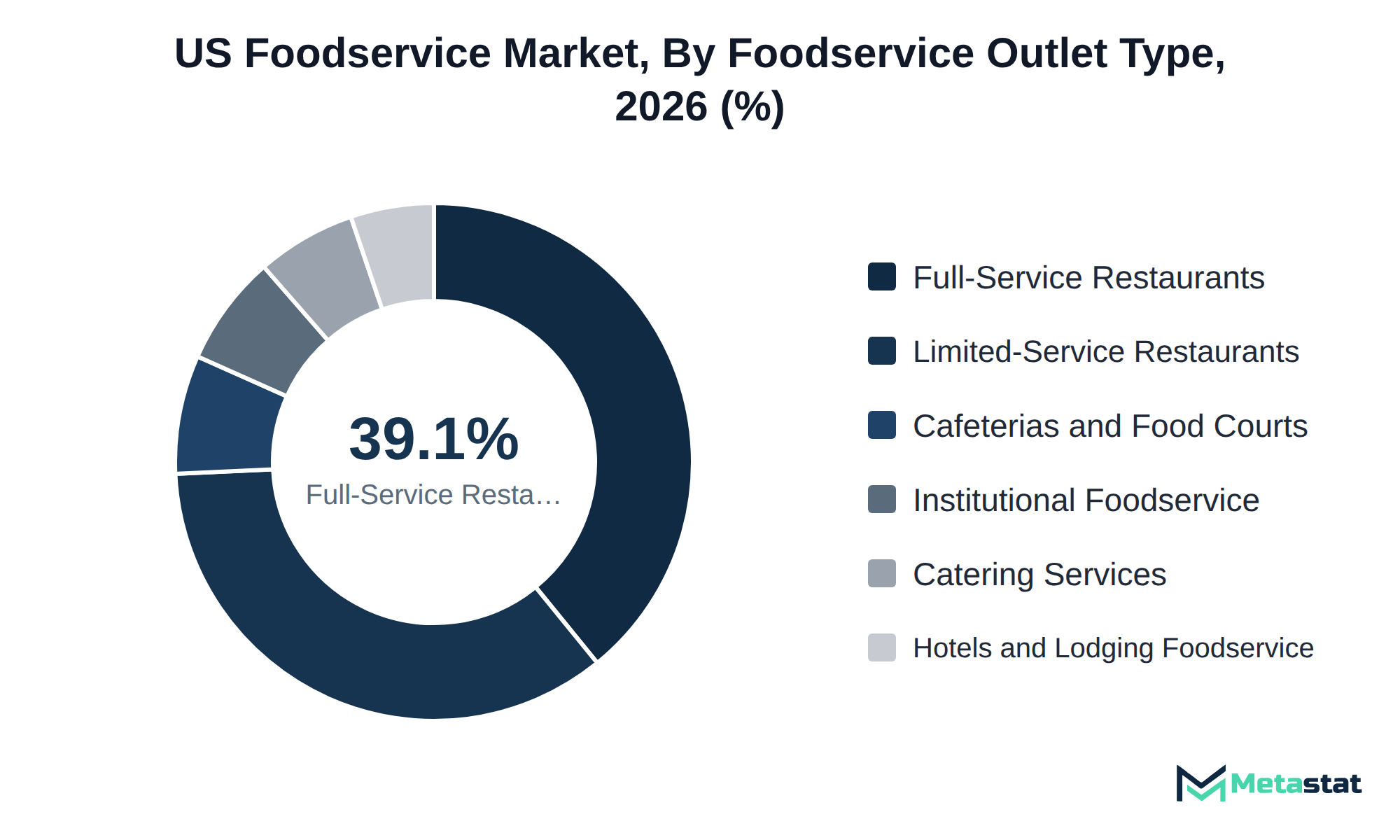
The labor shortage within the US Foodservice market presents significant challenges for operators seeking to maintain service quality and operational efficiency. The transition towards automation serves as a strategic response to this ongoing labor issue. In 2026, the value of full-service restaurants is projected to reach USD 609.7 billion, highlighting the substantial financial stakes involved in this sector. With rising wage expectations and a shrinking talent pool, operators increasingly prioritize automation technologies to streamline processes, reduce dependency on manual labor, and enhance customer service.
Investments in automation address staffing challenges and drive operational efficiency across various outlets. The adoption of self-service kiosks, automated kitchen equipment, and mobile ordering systems enables restaurants to optimize labor resources while catering to evolving consumer preferences for convenience and speed. The integration of these technologies within the foodservice landscape supports a more resilient business model, allowing operators to maintain profitability even in tight labor markets. As the market evolves, automation is essential for operators managing workforce constraints.
Rising food costs significantly impact strategies within the US Foodservice market. From 2021 to 2025, food prices increased, correlating with an overall market value of USD 1,507.2 billion in 2025. Such escalating costs prompt foodservice operators to reassess their pricing strategies, menu offerings, and supplier relationships to maintain profitability.
Limited-Service Restaurants, a key segment, experience heightened pressures due to rising ingredient prices. This segment is projected to reach USD 738.5 billion by 2033, reflecting a compound annual growth rate of 4.2%. Operators within this segment increasingly turn to streamlined supply chains and local sourcing to mitigate costs, seeking to balance quality with price stability.
Supply chain risks, influenced by global trade dynamics and local disruptions, challenge the market. For instance, reliance on single-source suppliers leads to vulnerabilities in product availability. Foodservice businesses actively diversify their supplier networks, enhancing resilience against potential disruptions. This strategic shift safeguards operations and strengthens competitive positioning in an increasingly volatile environment.
Adapting to these economic pressures ultimately shapes the direction of the US Foodservice market, driving innovation and operational efficiency. The focus on cost-effective strategies enables better alignment with consumer expectations, ensuring sustained growth even amid fluctuating costs.
The shift toward a more convenience-driven lifestyle influences spending patterns among consumers in the US Foodservice market. Busy schedules and the rise of remote work have encouraged individuals to seek quick and accessible meal options. This behavioral change has led to increased patronage of limited-service restaurants, also called quick service restaurants, and takeaway channels. The demand for takeaway services particularly reflects the need for speed and efficiency, creating a competitive atmosphere among foodservice operators. While more consumers opt for on-the-go meal solutions, the market experiences upward pressure on volumes and prices across various segments.
Changing demographics, including a younger population that prioritizes convenience, contribute to this trend, driving growth in foodservice offerings tailored to fast and flexible consumption. Increased consumer spending highlights the strategic importance of adapting to these evolving preferences within the market.
Growing emphasis on service options significantly influences consumer choices within the US Foodservice market. Establishments increasingly offer diverse dining experiences, integrating elements including patio seating, themed events, and live entertainment. This trend stems from competition among operators seeking to differentiate themselves in a saturated market. Enhanced service options appeal particularly to diners who prioritize unique experiences, prompting increased spending during visits.
The rise of food trends, including plant-based and globally inspired menus, encourages establishments to innovate their offerings. Operators invest in culinary training and menu development to appeal to evolving consumer preferences, ultimately enhancing the overall dining experience. The strategic diversification of service options contributes to revenue growth, supporting customer loyalty and repeat visits. The combination of innovative experiences and quality service positions the market for sustained expansion through 2033.
Increasing operational costs significantly impact decision-making among buyers in the US Foodservice market. Restaurants and catering services, facing heightened expenses for ingredients, utilities, and labor, exhibit cautious behavior regarding investment in new equipment or service expansions. This caution leads to slower uptake of innovations, resulting in smaller order sizes and delayed replacements of aging infrastructure. Consequently, operators prioritize cost-saving measures over growth initiatives, which limits the overall potential of the market. The pressure to maintain profit margins intensifies competition, with businesses focusing on optimizing existing resources rather than pursuing new opportunities. This environment restricts market growth, ultimately affecting suppliers who rely on consistent demand for their products and services.
In the US Foodservice market, rising labor costs pose a significant challenge for suppliers seeking to maintain profitability. Wage increases driven by a competitive labor market impact operational margins, compelling operators to explore cost management strategies. The pressure to offer competitive salaries and benefits increases overall expenses, affecting the bottom line for many establishments.
In response, suppliers implement various strategies to mitigate labor costs. These strategies include investing in employee training programs to enhance efficiency and productivity, optimizing workforce management and scheduling practices to ensure adequate staffing during peak hours, and leveraging technology to automate certain tasks. Many establishments focus on enhancing employee retention through improved workplace culture and benefits packages, ultimately aiming to reduce turnover and associated training costs. The strategies adopted reflect a broader effort to sustain profitability amid rising labor costs and evolving market dynamics.
Limited-service restaurants represent a significant opportunity within the market, driven by evolving consumer preferences for fast and affordable dining options. The increasing demand for quick-service meals, particularly among younger demographics, supports this growth trajectory.
Innovation in menu offerings and enhanced digital ordering capabilities increase the attractiveness of limited-service restaurants. Many consumers express a preference for convenience, leading to increased sales through online channels and mobile applications. This trend encourages operators to adopt technology-driven solutions that enhance customer experiences, further fueling growth in this segment.
The expansion of limited-service dining options aligns with the shifting dynamics of the US Foodservice market. Heightened competition among providers drives continuous improvement in service delivery and menu variety, ensuring the segment remains appealing to a broad customer base. Such dynamics contribute to the overall positive outlook for the market during the forecast period.
The US Foodservice market is segmented based on Foodservice Outlet Type, Location / Venue Type, Restaurant Type, and Service Channel.
The Full-Service Restaurants segment is valued at USD 609.7 billion in 2026 and is projected to reach USD 753.1 billion by 2033, at a CAGR of 3.1% during the forecast period. This segment serves various dining experiences, catering to customers seeking sit-down meals with attentive service. It attracts families, couples, and business groups, offering a more personalized dining environment compared to Limited-Service Restaurants. Growth is propelled by the increasing consumer tendency to dine out for special occasions and social gatherings. Competitive pricing strategies differentiate this segment from others, focusing on enhancing the dining experience through unique menus and ambiance. While the market sees a shift toward faster dining options, Full-Service Restaurants continue to demonstrate resilience, appealing to consumers valuing culinary experiences and quality service.
Limited-Service Restaurants segment is estimated to reach USD 738.5 billion by 2033, at a CAGR of 4.2% during the forecast period. This segment encompasses dining establishments that provide quick meals, often characterized by a streamlined service model. Consumers frequently choose limited-service options for their convenience and affordability, appealing to busy individuals and families. The ongoing trend toward active lifestyles supports demand, while innovations in mobile ordering and delivery services enhance customer experiences. Compared to Full-Service Restaurants, which exhibit a CAGR of 3.1%, the growth rate of limited-service establishments indicates a strong preference for more accessible dining solutions. Price sensitivity among buyers in this segment drives competitive pricing strategies, further distinguishing it from other foodservice outlet types. Success depends on continuous adaptation to consumer preferences and operational efficiency.
The Cafeterias and Food Courts segment is expected to reach USD 142.5 billion by 2033. This segment serves various dining needs in institutional settings, catering to customers in schools, hospitals, and corporate environments. Rising demand for quick, affordable meal options drives growth in this segment, particularly among busy professionals and students seeking convenience. Cafeterias and Food Courts exhibit a lower growth rate compared to Limited-Service Restaurants, which are projected to expand at a CAGR of 4.2%. The unique positioning of Cafeterias and Food Courts attracts a distinct clientele, emphasizing value and efficiency over the varied menu offerings typical of full-service outlets. The evolving focus on health and wellness, alongside increasing interest in sustainable food sourcing, influences menu selections in this segment, aligning with consumer preferences for fresh, nutritious options.
Catering Services segment is projected to grow at a CAGR of 4.5% during the forecast period. This segment serves various events, including weddings, corporate gatherings, and private celebrations, offering tailored meal options and service styles. Corporate clients and event planners frequently rely on catering services to provide diverse culinary experiences and accommodate large groups. Rising demand for customized catering solutions, particularly for corporate functions, drives growth. In contrast to Full-Service Restaurants, which focus on on-site dining experiences, catering services operate on an off-premises basis, enhancing their appeal to different customer segments. The difference in operational dynamics creates distinct market strategies and pricing structures. Catering Services, offering versatility in menu choices and service delivery, reflects evolving consumer preferences for convenience and personalization in the US Foodservice market.
Hotels and Lodging Foodservice includes dining services provided within hotels and similar establishments, catering to guests and visitors. This segment serves a variety of patrons, including business travelers and vacationers, offering meals, snacks, and beverage options tailored to enhance their stay. Demand for this segment rises due to an increasing number of travelers seeking convenient dining solutions before and after conferences or events. Unlike other foodservice segments, this area faces unique challenges regarding consistent quality and customer experience, which are essential for maintaining guest satisfaction. While the overall market experiences growth, the Hotels and Lodging Foodservice segment emphasizes personal service and high-quality offerings, setting it apart from fast-casual options available elsewhere. Fluctuations in tourism and business travel directly impact revenue potential, creating variability in performance compared to more stable segments. This segment continues to evolve, driven by the hospitality sector's focus on enhancing guest experiences through improved foodservice solutions.
Institutional Foodservice serves a variety of needs within educational, healthcare, and corporate environments, providing meals to students, patients, and employees. This segment emphasizes nutrition and dietary requirements, catering to specific populations that require tailored meal options. Growth in this area is shaped by increasing demand for healthy and balanced meals, driven by heightened consumer awareness of health and wellness, including nutrition. The growing trend toward sustainability influences menu offerings, encouraging the use of locally sourced ingredients. Compared to other Foodservice Outlet Types, Institutional Foodservice operates on a different pricing structure, focusing on volume and contract agreements rather than individual customer transactions. This unique approach results in slower growth relative to segments including Limited-Service Restaurants, which experience higher demand due to convenience-driven consumer preferences. The market adapts to changing dietary trends and regulations, pushing operators to innovate in their service offerings.
Freestanding Locations segment is valued at USD 642.8 billion in 2026 and is projected to reach USD 797.1 billion by 2033, at a CAGR of 3.1% during the forecast period. This segment encompasses standalone restaurants and foodservice outlets located outside of shopping centers and other venues. Its primary users include individuals seeking dining options outside of home or work, catering to various consumer preferences and occasions. Factors driving growth in this segment include the increasing demand for convenience and accessibility. Compared to Limited-Service Restaurants, which are projected to grow at a CAGR of 4.2%, Freestanding Locations exhibit a slower growth trend. The unique positioning of these locations often entails higher operational costs, influencing pricing strategies and competitive positioning in the market.
Retail & Shopping Centers segment is estimated to reach USD 178.3 billion by 2033, at a CAGR of 2.9% during the forecast period. This segment caters to a diverse consumer base, offering convenient dining options within shopping environments. Increasing foot traffic in retail locations drives demand, with consumers seeking dining convenience while shopping. Unlike other segments, Retail & Shopping Centers experience slower growth, influenced by trends in e-commerce and changing consumer habits. Limited-Service Restaurants exhibit a higher CAGR of 4.2%, and the unique positioning of this segment highlights specific consumer preferences for quick dining experiences during shopping activities. The segment faces challenges related to competition from off-premises dining options and evolving retail formats that prioritize streamlined experiences. The market adapts to these changes, indicating ongoing evolution of dining solutions tailored to fit the busy lifestyles of shoppers.
The Business & Workplace segment is expected to reach USD 167.7 billion by 2033. This segment caters to employees and organizations by providing foodservice options in various workplace settings, including corporate offices and multi-tenant buildings. The rise of remote work has led to a growing demand for meal solutions that enhance employee well-being and productivity. Limited options for high-quality food within the workplace and rising health consciousness fuel this trend. Compared to other segments, this one has a slower growth rate, supported by a CAGR of 3.2%. This segment's growth trajectory contrasts with Limited-Service Restaurants, which experience a CAGR of 4.2%, highlighting differences in consumer preferences across various foodservice categories. The increasing focus on health and convenience drives innovation in menu offerings and service formats, shaping the future of the market.
Education is projected to grow at a CAGR of 3.2% during the forecast period. This segment caters to students and educational institutions by providing food services in schools and higher education institutions. Demand for healthy meal options and increasing enrollment figures drive this segment. Compared to other venue types, the Education segment experiences steady growth, focusing on nutritious offerings that meet the needs of students. The market has seen a shift toward accommodating dietary preferences and restrictions, influencing purchasing behavior among institutions. This segment's unique characteristics differentiate it from the Retail & Shopping Centers segment, which focuses more on consumer convenience and fast service. Educational establishments prioritize quality and health standards, aligning with broader trends within the US foodservice market.
Healthcare & Senior Living focuses on providing food services tailored to the nutritional needs of patients and residents in medical and senior living facilities, including assisted living communities. This segment serves individuals requiring specific dietary considerations and aims to enhance their overall well-being through proper nutrition. The aging population drives demand for high-quality meals that cater to health requirements, influencing purchasing decisions among buyers in healthcare and senior living sectors. Compared to other segments, this one experiences a slower growth trajectory due to regulatory requirements and the need for specialized services. The market sees higher scrutiny regarding food safety and nutritional standards, leading to increased operational costs. This unique positioning necessitates a different approach from other segments, emphasizing quality and compliance over volume, which differentiates it in the diverse landscape of the US Foodservice market.
Travel & Transportation encompasses foodservice offerings available in transit hubs including airports, train stations, and bus terminals. This segment caters primarily to travelers seeking quick and convenient meal options. Demand drivers for this segment include an increase in travel activity and consumer expectations for quality food options while on the move. Service speed is critical, distinguishing it from other venue types. Unlike traditional dining experiences, the emphasis on efficiency leads to a unique pricing structure, often resulting in higher prices due to limited space and premium locations. The US Foodservice market reflects ongoing consumer trends toward convenience, positioning the Travel & Transportation segment for continued relevance and growth.
Sports & Entertainment encompasses foodservice offerings available in venues including stadiums, arenas, and concert halls. This segment caters to fans and attendees by providing meals and beverages during events. A key driver for this segment involves the increasing popularity of live events and sports, which boosts consumer spending on food and drink. Unlike other segments, Sports & Entertainment typically experiences higher prices due to the unique venue settings and limited competition during events. The segment benefits from large crowds and the atmosphere of events, allowing for a premium on pricing compared to other foodservice options in the market. Demand for convenience fuels growth of takeaway and delivery options in these venues, meeting consumer expectations for quick service during busy events.
Hotels, Resorts & Leisure encompass foodservice operations situated within hospitality and recreational establishments. This segment caters primarily to travelers, tourists, and leisure seekers, providing diverse dining experiences that reflect local culture and culinary trends. Growth in this area is driven primarily by increasing travel and tourism activities. Enhanced travel experiences prompt consumers to seek quality dining options, thus supporting demand for foodservice offerings in hotels and leisure venues. Compared to other segments, this category demonstrates different buying patterns; guests prioritize unique dining experiences over cost. This differentiation from limited-service counterparts, where price sensitivity is more pronounced, highlights the segment's unique market dynamics. The market continues to adapt to evolving consumer tastes, focusing on innovative menus and dining environments to attract clientele.
Government and Corrections include foodservice operations within public institutions, including prisons and government facilities. These venues serve meals to inmates, staff, and visitors, focusing on nutrition and cost-effectiveness. The demand for government foodservice is driven by regulations requiring specific dietary standards, impacting food quality and service methods. The segment typically experiences slower growth compared to other venue types, influenced by budget constraints and procurement processes unique to government contracts. Unlike limited-service and full-service restaurants, which cater to a broader consumer base, this segment prioritizes compliance with statutory requirements and operational efficiency. Foodservice providers adapt to these regulations and market conditions to operate successfully in this segment. The US Foodservice market presents a diverse landscape where tailored offerings meet the distinct needs of government and correctional settings.
Foodservice operations within military and community facilities cater to specific needs, providing meals to service members and local community members, enhancing nourishment and convenience. This segment serves an essential role in maintaining morale among military personnel and supporting community engagement through accessible dining options. Demand in this segment is driven by government contracts, focusing on consistent quality and adherence to dietary regulations. Compared to other segments, this category experiences slower growth, influenced by budget constraints and varying demand driven by troop deployment and community activities. The market offers opportunities for innovation in food preparation and delivery methods, enhancing the overall dining experience for users in military and community settings.
Chained Outlets segment is valued at USD 928 billion in 2026 and is projected to reach USD 1,204 billion by 2033, at a CAGR of 3.8% during the forecast period. This segment primarily serves consumers seeking familiar dining options, including fast food, casual dining, and coffee shops. Demand drives growth in this segment due to consumer preferences for convenience and brand recognition. In comparison to Independent Outlets, which exhibit a CAGR of 3.2%, Chained Outlets experience a faster growth trajectory, influenced by established marketing strategies and expansive franchise networks. The ability to offer standardized menus and pricing further differentiates this segment, contributing to its appeal among customers who prioritize consistency across different locations. The US Foodservice market reflects this dynamic, highlighting the increasing importance of branded dining experiences driven by evolving consumer habits.
Independent Outlets segment is estimated to reach USD 796.7 billion by 2033, at a CAGR of 3.2% during the forecast period. This segment includes restaurants that operate independently, providing unique dining experiences to consumers seeking variety and personalization. Independent outlets often cater to local tastes and preferences, attracting customers who prioritize quality and distinctiveness in their dining choices. Growth in this segment is driven by increasing consumer interest in diverse culinary offerings and a shift towards supporting local businesses. Compared to chained outlets, which are projected to reach USD 1,204 billion by 2033 at a CAGR of 3.8%, independent outlets appeal to consumers seeking distinctive experiences rather than standardized menus. This focus on quality positions independent outlets as a competitive alternative in the US Foodservice market, particularly among discerning diners.
The Dine-In segment is valued at USD 728.6 billion in 2026 and is projected to reach USD 872.7 billion by 2033, at a CAGR of 2.6% during the forecast period. This segment caters to patrons seeking on-site dining experiences, primarily in full-service and limited-service restaurants. A growing preference for social dining experiences among consumers drives demand. In contrast to the Takeaway and Pickup segment, which is expected to grow at a CAGR of 4.6%, Dine-In reflects a more stable, though slower, growth trajectory. The segment's appeal lies in its ability to offer an immersive dining experience, encouraging longer customer visits and increased spending per transaction. Factors influencing this segment include evolving consumer preferences and enhanced dining environments that emphasize quality and service. The US Foodservice market benefits significantly from this evolving landscape, with operators diversifying menus and improving service quality to attract more customers.
Takeaway and Pickup segment is estimated to reach USD 402.9 billion by 2033, at a CAGR of 4.6% during the forecast period. This segment caters to consumers seeking convenient meal options, allowing them to order food for immediate consumption without dining in. Busy professionals and families frequently use these services, driving demand for quick and accessible food solutions. A significant factor influencing this segment involves the growing preference for contactless service, stemming from evolving consumer behaviors and public health considerations. Compared to Dine-In, which has a lower CAGR of 2.6%, Takeaway and Pickup demonstrates a stronger growth trajectory, highlighting a shift in dining preferences among consumers in the US Foodservice market. The market adapts to these changing dynamics, driving innovations in ordering technology and enhancing customer experiences.
The Delivery segment of the US Foodservice market caters primarily to consumers seeking convenience, enabling them to receive meals from various foodservice establishments directly to their homes or workplaces. The rise in demand for quick and accessible meal options drives this segment, particularly among younger demographics and busy professionals. Growth rates for delivery outpace those of dine-in channels, reflecting a structural shift in consumer behavior. With a projected CAGR of 4.6%, this segment demonstrates a more robust expansion compared to traditional dining experiences. In contrast to takeaway and dine-in options, delivery provides a unique value proposition by offering a diverse selection of cuisines and enhancing the overall dining experience for customers prioritizing convenience. The market continues to adapt to evolving consumer preferences, leading to innovative delivery solutions that meet the increasing demand for foodservice convenience.
Drive-Thru segment is projected to grow at a CAGR of 3.6% during the forecast period. Drive-Thru services cater to customers seeking convenience and quick access to food offerings without leaving their vehicles. This segment primarily attracts busy individuals and families looking for efficient meal solutions. Increased consumer preference for speed and convenience drives growth in this area. Compared to other service channels, including Dine-In, which is expected to grow at a lower CAGR of 2.6%, the Drive-Thru segment presents a faster growth opportunity. The Drive-Thru format allows for reduced operational costs related to in-restaurant dining, thereby enhancing profitability. The US Foodservice market continues to adapt to changing consumer behaviors, positioning the Drive-Thru segment as a vital player in the overall market.
Catering and Group Orders encompass foodservice offerings tailored for events, meetings, and large gatherings. This segment serves various clients, including corporate offices, educational institutions, and social events, catering to specific dietary preferences and logistical needs. The growing emphasis on convenience and efficiency drives demand for this service, particularly among businesses and organizations seeking to streamline food procurement processes. Compared to other service channels, including Dine-In or Delivery, Catering and Group Orders typically involve larger volume orders, impacting pricing and service structure. The segment benefits from trends emphasizing customized menus and diverse dietary options, appealing to a broader range of consumer preferences. The importance of this segment continues to increase in the US Foodservice market, reflecting changes in consumer behavior and organizational needs.
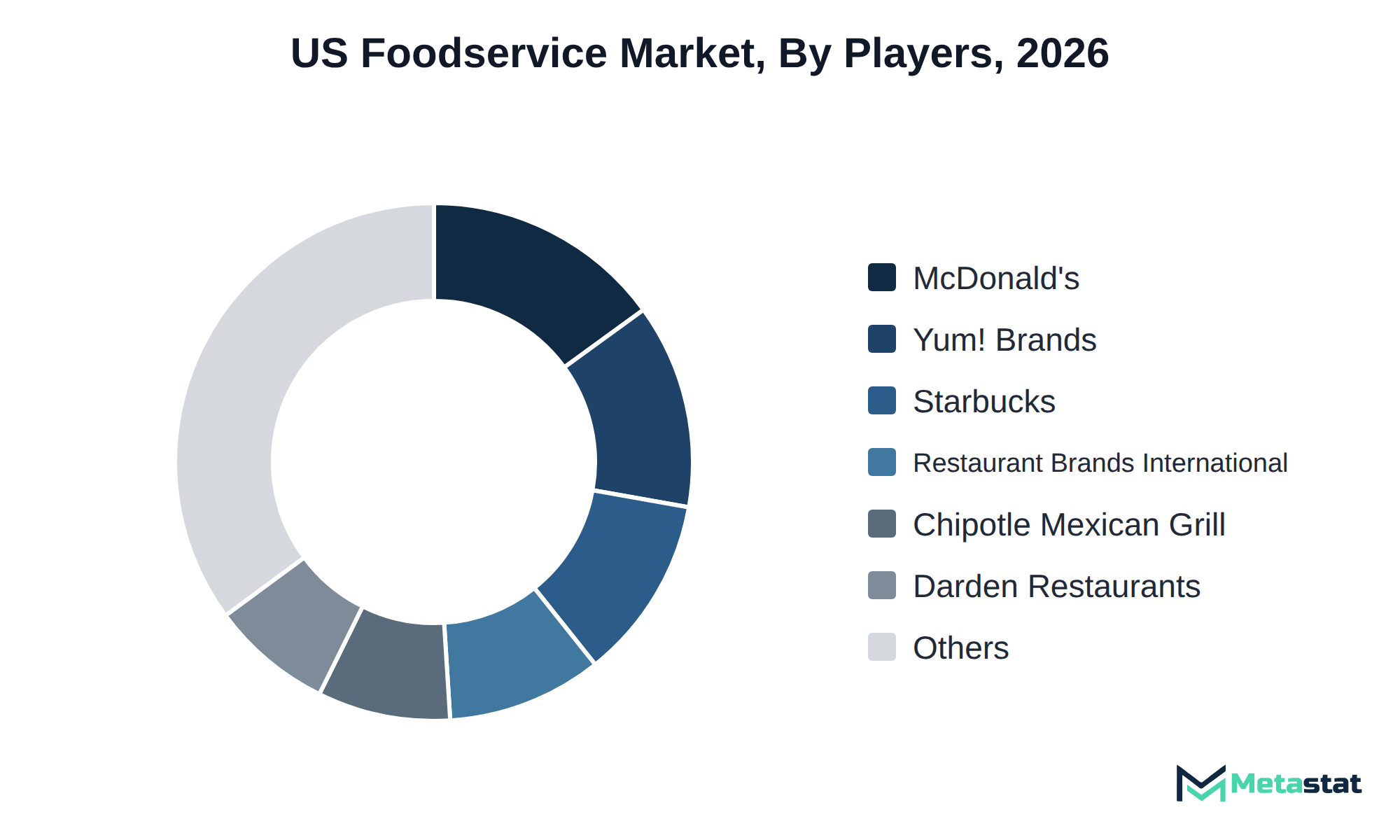
Competition within the US Foodservice market revolves around various business models and service types. A significant portion of this market includes full-service and limited-service restaurants, each catering to different consumer preferences, with buyers selecting based on factors including price, service quality, and menu offerings.
McDonald's Corporation focuses on value-driven offerings, using brand recognition and extensive menu customization to attract a broad customer base. Starbucks Corporation emphasizes premium coffee shop experiences and ethical sourcing, appealing to consumers who prioritize quality and sustainability. Yum! Brands, Inc. diversifies its portfolio through various restaurant formats, enhancing customer engagement through targeted marketing and localized menus.
Growth in the US Foodservice market hinges on several developments. The full-service restaurant segment is projected to expand from USD 609.7 billion in 2026 to USD 753.1 billion by 2033, driven by increasing consumer demand for diverse dining experiences. The limited-service restaurant segment exhibits a strong growth trajectory, with projections indicating a rise to USD 738.5 billion by 2033. This growth results from changing consumer preferences towards convenience and quick service options.
Another critical factor includes the increasing adoption of takeaway and pickup services, which is expected to reach USD 402.9 billion by 2033, reflecting a significant shift in consumer behavior towards off-premise dining. However, potential risks including rising operational costs and labor shortages in the foodservice sector could hinder this growth. Maintaining competitive pricing and service quality is essential for businesses aiming to capitalize on the evolving demands of the US Foodservice market.
By Foodservice Outlet Type: Full-Service Restaurants, Limited-Service Restaurants, Cafeterias and Food Courts, Catering Services, Hotels and Lodging Foodservice, Institutional Foodservice
By Location / Venue Type: Freestanding Locations, Retail & Shopping Centers, Business & Workplace, Education, Healthcare & Senior Living, Travel & Transportation, Sports & Entertainment, Hotels, Resorts & Leisure, Government & Corrections, Others (Military and Community Facilities)
By Restaurant Type: Chained Outlets, Independent Outlets
By Service Channel: Dine-In, Takeaway and Pickup, Delivery, Drive-Thru, Catering and Group Orders
The report strategically identifies and profiles the key market players and analyses their core competencies in each sub-segment of the Foodservice market.
Report Attributes | Details |
Study Period | 2021-2033 |
Base Year | 2025 |
Estimated Year | 2026 |
Forecast Period | 2026-2033 |
Historical Period | 2021-2025 |
Growth Rate | CAGR 3.6% from 2026 to 2033 |
Revenue Unit | USD billion |
Segmentation | By Foodservice Outlet Type, Location / Venue Type, Restaurant Type, Service Channel, and Region |
Find answers to common questions about this report
The Foodservice market size was valued at USD 1,507.2 billion in 2025.
The market is projected to grow at a CAGR of 3.6% during the forecast period from 2026 to 2033.
Limited-Service Restaurants lead the Foodservice market with a projected value of USD 738.5 billion by 2033, reflecting the highest growth rate among the segments.
The shift toward a convenience-driven lifestyle influences spending patterns, driving increased patronage of limited-service restaurants and takeaway channels. Changing demographics, particularly a younger population that prioritizes convenience, further contribute to growth in foodservice offerings tailored to fast and flexible consumption.
Increasing operational costs restrain growth in the Foodservice market. Rising labor costs challenge suppliers, compelling operators to implement cost management strategies that limit investment in new equipment and service expansions. These factors contribute to a cautious approach, ultimately affecting overall market potential.
Evolving consumer preferences for fast and affordable dining options favor the adoption of limited-service restaurants, projected to reach USD 738.5 billion by 2033. The increasing demand for quick-service meals, particularly among younger demographics, drives operators to innovate menu offerings and enhance digital ordering capabilities.
The Foodservice market is estimated to reach a valuation of USD 2,000.7 billion by 2033.
Key players operating in the Foodservice market include McDonald's Corporation, Starbucks Corporation, Yum! Brands, Inc., Restaurant Brands International Inc., Darden Restaurants, Inc., Chipotle Mexican Grill, Inc., Domino's Pizza, Inc., and The Wendy's Company.
Limited-Service Restaurants are projected to reach USD 738.5 billion by 2033, reflecting a compound annual growth rate (CAGR) of 4.2%.
Changing demographics, particularly a younger population prioritizing convenience, significantly influence the Foodservice market, driving growth in offerings tailored to fast and flexible consumption.
The analysts below cover Food and Beverages research at Metastat Insights.
LEAD ANALYST
Utkarsh Khirodkar is a Lead Market Research Analyst at MetaStat Insight, specializing in market intelligence, technology sector assessments, and competitive strategy.

LEAD PRINCIPAL ANALYST, PHARMA AND HEALTHCARE
Food and Beverages · Healthcare · Healthcare IT · Medical Devices
Ajay Devgire is the Lead Healthcare Analyst at MetaStat Insight, leading strategic research and market intelligence initiatives across the global healthcare domain.

SENIOR RESEARCH ANALYST
Biotechnology · Food and Beverages · Medical Devices · Packaging
Snehal Pasalkar is a Research Analyst at MetaStat Insight, operating at the intersection of life sciences research, competitive strategy, and market intelligence.
Evaluating sovereign cloud deployments for core banking platforms demands a clear view of data residency regulations and migration exit strategies. MetaStat Insight delivered an exhaustive review of regional latency tolerances, mainframe decommission milestones, and third-party vendor concentration risk. The regulatory compliance mapping across European and Asian financial jurisdictions gave our team a dependable baseline for multi-cloud infrastructure discussions.
Replacing petrochemical surfactants with bio-based alternatives requires realistic timelines on industrial precision fermentation scaling. The market research broke down commercialization timelines, feedstock sugar price sensitivities, and regional cosmetic ingredient regulatory approvals in Europe and East Asia. That supplier readiness mapping gave our formulations team reliable context when comparing renewable chemical sourcing roadmaps.
Tracking ceramic matrix composite adoption in high-bypass aero engines requires strict attention to material qualification cycles and FAA airworthiness testing milestones. The MetaStat Insight team provided a detailed timeline of silicon carbide fiber manufacturing capacity and commercial foundry lead times. Having clear visibility into upstream thermal barrier coating supply helped us stress-test our long-term component procurement strategy.
Explore related market intelligence reports worth reading alongside this one.