
LEAD ANALYST
Utkarsh Khirodkar is a Lead Market Research Analyst at MetaStat Insight, specializing in market intelligence, technology sector assessments, and competitive strategy.

US Homeschooling Market Size, Share, By Type (Pre-school, Elementary, and Middle School, High School), By Technology (Non-Digital/Low-Tech Homeschooling, Digital Curriculum Platforms, Live Online Learning Platforms, AI-Powered Tutoring, and Adaptive Learning Platforms), By Distribution Channel (Online Platforms and Offline Resources), By Region (Northeast, Midwest, South, and West), Industry Analysis, Growth, Trends, and Forecast, 2026-2033
Report ID
MSI-2602
Published
January, 2026
Updated
Pages
283 Pages
Format
Report Details
Choose Your License
US Homeschooling Market
The US Homeschooling market represents a dynamic educational landscape that has garnered increasing attention and participation in recent years. This unconventional approach to education has carved a niche in the broader educational industry. As parents seek alternatives to traditional schooling, the Homeschooling market has witnessed a surge in popularity.
Within the US Homeschooling market, families are embracing a personalized and flexible approach to education. This industry caters to the diverse needs and preferences of parents who opt for a more hands-on involvement in their children's learning journey. Unlike the conventional education system, Homeschooling grants families the autonomy to tailor the curriculum according to individual student capabilities and interests.
One notable aspect of the Homeschooling market is the vast array of resources available to parents and students. From online platforms offering interactive lessons to offline materials designed for hands-on learning, the market provides a rich tapestry of educational tools. This variety ensures that parents can choose methods that resonate with their teaching style and their child’s learning preferences.
The US Homeschooling market is not limited to a specific demographic. Families from various backgrounds, motivated by diverse reasons, are actively participating in this educational paradigm. Whether driven by religious beliefs, dissatisfaction with traditional schooling, or a desire for a more holistic education, parents find a range of options within the Homeschooling market to meet their specific needs.
In the Homeschooling landscape, a sense of community plays a pivotal role. With the rise of co-ops, support groups, and online forums, parents engage in collaborative efforts, sharing insights, resources, and experiences. This communal aspect fosters a supportive environment where families can navigate the challenges and celebrate the successes of their Homeschooling journey together.
Technology serves as a catalyst in the Homeschooling market, enabling innovative and interactive learning experiences. Virtual classrooms, educational apps, and online assessments have become integral components of the Homeschooling toolkit. This integration of technology not only enhances the learning experience but also prepares students for the digital age.
Challenges, however, are not absent from the Homeschooling market. Concerns about socialization, standardized testing, and the ability of parents to effectively deliver education are topics that echo within this educational paradigm. As the Homeschooling market continues to evolve, addressing these challenges becomes imperative to ensure its sustained growth and acceptance.
The US Homeschooling market represents a vibrant and evolving sector within the educational landscape. It caters to the growing demand for alternative educational approaches, offering parents the flexibility to tailor their child’s learning experience. With a diverse array of resources, a sense of community, and the integration of technology, the Homeschooling market continues to shape the educational choices available to families across the nation.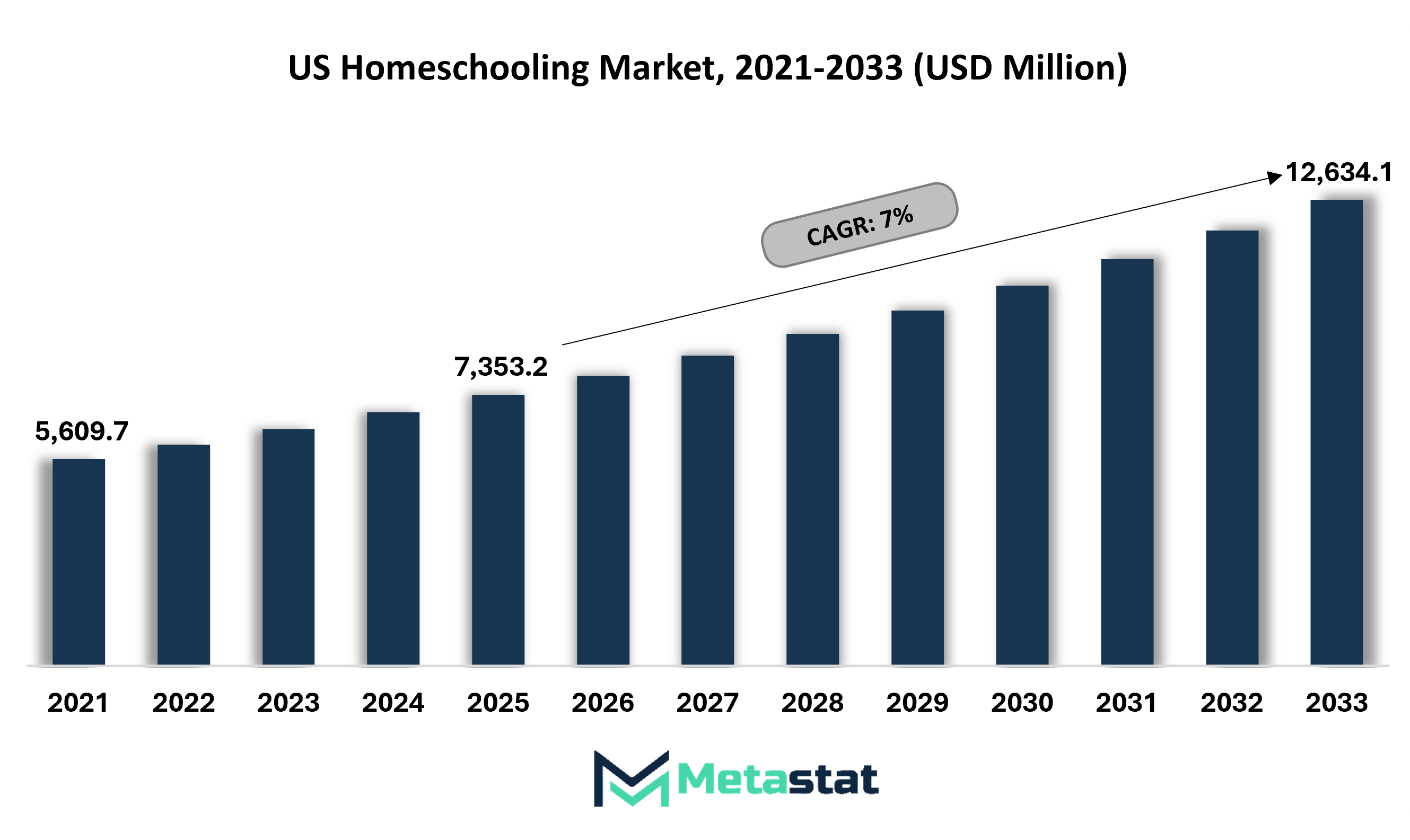
State regulatory environments directly shape the commercial landscape of the US homeschooling market. Legal compliance requirements govern how parents select curricula, schedule instructional hours, and purchase assessment products. The Home School Legal Defense Association categorizes state legal structures into four distinct tiers: no notice required, low regulation, moderate regulation, and high regulation.
States such as Alaska, Idaho, Texas, Oklahoma, and Missouri enforce minimal oversight. Parents in these jurisdictions do not need to register with local school districts, obtain teacher credentials, or submit standardized testing scores. This administrative freedom creates an open market for educational providers. Parents freely adopt customized, multi-vendor learning strategies without aligning their purchases with state academic frameworks. Consequently, these states demonstrate higher market penetration rates, with Alaska and Missouri reporting among the highest proportions of homeschooled children relative to their overall school-age populations.
States like New York, Pennsylvania, Massachusetts, and Rhode Island mandate detailed annual educational plans, quarterly progress reports, and regular standardized testing. Parents in these markets face strict administrative burdens. Consequently, consumer spending concentrates heavily on accredited, structured programs that simplify record-keeping. Vendors providing standardized testing preparation, automated grading, and formal transcript services capture greater market share in these states because they mitigate legal and reporting risks for families.
The expansion of state-funded school choice policies has altered regulatory dynamics across the country. Programs such as education savings accounts in states like Arizona, Florida, and Utah provide families with direct public funds for approved educational expenses. While these programs expand purchasing power for commercial instructional products, they introduce specific qualification rules. Curricular providers must register as approved vendors to capture these funds, prompting vendors to align offerings with state-approved accountability metrics.
The demographic profile of homeschooling families in the United States has broadened significantly beyond its historical base. Data tracked by the National Center for Education Statistics and independent researchers shows that the market has evolved from a small, ideologically focused subculture into a diverse cross-section of American households.
Non-white families represent one of the most rapidly expanding segments of the homeschooling market. Data from the US Department of Education and the National Home Education Research Institute indicates that minority households account for more than 40% of the homeschooling population. Black, Hispanic, and Asian families increasingly establish home-based learning environments. Motivations include addressing unequal academic expectations, creating culturally affirming learning spaces, and ensuring physical safety from school-based bullying or disciplinary bias. This shift generates commercial demand for inclusive, multi-perspective social studies curricula and literature programs.
Homeschooling historically required a single-income household with one parent dedicated full-time to instruction. Changing work patterns have altered this economic requirement. Today, homeschooling spans every income bracket. Households earning under $50,000 participate alongside upper-middle-class families earning over $100,000 annually. Flexible scheduling models, remote work opportunities, and community-based co-ops allow single parents and dual-earner households to divide instructional responsibilities. As working parents enter the market, demand accelerates for self-directed learning tools, asynchronous platforms, and turnkey educational software.
The US homeschooling curriculum sector features a dynamic mix of faith-based publishers, secular public virtual school providers, and digital subscription services.
Established Christian educational publishers maintain robust positions within the traditional print and video market. Abeka and Bob Jones University Press offer complete, grade-level boxed sets that include textbooks, video lessons, teacher editions, and testing materials. Classical Conversations serves a growing segment committed to classical Christian education, deploying a franchise-like model centered on weekly local community meetings. These providers retain high customer loyalty due to their comprehensive instructional systems and established family networks.
Publicly funded, full-time virtual schools capture substantial market volume. K12 Inc. (Stride) and Connections Academy provide free public schooling at home via state virtual charter school contracts. Because these providers supply licensed teachers, proprietary digital content, and hardware at no out-of-pocket cost to parents, they attract families seeking structured, state-aligned instruction. However, these programs require adherence to the Common Core State Standards and mandatory state testing, leading independent homeschoolers to view them as a distinct category of public education at home.
Subscription-based and supplemental software providers have captured major consumer share among modern, flexible homeschoolers. Time4Learning delivers an automated, multi-subject online curriculum popular with working parents who need integrated grading and lesson tracking. Alongside full-curriculum platforms, free and low-cost mastery resources like Khan Academy serve as core instructional backbones for math and science. These digital platforms serve families who assemble modular, customized learning programs across multiple specialized providers rather than purchasing a single publisher set.
The pandemic disrupted conventional education models, driving unprecedented growth in parent-led instruction and fundamentally shifting consumer attitudes toward home education.
During the initial phase of the pandemic, widespread school closures forced millions of households into emergency remote learning. While school districts managed virtual instruction, parents gained firsthand visibility into their children's coursework, instructional pacing, and classroom climate. Rather than returning to traditional classrooms when campuses reopened, a substantial cohort of families chose independent home education. The National Home Education Research Institute reported that homeschooling populations surged to record levels during this period. While overall participation stabilized after public schools fully reopened, baseline enrollment remained substantially higher than pre-pandemic levels.
School closures spurred community-level innovation, most notably through pandemic-era learning pods. Families pooled financial resources to hire tutors, share teaching duties, and maintain structured peer groups. This grassroots innovation laid the foundation for commercial microschools. Microschools operate as independent, small-scale learning environments that blend home-based flexibility with small-group classroom dynamics. Many pods formalized into permanent learning centers, creating a durable new distribution channel for instructional software and educational supplies.
Technology adoption in home education has evolved from supplemental digital practice into the operational core of most homeschool households.
Modern homeschooling environments increasingly integrate adaptive learning systems. Intelligent tutoring platforms assess student mastery in real time, automatically adjusting problem difficulty and instructional explanations. These tools allow parents to teach advanced STEM subjects, foreign languages, and upper-level mathematics with confidence, even without personal subject mastery. Generative AI tools assist parents by drafting customized lesson plans, generating leveled reading exercises, and providing conversational tutoring directly to students.
Gamified learning applications have transformed early elementary instruction by reinforcing phonics, reading comprehension, and arithmetic through interactive play. Simultaneously, cloud-based learning management software simplifies administrative operations. Digital homeschool planners automate calendar scheduling, log instructional hours, track attendance, and compile portfolio artifacts for state compliance. This administrative automation reduces parental burnout and preserves instructional consistency.
The direct financial economics of home education differ substantially from traditional public and private schooling.
Public education provides tuition-free instruction funded by local, state, and federal taxes. However, public school parents still incur non-trivial out-of-pocket expenses for school supplies, field trips, uniforms, and extracurricular activity fees. Private school tuition represents a major financial commitment, typically averaging thousands to tens of thousands of dollars per child each year. Homeschool families spend primarily on curriculum, books, digital subscriptions, laboratory kits, and co-op fees. A typical family spends between $500 and $2,500 annually per child, depending on whether they select free online tools, modular resources, or premium boxed programs. The expansion of education savings accounts in multiple states has significantly reduced direct out-of-pocket costs by allowing eligible parents to direct public education funds toward approved curriculum vendors.
The primary financial cost of homeschooling remains the opportunity cost of parent labor. Home education generally requires one parent to reduce working hours, shift to freelance roles, or step away from the full-time labor force entirely. This lost earning potential can exceed direct instructional expenses. Even as remote work mitigates some income loss, managing instructional time requires significant parental effort and operational reorganization.
Long-term consumer demand for home-based education relies on several structural cultural and economic factors.
The permanent integration of remote and hybrid work models across the US economy directly supports homeschool adoption. When parents work from home, they can supervise academic time, provide one-on-one assistance, and integrate learning around flexible corporate schedules. This workplace flexibility eliminates the rigid logistical schedules of traditional school districts, enabling families to travel, adjust daily routines, and optimize student learning hours.
Standardized classroom environments often struggle to accommodate both gifted learners and students requiring remedial intervention. Homeschooling offers complete customization. Students can progress rapidly through subjects where they excel while spending extra time mastering challenging concepts. Parents also customize curricula around specific neurodivergent learning profiles, including ADHD, autism spectrum conditions, and dyslexia.
Parental desire for instructional autonomy remains a sustained market driver. Many families express dissatisfaction with institutional curricula, citing social, moral, or philosophical disagreements with public school standards like Common Core State Standards. Other families pursue homeschooling to provide intensive sports training, arts development, or vocational pathways. The ability to control educational content ensures continued demand for both specialized secular programs and values-based religious publishers.
Despite broad consumer interest, significant systemic challenges constrain rapid market expansion.
Instructional fatigue is the leading cause of families leaving home education. Parents act simultaneously as teacher, administrator, counselor, and primary caregiver. As children enter middle and high school, advanced subjects such as chemistry, calculus, and foreign languages present substantial teaching challenges. Without robust external support systems, co-ops, or specialized tutoring, parental burnout frequently leads families to re-enroll students in traditional schools.
The homeschooling market faces persistent policy debate. Teacher unions, state education boards, and conventional school advocates regularly lobby for stricter state oversight, mandatory standardized testing, and portfolio reviews. Proponents of traditional schooling argue that public oversight is necessary to ensure educational equity and child welfare. Regulatory uncertainty creates operational friction for both parents and educational vendors who must continuously adapt to shifting state mandates.
While modern homeschool networks offer extensive extracurricular programming, negative public perceptions regarding student socialization persist. In many states, homeschooled students face legal restrictions that prevent them from participating in local public school athletic teams, music ensembles, and competitive clubs. Paying out of pocket for private leagues, arts programs, and laboratory access increases total household costs and logistical complexity.
The institutionalization of home education has attracted venture capital, private equity, and strategic corporate acquirers to the homeschool market.
Private equity firms and established EdTech conglomerates actively acquire established homeschool brands to build unified consumer ecosystems. Investors target platforms with high customer retention, low churn rates, and high lifetime value. Consolidators combine asynchronous courseware, digital record-keeping tools, and supplemental tutoring services under unified subscription offerings to capture larger shares of family educational budgets.
Venture capital investment has shifted toward technologies supporting decentralized schooling. Capital flows into software platforms that facilitate microschool creation, enrollment management, teacher matchmaking, and compliance tracking. Financial technology platforms designed specifically to disburse and manage education savings accounts have also secured substantial funding rounds as state school choice legislation expands.
The growth of the US homeschooling market is influenced by several key factors. One significant driving force is the increasing awareness among parents about alternative education methods. This awareness prompts them to explore homeschooling as a viable option for their children's education. Additionally, the flexibility that homeschooling offers is another crucial factor contributing to its growth.
Parents appreciate the ability to tailor the curriculum to suit their child's individual needs and learning style. This adaptability fosters a more personalized educational experience, addressing the diverse learning preferences of students. As a result, the homeschooling market gains traction as more parents seek a more tailored and flexible approach to education.
Moreover, the rise of technological advancements has played a pivotal role in the expansion of homeschooling. The accessibility of online resources and educational tools empowers parents to create comprehensive and interactive learning experiences for their children. This integration of technology not only enhances the quality of education but also makes homeschooling more appealing to a broader audience.
However, challenges exist that may hinder the growth of the homeschooling market. Skepticism and misconceptions about the effectiveness of homeschooling could act as barriers, deterring some parents from embracing this alternative. Additionally, concerns about socialization opportunities and the lack of standardization may pose challenges to widespread acceptance.
Despite these hurdles, there are promising opportunities on the horizon. The increasing dissatisfaction with traditional education systems and the desire for more individualized learning experiences create a fertile ground for the homeschooling market to flourish. Innovations in educational approaches and the continuous evolution of teaching methods present lucrative prospects for the market in the years to come.
The US homeschooling market experiences growth driven by factors such as parental awareness, flexibility, and technological advancements. While challenges like skepticism and concerns about socialization exist, the potential for a more personalized and adaptable education system offers significant opportunities for the market's expansion in the future.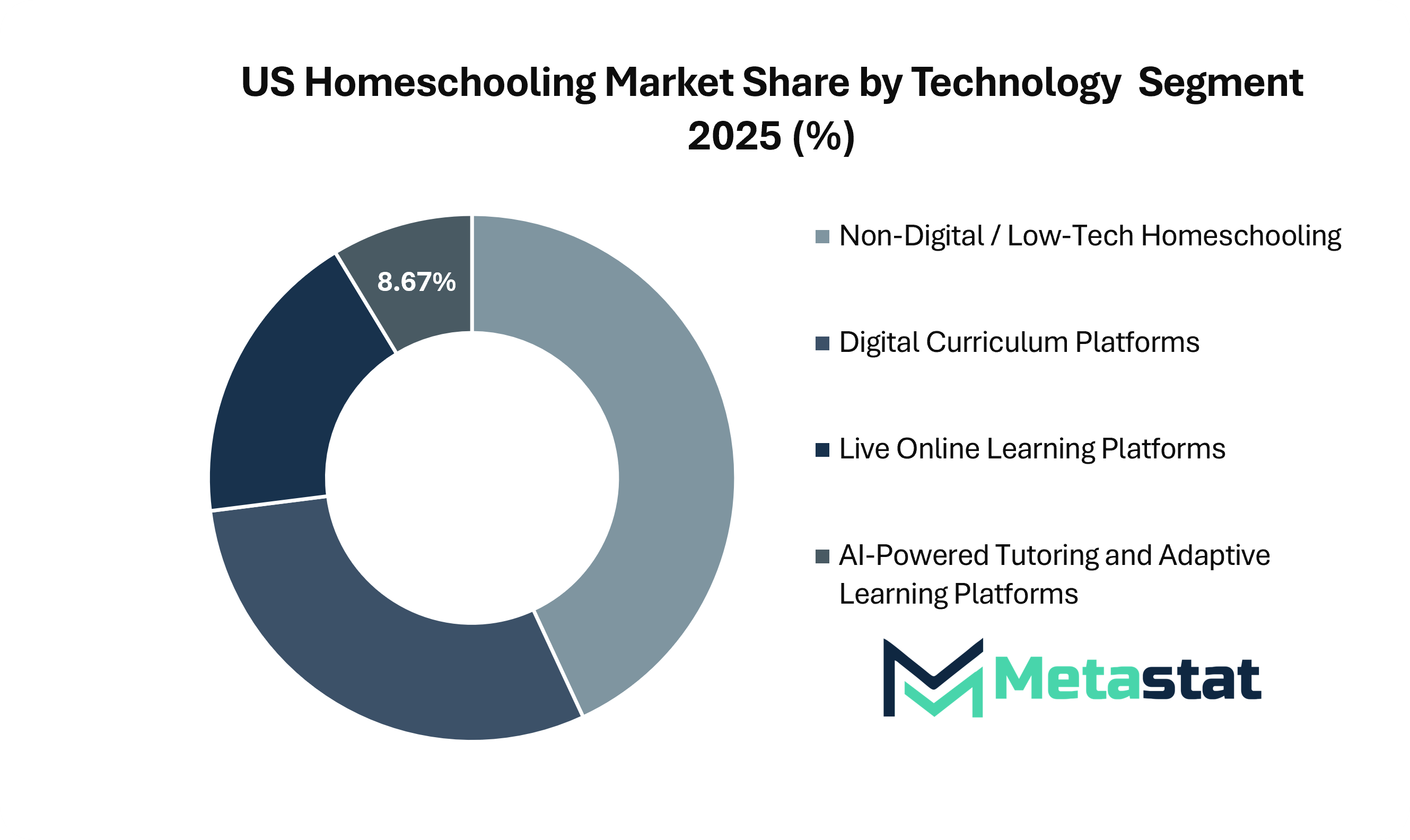
Pre-school segment is valued at USD 765.1 million in 2026 and is projected to reach USD 1099.2 million by 2033, at a CAGR of 5.3% during the forecast period.
The American homeschooling sector is divided by type, encompassing pre-school, elementary, middle school, and high school levels. This segmentation provides a comprehensive understanding of the market, offering insights into various educational stages. It allows for a nuanced examination of the homeschooling landscape, catering to students at different developmental phases.
Examining the specifics of the US Homeschooling market reveals a breakdown based on educational levels. The categorization includes pre-school, catering to the early stages of a child’s learning journey. Moving forward, there are divisions for elementary, middle school, and high school, capturing the diversity of educational needs at distinct stages of development. This segmentation aids in comprehending the dynamics of homeschooling across the spectrum of academic progression.
AI-Powered Tutoring and Adaptive Learning Platforms segment is projected to reach USD 2084.6 million by 2033, at a CAGR of 16% during the forecast period.
In dissecting the US Homeschooling market, one notices a detailed categorization based on educational phases. The breakdown involves pre-school, the foundational stage of a child’s education, followed by elementary, middle school, and high school levels. This granular segmentation provides a thorough overview of the homeschooling landscape, accommodating the varied learning requirements encountered at different points in a student’s academic journey.
An analysis of the US Homeschooling market reveals a nuanced approach, categorizing it by educational stages. This segmentation includes pre-school, addressing the early formative years of education, and extends to elementary, middle school, and high school levels. This classification offers a holistic perspective on homeschooling, acknowledging the diverse educational needs prevalent at different developmental milestones.
Online Platforms segment is projected to reach USD 9311.3 million by 2033.
The segmentation of the US Homeschooling market by type unveils a comprehensive breakdown, encompassing pre-school, elementary, middle school, and high school levels. This categorization enables a detailed exploration of the homeschooling landscape, considering the distinct educational requirements at various stages. It provides a comprehensive framework for understanding the dynamics of homeschooling in the United States.
South region is projected to grow at a CAGR of 8.1% during the forecast period.
The US homeschooling market boasts a range of competitive players, each contributing to the dynamic landscape of the homeschooling industry. These key players encompass a diverse array of educational platforms and resources, catering to the unique needs of homeschooled families across the country.
Time4Learning, Abeka, and ABCmouse.com are prominent figures in this educational arena, offering comprehensive solutions designed to support homeschooling parents and enhance the learning experience for students. These platforms provide a varied curriculum, fostering a well-rounded education that covers core subjects and beyond.
Stride, Inc. (K12) and Khan Academy have also established their presence as influential players, leveraging technology to deliver engaging and effective online learning experiences. Their commitment to innovation aligns with the evolving needs of homeschooling families, providing flexible and interactive educational options.
The CK-12 Foundation and Sonlight contribute to the diversity of available resources, offering educational materials and curricula that cater to different learning styles. Pearson Education, Inc. and Savvas Learning Company LLC. bring their expertise to the table, ensuring quality educational content that aligns with academic standards.
In the digital realm, edX Inc., Duolingo, and BrainPOP play crucial roles in enhancing the homeschooling experience. These platforms bring interactive and multimedia elements to the educational journey, making learning more engaging and accessible.
BJU Press, Timberdoodle Co, and The Critical Thinking Co. contribute distinctive approaches to homeschooling, providing specialized materials that cater to specific educational philosophies and learning preferences. Their presence adds depth and variety to the available options for homeschooling families.
The competitive landscape of the US homeschooling market is marked by the diverse offerings of key players such as Time4Learning, Abeka, ABCmouse.com, Stride, Inc. (K12), Khan Academy, CK-12 Foundation, Sonlight, Pearson Education, Inc., Savvas Learning Company LLC., edX Inc., BJU Press, Duolingo, Timberdoodle Co, and The Critical Thinking Co. Each player brings its unique strengths, contributing to the richness of resources available to homeschooling families seeking quality education outside traditional classroom settings.
Assessing market size, growth trajectories, and spending patterns in home education requires multi-source data synthesis due to decentralized state reporting.
Accurate market modeling combines data points across public and private research organizations: * The National Center for Education Statistics provides baseline federal surveys on household education decisions and traditional school enrollment trends. * The US Department of Education releases periodic administrative reports on broader school-age demographic shifts. * State departments of education publish annual homeschool filing numbers, standardized testing data, and school choice scholarship participation figures. * The Home School Legal Defense Association monitors legislative changes, compliance frameworks, and state regulatory classifications. * The National Home Education Research Institute provides ongoing independent research, survey datasets, and academic performance tracking.
Because states do not use uniform registration frameworks, econometric modeling requires comparative synthesis. In states with no notification requirements, analysts use household survey sampling, consumer purchasing data, and state standardized testing participation to estimate local student populations. Triangulating curriculum sales receipts, digital learning subscription volumes, and state-administered education savings account transactions provides verified financial sizing for the commercial homeschooling industry.
|
Report Attributes |
Details |
|
Study Period |
2021-2033 |
|
Base Year |
2025 |
|
Estimated Year |
2026 |
|
Forecast Period |
2026-2033 |
|
Historical Period |
2021-2025 |
|
Growth Rate |
CAGR 7.0% from 2026 to 2033 |
|
Revenue Unit |
USD million |
|
Segmentation |
By Type, Technology, Distribution Channel, Region, and Region |
Find answers to common questions about this report
The Metastat Insights study shows that the US Homeschooling market size was USD 7,353.2 million in 2025.
The US Homeschooling market is expected to grow at a CAGR of 7.0% over the forecast period (2026-2033).
US Homeschooling market is estimated to reach USD 12,634.1 million by 2033.
Top players operating in the Homeschooling industry includes Time4Learning, Abeka, ABCmouse.com, Stride, Inc. (K12), Khan Academy, CK-12 Foundation, and Others.
Co-ops and hybrid learning centers provide social interaction, laboratory sciences, and specialized classroom instruction several days per week. They prevent parent instructional burnout, expand access to advanced high school subjects, and serve as organized local consumer networks for bulk curriculum purchases and supplemental educational services.
Parents choose homeschooling to customize learning speeds, ensure a safe educational environment, and align instructional content with family values. Families often depart traditional schools over concerns regarding academic quality, institutional safety, bullying, or rigid standard testing environments. Others homeschool to accommodate children with special educational needs or elite athletic schedules.
Most modern homeschoolers combine online and offline resources rather than using one exclusively. While over two-thirds of families integrate digital learning platforms or online video courses for core instruction, the vast majority continue using physical books, workbooks, and hands-on materials to prevent excessive student screen fatigue.
Most families spend between $500 and $2,500 per child annually on curriculum, digital subscriptions, and school supplies. Basic programs utilizing open-source tools can cost under $500. Complete grade-level boxed sets, comprehensive digital platforms, laboratory materials, and specialized enrichment classes can exceed $3,000 per student.
State regulations range from zero mandatory reporting to extensive oversight requiring portfolio reviews and standardized testing. Low-regulation states accelerate market size by reducing barriers to entry. High-regulation states constrain total market penetration, but they concentrate consumer demand on structured, accredited, compliance-friendly curriculum programs that handle state administrative reporting.
Black, Hispanic, and Asian households represent the fastest-growing demographic groups in home education. Remote-working parents, dual-income households, and parents of neurodivergent learners also represent rapidly expanding consumer segments. Growth is no longer confined to traditional single-earner, rural, or purely religious households.
Alaska, North Carolina, and Missouri maintain some of the highest homeschooling rates in the nation. Alaska's remote geography makes home education practical, while states like Missouri offer favorable, low-regulation legal frameworks. Favorable legal environments, established local support co-ops, and expanding state financial assistance mechanisms directly encourage higher family participation across these regions.
Independent research from the National Home Education Research Institute and educational analysts estimated that approximately 3.4 million school-age children were homeschooled during the 2024 to 2025 academic year. This population represents roughly 6 percent of all school-age students in the United States, spanning roughly two million individual households nationwide.
The analysts below cover Information & Technology research at Metastat Insights.
LEAD ANALYST
Utkarsh Khirodkar is a Lead Market Research Analyst at MetaStat Insight, specializing in market intelligence, technology sector assessments, and competitive strategy.

PRINCIPAL CONSULTANT - ENTERPRISE AI & EMERGING TECHNOLOGIES
Banking & Finance · Electronics and Semiconductor · Energy and Power · Healthcare IT · Information & Technology · Professional Services
Vijay Gunti is a Principal Consultant at MetaStat Insight, bringing over two decades of experience across enterprise digital transformation, technology strategy, and intelligent systems.

LEAD CONSULTANT - COMMUNICATION, TELECOM, AND IT
Electronics and Semiconductor · Information & Technology · Machinery & Equipment · Professional Services
Ravindra Sathe Consultants for Communication, Telecom, and IT at MetaStat Insight. He leads the firm's industry research initiatives across telecommunications infrastructure, digital connectivity, enterprise networking, and emerging information technology domains.
Last Updated: September, 2026
Our team was tracking whether regional recycling infrastructure could realistically absorb the growing volume of lithium iron phosphate batteries over the next decade. The report did a solid job separating announced hydrometallurgical plant capacity from active, permitted operational throughput. That distinction made the feedstock availability projections and regional recovery rate models far more credible than standard commercial overviews.
Tracking capacity expansion in single-use bioprocessing requires dependable data on raw material availability and cleanroom-grade polymer supply chains. The competitive landscape chapter gave a grounded evaluation of secondary component suppliers across North America and Asia-Pacific rather than simply reprinting press releases. Having that level of supplier benchmarking helped clarify dual-sourcing considerations for our clinical pipeline planning.
When evaluating distributed energy resource management systems, standard research summaries tend to gloss over the operational differences between front-of-the-meter utility deployments and behind-the-meter industrial sites. The MetaStat Insight report addressed those distinctions directly, especially regarding software interoperability standards and grid interconnection backlogs. The five-year market sizing across regional transmission organizations provided actionable context for our grid modernization strategy.
Explore related market intelligence reports worth reading alongside this one.