
LEAD ANALYST
Utkarsh Khirodkar is a Lead Market Research Analyst at MetaStat Insight, specializing in market intelligence, technology sector assessments, and competitive strategy.

Zanubrutinib Market By Therapeutic Application (Hematological Malignancies, and Autoimmune Diseases), By Distribution Channel (Hospital Pharmacies, Retail Pharmacies, and Online Pharmacies), By Industry Analysis, Size, Share, Growth, Trends, and Forecasts 2025-2032
Report ID
MSI-4399
Published
November, 2025
Pages
256 Pages
Format
Report Details
Choose Your License
Zanubrutinib Market
The global zanubrutinib market will continue to define the future of the pharmaceutical sector as advanced therapies increasingly encroach on the treatment of cancers and immune diseases. As an emerging targeted therapy, Zanubrutinib has proven capable of redefining standards of patient care, transcending the traditional treatment modalities that long have dominated hematologic malignancy care. As research grows, its impact will spread to extend beyond existing clinical applications, revealing new avenues for applications in diseases where precision medicine will be the lead method.
In the coming years, targeted therapies, expanding use, how will they affect the competitive dynamics of the global zanubrutinib market? Maybe new clinical trials and combination therapies could open up new treatment avenues or even displace current oncology drug segments? While precision medicine keeps on progressing, are regulatory challenges and high costs going to limit the availability of Zanubrutinib in different parts of the world??
In the distant future, the field is going to see tighter collaborations between biotech companies and healthcare centers that will aim at making the Zanubrutinib-powered therapies accessible and affordable. Those collaborations will not only ramp up research output but also facilitate global healthcare integration at a completely different level. With improvements in diagnostic methods, it will become straightforward to pinpoint patients that will get the utmost benefit from such interventions, thereby clinical responses will be enhanced, and treatment experiences will be personalized.
The global zanubrutinib market will also receive a boost from the changing regulatory landscape as long as there are continuous global health authorities' efforts for quicker approvals of target drugs with safety profiles already established. Moreover, the awareness of early detection and the use of novel treatment options will get more people in the right direction of adoption. The sector will gradually lose interest in the mere product development aspect and rather focus on sustainable therapeutic delivery paradigms that will address patient needs in specific regions.
The global zanubrutinib market is mainly classified based on Therapeutic Application, Distribution Channel.
As blood cancer research and therapies change, the global zanubrutinib market is going to expand significantly. To be a major drug in the area of targeted cancer therapy, Zanubrutinib will carry a bright future in alleviating such diseases as chronic lymphocytic leukemia and mantle cell lymphoma. The clinical trials and approval by regulatory authorities will be the evidence that it is the treatment of choice in the late-stage cancer.
The global zanubrutinib market will be influenced by the rising research activities to the treatment of autoimmune disorders. The ongoing trials will uncover its usefulness in the regulation of immune response and reduction of inflammation. With the progress of medicine and targeted therapies, Zanubrutinib will be regarded as a revolutionary therapy for the immune system disorders.
The global zanubrutinib market will be underpinned by hospital pharmacies since they continue to remain central dispensers of specialty drugs. The availability of trained healthcare professionals and regular monitoring of patients will improve the access to drugs. Awareness and initial adoption of Zanubrutinib-based treatment will be promoted by hospitals through upgraded clinical management systems.
The global zanubrutinib market will pick pace through retail pharmacies, providing convenience and broader reach to patients. Through better availability of prescription drugs, community-based stores will provide timely supply and better patient compliance. The rise in retail networks will promote easier access beyond large healthcare facilities.
The global zanubrutinib market will gain from the increasing power of digital healthcare platforms. Online pharmacies will increase access to specialized drugs, particularly in rural regions. Improved patient convenience and transparent pricing for Zanubrutinib-based medicines will be facilitated by the growth in secure e-commerce systems and teleconsultation services.
|
Forecast Period |
2025-2032 |
|
Market Size in 2025 |
$1623.9 Million |
|
Market Size by 2032 |
$3351.5 Million |
|
Growth Rate from 2025 to 2032 |
10.9% |
|
Base Year |
2024 |
|
Regions Covered |
North America, Europe, Asia-Pacific, South America, Middle East & Africa |
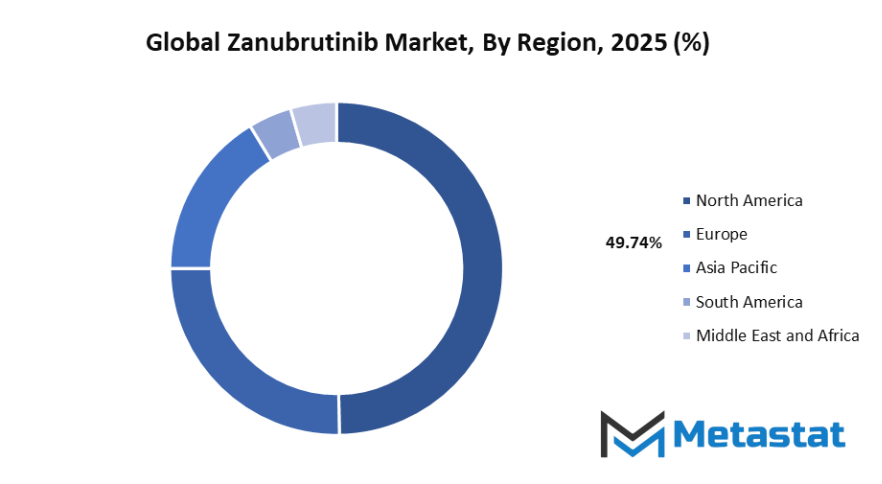
Based on geography, the global zanubrutinib market is divided into North America, Europe, Asia-Pacific, South America, and Middle East & Africa. North America is further divided in the U.S., Canada, and Mexico, whereas Europe consists of the UK, Germany, France, Italy, and Rest of Europe. Asia-Pacific is segmented into India, China, Japan, South Korea, and Rest of Asia-Pacific. The South America region includes Brazil, Argentina, and the Rest of South America, while the Middle East & Africa is categorized into GCC Countries, Egypt, South Africa, and Rest of Middle East & Africa.
Essentially, the global zanubrutinib market has been influenced positively and extensively by various cancer therapies, that mainly focus on the improvement of the treatment results of hematologic malignancies patients. As a matter of fact, quite a few issues that propagated the use of next-generation Bruton's tyrosine kinase (BTK) inhibitors like Zanubrutinib have been resolved which made it one of the most recommended drugs in a scenario of mantle cell lymphoma and chronic lymphocytic leukemia. Meanwhile, due to a progressive move of the healthcare systems worldwide towards more exact and effective oncological treatment procedures, along with pharmaceutical companies & apos; incessant investment into research and development for drug efficacy and safety, the market has transformed.
The sector comprises a mix of stable international leaders and dynamic fast-growing regional competitors, all of which contribute to the global footprint of Zanubrutinib extended to the world. So, it has been majorly the rivalry players, who are Pfizer Inc., AbbVie Inc., Novartis AG, Roche Holding AG, Eisai Co. Ltd., BeiGene Ltd., Merck & Co. Inc., Amgen Inc. and Gilead Sciences Inc., that have shaped the competitive scenario through their blocks. In addition to these global behemoths, Janssen Pharmaceuticals, Sun Pharmaceutical Industries Ltd., Cayman Chemical, BioVision, and Selleck Chemicals are charting a path to success through partnerships, clinical studies, and innovative research. Indirectly thus, their action is not only facilitating access to the best cancer therapies but also setting a new standard in patient care.
Besides, big pharma companies, several smaller but highly skilled biotechnology companies have started to position themselves prominently in the Zanubrutinib arena Biosynth Carbosynth, LifeSpan BioSciences, Clearsynth, Biorbyt, KareBay Biochem, MuseChem, and BOC Sciences are making their contribution through chemical synthesis innovation, research-grade chemical compound distribution, and formulation design. These businesses, while not enormous in size compared to international pharmaceutical corporations, are crucial in facilitating the continued supply of good quality materials and solutions necessary for continuing drug development and testing.
The presence of well-known international companies like Takeda Pharmaceutical Company Limited, AstraZeneca plc, Bristol Myers Squibb, and Eli Lilly and Company further consolidates the market's framework. Their well-equipped research centers, robust channels of distribution, and focus on growing oncology pipelines will continue to drive the direction of the market in the foreseeable future. With surging investments in cancer research, clinical development, and regulatory approvals, the adoption of Zanubrutinib is anticipated to grow at a consistent rate. Overall, the global zanubrutinib market is an expression of the common vision of pharmaceutical innovators and research-based enterprises striving to achieve more efficient cancer treatment regimes.
High zanubrutinib costs reduce availability in low-income areas
If zanubrutinib remains unaffordable, it will be the healthcare systems' biggest challenge, especially in the regions of the Third World. Patients who have limited resources and poor insurance coverage will have less access to expensive cancer drugs. The global health authorities will be forced by this situation to focus their efforts on the implementation of cost containment and affordability policies in the global zanubrutinib market.
Side effects and long-term safety concerns will restrain the drug spreading widely
Unpleasant side effects and lack of long-term safety data will be the reasons for the limited adoption of zanubrutinib. Health professionals and patients will seek stronger clinical data as a proof for long-term usage. More research will be needed and pharmacovigilance will have to be improved if the global zanubrutinib market wants to keep confidence and present safer uses.
Expansion into developing countries and additional cancer indications after regulators' approval
Zanubrutinib debut in the emerging markets may attract a vast number of new clients and lead to increased sales. Increasing healthcare infrastructure, cancer awareness, and larger indication approvals will boost market growth. Eventually, the global zanubrutinib market will be further inspired by future oncology breakthroughs to become a more valuable and far-reaching therapeutic solution worldwide.
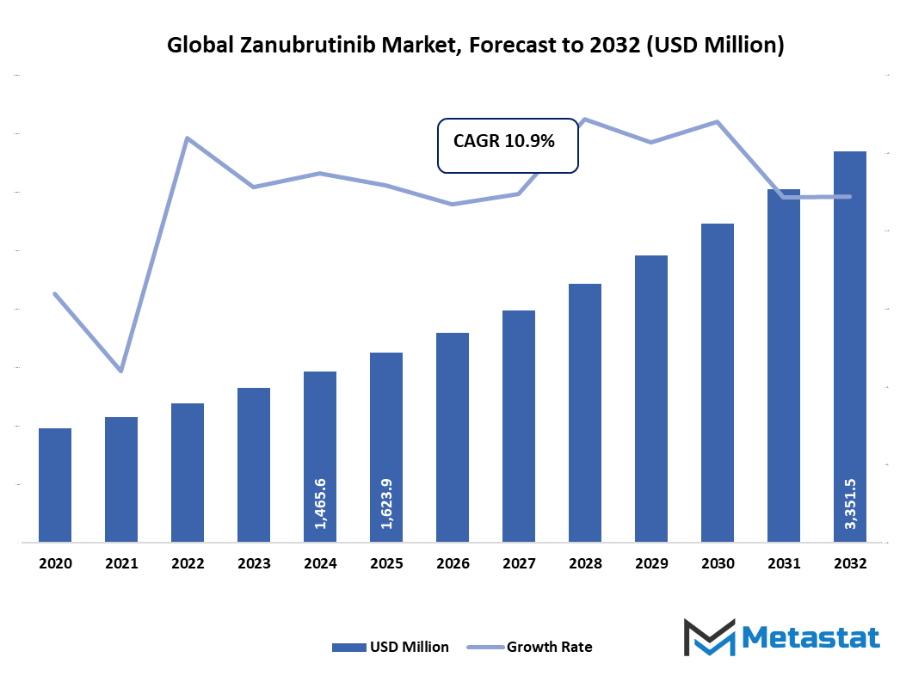
Market size is forecast to rise from USD 1623.9 Million in 2025 to over USD 3351.5 Million by 2032. Zanubrutinib will maintain dominance but face growing competition from emerging formats.
Once a large amount of data from the ongoing trials is available, the market will witness expanded therapeutic applications and improved formulations, thus strengthening its position in the oncology field. Ultimately, the global zanubrutinib market is going to be beyond today's limitations, it will be the defining layer for the future where science and patient welfare will be more closely bonded than ever before.
This research report categorizes the global zanubrutinib market based on various segments and regions, forecasts revenue growth, and analyzes trends in each submarket. The report analyses the key growth drivers, opportunities, and challenges influencing the global zanubrutinib market. Recent market developments and competitive strategies such as expansion, type launch, development, partnership, merger, and acquisition have been included to draw the competitive landscape in the market. The report strategically identifies and profiles the key market players and analyses their core competencies in each sub-segment of the global zanubrutinib market.
Find answers to common questions about this report
Global Zanubrutinib market is valued at $1623.9 Million in 2025.
Global Zanubrutinib market is estimated to grow with a CAGR of 10.9% from 2025 to 2032.
Global Zanubrutinib market is estimated to reach $3351.5 Million by 2032.
Top players operating in the Zanubrutinib industry includes Pfizer Inc., AbbVie Inc., Novartis AG, Roche Holding AG, Eisai Co. Ltd., BeiGene Ltd, Merc
The analysts below cover Healthcare research at Metastat Insights.
LEAD ANALYST
Utkarsh Khirodkar is a Lead Market Research Analyst at MetaStat Insight, specializing in market intelligence, technology sector assessments, and competitive strategy.

LEAD PRINCIPAL ANALYST, PHARMA AND HEALTHCARE
Food and Beverages · Healthcare · Healthcare IT · Medical Devices
Ajay Devgire is the Lead Healthcare Analyst at MetaStat Insight, leading strategic research and market intelligence initiatives across the global healthcare domain.
Enterprise zero-trust network rollouts are often slowed down by multi-cloud transit latency and proprietary hardware retirement schedules. This study provided realistic total cost of ownership models comparing cloud-delivered security edge solutions against traditional hardware refreshes. The analysis of contract renewal lengths and software maintenance fees gave us clear visibility into enterprise replacement cycles over the next three to five years.
Scaling antibody-drug conjugate manufacturing hinges on contract manufacturing availability for high-potency active ingredients. The MetaStat Insight analysis looked closely at global cleanroom slot constraints, bioconjugation batch failure rates, and supply chain redundancies between the US, Europe, and India. The supplier capability matrix proved genuinely useful for our team when mapping secondary source options across our clinical pipeline.
Floating offshore wind feasibility relies heavily on specialized installation vessel availability and port crane limits, which most broad renewable energy forecasts ignore. The report delivered a thorough analysis of dry dock capacity, mooring chain supply constraints, and raw material pricing trends for deepwater anchor installations. It served as a solid independent sanity check for our offshore project capital expenditure assumptions.
Explore related market intelligence reports worth reading alongside this one.
Starting from
$2950