
LEAD ANALYST
Utkarsh Khirodkar is a Lead Market Research Analyst at MetaStat Insight, specializing in market intelligence, technology sector assessments, and competitive strategy.

India Nicotine Replacement Therapy Market Size, Share, By Product Type (Nicotine Chewing Gums, Nicotine Transdermal Patches, Nicotine Lozenges, Nicotine Orally Disintegrating Strips, Others), By Nicotine Strength (2 mg, 4 mg, 7-14 mg, 21 mg and Above), By Distribution Channel (Hospitals & Retail Pharmacies, Retail Stores, Online Channels), Industry Analysis, Growth, Trends, and Forecast, 2026-2033
Report ID
MSI-5787
Published
November, 2026
Pages
280 Pages
Format
Historical
Base year
Forecast
Forecast period
Report Details
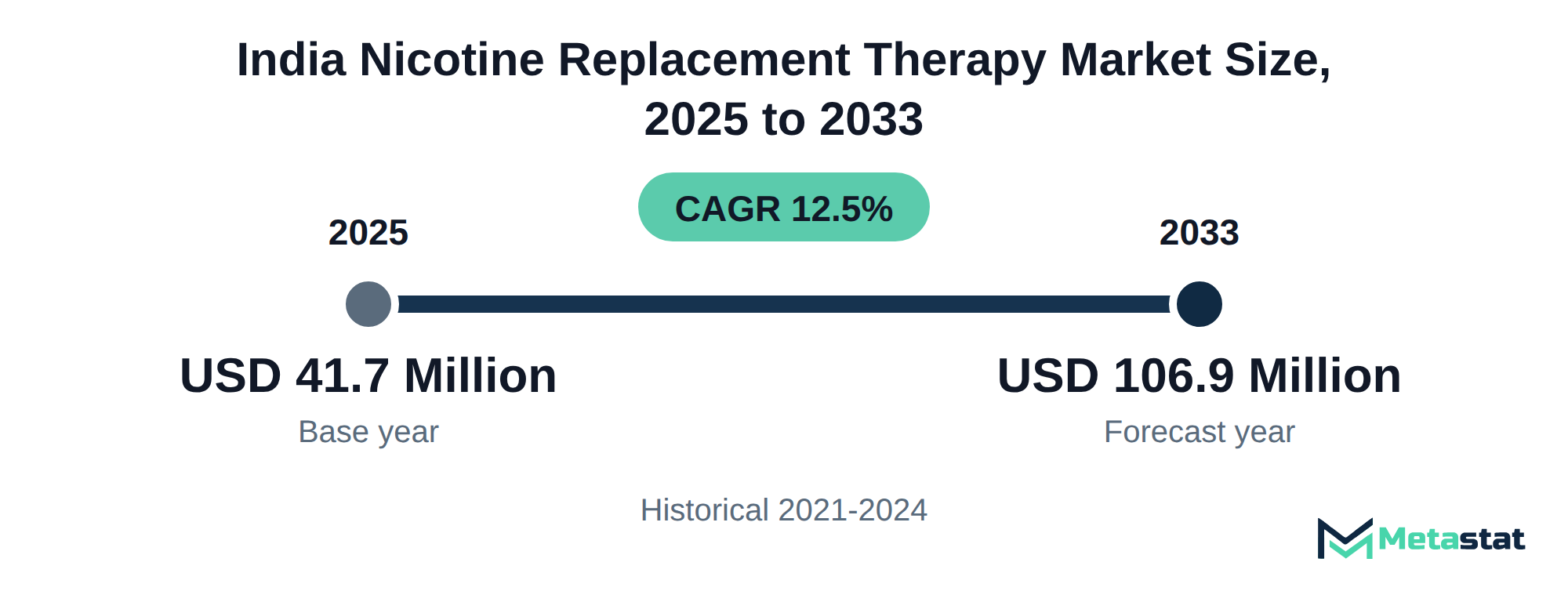
Market Valuation: Valued at $41.7 Million in 2025, projected to reach $106.9 Million by 2033 at a 12.5% CAGR.
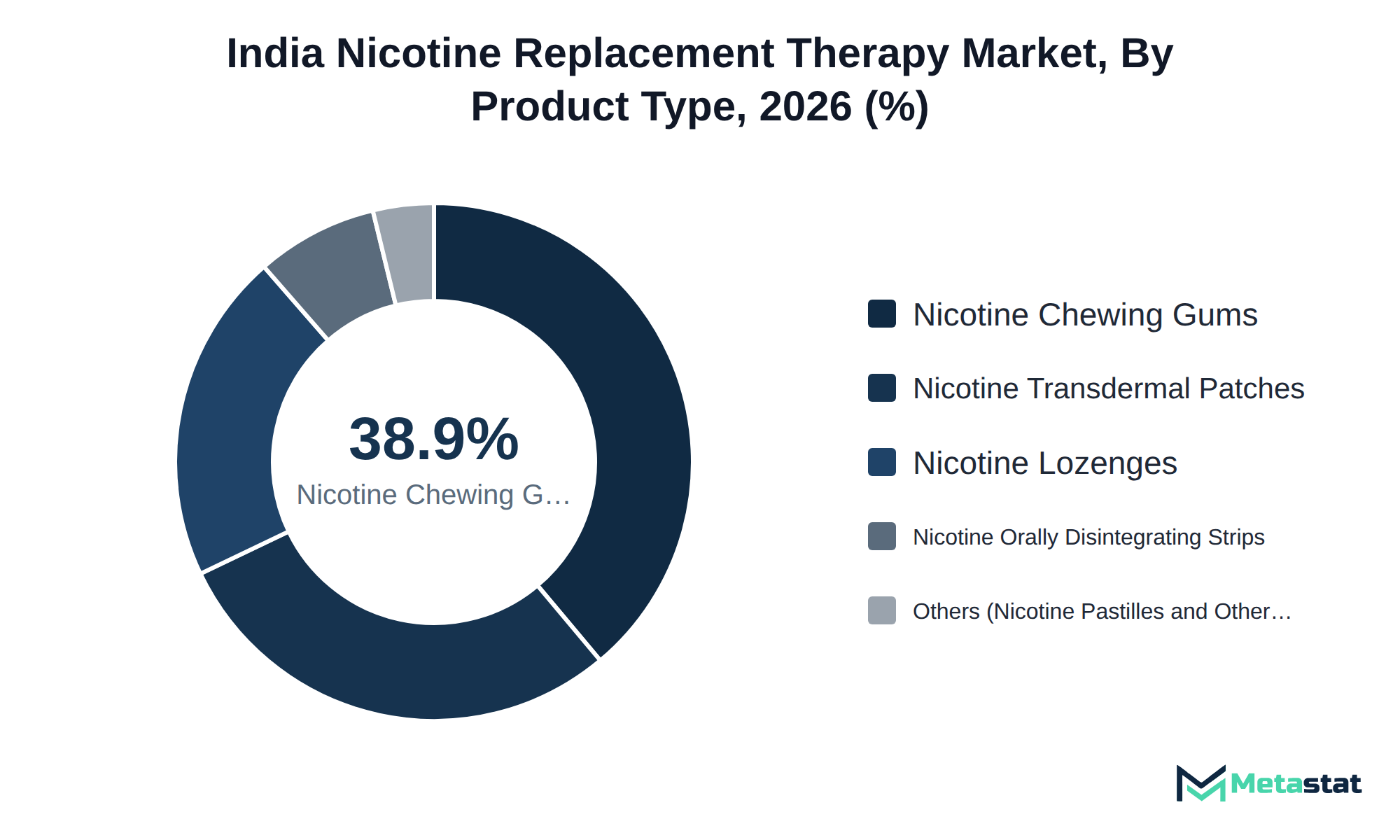
Dominant Segment: Nicotine chewing gums lead the market, driven by their discreet and convenient usage, appealing to health-conscious consumers seeking effective smoking cessation options.
Geographic Lead: Urban areas in India exhibit the fastest growth, fueled by higher smoking rates and increased awareness of health risks associated with tobacco use.
What's Inside: The report provides a comprehensive analysis of market dynamics, competitive landscape, and detailed forecasts across various product types and distribution channels.
Consumer Trends: There is a notable shift towards non-invasive and user-friendly products, with increasing demand for innovative solutions like nicotine orally disintegrating strips.
Choose Your License
India Nicotine Replacement Therapy Market
The India Nicotine Replacement Therapy market was valued at USD 41.7 million in 2025 and is projected to reach USD 106.9 million by 2033, growing at a CAGR of 12.5% over the forecast period.
The India Nicotine Replacement Therapy market encompasses various products designed to aid individuals in their efforts to quit smoking. This market includes options including nicotine chewing gums, transdermal patches, lozenges, and orally disintegrating strips, each targeting different preferences and needs of consumers. Buyers invest in these products primarily to support their smoking cessation goals, driven by health concerns and a desire for improved well-being.
Growth in the India Nicotine Replacement Therapy market is propelled by increasing awareness of the health risks associated with smoking and rising government initiatives promoting smoking cessation. Nicotine chewing gums represent the segment with the highest value, appealing to consumers who prefer a discreet and convenient method of intake. Advances in product formulations continue to improve user experience and effectiveness.
Among various regions, the segment maintains a significant presence in urban areas where smoking rates are high. The demand for nicotine replacement therapy products is expected to strengthen due to heightened focus on public health and tobacco control policies. This convergence of factors continues to influence growth potential and investment opportunities within the market.
The market includes several product types, including nicotine chewing gums, transdermal patches, lozenges, and orally disintegrating strips, catering to diverse consumer preferences. Spending in the India Nicotine Replacement Therapy market arises from increasing awareness of the health risks associated with smoking and the effectiveness of these products in facilitating smoking cessation. The demand for these solutions reflects a societal shift toward healthier living, driving consumers to seek reliable alternatives to traditional tobacco products. E-cigarette and vapor products form a separate alternative category within the wider nicotine market.
Growth in the market is driven by factors including rising disposable incomes and heightened public health campaigns promoting smoking cessation. Workplace health programs within the India corporate wellness industry add another setting for cessation awareness. Among the various segments, nicotine chewing gums contribute the highest value, appealing to consumers seeking immediate relief from nicotine cravings. The region with the largest market share reflects an evolving consumer base that prioritizes smoking cessation products, indicating strong demand across urban areas where awareness and accessibility are higher.
The anticipated CAGR of 12.5% illustrates the market's expansion potential, supported by effective strategies implemented by key players. The focus on innovative product development and diverse distribution channels enhances market penetration. Online channels, in particular, present a growing opportunity for suppliers to reach a broader audience, ultimately shaping the future direction of the India Nicotine Replacement Therapy market.
The India Nicotine Replacement Therapy market experiences significant changes in consumer preferences, particularly for nicotine gum, transdermal patches, and lozenges. A growing inclination towards non-invasive and user-friendly products influences this shift. In 2026, the market for nicotine chewing gums is projected to reach USD 18.1 million, expanding to USD 38.1 million by 2033, with a compound annual growth rate of 11.2%. This growth highlights the increasing acceptance of gum as a preferred option for tobacco cessation.
The availability of various flavors and convenient packaging contributes to the appeal of nicotine gum. Consumers increasingly value products that offer discreet and flexible usage, catering to their lifestyles. The nicotine transdermal patches segment displays a similar trend, with a projected growth to USD 29.3 million by 2033, reflecting a compound annual growth rate of 11.7%. Improved product formulations enhance user experience and help users quit tobacco.
Evolving preferences within the market signify an opportunity for manufacturers to invest in innovative product lines that align with consumer demands. The emphasis on convenience and taste drives competition among suppliers, promoting investment in research and development to create novel solutions. A strong focus on customer-centric products boosts market growth and reinforces the market's role in public health initiatives aimed at reducing tobacco dependence.
The pricing strategies for nicotine replacement products significantly influence purchasing decisions among consumers in the India Nicotine Replacement Therapy market. With more individuals seeking to quit smoking, affordability strongly shapes product selection. Nicotine chewing gum, projected to grow from USD 18.1 million in 2026 to USD 38.1 million by 2033, demonstrates strong demand driven by its relatively lower price point compared to other nicotine products.
Various distribution channels contribute to pricing variability. Retail stores often sell products at competitive prices, while hospitals and retail pharmacies, expected to expand from USD 29.7 million in 2026 to USD 62.5 million by 2033, incorporate higher service costs into product pricing. This disparity impacts consumers' choices based on their access to different purchasing avenues. In addition, online channels present a growing segment of the market, facilitating price comparison and influencing buying behavior.
The commercial consequence of these pricing approaches is significant, leading to enhanced market penetration and increased revenue for suppliers. A well-established pricing model, tailored to the needs of consumers across various distribution channels, supports the overall growth trajectory of the market. It positions the market favorably within the broader healthcare landscape in India.
Regulatory approvals significantly impact the India Nicotine Replacement Therapy market, influencing product availability and compliance with health standards. Regulatory bodies ensure that products like Nicotine Chewing Gums and Transdermal Patches meet safety and efficacy standards before reaching consumers. For instance, Nicotine Chewing Gums, valued at USD 18.1 million in 2026, are anticipated to grow to USD 38.1 million by 2033, reflecting increasing consumer acceptance and regulatory support.
This growth highlights the importance of compliance in enhancing market trust and consumer access to effective cessation therapies. Companies focusing on rigorous testing and compliance strengthen their market position and attract a more health-conscious consumer base, driving overall market expansion in a competitive landscape.
Product innovation addresses the distinct needs of consumers seeking effective nicotine cessation solutions. The introduction of Nicotine Orally Disintegrating Strips represents a significant advancement, catering to consumers looking for discreet and convenient options. This segment, alongside traditional products, enhances market diversity, enabling companies to meet varying consumer preferences.
Innovative formulations that improve user experience lead to higher adoption rates. A strong growth trajectory for the market is anticipated, driven by an informed consumer base seeking effective and user-friendly products to aid in their cessation journey.
Pricing dynamics in the India Nicotine Replacement Therapy market reflect broader economic conditions and consumer purchasing power. The affordability of products like Nicotine Lozenges, which are expected to reach USD 24.8 million by 2033, influences consumer behavior and accessibility. Competitive pricing strategies, combined with effective marketing, enhance product penetration in various distribution channels.
Companies that align their pricing with consumer expectations while maintaining product quality stand to gain significant market share. A strategic focus on pricing creates opportunities for growth within the market, attracting diverse consumers while building brand loyalty.
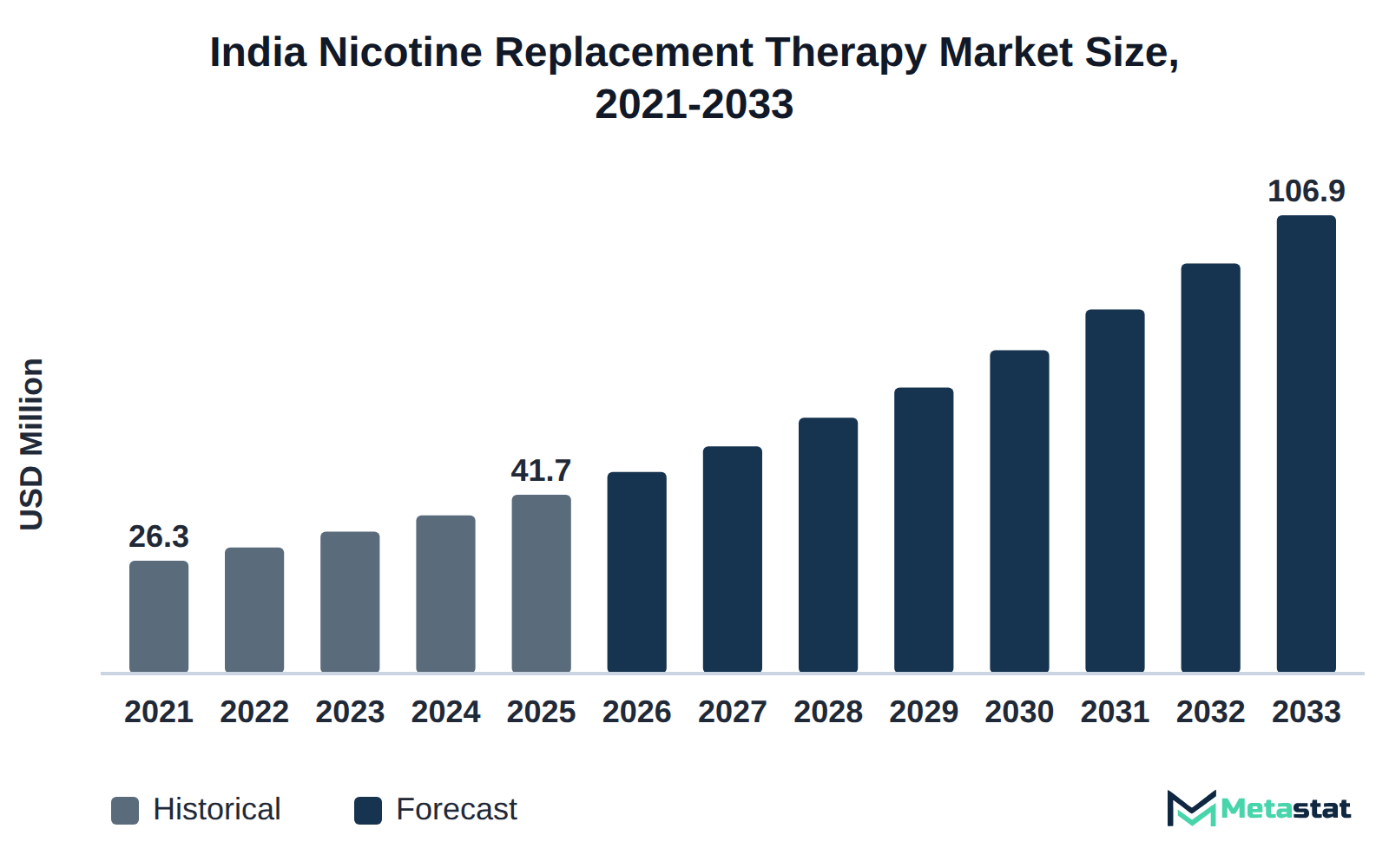
The demand for nicotine replacement therapy in India is experiencing significant growth, driven by increasing awareness of the health risks associated with smoking. In 2025, the market valuation reached USD 41.7 million, reflecting a steady upward trajectory since 2021 when it was valued at USD 26.3 million. Such growth highlights a changing consumer attitude towards smoking cessation products.
This increasing demand for nicotine chewing gums correlates with a shift in consumer preferences toward convenient and discreet options for quitting smoking. The rising prevalence of smoking-related health issues has compelled healthcare providers to recommend these therapies more often. Smoking-related respiratory illness is also addressed through asthma and COPD drugs.
This significant increase demonstrates the importance of healthcare professionals in guiding patients toward effective smoking cessation solutions. The overall evolution in the India Nicotine Replacement Therapy market illustrates a promising trend toward healthier lifestyles, with increased investment anticipated in various product types to meet the escalating demand.
Increasing awareness of health risks associated with smoking fuels demand for nicotine replacement products among individuals seeking to quit. The shift among younger demographics, particularly millennials and Gen Z, who prioritize health and wellness, contributes significantly to this trend. Enhanced marketing efforts, focusing on the effectiveness and safety of these products, further increases consumer interest. This growth highlights a notable increase in consumer commitment to smoking cessation, driving higher volumes of product adoption throughout the India Nicotine Replacement Therapy market.
Increased availability of online purchasing options complements this trend, providing easier access to nicotine replacement therapies. Demographic shifts and the growing emphasis on health create a favorable environment for market expansion.
Innovations in nicotine delivery systems significantly enhance the effectiveness of products within the India Nicotine Replacement Therapy market. Developments in formulations and delivery mechanisms improve user experience and satisfaction. Enhanced absorption rates in new products, including orally disintegrating strips, provide smokers with faster relief from cravings, increasing their success rates in quitting. These advancements attract health-conscious consumers seeking effective cessation aids while maintaining a familiar experience.
The introduction of customized dosage options across product types caters to diverse consumer preferences, allowing individuals to select the most suitable strength for their needs. This flexibility supports market expansion through increased accessibility for various buyer groups. The transition toward more advanced nicotine patches and lozenges follows consumer trends that favor convenience and discreet usage. The India Nicotine Replacement Therapy market is expected to benefit from these technological enhancements, creating a competitive landscape that emphasizes product efficacy and consumer engagement.
Price sensitivity presents a significant barrier for consumers seeking nicotine replacement therapy in India. Higher prices associated with these products often slow market uptake, particularly among price-conscious buyers including low-income smokers and those making initial attempts to quit. This situation results in smaller order volumes and delayed transitions to effective cessation methods. Limited disposable income among certain buyer segments exacerbates this challenge, causing individuals to opt for less expensive alternatives or forgo therapy altogether. The prevalence of counterfeit and lower-cost substitutes in the market undermines confidence in legitimate products, impacting overall demand. Anti-counterfeiting solutions are one response to this loss of confidence. The industry faces challenges in reaching its full market potential, affecting growth trajectories and necessitating strategic pricing approaches across the spectrum of nicotine replacement options. In the India Nicotine Replacement Therapy market, addressing pricing structures remains vital for enhancing accessibility and encouraging broader consumer engagement.
Suppliers in the India Nicotine Replacement Therapy market face significant challenges related to supply chain disruptions. These disruptions affect the timely delivery of raw materials essential for product manufacturing, resulting in increased operational costs and production delays. Suppliers respond by diversifying their sourcing strategies, seeking alternative suppliers, and investing in localized production facilities to mitigate risks associated with global supply chains. This shift aims to enhance reliability and ensure consistent availability of products in the market. Suppliers implement more stringent inventory management practices to buffer against potential shortages, thus ensuring they meet demand while maintaining profit margins. Healthcare supply chain management also determines how reliably these products reach hospitals and pharmacies. Consequently, these adaptations sustain operational efficiency and create a competitive advantage. The implications of these supply chain adjustments could influence overall market dynamics and determine the trajectory of growth within the sector.
The nicotine chewing gum segment within the India Nicotine Replacement Therapy market exhibits substantial growth potential. A projected compound annual growth rate (CAGR) of 11.2% signals strong demand for this product type through 2033. Factors contributing to this growth include increasing consumer awareness regarding smoking cessation options and the convenience associated with chewing gum, which serves as a discreet delivery method. With a rising number of health-conscious individuals seeking effective ways to quit smoking, the appeal of nicotine chewing gum intensifies. The market's transition toward more user-friendly and accessible products enhances the likelihood of higher adoption rates. This segment represents a significant opportunity for manufacturers to expand their offerings and capture a larger market share, driven by evolving consumer preferences. The nicotine replacement therapy market continues to evolve, fueled by innovative product development and targeted marketing aimed at smokers seeking healthier alternatives.
The India Nicotine Replacement Therapy market is segmented based on Product Type, Nicotine Strength, and Distribution Channel.
These gums provide an effective tool for individuals seeking to quit smoking by delivering a controlled dose of nicotine, helping to reduce withdrawal symptoms. The segment attracts health-conscious consumers who prefer a discreet and convenient method for nicotine intake. Increasing public awareness surrounding smoking-related health risks drives demand for these products. Nicotine addiction remains the underlying problem these products are designed to address. This segment benefits from a faster growth rate compared to others, supported by its accessibility through various distribution channels, including retail pharmacies and online platforms. In contrast, alternatives including nicotine lozenges experience slower growth due to differing consumer preferences.
These patches deliver a steady dose of nicotine through the skin to help individuals manage withdrawal symptoms while attempting to quit smoking. This method appeals to those who prefer a discreet and longer-lasting form of nicotine delivery. Demand for this segment primarily stems from health-conscious consumers seeking effective cessation aids. The projected growth of 11.7% outpaces other product types, indicating a stronger market position. In comparison to nicotine chewing gums, which have a CAGR of 11.2%, transdermal patches provide a more consistent nicotine level, appealing to consumers desiring a simpler, less interactive approach to quitting. This preference for ease of use drives the segment's strong performance within the market.
These products serve individuals attempting to quit smoking by providing a nicotine source that aids in managing cravings and withdrawal symptoms. Primarily, adult smokers seeking to reduce their dependence on tobacco products use lozenges. Demand for this segment is driven by growing awareness of smoking-related health issues and the effectiveness of lozenges in supporting cessation efforts. Compared to other product types, this segment features a competitive growth rate, but it is slower than Nicotine Orally Disintegrating Strips, which are projected to grow at a CAGR of 16.0%. Pricing dynamics play a crucial role in this segment, influencing consumer choices and overall market performance, particularly among price-sensitive buyers.
Nicotine Orally Disintegrating Strips segment is projected to grow at a CAGR of 16% during the forecast period. This product type serves individuals seeking a discreet and convenient method to manage nicotine cravings. Typically used by those aiming to quit smoking, these strips dissolve in the mouth, delivering nicotine quickly and effectively. Orally disintegrating formats belong to the wider field of advanced oral drug delivery. The growth in this segment is driven by a rising preference for alternatives that offer rapid relief from withdrawal symptoms. Compared to other offerings in the market, including chewing gums and patches, this segment demonstrates a higher growth rate due to its unique delivery mechanism and user experience. Other segments, including nicotine chewing gums, are projected to grow at a CAGR of 11.2%, highlighting the strong appeal of orally disintegrating strips and their importance in the India Nicotine Replacement Therapy market.
Others (Nicotine Pastilles and Other Approved Oral Formulations) include various nicotine delivery options that support individuals in their efforts to quit smoking. These products cater to consumers seeking alternatives to traditional nicotine replacement therapies. Demand for this segment is driven by the increasing focus on smoking cessation, particularly among users who prefer oral formulations over other methods. Nicotine pouches are a related oral nicotine format within the wider nicotine category. This segment differentiates itself through unique product attributes, appealing to a niche market that values convenience and discreet usage. Compared to nicotine chewing gums and patches, which exhibit more rapid growth, this sub-segment experiences slower adoption rates due to limited awareness and established preferences for more mainstream options. Regulatory developments impacting product approval processes further influence the availability and acceptance of these innovative formulations in the India Nicotine Replacement Therapy market.
Valued at USD 19.8 million in 2026, this segment is projected to reach USD 41.1 million by 2033, at a CAGR of 11% during the forecast period. This strength level serves individuals aiming to quit smoking by providing a lower dose of nicotine, facilitating a gradual reduction in dependency. The demand for 2 mg products is driven by an increasing number of smokers seeking effective yet manageable solutions to cessation. Compared to higher strength options, this segment features a more moderate growth rate, influenced by the needs of those who prefer a gentler approach to reducing nicotine intake. In contrast, other strengths, including 4 mg, exhibit a higher CAGR of 13.4%, catering to those seeking a more robust solution. This differentiation in growth reflects distinct consumer preferences and approaches to quitting smoking, contributing to varied dynamics within the India Nicotine Replacement Therapy market.
Valued at USD 36 million by 2033, the 4 mg segment experiences a CAGR of 13.4% during the forecast period. This segment provides an effective means for individuals seeking to quit smoking, appealing particularly to moderate users who require a balanced nicotine strength. Growing health awareness drives demand for this segment, with users increasingly opting for products that align with their cessation goals. Compared to other nicotine strengths, the 4 mg segment stands out due to its more balanced offering, facilitating a transition for smokers moving away from higher doses. This segment attracts consumers who prefer a less intense nicotine experience while still offering sufficient support for cessation. The increasing adoption of this segment reflects a broader trend towards tailored nicotine products that cater to varying consumer preferences within the India Nicotine Replacement Therapy market.
Valued at USD 20.2 million by 2033, the 7-14 mg segment offers a targeted nicotine replacement option for individuals aiming to reduce dependency on tobacco products. This segment primarily caters to smokers seeking an intermediate level of nicotine intake, balancing between lower and higher strengths. The increasing demand for personalized cessation solutions drives growth within this segment, appealing to users who require more than the lowest dosages but less than high concentrations. Consumers in this category often show a preference for products that provide manageable nicotine levels, differentiating this segment from others, including the 2 mg and 4 mg segments. The 7-14 mg segment is expected to expand at a steady pace, reflecting the broader trends in the India Nicotine Replacement Therapy market, where total segment growth is projected at a CAGR of 12.5% through 2033.
The 21 mg and Above segment is projected to grow at a CAGR of 13.7% during the forecast period. This segment includes high-strength nicotine products designed for heavy smokers seeking to quit. Users typically require higher nicotine doses to manage withdrawal symptoms effectively. Increasing health consciousness among this demographic drives uptake, with many individuals looking for reliable methods to cease smoking. Compared to lower-strength segments, this group commands higher prices due to the potency of its offerings, reflecting a specific consumer base willing to invest more for effective solutions. The market experiences steady demand growth since these products provide an essential alternative for individuals requiring higher levels of nicotine to aid in their cessation efforts.
Hospitals & Retail Pharmacies segment is valued at USD 29.7 million in 2026 and is projected to reach USD 62.5 million by 2033, at a CAGR of 11.2% during the forecast period. This segment serves individuals seeking assistance in quitting smoking through various nicotine replacement products. The accessibility of these products in hospitals and retail pharmacies enhances consumer convenience, driving demand among users motivated to quit smoking. Differentiating this segment from others, it experiences stable growth characterized by consistent consumer engagement due to healthcare recommendations. Unlike online channels, which appeal to a tech-savvy demographic, this segment caters to a broader audience, including individuals lacking digital access. Consequently, the market shows strong potential for expansion, driven by health practitioners increasingly endorsing nicotine replacement therapies as effective quitting aids.
Retail Stores segment is estimated to reach USD 27.1 million by 2033, at a CAGR of 13.6% during the forecast period. This segment provides access to nicotine replacement therapy products for consumers actively seeking to quit smoking. Retail outlets play a crucial role in enhancing product visibility and availability, driving adoption among users. A significant factor influencing this segment is the convenience of purchasing these products over online channels, appealing to consumers who prefer immediate access. Compared to other segments, retail stores differentiate themselves through personal customer service and immediate product acquisition. This segment experiences strong growth, outpacing other distribution channels due to its physical presence and established relationships with health-conscious consumers. The market benefits from increasing foot traffic in retail locations, allowing for effective promotions and brand engagement.
Online Channels segment is expected to reach USD 17.3 million by 2033. This segment provides consumers with convenient access to nicotine replacement products, enabling individuals seeking to quit smoking to purchase items from the comfort of their homes. The ease of online shopping attracts a diverse range of buyers, including younger demographics who prefer digital transactions. Demand for this segment is driven by the increasing preference for online shopping platforms, particularly following the pandemic, which shifted consumer behavior toward digital solutions. Compared to other segments, this category experiences a faster growth rate, supported by a CAGR of 12.5% during the forecast period. The growth potential of online channels lies in their ability to offer a wider variety of products and promotions, appealing to consumers looking for alternatives to traditional retail purchasing. This trend highlights the evolving dynamics of the India Nicotine Replacement Therapy market.
The segment provides nicotine replacement options for individuals attempting to quit smoking, particularly through healthcare settings and pharmacies. The increasing focus on smoking cessation programs by healthcare providers drives demand within this segment. Compared to other distribution channels, this segment has a slower growth rate, with Hospitals & Retail Pharmacies growing at a CAGR of 11.2%, while the Retail Stores segment is projected to grow faster at 13.6%. This dynamic illustrates how the market adapts to the preferences of consumers seeking convenient access to nicotine replacement therapy products.
In the India Nicotine Replacement Therapy market, companies adopt various strategic behaviors to compete effectively. Key positioning includes product differentiation, pricing strategies, and distribution channel focus. Companies use these aspects to address diverse buyer preferences.
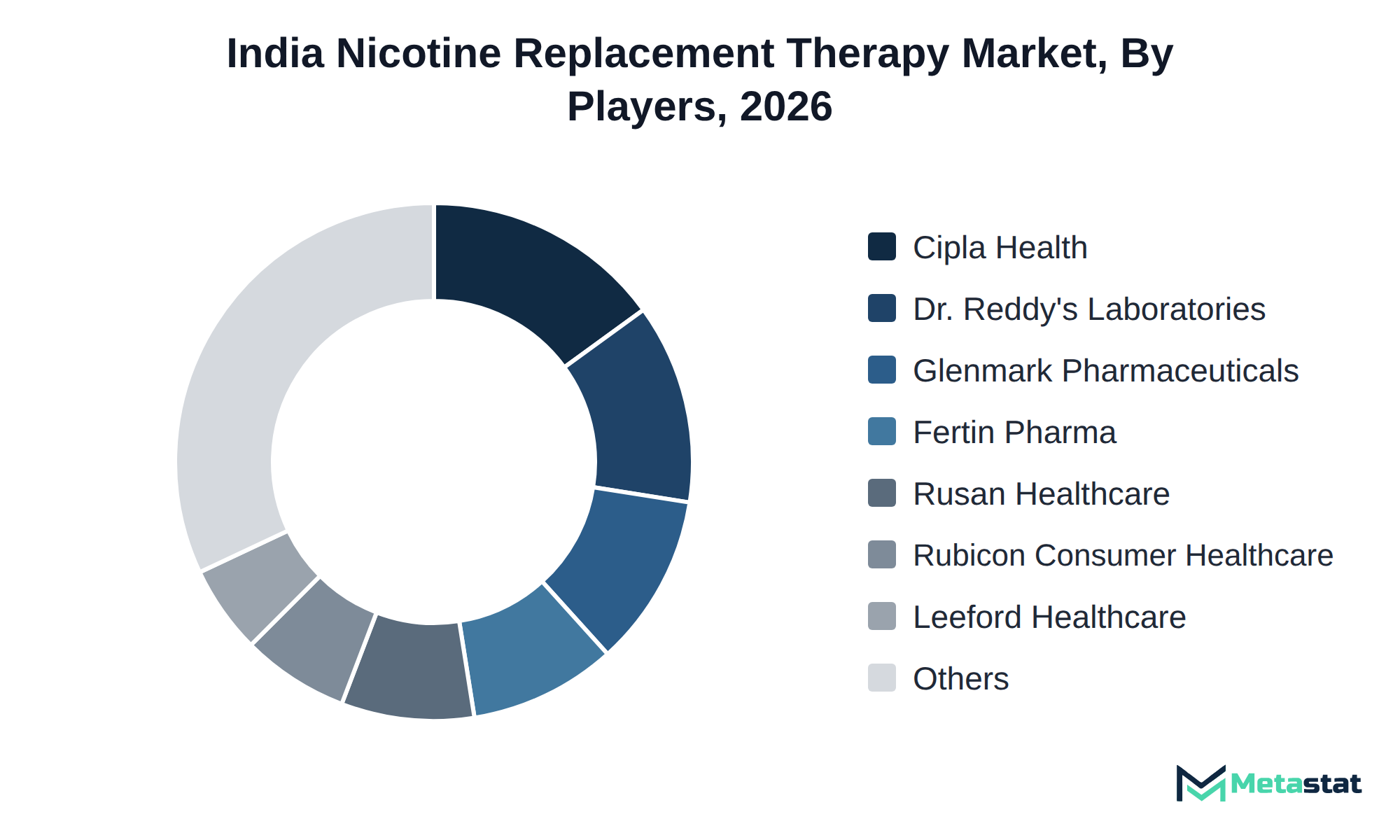
Cipla Health Limited and Glenmark Pharmaceuticals Ltd. emphasize product innovation in nicotine replacement options, catering to expanding consumer preferences for different formulations. This differentiation supports brand loyalty among buyers who prioritize efficacy and variety. Competitive pricing strategies are evident, with several firms aligning their offerings to attract price-sensitive customers.
Distribution is crucial in the market, with companies like Rusan Healthcare and Dr. Reddy's Laboratories Ltd. focusing on multiple channels, including hospitals, retail pharmacies, and online platforms. This strategy enhances accessibility for consumers while addressing unique customer needs. Retailer partnerships and online presence strengthen market positioning for these companies, catering to shifting purchasing behaviors.
Key developments driving this forecast include an increase in the adoption of Nicotine Replacement Therapy (NRT) products, particularly through hospitals and retail pharmacies, with anticipated growth from USD 29.7 million in 2026 to USD 62.5 million by 2033. Rising awareness of smoking cessation programs and escalating health consciousness among consumers significantly support this trend.
Another critical factor influencing the India Nicotine Replacement Therapy market involves the expansion of product offerings, especially in Nicotine Chewing Gums and Nicotine Transdermal Patches. The market expects these segments to grow at CAGRs of 11.2% and 11.7%, respectively, enhancing overall market value. Potential challenges include regulatory hurdles that delay product approvals and market entry, which could hinder growth. Addressing these factors will be essential for achieving the projected market size of USD 106.9 million by 2033.
By Product Type: Nicotine Chewing Gums, Nicotine Transdermal Patches, Nicotine Lozenges, Nicotine Orally Disintegrating Strips, Others (Nicotine Pastilles and Other Approved Oral Formulations)
By Nicotine Strength: 2 mg, 4 mg, 7-14 mg, 21 mg and Above
By Distribution Channel: Hospitals & Retail Pharmacies, Retail Stores, Online Channels, By
The report strategically identifies and profiles the key market players and analyses their core competencies in each sub-segment of the Nicotine Replacement Therapy market.
Report Attributes | Details |
Study Period | 2021-2033 |
Base Year | 2025 |
Estimated Year | 2026 |
Forecast Period | 2026-2033 |
Historical Period | 2021-2025 |
Growth Rate | CAGR 12.5% from 2026 to 2033 |
Revenue Unit | USD million |
Segmentation | By Product Type, Nicotine Strength, Distribution Channel, and Region |
Find answers to common questions about this report
The Nicotine Replacement Therapy market size was valued at USD 41.7 million in 2025.
The market is projected to grow at a CAGR of 12.5% during the forecast period from 2026 to 2033.
Nicotine Chewing Gums lead the market with a projected value of USD 38.1 million by 2033, surpassing other product types in the segment.
Increasing awareness of health risks associated with smoking drives demand for nicotine replacement products among individuals seeking to quit. Enhanced marketing efforts focusing on the effectiveness and safety of these products further increase consumer interest.
Price sensitivity presents a significant barrier for consumers seeking nicotine replacement therapy in India. Higher prices associated with these products often slow market uptake, particularly among price-conscious buyers.
Increasing consumer awareness regarding smoking cessation options and the convenience of products, particularly nicotine chewing gum, favor adoption in the India Nicotine Replacement Therapy market. Innovations in product formulations and delivery systems further enhance user experience, attracting health-conscious individuals seeking effective cessation aids.
The Nicotine Replacement Therapy market is estimated to reach a valuation of USD 106.9 million by 2033.
Key players operating in the Nicotine Replacement Therapy market include Cipla Health Limited, Rusan Healthcare, Leeford Healthcare Limited, Glenmark Pharmaceuticals Ltd., Fertin Pharma, Rubicon Consumer Healthcare, Piramal Pharma Limited, and Dr. Reddy's Laboratories Ltd.
The nicotine chewing gum segment is projected to grow at a compound annual growth rate of 11.2% through 2033.
The nicotine replacement therapy market is expected to reach USD 106.9 million by 2033.
The analysts below cover Healthcare research at Metastat Insights.
LEAD ANALYST
Utkarsh Khirodkar is a Lead Market Research Analyst at MetaStat Insight, specializing in market intelligence, technology sector assessments, and competitive strategy.

LEAD PRINCIPAL ANALYST, PHARMA AND HEALTHCARE
Food and Beverages · Healthcare · Healthcare IT · Medical Devices
Ajay Devgire is the Lead Healthcare Analyst at MetaStat Insight, leading strategic research and market intelligence initiatives across the global healthcare domain.
Transitioning ultra-class mining haul trucks to alternative power requires concrete data on remote hydrogen refueling infrastructure economics. The report evaluated megawatt-scale electrolyzer installation expenses, onsite storage safety mandates, and heavy-duty fuel cell stack degradation under continuous duty cycles. That technical rigor helped our engineers benchmark realistic total operating cost horizons for off-highway fleet decarbonization.
Enterprise zero-trust network rollouts are often slowed down by multi-cloud transit latency and proprietary hardware retirement schedules. This study provided realistic total cost of ownership models comparing cloud-delivered security edge solutions against traditional hardware refreshes. The analysis of contract renewal lengths and software maintenance fees gave us clear visibility into enterprise replacement cycles over the next three to five years.
Scaling antibody-drug conjugate manufacturing hinges on contract manufacturing availability for high-potency active ingredients. The MetaStat Insight analysis looked closely at global cleanroom slot constraints, bioconjugation batch failure rates, and supply chain redundancies between the US, Europe, and India. The supplier capability matrix proved genuinely useful for our team when mapping secondary source options across our clinical pipeline.
Explore related market intelligence reports worth reading alongside this one.