
LEAD ANALYST
Utkarsh Khirodkar is a Lead Market Research Analyst at MetaStat Insight, specializing in market intelligence, technology sector assessments, and competitive strategy.

Global Telehealth Market Size, Share, By Component (Hardware, Software, Clinical and Support Services), By Application (Teleconsultation, Outpatient Remote Patient Monitoring, Remote Diagnostic Interpretation, Virtual Inpatient Care, Remote Surgical Assistance, Remote Medical Education and Others), By Deployment Model (Cloud-Hosted, On-Premises and Hybrid), By Care Setting (Hospitals and Inpatient Facilities, Outpatient Clinics and Physician Practices, Home and Community Care and Long-Term Care Facilities), Industry Analysis, Growth, Trends, and Forecast, 2026-2033
Report ID
MSI-5762
Published
November, 2026
Pages
280 Pages
Format
Historical
Base year
Forecast
Forecast period
Report Details
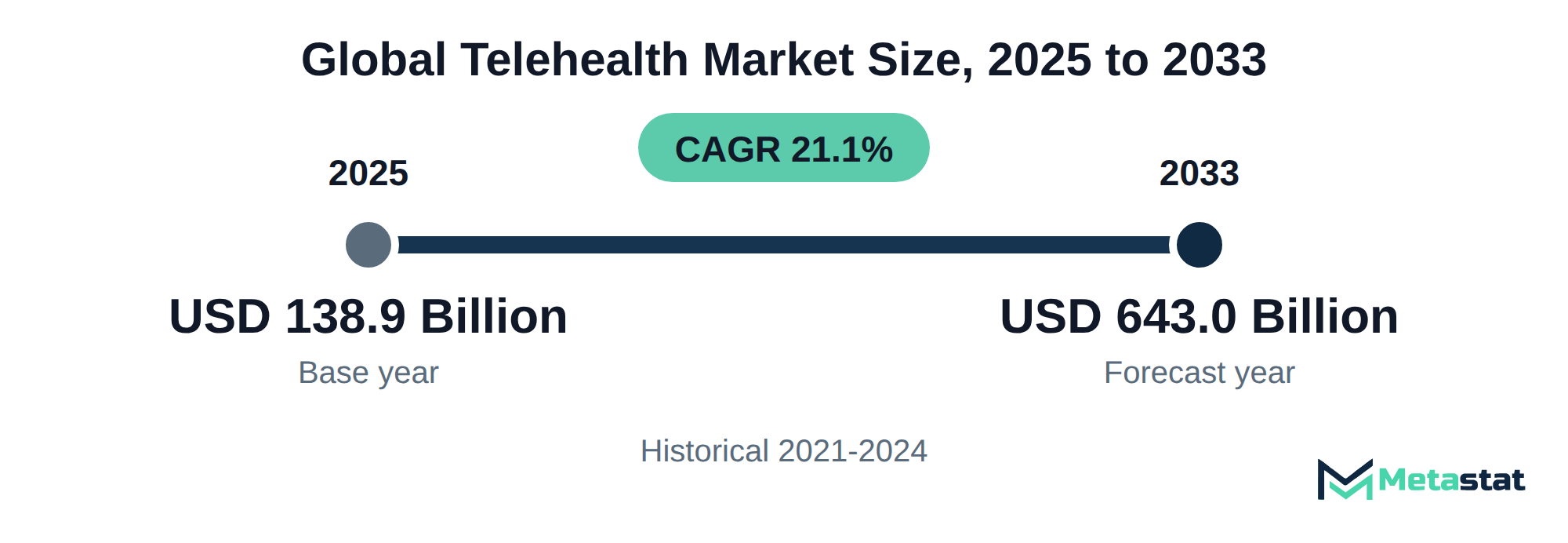
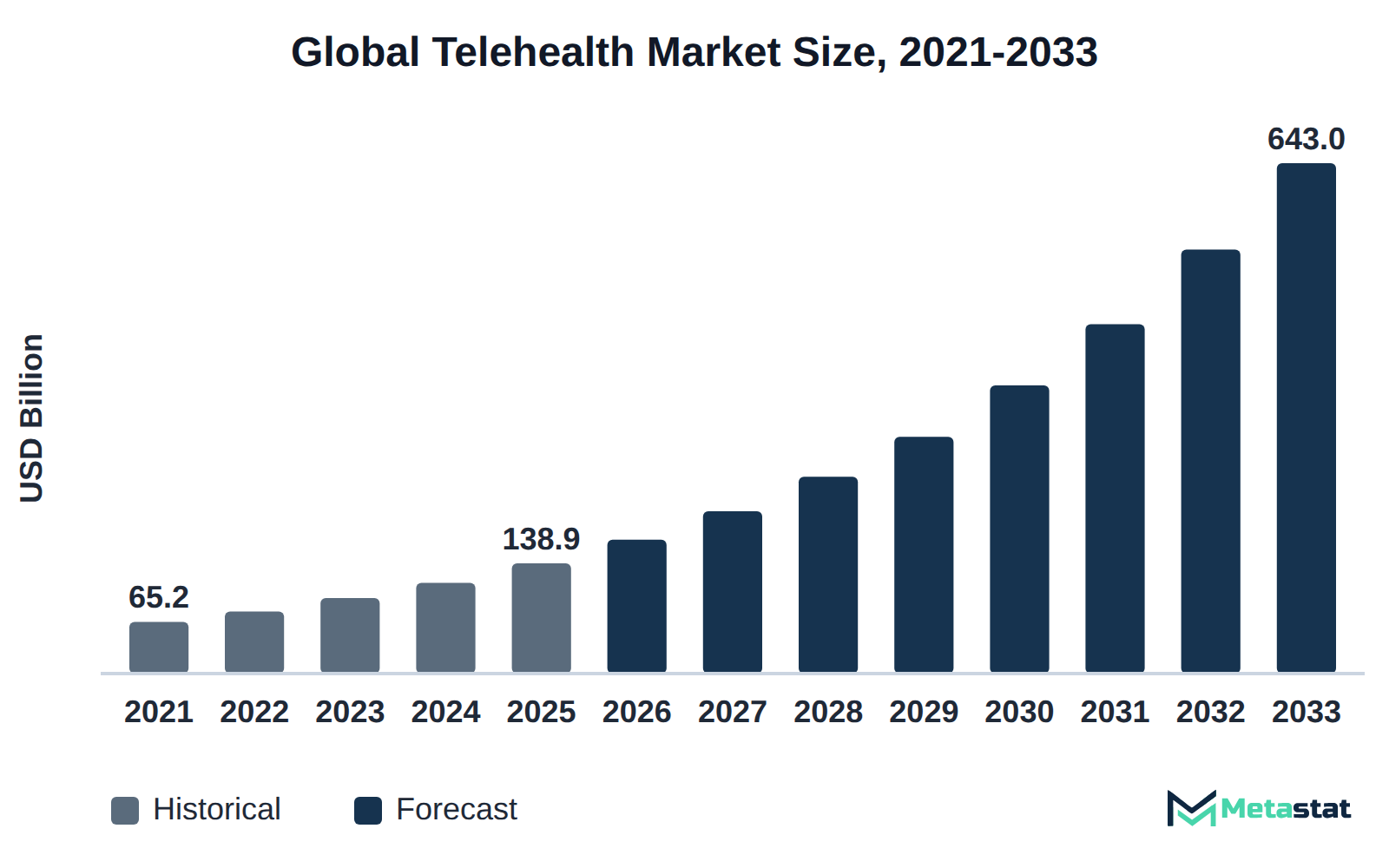
Market Valuation: Valued at $138.9 Billion in 2025, projected to reach $643 Billion by 2033 at a 21.1% CAGR.
Dominant Segment: Clinical and Support Services lead the Telehealth market, driven by the increasing demand for comprehensive care solutions that enhance patient engagement and operational support.
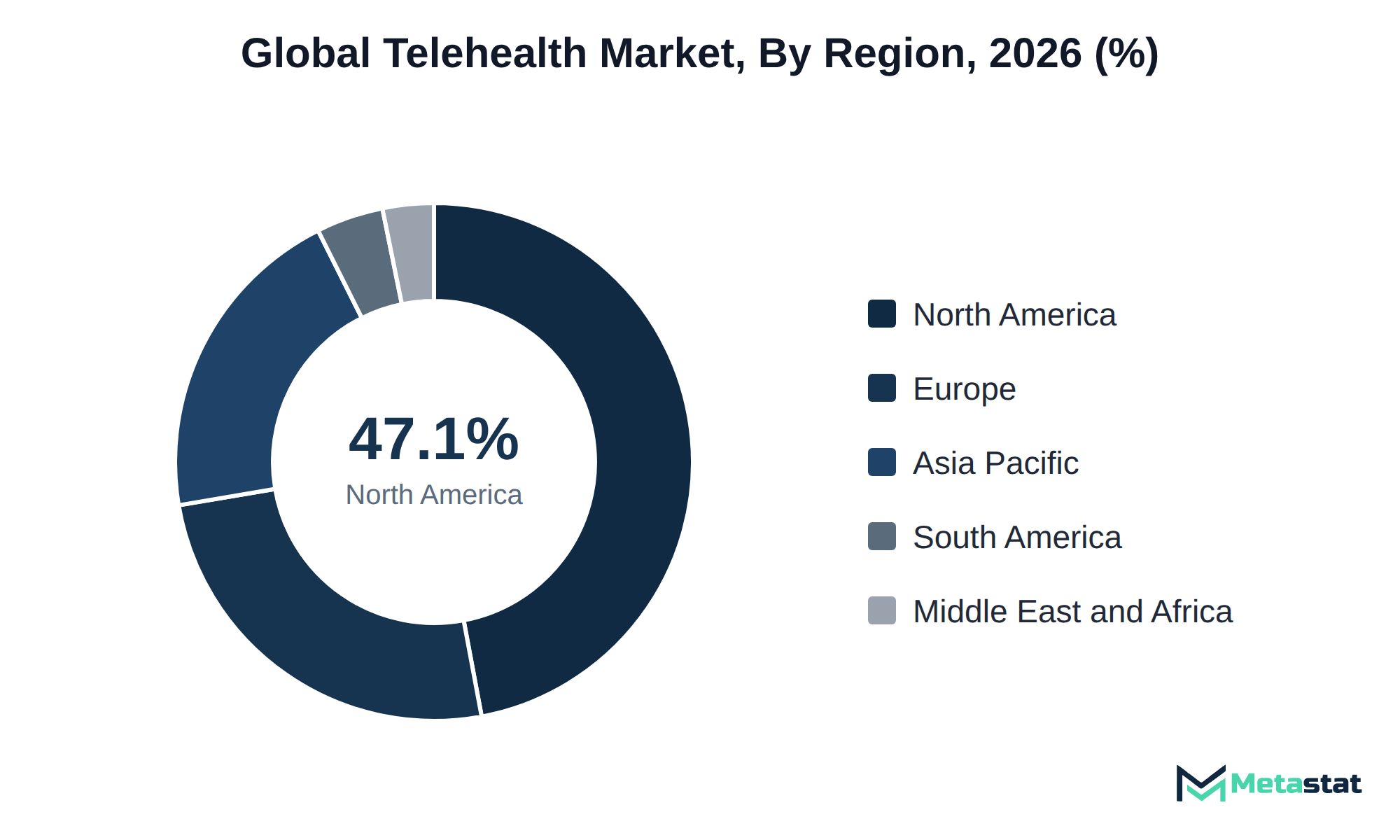
Geographic Lead: North America dominates the market, holding 47.1% in 2025, with the US expected to maintain its leadership due to strong regulatory support and high adoption rates of telehealth technologies.
What's Inside: The report provides an in-depth analysis of market segmentation by component, application, deployment model, and care setting, along with competitive coverage and forecasts extending to 2033.
Rapid Growth in Outpatient Remote Monito: The outpatient remote patient monitoring segment is projected to grow significantly, reaching USD 173.2 billion by 2033, driven by the need for effective chronic disease management and enhanced patient engagement.
Cloud-Hosted Services Drive Market Expan: Cloud-hosted solutions are set to reach USD 459.2 billion by 2033, highlighting the shift towards scalable telehealth services that improve patient access and operational efficiency.
Choose Your License
Global Telehealth Market
The global Telehealth market was valued at USD 138.9 billion in 2025 and is projected to reach USD 643 billion by 2033, growing at a CAGR of 21.1% over the forecast period.
The Telehealth market covers the services and technologies used to deliver healthcare remotely. Buyers invest in these solutions to enhance access to medical care, improve patient outcomes, and reduce healthcare costs. The increasing demand for efficient healthcare delivery drives spending in this market, as it allows for timely consultations and monitoring without the need for physical visits.
Growth in the market is propelled by advancements in technology and a rising preference for remote healthcare solutions. Clinical and Support Services represent the highest-value segment, reflecting the importance of care and support in telehealth applications. North America holds 47.1% of the market in 2025, with the US leading in 2026, demonstrating the region's dominance in adopting telehealth solutions.
Regulatory support and a shift in consumer behavior contribute significantly to market expansion. The increasing acceptance of telehealth by patients and providers alike creates opportunities for innovative applications and services. The Telehealth market is projected to expand significantly, driven by the need for convenient and effective healthcare delivery.
The Telehealth market spans hardware, software, and clinical support services, which together enable remote healthcare delivery. Buyers invest in this market to enhance patient engagement, improve healthcare accessibility, and reduce operational costs. The increasing prevalence of chronic diseases and the growing focus on preventive care drive the demand for telehealth solutions, leading to significant spending from healthcare providers, insurers, and patients.
The growth of the market is primarily attributed to advancements in technology, which improve the efficiency and effectiveness of remote healthcare services. Among the market segments, software stands out with the highest value, reflecting a trend toward integrated solutions that streamline healthcare operations. This region benefits from robust infrastructure and regulatory support, enabling widespread adoption of telehealth services.
Clinical and support services contribute significantly to telehealth market expansion by serving the diverse needs of patients and providers. The increasing acceptance of teleconsultation and remote patient monitoring further drives growth, enabling healthcare systems to adapt to changing patient expectations. Overall, the Telehealth market is projected for sustained growth, driven by innovative solutions and evolving healthcare delivery models.
Remote surgical collaboration and telementoring represent significant advancements in the Telehealth market, enabling practitioners to access specialist expertise regardless of geographic limitations. This approach facilitates real-time consultations and guidance between surgeons and remote specialists, enhancing the quality of surgical procedures across various healthcare settings.
In 2023, the market for remote surgical assistance is expected to experience notable growth, reflecting the increasing demand for specialized surgical guidance. The integration of advanced technologies, including augmented reality and high-definition video streaming, improves the effectiveness of remote collaboration. This technology allows surgeons to perform complex procedures with the support of experienced specialists, thereby improving patient outcomes and operational efficiencies.
Commercially, the expansion of remote surgical collaboration and telementoring contributes to the overall growth of the Telehealth market. By facilitating access to critical expertise, healthcare providers optimize resource allocation, reduce operational costs, and enhance patient care. This shift meets the rising demand for specialized services and helps healthcare facilities stay competitive.
Virtual nursing and tele-ICU platforms are transforming hospital staffing models by introducing flexible contract structures that align with evolving care demands. Hospitals increasingly adopt these platforms to optimize healthcare staffing and enhance patient outcomes. For instance, software solutions within the telehealth market are projected to generate USD 221.3 billion by 2033, reflecting significant investment in technology-driven care models.
Buyers within the hospital sector focus on value-based pricing and outcome-based contracts, where payments link to the quality of care delivered rather than traditional fee-for-service models. This approach encourages providers to invest in technology that supports remote monitoring and virtual consultations, improving operational efficiencies while reducing patient readmission rates. The ongoing shift towards value-oriented care creates competitive advantages for hospitals that adopt telehealth solutions.
Virtual nursing is an emerging trend that enhances patient care and affects overall hospital revenue. By implementing tele-ICU platforms, facilities reduce staffing costs and allocate resources more effectively. This strategic shift leads to improved financial stability and enhanced patient satisfaction, positioning hospitals favorably in the competitive telehealth market.
The integration of medical devices and electronic health records (EHR) significantly enhances the management of home-based chronic care. Patients with chronic conditions benefit from continuous monitoring through various medical devices, which provide real-time health data. In 2033, the segment of home and community care is projected to reach USD 235.8 billion, reflecting the growing importance of remote patient management in the telehealth market.
This increase is driven by healthcare providers seeking efficient solutions to monitor patients outside traditional clinical settings. Effective integration of devices and EHR facilitates efficient data flow, ensuring healthcare professionals access crucial patient information promptly. This capability supports timely interventions, reduces hospital admissions, and ultimately leads to improved patient outcomes.
Healthcare organizations that invest in device integration and EHR connectivity strengthen their service offerings and enhance patient engagement. Home-based chronic care reflects a shift toward patient-centric models that emphasize accessibility and efficiency in healthcare delivery.
Hospitals need dependable technology infrastructure to scale secure telehealth video workflows. The adoption of cloud-hosted solutions is projected to reach USD 459.2 billion by 2033, reflecting a compound annual growth rate (CAGR) of 23.1%. This rapid growth highlights the increasing reliance on cloud technologies for delivering telehealth services.
Implementing cloud-hosted platforms enables hospitals to facilitate real-time video consultations while maintaining data security and compliance with healthcare regulations. The flexibility and scalability offered by such platforms support effective integration of various telehealth applications, including remote patient monitoring and outpatient consultations.
For hospitals, investing in secure telehealth video workflows results in improved patient engagement, optimized resource allocation, and enhanced operational efficiency. The strategic transition to cloud-based solutions positions hospitals to meet rising demand for telehealth services and supports growth within the market.
Shifts in patient preferences for healthcare services significantly impact spending in the market. Increased familiarity with technology and a growing emphasis on convenience have prompted healthcare consumers to seek remote consultation options over traditional in-person visits. This trend is particularly pronounced among younger demographics, who prioritize accessibility and flexibility in healthcare delivery. The adoption of teleconsultation services is projected to grow from USD 66.5 billion in 2026 to USD 231.7 billion by 2033, reflecting a compound annual growth rate of 19.5%. This surge in demand creates opportunities for healthcare providers to expand their service offerings, enhance patient engagement, and ultimately improve health outcomes. By investing in telehealth technologies, providers effectively address evolving consumer expectations and drive operational efficiencies.
The widespread acceptance of telehealth solutions enables healthcare organizations to streamline operations and improve cost efficiency. With patients increasingly favoring remote consultations, the market experiences a significant shift that enhances healthcare accessibility.
Cloud-hosted solutions facilitate access to telehealth services, enhancing the delivery of care across various settings. Organizations increasingly adopt these solutions due to their scalability and the ability to integrate advanced features including real-time data analytics and virtual support systems. This shift toward cloud-hosted models allows healthcare providers to improve patient engagement and streamline operations without significant upfront investments in infrastructure.
The growing reliance on cloud services is evident in the increasing demand for remote consultations and monitoring services. With healthcare organizations facing mounting pressure to deliver quality care efficiently, cloud-hosted platforms enable rapid deployment of telehealth services, leading to improved patient outcomes. The telehealth market experiences growth driven by these technological advancements, positioning cloud-hosted services as a critical component for future development. While adoption rates climb, competition among service providers intensifies, encouraging innovations that further enhance service delivery.
Infrastructure limitations significantly hinder market adoption among healthcare providers, particularly in rural and underserved regions. Many healthcare facilities lack the necessary technological foundation to support telehealth services, resulting in slower uptake of solutions among practitioners. Insufficient internet connectivity poses challenges, preventing effective virtual consultations and remote monitoring. This situation leads to smaller order sizes for telehealth solutions, with providers prioritizing immediate, traditional care over investment in new technologies. High setup costs associated with implementing telehealth systems restrict smaller clinics and practices from transitioning to these services. Consequently, despite the growing demand for telehealth solutions, these constraints delay the expansion of market reach and limit overall growth potential. Broader adoption of telehealth services across varying care settings depends on better infrastructure.
The Telehealth market faces significant margin pressure, driven by rising operational costs and intensifying competition among service providers. Suppliers experience increased costs in technology implementation, maintenance, and skilled workforce recruitment, which directly affects their ability to maintain profitability. These financial challenges compel providers to explore cost-effective measures, including optimizing resource allocation and investing in automation technologies that streamline operations. Suppliers focus on enhancing service delivery efficiency to sustain competitive pricing while meeting growing consumer expectations. Strategies include developing pricing models that reflect shifts in service utilization and using partnerships to expand reach without proportionate increases in expenditure. This environment shapes investment decisions and strategic planning as suppliers adapt to economic conditions and work to stay competitive.
The outpatient remote patient monitoring segment shows significant potential within the Telehealth market. This segment is projected to reach USD 173.2 billion by 2033, reflecting a compound annual growth rate (CAGR) of 23.5% during the forecast period. Increasing demand for effective management of chronic diseases drives this growth, particularly among healthcare providers seeking to enhance patient engagement and outcomes. By enabling real-time monitoring and data collection, outpatient remote monitoring allows patients to maintain their health from home while reducing hospital readmissions. The implementation of advanced software solutions and connected devices in this area supports a more proactive approach to healthcare delivery. Contactless remote patient monitoring is a related option that collects health data without direct contact with the patient. This trend aligns with a broader shift toward integrated care models, where technology enhances patient experiences. The favorable growth trajectory of outpatient remote monitoring gives stakeholders a significant opportunity to invest in solutions that address the needs of both patients and healthcare systems.
The Global Telehealth market is segmented based on Component, Application, Deployment Model, and Care Setting.
Hardware is valued at USD 26.3 billion in 2026 and is projected to reach USD 83 billion by 2033, at a CAGR of 17.8% during the forecast period. This segment primarily includes devices and equipment essential for telehealth applications, used by hospitals, outpatient clinics, and individual healthcare providers. Increasing demand for remote consultations and monitoring drives growth in the hardware sector, as healthcare providers seek to enhance care delivery efficiency and patient engagement. Compared to the software segment, which exhibits a higher CAGR of 23.8%, the hardware segment reflects robust but comparatively slower growth. This distinction arises from the higher initial investment costs associated with hardware acquisition and deployment, which impact purchasing decisions among smaller healthcare facilities. Advancements in technology and integration capabilities contribute to the evolving landscape, signaling a strategic focus on enhancing telehealth infrastructure and supporting overall market expansion.
The software segment is estimated to reach USD 221.3 billion by 2033, at a CAGR of 23.8% during the forecast period. This segment plays a critical role in enabling healthcare providers to deliver remote care through applications including teleconsultation, remote patient monitoring, and electronic health records management. Healthcare organizations apply software solutions to streamline operations, enhance patient engagement, and improve care outcomes. The growing demand for remote healthcare services drives investments in this segment, reflecting a shift towards digital health solutions. Compared to hardware, which has a CAGR of 17.8%, software demonstrates more rapid growth due to its essential role in remote patient management and the increasing reliance on data analytics for decision-making. By 2033, software is expected to contribute significantly to the overall expansion of the market, reflecting the increasing digitalization of healthcare services.
Clinical and Support Services segment is expected to reach USD 338.7 billion by 2033. This segment encompasses a comprehensive array of services that enhance patient care management and operational support for healthcare providers. Primarily used by hospitals, outpatient clinics, and telehealth service organizations, the segment enhances patient engagement and care continuity through virtual consultations and support services. Rapid technological advancements, particularly in software applications, drive this segment forward, with a projected compound annual growth rate (CAGR) of 23.8%. Compared to hardware and software segments, Clinical and Support Services offer a distinct value proposition by focusing on patient interaction and support, positioning it as a critical enabler of efficient telehealth delivery. Growing patient demand for effective healthcare experiences significantly influences market growth, emphasizing the importance of effective clinical support in achieving optimal patient outcomes.
This segment facilitates virtual consultations between healthcare providers and patients, allowing for diagnoses, treatment options, and follow-up care without the need for in-person visits. Healthcare institutions, private practices, and patients rely on teleconsultation to enhance access to medical services, particularly in remote areas. A driving force for this segment includes the increasing demand for convenient healthcare options, leading to faster growth compared to other applications in the market. In contrast, segments like outpatient remote patient monitoring exhibit a slightly lower CAGR of 23.5%. Teleconsultation's unique value proposition lies in its ability to streamline patient-provider interactions, reducing travel time and enhancing treatment accessibility.
This segment focuses on monitoring patients remotely, facilitating the ongoing assessment of various health metrics outside traditional clinical settings. Healthcare providers, including hospitals and outpatient clinics, leverage this technology to enhance patient engagement and improve health outcomes. The demand for this segment is driven by increasing patient awareness and preference for convenience, allowing for timely interventions while reducing the burden on healthcare facilities. Compared to other applications, including teleconsultation, which experiences a CAGR of 19.5%, this segment demonstrates a more rapid growth trajectory, reflecting broader acceptance of remote monitoring technologies. Ongoing advancements in wearable medical devices and mobile health applications further support the expansion of outpatient remote patient monitoring, distinguishing it from other categories in the market.
Remote Diagnostic Interpretation segment is expected to reach USD 101 billion by 2033. This segment enables healthcare professionals to analyze diagnostic information remotely, including through teleradiology, and supports timely decision-making. Hospitals and outpatient clinics rely on these services to enhance patient care and access to specialists. Growth in this segment is driven by increasing adoption of telehealth technologies and a greater emphasis on remote diagnostic capabilities. This area experiences significant growth due to rising demand for efficient healthcare delivery solutions. While teleconsultation and outpatient remote patient monitoring show significant potential, Remote Diagnostic Interpretation’s focus on immediate analysis differentiates it, supporting a unique market position that boosts overall efficiency and patient outcomes.
Virtual Inpatient Care segment is projected to grow at a CAGR of 22.5% during the forecast period. This segment involves the use of telehealth technologies to provide inpatient care remotely, facilitating real-time monitoring and management of patients in various healthcare settings. Healthcare institutions leverage this solution to enhance patient outcomes while optimizing resource allocation. The increasing demand for efficient care delivery and the rising prevalence of chronic illnesses drive the growth of this segment. Compared to other segments, Virtual Inpatient Care stands out with a higher projected growth rate, reflecting a shift toward more integrated and accessible healthcare services. This segment addresses the urgent need for continuous patient monitoring, particularly in critical care scenarios, distinguishing it from alternatives that focus on outpatient services or remote diagnostics. The market benefits from technological advancements that enable effective integration of virtual care into existing patient care workflows.
Remote Surgical Assistance involves the provision of surgical support through telehealth technologies, enabling surgeons to conduct procedures remotely with real-time guidance. This approach benefits hospitals and surgical centers by enhancing access to specialized surgical expertise, particularly in underserved locations. Increasing adoption of advanced imaging technologies and high-definition video conferencing drives this segment. Regulatory support for telehealth practices drives its growth. Compared to other applications, Remote Surgical Assistance focuses more on complex surgical procedures and requires higher precision tools, distinguishing it from simpler telehealth services including teleconsultation. This segment's unique requirements result in specialized technology investments, influencing its market dynamics and positioning within the broader telehealth market.
Remote Medical Education involves the delivery of medical training and educational resources via telecommunication technologies and e-learning platforms. Healthcare professionals engage with this sub-segment to improve their skills and knowledge, ensuring they remain current with medical advances and practices. The growing emphasis on continuous education among healthcare workers fuels demand for this segment, driven by the increasing complexity of medical procedures and treatments. Unlike other applications including teleconsultation and outpatient remote patient monitoring, which focus on patient treatment, Remote Medical Education serves primarily as a professional development tool. This distinction highlights its unique position within the broader Telehealth market, facilitating the acquisition of knowledge without direct patient interaction and catering to different buyer demographics, including hospitals and educational institutions seeking to enhance their training programs.
Telehealth applications including telerehabilitation and telepharmacy enhance access to healthcare services for patients needing rehabilitation or pharmaceutical support remotely. Patients benefit from virtual consultations and therapy sessions, while healthcare providers employ these platforms to increase efficiency and patient engagement. Significant growth in this segment stems from rising patient demand for convenient healthcare solutions, coupled with technological advancements that facilitate remote consultations. While several segments experience rapid growth due to digital integration, this sub-segment encounters challenges related to regulatory compliance and varying acceptance across different healthcare systems. The integration of telerehabilitation and telepharmacy into traditional healthcare settings promotes a more comprehensive approach to patient care, differentiating it from other segments that focus primarily on diagnostic or monitoring services. This emphasis on personalized care enhances patient outcomes and supports the overall expansion of the market.
This model enables healthcare providers to deliver services remotely, streamlining operations for hospitals, clinics, and other healthcare entities. The increasing demand for flexible and scalable solutions significantly drives this segment, allowing for improved patient engagement and accessibility. Rapid technological advancements in cloud computing enhance the reliability and security of telehealth services, further attracting providers. This segment experiences faster growth compared to the On-Premises model, with a CAGR of 23.1% versus 12.9%, indicating a strong preference for cloud-based solutions in the market. The shift toward digital transformation in healthcare pushes providers to adopt these solutions, leading to increased investment and development opportunities.
The On-Premises segment is estimated to reach USD 76.1 billion by 2033, at a CAGR of 12.9% during the forecast period. This segment encompasses solutions deployed within the healthcare facility's infrastructure, offering control over data security and compliance with regulations. Hospitals and healthcare providers employ these systems to maintain patient privacy while ensuring reliable access to telehealth services. The growing focus on regulatory compliance drives demand for on-premises solutions, with organizations prioritizing data protection. Compared to the cloud-hosted segment, which exhibits a higher growth rate of 23.1%, the on-premises segment experiences slower growth, reflecting cautious adoption by organizations hesitant to transition to cloud-based services. Organizations often perceive on-premises solutions as a higher upfront investment; however, long-term operational costs align with maintaining robust telehealth capabilities.
Hybrid is expected to reach USD 107.7 billion by 2033. This deployment model integrates both cloud-hosted and on-premises solutions, catering to healthcare providers seeking flexible options for telehealth services. The segment primarily serves hospitals, outpatient clinics, and long-term care facilities, enabling them to offer remote consultations and patient monitoring while leveraging existing infrastructure. A significant driver for this segment includes the increasing demand for customizable solutions that allow for effective integration of various telehealth services. Compared to the on-premises model, hybrid solutions exhibit faster growth, with a CAGR of 23.1%. This adaptability appeals to organizations aiming to enhance service delivery while controlling costs, establishing a distinct path for growth in the market.
Hospitals and Inpatient Facilities segment is valued at USD 60.3 billion in 2026 and is projected to reach USD 213.3 billion by 2033, at a CAGR of 19.8% during the forecast period. This segment encompasses healthcare settings that provide medical services to patients requiring admission for treatment, ranging from surgical procedures to intensive care. Key drivers of growth include the increasing adoption of telehealth solutions to enhance patient monitoring and reduce hospital readmissions. Facilities apply these technologies to improve patient outcomes while managing costs, making this segment distinct from others that serve outpatient settings. Compared to segments including Outpatient Clinics, this segment exhibits a more significant growth trajectory due to heightened demand for integrated care models and a shift toward value-based care, leading to greater investment in telehealth solutions.
The Outpatient Clinics and Physician Practices segment is estimated to reach USD 138.5 billion by 2033, at a CAGR of 19.8% during the forecast period. This segment serves patients through various healthcare services, including routine check-ups and preventive care, typically provided by physicians in a clinical setting. Increasing demand for accessible healthcare drives growth, with advancements in telehealth technologies enhancing service delivery. Compared to other care settings, this segment shows a higher growth rate, reflecting the rising trend of remote consultations. The ongoing shift towards integrated care models encourages outpatient clinics to adopt telehealth solutions, expanding their service capabilities. This adaptation supports healthcare providers in managing patient flow more effectively while maintaining quality care, contributing to the overall expansion of the market. The sector demonstrates significant potential, aligning with the evolving dynamics of patient care and technology integration.
This segment focuses on healthcare services that home healthcare providers deliver to patients in their homes or community settings, aiming to enhance patient independence and quality of life. It primarily caters to elderly patients or those with chronic conditions requiring continuous monitoring and support. The increasing prevalence of chronic diseases and the growing aging population drive demand for these services. Compared to other segments, the Home and Community Care segment experiences faster growth, emphasizing personalized, accessible care. While hospitals and inpatient facilities represent a more traditional care model, this segment allows for greater flexibility and often lower costs, appealing to patients seeking alternatives to institutional care. The integration of advanced technologies supports the expansion of this segment within the Telehealth market.
Long-Term Care Facilities segment is projected to grow at a CAGR of 22.2% during the forecast period. This segment caters to elderly patients, including those in aged care, and individuals with chronic illnesses requiring extended care. Telehealth solutions within this segment assist healthcare providers in delivering remote monitoring, consultation, and support services. The increasing prevalence of chronic diseases fuels demand for innovative care solutions, driving growth significantly. In this segment, the emphasis on remote patient monitoring distinguishes it from other care settings, including outpatient clinics, which focus more on episodic care. The anticipated expansion reflects an ongoing commitment to improving patient outcomes while optimizing healthcare costs, positioning this segment as a critical component of the overall Telehealth market.
Mobile care units and medical training centers provide essential services focused on delivering health care and education in non-traditional settings. These facilities serve various patient populations, including those in remote or underserved areas, ensuring access to medical professionals and resources. Demand for mobile care units stems from growing healthcare accessibility concerns, while medical training centers facilitate ongoing education for healthcare providers. This sub-segment differentiates itself from traditional care settings through its unique operational flexibility and lower overhead costs. While hospitals and outpatient clinics often face high operational expenses, mobile care units deploy resources efficiently, reducing barriers to care. The Telehealth market continues to evolve, with this sub-segment enhancing healthcare availability and education across diverse demographics.
Based on geography, the Global Telehealth market is divided into North America, Europe, Asia-Pacific, South America, Middle East, and Africa.
The North American telehealth market is characterized by significant growth driven by technological advancements and the increasing demand for accessible healthcare services. A focus on patient-centric solutions in the United States, Canada, and Mexico contributes to this expansion. The region benefits from robust healthcare infrastructure and a high adoption rate of digital health technologies. Evolving reimbursement policies support telehealth services, encouraging healthcare providers to integrate these solutions into their offerings. North America accounted for 47.1% of the global telehealth market in 2025. Projections indicate the market is projected to reach USD 272.4 billion by the end of 2033, reflecting a strong trajectory for future growth.
Europe's Telehealth market attracts significant interest due to a comprehensive healthcare infrastructure and supportive regulations. Countries including Germany and France demonstrate strong demand from hospitals and outpatient facilities for innovative telehealth solutions. The increasing adoption of teleconsultation and remote patient monitoring reflects a strategic shift toward enhancing patient care and accessibility. Regulatory frameworks across the region encourage the integration of telehealth technologies, driving investments in software and clinical services. By 2025, the region commands a 25.3% share of the global market. This growth signals an expanding landscape for providers and stakeholders involved in Telehealth services.
The Asia-Pacific region represents a significant portion of the Telehealth market, with a share of 20.3% projected for 2025. Demand primarily arises from countries including China, Japan, and India, where advancements in digital infrastructure and increasing healthcare accessibility drive growth. The presence of a large patient population coupled with rising smartphone penetration facilitates telehealth adoption in urban and rural areas alike. Regulatory frameworks in these nations promote the integration of telehealth services within traditional care settings, enhancing service delivery. Partnerships between healthcare providers and technology firms offer innovative solutions tailored to local needs, contributing to the region's market expansion. By 2033, Asia-Pacific is expected to further capitalize on these developments, establishing itself as a key player in the global telehealth landscape.
Growing interest in the Telehealth market arises from the increasing adoption of digital health solutions in Brazil and Argentina, driven by rising healthcare costs and a need for improved access to medical services. The expanding teleconsultation and remote patient monitoring segments reflect these trends, enhancing healthcare delivery in underserved areas. Significant investments in digital infrastructure support this growth, including government initiatives aimed at modernizing healthcare systems. With a market share of 4.2% in 2025, South America presents opportunities for technology providers and healthcare organizations looking to enhance service delivery. The regional focus on integrating telehealth services into existing healthcare frameworks furthers the potential for increased penetration and revenue generation.
The Telehealth market in the Middle East and Africa exhibits unique characteristics that influence its development. Increased smartphone penetration and internet connectivity drive demand for telehealth services across Saudi Arabia, UAE, and South Africa. Governments in these countries focus on improving healthcare accessibility, implementing initiatives that encourage the adoption of digital health solutions. The market share for this region is expected to reach 3.2% by 2025, reflecting growing interest in remote healthcare services. Infrastructure investments in telecommunication networks enhance service delivery, supporting growth in various telehealth applications. South Africa's diverse healthcare landscape presents opportunities for innovative solutions tailored to local needs. Overall, the Telehealth market in this region evolves rapidly, driven by technology adoption and regulatory support.
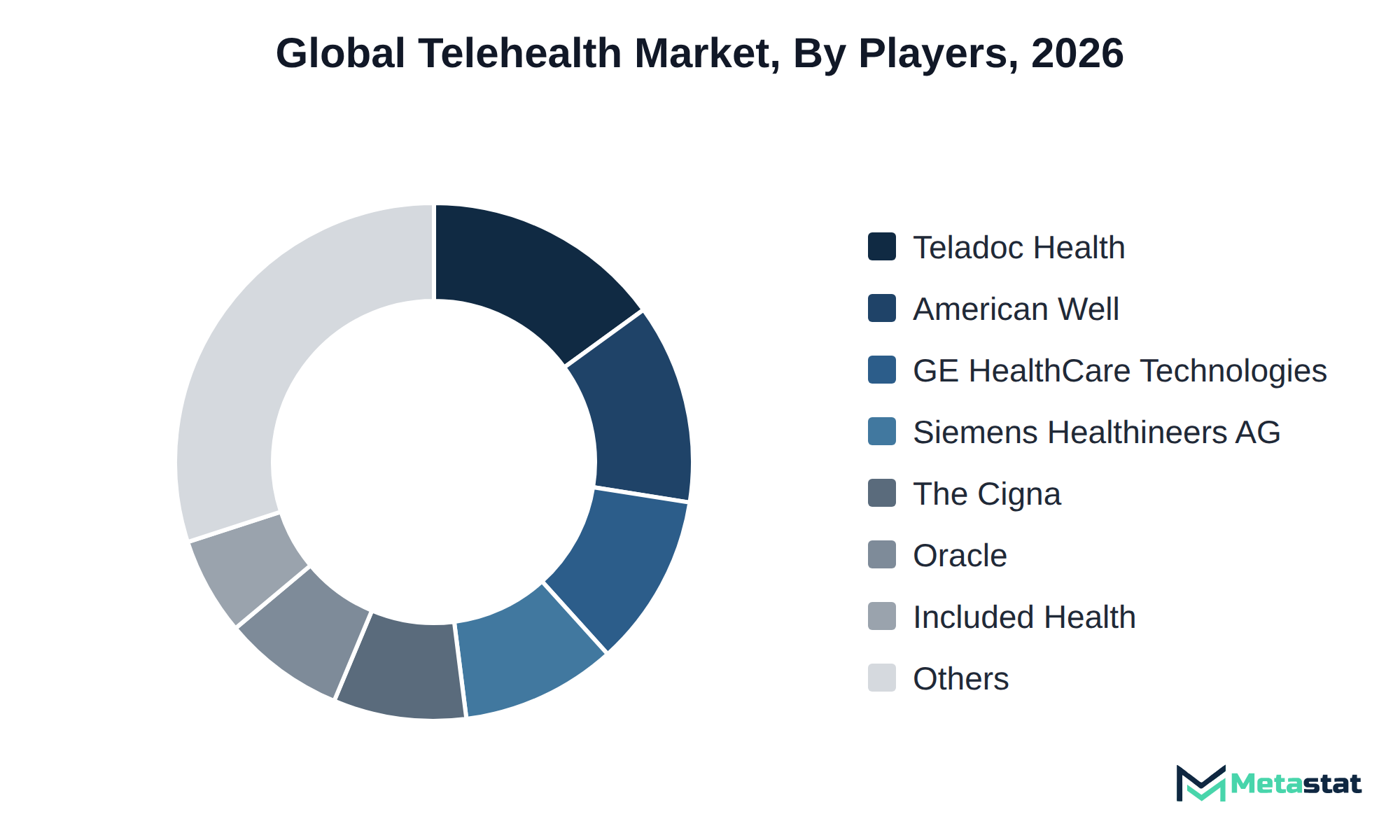
Companies in the telehealth market compete through various strategies, focusing on different service types and deployment models. Several firms explore opportunities in software, hardware, and clinical services, targeting diverse buyer needs. Buyers prioritize factors including price, service quality, certification, and customization when selecting telehealth solutions.
Teladoc Health, Inc. emphasizes a comprehensive telehealth platform that integrates various services, enhancing user experience and satisfaction. American Well Corporation focuses on teleconsultation and remote monitoring services, appealing to both healthcare providers and patients. Koninklijke Philips N.V. leverages its expertise in medical technology, providing advanced solutions for remote patient monitoring and telehealth management.
GE HealthCare Technologies Inc. offers a range of cloud-hosted solutions, enabling efficient healthcare delivery across various settings. Siemens Healthineers AG provides integrated telehealth systems that combine hardware and software for effective operation. Oracle Corporation delivers data-driven insights and analytics, supporting healthcare organizations in optimizing their telehealth strategies.
Achieving this growth requires several critical developments within the market. First, significant advancements in software capabilities are essential, particularly in the teleconsultation and outpatient remote patient monitoring segments. These enhancements should cater to increasing demands for remote healthcare solutions. Second, a shift toward cloud-hosted deployment models is necessary to ensure scalability and accessibility, particularly in North America, which holds the largest regional market share at 47.1%. Enhanced integration of clinical and support services will further facilitate this transition, optimizing operational efficiency across various care settings. Conversely, potential risks, including regulatory challenges or slow adoption rates in specific regions, restrict market growth. For instance, while Europe exhibits robust demand, any significant regulatory hurdles could restrict the pace of innovation and deployment. Maintaining awareness of these factors will be crucial for stakeholders aiming to navigate the evolving landscape of the telehealth market and capitalize on emerging opportunities. Demand for healthcare solutions continues to rise.
By Component: Hardware, Software, Clinical and Support Services
By Application: Teleconsultation, Outpatient Remote Patient Monitoring, Remote Diagnostic Interpretation, Virtual Inpatient Care, Remote Surgical Assistance, Remote Medical Education, Others (Telerehabilitation, Telepharmacy)
By Deployment Model: Cloud-Hosted, On-Premises, Hybrid
By Care Setting: Hospitals and Inpatient Facilities, Outpatient Clinics and Physician Practices, Home and Community Care, Long-Term Care Facilities, Others (Mobile Care Units, Medical Training Centers)
The report strategically identifies and profiles the key market players and analyses their core competencies in each sub-segment of the Telehealth market.
Report Attributes | Details |
Study Period | 2021-2033 |
Base Year | 2025 |
Estimated Year | 2026 |
Forecast Period | 2026-2033 |
Historical Period | 2021-2025 |
Growth Rate | CAGR 21.1% from 2026 to 2033 |
Revenue Unit | USD billion |
Segmentation | By Component, Application, Deployment Model, Care Setting, and Region |
By Region | North America (By Component, Application, Deployment Model, Care Setting, and Country)
|
Europe (By Component, Application, Deployment Model, Care Setting, and Country)
| |
Asia Pacific (By Component, Application, Deployment Model, Care Setting, and Country)
| |
South America (By Component, Application, Deployment Model, Care Setting, and Country)
| |
Middle East and Africa (By Component, Application, Deployment Model, Care Setting, and Country)
|
Find answers to common questions about this report
The Telehealth market size was valued at USD 138.9 billion in 2025.
The market is projected to grow at a CAGR of 21.1% during the forecast period from 2026 to 2033.
The North America Telehealth market size is estimated to reach USD 272.4 billion by 2033.
The leading segment in the Telehealth market is Clinical and Support Services, projected to reach USD 338.7 billion by 2033. This segment surpasses others in terms of revenue potential.
Shifts in patient preferences toward remote consultations drive demand for telehealth services, particularly among younger demographics prioritizing convenience and accessibility. The increasing reliance on cloud-hosted solutions enhances service delivery and operational efficiency, facilitating the rapid deployment of telehealth technologies.
North America holds the dominant share of the Telehealth market, accounting for 47.1 percent in 2025. This region is projected to reach USD 272.4 billion by 2033.
Infrastructure limitations significantly hinder market adoption, particularly in rural and underserved regions. Insufficient internet connectivity and high setup costs associated with implementing telehealth systems restrict smaller clinics from transitioning to these services.
The growing demand for outpatient remote patient monitoring significantly supports adoption within the Telehealth market. This trend is driven by the need for effective management of chronic diseases, enabling patients to maintain their health from home and reducing hospital readmissions.
The Telehealth market is estimated to reach a valuation of USD 643 billion by 2033.
Key players operating in the Telehealth market include Teladoc Health, Inc., American Well Corporation, Koninklijke Philips N.V., GE HealthCare Technologies Inc., Siemens Healthineers AG, and Apollo Hospitals Enterprise Limited.
The analysts below cover Healthcare research at Metastat Insights.
LEAD ANALYST
Utkarsh Khirodkar is a Lead Market Research Analyst at MetaStat Insight, specializing in market intelligence, technology sector assessments, and competitive strategy.

LEAD PRINCIPAL ANALYST, PHARMA AND HEALTHCARE
Food and Beverages · Healthcare · Healthcare IT · Medical Devices
Ajay Devgire is the Lead Healthcare Analyst at MetaStat Insight, leading strategic research and market intelligence initiatives across the global healthcare domain.
Standard industry briefs frequently blur the operational distinctions between isobaric pressure exchangers and centrifugal turbines. In this study, MetaStat Insight categorized mega-scale desalination tenders across the GCC and Mediterranean basins by membrane replacement frequencies and salinity tolerances. Their primary research helped us evaluate local content requirements in Saudi Arabia and the UAE without relying on marketing literature. We found the segment-level equipment replacement estimates grounded and well-reasoned throughout.
The technical breakdown of ISO 20022 migration readiness across correspondent banking corridors was remarkably thorough. Rather than treating cross-border corporate payments as a single block, the report drew a useful distinction between multilateral netting platforms and domestic instant payment rails across ASEAN economies. MetaStat Insight highlighted regulatory constraints on foreign exchange liquidity management that many publications gloss over. The research material offered practical clarity for our platform development roadmap.
Our group needed clearer visibility into out-of-autoclave processing timelines for high-temperature thermoplastic composites. MetaStat Insight delivered an objective assessment that contrasted automated fiber placement scrap rates with traditional thermoset prepreg layup cycles. The supplier landscape mapped out primary resin suppliers and tape slitting capacity across France, Germany, and Japan with solid technical accuracy. Their analyst handled our questions on precursor supply risks during an unscheduled inquiry call, providing clear, unembellished context.
Explore related market intelligence reports worth reading alongside this one.