
LEAD ANALYST
Utkarsh Khirodkar is a Lead Market Research Analyst at MetaStat Insight, specializing in market intelligence, technology sector assessments, and competitive strategy.

Anti-aging EGF Market By Type (Liquid and Powder), By Source (Plant-based EGF and Human-based EGF), By Application (EGF Cream, EGF Serum, EGF Lotion, EGF Mask and Others), Industry Analysis, Size, Share, Growth, Trends, and Forecast, 2023-2030
Report ID
MSI-2449
Published
February, 2026
Pages
257 Pages
Format
Report Details
Choose Your License
Anti-aging EGF Market
The Global Anti-aging EGF market is estimated to reach $199.0 Million by 2030; growing at a CAGR of 5.9% from 2023 to 2030.
The Anti-aging EGF Market, a dynamic and transformative sector within the beauty and skincare industry, presents a captivating landscape of innovations, trends, and consumer demands. This market revolves around EGF, or Epidermal Growth Factor, a remarkable protein with extraordinary properties that have captured the attention of individuals seeking to reverse the effects of aging. EGF, discovered by renowned scientists Stanley Cohen and Rita Levi-Montalcini in the 1980s, plays a central role in regulating cell growth, differentiation, and tissue repair, making it a powerful ally in the quest for youthful, rejuvenated skin.
At the core of the Anti-aging EGF Market lies a multifaceted array of products, each designed to harness the potential of EGF and deliver its benefits to consumers. From serums and creams to specialized treatments, the market offers a diverse range of options for those looking to enhance the vitality and elasticity of their skin. These products often boast scientific breakthroughs and state-of-the-art formulations, promising visible results in reducing wrinkles, improving skin texture, and restoring a youthful complexion.
Furthermore, the Anti-aging EGF Market is deeply intertwined with advancements in biotechnology and skincare research. The development of advanced delivery systems, such as nanotechnology and liposomal encapsulation, has enabled EGF to penetrate the skin more effectively, maximizing its regenerative effects. This synergy between science and beauty has become a driving force behind the market's growth.
In recent years, the demand for natural and sustainable beauty products has also permeated the Anti-aging EGF Market. As consumers increasingly seek eco-friendly and cruelty-free options, manufacturers have responded with EGF-based products that align with these values. This shift reflects the broader trend in the beauty industry toward a more ethical and environmentally responsible approach.
In addition to technological advancements and ethical considerations, the Anti-aging EGF Market is characterized by a constant pursuit of personalization and individualization. As each person's skin is unique, a one-size-fits-all solution is no longer sufficient. The market now offers personalized skincare regimens, often incorporating EGF, tailored to an individual's specific needs and concerns. This customization enables consumers to address their unique aging challenges effectively.
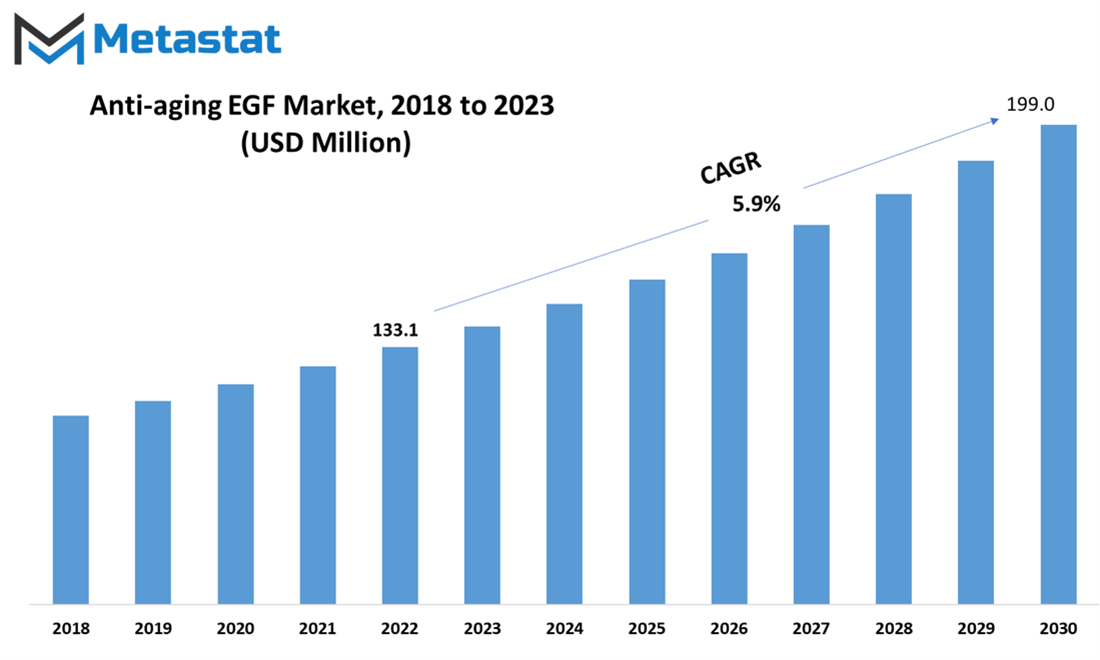
The Anti-aging EGF Market is witnessing significant growth, driven by the increasing awareness and demand for anti-aging skincare products. People across the world are becoming more conscious of maintaining a youthful appearance and ensuring the health of their skin. This surge in consumer interest has created a booming market for anti-aging products, with Epidermal Growth Factor (EGF) playing a prominent role.
EGF is a vital component in various anti-aging skincare products. It is a natural protein that stimulates cell growth, helping in the regeneration and repair of the skin. The recognition of EGF's potential to promote youthful and healthy skin has led to its widespread use in the skincare industry.
While the market is on the rise, it does face challenges. One such challenge is the high manufacturing costs associated with EGF extraction and formulation. The process of obtaining EGF can be intricate and costly. This cost factor sometimes limits the affordability and accessibility of EGF-based products.
Another hindrance is the limited availability of EGF. The complex production process of EGF can restrict its ready availability. This limitation can be frustrating for consumers who are eager to access EGF-based skincare solutions.
However, the market has a silver lining in the form of the aging global population. As the world's population continues to age, there is a growing demand for anti-aging solutions. The desire to look and feel youthful is a driving force behind this demand. This demographic shift presents lucrative opportunities for the Anti-aging EGF Market.
The market is thriving due to increased consumer awareness and the desire for youthful, healthy skin. However, challenges like high manufacturing costs and limited availability of EGF exist. The market's promising future lies in the expansion of the aging population, which fuels the demand for anti-aging solutions.
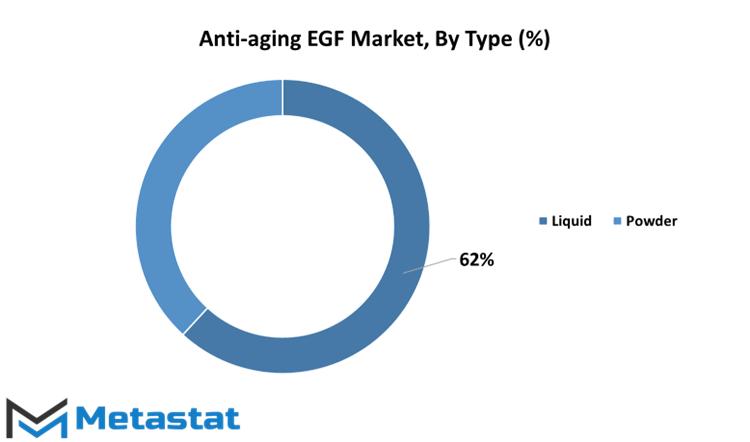
The Anti-aging EGF Market, concerning its types, is divided into Liquid and Powder. In the year 2022, the Liquid segment showed a market value of 77.8 million US dollars, while the Powder segment displayed a value of 48.2 million US dollars. These figures indicate the financial worth of each segment within the market during that specific year.
The Liquid segment's market value was substantial at 77.8 million US dollars, signifying a significant demand for liquid-based anti-aging EGF products. Liquid anti-aging EGF solutions may offer convenience and ease of application, potentially contributing to their market appeal.
On the other hand, the Powder segment, with a market value of 48.2 million US dollars in 2022, demonstrated its share in the market. Powder-based anti-aging EGF products could have their unique advantages, attracting a particular consumer base.
These values highlight the economic significance of both segments in the Anti-aging EGF Market in 2022, showing that consumers had varying preferences for liquid and powder forms of anti-aging EGF products during that period.
The Anti-aging EGF Market encompasses diverse sources, with two prominent segments: Plant-based EGF and Human-based EGF, each contributing significantly to the market's overall value.
Plant-based EGF, a vital component in the anti-aging industry, achieved a valuation of 25.8 USD Million in 2022. Derived from plants, it offers a natural and sustainable source for EGF production. This segment has gained recognition for its eco-friendliness and reduced environmental impact.
On the other hand, Human-based EGF, valued at 100.2 USD Million in 2022, is another pivotal source in the anti-aging EGF market. Extracted from human sources, this EGF type has found favor due to its compatibility with the human body. Human-based EGF has demonstrated its efficacy in various anti-aging products and treatments.
These two distinct segments in the anti-aging EGF market cater to different preferences and requirements. While Plant-based EGF appeals to eco-conscious consumers, Human-based EGF capitalizes on its biological compatibility with the human body. As a result, the market's significant value is divided between these two essential sources, reflecting the diversity and dynamism of the anti-aging industry.
The Anti-aging EGF Market, when considering its application, exhibits a notable segmentation. These applications are instrumental in defining the market landscape and understanding its dynamics. In this regard, the market is categorized into several distinct segments.
The EGF Cream segment, which marked a valuation of 53 USD Million in the year 2022. This segment plays a significant role in the market, attracting a substantial economic value. EGF Creams are a popular choice for those seeking anti-aging solutions.
The EGF Serum segment is another integral part of this market. In 2022, this segment held a value of 29.4 USD Million. EGF Serums, with their specific formulation and application, cater to a distinct consumer base looking for anti-aging products with unique attributes.
The EGF Lotion segment is also noteworthy, with a valuation of 21.2 USD Million in 2022. EGF Lotions offer a different application method compared to creams and serums, making them an essential part of the market's diversity. Furthermore, the EGF Mask segment adds depth to the market. Valued at 15.6 USD Million in 2022, these masks offer a novel way of delivering anti-aging benefits to consumers.
There's the Others segment, which held a value of 6.84 USD Million in 2022. This segment encompasses various products and applications that don't fit neatly into the categories mentioned earlier. It represents a space for innovation and diversification in the market.
These segments collectively contribute to the Anti-aging EGF Market, each catering to distinct consumer preferences and needs. The market's value is not only a testament to the demand for anti-aging solutions but also the versatility and adaptability of EGF-based products across different applications. The diversity in applications ensures that consumers have a range of options to choose from, depending on their preferences and requirements. .
The global Anti-aging EGF market spans multiple countries, including Europe and Asia-Pacific. The market's reach extends far and wide, addressing the needs of diverse populations across these regions.
In Europe, the Anti-aging EGF market has gained a foothold. It caters to the demands of a population that is increasingly conscious of skincare and aging-related concerns. European consumers are seeking products that not only enhance their appearance but also combat the signs of aging. As a result, the market here has seen steady growth. Skincare and beauty industries have flourished, offering a range of Anti-aging EGF products designed to address the specific needs of European consumers. The diversity of cultures and skin types across Europe has prompted the development of a wide array of Anti-aging EGF solutions.
On the other side of the world, in the vast expanse of the Asia-Pacific region, the Anti-aging EGF market tells a different tale. Here, the market has witnessed remarkable expansion. The Asia-Pacific region is home to a significant share of the global population, and with a strong emphasis on youthful appearances and skincare, the demand for Anti-aging EGF products has surged. Countries like South Korea and Japan have established themselves as leaders in the beauty and skincare industry. They've contributed significantly to the growth of the Anti-aging EGF market. Innovations in beauty technology and a cultural emphasis on youthful aesthetics have driven the rapid expansion of the market across Asia-Pacific.
The Anti-aging EGF market's reach is not limited to these regions alone, but Europe and Asia-Pacific stand out as prominent players in the global landscape. The unique preferences, beauty standards, and cultural influences in these regions have shaped the Anti-aging EGF market, driving its growth and development. As the pursuit of youthful appearances remains a global concern, the Anti-aging EGF market continues to evolve, offering tailored solutions to meet the demands of diverse populations.
The Anti-aging EGF market is an intriguing sector in the beauty and skincare industry. Two key players in this field are BIOEFFECT and LipoTrue S.L.
BIOEFFECT has made a notable impact in the world of anti-aging EGF products. They have been at the forefront of developing innovative skincare solutions that harness the power of Epidermal Growth Factor (EGF). EGF is a naturally occurring protein in our skin that plays a vital role in maintaining its youthfulness. BIOEFFECT's products are designed to replenish and stimulate EGF production, resulting in rejuvenated and more youthful skin.
LipoTrue S.L. is another significant player in the anti-aging EGF market. They have carved a niche for themselves by focusing on sustainable and eco-friendly EGF production. Their products not only address the desire for youthful skin but also cater to the growing environmental consciousness among consumers. LipoTrue S.L.'s commitment to sustainable practices aligns with the evolving values of modern skincare enthusiasts.
Both BIOEFFECT and LipoTrue S.L. represent the dynamic nature of the anti-aging EGF market. They demonstrate how this industry is not just about providing skincare solutions but also about adapting to changing consumer preferences and values. As key players, they continue to drive innovation and offer consumers a diverse range of products and choices in their pursuit of anti-aging solutions.
Find answers to common questions about this report
Global Anti-aging EGF market is valued at $133.1 million in 2023.
Global Anti-aging EGF market is estimated to grow with a CAGR of 5.9% from 2023 to 2030.
Global Anti-aging EGF market is estimated to reach $199.0 million by 2030.
Top players operating in the Anti-aging EGF industry includes BIOEFFECT, LipoTrue S.L., Skin Actives Scientific LLC, Spec-Chem Industry Inc., TUNEMAKERS, and others.
The analysts below cover Healthcare research at Metastat Insights.
LEAD ANALYST
Utkarsh Khirodkar is a Lead Market Research Analyst at MetaStat Insight, specializing in market intelligence, technology sector assessments, and competitive strategy.

LEAD PRINCIPAL ANALYST, PHARMA AND HEALTHCARE
Food and Beverages · Healthcare · Healthcare IT · Medical Devices
Ajay Devgire is the Lead Healthcare Analyst at MetaStat Insight, leading strategic research and market intelligence initiatives across the global healthcare domain.
Tracking capacity expansion in single-use bioprocessing requires dependable data on raw material availability and cleanroom-grade polymer supply chains. The competitive landscape chapter gave a grounded evaluation of secondary component suppliers across North America and Asia-Pacific rather than simply reprinting press releases. Having that level of supplier benchmarking helped clarify dual-sourcing considerations for our clinical pipeline planning.
When evaluating distributed energy resource management systems, standard research summaries tend to gloss over the operational differences between front-of-the-meter utility deployments and behind-the-meter industrial sites. The MetaStat Insight report addressed those distinctions directly, especially regarding software interoperability standards and grid interconnection backlogs. The five-year market sizing across regional transmission organizations provided actionable context for our grid modernization strategy.
Most industry reports on warehouse automation bundle autonomous mobile robots and fixed conveyor installations into the same top-level numbers, which complicates advisory work. This study split the market cleanly by payload tiers, navigation technology, and fleet management software layers. The regional forecast for Western Europe gave our team defensible adoption benchmarks when evaluating capital allocation for logistics clients, saving us days of secondary data scrubbing.
Explore related market intelligence reports worth reading alongside this one.
Starting from
$2950