
LEAD ANALYST
Utkarsh Khirodkar is a Lead Market Research Analyst at MetaStat Insight, specializing in market intelligence, technology sector assessments, and competitive strategy.

U.S. Longevity Supplements Market Size, Share, By Product Type (Vitamins & Minerals, Antioxidants, Omega-3 Fatty Acids, Herbal Extracts, Amino Acids and Probiotics, Prebiotics, Enzymes, Hyaluronic Acid), By Form (Tablets & Capsules, Powders, Liquids, Gummies and Soft Chews, Lozenges, Oral Strips), By Application (Anti-Aging, Cognitive Health, Heart Health, Immune Support and Bone & Joint Health, Digestive Health, Metabolic Health, Eye Health), By Distribution Channel (Online Stores, Supermarkets/Hypermarkets, Specialty Stores, Pharmacies/Drug Stores and Direct Selling, Healthcare Clinics, Wellness Centers), Industry Analysis, Growth, Trends, and Forecast, 2026-2033
Report ID
MSI-5774
Published
November, 2026
Pages
301 Pages
Format
Historical
Base year
Forecast
Forecast period
Report Details
Market Valuation: Valued at $1,497.3 Million in 2025, projected to reach $2,751.7 Million by 2033 at a 7.9% CAGR.
Dominant Segment: The vitamins and minerals segment leads the U.S. Longevity Supplements market, driven by strong consumer demand for foundational nutritional support and preventive health measures.
Geographic Lead: North America is the leading region, characterized by a high concentration of health-conscious consumers and robust retail distribution networks that facilitate market growth.
What's Inside: The report provides a comprehensive analysis of market dynamics, competitive coverage, and detailed forecasts across various product types, forms, applications, and distribution channels.
Emerging Trends: Personalized nutrition and precision supplementation are reshaping demand, with a growing focus on tailored health solutions that cater to individual consumer needs.
Consumer Behavior: Increasing health consciousness among consumers is significantly influencing spending patterns, particularly in the anti-aging and cognitive health segments.
Choose Your License
U.S. Longevity Supplements Market
The U.S. Longevity Supplements market was valued at USD 1,497.3 million in 2025 and is projected to reach USD 2,751.7 million by 2033, growing at a CAGR of 7.9% over the forecast period.
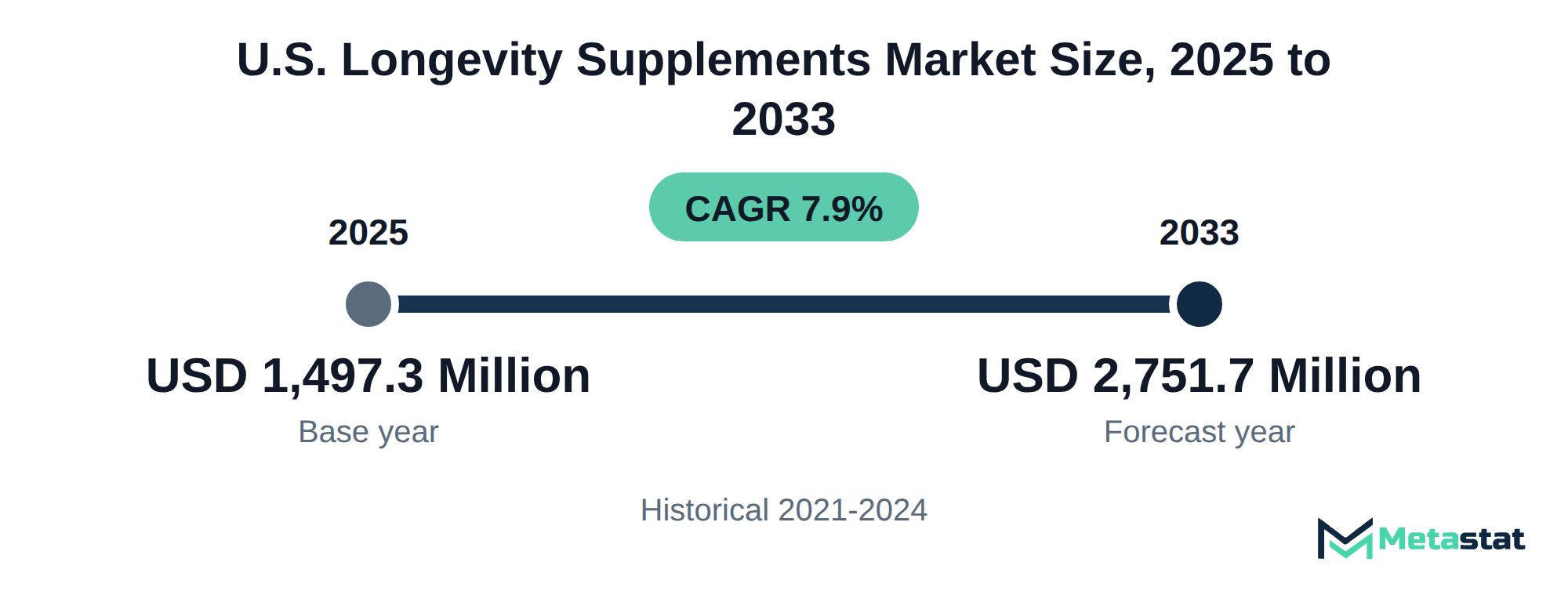
The U.S. Longevity Supplements market encompasses a variety of dietary supplements designed to enhance health and extend lifespan. This category includes vitamins, minerals, antioxidants, and herbal extracts, among others. Buyers invest in these supplements driven by a growing awareness of health benefits, the need for preventive healthcare, and a desire for improved quality of life as people age.
Growth within the market is primarily influenced by increasing consumer interest in health and wellness. The vitamins and minerals segment holds the largest share, reflecting strong demand among consumers seeking foundational nutritional support. The North American region exhibits significant market presence, driven by a high concentration of health-conscious consumers and robust retail distribution networks.
The aging population is one main driver of market expansion, raising demand for products that support longevity and vitality. This demographic shift influences purchasing patterns, leading to increased sales across various distribution channels, including online platforms and specialty stores. As the market responds to these consumer trends, product offerings are becoming more innovative and diverse.
The U.S. Longevity Supplements market encompasses a diverse range of products aimed at enhancing lifespan and overall health. The primary buyer groups include health-conscious individuals, aging populations, and wellness enthusiasts. These consumers invest in longevity supplements to address specific health concerns, support preventive care, and improve quality of life. The market’s products include vitamins, minerals, antioxidants, and herbal extracts, each targeting various aspects of health and wellness.
Growth in the market is fueled by increasing awareness of health and wellness, alongside a rising emphasis on preventive healthcare. Among the product types, vitamins and minerals hold the most significant value, reflecting a strong consumer preference for foundational health support. North America currently represents the largest share of the market, driven by high disposable incomes and a cultural focus on health optimization. Demand for longevity supplements reflects a broader trend toward self-care and proactive health management.
One of the main drivers of growth is the aging population, which continues to seek solutions for maintaining health and vitality. This demographic shift leads to increased spending on products that promise to enhance longevity and quality of life. The U.S. Longevity Supplements market is projected to expand significantly, supported by evolving consumer behaviors and preferences toward health-focused products.
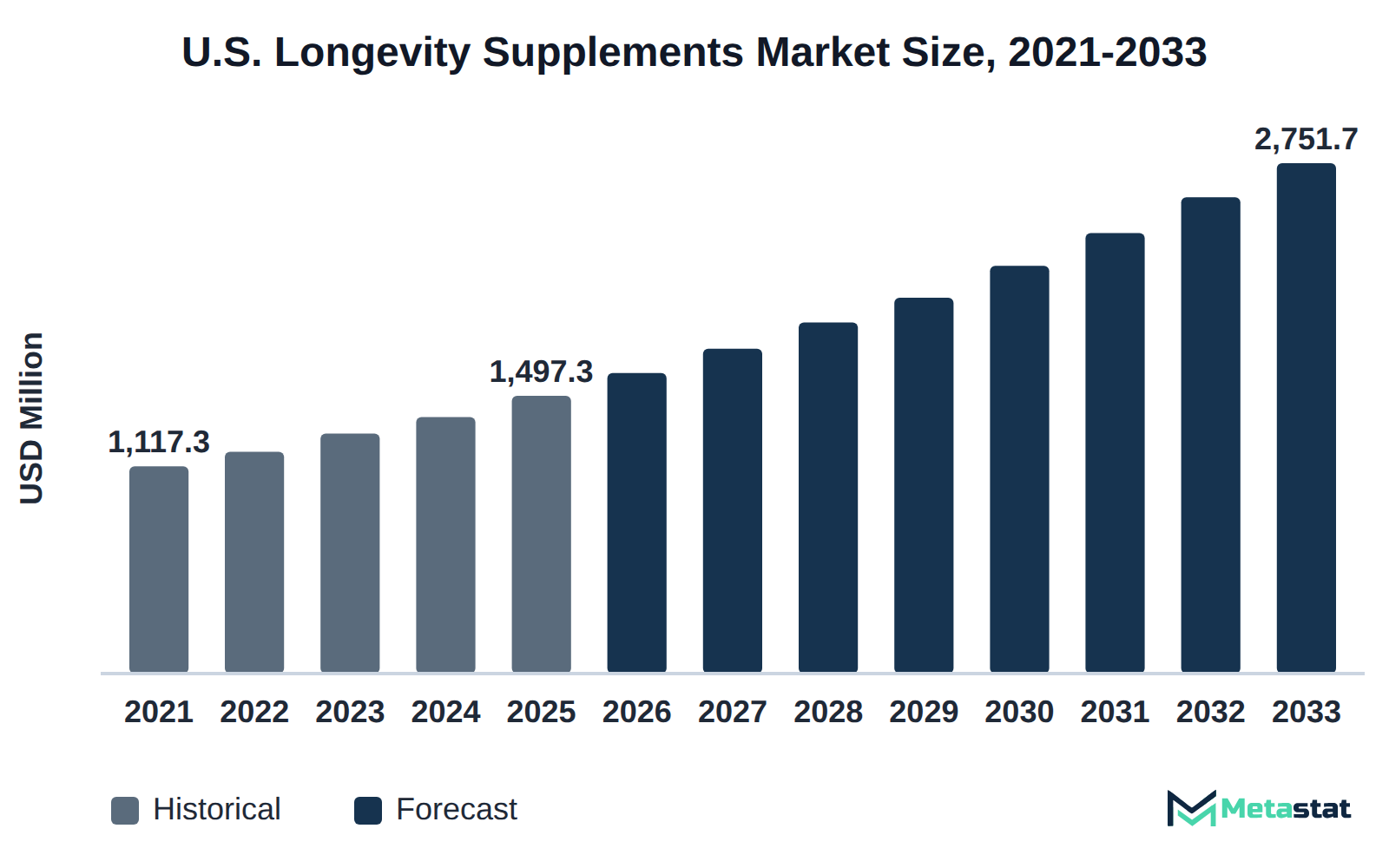
Personalized nutrition and precision supplementation significantly influence the U.S. Longevity Supplements market. These trends focus on tailoring supplements to individual health profiles, lifestyle choices, and specific genetic needs. Growing consumer awareness of personalized health interventions drives this shift in demand and is making customized solutions more popular.
The cognitive health application segment is expected to reach USD 664.8 million by 2033, reflecting the importance of targeted nutritional support for mental well-being. This targeted approach improves consumer satisfaction and positions brands as leaders in an increasingly individualized market. Companies that prioritize personalized offerings differentiate their products, tapping into a more health-conscious consumer base.
While the market continues to evolve, the emphasis on precision supplementation will reshape product development and marketing strategies. Brands that align their offerings with personalized health trends stand out and reach a more health-conscious consumer base.
NAD+ and senolytics represent significant trends in the U.S. Longevity Supplements market, driving innovative product development. These ingredients focus on cellular health, contributing to enhanced vitality and longevity. The sales of NAD+ products are projected to increase significantly, with an expected value of USD 462.8 million by 2033. This growth highlights rising consumer interest in ingredients that support cellular repair and energy production.
Pricing models for these supplements often vary based on ingredient sourcing, formulation complexity, and brand positioning. Premium brands leverage high-quality sources and advanced formulations to justify higher price points, while mass-market products target price-sensitive consumers. This diversification in pricing strategies allows companies to cater to different segments of the market, thereby expanding their reach and overall sales. Competition among brands to establish premium pricing for high-quality ingredients drives innovation and enhances product offerings.
As awareness of the benefits of NAD+ and senolytics grows, health-conscious consumers are inclined to invest in high-quality longevity supplements. The commitment to premium products reflects a willingness to prioritize health and wellness over price, making it essential for brands to ensure that their offerings align with consumer expectations. This trend of investing in health products creates opportunities for companies to enhance their market share by focusing on the quality and efficacy of their ingredients.
Online shopping strongly shapes consumer behavior in the U.S. Longevity Supplements market. A notable shift towards online stores has emerged, with projections indicating that the segment will reach USD 1,025.9 million by 2033, reflecting a compound annual growth rate (CAGR) of 9.5%. This growth is primarily driven by increased convenience, a broad range of product options, and the ability to compare prices easily. Online platforms provide consumers with access to diverse supplement offerings, catering to specific health needs that traditional retail environments do not address.
Younger consumers in particular prefer to buy longevity supplements online, driven by a desire for personalized health solutions that fit preventive healthcare practices. The increased focus on health and wellness in the digital age has expanded opportunities for brands to engage with this demographic through targeted marketing and informative content. Consequently, businesses that prioritize their online presence and tailored shopping experiences are likely to grow their market share and revenue in the U.S. Longevity Supplements market.
Growing health consciousness among consumers significantly influences spending on anti-aging and healthy aging supplements. Consumers in the U.S. Longevity Supplements market are increasingly aware of the importance of maintaining health and vitality into older age. Consumers actively seek products that enhance their overall well-being and longevity.
The anti-aging segment, for instance, has shown promising growth, with an expected increase from USD 501.7 million in 2026 to USD 821.1 million by 2033, resulting in a compound annual growth rate of 7.3%. This rapid growth reflects strong demand for products that address age-related concerns, encouraging manufacturers to innovate and diversify their offerings.
This consumer behavior opens opportunities for companies to develop targeted marketing strategies, tapping into the desires for improved quality of life and longevity. While the market expands, businesses that align their products with these health-conscious trends are likely to enhance their competitiveness and revenue potential.
Growing health consciousness among consumers drives spending on longevity supplements. Baby boomers and millennials increasingly prioritize preventive health measures, resulting in heightened demand for products that promote aging well and cognitive function. This demographic focus on maintaining vitality and longevity significantly influences purchasing decisions. The Cognitive Health application segment is anticipated to reach USD 664.8 million by 2033, reflecting robust consumer interest in supplements targeting mental acuity and memory retention. The U.S. Longevity Supplements market benefits from this shift, with manufacturers responding with innovative formulations tailored to meet evolving consumer preferences. Market expansion results from consumers seeking personalized solutions that align with their health goals, further driving the demand for various product types. This increasing emphasis on proactive health management creates a competitive landscape, encouraging brands to enhance product offerings and marketing strategies to attract a broader audience. Emerging trends in health and wellness will continue to shape the market, aligning with consumers’ desires for effective aging solutions and driving long-term growth. Increased online purchasing and convenience options The rise of e-commerce platforms has transformed how consumers access longevity supplements. An expanding array of online stores facilitates easier product discovery and purchasing for various buyer demographics. This trend reflects a broader market shift towards digital engagement, particularly among younger consumers who prefer the convenience of online shopping. The U.S. Longevity Supplements market experiences significant growth, fueled by the projected increase in revenue for online distribution channels, expected to reach USD 1,025.9 million by 2033. The convenience of online shopping and the availability of detailed product information enable consumers to make informed choices, driving volumes upward. Retailers enhance their online presence and optimize user experiences, intensifying competition among brands to attract digital shoppers. This dynamic environment supports the ongoing evolution of the market, emphasizing the importance of digital strategies in reaching health-conscious consumers effectively.
Innovations in formulation techniques significantly influence the U.S. Longevity Supplements market. The introduction of advanced delivery systems, including microencapsulation and liposomal technologies, enhances the bioavailability of key nutrients, improving their effectiveness. This advancement aligns with consumer demand for high-quality products that deliver noticeable health benefits, particularly in the anti-aging and cognitive health segments.
The development of plant-based and natural ingredient formulations caters to the growing preference for clean label products. These formulations address health concerns related to synthetic additives and promote trust among consumers. Companies focusing on innovative product formulations capture a larger share of the market by meeting these consumer expectations, driving growth.
While these enhancements gain traction, competition among suppliers intensifies, prompting further investment in research and development. The result is continuous innovation and better product offerings across the U.S. Longevity Supplements market.
Pricing pressures significantly influence demand for longevity supplements among consumers. Rising costs associated with these products often result in smaller orders from health-conscious individuals seeking effective solutions for aging. Customers increasingly compare supplements against alternatives, leading to a focus on cost-effective options that deliver similar health benefits. A significant portion of potential buyers holds back from purchasing due to financial concerns, which slows market growth.
Price sensitivity is particularly evident in segments focusing on vitamins and minerals, where affordability remains a critical factor for consumers. Buyers within this segment often postpone purchases or seek lower-priced alternatives, reflecting a broader trend in the U.S. Longevity Supplements market. Ongoing economic uncertainties further contribute to cautious spending behaviors among consumers, directly impacting sales and revenue growth in the market.
Rising input and material costs present significant challenges for suppliers in the U.S. Longevity Supplements market. Factors including increased raw material prices and supply chain disruptions drive up overall production costs. These expenses directly impact profit margins, compelling suppliers to reevaluate pricing strategies. To mitigate these effects, many companies focus on optimizing their supply chains and negotiating better contracts with suppliers. Investments in alternative sourcing and production processes enhance efficiency and reduce dependency on volatile markets. Innovations in product formulation and ingredient sourcing help suppliers maintain competitive pricing while meeting consumer demand for high-quality supplements. Maintaining profitability during these cost pressures is essential for companies aiming to establish a lasting presence in the U.S. Longevity Supplements market.
Gummy supplements represent a significant opportunity within the U.S. Longevity Supplements market, driven by their appealing form and consumer preference for convenient, palatable options. This segment is projected to achieve a compound annual growth rate of 9%, reflecting strong consumer interest and engagement. The appeal of gummy supplements lies in their ability to combine effectiveness with a pleasant taste, making them particularly desirable for individuals seeking longevity benefits. This growth aligns with the broader trend of increasing health awareness and proactive health management among consumers.
Traditional delivery methods face challenges in attracting younger demographics, and manufacturers focusing on gummies capitalize on this trend by providing innovative formulations targeting specific health needs. The rising popularity of gummy supplements highlights the market's potential for substantial revenue growth, contributing to the overall expansion expected through 2033. Enhanced marketing strategies emphasizing taste and functionality will further drive consumer adoption.
The U.S. Longevity Supplements market is segmented based on Product Type, Form, Application, and Distribution Channel.
The Vitamins & Minerals segment is valued at USD 447.1 million in 2026 and is projected to reach USD 700.6 million by 2033, at a CAGR of 6.6% during the forecast period. This segment supports overall health and wellness, primarily targeting health-conscious consumers seeking to enhance their nutritional intake. Growth is driven by increasing awareness regarding the benefits of vitamins and minerals in preventing age-related health issues. Compared to other segments, this particular category experiences steady growth, influenced by its established consumer base. In contrast, herbal extracts, with a CAGR of 8.5%, attract a more niche audience focused on alternative health solutions. The market continues to expand as more consumers prioritize preventive health measures and optimal nutrition, effectively influencing their purchasing decisions toward longevity supplements.
Antioxidants segment is estimated to reach USD 478.3 million by 2033, at a CAGR of 7.3% during the forecast period. These supplements primarily serve consumers seeking to protect their cells from oxidative stress, which contributes to aging and various diseases. Health-conscious individuals, particularly older adults, purchase these products to enhance overall well-being and longevity. Demand for antioxidants is driven by increased awareness of nutrition's role in health maintenance. Compared to other segments, antioxidants exhibit a solid growth trajectory, with a CAGR higher than other product types, reflecting their important role in consumer health strategies. This segment's appeal lies in its effectiveness and scientific backing, setting it apart from others, including Omega-3 Fatty Acids, which do not appeal to all consumers to the same degree. Antioxidants remain a critical focus for both manufacturers and consumers in the U.S. Longevity Supplements market.
Omega-3 Fatty Acids segment is expected to reach USD 462.8 million by 2033. This segment typically targets consumers focused on cardiovascular health, cognitive function, and overall wellness. Demand for Omega-3 supplements is driven by increasing awareness of the benefits associated with fatty acids, including heart health and anti-inflammatory properties. The segment distinguishes itself with a higher growth trajectory, achieving a compound annual growth rate (CAGR) of 8.4%, faster than many other product types in the market. In contrast to vitamins and minerals, which grow at a CAGR of 6.6%, Omega-3 supplements cater to a more specific demographic, including health-conscious individuals and older adults seeking functional benefits. Shifting consumer preferences toward natural and effective health solutions position this segment for continued expansion.
Herbal extracts, projected to grow at a CAGR of 8.5% during the forecast period, play a vital role in supporting health and wellness. These supplements attract consumers seeking natural remedies and approaches to well-being. The increasing consumer preference for plant-based ingredients drives demand for herbal extracts, a key category of plant extracts, particularly among health-conscious buyers. Unlike other segments, herbal extracts leverage natural compounds, differentiating them through higher growth rates compared to segments like vitamins and minerals, which expand at a CAGR of 6.6%. This unique positioning attracts a distinct customer demographic that prioritizes organic and alternative health solutions. The emphasis on preventive health measures further enhances the appeal of herbal extracts, contributing to their anticipated revenue growth within the U.S. Longevity Supplements market.
Amino acids play a significant role in various bodily functions, particularly in muscle growth, repair, and overall health maintenance. Individuals focused on fitness and those pursuing anti-aging strategies actively use amino acid supplements to support recovery and enhance performance. Increasing consumer awareness regarding the benefits of amino acids, particularly among athletes and health-conscious individuals, drives demand. This segment benefits from a growing trend in personalized nutrition, where tailored formulations are increasingly sought after. Compared to other product types, including Vitamins & Minerals and Antioxidants, amino acids target a niche audience concerned with specific health outcomes. This focus on specialized applications distinguishes amino acids, leading to unique marketing strategies within the broader U.S. Longevity Supplements market.
Probiotics, prebiotics, enzymes, and hyaluronic acid contribute to the growing category of longevity supplements. These products serve a diverse audience focused on improving gut health, enhancing skin hydration, and supporting overall wellness. The increasing awareness of gut-brain connections drives demand, particularly among health-conscious consumers seeking effective approaches to aging. Unlike vitamins and antioxidants, which experience higher growth rates, this sub-segment exhibits slower adoption due to the complexity of formulations and the need for consumer education. The market faces challenges in ingredient sourcing and regulatory scrutiny, which affect pricing and availability. The U.S. Longevity Supplements market reflects a broader trend toward personalized nutrition, with consumers increasingly gravitating toward scientifically backed formulations. Emphasis on quality and efficacy in this segment distinguishes it from others, aligning with consumer preferences for transparency and accountability.
Tablets & Capsules segment is valued at USD 544.3 million in 2026 and is projected to reach USD 858 million by 2033, at a CAGR of 6.7% during the forecast period. This segment is popular among health-conscious consumers seeking convenient ways to incorporate longevity supplements into their daily routines. A significant driving force behind this segment stems from the increasing preference for solid forms of supplementation, which offer accurate dosing and portability. Compared to the Powders and Liquids segments, which exhibit higher growth rates of 8.4% and variations in consumer preference, Tablets & Capsules maintain steady demand due to their familiarity and ease of use. The growing trend toward preventive health measures fuels interest in these supplements, reinforcing their position in the U.S. Longevity Supplements market.
The powders segment is estimated to reach USD 727 million by 2033, at a CAGR of 8.4% during the forecast period. This form typically includes nutritional supplements in powdered format, appealing to health-conscious consumers seeking convenience and flexibility in their supplement routines. Users include fitness enthusiasts and individuals focused on enhancing overall wellness. The rising trend of personalized nutrition drives demand for powders, with consumers increasingly seeking tailored solutions that align with their health goals. Compared to other forms, including tablets and capsules, powders provide faster absorption rates, making them preferable for those prioritizing quick nutrient delivery. This segment is anticipated to exhibit more rapid growth than tablets and capsules, which are projected to grow at a CAGR of 6.7%. In the context of the U.S. Longevity Supplements market, this differentiation highlights evolving preferences among consumers for versatile and effective supplement options.
The liquids segment is expected to reach USD 491.5 million by 2033. This segment primarily serves consumers seeking convenience and swift absorption of nutrients, making it popular among health-conscious individuals and those with dietary restrictions. Demand for liquid dietary supplements often derives from the preference for easy-to-consume options, particularly among the aging population. Compared to other forms, including tablets and capsules, the liquids segment is positioned for significant growth, characterized by a CAGR of 8.4%. This growth trajectory reflects an increasing inclination towards user-friendly products that facilitate daily supplementation. The pricing strategy differs from that of gummies, which often carry premium pricing due to their flavor and texture, suggesting a different buyer demographic that prioritizes taste. Ultimately, the liquids segment influences the U.S. Longevity Supplements market.
Gummies are projected to grow at a CAGR of 9% during the forecast period. This form of supplement appeals to consumers seeking convenient and palatable options for health maintenance, particularly among younger demographics. The demand for gummies is driven by their flavor, ease of consumption, and the growing trend of incorporating wellness products into daily routines. Compared to other forms, gummies typically attract buyers who prioritize taste and convenience and are often willing to pay a premium price. In the context of the U.S. Longevity Supplements market, gummies differ from tablets and capsules, which appeal more to consumers focused on efficacy and dosage accuracy. The distinct appeal of gummies positions them as a strong competitor in the market, catering to demands emphasizing both health benefits and enjoyable consumption.
Soft chews, lozenges, and oral strips represent a unique segment within the U.S. Longevity Supplements market, offering alternative delivery methods for consumers seeking health benefits. These formats appeal to individuals who prefer convenient and palatable options for supplement intake. The rise in demand for such forms is driven by an increasing preference for user-friendly supplements, particularly among older adults who experience difficulty swallowing traditional tablets or capsules. This segment differentiates itself from others by potentially offering higher consumer satisfaction due to taste and ease of consumption. Unlike other forms, including powders or capsules, this segment exhibits slower growth, reflecting niche demand among specific demographics prioritizing flavor and ease. Overall, the diversity of formats within the market contributes to broader acceptance and adoption of longevity supplements among various consumer groups.
This segment primarily serves consumers who buy anti-aging products to maintain youthful appearances and mitigate age-related health concerns. Demand largely stems from aging populations and increasing awareness of health and wellness, with consumers prioritizing products that support longevity. Compared to other segments, the Anti-Aging segment exhibits a stronger growth trajectory, driven by advancements in formulation and targeted marketing strategies aimed at specific consumer groups. Anticipated revenue growth highlights its significance within the U.S. Longevity Supplements market, reflecting the need for continuous innovation and research in this area to meet evolving consumer preferences.
Cognitive Health segment is estimated to reach USD 664.8 million by 2033, at a CAGR of 8.9% during the forecast period. This segment focuses on enhancing mental functions, including memory, focus, and overall cognitive performance. Consumers prioritizing mental sharpness, particularly older adults and professionals in high-stress environments, drive demand for these supplements. Increasing awareness of cognitive decline due to aging and lifestyle choices supports the segment's growth. Compared to other applications, including Anti-Aging, which is projected to grow at a CAGR of 7.3%, the Cognitive Health segment demonstrates a stronger growth trajectory. Innovative formulations and scientific backing of ingredients further attract investment into this segment, positioning it as a critical area within the U.S. Longevity Supplements market.
The Heart Health segment is expected to reach USD 509.6 million by 2033. This segment focuses on supporting cardiovascular health, appealing to health-conscious consumers and individuals with specific medical concerns. Growing awareness of heart diseases and the importance of preventive health measures drive demand within this segment. The Heart Health segment differs from others, including Anti-Aging, which targets aesthetic concerns, reflecting a greater emphasis on wellness rather than beauty. This segment's growth rate is slower compared to the Cognitive Health segment, which is projected to achieve a CAGR of 8.9%. While the market evolves, innovations in formulations and increased consumer education are likely to enhance penetration in this segment, reinforcing its role in the U.S. Longevity Supplements market.
Immune support supplements valued at USD 501.7 million in 2026 are projected to grow at a CAGR of 7.5% during the forecast period. These supplements assist individuals in supporting their immune systems, appealing primarily to health-conscious consumers and older adults seeking to enhance their overall well-being. Increased awareness of health and wellness drives demand in this segment, reflecting a growing preference for preventive healthcare. Compared to other applications within the U.S. Longevity Supplements market, immune support products exhibit moderate growth trends. The focus on maintaining immunity in the context of rising health concerns sets it apart from faster-growing segments like Cognitive Health, projected to reach USD 664.8 million by 2033 at a CAGR of 8.9%. Rising interest in personalized health regimens further influences market dynamics, encouraging diverse offerings tailored to specific health needs.
This sub-segment comprises products focused on Bone & Joint Health, Digestive Health, Metabolic Health, and Eye Health. These supplements address specific health issues faced by various consumer groups, particularly older adults seeking to maintain their wellbeing. The market experiences growth driven by increasing consumer awareness about health and wellness, alongside a growing aging population actively seeking solutions to manage age-related concerns. Unlike other segments that benefit from broader health trends, this sub-segment targets niche health areas, appealing to consumers prioritizing specific health outcomes. This targeted approach, combined with increased marketing efforts directed at educating consumers, positions this sub-segment uniquely within the market. Overall, demand for specialized health solutions continues to shape the dynamics of the U.S. Longevity Supplements market.
This distribution channel primarily caters to tech-savvy consumers seeking convenience and variety in longevity supplement options. Increasing online shopping trends, driven by the growing preference for home delivery and access to a broader range of products, influence this segment. Compared to traditional retail channels, Online Stores offer a unique advantage by presenting a wider selection of brands and formulations, enhancing consumer choice. The higher growth rate of 9.5% contrasts with the slower growth observed in segments including Supermarkets/Hypermarkets, which is projected to grow at a CAGR of 6.5%. This rapid expansion reflects changing consumer purchasing behavior and the increasing reliance on e-commerce in the U.S. Longevity Supplements market.
Supermarkets/Hypermarkets segment is estimated to reach USD 570.7 million by 2033, at a CAGR of 6.5% during the forecast period. This channel serves consumers seeking convenient access to longevity supplements, including vitamins and minerals, along with antioxidants. Demand for these products arises from health-conscious individuals aiming to enhance their overall well-being. Growth of this segment is driven by the increasing preference for one-stop shopping experiences, where customers obtain various products in a single visit. Compared to online stores, which are projected to grow at a CAGR of 9.5%, this segment reflects a steadier growth trajectory and caters to buyers who prefer in-person shopping. The combination of accessibility and a diverse product range positions supermarkets and hypermarkets uniquely among distribution channels in the U.S. longevity supplements market.
The Specialty Stores segment is expected to reach USD 505.2 million by 2033. This segment primarily caters to health-conscious consumers seeking specialized products that enhance longevity. Buyers typically include individuals focused on health and wellness, along with fitness enthusiasts. Growth in this segment is driven by increasing consumer awareness of the benefits of longevity supplements and the desire for high-quality products. Specialty Stores differentiate themselves by offering curated selections and personalized service, in contrast to larger retailers. This approach supports a higher price point, allowing for greater margins compared to mass-market distribution channels. The segment is projected to grow at a CAGR of 6.5%, reflecting robust demand within the U.S. Longevity Supplements market while providing specialized offerings that appeal to discerning consumers.
Pharmacies/Drug Stores segment is projected to grow at a CAGR of 7.2% during the forecast period. This distribution channel supplies longevity supplements, as part of a wider OTC drug and dietary supplement range, to consumers seeking convenient access to health products. Customers include individuals focused on wellness and preventive health measures, indicating sturdy demand. A significant driver for this segment is rising awareness regarding health benefits associated with longevity supplements. Competitive pricing in pharmacies attracts budget-conscious consumers, distinguishing this channel from others, including Online Stores, which are anticipated to experience faster growth at a CAGR of 9.5%. Pharmacies offer the advantage of immediate product availability, enhancing customer satisfaction. The U.S. Longevity Supplements market faces evolving consumer preferences, with pharmacies adjusting inventory to include popular new products. This adaptability remains crucial in maintaining market relevance and attracting a diverse customer base.
This sub-segment encompasses direct selling methods through various channels including healthcare clinics and wellness centers. Products in this category cater to consumers seeking personalized advice and tailored solutions for their longevity needs. Primary drivers for this segment include increasing consumer interest in integrative health approaches and growing emphasis on preventative care. Compared to other distribution channels, this sub-segment attracts a more health-conscious clientele willing to invest in wellness products. Such customers prioritize quality and efficacy, differentiating this segment from online stores and supermarkets/hypermarkets, which focus on volume-driven sales. The U.S. Longevity Supplements market is expected to see continued interest in personalized healthcare solutions, enhancing opportunities within this sub-segment.
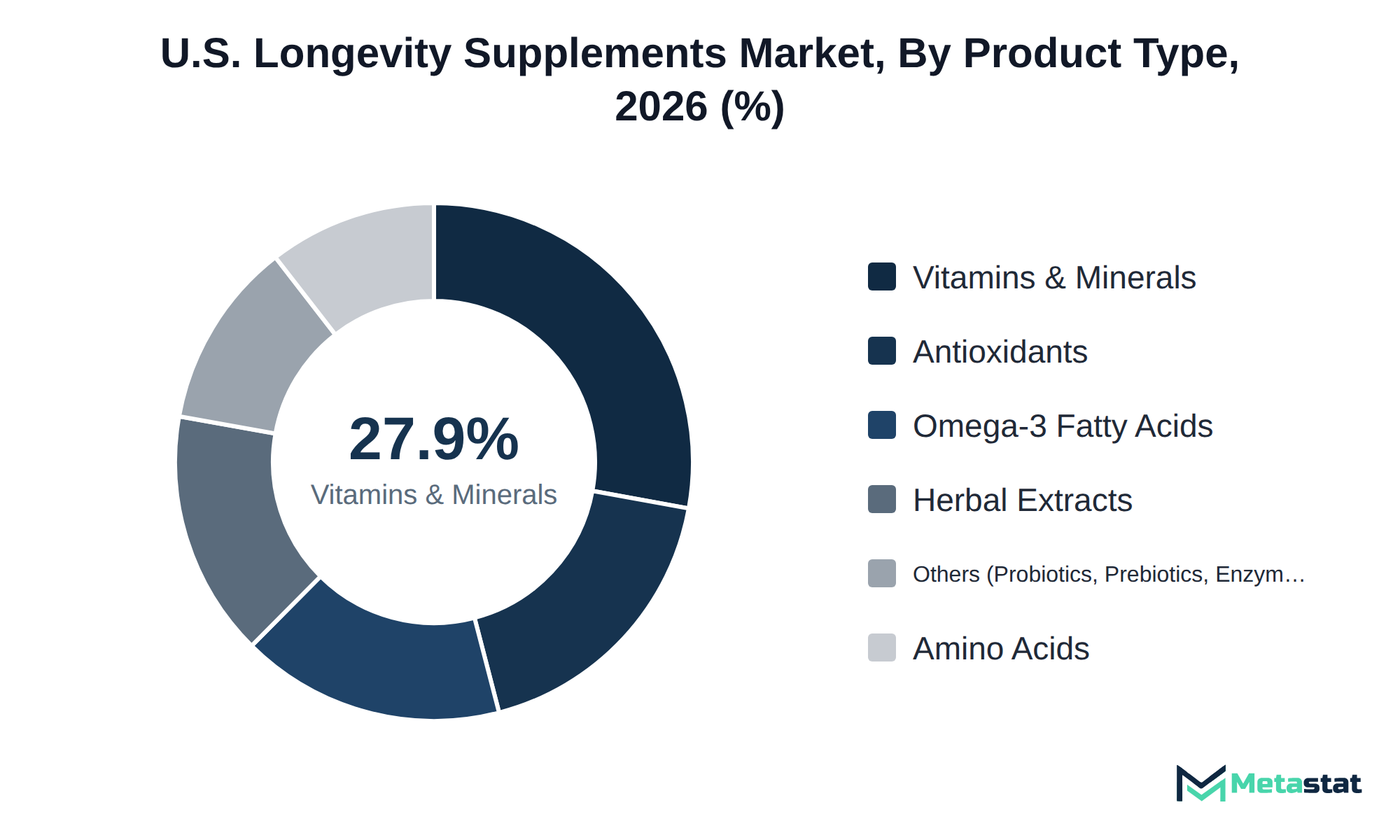
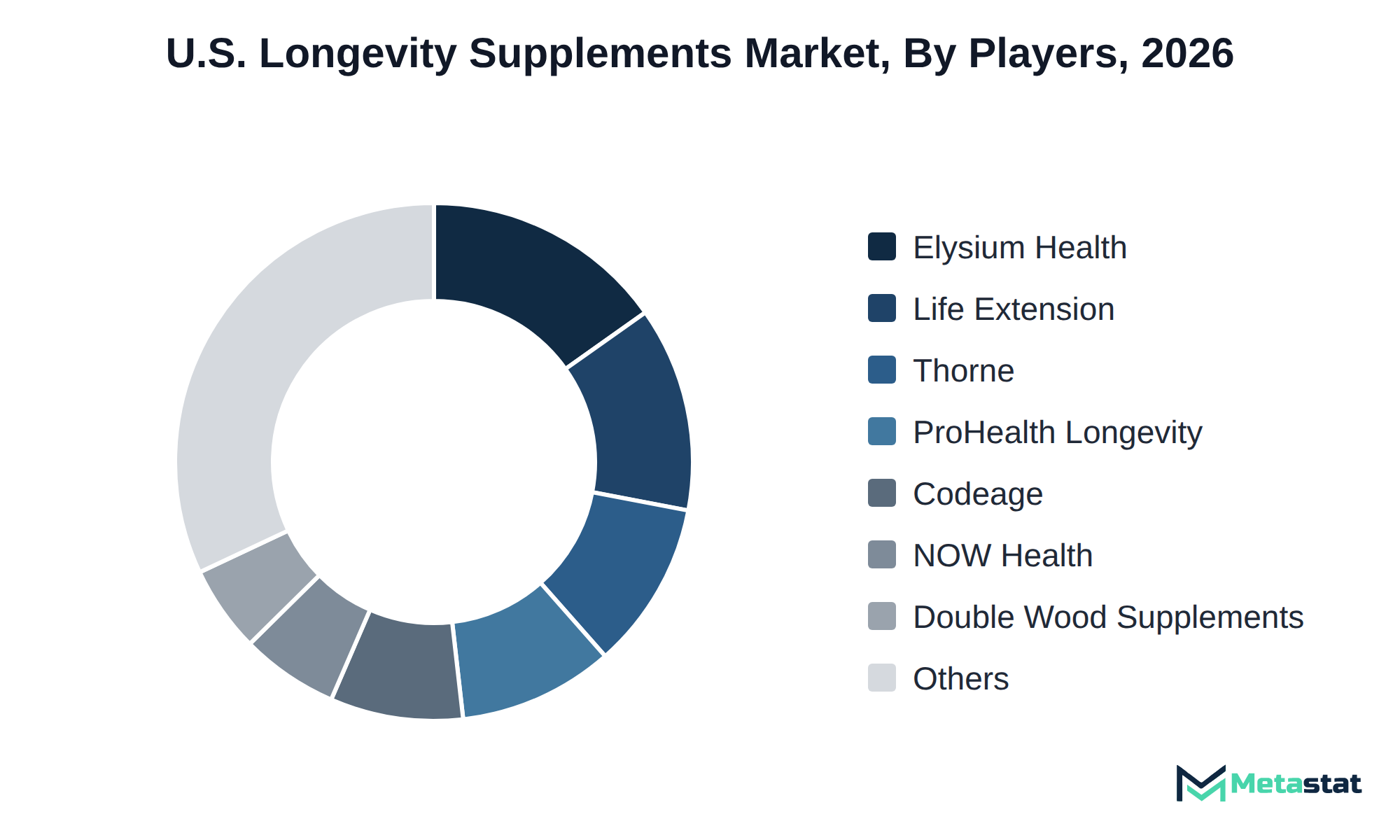
Competition in the U.S. Longevity Supplements market revolves around differentiation in product offerings and marketing strategies. Companies including Elysium Health and Life Extension focus on high-quality ingredients and comprehensive product lines, catering to health-conscious consumers. Competitors leverage factors including price, certification, and service, leading buyers to select products that align with their specific health goals.
NOVOS Labs and ProHealth Longevity emphasize research-backed formulations, appealing to informed consumers seeking scientifically validated benefits. In contrast, brands like Gaia Herbs and Thorne focus on natural ingredients, attracting customers who prioritize natural health products. This competitive environment encourages innovation and variety, shaping consumer experiences and preferences within the market.
The anticipated growth at a 7.9% CAGR relies on several key developments within the U.S. Longevity Supplements market. First, a significant increase in demand for anti-aging products will drive sales, particularly in the anti-aging application segment, which is projected to grow from USD 501.7 million in 2026 to USD 821.1 million by 2033. Second, the rise of online sales channels will enhance accessibility, with online stores expected to expand from USD 543.8 million in 2026 to USD 1,025.9 million by 2033. This shift reflects changing consumer preferences toward convenient shopping options. The main risk to achieving the forecasted market size stems from regulatory challenges that could arise in response to safety concerns regarding certain supplements. Stringent regulations could impede product innovation and market entry, particularly affecting emerging players in the supplements sector. Consequently, addressing these challenges while capitalizing on growth opportunities will be essential for the market to realize its full potential by 2033.
By Product Type: Vitamins & Minerals, Antioxidants, Omega-3 Fatty Acids, Herbal Extracts, Amino Acids, Others (Probiotics, Prebiotics, Enzymes, Hyaluronic Acid)
By Form: Tablets & Capsules, Powders, Liquids, Gummies, Others (Soft Chews, Lozenges, Oral Strips)
By Application: Anti-Aging, Cognitive Health, Heart Health, Immune Support, Others (Bone & Joint Health, Digestive Health, Metabolic Health, Eye Health)
By Distribution Channel: Online Stores, Supermarkets/Hypermarkets, Specialty Stores, Pharmacies/Drug Stores, Others (Direct Selling, Healthcare Clinics, Wellness Centers)
The report strategically identifies and profiles the key market players and analyses their core competencies in each sub-segment of the Longevity Supplements market.
|
Report Attributes |
Details |
|
Study Period |
2021-2033 |
|
Base Year |
2025 |
|
Estimated Year |
2026 |
|
Forecast Period |
2026-2033 |
|
Historical Period |
2021-2025 |
|
Growth Rate |
CAGR 7.9% from 2026 to 2033 |
|
Revenue Unit |
USD million |
|
Segmentation |
By Product Type, Form, Application, Distribution Channel, and Region |
Find answers to common questions about this report
The Longevity Supplements market size was valued at USD 1,497.3 million in 2025.
The market is projected to grow at a CAGR of 7.9% during the forecast period from 2026 to 2033.
Vitamins & Minerals leads the Longevity Supplements market with a projected value of USD 700.6 million by 2033. This segment's growth reflects a compound annual growth rate of 6.6 percent.
Growing health consciousness among consumers drives spending on longevity supplements. Innovations in formulation techniques significantly influence the market, with advanced delivery systems enhancing the bioavailability of key nutrients.
Pricing pressures restrain growth in the Longevity Supplements market. Rising costs prompt consumers to seek cost-effective alternatives, while increasing input and material costs challenge suppliers, impacting profit margins and leading to a reevaluation of pricing strategies.
Growing health consciousness among consumers and the increasing emphasis on preventive health measures favor adoption in the U.S. Longevity Supplements market. innovations in formulation techniques and the rise of e-commerce platforms enhance product accessibility and cater to evolving consumer preferences.
The Longevity Supplements market is estimated to reach a valuation of USD 2,751.7 million by 2033.
Key players operating in the Longevity Supplements market include Elysium Health, Timeline, Niagen Bioscience, NOVOS Labs, ProHealth Longevity, Life Extension, and Nootropics Depot.
The Cognitive Health application segment is projected to achieve a compound annual growth rate of 8.9 percent, reflecting strong consumer interest in supplements targeting mental acuity and memory retention.
Growing health consciousness among consumers drives spending on longevity supplements, particularly among baby boomers and millennials who prioritize preventive health measures.
The analysts below cover Healthcare research at Metastat Insights.
LEAD ANALYST
Utkarsh Khirodkar is a Lead Market Research Analyst at MetaStat Insight, specializing in market intelligence, technology sector assessments, and competitive strategy.

LEAD PRINCIPAL ANALYST, PHARMA AND HEALTHCARE
Food and Beverages · Healthcare · Healthcare IT · Medical Devices
Ajay Devgire is the Lead Healthcare Analyst at MetaStat Insight, leading strategic research and market intelligence initiatives across the global healthcare domain.
Tracking capacity expansion in single-use bioprocessing requires dependable data on raw material availability and cleanroom-grade polymer supply chains. The competitive landscape chapter gave a grounded evaluation of secondary component suppliers across North America and Asia-Pacific rather than simply reprinting press releases. Having that level of supplier benchmarking helped clarify dual-sourcing considerations for our clinical pipeline planning.
When evaluating distributed energy resource management systems, standard research summaries tend to gloss over the operational differences between front-of-the-meter utility deployments and behind-the-meter industrial sites. The MetaStat Insight report addressed those distinctions directly, especially regarding software interoperability standards and grid interconnection backlogs. The five-year market sizing across regional transmission organizations provided actionable context for our grid modernization strategy.
Most industry reports on warehouse automation bundle autonomous mobile robots and fixed conveyor installations into the same top-level numbers, which complicates advisory work. This study split the market cleanly by payload tiers, navigation technology, and fleet management software layers. The regional forecast for Western Europe gave our team defensible adoption benchmarks when evaluating capital allocation for logistics clients, saving us days of secondary data scrubbing.
Explore related market intelligence reports worth reading alongside this one.