
Explore the evolving outlook for Machine Tending Robots, examining trends that drive automation in manufacturing and shape future adoption.
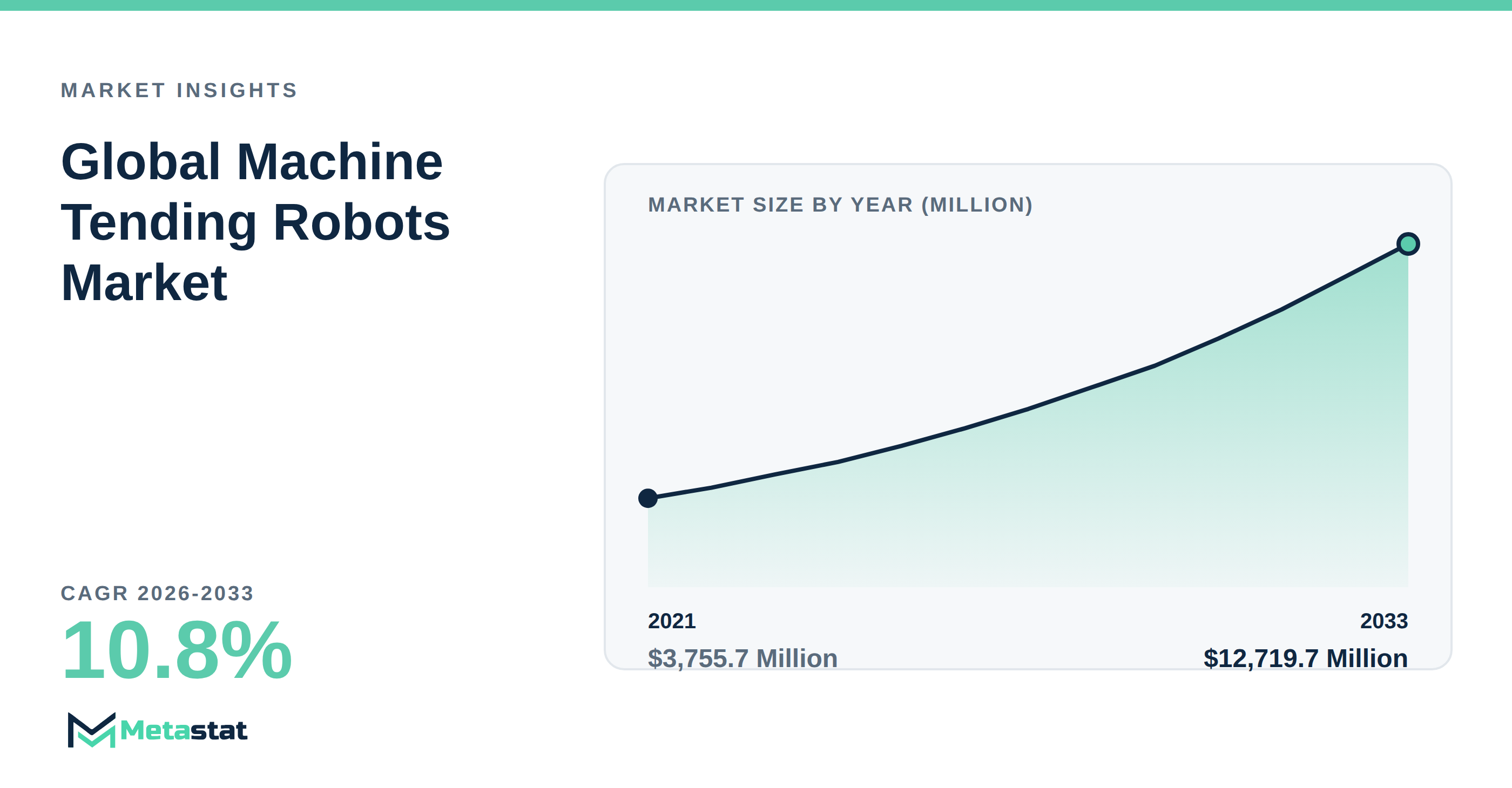
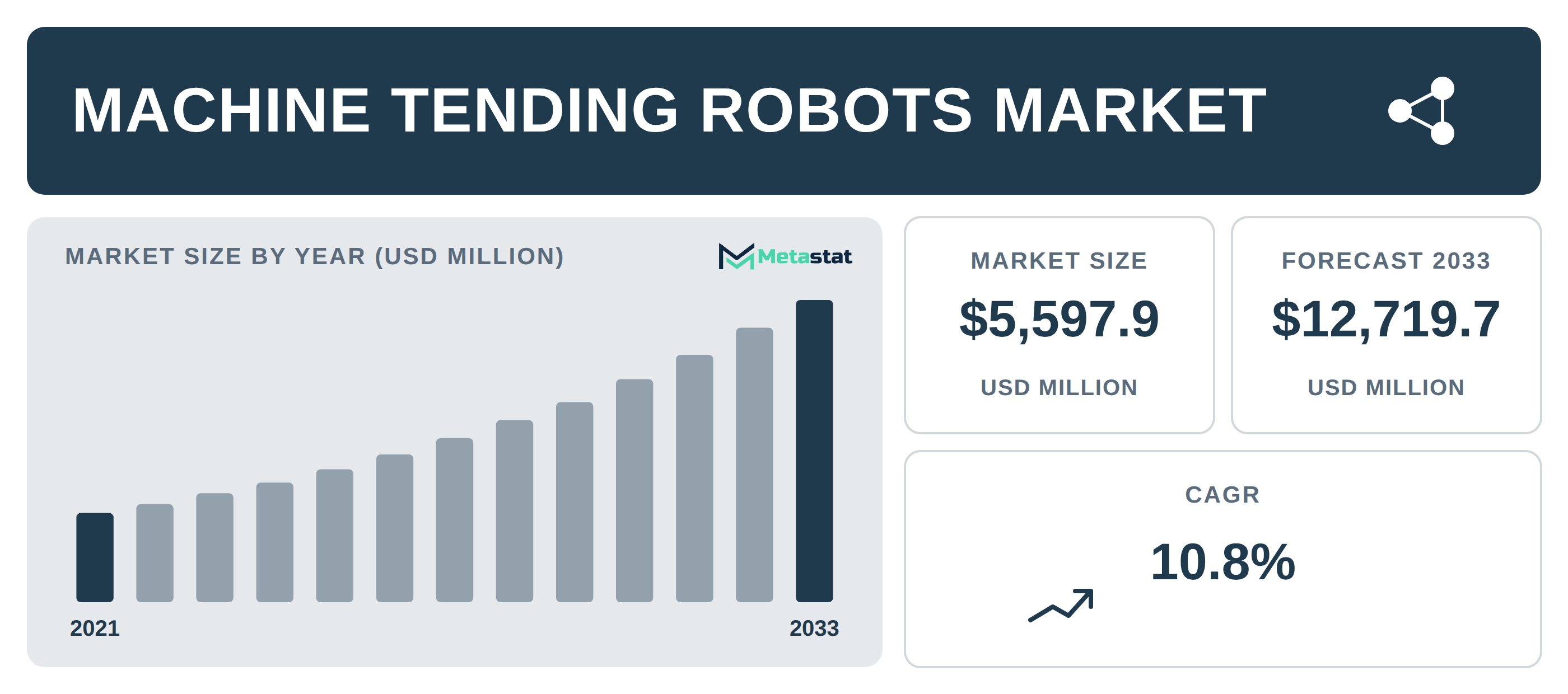
The evolving landscape of automation in manufacturing highlights significant shifts in the outlook for Machine Tending Robots. As industries increasingly embrace robotic solutions, key trends emerge that will shape their adoption and application through the end of the decade. The full figures are in our Machine Tending Robots market size and forecast report.
What role will automation play in manufacturing?
The emphasis on automation continues to rise, driven by manufacturers' need for operational efficiency and productivity improvements. Companies increasingly invest in Machine Tending Robots to replace manual labor, especially in sectors including automotive and electronics, where precision and speed are critical. This trend reflects a larger shift towards smart manufacturing, indicating the importance of advanced robotics in streamlining production processes.
How are collaborative robots changing the manufacturing landscape?
Collaborative robots, or cobots, are gaining traction in environments including high-mix machine shops, where varied production demands necessitate rapid reconfiguration. These robots work alongside human operators, enabling machine loading and unloading while minimizing downtime. The anticipated growth in the CNC Machine Tool Tending application segment illustrates this shift, rising from USD 2,801 million in 2026 to USD 6,007.5 million by 2033, reflecting a compound annual growth rate of 11.5%. Manufacturers adopting collaborative technologies lower operational costs and enhance flexibility, positioning themselves competitively within their sectors.
What is driving the demand for vision-guided systems?
Vision-guided part feeding technologies enhance unattended multi-machine production, leading to greater efficiency and reduced cycle times. Manufacturers increasingly seek these advanced systems to support higher production volumes without compromising quality. Flexible pricing options are becoming more common, allowing companies to align costs with anticipated returns on investment. This trend in the Machine Tending Robots outlook signals a need for tailored solutions that cater to specific operational goals while ensuring competitive pricing.
How does integrating gantry systems enhance production efficiency?
Integrating gantry and take-out robots in injection molding processes significantly minimizes cycle delays. This strategic move allows for the smooth removal of molded parts, thereby enhancing overall production flows. With industries relying more on robotics to accelerate production rates while managing labor costs, adopting these robotic systems signifies a vital step in optimizing manufacturing capabilities. Companies will find that investing in such technology leads to considerable productivity gains and improved quality control.
What should manufacturers consider when investing in robotic solutions?
When manufacturers evaluate the potential of robotic machine tending, they should assess the payback timeline associated with their investments. Enhanced productivity and decreased labor costs are immediate benefits, but the speed of return will rely on how quickly these solutions are implemented and their adaptability to evolving operational needs. Forward-thinking organizations will strategically invest in these technologies to secure advantages in an increasingly competitive environment.
Monitoring the trends in automation and the integration of advanced robotics will be crucial as manufacturers aim to enhance efficiency and reduce operational costs. The trajectory of the Machine Tending Robots outlook presents substantial opportunities for those willing to embrace innovation in their production processes.
Tags
About the Authors

LEAD ANALYST
Utkarsh Khirodkar is a Lead Market Research Analyst at MetaStat Insight, specializing in market intelligence, technology sector assessments, and competitive strategy.

INDUSTRY CONSULTANT - CHEMICALS & ADVANCED MATERIALS
Chemicals and Materials · Machinery & Equipment · Packaging
Amit Gadhekar Consultant for Chemicals and Materials at MetaStat Insight, directing sector-specific intelligence, research, and strategic consulting across global chemical and processing markets.

PRINCIPAL CONSULTANT - QUALITY SYSTEMS & COMPLIANCE
Electronics and Semiconductor · Machinery & Equipment · Professional Services
Omkar Phadtare is an Industry Consultant at MetaStat Insight, specializing in quality systems, regulatory compliance, and standards benchmarking to drive data-driven market intelligence and strategic industry research.

ENERGY & INFRASTRUCTURE INDUSTRY CONSULTANT
Automotive and Transportation · Electronics and Semiconductor · Energy and Power · Machinery & Equipment
Saurabh Vasant Ganvir consults for Energy & Infrastructure Industry at MetaStat Insight, specializing in renewable energy, solar EPC, and electric vehicle (EV) infrastructure markets.

LEAD CONSULTANT - COMMUNICATION, TELECOM, AND IT
Electronics and Semiconductor · Information & Technology · Machinery & Equipment · Professional Services
Ravindra Sathe Consultants for Communication, Telecom, and IT at MetaStat Insight. He leads the firm's industry research initiatives across telecommunications infrastructure, digital connectivity, enterprise networking, and emerging information technology domains.