
LEAD ANALYST
Utkarsh Khirodkar is a Lead Market Research Analyst at MetaStat Insight, specializing in market intelligence, technology sector assessments, and competitive strategy.

Global Aerospace & Defense FRP Semi-Finished Materials Market Size, Share, By Product Type (Fabric and Multiaxial Prepregs, Impregnated UD Tapes and Towpregs, Cured Thermoset Laminates and Sheets, Thermoplastic Organosheets and Laminates, FRP Sandwich Stock Panels), By Fiber Type (Carbon Fiber, Glass Fiber, Aramid Fiber, UHMWPE Fiber, Hybrid Fiber), By Polymer Matrix (Epoxy, Phenolic, Bismaleimide, Cyanate Ester, Thermoset Polyimide, Thermoplastic), By Vehicle Platform (Civil Fixed-Wing Aircraft, Military Fixed-Wing Aircraft, Civil Rotorcraft and Powered-Lift Aircraft, Military Rotorcraft and Powered-Lift Aircraft, UAVs, Space Vehicles), Industry Analysis, Growth, Trends, and Forecast, 2026-2033
Report ID
MSI-5630
Published
October, 2026
Pages
269 Pages
Format
Historical
Base year
Forecast
Forecast period
Report Details
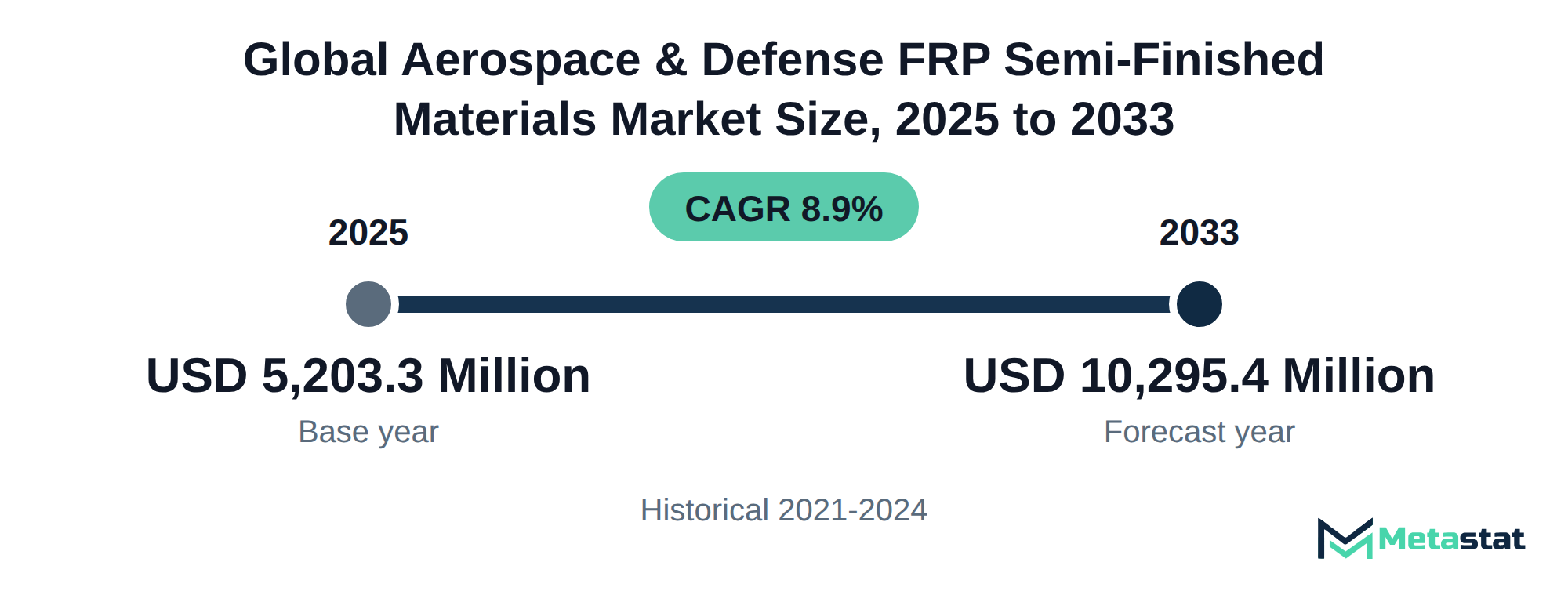
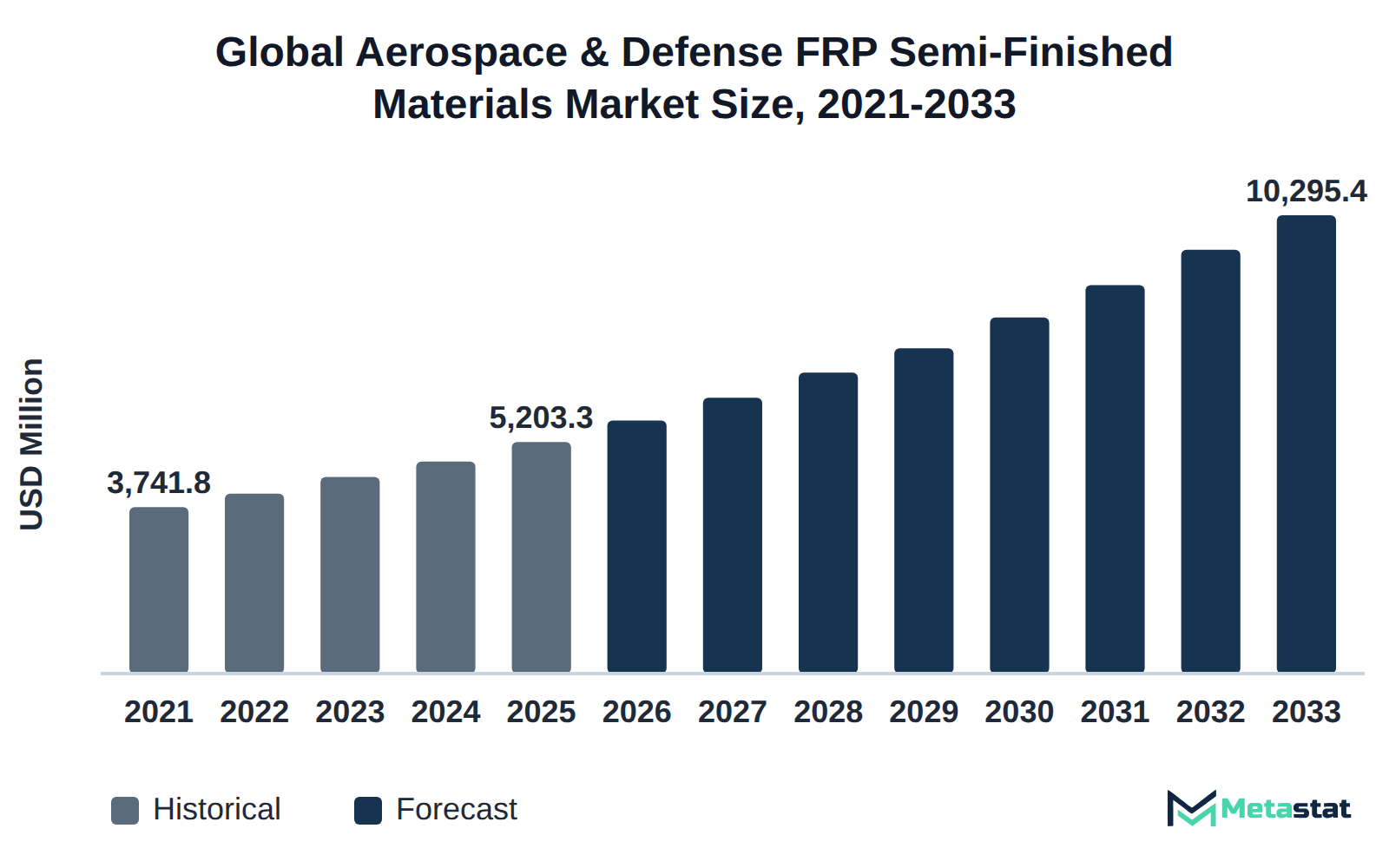
Market Valuation: Valued at $5,203.3 Million in 2025, projected to reach $10,295.4 Million by 2033 at a 8.9% CAGR.
Dominant Segment: The Fabric and Multiaxial Prepregs segment leads the market, driven by a strong preference for lightweight materials that enhance performance and fuel efficiency in aerospace applications.
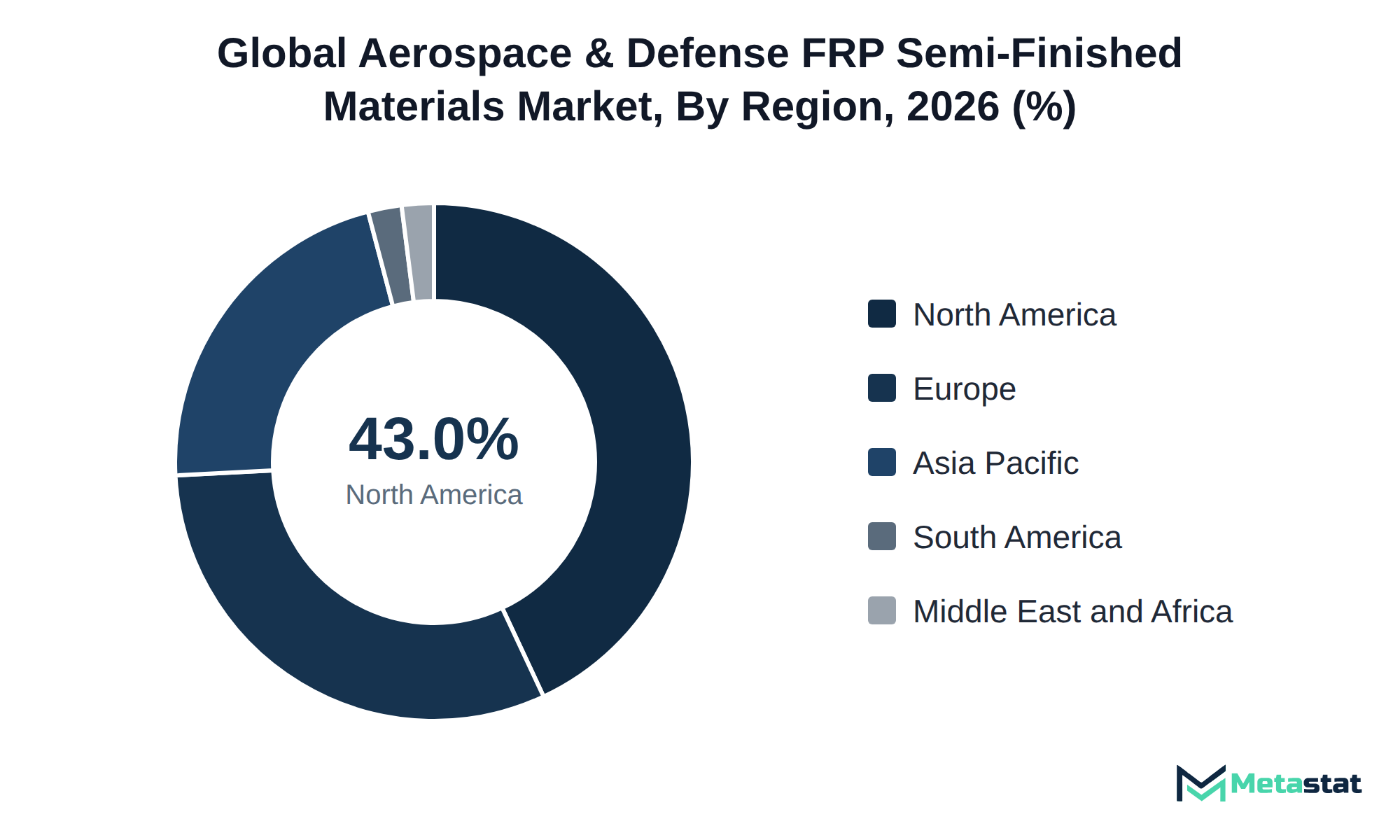
Geographic Lead: North America accounts for 43.0% of the market in 2025, with the US projected to maintain its leadership in 2026 due to significant investments in aerospace and defense sectors.
What's Inside: The report provides comprehensive coverage of market dynamics, competitive analysis, and detailed forecasts from 2026 to 2033, focusing on various product types and their applications.
Emerging Opportunities: The thermoplastic organosheets segment is expected to grow at a CAGR of 12.1%, reflecting increasing demand for lightweight materials that improve aircraft performance and manufacturing efficiency.
Input Costs Challenge: Rising production costs due to fluctuating raw material prices pose challenges to profitability, impacting purchasing decisions and market entry for some manufacturers.
Choose Your License
Global Aerospace & Defense FRP Semi-Finished Materials Market
The global Aerospace & Defense FRP Semi-Finished Materials market was valued at USD 5,203.3 million in 2025 and is projected to reach USD 10,295.4 million by 2033, growing at a CAGR of 8.9% over the forecast period.
The Aerospace & Defense FRP Semi-Finished Materials market encompasses advanced composite materials vital for the aerospace and defense industries. These materials replace traditional options with superior strength-to-weight ratios, durability, and resistance to environmental factors. Buyers invest in these materials to enhance performance, reduce weight, and improve the overall efficiency of aircraft and defense systems.
Growth in the market is driven by increasing demand for lightweight and high-performance materials in aircraft manufacturing and military applications. The segment featuring Fabric and Multiaxial Prepregs holds the most value, reflecting a strong preference for these products in various applications. North America holds 43.0% of the market in 2025, with the US leading in 2026. This region's dominance stems from substantial investment in defense and aerospace projects, alongside a strong manufacturing base.
Technological advancements in composite manufacturing processes further fuel market expansion. The introduction of innovative materials enhances product performance and reduces production costs, appealing to manufacturers and end-users. The Aerospace & Defense FRP Semi-Finished Materials market is projected to experience sustained growth, driven by the evolving needs of the aerospace and defense sectors.
The Aerospace & Defense FRP Semi-Finished Materials market features various advanced composite materials tailored for the aerospace and defense sectors. Buyers invest in these materials due to their lightweight properties, strong performance, and resistance to environmental factors, which enhance overall performance and efficiency in aircraft and defense applications. The demand for such materials has surged as manufacturers seek to optimize designs and improve fuel efficiency, thereby reducing operational costs.
Growth is propelled by the increasing adoption of lightweight materials in aircraft design, aimed at enhancing fuel efficiency and reducing emissions. Among the various segments, Impregnated UD Tapes and Towpregs exhibit the highest value, reflecting their critical role in advanced composite structures. North America holds 43.0% of the market in 2025, with the US leading in 2026, highlighting the region's significant investment in aerospace innovations and defense technologies.
The market is characterized by continuous advancements in material technologies, driving competition among manufacturers to develop innovative solutions. This competitive environment encourages innovation, leading to the introduction of new materials and production techniques. The ongoing demand for enhanced performance in aerospace and defense applications supports the market's growth trajectory, with a favorable outlook for the coming years.
Qualifying aerospace prepregs is central to safety and performance in the Aerospace & Defense FRP Semi-Finished Materials market. Manufacturers invest significant resources in qualifying materials to meet stringent industry standards and regulations. By 2026, the market for Fabric and Multiaxial Prepregs is anticipated to reach USD 1,908.7 million, demonstrating the growing importance of high-performance materials in aerospace applications. These prepregs form one part of the wider aerospace composites industry.
Long-term supply agreements between aerospace manufacturers and suppliers of prepregs emerge as a strategic necessity to secure reliable material availability. These agreements provide stability in pricing and supply, creating a collaborative relationship that encourages innovation in material development. Such strategic partnerships benefit both parties: manufacturers gain access to advanced materials tailored to specific performance requirements, while suppliers enjoy a consistent revenue stream.
With a projected market value of USD 3,175.1 million for Fabric and Multiaxial Prepregs by 2033, the emphasis on long-term supply agreements and rigorous qualification processes will shape competitive dynamics. Companies that effectively manage these relationships enhance their market position while ensuring compliance with safety standards, ultimately driving growth in the Aerospace & Defense FRP Semi-Finished Materials market.
Pricing structures for thermoplastic UD tapes and organosheets shape procurement decisions within the Aerospace & Defense FRP Semi-Finished Materials market. Buyers face a range of pricing models, including fixed pricing, volume-based discounts, and long-term contracts. For instance, the average cost for thermoplastic organosheets varies significantly based on customization and quantity, impacting overall project budgets. In 2026, the market for thermoplastic organosheets is anticipated to grow alongside the expected increase in demand for lightweight aircraft structures.
Contractual agreements significantly influence purchasing patterns, with many clients opting for long-term contracts to secure favorable pricing and supply stability. Such contracts are structured to benefit both parties, allowing manufacturers to forecast production needs while providing buyers with predictable costs over time. This arrangement enhances collaboration and reduces risks associated with fluctuating market prices.
The implications of these purchasing dynamics extend beyond immediate cost considerations. Efficient pricing strategies combined with contract models enable suppliers to optimize their production schedules, essential for meeting the anticipated growth in the market, projected to reach USD 10,295.4 million by 2033. Buyers seeking a competitive advantage need to understand these financial mechanisms.
Military vehicle protection increasingly relies on advanced materials, particularly FRP laminates and stock panels. The integration of these materials enhances vehicle durability while reducing overall weight, which is critical in defense applications. The Aerospace & Defense FRP Semi-Finished Materials market is projected to grow at a compound annual growth rate of 8.9% from 2026 to 2033. This growth reflects rising demand for lightweight yet durable solutions within military operations.
The specific requirements of military applications necessitate materials that provide protection and contribute to fuel efficiency and maneuverability. FRP laminates, recognized for their resistance to harsh environments, meet these criteria effectively. By employing these materials, manufacturers achieve a competitive edge, delivering vehicles that are both resilient and efficient. The shift towards the adoption of FRP technologies in military vehicle construction reflects evolving defense procurement strategies.
With the market prioritizing performance and efficiency, the demand for FRP stock panels in military applications continues to rise. The anticipated value of carbon fiber products within the Aerospace & Defense FRP Semi-Finished Materials market highlights the importance of advanced composites in meeting military specifications. By embracing these innovations, defense contractors position themselves favorably to secure contracts and enhance operational capabilities.
Revenue measurement in the Aerospace & Defense FRP Semi-Finished Materials market involves assessing the value generated from various product types, fiber types, and polymer matrices. This segmentation allows stakeholders to analyze performance effectively across specific categories. For example, the Fabric and Multiaxial Prepregs segment is projected to grow from USD 1,908.7 million in 2026 to USD 3,175.1 million by 2033, reflecting a compound annual growth rate (CAGR) of 7.5%. Such figures provide buyers with insight into which product categories drive revenue, aiding in strategic planning and investment decisions.
Measurement approaches include evaluating sales data, market demand, and pricing trends within these segments. Understanding these dynamics enables manufacturers and suppliers to identify profitable opportunities and allocate resources effectively. For instance, the Carbon Fiber segment demonstrates significant growth potential, with a projected increase from USD 3,591.7 million in 2026 to USD 6,608.6 million by 2033, corresponding to a CAGR of 9.1%. This strong growth highlights the importance of focusing on high-demand materials and adapting business strategies accordingly.
Shifting preferences toward lightweight materials significantly influence purchasing behavior among manufacturers in the aerospace and defense sectors. The transition prioritizes weight reduction in aircraft and military vehicles, enhancing operational efficiency and fuel economy. This trend is driven by advancements in composite technologies that enable the production of high-performance materials with reduced weight compared to traditional options. Manufacturers increasingly invest in Aerospace & Defense FRP Semi-Finished Materials, aligning with the industry's goal of improving overall performance metrics. This growth reflects the escalating demand for innovative solutions that support enhanced structural integrity while minimizing weight.
Growing emphasis on sustainability and energy efficiency further strengthens this trend, encouraging industry players to explore advanced composite materials. Manufacturers prioritize investments in new technologies and processes that optimize performance and resource utilization. The market's trajectory reflects a commitment to adopting materials that align with contemporary environmental standards.
Technological advancements in thermoplastic materials significantly impact the Aerospace & Defense FRP Semi-Finished Materials market. The introduction of high-performance thermoplastic organosheets and laminates supports manufacturers in achieving greater efficiency and flexibility during production processes. The lightweight and durable nature of these materials aligns with the industry's demand for improved performance and reduced overall weight in aircraft and defense systems. Enhanced processability enables manufacturers to tailor materials for specific applications, improving their market competitiveness.
The evolution of thermoplastic technologies reflects a broader trend of integrating advanced composite materials, driving innovation in design and fabrication methods. An increase in the adoption of thermoplastic organosheets particularly benefits civil and military aircraft segments, where rapid assembly and repair capabilities drive operational efficiency, including in aircraft maintenance, repair and overhaul. This technological shift is expected to support market growth, enabling suppliers to meet stringent performance standards while reducing costs associated with traditional thermoset processes. Ongoing investment in research and development significantly expands the potential applications of thermoplastic materials in the market.
Price volatility in raw materials significantly impacts purchasing decisions among buyers in the Aerospace & Defense FRP Semi-Finished Materials market. Fluctuations in the cost of key fibers and resin systems create uncertainty, leading to smaller order sizes and delayed procurement. Manufacturers and suppliers face challenges in forecasting costs, which constrains their ability to commit to long-term projects. Several firms, particularly those with limited budgets, experience heightened sensitivity to price changes, potentially slowing their entry into the market. The market shows a gradual adoption pattern, particularly within the civil aviation sector. Limited budgets and unpredictable pricing dynamics hinder investment in advanced materials, directly affecting growth opportunities in aerospace and defense applications.
Profitability in the Aerospace & Defense FRP Semi-Finished Materials market faces challenges due to rising production costs, driven by fluctuations in raw material prices and supply chain disruptions. Suppliers experience increasing expenses related to fiber materials, resins, and manufacturing processes, which pressure profit margins. Suppliers respond to these challenges by optimizing production techniques, investing in automation, and seeking alternative materials that provide cost advantages without compromising quality. Innovations in fiber and resin technology contribute to efforts aimed at reducing costs while maintaining performance standards. Emphasis on sustainable practices influences supplier strategies, with a push toward recyclable materials further driving investments in research and development. These measures enhance operational efficiency and align suppliers with evolving industry standards and buyer expectations, leading to improved market competitiveness.
The segment of thermoplastic organosheets within the Aerospace & Defense FRP Semi-Finished Materials market presents significant growth potential, driven by an annual growth rate of 12.1%. This segment addresses the increasing demand for lightweight and high-strength materials, essential for enhancing aircraft performance and fuel efficiency. With the ongoing development of innovative thermoplastic technologies, manufacturers are positioned to capture a larger share of the market. Buyers in the aerospace sector prioritize reduced weight and improved manufacturing efficiency, aligning with the capabilities of thermoplastic organosheets. Increasing investments in research and development further support advancements in this segment. Looking ahead, the market is anticipated to sustain demand for thermoplastic organosheets, contributing to overall market expansion through 2033.
The Global Aerospace & Defense FRP Semi-Finished Materials market is segmented based on Product Type, Fiber Type, Polymer Matrix, and Vehicle Platform.
These materials serve primarily in the aerospace and defense sectors, addressing various components requiring high strength and low weight. The demand for Fabric and Multiaxial Prepregs is driven by the ongoing transition towards lightweight materials, enhancing fuel efficiency and overall performance in aircraft. Compared to other segments like Impregnated UD Tapes and Towpregs, which exhibit a higher CAGR of 9.7%, this segment experiences slower growth. The specific requirements of aerospace applications dictate a focus on durability and performance, positioning Fabric and Multiaxial Prepregs distinctly within the market’s broader landscape.
Impregnated UD Tapes and Towpregs segment is estimated to reach USD 3,466.4 million by 2033, at a CAGR of 9.7% during the forecast period. This segment finds application primarily in aerospace and defense manufacturing, where it enhances the production of lightweight and high-strength components. Demand for these materials increases due to the ongoing emphasis on reducing aircraft weight and improving fuel efficiency, particularly within military and commercial aviation sectors. Compared to other sub-segments, including Cured Thermoset Laminates and Sheets, which have a slower growth rate, the Impregnated UD Tapes and Towpregs segment expands faster, driven by technological innovations in composite materials. With a focus on advanced performance characteristics, buyers in this segment prioritize strength-to-weight ratios, differentiating their purchasing choices from those of the other segments in this market.
The Cured Thermoset Laminates and Sheets segment is expected to reach USD 1,227.2 million by 2033. These materials serve critical functions in aerospace and defense applications, including in aircraft structures and military vehicles. Demand stems from the need for high-performance materials that offer durability and resistance to extreme environmental conditions. This segment benefits from a strong focus on lightweight and robust composite solutions, driving growth in applications requiring structural integrity. Compared to other segments, including Fabric and Multiaxial Prepregs, which exhibit a CAGR of 7.5%, Cured Thermoset Laminates and Sheets present a distinct opportunity with their specialized characteristics, although they experience slower growth than segments like Impregnated UD Tapes and Towpregs, which project a CAGR of 9.7%. The unique properties of thermoset materials, including thermal and chemical resistance, position them favorably for critical applications in the market.
Thermoplastic Organosheets and Laminates segment is projected to grow at a CAGR of 12.1% during the forecast period. This sub-segment finds application in the aerospace and defense industries, particularly in the manufacturing of lightweight components for aircraft and military vehicles. Demand for thermoplastic organosheets and laminates is driven by the increasing emphasis on reducing weight and enhancing fuel efficiency in aerospace applications. Compared to other product types, this segment demonstrates faster growth due to advancements in thermoplastic technologies that offer improved performance and manufacturability. While the market for Cured Thermoset Laminates and Sheets sees slower expansion, thermoplastic organosheets provide distinct advantages, including lower production costs and quicker processing times. This positions the segment favorably for investment and adoption among manufacturers seeking to innovate and enhance product offerings in the market.
FRP Sandwich Stock Panels feature composite structures designed to provide strength while maintaining a lightweight profile. These panels find applications in various aerospace and defense platforms, catering primarily to manufacturers focused on enhancing the durability and efficiency of their products. The rising demand for lightweight yet robust materials drives interest in this segment, particularly as defense and aerospace entities seek to improve performance metrics while reducing overall weight. These panels differ from other segments by offering unique properties that support specific operational requirements without compromising structural integrity. Their adoption aligns with broader trends toward composites that deliver enhanced mechanical performance, distinguishing them from more conventional materials.
Resin-Impregnated Preforms consist of composite materials that use resin to enhance strength and durability in various applications. This sub-segment finds usage primarily in aerospace and defense components, where performance and weight optimization are critical. Demand for these preforms is driven by the increasing requirement for lightweight materials that provide enhanced structural integrity. Compared to other products in the segment, including Fabric and Multiaxial Prepregs, this sub-segment faces different pricing dynamics and buyer preferences, often favoring advanced manufacturing techniques. The unique properties of resin-impregnated preforms allow for effective integration into complex structures, making them appealing to manufacturers focused on innovation in aerospace applications. Within the Aerospace & Defense FRP Semi-Finished Materials market, this segment supports the industry's ongoing transition toward high-performance composites.
This segment serves critical applications in military and civil aerospace, offering high strength-to-weight ratios essential for improving fuel efficiency and performance. Growing demand for lightweight materials in aircraft manufacturing drives significant interest in carbon fiber, particularly among major aerospace manufacturers. Compared to other fiber types, carbon fiber features higher pricing due to its advanced properties and production processes, contributing to its higher overall market valuation. The segment's growth aligns with the aerospace sector's shift towards innovative materials, promising considerable expansion in the coming years. Investment in advanced manufacturing techniques further enhances its appeal, reinforcing its position as a leading choice in the Aerospace & Defense FRP Semi-Finished Materials market.
Glass Fiber segment is estimated to reach USD 1,820.2 million by 2033, at a CAGR of 7.1% during the forecast period. Glass fiber finds application in a variety of aerospace and defense structures due to its lightweight and high-strength characteristics, making it a preferred choice for manufacturers of military and civil aircraft. The increasing focus on reducing aircraft weight drives demand for glass fiber, particularly in areas where cost considerations play a significant role. The growth rate of glass fiber is slower compared to carbon fiber, which has a CAGR of 9.1%, and its affordability positions it as a favorable alternative for certain applications. This segment attracts buyers focused on cost efficiency while still demanding good performance characteristics in aerospace and defense components. The market shows a strong push toward glass fiber solutions, in line with broader lightweighting trends across various vehicle platforms.
Aramid Fiber segment is expected to reach USD 693.9 million by 2033. This fiber type finds application in aerospace and defense industries, particularly in ballistic protection and lightweight structural components. The growing emphasis on enhancing durability and reducing weight drives demand within this segment. Aramid fibers exhibit superior strength-to-weight ratios, making them invaluable in military applications. Compared to other fiber types, including glass or carbon fibers, aramid fibers face relatively slower growth, with a CAGR of 7.1%. This slower rate arises from the niche applications they serve, which prioritize specific performance characteristics over general-purpose use. In the Aerospace & Defense FRP Semi-Finished Materials market, aramid fibers provide unique properties that differentiate them from competing materials, thereby influencing procurement strategies among manufacturers and suppliers in the sector.
UHMWPE Fiber segment is projected to grow at a CAGR of 10.7% during the forecast period. This fiber type finds applications in various military and aerospace components requiring lightweight yet robust materials. Demand for UHMWPE fiber is driven by the increasing emphasis on lightweight designs and high-performance standards among manufacturers, particularly in military rotorcraft. Compared to other fibers, including carbon and glass fibers, UHMWPE Fiber demonstrates distinctive properties, including enhanced durability and impact resistance, appealing to specific buyers focused on performance and safety. This segment's growth trajectory reflects its unique position within the Aerospace & Defense FRP Semi-Finished Materials market, driven by targeted advancements and investments in specialized applications.
Hybrid Fiber comprises composite materials that combine various fiber types, providing enhanced performance characteristics for aerospace and defense applications. This segment finds extensive use in high-performance components for both civil and military aircraft, where weight reduction and strength optimization remain critical. Demand stems primarily from manufacturers focusing on advanced materials to improve fuel efficiency and reduce emissions. The growth of this segment aligns with technological innovations aimed at integrating fibers that offer superior properties compared to traditional options. Compared to other segments, Hybrid Fiber presents unique pricing dynamics and performance advantages, facilitating its adoption among specialized applications. This differentiation positions Hybrid Fiber as a notable option in the evolving Aerospace & Defense FRP Semi-Finished Materials market.
Others, comprising basalt fiber and boron fiber, serve critical roles in specialized applications across aerospace and defense sectors. These materials find uses in various components requiring high strength-to-weight ratios, appealing to manufacturers focused on enhancing performance and durability. Demand for these fibers stems from the development of innovative composite materials that leverage their unique properties, including corrosion resistance and thermal stability. This sub-segment distinguishes itself from other fiber types in the market through its potential for niche applications, where specific performance characteristics justify higher pricing. Compared to more established fibers like carbon and glass, which benefit from broader adoption and higher production volumes, basalt and boron fibers cater to targeted needs, highlighting their specialized nature and potential for growth in tailored applications.
Epoxy segment is valued at USD 3,262.1 million in 2026 and is projected to reach USD 5,709.8 million by 2033, at a CAGR of 8.3% during the forecast period. This polymer matrix finds extensive use in the aerospace and defense sectors for applications including structural components, which require excellent mechanical properties and resistance to environmental stressors. Demand for epoxy primarily stems from advancements in manufacturing techniques that enhance overall performance and reduce weight in aircraft and military vehicles. Compared to other polymer matrices, epoxy exhibits a moderate growth rate, with a CAGR of 8.3%, differentiating itself from thermoplastics, which display faster growth due to their ease of processing and recycling. The increased focus on lightweight composites in the Aerospace & Defense FRP Semi-Finished Materials market strengthens the epoxy segment's position, ensuring its continued relevance in the evolving market.
Phenolic segment is estimated to reach USD 1,161.3 million by 2033, at a CAGR of 6.9% during the forecast period. This polymer matrix is primarily applied in applications requiring high resistance to heat and fire, making it suitable for aerospace components and defense equipment. The demand for phenolic materials is driven by strict safety regulations and performance requirements in these industries. Compared to other polymer matrices, including epoxy, which is projected to reach USD 5,709.8 million by 2033, phenolic materials exhibit slower growth. This slower pace reflects a narrower customer base focused on specific applications that prioritize fire resistance over weight savings. Overall dynamics of the Aerospace & Defense FRP Semi-Finished Materials market indicate that while phenolic materials face challenges in terms of market penetration, they maintain a crucial role in specialized applications prioritizing safety and durability.
Bismaleimide segment is expected to reach USD 888.5 million by 2033. This polymer matrix finds application in aerospace and defense sectors due to its superior thermal and mechanical properties, making it suitable for high-performance components. The segment experiences growth driven by increasing demand for lightweight and durable materials in aircraft structures and components. Bismaleimide exhibits a promising growth trajectory compared to other polymer matrices, reflecting a competitive CAGR. Unlike epoxy, which currently leads in market value, Bismaleimide offers unique advantages in high-temperature applications, appealing to manufacturers focused on enhancing performance and regulatory compliance. The aerospace and defense FRP semi-finished materials market benefits from advancements in resin formulations, supporting the expansion of this segment and catering to evolving industry requirements.
Cyanate Ester is projected to grow at a CAGR of 9.9% during the forecast period. This polymer matrix finds extensive application in high-performance aerospace components, where its superior thermal stability and mechanical properties enhance structural integrity. Manufacturers of civil and military aircraft use cyanate esters for critical components due to their excellent resistance to heat and chemicals. Increased demand for lightweight and durable materials significantly drives this segment, particularly within the aerospace & defense FRP semi-finished materials market. Compared to other polymer matrices, cyanate ester offers faster growth, reflecting rising investments in advanced composites and lightweight structures. This growth distinguishes it from other segments in this group, including phenolic, which is estimated to grow at 6.9% through 2033. The competitive landscape favors suppliers focused on cyanate ester, creating opportunities for enhanced market penetration.
Thermoset Polyimide is a crucial polymer matrix in various aerospace and defense applications, valued for its thermal stability and mechanical properties. This segment finds extensive use in high-performance components, particularly in environments subjected to high temperatures and harsh conditions. The growth of this segment is driven by increasing demand for lightweight and durable materials that enhance fuel efficiency and overall performance in aviation and military equipment. Compared to other segments, Thermoset Polyimide often commands a higher price point, reflecting its specialized applications and performance characteristics. Unlike segments including Epoxy and Phenolic, which are more widely used across a broader range of applications, Thermoset Polyimide appeals to niche markets requiring advanced material solutions. The Aerospace & Defense FRP Semi-Finished Materials market continues to evolve, driving innovation and diversification among various polymer matrices, including Thermoset Polyimide.
Thermoplastic is a vital polymer matrix type in various aerospace and defense applications. This segment finds particular use in components requiring improved performance, weight reduction, and ease of processing. Key buyers include manufacturers of civil and military aircraft, where lightweight and durable materials enhance fuel efficiency and overall performance. Demand for thermoplastic materials grows due to advancements in processing technologies and an increasing emphasis on sustainability. Compared to other polymer matrices, thermoplastic offers superior recyclability and processing flexibility, which supports its adoption in innovative designs. Its growth trajectory is influenced by rising needs for lightweight materials and the drive for enhanced manufacturing efficiencies within the market. In the context of the Aerospace & Defense FRP Semi-Finished Materials market, thermoplastic serves as a competitive alternative to traditional thermoset options.
Others, encompassing polyurethane, polyester, and vinyl ester, serve niche roles within the polymer matrix category. These materials find usage in various aerospace and defense applications, particularly in components that require specific mechanical properties and chemical resistance. The demand for these materials is influenced by the ongoing need for lightweight and durable solutions in military and commercial aircraft. Compared to other polymer matrices, including epoxy and phenolic, this segment experiences slower growth due to the established dominance of more widely used materials. The specialization required for processing and application results in different buyer dynamics, often targeting specialized manufacturers and contractors. These factors collectively shape the trajectory of the Aerospace & Defense FRP Semi-Finished Materials market, highlighting the importance of innovation and adaptability in this sub-segment.
Civil Fixed-Wing Aircraft segment is valued at USD 2,873.2 million in 2026 and is projected to reach USD 4,855.3 million by 2033, at a CAGR of 7.8% during the forecast period. This segment serves critical roles in commercial and military aviation, relying on composite materials for structural components that enhance performance and fuel efficiency. The increasing demand for lightweight and high-strength materials drives growth, influenced by advancements in aerospace technologies and regulatory pressures for emissions reductions. Compared to other segments, Civil Fixed-Wing Aircraft experiences moderate growth relative to Military Fixed-Wing Aircraft, which shows a CAGR of 8.6%. The unique requirements of civil aviation, including safety and cost-effectiveness, distinguish it from military applications. Successful integration of innovative materials in this segment supports broader trends in the Aerospace & Defense FRP Semi-Finished Materials market.
The Military Fixed-Wing Aircraft segment is estimated to reach USD 2,165.1 million by 2033, at a CAGR of 8.6% during the forecast period. This segment includes composite materials in the construction of military aircraft, focusing primarily on enhancing performance, durability, and weight efficiency. Key players in this segment include defense contractors and military organizations that prioritize advanced materials for improved capabilities. Significant demand arises from increasing defense budgets globally, driving investments in military aviation modernization. This segment differentiates itself from civil platforms by emphasizing specialized technology and materials tailored for military specifications, which influences pricing and adoption patterns. The forecasted growth rate reflects the ongoing need for advanced materials in military applications, contributing to the overall dynamics of the Aerospace & Defense FRP Semi-Finished Materials market.
Civil Rotorcraft and Powered-Lift Aircraft segment is expected to reach USD 529.2 million by 2033. These aircraft play critical roles in various applications, including search and rescue missions, medical evacuations, and transport logistics for military and civilian purposes. Powered-lift designs also connect this segment to the advanced air mobility industry. A significant growth factor includes advancements in composite materials, which contribute to improved structural integrity and reduced weight in rotorcraft designs. Compared to other vehicle platforms, including Military Fixed-Wing Aircraft, this segment experiences slightly slower growth, supported by a CAGR of 7.9%. The Aerospace & Defense FRP Semi-Finished Materials market reflects ongoing investment in technology that enhances the capabilities of rotorcraft, enabling manufacturers to meet increasing operational demands.
Military Rotorcraft and Powered-Lift Aircraft segment is projected to grow at a CAGR of 7.9% during the forecast period. This segment is essential in military operations, primarily used by armed forces for troop transport, logistical support, and reconnaissance activities. Increased defense spending and modernization programs worldwide drive demand in this segment, highlighting the urgency for advanced rotorcraft technologies. Compared to other vehicle platforms, military rotorcraft and powered-lift aircraft exhibit a distinctive growth trajectory, influenced by the need for versatile and efficient aerial capabilities. The projected market value for this segment reflects a targeted focus on enhancing operational effectiveness through innovative materials tailored for military applications. This emphasis on performance and durability sets it apart from other segments, including civil fixed-wing aircraft, which experience different market dynamics driven by commercial demand. The Aerospace & Defense FRP Semi-Finished Materials market is expected to evolve, with military rotorcraft contributing significantly to overall growth.
UAVs encompass unmanned aerial vehicles, commonly called drones, widely used in military operations, reconnaissance, and surveillance applications. This segment attracts defense contractors and government agencies focused on enhancing operational efficiency and reducing human risk in various missions. Growth is driven by technological advancements and increasing investments in military UAV programs, reflecting a broader shift toward automation in defense capabilities. The segment differs from others in the vehicle platform category due to its specific application requirements and higher emphasis on lightweight materials that improve flight efficiency. Other segments, including military fixed-wing aircraft, experience steady growth. UAVs, by contrast, feature dynamic innovations that support rapid adoption, driven by evolving defense strategies and the market's focus on cost-effective solutions for aerospace and defense FRP semi-finished materials.
Space Vehicles represent a niche segment focused on specialized applications in aerospace exploration and satellite deployment, employing advanced composite materials. These vehicles are integral for national defense missions, scientific research, and commercial space ventures. Demand for this segment is driven by increasing investments in space exploration and advancements in satellite technology. The segment distinguishes itself from others within the vehicle platform category due to its higher reliance on innovative materials that enhance performance and reduce weight. Producers focus on developing products that meet stringent requirements for thermal protection and structural integrity. The market for space vehicles is expected to grow amid an expanding ecosystem of private and governmental space initiatives, further influencing the demand for Aerospace & Defense FRP Semi-Finished Materials.
Military Land Vehicles and Naval Vessels segment encompasses critical applications designed for defense and maritime operations. These materials support the construction of durable and lightweight components, essential for enhancing performance and operational efficiency. Demand for advanced composite materials in this segment arises from increasing investments in military capabilities and modernization programs. This segment experiences unique challenges, including stringent regulatory standards and the necessity for specialized manufacturing processes, which hinder rapid adoption compared to other segments including Civil Fixed-Wing Aircraft. The market is expected to evolve, driven by innovations in composite technology that improve the performance characteristics of military platforms.
Based on geography, the Global Aerospace & Defense FRP Semi-Finished Materials market is divided into North America, Europe, Asia-Pacific, South America, Middle East, and Africa.
Demand for Aerospace & Defense FRP Semi-Finished Materials in North America is fueled by the strong aerospace and defense industries in the United States, Canada, and Mexico. The region benefits from significant investment in military and commercial aircraft, driving the need for advanced composite materials that enhance performance and reduce weight. North America holds a 43.00% share of the global market in 2025. A strong focus on research and development initiatives supports innovation within the sector, ensuring the availability of advanced materials. By the end of 2033, the market in North America is projected to reach USD 4,286 million, reflecting ongoing growth driven by emerging technologies and increased production capacities.
The Aerospace & Defense FRP Semi-Finished Materials market in Europe demonstrates strong demand driven by the aerospace and defense manufacturing sectors. Notable countries including Germany, France, and the UK invest significantly in advanced composite materials for aircraft and military applications. The emphasis on innovation and sustainability in these industries supports the growth of this market. Regulatory standards pertaining to safety and efficiency further encourage the adoption of high-performance materials. Europe holds a 31.1% share of the global market in 2025. The market in this region is projected to benefit from ongoing technological advancements and increasing military expenditures, which push for enhanced performance and reduced weight in components.
Demand for Aerospace & Defense FRP Semi-Finished Materials in Asia-Pacific is driven by the growing aerospace and defense industries, particularly in countries like China and India. Significant investments in military modernization and infrastructure development in these nations support demand for advanced composite materials. Japan's focus on developing next-generation aircraft technologies enhances local market dynamics. The region's share of the global market in 2025 stands at 21.7%. South Korea's commitment to enhancing its defense capabilities further contributes to the market's growth. Australia actively engages in partnerships for aerospace development, reinforcing its position in the sector. Overall, the market benefits from a competitive environment that promotes innovation and collaboration among key players.
In South America, the Aerospace & Defense FRP Semi-Finished Materials market faces unique conditions influencing demand. Brazil and Argentina represent key countries, where the aerospace and defense sectors undergo modernization efforts that drive the need for advanced materials. The region's market share in 2025 reflects limited but steady growth potential. Investments in infrastructure and aerospace manufacturing capabilities support the development of domestic production facilities. These developments align with global trends toward lightweight materials that enhance fuel efficiency and performance in aircraft. The market anticipates gradual improvements in both military and civil applications, contributing to growing adoption of innovative semi-finished materials.
In the Middle East and Africa, the Aerospace & Defense FRP Semi-Finished Materials market remains influenced by increased military spending, particularly in nations including Saudi Arabia and the UAE. The growing emphasis on defense capabilities drives demand for advanced composite materials in various applications. South Africa's aerospace sector contributes to the market, focusing on regional aircraft manufacturing and maintenance. Investment in infrastructure, including military bases and airfields, supports the growth of the aerospace and defense sectors. The market's share reached 2.00% in 2025, reflecting ongoing development within the broader industry context. Demand from military fixed-wing aircraft and rotorcraft stimulates interest in high-performance FRP materials, enhancing competitive positioning in this region.
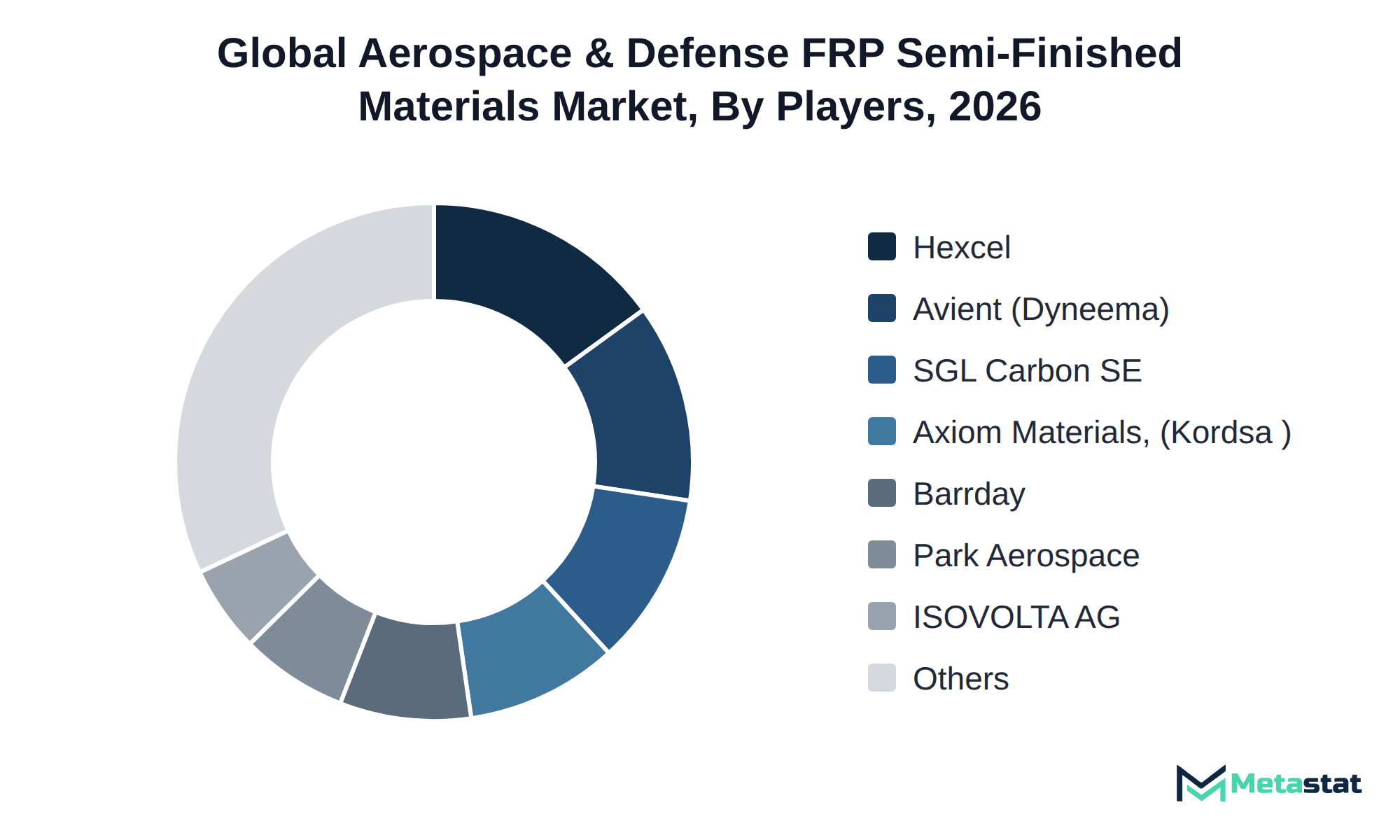
Competition in the Aerospace & Defense FRP Semi-Finished Materials market consists of various strategies among leading players, who focus on different aspects of product delivery and customer engagement. Companies prioritize factors including price, certification, customization, and service to attract buyers, influencing purchasing decisions.
Avient Corporation (Dyneema) emphasizes high-performance fibers and lightweight materials, catering to the demand for durability in aerospace applications. Hexcel Corporation positions itself with a strong focus on advanced composite materials, targeting customers seeking innovative solutions in the defense sector. Meanwhile, Axiom Materials, Inc. (Kordsa Group) concentrates on developing tailored products to meet specific client requirements, reinforcing its presence in the competitive landscape.
Achieving this growth hinges on several key developments. Strong demand for Carbon Fiber materials in the Aerospace & Defense FRP Semi-Finished Materials market drives expansion, particularly for military fixed-wing aircraft, which require high-performance materials for structural integrity. Anticipated growth in commercial aircraft manufacturing supports this forecast, with the civil fixed-wing aircraft segment driven by increased air travel and the demand for fuel-efficient designs.
Investment in advanced manufacturing technologies enhances production efficiency and reduces costs associated with the introduction of new materials, including Thermoplastic Organosheets and Laminates. However, challenges exist. Fluctuating raw material prices pose a significant risk, potentially affecting profit margins across various segments. Adverse market conditions in regions like Europe and Asia Pacific further complicate growth prospects. With careful management of these factors, the market is expected to reach USD 10,295.4 million by 2033.
By Product Type: Fabric and Multiaxial Prepregs, Impregnated UD Tapes and Towpregs, Cured Thermoset Laminates and Sheets, Thermoplastic Organosheets and Laminates, FRP Sandwich Stock Panels, Others (Resin-Impregnated Preforms)
By Fiber Type: Carbon Fiber, Glass Fiber, Aramid Fiber, UHMWPE Fiber, Hybrid Fiber, Others (Basalt Fiber, Boron Fiber)
By Polymer Matrix: Epoxy, Phenolic, Bismaleimide, Cyanate Ester, Thermoset Polyimide, Thermoplastic, Others (Polyurethane, Polyester, Vinyl Ester)
By Vehicle Platform: Civil Fixed-Wing Aircraft, Military Fixed-Wing Aircraft, Civil Rotorcraft and Powered-Lift Aircraft, Military Rotorcraft and Powered-Lift Aircraft, UAVs, Space Vehicles, Others (Military Land Vehicles, Naval Vessels)
The report strategically identifies and profiles the key market players and analyses their core competencies in each sub-segment of the Aerospace & Defense FRP Semi-Finished Materials market.
Report Attributes | Details |
Study Period | 2021-2033 |
Base Year | 2025 |
Estimated Year | 2026 |
Forecast Period | 2026-2033 |
Historical Period | 2021-2025 |
Growth Rate | CAGR 8.9% from 2026 to 2033 |
Revenue Unit | USD million |
Segmentation | By Product Type, Fiber Type, Polymer Matrix, Vehicle Platform, and Region |
By Region | North America (By Product Type, Fiber Type, Polymer Matrix, Vehicle Platform, and Country)
|
Europe (By Product Type, Fiber Type, Polymer Matrix, Vehicle Platform, and Country)
| |
Asia Pacific (By Product Type, Fiber Type, Polymer Matrix, Vehicle Platform, and Country)
| |
South America (By Product Type, Fiber Type, Polymer Matrix, Vehicle Platform, and Country)
| |
Middle East and Africa (By Product Type, Fiber Type, Polymer Matrix, Vehicle Platform, and Country)
|
Find answers to common questions about this report
The Aerospace & Defense FRP Semi-Finished Materials market size was valued at USD 5,203.3 million in 2025.
The market is projected to grow at a CAGR of 8.9% during the forecast period from 2026 to 2033.
The North America Aerospace & Defense FRP Semi-Finished Materials market size is estimated to reach USD 4,286 million by 2033.
Fabric and Multiaxial Prepregs leads the Aerospace & Defense FRP Semi-Finished Materials market with a projected value of USD 3,175.1 million by 2033. This segment surpasses others in terms of revenue generation within the market.
Shifting preferences toward lightweight materials significantly influence purchasing behavior among manufacturers, driven by advancements in composite technologies that enhance operational efficiency and fuel economy. The growing emphasis on sustainability and energy efficiency further strengthens this trend, encouraging industry players to explore advanced composite materials.
North America holds the dominant share of the Aerospace & Defense FRP Semi-Finished Materials market, with a value of USD 4,286 million projected for 2033. This region accounts for 43 percent of the total market share.
Price volatility in raw materials significantly impacts purchasing decisions, leading to smaller order sizes and delayed procurement. Rising production costs, driven by fluctuations in raw material prices and supply chain disruptions, challenge profitability in the market.
Shifting preferences toward lightweight materials, driven by advancements in composite technologies, significantly influence adoption in the aerospace and defense sectors. The emphasis on sustainability, energy efficiency, and the development of innovative thermoplastic organosheets further enhances the appeal of Aerospace & Defense FRP Semi-Finished Materials.
The Aerospace & Defense FRP Semi-Finished Materials market is estimated to reach a valuation of USD 10,295.4 million by 2033.
Key players operating in the Aerospace & Defense FRP Semi-Finished Materials market include Avient Corporation (Dyneema), Axiom Materials, Inc. (Kordsa Group), Barrday Inc., Hexcel Corporation, ISOVOLTA AG, Krempel GmbH, Park Aerospace Corp., and Teijin Limited.
The analysts below cover Aerospace and Defense research at Metastat Insights.
LEAD ANALYST
Utkarsh Khirodkar is a Lead Market Research Analyst at MetaStat Insight, specializing in market intelligence, technology sector assessments, and competitive strategy.
Evaluating sensor fusion reliability across harsh operating environments can be tricky without field-validated data. The study on agricultural autonomous guidance systems clearly separated stereo vision setups from automotive-grade solid-state LiDAR. We appreciated the regional infrastructure analysis, specifically around RTK network density across North America and South America. During our follow-up consultation, the MetaStat Insight team walked through tier-two perception software partnerships, giving our engineering leads a practical basis for vendor shortlisting.
Analyzing the transition from natural gas to green hydrogen in iron ore reduction requires realistic infrastructure timelines. Meta stat insight supplied a detailed regional assessment of DRI plant conversion costs and scrap metal availability in North America and Western Europe. Their report carefully examined pellet quality specs and electrical grid access constraints without making oversimplified market assumptions. The research material served as a practical reference during internal technology roadmap discussions.
Integrating zero-trust access controls across legacy electronic health record systems involves complex compliance overhead. Team produced an analysis that clearly separated identity governance and administration tools from privileged access management platforms. Their evaluation of HIPAA and GDPR compliance features across cloud native solutions gave our architecture group clear baseline criteria. The custom data request regarding biometric authentication adoption in hospital networks was returned promptly with clear documentation.
Explore related market intelligence reports worth reading alongside this one.
Starting from
$2950