
LEAD ANALYST
Utkarsh Khirodkar is a Lead Market Research Analyst at MetaStat Insight, specializing in market intelligence, technology sector assessments, and competitive strategy.

Global Anaerobic Incubators Market Size, Share, By Product Type (Portable Anaerobic Incubators, Benchtop Anaerobic Incubators, Large-Capacity Anaerobic Incubators, and Others), By Application (Microbiology, Clinical Testing, Pharmaceutical, Biotechnology, and Others), By End-User (Hospitals, Research Laboratories, Pharmaceutical Companies, Biotechnology Firms, and Others), Industry Analysis, Growth, Trends, and Forecast, 2026-2033
Report ID
MSI-4782
Published
May, 2026
Pages
312 Pages
Format
Report Details
Choose Your License
Anaerobic Incubators Market
Global Anaerobic Incubators market size is valued at USD 177.5 million in 2025 and projected to grow at a CAGR of 7.8% during the forecast period, reaching USD 323.6 million by 2033.
North America holds 32.6% in 2025 with US leading the market share in 2025.
Portable Anaerobic Incubators segment account for a market share of 17.5% in 2025.
Key trends driving growth: Rising clinical microbiology and microbiome research demand, Expansion of pharmaceutical, biotechnology, and academic anaerobic culture workflows
Opportunities include adoption of automated, hydrogen-free, data-logging anaerobic workstations and chamber systems.
Key insight: The Global Anaerobic Incubators Market is growing steadily as laboratories prioritize reliable low-oxygen culture environments, workflow efficiency, and contamination control.
The Global Anaerobic Incubators Market has become increasingly critical in microbiology and life sciences, where strict oxygen-free environments are required for culturing anaerobic organisms. These systems are widely used in pathogen identification, microbiome research, drug discovery, food safety testing, and environmental analysis.
Healthcare institutions and research facilities are upgrading to modern incubators with advanced sealing systems, digital monitoring, gas-efficiency controls, and integrated safety features. Adoption is also increasing among pharmaceutical and biotechnology companies conducting controlled culture studies. With broader research activity and rising diagnostic testing volumes, the Global Anaerobic Incubators Market will maintain steady growth throughout the forecast period.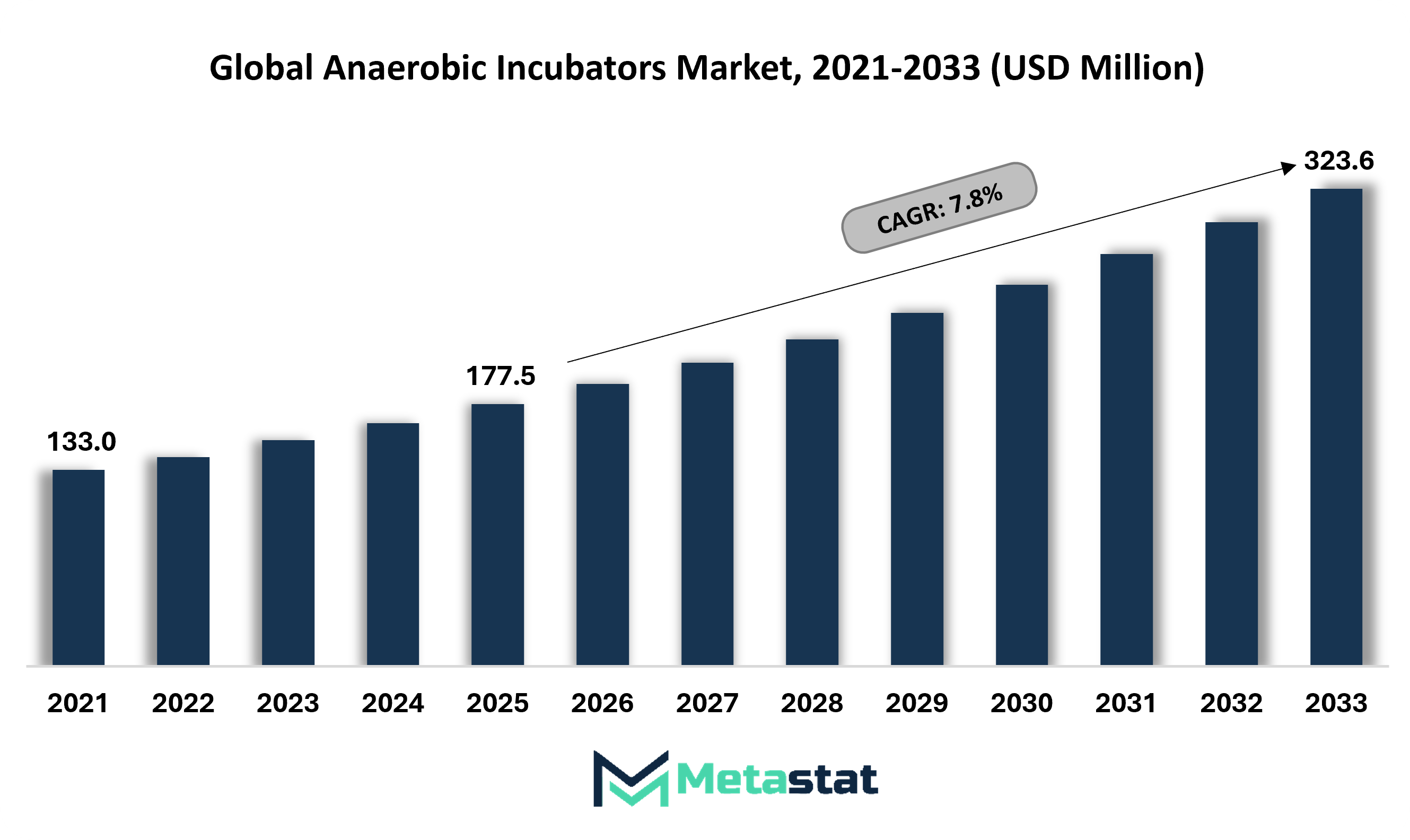
Rising clinical microbiology and microbiome research demand.
Growing hospital diagnostics, infection surveillance, gut flora research, and precision medicine applications will increase laboratory demand for oxygen-free cultivation equipment. Broader pathogen mapping, resistance tracking, and therapeutic strain screening will support procurement activity. Public health laboratories and private testing facilities will create sustained equipment replacement cycles.
Expansion of pharmaceutical, biotechnology, and academic anaerobic culture workflows
Drug discovery programs, vaccine development, biologics production research, and university life science projects will expand controlled culture requirements. Fermentation research, microbial metabolite analysis, and strain maintenance programs will encourage chamber installation. Research grants, contract testing growth, and pilot-scale innovation centers will strengthen future procurement momentum.
High capital cost and ongoing gas, catalyst, and maintenance burden
Premium chamber pricing, accessory costs, gas mixture charges, catalyst replacement, calibration service costs, and routine maintenance will pressure laboratory budgets. Small institutions, regional colleges, and early-stage startups will postpone purchases. Extended payback periods and procurement approvals will restrict faster market penetration among cost-sensitive customers.
Need for skilled operation, contamination control, and precise oxygen monitoring
Specialized handling techniques, sterilization discipline, seal integrity tests, media preparation accuracy, and sensor validation will remain critical for reliable outcomes. Staff shortages in laboratory operations will reduce efficiency. Training investments, system audits, and strict quality protocols will remain vital for consistent culture performance.
Adoption of automated, hydrogen-free, data-logging anaerobic workstations and chamber systems
Smart chambers with touch controls, remote alerts, integrated data capture, barcode monitoring, and safer hydrogen-free designs will attract modern laboratories. Regulatory documentation requirements and digital traceability trends will support upgrades. Energy-efficient models, modular capacity options, and connected monitoring platforms will open strong revenue potential.
The Global Anaerobic Incubators market is classified based on Product Type, Application, and End-User.
Portable Anaerobic Incubators segment is valued at USD 33.5 million in 2026 and is projected to reach USD 61.2 million by 2033, at a CAGR of 9% during the forecast period.
Portable anaerobic incubators support field diagnostics, mobile sampling, emergency testing, and remote research activities. Compact frames, battery support, fast chamber stabilization, and digital monitoring will boost adoption. Growth will emerge from outreach healthcare programs, food safety testing, and temporary laboratory setups requiring reliable oxygen-free culture conditions.
Benchtop Anaerobic Incubators segment is valued at USD 82.5 million in 2026 and is projected to reach USD 142.8 million by 2033, at a CAGR of 8.2% during the forecast period.
Benchtop anaerobic incubators remain suitable for routine laboratory workflows where space efficiency is important. Improved sealing systems, touch controls, data logging, and low-noise operation will strengthen adoption. Academic centers, hospital laboratories, and small research units will prefer practical designs with consistent environmental control.
Large-Capacity Anaerobic Incubators segment is valued at USD 54.6 million in 2026 and is projected to reach USD 88.4 million by 2033, at a CAGR of 7.1% during the forecast period.
Large-capacity anaerobic incubators address high-volume processing needs across industrial laboratories and production sites. Multi-shelf layouts, automated gas regulation, and batch traceability will support productivity gains. Rising sample loads from clinical screening and commercial microbiology will increase procurement interest during the coming years.
Others segment is valued at USD 20.6 million in 2026 and is projected to reach USD 31.2 million by 2033, at a CAGR of 6.1% during the forecast period.
Other product variants include customized chambers, modular structures, hybrid units, and specialized culture platforms built for niche applications. Flexible engineering, sensor improvements, and tailored dimensions will appeal to buyers seeking workflow alignment. Innovation within smaller categories will create valuable opportunities for manufacturers.
Microbiology segment is projected to reach USD 95.6 million by 2033, at a CAGR of 7.3% during the forecast period.
Microbiology applications maintain strong importance owing to the frequent cultivation of oxygen-sensitive organisms. Faster recovery rates, contamination control, and precise temperature consistency will improve laboratory outcomes. Growing focus on infectious disease mapping, environmental sampling, and food hygiene testing will sustain future demand across regions.
Clinical Testing segment is projected to reach USD 79.2 million by 2033, at a CAGR of 7.1% during the forecast period.
Clinical testing requires dependable incubation for pathogen identification linked with patient care decisions. Advanced monitoring tools, shorter turnaround cycles, and reliable chamber conditions will enhance laboratory efficiency. Rising diagnostic volumes, antimicrobial resistance surveillance, and hospital network expansion will encourage broader installation levels.
Pharmaceutical segment is projected to reach USD 64.5 million by 2033, at a CAGR of 8.3% during the forecast period.
Pharmaceutical use includes sterility research, microbial quality checks, process research, and process validation. Strict compliance standards will push demand for accurate controls, audit trails, and repeatable performance. Expansion of drug production capacity will generate new procurement activity across regulated production environments.
Biotechnology segment is projected to reach USD 55.7 million by 2033, at a CAGR of 9.3% during the forecast period.
Biotechnology operations rely on controlled anaerobic environments for strain development, fermentation studies, and advanced biological research. Smart interfaces, remote supervision, and data integration will improve workflow continuity. Investment growth within bioscience innovation hubs will reinforce market momentum over the coming years.
Others segment is projected to reach USD 28.6 million by 2033, at a CAGR of 7.5% during the forecast period.
Other applications include agricultural research, veterinary science, cosmetics testing, and educational training programs. Specialized culture requirements will create steady need for adaptable equipment formats. Broader awareness regarding microbial science will widen usage across emerging sectors with focused laboratory expansion plans.
Hospitals segment is projected to reach USD 93.9 million by 2033.
Hospitals require fast and accurate microbial culture support for diagnosis and infection control. Space-saving units, simplified operation, and reliable chamber recovery will suit busy laboratory settings. Growth in healthcare infrastructure and higher patient testing volumes will support continued equipment replacement cycles.
Research Laboratories segment is projected to reach USD 83.7 million by 2033.
Research laboratories pursue advanced organism research, resistance mapping, and process experimentation requiring stable anaerobic conditions. Precision sensors, configurable chambers, and continuous data capture will remain attractive features. Public funding, private grants, and university expansion will steadily elevate procurement activity.
Pharmaceutical Companies segment is projected to reach USD 67.2 million by 2033.
Pharmaceutical companies require dependable incubation systems for compliance testing, manufacturing hygiene, and product development programs. Automation, validation support, and durable construction will gain significance. Capacity additions within drug manufacturing networks will increase long-term spending across the Global Anaerobic Incubators Market.
Biotechnology Firms segment is projected to reach USD 53.1 million by 2033.
Emerging biotechnology firms need adaptable incubation tools supporting rapid project shifts and experimental scaling. Compact footprints, software connectivity, and dependable control offer operational value. Future demand will increase through venture-backed innovation, cell-based research expansion, and wider commercialization of microbial technologies.
Others segment is projected to reach USD 25.7 million by 2033.
Contract laboratories, food processors, environmental agencies, and public health centers form an additional customer base. Each group seeks stable performance and manageable operating costs. Future market presence will strengthen through outsourcing trends, regulatory monitoring programs, and infrastructure upgrades across developing economies.
Based on geography, the Global Anaerobic Incubators market is divided into North America, Europe, Asia-Pacific, South America, Middle East, and Africa.
North America benefits from strong diagnostic testing demand, established laboratory automation adoption, and widespread biomedical research funding.
The presence of leading equipment manufacturers and replacement demand from mature laboratories continue to support regional growth.
Europe holds a significant position in the Anaerobic Incubators Market, supported by strong clinical microbiology infrastructure, advanced pharmaceutical research activity, and established laboratory quality standards.
Asia Pacific provides strong opportunities through expanding healthcare infrastructure, rising biotechnology funding, and growing university research programs.
Domestic manufacturing growth and ongoing laboratory modernization projects are improving affordability across Asia Pacific.
Across the Middle East, Africa, and South America, demand is supported by healthcare laboratory expansion, food safety testing needs, and gradual improvement in scientific research infrastructure.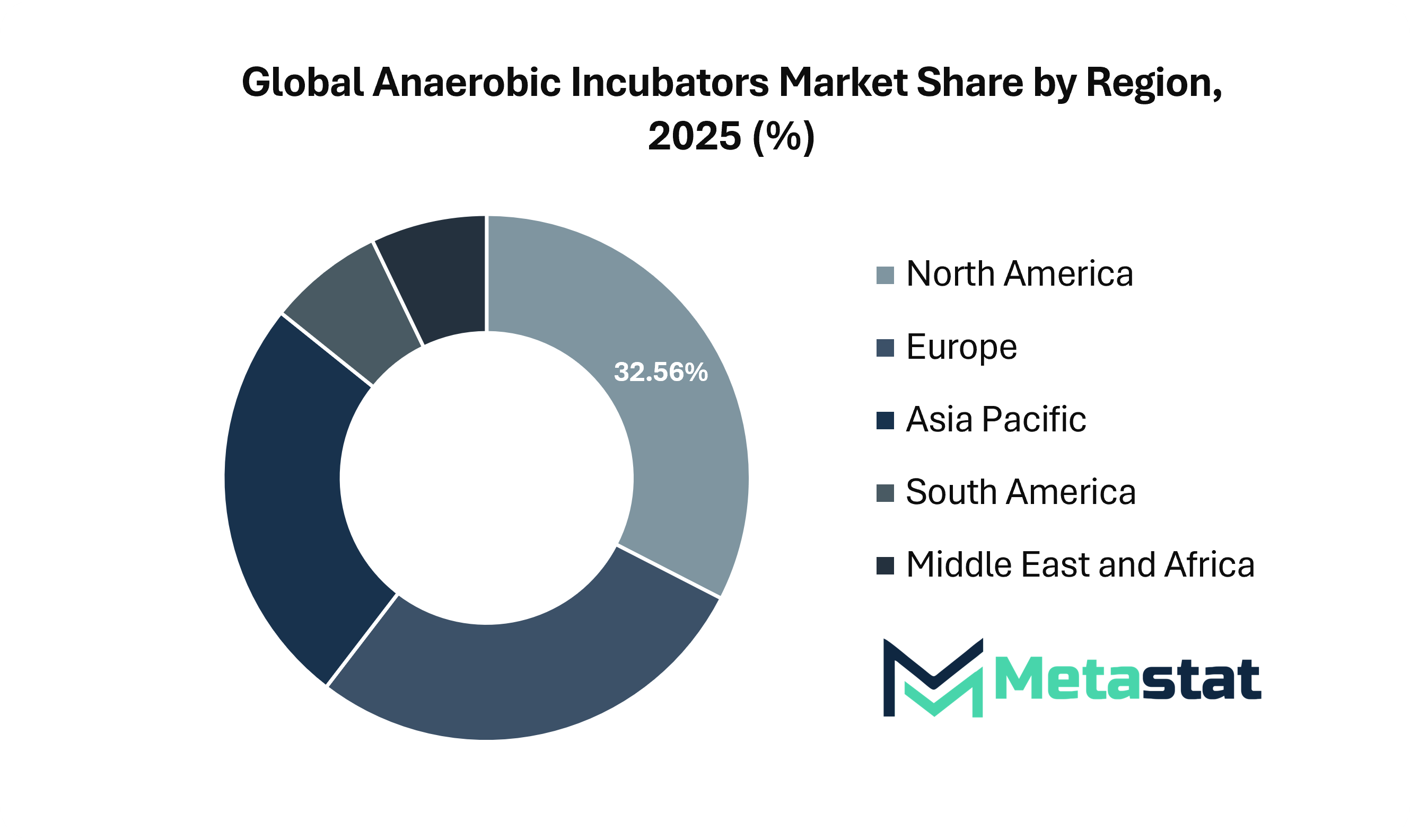
The Global Anaerobic Incubators Market is gaining steady attention as controlled oxygen-free environments are essential for several laboratory workflows. These systems support the cultivation of oxygen-sensitive microorganisms that are difficult to grow under normal atmospheric conditions, making them valuable for clinical testing, food safety testing, pharmaceutical research, and microbiology studies. Adoption will increase with the growing need for accurate diagnosis and stronger quality control standards. Many healthcare facilities and research centers are expanding their laboratory capacity, which supports new purchases of modern systems. Increased focus on contamination monitoring and bacterial analysis is also supporting sales. Buyers often look for equipment that provides stable temperature control, easy handling, and reliable chamber sealing for daily use.
Competition in this space remains broad, with established manufacturers and emerging suppliers offering different product designs. Jacomex, Don Whitley Scientific Ltd., The Baker Company, Inc., Sheldon Manufacturing, Inc., Coy Laboratory Products, Inc., and Plas-Labs, Inc. are recognized names with strong product visibility. Munro Instruments Ltd., MRC Laboratory Equipment & Instruments, BIOXIA, Micro Q Technologies, OLSC, and Pulse Life Science are also building presence through product expansion and wider reach. Many companies focus on customer service, product durability, and precise environmental control to attract laboratories requiring dependable performance for long operating hours.
Asian manufacturers are also adding momentum to market growth by offering cost-effective options for different laboratory budgets. Ningbo Cland Medical Instruments Co., Ltd., Maa Scientific, ACMAS Technologies Pvt. Ltd., Universal Biotechnology Pvt. Ltd., Deeksha Analytical Pvt. Ltd., AELAB Guangzhou Co., Ltd., Drawell Analytical, Labnics, Labmate, LABOAO, and Lab Expo are helping widen product access across developing regions. Scitek Global, INNOVA Biomed, Ybo Technologies Co., Ltd., NANBEI Instrument, Shanghai Yuanhuai Intelligent Technology Co., Ltd., Labtron Equipment Ltd., and Xiamen Tmax Battery Equipments Limited are also active participants. Their presence will support stronger price competition and better product availability in regional markets.
Future progress will depend on technology advancements, service quality, and the ability to meet changing laboratory needs. Buyers now prefer systems with digital displays, alarm features, low maintenance requirements, and energy-efficient operation. Compact models for small laboratories and larger chamber units for industrial customers are both expected to attract interest. Partnerships with distributors and direct after-sales support will remain critical for long-term success. While premium brands will lead in advanced features, price-focused suppliers will continue to attract budget-conscious customers. The balanced mix of innovation and affordability will keep industry momentum positive in the coming years.
Market size is forecast to rise from USD 177.5 million in 2025 to over USD 323.6 million by 2033.
The Global Anaerobic Incubators Market is expected to benefit from rising microbiome research, increasing infectious disease diagnostics, and broader pharmaceutical R&D activity. Future demand is likely to favour connected systems, hydrogen-free safety designs, automated controls, and scalable chamber solutions for multi-user laboratories.
This research report categorizes the Anaerobic Incubators market based on key segments and regions, forecasts revenue growth, and analyses trends in each submarket. The report analyses the key growth drivers, opportunities, and challenges influencing the Anaerobic Incubators market. Recent market developments and competitive strategies such as expansion, product launch, partnership, merger, and acquisition have been included to draw the competitive landscape in the market.
The report strategically identifies and profiles the key market players and analyses their core competencies in each sub-segment of the Anaerobic Incubators market.
|
Report Attributes |
Details |
|
Study Period |
2021-2033 |
|
Base Year |
2025 |
|
Estimated Year |
2026 |
|
Forecast Period |
2026-2033 |
|
Historical Period |
2021-2025 |
|
Growth Rate |
CAGR 7.8% from 2026 to 2033 |
|
Revenue Unit |
USD million |
|
Sales Volume Unit |
Units |
|
Segmentation |
By Product Type, Application, End-User, and Region |
|
By Region |
North America (By Product Type, Application, End-User, and Country)
|
|
Europe (By Product Type, Application, End-User, and Country)
|
|
|
Asia Pacific (By Product Type, Application, End-User, and Country)
|
|
|
South America (By Product Type, Application, End-User, and Country)
|
|
|
Middle East and Africa (By Product Type, Application, End-User, and Country)
|
Find answers to common questions about this report
Top players operating in the Anaerobic Incubators industry includes Jacomex, Don Whitley Scientific Ltd., The Baker Company, Inc., Sheldon Manufacturing, Inc., and Coy Laboratory Products, Inc.
Global Anaerobic Incubators market is estimated to reach USD 323.6 million by 2033.
High capital cost and ongoing gas, catalyst, and maintenance burden will hamper the market growth within the forecast period.
North America region dominates the market.
Rising clinical microbiology and microbiome research demand and Expansion of pharmaceutical, biotechnology, and academic anaerobic culture workflows are key driving factors, boosting the market.
The Benchtop Anaerobic Incubators is the leading type of segment in the Global market.
The Metastat Insights analysis shows that the North America Anaerobic Incubators market size is estimated to be USD 99.0 million by 2033.
The Metastat Insights study shows that the Global Anaerobic Incubators market size was USD 177.5 million in 2025.
The Global Anaerobic Incubators market is expected to grow at a CAGR of 7.8% over the forecast period (2026-2033).
The analysts below cover Medical Devices research at Metastat Insights.
LEAD ANALYST
Utkarsh Khirodkar is a Lead Market Research Analyst at MetaStat Insight, specializing in market intelligence, technology sector assessments, and competitive strategy.

LEAD PRINCIPAL ANALYST, PHARMA AND HEALTHCARE
Food and Beverages · Healthcare · Healthcare IT · Medical Devices
Ajay Devgire is the Lead Healthcare Analyst at MetaStat Insight, leading strategic research and market intelligence initiatives across the global healthcare domain.

SENIOR RESEARCH ANALYST
Biotechnology · Food and Beverages · Medical Devices · Packaging
Snehal Pasalkar is a Research Analyst at MetaStat Insight, operating at the intersection of life sciences research, competitive strategy, and market intelligence.
Evaluating calorific value requirements and air permit compliance across municipal waste facilities requires localized data. Metastat Insight structured their analysis around operational throughput capacity and feedstock composition variations in Latin America and Eastern Europe. Their competitive mapping of sorting equipment vendors helped clarify technology differences between optical separators and heavy media systems. The study provided an objective baseline during our capital expenditure reviews.
Decarbonizing industrial thermal processes hinges on refrigerant regulations and compressor efficiency limits. Metastat Insights delivered a thorough market analysis that evaluated natural refrigerants like CO2 and hydrocarbons against synthetic low-GWP alternatives. The breakdown of utility incentives and grid capacity constraints across key European manufacturing hubs offered valuable perspective. The follow-up conversation with their sector analysts addressed our specific questions on mechanical vapor recompression systems efficiently.
Assessing 200mm wafer transition schedules and substrate supply bottlenecks requires precise technical intelligence. MetaStat Insight supplied an actionable breakdown comparing planar and trench MOSFET architectures across automotive and industrial drive markets. The regional capacity estimates for Asia-Pacific foundries helped clarify lead-time uncertainties during our strategic planning session. When we needed additional clarification on high-purity raw material sourcing, their analyst team responded with helpful context within twenty-four hours.
Explore related market intelligence reports worth reading alongside this one.
Starting from
$2950