
LEAD ANALYST
Utkarsh Khirodkar is a Lead Market Research Analyst at MetaStat Insight, specializing in market intelligence, technology sector assessments, and competitive strategy.

Global Art Toy Market Size, Share, By Primary Material (Vinyl and PVC, Plush and Textiles, Resin and Polystone, ABS and Other Rigid Plastics), By Intellectual Property Category (Original Artist and Designer Characters, Entertainment Characters, Lifestyle and Brand Mascots), By Packaging Format (Blind Box and Mystery Packaging, Identified-Product Packaging), By Sales Channel (Online Retail, Brand-Owned Stores, Specialty Retailers and Galleries, Vending Machines, Events and Conventions), Industry Analysis, Growth, Trends, and Forecast, 2026-2033
Report ID
MSI-2455
Published
October, 2026
Pages
284 Pages
Format
Historical
Base year
Forecast
Forecast period
Report Details
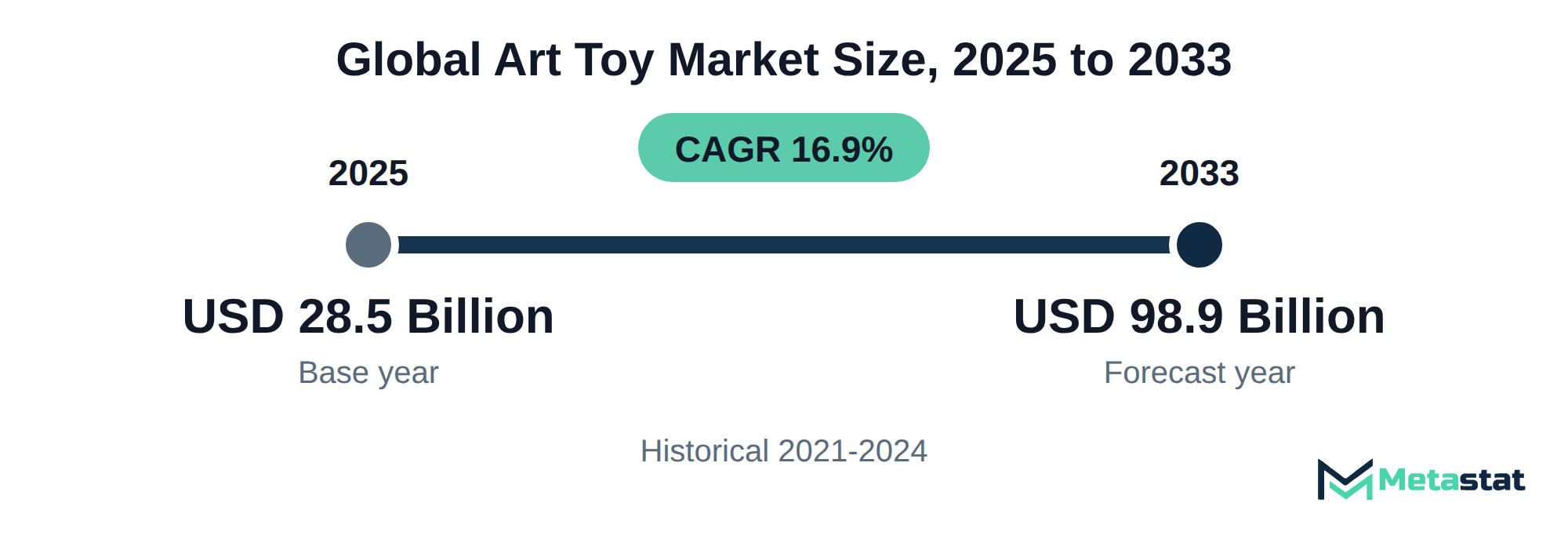
Market Valuation: Valued at $28.5 Billion in 2025, projected to reach $98.9 Billion by 2033 at a 16.9% CAGR.
Dominant Segment: The original artist and designer characters segment leads the market, driven by a strong demand for unique and limited-edition designs that resonate with collectors. This segment is projected to grow from USD 21.9 billion in 2026 to USD 67.1 billion by 2033, reflecting a CAGR of 17.4%.
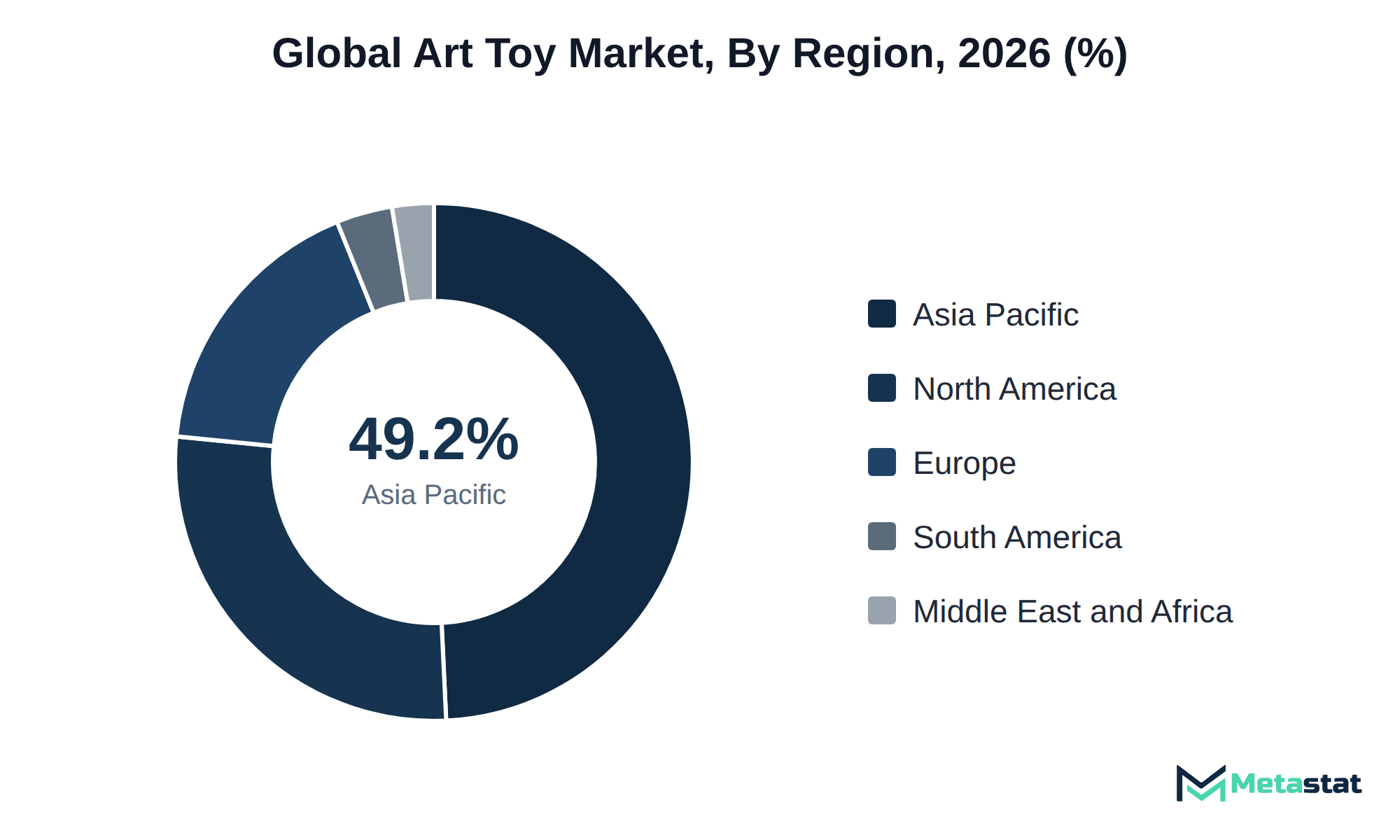
Geographic Lead: The Asia Pacific region dominates the market, accounting for 49.2% in 2025, with robust growth driven by a large collector base and increasing disposable income. This region's cultural influences and innovative designs significantly enhance the appeal of art toys.
What's Inside: The report provides a comprehensive analysis of the competitive landscape, market dynamics, and segmentation by primary material, intellectual property category, packaging format, and sales channel. It includes detailed forecasts from 2026 to 2033, highlighting growth trends and consumer preferences.
Increased Online Retail Presence: Online retail is projected to grow from USD 14.8 billion in 2026 to USD 47.7 billion by 2033, at a CAGR of 18.2%. This growth is fueled by the convenience of digital shopping, which enhances accessibility for collectors and drives overall market demand.
Vinyl Collectibles Attract Growing Inter: The vinyl and PVC segment is expected to grow at a CAGR of 15.9% from 2026 to 2033, reflecting strong consumer demand for high-quality, durable collectibles that feature unique designs and limited editions.
Choose Your License
Global Art Toy Market
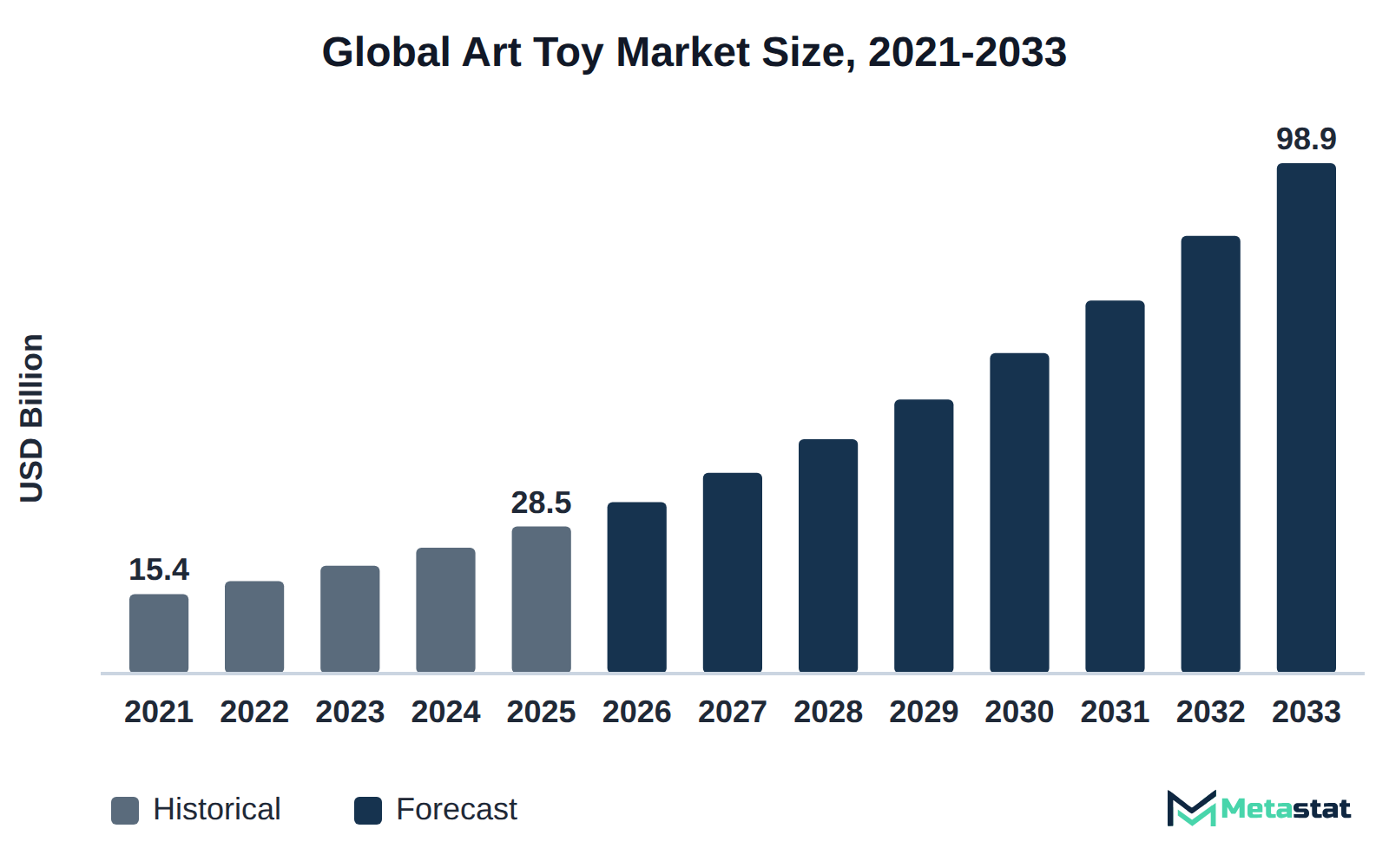
The global Art Toy market was valued at USD 28.5 billion in 2025 and is projected to reach USD 98.9 billion by 2033, growing at a CAGR of 16.9% over the forecast period.
The Art Toy market encompasses a diverse range of collectible toys that appeal to various consumer demographics, including children and adult collectors. Buyers invest in these toys due to their artistic appeal, nostalgia, and the desire to own unique pieces that often reflect cultural trends and personal interests. The market expands due to the increasing popularity of designer toys and limited-edition releases, which attract enthusiasts and collectors alike.
Growth in the market is driven primarily by the rising demand for vinyl and PVC figures, which dominate the overall market value. North America holds 27.3% of the market in 2025, with the US leading in 2026. In addition, the Asia Pacific region stands out with the largest share of the market at 49.2%, highlighting its significance in the global market. Increasing consumer engagement with art and design fuels the expansion of this segment.
The market's momentum is further supported by the growing trend of online retail, which enhances accessibility for consumers. The shift towards online shopping allows collectors to discover new releases and connect with brands directly, creating a community around the hobby. The Art Toy market is expected to grow significantly in the coming years, driven by consumer engagement and innovative product offerings.
The Art Toy market captures consumer interest through its unique blend of artistry and playfulness. Buyers invest in these collectibles for their aesthetic appeal, emotional connection, and the desire to own limited-edition pieces. This market thrives on a community of passionate collectors who value creativity and craftsmanship, driving demand across various demographics. The emotional resonance of these toys builds loyalty, leading to repeat purchases and an expanding base of enthusiasts.
Significant growth in the market is driven by the rising popularity of vinyl and PVC toys, which hold the most value among primary materials. The Asia Pacific region, accounting for 49.2% of the market, shows strong demand due to its large collector base and increasing disposable income. Cultural influences and innovative designs enhance the appeal of art toys, significantly contributing to market expansion.
One primary growth driver involves the increasing trend toward online retail, which provides greater accessibility to diverse product offerings. The convenience of purchasing art toys online, coupled with targeted digital advertising strategies, draws in a broader audience. This shift in consumer behavior allows the market to attract new buyers who prefer the ease of online shopping, which supports further growth.
Artist-owned characters in the Art Toy market drive sustained repeat purchases, generating ongoing revenue beyond initial viral successes. The appeal of unique designs from independent artists creates a strong connection with collectors, who often seek to acquire entire series or limited editions. This pattern results in a loyal consumer base eager to invest in future releases from their favorite creators.
The original artist and designer characters segment is projected to grow significantly, increasing from USD 21.9 billion in 2026 to USD 67.1 billion by 2033, reflecting a compound annual growth rate of 17.4%. This growth indicates the market's strong demand for exclusive, artist-driven designs, which attract both seasoned collectors and casual buyers. The ongoing success of these characters highlights the value placed on creativity and individuality in toy design.
Such consumer behavior offers substantial commercial opportunities for brands and artists alike, allowing for targeted marketing strategies that emphasize character storytelling and artistic authenticity. By focusing on artist collaborations and exclusive releases, companies build a dedicated following that translates into increased sales and market presence in a competitive environment.
Vinyl-face plush collectibles form a segment of the art toy market that blends functionality with style, turning traditional designer toys into fashionable accessories. This shift in consumer perception is evidenced by a projected increase in sales, with the vinyl and PVC segment alone expected to grow from USD 14.2 billion in 2026 to USD 39.7 billion by 2033, reflecting a compound annual growth rate (CAGR) of 15.9%. This trend results from the integration of art toys into everyday fashion, appealing to buyers seeking unique and expressive items that align with personal style.
Pricing strategies for vinyl-face plush collectibles vary significantly, influenced by the brand's reputation, the artist's recognition, and the perceived artistic value of the product. Many collectors and fashion-conscious buyers appreciate exclusive, limited-edition releases, often willing to pay a premium for unique designs. This willingness to invest in fashion-forward collectibles impacts overall market dynamics, driving brands to explore innovative pricing models that balance accessibility with exclusivity.
While the art toy market evolves, the intersection of fashion and collectibles continues to present opportunities for growth. The integration of plush collectibles into fashion accessories enhances product appeal and creates a deeper connection between art and consumer culture. Retailers and brands that capitalize on this trend through strategic pricing and exclusivity are likely to see substantial commercial benefits.
The Art Toy market experiences increasing demand for authenticity verification and edition control among collectors. This focus on authenticity stems from a desire to ensure that purchased items are genuine and retain their value over time. For instance, the market is expected to reach USD 98.9 billion by 2033, indicating a growth trajectory that highlights the importance of credibility in transactions.
Collectors frequently seek assurance regarding the originality and limited editions of art toys. The introduction of sophisticated anti-counterfeiting verification methods, including holograms and unique serial numbers, provides a level of trust for buyers. These measures protect the interests of collectors and enhance sellers' reputations in the market. Companies that implement stringent authenticity controls attract a dedicated customer base willing to invest in higher-priced, verified products.
Trust in the authenticity of art toys directly influences purchasing decisions, driving demand for reputable suppliers who prioritize verification processes. The growing importance of edition control signifies a shift in collector expectations, ultimately leading to increased revenue opportunities for brands that effectively manage these aspects within the Art Toy market.
The intrinsic value of an art toy transcends its resale price, driven by the unique artistic expression and cultural significance embedded in each piece. Collectors seek art toys not simply for their investment potential but for the emotional connection and personal resonance they evoke. The art toy market is projected to expand significantly, with a forecast value of USD 98.9 billion by 2033, reflecting strong interest in diverse art forms.
This segment attracts collectors who appreciate the creative vision and craftsmanship behind each toy. Collectors often find that owning a piece directly from the artist creates a deeper connection and appreciation for the art itself, increasing its value beyond mere financial metrics.
The increasing demand for unique and limited-edition pieces drives competition among collectors, enhancing the overall vibrancy of the market. Thus, while resale value remains a consideration, the emotional and artistic attributes of art toys create lasting appeal that reinforces their place in any collection.
The rise of online retail significantly influences purchasing behavior among collectors, particularly among younger demographics. This shift occurs due to the convenience and accessibility of purchasing art toys through digital platforms. Collectors increasingly prefer online shopping for its extensive range and straightforward purchasing process, driving higher sales volumes. In 2026, online retail is projected to reach USD 14.8 billion, expanding to USD 47.7 billion by 2033, demonstrating a robust compound annual growth rate of 18.2%. This transition allows more collectors to access diverse offerings, which increases demand and supports the overall growth of the market.
Innovative design techniques significantly impact the creation of Art Toys, encouraging unique artistic expressions that appeal to collectors. New methods in digital sculpting and 3D printing enhance the production process, allowing artists to experiment with complex shapes and intricate details. These advancements attract a wider audience, especially among younger consumers who value originality and craftsmanship in collectibles. The ability to create limited editions and customize designs further fuels interest in the market, with collectors seeking distinctive pieces that reflect personal tastes and preferences. This push for creativity influences sales channels, with online platforms becoming essential for artists to present and distribute their work. The growing emphasis on unique design contributes to the market's expansion, with consumers increasingly prioritizing artistic value over traditional toy features.
With the integration of these design innovations, the Art Toy market continues to evolve, attracting new buyers and increasing engagement within the collector community. Enhanced creativity differentiates products within the competitive environment, helping to establish brand identities and encourage loyalty among enthusiasts.
Pricing pressures have a notable impact on buyer engagement within the Art Toy market. High production costs, driven by the use of premium materials and intricate designs, translate into higher retail prices. This phenomenon affects primarily adult collectors who seek unique and limited-edition pieces. Higher prices often result in smaller order sizes among these buyers, who prioritize budget considerations over expanding their collections. This situation leads to slower uptake of newly released items, particularly among those new to the market and cautious about investment. In the long term, sustained high prices could hinder broader market penetration and limit potential growth, particularly in emerging demographics that exhibit interest in art toys but face financial constraints. Consequently, addressing pricing strategies remains crucial for suppliers seeking to broaden their consumer base and improve engagement within the market.
Rising input costs present significant challenges within the market. Suppliers experience increasing prices for raw materials, especially vinyl and PVC, which are essential for production. These rising costs affect margins, forcing suppliers to explore cost-reduction strategies. Many manufacturers shift towards alternative materials or negotiate better pricing agreements with suppliers in an effort to maintain competitiveness. Suppliers focus on optimizing production processes to enhance efficiency and minimize waste, thereby controlling costs without compromising quality.
Despite these challenges, price sensitivity among consumers remains prevalent, influencing purchasing decisions. Suppliers engage in strategic pricing to balance profitability while appealing to collectors. The emphasis on creative designs and limited editions continues to attract interest, allowing suppliers to use unique offerings as a counterbalance to higher production costs. This focus on differentiation within the Art Toy market supports sustained engagement and strengthens brand loyalty among consumers, even in a tightening cost environment.
The segment of vinyl and PVC art toys presents a significant opportunity for growth, driven by a projected compound annual growth rate (CAGR) of 15.9% from 2026 to 2033. This category, characterized by its appeal among collectors and enthusiasts, reflects robust demand for high-quality, durable collectibles. The emergence of unique designs and limited editions within vinyl collectibles captures consumer interest, positioning this segment as a focal point for new entrants and established players alike. By focusing on innovative design and collaboration with artists and brands, businesses targeting this market segment enhance their reach and profitability. The Art Toy market stands to benefit significantly from this growing interest in vinyl collectibles, with opportunities for brands to engage directly with a dedicated consumer base.
The Global Art Toy market is segmented based on Primary Material, Intellectual Property Category, Packaging Format, and Sales Channel.
Vinyl and PVC art toys are primarily used by collectors and enthusiasts who appreciate the blend of creativity and craftsmanship. These toys serve as collectibles, often sought after for their unique designs and limited editions. Unlike other materials, including plush and textiles, which have a higher CAGR of 18.6%, vinyl and PVC offer durability and versatility, appealing to a broader buyer demographic. The distinctive features and aesthetic qualities of vinyl and PVC toys contribute to their strong demand in the market.
Plush and Textiles segment is estimated to reach USD 34.4 billion by 2033, at a CAGR of 18.6% during the forecast period. This segment appeals to consumers seeking comfort and tactile experiences, primarily targeting children and adult collectors who appreciate the craftsmanship involved. The segment's growth is driven by increasing consumer interest in unique and artistically designed plush toys that combine playfulness with collectible value. Compared to other segments like Vinyl and PVC, which is projected to grow at a CAGR of 15.9%, the Plush and Textiles segment experiences faster expansion due to its broader appeal and higher emotional connection among buyers. The demand for limited-edition releases further fuels this growth, with collectors seeking distinctive pieces that stand out in their collections. This trend reflects a significant shift in consumer preferences toward products that function as artistic expressions as well as toys.
Resin and Polystone segment is expected to reach USD 11.8 billion by 2033. These materials serve to create detailed and collectible art toys favored by adult collectors and enthusiasts. High durability and aesthetic appeal enable buyers to display these toys within their decor or collections. Unique designs and artistic expressions drive demand, with this segment experiencing a compound annual growth rate (CAGR) of 15.4%. Compared to other segments, including Plush and Textiles with a CAGR of 18.6%, Resin and Polystone grows at a relatively slower pace. However, the higher price point of these collectibles attracts serious collectors willing to invest. The distinctiveness of the offerings in this segment contributes to its sustained popularity, positioning it uniquely within the market.
ABS and Other Rigid Plastics segment is projected to grow at a CAGR of 15.4% during the forecast period. This segment serves a distinct role in the production of durable and collectible toys, appealing to a demographic seeking longevity and structural integrity. Buyers include both individual collectors and retailers, who appreciate the material's stability and design versatility. The demand for environmentally friendly materials influences this segment, prompting manufacturers to explore sustainable options while maintaining quality. Compared to Vinyl and PVC, which are set to grow at 15.9%, ABS and Other Rigid Plastics exhibit slightly slower growth, attracting a different buyer base focused on unique, collectible designs. Ongoing trends in buyer preferences drive innovation and diversification in product offerings.
This sub-segment encompasses collectibles made from wood, metal, and ceramic materials, appealing to a niche audience within the broader art toy landscape. These materials offer unique aesthetic qualities and tactile experiences, attracting collectors and enthusiasts who seek distinctive items. Buyers include adult collectors and art aficionados, drawn to the craftsmanship and durability that these materials provide. The segment experiences growth driven by increasing appreciation for artistic expression and sustainable materials. Unlike vinyl and plush segments, which focus on mass-market appeal, the wood, metal, and ceramic toys often command higher prices due to their artisan qualities and limited production runs. This pricing strategy positions the segment as a premium option in the art toy market, catering to discerning collectors who value exclusivity and artistry.
Original Artist and Designer Characters appeal to collectors and enthusiasts who seek unique and limited-edition pieces. These characters often stem from independent artists, creating a strong emotional connection with buyers. The segment benefits from increasing demand driven by social media exposure, enhancing visibility and desirability. Compared to other segments, including Entertainment Characters, which grow at a CAGR of 15.4%, Original Artist and Designer Characters exhibit a faster growth trajectory, reflecting collectors' shifting preferences toward individual artistry. This segment captures a higher price point, attracting dedicated collectors willing to invest more for originality and exclusivity. The trend toward personalized and unique collectibles positions this segment uniquely within the market, aligning with evolving consumer tastes.
Entertainment Characters segment is estimated to reach USD 22.5 billion by 2033, at a CAGR of 15.4% during the forecast period. This segment includes movie collectibles as well as collectibles based on characters from television shows and video games, targeting a diverse audience of collectors and fans. Enthusiasts seek these products for their nostalgic value and connection to popular culture. The ongoing trend towards collaboration between creators and brands fuels demand, with notable releases generating substantial buzz. Compared to other segments, this one exhibits a slower growth rate, with the Original Artist and Designer Characters segment expanding at a CAGR of 17.4%. Pricing strategies vary significantly, with entertainment-based collectibles often priced higher due to associated licensing costs. This dynamic highlights the competitive nature of the market, with brands vying for attention among increasingly discerning consumers.
Lifestyle and Brand Mascots segment is expected to reach USD 5.8 billion by 2033. This segment includes collectible figures inspired by popular brands and lifestyles, appealing to a diverse audience that values brand loyalty and nostalgia. Buyers primarily consist of collectors and fans who seek unique representations of their favorite brands. The segment benefits from a growing trend toward personalization and self-expression, driving demand for these art toys. Growth in this segment is influenced by the increasing collaboration between brands and artists, which enhances product visibility and desirability. Compared to other sub-segments, this segment experiences a moderate growth rate, with a slower compound annual growth rate (CAGR) of 15.4%, reflecting a more niche market position within the broader Art Toy market. In contrast, segments including Original Artist and Designer Characters exhibit faster growth, indicating a preference shift among collectors toward unique artistic expressions.
Valued at USD 5.8 billion by 2033, the Others (Sports Personalities, Cultural Icons) segment is projected to grow at a CAGR of 18.5% during the forecast period. This segment typically appeals to collectors and fans of popular sports figures and cultural icons, offering unique artistic expressions that connect with diverse audiences. Demand drivers for this sub-segment include the increasing popularity of sports personalities in mainstream culture, alongside the growing trend of collecting memorabilia associated with these figures. Compared to other segments in the Intellectual Property Category, this segment experiences faster growth, highlighting consumer interest in limited-edition collectibles that celebrate iconic personalities. The market benefits from collaborations with notable artists and licensing agreements, further enhancing the appeal of these art toys and supporting revenue growth.
Blind Box and Mystery Packaging segment is valued at USD 19.4 billion in 2026 and is projected to reach USD 60.6 billion by 2033, at a CAGR of 17.6% during the forecast period. This packaging format appeals to collectors and enthusiasts who enjoy the thrill of unboxing surprises. The drive for novelty and exclusivity increases demand within this segment. Unlike other packaging formats, Blind Box and Mystery Packaging creates a unique purchasing experience, attracting buyers seeking limited editions or rare items. Rapid growth, supported by increasing interest in collectibles, distinguishes this segment with a higher CAGR compared to identified-product packaging, which holds a CAGR of 15.7%. The rise of online retail channels enhances accessibility, enabling broader reach to consumer segments eager to engage with the latest offerings in the market.
Identified-Product Packaging segment is estimated to reach USD 38.3 billion by 2033, at a CAGR of 15.7% during the forecast period. This packaging format appeals to collectors and buyers seeking specific art toy designs that stand out on retail shelves. The segment benefits from ongoing trends in consumer preferences for transparent packaging that allows buyers to feel a connection prior to purchase. Differing from Blind Box and Mystery Packaging, which relies on surprise, Identified-Product Packaging provides clarity and assurance, often leading to higher conversion rates among discerning buyers. The consistent demand for well-presented collectibles drives growth, influencing production strategies across the market. Growth in this segment reflects broader trends toward personalization and brand identity, further enhancing its position in the evolving art toy market.
This segment provides a platform for collectors and enthusiasts to purchase a wide variety of Art Toys directly from the comfort of their homes. Increased accessibility and convenience contribute significantly to the growth of online retail. The segment differs from other sales channels, including brand-owned stores, which offer a more curated shopping experience but often at higher prices. In contrast, online retail typically features a broader array of options and competitive pricing. The growing trend of toy e-commerce adoption among younger generations fuels this segment's expansion, positioning it as a key player in the overall market dynamics.
Brand-Owned Stores segment is estimated to reach USD 25.5 billion by 2033, at a CAGR of 16% during the forecast period. This segment features retail spaces operated directly by brands, providing a unique shopping experience for consumers seeking authentic products. Brand-owned stores attract collectors, enthusiasts, and casual buyers who value exclusivity and direct access to sought-after items. Growth in this segment is driven by increasing consumer preference for immersive brand experiences and limited-edition releases. Compared to other sales channels, this segment shows slower growth due to higher operational costs associated with physical stores. However, the direct connection with consumers enhances brand loyalty and supports premium pricing, setting it apart from online retail, which is projected to grow at a higher CAGR of 18.2% during the same period. The market for art toys continues to expand, with brand-owned stores playing an important role in enhancing consumer engagement.
Specialty Retailers and Galleries segment is expected to reach USD 17.2 billion by 2033. This segment appeals to collectors and enthusiasts who seek unique art toys that often reflect artistic expression and creativity. Increased consumer interest in limited-edition releases and collaborations with artists drives demand within this segment. Compared to Online Retail, which is projected to reach USD 47.7 billion by 2033, the Specialty Retailers and Galleries segment experiences slower growth. While Online Retail benefits from broader accessibility and convenience, specialty retailers offer a curated experience, emphasizing exclusivity and artistic quality. This unique positioning caters to discerning buyers willing to invest in limited-run pieces, distinguishing it from mass-market channels in the art toy market.
Vending Machines segment is projected to grow at a CAGR of 15.1% during the forecast period. This segment serves the growing demand for convenient and accessible art toys, targeting collectors and casual buyers looking for unique items. The increasing trend of vending machines in entertainment venues and public spaces drives sales, offering impulse purchases for consumers. Unlike other sales channels, including online retail, this segment provides immediate gratification for buyers seeking collectibles. The segment's growth contrasts with online retail, which is expected to expand at a CAGR of 18.2%. This difference highlights the varying consumer behaviors and purchasing preferences across the market, with vending machine purchases appealing to impulse buyers rather than collectors seeking specific items through online platforms.
Events and conventions serve important platforms for promoting art toys, attracting collectors and enthusiasts who seek unique and limited-edition pieces. This segment relies on event services that enable artists and brands to interact with their audiences directly, facilitating sales and building a community around their creations. The growing interest in exclusive releases and artist collaborations drives demand, with attendees often attending events to discover new launches and interact with creators. Competition in this space is intense, with brands working to stand out through innovative displays and unique merchandise. Compared to other sales channels, events and conventions typically offer a more personal shopping experience, allowing buyers to engage with products firsthand and connect emotionally with the brand's story. This segment enhances brand loyalty and awareness within the art toy market, strengthening long-term demand.
This sub-segment encompasses sales through department stores and general retail outlets, targeting a broad audience of consumers. Buyers typically include parents purchasing for children, collectors seeking unique pieces, and casual shoppers drawn to eye-catching displays. The preference for tangible shopping experiences continues to drive demand in this segment, contrasting with the rapid growth seen in online retail. Consumer engagement in physical stores enables interactions with products, enhancing purchase decisions and supporting brand loyalty. While growth in this segment is slower compared to online channels, the accessibility of products in local retail locations provides convenience for shoppers. The Art Toy market benefits from diverse sales channels, with brick-and-mortar stores contributing to overall visibility and brand presence, creating a unique shopping experience.
Based on geography, the Global Art Toy market is divided into North America, Europe, Asia-Pacific, South America, Middle East, and Africa.
Demand for art toys in North America derives primarily from a strong collector community and a growing interest in unique and limited-edition pieces. The United States, Canada, and Mexico feature strong consumer bases eager to acquire innovative designs and collaborations with artists. North America is projected to reach USD 25.9 billion by the end of 2033. The market benefits from an established retail infrastructure, with both online platforms and brand-owned stores facilitating access to diverse product offerings. Regulatory conditions favor artistic expression, contributing to an active environment for designers. With 27.3% of the global market share in 2025, North America influences trends and demand within the art toy market.
The European market displays a dynamic growth trajectory, driven by strong interest from collectors and enthusiasts. Countries including Germany, France, and the UK emphasize art toys that blend cultural elements with artistic expression. The diverse consumer base increasingly seeks unique and limited-edition pieces, resulting in a notable rise in demand. Distribution through established sales channels, including specialty retailers and online platforms, facilitates accessibility to various segments. Market participants focus on innovative designs and collaborations with popular artists, enhancing product appeal. The market share for Europe represented 17.3% in 2025, highlighting its significant role within the overall art toy market. This region's commitment to supporting local artists and creative communities sustains interest and investment in art toys.
Asia-Pacific is a significant region in the Art Toy market, contributing 49.2% of the global share in 2025. Demand primarily emerges from countries like China, Japan, and India due to their dynamic pop culture and strong collector communities. The presence of numerous artists and designers fuels the creation of unique and original characters, appealing to diverse consumer segments. Growing disposable incomes in Southeast Asia enhance purchasing power, leading to increased investments in art toys. Emerging e-commerce platforms and expanding online retail channels further facilitate market penetration, resulting in strong growth rates across various segments. Specific consumer preferences drive the popularity of exclusive items and limited-edition releases, shaping the competitive landscape within the region.
South America holds a 3.5% share of the global Art Toy market in 2025, driven primarily by Brazil and Argentina. The region benefits from a growing interest in collectible art toys, particularly among younger consumers who seek unique and expressive items. Economic factors, including rising disposable incomes, support increased spending on discretionary items like art toys. However, limited local production capabilities challenge the supply chain, resulting in reliance on imports. Retailers in South America increasingly leverage online channels to reach consumers, enhancing accessibility to a wider audience. This shift toward e-commerce aligns with global trends, providing opportunities for expansion in the market.
The Middle East and Africa exhibit unique characteristics in the Art Toy market, with a share of 2.6% of the global market in 2025. Countries including Saudi Arabia and the UAE demonstrate a growing interest in collectible art toys, driven by a rising middle class and an increasing number of events focused on art and culture. South Africa contributes to demand through an active arts community, which supports local artists and designers, encouraging the creation of original and culturally relevant art toys. The region's limited distribution infrastructure poses challenges for market penetration; however, opportunities arise from increased online retail channels targeting tech-savvy consumers. The market's growth prospects remain contingent upon enhancing local manufacturing capabilities and expanding distribution networks to meet consumer preferences effectively.
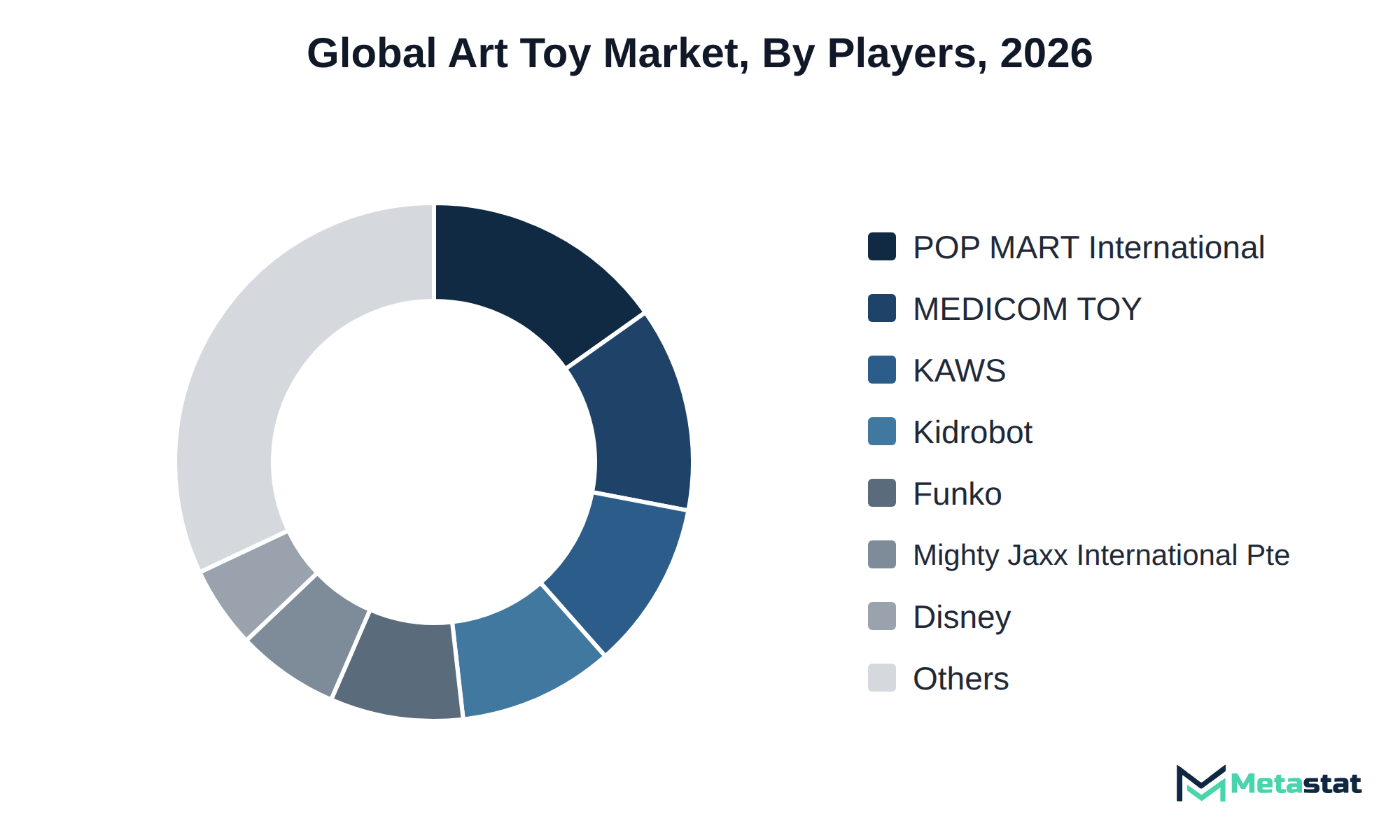
In the Art Toy market, companies establish their presence through diverse strategies, focusing on unique design aesthetics, product variety, and customer engagement. Brands including MEDICOM TOY Corporation and Funko, Inc. emphasize original artist and designer characters, appealing to collectors with limited edition releases and collaborations. In contrast, The LEGO Group and Disney leverage well-known entertainment characters to attract a broader audience, integrating popular franchises into their product lines.
Buyers prioritize elements including price, customization, and brand reputation when selecting art toys. For instance, POP MART International Group Limited and Kidrobot focus on innovative packaging formats, including blind boxes, which enhance the unboxing experience and engagement. Specialty retailers like Unbox Industries and Sideshow, Inc. cater to niche markets, offering exclusive products that appeal to dedicated collectors.
Achieving the projected growth relies on several key developments in the Art Toy market. This trend reflects consumer interest in unique, collectible items, particularly in regions including North America and Europe, where disposable incomes support higher spending on such products.
Second, the expansion of online retail channels will facilitate market penetration. The transformation of shopping habits, with online retail expected to grow from USD 14.8 billion in 2026 to USD 47.7 billion by 2033, highlights the importance of digital sales platforms in reaching broader customer bases.
However, economic downturns or shifts in consumer preferences could pose risks, potentially slowing growth. Stakeholders aiming to capitalize on the emerging opportunities within the market should monitor these factors.
By Primary Material: Vinyl and PVC, Plush and Textiles, Resin and Polystone, ABS and Other Rigid Plastics, Others (Wood, Metal, Ceramic)
By Intellectual Property Category: Original Artist and Designer Characters, Entertainment Characters, Lifestyle and Brand Mascots, Others (Sports Personalities, Cultural Icons)
By Sales Channel: Online Retail, Brand-Owned Stores, Specialty Retailers and Galleries, Vending Machines, Events and Conventions, Others (Department Stores, General Retail)
The report strategically identifies and profiles the key market players and analyses their core competencies in each sub-segment of the Art Toy market.
|
Report Attributes |
Details |
|
Study Period |
2021-2033 |
|
Base Year |
2025 |
|
Estimated Year |
2026 |
|
Forecast Period |
2026-2033 |
|
Historical Period |
2021-2025 |
|
Growth Rate |
CAGR 16.9% from 2026 to 2033 |
|
Revenue Unit |
USD billion |
|
Segmentation |
By Primary Material, Intellectual Property Category, Packaging Format, Sales Channel, and Region |
|
By Region |
North America (By Primary Material, Intellectual Property Category, Packaging Format, Sales Channel, and Country)
|
|
Europe (By Primary Material, Intellectual Property Category, Packaging Format, Sales Channel, and Country)
|
|
|
Asia Pacific (By Primary Material, Intellectual Property Category, Packaging Format, Sales Channel, and Country)
|
|
|
South America (By Primary Material, Intellectual Property Category, Packaging Format, Sales Channel, and Country)
|
|
|
Middle East and Africa (By Primary Material, Intellectual Property Category, Packaging Format, Sales Channel, and Country)
|
Find answers to common questions about this report
The Art Toy market size was valued at USD 28.5 billion in 2025.
The market is projected to grow at a CAGR of 16.9% during the forecast period from 2026 to 2033.
The North America Art Toy market size is estimated to reach USD 25.9 billion by 2033.
The leading segment in the Art Toy market is Original Artist and Designer Characters, with a projected value of USD 67.1 billion by 2033. This segment demonstrates the highest growth potential, driven by a compound annual growth rate of 17.4%.
Key drivers for the Art Toy market include the rise of online retail, which enhances purchasing behavior through convenience and accessibility. Innovative design techniques attract a wider audience, increasing demand for unique and limited-edition pieces.
High production costs, driven by premium materials and intricate designs, increase retail prices, affecting primarily adult collectors. Rising input costs for raw materials, particularly vinyl and PVC, challenge suppliers to maintain competitiveness while managing margins.
Several factors favor adoption in the Art Toy industry. The rise of online retail enhances accessibility for collectors, while innovative design techniques attract younger demographics. the increasing demand for unique and limited-edition pieces drives interest, positioning the market for sustained growth.
The Art Toy market is estimated to reach a valuation of USD 98.9 billion by 2033.
Key players operating in the Art Toy market include MEDICOM TOY Corporation, Toy2R, KAWS, Kidrobot, POP MART International Group Limited, The LEGO Group, Funko, Inc., and Youtooz.
The vinyl and PVC segment is expected to reach USD 39.7 billion by 2033, growing from USD 14.2 billion in 2026.
The analysts below cover Consumer Goods research at Metastat Insights.
LEAD ANALYST
Utkarsh Khirodkar is a Lead Market Research Analyst at MetaStat Insight, specializing in market intelligence, technology sector assessments, and competitive strategy.
Our team was tracking whether regional recycling infrastructure could realistically absorb the growing volume of lithium iron phosphate batteries over the next decade. The report did a solid job separating announced hydrometallurgical plant capacity from active, permitted operational throughput. That distinction made the feedstock availability projections and regional recovery rate models far more credible than standard commercial overviews.
Tracking capacity expansion in single-use bioprocessing requires dependable data on raw material availability and cleanroom-grade polymer supply chains. The competitive landscape chapter gave a grounded evaluation of secondary component suppliers across North America and Asia-Pacific rather than simply reprinting press releases. Having that level of supplier benchmarking helped clarify dual-sourcing considerations for our clinical pipeline planning.
When evaluating distributed energy resource management systems, standard research summaries tend to gloss over the operational differences between front-of-the-meter utility deployments and behind-the-meter industrial sites. The MetaStat Insight report addressed those distinctions directly, especially regarding software interoperability standards and grid interconnection backlogs. The five-year market sizing across regional transmission organizations provided actionable context for our grid modernization strategy.
Explore related market intelligence reports worth reading alongside this one.