
LEAD ANALYST
Utkarsh Khirodkar is a Lead Market Research Analyst at MetaStat Insight, specializing in market intelligence, technology sector assessments, and competitive strategy.

Global Baby Bottle Washer Market Size, Share, By Product Type (Wash, Sterilize and Dry Systems, Wash and Dry Systems, Wash-Only Systems), By Bottle Capacity (Up to 4 Bottles, 5 to 6 Bottles, 7 or More Bottles), By End User (Households, Daycare Centers, Hospitals and Maternity Clinics), By Distribution Channel (Third-Party E-Commerce, Brand Direct-to-Consumer, Physical Baby Specialty Retail and Physical Mass Retail), Industry Analysis, Growth, Trends, and Forecast, 2026-2033
Report ID
MSI-5830
Published
November, 2026
Pages
271 Pages
Format
Historical
Base year
Forecast
Forecast period
Report Details
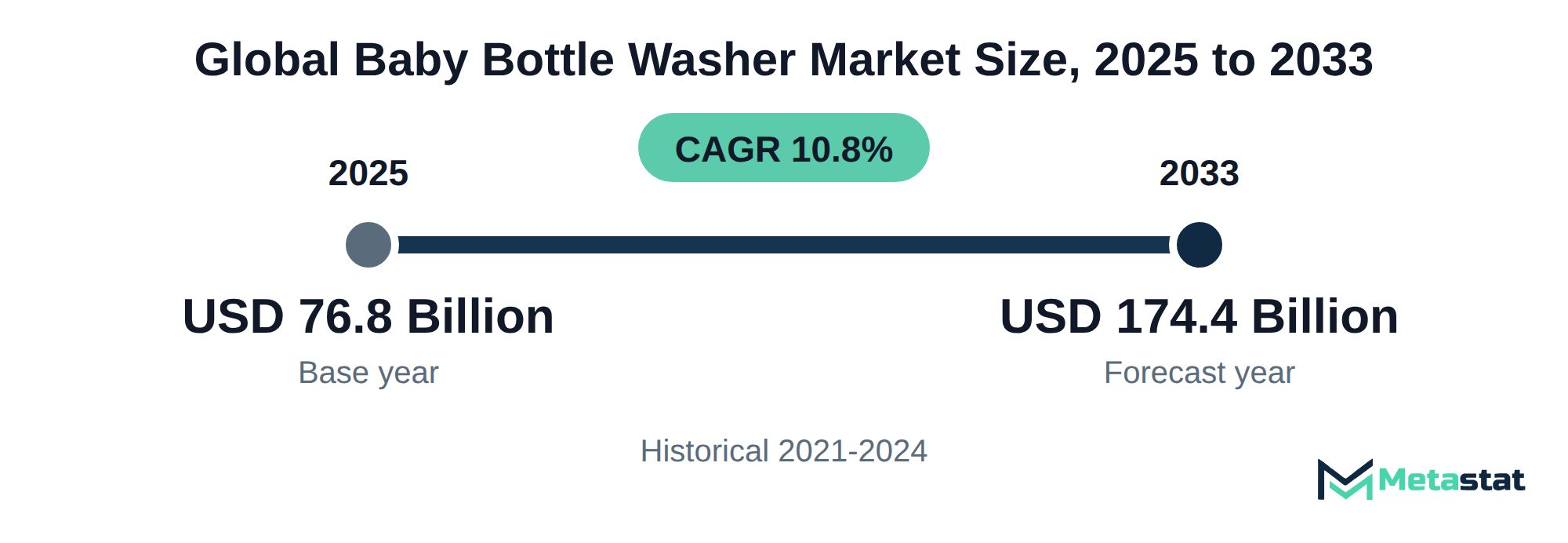
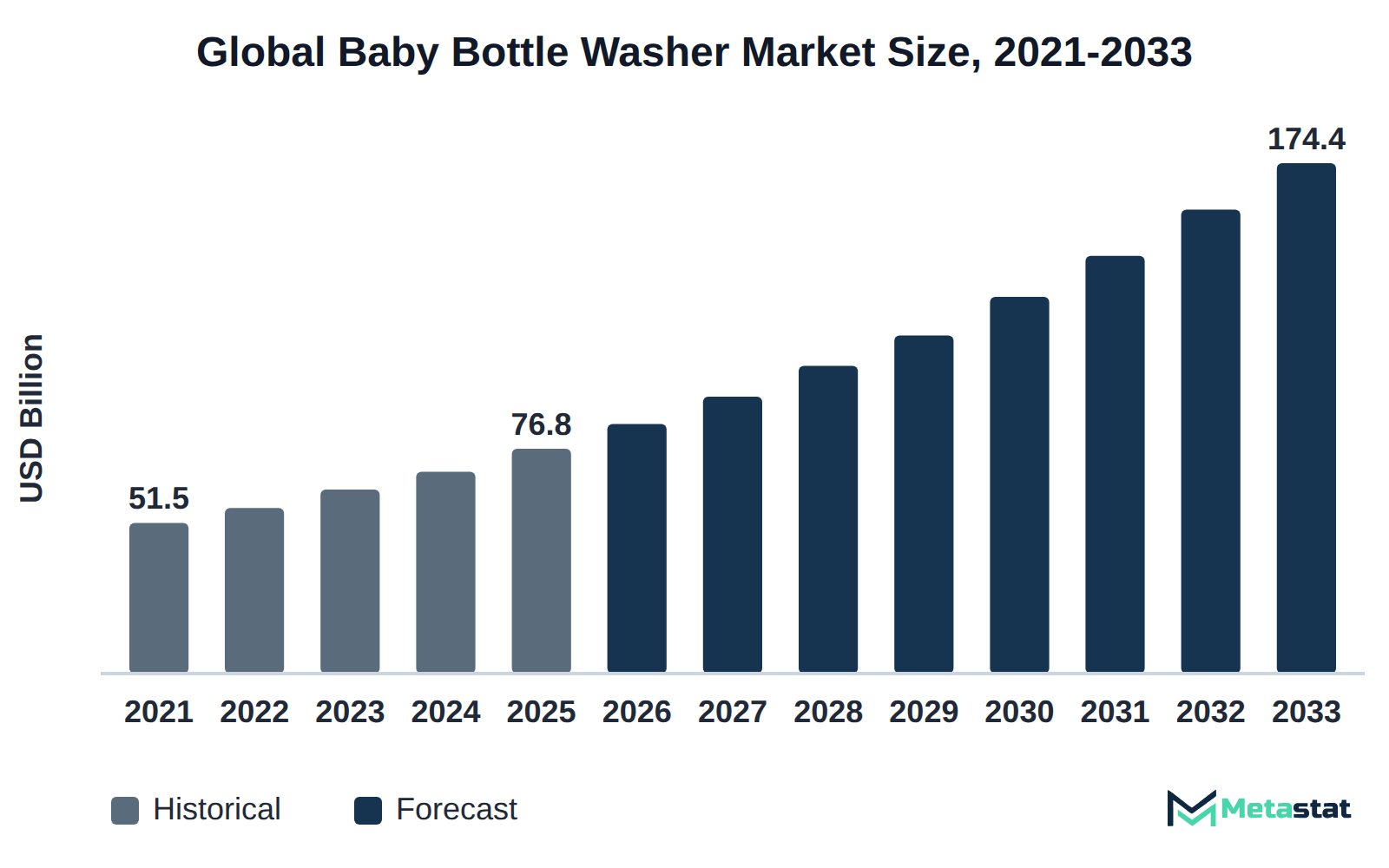
Market Valuation: Valued at $76.8 Billion in 2025, projected to reach $174.4 Billion by 2033 at a 10.8% CAGR.
Dominant Segment: The Wash, Sterilize and Dry Systems segment leads the Baby Bottle Washer market, driven by a strong consumer preference for multifunctional cleaning solutions that ensure hygiene and convenience.
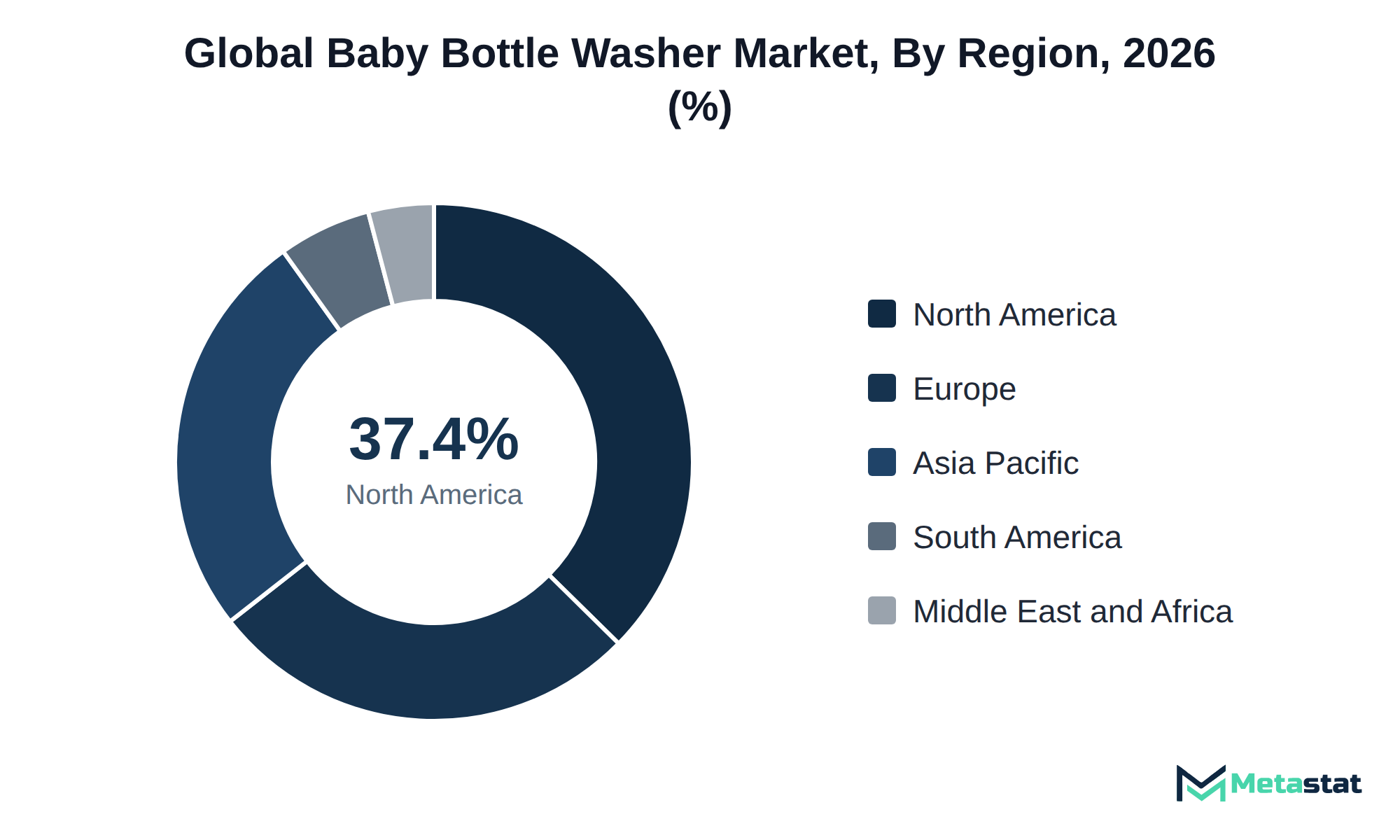
Geographic Lead: North America is the leading region in the Baby Bottle Washer market, holding 37.4% of the market in 2025, with the US projected to maintain this trend due to a focus on high-quality baby care products.
What's Inside: The report provides a comprehensive analysis of the competitive landscape, market segmentation, and detailed forecasts for the Baby Bottle Washer market from 2026 to 2033.
Growth Drivers: Key growth drivers include rising disposable incomes, increasing health-conscious parenting, and the demand for efficient cleaning solutions in households and daycare centers.
Market Trends: Technological advancements in washing systems, such as smart features and automated processes, are enhancing user experience and driving market expansion.
Choose Your License
Global Baby Bottle Washer Market
The global Baby Bottle Washer market was valued at USD 76.8 billion in 2025 and is projected to reach USD 174.4 billion by 2033, growing at a CAGR of 10.8% over the forecast period.
The Baby Bottle Washer market encompasses various systems designed to clean, sterilize, and dry baby bottles efficiently. Buyers invest in these products to ensure the safety and hygiene of baby feeding supplies, particularly in households, daycare centers, and hospitals. Growing awareness regarding infant health drives demand, leading to increased spending on advanced cleaning solutions that simplify the bottle maintenance process.
Growth in the market is influenced by several factors, including rising disposable incomes and changing consumer lifestyles that prioritize convenience and safety. The segment of Wash, Sterilize and Dry Systems holds the most significant value within the market, reflecting a strong preference for all-in-one solutions. North America holds 37.4% of the market in 2025, with the US leading in 2026. This region shows a strong inclination toward high-quality baby care products, further propelling market expansion.
Technological advancements in cleaning systems contribute to market growth by introducing innovative features that enhance user experience. Consumers increasingly seek products that offer efficiency and reliability, aligning with busy lifestyles. The market’s expansion follows these changing consumer preferences, which rewards continuous innovation in product offerings.
The Baby Bottle Washer market offers a range of products that enhance convenience for households, daycare centers, and healthcare facilities. Buyers invest in these systems to streamline the cleaning process, ensuring that baby bottles remain free from harmful bacteria. Growth in dual-income households and an increasing focus on child health drive demand for efficient cleaning solutions. Consumers prioritize reliability and quality, influencing purchasing decisions and contributing to market expansion.
Among the various segments, Wash, Sterilize and Dry Systems hold the highest market value, reflecting a strong preference for all-in-one solutions. The region's emphasis on innovative household appliances and high disposable incomes supports robust demand. Europe and Asia Pacific follow closely, with significant adoption rates driven by health-conscious consumers and increasing awareness regarding hygiene standards.
One primary growth driver is the rise in health-conscious parenting, prompting increased spending on products that ensure the safety of infants. The emphasis on product safety and efficiency aligns with consumer preferences for advanced cleaning technologies. This trend encourages manufacturers to innovate and improve product offerings. The focus on sustainability and eco-friendly materials further shapes the competitive landscape within the Baby Bottle Washer market.
All-in-one baby bottle washers that combine washing, steam, and drying functions represent a significant innovation in the Baby Bottle Washer market. These units streamline the cleaning process, reducing time and effort for caregivers. The segment featuring wash, sterilize, and dry systems is projected to experience a compound annual growth rate of 11.1% from 2026 to 2033, driven by rising consumer demand for efficient and multifunctional appliances.
The convenience offered by these all-in-one systems simplifies the daily routines of households, daycare centers, and hospitals. By integrating multiple functions into a single device, these products eliminate the need for separate appliances, contributing to space savings and lower operational costs. The household segment, which accounted for USD 75.2 billion in 2026, is anticipated to reach USD 150.7 billion by 2033, highlighting the growing preference for all-in-one solutions within the market.
The functionality of steam cleaning enhances sanitation, addressing health concerns for infants. Rising awareness of hygiene standards among parents influences the adoption of advanced cleaning technologies. Increasing emphasis on product safety and cleanliness, especially in daycare environments, drives the demand for sophisticated baby bottle washing solutions.
Pricing structures for larger baby bottle washers, particularly those accommodating bottles and breast pump parts, reflect increasing consumer demand for convenience and efficiency. The segment of larger products, including wash, sterilize, and dry systems, is projected to grow from USD 0.077 billion in 2026 to USD 0.161 billion by 2033, demonstrating a compound annual growth rate of 11.1 percent. This growth in the Baby Bottle Washer market influences purchasing decisions, with consumers looking for solutions that streamline their routines.
Buyers often encounter a range of pricing models, including one-time purchases, subscription services, and leasing options. Subscription-based models allow consumers to access the latest technology without a substantial upfront investment, catering to budget-conscious households. Lease agreements appeal to institutions like daycare centers and hospitals, providing flexibility in managing cash flow while ensuring access to essential equipment. These subscription and lease structures resemble hardware-as-a-service arrangements. The variety of payment options enhances overall market accessibility, appealing to different segments within the consumer base.
Understanding these pricing structures enables buyers to evaluate which options align with their operational needs and financial capabilities. The expanding market presence is likely to encourage more competitive pricing strategies among sellers and stimulate demand for larger baby bottle washers.
Online sales of baby bottle washers through various marketplaces and brand stores show significant growth potential, driven by increasing consumer preference for convenience and accessibility. The distribution channel for third-party e-commerce is anticipated to expand from USD 0.041 billion in 2026 to USD 0.0859 billion by 2033, reflecting a compound annual growth rate (CAGR) of 11.2%. This channel allows consumers to purchase products from multiple brands, which aligns with the needs of modern shoppers seeking efficiency.
The baby bottle washer market sees distinct buying patterns among households, daycare centers, and hospitals. Households, in particular, account for a substantial share in the market, with values projected to grow from USD 0.0752 billion in 2026 to USD 0.1507 billion by 2033 at a CAGR of 10.4%. This growth indicates a strong demand for user-friendly and effective cleaning solutions for baby bottles, making them increasingly appealing to parents.
Brand direct-to-consumer sales channels will experience growth, with projections reaching USD 0.0501 billion by 2033. This segment caters specifically to consumers looking for trusted brands that offer quality products directly, enhancing brand loyalty and customer satisfaction. Convenient online shopping and easy comparison of options make online sales an important channel in the baby bottle washer market.
When selecting a Baby Bottle Washer, parents should prioritize the ability to wash, sterilize, and dry bottles effectively. The increasing emphasis on hygiene among caregivers highlights the importance of cleaning and sterilizing baby items. In the Baby Bottle Washer market, the segment featuring wash, sterilize, and dry systems is projected to grow significantly, with an estimated value of USD 160.7 billion by 2033, reflecting a compound annual growth rate of 11.1% from 2026.
This type of system provides comprehensive cleaning, ensuring safety and hygiene for infants. Parents should look for features including adjustable settings for different bottle types and sizes, which enhance usability and convenience. In addition, systems that offer faster drying times contribute to better efficiency for busy households. Investing in a high-quality Baby Bottle Washer leads to time savings and improved peace of mind, knowing that bottles are clean and sterilized before use.
Increasing adoption of baby bottle washers among households drives demand growth. Parents prioritize convenience and efficiency when maintaining baby hygiene, leading to higher spending on such appliances. The rise in dual-income households generates a need for time-saving solutions, influencing purchasing decisions. Households are expected to account for USD 150.7 billion by 2033, marking a significant increase from previous years. This shift reflects a broader trend of parents seeking effective cleaning solutions for baby products, resulting in an overall volume increase in the market.
Demand from daycare centers exhibits a similar pattern, with these facilities increasingly investing in baby bottle washers to streamline operations. The emphasis on health standards and operational efficiency influences the purchasing process. Overall, these factors support market growth and improve revenue prospects for suppliers in this sector.
Advancements in washing technologies significantly influence market dynamics. Innovations including ultrasonic cleaning systems and automated drying processes streamline operations for suppliers, enhancing efficiency and cleaning efficacy. These technological shifts support higher production capacity, enabling manufacturers to meet rising demand effectively.
Households and daycare centers increasingly benefit from these innovations, which provide thorough cleaning in less time. The integration of smart device features, including app connectivity and programmable cycles, improves user experience, catering to modern consumer preferences. These developments position the Baby Bottle Washer market favorably by aligning product offerings with the needs of tech-savvy consumers.
Investments in research and development further drive this growth, promoting continuous improvement in cleaning performance and energy efficiency. Enhanced product features contribute to competitive differentiation among suppliers and support greater market penetration. Overall, these innovative technologies create substantial opportunities for expansion within the Baby Bottle Washer market.
Rising prices for baby bottle washers limit adoption among households, particularly in cost-sensitive segments. The increasing price of raw materials and supply chain disruptions contribute to higher retail prices, making consumers hesitant to invest in these products. This restraint results in slower uptake of advanced washing systems that offer enhanced features and convenience. Households with budget constraints prioritize essential purchases, delaying the replacement or upgrade of existing systems. Consequently, the market experiences smaller order sizes and reduced sales growth, with consumers evaluating their options and seeking affordable alternatives. Price sensitivity remains a significant factor influencing buying decisions, hindering the potential expansion of the market within the household segment. Flexible payment options, including buy now pay later, can ease this constraint for budget-conscious households.
Suppliers in the Baby Bottle Washer market face significant margin pressure stemming from rising costs for materials and input components. Increased demand for advanced features and functionalities leads to higher production expenses, impacting profitability. To address this challenge, suppliers streamline operations by enhancing manufacturing efficiencies and exploring alternative materials that remain cost-effective without compromising quality. Several suppliers invest in technology to automate processes, reducing labor costs and improving output rates. This approach mitigates margin pressures and positions suppliers better in a competitive market. Strategic partnerships with component manufacturers assist in securing favorable pricing structures, ensuring more stable supply chains. Such measures help suppliers stay competitive as operational costs rise. These adaptations support overall market growth.
Daycare centers represent a substantial opportunity within the Baby Bottle Washer market, driven by increasing awareness of hygiene standards and the necessity for efficient cleaning solutions. The segment of daycare centers shows a projected compound annual growth rate (CAGR) of 12.6%, highlighting a trend toward enhanced sanitation practices in child care facilities. This rising demand is evident in the shift toward larger and more sophisticated washing systems that accommodate multiple bottles efficiently. Centers adopting more advanced systems focus on wash and sterilize technologies, addressing both safety and operational efficiency. Investments in innovative washing solutions provide significant potential for revenue growth, aligning with broader shifts in consumer preferences toward hygiene and convenience. By 2033, the value of this segment is anticipated to reach USD 15.2 billion, reflecting the commitment of daycare providers to improve standards and enhance care for infants.
The Global Baby Bottle Washer market is segmented based on Product Type, Bottle Capacity, End User, and Distribution Channel.
This baby bottle washer segment serves households, daycare centers, and hospitals, emphasizing convenience and hygiene. The increasing demand for comprehensive cleaning solutions drives growth, reflecting heightened awareness of sanitation, especially among new parents and caregivers. Compared to other segments, including Wash-Only Systems, this segment demonstrates a stronger growth trajectory due to its multifunctional capabilities. The anticipated shift toward automated cleaning solutions in households supports this segment's expansion, appealing to consumers seeking efficiency and time savings. Pricing structures for Wash, Sterilize and Dry Systems align with premium offerings, further differentiating it from simpler systems that lack advanced features. The Baby Bottle Washer market reflects these dynamics, with significant investment expected in technology and product development.
Wash and Dry Systems segment is estimated to reach USD 10.6 billion by 2033, at a CAGR of 8% during the forecast period. These systems serve households and daycare centers by effectively cleaning and drying baby feeding bottles, ensuring proper hygiene for infants. Growth in this segment is driven by increasing awareness of hygiene standards and the convenience offered by such products. Compared to other segments, Wash and Dry Systems exhibit a moderate growth rate, distinguishing themselves through their practicality and ease of use. Households represent a substantial share of demand, with parents prioritizing efficient solutions for bottle cleaning. The combination of washing and drying functions enhances usability, positioning this segment favorably against alternatives that focus solely on washing. The market benefits from consumers seeking integrated solutions, further enhancing its appeal in an increasingly health-conscious society.
Wash-Only Systems segment is expected to reach USD 3.1 billion by 2033. This segment primarily serves households seeking efficient solutions for cleaning baby bottles without the additional sterilizing or drying functions. Growing concerns regarding hygiene and the need for convenience in bottle cleaning drive demand for these systems, particularly among parents balancing busy schedules. Compared to Wash, Sterilize and Dry Systems, which experience a higher CAGR of 11.1%, Wash-Only Systems exhibit slower growth at a CAGR of 8.4%. Price sensitivity among consumers influences the adoption of Wash-Only Systems, making them a more accessible option for budget-conscious families. This segment's appeal lies in its straightforward functionality, distinguishing it from multi-functional systems that offer additional features at a higher price point. The market continues to grow while parents seek reliable solutions to maintain hygiene standards for their children's feeding equipment.
Valued at USD 46.1 billion in 2026, the segment is projected to reach USD 80.9 billion by 2033, at a CAGR of 8.4% during the forecast period. This segment predominantly serves households, with users benefiting from efficient and automated cleaning solutions for baby bottles. Increased awareness regarding hygiene and convenience significantly drives demand in this segment. Compared to the other bottle capacity segments, it exhibits slower growth relative to the 5 to 6 Bottles segment, which has a CAGR of 11.4%. The affordability of these systems appeals to cost-sensitive families, setting it apart from larger capacity systems that target daycare centers and healthcare facilities. The ongoing focus on sterilization and cleanliness enhances the attractiveness of these products, addressing parental concerns about infant health and safety. Overall, the Up to 4 Bottles segment significantly influences market dynamics.
5 to 6 Bottles segment is estimated to reach USD 63.2 billion by 2033, at a CAGR of 11.4% during the forecast period. This segment caters primarily to households seeking efficient solutions for cleaning multiple baby bottles simultaneously. Increasing awareness of hygiene and convenience drives demand in this segment, particularly among families with multiple infants or young children. The significant growth in this segment outpaces that of other bottle capacity categories, including 7 or More Bottles, which present lower adoption rates due to less frequent use. The growing trend of dual-income households further enhances the appeal of these systems, creating a preference for automated cleaning solutions. Enhanced features, including energy efficiency and quicker cycle times, contribute to the segment's attractiveness, distinguishing it from lower-capacity alternatives. Robust demand for practical and time-saving solutions in the Baby Bottle Washer market supports its growth trajectory.
The 7 or More Bottles segment is expected to reach USD 30.2 billion by 2033. This segment caters to larger households or facilities requiring efficient cleaning solutions for multiple baby bottles. The primary users include families with several infants, daycare centers, and hospitals, where cleanliness and hygiene are essential. A key driver for this segment stems from increasing awareness of hygiene and the demand for efficient cleaning solutions, supporting stronger growth compared to smaller capacity segments. With a higher CAGR of 11.4%, the 7 or More Bottles segment reflects a robust trajectory driven by the growing trend toward convenience and efficiency. Pricing structures in this segment tend to be higher, justifying the investment for those requiring capacity and performance. The 7 or More Bottles segment distinguishes itself through its focus on high-capacity solutions compared to the Up to 4 Bottles and 5 to 6 Bottles segments, making it a vital consideration for larger users in the Baby Bottle Washer market.
Households are a significant category for baby bottle washers, which parents use to clean baby bottles efficiently and maintain hygiene. Increased awareness regarding the importance of sterilization in infant care drives adoption. Compared to other segments, households show a stronger growth trajectory, reflecting the rising focus on health and safety standards. The combination of convenience and technological advancements in washing systems enhances market appeal. In contrast, daycare centers, while growing, face a different set of dynamics that limit their expansion compared to households. Demand for household baby bottle washers remains robust, influenced by ongoing shifts in consumer preferences toward automated solutions to simplify parenting tasks.
Daycare centers are estimated to reach USD 15.2 billion by 2033, at a CAGR of 12.6% during the forecast period. This segment provides efficient cleaning solutions for high volumes of baby bottles used daily in childcare settings. The rising focus on hygiene standards in daycare facilities drives this growth, with an increasing need for effective sanitation practices to ensure child safety. Compared to other segments, this one experiences faster growth, reflecting the urgency and scale of demand among facilities that cater to numerous children. The market exhibits unique dynamics, with daycare centers typically operating with higher budgets for equipment compared to individual households. This willingness to invest in quality enhances the appeal of advanced cleaning solutions specifically designed for institutional use, further propelling market expansion.
Valued at USD 8.4 billion by 2033, the Hospitals and Maternity Clinics segment primarily serves healthcare facilities focused on providing care for mothers and newborns. This segment employs baby bottle washers to ensure cleanliness and hygiene, which are critical in infection control and maintaining health standards. Growing awareness of hygiene protocols in healthcare drives demand, with hospitals increasingly seeking efficient solutions that reduce manual cleaning efforts. Compared to other segments, including households, this segment exhibits a higher growth trajectory, with a projected CAGR of 12.6%. The market's focus on sterilization and operational efficiency in hospitals influences purchasing decisions, differentiating it from other segments that prioritize convenience or cost. The competitive landscape of the market reflects this unique demand, shaping product development and distribution strategies tailored to healthcare requirements.
Valued at USD 41 billion in 2026, this segment is projected to reach USD 85.9 billion by 2033, at a CAGR of 11.2% during the forecast period. Third-Party E-Commerce acts as a primary distribution channel for households looking to purchase baby bottle washers conveniently online. Increased online shopping trends among consumers drive growth in this segment, with buyers seeking efficient solutions at competitive prices. Compared to other distribution channels, Third-Party E-Commerce offers a wider selection and often better pricing due to lower overhead costs associated with online retailing. The projected CAGR of 11.2% highlights its rapid growth relative to traditional retail channels. Expanding internet penetration and a shift towards digital shopping behaviors further stimulate this segment, enhancing accessibility for consumers. The market benefits from the growing preference for e-commerce platforms that provide convenience and flexibility in purchasing decisions.
Brand Direct-to-Consumer segment is estimated to reach USD 50.1 billion by 2033, at a CAGR of 11.3% during the forecast period. This segment primarily serves consumers seeking convenience and direct access to baby bottle washers, facilitating easier purchasing decisions. Growth in this segment is driven by increasing online shopping trends, where buyers seek products directly from brands, ensuring trust and authenticity. Compared to other distribution channels, Brand Direct-to-Consumer experiences more rapid growth, reflecting a market shift towards online sales. The segment's emphasis on personalized marketing and engaging customer experiences differentiates it from traditional retail channels, enhancing customer loyalty. With a CAGR of 11.3%, this segment is projected to expand significantly, contributing to the overall growth of the market.
Physical Baby Specialty Retail segment is expected to reach USD 21.5 billion by 2033. This channel serves parents seeking specialized products for their children, offering a convenient shopping experience focused on baby-related items. Demand for baby bottle washers in this segment is influenced by rising health and hygiene awareness among consumers. Retailers in this segment provide personalized services and expert advice, differentiating themselves from other distribution channels. This segment experiences a slower growth trajectory compared to online channels, reflecting a CAGR of 9% contrasted with the faster expansion of third-party e-commerce. The market benefits from a trend toward premium products, which increases average prices in this retail category, appealing to parents who prioritize quality and safety for their children.
Physical Mass Retail is projected to grow at a CAGR of 9% during the forecast period. This channel primarily serves consumers seeking convenience and immediate access to baby bottle washers, offering a range of products in physical stores. Retailers in this segment benefit from direct interaction with customers, allowing them to present product features effectively. Increasing consumer demand for hygiene and convenience fuels this segment, particularly among households and caregivers. Unlike e-commerce channels, which experience higher growth rates, Physical Mass Retail competes by providing immediate availability and hands-on product assessment. Price sensitivity influences consumer choices, with shoppers often comparing prices and features directly in-store. Overall, Physical Mass Retail complements other distribution channels, ensuring a comprehensive presence in the Baby Bottle Washer market.
Institutional distributors facilitate the supply of baby bottle washers to healthcare facilities and childcare services that use these devices for maintaining hygiene standards. This segment serves hospitals, maternity clinics, and daycare centers, which rely on efficient cleaning solutions to ensure the safety of infants and toddlers. Growth within this channel is driven by rising health and safety regulations prioritizing cleanliness in childcare settings. Compared to other distribution channels, institutional distributors experience slower growth due to longer procurement processes and stringent purchasing regulations associated with public health institutions. The demand for baby bottle washers within these facilities remains consistent, reflecting a strong commitment to hygiene practices for vulnerable populations.
Based on geography, the Global Baby Bottle Washer market is divided into North America, Europe, Asia-Pacific, South America, Middle East, and Africa.
Projected growth in the Baby Bottle Washer market in North America indicates significant demand from households, healthcare facilities, and childcare services. The emphasis on hygiene standards in hospitals and maternity clinics drives the need for efficient cleaning systems, enhancing market potential. Regulatory support for innovative cleaning solutions fuels product adoption, particularly in the United States, Canada, and Mexico. The region is expected to account for 37.4% of the global market share in 2025, reflecting a strong preference for advanced cleaning technologies. North America is projected to reach USD 60.2 billion by the end of 2033, indicating robust expansion in this segment. Continuous technological advancements and shifting consumer preferences toward convenience and hygiene will further shape the market trajectory.
The European market accounts for 27.1% of the global Baby Bottle Washer market in 2025. Key countries including Germany, France, the UK, Italy, and Spain drive demand through a growing focus on convenience and hygiene in childcare practices. Households prioritize efficient cleaning solutions for baby products, resulting in strong adoption rates. Daycare centers in this region emphasize maintaining high standards of sanitation, further fueling market expansion. Competitive pricing and innovative features enhance product attractiveness, while online distribution channels experience notable growth. Consumer interest in eco-friendly materials provides a new avenue for product differentiation, influencing purchasing decisions across various buyer groups. The overall growth trajectory remains positive, supported by changing lifestyles and rising awareness of hygiene among parents.
The Asia-Pacific region, accounting for 25.7% of the global market in 2025, exhibits significant demand for baby bottle washers driven by growing families and increasing health awareness. Countries like China and India demonstrate rapid urbanization, resulting in heightened purchasing power among households. In Japan, an aging population influences the growth of daycare centers seeking efficient sanitation solutions. South Korea emphasizes a strong focus on technology, leading to increased adoption of advanced washing systems. Australia experiences a surge in demand for eco-friendly products, impacting consumer choices. The market benefits from expanding e-commerce platforms, enabling greater access to various product types, including Wash, Sterilize and Dry Systems. Specific infrastructure improvements support distribution channels, enhancing the availability of these essential hygiene products.
South America represents a smaller share of the Baby Bottle Washer market, accounting for 5.8% in 2025. The region's growth is primarily driven by increasing disposable incomes and evolving consumer preferences towards convenience and hygiene, particularly in households. Brazil and Argentina demonstrate a growing demand for efficient cleaning solutions for baby bottles, with rising birth rates and awareness around child health influencing purchasing decisions. Retail channels, including third-party e-commerce and physical stores, play a crucial role in distributing baby bottle washers across urban and suburban areas. The market in South America is projected to experience gradual expansion, supported by the increasing focus on child safety and hygiene standards.
The Middle East and Africa region holds a market share of 4.1% in 2025. Demand for baby bottle washers stems from households and healthcare facilities, particularly in countries like Saudi Arabia, UAE, and South Africa, where increasing awareness of hygiene standards drives purchases. The region's growing population of young families contributes to rising demand in household segments. Investment in healthcare infrastructure, particularly in the UAE, enhances the availability of baby bottle washers in maternity clinics and hospitals. The market in this region benefits from a developing e-commerce landscape, facilitating access to these products. Cultural shifts toward modern parenting practices influence purchasing decisions, supporting growth prospects in the market.
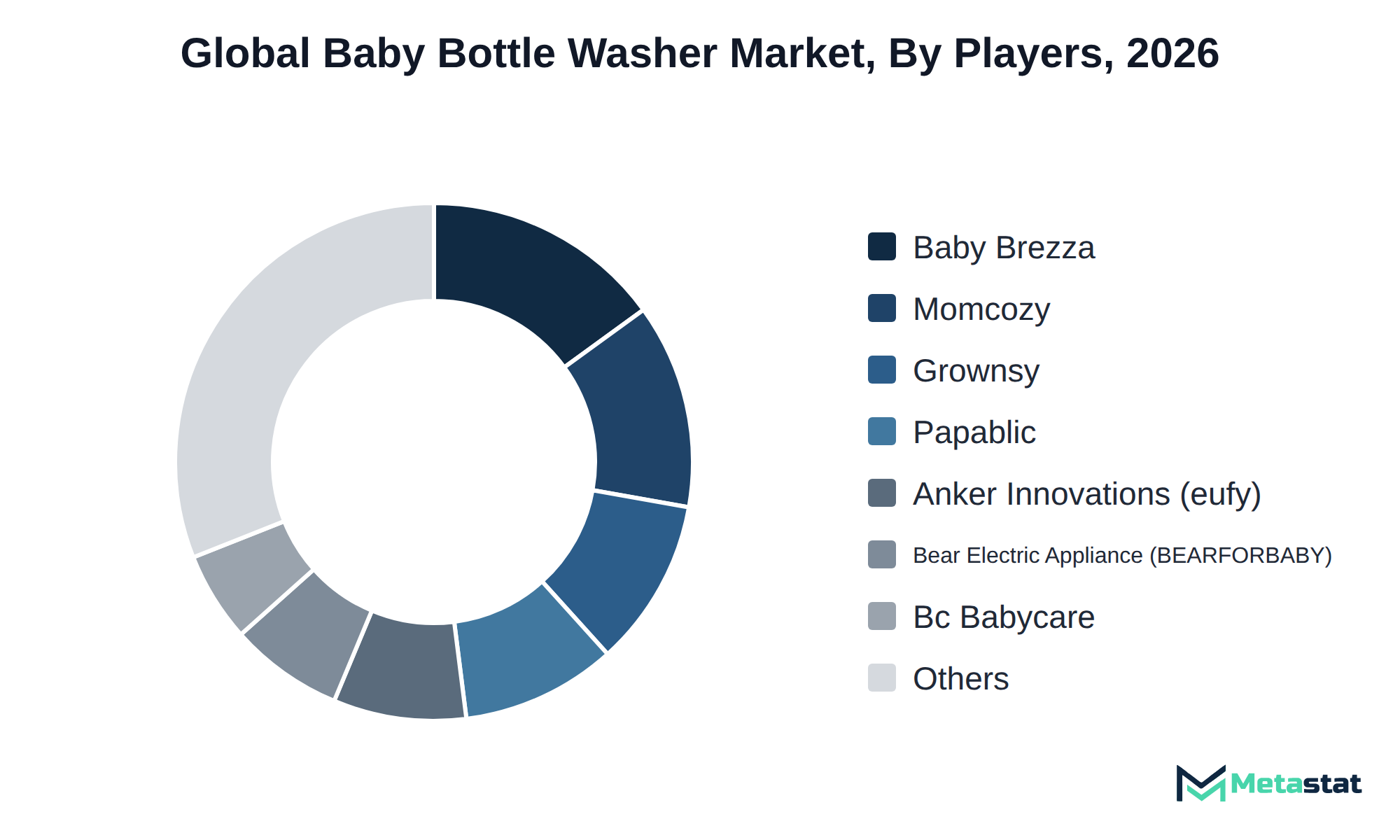
Competition in the Baby Bottle Washer market centers on product differentiation, pricing strategies, and consumer engagement. Companies focus on offering comprehensive solutions including wash, sterilize, and dry systems, which appeal to households and institutions seeking efficiency and convenience in bottle cleaning. Premium pricing aligns with advanced features and additional certifications, attracting buyers who prioritize quality and reliability.
Buyers evaluate products based on functionality, price, and brand reputation. Baby Brezza emphasizes innovative designs and comprehensive functionality in its offerings. Momcozy targets cost-conscious consumers with budget-friendly options without compromising essential features. Papablic positions itself around user-friendly interfaces and effective cleaning capabilities, catering to busy parents and childcare providers. This strategic alignment with consumer preferences influences market dynamics.
Achieving this projection requires several key developments within the Baby Bottle Washer market. First, the adoption of advanced Wash, Sterilize and Dry Systems will drive significant growth, with a CAGR of 11.1%, reflecting rising consumer demand for comprehensive cleaning solutions. Second, an increase in the household segment, projected to grow from USD 75.2 billion to USD 150.7 billion, indicates a strong shift towards automated baby care products among families. Third, growth in third-party e-commerce channels will enhance product accessibility, with anticipated revenue reaching USD 85.9 billion by 2033. However, potential risks could hinder this trajectory. Supply chain disruptions and rising costs of raw materials present challenges that slow market expansion. Addressing these risks through resilient supply chain management and cost-control strategies will be essential for the market to achieve its ambitious forecast. Overall, the outlook for the Baby Bottle Washer market remains positive, but continued focus on innovation and operational efficiency will be needed to overcome potential obstacles.
By Product Type: Wash, Sterilize and Dry Systems, Wash and Dry Systems, Wash-Only Systems
By End User: Households, Daycare Centers, Hospitals and Maternity Clinics
By Distribution Channel: Third-Party E-Commerce, Brand Direct-to-Consumer, Physical Baby Specialty Retail, Physical Mass Retail, Institutional Distributors
The report strategically identifies and profiles the key market players and analyses their core competencies in each sub-segment of the Baby Bottle Washer market.
Report Attributes | Details |
Study Period | 2021-2033 |
Base Year | 2025 |
Estimated Year | 2026 |
Forecast Period | 2026-2033 |
Historical Period | 2021-2025 |
Growth Rate | CAGR 10.8% from 2026 to 2033 |
Revenue Unit | USD billion |
Segmentation | By Product Type, Bottle Capacity, End User, Distribution Channel, and Region |
By Region | North America (By Product Type, Bottle Capacity, End User, Distribution Channel, and Country)
|
Europe (By Product Type, Bottle Capacity, End User, Distribution Channel, and Country)
| |
Asia Pacific (By Product Type, Bottle Capacity, End User, Distribution Channel, and Country)
| |
South America (By Product Type, Bottle Capacity, End User, Distribution Channel, and Country)
| |
Middle East and Africa (By Product Type, Bottle Capacity, End User, Distribution Channel, and Country)
|
Find answers to common questions about this report
The Baby Bottle Washer market size was valued at USD 76.8 billion in 2025.
The market is projected to grow at a CAGR of 10.8% during the forecast period from 2026 to 2033.
The North America Baby Bottle Washer market size is estimated to reach USD 60.2 billion by 2033.
The leading segment in the Baby Bottle Washer market is the Wash, Sterilize and Dry Systems, projected to reach USD 160.7 billion by 2033. This segment demonstrates the highest growth rate at a CAGR of 11.1 percent.
Increasing adoption among households drives demand growth as parents prioritize convenience and efficiency in maintaining baby hygiene. Daycare centers contribute significantly, investing in baby bottle washers to enhance operational efficiency and comply with hygiene standards.
North America holds the dominant share of the Baby Bottle Washer market, with a projected value of USD 60.2 billion in 2033, representing 37.4 percent of the total market.
Rising prices for baby bottle washers limit adoption among households, particularly in cost-sensitive segments. Increased demand for advanced features leads to higher production expenses, impacting profitability for suppliers.
Increasing awareness of hygiene standards and the necessity for efficient cleaning solutions drive adoption in the Baby Bottle Washer market. Daycare centers invest in advanced washing systems, reflecting a commitment to improve sanitation practices and enhance care for infants.
The Baby Bottle Washer market is estimated to reach a valuation of USD 174.4 billion by 2033.
Key players operating in the Baby Bottle Washer market include Baby Brezza, Momcozy, Grownsy, Papablic, Anker Innovations (eufy), Bear Electric Appliance (BEARFORBABY), Bc Babycare, and Babymoov.
The analysts below cover Medical Devices research at Metastat Insights.
LEAD ANALYST
Utkarsh Khirodkar is a Lead Market Research Analyst at MetaStat Insight, specializing in market intelligence, technology sector assessments, and competitive strategy.

LEAD PRINCIPAL ANALYST, PHARMA AND HEALTHCARE
Food and Beverages · Healthcare · Healthcare IT · Medical Devices
Ajay Devgire is the Lead Healthcare Analyst at MetaStat Insight, leading strategic research and market intelligence initiatives across the global healthcare domain.

SENIOR RESEARCH ANALYST
Biotechnology · Food and Beverages · Medical Devices · Packaging
Snehal Pasalkar is a Research Analyst at MetaStat Insight, operating at the intersection of life sciences research, competitive strategy, and market intelligence.
Decarbonizing industrial thermal processes hinges on refrigerant regulations and compressor efficiency limits. Metastat Insights delivered a thorough market analysis that evaluated natural refrigerants like CO2 and hydrocarbons against synthetic low-GWP alternatives. The breakdown of utility incentives and grid capacity constraints across key European manufacturing hubs offered valuable perspective. The follow-up conversation with their sector analysts addressed our specific questions on mechanical vapor recompression systems efficiently.
Assessing 200mm wafer transition schedules and substrate supply bottlenecks requires precise technical intelligence. MetaStat Insight supplied an actionable breakdown comparing planar and trench MOSFET architectures across automotive and industrial drive markets. The regional capacity estimates for Asia-Pacific foundries helped clarify lead-time uncertainties during our strategic planning session. When we needed additional clarification on high-purity raw material sourcing, their analyst team responded with helpful context within twenty-four hours.
Tracking maintenance cycle demand for secondary flight display units and terrain collision avoidance systems across regional jet fleets involves complex aftermarket dynamics. MetaStat Insight provided practical analysis separating airline retrofit programs from OEM forward-fit production schedules in North America and Southeast Asia. The supplier matrix highlighted component obsolescence timelines without resorting to vague generalizations. The dataset served as a dependable reference during our annual program review meetings.
Explore related market intelligence reports worth reading alongside this one.