
LEAD ANALYST
Utkarsh Khirodkar is a Lead Market Research Analyst at MetaStat Insight, specializing in market intelligence, technology sector assessments, and competitive strategy.

Global Bubble Tea Market Size, Share, By Type (Black Tea, Green Tea, Oolong Tea, Blended Tea, Others (White Tea, Herbal Infusions)), By Flavor (Fruit, Taro, Strawberry, Coffee, Others (Matcha, Chocolate)), By Product Format (Freshly Prepared Bubble Tea, Packaged RTD Bubble Tea, At-Home Bubble Tea Kits), By Distribution Channel (Foodservice In-Store Orders, Foodservice Delivery and Digital Pickup Orders, Physical Retail Stores, Online Retail Stores), Industry Analysis, Growth, Trends, and Forecast, 2026-2033
Report ID
MSI-4524
Published
October, 2026
Pages
278 Pages
Format
Historical
Base year
Forecast
Forecast period
Report Details
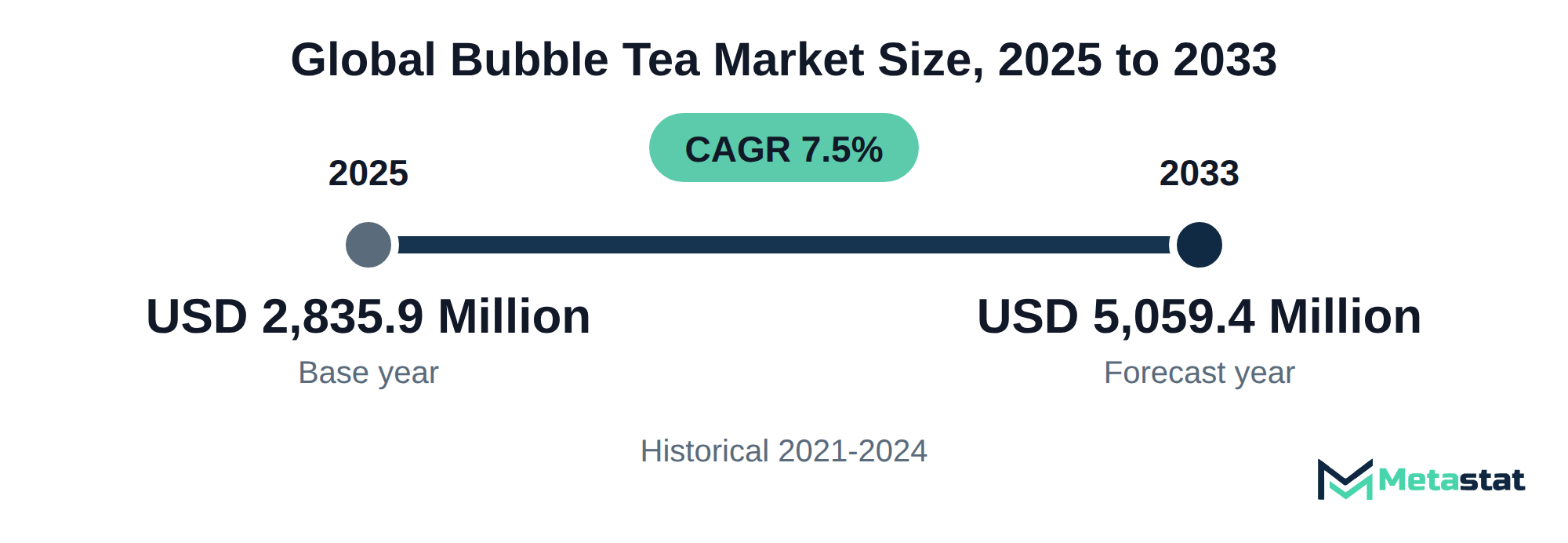
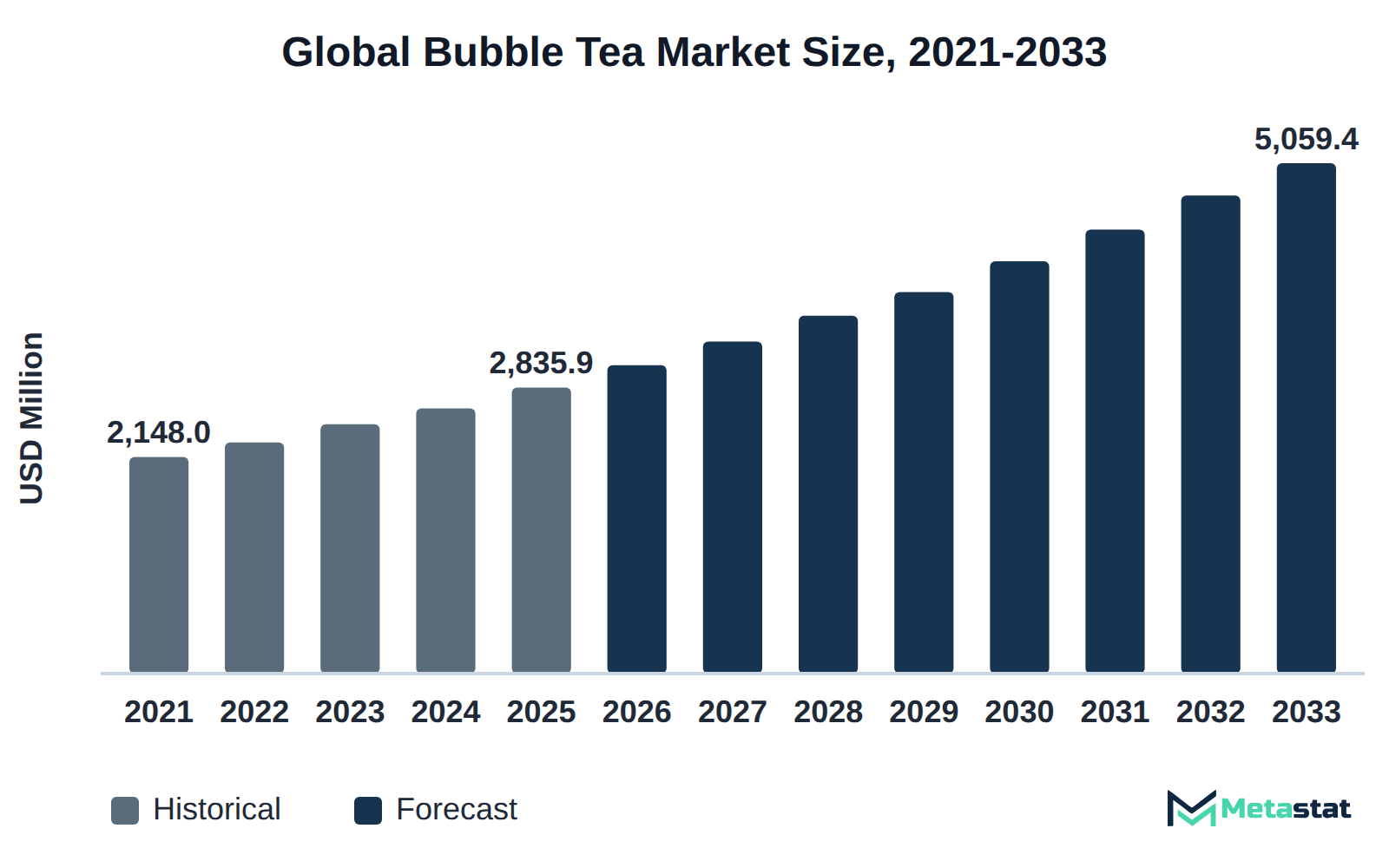
Market Valuation: Valued at $2,835.9 Million in 2025, projected to reach $5,059.4 Million by 2033 at a 7.5% CAGR.
Dominant Segment: The black tea segment leads the market, driven by its traditional significance and popularity among consumers. This segment is projected to reach USD 2,014.7 million by 2033, reflecting a steady demand for familiar flavors.
Geographic Lead: The Asia-Pacific region dominates the Bubble Tea market, supported by a strong cultural affinity for tea and a well-established retail presence. This region's market leadership is further bolstered by high consumption rates and a growing customer base.
What's Inside: The report provides a comprehensive analysis of the Bubble Tea market, including competitive coverage, segment performance by type, flavor, product format, and distribution channels. It also includes detailed forecasts for the years 2026 to 2033.
Customization Trends: There is a notable shift towards customization in bubble tea, with consumers increasingly favoring reduced sugar options and plant-based milk. This trend reflects a growing health consciousness, particularly among younger demographics.
Packaged Bubble Tea Growth: The packaged ready-to-drink bubble tea segment is set for rapid growth, projected to reach USD 580.8 million by 2033, driven by consumer demand for convenience and on-the-go options.
Choose Your License
Global Bubble Tea Market
The global Bubble Tea market was valued at USD 2,835.9 million in 2025 and is projected to reach USD 5,059.4 million by 2033, growing at a CAGR of 7.5% over the forecast period.
The Bubble Tea market encompasses a variety of tea-based beverages, characterized by the inclusion of chewy tapioca pearls and diverse flavor profiles. Buyers spend in this category because of its blend of taste and texture, which suits consumers looking for unique beverage experiences. Bubble tea is sold as freshly prepared drinks, packaged ready-to-drink variants, and at-home kits, formats that make it more accessible and convenient for consumers.
Growth in the market is driven by increasing consumer interest in innovative flavors and health-conscious alternatives. Among the segments, black tea holds the largest value, reflecting its popularity and traditional significance in bubble tea offerings. The Asia-Pacific region leads in market share, driven by a strong cultural affinity for tea and a well-established bubble tea retail presence.
One significant growth driver is the rising trend of digital ordering and delivery, reshaping consumer purchasing behavior. The convenience of foodservice delivery and digital pickup orders caters to the busy lifestyles of consumers, facilitating access to bubble tea. This shift in consumer habits positions the market for sustained expansion.
Growth in the Bubble Tea market is driven by increasing consumer demand for unique beverage experiences. The trend toward customization and personalization influences purchasing decisions, with buyers seeking innovative flavors and product formats. This shift aligns with changing lifestyle preferences, particularly among younger demographics, who favor trendy and Instagram-worthy beverages. The focus on high-quality ingredients further enhances appeal, encouraging spending in this sector.
Freshly Prepared Bubble Tea holds the largest market value, reflecting consumer preference for freshly made drinks over ready-to-drink options. The market experiences significant growth in the Packaged RTD Bubble Tea segment, driven by the convenience of on-the-go consumption. In terms of regional performance, Asia Pacific dominates the market, capturing the largest share due to an established tea culture and high consumption rates.
One notable growth driver involves the rising popularity of fruit-flavored options, which attract health-conscious consumers seeking refreshing alternatives. The diverse range of flavors available caters to varying taste preferences, promoting broader market adoption. This trend positions the Bubble Tea market for sustained growth, with an expanding customer base eager to explore new flavors and formats.
Customization trends within the Bubble Tea market indicate a significant shift towards reduced sugar content, plant-based milk options, and diverse topping preferences. As consumers become more health-conscious, demand is growing for beverages with lower sugar levels and alternative ingredients. This trend is particularly noticeable in the fruit flavor segment, projected to reach USD 2,005.5 million by 2033, reflecting a compound annual growth rate (CAGR) of 7.8%. In parallel, the preference for plant-based milk in bubble tea formulations caters to lactose-intolerant consumers and those seeking vegan alternatives.
Topping customization in the Bubble Tea market enhances consumer experience. Various options, including tapioca pearls, fruit jellies, and popping boba, allow customers to tailor their drinks to individual tastes and dietary needs. The expansion of topping varieties contributes to the overall appeal of bubble tea, encouraging repeat purchases and customer loyalty. As interest in unique flavor combinations grows, businesses focused on innovative toppings capture a larger market share and drive revenue growth.
The packaged bubble tea segment is experiencing considerable growth, driven by increasing consumer demand for convenient and ready-to-drink options. Packaged ready-to-drink (RTD) bubble tea is projected to reach USD 580.8 million by 2033, reflecting a compound annual growth rate (CAGR) of 10.7%. This rapid expansion highlights a shift in consumer behavior toward products that offer both portability and immediate satisfaction, essential factors for busy lifestyles.
Pricing strategies within this segment typically vary based on factors including brand positioning, ingredient quality, and packaging format. Retailers negotiate pricing contracts with suppliers, allowing for bulk purchases that reduce costs while enhancing profit margins. This practice enables brands to maintain competitive pricing in a market that prioritizes value for money.
The texture of the pearls significantly influences customer satisfaction and repeat purchases. Consumers expect high-quality, chewy pearls that remain fresh and appealing during the product's shelf life. Companies prioritizing superior pearl quality in their packaged offerings are likely to see higher sales volumes and enhanced brand loyalty, ultimately supporting their position within the bubble tea market.
Franchise owners in the Bubble Tea market face unique challenges related to ingredient costs and pricing strategies. The cost of ingredients significantly affects overall profitability, influencing how franchisees price their offerings. For example, the anticipated increase in demand for fruit-flavored bubble tea leads to an estimated revenue growth in this category, reaching USD 2,005.5 million by 2033, with a compound annual growth rate (CAGR) of 7.8%. This growth incentivizes franchise owners to source high-quality ingredients while maintaining competitive pricing.
Ingredient sourcing means managing fluctuating supply chain costs, particularly for specialty ingredients such as fresh fruit and tapioca pearls. Franchise owners often enhance profitability by streamlining operations and negotiating favorable contracts with suppliers. The balance between quality and cost directly impacts consumer perception and sales volume. Strategic management of these aspects enhances store profitability. Store profitability in the Bubble Tea market depends on how well franchise owners adapt to ingredient cost variations while meeting consumer preferences for quality and flavor variety.
Delivery and digital pickup significantly enhance sales and margins within the Bubble Tea market. The increasing reliance on digital platforms for food service has resulted in strong growth in this segment. Foodservice Delivery and Digital Pickup Orders are projected to reach USD 1,482.9 million by 2033, at a compound annual growth rate (CAGR) of 9.8%. This shift reflects changing consumer preferences, where convenience influences purchasing decisions.
The integration of delivery services allows businesses to tap into a broader customer base, expanding their reach beyond traditional in-store transactions. Enhanced accessibility through online platforms supports higher order volumes, thereby improving profit margins. The trend towards digital ordering connects particularly well with younger demographics, who prioritize convenience and speed in their consumption habits.
As consumer behavior shifts further towards online and delivery options, operators in the bubble tea segment adapt their strategies to optimize their digital presence. Developing user-friendly apps and partnerships with delivery app platforms emerges as essential for maintaining competitiveness. These developments are set to drive substantial revenue growth for bubble tea operators while building customer loyalty.
Increasing preference for fruity flavors significantly impacts purchasing behavior. Young consumers, especially millennials and Gen Z, predominantly drive this trend. The shift toward fruit flavors reflects a broader demand for healthier, refreshing beverages with natural taste profiles. This change supports both volume and price, as fruit-flavored options command a premium over traditional varieties. For instance, the fruit flavor segment is projected to grow from USD 1,182.1 million in 2026 to USD 2,005.5 million by 2033, reflecting a compound annual growth rate of 7.8 percent. The market sees this trend as a critical factor in attracting new customers while retaining loyal ones. The growing focus on health-conscious consumption reinforces interest in fruit-infused bubble tea, leading to increased sales and retail expansion of products featuring these flavors. This evolution in consumer preferences strengthens competition among brands, each striving to innovate within the fruit flavor space.
The market experiences a notable transformation due to rising demand for unique flavor profiles. Buyers seek diverse options that offer more than traditional tea experiences, contributing to higher acceptance and exploration of new flavors in bubble tea.
Innovation in product formats significantly influences the Bubble Tea market. The introduction of various formats, including freshly prepared bubble tea, ready-to-drink options, and at-home bubble tea kits, caters to diverse consumer preferences and convenient consumption patterns. Freshly prepared bubble tea represents a significant portion of market revenue, appealing to consumers seeking high-quality, customizable drinks.
Rapid growth in packaged ready-to-drink bubble tea, projected to reach USD 580.8 million by 2033, responds to increasing consumer demand for convenience and on-the-go options. The trend towards at-home bubble tea kits reflects changing consumption habits, allowing customers to recreate their favorite beverages at home. This shift creates opportunities for suppliers to broaden their product offerings and tap into new consumer segments.
The diversification of product formats enhances consumer choice and encourages market growth through increased accessibility and convenience. Suppliers focusing on innovative formats strengthen their competitive position and capture a larger share of the market.
Price sensitivity among consumers impacts the Bubble Tea market, particularly within younger demographics. Many buyers exhibit caution regarding premium pricing, leading to smaller order sizes and delayed purchases. Rising costs associated with ingredients and production exacerbate this issue, compelling businesses to adjust their pricing strategies. Consumers prioritize affordability, gravitating towards lower-cost alternatives or homemade options, which hampers overall growth in the segment. This cautious approach to spending affects market dynamics, stalling the adoption of new flavors or formats that could enhance the consumer experience. A sustained focus on value over novelty restricts revenue opportunities for suppliers aiming to differentiate their offerings in a competitive environment.
Suppliers in the Bubble Tea market face significant pressure from rising input costs, particularly for key ingredients including tea and tapioca. This increase impacts margins, making it difficult for operators to maintain profitability amid competitive pricing strategies. Suppliers respond by optimizing sourcing strategies and negotiating longer-term contracts with producers to lock in favorable rates. Several manufacturers enhance operational efficiency, focusing on economies of scale to mitigate cost increases. Others explore alternative ingredients that maintain product quality while reducing costs. This strategic focus on cost management reflects ongoing efforts to sustain competitiveness within the market while consumer demand continues to evolve. Rising input costs remain a fundamental challenge, and suppliers continue to adjust their business strategies in response.
The packaged ready-to-drink (RTD) bubble tea segment demonstrates notable growth potential within the market. The increasing consumer preference for convenience and portability in beverage options drives demand for packaged products. Busy lifestyles and the growing trend of on-the-go consumption particularly influence this trend. The rise in online retail channels enhances accessibility, allowing consumers to purchase these products easily. While more players enter the market with diverse flavor offerings and innovative packaging, the packaged RTD bubble tea segment represents a key area for investment and expansion. This trend creates opportunities for companies to capture a larger share of the growing consumer base seeking convenient beverage solutions.
The Global Bubble Tea market is segmented based on Type, Flavor, Product Format, and Distribution Channel.
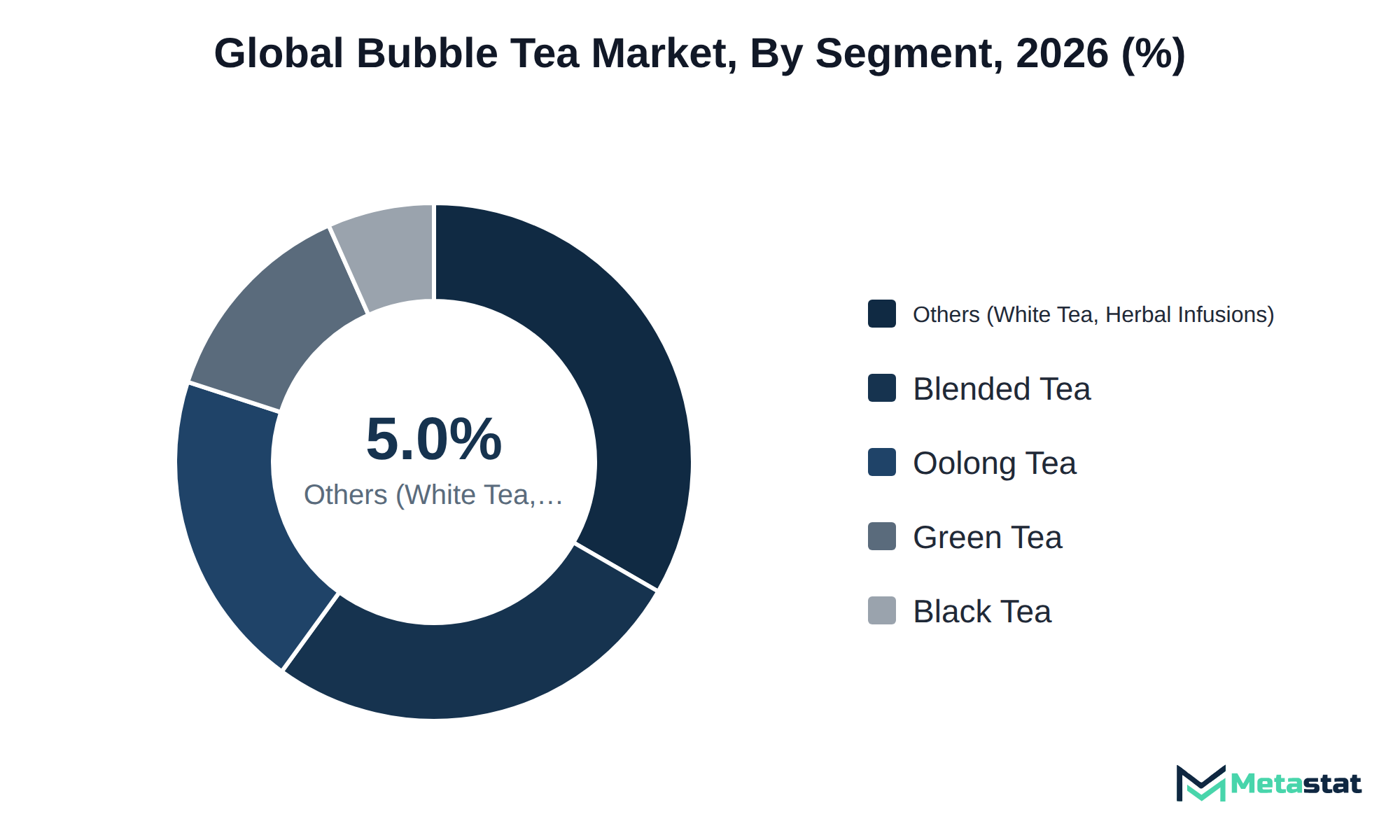
Black Tea segment is valued at USD 1,297.7 million in 2026 and is projected to reach USD 2,014.7 million by 2033, at a CAGR of 6.5% during the forecast period. This segment appeals to consumers including tea enthusiasts and those seeking traditional flavors, playing a vital role in the Bubble Tea market. Rising health consciousness fuels the demand for black tea due to its perceived health benefits, including antioxidants. In contrast to other segments, the growth rate for black tea remains moderate compared to green tea, which projects a CAGR of 8.3%. The price point of black tea tends to be lower than that of specialty options like blended teas, making it more accessible and appealing to cost-conscious buyers. Overall, the focus on familiar flavors and affordability positions the black tea segment strategically within the market.
Green Tea segment is estimated to reach USD 1,556.3 million by 2033, at a CAGR of 8.3% during the forecast period. This segment appeals to health-conscious consumers seeking refreshing and nutritious beverage options. The increasing awareness of the health benefits associated with green tea enhances its attractiveness, especially among younger demographics. Compared to other segments, Green Tea demonstrates faster growth, driven by a shift towards healthier drink alternatives. The higher CAGR indicates strong demand for this segment, particularly among those who prefer a lighter flavor profile paired with the chewy texture of tapioca pearls. The market recognizes Green Tea's unique position, setting it apart from other types of tea, which tend to appeal to a broader taste spectrum. Market dynamics surrounding health trends significantly influence consumer preferences, supporting the segment's expansion alongside rising interest in wellness-focused beverages.
Oolong Tea segment is expected to reach USD 922.8 million by 2033. This segment attracts consumers seeking unique flavors and health benefits associated with Oolong Tea, which includes a range of antioxidants and lower caffeine content compared to traditional black tea. Growing health consciousness among consumers plays an important role in driving demand for Oolong variants, appealing to health-focused demographics. Compared to other tea types, Oolong Tea exhibits a moderate growth rate, with a CAGR of 6.5%, slower than the Green Tea segment's 8.3% CAGR. However, the price point for Oolong Tea tends to be higher than that for blended styles, attracting a more premium customer base. The Oolong Tea segment's distinct flavor profile and health attributes position it uniquely within the diverse market.
Blended Tea segment is projected to grow at a CAGR of 6.9% during the forecast period. This segment appeals to consumers seeking unique flavor combinations and experiences, often used in social settings or as a refreshing beverage option. Demand for blended varieties stems from preferences for innovative tastes, allowing consumers to enjoy a fusion of different tea profiles. Among the Type segments, this growth rate is slower compared to Green Tea, which is expected to achieve a CAGR of 8.3%. Despite this, Blended Tea differentiates itself through its diverse flavor offerings, attracting customers who enjoy experimentation and novelty. This consumer trend supports growth trajectories, contributing positively to overall revenue in the market.
Others (White Tea, Herbal Infusions) encompasses unique offerings that appeal to health-conscious consumers seeking a refreshing alternative in the beverage landscape. This segment targets consumers who prefer lighter flavors and potential health benefits associated with herbal infusions. Rising interest in wellness and natural ingredients drives demand, particularly among younger demographics. Growth in this segment is expected to occur at a slower pace compared to more mainstream options like Black and Green Tea, reflecting a niche yet dedicated consumer base. This differentiation allows for diverse pricing strategies, catering to both premium and budget-conscious customers. The unique flavor profiles attract adventurous consumers willing to explore beyond traditional choices, positioning this segment distinctly in the market.
This segment appeals to health-conscious consumers seeking refreshing beverage options infused with natural fruit flavors. The rising trend of fruity flavors reflects a broader consumer preference for innovative and appealing tastes in beverages. Compared to other segments, the Fruit segment demonstrates a strong growth trajectory, outpacing several alternatives, driven by increasing demand for fruit-based beverages among younger demographics. This shift results from heightened awareness of health and wellness, prompting consumers to seek beverages that offer both taste and nutritional benefits. The Fruit segment distinguishes itself through its emphasis on natural ingredients, appealing to a market segment focused on quality and experience.
Taro segment is estimated to reach USD 1,137.4 million by 2033, at a CAGR of 6.6% during the forecast period. This flavor appeals to a diverse consumer base, particularly younger demographics who enjoy unique and sweet beverage options. Increasing awareness of health benefits associated with taro contributes positively to its demand. Unlike other flavors, Taro exhibits a slower growth trajectory compared to the Fruit segment, which has a CAGR of 7.8%. Consumers often gravitate toward Taro for its distinct taste and creamy texture. The market for this flavor demonstrates potential for innovation in product offerings, which enhances consumer interest and expands market share.
Strawberry segment is expected to reach USD 823.2 million by 2033. This flavor appeals to consumers seeking innovative and refreshing beverage options, particularly among younger demographics. Increasing consumer interest in fruity flavors significantly drives growth, reflecting a broader trend toward unique taste profiles. Compared to other segments, the strawberry flavor exhibits a competitive growth trajectory, with a projected CAGR of 6.6% during the forecast period. This growth rate positions it favorably against the Taro segment, which features a CAGR of 6.6%, indicating a distinct preference for fruity over traditional flavors. The strawberry flavor's popularity among health-conscious consumers seeking natural and fruity alternatives to traditional beverages enhances its position in the market. The market expansion continues to be influenced by evolving consumer preferences that prioritize flavor variety and supplier innovation.
Coffee is projected to grow at a CAGR of 6.7% during the forecast period. This segment appeals to consumers seeking a unique beverage experience that combines the rich flavors of coffee with the chewy texture of tapioca pearls. Popular among younger demographics, coffee-flavored bubble tea meets the growing trend of incorporating coffee into various drink formats. Rising interest in coffee culture drives this segment, attracting consumers dedicated to innovative flavors and quality ingredients. Compared to other flavors, including fruit, which is expected to reach USD 2,005.5 million, the coffee segment provides a distinct offering that differentiates itself through its complexity in taste, positioning it uniquely within the competitive environment. The market reflects a diversifying consumer preference, ensuring sustained interest and growth in coffee bubble tea offerings.
Others (Matcha, Chocolate) encompasses unique flavors that attract consumers seeking novel taste experiences. This segment appeals primarily to younger demographics and health-conscious individuals who appreciate alternatives to traditional options. Increasing trends toward innovative flavor combinations generate interest in these specialty varieties. The growth rate of this segment differs from its counterparts, influenced by evolving consumer preferences for diverse and unique flavor profiles. Compared to the Fruit segment, which enjoys rapid growth driven by popularity, the Others segment experiences more modest demand. Unique ingredients and preparation methods contribute to a higher price point, creating an appealing niche for suppliers. The market expands with consumers increasingly seeking personalized beverage experiences, positioning this segment for growth.
Freshly Prepared Bubble Tea segment is valued at USD 2,649.7 million in 2026 and is projected to reach USD 4,233.2 million by 2033, at a CAGR of 6.9% during the forecast period. This segment appeals to consumers seeking high-quality, on-demand beverages made from fresh ingredients, often preferred by younger demographics who frequent cafes and tea shops. The rising trend of premiumization in the beverage industry drives demand for freshly prepared options, driven by consumers prioritizing quality and flavor over convenience. Compared to packaged alternatives, this segment enjoys a competitive edge due to its customization and freshness. The forecasted growth stands in contrast to packaged ready-to-drink options, which are anticipated to expand at a higher CAGR of 10.7%. The focus on unique flavor profiles within this segment enhances its market position while catering to evolving consumer preferences.
This segment caters to consumers seeking convenient beverage options, particularly those who prioritize ready-to-drink solutions. The growing demand for on-the-go drinks drives this segment's growth, appealing primarily to busy professionals and younger demographics. High convenience drives consumer interest, while product variety enhances attractiveness. Compared to other product formats in the market, Packaged RTD Bubble Tea demonstrates faster growth due to its ease of access and preparation. Other formats, including freshly prepared options, do not match this segment's rapid expansion, reflecting shifting consumer preferences toward convenience and ready-made beverages. This trend indicates significant potential for investment and market penetration.
At-Home Bubble Tea Kits segment is expected to reach USD 245.4 million by 2033. This segment caters to consumers who prefer creating bubble tea at home, providing convenience and flexibility. Growing interest in DIY beverage experiences drives the demand for these kits, particularly among younger demographics seeking innovative ways to enjoy their favorite drinks. The segment distinguishes itself with a relatively lower price point compared to freshly prepared options, which typically have a higher perceived value. The CAGR for At-Home Bubble Tea Kits is projected to be slower compared to alternatives including Packaged RTD Bubble Tea, which is projected to achieve a CAGR of 10.7%. This difference positions At-Home Bubble Tea Kits as a more affordable option for budget-conscious consumers who appreciate the idea of crafting their beverage experiences.
Foodservice In-Store Orders segment is valued at USD 1,879.3 million in 2026 and is projected to reach USD 2,750.3 million by 2033, at a CAGR of 5.6% during the forecast period. This segment primarily serves consumers seeking immediate access to bubble tea in a social setting, often enjoying the experience within coffee shops or tea houses. Growth in this segment is driven by increasing consumer demand for convenience and quality, particularly among younger demographics. A notable difference from other segments is the relatively slower growth compared to Foodservice Delivery and Digital Pickup Orders, which achieves a CAGR of 9.8%. While Foodservice In-Store Orders focus on the immediate enjoyment of freshly prepared beverages, the digital ordering segment captures a market eager for delivery options, reflecting diverse consumer preferences within the market.
This segment serves busy consumers looking for convenient ways to enjoy bubble tea without dining in. Increasing demand for quick service restaurant options drives this growth, particularly among millennials and Gen Z consumers who prioritize efficiency. The segment outpaces others in its group, reflecting a trend towards mobile ordering and delivery services, which enhances accessibility. Strikingly, growth in digital pickup options contributes to higher overall sales, appealing to consumers who prefer the convenience of enjoying bubble tea at home or on the go. Evolving preferences for delivery offerings significantly support demand for this segment, setting it apart from traditional in-store purchases and reinforcing its role within the market.
Physical Retail Stores segment is expected to reach USD 577.8 million by 2033. This segment caters primarily to consumers seeking immediate access to bubble tea products in physical locations, including dedicated tea shops and convenience stores. The growth in this segment is driven by an increasing number of consumers opting for in-store purchases, contributing to faster market penetration. Compared to other distribution channels, Physical Retail Stores exhibit slower growth, with a CAGR of 5.6%, reflecting shifts in consumer behavior toward online shopping and food delivery services. In contrast, channels like Foodservice Delivery and Digital Pickup Orders experience a higher CAGR of 9.8%, indicating stronger demand for convenience-based purchasing methods. This divergence in growth rates influences how retailers approach their sales strategies and inventory management in the bubble tea market.
Online Retail Stores segment is projected to grow at a CAGR of 12.6% during the forecast period. This segment appeals to tech-savvy consumers who prefer the convenience of online shopping for bubble tea products. A rising trend in e-commerce influences this segment, driving purchases through digital platforms. The growing demand for ready-to-drink products and the ease of online orders significantly boost this channel's attractiveness. Compared to Foodservice In-Store Orders, which have a CAGR of 5.6%, online retail demonstrates faster growth potential. This growth reflects a shift in consumer behavior toward digital channels, aligning with a broader trend in the beverage marketplace. Retailers investing in online platforms enhance their reach, allowing consumers to access a wider variety of products and flavors. Consumers explore diverse options from home, positioning this segment distinctly amid evolving preferences.
The growth trajectory of the Bubble Tea market in North America reflects increasing consumer interest in unique beverage experiences. This interest is driven by the growing popularity of diverse flavors and customizable options that appeal to a broad demographic. Young consumers, particularly millennials and Gen Z, influence demand through their preference for trendy and Instagrammable beverages, promoting the market expansion.
The market dynamics are characterized by a diverse distribution strategy, encompassing foodservice in-store orders and online retail channels. Consumers increasingly favor online orders for convenience, while foodservice locations offer freshly prepared options that enhance the overall experience. This variety in distribution methods supports accessibility and encourages consumption across various customer segments.
North America stands out due to its innovative product formats, with fresh and ready-to-drink offerings gaining traction among health-conscious consumers. The emphasis on premium ingredients and unique flavors enhances the overall appeal, driving brand loyalty. Consequently, investment in marketing strategies that highlight product quality and flavor innovation is vital for companies operating within the market.
The Bubble Tea market in Europe experiences a growing interest driven by changing consumer preferences for unique and flavorful beverages. Rising health consciousness among consumers influences demand for bubble tea, prompting an increase in offerings featuring fresh and natural ingredients. This trend attracts health-oriented buyers, including younger demographics seeking trendy beverages and adults looking for alternatives to traditional soft drinks.
Bubble tea establishments continue to expand across urban areas, enhancing accessibility for consumers. The combination of social media influence and the desire for shareable experiences contributes to the popularity of bubble tea shops. Innovative marketing strategies and product diversification enhance competitive positioning within the market.
Online retail channels gain traction, allowing consumers to purchase bubble tea products conveniently. This shift towards e-commerce aligns with changing shopping behaviors, particularly among younger generations. The potential for growth in online sales channels supports overall market expansion in Europe.
The Asia-Pacific region is a prominent hub for the Bubble Tea market, driven by a strong consumer culture and a growing interest in novel beverage experiences. The increasing popularity of bubble tea among younger demographics strongly influences demand, particularly in urban areas where consumers seek innovative and customizable drink options. Health-conscious trends contribute to the market's expansion, with consumers opting for unique flavors and high-quality ingredients. The region's rich tea heritage supports the growth of various tea types, including black and green teas, which align with local preferences. The rising number of foodservice outlets and online retail platforms facilitates greater accessibility, ensuring that bubble tea reaches a broader audience. The dynamic nature of the market encourages continuous product development and creative marketing strategies, enhancing competitive positioning among established brands and new entrants. Investment in the sector remains strong, reflecting confidence in the market's potential and its anticipated growth through 2033.
The growth of the Bubble Tea market in South America reflects increasing interest in unique and flavorful beverage options. The region's expanding middle class and rising disposable incomes contribute to the trend toward premium beverages. Young consumers, particularly those aged 18 to 35, drive demand for novel experiences, seeking innovative and customizable drink options. Local entrepreneurs emerge to meet this demand, establishing bubble tea shops in urban areas to capture the attention of trend-conscious consumers.
Distribution channels shape the South American market, with foodservice in-store orders gaining popularity among consumers. Digital pickup and delivery services enhance accessibility and convenience, supporting market growth. The emphasis on online retail stores aligns with shifting consumer habits toward e-commerce platforms.
Flavor innovation remains essential for attracting consumers. Diverse offerings, including fruit and blended teas, cater to varying taste preferences and dietary considerations. This focus on flavor variety positions bubble tea shops to appeal to a broader audience and adapt to regional preferences.
The growing interest in the Bubble Tea market within the Middle East and Africa highlights a unique consumer landscape characterized by a preference for innovative and diverse flavors. Increased exposure to Asian beverage trends has encouraged local entrepreneurs to enter the market, resulting in the establishment of several specialized bubble tea outlets. The market expansion is supported by the increasing popularity of social media, which influences consumer choices and creates a culture of sharing unique beverage experiences.
The trend towards health-conscious choices influences the market, with consumers gravitating towards bubble tea products made with natural ingredients and lower sugar, in line with demand for reduced-sugar beverages. The availability of delivery services enhances convenience, allowing consumers easier access to bubble tea products. This growing accessibility fuels demand, positioning the market for significant growth in the coming years.
The unique characteristics of the Middle East and Africa regarding flavor preferences and consumption habits create opportunities for product differentiation. Local flavors and adaptations could attract consumers seeking distinctive beverage choices, enhancing market penetration. This trend indicates a promising future for the market, driven by evolving consumer preferences and innovative product offerings.
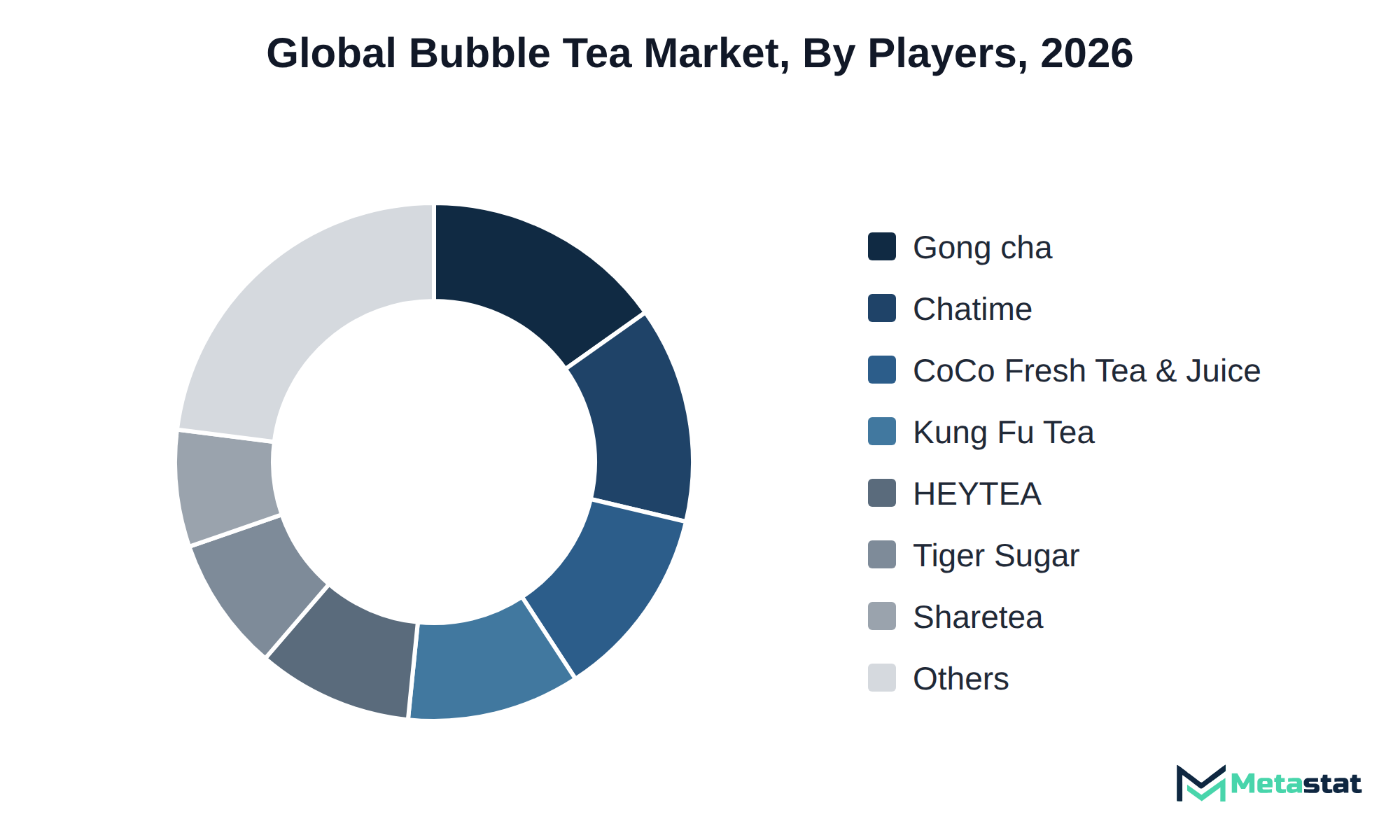
Companies within the bubble tea market compete through various strategies, including product differentiation and pricing. Buyers prioritize flavor variety, quality, and overall customer experience when selecting brands. Key players focus on unique offerings and innovative flavors to capture consumer interest.
Gong cha emphasizes a broad range of tea types, including traditional black and green tea options, appealing to a diverse customer base. Chatime offers a variety of flavors and customizations, enhancing its appeal among younger consumers seeking personalized experiences. LiHO TEA focuses on using high-quality ingredients, positioning itself as a premium option within the competitive landscape.
Price sensitivity among buyers influences their choices, with many seeking value for money without compromising on taste. The availability of fresh ingredients and appealing product formats drives consumer preferences. Brands including CoCo Fresh Tea & Juice leverage their extensive network of physical retail stores to enhance accessibility, while online retail stores offer convenience for those preferring digital purchasing experiences.
Strategic positioning and clear branding help bubble tea companies attract and retain customers. Companies like The Alley and Tiger Sugar employ strong visual identities and unique product presentations to differentiate themselves from competitors, ultimately influencing consumer purchasing decisions.
The expansion of packaged ready-to-drink (RTD) bubble tea will play a significant role, projected to reach USD 580.8 million by 2033, driven by consumer demand for convenience. The market faces challenges, particularly from fluctuations in ingredient costs, which could hinder growth. If cost pressures remain high, purchasing decisions shift, which affects overall market performance. The bubble tea market combines strong growth opportunities with inherent risks that stakeholders must manage.
By Type: Black Tea, Green Tea, Oolong Tea, Blended Tea, Others (White Tea, Herbal Infusions)
By Flavor: Fruit, Taro, Strawberry, Coffee, Others (Matcha, Chocolate)
By Distribution Channel: Foodservice In-Store Orders, Foodservice Delivery and Digital Pickup Orders, Physical Retail Stores, Online Retail Stores
By Region: North America, Europe, Asia-Pacific, South America, Middle East and Africa
The report strategically identifies and profiles the key market players and analyses their core competencies in each sub-segment of the Bubble Tea market.
|
Report Attributes |
Details |
|
Study Period |
2021-2033 |
|
Base Year |
2025 |
|
Estimated Year |
2026 |
|
Forecast Period |
2026-2033 |
|
Historical Period |
2021-2025 |
|
Growth Rate |
CAGR 7.5% from 2026 to 2033 |
|
Revenue Unit |
USD million |
|
Segmentation |
By Type, Flavor, Product Format, Distribution Channel, and Region |
Find answers to common questions about this report
The Bubble Tea market size was valued at USD 2,835.9 million in 2025.
The market is projected to grow at a CAGR of 7.5% during the forecast period from 2026 to 2033.
Black Tea leads the Bubble Tea market with a projected value of USD 1,297.7 million in 2026. This segment outperforms others in the Type category based on its initial market value.
Increasing preference for fruity flavors significantly impacts purchasing behavior, driven by young consumers seeking healthier beverage options. The rising demand for convenient packaged ready-to-drink bubble tea reflects busy lifestyles and the trend of on-the-go consumption.
Price sensitivity among consumers restrains Bubble Tea market growth, particularly within younger demographics. This caution leads to smaller order sizes and delayed purchases. Rising input costs for key ingredients challenge suppliers, impacting profitability and hindering overall market expansion.
Increasing consumer preference for fruit flavors and convenient product formats significantly influences adoption in the Bubble Tea market. The demand for healthier, refreshing beverages and the growth of ready-to-drink options support evolving consumer habits, driving market expansion.
The Bubble Tea market is estimated to reach a valuation of USD 5,059.4 million by 2033.
Key players operating in the Bubble Tea market include Gong cha, Chatime, CoCo Fresh Tea & Juice, Kung Fu Tea, Sharetea, The Alley, and Tiger Sugar.
The fruit flavor segment is projected to grow from USD 1,182.1 million in 2026 to USD 2,005.5 million by 2033, reflecting a compound annual growth rate of 7.8 percent.
Suppliers face significant pressure from rising input costs for key ingredients, particularly tea and tapioca, impacting margins and profitability.
The analysts below cover Food and Beverages research at Metastat Insights.
LEAD ANALYST
Utkarsh Khirodkar is a Lead Market Research Analyst at MetaStat Insight, specializing in market intelligence, technology sector assessments, and competitive strategy.

LEAD PRINCIPAL ANALYST, PHARMA AND HEALTHCARE
Food and Beverages · Healthcare · Healthcare IT · Medical Devices
Ajay Devgire is the Lead Healthcare Analyst at MetaStat Insight, leading strategic research and market intelligence initiatives across the global healthcare domain.

SENIOR RESEARCH ANALYST
Biotechnology · Food and Beverages · Medical Devices · Packaging
Snehal Pasalkar is a Research Analyst at MetaStat Insight, operating at the intersection of life sciences research, competitive strategy, and market intelligence.
In the biological seed treatment space, registration timelines vary drastically between the European Union, Brazil, and North America. The MetaStat Insight research handled these cross-border regulatory barriers with genuine nuance, mapping commercialization pathways alongside historical field adoption rates. The segmentation between microbial strains and biochemical active ingredients was particularly well structured.
Our team was tracking whether regional recycling infrastructure could realistically absorb the growing volume of lithium iron phosphate batteries over the next decade. The report did a solid job separating announced hydrometallurgical plant capacity from active, permitted operational throughput. That distinction made the feedstock availability projections and regional recovery rate models far more credible than standard commercial overviews.
Tracking capacity expansion in single-use bioprocessing requires dependable data on raw material availability and cleanroom-grade polymer supply chains. The competitive landscape chapter gave a grounded evaluation of secondary component suppliers across North America and Asia-Pacific rather than simply reprinting press releases. Having that level of supplier benchmarking helped clarify dual-sourcing considerations for our clinical pipeline planning.
Explore related market intelligence reports worth reading alongside this one.