
LEAD ANALYST
Utkarsh Khirodkar is a Lead Market Research Analyst at MetaStat Insight, specializing in market intelligence, technology sector assessments, and competitive strategy.

Global Collaborative Robots Market Size, Share, By Payload Capacity (Up to 5 kg, Above 5 to 10 kg, Above 10 to 20 kg, Above 20 kg), By Number of Axes (4-Axis, 6-Axis, 7-Axis), By Application (Material Handling and Pick-and-Place, Assembly and Fastening, Machine Tending, Packaging and Palletizing, Welding and Soldering, Inspection and Testing, Dispensing, Surface Finishing), By End-Use Industry (Automotive, Electrical and Electronics, Metal and Machinery, Food and Beverage, Pharmaceuticals and Medical Devices, Plastics and Rubber, Logistics and Warehousing, Furniture and Wood Products), Industry Analysis, Growth, Trends, and Forecast, 2026-2033
Report ID
MSI-4317
Published
October, 2026
Pages
274 Pages
Format
Historical
Base year
Forecast
Forecast period
Report Details
Market Valuation: Valued at $2,036.7 Million in 2025, projected to reach $7,252.5 Million by 2033 at a 17.2% CAGR.
Dominant Segment: The 'Above 20 kg' payload capacity category leads the market, driven by increasing automation in heavy industries such as automotive and aerospace. This segment is projected to grow at a CAGR of 23.6%, reflecting a strong demand for high-capacity collaborative robots.
Geographic Lead: Asia Pacific dominates the market, accounting for 46.2% of the share due to its robust manufacturing base and rapid industrialization. North America, particularly the US, is expected to lead in market share by 2026.
What's Inside: The report provides a comprehensive analysis of the global collaborative robots market, including competitive coverage, detailed segmentation by payload capacity, number of axes, applications, and end-use industries, along with forecasts extending to 2033.
High-Payload Growth: The segment for collaborative robots with a payload capacity above 20 kg is experiencing significant growth due to the rising complexity of tasks in industries like automotive and food and beverage, emphasizing the need for efficient automation solutions.
Choose Your License
Global Collaborative Robots Market
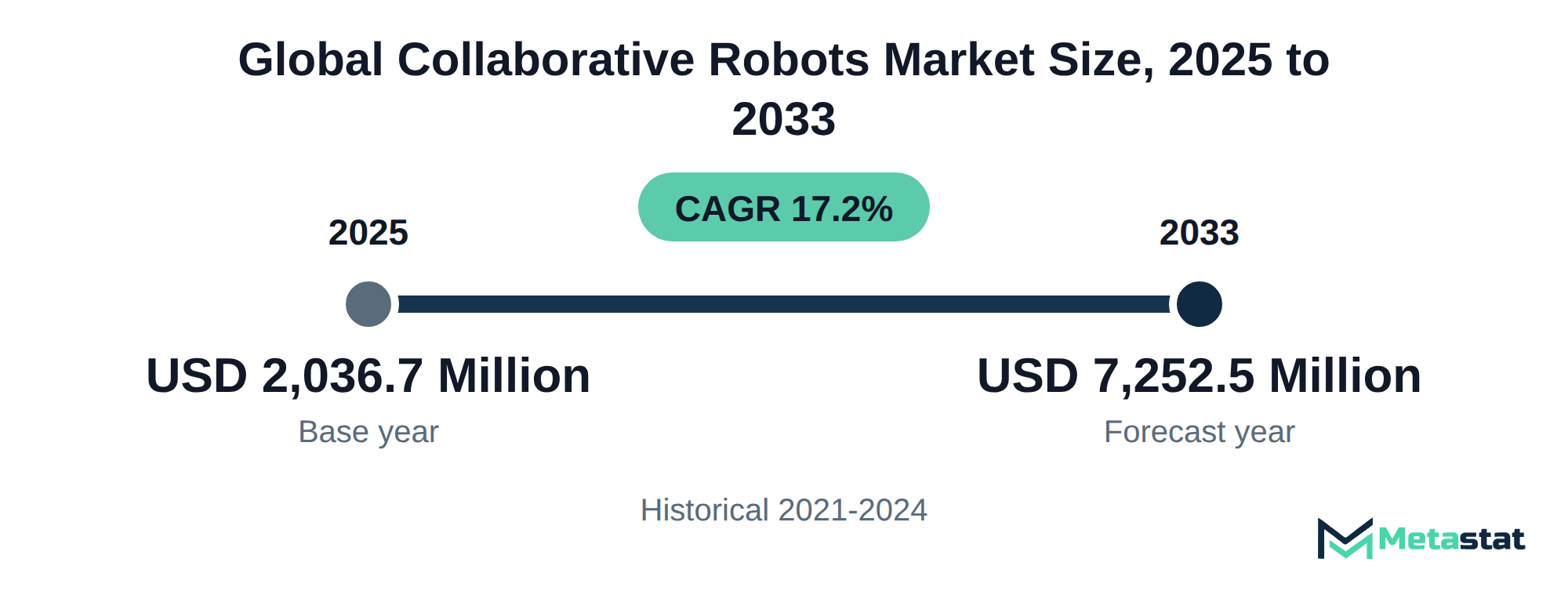
The global Collaborative Robots market was valued at USD 2,036.7 million in 2025 and is projected to reach USD 7,252.5 million by 2033, growing at a CAGR of 17.2% over the forecast period.
The Collaborative Robots market encompasses robotic systems designed for direct interaction with human operators in a shared workspace. These systems are increasingly integrated into various industries, driven by the need for automation to enhance productivity, efficiency, and safety. Buyers invest in these technologies to address labor shortages, improve precision in tasks, and reduce operational costs. The growing demand for flexible automation solutions has led to widespread adoption across sectors including manufacturing, logistics, and healthcare.
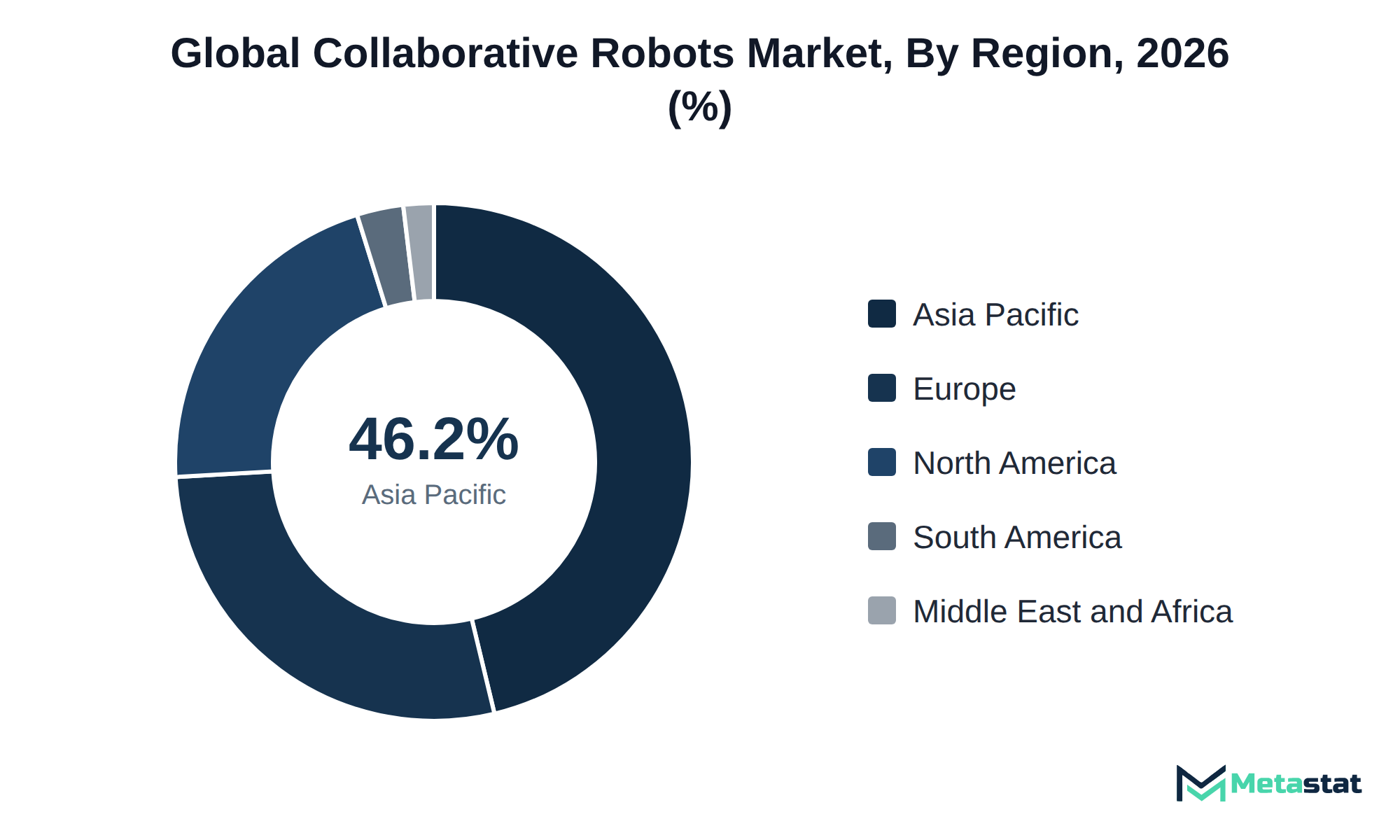
Growth in the market is propelled by advancements in technology and increasing awareness of the advantages of collaborative robots. In terms of segment value, the "5 to 10 kg" payload capacity category stands out, reflecting the diverse applications these robots serve. Regionally, Asia Pacific commands the largest share, accounting for 46.2% of the market. North America holds 21.1% of the market in 2025, with the US leading in 2026.
One primary driver of growth stems from the rising adoption of automation in the automotive and electronics sectors, where efficiency and precision play critical roles. Industries invest in collaborative robots to streamline operations, enhance product quality, and meet the demands of production environments. This trend positions collaborative robots as a driver of innovation and competitiveness in the global market.
The Collaborative Robots market covers a variety of robotic solutions employed in different applications across numerous industries. Buyers invest in these systems to enhance productivity, maintain operational efficiency, and address labor shortages. The shift towards automation drives the need for collaborative robots, facilitating tasks that require precision and flexibility while ensuring a safe working environment for human operators.
Growth in the market is primarily fueled by advancements in technology, leading to increased adoption across sectors including automotive, electronics, and food and beverage. The segment with the highest value, namely "6-Axis" robots, significantly contributes to overall market expansion. Asia Pacific represents the largest share of the market, accounting for 46.2% due to its strong manufacturing base and rapid industrialization. The US is projected to lead in market share in 2026.
Investment in research and development enables manufacturers to create innovative solutions that cater to specific industry needs. The ongoing push for automation and efficiency supports the market's trajectory, ensuring sustained growth over the coming years. The demand for collaborative robots continues to rise, driven by the increasing complexity of tasks requiring human-robot collaboration.
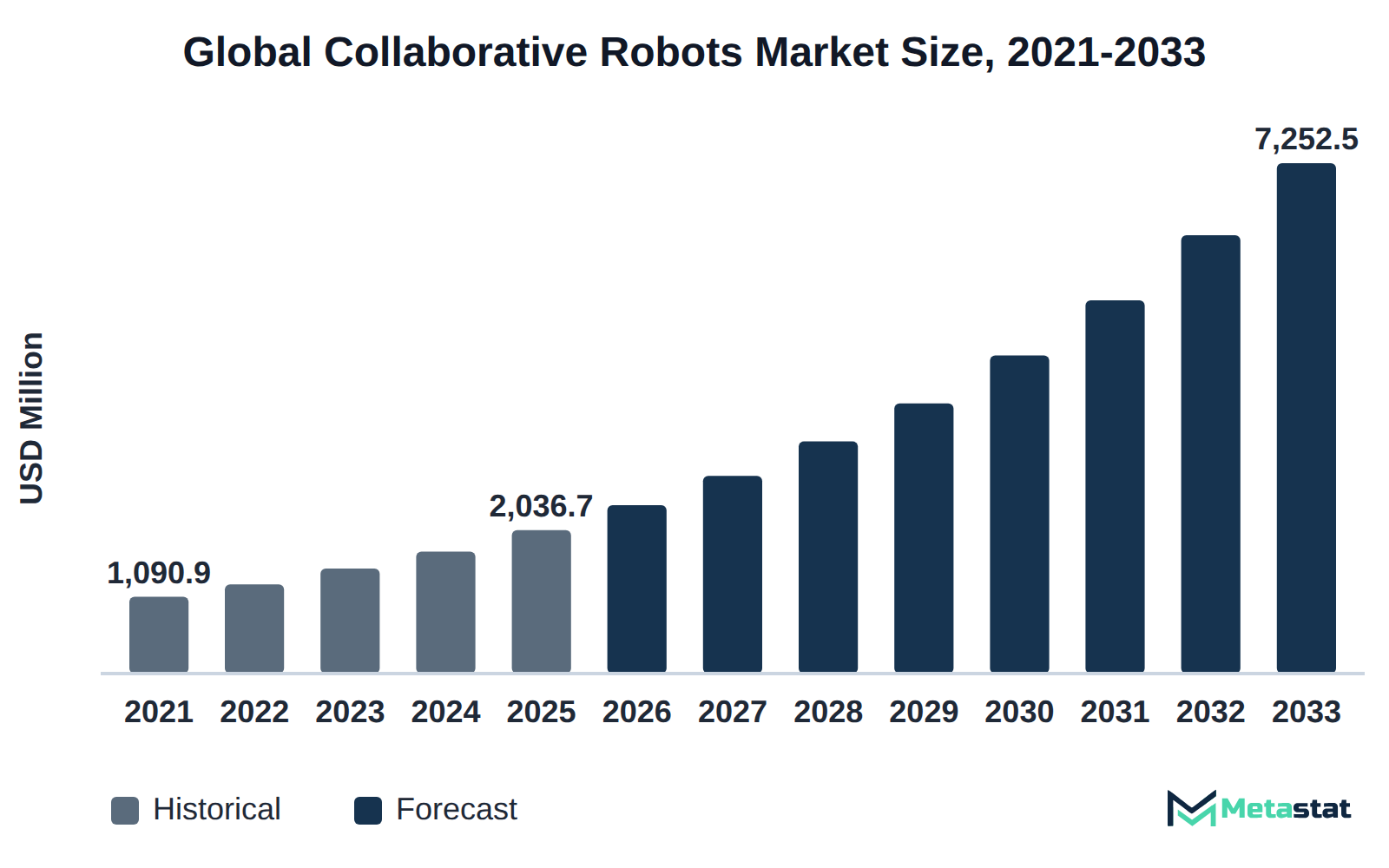
High-payload collaborative robots improve the efficiency of palletizing and machine tending applications. This segment experiences substantial growth driven by increasing demand for automation in manufacturing processes.
The payload capacity segment, particularly for robots designed to handle above 20 kg, exhibits a compound annual growth rate of 23.6%. This growth results from the increasing complexity of tasks in various industries, including automotive and food and beverage. Manufacturers seek solutions that streamline operations while maintaining flexibility, leading to heightened investments in high-payload collaborative robots.
Investment in these advanced robotic systems lowers operational costs and increases production rates, ultimately benefiting companies competing in dynamic market conditions. Enhanced performance in palletizing and machine tending applications positions organizations for improved profitability and market share.
Pricing structures in the Collaborative Robots market vary significantly based on technology and application. Buyers encounter different contract models, including upfront purchase, leasing, and subscription options. Upfront purchases provide total ownership but require higher initial investments. Leasing options reduce immediate financial burden, allowing businesses to access advanced robotic solutions without large capital expenditures.
Contracts involving subscription models facilitate incremental payment plans that align expenses with operational budgets. This flexibility appeals to smaller firms or those in industries like automotive, where initial costs are projected to reach USD 636.5 million by 2033. Pricing strategies depend on payload capacity; for instance, robots capable of handling up to 5 kg feature varied pricing compared to those designed for larger loads. Analyzing budgetary constraints and operational requirements leads to strategic investment decisions.
Understanding these pricing and contract models strengthens buyer engagement, enabling companies to optimize operational efficiency while minimizing financial risks. This knowledge enhances adoption rates of collaborative robots, driving market growth.
Price sensitivity within the Collaborative Robots market influences purchasing decisions significantly, especially among small and medium-sized enterprises (SMEs). These buyers seek affordable solutions that enhance operational efficiency without compromising quality. The introduction of competitively priced collaborative robots from Chinese manufacturers has disrupted traditional pricing models, generating new choices for SMEs. In 2026, the segment representing collaborative robots with a payload capacity of up to 5 kg is projected to reach USD 1,025 million, reflecting the demand for budget-friendly options in this payload category.
The shift toward lower-priced collaborative robots facilitates entry for SMEs into automation. This transformation affects suppliers, prompting them to reevaluate their pricing strategies and adapt their product offerings to remain competitive. Buyers increasingly consider innovative features and reliability alongside cost, reshaping the criteria for supplier selection. While the market expands, suppliers that effectively align their offerings with the distinct needs of diverse buyer groups will capture greater market share, driving further growth in the collaborative robots sector.
The payback period for deploying collaborative robots hinges on multiple factors, including initial investment costs and operational savings. For instance, collaborative robots with a payload capacity of up to 5 kg are projected to grow from USD 1,025 million in 2026 to USD 2,583.3 million by 2033, reflecting a compound annual growth rate (CAGR) of 14.1%. This significant growth indicates strong demand, driven largely by industries seeking to enhance efficiency and reduce labor costs.
Operational efficiency increases significantly through automation, leading to faster production times and reduced waste. Industries adopting collaborative robots often experience improvements in output quality, lower error rates, and enhanced flexibility in production lines. Consequently, organizations investing in collaborative robots expect a quicker return on investment, shortening the payback period. The upward trend in the collaborative robots market suggests that firms prioritizing automation gain competitive advantages in an increasingly technology-driven industry.
A shift toward automation has emerged in various industries, prompting higher demand for collaborative robots. This trend primarily stems from manufacturers seeking enhanced operational efficiency and cost savings. Specifically, the automotive and electronics sectors increasingly adopt collaborative robots to streamline assembly and material handling processes. The emphasis on automation allows companies to optimize labor costs and improve production flexibility. Growth in e-commerce and the need for adaptive manufacturing solutions drive this trend further, leading to substantial market expansion. Buyers prioritize integrating collaborative robots into their operations to enhance productivity and competitiveness.
Growing investment in research and development supports advancements in collaborative robot technologies, ensuring they meet specific industry needs. While companies increasingly recognize the benefits of automation, adoption rates are projected to rise significantly throughout the forecast period.
Advancements in collaborative robot technology significantly enhance operational capabilities, attracting a broader range of manufacturers. Innovations in industrial sensors, machine learning, and artificial intelligence improve these robots' adaptability and ease of use, allowing integration into existing workflows without extensive reconfiguration. This technological evolution appeals to industries including automotive, electronics, and logistics, where efficiency and precision are critical.
The rise of modular system designs streamlines deployment, enabling businesses to customize solutions based on specific operational requirements. These enhancements raise productivity and lower operational costs, giving manufacturers a clear competitive advantage. Manufacturers see the potential for greater output and flexibility, and investment in collaborative robots is expected to gain momentum.
The collaborative robots market is projected to benefit from increased functionality, attracting investments and driving adoption across various sectors, supporting sustained growth in the coming years.
High pricing continues to pose a significant obstacle within the Collaborative Robots market, particularly affecting small and medium-sized enterprises (SMEs). Many SMEs face budget constraints that limit their ability to invest in advanced robotic solutions, leading to slower adoption rates. Higher upfront costs trigger delays in equipment upgrades or replacements, resulting in reduced operational efficiency.
Manufacturers in sectors including automotive and electronics grapple with price pressures that deter them from making necessary investments in collaborative robotics. Hesitation to commit financially stems from difficulty justifying the return on investment, especially when more affordable alternatives exist. Consequently, this dynamic restricts the overall growth trajectory of the market, contributing to a mismatch between potential demand and actual uptake.
Suppliers in the Collaborative Robots market encounter increasing material costs, significantly impacting profitability. Raw materials used in manufacturing collaborative robots, including advanced sensors and lightweight materials, experience price volatility due to supply chain disruptions and heightened demand across various sectors. In response, suppliers invest in optimizing their manufacturing processes and seek alternative materials to mitigate costs without sacrificing quality. Forming strategic partnerships with material providers enables more favorable pricing agreements, helping to stabilize expenses. This proactive approach allows suppliers to maintain competitive pricing in the market while addressing the financial strain caused by rising input costs. Enhancing operational efficiencies contributes to sustaining profit margins amid challenging economic conditions.
The above 20 kg payload capacity segment presents a significant opportunity for market expansion, driven by increasing automation in heavy industries. This segment is projected to grow at a compound annual growth rate (CAGR) of 23.6%, indicating strong demand for high-capacity collaborative robots. Industries including automotive and heavy machinery manufacturing show a growing requirement for robots capable of handling heavier loads efficiently. The ongoing push for enhanced productivity and cost reduction within these sectors accelerates investment in advanced collaborative solutions. Suppliers focusing on developing high-payload collaborative robots capitalize on this demand, allowing for greater operational efficiency and a stronger competitive position. With the market projected to reach USD 7,252.5 million by 2033, the above 20 kg payload capacity segment stands out as an area for investment and development, reinforcing the market growth trajectory.
The Global Collaborative Robots market is segmented based on Payload Capacity, Number of Axes, Application, and End-Use Industry.
Robots with a payload capacity of up to 5 kg are predominantly used for tasks including material handling, pick-and-place applications, and assembly in industries including electronics, food and beverage, and automotive. Demand for this segment is driven by increasing automation adoption across various sectors, particularly small to medium-sized enterprises (SMEs) seeking to enhance productivity. Compared to other payload capacity segments, including those above 5 kg, this segment grows more slowly. A broader pool of potential buyers often opts for higher-capacity models to meet more demanding operational requirements. The focus on affordability and ease of integration positions this sub-segment uniquely within the market.
Above 5 to 10 kg segment is estimated to reach USD 1,837.8 million by 2033, at a CAGR of 15.7% during the forecast period. This payload capacity range typically serves applications requiring moderate lifting capabilities, appealing to industries including automotive and electronics for tasks including assembly and machine tending. Growing demand for automation in these sectors drives adoption, owing to manufacturers seeking efficiency and precision in operations. This segment experiences relatively rapid growth compared to lighter payload capacities, attributed to increasing complexity in manufacturing processes that necessitate heavier lifts. Technological advancements in robotic systems enhance the functionality and appeal of this segment, positioning it as a key player in the broader market, particularly in sectors where productivity improvements are crucial.
Above 10 to 20 kg segment is projected to reach USD 2,008.2 million by 2033. This segment finds applications in heavy industries including automotive and metal fabrication, where larger components require precise handling. Increasing automation within these sectors drives demand for robots that efficiently manage heavier loads, enhancing productivity and reducing manual labor risks. The growth rate for this segment stands at 15.7%, indicating robust expansion compared to lower payload categories. Unlike the up to 5 kg segment, which targets smaller tasks, the above 10 to 20 kg segment appeals to industries requiring more substantial lifting capabilities. This differentiation creates a unique market position, attracting specific buyers focused on maximizing operational efficiency with higher payload capacities.
Above 20 kg segment is projected to grow at a CAGR of 23.6% during the forecast period. This sub-segment finds application in heavy-duty tasks within industries including automotive, aerospace, and metalworking, where the movement and manipulation of heavy components require robust solutions. Increased automation in these sectors drives substantial demand for high-capacity collaborative robots, enabling more efficient production processes. Pricing for robots in this segment typically remains higher than that of lighter payload categories, reflecting the advanced technology and engineering required to support their operation. Manufacturers in this segment benefit from unique buyer dynamics, often seeking enhanced performance and reliability for complex operations, distinguishing it from other payload capacity segments in the market.
Valued at USD 79.2 million in 2026, the 4-Axis segment is projected to reach USD 178.4 million by 2033, at a CAGR of 12.3% during the forecast period. This segment finds applications primarily in assembly, material handling, and machine tending, extensively adopted by manufacturers seeking to enhance productivity while ensuring safety in shared workspaces. The growth of this segment is driven largely by increasing automation trends within the manufacturing sector, where 4-Axis robots offer flexibility and efficiency in handling repetitive tasks. Within the Number of Axes classification, the 4-Axis segment grows more slowly than the 6-Axis segment. The 6-Axis segment is anticipated to reach USD 5,379.9 million by 2033 at a CAGR of 16.4%. This differentiation stems from the specific operational capabilities of each type, with 6-Axis robots providing greater versatility for complex applications. The market continues to evolve, reflecting ongoing demand for automation solutions across various industries.
This segment primarily serves applications requiring increased dexterity and precision, making it suitable for tasks like assembly, machine tending, and inspection. Industries including automotive and electronics heavily employ 6-Axis robots due to their ability to handle complex movements efficiently. Demand within this segment is driven by the continuous push for automation and the need for enhanced productivity across manufacturing processes. This increased demand reflects a shift toward more sophisticated robotic solutions, positioning it uniquely within the broader collaborative robots market.
7-Axis segment is expected to reach USD 1,554.2 million by 2033. This segment serves various applications requiring extended reach and flexibility, often applied in complex assembly and machining operations. Demand for 7-Axis robots is driven by increasing task complexity across manufacturing sectors, particularly in industries including automotive and electronics. The segment exhibits a higher growth rate compared to the 4-Axis segment, which is projected to grow at a CAGR of 12.3%, indicating a more robust adoption pattern among manufacturers seeking advanced automation solutions. Unique capabilities offered by 7-Axis robots include enhanced maneuverability and precision, making them particularly appealing for specialized tasks that require intricate movements. Movement at each joint comes from robot joint actuator modules, a core component of multi-axis designs. The market continues to experience a significant shift toward higher precision automation, fueling investment and development in 7-Axis robot offerings.
Others (3-Axis and 5-Axis) segment is projected to grow at a CAGR of 17.4% during the forecast period. This segment finds applications in various settings, particularly in tasks that require flexibility and space efficiency. Manufacturers in diverse sectors, including electronics and certain assembly lines, use these robots for operations involving repetitive tasks or intricate assembly processes. The push for automation drives demand for this segment, owing to companies seeking to enhance productivity while maintaining cost efficiency. Compared to 4-Axis and 6-Axis segments, which cater to more specialized and heavier workloads, the Others segment maintains a more moderate cost structure, appealing to smaller manufacturers. The market shows considerable interest in these models, highlighting their adaptability and ease of integration into existing workflows.
Material Handling and Pick-and-Place segment is valued at USD 647.5 million in 2026 and is projected to reach USD 1,826.2 million by 2033, at a CAGR of 16% during the forecast period. This segment finds application in various industries, including automotive and electronics, where efficient and precise handling of materials is crucial. Demand for collaborative robots in this segment is driven by the increasing need for automation and flexibility in manufacturing processes. Compared to other segments, this segment experiences significant growth due to its ability to enhance productivity while reducing labor costs. For instance, the Assembly and Fastening application segment, while growing, has a slightly lower CAGR of 15.9%. The collaborative robots market benefits from advancements in technology, enabling more sophisticated material handling capabilities that attract a diverse range of buyers.
Assembly and Fastening segment is estimated to reach USD 1,473 million by 2033, at a CAGR of 15.9% during the forecast period. This segment primarily applies in industries including automotive and electronics, where precision and efficiency in joining components are critical. Demand arises from manufacturers seeking to enhance production speed and reduce labor costs, driving adoption. The segment differentiates itself with a strong growth trajectory compared to others, fueled by technological advancements in automation. Factors influencing demand include the increasing complexity of assembly tasks requiring higher precision and the integration of collaborative robots into existing workflows. This sub-segment's focus on automation solutions sets it apart from others, including material handling, which experiences slower growth.
Machine Tending segment is expected to reach USD 1,063.9 million by 2033. This segment focuses on automating the operation of machines with collaborative robots, enhancing efficiency in production environments. A closely related need is addressed by machine loading robots, which feed parts into production equipment. Industries including automotive and electronics heavily rely on this application to streamline processes and improve output quality. Growing adoption of advanced automation technologies drives demand, particularly in sectors requiring precision and consistency. The segment exhibits a CAGR of 16.4%, indicating faster growth compared to other applications including Assembly and Fastening, which has a CAGR of 15.9%. With a strong emphasis on reducing labor costs and minimizing downtime, the Machine Tending segment is a key area within the Collaborative Robots market, leading to increased investment in specialized robotic solutions.
Packaging and Palletizing segment is projected to grow at a CAGR of 20.1% during the forecast period. This segment serves various industries, including food and beverage and consumer goods, where efficient handling and placement of products is critical. Palletizing typically sits at the end of the packaging line, which connects this segment to the wider packaging machinery industry. Increasing demand for automation in these industries drives growth, owing to businesses seeking to improve productivity and reduce labor costs. Compared to other application segments, this area experiences higher growth due to the rising trend of e-commerce and the need for efficient order fulfillment. While companies invest in optimizing their supply chains, the adoption of packaging and palletizing collaborative robots becomes essential for achieving operational efficiency. Demand for these robots particularly aligns with businesses aiming to enhance their return on investment, making this segment a focal point in the broader Collaborative Robots market.
Welding and Soldering involves precise joining techniques widely used in manufacturing processes. Industries including automotive, electronics, and aerospace apply these techniques for creating reliable connections in components. Demand for automation in these sectors drives growth, where increased efficiency and quality assurance are critical. The segment distinguishes itself through its adaptability to varying material types and thicknesses, which often requires specialized robotic capabilities. It typically experiences faster growth compared to other application segments, reflecting an increasing emphasis on high-quality welds and solder joints in production lines. Enhancements in robotic precision and control technologies support this trend, enabling manufacturers to streamline operations and reduce human error. In the Collaborative Robots market, the integration of welding and soldering applications aligns with the broader push toward automation, reinforcing operational efficiency across industries.
Inspection and Testing involve the use of collaborative robots to ensure product quality and compliance with industry standards. This segment finds applications in various manufacturing sectors, particularly in electronics and automotive. Companies employ these robots for tasks including visual inspection, assembly verification, and functional testing. Demand for this segment grows due to increasing quality control requirements and advancements in automation technology. Compared to other applications, Inspection and Testing display moderate growth rates, driven by the continuous need for precise quality assurance. While segments like Packaging and Palletizing experience faster growth, Inspection and Testing remains critical for maintaining product standards across industries. The Collaborative Robots market benefits from ongoing technological improvements, enabling higher precision and efficiency in inspection processes.
Dispensing involves the precise application of materials in various manufacturing processes, serving industries that require accuracy in fluid or adhesive distribution. Users of dispensing robots typically include manufacturers in sectors including electronics, automotive, and medical device assembly. Demand for this segment grows due to increasing product complexity requiring precise material application, coupled with rising automation needs to enhance efficiency and reduce errors. In contrast to segments like Material Handling and Pick-and-Place, which focus on movement and placement, dispensing emphasizes precision and control. While other segments experience a broader range of applications and growth rates, the critical need for accuracy and the ability to work with varied materials position dispensing as a specialized sub-segment within the Collaborative Robots market.
Surface Finishing involves the application of coatings and treatments to enhance product aesthetics and durability. This segment serves industries including automotive and electronics, where surface quality significantly influences product appeal and performance. Demand for advanced surface finishes drives growth, particularly due to increasing consumer expectations for quality. Technological advancements in coating processes enhance efficiency and precision, further supporting adoption. This sub-segment experiences faster growth compared to others in the market, driven by rising manufacturing standards and a shift toward automation in production lines. While segments like Assembly and Fastening focus on joining processes, Surface Finishing emphasizes enhancing the final product's appearance and functionality, reflecting a distinct market positioning.
Laboratory Automation and Additive Manufacturing rely on collaborative robots to enhance precision and efficiency in various tasks. These applications serve industries including pharmaceuticals, research facilities, and manufacturing, focusing on tasks that demand high accuracy and flexibility. Key drivers for growth include increasing automation in laboratory settings, where efficiency boosts productivity, and the rise of additive manufacturing techniques, which require precise handling and placement of materials. This sub-segment distinguishes itself from others by typically appealing to specialized industries with specific needs, including precise material dispensing and complex assembly processes. Unlike broader applications, this segment experiences varying growth rates due to reliance on advanced technologies and specialized skill sets in the workforce. The Collaborative Robots market is expected to see ongoing advancements in robotic capabilities, further enhancing the appeal of this sub-segment.
Valued at USD 636.5 million in 2026, this segment is projected to reach USD 1,692.7 million by 2033, at a CAGR of 15% during the forecast period. Primarily in automotive manufacturing, collaborative robots enhance production efficiency through tasks including assembly and quality inspection. Demand for this segment arises from the growing emphasis on automating processes to meet production targets and improve precision. The automotive sector stands out compared to other segments due to its scale and the necessity for high-volume output, driving significant investments in automation technologies. Factors including labor shortages and the need for enhanced safety protocols accelerate adoption in this segment. With focused demand for robotics on assembly lines, the automotive segment presents unique growth opportunities in the broader collaborative robots market.
Electrical and Electronics segment is estimated to reach USD 1,753.6 million by 2033, at a CAGR of 18.1% during the forecast period. This segment involves the application of collaborative robots for tasks including assembly, testing, and material handling in manufacturing environments. Companies in this industry prioritize efficiency and precision, driving demand for advanced automation solutions. The rapid adoption of Industry 4.0 technologies fuels growth in this segment, distinguishing it with a higher CAGR compared to others in the market. Increased focus on quality assurance and productivity enhancement motivates investments in collaborative robotics, positioning this segment favorably against the backdrop of evolving manufacturing practices. Several firms actively seek to incorporate robotics to meet the growing challenges of electronic product complexity and market competition. The market anticipates significant advancements in robotics technology tailored for the Electrical and Electronics sector.
The Metal and Machinery segment is expected to reach USD 1,177.1 million by 2033. This segment primarily involves the application of collaborative robots in tasks including assembly, machining, and quality control, serving industries focused on precision and efficiency. Driving factors include increasing demand for automation and the need for enhanced operational efficiency, particularly in production lines. The growth trajectory stands out, with a CAGR of 18.1%, reflecting stronger expansion compared to other segments. This heightened demand stems from a trend toward advanced manufacturing technologies that streamline operations and reduce labor costs. The focus on automation continues to attract investments, positioning the segment favorably within the market for future growth opportunities.
The Food and Beverage segment is projected to grow at a CAGR of 18.1% during the forecast period. This segment serves various applications including packaging, handling, and processing of food products, predominantly used by food manufacturers and beverage producers. Rising consumer demand for automation in food production processes drives growth, with manufacturers seeking to enhance efficiency and maintain quality standards. This segment distinguishes itself from others due to its higher growth rate compared to segments like Metal and Machinery, which grows at a slower pace. The anticipated adoption of collaborative robots in food and beverage applications focuses on improving operational efficiency and reducing labor costs, reflecting broader trends in the market.
This segment serves the Pharmaceuticals and Medical Devices industry, focusing on enhancing precision and efficiency in various manufacturing processes. Businesses in this industry employ collaborative robots for tasks including assembly, inspection, and packaging, ensuring compliance with stringent regulatory standards. A strong demand driver in this segment stems from the increasing emphasis on automation to improve productivity and reduce human error, which is particularly significant for high-stakes applications including drug formulation and device assembly. This segment distinguishes itself from others, exhibiting a higher price point due to specialized requirements and regulatory compliance necessary for safe and effective operations. The reliance on precision and adaptability in manufacturing processes highlights the segment's unique position compared to others in the market, characterized by distinct operational challenges and regulatory scrutiny.
Plastics and Rubber involves various processes that benefit from automation in manufacturing, particularly in the production of components and products. Industries including automotive, consumer goods, and packaging rely heavily on collaborative robots for tasks including material handling, assembly, and quality control. A significant demand driver for this segment arises from the growing emphasis on efficiency and precision in production, leading manufacturers to adopt advanced automation solutions. This segment differs from others due to the unique requirements of the plastics and rubber industries, including varying material properties and processing techniques that necessitate specialized robotic capabilities. The market displays an increasing trend toward integrating collaborative robots, driven by technological advancements that enhance functionality and adaptability. Overall, this sub-segment advances productivity and quality in manufacturing processes.
Logistics and Warehousing involves the management of inventory, transportation, and distribution processes critical for supply chain efficiency. Companies apply collaborative robots in warehouse automation systems for tasks including sorting, packing, and picking, which streamline operations and reduce labor costs. Rapid advancements in automation technology drive demand for this segment, enhancing operational efficiency for major retailers and logistics firms. This segment differs from others, experiencing distinct growth patterns due to higher automation adoption rates. The ongoing trend toward e-commerce adoption significantly influences the segment, requiring faster and more accurate warehouse operations. The collaborative robots market continues to expand in this area, driven by the necessity for improved logistics capabilities and the increasing demand for real-time inventory management.
Furniture and Wood Products represent an essential segment in the market, focusing on the automation of various processing tasks in the woodworking industry. This segment serves furniture manufacturers and woodworking shops, facilitating tasks including assembly, finishing, and packaging. The increasing demand for customized furniture drives the adoption of collaborative robots, allowing manufacturers to maintain efficiency while catering to unique consumer preferences. Unlike other segments, Furniture and Wood Products experience slower growth due to the varying scale of operations and the presence of traditional craftsmanship, which often competes with automated solutions. The need for precision and adaptability further distinguishes this segment, emphasizing the importance of collaborative robots in enhancing productivity while addressing the specific requirements of woodworking processes.
This segment encompasses applications in aerospace, research, and education, focusing on tasks that require precision and adaptability. Collaborative robots serve educational institutions and research facilities, enhancing workflow efficiency and safety in various environments. The demand for these robots arises from a growing emphasis on automation in educational settings, where hands-on learning and experimentation play important roles. Cost-effective solutions and user-friendly interfaces drive adoption among institutions prioritizing innovative teaching methods. Compared to other segments, this area experiences slower growth due to budget constraints and regulatory barriers in educational funding. However, the potential for enhanced learning experiences and research capabilities continues to attract investments in the Collaborative Robots market.
Based on geography, the Global Collaborative Robots market is divided into North America, Europe, Asia-Pacific, South America, Middle East, and Africa.
The demand for collaborative robots in North America is driven primarily by industries including automotive, electronics, and food processing. Automation in these sectors enhances efficiency and productivity, prompting significant investments. North America represents 21.1% of the global market in 2025, with a projected value of USD 1,396.8 million by the end of 2033. The region benefits from a well-established infrastructure that supports the integration of collaborative robots into manufacturing processes. Countries including the United States, Canada, and Mexico play a crucial role in this market landscape, with various firms seeking to adopt advanced robotics solutions to optimize operations. The collaborative robots market in North America is projected to continue its expansion, reflecting the growing trend of automation across multiple industries.
Germany, France, the UK, Italy, and Spain represent key countries driving demand in the Collaborative Robots market. The automotive and electrical industries significantly influence the sector, propelling growth through increased automation and efficiency. Investments in research and development across these countries contribute to technological advancements, enabling manufacturers to enhance production capabilities. Regulatory frameworks support automation initiatives, focusing on safety and standardization in robotic applications. With a market share of 27.8% in 2025, Europe stands out in global collaborative robot adoption, reflecting a strong commitment to integrating robotics in various sectors. The region is projected to see substantial growth in the coming years, driven by rising demand for smart manufacturing solutions and enhanced productivity.
Asia-Pacific stands out with significant contributions to the Collaborative Robots market, driven predominantly by the manufacturing sectors in China, Japan, and India. Growing automation trends in these countries reflect strong demand for collaborative robots, particularly in industries including automotive and electronics. Infrastructure development, particularly in smart manufacturing and Industry 4.0 initiatives, supports the integration of advanced robotics technologies into production processes. With a market share of 46.2% in 2025, this region anticipates strong growth, propelled by increasing investments in automation solutions across various sectors. The market expansion is expected to benefit from rising labor costs and a push toward higher efficiency in manufacturing operations.
In South America, the Collaborative Robots market encounters unique dynamics driven by the manufacturing sectors in Brazil and Argentina. Industrial automation, particularly in the automotive and food processing industries, fuels demand for collaborative robots, enhancing productivity and efficiency. The market benefits from initiatives aimed at modernizing manufacturing processes, which further support investment in automation technologies. Brazil's significant industrial output positions it as a key player, while Argentina observes growing interest in factory automation as production capabilities expand. The market share for South America is projected to reach 2.9% in 2025, reflecting the region's gradual adoption of collaborative robotics technology.
Demand in the Middle East and Africa for collaborative robots is primarily influenced by the automotive and electronics sectors. The growing focus on automation within these industries drives investments in robotic technologies. Countries including Saudi Arabia and the UAE focus on enhancing manufacturing capabilities and improving efficiency through automation. The total market share for this region highlights the potential for growth in the adoption of collaborative robots. South Africa demonstrates interest in advancing automation to boost productivity across various sectors. While infrastructure development continues to progress, a shift toward automation in manufacturing processes is expected to create further opportunities in the collaborative robots market.
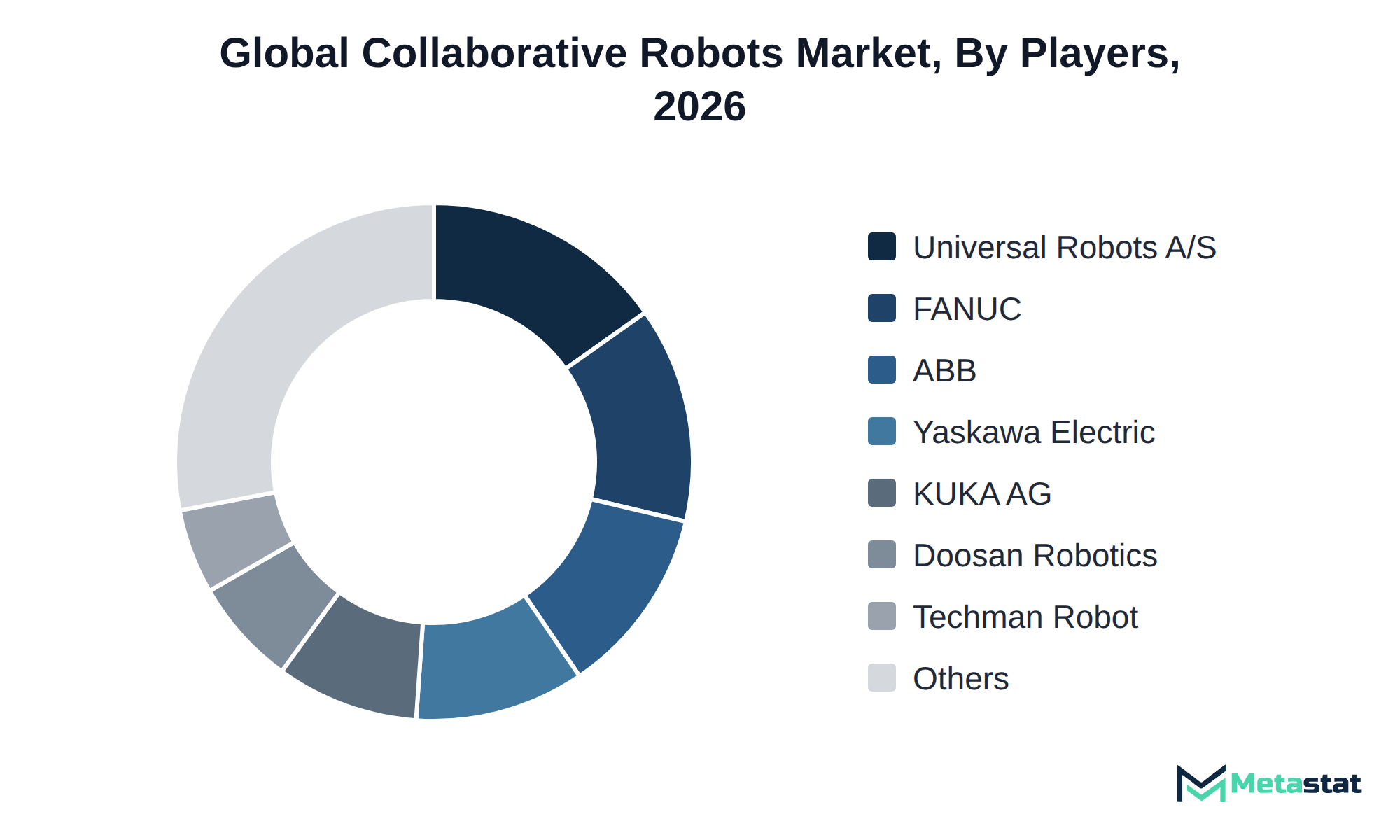
Competition in the Collaborative Robots market involves companies adopting various strategies to differentiate their offerings. Key factors influencing buyer decisions include price, certification, customization, service, and the strength of the ecosystem surrounding the products.
Firms including Universal Robots A/S focus on user-friendly designs and broad application versatility, which enables faster deployment in diverse industries. FANUC Corporation emphasizes its extensive service network and strong reputation in automation, which appeals to buyers seeking reliable long-term partners. ABB Ltd. relies on its advanced technology and integration capabilities, which attract customers who prioritize innovative solutions and technological support.
Companies compete by offering various payload capacities and axis configurations. For instance, Yaskawa Electric Corporation and KUKA AG provide options across multiple payload ranges, catering to different operational requirements. The choice of application, including assembly or material handling, further influences buyer preferences, with companies like Doosan Robotics Inc. and Techman Robot Inc. concentrating on specific applications to establish distinct market segments.
Growth in the Collaborative Robots market relies on several factors, particularly advancements in payload capacity and the number of axes. The segment featuring payload capacities of up to 5 kg is projected to grow significantly, reaching USD 2,583.3 million by 2033, driven by increasing demand from the automotive and electronics sectors. Similarly, the 6-axis collaborative robots segment is anticipated to contribute substantially, targeting USD 5,379.9 million by 2033, appealing to industries including packaging and assembly. Conversely, risks that could hinder market expansion include supply chain disruptions and increasing production costs. The Asia Pacific region, representing the largest market share at 46.2%, faces challenges related to fluctuating raw material prices and regulatory hurdles that could impact growth. The Collaborative Robots market is poised for significant growth if technological advancements and industry demand continue and the risks above are managed.
By Application: Material Handling and Pick-and-Place, Assembly and Fastening, Machine Tending, Packaging and Palletizing, Welding and Soldering, Inspection and Testing, Dispensing, Surface Finishing, Others (Laboratory Automation, Additive Manufacturing)
By End-Use Industry: Automotive, Electrical and Electronics, Metal and Machinery, Food and Beverage, Pharmaceuticals and Medical Devices, Plastics and Rubber, Logistics and Warehousing, Furniture and Wood Products, Others (Aerospace, Research and Education)
The report strategically identifies and profiles the key market players and analyses their core competencies in each sub-segment of the Collaborative Robots market.
|
Report Attributes |
Details |
|
Study Period |
2021-2033 |
|
Base Year |
2025 |
|
Estimated Year |
2026 |
|
Forecast Period |
2026-2033 |
|
Historical Period |
2021-2025 |
|
Growth Rate |
CAGR 17.2% from 2026 to 2033 |
|
Revenue Unit |
USD million |
|
Segmentation |
By Payload Capacity, Number of Axes, Application, End-Use Industry, and Region |
|
By Region |
North America (By Payload Capacity, Number of Axes, Application, End-Use Industry, and Country)
|
|
Europe (By Payload Capacity, Number of Axes, Application, End-Use Industry, and Country)
|
|
|
Asia Pacific (By Payload Capacity, Number of Axes, Application, End-Use Industry, and Country)
|
|
|
South America (By Payload Capacity, Number of Axes, Application, End-Use Industry, and Country)
|
|
|
Middle East and Africa (By Payload Capacity, Number of Axes, Application, End-Use Industry, and Country)
|
Find answers to common questions about this report
The Collaborative Robots market size was valued at USD 2,036.7 million in 2025.
The market is projected to grow at a CAGR of 17.2% during the forecast period from 2026 to 2033.
The North America Collaborative Robots market size is estimated to reach USD 1,396.8 million by 2033.
The segment "6-Axis" leads the Collaborative Robots market with a projected value of USD 5,379.9 million by 2033, based on its significant share compared to other segments.
Key drivers for the Collaborative Robots market include a shift toward automation across various industries, particularly in the automotive and electronics sectors. The focus on enhancing operational efficiency and achieving cost savings supports significant market growth.
High pricing restricts growth in the Collaborative Robots market, particularly for small and medium-sized enterprises facing budget constraints that slow adoption rates. Increasing material costs impact supplier profitability, further limiting market expansion.
Several factors favor adoption in the collaborative robots industry, including the ongoing push for automation in manufacturing, which enhances operational efficiency and reduces labor costs. The demand for robots with payload capacities up to 5 kg is expected to reach USD 2,583.3 million by 2033, reflecting a compound annual growth rate of 14.1 percent.
The Collaborative Robots market is estimated to reach a valuation of USD 7,252.5 million by 2033.
Key players operating in the Collaborative Robots market include Universal Robots A/S, FANUC Corporation, ABB Ltd., KUKA AG, Yaskawa Electric Corporation, Doosan Robotics Inc., and Techman Robot Inc.
Asia Pacific leads the Collaborative Robots market, accounting for 46.2% of the market share.
The analysts below cover Machinery & Equipment research at Metastat Insights.
LEAD ANALYST
Utkarsh Khirodkar is a Lead Market Research Analyst at MetaStat Insight, specializing in market intelligence, technology sector assessments, and competitive strategy.

INDUSTRY CONSULTANT - CHEMICALS & ADVANCED MATERIALS
Chemicals and Materials · Machinery & Equipment · Packaging
Amit Gadhekar Consultant for Chemicals and Materials at MetaStat Insight, directing sector-specific intelligence, research, and strategic consulting across global chemical and processing markets.

PRINCIPAL CONSULTANT - QUALITY SYSTEMS & COMPLIANCE
Electronics and Semiconductor · Machinery & Equipment · Professional Services
Omkar Phadtare is an Industry Consultant at MetaStat Insight, specializing in quality systems, regulatory compliance, and standards benchmarking to drive data-driven market intelligence and strategic industry research.

ENERGY & INFRASTRUCTURE INDUSTRY CONSULTANT
Automotive and Transportation · Electronics and Semiconductor · Energy and Power · Machinery & Equipment
Saurabh Vasant Ganvir consults for Energy & Infrastructure Industry at MetaStat Insight, specializing in renewable energy, solar EPC, and electric vehicle (EV) infrastructure markets.

LEAD CONSULTANT - COMMUNICATION, TELECOM, AND IT
Electronics and Semiconductor · Information & Technology · Machinery & Equipment · Professional Services
Ravindra Sathe Consultants for Communication, Telecom, and IT at MetaStat Insight. He leads the firm's industry research initiatives across telecommunications infrastructure, digital connectivity, enterprise networking, and emerging information technology domains.
Scaling antibody-drug conjugate manufacturing hinges on contract manufacturing availability for high-potency active ingredients. The MetaStat Insight analysis looked closely at global cleanroom slot constraints, bioconjugation batch failure rates, and supply chain redundancies between the US, Europe, and India. The supplier capability matrix proved genuinely useful for our team when mapping secondary source options across our clinical pipeline.
Floating offshore wind feasibility relies heavily on specialized installation vessel availability and port crane limits, which most broad renewable energy forecasts ignore. The report delivered a thorough analysis of dry dock capacity, mooring chain supply constraints, and raw material pricing trends for deepwater anchor installations. It served as a solid independent sanity check for our offshore project capital expenditure assumptions.
Assessing commercial microgrid software adoption requires looking past top-level installation numbers and examining utility interconnection queues. The research provided verifiable data on average permitting timelines, tariff structures, and battery storage integration costs across regional utility territories. That grounded perspective was valuable for our team when building five-year demand projections for industrial microgrid controllers.
Explore related market intelligence reports worth reading alongside this one.