
LEAD ANALYST
Utkarsh Khirodkar is a Lead Market Research Analyst at MetaStat Insight, specializing in market intelligence, technology sector assessments, and competitive strategy.

Global Commercial Drink Mixer Market Size, Share, By Product Type (Automatic Drink Mixers and Manual Drink Mixers), By Application (Bars, Pubs, Restaurants, Hotels, Cafes, and Others), By Distribution Channel (Online Stores, Specialty Stores, Supermarkets, Hypermarkets, and Others), By End-User (Commercial and Residential), Industry Analysis, Growth, Trends, and Forecast, 2026-2033
Report ID
MSI-4714
Published
May, 2026
Pages
314 Pages
Format
Report Details
Choose Your License
Commercial Drink Mixer Market
Global Commercial Drink Mixer market size is valued at USD 1,707.2 million in 2025 and projected to grow at a CAGR of 5.6% during the forecast period, reaching USD 2,638.4 million by 2033.
North America accounts for 28.0% of the market share in 2025, with the U.S. leading regional revenue contribution.
The Automatic Drink Mixers segment accounts for a market share of 62.6% in 2025.
Key trends driving growth: Rising global demand for premium cocktails and specialty beverages in bars and quick-service restaurants, along with expansion of hospitality and foodservice sectors, increasing need for high-efficiency beverage equipment.
Opportunities include growing adoption of automation and smart kitchen equipment enabling precision mixing and operational efficiency.
Key insight: The Global Commercial Drink Mixer market is expanding steadily owing to foodservice modernization, growth of specialty beverages, operational efficiency needs, and equipment replacement demand.
The Global Commercial Drink Mixer market within the foodservice equipment industry is shifting toward high-productivity systems that improve beverage preparation speed, consistency, and operational efficiency. Operators are focusing on machines that support milkshakes, smoothies, protein beverages, iced beverages, and dessert-based drinks with repeatable quality standards. Commercial kitchens increasingly prefer durable equipment that performs reliably under continuous daily workloads.
Over the coming years, demand patterns will shift toward compact, programmable, and easy-to-clean systems. Equipment manufacturers are improving motor performance, stainless-steel construction, ergonomic controls, safety features, and serviceability. The Global Commercial Drink Mixer market is also benefiting from menu innovation across cafes, quick-service restaurants, bars, and hospitality chains seeking differentiated beverage offerings.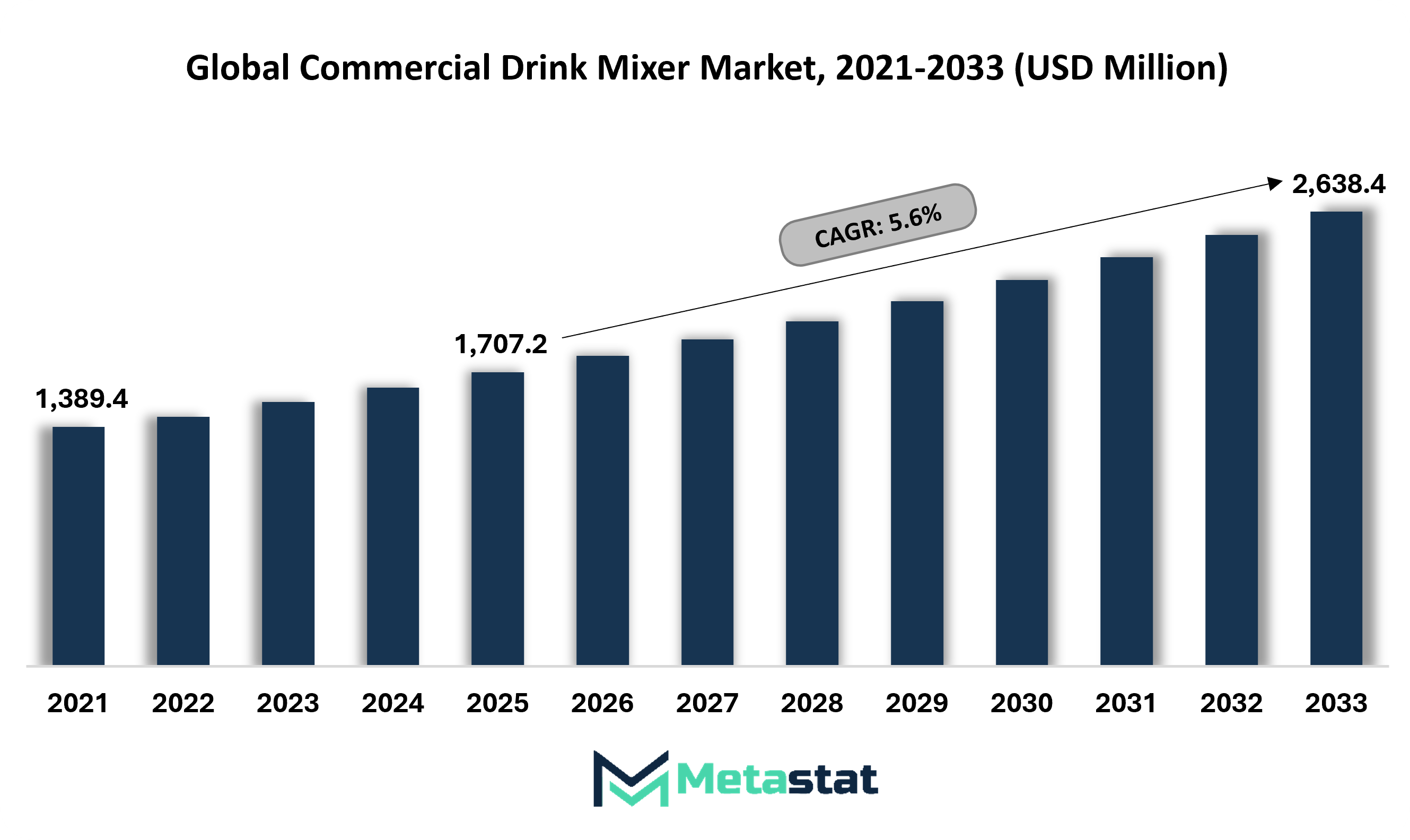
Rising global demand for premium cocktails and specialty beverages in bars and quick-service restaurants.
Premium beverage culture continues gaining traction across urban dining and on-premise consumption channels. Bars, lounges, cafes, and quick-service restaurants are adopting commercial drink mixers to improve preparation speed, taste consistency, and beverage presentation. These machines support menu expansion, faster service, and batch-level standardization. Future demand will rise with themed outlets, travel dining formats, and experiential beverage concepts worldwide.
Expansion of hospitality and foodservice sectors, increasing need for high-efficiency beverage equipment
Hotels, resorts, catering units, cloud kitchens, and restaurant chains continue adding new service locations across developing economies. Higher guest volumes create pressure for faster beverage output during peak service hours. Commercial drink mixers improve workflow, reduce waiting time, and support staff productivity. Future foodservice expansion will strengthen equipment replacement cycles across commercial kitchens.
High upfront cost and maintenance requirements of commercial-grade mixers
Commercial-grade mixers often require considerable capital spending, especially for advanced motor systems, durable components, and safety features. Routine servicing, spare parts, blade replacement, and cleaning requirements add to operating costs. Smaller businesses will postpone purchases where beverage output volumes remain limited. Future market expansion will depend on leasing models, bundled maintenance packages, and service-backed ownership plans.
Availability of low-cost alternatives and manual preparation methods in small establishments
Independent cafes, kiosks, juice counters, and seasonal beverage stalls often depend on manual preparation methods or entry-level appliances. Lower investment requirements appeal to budget-focused operators. Purchase hesitation will continue where daily beverage volumes remain modest. Future conversion will improve through affordable compact models that offer reliable performance, easy cleaning, and lower ownership costs.
Growing adoption of automation and smart kitchen equipment enabling precision mixing and operational efficiency
Smart kitchens continue advancing through connected appliances, preset recipes, sensor controls, and performance monitoring systems. Commercial drink mixers integrated with automation deliver measured blending, repeatable taste quality, and lower waste levels. Future opportunities will expand through data-driven kitchens, chain standardization, and labor optimization across foodservice networks.
The Global Commercial Drink Mixer market is classified based on Product Type, Application, Distribution Channel, and End-User.
Automatic Drink Mixers segment is valued at USD 1,128.2 million in 2026 and is projected to reach USD 1,734 million by 2033, at a CAGR of 6.3% during the forecast period.
Automatic drink mixers indicate strong future demand owing to speed, portion accuracy, and consistent beverage texture during peak service hours. Sensor controls, programmable recipes, and low-noise motors support premium foodservice operations. Hospitality chains will prefer automatic systems for labor efficiency, hygiene standards, and consistent menu delivery across multiple outlets globally.
Manual Drink Mixers segment is valued at USD 672.9 million in 2026 and is projected to reach USD 904.5 million by 2033, at a CAGR of 4.3% during the forecast period.
Manual drink mixers retain value through simple operation, affordable pricing, and easy maintenance for compact businesses. Independent cafes, kiosks, and seasonal counters will prefer manual units for flexible use and quick cleaning. Future demand will remain steady where energy costs, budget limits, or mobility needs influence equipment selection.
Bars and Pubs segment is projected to reach USD 662.5 million by 2033, at a CAGR of 5.1% during the forecast period.
Bars and pubs present strong growth potential owing to rising demand for blended beverages, mocktails, and signature drink menus. High evening traffic encourages adoption of durable mixers with fast output and consistent texture. Future venues will favor compact models, smart controls, and attractive designs that support quick service and customer engagement.
Restaurants segment is projected to reach USD 774.1 million by 2033, at a CAGR of 5% during the forecast period.
Restaurants are increasingly adding beverages to meal offerings, creating wider need for reliable mixing equipment. Smooth preparation improves table turnover, order accuracy, and service consistency during busy dining periods. Future restaurant formats will integrate mixers within open kitchens, beverage counters, and takeaway zones to improve operational flow and revenue expansion.
Hotels segment is projected to reach USD 512.7 million by 2033, at a CAGR of 6.4% during the forecast period.
Hotels rely on beverage quality across lounges, banquet halls, room service, and poolside counters. Commercial mixers help maintain service standards during events, conferences, and peak tourism seasons. Future hotel investments will focus on quiet machines, premium finishes, and multifunctional systems that match upscale guest expectations.
Cafe's segment is projected to reach USD 483.9 million by 2033, at a CAGR of 6.9% during the forecast period.
Cafes continue expanding cold coffee, smoothies, shakes, and seasonal beverages, increasing mixer demand. Fast preparation supports morning rush periods, takeaway orders, and delivery-led beverage sales. Future cafe brands will adopt energy-saving units, compact footprints, and recipe memory features that support menu variety with controlled ingredient usage.
Others segment is projected to reach USD 205.3 million by 2033, at a CAGR of 4.9% during the forecast period.
Other applications include food courts, catering units, institutions, amusement facilities, and transport hubs. Beverage counters within these locations require reliable machines for quick high-volume service. Future growth will emerge through travel retail expansion, organized catering networks, and rising preference for ready-blended refreshment options.
Online Stores segment is projected to reach USD 595.2 million by 2033.
Online stores are gaining traction through broad product visibility, price comparison, and convenient ordering for business buyers. Digital catalogs support evaluation of size, power, capacity, and features before purchase. Future channel growth will rise through virtual demonstrations, faster logistics, and financing offers for equipment procurement.
Specialty Stores segment is projected to reach USD 916.1 million by 2033.
Specialty stores remain critical owing to expert guidance, live demonstrations, and after-sales support. Buyers often value direct inspection before investing in commercial equipment. Future performance will strengthen through service contracts, spare-part availability, and tailored recommendations for cafes, hotels, and beverage operators.
Supermarkets/Hypermarkets segment is projected to reach USD 722.7 million by 2033.
Retail stores and big-box outlets attract small buyers seeking immediate purchase access and promotional pricing. Physical shelves allow quick comparison among entry-level units and accessories. Future channel demand will remain steady where organized retail expansion supports convenient sourcing for startups and small foodservice businesses.
Others segment is projected to reach USD 404.5 million by 2033.
Other channels include distributors, wholesalers, dealer networks, and direct manufacturer sales. Bulk procurement often moves through these routes for chains and institutional buyers. Future gains will arise from local partnerships, bundled maintenance plans, and faster supply support for developing hospitality infrastructure.
Commercial segment is projected to grow at a CAGR of 5.4% during the forecast period.
Commercial end-users maintain strong demand owing to continuous beverage preparation across hospitality, dining, and foodservice environments. Performance, durability, and hygiene remain core purchase factors. Future commercial demand will accelerate with tourism growth, foodservice expansion, and preference for automated kitchen equipment that improves speed and consistency.
Residential segment is projected to grow at a CAGR of 7% during the forecast period.
Residential demand will grow through home bars, private events, premium kitchens, and hobby beverage preparation. Consumers often seek stylish compact machines with simple controls and easy cleaning features. Future household interest will increase through lifestyle upgrades, apartment living trends, and social gathering culture in urban markets.
Based on geography, the Global Commercial Drink Mixer market is divided into North America, Europe, Asia-Pacific, South America, Middle East, and Africa.
North America is witnessing growing Commercial Drink Mixer adoption owing to mature foodservice chains, established hospitality infrastructure, and strong demand for premium beverages.
Europe Commercial Drink Mixer market is witnessing steady expansion owing to the region’s mature hospitality sector, strong café culture, premium cocktail consumption, and rising adoption of efficient foodservice equipment across restaurants, bars, hotels, and quick-service outlets.
Asia-Pacific offers considerable opportunities for the Commercial Drink Mixer market through rapid cafe expansion, rising disposable income, and growing youth-led beverage consumption.
Across the Middle East, Africa, and South America, the Commercial Drink Mixer market is progressing through hospitality investments, tourism growth, and rising demand for modern beverage equipment.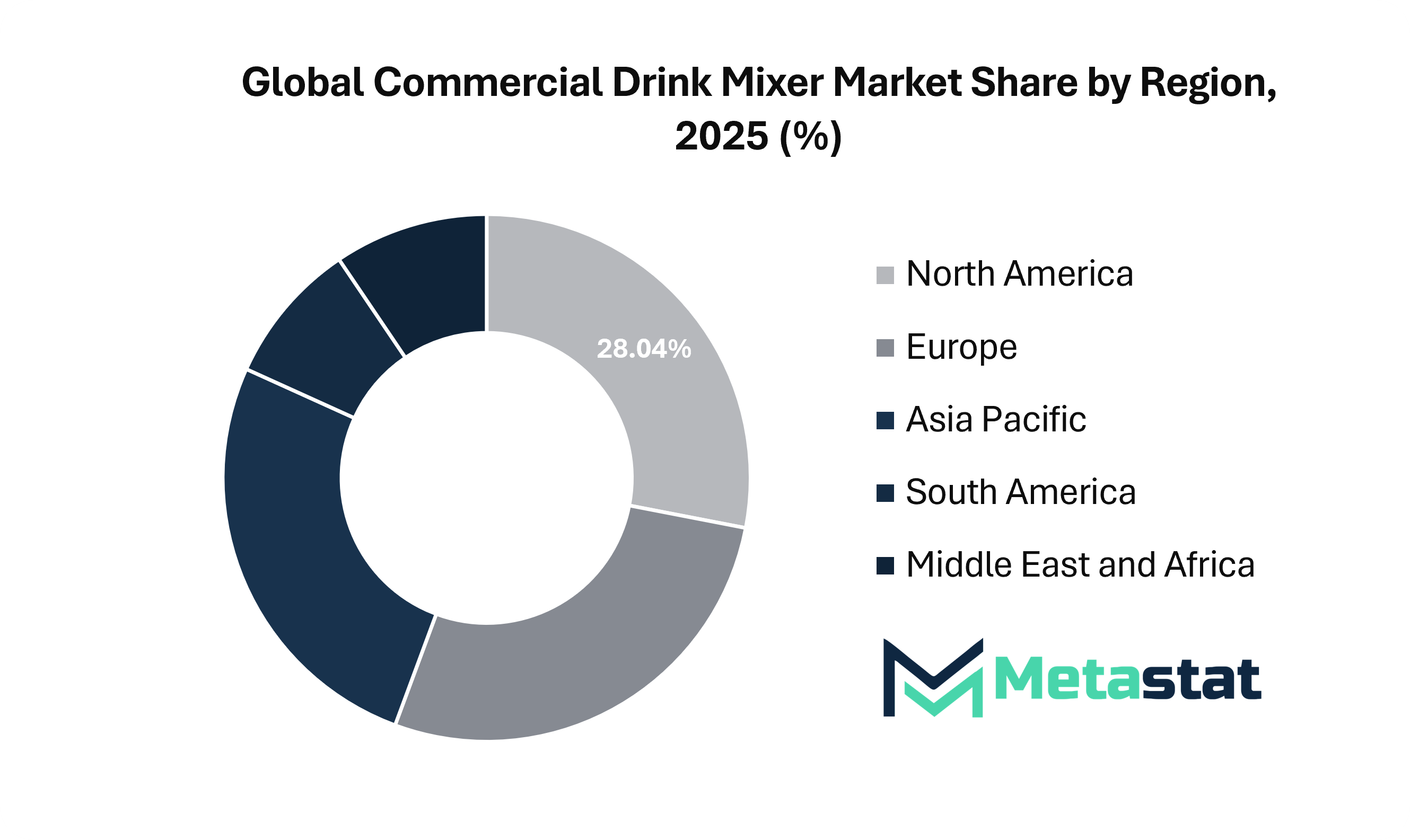
The Global Commercial Drink Mixer Market continues to grow as cafes, bars, hotels, and quick-service counters seek faster beverage preparation with consistent flavor and texture. Buyers now prefer machines that reduce labor effort, minimize waste, and perform reliably during long operating hours. Demand will rise where urban food outlets expand and where operators require dependable equipment during peak service periods. Brands are also focusing on compact designs, easy cleaning, and flexible mixing support for seasonal menus, takeaway counters, and high-frequency beverage service.
Vitamix Corporation and K-TEC, Inc. remain well known for strong motors and durable jars used in high-volume foodservice outlets. Hamilton Beach Commercial, Waring Commercial, and Sammic, S.L. provide broad product ranges that match different budgets, outlet sizes, and menu requirements. Sirman S.p.A., Santos, and Ceado S.r.l. are valued for design quality and consistent output in front-counter service environments. JOHNY - KIOSIDIS Private Company PC and Fimar S.p.A. serve operators seeking practical equipment with simple controls, quick maintenance, and reliable performance for day-to-day use in shops and kiosks.
Bartscher GmbH, Omcan Inc., Skymsen, and Globe Food Equipment Company help distributors supply mixers to restaurants, canteens, and institutional foodservice locations across multiple regions. Dynamic, VEMA S.r.l., and Fama Industrie S.r.l. support niche demand where compact units or specialized sizes are required. Blend Art, Taylor Company, Stoelting Foodservice, Carpigiani Group, and Spaceman USA serve dessert counters and frozen beverage operations requiring reliable blending and dispensing support. Kerekes Bakery & Restaurant Equipment Inc. further widens market access through dealer networks and online inquiries for buyers seeking prompt support, parts, training, and post-purchase guidance.
Competition among suppliers will remain active as buyers evaluate price, energy efficiency, noise levels, cleaning time, and warranty support before ordering. Energy-saving models will gain interest as operators monitor utility bills and maintenance costs carefully. Digital controls, timer settings, and safer lids improve consistency for staff with limited training. Rental programs, refurbished units, and service contracts will attract smaller outlets entering the beverage business. With menu variety rising globally, manufacturers that respond quickly to customer feedback, regional flavor trends, and service requirements will maintain stronger positions over the coming years.
Market size is forecast to rise from USD 1,707.2 million in 2025 to over USD 2,638.4 million by 2033.
The Global Commercial Drink Mixer market is expected to benefit from continued beverage innovation, expansion of chain foodservice formats, and rising labor-efficiency requirements. Operators will increasingly invest in machines that improve preparation speed, beverage consistency, hygiene compliance, and ease of cleaning.
This research report categorizes the Commercial Drink Mixer market based on key segments and regions, forecasts revenue growth, and analyses trends in each submarket. The report analyses the key growth drivers, opportunities, and challenges influencing the Commercial Drink Mixer market. Recent market developments and competitive strategies such as expansion, product launch, partnership, merger, and acquisition have been included to draw the competitive landscape in the market.
The report strategically identifies and profiles the key market players and analyses their core competencies in each sub-segment of the Commercial Drink Mixer market.
|
Report Attributes |
Details |
|
Study Period |
2021-2033 |
|
Base Year |
2025 |
|
Estimated Year |
2026 |
|
Forecast Period |
2026-2033 |
|
Historical Period |
2021-2025 |
|
Growth Rate |
CAGR 5.6% from 2026 to 2033 |
|
Revenue Unit |
USD million |
|
Sales Volume Unit |
Thousand Units |
|
Segmentation |
By Product Type, Application, Distribution Channel, End-User, and Region |
|
By Region |
North America (By Product Type, Application, Distribution Channel, End-User, and Country)
|
|
Europe (By Product Type, Application, Distribution Channel, End-User, and Country)
|
|
|
Asia Pacific (By Product Type, Application, Distribution Channel, End-User, and Country)
|
|
|
South America (By Product Type, Application, Distribution Channel, End-User, and Country)
|
|
|
Middle East and Africa (By Product Type, Application, Distribution Channel, End-User, and Country)
|
Find answers to common questions about this report
Top players operating in the Commercial Drink Mixer industry includes Vitamix Corporation, K-TEC, Inc., Hamilton Beach Commercial, Waring Commercial, Sammic, S.L., Sirman S.p.A., and Santos.
North America region dominates the market.
Global Commercial Drink Mixer market is estimated to reach USD 2,638.4 million by 2033.
High upfront cost and maintenance requirements of commercial-grade mixers will hamper the market growth within the forecast period.
The Automatic Drink Mixers is the leading type segment in the Global market.
Rising global demand for premium cocktails and specialty beverages in bars and quick-service restaurants and Expansion of hospitality and foodservice sectors, increasing need for high-efficiency beverage equipment are key driving factors, boosting the market.
The Metastat Insights analysis shows that the North America Commercial Drink Mixer market size is estimated to be USD 684.7 million by 2033.
The Global Commercial Drink Mixer market is expected to grow at a CAGR of 5.6% over the forecast period (2026-2033).
The Metastat Insights study shows that the Global Commercial Drink Mixer market size was USD 1,707.2 million in 2025.
The analysts below cover Food and Beverages research at Metastat Insights.
LEAD ANALYST
Utkarsh Khirodkar is a Lead Market Research Analyst at MetaStat Insight, specializing in market intelligence, technology sector assessments, and competitive strategy.

LEAD PRINCIPAL ANALYST, PHARMA AND HEALTHCARE
Food and Beverages · Healthcare · Healthcare IT · Medical Devices
Ajay Devgire is the Lead Healthcare Analyst at MetaStat Insight, leading strategic research and market intelligence initiatives across the global healthcare domain.

SENIOR RESEARCH ANALYST
Biotechnology · Food and Beverages · Medical Devices · Packaging
Snehal Pasalkar is a Research Analyst at MetaStat Insight, operating at the intersection of life sciences research, competitive strategy, and market intelligence.
Analyzing the transition from natural gas to green hydrogen in iron ore reduction requires realistic infrastructure timelines. Meta stat insight supplied a detailed regional assessment of DRI plant conversion costs and scrap metal availability in North America and Western Europe. Their report carefully examined pellet quality specs and electrical grid access constraints without making oversimplified market assumptions. The research material served as a practical reference during internal technology roadmap discussions.
Integrating zero-trust access controls across legacy electronic health record systems involves complex compliance overhead. Team produced an analysis that clearly separated identity governance and administration tools from privileged access management platforms. Their evaluation of HIPAA and GDPR compliance features across cloud native solutions gave our architecture group clear baseline criteria. The custom data request regarding biometric authentication adoption in hospital networks was returned promptly with clear documentation.
Evaluating calorific value requirements and air permit compliance across municipal waste facilities requires localized data. Metastat Insight structured their analysis around operational throughput capacity and feedstock composition variations in Latin America and Eastern Europe. Their competitive mapping of sorting equipment vendors helped clarify technology differences between optical separators and heavy media systems. The study provided an objective baseline during our capital expenditure reviews.
Explore related market intelligence reports worth reading alongside this one.