
LEAD ANALYST
Utkarsh Khirodkar is a Lead Market Research Analyst at MetaStat Insight, specializing in market intelligence, technology sector assessments, and competitive strategy.

Global Cranial Perforator Market Size, Share, By Product Type (Manual Cranial Perforator, Electric Cranial Perforator, Pneumatic Cranial Perforator, and Others), By Material (Stainless Steel, Titanium, and Others), By Application (Neurosurgery, Trauma Surgery, Brain Tumor Surgery, Intracranial Pressure Monitoring, and Others), By End User (Hospitals, Ambulatory Surgical Centers, and Specialty Clinics), Industry Analysis, Growth, Trends, and Forecast, 2026-2033
Report ID
MSI-4764
Published
May, 2026
Pages
315 Pages
Format
Report Details
Choose Your License
Cranial Perforator Market
Global Cranial Perforator market size is valued at USD 125.6 million in 2025 and projected to grow at a CAGR of 5.5% during the forecast period, reaching USD 192.6 million by 2033.
North America holds 39.2% in 2025 with US leading the market share in 2025.
Manual Cranial Perforator segment account for a market share of 40.8% in 2025.
Key trends driving growth: Rising prevalence of neurological disorders and traumatic brain injuries increasing the volume of neurosurgical procedures, along with rowing demand for minimally invasive and precision-based neurosurgery supported by advanced surgical instruments.
Opportunities include increasing adoption of disposable cranial perforators to reduce infection risk and improve surgical efficiency.
Key insight: The Global Cranial Perforator Market is progressing steadily as hospitals prioritize surgical safety, workflow efficiency, and better neurosurgical outcomes.
The Global Cranial Perforator Market plays a critical role in neurosurgery by enabling safe and controlled skull penetration for burr hole creation and cranial access. These instruments are widely used in trauma care, tumor surgeries, hematoma evacuation, and emergency decompression procedures. Reliable cranial access tools remain essential in time-sensitive neurological interventions.
Healthcare providers are increasing investments in advanced operating room equipment, sterile single-use devices, and precision surgical systems. Manufacturers are introducing improved blade geometry, better tactile control, and automatic disengagement technology. With rising global neurological disorder burden and trauma incidence, the Global Cranial Perforator Market will witness sustained demand over the forecast period.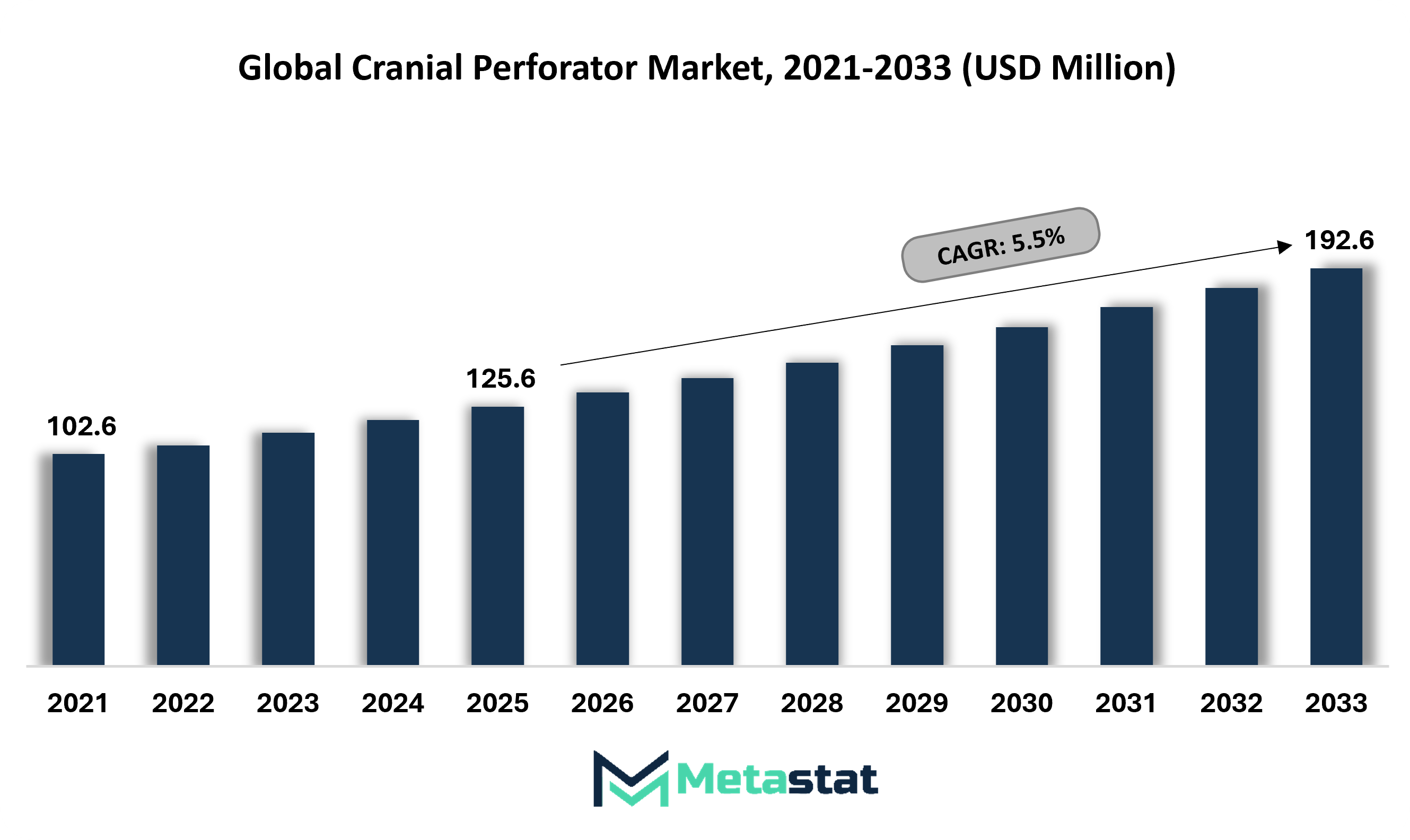
Rising prevalence of neurological disorders and traumatic brain injuries increasing the volume of neurosurgical procedures.
Rising prevalence of stroke, brain tumors, epilepsy, road accidents, workplace trauma, and age-related neurological conditions continues to increase neurosurgical case volumes. Hospitals are strengthening cranial surgery capabilities, while specialty centers are adding advanced operating infrastructure. Strong procedural demand supports steady expansion across the Global Cranial Perforator Market.
Growing demand for minimally invasive and precision-based neurosurgery supported by advanced surgical instruments
Modern neurosurgery favors controlled drilling, reduced tissue disruption, accurate depth management, and faster operating room workflows. Surgeons increasingly prefer systems that deliver stable handling, reliable cutting performance, and advanced ergonomics. Continuous progress in device engineering is strengthening adoption across premium care facilities and teaching hospitals globally.
High cost of neurosurgical equipment and disposable perforators limiting adoption in cost-sensitive healthcare settings
Budget constraints across public hospitals, regional clinics, and smaller surgical centers frequently delay procurement decisions. Premium cranial systems, recurring disposable purchases, maintenance contracts, and training costs create financial pressure. Price sensitivity remains a major barrier, particularly across developing healthcare networks managing large patient volumes.
Risk of device malfunction or improper disengagement leading to potential surgical complications
Operational failure during cranial access will result in procedural delays, increased surgical time, or safety concerns. Inconsistent disengagement, blade wear, mechanical defects, and handling errors require strict quality checks. Manufacturers are prioritizing durability testing, regulatory compliance, and user training to strengthen surgeon confidence.
Increasing adoption of disposable cranial perforators to reduce infection risk and improve surgical efficiency
Single-use perforators are gaining preference owing to sterile packaging, predictable performance, and elimination of reprocessing steps. Hospitals value lower infection risk, faster room turnover, and simplified inventory planning. Growing infection-control priorities and operating efficiency objectives will create attractive future revenue opportunities.
The Global Cranial Perforator market is classified based on Product Type, Material, Application, and End User.
Manual Cranial Perforator segment is valued at USD 54.0 million in 2026 and is projected to reach USD 71.3 million by 2033, at a CAGR of 4% during the forecast period.
Manual cranial perforators maintain demand through reliable control, consistent tactile response, and low maintenance requirements. Training centers and cost-sensitive healthcare networks will continue procurement for routine cranial access procedures. Future upgrades will include ergonomic grip design, sterilization efficiency, and enhanced component durability for repeated surgical cycles.
Electric Cranial Perforator segment is valued at USD 51.7 million in 2026 and is projected to reach USD 83.5 million by 2033, at a CAGR of 7.1% during the forecast period.
Electric cranial perforators will gain wider adoption through precision speed control, smoother drilling movement, and reduced procedure time. Advanced operating rooms often prefer powered systems for consistent performance. Future product lines will feature smart torque settings, improved battery efficiency, digital safety alerts, and compact lightweight housing.
Pneumatic Cranial Perforator segment is valued at USD 18.6 million in 2026 and is projected to reach USD 25.9 million by 2033, at a CAGR of 4.9% during the forecast period.
Pneumatic cranial perforators support high-performance surgical environments requiring continuous power output and rapid response. Large hospitals with installed air systems will maintain adoption levels. Future product development will focus on noise reduction, cleaner airflow pathways, easier handling, and greater control during complex cranial interventions.
Others segment is valued at USD 8.1 million in 2026 and is projected to reach USD 11.9 million by 2033, at a CAGR of 5.7% during the forecast period.
Other product categories include hybrid systems, specialty access tools, and niche procedural devices designed for specific surgical requirements. Innovation will create customized solutions for pediatric care, emergency response units, and mobile surgical setups. Market growth will emerge through targeted clinical demand patterns.
Stainless Steel segment is projected to reach USD 111.7 million by 2033, at a CAGR of 4.8% during the forecast period.
Stainless steel remains valued for strength, corrosion resistance, and cost efficiency across reusable surgical instruments. Many healthcare facilities will maintain preference owing to familiar sterilization protocols and reliable product lifespan. Future production will enhance surface finish, stability, and wear resistance for intensive operating schedules.
Titanium segment is projected to reach USD 63.3 million by 2033, at a CAGR of 7.4% during the forecast period.
Titanium will record stronger growth owing to its lightweight structure, advanced biocompatibility, and premium durability. High-end surgical centers often evaluate titanium devices for surgeon comfort during long procedures. Future demand will rise with precision machining, premium device sets, and advanced surface treatments supporting longer product life.
Others segment is projected to reach USD 17.6 million by 2033, at a CAGR of 4.2% during the forecast period.
Other materials will include advanced alloys, composite blends, and coated metals developed for niche performance requirements. Research programs will target lower weight, improved grip texture, and better sterilization resistance. Commercial success will depend on pricing stability, regulatory approvals, and measurable surgical efficiency gains.
Neurosurgery segment is projected to reach USD 64.7 million by 2033.
Neurosurgery remains a major application owing to frequent cranial access requirements during planned procedures. Adoption will strengthen with rising neurological disorder diagnosis rates and expanding specialist facilities. Future opportunities will come from image-guided workflows, precision protocols, and integrated operating room technology adoption.
Trauma Surgery segment is projected to reach USD 44.0 million by 2033.
Trauma surgery creates urgent demand for immediate cranial intervention tools during injuries and emergency cases. Expanding emergency infrastructure will support procurement across urban hospitals. Future market development will include portable systems, fast setup designs, and reliable performance under high-pressure clinical conditions.
Brain Tumor Surgery segment is projected to reach USD 39.1 million by 2033.
Brain tumor surgery requires accurate cranial entry supported by reliable perforation devices. Growing diagnostic capabilities will increase procedural volumes across cancer treatment facilities. Future progress will involve compatibility with navigation systems, minimally invasive pathways, and precision-focused device kits designed for delicate tumor access.
Intracranial Pressure Monitoring segment is projected to reach USD 31.0 million by 2033.
Intracranial pressure monitoring will support steady demand where burr hole creation enables sensor placement. Intensive care expansion and neurocritical care programs will encourage product usage. Future development will include compact access tools, faster bedside preparation, and safer workflows linked with monitoring technology.
Others segment is projected to reach USD 13.8 million by 2033.
Other applications include research procedures, pediatric cranial care, reconstructive cases, and specialized neurological interventions. Market scope will widen through customized device formats serving rare clinical needs. Future value will arise from procedural diversity, training expansion, and specialty center investments worldwide.
Hospitals segment is projected to grow at a CAGR of 4.8% during the forecast period.
Hospitals represent a leading end-user group owing to broad surgical capacity, emergency readiness, and higher procurement budgets. Multi-specialty centers will maintain high-volume purchases for routine and complex cranial procedures. Future demand will rise through infrastructure upgrades, robotic surgery expansion, and centralized procurement programs.
Ambulatory Surgical Centers segment is projected to grow at a CAGR of 6.8% during the forecast period.
Ambulatory surgical centers will gain share as selected procedures shift toward efficient outpatient care models. Adoption will favor compact, easy-maintenance, and fast-turnaround devices. Future expansion will depend on regulatory support, surgeon preference, lower operating costs, and wider access to specialized short-stay care.
Specialty Clinics segment is projected to grow at a CAGR of 7.7% during the forecast period.
Specialty clinics focused on neurology or advanced surgical care will create targeted demand for premium devices. Smaller procurement volumes will be balanced by preference for precision products. Future growth will emerge through private healthcare investment, specialist-led facilities, and focused treatment pathways.
Based on geography, the Global Cranial Perforator market is divided into North America, Europe, Asia-Pacific, South America, Middle East, and Africa.
North America benefits from advanced trauma centers, robust neurosurgery networks, and rapid adoption of safety-focused surgical equipment.
The presence of leading medical device manufacturers and favorable procedural reimbursement continues to support regional demand.
Europe represents a mature and technically advanced market for cranial perforators, supported by strong neurosurgical infrastructure, established trauma care systems, and high adoption of precision surgical instruments across Germany, France, the UK, Italy, and Spain.
Asia Pacific offers strong opportunities through expanding hospital infrastructure, rising road injury burden, and improving access to specialized surgical treatment.
Government healthcare investments and medical education expansion are enhancing market penetration across Asia Pacific.
Across the Middle East, Africa, and South America, growth is supported by emergency care modernization, rising private hospital investments, and gradual expansion of neurosurgical capabilities.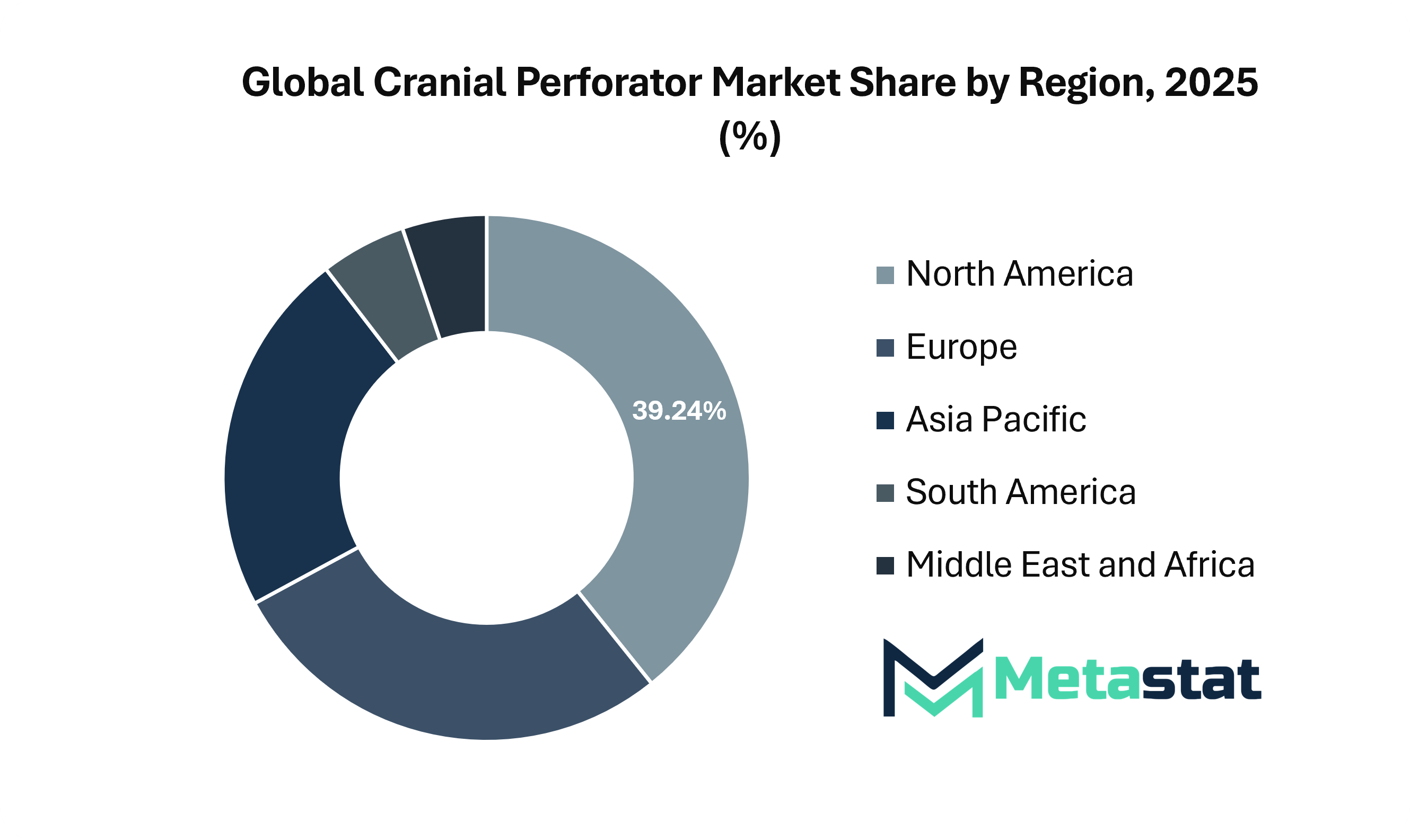
The Global Cranial Perforator Market is gaining steady attention owing to the rising need for safe, accurate, and reliable instruments used during neurosurgical procedures. Cranial perforators help surgeons create controlled openings in the skull during emergency and planned operations, making them essential in trauma care, brain tumor surgery, hematoma evacuation, and intracranial pressure monitoring. Rising cases of traumatic brain injuries, neurological disorders, and age-related conditions are increasing the volume of procedures where these devices are required. Hospitals and surgical centers are focusing on advanced systems that improve procedural precision, reduce surgical risk, and support better operating room efficiency. Improving healthcare access in developing regions is also supporting wider product adoption. Manufacturers are responding with improved designs that offer stronger safety controls, smoother handling, automatic disengagement, and reliable cutting performance. Demand from public hospitals, private institutions, and specialty surgical facilities will remain steady with continued improvement in neurosurgical care standards.
Competition in the market remains active, with established and emerging companies working to strengthen their positions through product refinement, partnerships, distribution expansion, and targeted surgical innovation. Integra LifeSciences Holdings Corporation, Stryker Corporation, and B. Braun Melsungen AG are widely recognized players with strong medical device portfolios and global reach. Their experience in surgical technologies supports their ability to provide advanced cranial access solutions to healthcare providers. At the same time, companies such as Hubly Surgical, Phasor Health, and Cranial Cut are introducing focused solutions that will attract surgeons seeking modern and procedure-specific alternatives. Mid-sized competitors are also expanding the product mix, giving buyers wider options based on budget, performance requirements, safety features, and local availability.
European manufacturers, including Adeor Medical AG, Nouvag AG, Evonos GmbH & Co. KG, and SURTEX Instruments Ltd., are recognized for engineering quality, surgical instrument precision, and reliable device performance. Their presence strengthens the supply chain across Europe and other international markets. Companies such as EMD Endoszkop Muszer Gyarto es Kereskedelmi Kft., Micromar Industria e Comercio Ltda., Millennium Surgical Corp., Acra-Cut, Inc., and Surgical Portal serve hospitals with specialized product offerings and alternative procurement options. These companies compete by maintaining product consistency, responsive service, flexible pricing, and timely supply. Buyers in this market often value reliability, after-sales support, device availability, and long-term supplier relationships, making service quality an important competitive factor.
Asian manufacturers are also playing a larger role in production, export activity, and cost-effective product supply. Wuhu Ruijin Medical Instrument & Device Co., Ltd., Well Trust Medical Group Co., Ltd., LZQ Precision Tool Co., Ltd., Chongqing Xishan Science & Technology Co., Ltd., and Shanghai Bojin Medical Instrument Co., Ltd. are increasing their market presence with competitively priced surgical instrument solutions. Other companies, including Goldstar Medicals, New Med Instruments, Phoenix MedTech (Pty) Ltd, Mehta Trading Corporation, and MedXebron, add further diversity to the competitive landscape. The Global Cranial Perforator Market will advance through a combination of product innovation, stronger safety standards, rising healthcare demand, and wider participation from both global companies and regional suppliers.
Market size is forecast to rise from USD 125.6 million in 2025 to over USD 192.6 million by 2033.
The Global Cranial Perforator Market is expected to benefit from rising emergency neurosurgery demand, broader access to specialized surgical care, and continued focus on operating room safety. Future demand is likely to Favor disposable sterile systems, powered precision devices, and digitally enhanced surgical tool platforms.
This research report categorizes the Cranial Perforator market based on key segments and regions, forecasts revenue growth, and analyses trends in each submarket. The report analyses the key growth drivers, opportunities, and challenges influencing the Cranial Perforator market. Recent market developments and competitive strategies such as expansion, product launch, partnership, merger, and acquisition have been included to draw the competitive landscape in the market.
The report strategically identifies and profiles the key market players and analyses their core competencies in each sub-segment of the Cranial Perforator market.
|
Report Attributes |
Details |
|
Study Period |
2021-2033 |
|
Base Year |
2025 |
|
Estimated Year |
2026 |
|
Forecast Period |
2026-2033 |
|
Historical Period |
2021-2025 |
|
Growth Rate |
CAGR 5.5% from 2026 to 2033 |
|
Revenue Unit |
USD million |
|
Sales Volume Unit |
Thousand Units |
|
Segmentation |
By Product Type, Material, Application, End User, and Region |
|
By Region |
North America (By Product Type, Material, Application, End User, and Country)
|
|
Europe (By Product Type, Material, Application, End User, and Country)
|
|
|
Asia Pacific (By Product Type, Material, Application, End User, and Country)
|
|
|
South America (By Product Type, Material, Application, End User, and Country)
|
|
|
Middle East and Africa (By Product Type, Material, Application, End User, and Country)
|
Find answers to common questions about this report
Top players operating in the Cranial Perforator industry includes Integra LifeSciences Holdings Corporation, Adeor Medical AG, Evonos GmbH & Co. KG, EMD Endoszkop Muszer Gyarto es Kereskedelmi Kft., and Nouvag AG.
Global Cranial Perforator market is estimated to reach USD 192.6 million by 2033.
The Manual Cranial Perforator is the leading type of segment in the Global market.
High cost of neurosurgical equipment and disposable perforators limiting adoption in cost-sensitive healthcare settings will hamper the market growth within the forecast period.
North America region dominates the market.
Rising prevalence of neurological disorders and traumatic brain injuries increasing the volume of neurosurgical procedures and growing demand for minimally invasive and precision-based neurosurgery supported by advanced surgical instruments are key driving factors, boosting the market.
The Metastat Insights analysis shows that the North America Cranial Perforator market size is estimated to be USD 70.3 million by 2033.
The Metastat Insights study shows that the Global Cranial Perforator market size was USD 125.6 million in 2025.
The Global Cranial Perforator market is expected to grow at a CAGR of 5.5% over the forecast period (2026-2033).
The analysts below cover Medical Devices research at Metastat Insights.
LEAD ANALYST
Utkarsh Khirodkar is a Lead Market Research Analyst at MetaStat Insight, specializing in market intelligence, technology sector assessments, and competitive strategy.

LEAD PRINCIPAL ANALYST, PHARMA AND HEALTHCARE
Food and Beverages · Healthcare · Healthcare IT · Medical Devices
Ajay Devgire is the Lead Healthcare Analyst at MetaStat Insight, leading strategic research and market intelligence initiatives across the global healthcare domain.

SENIOR RESEARCH ANALYST
Biotechnology · Food and Beverages · Medical Devices · Packaging
Snehal Pasalkar is a Research Analyst at MetaStat Insight, operating at the intersection of life sciences research, competitive strategy, and market intelligence.
Evaluating secondary resin quality across post-consumer packaging streams requires reliable technical segmentation. MetaStat Insight delivered an objective assessment that distinguished between extrusion-grade flake pricing and optical sorting throughput limitations across Western Europe. The competitive positioning breakdown for licensed depolymerization technology providers answered several questions during our feedstock feasibility audit. Their team clarified regional trade restrictions on mixed plastic scrap quickly when our team submitted follow-up requests.
Evaluating sovereign cloud deployments for core banking platforms demands a clear view of data residency regulations and migration exit strategies. MetaStat Insight delivered an exhaustive review of regional latency tolerances, mainframe decommission milestones, and third-party vendor concentration risk. The regulatory compliance mapping across European and Asian financial jurisdictions gave our team a dependable baseline for multi-cloud infrastructure discussions.
Replacing petrochemical surfactants with bio-based alternatives requires realistic timelines on industrial precision fermentation scaling. The market research broke down commercialization timelines, feedstock sugar price sensitivities, and regional cosmetic ingredient regulatory approvals in Europe and East Asia. That supplier readiness mapping gave our formulations team reliable context when comparing renewable chemical sourcing roadmaps.
Explore related market intelligence reports worth reading alongside this one.
Starting from
$2950