
LEAD ANALYST
Utkarsh Khirodkar is a Lead Market Research Analyst at MetaStat Insight, specializing in market intelligence, technology sector assessments, and competitive strategy.

Global Digital Semiconductors Market Size, Share, By Product Type (Memory Integrated Circuits (ICs), Microprocessors (MPUs), Microcontrollers (MCUs), Graphics Processing Units (GPUs) and AI Accelerators, Digital Signal Processors (DSPs), Application-Specific Integrated Circuits (ASICs), Application-Specific Standard Products (ASSPs), Field-Programmable Gate Arrays (FPGAs) and Programmable Logic Devices, Standard Logic Integrated Circuits), By Application (General-Purpose Computing, Artificial Intelligence and High-Performance Computing, Data Storage and Retrieval, Embedded Control and Automation, Networking and Digital Communications, Graphics, Video and Multimedia Processing, Digital Security and Authentication, Others (Digital Instrumentation, Electronic Metering)), By End-Use Industry (Consumer Electronics and Home Appliances, Information Technology and Data Centers, Automotive Electronics, Telecommunications and Networking, Industrial Manufacturing and Automation, Healthcare and Medical Devices, Aerospace and Defense, Energy and Utilities, Others (Commercial Equipment, Retail Terminals)), Industry Analysis, Growth, Trends, and Forecast, 2026-2033
Report ID
MSI-5476
Published
October, 2026
Pages
286 Pages
Format
Historical
Base year
Forecast
Forecast period
Report Details
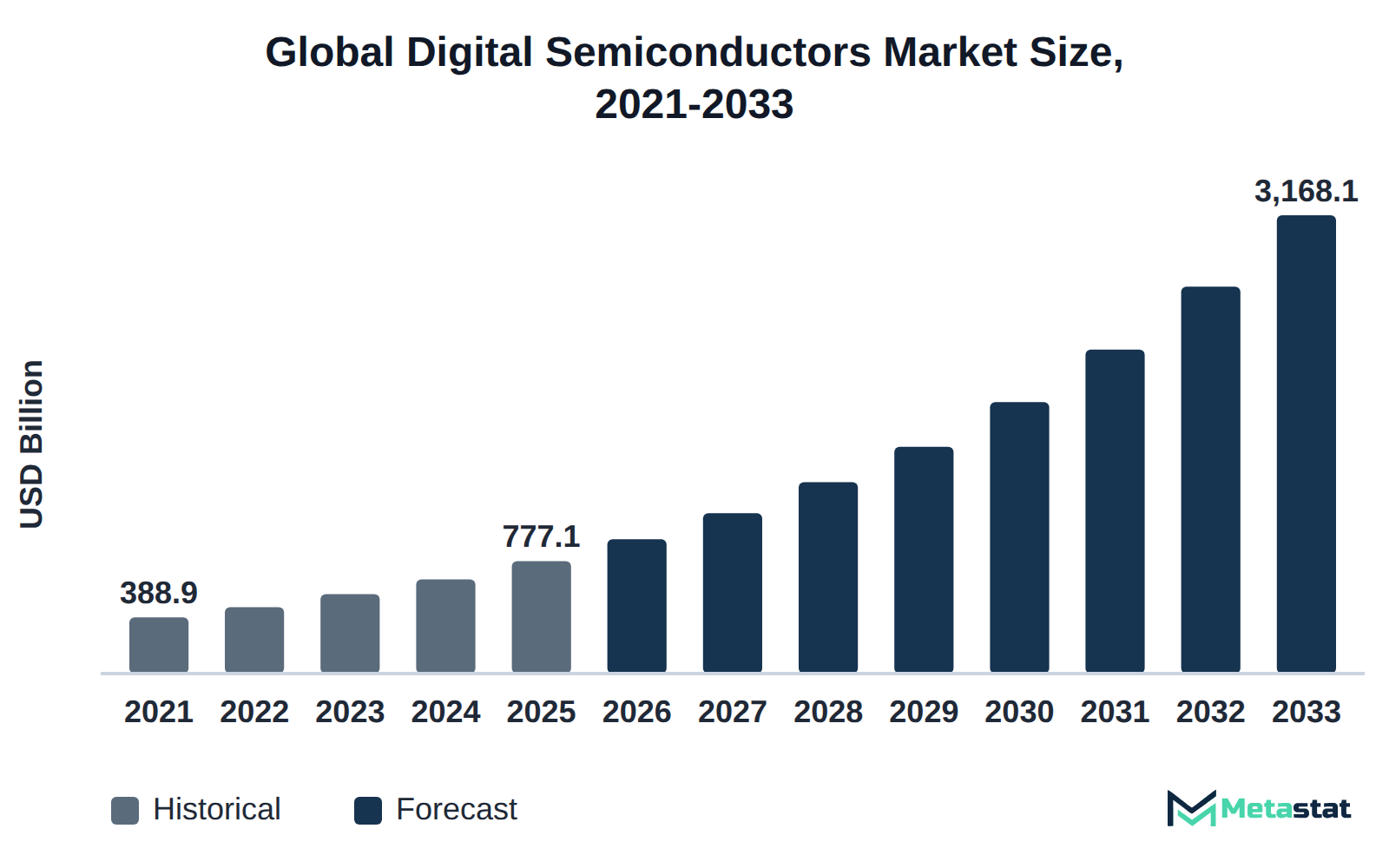
Market Valuation: Valued at $777.1 Billion in 2025, projected to reach $3,168.1 Billion by 2033 at a 19.2% CAGR.
Dominant Segment: Memory integrated circuits lead the market, driven by their critical role in data processing and storage, reflecting the increasing demand for efficient memory solutions across various applications.
Geographic Lead: North America holds a significant market share of 29.5% in 2025, with the US expected to lead in 2026, while the Asia Pacific region follows closely, benefiting from robust manufacturing capabilities.
What's Inside: The report provides comprehensive coverage of market dynamics, competitive analysis, and a detailed forecast window from 2026 to 2033, focusing on various product types and applications.
Emerging Trends: The rising integration of artificial intelligence technologies is reshaping purchasing behaviors, significantly boosting demand for high-performance digital semiconductors across multiple industries.
Input Cost Pressures: Suppliers face challenges from rising raw material prices, prompting adjustments in pricing strategies and necessitating long-term contracts to stabilize supply chains.
Choose Your License
Global Digital Semiconductors Market
The global Digital Semiconductors market was valued at USD 777.1 billion in 2025 and is projected to reach USD 3,168.1 billion by 2033, growing at a CAGR of 19.2% over the forecast period.
The Digital Semiconductors market encompasses a range of products including memory integrated circuits, microprocessors, and graphics processing units. Buyers invest in these technologies due to the increasing demand for advanced computing capabilities, particularly in sectors including consumer electronics, information technology, and automotive electronics. The adoption of digital semiconductors allows for enhanced performance, efficiency, and functionality in various applications, driving substantial spending across multiple industries.
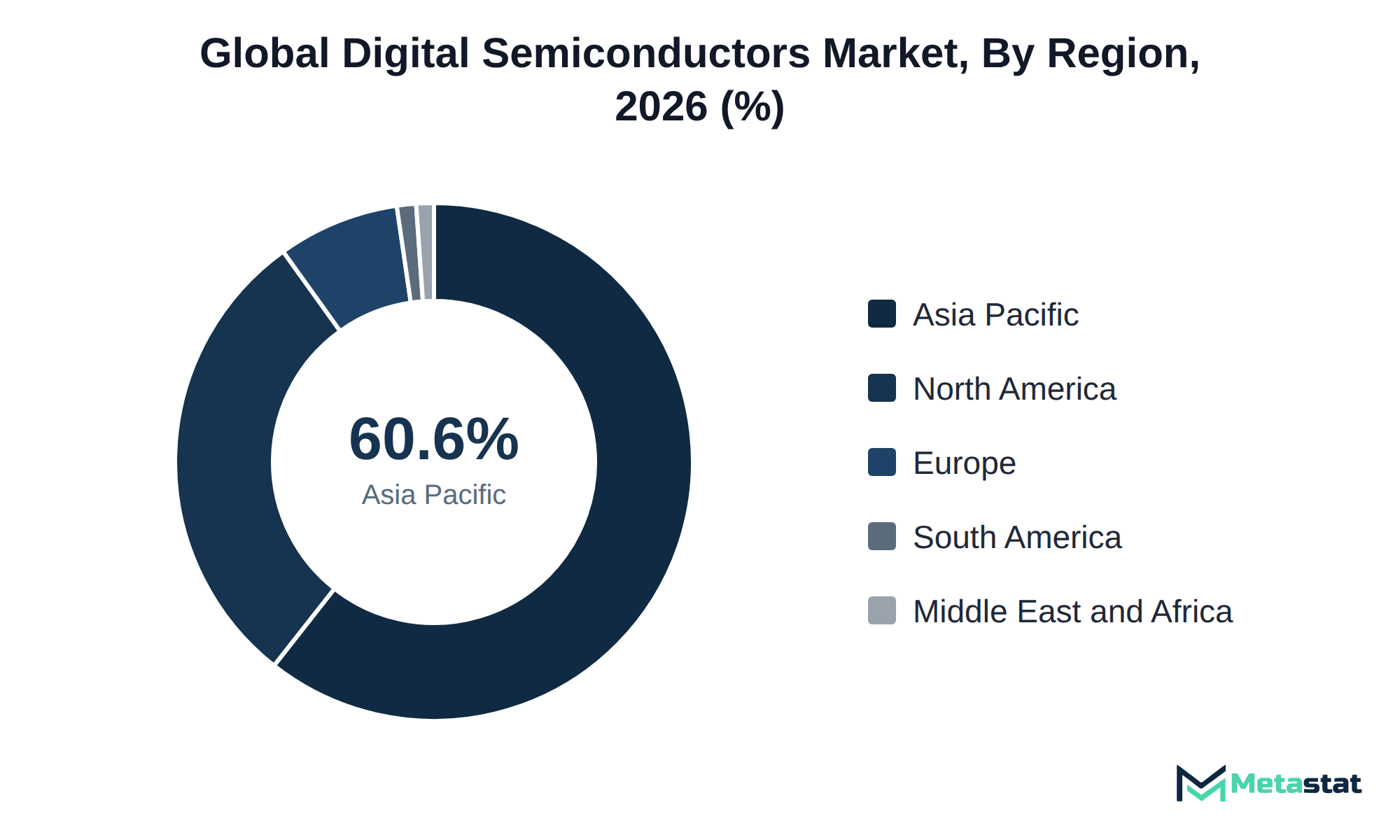
Growth in the market is fueled by the rise in artificial intelligence and high-performance computing applications. Among the segments, memory integrated circuits hold the highest value, reflecting their critical role in facilitating data processing and storage. North America holds 29.5% of the market in 2025, with the US leading in 2026. The Asia Pacific region follows closely, capturing a 60.6% share, highlighting the area's robust manufacturing capabilities and demand for advanced technology.
Investments in infrastructure and innovation within the digital semiconductor sector contribute to its expansion. Companies continuously seek to develop new technologies that address evolving consumer needs and enhance operational efficiencies. The market's trajectory indicates strong potential for growth, driven by advancements in digital technology and increasing integration across various industries.
The Digital Semiconductors market includes various product types, including memory integrated circuits, microprocessors, and graphics processing units, which cater to diverse applications and end-use industries. The continuous evolution of technology and the need for enhanced performance contribute significantly to spending in this market.
Among the product segments, memory integrated circuits dominate in value, reflecting their critical role in various electronic devices. North America holds 29.5% of the market in 2025, with the US leading in 2026, while Asia Pacific follows closely, capturing a significant share due to its robust manufacturing capabilities and technological advancements.
The increasing integration of digital technologies across industries supports the demand for semiconductors, with significant implications for market dynamics. Enhanced connectivity and automation trends further drive growth, presenting opportunities for suppliers to innovate and develop next-generation semiconductor solutions. The market continues to evolve, driven by technological advancements and shifting consumer preferences.
Pricing trends for high-bandwidth memory (HBM) and NAND flash chips significantly reshape procurement strategies within the Digital Semiconductors market. The rising demand for advanced computing capabilities, particularly in artificial intelligence applications, drives up the adoption of HBM technology. By 2033, the expected value of HBM will surpass USD 1.1 billion, reflecting a compound annual growth rate (CAGR) of 18.2% from 2026 to 2033. This shift impacts procurement decisions as businesses seek to optimize performance while managing costs.
On the other end, NAND flash pricing faces fluctuations due to competition among manufacturers and the ongoing development of new technologies. These prices stabilize, and manufacturers of consumer electronics and data storage solutions leverage favorable pricing to enhance their offerings. This dynamic creates opportunities for companies to refine their supply chains and capitalize on cost efficiencies. Ultimately, these pricing developments will determine competitive positioning within the market and influence the overall investment landscape in semiconductor procurement.
Purchase patterns in the digital semiconductors market are evolving due to the increasing integration of AI accelerators and custom application-specific integrated circuits (ASICs) in data center computing. Organizations seek tailored solutions to address specific performance needs, influencing procurement strategies. A notable aspect of this shift involves pricing models that include tiered structures based on performance metrics and volume commitments, ensuring cost-effectiveness for high-demand applications.
Revenue from artificial intelligence and high-performance computing applications is expected to reach USD 983.1 billion by 2033, reflecting a compound annual growth rate (CAGR) of 21.9%. This growth incentivizes buyers to negotiate contracts that align with projected scalability and performance requirements. Buyers increasingly prefer long-term agreements, which provide stable pricing and supply assurances. Such arrangements facilitate smoother budgeting and operational planning, essential for organizations investing heavily in digital transformation initiatives.
While demand for advanced computing solutions intensifies, the market's transition to more sophisticated purchasing models will continue. Efficient procurement processes and well-structured agreements enhance collaboration between semiconductor suppliers and end-users, ultimately driving innovation and performance improvements across various industries.
Automotive manufacturers increasingly rely on microcontrollers and digital System-on-Chips (SoCs) to enhance vehicle functionalities, driving the transition towards software-defined vehicles. These vehicles incorporate sophisticated electronic systems that require advanced computing capabilities. By 2033, the automotive electronics segment of the Digital Semiconductors market is projected to generate USD 414.4 billion, highlighting the growing significance of these components in vehicle design and operation.
The demand for microcontrollers, in particular, supports critical automotive applications including safety systems, powertrain control, and connectivity features. Companies specializing in automotive electronics emphasize the importance of efficient and reliable microcontrollers, which improve overall vehicle performance. Digital SoCs integrate various functions into a single chip, streamlining design processes and reducing production costs.
Manufacturers prioritize sourcing advanced microcontrollers and digital SoCs to enhance vehicle capabilities, ultimately influencing market growth. The integration of these components facilitates innovation in areas including autonomous driving and vehicle-to-everything (V2X) communication. Continuous advancements in this sector will shape the future of the automotive industry and reshape consumer expectations around vehicle capabilities.
Supply chain disruptions significantly impact PCB and PCBA manufacturers, primarily due to the reliance on semiconductor availability. The data storage and retrieval application segment is expected to reach USD 637.4 billion by 2033, reflecting the critical role of semiconductors in enhancing data management and processing capabilities.
This growth emphasizes the urgency for PCB and PCBA manufacturers to secure reliable semiconductor sources to maintain production schedules and meet customer demand. Disruptions lead to delays, increased costs, and potential loss of contracts, significantly affecting the profitability of manufacturers. By strategically aligning with semiconductor suppliers and diversifying sourcing strategies, manufacturers mitigate risks associated with supply chain interruptions.
Growth in the artificial intelligence sector drives purchasing behavior among enterprises seeking advanced computing capabilities. Companies investing in AI and high-performance computing increasingly require high-performance chips to process large data volumes efficiently. This heightened demand for robust processing power results in increased spending on various products within the Digital Semiconductors market. Such expansion signifies that businesses prioritize investments in digital semiconductors to enhance operational efficiency and remain competitive in a data-driven landscape. The sustained shift in focus toward AI solutions leads to a surge in demand for relevant semiconductor products, ultimately reshaping market dynamics.
Rapid advancements in artificial intelligence technology drive increased interest in high-performance digital semiconductors. Industries investing in AI applications, including machine learning and data analytics, rely on robust processing capabilities, stimulating demand for specialized semiconductors. The rising need for efficiency in data centers and cloud computing environments drives firms to upgrade their semiconductor infrastructure, opting for components that deliver superior performance and reduced latency.
In the Digital Semiconductors market, artificial intelligence applications significantly influence purchasing trends, leading companies to seek more integrated and optimized solutions. The growth trajectory of AI technologies correlates with escalating requirements for processing power, further driving the demand for graphics processing units (GPUs) and application-specific integrated circuits (ASICs). This trend reflects a substantial shift in the market, where traditional components are increasingly replaced by more advanced alternatives capable of handling complex AI algorithms.
Investments in AI are expected to reshape the competitive landscape, compelling suppliers to innovate their semiconductor offerings. Enhanced focus on energy efficiency and performance in AI-driven applications positions the market for sustained growth, encouraging manufacturers to align their production strategies with evolving technological needs.
Limited infrastructure and slow technology adaptation restrict growth in the Digital Semiconductors market. Manufacturers face challenges related to outdated production facilities and insufficient investment in technological advancements, resulting in delayed product launches and reduced operational efficiency. Buyers within industries including automotive electronics and information technology experience difficulties in sourcing advanced solutions, leading to slower uptake and smaller orders. The lack of adequate facilities for advanced semiconductor production hampers the ability of suppliers to meet rising demand, further complicating the competitive landscape. This situation results in increased pressure on suppliers to accelerate infrastructure improvements, impacting pricing strategies and overall market dynamics. These factors lead to reduced revenues and slowed growth trajectories among key participants in the market.
Artificial intelligence and high-performance computing segments exhibit significant growth potential in the Digital Semiconductors market. This increase is driven by the rising integration of AI technologies across various industries, including consumer electronics, healthcare, and automotive sectors, which require advanced processing capabilities. The demand for GPUs and AI accelerators, which support complex computations and data analysis, is strengthening. Companies developing high-performance integrated circuits tailored for AI applications are likely to capture this urgent demand, enhancing their competitive position. The sustained focus on automation and data-driven decision-making further enhances the potential for growth in this segment. With the expansion of AI use cases, investments in high-performance digital semiconductors are expected to boost overall market dynamics.
The Global Digital Semiconductors market is segmented based on Product Type, Application, and End-Use Industry.
Memory Integrated Circuits (ICs) segment is valued at USD 343.3 billion in 2026 and is projected to reach USD 1,106 billion by 2033, at a CAGR of 18.2% during the forecast period. This segment primarily caters to consumer electronics, computing devices, and data storage solutions, serving manufacturers who require efficient and reliable memory solutions. The increasing demand for high-capacity storage in smartphones, laptops, and data centers drives expansion in this segment. Compared to other product types, including microprocessors, which exhibit a CAGR of 17.7%, Memory Integrated Circuits (ICs) display a stronger growth trajectory. Competitive pricing dynamics and technological advancements further enhance its attractiveness, contributing to the growth of the market.
Microprocessors (MPUs) segment is estimated to reach USD 245.2 billion by 2033, at a CAGR of 17.7% during the forecast period. These components play a critical role in computing devices, ranging from personal computers to embedded systems. Industries including information technology and automotive increasingly rely on microprocessors to enhance functionality and performance. The rising demand for advanced computing solutions drives growth in this segment, fueled by innovations in artificial intelligence and machine learning applications. Compared to other product types, microprocessors experience robust demand due to their versatility, leading to a higher adoption rate among consumers and businesses. The increasing complexity of applications coupled with higher processing power requirements sets microprocessors apart from other segments like memory ICs or graphics processing units, reinforcing their importance in the overall growth trajectory of the market.
Microcontrollers (MCUs) segment is expected to reach USD 128.9 billion by 2033. These devices play a critical role in various applications, including consumer electronics, automotive systems, and industrial automation. Rising demand for smart appliances and connected devices drives increased adoption among manufacturers seeking efficiency and advanced functionality. Technological advancements, particularly in embedded systems, enable the integration of MCUs into diverse products, enhancing their capabilities. Compared to other segments, including memory integrated circuits, MCUs exhibit a slightly slower growth rate, with a compound annual growth rate (CAGR) of 18.2%. This rate reflects the segment's stability and the ongoing need for reliable, low-power solutions in dynamic markets. Investment in research and development further strengthens product innovation, ensuring that MCUs remain relevant in applications requiring high reliability and performance. The Digital Semiconductors market benefits from this steady growth trajectory, maintaining a strong demand for microcontrollers.
Graphics Processing Units (GPUs) and AI Accelerators segment is projected to grow at a CAGR of 21.6% during the forecast period. This segment primarily serves industries focused on high-performance computing, gaming, and artificial intelligence applications. Users include data centers, gaming companies, and enterprises implementing machine learning solutions. Increasing demand for graphics-intensive applications drives growth, particularly within the gaming sector and data analytics. The need for advanced processing capabilities in artificial intelligence applications increases GPU and AI accelerator adoption. This segment exhibits faster growth compared to other product types, driven by the rapid evolution of AI technologies and the need for enhanced computing power, reinforcing its position in the Digital Semiconductors market.
Digital Signal Processors (DSPs) serve critical functions in real-time processing of signals, facilitating applications including audio processing, telecommunications, and radar systems. These components find extensive use in consumer electronics, automotive systems, and industrial automation, enabling enhanced performance and efficiency. The growing demand for high-performance computing and smart devices drives interest in DSPs, resulting in innovations that enhance their capabilities. Competition among suppliers intensifies, influencing pricing strategies and technological advancements. This segment distinguishes itself from others by offering specialized processing capabilities, generally attracting buyers focused on advanced applications rather than general-purpose use. While growth factors differ across product types, DSPs maintain a strong position within the expanding digital semiconductors market, reflecting ongoing technological evolution.
Application-Specific Integrated Circuits (ASICs) serve unique functions in specialized applications, commonly found in consumer electronics, telecommunications, and automotive systems. Industries leverage ASICs for tailored solutions that optimize performance and energy efficiency. Demand for these integrated circuits stems from the need for high-performance computing and efficient processing in various technologies. Unlike generic microprocessors, ASICs are designed for specific tasks, which leads to cost efficiencies and enhanced speed. This specialization often results in higher upfront costs compared to general-purpose chips, but significant long-term operational savings arise. The Digital Semiconductors market continues to see innovation in this segment, with increasing investments in design and manufacturing capabilities aimed at addressing the evolving demands of different sectors.
Application-Specific Standard Products (ASSPs) deliver tailored solutions for various applications, facilitating efficient integration into specific devices. These products find extensive use in areas including consumer electronics, telecommunications, and automotive systems, where companies seek optimized performance and cost-effective solutions. Demand for ASSPs is influenced by the rapid pace of technological innovation, driven by manufacturers aiming to enhance product capabilities while reducing development time. Compared to other segments, ASSPs exhibit competitive pricing due to their standardized nature, appealing to cost-sensitive buyers. This segment supports a diverse range of industries, contributing to the broader growth of the Digital Semiconductors market by meeting the unique requirements of various applications.
Field-Programmable Gate Arrays (FPGAs) and Programmable Logic Devices provide flexible and reconfigurable solutions for various digital applications. These devices cater to customers in industries including telecommunications, automotive, and industrial automation, allowing for custom functionality and rapid prototyping. Demand for FPGAs is driven by a growing need for adaptable hardware solutions capable of meeting specific application requirements, particularly in sectors requiring high performance and efficiency. Compared to other product types, FPGAs often present higher costs due to their complexity and manufacturing processes. This segment is distinct within the Digital Semiconductors market due to its emphasis on customization, appealing to niche markets and specialized applications, which contrasts with the higher-volume, lower-cost segments including memory integrated circuits.
Standard Logic Integrated Circuits provide essential functions for signal processing, interfacing, and communication in various electronic applications. This segment finds usage across multiple industries, including consumer electronics, automotive, and telecommunications, where reliable performance is critical. Growth in demand stems from the increasing adoption of smart devices and the expansion of IoT applications. Price sensitivity influences purchasing decisions, distinguishing this segment from higher-priced options like microprocessors and GPUs. Standard Logic Integrated Circuits typically experience steadier growth compared to more dynamic segments, reflecting consistent, ongoing demand from manufacturers who prioritize reliable, cost-effective solutions. The Digital Semiconductors market benefits from this stability, ensuring a broad customer base across various applications.
General-Purpose Computing segment is valued at USD 210.7 billion in 2026 and is projected to reach USD 648.2 billion by 2033, at a CAGR of 17.4% during the forecast period. This segment finds extensive use in personal computers, servers, and workstations, catering to a diverse range of consumers, businesses, and data centers. The rise in demand for advanced computing solutions drives growth, driven by increasing reliance on cloud computing and data analytics. Compared to other segments, this segment exhibits a moderate growth rate, with a CAGR of 17.4%, which is slower than segments like Artificial Intelligence and High-Performance Computing, projected at 21.9%. The distinct applications within the General-Purpose Computing segment, including general data processing and multi-tasking capabilities, differentiate it from specialized segments focused on niche applications or advanced graphics processing. The overall outlook for the market remains robust, influenced by evolving technological trends and consumer needs.
This segment finds application in advanced computing tasks, used by industries including data centers, research institutions, and artificial intelligence developers. The segment benefits from increasing demand for high-performance computing systems, driven by the need for accelerated data processing and analytics. Compared to other segments, this area experiences faster growth due to the growing importance of AI technologies and the need for enhanced computational power. The market reflects a strong trend toward integrating advanced semiconductors for artificial intelligence applications, supporting overall expansion in the market.
This segment focuses on the storage, management, and retrieval of digital data, widely applied across industries including information technology, telecommunications, and consumer electronics. The increasing demand for efficient data management solutions drives growth, reflecting the broader trend toward digital transformation. Major players in this field include IT firms and cloud service providers, which rely heavily on effective storage solutions to support their operations. Compared to other applications in the market, this segment experiences significant growth potential, with a CAGR driven primarily by the rise of big data and analytics. The need for advanced data handling capabilities positions this segment uniquely, emphasizing its critical role in shaping the digital landscape and enhancing operational efficiency.
Embedded Control and Automation segment is projected to grow at a CAGR of 18.7% during the forecast period. This segment is significant in industries including manufacturing, automotive, and consumer electronics, facilitating automation processes and enhancing operational efficiency. The demand for advanced automation solutions drives growth in this segment, particularly in industrial settings aiming to optimize production and reduce operational costs. This segment shows strong growth compared to other applications, reflecting a heightened focus on automation technologies. The increasing integration of smart technologies and the need for greater efficiency in production processes contribute to the upward trajectory. The market responds to the growing emphasis on Industry 4.0, pushing companies to implement automated systems that leverage digital semiconductors for enhanced performance.
Networking and Digital Communications encompasses technologies that facilitate data transmission and connectivity between devices and networks. This segment plays an essential role in telecommunications infrastructure and networking equipment, serving businesses and consumers with evolving communication needs. Demand stems primarily from the increasing need for high-speed internet and data services, driven by the expansion of the Internet of Things (IoT) and smart devices. Compared to other segments, including General-Purpose Computing, which exhibits a CAGR of 17.4%, this segment experiences different growth dynamics due to its focus on specialized communication applications. Rapid advancements in networking technologies significantly influence adoption rates, highlighting the reliance on efficient and reliable digital communication solutions. The Digital Semiconductors market experiences continuous innovation in this area, further enhancing overall growth potential.
Graphics, Video and Multimedia Processing plays a significant role in delivering high-quality visual content across various devices and applications. This segment primarily serves consumer electronics and gaming industries, facilitating enhanced user experiences through advanced graphics rendering and video processing. Demand for improved visual performance drives growth, particularly in sectors adopting technologies including virtual reality and augmented reality. Unique requirements for high processing power and low latency differentiate this segment from others, often resulting in higher pricing. While segments like General-Purpose Computing exhibit steadier growth, the Graphics, Video and Multimedia Processing segment experiences accelerated expansion due to increasing consumer demand for immersive multimedia experiences. Technology evolves, and ongoing advancements in graphics architectures further enhance the capabilities of digital semiconductors, supporting increasing performance in the market.
Digital Security and Authentication serves critical roles in protecting sensitive information and verifying identities, ensuring secure transactions across various platforms. This segment finds application in industries including finance, healthcare, and government, where safeguarding data integrity is essential. The increasing prevalence of cyber threats drives demand for advanced security solutions, compelling organizations to invest significantly in semiconductor technologies that enhance security features. Unlike other segments, which focus on performance or processing power, Digital Security and Authentication emphasizes reliability and security, catering to a distinct buyer base that prioritizes data protection. The constant evolution of security threats necessitates ongoing innovation, with companies striving to develop advanced solutions that address emerging vulnerabilities. This segment distinguishes itself with specific technological advancements aimed at creating robust authentication measures, which remain crucial in the current landscape where data breaches pose substantial risks. The digital semiconductors market reflects a growing acknowledgment of the importance of security in digital interactions.
Digital instrumentation and electronic metering play vital roles in various applications, including healthcare, industrial automation, and energy management. These technologies are essential for accurate measurement, monitoring, and data collection, utilized by industries including healthcare for patient monitoring devices and by utility companies for smart metering solutions. Several factors drive demand in this segment, including the increasing need for energy efficiency and sustainability initiatives. The focus on smart cities and connected devices enhances the adoption of advanced metering infrastructure, highlighting the segment's unique position in the broader applications category. This segment exhibits distinct characteristics, with its growth trajectory differing from other segments, particularly due to regulatory standards and technological advancements that enhance measurement accuracy and reliability.
Consumer Electronics and Home Appliances segment is valued at USD 249.2 billion in 2026 and is projected to reach USD 780.9 billion by 2033, at a CAGR of 17.7% during the forecast period. This segment encompasses a diverse range of products including smartphones, tablets, smart home devices, and household appliances, used by consumers across various demographics. Demand is driven primarily by advancements in technology, increasing consumer preference for smart and connected devices, and continuous introduction of innovative features. Compared to other segments, this segment is characterized by a relatively high growth rate, primarily due to rapid adoption of Internet of Things (IoT) technologies. The market experiences intense competition, compelling manufacturers to enhance product offerings and optimize pricing strategies to attract consumers.
Information Technology and Data Centers segment is estimated to reach USD 1,285.3 billion by 2033, at a CAGR of 20.3% during the forecast period. This segment encompasses critical infrastructure and services that support data processing, storage, and management for organizations across various sectors. Key users include enterprises, cloud service providers, and telecommunications companies. Rapid digital transformation and increased demand for cloud computing drive growth in this segment. Enhanced data security and reliability requirements contribute to its expansion, distinguishing it from other segments that experience slower growth rates. The segment's faster growth is evident compared to others in the market, reflecting heightened investments in digital infrastructure and services that accommodate evolving technological needs.
Automotive Electronics segment is expected to reach USD 414.4 billion by 2033. This segment encompasses a range of technologies used in vehicles, focusing on enhancing functionality, safety, and efficiency. It serves automotive manufacturers and suppliers by integrating advanced semiconductor solutions that support features including advanced driver-assistance systems and infotainment services. Key growth drivers include increasing demand for electric and autonomous vehicles, alongside regulatory pressures for improved safety standards. Unlike other segments, the Automotive Electronics sector experiences a higher growth rate, driven by the need for innovative technologies, with a CAGR of 20.3%. This segment attracts significant investments targeting advanced design and application, distinguishing it from more traditional semiconductor applications in the market.
The Telecommunications and Networking segment is projected to grow at a CAGR of 17.8% during the forecast period. This segment is essential for enabling reliable communication and data exchange between devices, serving telecommunication companies and network service providers. Increasing demand for high-speed internet and mobile connectivity drives growth in this area, reflecting a trend towards greater digital communication infrastructure. The segment distinguishes itself through its focus on real-time data transmission technologies, which differ from other segments that emphasize storage or processing capabilities. Market dynamics are influenced by the shift towards 5G technology, which enhances network performance and encourages investment in advanced semiconductor solutions. The segment's growth is expected to contribute significantly to the overall expansion of the market for digital semiconductors, reinforcing its importance in contemporary communication systems.
Industrial Manufacturing and Automation involves the integration of technology in manufacturing processes to enhance efficiency and productivity. This segment serves various industries, including automotive, aerospace, and electronics, where high precision and automation drive demand. Growth in this sector is driven by increasing automation trends, allowing manufacturers to streamline operations and reduce labor costs. The push for smart factories and Industry 4.0 initiatives significantly influences this segment. Compared to others, Industrial Manufacturing and Automation faces unique challenges related to high initial investments in technology; however, long-term benefits through cost savings and increased output provide strong incentives for adoption. The Digital Semiconductors market continues to evolve, with advancements in technologies leading to enhanced performance and capabilities across this segment.
Healthcare and Medical Devices focus on technologies applied in medical applications, ensuring enhanced patient care and operational efficiency. This segment supports hospitals, clinics, and medical device manufacturers by providing essential semiconductor components for diagnostics, monitoring, and therapeutic devices. A key driver for growth in this sector involves rising global demand for advanced healthcare solutions, driven by an aging population and increasing prevalence of chronic diseases. Regulatory advancements promoting digital health technologies further stimulate market activity. Compared to other segments, the Healthcare and Medical Devices sub-segment experiences moderate growth rates, driven by unique buyer requirements and stringent regulatory environments distinct from consumer electronics or IT sectors. The Digital Semiconductors market continues to evolve, with significant innovation and investment aimed at enhancing functionality and performance in medical applications.
Aerospace and Defense relies on advanced electronic components to support critical systems in military and civilian applications. This segment serves various entities, including government agencies and defense contractors, requiring high-performance and reliable semiconductors for avionics, surveillance, and communication systems. Increasing defense budgets and technological advancements drive significant demand within this segment. Unlike other segments, the Aerospace and Defense segment experiences slower growth due to rigorous regulatory standards and extensive testing requirements that ensure reliability and safety. Such factors result in higher costs associated with production and compliance compared to other sectors. The Digital Semiconductors market views this segment as essential for innovation in security and performance, driven by ongoing geopolitical tensions and the push for modernization in defense capabilities.
Energy and Utilities focuses on the technologies applied in the management and distribution of energy resources. This segment caters to utility companies and energy providers requiring efficient and reliable semiconductor solutions for smart grids, renewable energy systems, and energy management systems. Increasing emphasis on sustainability and the transition to renewable energy sources drives demand within this segment. Regulatory frameworks promoting energy efficiency and renewable energy usage further influence market dynamics, pushing utilities to adopt innovative semiconductor technologies. Compared to other segments, Energy and Utilities often experiences slower growth due to high costs associated with infrastructure upgrades and long timelines for project implementation. However, the segment remains integral to the broader push for energy efficiency and sustainability, contributing significantly to the Digital Semiconductors market.
This segment focuses on commercial equipment and retail terminals, which serve essential functions in point-of-sale systems, inventory management, and customer interactions. Various industries, including retail, hospitality, and logistics, rely on these systems to enhance operational efficiency and customer experiences. Demand for advanced features, including contactless payments and integration with e-commerce platforms, drives this segment. While growth in this segment occurs, it progresses at a slower rate compared to other segments like Artificial Intelligence and High-Performance Computing, which experience a higher CAGR. Price sensitivity among buyers in this segment often leads to a preference for cost-effective solutions, distinguishing it from segments that focus on high-end applications. This segment's focus on practicality and budget constraints significantly influences purchasing decisions. Overall, the Digital Semiconductors market accommodates a range of applications, with this segment addressing specific needs in commercial environments.
Based on geography, the Global Digital Semiconductors market is divided into North America, Europe, Asia-Pacific, South America, Middle East, and Africa.
Demand for digital semiconductors in North America stems from growth in technology sectors, particularly within artificial intelligence and high-performance computing. The increasing reliance on advanced electronics in consumer electronics and information technology drives significant purchasing activity in this region. North America is projected to reach USD 987.5 billion by the end of 2033. The share of the global market in 2025 stands at 29.5%. Major players in the market operate in innovation and development of next-generation semiconductor solutions, ensuring competitive positioning. Investment in infrastructure to support data centers and cloud computing further enhances market prospects. Emerging trends in automotive electronics and telecommunications continue to shape the market, presenting opportunities for growth and expansion in the digital semiconductors market.
Demand for the Digital Semiconductors market in Europe experiences a notable influence from the consumer electronics and information technology sectors. Countries including Germany and France drive significant purchases, propelled by advancements in digital infrastructure and increasing investments in data centers. This region is characterized by a strong emphasis on research and development, which drives innovation and supports high-performance computing applications. Regulatory frameworks in place encourage collaboration between private and public entities, further enhancing the market's growth potential. The market share in Europe stands at 7.6% in 2025, reflecting the region's commitment to technological advancement and digital transformation initiatives.
The Asia-Pacific region commands a 60.6% share of the Digital Semiconductors market in 2025. This dominance stems from robust demand in key sectors including consumer electronics, automotive electronics, and information technology. Countries like China and India lead in semiconductor manufacturing and consumption, driven by rapid urbanization and the proliferation of smart devices. Infrastructure advancements in data centers and 5G deployment further fuel growth in the market, enhancing connectivity and computational capabilities. Strong government initiatives in research and development contribute to heightened competitiveness in this sector. The market is projected to experience substantial expansion, aligning with regional technological advancements and increasing investments in semiconductor technology.
In South America, demand for the Digital Semiconductors market is driven primarily by the growing consumer electronics and automotive electronics sectors. Countries like Brazil and Argentina focus on enhancing their technological infrastructure, which supports increasing investments in electronic components and systems. The market in South America accounted for 1.2% of the global market in 2025. Local manufacturers engage in partnerships to strengthen production capabilities and meet the rising demand for semiconductors. This regional focus on technology adoption reflects opportunities for growth in embedded control and automation applications. The market is expected to benefit from advancements in digital technologies, further fueling expansion across various sectors.
Demand for the market in the Middle East and Africa exhibits growth driven by increasing investments in technology infrastructure. Countries like Saudi Arabia and the UAE focus on diversifying their economies, leading to heightened adoption of digital solutions across various sectors. South Africa shows significant demand from the telecommunications and automotive electronics industries, highlighting the region's emphasis on modernizing its infrastructure. The share of the global market is projected at 1.1% in 2025, reflecting emerging opportunities available to local enterprises. Advancements in technology further support the evolution of sectors, enhancing operational efficiencies and driving innovation. The market continues evolving in response to shifting regional dynamics and investment patterns.
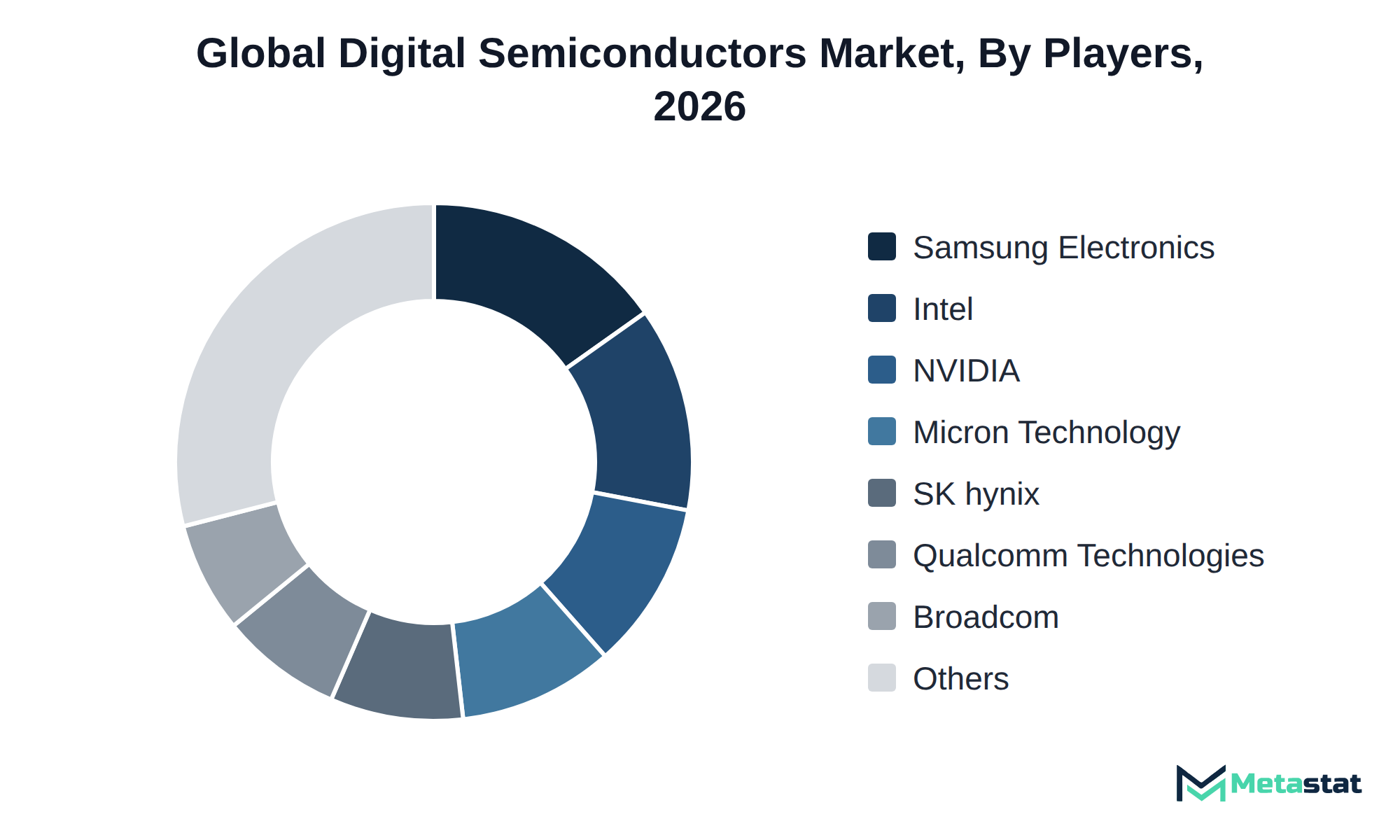
The Digital Semiconductors market features intense competition among key players, with companies differentiating through product innovation, pricing strategies, and specialized applications. Producers emphasize performance capabilities, technological advancements, and service quality to attract diverse buyer groups including consumer electronics manufacturers, data centers, and automotive electronics suppliers.
Samsung Electronics Co., Ltd. and SK hynix Inc. focus on memory integrated circuits, optimizing performance and reliability for high-demand applications. Meanwhile, NVIDIA Corporation and Advanced Micro Devices, Inc. invest heavily in graphics processing units and AI accelerators, targeting sectors including artificial intelligence and high-performance computing. Intel Corporation emphasizes microprocessors aimed at general-purpose computing, catering to a range of industries from personal computing to cloud services.
Buyers in the market prioritize factors including price, customization options, and ecosystem compatibility. The ability to provide tailored solutions and certification compliance influences purchasing decisions. Companies including Qualcomm Technologies, Inc. and Broadcom Inc. offer solutions that integrate seamlessly into existing platforms, enhancing operational efficiency for end users.
Infineon Technologies AG and NXP Semiconductors N.V. cater to the automotive electronics segment, emphasizing safety and regulatory compliance in their product offerings. These companies position themselves strategically to meet the evolving demands of the market.
This substantial growth relies on several key developments. The increasing demand for Memory Integrated Circuits (ICs) is vital, driven by expanding needs in consumer electronics and high-performance computing. Projections indicate a rise in demand for these components from USD 343.3 billion in 2026 to USD 1,106 billion by 2033, supporting overall market expansion. Advancements in Artificial Intelligence and High-Performance Computing applications are anticipated to boost the Digital Semiconductors market significantly, with an expected value of USD 983.1 billion by 2033. These trends underline the technology's critical role in various industries, particularly in data centers and automotive electronics.
However, potential risks could impede this trajectory. Supply chain disruptions and fluctuating raw material costs pose significant challenges that slow growth. For instance, the automotive electronics segment, projected to reach USD 414.4 billion by 2033, faces uncertainties related to component availability and pricing volatility. Addressing these issues will be essential for achieving the forecasted market size, ensuring that the Digital Semiconductors market continues its robust expansion.
By Product Type: Memory Integrated Circuits (ICs), Microprocessors (MPUs), Microcontrollers (MCUs), Graphics Processing Units (GPUs) and AI Accelerators, Digital Signal Processors (DSPs), Application-Specific Integrated Circuits (ASICs), Application-Specific Standard Products (ASSPs), Field-Programmable Gate Arrays (FPGAs) and Programmable Logic Devices, Standard Logic Integrated Circuits
By Application: General-Purpose Computing, Artificial Intelligence and High-Performance Computing, Data Storage and Retrieval, Embedded Control and Automation, Networking and Digital Communications, Graphics, Video and Multimedia Processing, Digital Security and Authentication, Others (Digital Instrumentation, Electronic Metering)
By End-Use Industry: Consumer Electronics and Home Appliances, Information Technology and Data Centers, Automotive Electronics, Telecommunications and Networking, Industrial Manufacturing and Automation, Healthcare and Medical Devices, Aerospace and Defense, Energy and Utilities, Others (Commercial Equipment, Retail Terminals)
The report strategically identifies and profiles the key market players and analyses their core competencies in each sub-segment of the Digital Semiconductors market.
Report Attributes | Details |
Study Period | 2021-2033 |
Base Year | 2025 |
Estimated Year | 2026 |
Forecast Period | 2026-2033 |
Historical Period | 2021-2025 |
Growth Rate | CAGR 19.2% from 2026 to 2033 |
Revenue Unit | USD billion |
Segmentation | By Product Type, Application, End-Use Industry, and Region |
By Region | North America (By Product Type, Application, End-Use Industry, and Country)
|
Europe (By Product Type, Application, End-Use Industry, and Country)
| |
Asia Pacific (By Product Type, Application, End-Use Industry, and Country)
| |
South America (By Product Type, Application, End-Use Industry, and Country)
| |
Middle East and Africa (By Product Type, Application, End-Use Industry, and Country)
|
Find answers to common questions about this report
The Digital Semiconductors market size was valued at USD 777.1 billion in 2025.
The market is projected to grow at a CAGR of 19.2% during the forecast period from 2026 to 2033.
The North America Digital Semiconductors market size is estimated to reach USD 987.5 billion by 2033.
Memory Integrated Circuits (ICs) lead the Digital Semiconductors market with a projected value of USD 1,106.0 billion by 2033, based on the highest growth rate among product types.
Growth in the artificial intelligence sector drives purchasing behavior among enterprises seeking advanced computing capabilities. Limited infrastructure and slow technology adaptation restrict growth, creating challenges for manufacturers and buyers in sourcing advanced semiconductor solutions.
Asia Pacific holds the dominant share of the Digital Semiconductors market, accounting for 60.6% of the total market. This regional share significantly surpasses that of North America, which holds 29.5%.
Limited infrastructure and slow technology adaptation restrict growth in the Digital Semiconductors market. Outdated production facilities and insufficient investment in technological advancements result in delayed product launches and reduced operational efficiency.
Several factors favor adoption in the Digital Semiconductors industry. Rapid advancements in artificial intelligence technology drive demand for high-performance digital semiconductors, while the increasing integration of AI applications across industries, including consumer electronics and healthcare, enhances the need for advanced processing capabilities. This environment positions the market for significant growth.
The Digital Semiconductors market is estimated to reach a valuation of USD 3,168.1 billion by 2033.
Key players operating in the Digital Semiconductors market include Samsung Electronics Co., Ltd., SK hynix Inc., Micron Technology, Inc., Kioxia Corporation, Intel Corporation, NVIDIA Corporation, and Qualcomm Technologies, Inc.
The analysts below cover Electronics and Semiconductor research at Metastat Insights.
LEAD ANALYST
Utkarsh Khirodkar is a Lead Market Research Analyst at MetaStat Insight, specializing in market intelligence, technology sector assessments, and competitive strategy.

PRINCIPAL CONSULTANT - ENTERPRISE AI & EMERGING TECHNOLOGIES
Banking & Finance · Electronics and Semiconductor · Energy and Power · Healthcare IT · Information & Technology · Professional Services
Vijay Gunti is a Principal Consultant at MetaStat Insight, bringing over two decades of experience across enterprise digital transformation, technology strategy, and intelligent systems.

PRINCIPAL CONSULTANT - QUALITY SYSTEMS & COMPLIANCE
Electronics and Semiconductor · Machinery & Equipment · Professional Services
Omkar Phadtare is an Industry Consultant at MetaStat Insight, specializing in quality systems, regulatory compliance, and standards benchmarking to drive data-driven market intelligence and strategic industry research.

ENERGY & INFRASTRUCTURE INDUSTRY CONSULTANT
Automotive and Transportation · Electronics and Semiconductor · Energy and Power · Machinery & Equipment
Saurabh Vasant Ganvir consults for Energy & Infrastructure Industry at MetaStat Insight, specializing in renewable energy, solar EPC, and electric vehicle (EV) infrastructure markets.

LEAD CONSULTANT - COMMUNICATION, TELECOM, AND IT
Electronics and Semiconductor · Information & Technology · Machinery & Equipment · Professional Services
Ravindra Sathe Consultants for Communication, Telecom, and IT at MetaStat Insight. He leads the firm's industry research initiatives across telecommunications infrastructure, digital connectivity, enterprise networking, and emerging information technology domains.
Replacing petrochemical surfactants with bio-based alternatives requires realistic timelines on industrial precision fermentation scaling. The market research broke down commercialization timelines, feedstock sugar price sensitivities, and regional cosmetic ingredient regulatory approvals in Europe and East Asia. That supplier readiness mapping gave our formulations team reliable context when comparing renewable chemical sourcing roadmaps.
Tracking ceramic matrix composite adoption in high-bypass aero engines requires strict attention to material qualification cycles and FAA airworthiness testing milestones. The MetaStat Insight team provided a detailed timeline of silicon carbide fiber manufacturing capacity and commercial foundry lead times. Having clear visibility into upstream thermal barrier coating supply helped us stress-test our long-term component procurement strategy.
Transitioning ultra-class mining haul trucks to alternative power requires concrete data on remote hydrogen refueling infrastructure economics. The report evaluated megawatt-scale electrolyzer installation expenses, onsite storage safety mandates, and heavy-duty fuel cell stack degradation under continuous duty cycles. That technical rigor helped our engineers benchmark realistic total operating cost horizons for off-highway fleet decarbonization.
Explore related market intelligence reports worth reading alongside this one.