
LEAD ANALYST
Utkarsh Khirodkar is a Lead Market Research Analyst at MetaStat Insight, specializing in market intelligence, technology sector assessments, and competitive strategy.

Global Semiconductor Foundry Market Size, Share, By Technology Node (Advanced Nodes (Below 10 nm), Mature Nodes (10 nm-45 nm), Legacy Nodes (Above 45 nm)), By Wafer Size (300 mm, 200 mm, ≤150 mm), By Foundry Business Model (Pure-Play Foundries, Integrated Device Manufacturer Foundries), By End-Use Industry (Computing and Data Centers, Consumer Electronics, Telecommunications, Automotive, Industrial, Healthcare and Medical Devices, Aerospace and Defense, Others), Industry Analysis, Growth, Trends, and Forecast, 2026-2033
Report ID
MSI-5470
Published
October, 2026
Pages
298 Pages
Format
Historical
Base year
Forecast
Forecast period
Report Details
Market Valuation: Valued at $175.8 Billion in 2025, projected to reach $320.8 Billion by 2033 at a 7.8% CAGR.
Dominant Segment: The advanced nodes segment, particularly those below 10 nm, leads the market, driven by the rising demand for high-performance chips essential for applications in computing and telecommunications.
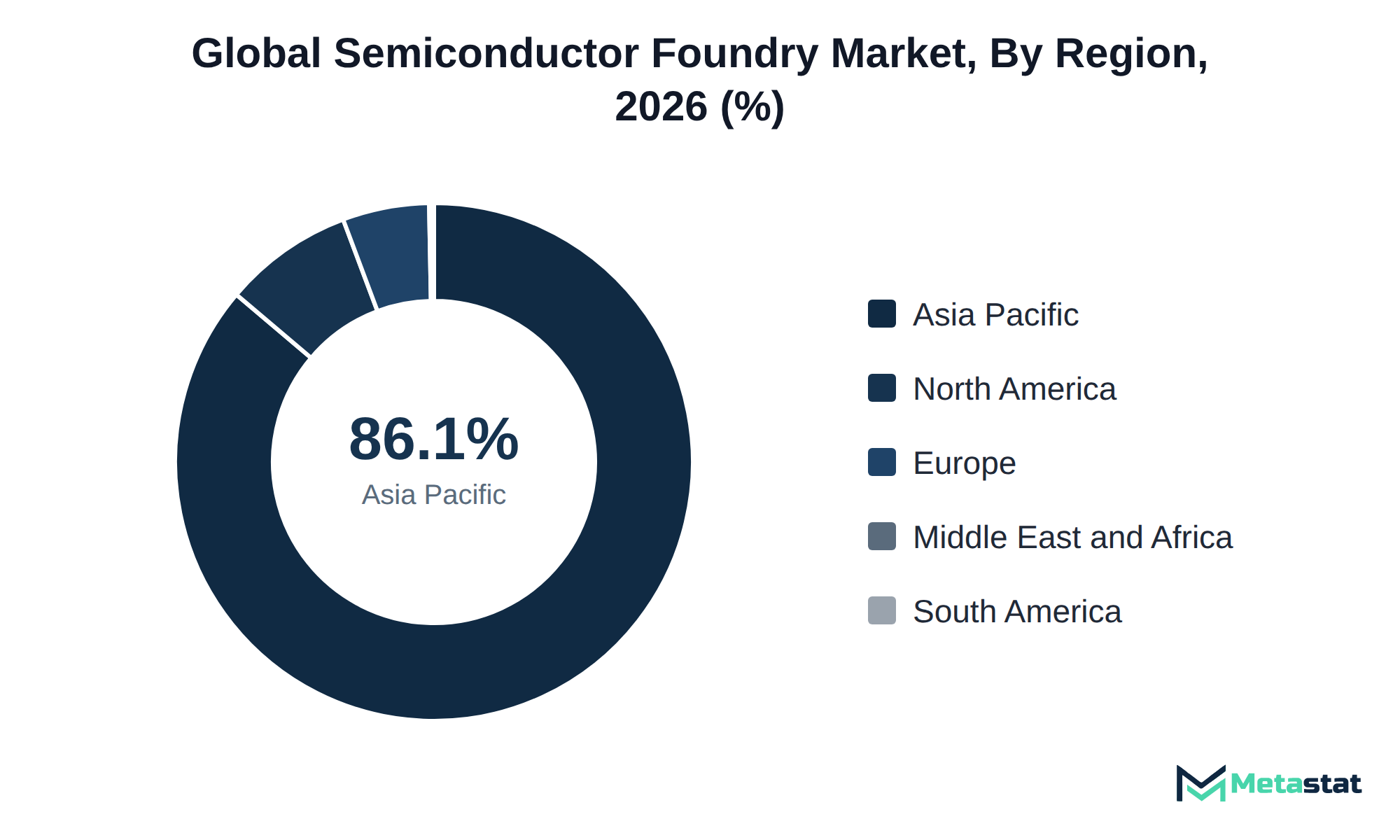
Geographic Lead: The Asia Pacific region dominates the Semiconductor Foundry market, accounting for 86.1% of the market share in 2025, fueled by a robust semiconductor ecosystem and increasing investments in data centers and consumer electronics.
What's Inside: The report provides a comprehensive analysis of the Semiconductor Foundry market, including competitive coverage, segmentations by technology node, wafer size, foundry business model, and end-use industry, along with detailed growth forecasts through 2033.
Emerging Opportunities: The transition towards advanced nodes presents significant growth potential, particularly with the increasing adoption of AI, 5G, and IoT technologies, which intensify the demand for smaller, more efficient semiconductor devices.
Choose Your License
Global Semiconductor Foundry Market
The global Semiconductor Foundry market was valued at USD 175.8 billion in 2025 and is projected to reach USD 320.8 billion by 2033, growing at a CAGR of 7.8% over the forecast period.
The Semiconductor Foundry market encompasses services and technologies essential for the production of semiconductor devices. Buyers invest in this market to access advanced manufacturing capabilities that support the development of high-performance chips used across various applications, including computing, telecommunications, and automotive sectors. The need for enhanced processing power and energy efficiency drives organizations to seek partnerships with foundries capable of delivering specialized fabrication services.
Growth in the market is primarily fueled by increasing demand for advanced nodes, particularly those below 10 nm. This segment represents the highest value within the market, characterized by its critical role in enabling advanced technologies. The Asia Pacific region dominates the market, holding 86.1% of the share, significantly outpacing North America, which holds 8.1% of the market in 2025, with the US leading in 2026.
Factors influencing growth include the expansion of data centers and the proliferation of consumer electronics, both of which rely heavily on advanced semiconductor technology. Industries increasingly adopt these technologies, and the market is projected to experience robust expansion through the forecast period, reflecting ongoing investments in innovation and capacity enhancement.
The Semiconductor Foundry market includes various technologies and services tailored to the fabrication of semiconductor devices. Buyers invest in this market to secure high-quality production capabilities that meet the increasing demand for advanced electronic components. Industries including computing, telecommunications, and automotive drive expenditure, with companies prioritizing partnerships with foundries that offer innovative solutions and reliable supply chains.
Growth in the market is supported by rising demand for advanced nodes, particularly those below 10 nm, which are critical for high-performance computing and mobile devices. Among the regional markets, Asia Pacific dominates, accounting for 86.1% of the total share. This region benefits from a robust semiconductor ecosystem that enables rapid advancements and cost-effective manufacturing processes.
The increasing integration of smart technologies and the expansion of data centers are key factors contributing to the growth trajectory of the Semiconductor Foundry market. Strong demand from diverse sectors drives the market forward, enabling manufacturers to invest in innovative production methodologies and expand operational capacities.
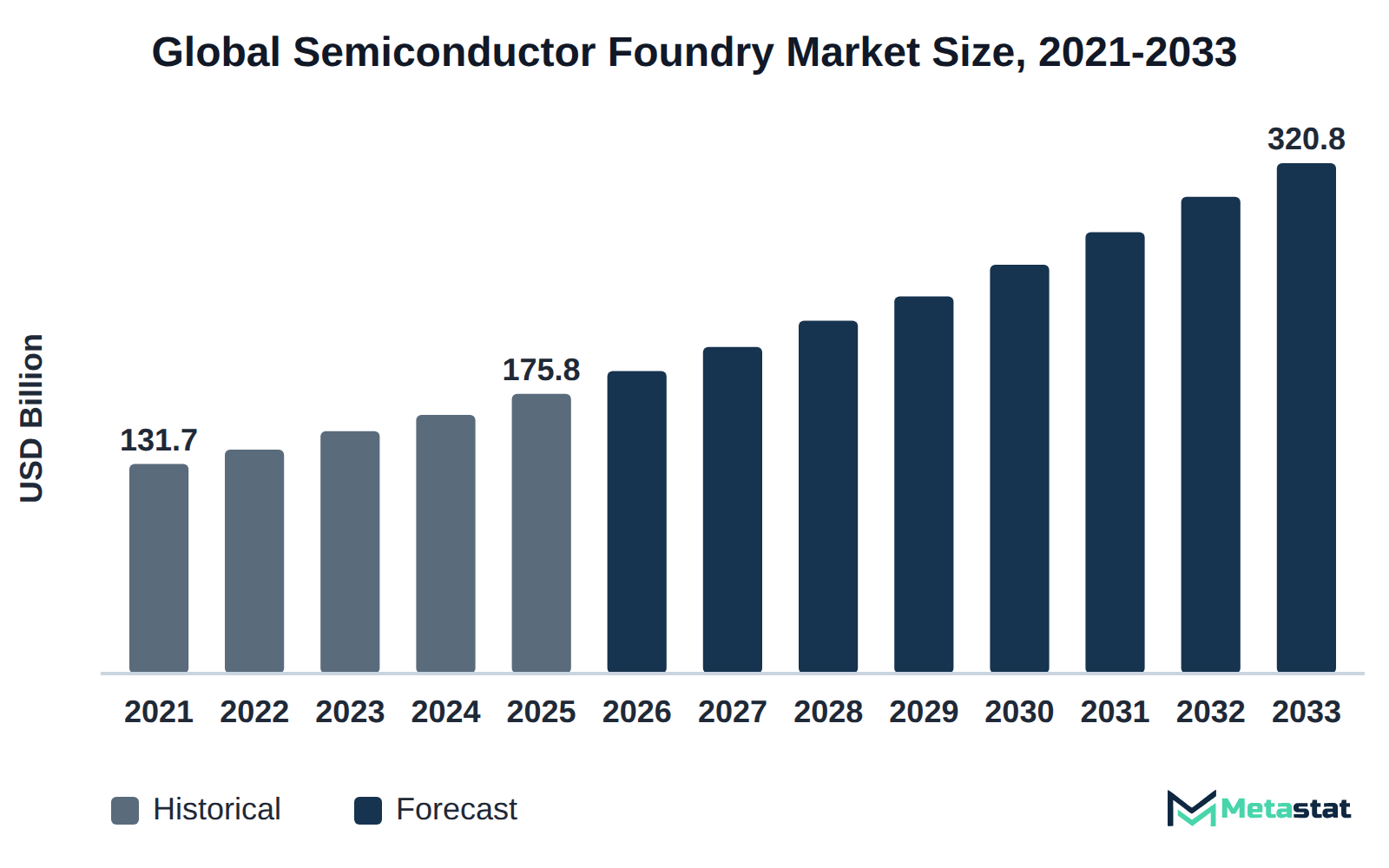
The surge in demand for artificial intelligence (AI) chips is driving semiconductor foundries to expand capacity, particularly for advanced nodes like the 2 nm technology. This shift aligns with the growing investment in AI applications, which require increasingly powerful processing capabilities. In the Semiconductor Foundry market, the segment for advanced nodes, below 10 nm, is projected to reach USD 249 billion by 2033, reflecting a compound annual growth rate (CAGR) of 9.2% from 2026. This growth reflects the industry's response to the skyrocketing need for infrastructure that supports AI technologies.
The expansion into 2 nm capacity involves significant capital investment and technological advancements in fabrication processes. Foundries are working to enhance their capabilities in precision engineering and materials science to meet the demands of AI chip manufacturing. Companies operating in this market, including Taiwan Semiconductor Manufacturing Company Limited and Samsung Electronics, focus on developing these advanced processes, which further strengthen their competitive positioning.
Increased capacity for AI chips will likely yield substantial commercial benefits for semiconductor foundries, as businesses across various sectors seek to leverage AI capabilities. This demand boosts revenue for foundries and drives innovation in chip design and manufacturing, ultimately influencing the future of the Semiconductor Foundry market.
Pricing models in the mature-node foundry segment have evolved to accommodate the increasing demand for automotive and industrial chips. With the expected value of mature nodes rising to USD 47.5 billion by 2033, manufacturers are adopting more flexible contract structures to attract buyers. Vendors typically engage in long-term agreements, allowing clients to secure pricing stability while ensuring the foundries maintain capacity for critical production runs.
Automotive manufacturers negotiate contracts that include volume commitments, ensuring a dedicated supply of chips necessary for their applications. This strategic alignment between buyers and foundries leads to stronger partnerships, resulting in smoother manufacturing processes. Contract terms stipulate price adjustments based on material costs, reflecting volatility within the semiconductor industry.
In the Semiconductor Foundry market, the importance of capacity allocation becomes clear with the increasing complexity of automotive chips. Foundries emphasize production efficiency while balancing the demands of multiple clients. Ensuring sufficient capacity for automotive applications demands careful monitoring of production schedules, impacting pricing strategies. Efficient resource allocation allows foundries to maximize output while fulfilling contractual obligations, benefiting both parties commercially.
The increasing complexity of semiconductor devices drives the demand for tailored fabrication strategies. Computing and data centers, representing a significant segment of the Semiconductor Foundry market, require advanced node technologies, specifically those below 10 nm, which are projected to reach USD 159.4 billion by 2033. This segment emphasizes the necessity for precision engineering and rapid prototyping due to the continuous innovation cycle in computing applications.
Firms within this sector actively seek geographic diversification of wafer fabrication to secure reliable supply chains and reduce risks associated with geopolitical tensions. By establishing partnerships with foundries in regions including Asia Pacific, firms gain access to advanced manufacturing capabilities while benefiting from competitive pricing structures. This strategy enhances overall operational efficiency and improves the ability to meet diverse customer needs.
While the market evolves, companies targeting the computing and data centers segment prioritize agile sourcing strategies that address unique fabrication requirements. Emphasizing local sourcing in addition to global partnerships results in improved responsiveness to market demands, ultimately driving growth and strengthening competitive advantages in the Semiconductor Foundry market.
Chip designers face critical decisions when selecting between Pure-Play and Integrated Device Manufacturer (IDM) foundries. The choice hinges on various factors, including the required technology node and specific end-use applications. This growth is driven by the increasing need for high-performance chips in sectors including computing and data centers.
Pure-Play foundries focus exclusively on fabrication services, providing flexibility for designers that prioritize rapid prototyping and lower initial costs. In contrast, IDM foundries integrate design and manufacturing processes, offering potential advantages in supply chain control and device performance optimization. Designers targeting niche applications, including automotive or telecommunications, lean toward IDM foundries due to their comprehensive services and expertise. Ultimately, the choice between these two types of foundries significantly impacts project timelines, cost structures, and product performance within the semiconductor ecosystem.
The demand for artificial intelligence (AI) chips significantly influences spending among semiconductor designers and developers. This sector benefits from heightened interest in advanced computing capabilities and the growing need for higher performance in various applications. Organizations increasingly adopt AI solutions, resulting in a notable shift in the types of chips required, pushing buyers to seek more advanced foundry services. This growth highlights the urgent need for foundry partnerships that provide the necessary technological advancements to meet these evolving demands. In this context, companies prioritize collaboration with foundries capable of delivering high-quality manufacturing processes and innovative designs.
Technological advancements in wafer fabrication significantly influence the Semiconductor Foundry market. The shift towards 300 mm and below wafer sizes enhances efficiency and performance in semiconductor manufacturing processes. Larger wafers facilitate increased chip production, reducing costs per unit while improving yield rates. Suppliers invest in advanced fabrication technologies, responding to the growing demand for high-performance components across various industries.
Companies prioritize the development of innovative manufacturing techniques that enable the production of smaller, more efficient chips. This trend drives the increasing complexity and functionality of electronic devices, influencing demand from sectors including computing, telecommunications, and automotive. By leveraging new fabrication technologies, suppliers strengthen their competitive positions in the market and enhance customer satisfaction. The ongoing evolution of wafer fabrication technologies contributes to market growth, with firms positioned to capture emerging opportunities in the semiconductor space.
Price fluctuations significantly impact investment decisions among buyers in the Semiconductor Foundry market. Many buyers, especially smaller enterprises and startups, experience challenges in securing funding for new projects due to unpredictable pricing structures. Rising production costs often lead to slower uptake of advanced technologies, with firms prioritizing budget stability. Companies operating in the consumer electronics sector demonstrate a cautious approach, resulting in smaller order sizes and delayed product launches. The automotive industry, which relies on consistent semiconductor supply, confronts similar hurdles, often leading to postponed upgrades in manufacturing capabilities. Consequently, these dynamics restrict overall growth within the market, hindering innovation and limiting the development of next-generation semiconductor solutions.
Rising input costs present a significant challenge for suppliers in the Semiconductor Foundry market. Factors including global supply chain disruptions and increased raw material prices drive the cost of semiconductor manufacturing higher, affecting margins for foundries. Suppliers respond by proactively seeking to optimize operations and explore new sourcing strategies. Investments in technology and efficiency improvements aim to mitigate these rising costs, allowing foundries to maintain competitiveness while managing budgetary constraints. Collaborative partnerships with suppliers play a crucial role in securing more favorable pricing and ensuring reliability in the face of fluctuating input costs. Such approaches not only help protect profit margins but support continued growth in the market, enhancing suppliers' ability to navigate the complex landscape of semiconductor production.
The transition toward advanced nodes, specifically below 10 nm, presents significant growth potential within the Semiconductor Foundry market. The growing demand for smaller, more efficient semiconductor devices drives this shift, with industries including computing and telecommunications relying heavily on advanced technology. Advanced nodes enhance performance while reducing energy consumption, aligning with sustainability goals across various sectors.
The rapid adoption of AI, 5G, and IoT technologies intensifies the need for high-performance chips, further stimulating investment in advanced node production capabilities. Players focusing on Pure-Play Foundries gain a competitive edge by offering specialized services that cater to these evolving requirements. The strategic expansion into advanced nodes not only addresses current market demands but positions companies to capitalize on future opportunities, ensuring sustained growth within the Semiconductor Foundry market.
The Global Semiconductor Foundry market is segmented based on Technology Node, Wafer Size, Foundry Business Model, and End-Use Industry.
This segment focuses on semiconductor manufacturing processes that significantly enhance the performance and efficiency of integrated circuits, primarily applied in high-performance computing, data centers, and advanced consumer electronics. The rapid evolution of technologies including artificial intelligence and machine learning drives demand for chips produced using advanced nodes. Compared to other segments, including Mature Nodes, which grow at a CAGR of 4.6%, the Advanced Nodes segment demonstrates a stronger growth trajectory, reflecting the continuous push for innovation and enhanced capabilities in semiconductor devices. The increasing complexity of chip designs necessitates advanced manufacturing techniques, positioning this segment as a critical driver of growth in the Semiconductor Foundry market.
The Mature Nodes (10 nm-45 nm) segment is estimated to reach USD 47.5 billion by 2033, at a CAGR of 4.6% during the forecast period. This segment primarily serves applications within computing and consumer electronics, where a balance between performance and cost is critical. Established production processes for mature nodes enable efficient manufacturing for a wide range of devices, including smartphones and laptops. Demand for these nodes is driven by sustained needs in legacy applications, facilitating continuous orders. Compared to advanced nodes, which exhibit a CAGR of 9.2%, this segment shows slower growth, reflecting the maturity of technology and established customer bases. Relative stability in pricing further differentiates it from the volatile pricing often associated with advanced nodes, providing a predictable revenue stream for suppliers. This differentiation highlights the strategic importance of mature nodes amid evolving market dynamics.
Legacy Nodes (Above 45 nm) segment is expected to reach USD 24.2 billion by 2033. This segment primarily serves various industries that require chips with lower complexity requirements, including consumer electronics and industrial applications. The demand for these nodes arises from established product lines that do not necessitate the most advanced technology, allowing companies to optimize costs effectively. Compared to other segments, including Advanced Nodes, this segment exhibits slower growth, reflecting a CAGR of 4.6%. Buyers in this area prioritize cost efficiency over high performance, driving steady, but less aggressive adoption compared to advanced nodes. In the context of the Semiconductor Foundry market, reliance on legacy nodes remains prevalent due to their sufficient performance for specific use cases while maintaining affordability.
The 300 mm segment is valued at USD 147.4 billion in 2026 and is projected to reach USD 268.4 billion by 2033, at a CAGR of 8.9% during the forecast period. This segment primarily serves the needs of high-volume manufacturing for advanced semiconductor devices, serving sectors including computing and telecommunications. The growth in demand for more powerful and efficient chips drives advancements in 300 mm wafer technology, facilitating the production of advanced processors and memory devices. Compared to the 200 mm and ≤150 mm segments, the 300 mm segment experiences a faster growth trajectory, fueled by increasing application complexity and the need for high-performance computing solutions. The anticipated expansion in the automotive and consumer electronics industries further strengthens demand for 300 mm wafers, positioning it as a crucial segment in the Semiconductor Foundry market.
The 200 mm segment is estimated to reach USD 43.3 billion by 2033, at a CAGR of 2.7% during the forecast period. This segment serves various applications, particularly in consumer electronics and automotive sectors, where cost-effective solutions remain essential. The demand for 200 mm wafers is driven by the increasing need for mature semiconductor technologies, which cater to a diverse range of products, including sensors and microcontrollers. In comparison to the Advanced Nodes (Below 10 nm) segment, which has a CAGR of 9.2%, the growth rate of the 200 mm segment reflects a more stable, albeit slower advancement. End-users often opt for this wafer size due to lower production costs and established manufacturing processes, presenting a reliable choice for many industries focused on affordability and efficiency.
≤150 mm segment is expected to reach USD 9.1 billion by 2033. This segment caters primarily to applications requiring smaller semiconductor devices, often used in consumer electronics and basic industrial applications. Demand for these smaller wafers derives from the need for cost-effective solutions in less complex technologies. Adoption in this segment is generally slower compared to larger wafer sizes due to limitations in scaling and manufacturing efficiencies. While 300 mm wafers show a projected CAGR of 8.9%, the growth rate for the ≤150 mm segment remains significantly lower, reflecting a consistent focus on legacy applications rather than advanced technology. Its primary customers include manufacturers of low-end chips and devices, who benefit from reduced material costs and simplified production processes. The market for ≤150 mm wafers reflects a niche that caters to established industries rather than emerging high-tech sectors.
Pure-Play Foundries segment is valued at USD 174.9 billion in 2026 and is projected to reach USD 290.9 billion by 2033, at a CAGR of 7.5% during the forecast period. This model serves dedicated semiconductor manufacturing for clients who design chips but lack fabrication capabilities. The demand for advanced technology in computing, including AI and machine learning, significantly drives growth in this segment. Buyers in the computing and consumer electronics sectors engage these foundries, seeking high-volume and specialized production. This segment exhibits faster growth compared to Integrated Device Manufacturer Foundries, which are expected to reach USD 29.9 billion by 2033, marking a CAGR of 10.2%. The specific focus on advanced nodes enhances its competitive edge, enabling it to cater to rapid advancements in technology, thereby influencing the Semiconductor Foundry market effectively.
This segment serves companies that design and manufacture both semiconductor devices and integrated circuits. The rising demand for complex, high-performance chips, particularly in computing and telecommunications, drives growth in this segment. Unlike Pure-Play Foundries, which focus solely on manufacturing, Integrated Device Manufacturer Foundries provide end-to-end services, including design and fabrication. Their higher pricing reflects the added value of integrated design capabilities, distinguishing them from other segments. With a robust CAGR, this segment highlights a vital shift toward integrated solutions, catering to industries seeking comprehensive manufacturing partnerships. Demand for advanced functionalities in consumer electronics and automotive applications further supports expansion, positioning this segment for significant growth opportunities in the evolving landscape of the Semiconductor Foundry market.
The Computing and Data Centers segment is valued at USD 82.7 billion in 2026 and is projected to reach USD 159.4 billion by 2033, at a CAGR of 9.8% during the forecast period. This segment supports cloud services, data storage, and processing power for various applications, including enterprise solutions and artificial intelligence. Significant demand for high-performance computing drives growth, with companies increasingly investing in advanced data center infrastructure. This segment outpaces others in growth rate, driven by increasing reliance on digital transformation across industries. In contrast, Consumer Electronics shows slower expansion. The necessity for enhanced computational capabilities and greater data management reflects a key trend influencing the future trajectory of the market.
Consumer Electronics segment is estimated to reach USD 59.2 billion by 2033, at a CAGR of 3.8% during the forecast period. This segment includes products including smartphones, tablets, and smart home devices, used by consumers in daily life. A significant force driving this segment stems from the ongoing demand for innovative and connected devices, prompting manufacturers to invest heavily in semiconductor solutions. In contrast to other segments, including Computing and Data Centers, which experience a higher growth rate, the Consumer Electronics segment exhibits a slower CAGR of 3.8%. This slower growth results from market saturation and the maturity of certain product categories. Technology evolves, and competition among manufacturers intensifies, requiring continuous enhancements in design and functionality to attract consumers. The Semiconductor Foundry market faces unique challenges, including cost control and supply chain management, impacting pricing and production strategies in this segment.
The telecommunications segment is expected to reach USD 32.6 billion by 2033. This segment supports a wide range of applications, including mobile networks, internet infrastructure, and communication devices used by both consumers and enterprises. The growth in demand for faster data transmission and improved connectivity drives investment in telecommunications technology. Compared to other segments, telecommunications experiences slower growth, focusing on cost-effective solutions tailored for both commercial and consumer use. This segment faces challenges related to regulatory compliance and evolving technology standards, impacting overall investment strategies. Differentiating factors include its relatively stable pricing and established customer base, contrasting with the dynamic nature of segments including computing and data centers. The market for the telecommunications segment continues to evolve, reflecting the increasing importance of reliable communication networks.
The automotive segment is projected to grow at a CAGR of 9.8% during the forecast period. This segment serves the automotive industry, which relies on advanced semiconductor technologies for functions including vehicle safety, connectivity, and automation. The increasing demand for electric vehicles and advanced driver-assistance systems drives growth in this segment. The shift towards electrification in transportation enhances the need for semiconductor solutions tailored for automotive applications. Compared to other segments, the automotive segment benefits from robust investment due to its critical role in the evolving automotive industry. In contrast to the consumer electronics segment, which grows at a lower CAGR of 3.8%, the automotive segment demonstrates significant growth potential driven by technological advancements and regulatory support for sustainable transport solutions. The semiconductor foundry market remains essential for meeting the rising demands of the automotive sector.
Industrial applications employ semiconductor technologies across various sectors, including manufacturing automation, process control, and equipment monitoring. Key buyers in this segment include manufacturers and industrial automation companies requiring advanced semiconductor solutions for efficient operations. Demand growth is driven by the increasing need for automation and smart manufacturing technologies. This segment experiences slower growth compared to segments focused on computing and data centers, with different pricing models reflecting the diverse nature of industrial applications. While other segments benefit from rapid technological advancements, industrial applications require robust and reliable solutions that prioritize longevity and stability over innovative developments. The Semiconductor Foundry market evolves, adapting to these unique requirements while supporting the industrial sector's push towards greater efficiency and productivity.
Healthcare and Medical Devices involve the use of advanced semiconductor technologies to support diagnostic, monitoring, and therapeutic devices. This segment serves hospitals, clinics, and home care providers seeking innovative solutions in patient care. Growing demand for efficient medical devices drives this segment, particularly due to increasing emphasis on telehealth and remote monitoring technologies. Regulatory approvals and standards for safety further influence product development timelines. Compared to other segments, this category exhibits a slower growth rate, reflecting the complexities and stringent regulations involved. The focus on specialized applications often leads to higher prices, distinguishing it from other end-use industries that prioritize cost efficiency. The Semiconductor Foundry market supplies the necessary components that enhance the functionality and reliability of healthcare products.
Aerospace and Defense encompasses critical applications involving national security, satellite communication, and advanced avionics systems. This segment engages government and military organizations that require high-reliability semiconductor solutions. A significant driver for this segment stems from increasing defense budgets worldwide, particularly in regions prioritizing national security advancements. Demand for advanced technologies, including unmanned aerial vehicles and missile guidance systems, further fuels market growth. Compared to other segments, the Aerospace and Defense sub-segment typically commands higher prices due to stringent quality and reliability standards, differentiating it from consumer electronics or computing sectors. Increased investment in research and development enhances innovation in this field, contributing to the overall growth of the Semiconductor Foundry market.
This sub-segment encompasses applications related to energy infrastructure and scientific instrumentation. Industries including renewable energy, power generation, and advanced research rely on semiconductor technologies to enhance their capabilities. Demand for precision instruments drives growth within this segment, driven by increasing investments in clean energy initiatives and advancements in scientific research. Unlike mainstream segments, this category typically experiences slower growth due to the specialized nature of the products and the niche market structure. Companies targeting this area focus on high-performance and reliable semiconductor solutions, which often come at a premium price compared to other segments. This differentiated approach attracts a specific buyer demographic, primarily comprising specialized manufacturers and research institutions, highlighting the unique positioning of this segment within the Semiconductor Foundry market.
Based on geography, the Global Semiconductor Foundry market is divided into North America, Europe, Asia-Pacific, South America, Middle East, and Africa.
Strong demand exists for advanced semiconductor technologies in North America, primarily driven by the computing and data centers, automotive, and telecommunications industries. The presence of major players within the United States, Canada, and Mexico enhances innovation and competition, enhancing the market's growth potential. North America is projected to reach USD 32.5 billion by the end of 2033. The region's significant investment in research and development, along with infrastructure improvements, supports the expansion of the Semiconductor Foundry market. With an 8.1% share of the global market in 2025, the region benefits from favorable regulatory conditions that improve operational efficiency and attract investment, stimulating further growth opportunities in the sector.
Europe's semiconductor industry experiences significant demand driven by advancements in computing and data center technologies. Investment in infrastructure, particularly in Germany and France, enhances capabilities, driving growth in the semiconductor foundry market. The region's focus on automotive applications, especially in the UK and Germany, supports a push toward electric vehicles, which require sophisticated semiconductor solutions. Regulatory frameworks in Europe, targeting sustainability and energy efficiency, encourage the adoption of new technologies, further stimulating market expansion. The market holds a share of 5.4% of the global semiconductor foundry market in 2025, highlighting its growing importance. Spain and Italy actively contribute to this development through various initiatives aimed at enhancing semiconductor manufacturing capabilities, reflecting an increasing emphasis on local production to meet rising demand.
Asia-Pacific commands an 86.1% share of the global market in 2025, driven primarily by increasing demand from industries including computing, automotive, and consumer electronics. Countries like China and South Korea lead in semiconductor production, with substantial investments in advanced technology nodes driving rapid growth. The presence of key players in the region enhances competitiveness and innovation within the Semiconductor Foundry market. Infrastructure development and government initiatives aimed at enhancing manufacturing capabilities create an environment conducive to growth. The market's trajectory reflects strong demand from data centers and automotive sectors, particularly in the context of electric vehicle technology. While this region continues to evolve, strong investments in R&D will likely support sustained expansion within the market.
The Semiconductor Foundry market in South America remains relatively small, with limited participation in the global market in 2025. Demand primarily stems from Brazil and Argentina, where industries including automotive and consumer electronics drive growth. The region's infrastructure challenges, including limited fabrication facilities, hinder rapid advancements. However, increasing investments in technology modernization are anticipated to spur growth in local semiconductor production capabilities. By 2033, the market is projected to support emerging requirements in various sectors, including telecommunications. Collaborative efforts between governments and the private sector to address these infrastructure gaps will facilitate increased participation in the Semiconductor Foundry market.
The Middle East and Africa region represents a distinct segment within the Semiconductor Foundry market. Key countries like Saudi Arabia and the UAE are experiencing increased investments in technology and infrastructure, particularly in data centers and telecommunications. South Africa shows growth potential driven by initiatives to enhance its digital economy and local manufacturing capabilities. Efforts to improve energy efficiency and regulatory frameworks further support the competitive landscape in the region. The market is projected to advance significantly, driven by the demand for semiconductor solutions across various industries, including automotive and consumer electronics.
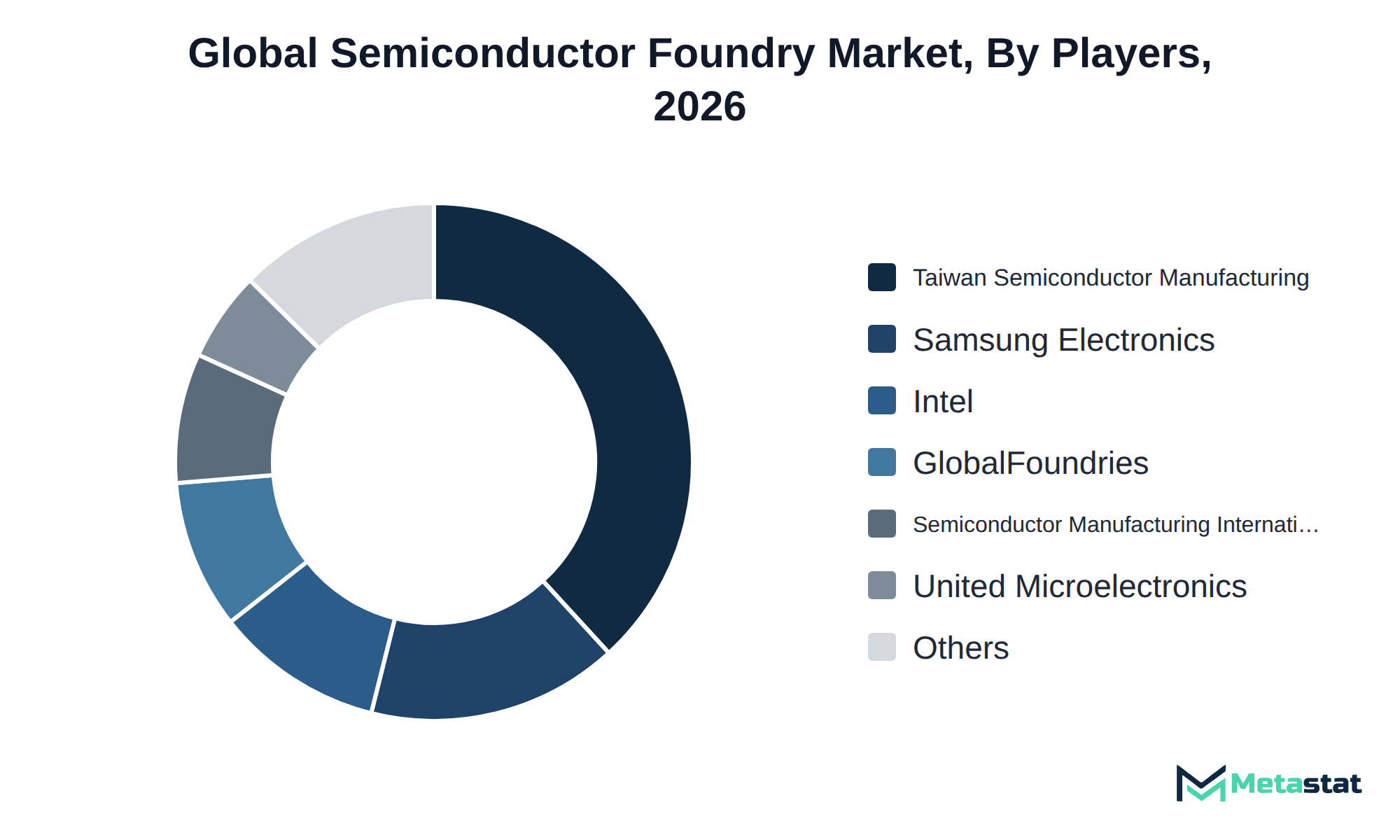
The Semiconductor Foundry market features intense competition among leading players who focus on various strategies to capture market share. Companies differentiate themselves through advanced technologies, business models, and specific end-use industry applications. For instance, Taiwan Semiconductor Manufacturing Company Limited emphasizes advanced nodes, specifically below 10 nm, which cater to high-performance computing and data center applications. Samsung Electronics Co., Ltd. adopts a similar approach but invests in mature nodes to serve a broader range of consumer electronics and telecommunications markets.
Other participants, including GlobalFoundries Inc. and Semiconductor Manufacturing International Corporation, highlight their expertise in cost-effective manufacturing solutions. Buyers increasingly prioritize aspects including price, customization, and service level, driving companies to enhance their operational offerings. The market dynamics encourage continual investment in technology and capacity expansion to address diverse client requirements across various sectors, including computing, automotive, and industrial applications.
This growth hinges on the expansion of advanced nodes, specifically those below 10 nm, which are expected to thrive due to rising demand from computing and data centers. The segment is projected to exhibit a CAGR of 9.2% during the forecast period. The 300 mm wafer size segment will contribute significantly, anticipated to grow from USD 147.4 billion in 2026 to USD 268.4 billion by 2033, driven by the increasing complexity of semiconductor designs in consumer electronics and telecommunications.
Potential risks exist that could impede progress, particularly in the form of supply chain disruptions affecting production capabilities. These disruptions arise from geopolitical tensions in key manufacturing regions, especially Asia Pacific, which dominates the market with an 86.1% share. Addressing these challenges will be essential for the Semiconductor Foundry market to achieve its forecasted growth, ensuring that investments in technology and capacity align with the rising demand.
By Foundry Business Model: Pure-Play Foundries, Integrated Device Manufacturer Foundries
By End-Use Industry: Computing and Data Centers, Consumer Electronics, Telecommunications, Automotive, Industrial, Healthcare and Medical Devices, Aerospace and Defense, Others (Energy Infrastructure, Scientific Instrumentation)
The report strategically identifies and profiles the key market players and analyses their core competencies in each sub-segment of the Semiconductor Foundry market.
Report Attributes | Details |
Study Period | 2021-2033 |
Base Year | 2025 |
Estimated Year | 2026 |
Forecast Period | 2026-2033 |
Historical Period | 2021-2025 |
Growth Rate | CAGR 7.8% from 2026 to 2033 |
Revenue Unit | USD billion |
Segmentation | By Technology Node, Wafer Size, Foundry Business Model, End-Use Industry, and Region |
By Region | North America (By Technology Node, Wafer Size, Foundry Business Model, End-Use Industry, and Country)
|
Europe (By Technology Node, Wafer Size, Foundry Business Model, End-Use Industry, and Country)
| |
Asia Pacific (By Technology Node, Wafer Size, Foundry Business Model, End-Use Industry, and Country)
| |
South America (By Technology Node, Wafer Size, Foundry Business Model, End-Use Industry, and Country)
| |
Middle East and Africa (By Technology Node, Wafer Size, Foundry Business Model, End-Use Industry, and Country)
|
Find answers to common questions about this report
The Semiconductor Foundry market size was valued at USD 175.8 billion in 2025.
The market is projected to grow at a CAGR of 7.8% during the forecast period from 2026 to 2033.
The North America Semiconductor Foundry market size is estimated to reach USD 32.5 billion by 2033.
The leading segment in the Semiconductor Foundry market is Advanced Nodes (Below 10 nm), with a projected value of USD 249 billion by 2033. This segment outpaces others in growth potential, reflecting a compound annual growth rate of 9.2 percent.
Key drivers for the Semiconductor Foundry market include the increasing demand for advanced nodes, particularly below 10 nm, which supports growth in high-performance chip production for sectors including computing and telecommunications. Rising input costs challenge suppliers, prompting optimization of operations and exploration of new sourcing strategies to maintain competitiveness.
Rising input costs present a significant challenge for suppliers, driven by global supply chain disruptions and increased raw material prices. Price fluctuations impact investment decisions among buyers, particularly smaller enterprises and startups, hindering innovation and limiting the development of next-generation semiconductor solutions.
Several factors favor adoption in the Semiconductor Foundry industry. The transition toward advanced nodes below 10 nm reflects the increasing demand for smaller, more efficient semiconductor devices. Industries including computing and telecommunications rely on these advancements, driving investment in production capabilities.
The Semiconductor Foundry market is estimated to reach a valuation of USD 320.8 billion by 2033.
Key players operating in the Semiconductor Foundry market include Taiwan Semiconductor Manufacturing Company Limited, Samsung Electronics Co., Ltd., United Microelectronics Corporation, GlobalFoundries Inc., Semiconductor Manufacturing International Corporation, and Intel Corporation.
Advanced nodes are projected to grow from USD 134.4 billion in 2026 to USD 249 billion by 2033, achieving a compound annual growth rate of 9.2 percent.
The analysts below cover Electronics and Semiconductor research at Metastat Insights.
LEAD ANALYST
Utkarsh Khirodkar is a Lead Market Research Analyst at MetaStat Insight, specializing in market intelligence, technology sector assessments, and competitive strategy.

PRINCIPAL CONSULTANT - ENTERPRISE AI & EMERGING TECHNOLOGIES
Banking & Finance · Electronics and Semiconductor · Energy and Power · Healthcare IT · Information & Technology · Professional Services
Vijay Gunti is a Principal Consultant at MetaStat Insight, bringing over two decades of experience across enterprise digital transformation, technology strategy, and intelligent systems.

PRINCIPAL CONSULTANT - QUALITY SYSTEMS & COMPLIANCE
Electronics and Semiconductor · Machinery & Equipment · Professional Services
Omkar Phadtare is an Industry Consultant at MetaStat Insight, specializing in quality systems, regulatory compliance, and standards benchmarking to drive data-driven market intelligence and strategic industry research.

ENERGY & INFRASTRUCTURE INDUSTRY CONSULTANT
Automotive and Transportation · Electronics and Semiconductor · Energy and Power · Machinery & Equipment
Saurabh Vasant Ganvir consults for Energy & Infrastructure Industry at MetaStat Insight, specializing in renewable energy, solar EPC, and electric vehicle (EV) infrastructure markets.

LEAD CONSULTANT - COMMUNICATION, TELECOM, AND IT
Electronics and Semiconductor · Information & Technology · Machinery & Equipment · Professional Services
Ravindra Sathe Consultants for Communication, Telecom, and IT at MetaStat Insight. He leads the firm's industry research initiatives across telecommunications infrastructure, digital connectivity, enterprise networking, and emerging information technology domains.
Evaluating calorific value requirements and air permit compliance across municipal waste facilities requires localized data. Metastat Insight structured their analysis around operational throughput capacity and feedstock composition variations in Latin America and Eastern Europe. Their competitive mapping of sorting equipment vendors helped clarify technology differences between optical separators and heavy media systems. The study provided an objective baseline during our capital expenditure reviews.
Decarbonizing industrial thermal processes hinges on refrigerant regulations and compressor efficiency limits. Metastat Insights delivered a thorough market analysis that evaluated natural refrigerants like CO2 and hydrocarbons against synthetic low-GWP alternatives. The breakdown of utility incentives and grid capacity constraints across key European manufacturing hubs offered valuable perspective. The follow-up conversation with their sector analysts addressed our specific questions on mechanical vapor recompression systems efficiently.
Assessing 200mm wafer transition schedules and substrate supply bottlenecks requires precise technical intelligence. MetaStat Insight supplied an actionable breakdown comparing planar and trench MOSFET architectures across automotive and industrial drive markets. The regional capacity estimates for Asia-Pacific foundries helped clarify lead-time uncertainties during our strategic planning session. When we needed additional clarification on high-purity raw material sourcing, their analyst team responded with helpful context within twenty-four hours.
Explore related market intelligence reports worth reading alongside this one.
Starting from
$2950