
LEAD ANALYST
Utkarsh Khirodkar is a Lead Market Research Analyst at MetaStat Insight, specializing in market intelligence, technology sector assessments, and competitive strategy.

Global High-Temperature Superconducting (HTS) Tape Market Size, Share, By Material (REBCO Coated-Conductor Tapes (2G HTS) and Bi-2223 Superconducting Tapes (1G HTS)), By Tape Width (Up to 4 mm, Above 4 mm to 6 mm, Above 6 mm to 12 mm and Above 12 mm), By Application (Fusion Magnets, Particle Accelerator and Research Magnets, MRI and NMR Magnets, Power Transmission Cables, Fault Current Limiters, Motors and Generators and Others (Current Leads, Magnetic Energy Storage, Magnetic Levitation)), By End-User Industry (Energy and Utilities, Healthcare, Transportation, Aerospace and Defense, Industrial Manufacturing, Scientific Research and Others (Electronics, Mining and Mineral Processing)), Industry Analysis, Growth, Trends, and Forecast, 2026-2033
Report ID
MSI-5425
Published
October, 2026
Pages
283 Pages
Format
Historical
Base year
Forecast
Forecast period
Report Details
Market Valuation: Valued at $338.4 Million in 2025, projected to reach $2,364 Million by 2033 at a 27.5% CAGR.
Dominant Segment: REBCO coated-conductor tapes (2G HTS) lead the market, driven by superior critical current density and performance in high-field fusion magnets and advanced power transmission projects.
Geographic Lead: Asia Pacific holds the highest regional share at 45.7%, fueled by large-scale investments in grid upgrades, fusion research, and rapid industrialization in countries such as China, Japan, and South Korea.
Application Hotspot: Fusion magnets represent the highest-value application segment, with demand propelled by increased funding for fusion energy and pilot power plants, particularly in Asia Pacific and Europe.
What's Inside: The report provides detailed segmentation by material, tape width, application, and end-user industry, competitive landscape analysis, and forecasts from 2026 to 2033.
Choose Your License
Global High-Temperature Superconducting (HTS) Tape Market
The global High-Temperature Superconducting (HTS) Tape market was valued at USD 338.4 million in 2025 and is projected to reach USD 2,364 million by 2033, growing at a CAGR of 27.5% over the forecast period.
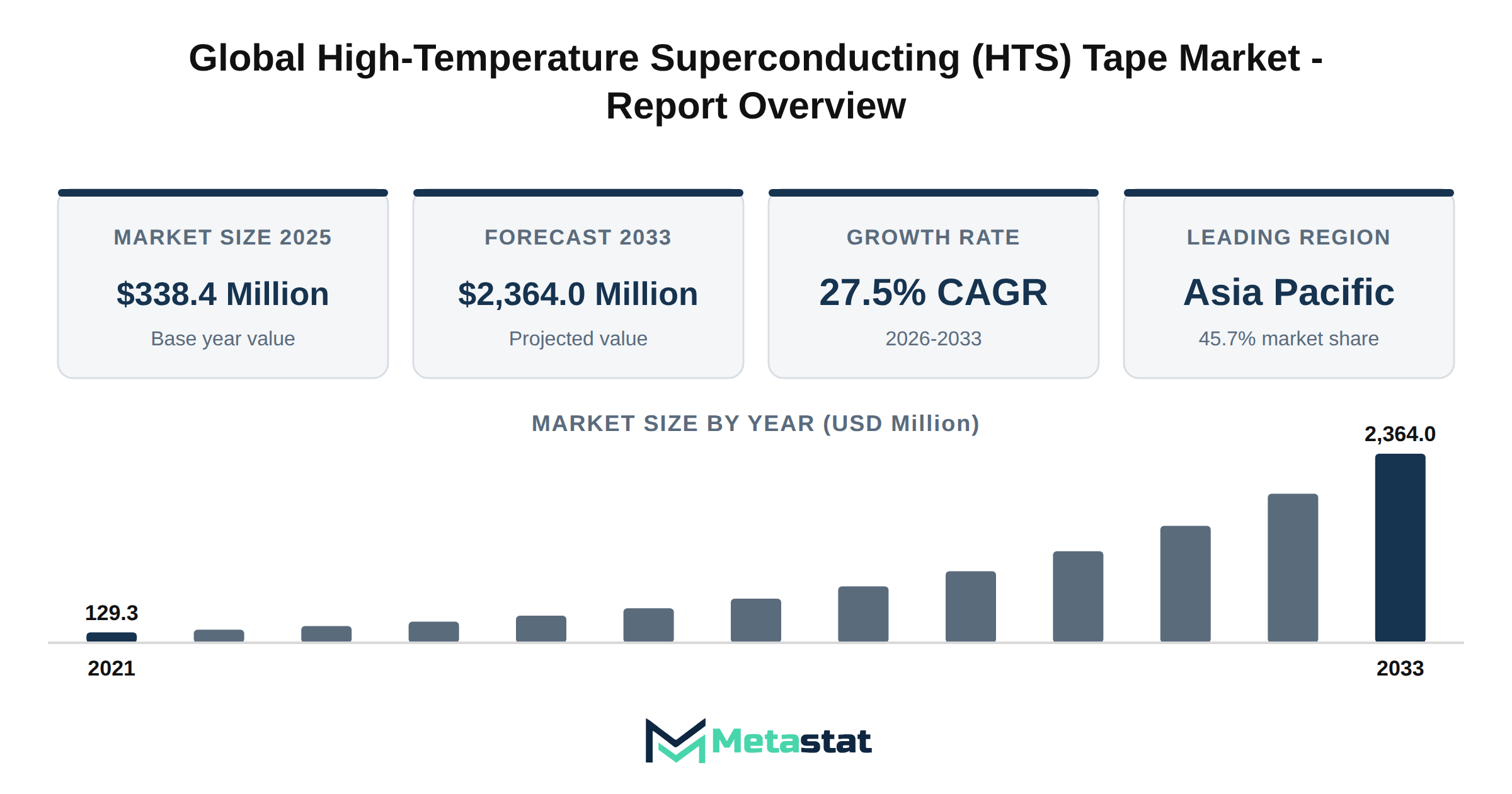
The High-Temperature Superconducting (HTS) Tape market encompasses advanced materials engineered for applications where high current densities and minimal energy losses are critical, including fusion magnets, particle accelerators, and power transmission infrastructure. Buyers in sectors including energy and utilities, healthcare, and research institutes invest in HTS tape to achieve higher efficiency and performance, representing a primary growth vector within the broader high temperature superconductors sector where traditional copper conductors or low-temperature superconductors limit technical or operational progress. The strongest demand emerges from energy and utilities, reflecting the sector's focus on grid modernization and the integration of next-generation power T&D equipment including high-capacity transmission cables. REBCO coated-conductor tapes (2G HTS) represent the largest material segment by value, driven by their superior electrical properties and suitability for high-field magnet applications. During tape architecture fabrication, manufacturers apply stabilizer laminations of oxygen free electronic copper to protect the superconducting ceramic layer during electrical quench events.
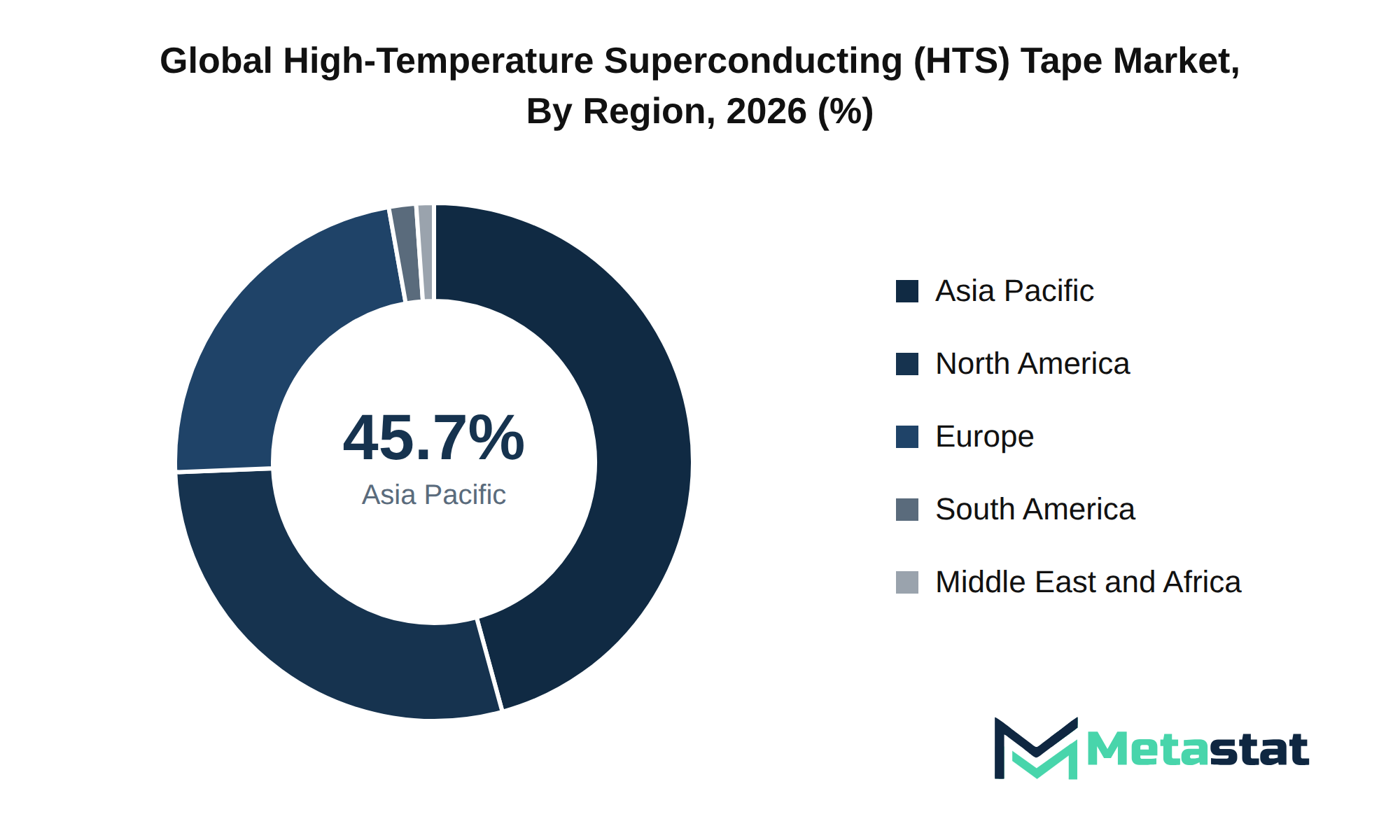
Rapid expansion in fusion energy research, particle physics, and advanced medical imaging drives purchasing decisions, with HTS tape enabling diagnostic scanners to generate ultra-high-field anatomical outputs intended for high-resolution medical display systems while operating at lower operational costs. Asia Pacific holds the highest regional share at 45.7%, underpinned by significant investments in research infrastructure and grid upgrades in China, Japan, and South Korea. Operating these regional testbeds and commercial transmission lines relies heavily on closed-loop cryogenic nitrogen generators to maintain liquid nitrogen operating temperatures around 77 Kelvin. North America holds 28.6% of the market in 2025, with the US leading in 2026. The market benefits from the increasing prioritization of energy-efficient solutions and the adoption of large-scale renewable integration projects. These high-capacity conductor systems increasingly support high-density power transfer across regional MVDC grids linking remote renewable generation to urban substations.
REBCO coated-conductor tapes (2G HTS) not only command the highest value among material types but are projected to maintain the fastest growth rate, reflecting their scalability and operational advantages in next-generation power and magnet systems. Procurement by energy and utilities is expected to accelerate further, driven by momentum in infrastructure modernization and electrification initiatives. Utility sub-tier installations frequently integrate specialized AC voltage stabilizer hardware alongside superconducting fault limiters to protect downstream equipment against transient voltage fluctuations. Suppliers respond with expanded manufacturing capacity and product development focused on reliability and cost reduction, supporting ongoing growth across emerging and established applications. As utilities validate superconducting fault current limiters, these devices are increasingly paired with metal clad switchgear assemblies to interrupt high short-circuit currents without exceeding equipment ratings.
Product coverage in the High-Temperature Superconducting (HTS) Tape market includes REBCO coated-conductor tapes and Bi-2223 superconducting tapes. These materials serve critical roles in sectors that require efficient transmission of electricity at high current densities, including fusion magnets, particle accelerator magnets, and advanced power transmission systems. In clinical radiology, adopting HTS coils also offers a long-term alternative designed to reduce systemic exposure to supply volatility in the medical helium supply chain. Buyers - primarily from energy and utilities, scientific research, and healthcare - prioritize HTS tapes for their ability to reduce energy losses and enable next-generation infrastructure. The largest end-user segment is energy and utilities, driven by the demand for grid modernization and high-capacity power transmission applications that require specialized wire and cable management systems to house complex cryogenic piping and conductor bundles.
Asia Pacific accounts for the most value, reaching 45.7% share due to concentrated investment in research magnets, large-scale energy projects, and rapid industrialization. The preference for REBCO coated-conductor tapes stands out, supported by their higher critical current and robust performance in demanding magnetic environments. Fusion magnets represent the highest-value application segment, reflecting increased funding for fusion research and pilot power plants in Asia Pacific and Europe.
Growth in the High-Temperature Superconducting (HTS) Tape market is primarily driven by the expansion of fusion energy and large-scale research initiatives. Public and private sector investments in experimental reactors, particle accelerators, and advanced MRI systems directly increase demand for HTS tapes with superior thermal and electrical performance. Buyers are motivated by the prospect of operational efficiency gains and long-term cost savings, particularly where high reliability and low energy loss are essential to project viability.
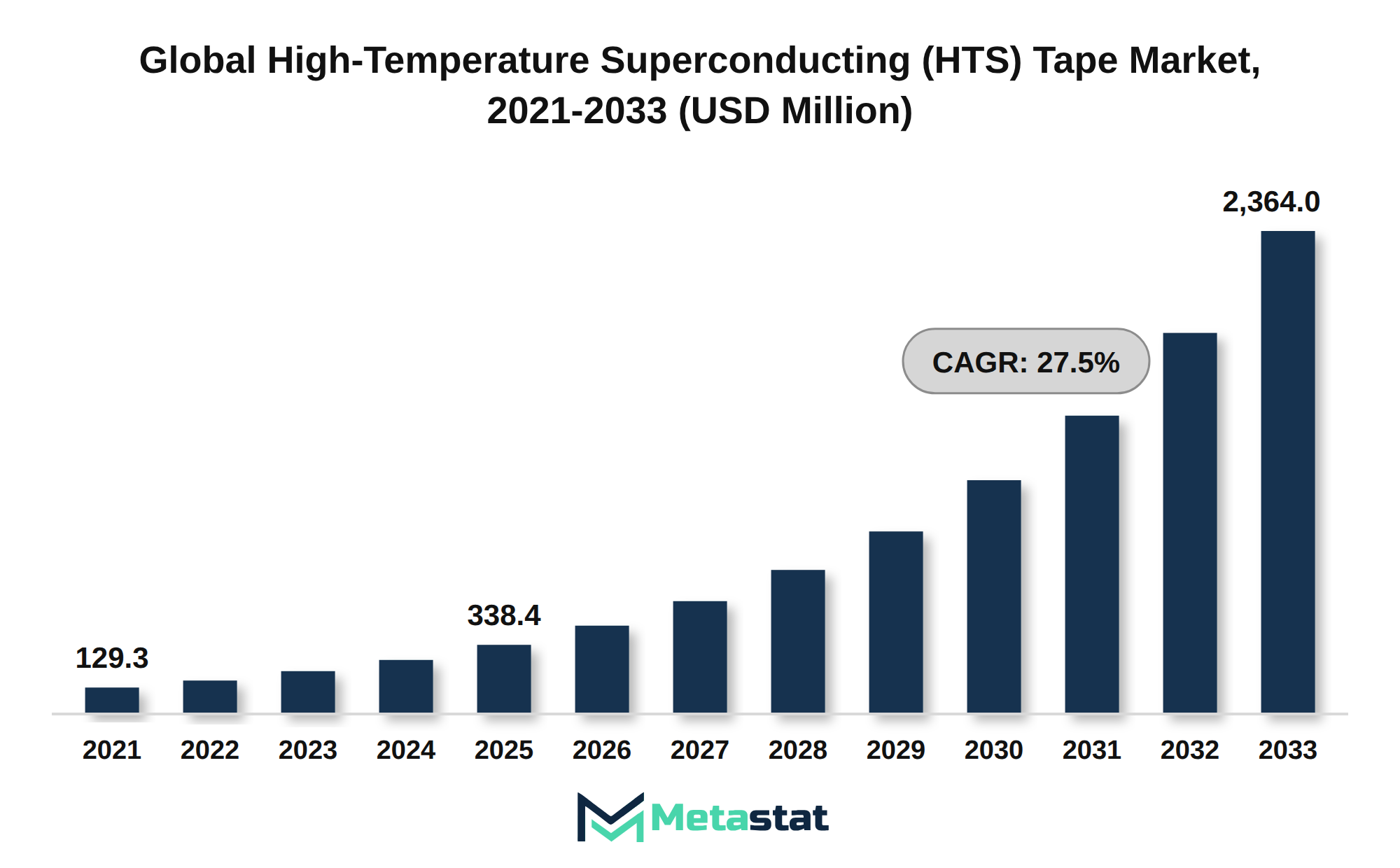
Intensifying global activity in fusion research has accelerated procurement of REBCO coated-conductor tapes, positioning this material as the foundation for high-field fusion magnets. Fusion magnet applications alone account for rapid revenue expansion, with the fusion magnet segment projected to reach USD 1,091.7 million by 2033, up from USD 170.9 million in 2026. This surge reflects both public and private fusion programs scaling experimental device construction, driving requirements for robust, high-current superconducting windings. Procurement dynamics have shifted toward REBCO tapes over Bi-2223 alternatives, reflecting their superior critical current density and tolerance to strong magnetic fields at higher temperatures found in fusion reactors. REBCO coated-conductor tapes demonstrate a segment-leading CAGR of 28.7%, outpacing Bi-2223 tapes, which further signals market confidence in second-generation (2G HTS) solutions for high-demand fusion environments.
Procurement complexity within the High-Temperature Superconducting (HTS) Tape market has grown in tandem with this demand. Fusion projects stipulate strict tape width uniformity, defect density limits, and mechanical reinforcement standards to ensure coil reliability and operational safety. Suppliers who deliver consistent, high-performance REBCO tapes have strengthened their position within the High-Temperature Superconducting (HTS) Tape market, with procurement cycles increasingly structured around long-term delivery commitments and deep technical collaboration between fusion magnet designers and tape manufacturers. This shift has recalibrated supplier qualification criteria and increased investment in process automation and quality assurance, setting a higher commercial entry bar for new entrants targeting the fusion segment.
Rapid growth in demand for high-temperature superconducting tape drives buyers to prioritize suppliers that achieve higher manufacturing yields and consistent quality. In the High-Temperature Superconducting (HTS) Tape market, yield improvements directly influence the pricing and contract structures that buyers encounter. Manufacturers who demonstrate superior control over defect rates and scalable throughput secure multi-year purchase agreements with utilities and research institutions, since buyers seek assurance of both cost predictability and uninterrupted supply. Yield performance, not just nominal capacity, has emerged as a key differentiator in contract negotiations for large-volume segments including REBCO coated-conductor tapes, a segment projected to reach USD 2,114.9 million by 2033.
Buyers, especially those in the energy and utilities sector, now assess not only headline price but total delivered cost linked to wastage and requalification needs. In this context, several suppliers leverage high-yield production lines to offer more competitive, volume-based pricing tiers. The result is a more transparent procurement process where price concessions scale with operational efficiency at the supplier end. Improvements in manufacturing yields give buyers in the High-Temperature Superconducting (HTS) Tape market greater supply stability and improved project economics, supporting their ability to make confident, forward-looking investment decisions.
Buyers in research magnet and fusion projects are prioritizing critical current performance over nominal capacity, shifting procurement decisions toward tapes with robust and predictable current-carrying abilities under demanding conditions. In the High-Temperature Superconducting (HTS) Tape market, REBCO coated-conductor tapes have become the preferred material for these applications, driven by their superior critical current density. The performance advantage of REBCO tapes is evident in their segment growth: revenues are expected to rise from USD 362.6 million in 2026 to USD 2,114.9 million in 2033, supported by a CAGR of 28.7 percent. This performance gain allows high-field magnet buyers, including those developing fusion reactors or advanced particle accelerators, to achieve higher operational thresholds, improve reliability, and support more ambitious project specifications.
Pricing structures in the High-Temperature Superconducting (HTS) Tape market increasingly reflect the premium attributed to critical current performance, with buyers accepting higher unit costs to secure quantifiable gains in device output and system stability. For research institutes and utilities investing in large-scale fusion magnets, the additional spend per tape meter is offset by lifetime performance and the ability to support next-generation magnet designs. This dynamic creates headroom for suppliers specializing in advanced REBCO tape fabrication, supporting more differentiated offerings and further segmenting the market based on technical credentials rather than price alone.
REBCO coated-conductor tapes outperform Bi-2223 superconducting tapes in both power and magnet applications, driven by their higher critical current densities and better mechanical robustness under high magnetic fields. In the High-Temperature Superconducting (HTS) Tape market, REBCO tapes dominate next-generation fusion magnets and advanced power transmission systems that require superior performance at elevated temperature and field conditions. REBCO’s commercial advantage is reflected in its segment’s rapid growth: the value for REBCO coated-conductor tapes is projected to reach USD 2,114.9 million by 2033, with a compound annual growth rate of 28.7 percent between 2026 and 2033. This segment’s outpacing of Bi-2223 tapes, which are forecast to reach USD 249.2 million by 2033 at a slower 19.9 percent CAGR, signals a clear preference among buyers for higher performance parameters in demanding applications.
Bi-2223 superconducting tapes continue to find use in legacy power cable installations and less demanding magnet designs due to their established manufacturing base and lower material costs. However, the technical ceilings of Bi-2223, particularly in high-field environments, limit their adoption within advanced research and energy infrastructure projects. These constraints have prompted buyers, especially those operating in the fusion, research magnet, and grid modernization fields, to increasingly specify REBCO tapes for new investments. Suppliers that focus on REBCO technology position themselves for greater share in the High-Temperature Superconducting (HTS) Tape market. Their products align with the evolving requirements of high-value projects in energy, scientific research, and industrial sectors. This shift is expected to raise both average selling prices and total market volume for REBCO-based offerings through the end of the forecast period.
Utilities and energy infrastructure providers are accelerating spending on grid upgrades that require advanced transmission technologies. These projects increasingly favor high-temperature superconducting tape for its ability to deliver higher power densities with lower energy losses, which supports both capacity expansion and improved operational efficiency. The shift toward renewable energy integration, distributed generation, and electrification of transport is increasing the technical challenges on transmission and distribution networks. Demand for HTS tape is benefiting from these challenges, with utilities seeking solutions that address bottlenecks and reduce transmission losses on congested lines. In regions where electricity demand and urbanization are rising rapidly, including Asia Pacific, the adoption of HTS tape in modernization projects directly translates into higher procurement volumes and more complex specifications. This environment is supporting premium pricing, with buyers prioritizing reliability and total cost of ownership over initial equipment cost. Grid operators pursuing scalable solutions to manage fluctuating loads and distributed energy sources are driving a sustained influx of commercial orders from the energy and utilities sector.
Premium pricing continues to restrict the adoption of high-temperature superconducting (HTS) tape in healthcare and transportation sectors. Buyers in these industries encounter significant upfront expenses relative to conventional copper or low-temperature superconducting solutions, which discourages large-scale procurement and limits deployment to projects with guaranteed performance returns or public funding. The market faces delayed replacement cycles and cautious investment, particularly among organizations with tight capital budgets or uncertainty about the long-term operating cost benefits. While demand in research and energy applications remains strong, segments that operate under commercial cost constraints hesitate to scale adoption until price points align more closely with mainstream alternatives. This pricing barrier slows volume growth and tempers the expansion of HTS tape across several end-user industries.
Suppliers in the High-Temperature Superconducting (HTS) Tape market are exposed to frequent shifts in the cost and availability of key raw materials, including rare earth elements and high-purity metals. Fluctuations in global commodity prices, combined with supply chain disruptions, result in unpredictable input costs and squeeze gross margins for manufacturers. Volatility is particularly acute for producers of REBCO coated-conductor tapes, since the fabrication process relies on consistent supply and precise quality of rare earth barium copper oxide and related compounds. To manage this risk, suppliers shift sourcing strategies, diversify raw material vendors, and adjust inventory policies to buffer short-term price swings. These responses add operational complexity and increase working capital requirements, impacting competitiveness in the High-Temperature Superconducting (HTS) Tape market, especially where buyers pursue lower prices or more stable contract terms.
Rapid expansion of power infrastructure and research facilities in Asia Pacific presents the most significant opportunity for the High-Temperature Superconducting (HTS) Tape market. The region accounted for 45.7% of global share, driven by large-scale national investments in grid upgrades, high-speed transportation, and fusion research programs. High-Temperature Superconducting (HTS) Tape adoption in China, Japan, and South Korea is supported by public and private funding directed toward advanced energy transmission and next-generation scientific facilities. Suppliers positioned with scalable manufacturing and broad technical portfolios address demand from both utility-scale grid projects and specialized research initiatives. High growth in this region increases overall volume, accelerates technology transfer, and attracts new entrants competing on cost and performance differentiation. The scale of projects underway in Asia Pacific reshapes supply chains and creates lasting opportunities for both established producers and agile new suppliers.
The Global High-Temperature Superconducting (HTS) Tape market is segmented based on Material, Tape Width, Application, and End-User Industry.
Valued at USD 362.6 million in 2026 and projected to reach USD 2,114.9 million by 2033 at a CAGR of 28.7%, this segment delivers the highest growth rate among the Material categories tracked in the High-Temperature Superconducting (HTS) Tape market. REBCO Coated-Conductor Tapes (2G HTS) are primarily adopted in fusion magnets, research facilities, and energy transmission projects where high magnetic fields and efficient current conduction are required. Demand is driven by large-scale fusion research initiatives and next-generation utility grid investments, which require the advanced performance profile of 2G HTS tapes. Research consortia, national laboratories, and utility project developers favor these tapes to achieve higher operating currents and improved thermal stability. Compared with Bi-2223 Superconducting Tapes (1G HTS), which hold a 19.9% CAGR to 2033, REBCO Coated-Conductor Tapes offer faster market expansion and command a premium due to their superior power handling and mechanical durability. These advantages position them as the preferred choice for mission-critical applications requiring high reliability and efficiency.
These first-generation HTS tapes are primarily adopted by scientific research institutes and healthcare organizations for established applications including MRI, NMR magnets, and current leads. Buyers in this segment rely on mature technology and proven operational stability in legacy systems, favoring Bi-2223 for retrofits and situations where second-generation REBCO tapes are not yet qualified or available. Compared to REBCO coated-conductor tapes, which lead with a significantly higher CAGR of 28.7%, Bi-2223 tapes experience slower adoption. Pricing dynamics in this segment reflect both lower demand growth and the presence of well-developed manufacturing supply chains, which supports continued use in cost-sensitive projects. Despite new materials capturing share, Bi-2223 tapes remain relevant for buyers requiring compatibility with existing infrastructure and regulatory certifications.
Valued at USD 184.3 million in 2026 and projected to reach USD 949.9 million by 2033, the Up to 4 mm tape width segment is forecast to grow at a CAGR of 26.4%. This segment is primarily selected for applications where compact winding and high field uniformity are design priorities, including fault current limiters, motors, and high-density magnet coils. Buyers include research laboratories, original equipment manufacturers in energy and transportation, and advanced electronics developers who require precise tape dimensions for specific system architectures. The steady adoption in these segments is propelled by technical compatibility with space-constrained assemblies, which is less feasible with broader tape widths. Compared to the Above 4 mm to 6 mm segment, which achieves a higher CAGR of 29%, the Up to 4 mm segment grows at a slightly slower pace, reflecting different adoption curves tied to end-use requirements. This segment offers a lower entry price and appeals to buyers optimizing for tight installation footprints rather than maximum current capacity. While the market matures, performance specifications for small-diameter magnets and rotating machinery support sustained demand for this width category.
Above 4 mm to 6 mm segment is estimated to reach USD 490.1 million by 2033, at a CAGR of 29% during the forecast period. This tape width appeals to R&D centers and high-tech manufacturers aiming for a balance between current-carrying capacity and installation flexibility in large magnets, power transmission cables, and high-performance rotating machinery. In the High-Temperature Superconducting (HTS) Tape market, this segment draws purchases from buyers who want higher engineering margins than the Up to 4 mm segment, while avoiding the cost and handling complexity linked to tapes above 6 mm. Advancements in deposition techniques and substrate engineering for these widths support higher yields and more predictable performance, which addresses a procurement constraint for OEMs specifying custom magnet designs. Growth in this segment outpaces Up to 4 mm tapes, demonstrated by its higher 29% CAGR compared to 26.4%, reflecting stronger adoption in next-generation power equipment and advanced scientific instrumentation. The market benefits from this segment’s combination of performance and process compatibility, supporting both research and pilot-scale industrial projects.
Above 6 mm to 12 mm segment is expected to reach USD 861 million by 2033. This width range supports demanding applications where greater tape surface area delivers higher current capacity or mechanical stability, particularly in scientific research installations and next-generation power devices. Buyers in this segment, including advanced research laboratories and energy infrastructure developers, specify these tapes for projects where tight performance margins or system scaling requirements rule out narrower configurations. Compared to the Up to 4 mm segment, this category addresses different technical challenges, supporting wider winding formats in large magnets and reducing the number of parallel tapes needed for a given application, which streamlines assembly. Heightened demand in this range reflects the progress of fusion energy initiatives and large-aperture magnet systems, driving suppliers to prioritize width uniformity and material consistency. This segment stands apart for its alignment with projects that balance scale, reliability, and the need for efficient power handling.
Above 12 mm segment is projected to grow at a CAGR of 29.8% during the forecast period. This tape width is preferred for large-scale scientific and power applications where higher critical current and mechanical robustness are essential, including advanced fusion projects, next-generation particle accelerators, and grid-scale energy devices. Research institutions and utilities select above 12 mm tapes for their ability to handle extreme electromagnetic loads and facilitate compact coil designs, increasing operational efficiency in high-field environments. In the Tape Width category, this segment demonstrates a faster CAGR than Up to 4 mm tapes, which are growing at 26.4%. The steep growth rate reflects intensifying investment in flagship scientific infrastructure and next-generation energy systems, driving the segment’s expansion. Technical advances in tape architecture and winding processes support broader adoption, while premium pricing positions the above 12 mm segment for buyers with no viable substitute, reinforcing its role in the premium tier.
These systems serve next-generation fusion reactors and high-field scientific instruments, with the primary buyers being research institutions and energy technology developers seeking greater field strength and stability for plasma confinement. Demand is heavily driven by government and private investment in fusion energy initiatives, which outpaces the growth seen in particle accelerator and research magnet applications (25% CAGR). The fusion magnets segment benefits from the technical requirement for higher critical current density and superior mechanical strength, features that distinguish it from MRI and NMR magnet applications. Unlike fault current limiters and motors, this segment requires both large-scale integration and significant tape volumes for coil fabrication, which leads to higher procurement value and innovation in tape architecture throughout the market.
Estimated to reach USD 363.4 million by 2033 and advancing at a CAGR of 25%, this segment addresses the requirements of national laboratories, particle physics institutes, and university research centers focused on next-generation accelerator and magnet experiments. Demand in this application centers on the pursuit of higher field strengths and more compact magnet designs. Research institutions prioritize HTS tapes for their ability to operate at higher temperatures and withstand greater mechanical stress compared to conventional low-temperature superconductors, driving adoption in large-scale accelerator facilities. The segment’s CAGR of 25% is slower than the 30.3% projected for fusion magnets, reflecting differences in project cycles and funding intensity. Buyers in this segment tend to be publicly funded consortia or government-backed research bodies, which influences both procurement timelines and price sensitivity compared to the commercially driven MRI and NMR magnet segment. Technological advancements that improve conductor uniformity and reliability directly influence purchasing decisions, shaping the addressable market for specialized HTS tape suppliers. International collaboration and the complexity of project qualification protocols influence adoption and supplier selection in this application.
Projected to reach USD 266.2 million by 2033, this segment serves the unique requirements of diagnostic imaging and chemical analysis, supporting both MRI (magnetic resonance imaging) in hospitals and NMR (nuclear magnetic resonance) spectrometers in laboratories. Healthcare providers and research institutions drive most of the volume, prioritizing stable magnetic fields and high-resolution imaging performance. Adoption is shaped by strict demands for reliability and uptime, leading buyers to favor suppliers with proven track records and validated tape quality. Compared to fusion magnets or particle accelerators, MRI and NMR systems face a slower expansion rate, reflecting both the maturity of MRI adoption and cost sensitivity in healthcare procurement. Premium pricing limits broader deployment in smaller clinics or academic settings, with growth centered on high-throughput hospitals and advanced research. Regulatory compliance and established industry standards further concentrate supplier qualification, narrowing the field for new entrants in this segment.
Power transmission cables segment is projected to grow at a CAGR of 25.5% during the forecast period, reflecting strong investment from grid operators, utilities, and large-scale renewable energy developers. Large-scale deployment of renewable energy and the rising demand for loss reduction in long-distance electricity transfer are the primary forces accelerating adoption. Power transmission cables use high-temperature superconducting (HTS) tape to deliver higher current densities and lower transmission losses compared to traditional copper and aluminum alternatives. Buyers in this segment are primarily grid modernization projects, public utilities, and private energy consortiums seeking to future-proof infrastructure and meet decarbonization targets. Compared to application segments including MRI and NMR magnets or particle accelerator and research magnets, power transmission cables face unique procurement cycles driven by regulatory mandates for grid efficiency and urban infrastructure resilience. These cables help address bottlenecks in congested transmission corridors, enabling wider adoption of distributed renewable generation and cross-border power exchange. Investment scale and project timelines set this segment apart from R&D-driven applications in the High-Temperature Superconducting (HTS) Tape market.
Fault current limiters are a critical application for high-temperature superconducting tape in modern power grids and industrial electrical systems. These systems protect sensitive infrastructure by limiting excessive electrical currents during fault conditions, reducing the risk of equipment damage and service interruptions. Utilities and grid operators deploy fault current limiters to address rising grid complexity and the integration of distributed renewable energy sources. Grid reliability improvements and efforts to reduce downtime costs drive adoption, particularly in regions where blackout incidents have high economic impact.
End users in the energy and utilities sector are primary buyers, prioritizing systems that support uninterrupted service and compliance with stricter reliability standards. In contrast to segments like fusion magnets, where research institutions drive demand, fault current limiters attract commercial operators focused on operational risk reduction. Innovation in superconducting tape performance strengthens the current-limiting response, helping differentiate solutions against conventional technologies. Regulatory shifts and rising penalties for service failures influence this segment, stimulating investment in advanced protection solutions. Grid modernization initiatives support adoption and create a distinct growth dynamic in this area.
Electric motor and generator manufacturers are integrating high-temperature superconducting (HTS) tape to achieve higher efficiency and power density in industrial, transportation, and energy storage applications. Adoption is concentrated among OEMs and technology firms aiming to reduce system weight, limit energy losses, and deliver compact drive solutions. This segment stands apart due to the unique operational environments of motors and generators, where thermal management and reliable long-term cycling are essential. Demand growth is driven by the shift toward electrified transport systems and renewable energy integration, prompting investment in next-generation traction motors and large-scale generators. Compared to fusion magnets or MRI and NMR magnets, this segment addresses a distinct set of technical and cost challenges, with buyers focusing on both lifetime reliability and total cost of ownership. Material and process innovation in HTS tape manufacturing is beginning to remove key barriers, supporting broader use in high-performance rotating equipment. Suppliers target partnerships with industrial OEMs to deliver tailored superconducting solutions.
Current leads, magnetic energy storage, and magnetic levitation applications reflect a specialized segment within the High-Temperature Superconducting (HTS) Tape market, driven by technology adopters seeking advanced solutions for efficiency and performance. These applications require HTS tapes for high-current connections in cryogenic systems, compact and lossless energy storage, and frictionless transport or positioning, often for scientific, industrial, and pilot-scale infrastructure. Buyers in this segment include research institutes, advanced manufacturing firms, and technology developers who prioritize performance over price. Demand rises with increased investment in next-generation instruments and systems that conventional conductors do not support. Compared to fusion magnets or power transmission cables, these applications exhibit unique engineering requirements and lower volume but command higher pricing due to customization and technical complexity. Adoption faces a distinct barrier: qualification processes for reliability and integration often extend procurement cycles, slowing growth relative to higher-volume applications in the market.
Valued at USD 255.2 million in 2026 and projected to reach USD 1,500.9 million by 2033, energy and utilities applications for high-temperature superconducting tape are set for rapid expansion, advancing at a CAGR of 28.8%. Grid operators and utility providers drive this growth, deploying HTS tape in next-generation power cables, fault current limiters, and smart grid infrastructure to achieve higher efficiency and lower transmission losses. Large-scale projects focused on urban energy resilience and renewable integration further support demand, where traditional conductors do not match HTS tape in current density and compactness. The energy and utilities segment exhibits a faster growth rate than healthcare, with the latter advancing at a CAGR of 25.6% to USD 266.2 million by 2033. This disparity highlights a shift in capital allocation toward modernizing power infrastructure and meeting rising electricity needs, positioning the segment as a primary engine for volume and revenue.
Hospitals, diagnostic imaging providers, and medical research institutions drive adoption, seeking enhanced performance in MRI and NMR systems. Demand in this segment stems from the pursuit of higher-resolution imaging and lower operational costs in clinical and research environments, with buyers prioritizing reliability and superior magnetic field strength for advanced scanners. Compared to Energy and Utilities, where the CAGR reaches 28.8%, Healthcare advances at a slower pace, reflecting a more measured replacement cycle and higher regulatory scrutiny for new installations. Pricing pressure emerges due to budget constraints in healthcare systems, distinguishing this segment from industries with more flexible capital expenditure. The segment in healthcare remains shaped by requirements for consistent performance and rigorous compliance, setting it apart in terms of both procurement cycles and user expectations.
Expected to reach USD 98.8 million by 2033, the transportation segment leverages high-temperature superconducting tape to enhance electrified propulsion, power density, and energy efficiency in rail, urban transit, and advanced vehicle platforms. Buyers in this segment include rail system integrators, electric bus and specialty vehicle manufacturers, and R&D divisions seeking to reduce weight and maximize compact power delivery. The primary force driving this segment is the adoption of next-generation electrified transportation, where energy loss reduction and system miniaturization are priorities. Within the High-Temperature Superconducting (HTS) Tape market, transportation stands apart for its focus on emerging mobility applications and pilot deployments, compared to the larger-scale, utility-driven demand in energy and healthcare. Transportation reflects a slower forecast growth relative to energy and utilities, which are projected for USD 1,500.9 million by 2033, highlighting transportation’s status as a specialized, innovation-led segment in this market.
Projected to expand at a CAGR of 29.3% through 2033, aerospace and defense applications rely on high-temperature superconducting tape for advanced power systems, lightweight electromagnetic devices, and high-performance radar or sensor platforms. Adoption is driven by the sector’s prioritization of reduced weight and improved energy efficiency in next-generation aircraft, satellites, and military vehicles, where conventional conductors face thermal and size limitations. Procurement decisions in this segment are shaped by defense agencies and aerospace manufacturers seeking a technological edge, especially for mission-critical systems that benefit from compact, high-capacity current handling. Compared to other end-user segments, aerospace and defense is advancing at a faster pace than healthcare (CAGR of 25.6%) and transportation, reflecting stronger demand for miniaturized, high-reliability solutions. The high technical standards and stringent qualification processes characteristic of this sector present a more complex barrier to entry than in energy and utilities or research-focused domains, shaping supply and pricing strategies across the market.
Industrial manufacturing includes advanced fabrication, process equipment, and electronics assembly where thermal management, current density, and magnetic field control are critical. Buyers in this segment comprise heavy equipment manufacturers, semiconductor fabrication plants, and precision engineering firms seeking to enhance throughput and reliability in production environments. A primary demand driver in industrial manufacturing is the pursuit of higher energy efficiency and miniaturization, with high-temperature superconducting (HTS) tape facilitating the design of compact, low-resistance electromagnets and high-capacity fault current limiters. This technical requirement sets industrial manufacturing apart from segments like energy and utilities, which prioritize grid-scale deployment and reliability. Industrial buyers often require customized HTS tape geometries and robust encapsulation to withstand harsh process conditions, resulting in differentiated specifications compared to healthcare or transportation segments. Suppliers serving this segment face adoption barriers related to integration with legacy equipment and the capital investment required for system upgrades, impacting the pace of adoption relative to segments with standardized requirements. Stronger focus on operational uptime and equipment lifetime shapes the procurement approach in this end-user group, influencing supplier strategies throughout the market.
Scientific research institutions deploy high-temperature superconducting tape for next-generation experimental devices requiring strong magnetic fields and minimal energy losses. Research groups in physics, materials science, and engineering integrate this technology in advanced laboratory setups, including testbed fusion reactors and custom magnet systems. In this market, demand from scientific research is shaped by the push for larger-scale demonstration projects and the precision needed for fundamental research. Unlike energy and utilities buyers, who focus on grid-level deployment at scale, scientific research organizations emphasize customizability, smaller production batches, and performance at the edge of existing material science. Procurement cycles in this segment often reflect grant funding timelines and the need for rapid adaptation to evolving experiment requirements. This segment diverges from healthcare or industrial manufacturing, where standardized solutions prevail, by prioritizing flexibility and technical advancement in tape composition and architecture.
Electronics, mining, and mineral processing companies demand advanced materials for power supply units, magnetic separation, and sensor integration, turning to high-temperature superconducting (HTS) tape for performance in environments where conventional conductors struggle with efficiency losses or thermal constraints. In electronics, manufacturers target HTS tape for high-current leads and miniaturized power modules, seeking lower energy loss and compact footprints to address circuit density and heat dissipation requirements. Mining and mineral processing operators adopt HTS tape for magnetic ore separation and sensitive detection, pursuing heightened selectivity and operational stability in harsh settings. Compared to energy and utilities or healthcare, buyers in this segment require custom tape configurations and frequently assess total lifecycle cost, including installation and maintenance, over headline purchase price. Demand fluctuates with capital equipment replacement cycles and the adoption pace of process automation and high-sensitivity detection, distinct from the more regulated, infrastructure-driven procurement seen in other end-user groups. Suppliers in the High-Temperature Superconducting (HTS) Tape market respond with product variants designed for rugged operational demands and tailored integration support, reinforcing specialized value in this segment of the market.
Based on geography, the Global High-Temperature Superconducting (HTS) Tape market is divided into North America, Europe, Asia-Pacific, South America, Middle East, and Africa.
United States, Canada, and Mexico remain central to demand growth, with research funding in applied superconductivity driving procurement for commercial prototype projects and university-led initiatives. Investors in North America direct capital toward next-generation power infrastructure and advanced scientific facilities, supporting higher-value applications and accelerating commercialization timelines. The regional ecosystem benefits from a close relationship between national laboratories and private development teams, enabling rapid transition from pilot-scale trials to deployment in grid modernization and quantum research. North America is projected to reach USD 720.1 million by the end of 2033, reflecting a 28.6% share of the global High-Temperature Superconducting (HTS) Tape market in 2025. New demonstration projects involving public and private partnerships contribute to early adoption, reinforcing the region’s reputation for technology validation and the scaling of new HTS solutions. These conditions position key buyers for early access and sustained participation in the sector.
Germany, France, and the UK anchor demand across Europe, with a concentration of advanced research institutions and specialized manufacturers investing in next-generation superconducting technologies. This region accounted for 22.8% of global High-Temperature Superconducting (HTS) Tape market revenue in 2025, reflecting significant institutional commitment to scientific infrastructure and high-value manufacturing. Longstanding public funding for research and strong university-industry linkages in these countries accelerate adoption in experimental and commercial projects. The market in Europe benefits from an ecosystem where cross-border collaborations and technical standards are well established, lowering entry barriers for emerging applications. Italy, Spain, and Russia contribute by supporting regional supplier networks and technology transfer, particularly in large-scale scientific and industrial projects. These dynamics shape procurement priorities, favoring suppliers that deliver reliability, compliance, and integration with stringent European technical frameworks.
Asia Pacific accounted for 45.7% of the global share in 2025, reflecting strong industrial investment and public sector commitment to superconducting technologies. China, Japan, and South Korea drive growth in the region, supported by national initiatives and coordinated research efforts that accelerate adoption of advanced power and magnetic systems. The market in this region benefits from the presence of large-scale manufacturers and an established electronics and energy infrastructure, which supports innovation and rapid scale-up of new applications. Japan and China, in particular, invest heavily in fusion research, smart grid upgrades, and next-generation transportation, supporting a consistent pipeline of procurement and pilot projects. Asia Pacific is further distinguished by collaboration between government agencies, academic laboratories, and industry to shorten commercialization cycles for new superconducting products and address domestic and export demand.
Brazil and Argentina act as focal points for demand in the High-Temperature Superconducting (HTS) Tape market within South America, reflecting their greater concentration of advanced energy, research, and industrial projects compared to neighboring countries. Industrial buyers in Brazil drive procurement, seeking to improve the performance of specialized equipment in power infrastructure and innovation-focused sectors. Argentina’s research institutions, supported by national commitment to science and technology, are increasingly sourcing HTS tape for experimental facilities and pilot-scale projects. Together, these countries account for the bulk of regional purchasing, while the Rest of South America shows a slower adoption curve due to smaller capital budgets and limited access to relevant expertise. The market in South America is shaped by a localized scientific and industrial user base pursuing efficiency gains and technological differentiation within resource constraints.
Saudi Arabia, the UAE, and South Africa represent the focal points for demand in the High-Temperature Superconducting (HTS) Tape market within the Middle East and Africa. Advanced energy infrastructure projects in Saudi Arabia and the UAE drive adoption, particularly where grid reliability and energy efficiency remain priorities for urban and economic diversification initiatives. South Africa’s research and healthcare sectors present a smaller but distinct source of uptake, supported by investment in scientific capacity and nascent medical imaging capabilities. Uptake of high-temperature superconducting tape reflects steady progress in the region, but project financing cycles and a limited pool of industry-trained personnel restrict broader penetration. Where demand emerges, buyers often focus on future-proofing critical infrastructure and reducing operational risk, which raises the profile of high-temperature superconducting tape among government-backed utility providers and research institutions in these countries.
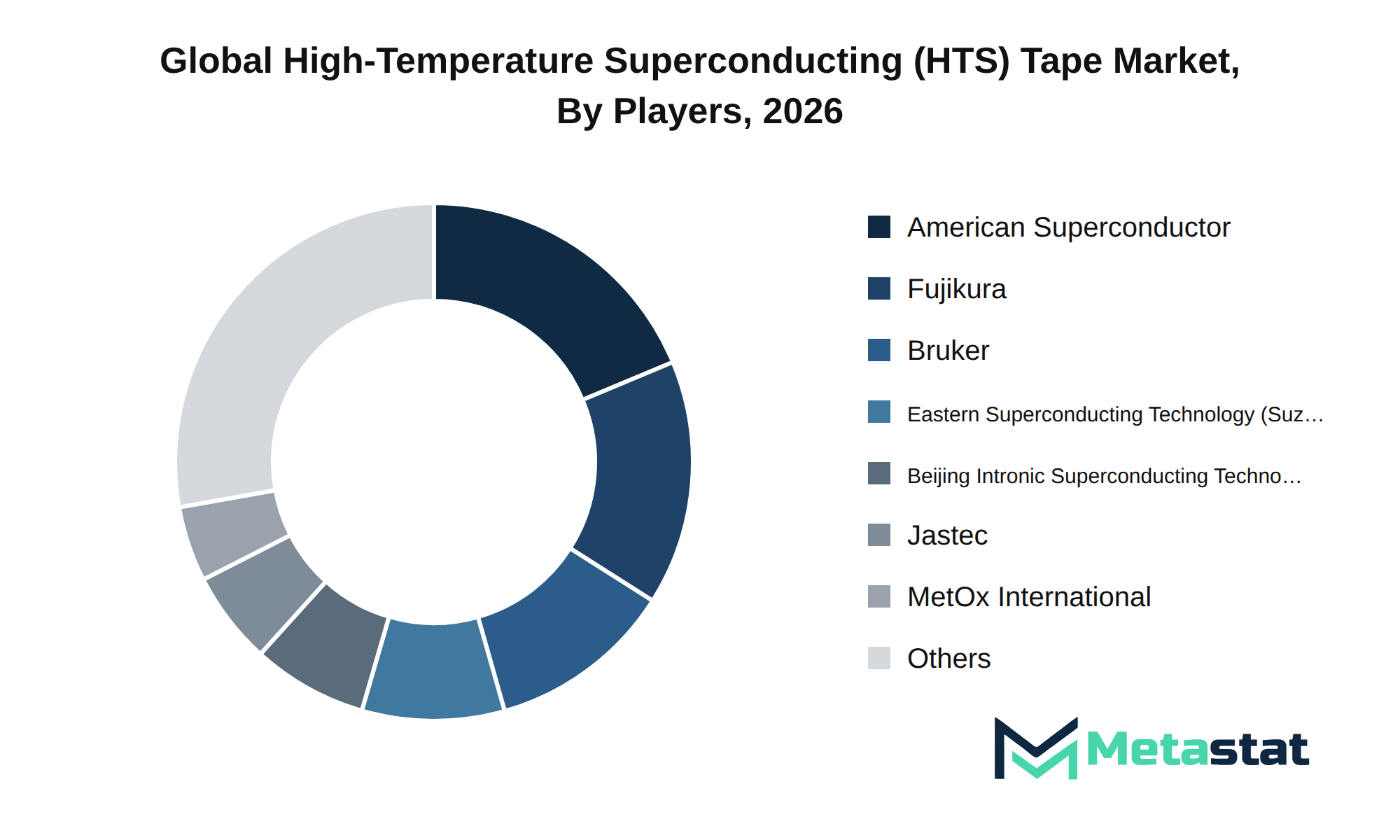
Competition in the High-Temperature Superconducting (HTS) Tape market centers on advanced material technologies, tape width flexibility, and application-driven performance. Companies differentiate through the ability to supply high-performance REBCO coated-conductor tapes, which account for the largest revenue share and the fastest growth, and through tailored tape width offerings for specialized applications. Buyers in high-precision sectors including fusion magnets and energy utilities prioritize suppliers with a track record in delivering consistent quality at scale and offering customization in tape design. Factors including price competitiveness, technical reliability, and application support drive purchase decisions, particularly in projects with demanding performance requirements or scale.
Strategic focus varies across the supplier field. SuperPower Inc. emphasizes second-generation REBCO tapes for high-field magnet and power transmission projects, supporting applications that demand robust current performance. Sumitomo Electric Industries, Ltd. concentrates on broader tape width portfolios, addressing energy grid modernization and integration in Asia Pacific. Bruker invests in research magnet applications, serving scientific and medical equipment providers. Companies including Fujikura Ltd., THEVA Dünnschichttechnik GmbH, and SuNam have built reputations for material innovation and process scalability, strengthening their positions with customers seeking long-term supply reliability. The High-Temperature Superconducting (HTS) Tape market sees competitive dynamics shaped by continuous investment in next-generation material systems, quality assurance, and the ability to support demanding end-user requirements.
Achieving this growth relies on widespread adoption by energy and utility providers, particularly those seeking advanced power transmission solutions. The energy and utilities segment is projected to expand from USD 255.2 million in 2026 to USD 1,500.9 million by 2033, supported by growing infrastructure investment and grid modernization initiatives. Rapid technological advancements in REBCO coated-conductor tapes are another key factor, with this segment expected to reach USD 2,114.9 million by 2033. These tapes enable higher current densities and operational efficiencies, attracting users in fusion magnets and high-capacity research applications.
Asia Pacific stands out for its high rate of industrialization and investment in advanced electrical systems, accounting for 45.7% of the global revenue share. Sustained demand from this region drives volume growth, particularly with the progress of large-scale energy projects. However, delayed commercialization of next-generation HTS products, particularly in applications requiring precise regulatory conformity or specialized manufacturing, could slow expansion. Technical barriers and qualification timelines for new tape formats remain the main risk to achieving the forecast value.
By Application: Fusion Magnets, Particle Accelerator and Research Magnets, MRI and NMR Magnets, Power Transmission Cables, Fault Current Limiters, Motors and Generators, Others (Current Leads, Magnetic Energy Storage, Magnetic Levitation)
By End-User Industry: Energy and Utilities, Healthcare, Transportation, Aerospace and Defense, Industrial Manufacturing, Scientific Research, Others (Electronics, Mining and Mineral Processing)
The report strategically identifies and profiles the key market players and analyses their core competencies in each sub-segment of the High-Temperature Superconducting (HTS) Tape market.
|
Report Attributes |
Details |
|
Study Period |
2021-2033 |
|
Base Year |
2025 |
|
Estimated Year |
2026 |
|
Forecast Period |
2026-2033 |
|
Historical Period |
2021-2025 |
|
Growth Rate |
CAGR 27.5% from 2026 to 2033 |
|
Revenue Unit |
USD million |
|
Segmentation |
|
|
By Region |
North America (By Material, Tape Width, Application, End-User Industry, and Country)
|
|
|
|
Asia Pacific (By Material, Tape Width, Application, End-User Industry, and Country)
|
|
|
|
|
Middle East and Africa (By Material, Tape Width, Application, End-User Industry, and Country)
|
Find answers to common questions about this report
The High-Temperature Superconducting (HTS) Tape market size was valued at USD 338.4 million in 2025.
The projected CAGR is 27.5% for the forecast period from 2026 to 2033.
The North America High-Temperature Superconducting (HTS) Tape market size is estimated to reach USD 720.1 million by 2033.
REBCO Coated-Conductor Tapes (2G HTS) lead the type segment with a projected value of USD 2,114.9 million in 2033, outpacing Bi-2223 Superconducting Tapes (1G HTS) on revenue.
Utilities and energy infrastructure providers are increasing spending on grid upgrades, driving demand for high-temperature superconducting tape that delivers higher power densities and lower energy losses. Rapid expansion of power infrastructure and research facilities in Asia Pacific, supported by large-scale investments and funding, is accelerating adoption and creating new growth opportunities.
Asia Pacific holds the dominant share with 45.7 percent of the total market by regional share percentage. This surpasses North America at 28.6 percent and Europe at 22.8 percent.
Premium pricing restricts adoption of high-temperature superconducting tape in healthcare and transportation, limiting deployment to projects with guaranteed returns or public funding. Volatility in raw material costs and supply chain disruptions increase operational complexity and reduce manufacturer margins.
Rapid expansion of power infrastructure and research facilities in Asia Pacific is driving adoption, supported by large-scale national investments and funding for advanced transmission and scientific projects. Scalable manufacturing and broad technical portfolios enable suppliers to meet demand from both utility grid projects and specialized research initiatives.
The High-Temperature Superconducting (HTS) Tape market is estimated to reach a valuation of USD 2,364 million by 2033.
Companies active in the high-temperature superconducting (HTS) tape sector include American Superconductor Corporation, Beijing Intronic Superconducting Technology Co. Ltd., Boreal Conductors Inc., Bruker, Fujikura Ltd., Shanghai Superconductor Technology Co., Ltd., Sumitomo Electric Industries, Ltd., and SuperPower Inc. These firms manufacture or supply HTS tape products for various industrial and research applications.
The analysts below cover Electronics and Semiconductor research at Metastat Insights.
LEAD ANALYST
Utkarsh Khirodkar is a Lead Market Research Analyst at MetaStat Insight, specializing in market intelligence, technology sector assessments, and competitive strategy.

PRINCIPAL CONSULTANT - ENTERPRISE AI & EMERGING TECHNOLOGIES
Banking & Finance · Electronics and Semiconductor · Energy and Power · Healthcare IT · Information & Technology · Professional Services
Vijay Gunti is a Principal Consultant at MetaStat Insight, bringing over two decades of experience across enterprise digital transformation, technology strategy, and intelligent systems.

PRINCIPAL CONSULTANT - QUALITY SYSTEMS & COMPLIANCE
Electronics and Semiconductor · Machinery & Equipment · Professional Services
Omkar Phadtare is an Industry Consultant at MetaStat Insight, specializing in quality systems, regulatory compliance, and standards benchmarking to drive data-driven market intelligence and strategic industry research.

ENERGY & INFRASTRUCTURE INDUSTRY CONSULTANT
Automotive and Transportation · Electronics and Semiconductor · Energy and Power · Machinery & Equipment
Saurabh Vasant Ganvir consults for Energy & Infrastructure Industry at MetaStat Insight, specializing in renewable energy, solar EPC, and electric vehicle (EV) infrastructure markets.

LEAD CONSULTANT - COMMUNICATION, TELECOM, AND IT
Electronics and Semiconductor · Information & Technology · Machinery & Equipment · Professional Services
Ravindra Sathe Consultants for Communication, Telecom, and IT at MetaStat Insight. He leads the firm's industry research initiatives across telecommunications infrastructure, digital connectivity, enterprise networking, and emerging information technology domains.
Most industry reports on warehouse automation bundle autonomous mobile robots and fixed conveyor installations into the same top-level numbers, which complicates advisory work. This study split the market cleanly by payload tiers, navigation technology, and fleet management software layers. The regional forecast for Western Europe gave our team defensible adoption benchmarks when evaluating capital allocation for logistics clients, saving us days of secondary data scrubbing.
Analyzing the transition from natural gas to green hydrogen in iron ore reduction requires realistic infrastructure timelines. Meta stat insight supplied a detailed regional assessment of DRI plant conversion costs and scrap metal availability in North America and Western Europe. Their report carefully examined pellet quality specs and electrical grid access constraints without making oversimplified market assumptions. The research material served as a practical reference during internal technology roadmap discussions.
Integrating zero-trust access controls across legacy electronic health record systems involves complex compliance overhead. Team produced an analysis that clearly separated identity governance and administration tools from privileged access management platforms. Their evaluation of HIPAA and GDPR compliance features across cloud native solutions gave our architecture group clear baseline criteria. The custom data request regarding biometric authentication adoption in hospital networks was returned promptly with clear documentation.
Explore related market intelligence reports worth reading alongside this one.