
LEAD ANALYST
Utkarsh Khirodkar is a Lead Market Research Analyst at MetaStat Insight, specializing in market intelligence, technology sector assessments, and competitive strategy.

Global Electronic Wet Chemicals Market Size, Share, By Product Type (Hydrogen Peroxide, Sulfuric Acid, Hydrofluoric Acid, Isopropyl Alcohol, Phosphoric Acid, Ammonium Hydroxide, Hydrochloric Acid, Acetic Acid, Nitric Acid and Others (Formulated Blends, TMAH, Specialty Solvents)), By Process Application (Cleaning and Rinsing, Wet Etching, Photoresist Stripping and Photoresist Development), By End-Use Manufacturing Segment (Semiconductor Wafer Fabrication, Semiconductor Packaging, Printed Circuit Boards, Flat Panel Displays, Photovoltaic Cells and Others (Magnetic Storage, Photomasks)), By Sales Channel (Direct Sales and Distributors), Industry Analysis, Growth, Trends, and Forecast, 2026-2033
Report ID
MSI-5633
Published
October, 2026
Pages
299 Pages
Format
Historical
Base year
Forecast
Forecast period
Report Details
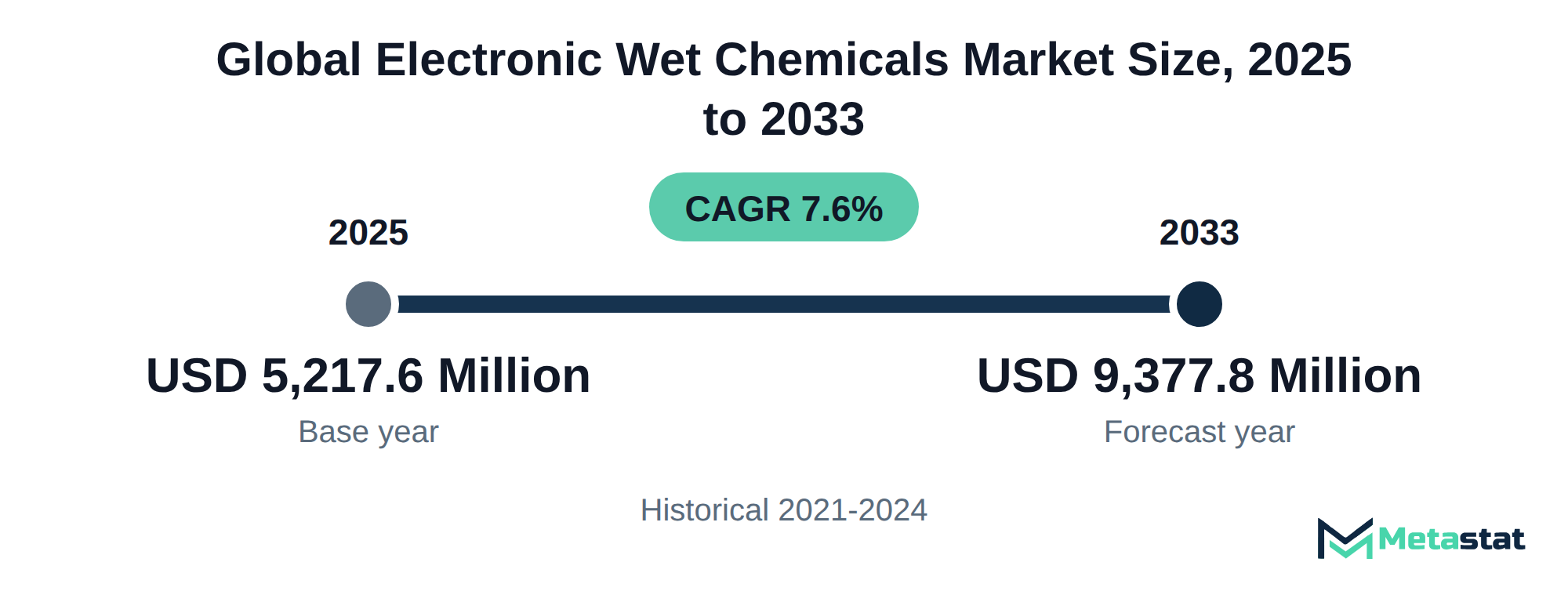
Market Valuation: Valued at $5,217.6 Million in 2025, projected to reach $9,377.8 Million by 2033 at a 7.6% CAGR.
Dominant Segment: The Semiconductor Wafer Fabrication segment leads the market, driven by the increasing demand for high-purity chemicals essential for advanced manufacturing processes.
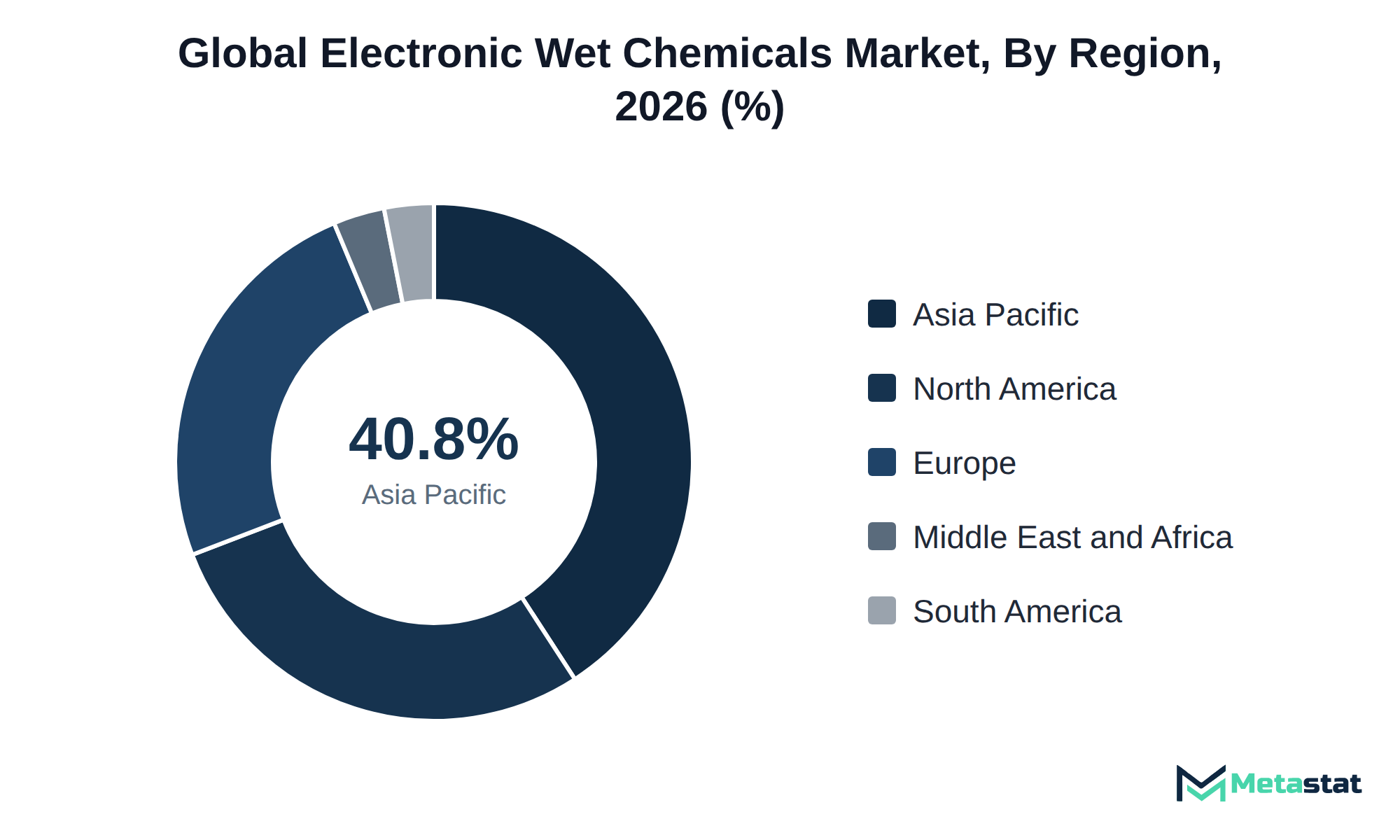
Geographic Lead: Asia Pacific dominates the market with a 40.8% share in 2025, attributed to its pivotal role in global electronics manufacturing and significant investments in semiconductor production.
What's Inside: The report provides comprehensive coverage of market dynamics, competitive analysis, and forecasts from 2026 to 2033, focusing on product types, process applications, and end-use segments.
Emerging Trends: The demand for ultra-high-purity hydrogen peroxide is rising, reflecting its critical role in advanced semiconductor processes and the need for stringent quality controls.
Supply Chain Dynamics: Local supply chains are becoming increasingly important, as proximity to semiconductor fabs enhances logistics and ensures timely delivery of essential wet chemicals.
Choose Your License
Global Electronic Wet Chemicals Market
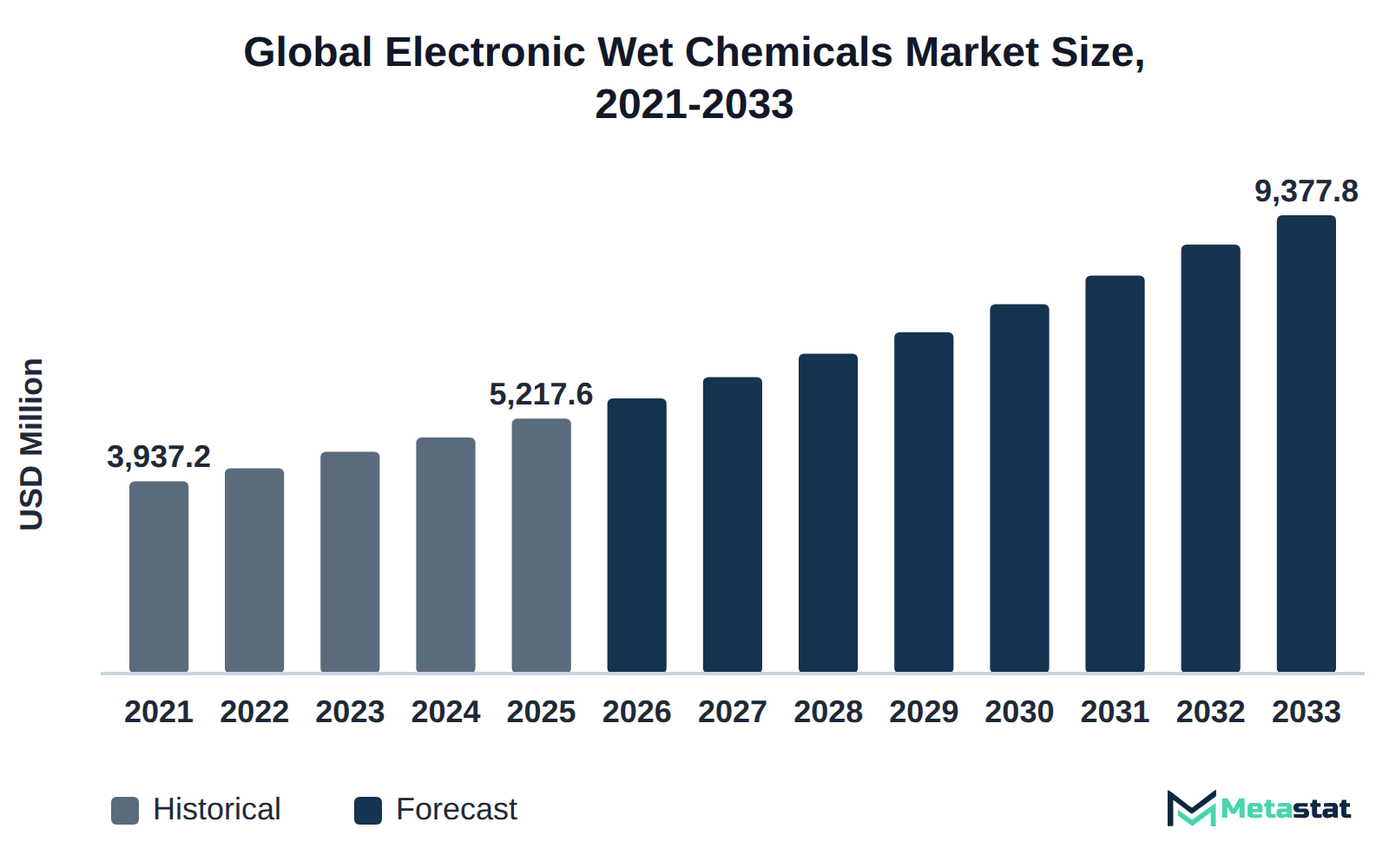
The global Electronic Wet Chemicals market was valued at USD 5,217.6 million in 2025 and is projected to reach USD 9,377.8 million by 2033, growing at a CAGR of 7.6% over the forecast period.
The Electronic Wet Chemicals market encompasses a range of chemical products essential for various manufacturing processes, particularly in the electronics industry. Buyers invest in these chemicals to ensure high-quality production standards, enhance operational efficiency, and comply with stringent industry regulations. The growth in demand for advanced electronic devices drives significant spending in this sector, reflecting a strong reliance on these chemicals in semiconductor fabrication and other applications.
Hydrogen Peroxide stands out with the highest value within the market. Growth is further supported by the increasing need for high-purity chemicals in semiconductor wafer fabrication and other electronic applications. North America holds 28.3% of the market in 2025, with the US leading in 2026. The Asia Pacific region, however, represents the largest share of the market, accounting for 40.8%, highlighting the region's important role in global electronics manufacturing.
Several factors contribute to the growth of the market, particularly the escalating demand for semiconductor devices. Industries focus on enhancing production capabilities, which drives the adoption of electronic wet chemicals. The need for innovative and efficient manufacturing processes drives investment in high-quality chemical solutions, establishing a competitive edge in the technology-driven marketplace.
The market features various chemical products that serve critical functions in manufacturing, particularly within the electronics sector. Purchasers rely on these chemicals to keep production quality consistent and meet regulatory requirements. The diverse applications of these chemicals across different sectors, including semiconductor fabrication and PCB production, drive the demand for advanced materials. This demand reflects ongoing technological advancements and the increasing complexity of electronic devices.
Growth in the Electronic Wet Chemicals market is propelled by the rising demand for semiconductors driven by the proliferation of consumer electronics and advanced technologies, including artificial intelligence and the Internet of Things. Among the different segments, Semiconductor Wafer Fabrication stands out as the most valuable, contributing significantly to overall market revenues. In terms of regional performance, Asia Pacific leads with a market share of 40.8%, highlighting its importance as a manufacturing hub in the electronics industry.
Increasing investments in research and development by key players in North America are expected to further stimulate market growth. This trend reflects a broader commitment to innovation and product improvement, which supports global competitiveness.
Demand for ultra-high-purity hydrogen peroxide in the Electronic Wet Chemicals market is increasing significantly due to its critical role in advanced logic and memory node processes. This chemical is essential for applications including cleaning and rinsing in semiconductor manufacturing, where any contamination leads to device failure. The market forecasts hydrogen peroxide demand to rise from USD 1,539.1 million in 2026 to USD 2,601.4 million by 2033, reflecting a compound annual growth rate (CAGR) of 7.8%.
Advanced technology nodes, which encompass smaller geometries and increased transistor density, require higher purity levels to ensure optimal performance and yield. Digital semiconductors manufactured at these nodes drive the purity requirements that suppliers must meet. This shift drives semiconductor manufacturers to seek suppliers that provide stringent quality controls and specifications for hydrogen peroxide, enhancing operational efficiency. The rising demand for ultra-high-purity hydrogen peroxide creates opportunities for specialized suppliers within the market, who differentiate themselves through advanced production capabilities and innovative purification techniques.
While manufacturers adopt these high-purity chemicals, operational costs decrease due to reduced defects and rework. This trend increases competition among suppliers to offer high-quality products tailored for advanced applications, which influences pricing strategies and investment levels.
Reliable local supply of wet chemicals is crucial for the efficient operation of new semiconductor fabrication facilities, including those run by semiconductor foundries. In the Electronic Wet Chemicals market, proximity to manufacturing sites significantly impacts logistics, reducing transportation costs and ensuring timely deliveries. This localized supply chain addresses urgent needs for chemicals including Hydrogen Peroxide and Sulfuric Acid, both essential in semiconductor manufacturing processes.
Contract models in the market often reflect long-term partnerships between suppliers and semiconductor manufacturers. Pricing structures typically include volume-based discounts, which encourage bulk purchasing and align with the production needs of fabs. Local suppliers secure competitive advantages by offering flexible payment terms and immediate availability of products, enhancing the operational capabilities of semiconductor manufacturers. Such arrangements support efficient procurement and strengthen business relationships, giving both parties stability and cost management.
Selective etchants and residue removal solutions are essential for 3D advanced packaging applications in the semiconductor manufacturing sector. This specific requirement stems from the increasing complexity of packaging technologies, which necessitates precision in material removal and etching processes. The Electronic Wet Chemicals market anticipates significant growth in the semiconductor wafer fabrication segment, with an expected increase from USD 2,960.2 million in 2026 to USD 5,200.9 million by 2033, reflecting a compound annual growth rate of 8.4%. This trend highlights the importance of effective etching solutions in meeting stringent performance standards.
End-users, particularly in the semiconductor industry, focus on minimizing defects and enhancing yield rates. Advanced selective etchants facilitate intricate designs and improve the overall quality of semiconductor devices. The evolving requirements for miniaturization and integration of multiple functionalities into compact spaces drive the need for innovative chemical solutions. Consequently, suppliers specializing in selective etchants and residue removal are positioned to capture substantial market share by addressing these distinct needs in advanced packaging applications.
Qualifying wet chemicals for trace-metal and particle control represents a critical step for semiconductor buyers aiming to ensure product integrity and performance. The Electronic Wet Chemicals market provides various options, each requiring thorough evaluation to meet stringent industry standards. Buyers increasingly demand high-purity chemicals in semiconductor manufacturing processes.
Buyers assess trace-metal content in wet chemicals through rigorous testing protocols and supplier audits. Elemental impurities testing is a related discipline for confirming metal contamination levels. These evaluations frequently involve analyzing chemical compositions and verifying adherence to specifications mandated by industry standards. The market's reliance on products like hydrogen peroxide and sulfuric acid, essential for cleaning and rinsing applications, highlights the importance of quality control. Stable sourcing and verified purity levels of these chemicals reduce the risk of defects, which is essential for maintaining high yields in semiconductor production.
In addition to trace-metal control, particle contamination remains a crucial concern for semiconductor manufacturers. Buyers employ advanced filtration systems and monitor processes closely to minimize particulates in the production environment. The market shows a significant emphasis on cleaning and rinsing processes, with revenues expected to increase from USD 2,234.1 million in 2026 to USD 3,781.1 million by 2033, achieving a CAGR of 7.8%. This trend indicates growing investment in products that enhance purity and cleanliness.
Growing investments in semiconductor fabrication drive demand for electronic wet chemicals. Semiconductor manufacturers increase production capacity to meet rising global demand for advanced electronics. This expansion leads to heightened consumption of critical chemicals required for processes like etching and cleaning. One notable trend involves semiconductor wafer fabrication, projected to reach a value of USD 5,200.9 million by 2033. The escalating need for these chemicals reflects the shift toward more complex and precise manufacturing processes, influencing overall market dynamics. Semiconductor companies expanding their operations intensify the requirement for high-purity chemicals, contributing significantly to the overall growth of the market.
Rising demand for advanced electronic components supports the expansion of the market, particularly in the Asia Pacific region, which represents 40.8% of the overall share. This environment intensifies competition among suppliers and drives innovation across product offerings.
Innovations in semiconductor manufacturing processes significantly impact the demand for electronic wet chemicals. The transition towards advanced fabrication techniques, including extreme ultraviolet lithography (EUV), entails the use of specialized chemicals to achieve high precision and low defect rates. Suppliers of electronic wet chemicals enhance their product offerings to meet these stringent requirements. For example, ultra-pure solvents and etchants are increasingly necessary to support advanced applications, including 3D NAND and FinFET technologies.
The market shows higher demand for specific chemical formulations that fit into modern manufacturing workflows. These formulations often include proprietary blends tailored to specific process applications, including photoresist stripping and cleaning. Suppliers that innovate to provide these tailored solutions position themselves favorably in an increasingly competitive environment. The market's growth trajectory is expected to reflect these ongoing enhancements in semiconductor fabrication, where specialized electronic wet chemicals play a central role in industry success.
Compliance challenges impact the adoption of electronic wet chemicals, particularly among semiconductor manufacturers. Stricter environmental regulations surrounding chemical usage create hurdles for buyers seeking to align their operations with these standards. Companies face increased costs associated with compliance measures, resulting in slower uptake of new technologies and delayed replacement of existing products. The need for proper waste management systems and disposal methods places additional financial burdens on manufacturers, potentially leading to smaller orders and limited investment in innovative solutions. These compliance challenges hinder broader adoption of electronic wet chemicals and weigh on the market's growth trajectory.
Rising input costs present a significant challenge for suppliers, impacting their ability to maintain profit margins in the Electronic Wet Chemicals market. Increased prices for raw materials, including key chemicals like hydrogen peroxide and sulfuric acid, influence the overall cost structure. Suppliers, facing margin pressure due to these escalating costs, adopt various strategies to mitigate the impact. Several manufacturers invest in process optimization and efficiency improvements to reduce waste and streamline production. Others seek alternative sourcing options to secure more cost-effective raw materials while ensuring quality standards remain intact.
These proactive measures reflect the need for suppliers to remain competitive in a market characterized by rapid technological advancements and evolving customer requirements. The focus on maintaining profitability during input cost fluctuations shapes the market, influencing pricing strategies and supplier negotiations.
The hydrogen peroxide segment in the Electronic Wet Chemicals market is projected to experience considerable growth, driven by increasing demand for ultra-high-purity products in semiconductor fabrication processes. This growth arises from the need for advanced cleaning and rinsing applications, essential for maintaining the integrity of semiconductor wafers during production. Manufacturers actively seek high-quality hydrogen peroxide solutions to enhance operational efficiencies and ensure compliance with stringent purity standards. This expansion shows how central hydrogen peroxide is to modern semiconductor manufacturing, where product quality and performance drive market growth.
The Global Electronic Wet Chemicals market is segmented based on Product Type, Process Application, End-Use Manufacturing Segment, and Sales Channel.
This chemical is widely used in semiconductor wafer fabrication, where it functions as a cleaning agent and in etching processes. The segment experiences growth driven by the increasing demand for ultra-high-purity hydrogen peroxide, primarily from semiconductor manufacturers focused on advancing technology nodes. In comparison to other segments like sulfuric acid, which is projected to grow at a CAGR of 8.4%, hydrogen peroxide presents a slightly lower growth rate, reflecting varying adoption dynamics in different applications. Regulatory pressures on purity levels influence the segment, with manufacturers striving to meet stringent performance standards that affect product selection and application.
Sulfuric Acid segment is estimated to reach USD 1,652.4 million by 2033, at a CAGR of 8.4% during the forecast period. This compound plays a critical role in various electronic manufacturing processes, particularly in semiconductor fabrication and cleaning applications. Buyers in this segment include semiconductor manufacturers who rely on sulfuric acid for etching and cleaning silicon wafers. The consistent demand for high-purity chemical products in this industry drives growth, distinguishing this segment from others. Competition among suppliers intensifies due to rising needs for stringent quality standards and environmental regulations. The segment's growth rate outpaces that of Isopropyl Alcohol, which has a CAGR of 6.8%. Such dynamics highlight the increasing importance of sulfuric acid in meeting the evolving requirements of the semiconductor industry.
Hydrofluoric Acid segment is expected to reach USD 1,243.5 million by 2033. This chemical serves critical functions in semiconductor manufacturing, particularly in etching and cleaning processes. Demand from companies involved in wafer fabrication, packaging, and printed circuit board manufacturing drives the segment's growth. A primary factor influencing this segment involves advancements in semiconductor technology, which continue to require high-purity chemicals, including electronic grade hydrofluoric acid, for precision processes. Hydrofluoric Acid exhibits a different growth trajectory compared to other product types, with a compound annual growth rate (CAGR) of 8.4%, outpacing several segments in the market. The unique applications and the essential role of Hydrofluoric Acid in high-tech industries contribute to its differentiated market position, enhancing its appeal among manufacturers seeking reliable and effective solutions.
Isopropyl Alcohol segment is projected to grow at a CAGR of 6.8% during the forecast period. This chemical finds extensive use in cleaning and rinsing applications, particularly in the semiconductor industry, where it functions as a solvent for removing contaminants. The demand for Isopropyl Alcohol is largely driven by the increase in the manufacturing of printed circuit boards and flat panel displays. Compared to other segments, Isopropyl Alcohol demonstrates stable growth, attracting several cost-sensitive buyers who prioritize effectiveness and safety in their processes. Its growth trajectory is slower than that of sulfuric acid, which is anticipated to expand at a CAGR of 8.4% during the same period. Competitive pricing of Isopropyl Alcohol offers an advantage, facilitating adoption across various applications in the market.
Phosphoric Acid is an important chemical compound primarily used in semiconductor manufacturing. This product finds applications in processes involving cleaning and etching, particularly in the fabrication of printed circuit boards and photovoltaic cells. The demand for Phosphoric Acid is driven by the expansion of the semiconductor industry, which requires high-purity chemicals to maintain product integrity. In contrast to other segments, including Hydrogen Peroxide and Sulfuric Acid, Phosphoric Acid experiences a slower growth trajectory due to its specialized applications and market adoption rates. Buyers prioritize cost effectiveness and availability, which influences pricing strategies across the different chemical product segments. The focus on product quality in manufacturing processes highlights the ongoing need for high-purity Phosphoric Acid, reinforcing its significance within the market.
Ammonium Hydroxide is a critical chemical in various electronic applications, particularly in semiconductor manufacturing. This chemical acts as a versatile cleaning and etching agent, used primarily during the production of semiconductor devices to remove contaminants and residues. Demand for Ammonium Hydroxide experiences fluctuation driven by advancements in fabrication technologies and increased production capacities across semiconductor facilities. Compared to other product types, Ammonium Hydroxide typically attracts a different buyer profile, with strong reliance from manufacturers focused on precision cleaning processes. Its pricing dynamics differ significantly, influenced by production costs and regulatory requirements that shape its availability in the market. Such unique characteristics position Ammonium Hydroxide distinctly within the broader Electronic Wet Chemicals market.
Hydrochloric Acid is a significant chemical in various electronic applications, particularly in the semiconductor manufacturing process. This chemical is primarily used for cleaning and etching in the production of semiconductor devices, enhancing surface preparation and ensuring optimal adhesion. The growing emphasis on semiconductor fabrication drives consistent demand for Hydrochloric Acid, owing to its effectiveness in removing impurities and preparing substrates. In comparison to other product types, Hydrochloric Acid experiences unique dynamics, with specific buyers focusing on its purity and reliability for critical processes. Competitive pricing strategies and cost management practices influence its adoption, positioning it differently within the broader market. Unlike other segments, including hydrogen peroxide and sulfuric acid, Hydrochloric Acid caters to specialized applications that prioritize quality and consistency over volume, thereby shaping its role in fulfilling the requirements of modern semiconductor processes.
Acetic Acid is a vital chemical in various applications, particularly in semiconductor manufacturing and electronic processes. This compound finds utility in the cleaning and etching processes, where its ability to dissolve organic materials enhances the efficiency of production. The semiconductor industry, a primary consumer of acetic acid, relies on its properties to maintain product integrity and ensure precision in fabrication. Demand for acetic acid is driven by increasing investments in semiconductor technology and innovations in production techniques. Compared to other segments, acetic acid experiences relatively stable pricing, distinguishing it from more volatile segments. Its function in cleaning and etching aligns it closely with other process applications, yet its specific uses create a distinct market niche. Overall, the segment supports advancements within the Electronic Wet Chemicals market.
Nitric Acid functions as a critical electronic wet chemical, primarily in various semiconductor applications. This chemical is essential for semiconductor wafer fabrication and is widely recognized for its role in cleaning and etching processes. Demand for Nitric Acid is driven by the increasing complexity of semiconductor manufacturing, which requires high-purity chemicals for optimal performance. Competitive pricing and purity standards differentiate this segment from others, including Hydrogen Peroxide and Sulfuric Acid, which experience different growth dynamics. The need for stringent quality control in semiconductor production emphasizes the importance of Nitric Acid, contributing to its steady demand in the market. Overall, the distinct applications and quality requirements position Nitric Acid uniquely among the various product types available, ensuring its relevance in the evolving electronic wet chemicals market.
Formulated blends, TMAH, and specialty solvents represent a diverse category within electronic wet chemicals, serving various applications that include cleaning, etching, and development processes. These chemicals serve primarily semiconductor manufacturers, electronic component fabricators, and other specialized industries requiring high-purity solvents. Unique characteristics drive demand for this sub-segment, including the increasing complexity of semiconductor designs that necessitate advanced chemical formulations for effective processing.
Regulatory requirements regarding environmental safety and chemical handling significantly affect the adoption of these products. Regulatory compliance often results in higher costs, influencing pricing strategies. Compared to other product types, including hydrogen peroxide or sulfuric acid, the formulated blends sub-segment experiences slower growth due to more stringent regulations and the need for specialized formulations that cater to specific applications. Market players in this sub-segment focus on innovation to meet evolving regulatory standards while maintaining competitive pricing within the electronic wet chemicals market.
This segment caters primarily to semiconductor manufacturers, where precise cleaning processes are crucial for maintaining the integrity of the fabrication process. Increasing demand for higher-performance semiconductors drives the growth of this segment, with manufacturers seeking advanced cleaning solutions to enhance production efficiency. This segment experiences a solid growth trajectory, differing from others like Wet Etching in terms of application focus and growth rate. Wet Etching emphasizes different processes and technologies, thus creating a varied growth landscape in the market. Overall, the Cleaning and Rinsing segment ensures the cleanliness required for high-quality semiconductor production, contributing to its expanding market value.
Wet Etching segment is estimated to reach USD 2,985.9 million by 2033, at a CAGR of 7.8% during the forecast period. This process involves the removal of material from a substrate, primarily in semiconductor manufacturing and microelectronics. The primary users include semiconductor wafer fabrication and circuit board manufacturers, who apply wet etching for pattern transfer and material shaping. The increasing complexity of semiconductor devices drives demand for more precise and effective etching solutions. Compared to other segments, Wet Etching exhibits a strong growth trajectory, primarily due to advancements in etching technologies that enhance efficiency and material utilization. Pricing pressures from raw materials and competition among suppliers significantly influence market dynamics, impacting the ability to invest in innovative processes. Overall, Wet Etching stands out with its application-specific advantages and growth potential in the Electronic Wet Chemicals market.
Photoresist Stripping segment is expected to reach USD 1,371 million by 2033. This segment is essential for removing photoresist layers used in semiconductor and electronic manufacturing processes. Companies engaged in semiconductor fabrication and packaging primarily rely on this segment for its efficiency in preparing substrates for subsequent processing. A notable driver behind the growth of this segment includes the increasing demand for advanced semiconductor devices, which relies heavily on precise photoresist application and removal techniques. Compared to similar segments, Photoresist Stripping experiences moderate growth, supported by a specific CAGR of 6.8%, reflecting the segment's steady demand trajectory within the broader Electronic Wet Chemicals market. The differentiation in growth rate stems from the specialized nature of the applications and the ongoing advancements in semiconductor technologies that influence purchasing patterns and operational requirements.
Photoresist Development segment is projected to grow at a CAGR of 6.8% during the forecast period. This segment is essential in the semiconductor manufacturing process, used primarily for developing photoresist materials that define circuit patterns on wafers. Demand for high-resolution imaging and miniaturization in electronics drives growth in this area, with semiconductor manufacturers increasingly relying on advanced photoresist technologies. Compared to other segments, including Wet Etching, which is set to reach USD 2,985.9 million, Photoresist Development exhibits slower growth. The focus on innovation in photolithography processes influences product advancements, enhancing performance and precision in semiconductor applications. The Electronic Wet Chemicals market evolves, reflecting ongoing advancements in technology and increasing demand for more sophisticated electronic components.
Solvent thinning involves the use of specialized chemicals to reduce the viscosity of formulations within electronic applications. This process is critical in various manufacturing operations, particularly in the production of semiconductors and printed circuit boards, where precise viscosity control influences the quality of the final products. Demand for solvent thinning is supported by advancements in semiconductor manufacturing techniques and the continuous push for miniaturization of electronic components. Compared to other process applications, including cleaning and rinsing, which show strong growth rates, solvent thinning experiences slower growth due to its more specialized nature and niche applications. The segment faces competition from alternative methods of viscosity control, impacting its market positioning. Thus, the evolving technological landscape and specific end-user requirements play significant roles in shaping this segment's performance in the Electronic Wet Chemicals market.
This segment is essential in the production of semiconductor devices, serving manufacturers who rely on high-purity electronic wet chemicals for wafer processing. Key drivers influencing this segment include the rising demand for advanced semiconductor solutions, driven by trends in consumer electronics and automotive applications. The growth rate of this segment outpaces others in the end-use manufacturing category, reflecting its strategic importance in the market. The increasing complexity of semiconductor devices necessitates sophisticated chemical formulations, further differentiating this segment from others including semiconductor packaging, which grows at a lower CAGR of 8.9%. While the Electronic Wet Chemicals market evolves, advancements in chemical technology and production processes support the rapid expansion of semiconductor wafer fabrication.
Semiconductor Packaging segment is estimated to reach USD 1,435.7 million by 2033, at a CAGR of 8.9% during the forecast period. This segment is essential in the assembly and protection of semiconductor devices, primarily serving manufacturers focused on electronics and integrated circuits. The integrated circuit substrate industry forms an adjacent part of this packaging value chain. The growth of this segment is driven by rising demand for advanced packaging techniques, which enhance the performance and reliability of semiconductor products. Compared to other segments, Semiconductor Packaging exhibits a faster growth rate, supported by technological advancements and increasing complexity in electronic devices. The market for this segment has distinct pricing dynamics, reflecting the specialized nature of packaging materials and processes. Investments in research and development within this area further support the segment’s expansion, ensuring that it keeps pace with evolving industry standards and consumer requirements in the Electronic Wet Chemicals market.
Printed Circuit Boards segment is expected to reach USD 1,305.4 million by 2033. This segment is essential in the electronics industry, particularly in the manufacturing of devices that require complex circuitry. Companies engaged in semiconductor wafer fabrication and related fields apply these chemicals to enhance manufacturing processes. A significant driver for this segment stems from increasing demand for advanced electronics and miniaturization of components, fueling growth in this area. Compared to other segments, including Semiconductor Packaging, which has a CAGR of 8.9%, growth for Printed Circuit Boards occurs at a slightly lower pace. The market for Printed Circuit Boards reflects a different dynamic, focusing on specific chemical compositions tailored for unique applications, impacting pricing strategies and supply chain considerations. This differentiation ensures that the segment maintains its relevance in the evolving Electronic Wet Chemicals market.
Flat Panel Displays segment is projected to grow at a CAGR of 4.8% during the forecast period. This segment is essential in the production of electronic display technologies used in televisions, computer monitors, and other electronic devices. Manufacturers of flat panel displays rely on electronic wet chemicals for processes including cleaning, etching, and developing, ensuring high-quality output. Demand for flat panel displays is driven by increasing consumer preference for high-definition screens and advancements in display technology. Compared to other segments, this category experiences slower growth, reflecting the maturity of the technology and competitive pricing pressures. The market for these chemicals is expected to evolve in response to the shifting landscape of consumer electronics and the continual quest for improved display performance.
Photovoltaic Cells represent a segment within the electronic wet chemicals sector used in the production of solar panels. Manufacturers in this segment employ specific chemicals to optimize the efficiency and performance of photovoltaic cells. Demand for renewable energy sources significantly drives this segment, with increased investment in solar technology influencing growth. The push for sustainable energy solutions drives manufacturers to adopt advanced materials and chemicals that enhance energy conversion efficiencies. This segment distinguishes itself from other segments through its focused application in renewable energy, appealing to a different buyer profile that prioritizes environmental sustainability. The market continues to evolve, reflecting broader trends toward clean energy solutions, which impact investment strategies in the electronic wet chemicals market.
This segment includes applications in magnetic storage and photomasks, which are integral to advanced electronic manufacturing processes. Precise chemical formulations support the production of high-quality components used in data storage devices and photomask production for semiconductor fabrication. The demand for these applications stems from the growing need for enhanced data storage solutions and the continuous advancement of semiconductor technologies. This sub-segment distinguishes itself from others within the end-use manufacturing segment by targeting niche markets that require specialized materials, resulting in higher prices and margins compared to broader applications in semiconductor wafer fabrication and packaging. Ongoing development in data storage technologies and the push for miniaturization in electronics provide significant momentum for this segment, driving innovation and increasing demand for high-purity electronic wet chemicals. Growth in the Electronic Wet Chemicals market aligns with these evolving industry trends.
Direct Sales segment is valued at USD 4,460.8 million in 2026 and is projected to reach USD 7,618.5 million by 2033, at a CAGR of 7.9% during the forecast period. This segment is primarily supported by manufacturers who prefer direct relationships with suppliers to ensure product quality and consistency. Growth in this segment is driven by increasing demand for high-purity electronic wet chemicals in semiconductor fabrication and other electronic applications, where precision and quality are critical. Compared to distributor channels, direct sales often offer faster access to the latest products and technologies, enhancing operational efficiency for buyers. This segment exhibits a significant growth rate, surpassing the growth of distributor sales, which is attributed to the willingness of companies to invest directly in their supply chains for better quality assurance and reliability. The market continues to expand, reflecting the ongoing evolution of the electronic wet chemicals landscape.
The distributors segment is estimated to reach USD 1,759.3 million by 2033, at a CAGR of 6% during the forecast period. This segment serves various sectors including semiconductor manufacturing and electronics, providing essential electronic wet chemicals through a network of intermediaries. The demand for distributors is driven by the increasing complexity of supply chains and the industry's move toward specialized sourcing. This trend reflects the growing reliance on distributors for timely and efficient delivery of electronic wet chemicals, especially in regions with high manufacturing activity. Compared to other sales channels, distributors offer a wider range of products and competitive pricing, positioning themselves as a cost-effective option for buyers. This segment's growth trajectory is slower than that of direct sales, which is projected to expand at a CAGR of 7.9%, highlighting unique challenges and opportunities faced by distributors in the market.
Based on geography, the Global Electronic Wet Chemicals market is divided into North America, Europe, Asia-Pacific, South America, Middle East, and Africa.
With a projected market value of USD 2,556.4 million by the end of 2033, North America plays a vital role in the electronic wet chemicals sector. The presence of advanced manufacturing facilities in the United States and Canada drives demand, particularly from the semiconductor industry. Regulatory standards governing semiconductor production and electronic manufacturing enhance the need for high-purity chemicals, further fueling market growth. The increasing focus on technological advancements prompts manufacturers to invest in innovative electronic wet chemical solutions. Canada and Mexico contribute to market expansion, emphasizing sustainable practices in chemical production. The market share in North America stood at 28.3% in 2025, reflecting its prominence in the global landscape.
In Europe, the Electronic Wet Chemicals market benefits from a robust semiconductor industry, particularly in Germany, France, and the UK. This region emphasizes advancements in semiconductor wafer fabrication and semiconductor packaging, which drive demand for essential chemicals used in these processes. Regulatory frameworks prioritizing environmental sustainability influence chemical production methods, leading to a shift toward greener alternatives. Significant investments in research and development enhance innovation, driving growth in specialized applications including photoresist materials. The market share for Europe is estimated at 24.5% in 2025, reflecting its critical role in the global landscape.
Asia-Pacific represents a significant region in the Electronic Wet Chemicals market, accounting for 40.8% of the global share in 2025. The semiconductor industry drives substantial demand, particularly in countries like China, Japan, and South Korea, where advanced manufacturing and technological innovation thrive. Increased investment in semiconductor wafer fabrication and packaging increases the need for high-purity electronic wet chemicals. Infrastructure developments and government initiatives in these countries strengthen production capabilities, supporting market growth. The region's diverse supply chain and emerging technologies in electronics further enhance the market landscape, providing opportunities for suppliers and manufacturers. Ongoing advancements in digital applications are expected to drive growth in the market through 2033.
Demand for electronic wet chemicals in South America primarily stems from semiconductor manufacturing, particularly in Brazil and Argentina. The market experiences growth driven by increasing investments in advanced electronics and the expansion of local production capabilities. Infrastructure improvements within these countries support the development of the electronics sector, enhancing competitiveness. The market share in South America is projected at 3.1% of the global total in 2025. Challenges include limited access to high-purity chemicals and logistics issues, which affect procurement timelines and costs. However, localized production efforts and partnerships with established chemical suppliers contribute to market resilience. The electronic wet chemicals market in this region remains focused on meeting the specific requirements of end-use applications, particularly in semiconductor wafer fabrication and printed circuit boards, ensuring alignment with global standards.
The Middle East and Africa region represents a growing but niche market within the electronic wet chemicals sector, holding a global market share of 3.2% in 2025. Key industries driving demand include semiconductor manufacturing, particularly in Saudi Arabia and the UAE, where investments in technology infrastructure support growth. South Africa contributes to demand through its expanding electronics manufacturing capabilities. The evolving regulatory landscape surrounding chemical usage in these countries enhances the focus on sustainability, impacting procurement choices. Infrastructure improvements support market growth, allowing for increased production and distribution efficiency. The market continues to experience attention due to these developments, contributing to a more robust electronic wet chemicals market in the region.
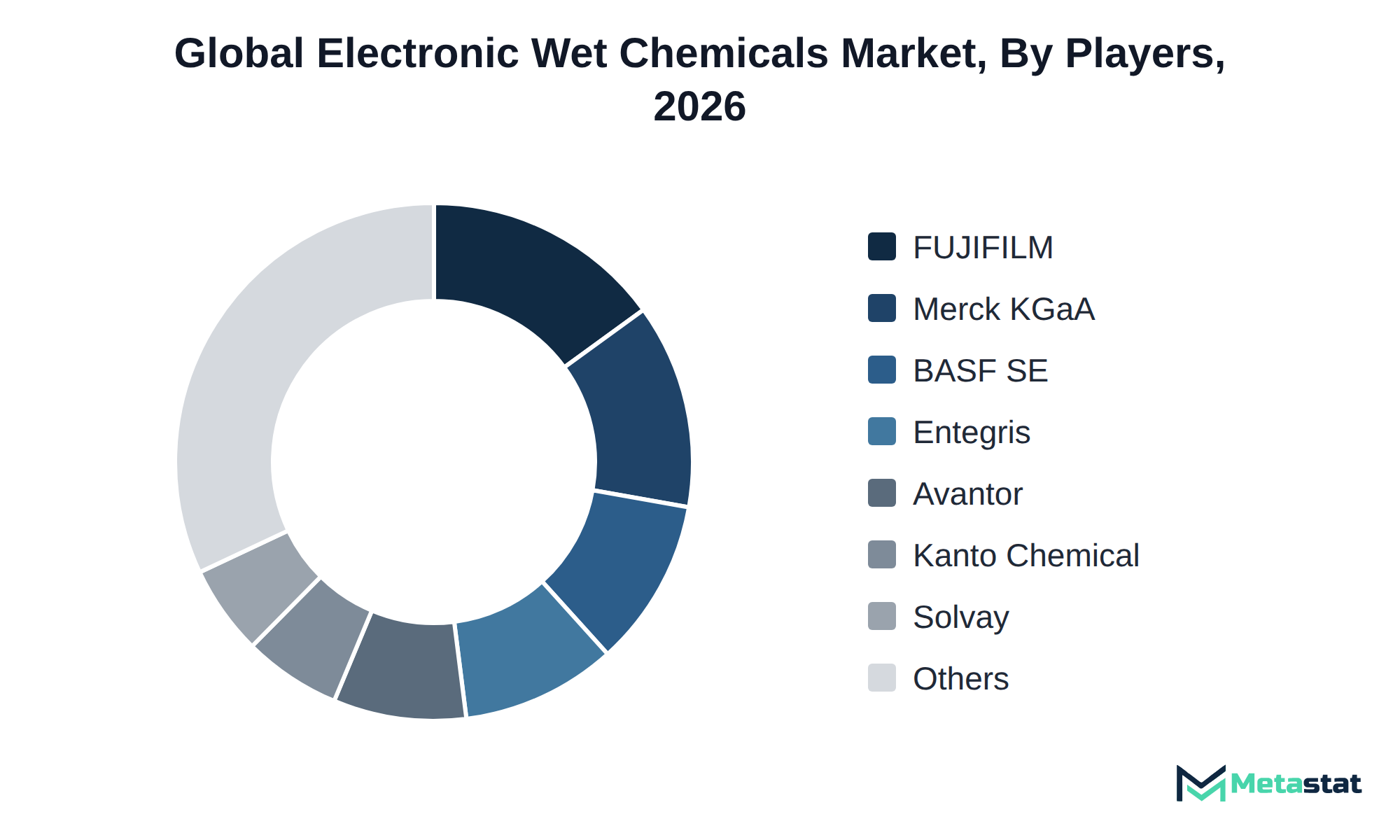
The Electronic Wet Chemicals market features a diverse range of companies that employ various strategies to capture market share. Key players, including FUJIFILM Corporation, BASF SE, and Merck KGaA, focus on innovation and product differentiation to meet the specific needs of customers in the semiconductor and electronics sectors. Specialized products, including hydrogen peroxide and sulfuric acid, play a critical role in applications including cleaning and rinsing, driving competition among suppliers.
Buyers prioritize factors including price, certification, and customization in their purchasing decisions. Companies like Entegris, Inc. and Avantor, Inc. emphasize service and support, creating comprehensive ecosystems that enhance their offerings. This strategic approach strengthens customer loyalty and repeat business in the competitive landscape. Companies like Kanto Chemical Co., Inc. and Solvay SA focus on tailored solutions for specific applications, further differentiating themselves in the market.
Reaching the 2033 forecast of USD 9,377.8 million relies on several key developments within the Electronic Wet Chemicals market. First, increasing demand for hydrogen peroxide and sulfuric acid in semiconductor wafer fabrication drives significant revenue growth. This trend highlights the rising importance of advanced manufacturing processes in the semiconductor industry, where these chemicals play a vital role. Second, expansion in the cleaning and rinsing process application further boosts market performance, particularly in the Asia Pacific region, which represents the largest share of market demand. However, risks exist, particularly in the form of potential regulatory hurdles that impact the supply chain. For instance, tightening environmental regulations on chemical production slow down the expansion of key segments, particularly in Europe and North America. Addressing these challenges while capitalizing on growth opportunities remains essential for reaching the projected market value in 2033.
By Product Type: Hydrogen Peroxide, Sulfuric Acid, Hydrofluoric Acid, Isopropyl Alcohol, Phosphoric Acid, Ammonium Hydroxide, Hydrochloric Acid, Acetic Acid, Nitric Acid, Others (Formulated Blends, TMAH, Specialty Solvents)
By Process Application: Cleaning and Rinsing, Wet Etching, Photoresist Stripping, Photoresist Development, Solvent Thinning
By End-Use Manufacturing Segment: Semiconductor Wafer Fabrication, Semiconductor Packaging, Printed Circuit Boards, Flat Panel Displays, Photovoltaic Cells, Others (Magnetic Storage, Photomasks)
By Sales Channel: Direct Sales, Distributors
The report strategically identifies and profiles the key market players and analyses their core competencies in each sub-segment of the Electronic Wet Chemicals market.
Report Attributes | Details |
Study Period | 2021-2033 |
Base Year | 2025 |
Estimated Year | 2026 |
Forecast Period | 2026-2033 |
Historical Period | 2021-2025 |
Growth Rate | CAGR 7.6% from 2026 to 2033 |
Revenue Unit | USD million |
Segmentation | By Product Type, Process Application, End-Use Manufacturing Segment, Sales Channel, and Region |
By Region | North America (By Product Type, Process Application, End-Use Manufacturing Segment, Sales Channel, and Country)
|
Europe (By Product Type, Process Application, End-Use Manufacturing Segment, Sales Channel, and Country)
| |
Asia Pacific (By Product Type, Process Application, End-Use Manufacturing Segment, Sales Channel, and Country)
| |
South America (By Product Type, Process Application, End-Use Manufacturing Segment, Sales Channel, and Country)
| |
Middle East and Africa (By Product Type, Process Application, End-Use Manufacturing Segment, Sales Channel, and Country)
|
Find answers to common questions about this report
The Electronic Wet Chemicals market size was valued at USD 5,217.6 million in 2025.
The market is projected to grow at a CAGR of 7.6% during the forecast period from 2026 to 2033.
The North America Electronic Wet Chemicals market size is estimated to reach USD 2,556.4 million by 2033.
Hydrogen Peroxide leads the Electronic Wet Chemicals market with a projected value of USD 2,601.4 million by 2033, based on its growth rate compared to other product types.
Growing investments in semiconductor fabrication drive demand for electronic wet chemicals. The escalating need for high-purity chemicals reflects the shift toward more complex and precise manufacturing processes.
Compliance challenges impact the adoption of electronic wet chemicals, particularly among semiconductor manufacturers. Stricter environmental regulations create hurdles for buyers, resulting in increased costs and slower uptake of new technologies. Rising input costs present a significant challenge for suppliers, affecting their ability to maintain profit margins.
Rising investments in semiconductor fabrication and the transition towards advanced manufacturing techniques drive the demand for electronic wet chemicals. The increasing need for high-purity chemicals, particularly hydrogen peroxide, supports operational efficiencies and compliance with stringent purity standards, favoring adoption in the industry.
The Electronic Wet Chemicals market is estimated to reach a valuation of USD 9,377.8 million by 2033.
Key players operating in the Electronic Wet Chemicals market include FUJIFILM Corporation, BASF SE, Merck KGaA, Entegris, Inc., Avantor, Inc., Kanto Chemical Co., Inc., and Solvay SA.
The hydrogen peroxide segment is expected to grow at a compound annual growth rate of 7.8 percent, reaching USD 2,601.4 million by 2033.
The analysts below cover Chemicals and Materials research at Metastat Insights.
LEAD ANALYST
Utkarsh Khirodkar is a Lead Market Research Analyst at MetaStat Insight, specializing in market intelligence, technology sector assessments, and competitive strategy.

INDUSTRY CONSULTANT - CHEMICALS & ADVANCED MATERIALS
Chemicals and Materials · Machinery & Equipment · Packaging
Amit Gadhekar Consultant for Chemicals and Materials at MetaStat Insight, directing sector-specific intelligence, research, and strategic consulting across global chemical and processing markets.
Decarbonizing industrial thermal processes hinges on refrigerant regulations and compressor efficiency limits. Metastat Insights delivered a thorough market analysis that evaluated natural refrigerants like CO2 and hydrocarbons against synthetic low-GWP alternatives. The breakdown of utility incentives and grid capacity constraints across key European manufacturing hubs offered valuable perspective. The follow-up conversation with their sector analysts addressed our specific questions on mechanical vapor recompression systems efficiently.
Assessing 200mm wafer transition schedules and substrate supply bottlenecks requires precise technical intelligence. MetaStat Insight supplied an actionable breakdown comparing planar and trench MOSFET architectures across automotive and industrial drive markets. The regional capacity estimates for Asia-Pacific foundries helped clarify lead-time uncertainties during our strategic planning session. When we needed additional clarification on high-purity raw material sourcing, their analyst team responded with helpful context within twenty-four hours.
Tracking maintenance cycle demand for secondary flight display units and terrain collision avoidance systems across regional jet fleets involves complex aftermarket dynamics. MetaStat Insight provided practical analysis separating airline retrofit programs from OEM forward-fit production schedules in North America and Southeast Asia. The supplier matrix highlighted component obsolescence timelines without resorting to vague generalizations. The dataset served as a dependable reference during our annual program review meetings.
Explore related market intelligence reports worth reading alongside this one.
Starting from
$2950