
LEAD ANALYST
Utkarsh Khirodkar is a Lead Market Research Analyst at MetaStat Insight, specializing in market intelligence, technology sector assessments, and competitive strategy.

Global Fluid Power Equipment Market Size, Share, By Technology (Hydraulic Equipment and Pneumatic Equipment), By Product Type (Pumps, Motors, Valves and Manifolds, Cylinders and Actuators, Hydraulic Power Units and Systems, Filters and Air Preparation Equipment, Accumulators, Hoses, Tubes and Fittings), By End-Use Industry (Construction, Industrial Manufacturing, Agriculture and Forestry, Material Handling and Logistics, Oil and Gas, Marine and Shipbuilding, Mining, Aerospace and Defense, Automotive and Transportation), By Sales Channel (Original Equipment Manufacturers and Aftermarket), Industry Analysis, Growth, Trends, and Forecast, 2026-2033
Report ID
MSI-5707
Published
November, 2026
Pages
281 Pages
Format
Historical
Base year
Forecast
Forecast period
Report Details
Market Valuation: Valued at $70.8 Billion in 2025, projected to reach $107 Billion by 2033 at a 5.3% CAGR.
Dominant Segment: Hydraulic equipment leads the Fluid Power Equipment market, driven by its essential role in industrial applications such as construction and manufacturing. This segment's growth is fueled by increasing demand for advanced machinery that enhances productivity and operational efficiency.
Geographic Lead: North America is projected to hold a significant market share in 2025, with the US leading in hydraulic equipment utilization. The Asia Pacific region follows closely, benefiting from expanding industrial sectors and increased investment in fluid power solutions.
What's Inside: The report provides a comprehensive analysis of the Fluid Power Equipment market, including detailed segmentation by technology, product type, end-use industry, and sales channel. It also covers competitive landscape insights and growth forecasts through 2033.
Emerging Opportunities: The pneumatic equipment segment is expected to grow significantly, with a projected CAGR of 5.5% through 2033, driven by increasing automation in manufacturing and material handling sectors. This growth highlights the shift towards more efficient and cost-effective pneumatic solutions.
Choose Your License
Global Fluid Power Equipment Market
The global Fluid Power Equipment market was valued at USD 70.8 billion in 2025 and is projected to reach USD 107 billion by 2033, growing at a CAGR of 5.3% over the forecast period.
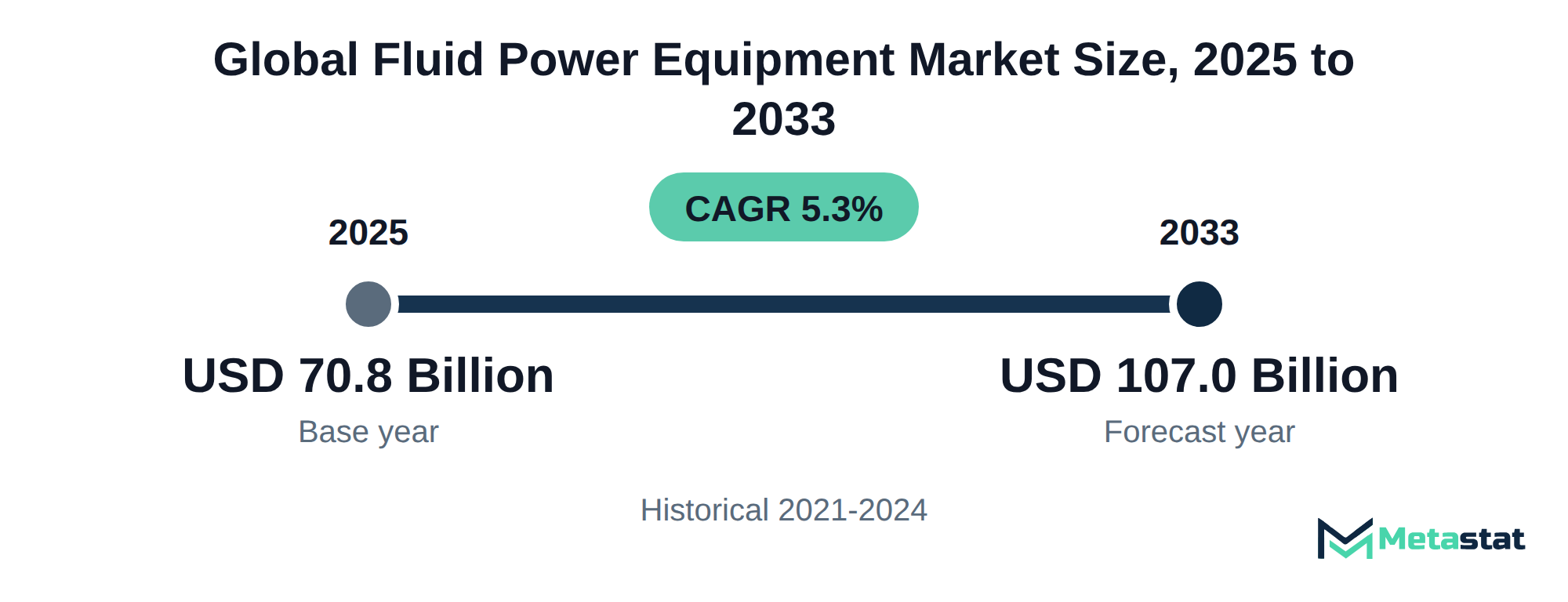
The Fluid Power Equipment market encompasses various technologies and product types used for controlling fluid power systems. Buyers invest in this market due to the increasing demand for efficient and reliable power solutions across multiple industries, including construction, industrial manufacturing, and agriculture. Growth in automation and the need for advanced machinery drive the adoption of fluid power systems, allowing companies to enhance productivity and reduce operational costs.
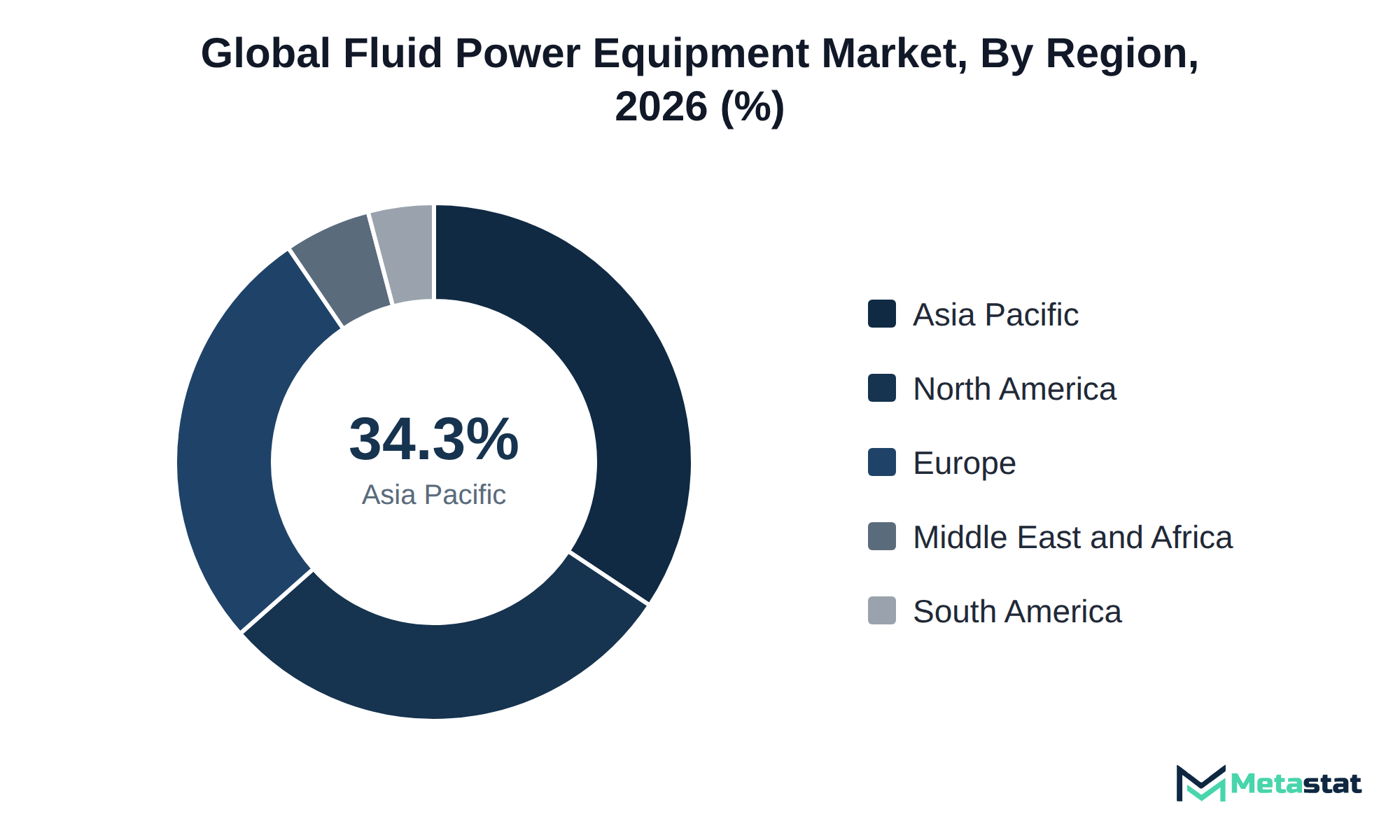
Hydraulic equipment represents the largest segment within the market, reflecting significant demand driven by industrial applications. North America holds 29.1% of the market in 2025, with the US leading in 2026. The Asia Pacific region follows closely, accounting for 34.3% of the market share. This competitive landscape highlights the diverse regional dynamics influencing growth, with expanding industrial sectors in Asia contributing to a robust increase in fluid power equipment utilization.
The anticipated growth of the market is supported by technological advancements in fluid power systems. Innovations in hydraulic and pneumatic equipment enhance efficiency and performance, meeting the evolving requirements of various industries. Businesses increasingly focus on optimizing operations, and investment in fluid power solutions continues to rise, creating a positive outlook for the market through the forecast period.
The Fluid Power Equipment market serves a wide range of industries, with significant applications in construction, industrial manufacturing, and agriculture. Buyers invest in this market due to the pressing need for efficient and reliable fluid power solutions that enhance productivity and operational performance. The diverse product types, including pumps, motors, and hydraulic equipment, provide essential functionalities that support various machinery and processes across sectors.
Growth in the market is driven by increasing demand for hydraulic equipment, which represents the segment with the most value. North America accounts for a substantial share of the market in 2025, supported by the US's strong industrial base and investment in infrastructure projects. Asia Pacific emerges as a close competitor, accounting for 34.3% of market share. The expansion of manufacturing activities within these regions fuels the demand for fluid power equipment.
Technological advancements in fluid power systems enhance efficiency and performance, attracting investment from various sectors. Industries seek to optimize operations and reduce downtime, driving market growth. The integration of automation and smart technologies into fluid power solutions further supports this trend, positioning the market for continued expansion in the coming years.
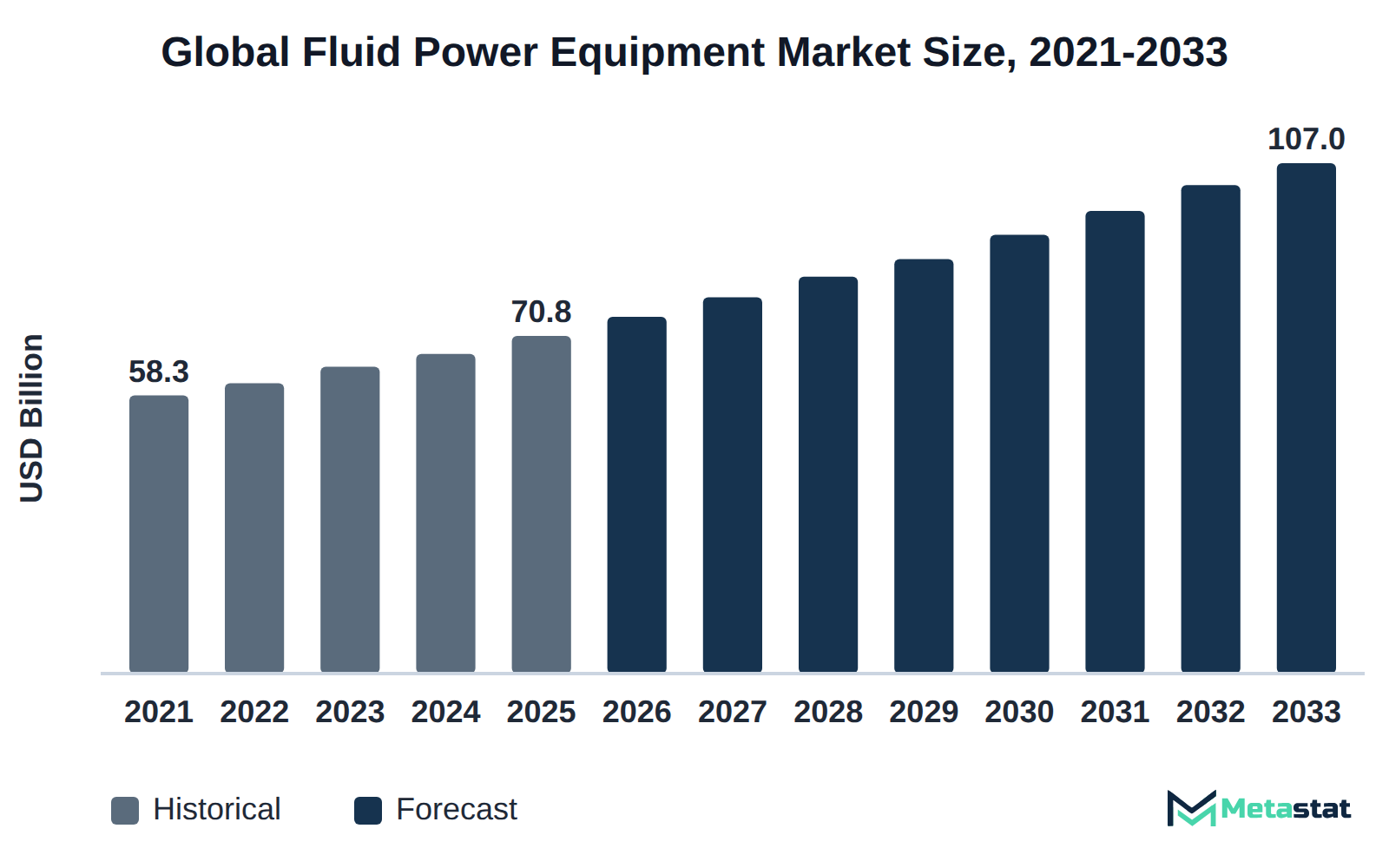
Hydraulic pumps and power units are central to heavy-duty machinery, enabling efficient performance and operational reliability. In the Fluid Power Equipment market, hydraulic equipment, including pumps, is projected to grow from USD 46.3 billion in 2026 to USD 65.6 billion by 2033, reflecting a compound annual growth rate (CAGR) of 5.1%. This growth highlights a significant shift in technology toward more advanced hydraulic solutions, which enhance functionality and reduce energy consumption across various applications.
Heavy-duty machinery, particularly in sectors like construction and industrial manufacturing, relies heavily on hydraulic pumps for their ability to provide high force output at relatively low operational costs. Ongoing development in hydraulic power units focuses on improving performance specifications, including pressure ratings and flow efficiencies. These advancements increase productivity while minimizing waste, aligning with sustainability goals prioritized by manufacturers.
Smart technologies integrated into hydraulic systems improve monitoring and maintenance capabilities, which enhances operational efficiency. This trend reduces downtime and enhances the lifespan of machinery, contributing positively to performance metrics in the Fluid Power Equipment market. Investments in these technologies are expected to yield substantial returns while businesses strive for greater efficiency and reduced operational costs.
Pricing models in the Fluid Power Equipment market exhibit significant variability based on application demands and product specifications. For pneumatic actuation and valves, the cost structure typically aligns with factors including unit complexity, performance specifications, and customization options. Industries including industrial manufacturing and construction prioritize high-quality components, which influences procurement strategies. The pneumatic equipment segment is projected to reach USD 41.5 billion by 2033, emphasizing the growing importance of these components in automation processes.
Buyers engage in long-term contracts with suppliers to secure favorable pricing and ensure component availability. This model supports continuous production processes, particularly in manufacturing environments where downtime incurs substantial costs. Purchasing agreements often include maintenance and service clauses, enhancing the overall value proposition for buyers. In competitive sectors, these contract models improve operational efficiency and reduce overall equipment costs. The emphasis on cost efficiency and strategic supplier selection shapes purchasing decisions within the fluid power equipment landscape.
The demand for fluid power equipment in the oil and gas sector presents opportunities driven by the industry's specific requirements for reliability and efficiency. Marine applications employ hydraulic systems extensively, requiring equipment that withstands harsh environmental conditions. In 2025, the market value for fluid power equipment reached USD 70.8 billion, reflecting the essential function of these systems in critical industries.
Hydraulic equipment, a vital component of the fluid power equipment market, plays an important role in offshore drilling and subsea operations. Hydraulic systems facilitate the operation of various machinery, including cranes and drilling rigs, which operate in challenging conditions. Growth within this segment is projected at a compound annual growth rate (CAGR) of 5.1% from 2026 to 2033, highlighting the increasing investment in offshore projects.
Marine applications comprise a portion of the fluid power equipment market, and businesses that invest in durable and efficient hydraulic systems position themselves favorably to meet the escalating demands of the oil and gas industry. The necessity for reliable equipment to optimize operations emphasizes the commercial potential in this market segment, offering substantial returns for stakeholders committed to innovation and performance.
Fluid power equipment is essential in construction and industrial machinery, particularly through hydraulic systems that enhance operational efficiency. This equipment facilitates the operation of heavy machinery, enabling tasks including lifting, excavation, and material handling with precision and power.
Construction equipment, including excavators and cranes, relies heavily on hydraulic systems for optimal performance. Demand for this specialized equipment stems from the increasing complexity of construction projects that require high levels of automation and reliability. The significant growth of the construction industry, driven by urbanization and infrastructure development, increases the need for advanced fluid power solutions.
In the fluid power equipment market, manufacturers focus on developing innovative hydraulic technologies that improve energy efficiency and reduce maintenance costs. Consequently, construction firms that invest in these advanced hydraulic systems experience enhanced productivity and reduced operational downtime. This trend highlights the importance of integrating fluid power equipment into modern construction practices, ultimately contributing to the industry's overall growth.
Increased investment in construction and industrial projects drives demand for hydraulic equipment. This demand stems from a shift in buyer behavior, with construction companies investing in advanced machinery to enhance productivity and reduce operational downtime. Hydraulic equipment facilitates efficient lifting, movement, and control of heavy materials, crucial for construction activities. While projects expand globally, construction firms require reliable hydraulic solutions, leading to heightened demand in the Fluid Power Equipment market. This growth highlights the importance of hydraulic technology in meeting operational efficiency goals across various sectors.
Demand for pneumatic equipment is increasing due to industrial automation. Enhanced automation initiatives drive manufacturers to integrate pneumatic systems into their operations. These systems provide precise control and efficiency, reducing energy consumption while improving production rates. The growing emphasis on automation in industries including automotive and logistics drives demand for pneumatic solutions in the Fluid Power Equipment market. The segment is expected to achieve a value of USD 41.5 billion by 2033, indicating significant growth in response to evolving industry demands.
Innovations in control systems significantly enhance the performance of fluid power equipment. The development of smart hydraulic and pneumatic systems improves efficiency while reducing energy consumption. These advanced control systems, equipped with automation and real-time monitoring capabilities, are increasingly adopted in various industries, including manufacturing and construction. The shift towards smarter systems creates a competitive edge for manufacturers, allowing for better responsiveness to operational demands and reducing downtime.
In the Fluid Power Equipment market, this trend is particularly evident among original equipment manufacturers who invest in integrating advanced technologies. Enhanced control systems provide opportunities for improved precision in applications including robotics and material handling. These developments attract investments and support growth, positioning suppliers favorably in a changing market.
Pricing pressures arise from fluctuating raw material costs and supply chain constraints, impacting the affordability of hydraulic equipment. Original Equipment Manufacturers (OEMs) face challenges in passing these costs onto end users, leading to slower uptake of upgraded equipment. Several buyers in the construction and industrial manufacturing sectors prioritize budget limitations, often resulting in smaller orders or delayed replacement of existing systems. This trend restricts the expansion potential of the Fluid Power Equipment market, particularly for manufacturers offering premium products. While these pressures highlight the importance of cost-effective solutions, they ultimately hinder investment in advanced technologies, affecting long-term adoption rates. A shift toward more economical alternatives becomes evident, further complicating the competitive environment and limiting market growth opportunities.
Fluctuating input costs challenge suppliers in the Fluid Power Equipment market. Rising prices for raw materials, including metals and polymers, directly impact production expenses and profit margins. Suppliers face pressure to maintain competitive pricing while managing these increasing costs, which lead to reduced operational efficiency. In response, several suppliers are exploring diversified sourcing strategies, investing in advanced manufacturing technologies, and implementing cost control measures to mitigate these financial pressures. Such initiatives aim to enhance production efficiency and maintain product quality while navigating the complexities of the market. This proactive approach strengthens supplier resilience and positions them to meet the evolving demands of end-use industries, creating a healthier competitive environment.
Strong growth in pneumatic equipment presents a notable opportunity within the Fluid Power Equipment market. This segment is projected to achieve a compound annual growth rate (CAGR) of 5.5% through 2033, driven by increasing automation across industries. The demand for efficient pneumatic systems is especially pronounced in manufacturing and material handling sectors, where speed and precision are critical. Companies investing in pneumatic solutions benefit from enhanced productivity and reduced operational costs, aligning with contemporary market trends favoring streamlined processes.
Advances in technology enable more compact and efficient pneumatic designs that meet diverse operational requirements. This evolution attracts buyers focused on improving system performance while adhering to stringent space and energy constraints. Investment in pneumatic equipment is expected to strengthen the competitive positioning of suppliers within the market, fulfilling the growing requirements of industries seeking reliable and efficient fluid power solutions.
The Global Fluid Power Equipment market is segmented based on Technology, Product Type, End-Use Industry, and Sales Channel.
This segment includes hydraulic pumps, motors, hydraulic cylinders, and other components essential for fluid power systems. Industries including construction and manufacturing employ hydraulic equipment for tasks requiring high force and precision. Growing demand for automation and efficiency in these sectors drives the expansion of this segment. Compared to pneumatic equipment, which displays a CAGR of 5.5%, hydraulic equipment experiences slightly slower growth, attributed to the more complex nature of hydraulic systems and their higher initial costs. The distinct applications of hydraulic equipment in heavy machinery differentiate it from other fluid power technologies, establishing a unique market presence.
Pneumatic Equipment is estimated to reach USD 41.5 billion by 2033, at a CAGR of 5.5% during the forecast period. This segment finds extensive application in industries including manufacturing and automation, where it enhances operational efficiency through the use of compressed air for conveying and controlling motion. Demand for pneumatic equipment is driven by an increase in industrial automation and a focus on improving productivity. Compared to other segments, including hydraulic equipment, pneumatic equipment often provides a more cost-effective solution for lighter applications, leading to broader adoption among smaller manufacturers. Specific technological advancements in pneumatic systems contribute to this growth, enabling more precise control and energy efficiency, which are particularly appealing to cost-sensitive buyers. Overall, the segment demonstrates a strong upward trajectory within the Fluid Power Equipment market.
Pumps are valued at USD 17.1 billion in 2026 and are projected to reach USD 23.8 billion by 2033, at a CAGR of 4.8% during the forecast period. These pumps find extensive application across industries including construction, agriculture, and industrial manufacturing, facilitating fluid transfer and pressure generation. Demand for pumps is driven by increasing automation and efficiency requirements in various sectors. This segment exhibits slower growth compared to pneumatic equipment, with a lower CAGR of 4.8% against 5.5% for pneumatic solutions. The pumps segment typically incurs higher pricing due to the complexity of hydraulic systems, positioning it distinctly within the market. Technological advancements in pump design and materials enhance durability and operational efficiency, further influencing market dynamics.
Motors segment is estimated to reach USD 10.5 billion by 2033, at a CAGR of 4.9% during the forecast period. Motors serve a critical function in various applications, including industrial automation, construction equipment, and material handling systems. These components facilitate precise motion control and enhance overall operational efficiency in systems where hydraulic and pneumatic equipment are employed. The demand for motors is primarily driven by advancements in technology, leading to higher efficiency and reduced energy consumption in end-use applications. Compared to other product segments, motors exhibit slower growth due to the saturated market for traditional technologies; however, ongoing innovations in electric motor systems and their integration with smart technology present pathways for expansion. The market reflects increased competition among manufacturers focused on delivering enhanced performance and lower operational costs.
Valves and Manifolds segment is expected to reach USD 18.8 billion by 2033. This segment controls fluid flow and pressure within hydraulic and pneumatic systems, primarily used in construction and industrial manufacturing applications. Demand for valves and manifolds is driven by the increasing need for precision in fluid control. Technological advancements in valve design and automation enhance operational efficiency, appealing to Original Equipment Manufacturers and aftermarket buyers. Compared to other product types, this segment exhibits stronger growth potential, with a projected CAGR of 5.4%. Its growth reflects the shift toward more sophisticated and integrated fluid power solutions, which differentiate it within the broader Fluid Power Equipment market. Evolving demands from various industries, along with the focus on energy efficiency, further support the expansion of the valves and manifolds segment.
The Cylinders and Actuators segment is projected to grow at a CAGR of 5.4% during the forecast period. This segment provides essential components for machinery, enabling linear motion and force generation in various applications including manufacturing, construction, and material handling. Industries use these products to enhance operational efficiency in machinery that requires precise control and movement. The increasing demand for automation and advanced machinery drives growth in this segment. Cylinders and Actuators typically have a different pricing structure compared to hydraulic equipment, often appealing to a distinct customer base with specific performance requirements. With projected market value reaching USD 22.8 billion by 2033, this segment supports the overall growth of the Fluid Power Equipment market, contributing significantly to the increasing adoption of fluid power technologies across various end-use applications.
Hydraulic Power Units and Systems serve critical functions in various industrial applications by converting hydraulic energy into mechanical power. These systems are extensively used in construction, agriculture, and manufacturing sectors, where they provide the necessary force for operating machinery and equipment. Demand for these units is driven by the increasing complexity of industrial processes and the need for efficient energy management. The market experiences significant growth due to technological advancements that enhance system performance and reliability. Compared to other product types, hydraulic power units typically attract a different buyer demographic, often involving larger initial investments due to their sophisticated nature. This segment continues to evolve with innovations focused on improving energy efficiency and reducing operational costs.
Filters and Air Preparation Equipment plays a significant role in ensuring the efficiency and reliability of pneumatic systems. These components are used in various industries, including manufacturing, automotive, and food processing, where clean and dry air is essential for optimal performance. Demand for this segment is primarily driven by the growing emphasis on automation and the need for improved energy efficiency in industrial processes. Compared to other product types, including pumps and motors, Filters and Air Preparation Equipment tends to have a more stable demand, reflecting its necessity in maintaining system integrity. The market faces challenges related to technological advancements, necessitating constant updates in filtration solutions to cater to evolving industry standards. Consequently, suppliers that adapt to these technological shifts secure a competitive advantage, enhancing their position in the market.
Accumulators serve critical components in hydraulic systems, providing energy storage and enabling pressure stabilization. These devices are widely used in industries including construction and manufacturing, supporting equipment like excavators and hydraulic presses. Demand for accumulators is driven primarily by the ongoing expansion of industrial applications, which require efficient energy management. Compared to other product types in the segment, accumulators often face competition from alternative energy storage solutions, which offer lower upfront costs. Their functionality in maintaining pressure and enhancing responsiveness in systems is significant. The market for accumulators experiences stable growth, influenced by advancements in technology and a growing emphasis on energy efficiency.
Hoses, Tubes and Fittings are integral components in fluid power systems, facilitating the transfer of hydraulic and pneumatic fluids. Industries including manufacturing, construction, and agriculture rely heavily on these products for machinery operation and automation. Demand for this sub-segment is driven by the expansion of construction activities and industrial automation initiatives, leading to increased requirements for efficient fluid transfer solutions. Compared to other product types like Pumps and Motors, Hoses, Tubes and Fittings experience steady growth, focusing on durability and performance rather than rapid technological advancements. Pricing dynamics differ; these components often have lower price points compared to more specialized equipment, making them accessible to a wider range of buyers, including small-scale manufacturers and end-user industries. The Fluid Power Equipment market benefits from these components by optimizing overall system functionality and efficiency.
Reservoirs and controls play vital roles in fluid power systems, acting as essential components that manage hydraulic fluid storage and regulate system pressure. These elements are primarily found in industrial manufacturing, construction, and material handling applications, where precise control and efficient operation are critical for productivity. Demand for this sub-segment is driven by advancements in automation and the increasing complexity of hydraulic systems. Companies seek reliable reservoirs and controls to enhance system efficiency and performance. Unlike other product types, including pumps and motors, this sub-segment typically experiences slower growth due to its niche applications and the established nature of existing technologies. Industries evolve and pursue greater energy efficiency, leading to increased demand for innovative control solutions, creating opportunities for manufacturers within the fluid power equipment market.
Construction segment is valued at USD 16.4 billion in 2026 and is projected to reach USD 22.8 billion by 2033, at a CAGR of 4.8% during the forecast period. This segment involves the use of fluid power equipment in various construction machinery and applications, serving contractors and construction firms that rely on hydraulic and pneumatic systems for tasks including material handling and excavation. Increased investment in infrastructure development significantly influences this segment, driving demand for advanced equipment. Compared to other segments, construction experiences steady growth due to the consistent requirement for reliable machinery. The market for fluid power equipment in construction benefits from innovations that improve efficiency and reduce downtime, positioning it favorably against competitors in the industrial manufacturing and agriculture sectors.
Industrial Manufacturing segment is estimated to reach USD 22.8 billion by 2033, at a CAGR of 5.3% during the forecast period. This segment caters to various sectors, including automotive, machinery, and electronics, where fluid power systems facilitate automation and control processes. Increasing demand for efficient manufacturing processes drives investments in technology that enhances operational productivity. The segment distinguishes itself from other areas, including Construction, by its focus on precision and complexity in equipment utilization, reflecting higher operational demands. Greater emphasis on automation and Industry 4.0 initiatives influences growth patterns, pushing manufacturers to adopt advanced fluid power solutions. This segment's specific technological advancements and integration capabilities afford it a unique position within the broader fluid power equipment market, supporting sustained growth and innovation.
Agriculture and Forestry segment is expected to reach USD 11.4 billion by 2033. This segment provides fluid power solutions for agricultural machinery and forestry equipment, serving farmers and forestry operators by enhancing operational efficiency. The rising emphasis on automation in agriculture significantly drives this segment. Technological advancements, including precision agriculture tools and automated harvesting systems, increase demand for fluid power equipment. Compared to the Industrial Manufacturing segment, which has a projected value of USD 22.8 billion by 2033, the Agriculture and Forestry segment exhibits slower growth. The estimated CAGR for the Agriculture and Forestry segment is not available, but it illustrates distinct growth characteristics due to dependency on seasonal agricultural cycles and varying market conditions. Ultimately, the Agriculture and Forestry segment demonstrates unique dynamics, reflecting the specific needs and trends of the agricultural industry while contributing to the overall growth of the market.
Material Handling and Logistics segment is projected to grow at a CAGR of 5.9% during the forecast period. This segment comprises equipment for various functions, including moving, storing, and managing materials in warehouses, distribution centers, and manufacturing facilities. Key buyers include logistics companies, warehouse operators, and manufacturers requiring efficient material handling solutions. Automation in these facilities is closely tied to the warehouse automation industry. The ongoing push for automation and the adoption of advanced technologies drive the growth of this segment. Compared to other segments in the market, the Material Handling and Logistics segment experiences robust demand due to the increasing emphasis on operational efficiency and supply chain optimization. Unlike segments including Construction, which is projected to grow at a CAGR of 4.8%, this segment demonstrates a stronger growth trajectory, reflecting the escalating need for effective logistics solutions across multiple industries.
Oil and Gas operations heavily rely on fluid power technologies for efficient drilling, extraction, and transportation processes. Companies in this sector apply hydraulic and pneumatic systems to power machinery, ensuring high performance in challenging environments. Key drivers for this segment include ongoing demand for energy and increasing need for automation to enhance operational efficiency. Compared to other segments, this sub-segment often requires specific technology tailored to withstand harsh conditions, resulting in higher costs associated with specialized equipment. The potential for growth remains strong due to rising global energy needs, positioning it as a critical area within the Fluid Power Equipment market. Innovations in technology and shifts toward sustainable practices further influence investment in modern fluid power solutions, differentiating it from other sectors within the market.
Marine and Shipbuilding involves the design, construction, and repair of various types of vessels and marine structures. This segment employs fluid power equipment to enhance operational efficiency and ensure reliable functionality, particularly in hydraulic systems used for propulsion and machinery operation. Demand for advanced equipment in this sphere is driven by increasing investments in the maritime industry, including the expansion of shipping capacities and the need for modernizing aging fleets. In comparison to other segments, the Marine and Shipbuilding sector typically experiences slower growth due to the long-term nature of projects and significant capital investments required. Regulatory standards regarding environmental safety and efficiency further impact the adoption of innovative technologies. The Fluid Power Equipment market benefits from evolving requirements within this sub-segment, positioning it as a critical component for future advancements in marine technology.
Mining serves a crucial role in the extraction and processing of minerals, employing advanced equipment for efficient operations. Automation in these operations is closely tied to the mining automation industry. Companies in this sector, including large mining firms, require highly reliable and durable fluid power systems to power various machinery, including excavators and loaders. Demand for these systems is driven by the ongoing need for mineral resources worldwide. While other segments experience different growth trajectories, mining faces unique challenges, including fluctuating commodity prices and environmental regulations that impact operational costs. Compared to segments including construction, the mining sector exhibits slower growth due to these constraints. As environmental regulations become more stringent, investments in sustainable and efficient fluid power technologies are expected to accelerate, influencing overall market dynamics.
Aerospace and Defense involves the design, development, and maintenance of aircraft, spacecraft, and defense systems. This segment serves government and commercial clients, focusing on high-quality and reliable fluid power solutions that ensure safety and efficiency in critical applications. Demand within this segment is driven by increasing investments in defense technologies and the modernization of aerospace systems. Regulatory requirements concerning safety and performance standards raise the quality expectations for fluid power equipment in this industry. Compared to other segments like Industrial Manufacturing, Aerospace and Defense faces unique challenges related to stringent compliance standards and specialized applications, leading to higher pricing and slower adoption of new technologies. This situation creates a distinct market dynamic that influences growth patterns and buyer behavior within the broader Fluid Power Equipment market.
Automotive and Transportation encompasses a vital area involving the design, manufacturing, and maintenance of vehicles and transportation systems. This segment serves manufacturers who rely on fluid power technologies for various applications, including hydraulic steering systems, braking systems, and transmission systems. Growth in electric and hybrid vehicle production significantly influences this segment, driven by consumer demand for energy-efficient solutions. Compared to other segments, Automotive and Transportation experiences fluctuations in demand due to regulatory changes aimed at reducing emissions and enhancing fuel efficiency. These factors lead to distinct market behavior, distinguishing it from other segments that do not face similar regulatory pressures. The adoption of innovative technologies, including advanced hydraulic systems, positions this segment uniquely within the Fluid Power Equipment market, catering to the evolving needs of the automotive industry.
Fluid Power Equipment is vital in the energy and healthcare industries, focusing on applications including power generation, medical devices, and hospital equipment. Key players in this segment include manufacturers of hydraulic and pneumatic systems that provide reliable and efficient solutions for critical operations in these sectors. Growing demand for energy-efficient solutions and automated healthcare technologies drives the market in this area. Unlike other segments, this sub-segment experiences unique challenges due to stringent regulatory standards and the need for high precision in equipment performance. The complexity of healthcare applications requires specialized products, leading to higher price points compared to other fluid power segments. Innovations in energy production and advancements in medical device technology create new opportunities for growth, ensuring the ongoing relevance of this segment in the Fluid Power Equipment market.
Original Equipment Manufacturers segment is valued at USD 48.4 billion in 2026 and is projected to reach USD 67.6 billion by 2033, at a CAGR of 4.9% during the forecast period. This segment serves a crucial role in the production of machinery and equipment used across various industries, including construction, agriculture, and manufacturing. A significant driver for this segment centers on increasing demand for automation and efficiency, prompting manufacturers to incorporate advanced fluid power solutions into their equipment. Compared to other segments, this segment experiences steady growth, attributed to consistent investments in infrastructure and industrial development. The focus on integrating hydraulic systems into original equipment enhances operational capabilities for manufacturers, setting this segment apart in terms of its application and customer base. The Fluid Power Equipment market continues to evolve, influenced by technological advancements and rising sustainability efforts among manufacturers.
Aftermarket segment is estimated to reach USD 39.4 billion by 2033, at a CAGR of 5.9% during the forecast period. This segment functions primarily to provide replacement parts and services for fluid power systems, catering to various industries, including manufacturing and construction. The demand for maintenance and repair services drives this segment, with operators seeking to enhance equipment longevity and performance. Compared to original equipment manufacturers, the aftermarket segment typically experiences faster growth due to increasing emphasis on cost-effective maintenance solutions. Technological advancements in fluid power systems lead to a growing need for compatible replacement components. This segment’s focus on aftermarket services differs from the original equipment segment, which centers on new product sales.
Based on geography, the Global Fluid Power Equipment market is divided into North America, Europe, Asia-Pacific, South America, Middle East, and Africa.
The United States, Canada, and Mexico are key countries driving the demand for fluid power technologies. The market in North America benefits from robust infrastructure and a strong manufacturing base, particularly in construction and industrial manufacturing sectors. By 2033, North America is projected to reach USD 30.1 billion. Investment in renewable energy projects influences the market, promoting adoption of efficient fluid power solutions. Advancements in automation and smart manufacturing processes support growth in the market, driven by the need for enhanced operational efficiency and productivity. The demand for hydraulic equipment remains significant, particularly for applications requiring precision and reliability. Consequently, the fluid power equipment market in North America is expected to experience steady growth, reflecting its critical role in various industries.
The European market for fluid power equipment demonstrates strong demand driven by several industries, including construction, industrial manufacturing, and agriculture. Germany, France, and the UK emerge as key players in the production and usage of hydraulic and pneumatic systems. The region benefits from advanced infrastructure and a skilled workforce, which enhances operational efficiency. The emphasis on sustainability and energy efficiency influences equipment design and application. The market in Europe constitutes 27.0% of the global share in 2025. Technological advancements and the integration of smart systems contribute to market growth, facilitating better control and automation in various applications. Investment in research and development within this sector supports innovation, addressing the evolving needs of customers and industries. Overall, the fluid power equipment market in Europe is expected to experience substantial growth through 2033.
The Asia-Pacific region accounts for 34.3% of the Fluid Power Equipment market in 2025. This region benefits from robust industrial growth, particularly in countries like China and India, where demand for hydraulic and pneumatic systems is driven by expanding construction and manufacturing sectors. Infrastructure investment initiatives in these countries increase adoption of fluid power technologies, ensuring efficient operations across various industries. The region's diverse industrial landscape, including agriculture and material handling, presents ample opportunities for growth. Local manufacturers focus on innovation and cost-effective solutions, enhancing their competitiveness in the global market. Strategic investments in research and development further support the evolution of the market, enabling advanced fluid power applications tailored to specific regional needs.
Brazil and Argentina drive growth in the Fluid Power Equipment market, influenced by expanding construction and industrial manufacturing sectors. The need for modernized infrastructure and efficient machinery increases demand. Investment in renewable energy projects and agricultural advancements further contributes to the market's expansion. Regulations aimed at enhancing safety and environmental standards spur the adoption of advanced fluid power technologies. The market is projected to account for 4.1% of the global share in 2025, reflecting the importance of fluid power systems in various applications across South America. This region's performance indicates significant opportunities for suppliers seeking to capitalize on growth in several key industries.
The market in the Middle East and Africa demonstrates unique characteristics, driven by sectors including construction and agriculture, which employ fluid power technologies for enhanced efficiency. Saudi Arabia and the UAE are notable for their infrastructure investments, increasing demand for hydraulic and pneumatic equipment. South Africa's focus on industrial manufacturing contributes significantly to the market, with various facilities adopting advanced fluid power solutions to enhance productivity. Market share in this region stands at 5.4% in 2025, indicating growth potential. These dynamics underline the relevance of the Fluid Power Equipment market in supporting regional economic development and operational efficiency.
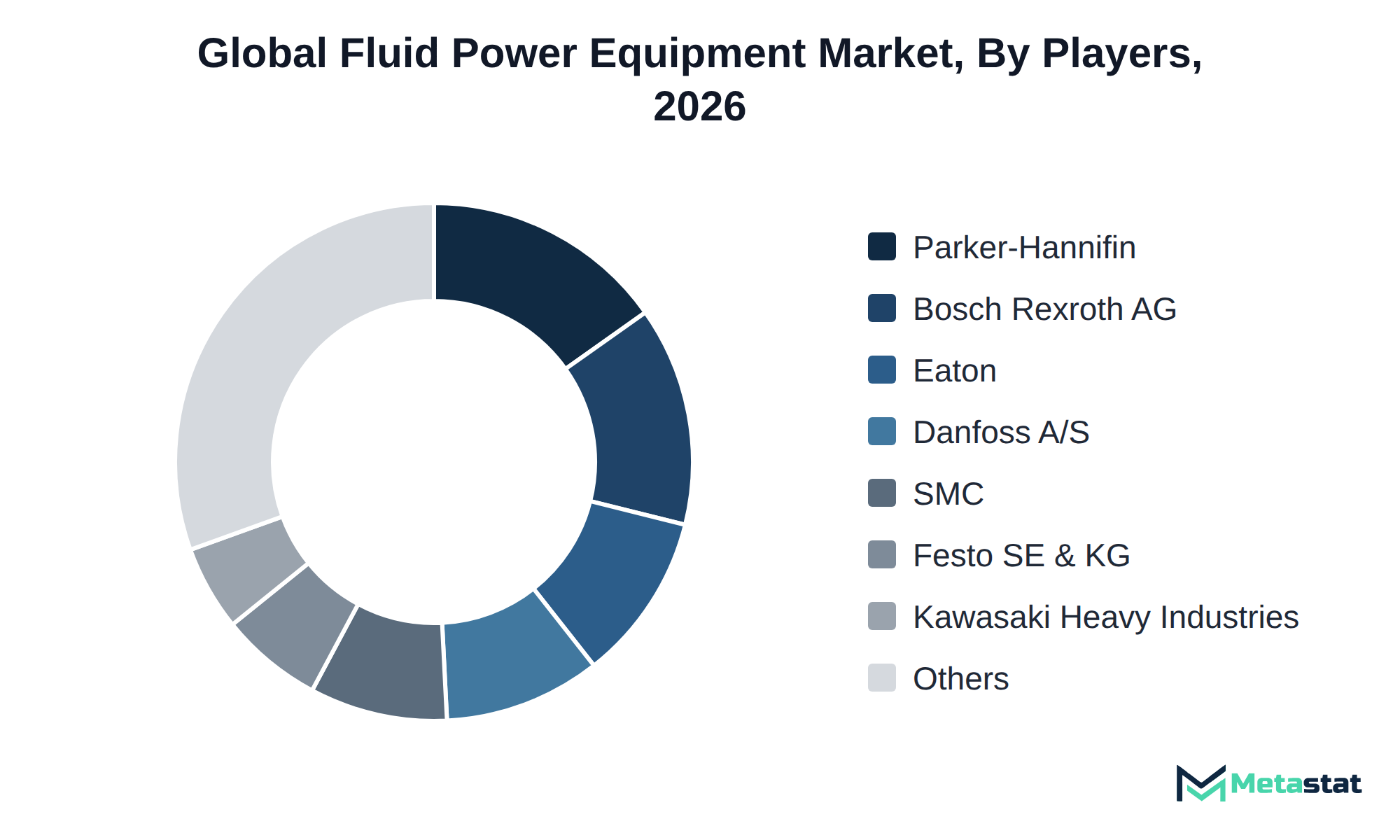
Competition within the Fluid Power Equipment market involves several strategies centered around technology, product differentiation, and customer service. Companies differentiate themselves by focusing on specific market segments, including hydraulic and pneumatic equipment. Buyers prioritize factors including price, certification, customization, and service quality when selecting suppliers.
Bosch Rexroth AG and Parker-Hannifin Corporation emphasize innovation in hydraulic equipment, targeting industrial manufacturing and construction industries. Danfoss A/S and SMC Corporation prioritize pneumatic solutions, catering to diverse applications across various sectors.
In addition, Eaton Corporation plc and Festo SE & Co. KG focus on enhancing product reliability and performance, appealing to buyers seeking high-quality standards. Companies including HAWE Hydraulik SE and Yuken Kogyo Co., Ltd. concentrate on providing customized solutions to meet specific customer needs within the market.
Achieving this growth requires several key developments across the Fluid Power Equipment market. Firstly, expansion in the hydraulic equipment segment, projected to increase from USD 46.3 billion to USD 65.6 billion, will significantly contribute to the overall market value. Strong growth in the construction industry, with a rise from USD 16.4 billion to USD 22.8 billion, will drive demand for fluid power solutions in various applications, supporting the upward trajectory. However, key risks include supply chain disruptions, which could hinder production capacities and impact the timely delivery of components, especially in the North American region. Addressing these challenges will be crucial for the market to realize its forecasted potential. Continuous investment in innovation and technology will further enhance efficiency, establishing a robust foundation for future growth in the Fluid Power Equipment market.
By Technology: Hydraulic Equipment, Pneumatic Equipment
By Product Type: Pumps, Motors, Valves and Manifolds, Cylinders and Actuators, Hydraulic Power Units and Systems, Filters and Air Preparation Equipment, Accumulators, Hoses, Tubes and Fittings, Others (Reservoirs and Controls)
By End-Use Industry: Construction, Industrial Manufacturing, Agriculture and Forestry, Material Handling and Logistics, Oil and Gas, Marine and Shipbuilding, Mining, Aerospace and Defense, Automotive and Transportation, Others (Energy and Healthcare)
By Sales Channel: Original Equipment Manufacturers, Aftermarket
The report strategically identifies and profiles the key market players and analyses their core competencies in each sub-segment of the Fluid Power Equipment market.
Report Attributes | Details |
Study Period | 2021-2033 |
Base Year | 2025 |
Estimated Year | 2026 |
Forecast Period | 2026-2033 |
Historical Period | 2021-2025 |
Growth Rate | CAGR 5.3% from 2026 to 2033 |
Revenue Unit | USD billion |
Segmentation | By Technology, Product Type, End-Use Industry, Sales Channel, and Region |
By Region | North America (By Technology, Product Type, End-Use Industry, Sales Channel, and Country)
|
Europe (By Technology, Product Type, End-Use Industry, Sales Channel, and Country)
| |
Asia Pacific (By Technology, Product Type, End-Use Industry, Sales Channel, and Country)
| |
South America (By Technology, Product Type, End-Use Industry, Sales Channel, and Country)
| |
Middle East and Africa (By Technology, Product Type, End-Use Industry, Sales Channel, and Country)
|
Find answers to common questions about this report
The Fluid Power Equipment market size was valued at USD 70.8 billion in 2025.
The market is projected to grow at a CAGR of 5.3% during the forecast period from 2026 to 2033.
The North America Fluid Power Equipment market size is estimated to reach USD 30.1 billion by 2033.
Hydraulic Equipment leads the Fluid Power Equipment market with a projected value of USD 65.6 billion in 2033, based on its growth trajectory compared to other technology segments.
Increased investment in construction and industrial projects drives demand for hydraulic equipment, with companies seeking advanced machinery to enhance productivity. Enhanced automation initiatives in various industries, particularly automotive and logistics, increase demand for pneumatic solutions, providing precise control and efficiency.
Asia Pacific holds the dominant share of the Fluid Power Equipment market, accounting for 34.3 percent in 2025. This region surpasses others, including North America at 29.1 percent and Europe at 27 percent.
Pricing pressures arise from fluctuating raw material costs and supply chain constraints, impacting the affordability of hydraulic equipment. Suppliers face challenges in maintaining competitive pricing while managing increasing production expenses, which restricts market growth opportunities.
Factors favoring adoption in the Fluid Power Equipment industry include strong growth in pneumatic equipment driven by increasing automation in manufacturing and material handling. This trend enhances productivity and reduces operational costs, aligning with market demands for efficient fluid power solutions.
The Fluid Power Equipment market is estimated to reach a valuation of USD 107 billion by 2033.
Key players operating in the Fluid Power Equipment market include Bosch Rexroth AG, Parker-Hannifin Corporation, Danfoss A/S, SMC Corporation, Festo SE & Co. KG, Eaton Corporation plc, and Kawasaki Heavy Industries, Ltd.
The analysts below cover Machinery & Equipment research at Metastat Insights.
LEAD ANALYST
Utkarsh Khirodkar is a Lead Market Research Analyst at MetaStat Insight, specializing in market intelligence, technology sector assessments, and competitive strategy.

INDUSTRY CONSULTANT - CHEMICALS & ADVANCED MATERIALS
Chemicals and Materials · Machinery & Equipment · Packaging
Amit Gadhekar Consultant for Chemicals and Materials at MetaStat Insight, directing sector-specific intelligence, research, and strategic consulting across global chemical and processing markets.

PRINCIPAL CONSULTANT - QUALITY SYSTEMS & COMPLIANCE
Electronics and Semiconductor · Machinery & Equipment · Professional Services
Omkar Phadtare is an Industry Consultant at MetaStat Insight, specializing in quality systems, regulatory compliance, and standards benchmarking to drive data-driven market intelligence and strategic industry research.

ENERGY & INFRASTRUCTURE INDUSTRY CONSULTANT
Automotive and Transportation · Electronics and Semiconductor · Energy and Power · Machinery & Equipment
Saurabh Vasant Ganvir consults for Energy & Infrastructure Industry at MetaStat Insight, specializing in renewable energy, solar EPC, and electric vehicle (EV) infrastructure markets.

LEAD CONSULTANT - COMMUNICATION, TELECOM, AND IT
Electronics and Semiconductor · Information & Technology · Machinery & Equipment · Professional Services
Ravindra Sathe Consultants for Communication, Telecom, and IT at MetaStat Insight. He leads the firm's industry research initiatives across telecommunications infrastructure, digital connectivity, enterprise networking, and emerging information technology domains.
In the biological seed treatment space, registration timelines vary drastically between the European Union, Brazil, and North America. The MetaStat Insight research handled these cross-border regulatory barriers with genuine nuance, mapping commercialization pathways alongside historical field adoption rates. The segmentation between microbial strains and biochemical active ingredients was particularly well structured.
Our team was tracking whether regional recycling infrastructure could realistically absorb the growing volume of lithium iron phosphate batteries over the next decade. The report did a solid job separating announced hydrometallurgical plant capacity from active, permitted operational throughput. That distinction made the feedstock availability projections and regional recovery rate models far more credible than standard commercial overviews.
Tracking capacity expansion in single-use bioprocessing requires dependable data on raw material availability and cleanroom-grade polymer supply chains. The competitive landscape chapter gave a grounded evaluation of secondary component suppliers across North America and Asia-Pacific rather than simply reprinting press releases. Having that level of supplier benchmarking helped clarify dual-sourcing considerations for our clinical pipeline planning.
Explore related market intelligence reports worth reading alongside this one.