
LEAD ANALYST
Utkarsh Khirodkar is a Lead Market Research Analyst at MetaStat Insight, specializing in market intelligence, technology sector assessments, and competitive strategy.

Global Gas Sensors Market Size, Share, By Technology (Electrochemical Sensors, Chemiresistive Sensors, Catalytic Bead, Non-Dispersive Infrared Sensors, Photoionization Detection Sensors, Thermal Conductivity Sensors and Others), By Gas Type (Carbon Dioxide, Carbon Monoxide, Methane, Hydrogen, Oxygen, Hydrogen Sulfide, Ammonia and Others), By Application (Safety and Leak Detection, Emissions and Environmental Monitoring, Process Control and Gas Analysis, Indoor Air Quality and Ventilation Control, Combustion and Exhaust Monitoring, Refrigeration and HVAC Monitoring, Medical and Breath Analysis, Automotive Cabin and Battery Monitoring and Others), By End-Use Industry (Oil and Gas, Chemicals and Petrochemicals, Energy and Power, Manufacturing and Industrial Processing, Automotive and Transportation, Building Automation and HVAC, Healthcare and Medical, Agriculture and Food, Environmental Monitoring and Utilities and Others), Industry Analysis, Growth, Trends, and Forecast, 2026-2033
Report ID
MSI-5279
Published
September, 2026
Pages
295 Pages
Format
Historical
Base year
Forecast
Forecast period
Report Details
Market Valuation: Valued at $1,751.9 Million in 2025, projected to reach $3,148.8 Million by 2033 at a 7.6% CAGR.
Dominant Segment: The Electrochemical Sensors segment leads the market, driven by regulatory compliance standards and strong demand in environmental monitoring and safety applications. This segment is projected to grow from USD 517.7 million in 2026 to USD 798.5 million by 2033.
Geographic Lead: The Asia Pacific region is expected to experience the fastest growth, fueled by rapid industrialization and urbanization, along with significant investments in infrastructure that enhance gas sensor adoption.
What's Inside: The report provides a comprehensive analysis of the global Gas Sensors market, covering technology segments, gas types, applications, and end-use industries, along with competitive insights and a forecast window from 2026 to 2033.
Emerging Opportunities: There is a notable demand for advanced sensing technologies, particularly in hydrogen and methane detection, driven by regulatory scrutiny and the need for effective monitoring solutions in the oil and gas sector.
Choose Your License
Global Gas Sensors Market
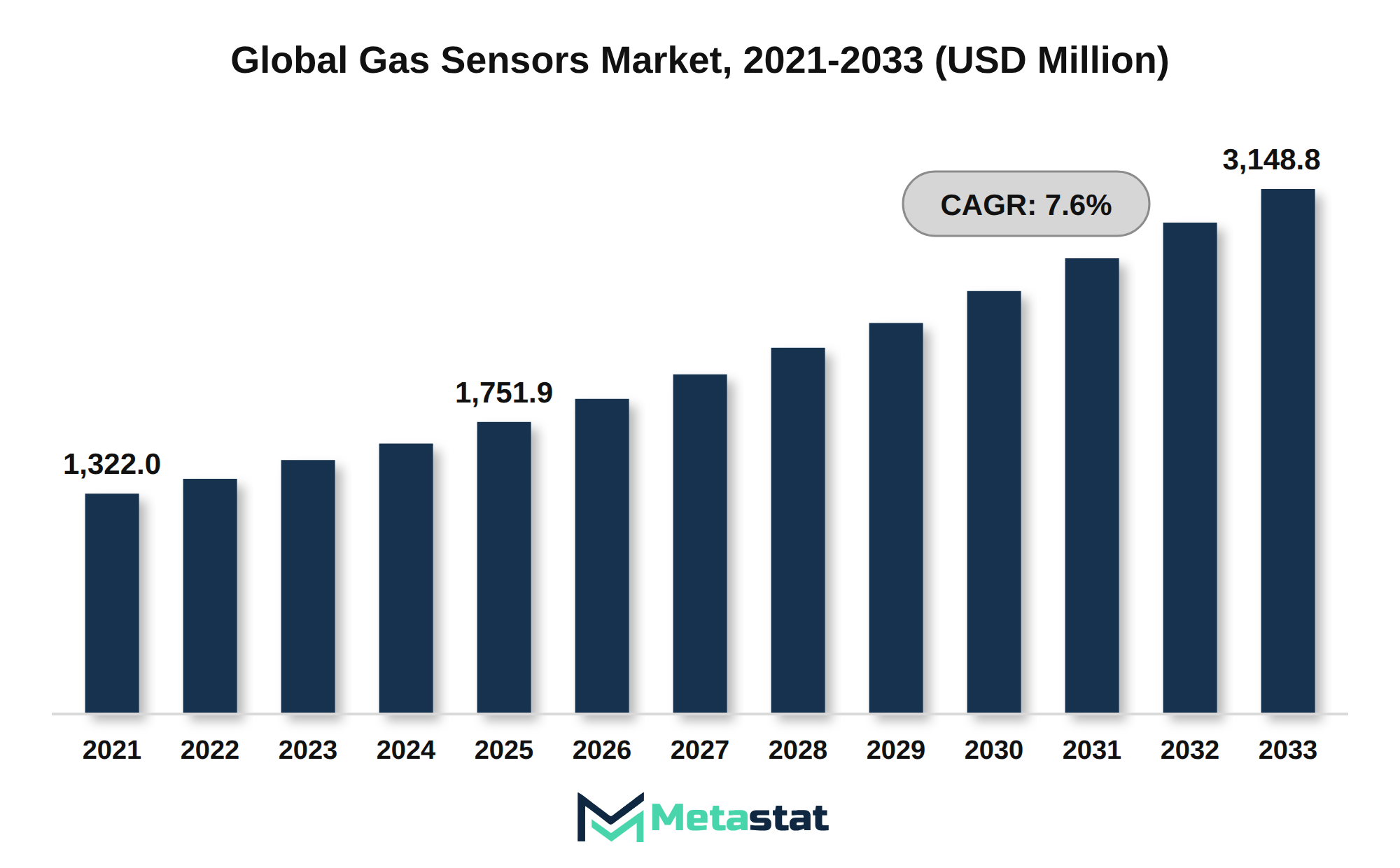
The global Gas Sensors market was valued at USD 1,751.9 million in 2025 and is projected to reach USD 3,148.8 million by 2033, growing at a CAGR of 7.6% over the forecast period.
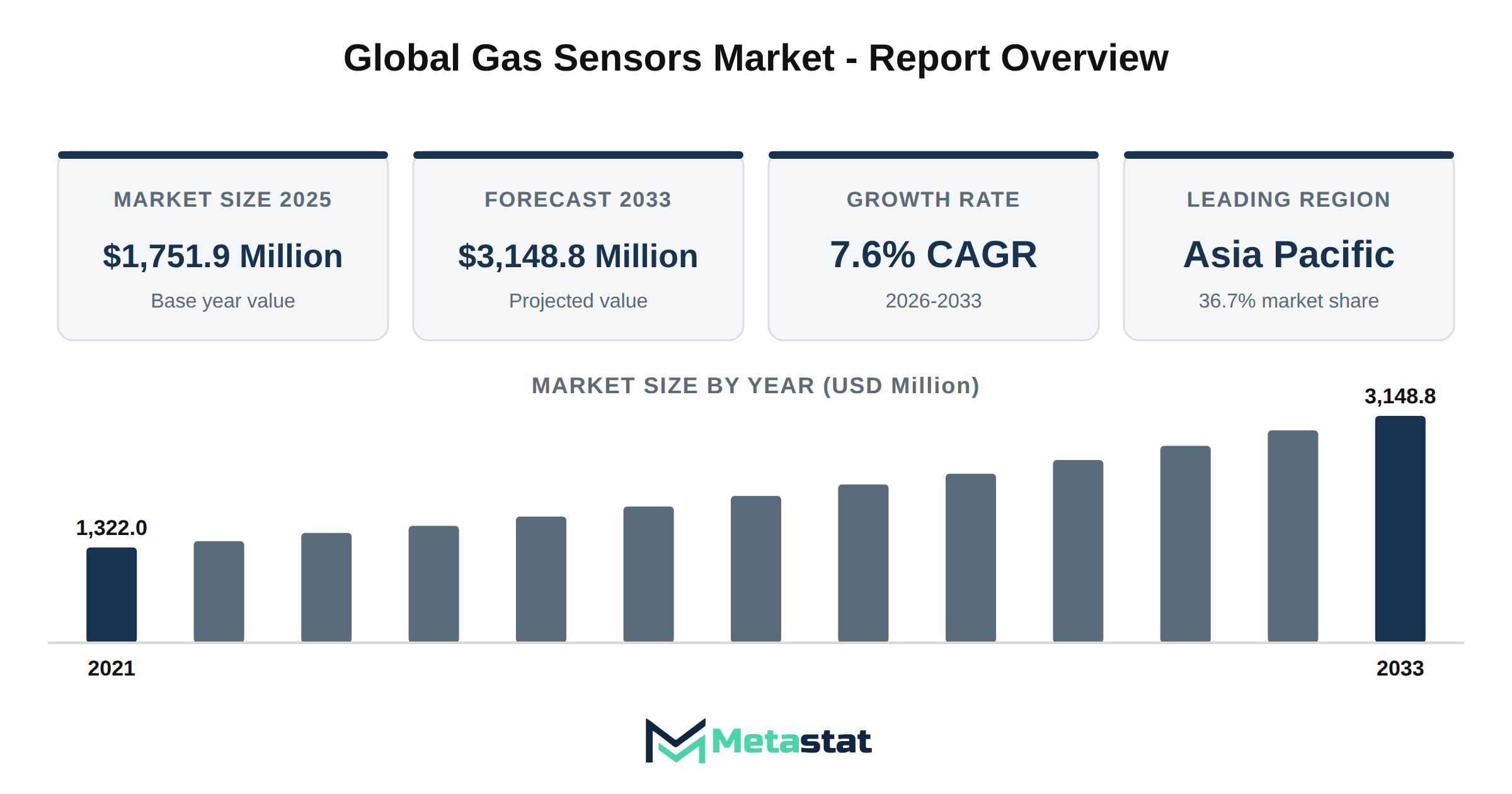
The global Gas Sensors market was valued at USD 1,751.9 million in 2025 and is projected to reach USD 3,148.8 million by 2033, with a compound annual growth rate (CAGR) of 7.6% during the forecast period from 2026 to 2033. The market experienced steady growth from USD 1,322 million in 2021 to USD 1,410.6 million in 2022, and further to USD 1,523.4 million in 2023. By 2024, the market value increased to USD 1,622.6 million, continuing to USD 1,751.9 million in 2025.
Technological advancements in sensor miniaturization and low-power innovation play a significant role in market expansion. These developments enhance the performance of gas sensors, making them suitable for various applications, including industrial safety, environmental monitoring, and indoor air quality management. The commercialization of graphene and nanomaterial sensors has advanced detection capabilities, leading to heightened interest from multiple industries seeking efficient and effective monitoring solutions.
Integration of Internet of Things (IoT) technology enables real-time gas monitoring, further driving demand for smart gas sensors. Continuous monitoring of gas levels and immediate alerts improve safety and operational efficiency across sectors. Application adoption shifts towards more stringent safety and environmental regulations, particularly in the oil and gas industry where leak detection is critical. Regulations surrounding methane emissions propel gas sensor deployment, ensuring compliance and enhancing safety measures.
Competitive technology benchmarking shows that electrochemical sensors maintain strong industrial demand due to reliability and accuracy. Non-dispersive infrared (NDIR) sensors expand in applications focused on carbon dioxide and methane monitoring, reflecting a growing need for accurate environmental assessments. MEMS and miniaturized gas sensors enable compact monitoring systems, appealing to industries requiring space-efficient solutions.
Emerging opportunities in hydrogen and methane detection are evident, with rising demand for gas sensors in oil and gas leak detection. The need for effective monitoring of low-global warming potential (GWP) refrigerants aligns with environmental regulations that strengthen demand for continuous gas monitoring. Industrial decarbonization efforts further expand the market for emissions and fugitive gas monitoring solutions.
The trend toward sensor miniaturization and low-power innovation continues to drive advancements in the Gas Sensors market. Compact designs enhance deployment flexibility across various applications, enabling integration into smaller devices and systems. This evolution supports the demand for sensors that operate efficiently in constrained environments, appealing to industries focused on energy efficiency and sustainability.
Graphene and nanomaterial sensors are gaining traction due to their superior detection capabilities and potential for commercialization. These advanced materials enable the development of highly sensitive sensors that outperform traditional technologies in various applications, including environmental monitoring and industrial safety. The transition toward these materials reflects ongoing research and investment aimed at enhancing performance in gas detection.
The integration of IoT technology facilitates real-time gas monitoring, allowing organizations to monitor air quality and gas levels continuously. This capability enhances operational efficiency and safety, particularly in industrial settings. The growing connectivity of gas sensors aligns with the increasing demand for smart solutions, positioning the market for significant growth driven by more sectors adopting real-time monitoring systems.
Application adoption is shifting towards areas including safety and leak detection, driven by regulatory requirements and heightened awareness of environmental impacts. The Oil and Gas sector particularly emphasizes effective leak detection, contributing to the market's steady expansion. Increased regulatory scrutiny surrounding emissions further accelerates the need for advanced sensor solutions across various industries.
Competitive technology benchmarking highlights the emergence of innovative technologies in the market. Companies are increasingly focusing on differentiating their offerings through advanced features, including enhanced sensitivity and selectivity. This competitive landscape encourages an environment where continual improvement in gas sensor technologies is essential for maintaining market relevance.
Commercialization and scale-up pathways are critical for integrating new technologies into existing frameworks. Strategic partnerships among industry players facilitate the sharing of expertise and resources, expediting the development and deployment of advanced gas sensors. This collaborative approach enhances the overall market ecosystem, driving innovation and growth.
Emerging opportunities in hydrogen and methane detection reflect the market's response to evolving regulatory landscapes and environmental concerns. The demand for effective detection of these gases is expected to rise, particularly within industries focused on reducing greenhouse gas emissions. This trend highlights the importance of developing specialized sensors that address specific gas detection requirements.
Rising demand for gas sensors in oil and gas leak detection aligns with industry priorities for safety and compliance. Enhanced detection capabilities lead to improved safety outcomes and reduced environmental impact, driving investments in advanced sensor technologies. This focus on leak detection emphasizes the critical role of gas sensors in maintaining operational integrity.
Methane detection regulations are driving gas sensor deployment across various sectors. Regulatory bodies emphasize the importance of monitoring methane emissions, motivating industries to adopt advanced sensor solutions to ensure compliance. This regulatory push supports growth in the Gas Sensors market, particularly among companies specializing in methane detection technologies.
Graphene and nanomaterial gas sensors are advancing detection performance through their unique properties. These materials enhance sensitivity and selectivity, making them ideal for applications requiring precise measurements. The ongoing development of these technologies positions them because valuable assets in the market, catering to the demand for high-performance gas sensors.
MEMS and miniaturized gas sensors enhance compact monitoring systems, allowing for integration into diverse applications. The reduction in size does not compromise performance, because these sensors continue to deliver accurate readings. This technological advancement supports the market's growth, particularly in sectors requiring space-efficient solutions.
Electrochemical gas sensors maintain strong industrial demand due to their reliability and versatility. These sensors are widely used for detecting various gases in industrial settings, contributing to workplace safety and compliance. The sustained interest in electrochemical technologies highlights their importance in the Gas Sensors market.
NDIR gas sensors are expanding across CO₂ and methane monitoring applications. Their ability to provide accurate and real-time measurements makes them essential tools for industries focused on emissions management and environmental sustainability. This expansion reflects the growing recognition of the importance of effective gas monitoring solutions.
Smart gas sensors integrate IoT and real-time monitoring capabilities, enhancing their functionality and appeal. This integration allows for advanced analytics and data-driven decision-making, positioning these sensors because crucial components in modern monitoring systems. The trend toward smart solutions aligns with broader technological advancements across industries.
Gas sensors for indoor air quality and smart building applications are gaining prominence due to concerns regarding air quality increase. The demand for effective monitoring solutions in urban environments emphasizes the importance of maintaining healthy indoor air quality. This focus on air quality management supports growth in the Gas Sensors market.
Automotive gas sensors support cabin air and battery safety monitoring, ensuring passenger safety and compliance with regulatory standards. The integration of gas sensors in automotive applications reflects the industry's commitment to enhancing vehicle safety and performance. This trend drives innovation and investment in gas sensor technologies tailored for the automotive sector.
Gas sensors are emerging because critical components in EV battery safety. The monitoring of gases released during battery operation is vital for ensuring safety and performance. This focus on gas detection in electric vehicles highlights the evolving role of gas sensors in supporting technological advancements in the automotive industry.
Rising demand for refrigerant gas detection coincides with the adoption of low-GWP refrigerants. Compliance with environmental regulations drives the need for effective monitoring solutions to ensure safe handling and usage. This trend highlights the importance of gas sensors in various industries, particularly those focused on sustainability and environmental responsibility.
Environmental regulations are strengthening demand for continuous gas monitoring solutions. Industries are increasingly required to monitor emissions consistently, driving investments in advanced gas sensor technologies. This regulatory environment positions the Gas Sensors market for continued growth because companies seek reliable solutions for compliance.
Industrial decarbonization is expanding emissions and fugitive gas monitoring requirements. The emphasis on reducing carbon footprints motivates industries to adopt advanced gas sensors for effective monitoring. This trend highlights the crucial role of gas sensors in supporting sustainability initiatives across various sectors.
Gas sensor innovation focuses on enhancing sensitivity, selectivity, and low-power operation, addressing the evolving needs of industries. Continuous advancements in sensor technologies aim to improve performance while reducing energy consumption. This focus on innovation drives competitiveness and growth within the market.
Gas sensor pricing trends reflect cost reduction achieved through MEMS manufacturing techniques. These advancements enable companies to produce high-quality sensors at lower costs, enhancing accessibility across industries. This trend supports the market's expansion by allowing more players to enter the gas sensor landscape.
Commercialization opportunities for advanced nanomaterial technologies in gas sensors are becoming more apparent. The unique properties of these materials present new avenues for product development and market entry. This focus on nanomaterials signifies a shift toward more innovative solutions within the Gas Sensors market.
Asia Pacific gas sensor demand is driven by industrialization and electronics manufacturing. Rapid economic growth and urbanization in the region support the adoption of gas sensors across various sectors. This trend positions the market for significant expansion because industries seek efficient gas detection solutions.
North America gas sensor market support stems from industrial safety and methane regulation. The emphasis on safety and compliance drives demand for advanced gas sensors, particularly in the oil and gas sector. This regulatory framework encourages growth opportunities within the market.
Europe gas sensor demand is shaped by emissions and building efficiency regulations. The focus on reducing environmental impact motivates industries to invest in advanced monitoring solutions. This regulatory landscape enhances the market's growth potential across various sectors.
Gas sensor supply chain developments focus on semiconductor and specialty material components. These advancements ensure a steady supply of critical materials necessary for sensor production. This focus on supply chain efficiency supports the overall growth of the Gas Sensors market.
Strategic partnerships are accelerating gas sensor technology commercialization. Collaborations between companies enhance resource sharing and innovation, expediting the development of advanced solutions. This trend strengthens the market ecosystem and facilitates the introduction of new technologies.
The future gas sensor market outlook encompasses safety, environmental, and connected applications. The increasing importance of gas monitoring in various industries positions the market for sustained growth. This forward-looking perspective highlights the potential for innovation and expansion within the Gas Sensors market.
Growing concerns regarding environmental sustainability significantly influence the Gas Sensors market. Stringent emission limits established by governments drive industries to adopt closed-loop systems that monitor gas emissions in real-time. This shift arises from heightened awareness of environmental impacts, coupled with the necessity for compliance with regulations. Industries including oil and gas, chemicals, and manufacturing face pressure to integrate advanced monitoring solutions to meet these regulations effectively.
The trend toward emission limits increases demand for gas sensors that provide accurate measurements of various gases, including carbon dioxide, carbon monoxide, and methane. Organizations embracing these technologies experience increased investments in sensor technology to enhance operational efficiency and ensure regulatory compliance. The ongoing commitment to sustainable practices further drives the adoption of gas sensors, strengthening their role in emissions and environmental monitoring applications.
Market participants recognize the vital position of gas sensors in supporting compliance with stringent environmental guidelines. The integration of advanced sensor technologies not only mitigates emission-related liabilities but enhances operational productivity. Ultimately, the focus on emission limits drives demand within the Gas Sensors market, spurring growth and encouraging innovation across multiple industries.
Investment in infrastructure development advances the Gas Sensors market. Significant capital flows into upgrading physical and digital capacities support the need for enhanced monitoring and control systems. This trend is particularly evident in industries including oil and gas, where safety and environmental compliance requirements necessitate the deployment of advanced gas sensors.
Developing urban areas and increasing industrial activities create demand for reliable gas detection solutions. An enhanced focus on public safety and environmental monitoring drives higher adoption rates of gas sensors in construction, manufacturing, and transportation sectors. Increased government spending on infrastructure projects, including transportation networks and energy facilities, elevates the need for effective gas management. Resultantly, this investment strategy drives growth within the market.
Technological integration and automation in infrastructure projects require advanced gas sensors to ensure operational efficiency and safety. The connection between infrastructure investment and technological advancements positions the market for sustained expansion. Demand for innovative solutions that address safety concerns while optimizing performance significantly influences the industry landscape.
Regulatory compliance hurdles significantly restrict the growth of the Gas Sensors market. Stringent regulations surrounding emissions and safety drive the need for advanced sensor technologies; however, the complexity of compliance creates challenges for manufacturers. Companies face difficulties navigating varying regulations across different regions, which leads to increased operational costs and extended timeframes for product development and market entry.
High capital investment requirements associated with developing compliant sensors pose a barrier for smaller firms and start-ups. This situation creates a competitive advantage for established players with substantial financial resources, potentially leading to market fragmentation. Ongoing compliance with evolving standards creates a continuous financial burden on companies, limiting their capacity to invest in innovation and adopt new technologies.
Escalating operational costs, influenced by inflationary pressures and supply chain disruptions, complicate market dynamics. These factors lead to delayed product launches and reduced competitiveness within the Gas Sensors market. Companies that fail to adapt to regulatory changes or manage rising costs effectively risk losing market share, impacting overall growth prospects.
The need for skilled labor presents an additional layer of complexity. A shortage of qualified professionals capable of developing and maintaining sophisticated gas sensor technologies hinders expansion efforts. While the market matures, addressing these compliance hurdles and workforce challenges becomes essential for sustaining growth and ensuring competitive positioning.
The Gas Sensors market faces challenges stemming from geopolitical fragmentation, which significantly limits access to essential components and technologies. Trade deficits and tariff friction create barriers for manufacturers attempting to source materials from global suppliers, affecting production timelines and cost structures. This fragmentation leads to an environment where companies experience heightened uncertainty regarding supply chain stability, impacting their ability to meet growing demand.
Technological disruptions further complicate market dynamics, with rapid advancements necessitating complex research and development integrations. Firms struggle to keep pace with evolving technological standards, resulting in potential interoperability issues between existing and new sensor technologies. This situation leads to increased compliance overhead, driven by businesses working to meet tightening global regulatory standards and navigate evolving legal liabilities associated with their products.
Pricing compression and margin pressures emerge because key concerns for players in the market. Rising input costs, along with workforce skill gaps and talent retention pressures, challenge firms to maintain profitability. Automation displacements introduce additional complications, because companies adapt to new technologies while ensuring their workforce remains skilled and engaged.
Environmental lifecycle footprints and sustainability demands drive further scrutiny of products within the Gas Sensors market. Companies invest in retrofitting and implementation efforts to align with decarbonization mandates, creating infrastructure gaps that inhibit market growth. These factors contribute to a robust set of challenges that firms navigate to remain competitive and responsive to market demands.
Emerging regional demands significantly shape the Gas Sensors market, particularly in Asia Pacific, where rapid industrialization and urbanization create a heightened need for advanced monitoring solutions. This region is expected to see substantial growth driven by increased investments in infrastructure, which enhances the adoption of gas sensors across various applications, including safety and environmental monitoring.
Technological disruptions are transforming the market landscape, with innovations in sensor technologies, including chemiresistive sensors and non-dispersive infrared sensors, driving efficiency and performance enhancements. These advancements support the development of next-generation products that meet evolving consumer expectations and regulatory requirements.
Sustainability imperatives influence market dynamics, prompting organizations to invest in eco-friendly technologies. The integration of gas sensors in sustainability initiatives aligns with environmental, social, and governance (ESG) goals, enhancing operational efficiency and compliance with eco-friendly practices.
Digital transformation trends encourage the adoption of smart gas sensing solutions, enabling real-time data analytics and improved decision-making processes. This shift facilitates better resource management and operational yield maximization, crucial for companies looking to gain a competitive edge in the Gas Sensors market.
Strategic consolidation through cross-industry mergers and acquisitions enables companies to diversify their product offerings and strengthen their market positions. By expanding their technological capabilities, firms better serve niche applications and meet the diverse needs of various end-use industries.
Value-chain optimization emerges because a crucial factor driving growth within the market. Companies focusing on supply chain localization and import substitution frameworks enhance resilience and reduce reliance on external sources, thereby improving overall operational efficiency.
The Global Gas Sensors market is segmented based on Technology, Gas Type, Application, and End-Use Industry.
Valued at USD 517.7 million in 2026, the Electrochemical Sensors segment is projected to reach USD 798.5 million by 2033, reflecting a CAGR of 6.4% during the forecast period. Adoption of electrochemical sensors aligns with regulatory compliance standards, driving demand in industries including environmental monitoring and safety applications. End-use dynamics demonstrate strong growth, particularly in sectors focused on emissions detection and indoor air quality, where precise measurements are crucial.
Technological maturation plays a critical role in the segment's expansion, with ongoing advancements in sensor sensitivity and response times. Investment in research and development fuels next-gen upgrades, enhancing product evolution and encouraging broader application across various sectors. Strategic opportunity windows arise from increased focus on safety protocols and environmental regulations, prompting industries to incorporate advanced sensing technologies into their operations.
Consumption shifts towards more reliable and efficient products highlight the necessity for continuous innovation in the market. Pricing volatility and margin pressures impact manufacturers; however, these challenges stimulate competition and innovation, ensuring that firms remain resilient in their supply chains. Raw material sourcing practices evolve, focusing on sustainability and cost-effectiveness, further influencing market dynamics.
Electrochemical sensors capture significant interest due to their ability to accurately detect a variety of gases, including carbon dioxide and carbon monoxide. The segment's growth trajectory aligns with escalating concerns regarding air quality and safety, pushing manufacturers towards developing versatile and efficient sensing solutions. Overall, the Electrochemical Sensors segment stands poised for substantial growth within the broader Gas Sensors market, driven by technological advancements and heightened demand for compliance with environmental standards.
Market dynamics favor the expansion of Chemiresistive Sensors (MOS, Graphene & Other Nanomaterials), projected to reach USD 855.8 million by 2033, at a CAGR of 9.2% during the forecast period. This growth results from increasing demand for advanced sensing technologies in various applications, driven by the need for precise measurements in environmental and safety monitoring. The shift toward more efficient and sensitive sensors enhances product performance, enabling widespread adoption across industries.
Technological maturation significantly influences market trends, with ongoing innovations in materials science leading to improved sensor performance and durability. Applications in safety and leak detection, and emissions monitoring, demonstrate strong growth potential, aligning with regulatory demands for stringent environmental compliance. This regulatory landscape pushes industries to seek reliable, high-performance gas sensing solutions, driving investment in Chemiresistive technology.
Cost structures and pricing volatility related to raw material sourcing impact the competitive landscape within the market. Suppliers focusing on innovative materials, including graphene, gain a strategic advantage, allowing them to differentiate their offerings. End-use industries, including oil and gas, chemicals, and manufacturing, increasingly adopt these sensors to enhance operational efficiency and compliance with safety standards.
Strategic opportunity windows arise owing to sectors expanding their focus on automation and smart technologies, requiring advanced sensors that deliver real-time data and analytics. This trend positions Chemiresistive Sensors because critical components in next-generation industrial applications, creating robust demand for continued investment and development within the Gas Sensors market.
Significant growth characterizes the Catalytic Bead segment within the Gas Sensors market, expected to reach USD 375.3 million by 2033. This growth stems from increased demand for safety applications across various industries, particularly in sectors like oil and gas, where monitoring flammable gases is critical for operational safety. Heightened regulatory scrutiny on emissions and environmental standards compels industries to adopt reliable detection mechanisms.
Technological advancements in catalytic bead sensors enhance accuracy and reliability, driving adoption among end-users. The development of next-generation sensors featuring improved sensitivity captures a broader range of gases and minimizes false positives, attracting significant interest from manufacturers and consumers alike. The segment benefits from strategic investments aimed at expanding production capabilities and enhancing product offerings.
Cost structures remain a crucial factor influencing the Catalytic Bead segment. Manufacturers face pressure from raw material sourcing and pricing volatility, impacting overall production costs. Ongoing innovations mitigate these pressures by streamlining processes and improving efficiency. The competitive landscape comprises various players investing in research and development, contributing to market dynamics and positioning the segment for sustained growth.
Strong growth in the Non-Dispersive Infrared (NDIR) Sensors segment reflects increased demand in applications including emissions monitoring and safety protocols. This segment is projected to grow at a CAGR of 9.1% during the forecast period. Enhanced performance characteristics, including accuracy and response time, contribute to the rising preference for NDIR sensors among end users.
Industries including environmental monitoring, automotive, and industrial applications drive the adoption of NDIR technology. Pressure to meet stringent regulatory compliance standards for air quality and safety significantly influences market dynamics. The integration of advanced features in NDIR sensors, including digital interfaces and increased sensitivity, enhances their appeal across various applications.
Investment in research and development for next-generation NDIR technologies supports the evolution of the market. Manufacturers focus on optimizing production processes and sourcing high-quality raw materials to mitigate pricing volatility. This proactive approach strengthens supply chain resilience and positions companies favorably amid competitive pressures.
Overall, the Non-Dispersive Infrared (NDIR) Sensors segment plays a critical role in the larger Gas Sensors market, addressing regulatory demands and market expectations for reliable gas detection solutions.
In the Gas Sensors market, Photoionization Detection (PID) Sensors represent an essential technology for detecting volatile organic compounds and other harmful gases. The increasing emphasis on workplace safety and regulatory compliance drives demand for these sensors across various industries, including manufacturing, healthcare, and environmental monitoring. Adoption of PID technology stems from its ability to provide real-time monitoring and precise detection of hazardous substances, enhancing safety protocols and operational efficiency.
The segment benefits from ongoing technological maturation, with advancements in sensor sensitivity and miniaturization. These advancements facilitate the integration of PID sensors into portable and fixed monitoring systems, expanding their application in diverse settings. End-use dynamics reflect a growing reliance on PID sensors for emissions monitoring and compliance with stringent environmental regulations, reinforcing their role in promoting safety and environmental stewardship.
Consumption shifts toward more efficient and reliable detection methods further strengthen the segment. While organizations increasingly prioritize health and safety, investments in PID technology are anticipated to rise, presenting strategic opportunity windows for manufacturers. The competitive landscape encourages innovation, with companies exploring next-generation upgrades and product evolution to enhance performance and functionality.
Overall, the Photoionization Detection segment within the Gas Sensors market stands poised for growth, fueled by robust demand drivers, regulatory compliance requirements, and ongoing technological advancements.
Thermal conductivity sensors provide essential capabilities for measuring gas concentrations across various applications. This technology relies on the principle of gas thermal conductivity variations, allowing for accurate detection of multiple gases, including hydrogen and other light gases. Rising demand for precise and reliable measurement tools in industrial applications drives greater adoption of these sensors.
Advancements in thermal conductivity sensor technologies enhance accuracy and response times, contributing to broader market acceptance. Industries focused on safety and environmental compliance increasingly implement these sensors in critical applications including emissions monitoring and leak detection. The ongoing evolution of sensor technologies promotes alignment with stringent regulatory standards, encouraging adoption across sectors.
Cost structures related to thermal conductivity sensors remain competitive, allowing wider market penetration. Manufacturers actively explore opportunities for reducing production costs while maintaining performance and reliability. These efforts facilitate pricing strategies that enhance market accessibility and encourage investment in next-generation sensor technologies. Strategic opportunities within the market arise from the continuous push for innovation and improvements in sensor capabilities, driving growth.
Emerging applications in healthcare and environmental monitoring present additional avenues for market growth. Industries increasingly emphasize health and safety, making thermal conductivity sensors vital instruments for ensuring air quality and compliance with health regulations. The overall dynamics of the Gas Sensors market favor the integration of thermal conductivity sensors, supporting significant long-term growth projections.
Technological advancements in the Gas Sensors market drive interest in alternatives like Paramagnetic, Colorimetric, and Surface Acoustic Wave (SAW) Sensors. These technologies offer unique advantages, including higher precision and faster response times, which appeal to industries requiring stringent gas measurement standards. Increasing regulatory requirements for emissions monitoring enhance demand for these advanced sensors, prompting manufacturers to invest in research and development.
Adoption of these sensor technologies is influenced by their ability to meet specific applications across various industries, including healthcare, environmental monitoring, and industrial processes. For instance, Colorimetric sensors excel in detecting hazardous gases, while SAW sensors provide highly sensitive measurements in dynamic environments. Such versatility attracts businesses seeking reliable solutions for compliance with evolving environmental regulations.
Strategic partnerships between manufacturers and end-users facilitate the integration of these technologies into existing systems, driving innovation. Investment in research focused on enhancing sensitivity and selectivity further advances the segment. Market participants emphasize the importance of product evolution, aiming to provide solutions that adapt to changing market needs.
The segment's growth is reflected by a shift in consumption patterns toward more sophisticated gas detection technologies. Increasing investments in environmental monitoring and climate change initiatives position these sensors because critical components in achieving sustainability goals. This heightened focus on compliance with environmental standards and regulatory frameworks boosts confidence in the overall market, encouraging further capital investment.
Valued at USD 442.6 million in 2026, the Carbon Dioxide (CO₂) segment is projected to reach USD 784.4 million by 2033, exhibiting a CAGR of 8.5% during the forecast period. Growing regulatory demands surrounding emissions monitoring and environmental compliance drive significant adoption of CO₂ sensors across various industries. Applications in environmental monitoring, indoor air quality control, and industrial processes highlight the demand for precise gas detection solutions, supporting segment growth.
Innovations in sensor technologies, coupled with advancements in data analytics capabilities, enable improved performance and integration of CO₂ sensors into existing systems. Emerging technologies allow real-time monitoring and enhance decision-making processes, resulting in better resource management for industries reliant on gas sensors. Increased awareness of climate change impacts accelerates the necessity for effective carbon management, reinforcing the CO₂ segment's role in the Gas Sensors market.
Investment in research and development has led to the evolution of next-generation gas monitoring solutions, which incorporate communication technologies and smart features, enhancing overall functionality. These upgrades attract a diverse clientele, including commercial buildings, manufacturing facilities, and transportation sectors. The market's response to shifting consumer preferences toward sustainable practices further encourages the adoption of CO₂ sensors, driving segment expansion.
Carbon Monoxide (CO) segment is expected to reach USD 533.7 million by 2033, at a CAGR of 6.4% during the forecast period. Increased awareness regarding safety standards and environmental regulations drives demand for carbon monoxide sensors across various industries. Growing adoption for applications in industrial safety, automotive, and residential markets enhances the segment's expansion. Technological advancements in sensing technologies, including the development of compact and energy-efficient sensors, significantly contribute to market growth.
In the energy and power sector, stringent regulations regarding emissions create a heightened need for carbon monoxide monitoring solutions. Industries focused on maintaining compliance with environmental standards benefit from the integration of advanced detection technologies. Optimizing product performance and enhancing reliability through the adoption of next-generation upgrades further positions the market for sustained growth.
Investments in innovative technologies enhance the functionality of carbon monoxide sensors, catering to evolving end-use dynamics. The increasing focus on improving air quality in indoor environments leads to a surge in demand for these sensors, particularly in residential and commercial buildings. Consequently, the Gas Sensors market reflects a favorable growth trajectory, supported by advancements in carbon monoxide detection capabilities.
Valued at USD 478.9 million by 2033, the Methane (CH₄) segment benefits from increasing regulatory scrutiny on emissions across various industries. Stricter regulations drive industries, particularly oil and gas, to adopt advanced gas detection solutions, enhancing demand for accurate methane monitoring. This heightened focus on emissions management influences the development of innovative sensor technologies, enabling more reliable and efficient performance in methane detection.
The market experiences growth due to advancements in sensor technology, which include improved sensitivity and response times. Next-gen upgrades, including integration with IoT and smart technologies, enhance the capabilities of methane sensors, facilitating real-time monitoring and data analysis. Adoption of these advanced technologies by industries leads to greater operational efficiency and compliance with environmental standards.
Increased safety concerns related to methane leaks further boost demand. Industries prioritize safety and leak detection, motivating investments in high-quality gas sensors to mitigate risks associated with methane exposure. Enhanced awareness of indoor air quality and environmental impacts results in a significant shift toward improved monitoring solutions across various applications.
Supply chain resilience plays a critical role in maintaining the growth trajectory within the Methane (CH₄) segment. Strategic sourcing of raw materials and efficient logistics contribute to the stability of sensor production. Firms that address potential supply chain vulnerabilities gain a competitive advantage, positioning themselves to meet the rising demand in the Gas Sensors market.
Hydrogen (H₂) segment is projected to grow at a CAGR of 10.8% during the forecast period. This growth is driven primarily by increasing applications in fuel cells and energy systems, which demand reliable gas detection solutions. The rising focus on clean energy initiatives and hydrogen because a viable alternative fuel source significantly influences market dynamics. Various industries, including automotive and energy, adopt hydrogen sensors for safety and efficiency, enhancing operational performance and safety standards.
Technological maturation contributes to the segment's expansion, with advancements in sensor technology resulting in enhanced accuracy and response times. Continuous product evolution supports the adoption of next-generation gas sensors designed for hydrogen detection, aligning with stringent environmental regulations and safety standards. The regulatory framework, emphasizing emissions reduction and safety, drives investment in technologies that monitor hydrogen levels, thereby benefiting the overall market.
Supply chain resilience and strategic opportunity windows create favorable conditions for growth in the hydrogen segment. Manufacturers focus on optimizing raw material sourcing while addressing potential substitution risks that arise from emerging technologies. The Hydrogen (H₂) segment within the Gas Sensors market represents a critical growth area, with an increasing focus on innovation and application across diverse industries enhancing its value proposition.
Growing interest in Oxygen (O₂) sensors arises from their critical role in various applications, especially in healthcare, environmental monitoring, and industrial processes. Increasing awareness of air quality and its effects on health drives demand for accurate oxygen measurement. Regulatory compliance is important, attributed to stringent standards in industries including healthcare and environmental protection that require reliable monitoring solutions. Enhanced focus on safety and efficiency in industrial applications further drives adoption.
The evolution of sensor technology presents opportunities for next-gen upgrades, allowing for improved accuracy and reduced response times. Developments in smart technologies and IoT integrations facilitate real-time monitoring, enhancing the functionality of oxygen sensors across multiple sectors. This technological maturation supports the transition from traditional methods to advanced sensor solutions.
While consumption patterns shift towards sustainable practices, the demand for oxygen sensors in environmental monitoring applications continues to rise. The healthcare sector's need for precise oxygen level monitoring in medical devices and respiratory equipment drives significant market interest. The increasing use of oxygen sensors in manufacturing and industrial processes highlights the importance of maintaining optimal operating conditions.
Certain challenges exist regarding cost structures and pricing volatility. Fluctuations in raw material prices affect the production cost of oxygen sensors, potentially leading to margin pressures for manufacturers. Supply chain resilience becomes vital in addressing these challenges, ensuring a stable flow of materials and components necessary for sensor production.
Strategic opportunities exist in enhancing product offerings and exploring white-space areas within the market. Companies that invest in research and development to innovate their oxygen sensors capture a larger market share. This proactive approach aligns with market demands and strengthens competitive positioning within the Gas Sensors market.
Growing demand for Hydrogen Sulfide (H₂S) sensors stems from increasing safety regulations across various industries. These sensors ensure workplace safety, particularly in the oil and gas sector, where H₂S poses significant health risks. Regulatory compliance standards drive the adoption of advanced detection technologies, contributing to market expansion.
Technological maturation influences product evolution within this segment. Advances in sensor technology enhance detection sensitivity and reliability, attracting investments from end-users seeking improved safety and operational efficiency. Industries including chemicals and petrochemicals actively integrate these sensors into their processes, boosting demand and driving innovation.
Downstream applications further stimulate interest in Hydrogen Sulfide sensors, where enhanced monitoring capabilities enable proactive measures against potential hazards. This proactive approach aligns with industry trends emphasizing improved risk management, ultimately supporting the growth trajectory of the Gas Sensors market.
Cost structures present challenges, particularly related to the materials used in sensor production. Fluctuations in raw material prices impact overall sensor pricing, affecting end-user adoption rates. Strategic opportunity windows exist for manufacturers focused on developing cost-effective solutions while maintaining performance standards.
The Hydrogen Sulfide (H₂S) segment significantly influences the overall dynamics of the Gas Sensors market. Continuous advancements in technology, along with stringent regulations, create a favorable environment for growth and innovation in this sub-segment.
This sub-segment focuses on ammonia (NH₃) gas sensors, which play a crucial role in various industries due to the gas's toxicity and environmental impact. Increased regulatory scrutiny regarding ammonia emissions has driven demand for efficient monitoring solutions. Compliance with environmental standards in sectors including agriculture, chemicals, and manufacturing significantly influences the growth of ammonia gas sensors.
Technological advancements in sensor accuracy and response time continue to enhance adoption rates. Next-generation upgrades, including miniaturization and integration with IoT systems, contribute to the segment's appeal. These developments enable real-time monitoring and data analysis, allowing industries to respond promptly to ammonia leaks or concentrations.
Supply chain resilience remains vital in the ammonia gas sensors market. Reliable raw material sourcing and efficient logistics minimize disruptions that could affect sensor availability. Market players address substitution risks posed by alternative sensing technologies and disruptive innovations that impact the adoption of ammonia gas sensors.
Strategic opportunity windows exist for companies engaged in this sub-segment. With a growing emphasis on sustainability and environmental protection, investments in ammonia sensor technology yield significant returns. Capital investment outlooks suggest a favorable environment for research and development, supporting innovation in sensor design and functionality.
The gas sensors market is poised for continued expansion, driven by the increasing need for effective ammonia monitoring solutions across diverse applications. The segment's evolution will likely reflect broader trends within environmental compliance and safety protocols, reinforcing its importance in the overall gas sensors market.
Demand for gas sensors that detect specialty gases, including SO₂, O₃, Cl₂, refrigerants, and other unique compounds, continues to experience growth driven by regulatory requirements. Stringent environmental regulations across various industries emphasize the importance of monitoring these gases for safety and compliance. End-use industries, including oil and gas, chemicals, and manufacturing, actively seek advanced detection solutions to enhance environmental safety and mitigate risks associated with gas leaks.
Technological maturation in sensor technologies provides opportunities for the development of highly sensitive and selective sensors, increasing their effectiveness in detecting low concentrations of specialty gases. Adoption of next-generation upgrades enhances product reliability and performance, leading to increased usage in applications including emissions monitoring and industrial process control.
Shifts in consumption patterns reflect a growing awareness of environmental issues and the necessity for effective gas monitoring solutions. Industries invest in robust gas detection systems to address compliance with evolving regulations, driving market expansion in the Gas Sensors market. Strategic opportunity windows arise from the demand for smart sensors that integrate with existing monitoring systems, enabling data collection and real-time analysis.
Supply chain resilience ensures the availability of raw materials necessary for producing specialty gas sensors. Manufacturers focus on securing reliable sources to mitigate risks related to logistics vulnerabilities and cost structures. Pricing volatility associated with sensor components impacts market dynamics, necessitating efficient management of production costs to maintain profit margins.
Overall, the specialty gases segment within the Gas Sensors market benefits from continuous innovation and heightened demand across various applications. Strategic investments in research and development enhance product offerings, ensuring alignment with market needs and regulatory standards.
Valued at USD 474 million in 2026, the Safety & Leak Detection segment is projected to reach USD 743.4 million by 2033, at a CAGR of 6.6% during the forecast period. Increasing regulatory compliance standards regarding workplace safety drive the adoption of gas sensors in this segment. Industries including oil and gas, chemicals, and manufacturing emphasize safety measures to prevent leaks and accidents, thereby propelling demand for advanced sensing technologies.
Technological maturation enhances the capabilities of safety and leak detection sensors. Innovations in sensor technology, including improved sensitivity and response time, support the need for precise gas detection in various applications. Manufacturers continuously evolve their product offerings to meet the requirements of end-use industries, enhancing operational efficiency and safety protocols.
Downstream application dynamics highlight an increasing focus on environmental monitoring and emissions control. Companies invest in gas sensors to ensure compliance with environmental regulations and mitigate the impact of gas leaks. Such investments contribute to the growth of the Gas Sensors market by promoting the use of advanced technologies for detecting hazardous gases.
Cost structures and pricing volatility impact market dynamics, influencing the purchasing decisions of end-users. Suppliers face pressures to balance production costs while providing competitive pricing for their products. Strategic opportunity windows arise due to businesses seeking reliable gas sensors that offer both quality and affordability. Manufacturers optimize their supply chains and raw material sourcing to meet this demand.
Growth in the Emissions & Environmental Monitoring segment reflects increasing regulatory pressure and public awareness surrounding environmental issues. Governments worldwide implement stringent regulations to reduce emissions from various industries, driving investments in emissions monitoring technologies. Industries including oil and gas, power generation, and manufacturing prioritize compliance with these regulations through advanced gas sensors.
Technological advancements support segment expansion by enhancing sensor capabilities, making them more sensitive and reliable. Innovations in sensor design and materials, including the integration of nanomaterials and smart technologies, improve performance in detecting a wide range of gases, ensuring compliance with environmental standards. Companies focusing on research and development gain a competitive edge, facilitating market penetration and adoption.
The Emissions & Environmental Monitoring segment is projected to reach USD 530.3 million by 2033, with a CAGR of 8.4% during the forecast period. The need for efficient monitoring systems boosts demand for gas sensors capable of real-time data transmission and analysis, thus enabling proactive measures to mitigate environmental impact.
End-use dynamics contribute to driving consumption shifts, driven by industries increasingly recognizing the importance of environmental responsibility. This awareness prompts investment in next-generation gas sensors, enhancing operational efficiency while addressing sustainability goals. The market thrives on the growing emphasis on corporate social responsibility, pushing more organizations to integrate robust emissions monitoring systems.
Strategic opportunities arise from addressing the evolving landscape of regulatory compliance standards and technological obsolescence. Manufacturers focusing on comprehensive solutions, including software integration and data analytics, position themselves favorably within the Gas Sensors market. Capital investment in innovative technologies continues to enhance supply chain resilience, allowing companies to adapt to market demands effectively.
Increasing focus on process efficiency and safety drives demand for gas sensors within the Process Control & Gas Analysis segment. Industries including manufacturing, chemicals, and oil and gas require precise measurements of gas concentrations to optimize operations. Regulatory compliance standards enhance the need for accurate gas monitoring systems, ensuring companies meet safety and environmental regulations.
Technological advancements support the evolution of gas sensors, leading to the development of next-generation solutions that offer enhanced accuracy and reliability. Innovations in sensor technologies, including electrochemical and non-dispersive infrared sensors, increase the effectiveness of gas detection in critical applications. This segment is projected to reach USD 438 million by 2033, reflecting its significant role within the broader Gas Sensors market.
Cost structures and pricing volatility impact overall market dynamics. Companies investing in advanced gas sensors achieve long-term savings through improved operational efficiency and reduced downtime. Strategic opportunity windows exist for manufacturers to introduce innovative solutions that address the specific needs of diverse end-use industries, reinforcing sustained growth and market penetration.
Increasing awareness of indoor air quality and health impacts drives demand for gas sensors in the Indoor Air Quality & Ventilation Control segment. Regulatory compliance standards concerning air quality emphasize the need for effective monitoring solutions. Technological maturation, particularly in sensor accuracy and reliability, enhances market appeal, encouraging broader adoption across residential, commercial, and industrial applications.
This segment is projected to grow at a CAGR of 8.7% during the forecast period. The rising focus on energy-efficient ventilation systems promotes investment in advanced sensing technologies. Downstream applications in HVAC systems and smart building technologies leverage gas sensors to optimize air quality management and energy consumption.
While the market evolves, players address cost structures and pricing volatility while ensuring product reliability. Supply chain resilience becomes crucial amid potential disruptions in raw material sourcing and logistics vulnerabilities. Strategic opportunity windows emerge for manufacturers that innovate to meet changing regulatory requirements and consumer preferences in air quality management.
Adoption of gas sensors for combustion and exhaust monitoring gains momentum owing to heightened regulatory compliance standards focused on emissions reduction. Industries including automotive, manufacturing, and energy prioritize effective monitoring solutions to adhere to stringent environmental regulations. Enhanced awareness of air quality and the need for safety within enclosed environments drive demand for accurate monitoring systems. Technological maturation in sensor capabilities, particularly in high-precision detection and real-time data communication, positions the market favorably for growth.
Product evolution contributes significantly to expanding applications within the combustion and exhaust monitoring sector. Continuous innovation in sensor technology enhances performance and reliability, meeting the growing demands of end-users. Strategic opportunity windows emerge because industries seek advanced monitoring solutions to comply with environmental standards, ensuring effective management of emissions and optimizing operational efficiency.
The downstream application of these sensors reflects broader trends in consumption shifts, with an increasing emphasis on sustainability and environmental responsibility. Businesses invest in monitoring systems that not only satisfy regulatory requirements but improve overall operational efficacy. Capital investment in next-generation upgrades and innovative technologies highlights a commitment to enhancing air quality monitoring solutions within the Gas Sensors market.
Significant advancements in the Refrigeration and HVAC Monitoring application drive demand for gas sensors, emphasizing the importance of maintaining optimal environmental conditions. These sensors facilitate precise monitoring of temperature and humidity levels, ensuring energy efficiency and enhancing user comfort in residential and commercial spaces. Regulatory compliance concerning energy efficiency standards further drives market growth, owing to industries seeking solutions that align with environmental regulations.
Technological maturation in sensor technologies leads to the development of next-generation products, enhancing accuracy and reliability while reducing costs. The evolution of product offerings involves the integration of smart connectivity features, enabling real-time monitoring and data analysis. This integration supports greater end-user engagement, reflecting consumer preferences for smart home and building automation systems.
End-use dynamics within the refrigeration and HVAC sector reflect a shift towards energy-efficient solutions, prompting manufacturers to invest in advanced gas sensor technologies. Consumption patterns indicate a rising preference for automated systems that optimize energy usage, thus driving the adoption of sophisticated gas monitoring solutions. Strategic investment in sensor technologies remains critical for maintaining a competitive edge within the broader gas sensors market.
Supply chain resilience ensures uninterrupted access to essential components for gas sensor production. Raw material sourcing strategies focus on sustainable and reliable suppliers, minimizing vulnerabilities in the logistics chain. The potential for disruptive alternatives in sensor technologies introduces challenges, necessitating continuous innovation and adaptation to maintain market relevance.
Strategic opportunity windows arise from the heightened focus on energy efficiency and environmental sustainability, encouraging investments in advanced monitoring solutions. The growing landscape of certifications and regulatory standards supports the market's expansion, owing to manufacturers prioritizing compliance to meet evolving benchmarks. Capital investment outlook remains positive, driven by increased focus on sustainability and efficiency across industries.
Growing emphasis on health monitoring and preventive care drives demand for gas sensors in medical and breath analysis applications. These sensors play a vital role in detecting various gases, enabling healthcare providers to monitor patients' respiratory health and diagnose conditions effectively. Increased integration of gas sensors into wearable devices enhances their functionality, leading to improved patient outcomes. Greater adoption in clinical settings follows.
The market experiences significant expansion due to technological advancements in sensor materials and designs, which enhance sensitivity and accuracy. Trends toward remote patient monitoring and telehealth services stimulate demand, driven by healthcare providers seeking reliable tools for continuous monitoring of patients' conditions. This evolution in healthcare strategies aligns with the broader trend of digital transformation in the medical field, further driving the adoption of gas sensors.
Regulatory compliance standards regarding air quality and patient safety drive the adoption of gas sensors in medical applications. Strict guidelines surrounding emissions and exposure levels compel manufacturers to integrate advanced sensor technologies into their products. This compliance ensures patient safety and encourages investments in new technologies, contributing to growth in the market.
Cost structures associated with gas sensors vary based on technology and application, influencing purchasing decisions among healthcare providers. Price volatility in raw materials impacts overall production costs, necessitating strategic sourcing and procurement processes. Maintaining a balance between cost and performance remains a critical focus for manufacturers aiming to compete effectively in the market.
Automotive Cabin & Battery Monitoring enhances vehicle safety and efficiency. Increasing demand for precise monitoring of cabin air quality and battery performance drives innovation in sensor technologies. The market experiences a shift toward integrated gas sensors that provide real-time data on various gas concentrations, including Carbon Dioxide (CO₂) and Carbon Monoxide (CO). This integration enhances vehicle diagnostics and supports regulatory compliance, reflecting a broader trend of eco-friendly automotive technologies.
Technological advancements significantly contribute to the evolution of gas sensors in automotive applications. Manufacturers focus on miniaturization and improved sensitivity, enabling more efficient monitoring systems that require less power. This trend aligns with the industry's shift toward electric and hybrid vehicles, which often feature advanced battery management systems. Growth in this segment is influenced by consumer preferences for safer and more efficient vehicles.
Several end-use dynamics shape the Automotive Cabin & Battery Monitoring segment. Vehicle manufacturers prioritize safety features, integrating advanced gas sensors into their designs to enhance passenger comfort and minimize health risks. Regulatory compliance standards regarding emissions and air quality within vehicles drive the adoption of these technologies. Rising environmental concerns support the expansion of the market for gas sensors that monitor automotive cabin conditions and battery performance.
Investment in research and development is vital for driving next-generation upgrades in gas sensors. Strategic collaborations between automotive manufacturers and technology providers facilitate innovations that enhance product performance and reliability. Companies explore white-space opportunities in sensor applications, aligning with the broader objectives of sustainability and energy efficiency within the automotive sector.
Overall, the environment for Automotive Cabin & Battery Monitoring within the Gas Sensors market reflects a dynamic focus on enhancing vehicle performance and safety. Stakeholders position themselves to capitalize on emerging trends while adapting to changing consumer preferences and regulatory demands. This segment represents a key area for growth, supported by ongoing advancements in technology and an increasing emphasis on environmental responsibility.
Interest in the Others (Smart Appliances & Research Instrumentation) sub-segment arises from the increasing integration of gas sensors into consumer products and laboratory environments. The drive towards enhanced safety, efficiency, and performance in smart appliances fuels demand for precise monitoring capabilities. Research institutions prioritize advanced instrumentation that provides accurate gas readings, essential for various experimental protocols.
Technological advancements in sensor miniaturization and accuracy support the expansion of this segment within the Gas Sensors market. Manufacturers focus on developing sensors with improved functionalities and reduced power consumption, catering to the evolving needs of smart devices and research applications. Innovations in connectivity, including IoT integration, enhance the usability of gas sensors in residential and commercial applications.
Stringent regulations regarding indoor air quality and environmental safety standards influence product development in this sub-segment, encouraging manufacturers to comply with compliance certifications. The anticipated growth of smart home technologies further increases the need for sophisticated gas detection solutions. The market experiences shifts towards multifunctional sensors that integrate various detection capabilities into a single device, aligning with consumer preferences for convenient and efficient solutions.
Demand for gas sensors in the Oil & Gas industry reflects the increasing focus on safety and regulatory compliance. Stringent regulations regarding emissions and safety protocols drive significant investment in advanced gas detection solutions. The necessity for real-time monitoring of hazardous gases in drilling and refining processes enhances the demand for reliable sensors. Adoption of these technologies supports operational efficiency, aids in risk management, and protects worker safety.
Technological advancements play a critical role in the market, leading to the development of more sensitive and accurate sensors. Innovations in sensor technology, including electrochemical and non-dispersive infrared options, improve detection capabilities for gases including methane (CH₄) and carbon dioxide (CO₂). With the sector valued at USD 369.3 million in 2026, it is projected to reach USD 564 million by 2033, reflecting a CAGR of 6.2% during the forecast period. This growth highlights the importance of investing in next-generation gas sensors that enhance accuracy and functionality.
Integrating smart technologies into gas sensors increases their value proposition within the Oil & Gas segment. The adoption of IoT-enabled sensors allows for real-time data transmission and remote monitoring, thus enhancing decision-making processes for operators. This integration aligns with the broader trends observed in the Gas Sensors market, where digital solutions increasingly become essential tools for efficient operations. The strategic focus on environmental regulations further drives the expansion of this segment, compelling companies to upgrade their systems to meet compliance standards and mitigate risks associated with gas leaks.
Demand for gas sensors in the Chemicals & Petrochemicals sector stems from stringent regulatory compliance standards and a heightened focus on safety. Industry players require reliable monitoring solutions to ensure safe operations and environmental protection, driving substantial investments in gas sensor technologies. This sector encompasses a diverse range of applications, including emissions monitoring and process control, which are essential for maintaining operational efficiency and product quality.
Technological advancements significantly influence the adoption of gas sensors within this segment. Innovations in sensor technologies, including electrochemical and chemiresistive sensors, enhance detection capabilities and reliability. These advancements contribute to improved accuracy and performance, aligning with the industry's need for precision in monitoring hazardous substances.
Increasing capital investment in the Chemicals & Petrochemicals sector supports the expansion of the gas sensors market. With the market estimated to reach USD 432 million by 2033, at a CAGR of 6.8% during the forecast period, manufacturers recognize the critical role of gas sensors in meeting health, safety, and environmental standards. This trend creates a competitive environment, encouraging companies to invest in next-generation upgrades and product evolution to capture emerging opportunities.
The sector's dynamics reflect a shift towards sustainable practices, with companies seeking to minimize their environmental impact. This transformation drives the need for advanced gas monitoring solutions capable of detecting a wide range of gases, ensuring compliance with evolving regulations. Rising demand for such technologies supports continued growth in the gas sensors market, benefiting from the ongoing emphasis on safety and environmental stewardship within the Chemicals & Petrochemicals industry.
Increasing focus on energy efficiency and sustainability in the energy sector drives demand for gas sensors specifically designed for monitoring various parameters. The segment is expected to reach USD 357.1 million by 2033. Stringent regulatory compliance standards regarding emissions and environmental impact prompt energy and power companies to adopt advanced gas sensing technologies. Regulatory bodies emphasize the importance of monitoring hazardous gases, enhancing the necessity for reliable gas sensors.
Technological maturation in sensor technologies enables more accurate and reliable gas detection methods, significantly impacting the operational efficiency of energy production facilities. Next-gen upgrades in gas sensors contribute to improved performance, leading to increased adoption across the sector. Continuous advancements in product evolution allow for the integration of smart technologies, enhancing real-time monitoring capabilities and providing critical data for decision-making in energy operations.
End-use dynamics in the energy and power industry reflect a shift towards renewable energy sources, where monitoring gas emissions becomes essential for compliance and operational integrity. Consumption shifts towards cleaner energy sources necessitate the use of gas sensors that accurately track emissions from traditional and renewable energy production methods. This evolution creates strategic opportunities for gas sensor manufacturers to cater to the changing needs of the market.
Pricing volatility in raw materials affects cost structures, impacting the overall margins for gas sensor manufacturers. However, suppliers with resilient supply chains mitigate these challenges, ensuring consistent product availability. The competitive landscape emphasizes the need for strategic investment in research and development to remain competitive against disruptive alternatives and technological obsolescence.
The energy and power segment faces unique challenges and opportunities, driven by regulatory pressures, technological advancements, and evolving market demands. The market continues to adapt, prioritizing innovation and compliance to maintain operational efficiency and safety standards.
Increasing adoption of advanced manufacturing technologies drives demand for gas sensors in the Manufacturing & Industrial Processing segment. Efficiency and safety in operations drive investment in gas detection solutions, ensuring compliance with regulatory standards. This segment is projected to grow at a CAGR of 6.7% during the forecast period, reflecting a strengthening focus on industrial safety protocols and environmental regulations.
Technological advancements continue to enhance the capabilities of gas sensors, enabling precise monitoring of hazardous gases in manufacturing environments. These developments influence a shift towards automation and smart manufacturing processes. While industries evolve, the demand for real-time data on gas emissions and leak detection increases, influencing purchasing decisions across various sectors.
Cost efficiency remains a critical factor for manufacturers, with gas sensors providing long-term savings through improved operational safety and reduced downtime. The market for gas sensors expands due to manufacturers seeking solutions that not only meet compliance standards but enhance overall productivity. Strategic investments in innovative technologies position manufacturers to address evolving challenges and opportunities within the market.
Advancements in the automotive and transportation sector drive robust demand for gas sensors. The integration of these sensors into vehicles enhances safety measures, ensuring compliance with stringent regulatory standards regarding emissions and air quality. Regulatory frameworks increasingly emphasize the importance of monitoring hazardous gases, compelling manufacturers to adopt technologies that provide real-time insights into air quality and vehicle emissions.
The evolution of electric vehicles and hybrid systems supports gas sensor adoption. These vehicles require precise monitoring of gases including carbon dioxide and carbon monoxide, enabling manufacturers to optimize engine performance and reduce environmental impact. This shift toward cleaner technologies aligns with consumer preferences for sustainable transportation solutions, further stimulating market growth.
Investment in research and development fuels innovation within the gas sensors market. Technological maturation facilitates the introduction of next-generation sensors that offer improved accuracy and reliability. Enhanced product performance correlates with increased demand from automotive manufacturers seeking to enhance vehicle safety features and meet regulatory compliance efficiently.
Market dynamics indicate a significant focus on product evolution in response to changing consumer expectations. The automotive industry actively seeks solutions that reduce emissions and improve air quality in urban environments. Consequently, manufacturers prioritize the development of advanced sensor technologies that enable proactive monitoring and management of vehicle emissions.
Overall, the automotive and transportation sector plays a crucial role in shaping the gas sensors market, driven by regulatory compliance, technological advancements, and evolving consumer demands. This segment's expansion reflects broader industry trends aimed at enhancing safety, environmental sustainability, and product performance.
Increased emphasis on energy efficiency within buildings drives demand for gas sensors in the Building Automation & HVAC segment. This market benefits from the integration of advanced sensor technologies, which enhance smart building applications and optimize heating, ventilation, and air conditioning (HVAC) systems. The growing need for real-time monitoring of air quality and environmental parameters within indoor spaces supports the adoption of these sensors.
Technological maturation in gas sensor technologies facilitates next-generation upgrades, enabling more accurate and reliable measurements. These advancements create strategic opportunities for companies looking to expand their product offerings in the gas sensors market. Compliance with regulatory standards regarding indoor air quality fuels the market's growth, driven by businesses investing in solutions that meet these requirements.
Downstream applications in commercial and residential sectors highlight the importance of integrating gas sensors into building management systems. This integration enhances operational efficiencies and reduces energy consumption, appealing to environmentally conscious consumers. Supply chain resilience remains crucial, with manufacturers focusing on sourcing high-quality raw materials to maintain product integrity amid rising material costs.
Pricing volatility influences the market landscape, necessitating innovative approaches to cost management. Companies strategically position themselves to capture value by offering competitive pricing without compromising quality. Investments in research and development remain essential for addressing potential technological obsolescence, ensuring that products evolve in line with industry standards and consumer expectations.
Growth in the healthcare and medical sector significantly influences the Gas Sensors market, driven by rising demand for precise monitoring of gases in medical applications. Increasing regulatory requirements for patient safety compel healthcare facilities to implement effective detection systems, ensuring compliance with standards and enhancing patient care. Enhanced focus on preventive healthcare and the necessity for early diagnosis of medical conditions further boosts the adoption of gas sensors, especially in applications related to breath analysis and indoor air quality monitoring.
Technological maturation advances the capabilities of gas sensors. Innovations in sensor technology facilitate the development of more sensitive, reliable, and compact devices that cater to the unique requirements of healthcare applications. Investment in next-generation upgrades allows for better integration with digital health systems, improving data sharing and analysis. This evolution of products leads to increased functionality and versatility, making gas sensors more appealing to medical professionals.
Regulatory compliance standards shape the operational landscape within the healthcare and medical sector. Stringent guidelines promote the need for reliable gas detection systems, creating a climate where investments in advanced sensor technologies gain priority. Consequently, manufacturers of gas sensors focus on obtaining relevant certifications to enhance their market presence and credibility, further driving growth within the sector.
Consumption shifts toward more sustainable solutions within healthcare settings spotlight the importance of gas sensors. Hospitals and clinics increasingly prioritize environmentally friendly practices, resulting in a demand for sensors that support energy efficiency and reduce environmental impact. Such shifts enhance the competitive positioning of companies producing eco-efficient gas monitoring solutions, expanding their market reach and profitability.
Strategic opportunity windows arise within the healthcare and medical segment, driven by stakeholder consideration of the integration of gas sensors into emerging applications. The expansion of telemedicine and remote patient monitoring emphasizes the need for reliable gas detection systems, creating a landscape ripe for innovative solutions. This trend supports product development and attracts capital investment aimed at addressing the evolving needs of the Gas Sensors market.
In the Agriculture & Food sector, the adoption of gas sensors aligns with increasing regulatory compliance standards aimed at enhancing food safety and quality. These sensors facilitate precise monitoring of gas emissions and concentrations, directly impacting the safety of agricultural products and food processing. Enhanced awareness of food safety among consumers and businesses drives demand for reliable monitoring solutions, which ensure adherence to safety standards and regulations.
Technological maturation influences the evolution of gas sensors within this sector. Innovations in sensor technology, including improvements in sensitivity and accuracy, support the growing need for real-time monitoring of gases including carbon dioxide and methane during food storage and transportation. The integration of these sensors into existing food safety systems enhances operational efficiency and reduces risks associated with spoilage and contamination.
Strategic opportunity windows arise due to producers seeking advanced solutions for monitoring air quality in agricultural settings, thereby ensuring optimal conditions for crop growth. The shift towards sustainable practices in food production encourages investments in gas sensor technologies, promoting environmental stewardship while meeting consumer demand for healthier food options. This transition strengthens the Gas Sensors market in supporting sustainable agricultural practices.
Cost structures within the Agriculture & Food segment indicate a rising trend in the adoption of gas sensors, driven by competitive pricing strategies among suppliers. The pricing volatility associated with raw materials impacts the cost of sensor production, influencing market dynamics. Supply chain resilience remains critical. Manufacturers navigate challenges in raw material sourcing, ensuring consistent product availability and quality in the market.
Growing regulatory pressures on air quality standards prompt increased adoption of gas sensors within the Environmental Monitoring & Utilities domain. Governments and regulatory bodies enforce stringent compliance measures, necessitating real-time monitoring of pollutants and hazardous gases across various environments. Enhanced public awareness regarding environmental issues further fuels demand for effective solutions that ensure compliance with environmental regulations.
Technological advancements play a crucial role in segment expansion, enabling the development of highly sensitive and accurate gas detection systems. Integration of IoT capabilities within gas sensors allows for improved data collection, analysis, and reporting, facilitating proactive environmental management. Market players invest in next-generation upgrades, enhancing product reliability and functionality to cater to the evolving needs of environmental monitoring applications.
Downstream applications increasingly incorporate gas sensors for emissions monitoring, leakage detection, and overall environmental compliance. Utilities and industrial facilities prioritize the implementation of advanced gas detection technologies to mitigate risks associated with air quality issues. This trend reflects a growing recognition of the importance of maintaining environmental integrity while optimizing operational efficiency.
Financial considerations shape market dynamics, with organizations seeking cost-effective solutions that ensure compliance without compromising on quality. Price volatility in raw materials poses challenges, prompting companies to explore alternative sourcing strategies. Competitive pricing coupled with robust performance drives market adoption, resulting from organizations seeking to balance operational costs with the need for reliable gas monitoring systems.
Strategic investment in research and development drives innovation, presenting significant opportunity windows for companies engaged in the Gas Sensors market. The ongoing pursuit of advanced technological solutions positions market participants favorably to capture emerging opportunities in the Environmental Monitoring & Utilities sector. Enhanced product offerings, combined with robust market strategies, contribute to sustained growth and competitiveness in this evolving market.
Growing recognition of the importance of gas sensors in various applications enhances the profile of the Others (Mining, Semiconductors, Residential & Consumer Electronics) sub-segment. Adoption of these sensors in mining operations supports worker safety and environmental monitoring, particularly in areas with high levels of hazardous gases. In the semiconductor industry, precision gas monitoring facilitates quality control during manufacturing processes, improving product reliability. Demand for gas sensors in residential settings correlates with increased awareness of indoor air quality, prompting consumers to invest in devices that ensure a safe living environment.
Consumer electronics manufacturers incorporate gas sensors in smart devices, enhancing functionality and safety features. Regulatory compliance with environmental standards influences the integration of gas sensors into various applications, ensuring adherence to safety protocols. The market experiences evolving consumption patterns, with a focus on technology that promotes safety and environmental responsibility. Strategic opportunities arise owing to industries seeking advanced sensor solutions to address emerging challenges, driving innovation and investment in this segment.
Based on geography, the Global Gas Sensors market is divided into North America, Europe, Asia-Pacific, South America, Middle East, and Africa.
North America presents a significant opportunity in the Gas Sensors market, projected to expand at a CAGR of 7.6% during the forecast period, reaching a market size (TAM) of USD 782.8 million by the end of 2033. An emphasis on safety and environmental monitoring drives demand across various sectors, including Oil & Gas and manufacturing. The United States, Canada, and Mexico contribute to the regional market, characterized by stringent regulatory frameworks and a heightened focus on compliance with air quality standards.
Infrastructure modernization efforts across North America enhance the adoption of advanced gas sensing technologies. Localized manufacturing densities support faster response times, while ongoing nearshoring initiatives facilitate the establishment of supply chains that meet the growing demands of the market. The presence of domestic market participants encourages healthy competition, driving innovation and improved product offerings.
High-value replacement cycles within established industries create incremental growth vectors for the Gas Sensors market. Businesses in these sectors upgrade to comply with modern standards, increasing the demand for advanced sensing solutions. Cultural nuances and regional B2B buying behaviors influence procurement choices, shaping the landscape for suppliers. Overall, these factors contribute to the ongoing development and expansion of the Gas Sensors market in North America.
The Gas Sensors market in Europe benefits from stringent regulatory frameworks aimed at improving air quality and safety standards. Countries including Germany, France, and the UK lead in implementing these regulations, driving demand for advanced gas sensing technologies. In particular, the automotive and industrial sectors exhibit strong adoption rates, reflecting a commitment to compliance with both local and European Union mandates.
Investment in infrastructure modernization supports market expansion. European nations increasingly focus on enhancing energy efficiency and reducing emissions across various industries. This shift encourages companies to upgrade existing systems with advanced gas sensors, creating high-value replacement cycles that contribute to market growth.
The competitive landscape within Europe features several domestic participants, including established companies like Honeywell International Inc. and Drägerwerk AG & Co. KGaA. These companies actively engage in localized manufacturing and procurement strategies, which enhance their supply chain efficiency and responsiveness to market demands.
Emerging technologies in the Gas Sensors market find fertile ground in Europe, particularly in sectors including indoor air quality monitoring and emissions detection. The increasing interconnectedness of cross-border trade corridors facilitates the distribution of these technologies, further driving adoption rates. Regional B2B buying behaviors reflect a preference for suppliers that offer comprehensive solutions, integrating multiple functionalities within gas sensing systems.
Geopolitical factors and local compliance mandates further shape the market dynamics, influencing foreign direct investment flows into the region. This influx of capital supports the development of innovative gas sensors tailored to meet specific regional needs. Overall, the Gas Sensors market in Europe is positioned for steady growth, driven by regulatory pressures, technological advancements, and strong competitive positioning within the region.
The Asia-Pacific region plays a significant role in the Gas Sensors market, driven by rapid industrialization and urbanization across countries including China, Japan, India, and South Korea. Significant advancements in technology and infrastructure modernization contribute to the adoption of gas sensors, enhancing safety and efficiency in various applications.
Emerging market front-runners exhibit strong demand for gas sensors, particularly in the manufacturing and energy sectors. Localized manufacturing densities, coupled with a growing emphasis on compliance with environmental regulations, support market expansion in these regions. Increased investments in smart city initiatives and sustainable energy projects further elevate the need for gas sensors.
High-value replacement cycles and incremental growth vectors support market dynamics, especially in countries with established industrial bases. The competitive landscape features domestic market participants that actively pursue innovation and strategic collaborations to enhance their product offerings. Supply chain regionalization and nearshoring initiatives facilitate a more responsive approach to local market needs.
Geopolitical fragmentation influences trade corridors and the availability of resources, shaping procurement dynamics in the Asia-Pacific region. Cultural nuances and distinct B2B buying behaviors impact purchasing decisions, emphasizing the need for tailored solutions in the gas sensors sector. Overall, the market is poised for continued growth, driven by a combination of regulatory support, technological advancements, and increasing awareness of safety and environmental concerns.
The Gas Sensors market in South America exhibits a unique growth trajectory, driven by increasing industrialization and heightened awareness of environmental issues. Brazil stands out because the largest contributor to the market, supported by its substantial oil and gas exploration activities. Argentina follows with investments in infrastructure development and energy efficiency initiatives.
Emerging market front-runners in the region focus on upgrading existing systems and expanding their sensor applications. The adoption of gas sensors in emissions monitoring and environmental surveillance highlights a shift towards regulatory compliance and enhanced safety standards. Local compliance mandates prioritize air quality and safety in industrial operations.
Local procurement dynamics reflect a growing preference for suppliers that offer reliable technology and support for specific applications within the region. Regional players adapt their offerings to meet the cultural nuances and business practices prevalent among South American clients. The competitive landscape features both international firms and domestic companies, balancing innovation with localized service. This diversification enhances market resilience.
Anticipated growth in the Gas Sensors market aligns with strategic entry barriers that foreign direct investment (FDI) flows create. Infrastructure modernization and the ongoing development of cross-border trade corridors facilitate access to international markets, improving competition and enhancing technology transfer. This dynamic environment positions South America because a potential hub for localized manufacturing densities, contributing further to the market's expansion.
The Gas Sensors market in the Middle East and Africa experiences gradual development, influenced by several factors unique to the region. Rapid urbanization and industrialization in countries like Saudi Arabia and the UAE contribute to rising demand for gas sensors, particularly in safety and leak detection applications. Growing awareness of environmental monitoring, coupled with significant investments in infrastructure modernization, enhances market prospects. Saudi Arabia's Vision 2030 initiative promotes substantial investments in advanced technologies, thus increasing the adoption of gas sensors across various sectors. Compliance with local regulations regarding emissions and air quality strengthens demand for high-quality monitoring solutions. The gas sensors market in South Africa benefits from ongoing efforts to improve air quality and enhance safety standards in industries including mining and manufacturing. Regional players emphasize localized manufacturing and procurement strategies, addressing the specific needs of the market while reducing import dependence. Challenges related to geopolitical fragmentation and fluctuating trade policies impact market dynamics, influencing the availability and pricing of raw materials. Nevertheless, the market is projected to experience steady growth, supported by foreign direct investment (FDI) inflows and ongoing efforts to enhance supply chain resilience. The competitive landscape features several domestic players striving to consolidate their positions in this evolving market.
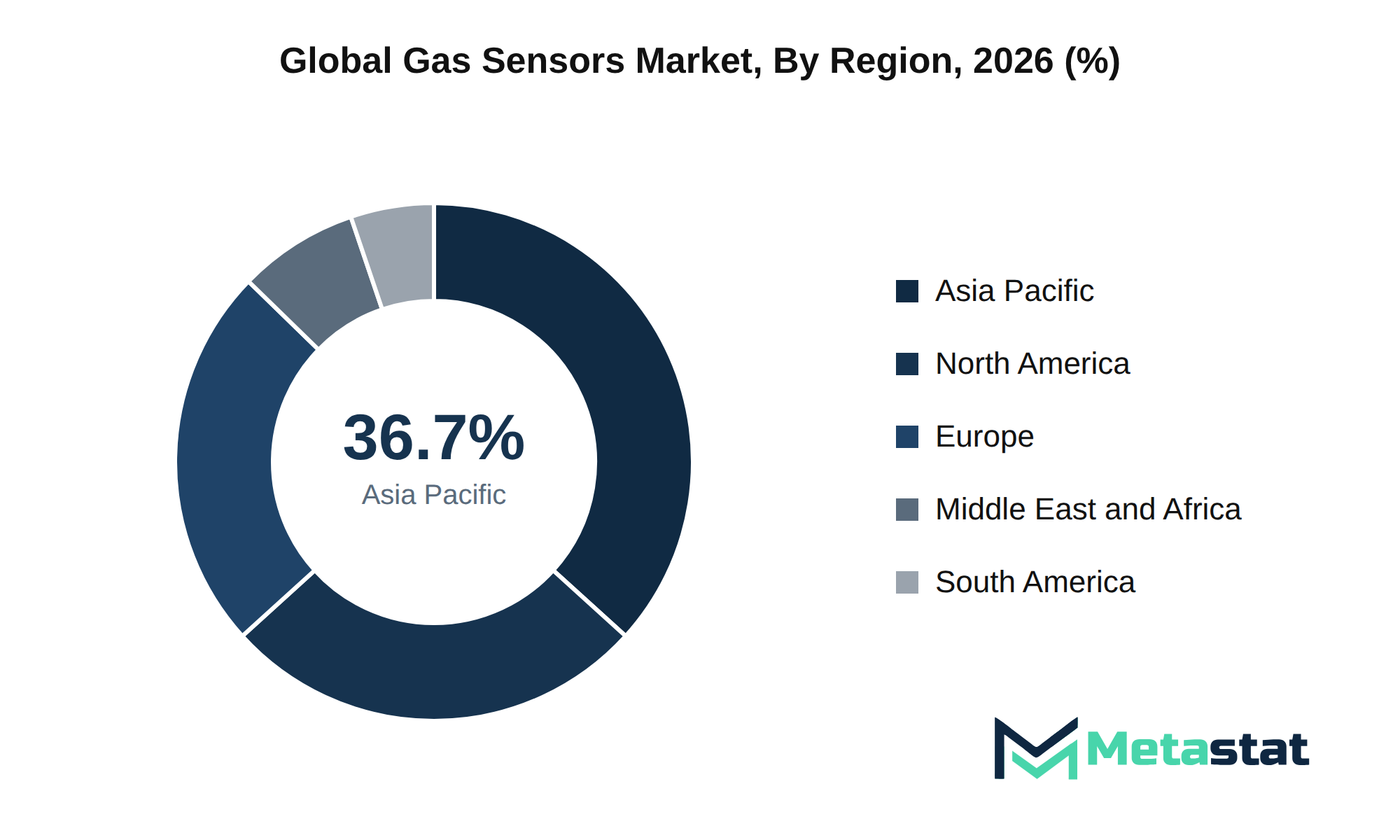
The Gas Sensors market features a diverse range of players engaging in various strategic behaviors to enhance their market positions. Mergers and acquisitions remain prevalent in the industry, allowing companies to expand their technological capabilities and market reach. Strategic alliances and partnerships enable firms to leverage shared resources and expertise, driving innovation and product differentiation. Companies prioritize research and development efforts, focusing on proprietary technology and advancing their R&D pipelines, which strengthen their competitive advantages.
Pricing strategies play a crucial role in maintaining market share amid increasing competition. Companies employ different commercial models to cater to specific customer needs, enhancing customer retention strategies and building brand equity. Barriers to entry shape market dynamics, deterring new entrants while established firms benefit from their intellectual property portfolios and technological defensibility. The Gas Sensors market exhibits a competitive outlook characterized by ongoing advancements and strategic growth vectors that will influence the landscape for years to come.
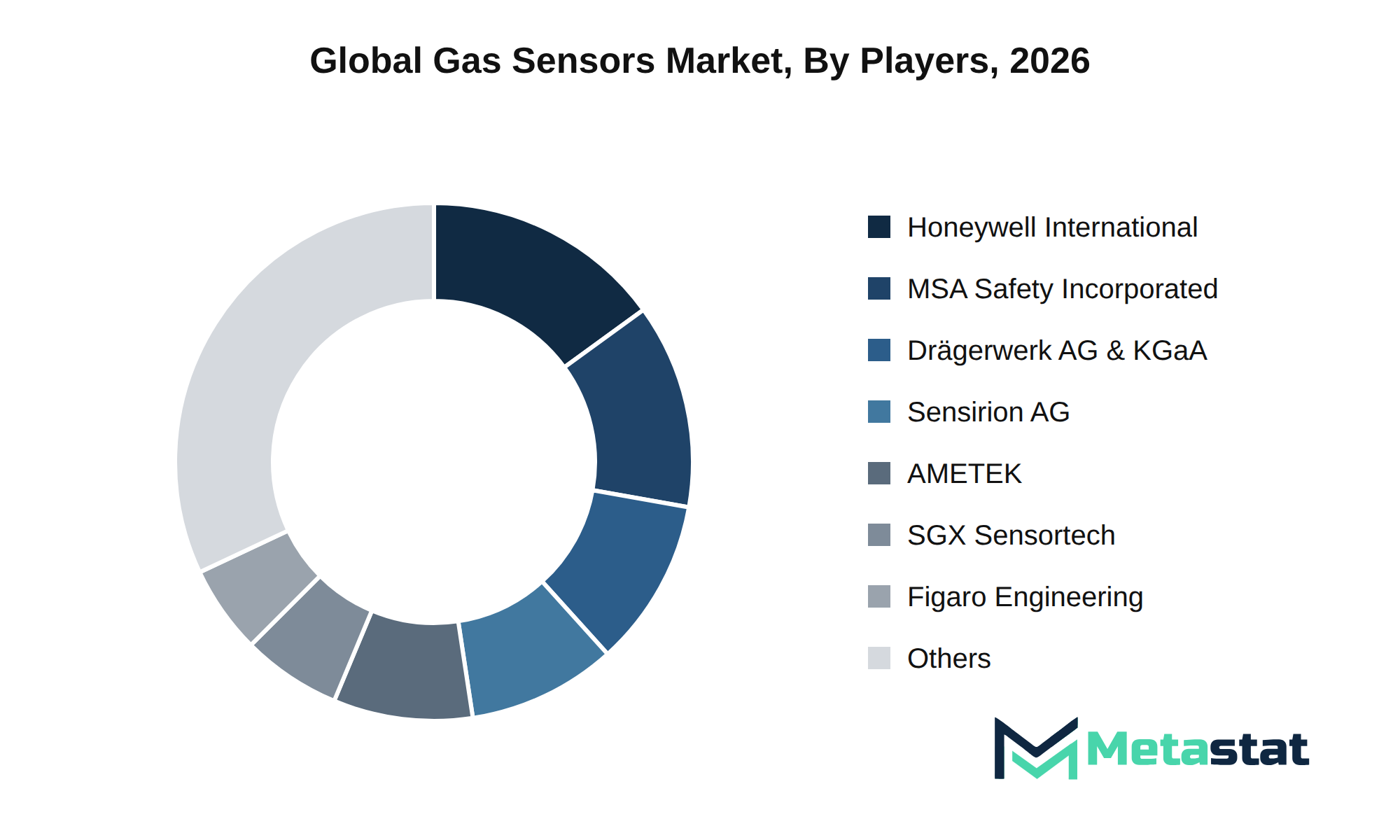
Market size is forecast to rise from USD 1,751.9 million in 2025 to over USD 3,148.8 million by 2033. The growth trajectory reflects a compound annual growth rate (CAGR) of 7.6% over the forecast period. The base case scenario establishes steady demand across various industries driving adoption, including oil and gas, chemicals, and environmental monitoring. Expansion in these sectors supports the upward trend in the market.
In a bullish scenario, accelerated innovation and advancements in next-generation technologies could enhance product capabilities, stimulating higher demand and faster market adoption. This scenario aligns with increased investments in research and development (R&D), leading to quicker commercialization timelines for innovative gas sensor technologies. A bearish outlook emerges from regulatory challenges or geopolitical tensions, potentially disrupting supply chains and constraining market growth.
Ongoing regulatory evolutions, including compliance milestones related to environmental standards, create both challenges and opportunities for the market. Compliance timelines dictate the pace of technological adaptation and integration across industries, influencing strategic capital allocation and investment vectors. While industries adapt to evolving regulations, unmet enterprise needs regarding safety and environmental monitoring surface, presenting high-growth pockets for gas sensor applications.
Overall, the Gas Sensors market is positioned to navigate dynamic macroeconomic conditions and structural shifts. Strategic imperatives for industry players include investing in innovative technologies and enhancing product offerings to address emerging needs. Firms that develop defensibility roadmaps and align with evolving market demands secure a stronger competitive position in the years ahead.
The report strategically identifies and profiles the key market players and analyses their core competencies in each sub-segment of the Gas Sensors market.
|
Report Attributes |
Details |
|
Study Period |
2021-2033 |
|
Base Year |
2025 |
|
Estimated Year |
2026 |
|
Forecast Period |
2026-2033 |
|
Historical Period |
2021-2025 |
|
Growth Rate |
CAGR 7.6% from 2026 to 2033 |
|
Revenue Unit |
USD million |
|
Segmentation |
By Technology, Gas Type, Application, End-Use Industry, and Region |
|
By Region |
North America (By Technology, Gas Type, Application, End-Use Industry, and Country)
|
|
Europe (By Technology, Gas Type, Application, End-Use Industry, and Country)
|
|
|
Asia Pacific (By Technology, Gas Type, Application, End-Use Industry, and Country)
|
|
|
South America (By Technology, Gas Type, Application, End-Use Industry, and Country)
|
|
|
Middle East and Africa (By Technology, Gas Type, Application, End-Use Industry, and Country)
|
Find answers to common questions about this report
The Gas Sensors market size was valued at USD 1,751.9 million in 2025, according to the Metastat Insights study.
The Gas Sensors market is projected to grow at a CAGR of 7.6% during the forecast period from 2026 to 2033.
The North America Gas Sensors market size is estimated to reach USD 782.8 million by 2033.
The Chemiresistive Sensors segment leads the Gas Sensors market, with a projected value of USD 855.8 million by 2033. This segment demonstrates the highest growth potential compared to other technology segments.
Key drivers for the Gas Sensors market include growing concerns regarding environmental sustainability and stringent emission limits. Industries including oil and gas, chemicals, and manufacturing increasingly adopt advanced monitoring solutions to comply with regulations, enhancing operational efficiency and ensuring adherence to standards. The focus on emissions and environmental monitoring increases demand for gas sensors, driving innovation across multiple sectors.
Regulatory compliance hurdles significantly restrict the growth of the Gas Sensors market. The complexity of navigating varying regulations increases operational costs and extends product development timelines, creating barriers for smaller firms. a shortage of skilled labor and geopolitical fragmentation further complicate market dynamics, impacting production and competitiveness.
Growing concerns regarding environmental sustainability and stringent emission limits established by governments significantly favor product adoption in the Gas Sensors market. Industries including oil and gas, chemicals, and manufacturing increasingly integrate advanced monitoring solutions to comply with regulations, driving demand for accurate gas measurement technologies.
The Gas Sensors market is estimated to reach a valuation of USD 3,148.8 million by 2033.
Key players operating in the Gas Sensors market include Honeywell International Inc., Drägerwerk AG & Co. KGaA, MSA Safety Incorporated, Figaro Engineering Inc., SGX Sensortech, and Sensirion AG.
Asia Pacific leads the Gas Sensors market, accounting for 36.7 percent of the market share.
The analysts below cover Electronics and Semiconductor research at Metastat Insights.
LEAD ANALYST
Utkarsh Khirodkar is a Lead Market Research Analyst at MetaStat Insight, specializing in market intelligence, technology sector assessments, and competitive strategy.

PRINCIPAL CONSULTANT - ENTERPRISE AI & EMERGING TECHNOLOGIES
Banking & Finance · Electronics and Semiconductor · Energy and Power · Healthcare IT · Information & Technology · Professional Services
Vijay Gunti is a Principal Consultant at MetaStat Insight, bringing over two decades of experience across enterprise digital transformation, technology strategy, and intelligent systems.

PRINCIPAL CONSULTANT - QUALITY SYSTEMS & COMPLIANCE
Electronics and Semiconductor · Machinery & Equipment · Professional Services
Omkar Phadtare is an Industry Consultant at MetaStat Insight, specializing in quality systems, regulatory compliance, and standards benchmarking to drive data-driven market intelligence and strategic industry research.

ENERGY & INFRASTRUCTURE INDUSTRY CONSULTANT
Automotive and Transportation · Electronics and Semiconductor · Energy and Power · Machinery & Equipment
Saurabh Vasant Ganvir consults for Energy & Infrastructure Industry at MetaStat Insight, specializing in renewable energy, solar EPC, and electric vehicle (EV) infrastructure markets.

LEAD CONSULTANT - COMMUNICATION, TELECOM, AND IT
Electronics and Semiconductor · Information & Technology · Machinery & Equipment · Professional Services
Ravindra Sathe Consultants for Communication, Telecom, and IT at MetaStat Insight. He leads the firm's industry research initiatives across telecommunications infrastructure, digital connectivity, enterprise networking, and emerging information technology domains.
Evaluating sovereign cloud deployments for core banking platforms demands a clear view of data residency regulations and migration exit strategies. MetaStat Insight delivered an exhaustive review of regional latency tolerances, mainframe decommission milestones, and third-party vendor concentration risk. The regulatory compliance mapping across European and Asian financial jurisdictions gave our team a dependable baseline for multi-cloud infrastructure discussions.
Replacing petrochemical surfactants with bio-based alternatives requires realistic timelines on industrial precision fermentation scaling. The market research broke down commercialization timelines, feedstock sugar price sensitivities, and regional cosmetic ingredient regulatory approvals in Europe and East Asia. That supplier readiness mapping gave our formulations team reliable context when comparing renewable chemical sourcing roadmaps.
Tracking ceramic matrix composite adoption in high-bypass aero engines requires strict attention to material qualification cycles and FAA airworthiness testing milestones. The MetaStat Insight team provided a detailed timeline of silicon carbide fiber manufacturing capacity and commercial foundry lead times. Having clear visibility into upstream thermal barrier coating supply helped us stress-test our long-term component procurement strategy.
Explore related market intelligence reports worth reading alongside this one.