
LEAD ANALYST
Utkarsh Khirodkar is a Lead Market Research Analyst at MetaStat Insight, specializing in market intelligence, technology sector assessments, and competitive strategy.

HSM-as-a-Service Market Size, Share, By Service Type (Managed HSM, Hosted HSM, and Bring Your Own Key (BYOK) HSM), By Deployment Mode (Public Cloud, Private Cloud, and Hybrid Cloud), By Organization Size (Large Enterprises, Small Enterprises, and Medium-Sized Enterprises), By End-User Vertical (Banking, Financial Services, Insurance, Healthcare, Government, Public Sector, IT, Telecommunications, Retail, E-Commerce, Manufacturing, and Others), Industry Analysis, Growth, Trends, and Forecast, 2026-2033
Report ID
MSI-4718
Published
May, 2026
Pages
315 Pages
Format
Report Details
Choose Your License
HSM-as-a-Service Market
Global HSM-as-a-Service market size is valued at USD 1,393.3 million in 2025 and projected to grow at a CAGR of 14.8% during the forecast period, reaching USD 4,200.8 million by 2033.
North America holds 38.7% of the global market in 2025, with the U.S. leading the regional market.
Managed HSM segment accounts for a 45.0% market share in 2025.
Key trends driving growth: Regulatory and compliance push for hardware-backed key protection, Cloud migration and zero-trust programs requiring centralized key control.
Opportunities include Confidential computing and post-quantum readiness driving HSM-backed key lifecycles.
Key insight: Cloud-first security modernization accelerates demand for managed cryptographic infrastructure across regulated industries.
The Global HSM-as-a-Service market within the cybersecurity and cloud infrastructure industry is evolving beyond secure key storage and cryptographic processing, shaping how digital trust is embedded across distributed ecosystems. Over the forecast period, enterprises will increasingly use cloud-delivered hardware security modules as programmable trust anchors across multi-cloud, hybrid cloud, and edge environments. Service providers are integrating advanced cryptographic controls into DevSecOps pipelines, enabling automated certificate lifecycle management, confidential computing support, and post-quantum cryptography readiness without requiring on-premises hardware ownership.
As regulatory expectations increase across financial services, healthcare, and digital payments, organizations are embedding HSM capabilities into identity fabrics, zero-trust architectures, and API security gateways. Financial institutions are connecting hosted HSM environments with tokenization platforms and central bank digital currency sandboxes, enabling secure experimentation without capital-intensive deployments. Meanwhile, telecom operators and 5G providers are aligning managed cryptographic modules with secure network slicing frameworks and IoT authentication layers to ensure device-level trust at scale.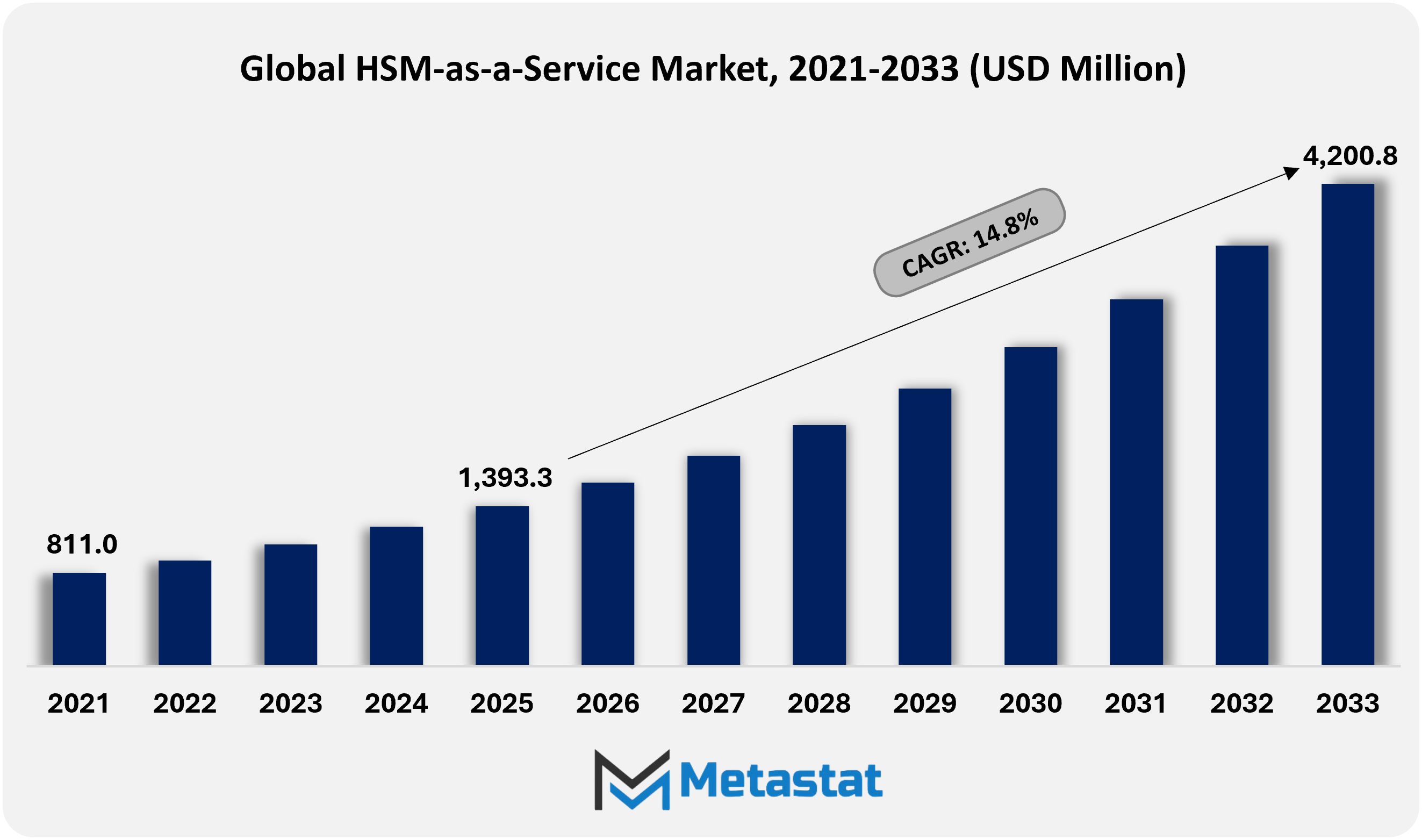
Regulatory and compliance push for hardware-backed key protection.
Global HSM-as-a-Service market is gaining momentum from stricter data protection laws and financial security mandates across major regions. Regulators are intensifying audit and compliance requirements, increasing the need for certified hardware security modules for encryption key storage and lifecycle control. Enterprises are prioritizing tamper-resistant cryptographic environments to meet compliance benchmarks across banking, healthcare, and digital payment infrastructures.
Cloud migration and zero-trust programs requiring centralized key control
Rapid enterprise cloud adoption is increasing the need for centralized cryptographic governance. Zero-trust security architectures require strict identity validation and tightly controlled encryption keys across distributed workloads. The Global HSM-as-a-Service market is benefiting from this shift through unified key orchestration, secure API integration, and scalable lifecycle management across hybrid and multi-cloud deployments.
Latency and connectivity sensitivity for high-throughput cryptographic workloads
Performance constraints will affect adoption in industries processing high transaction volumes. Network dependency can introduce latency across encryption and decryption operations, especially in real-time financial systems. Global HSM-as-a-Service market participants will need to address throughput optimization, edge deployment models, and resilient connectivity frameworks to support mission-critical cryptographic functions.
Vendor lock-in and portability constraints across clouds and HSM interfaces
Interoperability challenges will limit flexibility across cloud ecosystems. Proprietary interfaces and differing hardware security standards can restrict seamless migration between service providers. The Global HSM-as-a-Service market faces pressure to improve alignment with open standards, support controlled key portability and enable workload mobility across heterogeneous infrastructure environments.
Confidential computing and post-quantum readiness driving HSM-backed key lifecycles
Emerging confidential computing frameworks are increasing demand for secure enclave integration with hardware-backed key management. Anticipated quantum computing advances are accelerating investment in advanced cryptographic algorithms and resilient key rotation strategies. The Global HSM-as-a-Service market is positioned to expand through post-quantum preparedness initiatives and stronger encryption lifecycle governance across critical digital ecosystems.
The Global HSM-as-a-Service market is classified based on Service Type, Deployment Mode, Organization Size, and End-User Vertical.
Managed HSM segment is valued at USD 718.8 million in 2026 and is projected to reach USD 1,840.8 million by 2033, at a CAGR of 14.4% during the forecast period.
Managed HSM services will gain strong traction owing to rising complexity in cryptographic governance and expanding compliance requirements. Organizations are increasingly relying on specialized providers to manage encryption key lifecycles, continuous monitoring, policy enforcement, and operational support. This service model reduces administrative burden while maintaining a high level of assurance, making it well suited for regulated industries that require scalable and secure digital trust infrastructure.
Hosted HSM segment is valued at USD 540 million in 2026 and is projected to reach USD 1,283.8 million by 2033, at a CAGR of 13.2% during the forecast period.
Hosted HSM solutions are expanding through centralized cloud infrastructure that provides dedicated hardware-backed cryptographic environments. Enterprises seeking greater control over encryption operations without maintaining physical devices are increasingly adopting hosted models. Faster provisioning, stronger audit visibility, and simplified deployment are positioning hosted HSM services as reliable options for regulated and security-sensitive workloads.
Bring Your Own Key (BYOK) HSM segment is valued at USD 339.1 million in 2026 and is projected to reach USD 1,076.2 million by 2033, at a CAGR of 17.9% during the forecast period.
Bring Your Own Key HSM models are supporting enterprise control over encryption assets within third-party cloud platforms. Internal control over key generation, storage, and rotation strengthens governance, improves visibility, and supports data sovereignty requirements. Rising cross-border data regulations and stronger customer privacy expectations are accelerating adoption of BYOK frameworks across cloud-native and hybrid environments.
Public Cloud segment is projected to reach USD 2,328.9 million by 2033, at a CAGR of 14.8% during the forecast period.
Public cloud deployment is expanding owing to scalable infrastructure, lower upfront investment, and faster service integration. Organizations adopting cloud-first and multi-cloud strategies are embedding HSM services directly into public cloud environments to secure applications, APIs, and transaction platforms. Rising dependence on digital platforms is reinforcing the role of public cloud in enterprise cryptographic protection.
Private Cloud segment is projected to reach USD 702.8 million by 2033, at a CAGR of 12.5% during the forecast period.
Private cloud deployment remains important for industries with strict compliance requirements and highly sensitive data workloads. Dedicated infrastructure provides greater administrative control, predictable performance, and stronger customization for enterprise-specific security policies. Organizations managing classified, regulated, or mission-critical environments continue to prioritize private cloud models for comprehensive encryption governance.
Hybrid Cloud segment is projected to reach USD 1,169.1 million by 2033, at a CAGR of 16.3% during the forecast period.
Hybrid cloud deployment is advancing through the balanced integration of on-premises infrastructure and cloud-based services. Organizations seeking operational flexibility while maintaining oversight of sensitive keys are increasingly adopting hybrid frameworks. Interoperable cryptographic management across multiple environments is improving resilience, regulatory alignment, and long-term infrastructure flexibility.
Large Enterprises segment is projected to reach USD 2,744.4 million by 2033.
Large enterprises will remain the primary adopters of HSM-as-a-Service owing to complex IT environments, global operations, and broad regulatory exposure. Advanced cybersecurity strategies across these organizations increasingly include HSM services to protect digital payments, intellectual property, enterprise applications, and customer databases. Strong investment in cloud-native security models is reinforcing enterprise-wide encryption maturity.
Small and Medium-Sized Enterprises (SMEs) segment is projected to reach USD 1,456.4 million by 2033.
Small and medium-sized enterprises are increasingly adopting HSM services through subscription-based models that reduce upfront infrastructure costs. Access to enterprise-grade encryption capabilities is helping SMEs strengthen security posture, improve customer confidence, and align with evolving data protection requirements. Simplified deployment and managed support are making HSM-as-a-Service increasingly accessible to smaller organizations.
Banking, Financial Services and Insurance (BFSI) segment is projected to grow at a CAGR of 14.3% during the forecast period.
BFSI organizations are intensifying their use of HSM services to secure digital banking systems, payment gateways, authentication workflows, and regulatory reporting platforms. Rising digital transaction volumes and growing fraud prevention requirements are increasing the need for certified cryptographic infrastructure. Strong emphasis on transaction integrity, customer trust, and compliance is supporting continued adoption across the financial sector.
Healthcare segment is projected to grow at a CAGR of 15.5% during the forecast period.
Healthcare providers are increasing HSM adoption to protect electronic health records, connected medical devices, and digital care platforms. Growing data privacy obligations and rising cyber threats targeting patient information are encouraging stronger encryption governance across distributed healthcare ecosystems. Expansion of telehealth and cloud-based clinical systems is further supporting the need for secure key management infrastructure.
Government & Public Sector segment is projected to grow at a CAGR of 14.1% during the forecast period.
Government and public sector organizations are investing in HSM services to secure citizen data, digital identity systems, national security networks, and confidential communications. Digital governance programs and public infrastructure modernization initiatives are increasing reliance on trusted cryptographic controls. Stronger focus on sovereignty, compliance, and secure public service delivery is reinforcing market adoption in this segment.
IT & Telecommunications segment is projected to grow at a CAGR of 16% during the forecast period.
IT and telecommunications companies are integrating HSM services into cloud platforms, communication infrastructure, 5G frameworks, and enterprise service environments. Rapid expansion of digital connectivity is increasing the need for scalable encryption management to secure traffic, devices, and service delivery channels. Continued investment in next-generation networks is supporting stronger adoption of managed cryptographic infrastructure.
Retail & E-Commerce segment is projected to grow at a CAGR of 17.3% during the forecast period.
Retail and e-commerce companies are adopting HSM services to secure online payments, customer identity systems, loyalty platforms, and supply chain transactions. Expansion of digital marketplaces and omnichannel commerce is increasing dependence on robust cryptographic authentication and secure transaction processing. Stronger focus on payment security and consumer trust is supporting rapid uptake across this segment.
Manufacturing segment is projected to grow at a CAGR of 13.4% during the forecast period.
Manufacturing companies are implementing HSM services to protect industrial control systems, connected production assets, and proprietary design data. Smart factory initiatives and industrial automation are increasing the need for secure key management across operational technology and enterprise IT environments. Greater cybersecurity attention within connected production ecosystems is strengthening the role of HSM-as-a-Service in manufacturing.
Others segment is projected to grow at a CAGR of 10.5% during the forecast period.
Additional sectors such as education, energy, logistics, and professional services are incorporating HSM services to strengthen digital infrastructure security. Wider use of cloud applications, connected devices, and digital transactions is broadening the need for reliable cryptographic controls across non-core industries. This trend is expanding the addressable market beyond traditionally regulated verticals.
Based on geography, the Global HSM-as-a-Service market is divided into North America, Europe, Asia-Pacific, South America, Middle East, and Africa.
North America HSM-as-a-Service Market is set to expand at a CAGR of 14.8% within the forecast period, reaching a market size (TAM) of USD 1,476.2 million by the end of 2033.
North America drives the HSM-as-a-Service market through strict data protection regulations, strong enterprise cybersecurity spending, and high adoption of cloud-based infrastructure.
Europe HSM-as-a-Service market is expanding through strong regulatory focus on data privacy, digital identity, and secure cloud transformation.
Asia Pacific presents strong growth opportunities for the HSM-as-a-Service market owing to rapid digital payment expansion, rising cloud adoption, and increasing cybersecurity investment.
Middle East and Africa HSM-as-a-Service market is gaining traction through increasing focus on data sovereignty, national cybersecurity strategies, and digital government initiatives.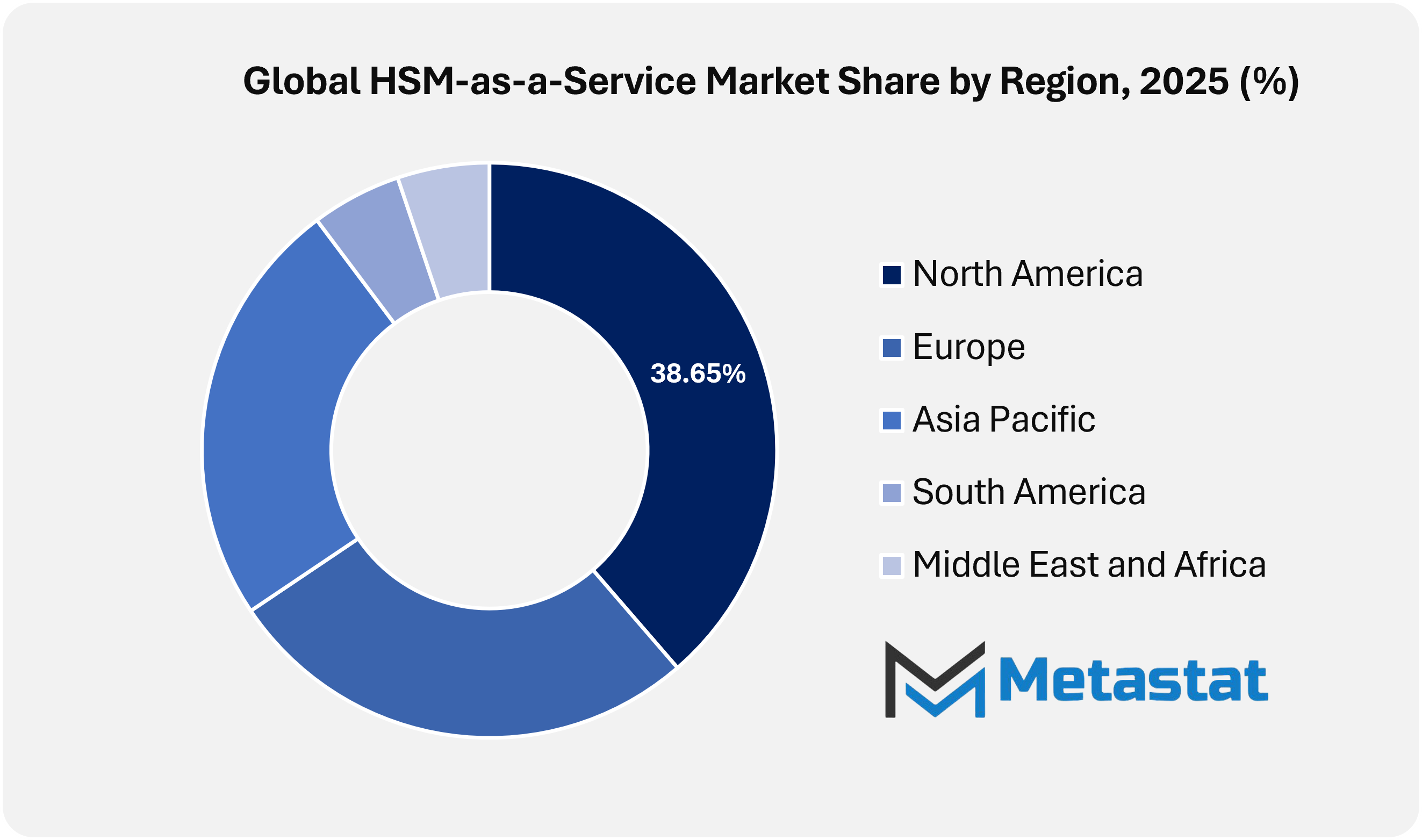
Global HSM-as-a-Service market is gaining strong momentum as organizations place greater emphasis on protecting sensitive data, encryption keys, digital identities, and secure transactions. Hardware security modules, once largely deployed through on-premises infrastructure, are increasingly being delivered through cloud-based service models that provide flexible and scalable access to high-assurance cryptographic protection. Enterprises across financial services, healthcare, government, and technology sectors are adopting these services to meet regulatory requirements and reduce exposure to cyber threats.
Major cloud providers are shaping the competitive structure of the Global HSM-as-a-Service market. Amazon Web Services, Microsoft Corporation, IBM Corporation, and Oracle Corporation offer integrated cloud HSM solutions that support encryption, key lifecycle management, and compliance across hybrid and multi-cloud environments. Their global infrastructure, continued investment in cloud security, and established enterprise customer base are enabling them to maintain strong market positions.
Specialized security vendors also play a critical role in advancing the market. Thales Group, Utimaco Inc., Entrust Corporation, Securosys AG, Fortanix Inc., and Futurex LP provide dedicated HSM technologies designed for high-assurance use cases across banking, payment systems, and public sector applications. Their offerings support organizations that require deeper cryptographic control, certified hardware environments, and tailored deployment capabilities.
Emerging and regional participants are strengthening the competitive environment with focused capabilities in digital trust, identity verification, compliance management, and cryptographic consulting. Companies such as LuxTrust S.A., Eviden, Encryption Consulting LLC, SSL.com, eMudhra Limited, Procenne Digital Security, TrustDynamics, SEFIRA, and Bit4id S.r.l. are expanding the market by serving organizations seeking reliable encryption services without managing physical hardware. Continued expansion of privacy regulations and increasingly sophisticated cyber threats are expected to support broader adoption of trusted cloud-based cryptographic security services.
Market size is forecast to rise from USD 1,393.3 million in 2025 to over USD 4,200.8 million by 2033.
HSM-as-a-Service market will increasingly influence board-level risk governance, cyber insurance requirements, and cross-border data security strategies. Enterprises are no longer evaluating HSM services solely through compliance requirements but are positioning them as strategic infrastructure that supports digital identity, transaction integrity, and secure innovation. Continued expansion of cloud-native security architectures, digital payments, and privacy-focused enterprise frameworks will sustain long-term market growth.
This research report categorizes the HSM-as-a-Service market based on key segments and regions, forecasts revenue growth, and analyses trends in each submarket. The report analyses the key growth drivers, opportunities, and challenges influencing the HSM-as-a-Service market. Recent market developments and competitive strategies such as expansion, product launch, partnership, merger, and acquisition have been included to draw the competitive landscape in the market.
The report strategically identifies and profiles the key market players and analyses their core competencies in each sub-segment of the HSM-as-a-Service market.
|
Report Attributes |
Details |
|
Study Period |
2021-2033 |
|
Base Year |
2025 |
|
Estimated Year |
2026 |
|
Forecast Period |
2026-2033 |
|
Historical Period |
2021-2025 |
|
Growth Rate |
CAGR 14.8% from 2026 to 2033 |
|
Revenue Unit |
USD million |
|
Segmentation |
By Service Type, Deployment Mode, Organization Size, End-User Vertical, and Region |
|
By Region |
North America (By Service Type, Deployment Mode, Organization Size, End-User Vertical, and Country)
|
|
Europe (By Service Type, Deployment Mode, Organization Size, End-User Vertical, and Country)
|
|
|
Asia Pacific (By Service Type, Deployment Mode, Organization Size, End-User Vertical, and Country)
|
|
|
South America (By Service Type, Deployment Mode, Organization Size, End-User Vertical, and Country)
|
|
|
Middle East and Africa (By Service Type, Deployment Mode, Organization Size, End-User Vertical, and Country)
|
Find answers to common questions about this report
Latency and connectivity sensitivity for high-throughput cryptographic workloads will hamper the market growth within the forecast period.
Top players operating in the HSM-as-a-Service industry include Amazon Web Services, Microsoft Corporation, IBM Corporation, Oracle Corporation, and LuxTrust S.A.
Global HSM-as-a-Service market is estimated to reach USD 4,200.8 million by 2033.
Regulatory and compliance push for hardware-backed key protection and Cloud migration and zero-trust programs requiring centralized key control are key driving factors, boosting the market.
North America region dominates the market.
The Managed HSM is the leading type segment in the Global market.
The Metastat Insights analysis shows that the North America HSM-as-a-Service market size is estimated to be USD 1476.2 million by 2033.
The Metastat Insights study shows that the Global HSM-as-a-Service market size was USD 1,393.3 million in 2025.
The Global HSM-as-a-Service market is expected to grow at a CAGR of 14.8% over the forecast period (2026-2033).
The analysts below cover Information & Technology research at Metastat Insights.
LEAD ANALYST
Utkarsh Khirodkar is a Lead Market Research Analyst at MetaStat Insight, specializing in market intelligence, technology sector assessments, and competitive strategy.

PRINCIPAL CONSULTANT - ENTERPRISE AI & EMERGING TECHNOLOGIES
Banking & Finance · Electronics and Semiconductor · Energy and Power · Healthcare IT · Information & Technology · Professional Services
Vijay Gunti is a Principal Consultant at MetaStat Insight, bringing over two decades of experience across enterprise digital transformation, technology strategy, and intelligent systems.

LEAD CONSULTANT - COMMUNICATION, TELECOM, AND IT
Electronics and Semiconductor · Information & Technology · Machinery & Equipment · Professional Services
Ravindra Sathe Consultants for Communication, Telecom, and IT at MetaStat Insight. He leads the firm's industry research initiatives across telecommunications infrastructure, digital connectivity, enterprise networking, and emerging information technology domains.
Analyzing the transition from natural gas to green hydrogen in iron ore reduction requires realistic infrastructure timelines. Meta stat insight supplied a detailed regional assessment of DRI plant conversion costs and scrap metal availability in North America and Western Europe. Their report carefully examined pellet quality specs and electrical grid access constraints without making oversimplified market assumptions. The research material served as a practical reference during internal technology roadmap discussions.
Integrating zero-trust access controls across legacy electronic health record systems involves complex compliance overhead. Team produced an analysis that clearly separated identity governance and administration tools from privileged access management platforms. Their evaluation of HIPAA and GDPR compliance features across cloud native solutions gave our architecture group clear baseline criteria. The custom data request regarding biometric authentication adoption in hospital networks was returned promptly with clear documentation.
Evaluating calorific value requirements and air permit compliance across municipal waste facilities requires localized data. Metastat Insight structured their analysis around operational throughput capacity and feedstock composition variations in Latin America and Eastern Europe. Their competitive mapping of sorting equipment vendors helped clarify technology differences between optical separators and heavy media systems. The study provided an objective baseline during our capital expenditure reviews.
Explore related market intelligence reports worth reading alongside this one.