
LEAD ANALYST
Utkarsh Khirodkar is a Lead Market Research Analyst at MetaStat Insight, specializing in market intelligence, technology sector assessments, and competitive strategy.

India Enterprise Agentic AI Market Size, Share, By Deployment Model (Cloud, On-Premises, Hybrid), By Offering Type (AI Agent Development Platforms, Prebuilt Enterprise AI Agents, Custom-Built Enterprise AI Agent Solutions, Agentic Process Automation Solutions, AI Agent Integration and Orchestration Services, AI Agent Governance and Management Platforms), By Agent System (Single Agent Systems, Multi Agent Systems), By Application (Customer Service and Virtual Assistants, Robotics and Automation, Healthcare, Financial Services, Security and Surveillance, Gaming and Entertainment, Marketing and Sales, Others (Human Resources, Legal and Compliance)), Industry Analysis, Growth, Trends, and Forecast, 2026-2033
Report ID
MSI-5493
Published
October, 2026
Pages
281 Pages
Format
Historical
Base year
Forecast
Forecast period
Report Details
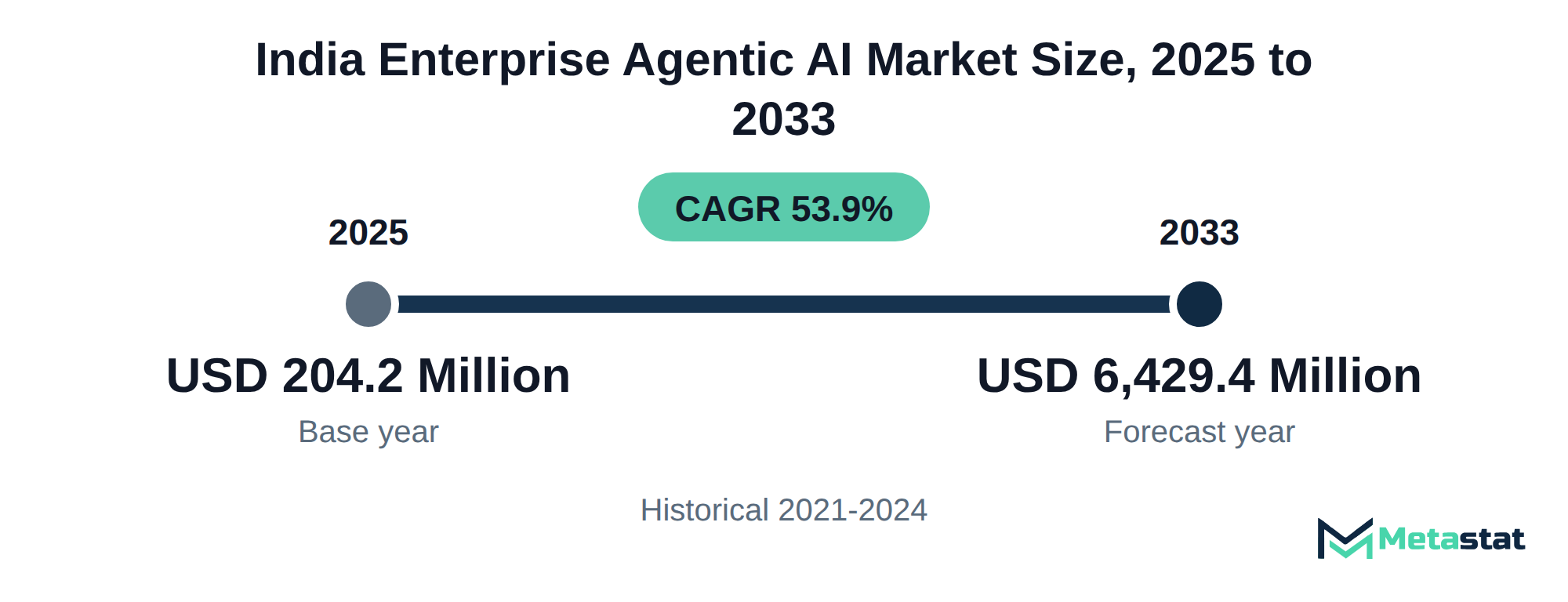
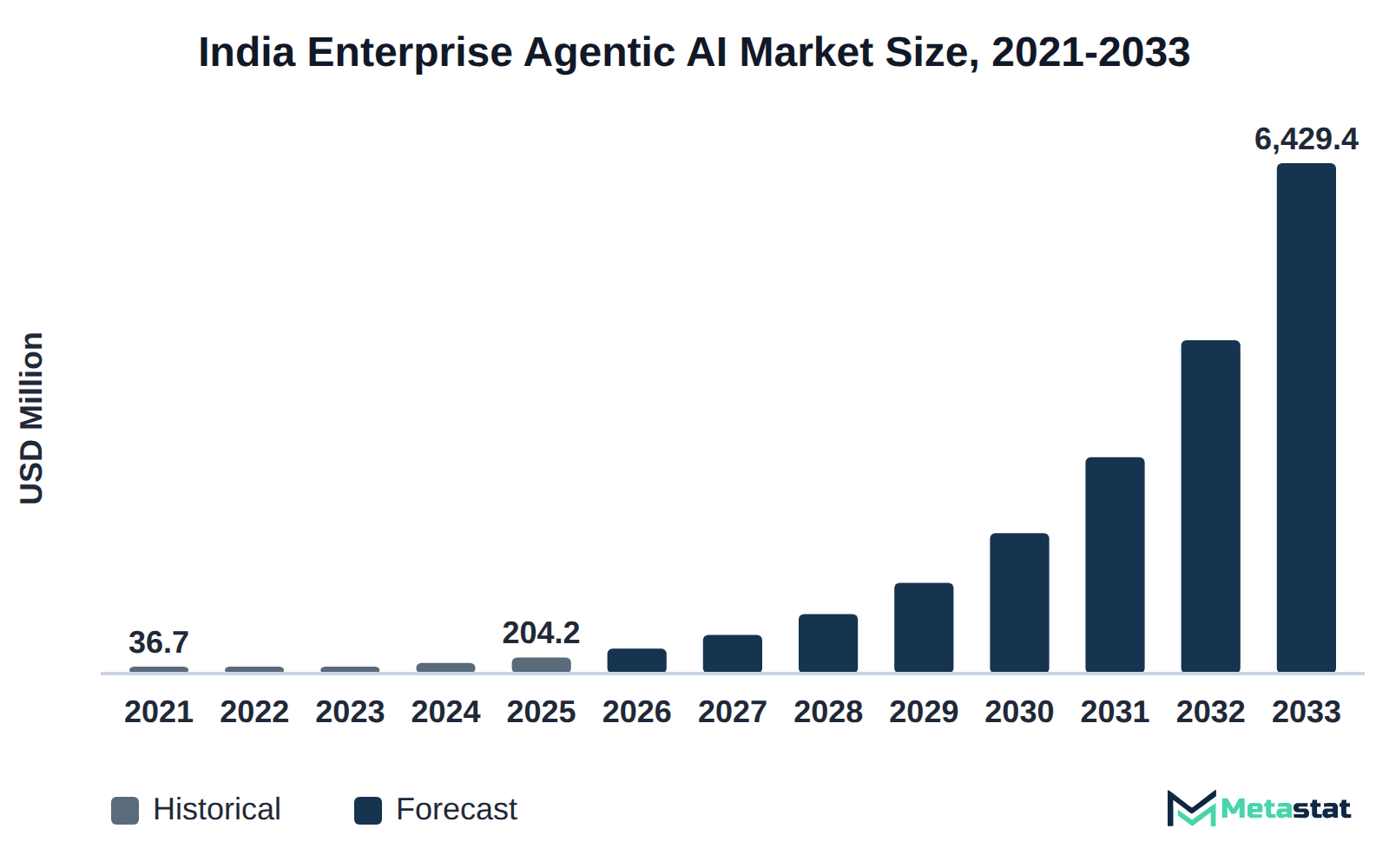
Market Valuation: Valued at $204.2 Million in 2025, projected to reach $6,429.4 Million by 2033 at a 53.9% CAGR.
Dominant Segment: The Prebuilt Enterprise AI Agents segment leads the market, driven by a strong preference for ready-to-deploy solutions that minimize implementation time and enhance operational efficiency.
Geographic Lead: North America commands the largest share of the market, influenced by established technology infrastructure and a high concentration of early adopters seeking advanced AI solutions.
What's Inside: The report provides comprehensive coverage of the competitive landscape, detailed analyses of market dynamics, and a forecast window extending from 2026 to 2033.
Growing Opportunity: The Multi-Agent Systems segment presents a dynamic growth opportunity, projected to achieve a CAGR of 59.5%, as industries seek collaborative solutions to enhance decision-making and automate complex processes.
Choose Your License
India Enterprise Agentic AI Market
The India Enterprise Agentic AI market was valued at USD 204.2 million in 2025 and is projected to reach USD 6,429.4 million by 2033, growing at a CAGR of 53.9% over the forecast period.
The India Enterprise Agentic AI market encompasses a wide range of applications and offerings aimed at automating processes and enhancing decision-making across various industries. Buyers invest in these solutions to improve operational efficiency, reduce costs, and enhance customer experiences. The demand for advanced technologies, including AI-driven agents, facilitates the adoption of innovative tools that streamline workflow and drive productivity gains.
Growth in the market is propelled by increasing adoption of cloud-based solutions, which offer scalability and flexibility for businesses. The cloud segment stands out with the highest projected value, reflecting a significant shift towards remote and accessible AI solutions. The financial services sector emerges as a key driver, with companies seeking to leverage AI capabilities to enhance service delivery and risk management.
With a compound annual growth rate of 53.9%, the market is projected to expand substantially over the forecast period. The integration of AI technologies into various business functions not only enhances operational capabilities but positions companies to compete more effectively in their respective fields. This approach reshapes traditional business models and creates a more dynamic and responsive market environment.
Investment in the India Enterprise Agentic AI market reflects increasing demand for automation and enhanced operational efficiency across diverse sectors. Businesses prioritize solutions that streamline processes, improve customer interactions, and support data-driven decision-making. The growing emphasis on digital transformation drives spending, with organizations striving to leverage advanced technologies to maintain a competitive edge in the evolving marketplace.
The market experiences growth due to rapid adoption of cloud-based solutions, which facilitate scalability and flexibility for enterprises. The segment of Prebuilt Enterprise AI Agents holds the most significant value, indicating a strong preference for ready-to-deploy solutions that minimize implementation time. In terms of regional dynamics, North America commands the largest share, influenced by established technology infrastructure and a high concentration of early adopters.
One primary growth driver is the escalation of customer expectations for personalized service and immediate support. Enterprises increasingly rely on AI-driven tools to address these demands, enhancing customer satisfaction and loyalty. Such advancements contribute to operational success and position organizations to capitalize on emerging opportunities in the market.
Automation of lending, collections, and compliance processes in the Indian banking sector increasingly relies on Enterprise Agentic AI technology. The demand for enhanced operational efficiencies drives banks to integrate AI solutions that streamline multiple processes, reducing turnaround time and errors. In the framework of the India Enterprise Agentic AI market, the segment focusing on Custom-Built Enterprise AI Agent Solutions is projected to reach USD 1,193.9 million by 2033, indicating substantial investment in tailored solutions that address specific banking needs.
Financial institutions face mounting pressure to comply with regulatory requirements while managing operational costs. The implementation of AI-driven solutions enables banks to automate complex compliance checks through RegTech tools, enhancing accuracy and reducing human intervention. This shift improves compliance rates and allows financial institutions to focus on core activities that drive customer engagement and revenue growth.
With the increasing reliance on AI technologies, banks that adopt these solutions position themselves competitively within the market. The integration of Enterprise Agentic AI into lending and collections processes eliminates bottlenecks, resulting in significant cost savings and improved service delivery. Consequently, the future of banking in India stands at a critical juncture, with automation positioned as a key driver of operational excellence.
Buyers in the India Enterprise Agentic AI market increasingly prefer flexible pricing and contract models that align with their operational requirements. A significant trend has emerged where organizations opt for consumption-based pricing, allowing them to pay according to usage rather than a flat fee. This approach proves advantageous for enterprises facing fluctuating demands, particularly in sectors including customer service and virtual assistants.
For instance, the market anticipates growth in prebuilt enterprise AI agents, projected to reach USD 1,339.2 million by 2033, representing a compound annual growth rate of 55.9%. This growth signals a shift in purchasing behavior, where businesses prioritize solutions that offer scalability and adaptability. Enterprises are investing in multi-agent systems, which are expected to attain a value of USD 3,133.7 million by 2033, growing at a CAGR of 59.5%. This investment trend reflects a broader strategy to enhance workflow efficiency through automation.
Ultimately, the evolution of purchasing strategies within the India Enterprise Agentic AI market highlights the necessity for solution providers to offer varied pricing models that cater to diverse buyer demands. This flexibility is expected to boost adoption rates and encourage investments in advanced AI solutions tailored to complex enterprise workflows.
Private cloud deployment presents a strategic advantage for organizations in the India Enterprise Agentic AI market, particularly those focused on data governance. With heightened concerns regarding data security and compliance, enterprises increasingly adopt private cloud solutions to maintain control over sensitive information. In 2026, the private cloud deployment model is projected to begin at USD 199.4 million, reflecting robust adoption and investment in this segment.
The need for data governance arises from various regulations and industry standards that mandate strict controls over data usage and storage. Companies operating private cloud environments implement customized data management policies aligned with their operational requirements, ensuring adherence to compliance regulations. This flexibility appeals to sectors including healthcare, finance, and technology, where data integrity and data privacy rank as top priorities.
In the context of the evolving AI landscape, organizations leveraging private cloud solutions enhance their competitive edge while mitigating risks associated with data breaches and regulatory violations. Investment in private cloud infrastructure supports operational efficiency and aligns with broader digital transformation initiatives, enabling enterprises to innovate within a secure framework. The trend toward private cloud deployment drives the market’s growth trajectory, as companies prioritize robust data governance strategies in their AI implementations.
Evaluating return on investment (ROI) from Agentic AI deployment involves assessing both direct and indirect benefits. Indian enterprises focus on efficiency gains, cost reductions, and enhanced customer experiences. These factors contribute significantly to the overall financial metrics that drive investment decisions. For instance, the AI Agent Development Platforms segment is projected to grow from USD 80.2 million in 2026 to USD 1,553.3 million by 2033, reflecting a compound annual growth rate of 52.7%. Such substantial growth highlights the increasing recognition of AI's potential to generate value.
Organizations conducting evaluations analyze metrics including reduced operational costs and time savings. Efficient deployment of Agentic AI allows enterprises to automate routine tasks, which liberates human resources for more strategic initiatives. This shift improves productivity and enhances employee satisfaction, further contributing to overall ROI. While the India Enterprise Agentic AI market continues to expand, companies emphasizing measurable ROI secure competitive advantages through optimized resource allocation and improved service delivery.
Organizations in India are investing more in agentic AI solutions due to a significant rise in automation needs across various sectors. This demand primarily comes from industries including customer service, healthcare, and financial services, which increasingly seek to enhance operational efficiency and reduce labor costs. The shift toward automation reflects a broader trend in these industries where companies aim to streamline processes and improve service delivery. This substantial growth indicates that organizations recognize the importance of adopting agentic AI to remain competitive and responsive to customer needs. Increased spending enables businesses to implement advanced AI-driven systems that facilitate better data processing and customer interactions. Enhancements in service and operational capabilities contribute to the market's expansion.
Advancements in AI agent development platforms drive growth in the India Enterprise Agentic AI market. Organizations increasingly seek tailored solutions, reflecting a shift towards specialized applications that enhance operational efficiency and customer engagement. The rising demand for prebuilt and custom-built enterprise AI agents further fuels this trend, enabling businesses to streamline processes and improve service delivery.
Investment in AI technologies enhances competitiveness across various sectors, with many organizations prioritizing the integration of intelligent systems for customer service, financial analysis, and process automation. The market experiences significant interest from industries including healthcare and financial services, where organizations value improved responsiveness and data-driven decision-making. This focus on AI agent development platforms reflects a broader commitment to leveraging innovative technologies for operational excellence, positioning enterprises to achieve sustainable growth and improved market positioning.
Infrastructure limitations present a significant challenge for the market, particularly for smaller enterprises lacking the necessary resources to implement Agentic AI solutions effectively. Many organizations struggle with inadequate connectivity and insufficient IT frameworks, resulting in slower uptake of enterprise AI applications. Such constraints delay the integration of these advanced technologies into existing operations, leading to smaller orders and reduced investment levels among buyers. The lack of skilled personnel to manage and deploy these solutions exacerbates the situation, restricting adoption and limiting competitive advantage. Enterprises seeking to enhance their operational efficiency face impediments from these infrastructure challenges, which impede growth within the India Enterprise Agentic AI market. Addressing these issues will be crucial for accelerating adoption and enabling broader access to the benefits of Agentic AI technologies.
Challenges in talent acquisition and retention significantly impact the India Enterprise Agentic AI market. Rapid technological advancements create a high demand for skilled professionals, leading to intense competition for top talent. Many organizations struggle to attract and retain employees with the necessary expertise in AI and machine learning, driving up labor costs. Consequently, suppliers experience margin pressure, affecting overall profitability. To address this challenge, companies invest in training programs and partnerships with educational institutions to build a skilled workforce. Suppliers implement competitive compensation packages and emphasize attractive workplace cultures to improve employee satisfaction. These strategies facilitate better talent retention and equip organizations with the necessary skills to thrive in the evolving landscape of the market. Effective talent management remains crucial for sustaining growth and maintaining a competitive edge in the sector.
Demand for multi-agent systems in the India Enterprise Agentic AI market signifies a dynamic growth opportunity. This segment is projected to achieve a compound annual growth rate (CAGR) of 59.5% through 2033. Driving factors include a shift towards more complex applications that require multiple agents working collaboratively to enhance decision-making and automate intricate processes. Industries including healthcare and financial services are primary adopters, focusing on improving efficiency and customer experience through these systems. Investment in multi-agent solutions addresses specific operational challenges by enabling organizations to scale their AI capabilities effectively. This growth reflects broader trends within the market, where organizations seek comprehensive solutions that integrate seamlessly with existing technologies. By leveraging multi-agent architectures, businesses enhance their operational workflows, creating a competitive advantage in their respective sectors.
The India Enterprise Agentic AI market is segmented based on Deployment Model, Offering Type, Agent System, and Application.
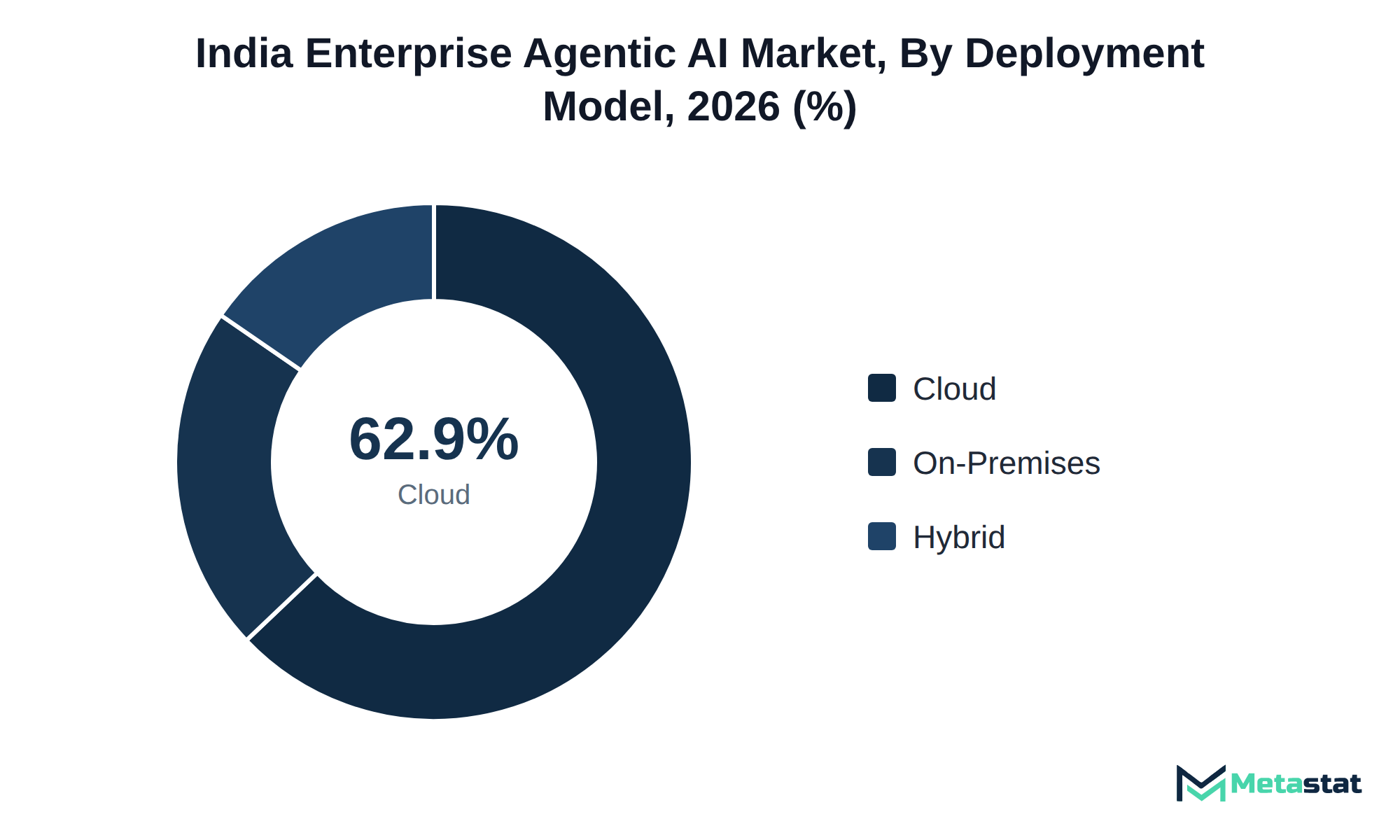
Cloud deployment within the India Enterprise Agentic AI market is valued at USD 199.4 million in 2026 and is projected to reach USD 4,231.8 million by 2033, at a CAGR of 54.7% during the forecast period. This segment suits organizations seeking scalable solutions for various applications, including customer service and process automation. A substantial driver for this segment stems from the increasing demand for agility and flexibility in operations, which organizations across sectors prioritize. Unlike on-premises solutions, which face higher upfront costs and implementation times, cloud offerings present a more attractive option, leading to greater adoption rates. The cloud segment's rapid growth contrasts with the on-premises segment, which is expected to grow at a slower pace of 48.9%, indicating a shift in preference toward more adaptable infrastructure in the market.
On-Premises segment is estimated to reach USD 1,075.6 million by 2033, at a CAGR of 48.9% during the forecast period. This deployment model caters to organizations seeking to maintain control over their data and systems within their own infrastructure. Industries including healthcare, finance, and manufacturing apply on-premises solutions to comply with stringent regulatory requirements and safeguard sensitive information. A notable driver for this segment includes the rising emphasis on data privacy and security, prompting enterprises to invest in robust on-premises systems. Compared to cloud-based solutions, on-premises systems typically involve higher initial investment but provide greater customization options. This segment exhibits a slower growth trajectory compared to the cloud deployment model, which is projected to reach USD 4,231.8 million by 2033, reflecting a CAGR of 54.7%. This disparity in growth rates highlights differing buyer preferences driven by specific industry needs and operational strategies.
Hybrid deployment in the India Enterprise Agentic AI market is expected to reach USD 1,121.9 million by 2033. This segment integrates cloud and on-premises capabilities, allowing organizations to adopt the flexibility of cloud solutions while maintaining control over sensitive data. Businesses across various sectors, including healthcare and financial services, apply hybrid models to enhance operational efficiency and responsiveness to changing demands. The growth of this segment is driven by ongoing advancements in cloud technology and the increasing necessity for organizations to balance data security with innovative solutions. Compared to cloud-only and on-premises options, hybrid deployment displays a moderate growth trajectory, positioned between the two. The Compound Annual Growth Rate (CAGR) for hybrid deployment stands at 48.9%, reflecting substantial potential within the evolving landscape of enterprise AI solutions. This growth trend highlights the value organizations find in hybrid systems, which cater to diverse operational needs while optimizing costs in deployment.
This segment supports organizations in developing customized AI agents tailored to specific business needs, driving efficiency across various operations. Rapid advancements in AI technologies significantly influence the growth of this segment, with companies in sectors including customer service and healthcare increasingly adopting these platforms. Compared to other offering types, AI Agent Development Platforms exhibit a higher growth rate, positioning them as essential for firms seeking scalable solutions. The segment outpaces others within its group, driven by ongoing demand for automation and intelligent solutions. Organizations seek these platforms to enhance service delivery, contributing to overall market expansion.
This segment focuses on ready-to-deploy AI solutions that enhance operational efficiency, particularly benefiting industries including customer service and healthcare. Companies adopt prebuilt agents to reduce development time and lower costs compared to custom solutions. A significant demand driver is the growing emphasis on automating customer interactions, resulting in increased investment in these solutions. Compared to AI Agent Development Platforms, which experience a CAGR of 52.7%, prebuilt agents offer rapid deployment, appealing to businesses seeking immediate operational improvements. These agents cater to enterprises that prioritize speed and efficiency over extensive customization, reinforcing their position in the India Enterprise Agentic AI market.
This segment focuses on tailored AI solutions designed to meet the specific needs of businesses, allowing for enhanced customization and integration with existing systems. Enterprises in sectors including healthcare and finance increasingly adopt these solutions to streamline operations and personalize customer interactions. The growth of this segment is driven by the demand for specialized applications that standard solutions typically do not address. Compared to other segments, including Prebuilt Enterprise AI Agents, which are expected to reach USD 1,339.2 million by 2033, Custom-Built solutions exhibit moderate growth with a CAGR of 52.7%, reflecting a balance between bespoke functionality and cost considerations. Organizations focusing on unique operational challenges select this segment, resulting in a more extensive investment in development compared to off-the-shelf products.
Agentic Process Automation Solutions segment is projected to grow at a CAGR of 55.5% during the forecast period. This segment focuses on automating repetitive tasks and processes within enterprises, enhancing operational efficiency and accuracy. Organizations across various industries, including finance and healthcare, leverage these solutions to streamline workflows and reduce manual intervention through intelligent automation. Demand increases due to the growing need for automation driven by digital transformation initiatives undertaken by businesses. Unlike other segments, including AI Agent Development Platforms, which experience a CAGR of 52.7%, Agentic Process Automation Solutions stand out with a higher growth rate, reflecting a stronger market appetite for automation technologies that deliver immediate value. This segment's focus on process efficiency appeals to a wide range of buyers seeking to improve productivity while optimizing resource allocation.
AI Agent Integration and Orchestration Services focuses on enabling effective communication and collaboration between various AI agents within enterprise systems. Organizations apply this service to enhance efficiency and streamline processes across different departments. Growth in this segment is driven by the increasing complexity of business operations and the demand for robust integration solutions that facilitate real-time data exchange. Unlike other segments, this service caters to enterprises seeking to unify multiple AI agents, creating a more cohesive operational environment. This integration is essential for organizations aiming to leverage AI capabilities effectively while minimizing operational silos. The market emphasizes the importance of orchestration services to optimize workflows and improve overall performance.
AI Agent Governance and Management Platforms serve a critical function in overseeing the operation and compliance of AI agents. Organizations adopt this segment to ensure that AI systems operate within ethical guidelines and regulatory frameworks, particularly in sectors including finance and healthcare, where compliance remains essential. The growing complexity of AI systems drives demand for robust governance solutions, enhancing reliability and effectiveness. This segment differs from others in the Offering Type category, focusing on compliance and governance rather than direct agent development or deployment. While platforms for AI agent development experience rapid growth, this segment reflects a more measured expansion, addressing the intricate challenges of managing AI technologies across various industries. The demand for governance solutions reflects an awareness of the ethical implications of AI deployment, prompting organizations to prioritize compliance in their AI strategies.
Single Agent Systems segment is valued at USD 195.6 million in 2026 and is projected to reach USD 3,295.7 million by 2033, at a CAGR of 49.7% during the forecast period. This segment primarily serves enterprises requiring streamlined automation processes and customer interactions through singular AI agents. Increased demand for simplified AI solutions, driven by operational efficiency goals, supports this segment. Compared to Multi Agent Systems, which exhibit a higher CAGR of 59.5%, Single Agent Systems experience slower growth. However, their lower price point appeals to smaller businesses seeking to integrate AI capabilities without extensive investment. The market dynamics surrounding Single Agent Systems indicate robust interest from sectors including customer service and virtual assistants, emphasizing the importance of personalized interactions.
These systems enable the execution of complex tasks through collaborative interaction among multiple agents, enhancing operational efficiency for organizations using them. Industries including logistics and customer service benefit significantly from this approach, employing multi-agent systems to optimize workflows and improve service delivery. The increasing demand for automation across various sectors drives growth, with businesses seeking solutions that handle multiple tasks simultaneously. This segment experiences faster growth than Single Agent Systems, which have a CAGR of 49.7%. The substantial market potential reflects a shift towards more sophisticated AI solutions, addressing the growing complexities of enterprise operations while delivering improved outcomes.
Customer Service and Virtual Assistants segment is valued at USD 87.3 million in 2026 and is projected to reach USD 1,591.9 million by 2033, at a CAGR of 51.4% during the forecast period. This segment focuses on enhancing customer interactions through automated responses and virtual assistance, employed by various industries including retail, banking, and healthcare. The increasing demand for efficient customer engagement drives growth, with businesses seeking to improve customer satisfaction and reduce operational costs. Compared to other segments, this area exhibits faster growth due to rising adoption of digital channels for customer service. The market's expansion is supported by the need for organizations to streamline customer interactions while incorporating AI technologies that enhance response accuracy and speed.
The Robotics and Automation segment is estimated to reach USD 989.5 million by 2033, at a CAGR of 55.9% during the forecast period. This segment encompasses technologies that leverage AI to enhance operational efficiency and automate various processes, used predominantly by industries including manufacturing, logistics, and healthcare. The growing emphasis on improving productivity drives significant demand within this segment, with companies looking to minimize operational costs while enhancing service delivery. Unlike other segments, including Customer Service and Virtual Assistants, which focus on direct customer interaction, Robotics and Automation emphasizes operational tasks, leading to distinct buyer profiles. Strong growth reflects a shift towards advanced automation solutions that streamline processes and reduce reliance on manual labor.
The healthcare segment is expected to reach USD 673.8 million by 2033. This segment focuses on enhancing patient care and streamlining operations through AI-powered solutions, including healthcare virtual assistants, employed by healthcare providers and organizations aiming to improve efficiency and outcomes. Increasing demand for advanced healthcare analytics and personalized patient interactions drives growth within this segment. Compared to other segments, healthcare solutions typically command higher prices due to their critical role in patient safety and compliance with regulations. The CAGR for this segment stands at 55.5%, reflecting strong investment in technology integration. Innovations in AI technology, particularly in diagnostics and treatment planning, differentiate this segment, positioning it for significant expansion in the India Enterprise Agentic AI market.
Financial Services segment is projected to grow at a CAGR of 55.5% during the forecast period. This segment encompasses applications related to banking, insurance, and investment services, primarily used by financial institutions and fintech companies to enhance customer interactions and streamline operations. Increasing demand for automation in risk assessment and compliance monitoring drives growth in this segment. The rising focus on customer experience through personalized financial services contributes to its expansion. In comparison to other application segments, the Financial Services segment experiences faster growth, reflecting a greater emphasis on adopting advanced technologies for improving service delivery and operational efficiency. The market shows a strong preference for solutions that integrate seamlessly with existing systems, further facilitating the adoption of innovative financial technologies.
Security and Surveillance encompasses technologies designed for monitoring and protecting various environments. This application segment finds significant use among governmental agencies, corporate entities, and residential sectors, aiming to enhance safety and security measures. Demand for this segment primarily stems from increasing security concerns and the growing need for automated monitoring systems, including AI-powered surveillance systems. Compared to other application segments, including Customer Service and Virtual Assistants, which experience rapid growth, Security and Surveillance exhibits slower adoption due to the complexity of implementation and regulatory considerations. Buyers in this segment prioritize reliability and advanced features, leading to higher price points compared to more standard AI solutions. Factors driving growth include technological advancements in AI and machine learning, improving accuracy and efficiency in surveillance systems.
Gaming and Entertainment represents a lively application area within the India Enterprise Agentic AI market. This segment serves various stakeholders, including game developers, entertainment companies, and content creators, who apply AI-driven solutions for enhancing user experiences, developing interactive content, and automating routine tasks. The demand for innovative gaming experiences drives the adoption of agentic AI in this sector, with companies aiming to engage users more effectively through dynamic, responsive gameplay and personalized content. Investment in advanced AI technologies creates competitive advantages, enabling businesses to attract and retain users. Compared to other segments, including Customer Service and Virtual Assistants, the Gaming and Entertainment segment features a unique blend of creativity and technology, catering to a different audience while leveraging AI to transform user engagement in entertainment. This ongoing transformation highlights the potential for growth and the need for specialized AI solutions tailored to the distinct requirements of this industry.
Marketing and Sales employ advanced AI technologies, including generative AI in marketing tools, to enhance customer engagement, optimize sales processes, and analyze market trends. Organizations across various industries leverage these solutions to drive conversion rates and improve customer retention. The increasing demand for personalized marketing strategies significantly influences this segment, reflecting trends in consumer behavior that prioritize tailored experiences. Rapid adoption of digital tools in sales processes drives growth, enabling businesses to streamline operations and enhance efficiency. Compared to other application segments, Marketing and Sales exhibit a unique focus on integrating data analytics with customer relationship management tools, differentiating it in pricing and implementation timelines. Firms operating in the market explore innovative strategies to capture the evolving needs of consumers, ensuring a competitive edge in a dynamic environment.
This segment focuses on applications related to Human Resources, Legal, and Compliance activities within enterprises. Organizations apply these AI-driven solutions to streamline recruitment processes, ensure legal compliance, and manage employee relations efficiently. Demand for automation in HR and legal functions is driven by the growing need for efficiency and accuracy, particularly in large enterprises handling significant volumes of data and compliance regulations. This segment differs from others, including Customer Service and Virtual Assistants, reflecting a more specialized application. The solutions in this area specifically cater to the unique requirements of managing human capital and legal obligations, emphasizing data protection and regulatory adherence. Investment in AI technologies for these applications continues to increase, aligning with broader trends in digital transformation across various industries. Such trends highlight the importance of integrating AI to enhance operational effectiveness in managing complex legal and HR frameworks within the India Enterprise Agentic AI market.
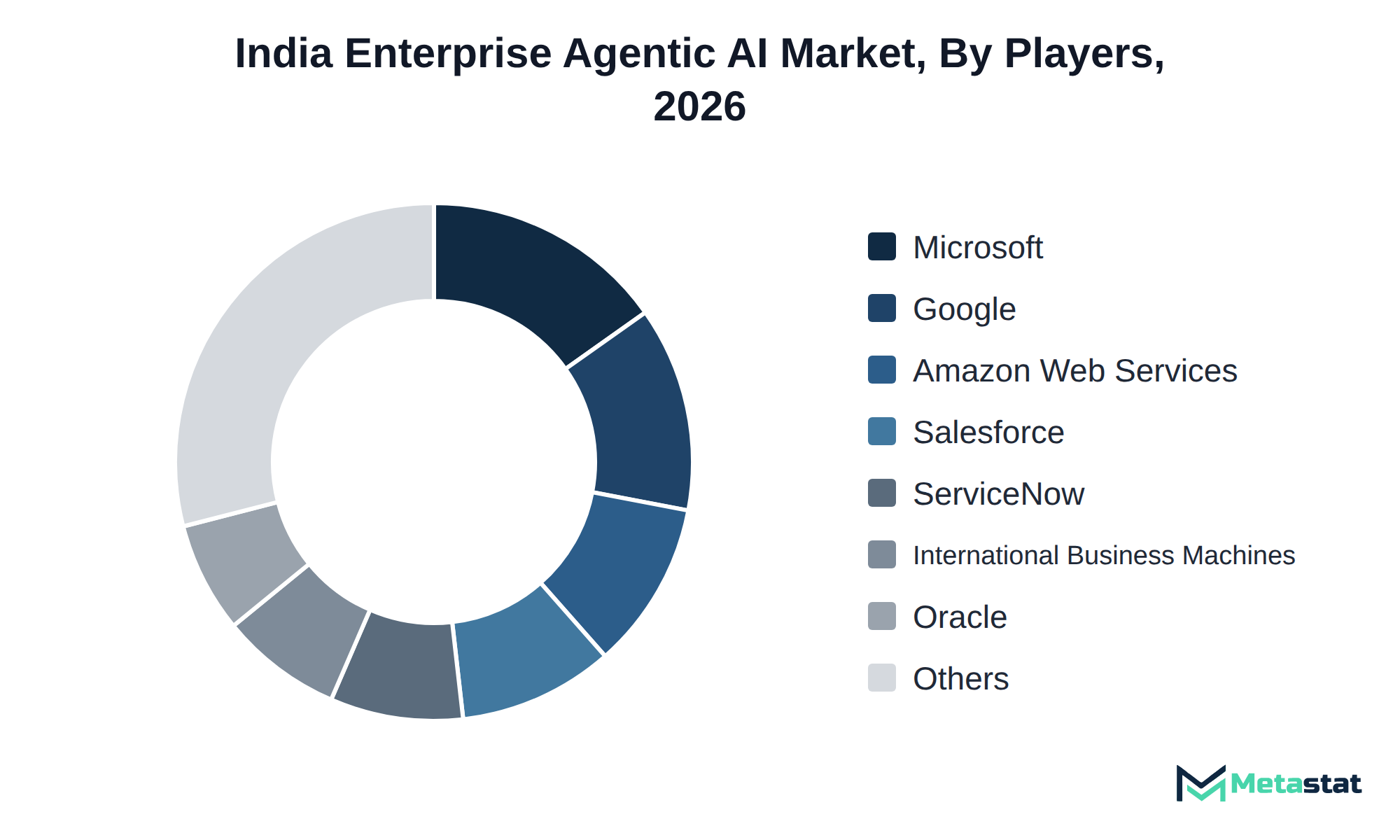
Companies in the India Enterprise Agentic AI market operate across various segments, including cloud, on-premises, and hybrid deployment models. Buyers select solutions based on factors including price, customization options, service quality, and the strength of the ecosystem surrounding the offerings.
Major players including Microsoft Corporation and Google LLC focus on AI Agent Development Platforms, emphasizing their capabilities to enhance customer engagement. In contrast, Amazon Web Services, Inc. and Salesforce, Inc. prioritize prebuilt enterprise AI agents, reflecting a trend toward easily deployable solutions that meet immediate business needs.
Companies including UiPath, Inc. and Automation Anywhere, Inc. specialize in agentic process automation solutions, responding to the demand for streamlined workflows and operational efficiency. The competitive landscape continues to evolve with firms adapting their strategies to capture a growing share of the market.
This growth relies on several key developments within the India Enterprise Agentic AI market. First, the transition towards cloud-based solutions is expected to drive significant adoption, with the cloud segment projected to grow robustly, reaching USD 4,231.8 million by 2033. Second, the increasing demand for prebuilt enterprise AI agents, anticipated to expand to USD 1,339.2 million, will contribute to overall market advancement. Third, advancements in multi-agent systems, projected to reach USD 3,133.7 million, will enhance operational efficiencies across various applications, including customer service and virtual assistants. Risks exist that could impede market momentum. Economic fluctuations or regulatory challenges impact investment decisions, particularly in the on-premises segment, which is expected to grow to USD 1,075.6 million but faces obstacles in adoption due to cost and implementation complexities. Overall, the market's trajectory towards USD 6,429.4 million reflects a combination of technological innovation and evolving consumer demands in the enterprise landscape.
By Deployment Model: Cloud, On-Premises, Hybrid
By Offering Type: AI Agent Development Platforms, Prebuilt Enterprise AI Agents, Custom-Built Enterprise AI Agent Solutions, Agentic Process Automation Solutions, AI Agent Integration and Orchestration Services, AI Agent Governance and Management Platforms
By Application: Customer Service and Virtual Assistants, Robotics and Automation, Healthcare, Financial Services, Security and Surveillance, Gaming and Entertainment, Marketing and Sales, Others (Human Resources, Legal and Compliance)
The report strategically identifies and profiles the key market players and analyses their core competencies in each sub-segment of the Enterprise Agentic AI market.
Report Attributes | Details |
Study Period | 2021-2033 |
Base Year | 2025 |
Estimated Year | 2026 |
Forecast Period | 2026-2033 |
Historical Period | 2021-2025 |
Growth Rate | CAGR 53.9% from 2026 to 2033 |
Revenue Unit | USD million |
Segmentation | By Deployment Model, Offering Type, Agent System, Application, and Region |
Find answers to common questions about this report
The Enterprise Agentic AI market size was valued at USD 204.2 million in 2025.
The market is projected to grow at a CAGR of 53.9% during the forecast period from 2026 to 2033.
The leading segment in the Enterprise Agentic AI market is the Cloud deployment model, projected to reach USD 4,231.8 million by 2033, significantly surpassing other segments. This growth reflects a compound annual growth rate of 54.7%.
Organizations are investing in agentic AI solutions due to rising automation needs across sectors including customer service, healthcare, and financial services, which seek to enhance operational efficiency. The demand for multi-agent systems is driven by the need for complex applications that improve decision-making and automate intricate processes.
Infrastructure limitations present a significant challenge, particularly for smaller enterprises lacking the necessary resources to implement solutions effectively. challenges in talent acquisition and retention impact growth, as organizations struggle to attract and retain skilled professionals in AI and machine learning.
Rising demand for multi-agent systems drives adoption in the India Enterprise Agentic AI market. This segment experiences a compound annual growth rate (CAGR) of 59.5 percent through 2033, with industries including healthcare and financial services focusing on enhancing efficiency and customer experience.
The Enterprise Agentic AI market is estimated to reach a valuation of USD 6,429.4 million by 2033.
Key players operating in the Enterprise Agentic AI market include Microsoft Corporation, Google LLC, Amazon Web Services, Inc., Salesforce, Inc., ServiceNow, Inc., International Business Machines Corporation, and Oracle Corporation.
The multi-agent systems segment is projected to reach USD 3,133.7 million by 2033, reflecting a compound annual growth rate (CAGR) of 59.5 percent.
Industries including customer service, healthcare, and financial services lead in adopting agentic AI solutions, driven by the enhance operational efficiency and reduce labor costs.
The analysts below cover Information & Technology research at Metastat Insights.
LEAD ANALYST
Utkarsh Khirodkar is a Lead Market Research Analyst at MetaStat Insight, specializing in market intelligence, technology sector assessments, and competitive strategy.

PRINCIPAL CONSULTANT - ENTERPRISE AI & EMERGING TECHNOLOGIES
Banking & Finance · Electronics and Semiconductor · Energy and Power · Healthcare IT · Information & Technology · Professional Services
Vijay Gunti is a Principal Consultant at MetaStat Insight, bringing over two decades of experience across enterprise digital transformation, technology strategy, and intelligent systems.

LEAD CONSULTANT - COMMUNICATION, TELECOM, AND IT
Electronics and Semiconductor · Information & Technology · Machinery & Equipment · Professional Services
Ravindra Sathe Consultants for Communication, Telecom, and IT at MetaStat Insight. He leads the firm's industry research initiatives across telecommunications infrastructure, digital connectivity, enterprise networking, and emerging information technology domains.
Assessing 200mm wafer transition schedules and substrate supply bottlenecks requires precise technical intelligence. MetaStat Insight supplied an actionable breakdown comparing planar and trench MOSFET architectures across automotive and industrial drive markets. The regional capacity estimates for Asia-Pacific foundries helped clarify lead-time uncertainties during our strategic planning session. When we needed additional clarification on high-purity raw material sourcing, their analyst team responded with helpful context within twenty-four hours.
Tracking maintenance cycle demand for secondary flight display units and terrain collision avoidance systems across regional jet fleets involves complex aftermarket dynamics. MetaStat Insight provided practical analysis separating airline retrofit programs from OEM forward-fit production schedules in North America and Southeast Asia. The supplier matrix highlighted component obsolescence timelines without resorting to vague generalizations. The dataset served as a dependable reference during our annual program review meetings.
Evaluating secondary resin quality across post-consumer packaging streams requires reliable technical segmentation. MetaStat Insight delivered an objective assessment that distinguished between extrusion-grade flake pricing and optical sorting throughput limitations across Western Europe. The competitive positioning breakdown for licensed depolymerization technology providers answered several questions during our feedstock feasibility audit. Their team clarified regional trade restrictions on mixed plastic scrap quickly when our team submitted follow-up requests.
Explore related market intelligence reports worth reading alongside this one.
Starting from
$2950
Starting from
$2950