
LEAD ANALYST
Utkarsh Khirodkar is a Lead Market Research Analyst at MetaStat Insight, specializing in market intelligence, technology sector assessments, and competitive strategy.

India Industrial Weighing Equipment Market Size, Share, By Equipment Type (Platform & Floor Scales, Bench & Counting Scales, Road Weighbridges & Axle Scales, Rail Weighing Systems, Tank, Hopper & Silo Systems, In-Line Checkweighers, Belt Scales & Weigh Feeders, Multihead & Linear Weighers, Crane & Hanging Scales and Others), By Weighing Technology (Strain-Gauge Load Cell, Electromagnetic Force Restoration, Mechanical Lever & Spring and Others), By Automation Level (Manual / Operator-Assisted, Semi-Automatic and Fully Automatic), By End-Use Industry (General Manufacturing, Food & Beverages, Logistics & Warehousing, Mining & Metals, Chemicals & Petrochemicals, Pharmaceuticals & Biotechnology, Agriculture & Animal Feed, Cement & Building Materials and Others), Industry Analysis, Growth, Trends, and Forecast, 2026-2033
Report ID
MSI-5615
Published
October, 2026
Pages
281 Pages
Format
Historical
Base year
Forecast
Forecast period
Report Details
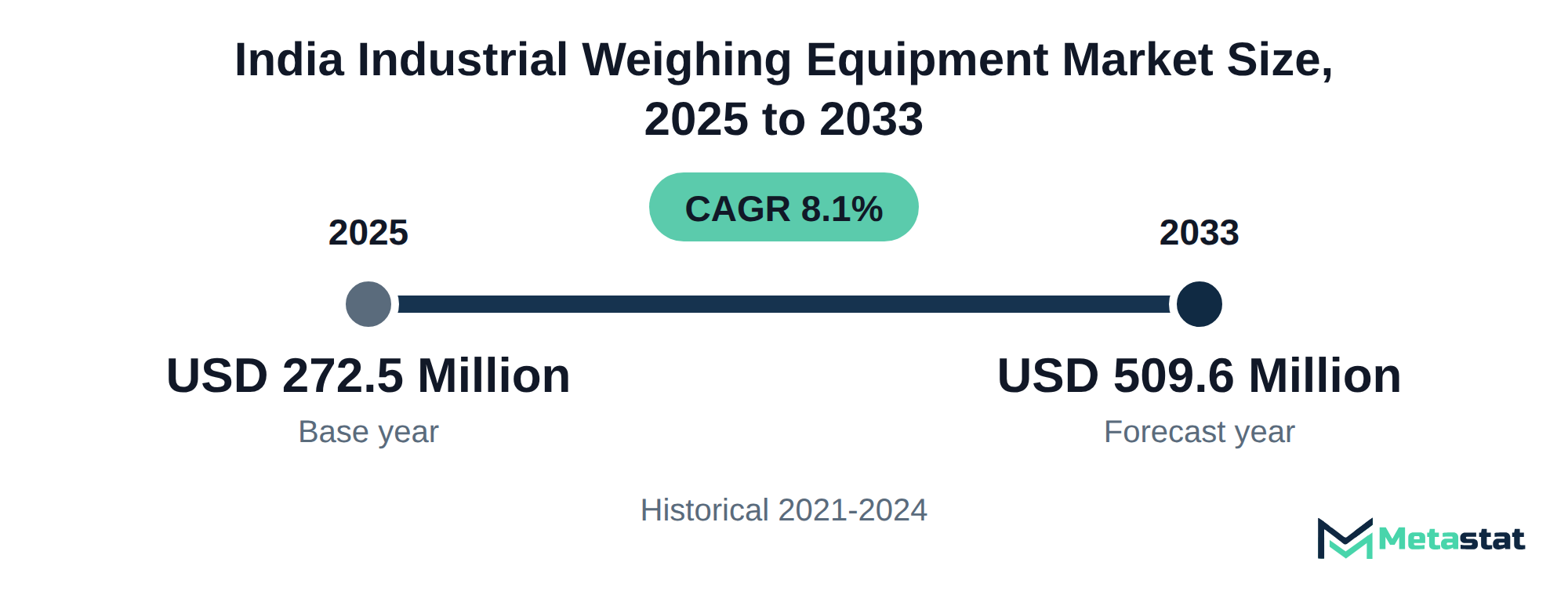
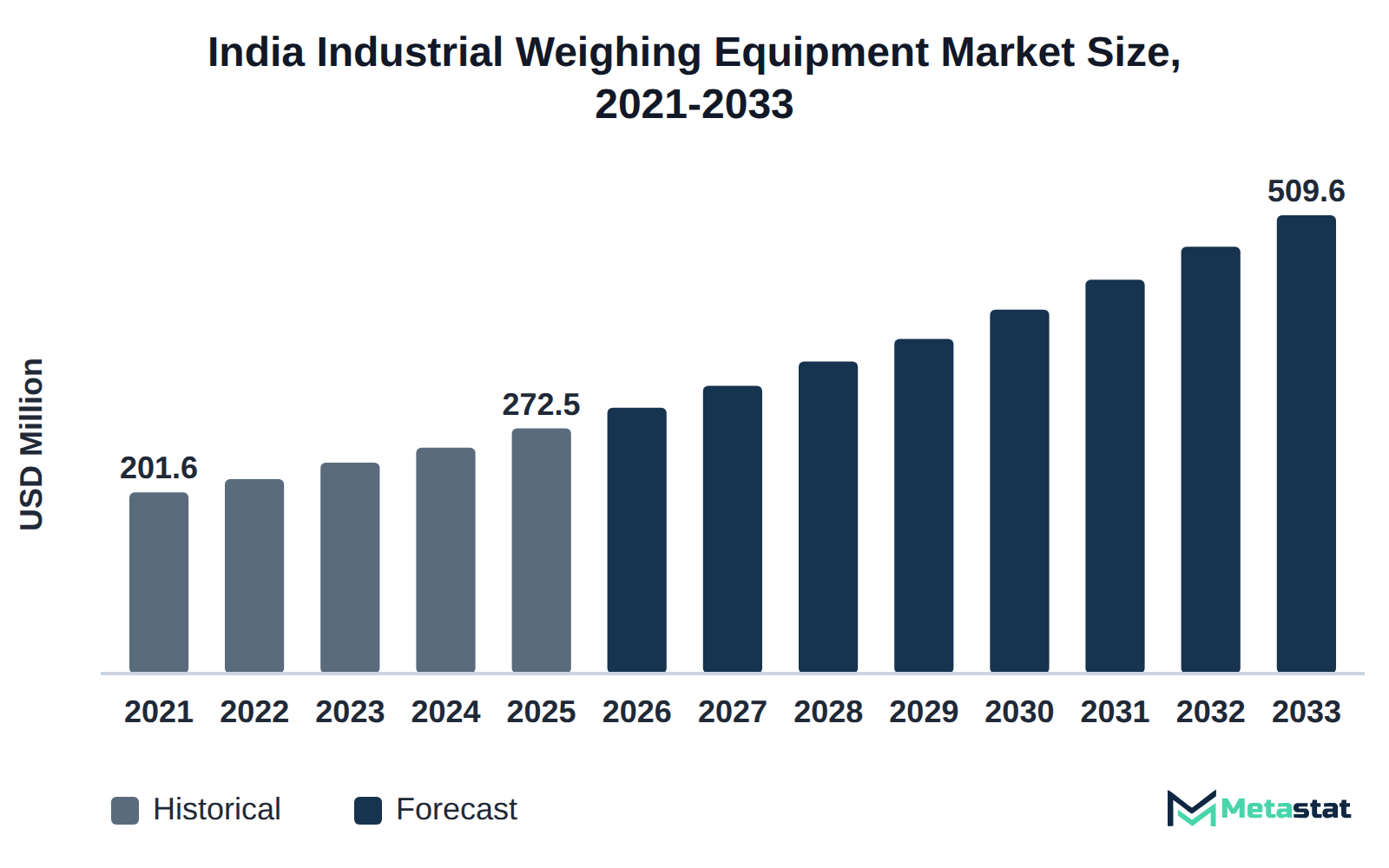
Market Valuation: Valued at $272.5 Million in 2025, projected to reach $509.6 Million by 2033 at a 8.1% CAGR.
Dominant Segment: The Strain-Gauge Load Cell technology segment leads the India Industrial Weighing Equipment market, driven by its widespread adoption across various industries due to its cost-effectiveness and high accuracy.
Geographic Lead: The logistics and warehousing sector in India is experiencing rapid growth, fueled by increasing demand for automation and precision in weighing processes.
What's Inside: This report provides comprehensive coverage of the India Industrial Weighing Equipment market, including detailed analyses of equipment types, weighing technologies, and end-use industries, along with forecasts through 2033.
Emerging Trends: The integration of connected industrial scales is enhancing operational efficiency in Indian factories, allowing for real-time data exchange and improved inventory management.
Market Challenges: Price sensitivity among buyers, particularly in the general manufacturing and logistics sectors, poses significant challenges to the adoption of advanced weighing technologies.
Choose Your License
India Industrial Weighing Equipment Market
The India Industrial Weighing Equipment market was valued at USD 272.5 million in 2025 and is projected to reach USD 509.6 million by 2033, growing at a CAGR of 8.1% over the forecast period.
The India Industrial Weighing Equipment market encompasses a diverse range of products designed for various industries, including general manufacturing, food and beverages, logistics, and mining. Investment in this market stems from the necessity for precision and efficiency in weighing processes, which directly impacts operational effectiveness and product quality. Companies rely on these advanced weighing solutions to enhance productivity and ensure compliance with industry standards.
Growth in the market is driven by increasing demand for automation and technological advancements that streamline weighing processes. Among the different segments, Strain-Gauge Load Cell technology represents the highest value, reflecting its widespread adoption across multiple industries. The food and beverages sector stands out as a significant contributor to market expansion, driven by increasing emphasis on product consistency and quality assurance.
The market experiences strong momentum due to rising focus on safety and regulatory compliance in manufacturing processes. This trend is particularly evident within the logistics and warehousing sector, where accurate weighing equipment is crucial for optimizing supply chain operations. Businesses invest in innovative weighing solutions to strengthen operational capabilities and support their growth strategies.
The market covers various types of weighing equipment tailored for diverse applications, including platform and floor scales, bench and counting scales, and road weighbridges. Investments in these devices stem from the need for accurate measurements, regulatory compliance, and improvements in operational efficiency. Industries prioritize these solutions to enhance productivity and ensure product quality, directly impacting their bottom line.
Growth in the India Industrial Weighing Equipment market is driven by increasing demand for precision in manufacturing processes. The general manufacturing segment holds the largest share, reflecting the critical role of accurate weighing in production lines. This segment's expansion is supported by a rising emphasis on automation and technological advancements, enabling manufacturers to streamline operations and reduce waste.
Within the market, the strain-gauge load cell technology segment demonstrates significant growth potential. The transition toward more sophisticated weighing technology is fueled by demand for high accuracy and reliability across various end-use industries. Advanced technologies increasingly meet buyer requirements for accuracy and reliability.
The integration of connected industrial scales within Indian factories enhances operational efficiency through connectivity with enterprise resource planning (ERP) systems and batch traceability. This technological shift allows for real-time data exchange, enabling manufacturers to monitor weight measurements and inventory levels while streamlining production processes. For instance, strain-gauge load cell adoption in the India Industrial Weighing Equipment market is projected to rise from USD 263 million in 2026 to USD 459.3 million by 2033, a compound annual growth rate of 8.3%. This trend emphasizes the industry's focus on precision and reliability.
Manufacturers in sectors including food and beverages leverage connected scales to ensure compliance with safety regulations and maintain quality standards. The ability to track batch weights accurately supports traceability throughout the production process, enhancing accountability and reducing wastage. Operational efficiencies derived from connected industrial scales translate into cost reductions and improved profitability. Businesses aiming to optimize their supply chains find growing value in integrating advanced weighing solutions.
Unattended weighbridges significantly enhance efficiency in truck turnaround times and transaction control within the India Industrial Weighing Equipment market. The implementation of these systems reduces wait times at weigh stations, which directly impacts the logistics and transportation sectors. With the growing demand for fast and accurate weighing solutions, the shift towards unattended weighbridges aligns with the need for streamlined operations.
By 2033, the Road Weighbridges and Axle Scales segment is projected to reach USD 112.3 million, pointing to strong demand for automated systems that speed up transactions and improve traffic flow. The adoption of unattended weighbridges leads to more effective management of truck traffic, enabling companies to optimize their operations and reduce costs associated with idle time. This evolution transforms the weighing process, allowing operators to focus on other critical aspects of their business.
The growing reliance on unattended weighbridges highlights a shift in purchasing patterns among buyers in the market. Investment in these technologies reflects a broader trend towards automation and efficiency, driving operational cost savings and enhancing competitiveness. Companies that invest in unattended weighbridges gain an operational advantage in the India Industrial Weighing Equipment market.
Hygienic checkweighing helps Indian food and pharmaceutical producers assure product weight. These industries necessitate precise weight measurements to maintain product quality and comply with stringent regulations. The India Industrial Weighing Equipment market reflects this need, particularly in the food and beverages sector, where demand for checkweighing solutions is projected to reach USD 100.3 million by 2033.
Maintaining hygiene standards during the checkweighing process is crucial for preventing contamination of food products and pharmaceutical goods. Manufacturers seek automated solutions that streamline the weighing process while meeting hygiene requirements. This focus on hygienic designs enhances operational efficiency and minimizes the risk of product recalls, leading to significant financial losses.
Implementing advanced checkweighing technology enables food and pharmaceutical manufacturers to optimize production processes, reduce waste, and ensure compliance with regulatory standards. The demand for fully automatic and semi-automatic systems is expected to drive growth in the market, with manufacturers progressively adopting automation to enhance productivity. The anticipated increase in checkweighing solutions directly correlates with greater consumer confidence in product safety and quality within these industries.
Lifecycle costs shape how Indian manufacturers select industrial weighing equipment. These costs encompass initial capital outlay, operational expenses, and maintenance requirements throughout the equipment's lifespan. This growth signals an increasing investment focus in weighing technology, urging manufacturers to evaluate total costs rather than just upfront expenditures.
Examining specific segments, the Strain-Gauge Load Cell technology is expected to experience a CAGR of 8.3% from 2026 to 2033, increasing from USD 263 million to USD 459.3 million. This growth indicates advancements in performance and reliability, which could lower operational costs over time. Investing in advanced technologies could lead to significant savings in labor and maintenance while enhancing accuracy and efficiency. Understanding lifecycle costs helps manufacturers make informed decisions and compete more effectively in the India Industrial Weighing Equipment market.
Rising demand for advanced industrial automation drives significant investment in weighing technologies across various sectors. General manufacturing, food and beverage, and logistics buyers increasingly prefer automated systems to enhance operational efficiency and reduce labor costs. This shift reflects a broader trend toward digital transformation within industries, where the emphasis on speed and precision shapes purchasing decisions. For instance, the market for manual and operator-assisted equipment is projected to grow from USD 135 million in 2026 to USD 192.8 million by 2033, representing a compound annual growth rate of 5.2%. This growth indicates a transition toward more sophisticated weighing solutions that align with the automation trend, facilitating streamlined operations and improved productivity. The India Industrial Weighing Equipment market captures the evolving needs of buyers while encouraging competition among suppliers.
Technological advancements in weighing equipment contribute to significant improvements in accuracy and efficiency. Innovations, including strain-gauge load cells and electromagnetic force restoration systems, enhance performance in diverse applications. Operators within sectors including food and beverages, general manufacturing, and logistics have begun to invest in these innovative solutions due to their ability to streamline processes and reduce human error. Enhanced precision influences production quality, driving higher customer satisfaction and potentially increasing market share.
With a projected compound annual growth rate (CAGR) of 8.1% through 2033, the India Industrial Weighing Equipment market reflects the growing importance of these technologies. The shift towards more automated weighing solutions allows manufacturers to achieve greater efficiency, directly impacting operational costs. Companies that adopt advanced weighing methods experience reduced wastage and improved throughput, which supports long-term profitability. This shift encourages suppliers to innovate further, creating a competitive environment that benefits end-users across various industries.
Price sensitivity limits demand in the India Industrial Weighing Equipment market. Budget constraints among buyers, particularly in the general manufacturing and logistics sectors, lead to slower equipment uptake. Higher upfront costs associated with advanced weighing technologies result in smaller orders and delayed replacement of outdated systems. In an environment of price competition, buyers prioritize cost-effective solutions over premium offerings, affecting overall market growth.
This pricing challenge becomes even more pronounced in capital-intensive industries like mining and metals, where stringent budget allocations dictate purchasing decisions. A preference for lower-priced alternatives often undermines investments in high-quality equipment, restricting long-term operational efficiencies. Such behaviors hinder technological advancement and the shift towards automation, impeding the market potential for growth.
Profit margins faced by suppliers in the India Industrial Weighing Equipment market experience significant pressure due to rising input costs. Increased prices for raw materials and components impact overall production expenses, forcing suppliers to adjust their pricing strategies. Many suppliers respond by implementing more efficient manufacturing practices and seeking alternative sourcing options to mitigate these costs. Investments in technology and automation enhance operational efficiency, allowing suppliers to manage expenses effectively while maintaining competitive pricing. In addition, suppliers explore strategic partnerships to leverage shared resources and reduce costs associated with research and development. These actions help suppliers manage rising costs and support continued market growth by keeping high-quality weighing equipment available and affordable.
The segment for road weighbridges and axle scales presents a significant opportunity within the India Industrial Weighing Equipment market. This segment addresses the increasing demand for precise vehicle weight measurement, which is critical for compliance with transport regulations and optimizing logistics operations. The anticipated growth rate of this segment indicates a growing recognition of the need for efficiency in logistics and transportation sectors, particularly in road freight. Investment in road weighbridges is expected to rise, ensuring operational efficiency and compliance with regulatory requirements.
Market dynamics indicate that suppliers enhance their product offerings to meet this demand, focusing on integrating advanced technologies that facilitate faster and more accurate measurements. The growth of infrastructure projects across India further increases the demand for robust weighing solutions in the logistics sector. Increased adoption of road weighbridges aligns with the broader trend of improving supply chain efficiency, driving market expansion and attracting further investment into the sector.
The India Industrial Weighing Equipment market is segmented based on Equipment Type, Weighing Technology, Automation Level, and End-Use Industry.
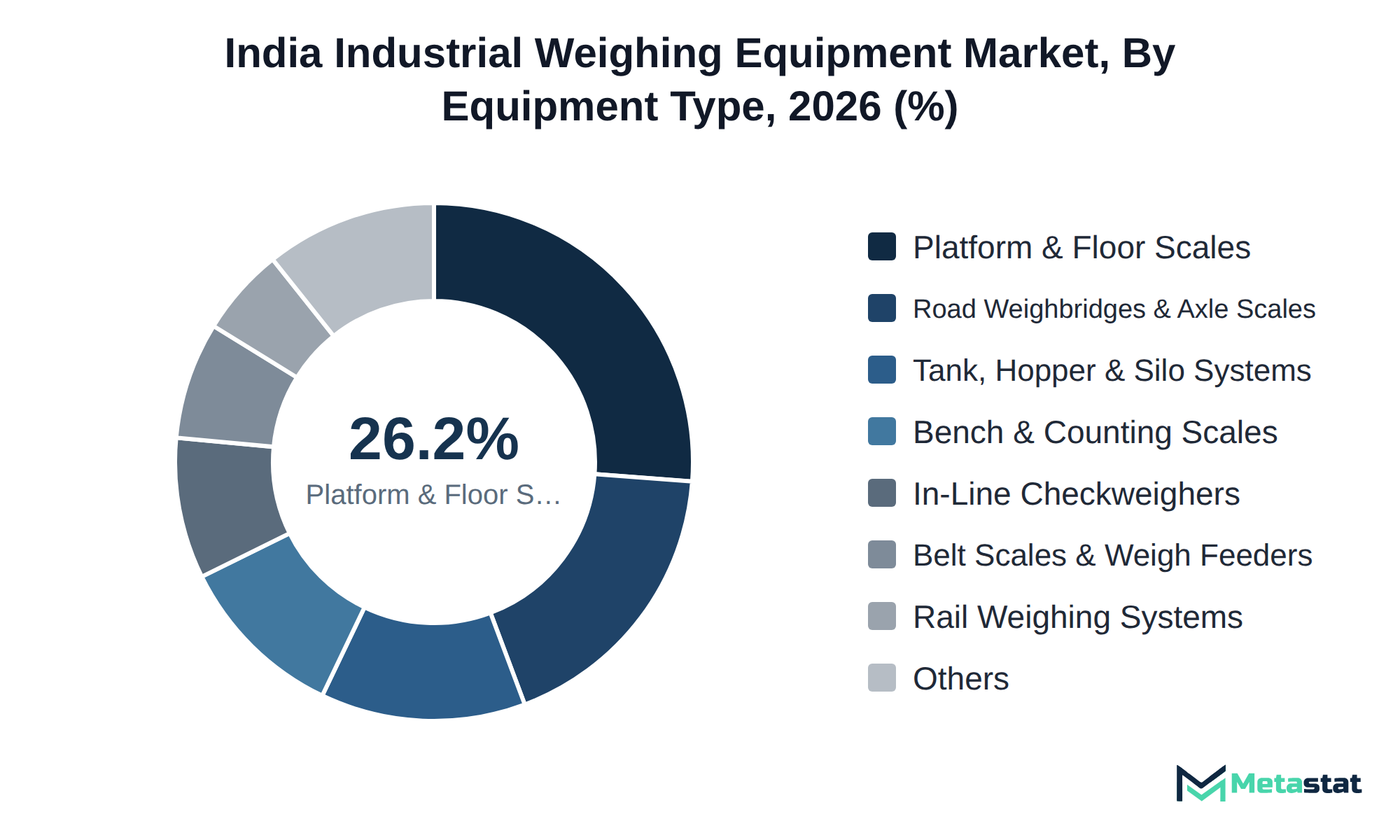
Platform & Floor Scales segment is valued at USD 76.9 million in 2026 and is projected to reach USD 123.2 million by 2033, at a CAGR of 7% during the forecast period. These scales primarily serve applications in general manufacturing, providing precise weight measurements essential for quality control and inventory management. Demand growth stems from increasing automation in production processes, where accurate measurements enhance operational efficiency. This segment distinguishes itself by its moderate growth rate compared to others, including Road Weighbridges & Axle Scales, which present higher revenue potential. The adaptability of platform and floor scales across various industries, combined with their competitive pricing, positions them favorably in the market. The India Industrial Weighing Equipment market continues to evolve, driven by technological advancements that further improve the accuracy and reliability of these tools.
Bench & Counting Scales segment is estimated to reach USD 46.7 million by 2033, at a CAGR of 6.1% during the forecast period. These scales are primarily designed for precise measurement and counting of items including small parts, bulk materials, and laboratory samples. Industries including manufacturing, logistics, and food processing rely on this equipment for efficient inventory management and quality control. The increasing emphasis on accuracy and productivity within these sectors drives demand for bench and counting scales. Compared to other segments, this category experiences moderate growth, influenced by ongoing demand for automation and technological advancements in weighing solutions. In contrast, segments like Platform & Floor Scales, with a CAGR of 7%, experience slightly faster growth due to broader applications across diverse industries, reflecting varying market dynamics.
Road weighbridges and axle scales help ensure compliance with weight regulations in transportation and logistics. Primarily used by the logistics and transportation sectors, these scales facilitate the weighing of heavy vehicles to prevent overloading. A key driver of demand stems from growing regulatory requirements for vehicle weight compliance, enhancing safety and reducing road damage. Compared to other segments, the growth rate for this segment shows a robust trajectory, supported by a compound annual growth rate (CAGR) of 8.6%. This growth contrasts with other segments including Bench & Counting Scales, which exhibit slower expansion. The India Industrial Weighing Equipment market continues to evolve, with innovations in technology further improving the efficiency and accuracy of these weighing systems.
Rail Weighing Systems segment is projected to grow at a CAGR of 8.6% during the forecast period. These systems find application primarily in the rail transportation sector, ensuring accurate weight measurements for rail freight and enhancing safety standards. The increasing emphasis on regulatory compliance regarding weight limits for rail vehicles drives demand for this segment. Operators in the logistics and transportation industries rely on these systems to minimize overload penalties and enhance operational efficiency. Compared to other equipment types, Rail Weighing Systems exhibit higher growth potential due to the expanding freight industry and growing rail networks. This segment stands out with its unique requirements, demanding precise calibration and integration with rail infrastructure, distinguishing it from other equipment types that target different industrial needs.
Tank, Hopper & Silo Systems encompass critical weighing solutions employed in various sectors, particularly for bulk material handling. These systems find application in industries including food processing, pharmaceuticals, and agriculture, where precise measurements of materials and ingredients are essential for maintaining quality and compliance with industry standards. Demand for these systems is driven by the increasing need for automation, enhancing operational efficiency and accuracy in production processes. Compared to other equipment types, Tank, Hopper & Silo Systems typically command higher prices due to their specialized functions and the technology involved. While segments like Road Weighbridges & Axle Scales exhibit rapid growth, Tank, Hopper & Silo Systems maintain steady demand, appealing to sectors requiring high precision in material handling. This segment supports the evolving landscape of the India Industrial Weighing Equipment market, aligning with trends driven by improved automated solutions and greater accuracy in industrial applications.
In-Line Checkweighers serve a critical function in various manufacturing processes, ensuring products meet weight specifications during production. These systems are prevalent in industries including food and beverage, pharmaceuticals, and logistics, where maintaining precise weight is essential for quality control and compliance with regulations. The growing emphasis on product integrity and safety drives demand for In-Line Checkweighers, reinforcing their importance in automated production lines. Compared to other segments, this category exhibits different growth dynamics and pricing strategies, with factors including technological advancements influencing adoption rates. The focus on enhancing operational efficiency and reducing waste further highlights the relevance of In-Line Checkweighers in the competitive landscape of the India Industrial Weighing Equipment market.
Belt scales and weigh feeders provide essential solutions for continuous weighing of bulk materials in various industrial applications. Industries including mining, agriculture, and manufacturing employ these systems for precise material handling and inventory management. The increasing emphasis on operational efficiency and accuracy drives demand for these devices. The growth trajectory of this segment aligns with the broader trend of industrial automation, presenting opportunities for suppliers to innovate. Compared to other equipment types, belt scales and weigh feeders face unique market dynamics, often necessitating specialized technology to meet stringent regulatory standards. This differentiation enables enhanced performance in specific applications. The ongoing shift towards automation and the need for real-time data analytics further encourage the adoption of these solutions, contributing to the overall expansion of the India Industrial Weighing Equipment market.
Multihead & Linear Weighers play a vital role in precision weighing applications, often used in food processing, pharmaceuticals, and packaging industries. These systems enhance efficiency by enabling rapid weighing of multiple ingredients, which is crucial for maintaining consistency and reducing production time. Demand for Multihead & Linear Weighers is driven by the growing trend of automation and the increasing focus on quality control. Compared to other equipment types, this sub-segment typically attracts buyers seeking higher speed and accuracy, positioning it favorably against slower-growing segments, including Bench & Counting Scales. The India Industrial Weighing Equipment market continues to evolve, with advanced technologies enabling these weighers to meet diverse operational needs effectively, further enhancing their importance across various sectors.
Crane and hanging scales provide essential weighing solutions for industries requiring precise weight measurements for large and heavy items. Commonly used in construction, shipping, and manufacturing sectors, these scales facilitate the safe handling and transportation of materials. Demand for crane and hanging scales increases due to rapid growth in construction activities and logistical operations across India. The ability to lift and weigh loads simultaneously enhances operational efficiency, particularly in sectors where space and time constraints exist. Compared to other equipment types, including platform and floor scales, crane and hanging scales typically serve applications that involve heavier loads and specific lifting equipment. This differentiation aligns with unique buyer requirements, establishing the segment as a crucial component in the India Industrial Weighing Equipment market.
Onboard loaders, forklifts, and ladle scales represent specialized weighing solutions across various industries, particularly in construction and manufacturing. These scales ensure accurate measurement of materials during loading and unloading processes, enhancing operational efficiency. Users include logistics companies, construction firms, and manufacturing plants that require precise and reliable weight readings for effective inventory management and quality control. The market has experienced increased interest due to heightened focus on efficiency and the need for compliance with regulations regarding weight limits. This sub-segment typically experiences a growth rate that varies from other segments, influenced by specific applications and niche market demands. Unlike broader categories, this segment caters to specialized equipment needs, reflecting a distinct buyer profile focused on operational productivity rather than solely on cost considerations. The India Industrial Weighing Equipment market reflects this diversity, indicating differing growth metrics among its segments.
Strain-gauge load cells are widely used for precise weight measurements in industrial applications, particularly in manufacturing and logistics. Demand for Strain-Gauge Load Cells is driven by the increasing need for accuracy and efficiency in production processes across several sectors. Unlike other weighing technologies, including Electromagnetic Force Restoration, this segment exhibits a robust CAGR, attributed to its widespread adoption and versatility. Strain-Gauge Load Cells typically offer a lower cost compared to other high-precision technologies, making them suitable for a broader range of buyers, including small and medium enterprises. The ability to maintain high accuracy at a competitive price positions this segment favorably within the India Industrial Weighing Equipment market.
Electromagnetic Force Restoration segment is estimated to reach USD 27.8 million by 2033, at a CAGR of 10.8% during the forecast period. This technology finds application in various sectors requiring high precision and reliability in weight measurement. Industries including food and beverages, where stringent quality standards prevail, employ these systems extensively. The segment benefits from strong demand for advanced weighing solutions that maintain accuracy under varying conditions. Higher growth in this segment compared to others stems from increasing automation trends, prompting manufacturers to seek more efficient and accurate weighing technologies. Rising investments in manufacturing automation directly influence this sub-segment's expansion, further differentiating it from technologies like mechanical lever & spring, which display relatively lower growth rates. The significant CAGR of 10.8% highlights the increasing adoption of Electromagnetic Force Restoration solutions in the evolving landscape of the India Industrial Weighing Equipment market.
Mechanical Lever & Spring segment is expected to reach USD 15.8 million by 2033. This segment finds its application primarily in industries requiring mechanical solutions for weight measurement, including manufacturing and logistics. Demand for Mechanical Lever & Spring technologies is driven by the growing need for reliable, low-cost weighing solutions, especially in smaller operations or settings where high precision is not critical. Compared to other weighing technologies, this segment experiences slower growth, influenced by advancements in strain-gauge load cells and electromagnetic force restoration technologies, which offer enhanced accuracy and efficiency. Understanding these dynamics highlights the specific niche this segment occupies within the larger India Industrial Weighing Equipment market.
Others (Hydraulic, Pneumatic) segment is projected to grow at a CAGR of 6.2% during the forecast period. This segment encompasses various weighing technologies that employ hydraulic or pneumatic systems, commonly employed in industries where precise weight measurement is critical, including construction and manufacturing. The growth of this segment is driven by increasing demand for automation in industrial processes, leading to enhanced efficiency and accuracy in weight measurement. A notable distinction from other segments lies in its application; hydraulic and pneumatic systems often provide solutions for heavier loads compared to other technologies. This segment's growth remains steady, while others, including Electromagnetic Force Restoration, experience faster growth rates, thereby influencing competitive dynamics within the market. Increased investment in infrastructure development supports demand for hydraulic and pneumatic solutions, positioning this segment favorably among industrial users.
This segment finds applications in various industries, including manufacturing and logistics, where manual intervention is essential for weighing processes. Growth in this segment is supported by increasing demand for labor-intensive operations that require human oversight, particularly in small to medium-sized enterprises. Compared to other automation levels, including fully automatic systems, the Manual / Operator-Assisted segment experiences slower growth due to ongoing advancements in automation technology that appeal to larger operations. Nevertheless, its lower entry cost and simplicity promote continued adoption among businesses looking to optimize their weighing processes without significant capital investment. The India Industrial Weighing Equipment market reflects these dynamics, indicating a balanced evolution between manual and automated solutions.
Semi-Automatic segment is estimated to reach USD 166.7 million by 2033, at a CAGR of 8.8% during the forecast period. This segment finds extensive application in industries that require a balance between manual oversight and automation, particularly in environments where flexibility and precision are critical. The automotive, food processing, and packaging sectors employ semi-automatic weighing systems to improve efficiency while maintaining quality control. Demand for these systems is driven by increasing focus on operational efficiency and regulatory compliance. In the context of the market, the Semi-Automatic segment demonstrates a faster growth trajectory compared to the Manual / Operator-Assisted segment, which is projected to grow at a CAGR of 5.2%. This differentiation reflects a shift towards automation in manufacturing processes, where industries strive for greater productivity and accuracy in weight measurements.
The Fully Automatic segment is expected to reach USD 150.1 million by 2033. This segment incorporates advanced technologies designed for automatic weighing processes, primarily applied in high-throughput environments including manufacturing and logistics. Industries benefiting from this segment include food and beverages, pharmaceuticals, and chemicals, where precise and efficient weighing is crucial. Growth in demand for fully automatic systems is driven by increasing focus on operational efficiency and accuracy. Compared to other automation levels, this segment exhibits a higher growth rate, distinguishing itself with a more significant investment in technology. Adoption of fully automatic systems presents advantages in speed and accuracy, allowing for effective integration into production lines, aligning with overall trends observed in the India Industrial Weighing Equipment market.
General Manufacturing segment is valued at USD 68.4 million in 2026 and is projected to reach USD 111.2 million by 2033, at a CAGR of 7.2% during the forecast period. This segment primarily serves industries involved in the production of goods, ranging from machinery to consumer products. The growth of this segment is significantly driven by increasing demand for efficient production processes and compliance with regulatory standards. Advancements in technology enhance the precision and efficiency of weighing equipment, facilitating better quality control. Compared to other segments, General Manufacturing exhibits moderate growth, differing from sectors like Food & Beverages, which is expected to grow at a higher CAGR of 8.7%. The focus on automation and integration of smart manufacturing technologies into industrial processes further influences the dynamics of the India Industrial Weighing Equipment market.
The Food & Beverages segment is estimated to reach USD 100.3 million by 2033, at a CAGR of 8.7% during the forecast period. This segment caters primarily to manufacturers involved in food processing, packaging, and distribution, ensuring accurate weight measurements critical for compliance and quality assurance. An increasing focus on food safety standards and regulations drives demand for precise weighing solutions, influencing purchasing decisions. Compared to other segments, the Food & Beverages segment demonstrates faster growth due to rising consumer preferences for packaged and processed foods, which require advanced weighing technologies. The market's expansion reflects ongoing investments in automation and enhanced production processes, allowing for improved efficiency and operational reliability.
The Logistics & Warehousing segment is expected to reach USD 91.3 million by 2033. This segment serves the needs of companies involved in moving, storing, and distributing goods. Key drivers of growth include the increasing demand for efficient supply chain management and technological advancements in warehouse automation, which enhance operational efficiency. Unlike other segments, including General Manufacturing, which is projected to grow at a CAGR of 7.2%, the Logistics & Warehousing segment features a distinct focus on integration with digital technologies for inventory management and tracking. The anticipated growth rate reflects the broader trend of businesses investing in advanced weighing solutions that streamline operations and reduce costs, ensuring that the market responds effectively to evolving logistics demands.
Mining & Metals segment is projected to grow at a CAGR of 7.3% during the forecast period. This segment encompasses weighing solutions in the mining and metals industry, serving operators in extraction, processing, and transportation of materials. Demand in this segment is driven by increasing production levels within mining operations, necessitating accurate weight measurements for compliance and efficiency. Consistent technological advancements enhance the accuracy and reliability of weighing equipment, further supporting growth. Unlike other segments, Mining & Metals focuses on heavier materials, resulting in a distinct customer base that often requires specialized equipment tailored for harsh environments and demanding conditions. The market's expansion aligns with rising global demand for minerals and metals, presenting opportunities for innovation and investment.
Chemicals & Petrochemicals involves various processes for producing, processing, and transporting chemical products, including raw materials and finished goods. Industries use weighing equipment for accurate measurement in quality control and regulatory compliance. Demand for precise and reliable weighing solutions drives this segment, with strict regulatory standards necessitating accuracy. The Chemicals & Petrochemicals segment differs from others, including Food & Beverages, which experiences a higher growth rate. While the Food & Beverages segment sees strong demand, the Chemicals & Petrochemicals sector faces pressures from fluctuating raw material prices and environmental regulations, impacting operational costs. Companies in this sector focus on integrating advanced technologies to enhance measurement precision and streamline processes to meet these challenges, contributing to the ongoing evolution and expansion of the market for Industrial Weighing Equipment in India.
In pharmaceuticals and biotechnology, accurate measurement of ingredients protects the quality and safety of drugs and biological products. This segment is vital for research and development, production, and packaging processes in the pharmaceutical sector. Regulatory compliance drives demand for precise weighing equipment, with strict guidelines requiring accurate measurement to maintain product integrity. The segment stands out due to its emphasis on high precision and reliability, differentiating it from other industries with potentially lower standards for measurement accuracy. Manufacturers in this segment prioritize high-quality equipment to mitigate risks associated with product recalls or regulatory penalties, leading to increased investment in advanced weighing technologies. The market is expected to support ongoing demand for innovative solutions that enhance efficiency and accuracy in pharmaceutical applications.
Agriculture & Animal Feed entails a critical aspect of the food production process, focusing on the measurement of raw materials and final products in farming and animal husbandry. Key users include farmers, feed manufacturers, and agricultural cooperatives. Demand for precision weighing solutions arises from the need to optimize feed formulations and ensure compliance with nutritional standards. Enhanced efficiency in livestock management and crop production drives investments in advanced weighing technologies. This sub-segment distinguishes itself from others through its specific focus on agricultural applications and regulatory requirements, leading to different pricing dynamics compared to sectors like logistics or general manufacturing. While general manufacturing emphasizes cost efficiency, agriculture prioritizes accuracy and compliance with safety regulations, influencing growth trajectories within the India Industrial Weighing Equipment market.
Cement & Building Materials focus on the production and handling of materials essential for construction projects, including cement, concrete, and aggregates. This sector primarily serves construction companies and manufacturers of building products who require precise measurements to ensure quality and consistency in their materials. Demand in this segment experiences fluctuations due to changes in construction activity, driven by urban development and infrastructure projects. Compared to other segments, Cement & Building Materials stands out with potentially slower growth, reflecting regulatory challenges and price volatility in raw materials. While sectors including Food & Beverages experience strong growth due to rising consumer demand, Cement & Building Materials demands a careful balance of quality control and cost efficiency under stringent industry regulations. The India Industrial Weighing Equipment market reflects these dynamics, with weighing solutions tailored to meet the specific needs of this essential industry.
Others (Waste Management, Power Generation) encompasses various applications focused on the efficient measurement of materials and resources used in waste management and energy production processes. Entities operating in this segment include environmental services, waste recycling companies, and power generation facilities requiring precise measurements for operational efficiency. Demand in this segment is driven by the increasing emphasis on sustainability and regulatory compliance, necessitating accurate measurement solutions. Compared to other end-use industries, this segment experiences slower growth due to higher capital investment and regulatory hurdles. The market benefits from advancements in technology, allowing for enhanced accuracy and efficiency in measurements, differentiating it from faster-growing segments including food and beverages and general manufacturing.
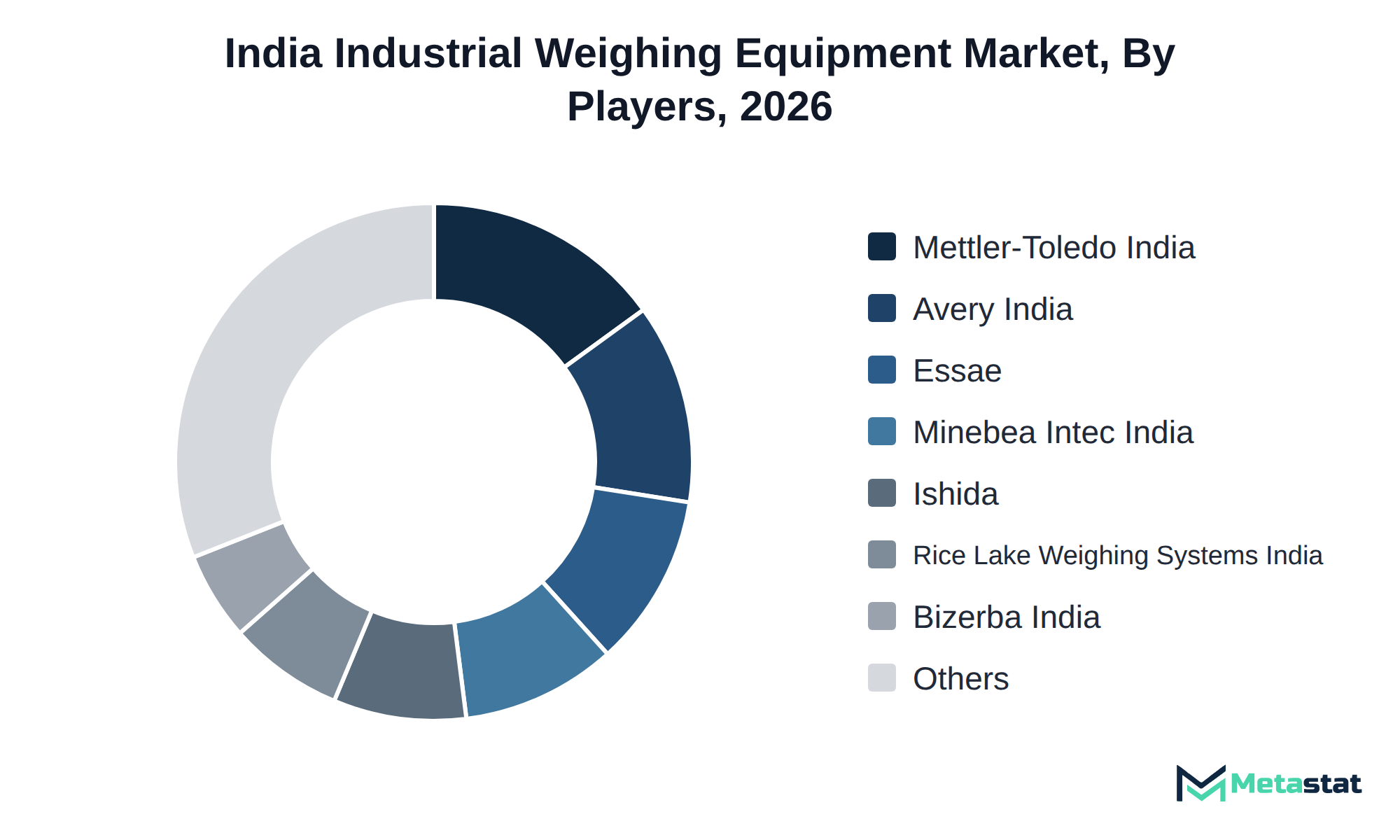
In the India Industrial Weighing Equipment market, companies differentiate themselves through equipment type, technology, and service offerings. Key segments include platform scales, floor scales, bench scales, and counting scales, along with weighing technologies including strain-gauge load cells and electromagnetic force restoration. Companies position their products based on price, certification, customization, and service to meet diverse buyer requirements.
Mettler-Toledo India Private Limited emphasizes precision and reliability, catering to sectors that demand high-performance weighing solutions. Avery India Limited focuses on providing customized solutions for various applications, ensuring flexibility for its clientele. Sartorius AG prioritizes automation and integration, appealing to industries requiring efficient operational workflows within their weighing processes. These strategic focuses influence buyer decision-making and shape the competitive dynamics of the market.
Growth in the India Industrial Weighing Equipment market relies on several key developments. First, increasing demand from the general manufacturing sector, driven by the need for more precise measurements, supports market expansion. Second, advancements in weighing technology, particularly in strain-gauge load cells, enhance accuracy and efficiency. Potential risks, including rising raw material costs, could hinder market growth. Increased costs limit investments in new technologies and equipment, particularly affecting the semi-automatic segment, projected to grow to USD 166.7 million by 2033. Balancing these opportunities and risks remains crucial for the market to achieve its forecasted size.
By Equipment Type: Platform & Floor Scales, Bench & Counting Scales, Road Weighbridges & Axle Scales, Rail Weighing Systems, Tank, Hopper & Silo Systems, In-Line Checkweighers, Belt Scales & Weigh Feeders, Multihead & Linear Weighers, Crane & Hanging Scales, Others (Onboard Loader, Forklift, Ladle Scales)
By Weighing Technology: Strain-Gauge Load Cell, Electromagnetic Force Restoration, Mechanical Lever & Spring, Others (Hydraulic, Pneumatic)
By Automation Level: Manual / Operator-Assisted, Semi-Automatic, Fully Automatic
By End-Use Industry: General Manufacturing, Food & Beverages, Logistics & Warehousing, Mining & Metals, Chemicals & Petrochemicals, Pharmaceuticals & Biotechnology, Agriculture & Animal Feed, Cement & Building Materials, Others (Waste Management, Power Generation)
The report strategically identifies and profiles the key market players and analyses their core competencies in each sub-segment of the Industrial Weighing Equipment market.
Report Attributes | Details |
Study Period | 2021-2033 |
Base Year | 2025 |
Estimated Year | 2026 |
Forecast Period | 2026-2033 |
Historical Period | 2021-2025 |
Growth Rate | CAGR 8.1% from 2026 to 2033 |
Revenue Unit | USD million |
Segmentation | By Equipment Type, Weighing Technology, Automation Level, End-Use Industry, and Region |
Find answers to common questions about this report
The Industrial Weighing Equipment market size was valued at USD 272.5 million in 2025.
The market is projected to grow at a CAGR of 8.1% during the forecast period from 2026 to 2033.
The leading segment in the Industrial Weighing Equipment market is the Strain-Gauge Load Cell, with a projected value of USD 459.3 million by 2033. This segment demonstrates the highest growth potential, driven by an anticipated compound annual growth rate of 8.3%.
Rising demand for advanced industrial automation drives significant investment in weighing technologies across various sectors. Price sensitivity significantly limits demand, as budget constraints among buyers lead to slower equipment uptake and a preference for lower-priced alternatives.
Price sensitivity significantly limits growth in the India Industrial Weighing Equipment market. Budget constraints among buyers, particularly in general manufacturing and logistics, lead to slower equipment uptake. Rising input costs pressure profit margins for suppliers, forcing adjustments in pricing strategies while maintaining competitiveness.
Several factors favor adoption in the India Industrial Weighing Equipment market. Rising demand for advanced automation in industries including logistics and manufacturing drives investments in efficient weighing solutions. the increasing focus on compliance with regulatory standards necessitates accurate weight measurement, further supporting the adoption of technologies like road weighbridges and axle scales.
The Industrial Weighing Equipment market is estimated to reach a valuation of USD 509.6 million by 2033.
Key players operating in the Industrial Weighing Equipment market include Mettler-Toledo India Private Limited, Avery India Limited, Essae Group, Rice Lake Weighing Systems India Limited, Minebea Intec India Private Limited, and Sartorius AG.
Rising demand for advanced industrial automation drives significant investment in weighing technologies, particularly among buyers in general manufacturing, food and beverage, and logistics sectors.
Rising input costs pressure profit margins for suppliers, prompting them to implement efficient manufacturing practices and seek alternative sourcing options to manage expenses.
The analysts below cover Machinery & Equipment research at Metastat Insights.
LEAD ANALYST
Utkarsh Khirodkar is a Lead Market Research Analyst at MetaStat Insight, specializing in market intelligence, technology sector assessments, and competitive strategy.

INDUSTRY CONSULTANT - CHEMICALS & ADVANCED MATERIALS
Chemicals and Materials · Machinery & Equipment · Packaging
Amit Gadhekar Consultant for Chemicals and Materials at MetaStat Insight, directing sector-specific intelligence, research, and strategic consulting across global chemical and processing markets.

PRINCIPAL CONSULTANT - QUALITY SYSTEMS & COMPLIANCE
Electronics and Semiconductor · Machinery & Equipment · Professional Services
Omkar Phadtare is an Industry Consultant at MetaStat Insight, specializing in quality systems, regulatory compliance, and standards benchmarking to drive data-driven market intelligence and strategic industry research.

ENERGY & INFRASTRUCTURE INDUSTRY CONSULTANT
Automotive and Transportation · Electronics and Semiconductor · Energy and Power · Machinery & Equipment
Saurabh Vasant Ganvir consults for Energy & Infrastructure Industry at MetaStat Insight, specializing in renewable energy, solar EPC, and electric vehicle (EV) infrastructure markets.

LEAD CONSULTANT - COMMUNICATION, TELECOM, AND IT
Electronics and Semiconductor · Information & Technology · Machinery & Equipment · Professional Services
Ravindra Sathe Consultants for Communication, Telecom, and IT at MetaStat Insight. He leads the firm's industry research initiatives across telecommunications infrastructure, digital connectivity, enterprise networking, and emerging information technology domains.
Evaluating sovereign cloud deployments for core banking platforms demands a clear view of data residency regulations and migration exit strategies. MetaStat Insight delivered an exhaustive review of regional latency tolerances, mainframe decommission milestones, and third-party vendor concentration risk. The regulatory compliance mapping across European and Asian financial jurisdictions gave our team a dependable baseline for multi-cloud infrastructure discussions.
Replacing petrochemical surfactants with bio-based alternatives requires realistic timelines on industrial precision fermentation scaling. The market research broke down commercialization timelines, feedstock sugar price sensitivities, and regional cosmetic ingredient regulatory approvals in Europe and East Asia. That supplier readiness mapping gave our formulations team reliable context when comparing renewable chemical sourcing roadmaps.
Tracking ceramic matrix composite adoption in high-bypass aero engines requires strict attention to material qualification cycles and FAA airworthiness testing milestones. The MetaStat Insight team provided a detailed timeline of silicon carbide fiber manufacturing capacity and commercial foundry lead times. Having clear visibility into upstream thermal barrier coating supply helped us stress-test our long-term component procurement strategy.
Explore related market intelligence reports worth reading alongside this one.
Starting from
$2950