
LEAD ANALYST
Utkarsh Khirodkar is a Lead Market Research Analyst at MetaStat Insight, specializing in market intelligence, technology sector assessments, and competitive strategy.

Global Investment Banking and Trading Services Market Size, Share, By Service Type (Trading, Market Making and Execution, Debt Underwriting and Placement, Equity Underwriting and Placement, Mergers and Acquisitions Advisory, Restructuring and Liability Management Advisory, Prime Brokerage and Securities Financing), By Client Type (Asset Managers and Pension Funds, Banks, Broker-Dealers and Insurers, Non-Financial Corporations, Private Equity and Other Financial Sponsors, Sovereigns and Public Sector Institutions), By Provider Type (Universal Banking Groups, Securities Firms and Investment Banks, Independent Advisory Firms, Non-Bank Market Makers and Execution Brokers), By Transaction Reach (Domestic Transactions and Cross-Border Transactions), Industry Analysis, Growth, Trends, and Forecast, 2026-2033
Report ID
MSI-5620
Published
October, 2026
Pages
266 Pages
Format
Historical
Base year
Forecast
Forecast period
Report Details
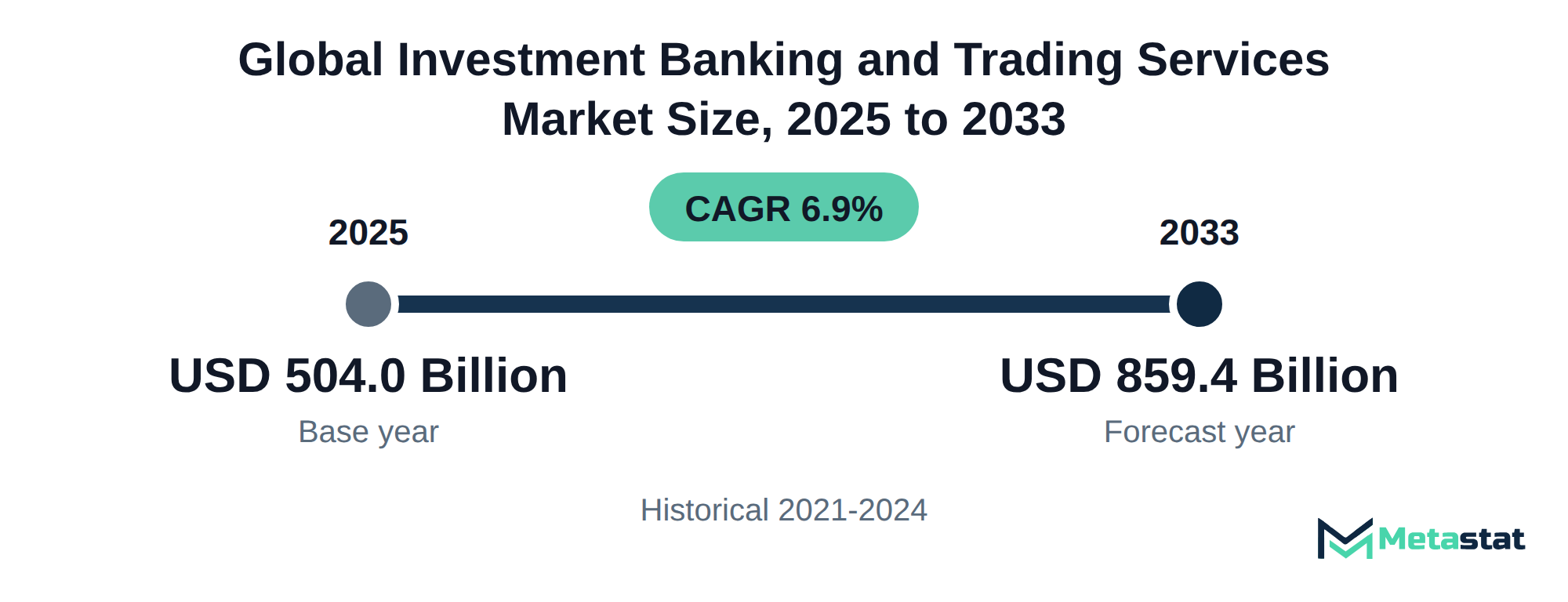
Market Valuation: Valued at $504 Billion in 2025, projected to reach $859.4 Billion by 2033 at a 6.9% CAGR.
Dominant Segment: The Trading, Market Making and Execution segment leads the market, driven by a robust demand for liquidity and efficient trade execution. This segment is projected to generate significant revenues, reflecting the dynamic nature of trading activities.
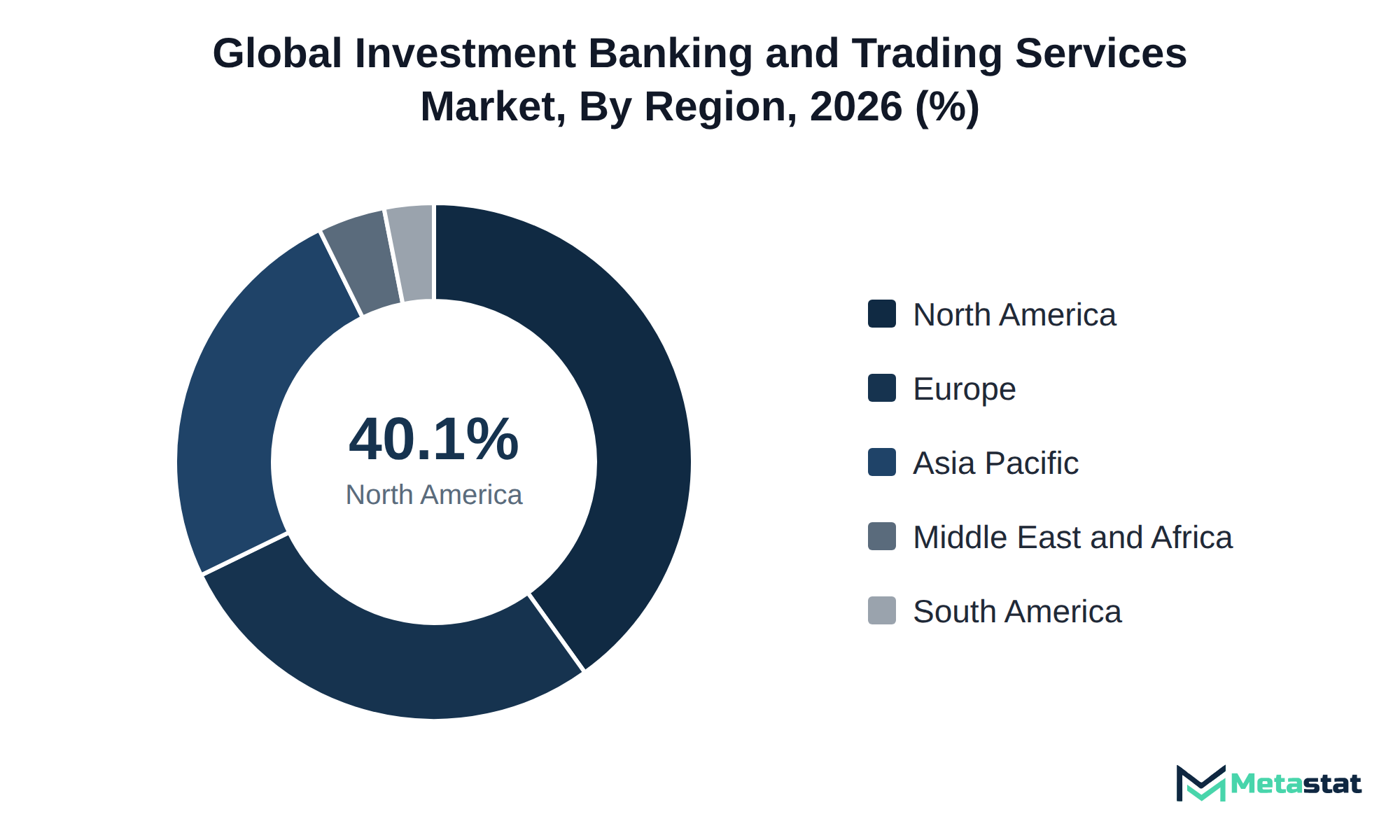
Geographic Lead: North America is the leading region, holding 40.1% of the market share in 2025, with the US expected to maintain its dominance due to a mature financial infrastructure and a concentration of major financial institutions.
What's Inside: The report provides comprehensive coverage of the Investment Banking and Trading Services market, including detailed analyses of service types, client segments, and provider categories, along with forecasts from 2026 to 2033.
Market Trends: Technological advancements in trading platforms are enhancing market efficiency, with innovations like algorithmic trading and AI driving growth in trading operations and client engagement.
Client Dynamics: Asset Managers and Pension Funds are experiencing the fastest growth among client types, reflecting an increasing emphasis on portfolio diversification and risk management strategies.
Choose Your License
Global Investment Banking and Trading Services Market
The global Investment Banking and Trading Services market was valued at USD 504 billion in 2025 and is projected to reach USD 859.4 billion by 2033, growing at a CAGR of 6.9% over the forecast period.
The Investment Banking and Trading Services market encompasses a range of financial services, including trading, underwriting, and advisory functions that facilitate capital flows and investment strategies. Buyers invest in these services to optimize their financial operations, manage risks, and capitalize on market opportunities. The market serves various client types, including asset managers, banks, and corporations, all seeking to enhance their investment portfolios and financial outcomes.
Growth within the market is driven by increasing demand for sophisticated financial solutions and services. The segment generating the highest value is Trading, Market Making and Execution, which supports the dynamic trading environment where investors engage in diverse financial instruments. North America holds 40.1% of the market in 2025, with the US leading in 2026. This region's substantial share reflects a mature financial infrastructure and a concentration of major financial institutions.
Factors contributing to market expansion include technological advancements in trading platforms and the rising complexity of financial instruments. Enhanced big data analytics and automated trading systems facilitate more efficient transactions and informed decision-making. The continuous evolution of regulatory frameworks and the demand for compliance further position the market for sustained growth.
The Investment Banking and Trading Services market addresses the financial requirements of various entities, including corporations and institutional investors. Significant expenditures by buyers stem from the necessity for efficient capital management and strategic financial advisory services. These services enhance operational effectiveness and drive organizational growth across diverse sectors, ensuring that capital is allocated optimally within the economy.
Growth in the market is fueled by increasing transaction volumes and the rising demand for sophisticated financial instruments. Trading, Market Making and Execution represents the largest segment, reflecting a strong appetite for liquidity and efficient trade execution. North America benefits from advanced financial infrastructure and a high concentration of major financial institutions.
Investment in technology-driven solutions transforms the market landscape. Automation and data analytics enhance the efficiency of trading operations, attracting a broader range of clients. This technological evolution supports the emergence of new investment strategies and products, further stimulating market growth and expanding the overall client base within the Investment Banking and Trading Services market.
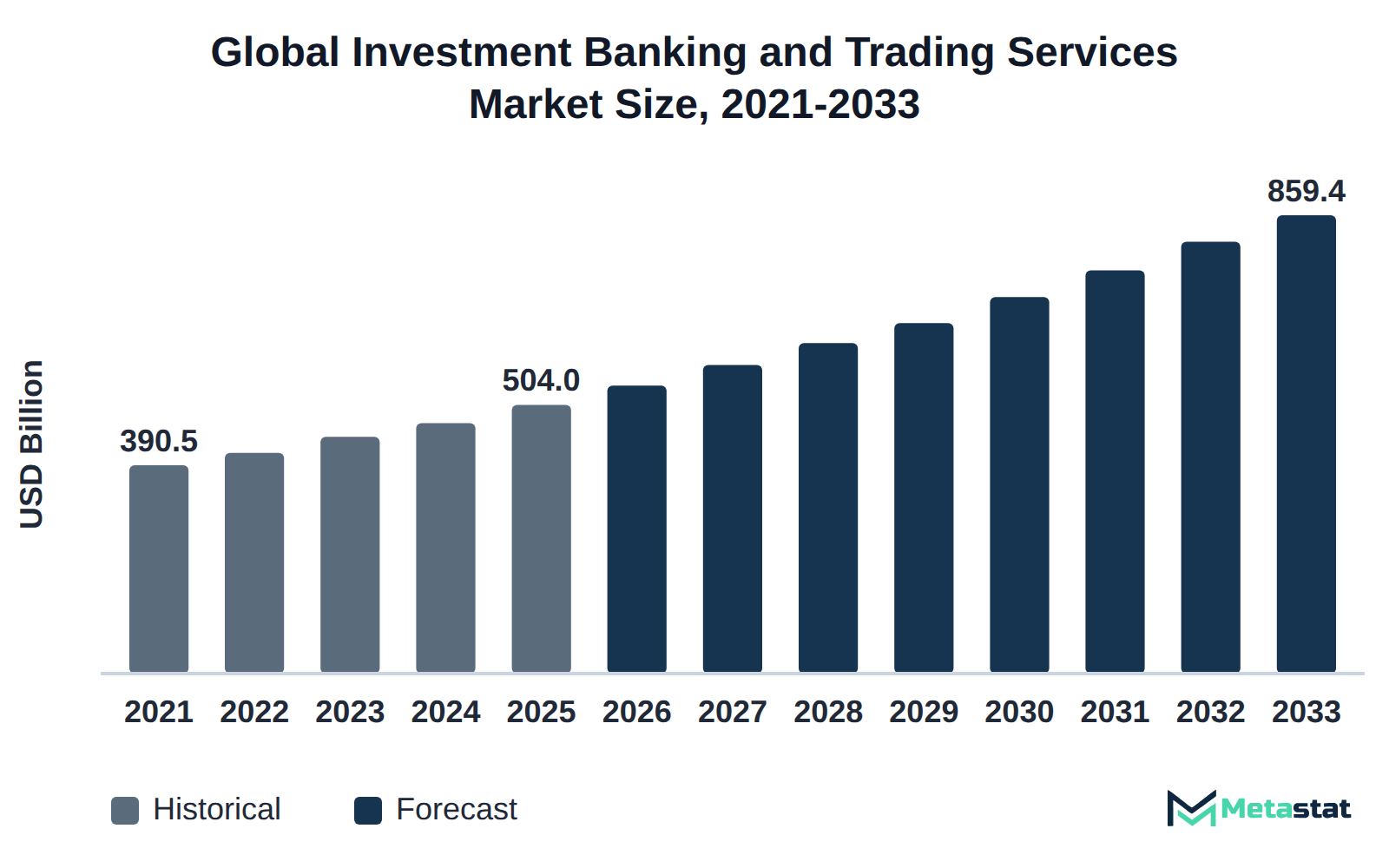
Electronic market making and algorithmic execution significantly influence institutional trading in the Investment Banking and Trading Services market. These technologies enhance liquidity and improve price efficiency across various asset classes. In 2026, the segment of Trading, Market Making and Execution is expected to generate revenues of USD 334.7 billion, reflecting a trend toward more sophisticated trading strategies. This growth stems from increasing demand for rapid transaction processing and advanced analytics, allowing traders to respond more effectively to market fluctuations.
Investment Banking and Trading Services market participants use these technological advancements to optimize trading operations. The capacity for executing trades at high speed and low latency has become essential in a competitive landscape, where milliseconds determine profitability. Firms that adopt these systems experience improved execution quality and risk management, resulting in higher returns for clients.
The shift towards electronic market making and algorithmic execution reshapes competitive dynamics within the market. Companies that embrace these technologies enhance their operational capabilities, positioning themselves favorably against traditional trading methods. This technological evolution improves market efficiency, driving overall growth in the investment banking and trading services market.
The Investment Banking and Trading Services market experiences significant growth driven by increased debt refinancing and equity issuance. In 2026, the segment for Debt Underwriting and Placement is projected to generate a value of USD 87.6 billion by 2033, reflecting a compound annual growth rate (CAGR) of 8.2%. This expansion offers substantial fee opportunities for financial institutions involved in facilitating these transactions.
Buyers in the market typically engage in various contract models, which dictate how fees are structured. Common models include flat fees for services rendered or percentage-based fees tied to the total capital raised. These pricing structures align the interests of buyers and providers. The choice of model often depends on transaction size, complexity, and the relationship between buyers and financial institutions.
The demand for financing solutions, particularly among Asset Managers and Pension Funds, reflects strategic positioning for investment banks and advisory firms. With the anticipated increase in capital markets activities, financial institutions focused on debt refinancing and equity issuance stand to enhance their revenue streams and capture larger market shares within the Investment Banking and Trading Services market.
Gulf capital formation significantly influences cross-border advisory mandates across the EMEA region, reflecting a growing trend among asset managers and pension funds. The Investment Banking and Trading Services market anticipates higher demand for advisory services, particularly from this buyer group. The group is projected to expand from USD 170.8 billion in 2026 to USD 276.5 billion by 2033, a compound annual growth rate of 7.1%. This upward trajectory highlights the rising need for sophisticated financial advisory capabilities, driven by investment opportunities and strategic partnerships across borders.
Gulf states continue to strengthen their positions in investment hubs, requiring asset managers and pension funds to obtain expertise in navigating complex regulatory environments and diverse market landscapes. Cross-border transactions, with a projected value of USD 348.7 billion by 2033, create additional demand for advisory services that facilitate these operations. Firms that focus on this segment are likely to capture significant market share, enabling them to capitalize on the expanding capital flows within EMEA.
The growing appetite for cross-border investments in the Gulf region positions advisory firms to enhance their service offerings, thus contributing to the overall growth of the market. Investment Banking and Trading Services market participants will adapt their strategies to meet the changing needs of asset managers and pension funds and stay competitive.
Investment banks generate revenue through various channels, primarily advisory services, underwriting, and trading activities. These banks charge fees for advisory services related to mergers and acquisitions, which significantly contribute to their earnings. The Mergers and Acquisitions Advisory segment is expected to experience growth driven by increasing corporate activities and strategic realignments in various industries.
Underwriting involves investment banks facilitating the issuance of new securities. This segment, comprising both debt and equity underwriting, remains critical for revenue generation. This growth results from companies seeking funding in capital markets, prompting banks to provide necessary underwriting support.
Trading and market-making activities further enhance revenue streams. Investment banks engage in trading to capitalize on market movements, creating value through both proprietary trading and client transactions. The Trading, Market Making and Execution segment is projected to grow to USD 514.5 billion by 2033, with a CAGR of 6.3%. This growth underlines the increasing complexity and volume of market transactions, providing substantial profit opportunities for investment banks operating within the market.
Asset managers and pension funds represent a significant buyer group in the Investment Banking and Trading Services market, responding to heightened market volatility and evolving investment strategies. The shift towards alternative investments and diversified portfolios drives increased spending in advisory and trading services. This group targets enhanced returns and risk management, leading to a substantial rise in demand for specialized financial guidance and execution services. This trend reflects strong demand for financial solutions tailored to complex investment needs. Providers within the market experience increased engagement, resulting in greater opportunities for revenue generation and service expansion.
Heightened cross-border transaction activity is a key area for growth in the Investment Banking and Trading Services market, driven by globalization and expanding international trade. Companies increasingly seek to penetrate new markets and diversify their operations, necessitating expert financial guidance and support for successful cross-border transactions. This shift results in a projected increase in the value of cross-border transactions, reaching USD 348.7 billion by 2033, indicating a compound annual growth rate of 7.8%. The growing complexity of these transactions requires specialized expertise and resources, providing significant opportunities for investment banks and advisory firms to capitalize on rising demand. Enhanced collaboration and strategic partnerships are becoming important components of cross-border financial services in the market.
Recent technological advancements in trading platforms enhance operational efficiency within the market. Innovations in algorithmic trading, artificial intelligence, and machine learning facilitate rapid data analysis and decision-making. These technologies enable investment banks and trading firms to optimize trading strategies and improve execution speed, directly impacting profitability. The growing demand for high-frequency trading and real-time analytics highlights the shift toward more sophisticated trading solutions.
Increased reliance on cloud-based solutions enables firms to scale operations effectively while reducing infrastructure costs. Enhanced data security measures and RegTech compliance tools further support the adoption of these technologies. The transition to advanced trading systems attracts a diverse range of clients, including asset managers, pension funds, and hedge funds, all seeking to leverage technological efficiencies. These developments position the market for sustained growth, driven by firms' ongoing pursuit of competitive advantage.
Price fluctuations in financial markets present a significant challenge for asset managers and pension funds. These buyer groups face difficulties in executing transactions and making strategic investments when market prices vary widely. Uncertainty surrounding transaction costs further complicates the decision-making process, resulting in delayed orders and smaller transaction volumes. The unpredictable nature of fees associated with advisory and underwriting services discourages the allocation of larger budgets for investment banking solutions. The investment banking and trading services market experiences slower uptake among these buyers, affecting overall growth rates. Heightened caution leads to reduced confidence in initiating new projects or pursuing acquisitions, thereby limiting overall market expansion. This restraint shows why price stability matters for investment decisions among asset managers and pension funds.
Increasing talent costs pose a significant challenge within the Investment Banking and Trading Services market. Recruiting and retaining skilled professionals in this sector faces pressure from competitive hiring practices and evolving skill requirements, particularly in technology-driven roles. Rising operational costs impact profitability for many providers.
To address these challenges, firms adopt various strategies. Enhanced training programs focus on developing existing staff, ensuring employees possess the necessary skills to meet market demands. Firms increasingly use technology, including intelligent automation, to handle routine functions, allowing professionals to concentrate on high-value tasks while reducing dependency on new hires. This strategic shift helps manage costs without compromising service quality in the market.
Rapid growth within the Asia Pacific region presents significant opportunities for the Investment Banking and Trading Services market. This region demonstrates a projected CAGR of 8.6% for Non-Bank Market Makers and Execution Brokers, reflecting increasing demand for liquidity and execution services. High levels of capital inflow into emerging markets, along with rising investment activities from institutional investors, drive this demand. The region's expanding middle class and increasing individual wealth support investment activity, particularly in countries including China and India. Companies specializing in execution services capitalize on these trends to enhance their market position. The increasing number of cross-border transactions further highlights the potential for growth, with projections showing a total value of USD 348.7 billion by 2033. Targeting clients including asset managers and pension funds in this region allows firms to tap into an expanding customer base, ultimately contributing to overall market growth.
The Global Investment Banking and Trading Services market is segmented based on Service Type, Client Type, Provider Type, and Transaction Reach.
This segment supports institutional trading activities by providing liquidity and facilitating efficient market transactions. Asset managers, hedge funds, and other institutional investors leverage these services to optimize their trading strategies and enhance portfolio performance. The segment's growth is driven by increasing trading volumes and the demand for sophisticated trading strategies. Compared with other service types, the Trading, Market Making and Execution segment shows moderate growth, with a CAGR of 6.3%. Debt Underwriting and Placement, by contrast, has a higher CAGR of 8.2%. Market participants continuously seek innovations in execution strategies to improve transaction efficiency, further enhancing the segment's importance within the market.
This segment primarily involves facilitating the issuance of debt securities, aiding entities including corporations and governments in raising capital through debt financing. The demand for this service often stems from increased borrowing activities in various sectors, particularly during periods of economic growth. Interest rate fluctuations significantly impact the attractiveness of debt instruments, influencing the volume of underwriting transactions. Unlike Trading, Market Making and Execution, which has a CAGR of 6.3%, this segment experiences a faster growth trajectory, reflecting heightened demand from borrowers seeking favorable financing conditions. The market benefits from a diverse client base, including asset managers and non-financial corporations, enhancing its resilience against economic fluctuations.
The Equity Underwriting and Placement segment is expected to reach USD 75.7 billion by 2033. This segment facilitates the issuance of new equity securities and is primarily used by corporations seeking to raise capital through public offerings or private placements. Key drivers of growth include increased corporate activities, including mergers and acquisitions, which necessitate substantial capital funding. The segment demonstrates a compound annual growth rate (CAGR) of 7.7%, reflecting robust demand for equity financing among non-financial corporations and private equity firms. Compared to other service types, including Trading, Market Making and Execution, which has a CAGR of 6.3%, this segment exhibits faster growth, highlighting its importance in meeting evolving financial needs in the market.
Mergers and Acquisitions Advisory segment is projected to grow at a CAGR of 7.7% during the forecast period. This segment plays a critical role in facilitating corporate restructuring and strategic growth for various organizations, including private equity firms and large corporations. The increasing complexity of transactions and the need for expert guidance drive demand for advisory services in this area. Heightened activity in global markets contributes to a robust environment for mergers and acquisitions. This segment experiences faster growth compared to others, including Equity Underwriting and Placement, which does not exhibit the same level of demand dynamics. Competition among advisory firms intensifies, particularly as they adapt to changing regulatory landscapes and evolving client expectations. The market reflects a strong appetite for innovative strategies that enhance value creation in mergers and acquisitions.
Restructuring and Liability Management Advisory services provide critical support for organizations navigating financial distress or operational challenges. This segment serves corporations, private equity firms, and other financial sponsors seeking expert guidance during complex restructuring processes. Demand for these services stems from increased market volatility and the need for effective strategies to manage liabilities, driven by economic fluctuations and regulatory changes. Compared to other advisory segments, this area often experiences slower growth due to the specialized nature of advisory services and the longer timelines involved in restructuring situations. Firms within this segment typically command higher fees, reflecting the complexity and expertise required to navigate such intricate financial landscapes. The Investment Banking and Trading Services market relies on this segment to enhance overall market stability and support clients in achieving long-term financial health.
Prime Brokerage and Securities Financing offers essential services that facilitate the trading and financing of securities for institutional clients. This segment primarily serves hedge funds, asset managers, and other financial institutions, providing them with access to liquidity, trade execution, and risk management solutions. Demand in this segment is driven by heightened activity in the equity markets and a growing need for financing solutions to support complex trading strategies. Unlike other segments, this area experiences significant growth driven by increasing reliance on sophisticated trading strategies and the demand for tailored financing solutions. The unique requirements of private equity and other financial sponsors position this segment as a critical provider of specialized services, further differentiating it from other service types in the market.
Others (Standalone Research, Private Capital Fundraising Advisory) provides advisory services tailored to assist clients in capital raising through private channels and delivering standalone research insights. These services attract a diverse clientele, including private equity firms and institutional investors, seeking specialized knowledge and guidance for investment opportunities. Key forces influencing this segment encompass the increasing demand for alternative funding sources and the growing trend toward private capital markets, which offer advantages over traditional public offerings. Compared to other segments, this area tends to exhibit different pricing models and client engagement levels, reflecting its specialized nature. The flexibility and customized approach provided in this segment address unique client requirements, setting it apart from broader investment banking services. This differentiation highlights the importance of niche expertise in addressing specific market demands, ultimately shaping the competitive dynamics within the market.
Asset Managers and Pension Funds segment is valued at USD 170.8 billion in 2026 and is projected to reach USD 276.5 billion by 2033, at a CAGR of 7.1% during the forecast period. This segment serves institutional investors focused on asset allocation, risk management, and optimizing returns. The increasing need for effective investment strategies drives demand for specialized advisory and trading services. Compared to other client types, Asset Managers and Pension Funds are anticipated to experience faster growth due to an emphasis on portfolio diversification and capital preservation. The CAGR of 7.1% for this segment outpaces that of Banks, Broker-Dealers and Insurers, which holds a CAGR of 6%. The Investment Banking and Trading Services market benefits from the evolving landscape of regulations and financial instruments that cater to these investors.
Banks, Broker-Dealers and Insurers segment is estimated to reach USD 208.9 billion by 2033, at a CAGR of 6% during the forecast period. This segment serves a critical role in facilitating the flow of capital and managing risks for institutional clients, including mutual funds, hedge funds, and insurance companies. The demand for comprehensive financial services drives growth, reflecting the increasing complexity of financial markets. Regulatory changes, including Dodd-Frank and MiFID II, influence operational dynamics, prompting these entities to seek advisory and underwriting services to navigate compliance. Compared to other segments, this one displays steady growth, distinct from the faster expanding Asset Managers and Pension Funds segment, which grows at a CAGR of 7.1%. These differing growth rates highlight the varying demands and strategic priorities within the Investment Banking and Trading Services market.
The Non-Financial Corporations segment is expected to reach USD 216.1 billion by 2033. This segment serves various industries seeking financial advisory, capital raising, and market execution services. Demand primarily stems from companies looking to restructure financial strategies and optimize investment portfolios. Increasing complexities in regulatory frameworks and market conditions drive firms to seek expert guidance. Compared to other client types, Non-Financial Corporations exhibit steady growth, reflecting a consistent need for tailored financial solutions. This segment's growth rate aligns closely with the overall market, providing a significant opportunity for investment banks to expand their service offerings. The competitive landscape influences pricing structures, impacting the profitability of financial transactions. The Investment Banking and Trading Services market benefits from these dynamics, with Non-Financial Corporations engaging actively in various financial activities, contributing to the sector's overall expansion.
Private Equity and Other Financial Sponsors segment is projected to grow at a CAGR of 7.3% during the forecast period. This segment primarily serves institutional investors seeking funding for leveraged buyouts, growth capital, and other investment strategies. Increasing demand for alternative assets has driven investment from this buyer group, with private equity firms focusing on acquisitions to enhance portfolio value. The segment differentiates itself through its targeted approach, catering to specialized investment needs, in contrast to traditional client types, including banks and insurers. The segment's growth trajectory outpaces that of other client types, reflecting rising interest in private equity investments amid favorable market conditions.
Sovereigns and Public Sector Institutions engage in complex financial transactions to facilitate public projects and manage national resources effectively. This segment primarily serves government entities and public sector organizations seeking to raise capital, manage debt, or undertake large-scale infrastructure projects. Demand for advisory services in this area aligns with regulatory changes and fiscal policies, driving increased activity during periods of economic growth. Compared to other client types, including Asset Managers and Pension Funds, this segment experiences slower growth due to the unique bureaucracy involved in public sector decision-making. The pricing structure for services in this segment differs, reflecting the need for tailored solutions that meet public accountability and transparency standards. These dynamics significantly influence the engagement strategies of firms operating in the Investment Banking and Trading Services market.
Family Offices, Endowments, and Foundations represent a unique segment within the Client Type classification, primarily focusing on the management of substantial assets for wealthy families, charitable organizations, and institutional investors. These entities engage in strategic investments to grow their capital while ensuring alignment with their philanthropic objectives. This segment experiences distinct demand dynamics driven by the increasing need for tailored investment solutions that balance growth and social impact. Compared to other client segments, including Asset Managers and Pension Funds, the investment strategies for Family Offices, Endowments, and Foundations emphasize long-term value creation, resulting in a slower growth trajectory relative to more traditional investment funds. The Investment Banking and Trading Services market adapts to the specific requirements of this segment, offering specialized advisory services that cater to their unique investment philosophies and operational structures.
Universal Banking Groups segment is valued at USD 350 billion in 2026 and is projected to reach USD 540 billion by 2033, at a CAGR of 6.4% during the forecast period. This segment delivers comprehensive financial services, including investment banking, asset management, and retail banking, catering primarily to individual and institutional clients. The demand for integrated financial solutions drives growth in this segment, with larger institutions benefiting from economies of scale. Compared to other segments, Universal Banking Groups face relatively stable growth, differing from the Debt Underwriting and Placement segment, which has a higher projected CAGR of 8.2%. Regulatory changes, particularly those focused on capital requirements, significantly influence operations within this area, impacting service pricing and competitiveness. The segment supports a diverse client base, enhancing its resilience against market fluctuations in the Investment Banking and Trading Services market.
Securities Firms and Investment Banks segment is estimated to reach USD 181.8 billion by 2033, at a CAGR of 7.3% during the forecast period. This segment primarily serves institutional clients, offering various financial services, including securities trading, market making, and advisory services. A critical demand driver for this segment stems from the increasing need for sophisticated financial solutions among large entities, including corporations and governments. Compared to other segments, Securities Firms and Investment Banks exhibit strong growth, supported by a rising trend in cross-border transactions, projected to achieve a value of USD 348.7 billion by 2033 at a CAGR of 7.8%. This growth trajectory highlights the distinct positioning of this segment within the Investment Banking and Trading Services market, driven by the evolving financial landscape and the increasing complexity of market operations.
Independent Advisory Firms segment is expected to reach USD 67.7 billion by 2033. This segment provides specialized advisory services tailored for clients seeking strategic guidance in financial transactions, including mergers, acquisitions, and restructurings. The primary users include corporations, private equity firms, and institutional investors who rely on independent advice to navigate complex financial landscapes. The rapid growth in this segment is supported by increasing transactional activity and the rising complexity of financial markets, with a CAGR of 7.3% anticipated during the forecast period. Compared to other provider types, Independent Advisory Firms typically command higher fees due to their specialized knowledge and the bespoke nature of their services, distinguishing them from larger banking groups that offer a broader array of financial services. Market expansion aligns with the growing demand for expert financial advisory services in an evolving economic environment.
The Non-Bank Market Makers and Execution Brokers segment is projected to grow at a CAGR of 8.6% during the forecast period. This segment provides trading services that enable clients to execute trades efficiently, predominantly used by institutional investors, hedge funds, and proprietary trading firms. Factors driving growth in this segment include increasing reliance on algorithmic trading and enhanced market liquidity, allowing market participants to access better pricing. Compared to other segments, this segment experiences faster growth, driven by the rise in electronically executed transactions and a shift towards execution-focused services. While Universal Banking Groups often offer a broader suite of services, Non-Bank Market Makers and Execution Brokers focus specifically on trading efficiency and execution quality, appealing to clients prioritizing speed and cost-effectiveness. The market adapts to technological advancements that improve trading capabilities, positioning Non-Bank Market Makers and Execution Brokers uniquely within the Investment Banking and Trading Services market.
Domestic Transactions segment is valued at USD 333.5 billion in 2026 and is projected to reach USD 510.7 billion by 2033, at a CAGR of 6.3% during the forecast period. This segment primarily facilitates financial transactions within a country's borders, catering to clients including corporations and institutional investors seeking efficient transaction execution. The growth of the domestic transactions segment is largely driven by an increasing focus on local market opportunities and the strengthening of regulatory frameworks that support domestic investments. Compared to other segments, including Cross-Border Transactions, this segment exhibits relatively slower growth, with a lower CAGR of 6.3%. Such dynamics create a distinct space for domestic transactions, reflecting robust demand for localized trading services within the Investment Banking and Trading Services market.
This segment facilitates international financial activities, including mergers and acquisitions, securities trading, and capital raising across borders. Firms engaging in these transactions include multinational corporations, investment banks, and private equity firms seeking opportunities for growth beyond their domestic markets. A primary driver for this segment involves globalization, which drives cross-border investments and collaboration among companies, leading to increased transaction volumes. The growth rate for Cross-Border Transactions stands at 7.8%, surpassing other segments like Domestic Transactions with a lower growth trajectory. This rapid pace reflects the growing preference for international diversification among investors and companies looking to capitalize on global market opportunities. The Investment Banking and Trading Services market is expected to experience significant developments due to this robust demand for cross-border dealings.
Based on geography, the Global Investment Banking and Trading Services market is divided into North America, Europe, Asia-Pacific, South America, Middle East, and Africa.
North America's position within the Investment Banking and Trading Services market remains essential, contributing 40.1% of the global market share in 2025. Demand in this region is significantly driven by asset managers and pension funds, which are increasing their allocations toward innovative financial instruments and strategies. Key players in the United States, Canada, and Mexico actively engage in diverse financial activities, leveraging advanced technology and data analytics to enhance trading execution and market making. Regulations aimed at improving transparency and efficiency in financial markets support this growth, particularly in the U.S. The market is projected to reach USD 328.5 billion by the end of 2033, reflecting a steady upward trajectory influenced by robust economic conditions and ongoing demand for sophisticated financial services.
Investment Banking and Trading Services market growth in Europe reflects demand from several key industries, particularly in financial services, including asset management and corporate finance. Countries including Germany, France, and the UK exhibit strong activity in mergers and acquisitions, driving advisory service needs. Regulatory frameworks across these nations, especially in the context of financial compliance and transparency, influence operational practices and the competitive environment. The market's share in Europe reached 27.7% in 2025, highlighting its significance within the global landscape. By 2033, growth in this region is projected to contribute substantially to the overall expansion of the market.
Asia-Pacific accounted for 24.9% of the Investment Banking and Trading Services market in 2025. The region experiences growing demand driven by asset managers and pension funds focusing on investment opportunities in emerging markets. China and India demonstrate robust economic growth, attracting foreign investments and increasing activity in mergers and acquisitions. Regulatory frameworks across Asia-Pacific are evolving, aiming to enhance transparency and protect investors, which further encourages market participation. Infrastructure improvements in financial technology streamline transactions, improving greater efficiency in trading and execution services. With a diverse landscape of buyers, including banks and non-financial corporations, the market is set to expand, supported by a rise in cross-border transactions and a strengthening focus on sustainable investment practices, including impact investing.
Brazil and Argentina serve the primary markets for investment banking and trading services in South America, driven by growing demand for financial advisory and capital raising solutions. The presence of several large corporations in these countries stimulates activity, particularly in sectors including energy, agriculture, and manufacturing. The market in South America faces unique challenges, including regulatory complexities and economic volatility. Opportunities exist for firms providing innovative financial products tailored to local needs. The market is projected to capture a 3.1% share of the global investment banking and trading services market in 2025, with growth driven by increasing participation from institutional investors and evolving corporate financing strategies.
Investment Banking and Trading Services market dynamics in the Middle East and Africa hinge on the activities of key buyers, including asset managers and pension funds, which demonstrate a growing appetite for investment opportunities. Countries including Saudi Arabia and the UAE actively engage in substantial financial transactions, driven by ongoing economic diversification and infrastructure projects. South Africa's financial market remains robust, with strong demand for equity underwriting and advisory services, reflecting the country's complex economic landscape. The region's overall share of the global market highlights its emerging role within the broader investment banking ecosystem. The market continues to evolve, largely influenced by local regulations and a competitive landscape that encourages innovation among financial service providers.
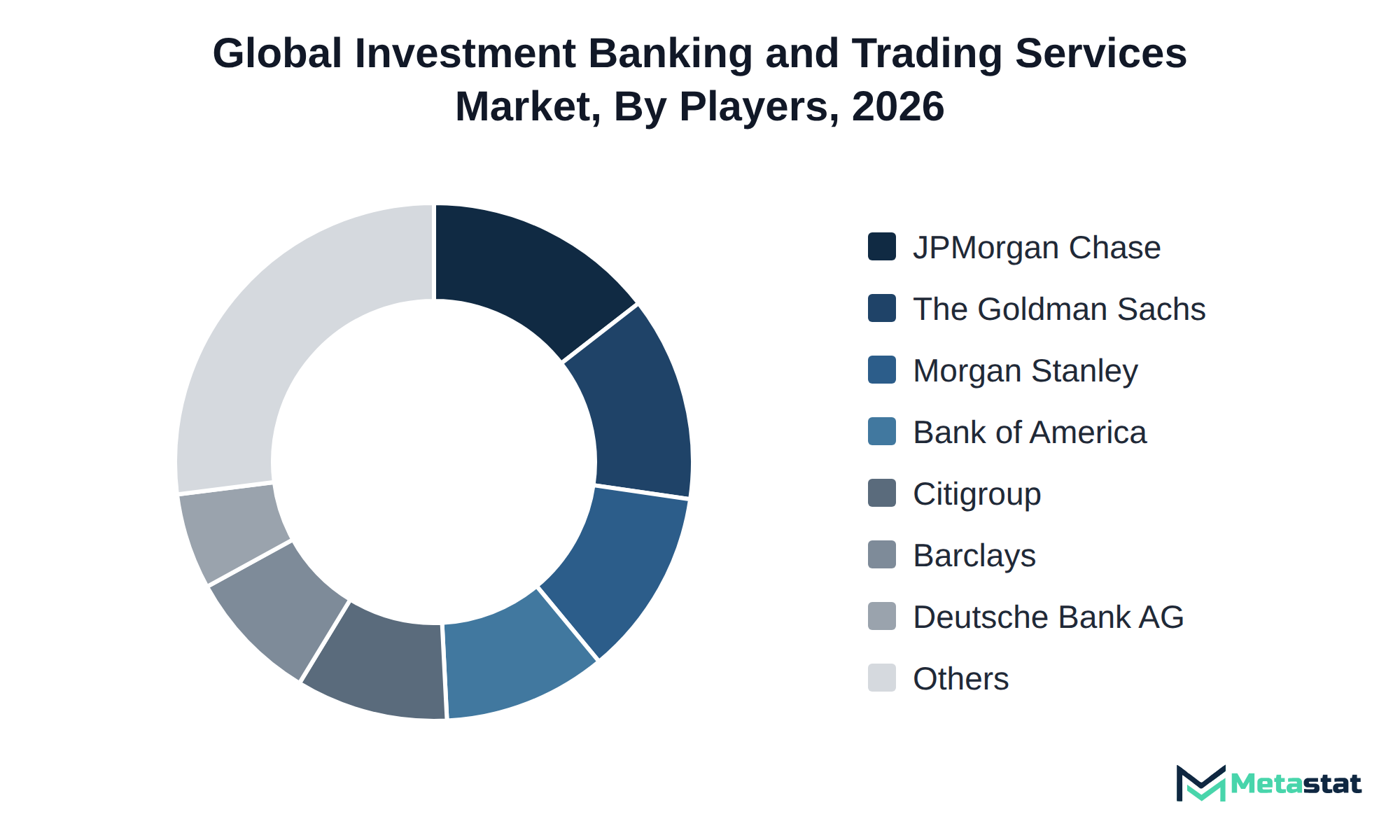
The Investment Banking and Trading Services market features a diverse array of companies competing across various service types and client segments. Major players include JPMorgan Chase & Co., The Goldman Sachs Group, Inc., and Morgan Stanley, each focusing on distinct aspects of the market.
Competition largely divides along service offerings, including Trading, Market Making and Execution, Debt Underwriting and Placement, and Mergers and Acquisitions Advisory. Buyers prioritize factors including pricing, service quality, and customization based on their specific needs. For instance, Citigroup Inc. emphasizes its global market-making capabilities, while Barclays PLC focuses on delivering innovative solutions in debt underwriting.
The market features significant involvement from independent advisory firms including Lazard, Inc., which caters to clients seeking specialized advisory services. This competitive landscape ensures that participants adapt their strategies to enhance customer value and capture a larger share of the expanding market.
Achieving this growth relies on key developments within the Investment Banking and Trading Services market. A strong demand from asset managers and pension funds will drive significant revenue, particularly in the asset management sector where growth is expected to reflect a CAGR of 7.1% through 2033. The expansion of cross-border transactions will enhance market dynamics, with the segment anticipated to see a CAGR of 7.8%, appealing to global investors.
Conversely, potential economic downturns or regulatory challenges could slow down this growth trajectory. Sluggish market conditions or increased scrutiny on financial transactions impact the performance of investment banks and securities firms, which are essential to the market's expansion. The ability of universal banking groups to adapt to changing regulations while encouraging innovation will be crucial for maintaining momentum. Overall, these factors will determine the market's path toward reaching USD 859.4 billion by 2033.
By Service Type: Trading, Market Making and Execution, Debt Underwriting and Placement, Equity Underwriting and Placement, Mergers and Acquisitions Advisory, Restructuring and Liability Management Advisory, Prime Brokerage and Securities Financing, Others (Standalone Research, Private Capital Fundraising Advisory)
By Client Type: Asset Managers and Pension Funds, Banks, Broker-Dealers and Insurers, Non-Financial Corporations, Private Equity and Other Financial Sponsors, Sovereigns and Public Sector Institutions, Others (Family Offices, Endowments, Foundations)
By Provider Type: Universal Banking Groups, Securities Firms and Investment Banks, Independent Advisory Firms, Non-Bank Market Makers and Execution Brokers
By Transaction Reach: Domestic Transactions, Cross-Border Transactions
The report strategically identifies and profiles the key market players and analyses their core competencies in each sub-segment of the Investment Banking and Trading Services market.
Report Attributes | Details |
Study Period | 2021-2033 |
Base Year | 2025 |
Estimated Year | 2026 |
Forecast Period | 2026-2033 |
Historical Period | 2021-2025 |
Growth Rate | CAGR 6.9% from 2026 to 2033 |
Revenue Unit | USD billion |
Segmentation | By Service Type, Client Type, Provider Type, Transaction Reach, and Region |
By Region | North America (By Service Type, Client Type, Provider Type, Transaction Reach, and Country)
|
Europe (By Service Type, Client Type, Provider Type, Transaction Reach, and Country)
| |
Asia Pacific (By Service Type, Client Type, Provider Type, Transaction Reach, and Country)
| |
South America (By Service Type, Client Type, Provider Type, Transaction Reach, and Country)
| |
Middle East and Africa (By Service Type, Client Type, Provider Type, Transaction Reach, and Country)
|
Find answers to common questions about this report
The Investment Banking and Trading Services market size was valued at USD 504 billion in 2025.
The market is projected to grow at a CAGR of 6.9% during the forecast period from 2026 to 2033.
The North America Investment Banking and Trading Services market size is estimated to reach USD 328.5 billion by 2033.
Trading, Market Making and Execution leads the Investment Banking and Trading Services market with a projected value of USD 514.5 billion by 2033. This segment's growth reflects a compound annual growth rate of 6.3 percent from 2026 to 2033.
Heightened market volatility and evolving investment strategies drive increased spending in advisory and trading services. Cross-border transactions experience significant growth, fueled by globalization and the need for expert financial guidance.
North America holds the dominant share of the Investment Banking and Trading Services market, with a value of USD 328.5 billion projected for 2033, representing 40.1 percent of the total market.
Price fluctuations in financial markets present a significant challenge, complicating transaction execution and strategic investments for asset managers and pension funds. Increasing talent costs further restrain growth, as competitive hiring practices and evolving skill requirements drive up operational expenses for providers.
Rapid growth within the Asia Pacific region presents significant opportunities, driven by increasing demand for liquidity and execution services. The expanding middle class and rising investment activities from institutional investors contribute to a favorable environment for adoption in the Investment Banking and Trading Services market.
The Investment Banking and Trading Services market is estimated to reach a valuation of USD 859.4 billion by 2033.
Key players operating in the Investment Banking and Trading Services market include JPMorgan Chase & Co., The Goldman Sachs Group, Inc., Morgan Stanley, Bank of America Corporation, Citigroup Inc., Barclays PLC, and Deutsche Bank AG.
The analysts below cover Banking & Finance research at Metastat Insights.
LEAD ANALYST
Utkarsh Khirodkar is a Lead Market Research Analyst at MetaStat Insight, specializing in market intelligence, technology sector assessments, and competitive strategy.

PRINCIPAL CONSULTANT - ENTERPRISE AI & EMERGING TECHNOLOGIES
Banking & Finance · Electronics and Semiconductor · Energy and Power · Healthcare IT · Information & Technology · Professional Services
Vijay Gunti is a Principal Consultant at MetaStat Insight, bringing over two decades of experience across enterprise digital transformation, technology strategy, and intelligent systems.
Scaling antibody-drug conjugate manufacturing hinges on contract manufacturing availability for high-potency active ingredients. The MetaStat Insight analysis looked closely at global cleanroom slot constraints, bioconjugation batch failure rates, and supply chain redundancies between the US, Europe, and India. The supplier capability matrix proved genuinely useful for our team when mapping secondary source options across our clinical pipeline.
Floating offshore wind feasibility relies heavily on specialized installation vessel availability and port crane limits, which most broad renewable energy forecasts ignore. The report delivered a thorough analysis of dry dock capacity, mooring chain supply constraints, and raw material pricing trends for deepwater anchor installations. It served as a solid independent sanity check for our offshore project capital expenditure assumptions.
Assessing commercial microgrid software adoption requires looking past top-level installation numbers and examining utility interconnection queues. The research provided verifiable data on average permitting timelines, tariff structures, and battery storage integration costs across regional utility territories. That grounded perspective was valuable for our team when building five-year demand projections for industrial microgrid controllers.
Explore related market intelligence reports worth reading alongside this one.