
LEAD ANALYST
Utkarsh Khirodkar is a Lead Market Research Analyst at MetaStat Insight, specializing in market intelligence, technology sector assessments, and competitive strategy.

Global Liquid Coffee Concentrate Market Size, Share, By Brewing / Extraction Method (Cold Brew Extraction, Hot Brew Extraction, Flash Brew Extraction and Others), By Coffee Base (Arabica, Robusta and Arabica-Robusta Blends), By Packaging Format (Bottles, Cartons, Sachets and Pouches, Bag-in-Box and Bulk Containers), By End User (Households, Cafés & Coffee Shops, Hotels, Restaurants & Catering, Offices & Institutional Facilities and RTD Coffee & Beverage Manufacturers), Industry Analysis, Growth, Trends, and Forecast, 2026-2033
Report ID
MSI-5295
Published
September, 2026
Pages
254 Pages
Format
Historical
Base year
Forecast
Forecast period
Report Details
Market Valuation: Valued at $2,972.4 Million in 2025, projected to reach $4,539 Million by 2033 at a 5.4% CAGR.
Dominant Segment: The Cold Brew Extraction segment leads the market, driven by consumer preference for smoother, less acidic coffee. This segment is projected to grow from USD 1,525.2 million in 2026 to USD 2,366.6 million by 2033, reflecting a CAGR of 6.5%.
Geographic Lead: Emerging regions are experiencing significant demand growth due to urbanization and changing lifestyles. This trend is particularly evident in densely populated areas where consumers seek convenient coffee solutions.
What's Inside: The report provides a comprehensive analysis of the competitive landscape, market segmentation by brewing methods, coffee bases, packaging formats, and end users, along with detailed forecasts through 2033.
Rising Demand for Convenient Formats: There is a notable shift towards ready-to-mix coffee formats, appealing to busy consumers. This trend opens opportunities for manufacturers to innovate and expand their product lines.
Technological Advancements: Investment in advanced extraction technologies is enhancing flavor and yield in coffee concentrate production, positioning companies to meet rising consumer demands for high-quality products.
Choose Your License
Global Liquid Coffee Concentrate Market
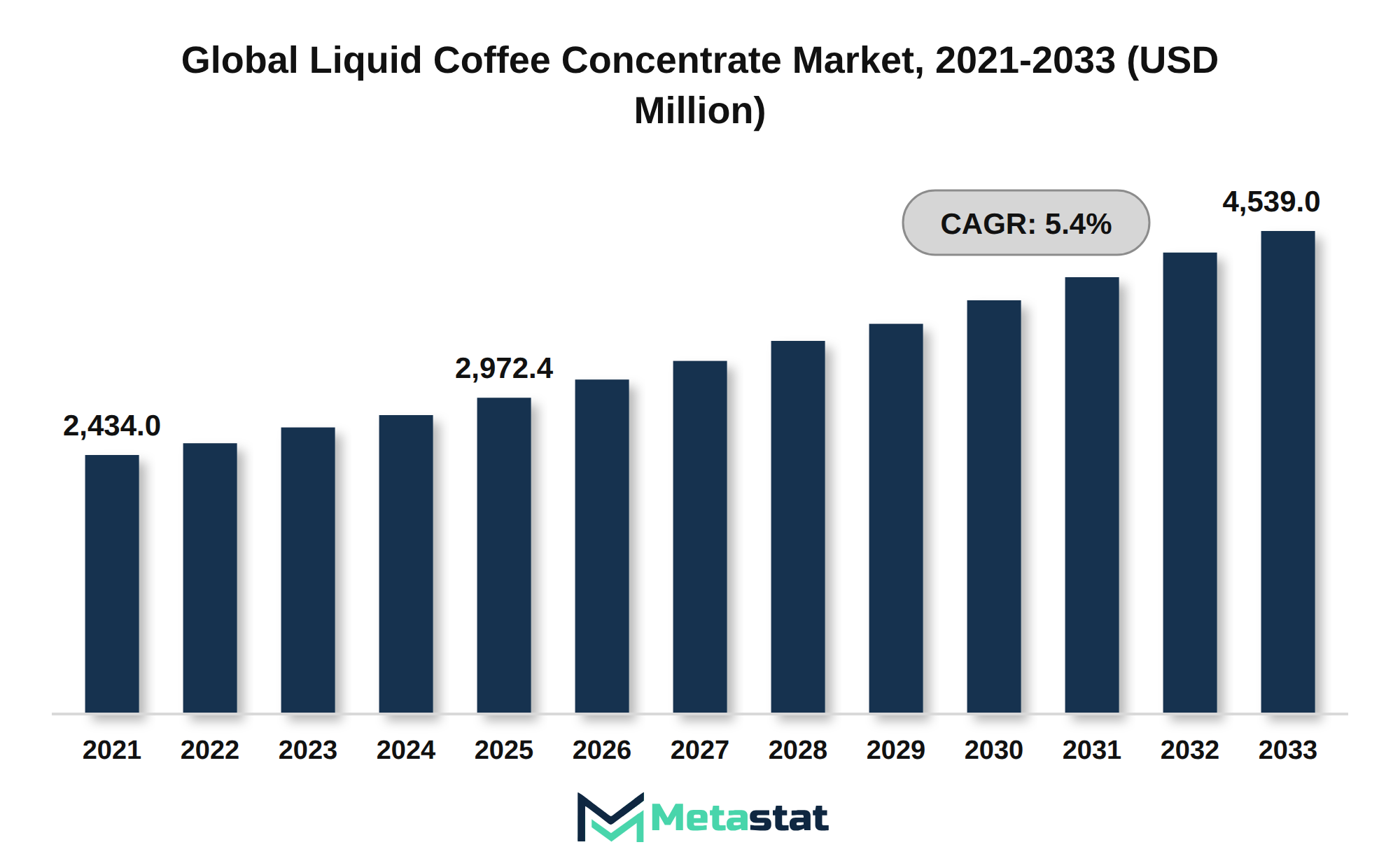
The global Liquid Coffee Concentrate market was valued at USD 2,972.4 million in 2025 and is projected to reach USD 4,539 million by 2033, growing at a CAGR of 5.4% over the forecast period.
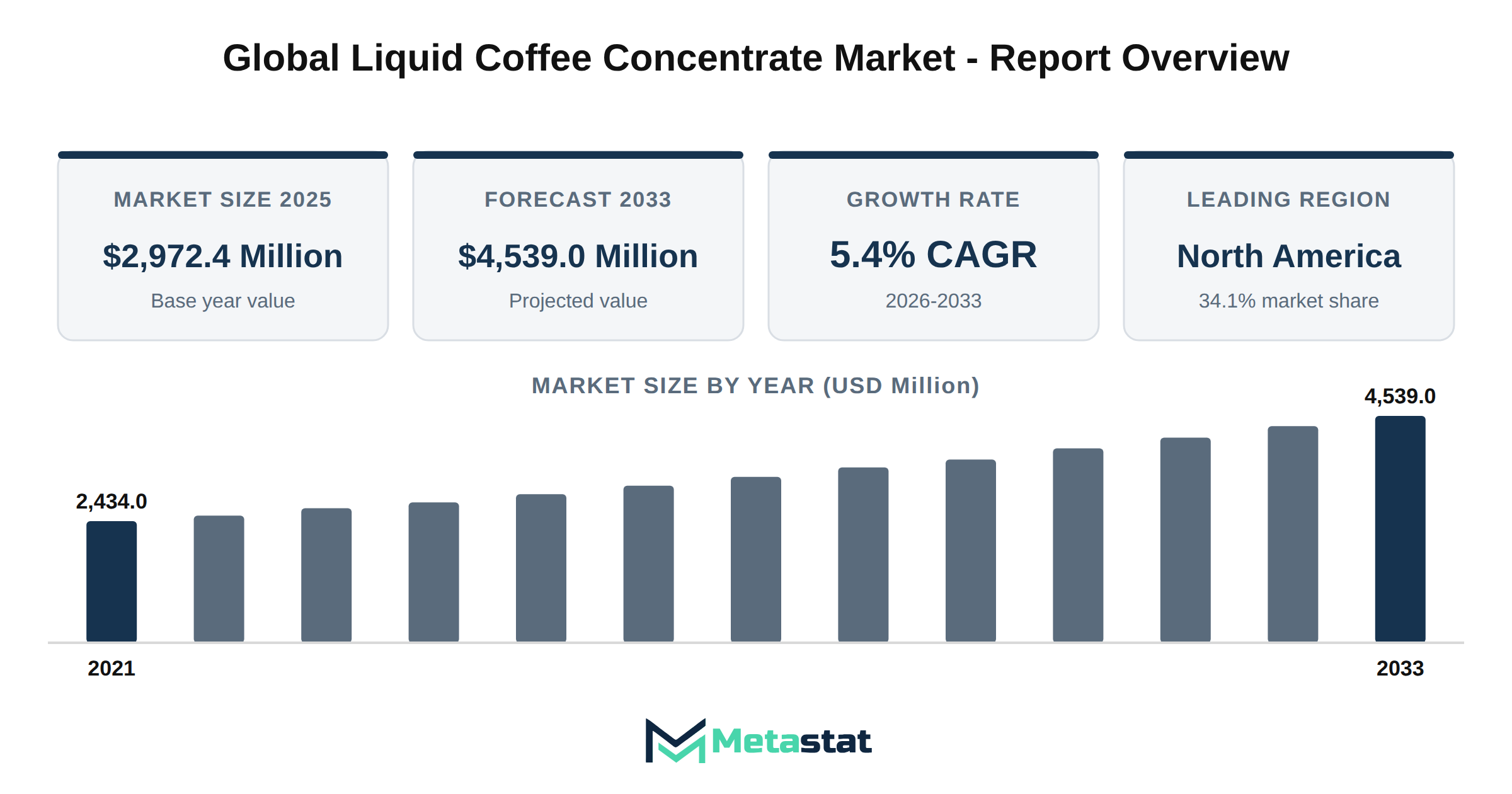
The Liquid Coffee Concentrate market reached a value of USD 2,972.4 million in 2025, with projections indicating growth to USD 4,539 million by 2033. This expansion corresponds to a compound annual growth rate (CAGR) of 5.4%. The market has experienced steady growth since 2021, when it was valued at USD 2,434 million. By 2024, the market value had increased to USD 2,809.5 million, reflecting a growing consumer preference for convenient coffee solutions.
Cold brew concentrates significantly reshape at-home coffee consumption patterns. The increasing popularity of cold brew among consumers drives demand for ready-to-use solutions that simplify preparation. These products cater to individuals seeking a smoother flavor profile and a less acidic coffee experience, positioning cold brew because a favored choice for home brewers.
Growing consumer trends indicate a rising demand for convenient ready-to-mix coffee formats. The market experiences a shift toward single-serve solutions and instant coffee options, appealing to busy lifestyles. This demand creates opportunities for manufacturers to innovate and expand their product lines, enhancing market competitiveness.
Premium Arabica concentrates play a crucial role in product differentiation within the Liquid Coffee Concentrate market. The rich flavor and quality associated with Arabica beans attract discerning consumers. Companies emphasize sourcing high-quality Arabica to enhance their offerings and establish brand loyalty among consumers seeking premium coffee experiences.
Ready-to-drink (RTD) beverage manufacturers increasingly incorporate liquid coffee concentrates into their products. This trend aligns with consumer preferences for convenient beverage options that deliver high-quality coffee flavors. The integration of liquid coffee concentrates allows RTD brands to innovate and expand their offerings, capitalizing on the growing coffee consumption trend.
The foodservice sector adopts high-strength liquid coffee concentrates to enhance beverage menus. Cafés and restaurants leverage these concentrates to create specialty coffee drinks quickly and efficiently. This trend not only improves operational efficiency but allows establishments to offer a diverse range of beverages, catering to consumer preferences for unique coffee experiences.
Shelf-stable coffee concentrates expand retail accessibility, allowing consumers to purchase these products conveniently. Retailers increasingly stock these items to meet the demand for long-lasting coffee solutions. The ability to maintain quality over time without refrigeration enhances the market's appeal, encouraging more consumers to explore liquid coffee concentrates.
Clean-label and natural formulations in coffee concentrates align with consumer preferences for transparency and health-conscious choices. Consumers increasingly seek products with minimal ingredients and no artificial additives, prompting manufacturers to reformulate their offerings. This trend influences the development of new products that appeal to health-oriented consumers.
Flavor innovation plays a central role in transforming the Liquid Coffee Concentrate market. Manufacturers experiment with diverse flavor profiles and unique blends to attract a broader audience. This focus on innovation ensures that products remain appealing and relevant to evolving consumer tastes, driving market growth.
The growth of plant-based beverages supports increasing demand for coffee concentrates. Consumers show interest in plant-based alternatives that complement their lifestyle choices, leading to the development of coffee concentrates tailored for these markets. This trend creates opportunities for expansion within the sector, aligning with the broader movement toward plant-based consumption.
Liquid coffee concentrates find diverse applications in desserts and functional beverages. The versatility of these concentrates allows manufacturers to integrate them into a variety of food products, enhancing flavor and appeal. This trend opens new avenues for creativity in product development, stimulating further growth in the market.
Advanced extraction technologies enhance flavor and yield in coffee concentrate production. Innovations in processing techniques lead to improved efficiency and product quality, benefiting manufacturers. These technological advancements position companies to meet consumer demands for high-quality concentrates, supporting long-term market growth.
Cold brew extraction is gaining share over conventional hot extraction methods. This shift reflects consumer preferences for smoother and less acidic coffee, driving manufacturers to adopt cold brew techniques. The growing popularity of cold brew products positions the market for continued expansion, catering to evolving consumer tastes.
Cold brew concentrates reshape at-home coffee consumption. Consumers increasingly seek convenience and quality, driving the transition towards ready-to-mix coffee formats. This trend aligns with the rise in demand for quick and easy beverage solutions, enhancing the appeal of liquid coffee concentrates.
Premium Arabica concentrates drive product differentiation in the market. The distinct flavor profile and superior quality of Arabica beans contribute to a growing preference among consumers for high-end coffee products. This demand for premium offerings influences manufacturers to develop innovative blends that cater to discerning tastes.
Ready-to-drink (RTD) beverage manufacturers expand the usage of liquid coffee concentrates to enhance their product lines. This shift reflects a broader trend within the beverage industry, where convenience and quality merge to meet consumer expectations. The incorporation of liquid coffee concentrates provides an opportunity for RTD beverages to differentiate themselves in a competitive market.
Foodservice establishments adopt high-strength liquid coffee concentrates to streamline operations and meet customer preferences for quality coffee. This trend supports operational efficiency while ensuring that customers receive a consistent and enjoyable coffee experience. The growing reliance on concentrates reflects a shift towards more efficient preparation methods in cafés and restaurants.
Shelf-stable coffee concentrates expand retail accessibility, providing convenient options for consumers. This availability strengthens market penetration, particularly in regions with limited fresh coffee options. Retailers benefit from the ability to stock a variety of concentrates, catering to diverse consumer preferences.
Clean-label and natural coffee concentrate formulation trends gain traction in response to consumer demand for transparency and health-conscious products. Manufacturers increasingly focus on sourcing high-quality, organic ingredients to align with these preferences, enhancing product appeal and market competitiveness.
Flavor innovation transforms the liquid coffee concentrate market. Companies invest in developing unique flavors and blends to attract consumers looking for novel coffee experiences. This emphasis on flavor variety drives market growth and expands consumer interest.
The growth of plant-based beverages supports coffee concentrate demand, driven by consumers seeking dairy alternatives. The increasing popularity of plant-based diets encourages beverage manufacturers to explore coffee concentrate applications in various formulations, further broadening the market's scope.
Liquid coffee concentrates find applications in desserts and functional beverages, expanding their versatility. This diversification opens new revenue streams for manufacturers and attracts a broader customer base, demonstrating the adaptability of liquid coffee concentrates in various culinary creations.
Advanced extraction technologies improve flavor and yield, enhancing the quality of liquid coffee concentrates. These innovations allow producers to maximize the flavor profile of their products, meeting the sophisticated tastes of consumers while optimizing production efficiency.
Cold brew extraction gains share over conventional hot extraction methods. This shift reflects changing consumer preferences towards smoother, less acidic coffee options, driving manufacturers to adapt their production techniques accordingly and capitalize on this emerging trend.
Sustainable coffee sourcing influences concentrate manufacturing strategies, attributed to consumers increasingly prioritizing ethically sourced products. Companies invest in sustainable practices to strengthen brand loyalty among environmentally conscious consumers, enhancing their market position.
Price volatility of coffee beans affects concentrate production costs, impacting overall market dynamics. Fluctuating prices compel manufacturers to adjust strategies, ensuring competitive pricing while maintaining product quality.
Private label and contract manufacturing opportunities in coffee concentrates provide avenues for market expansion. Retailers and brands leverage these partnerships to introduce their own lines of concentrates, increasing competition and offering consumers more choices in the market.
E-commerce expansion accelerates household coffee concentrate adoption, allowing consumers easy access to a variety of products. Online platforms provide a convenient shopping experience, driving sales and increasing overall awareness of liquid coffee concentrates among a wider audience.
Café and specialty coffee chains expand concentrate-based beverage menus to cater to evolving consumer preferences. This trend enhances customer experience and positions these establishments because innovative leaders within the coffee sector.
The Asia Pacific region emerges because a high-growth liquid coffee concentrate market, driven by rising disposable incomes and changing consumer behaviors. Increased urbanization and a growing appreciation for coffee culture facilitate market expansion in this dynamic region.
Strategic partnerships and product launches intensify competitive dynamics within the market. Companies collaborate to enhance their offerings and strengthen market presence, ensuring sustained growth in a competitive environment.
Premiumization and customization shape future demand for coffee concentrates. Consumers increasingly seek unique flavors and personalized experiences, prompting manufacturers to innovate and adapt their product lines to align with these preferences.
Shifts in demographic patterns significantly influence the Liquid Coffee Concentrate market. A growing preference for convenience among busy consumers, particularly in urban areas, drives increased consumption of ready-to-drink coffee products. The aging population seeks accessible beverage options, which further contributes to rising demand for liquid coffee concentrates.
Urbanization trends lead to lifestyle changes that heighten the need for quick, convenient beverage solutions. The lifestyle of urban consumers necessitates products that fit seamlessly into their routines. Liquid coffee concentrates serve this segment effectively, providing an easy way to enjoy coffee without extensive preparation. Such demand growth strengthens the market's position, reflecting the importance of convenience in the beverage sector.
Consumer behaviors are evolving, with a noticeable shift towards premium and specialty coffee experiences. This change encourages innovations in product offerings, appealing to discerning palates and increasing market penetration. The Liquid Coffee Concentrate market is expected to benefit from these trends, enabling producers to explore diverse flavor profiles and creative packaging formats that connect with modern consumers.
Technological integration significantly enhances productivity in the Liquid Coffee Concentrate market. Companies leverage automation and advanced software solutions to streamline extraction processes, optimize resource allocation, and improve operational efficiencies. This shift leads to increased production capacity, allowing suppliers to meet rising consumer demand without a proportional increase in costs.
Adopting digital transformation strategies supports enhanced decision-making capabilities through real-time data analysis. Businesses that implement data-driven approaches experience improved forecasting accuracy, enabling them to respond swiftly to market trends and consumer preferences. This responsiveness strengthens competitive positioning, contributing to overall market growth.
Investment in innovation-driven product development expands revenue streams within the market. Focusing on developing proprietary technologies and enhancing product offerings allows companies to cater to evolving consumer preferences for unique flavors and convenient packaging formats. This diversification creates a broader customer base and encourages market penetration.
While companies pursue sustainability initiatives, they align with consumer expectations for environmentally responsible practices. Efforts to reduce carbon footprints through efficient production methods and ethical governance reinforce brand loyalty and contribute to a positive market image. These sustainability commitments create opportunities for growth and enhance the overall appeal of the Liquid Coffee Concentrate market.
Regulatory challenges present significant barriers for the Liquid Coffee Concentrate market. Stringent compliance requirements and legal mandates complicate product development and market entry. These regulations often demand extensive testing, labeling, and reporting, which increase operational costs for manufacturers. Companies navigate these complexities while facing rising expenses that limit their competitiveness and reduce profit margins.
Macroeconomic headwinds contribute to this restraint, adding pressure on consumer spending behavior within the Liquid Coffee Concentrate market. Economic downturns suppress demand due to consumers prioritizing essential goods over premium coffee products. Inflationary pressures further exacerbate this situation, driving up the costs of raw materials and production. These pressures are particularly acute in regions with high commodity dependence, deterring investment and slowing market growth.
Supply chain disruptions stemming from geopolitical instability and resource scarcity affect the availability and pricing of critical ingredients used in coffee concentrate production. Such disruptions lead to delays in product availability and increase costs, pushing manufacturers to reconsider sourcing strategies. Consequently, this volatility creates an unpredictable environment, discouraging long-term planning and investment within the market.
The competition from alternative offerings presents another challenge. Increased availability of ready-to-drink coffee beverages and other substitutes dilute market share for liquid coffee concentrates. This competitive landscape forces existing players to innovate continuously, often requiring significant capital investments that do not yield immediate returns, complicating their operational strategies.
Infrastructure gaps and connectivity deficits in emerging markets hinder effective distribution and limit consumer access to liquid coffee concentrates. These barriers contribute to market fragmentation, where regional players dominate at the expense of larger-scale operations. Skilled labor deficiencies and rising workforce overhead present challenges for companies aiming to scale production. This combination of factors complicates the ability of manufacturers to meet increasing consumer expectations and maintain operational efficiency within the liquid coffee concentrate landscape.
Geopolitical tensions create significant challenges for the Liquid Coffee Concentrate market, particularly regarding supply chain stability. Countries affected by trade deficits and tariff friction face increased operational costs, which disrupt procurement processes for essential raw materials. The complexity of global logistics exacerbates these issues, leading to inefficiencies and delays that impact product availability.
Technological disruptions further complicate the landscape, driven by industries struggling to integrate new processes and systems. This complexity hinders research and development efforts, impacting innovation and product offerings in the market. Supply chain instability intensifies operational challenges, driving up costs and affecting profit margins.
The emergence of workforce skill gaps and talent retention pressures contributes to the difficulties faced by market participants. The need for specialized skills in production and technology integration creates additional barriers, limiting the capacity for growth. Rising input costs and pricing compression place further strain on profit margins, forcing companies to navigate a difficult financial landscape.
Environmental sustainability demands and decarbonization mandates add another layer of complexity to operations. Companies in the market consider their environmental footprint while addressing tightening global regulatory standards, leading to compliance overhead challenges. These evolving legal liabilities require ongoing investment in infrastructure and technology, impacting overall market competitiveness.
Geopolitical tensions, supply chain disruptions, and evolving market demands create a challenging environment for the Liquid Coffee Concentrate market. Navigating these complexities requires strategic planning and adaptability from industry participants to ensure continued growth and stability.
The Liquid Coffee Concentrate market experiences a surge in demand driven by evolving consumer preferences across emerging regions. Increased urbanization and changing lifestyles lead to higher consumption rates, particularly in densely populated areas. Buyers seek convenient and innovative coffee solutions, while manufacturers respond by diversifying product offerings to cater to regional tastes and preferences.
Infrastructure modernization plays a critical role in facilitating market growth. Upgraded transportation and distribution networks enhance the efficiency of supply chains, allowing for faster delivery of liquid coffee concentrate products. This improvement supports the expansion of retail channels and increases availability in both urban and rural markets, driving sales and brand visibility.
Technological disruptions in production and processing methods contribute to competitive advantages within the market. Adoption of advanced extraction techniques and automation in manufacturing enhances product quality and reduces operational costs. Innovations increase profit margins for suppliers while ensuring that consumers receive high-quality offerings that meet current market trends.
Digital transformation reshapes purchasing behaviors, with consumers increasingly turning to online platforms for coffee products. E-commerce channels facilitate direct-to-consumer sales, allowing brands to reach a broader audience. This shift in buying behavior necessitates strategic investments in digital marketing and online presence, driving growth in the liquid coffee concentrate sector.
Green transformations and sustainability imperatives shape the market landscape, driven by consumers prioritizing eco-friendly products. Companies align their operations with environmentally responsible practices, increasing demand for sustainably sourced coffee concentrates. This trend enhances brand loyalty and opens opportunities for collaboration within the supply chain focused on sustainability.
Regional market diversification emerges because a significant opportunity for growth. Expansion into untapped markets, particularly in Asia-Pacific and South America, allows brands to capture a larger share of the overall market. Engaging in strategic partnerships and local collaborations strengthens footholds in these regions, facilitating market penetration.
The Global Liquid Coffee Concentrate market is segmented based on Brewing Method, Coffee Base, Packaging Format, and End User.
Growth in the Cold Brew Extraction segment reflects a shift towards convenience and preference for ready-to-drink coffee beverages. Cold brew's smooth flavor profile appeals to consumers, driving rising demand across various demographics. This segment is valued at USD 1,525.2 million in 2026 and is projected to reach USD 2,366.6 million by 2033, at a CAGR of 6.5% during the forecast period.
Adoption of cold brew coffee has expanded due to increased awareness of its brewing method, which results in a less acidic taste. Coffee enthusiasts and casual drinkers alike contribute to the growing market, with cafes and retail outlets featuring cold brew offerings. The continued evolution of brewing techniques and technologies supports this segment's expansion.
Product innovations and upgrades push the boundaries of cold brew extraction, with manufacturers exploring new flavors and sustainable sourcing of ingredients. This focus on quality and variety appeals to consumers seeking premium coffee experiences. The overall trend towards health-conscious beverages further supports the market's growth, driven by the perception of cold brew because a healthier alternative to traditional coffee.
Financial considerations, including cost structures and pricing volatility, impact profitability within the segment. Companies strive to manage costs associated with raw material sourcing and production while maintaining competitive pricing. Strategic investment in marketing and distribution channels enhances visibility and accessibility, reinforcing cold brew's appeal in the Liquid Coffee Concentrate market.
Growth in the Hot Brew Extraction segment reflects changing consumer preferences and increased demand for convenient beverage options. The rise of ready-to-drink (RTD) coffee products supports this segment’s expansion, driven by consumers seeking quick and flavorful coffee solutions. Urbanization contributes to the popularity of hot brew extraction, with more individuals opting for coffee consumption on the go. Technological advancements enhance the efficiency and flavor profile of hot brew extraction methods, leading to better quality products that appeal to discerning consumers. Continuous product evolution introduces innovative flavors and blends, attracting a wider audience within the Liquid Coffee Concentrate market. The introduction of premium and specialty coffees within the hot brew category fuels market growth, enticing consumers looking for gourmet experiences. The Hot Brew Extraction segment is estimated to reach USD 1,437.9 million by 2033, at a CAGR of 3.3% during the forecast period. Strategic partnerships among key players improve product distribution and market accessibility, further driving demand. End-users, including cafés and restaurants, increasingly prefer hot brew concentrates due to their efficiency and ability to maintain flavor integrity, influencing purchasing decisions in the market. Regulatory compliance standards play a role in shaping product development, ensuring quality and safety for consumers. While awareness around health and wellness continues to grow, brands focus on sourcing high-quality, organic ingredients to meet consumer expectations. Overall, the Hot Brew Extraction segment presents significant potential for continued growth within the Liquid Coffee Concentrate market.
Increasing consumer preference for innovative brewing methods drives interest in Flash Brew Extraction within the Liquid Coffee Concentrate market. The method offers a unique flavor profile and convenience that appeals to a diverse demographic, including younger consumers seeking quick and efficient coffee solutions. While trends toward instant beverage options gain traction, adoption rates for flash brew extraction are expected to rise.
Technological advancements contribute to the segment's evolution, enabling improved extraction techniques that enhance flavor retention. This maturation of technology supports a growing array of product variations, catering to the evolving tastes of consumers. The shift towards premium coffee experiences positions flash brew extraction because a competitive alternative to traditional brewing methods.
Market dynamics indicate a robust potential for Flash Brew Extraction, which is expected to reach USD 492 million by 2033. This growth reflects increasing demand within both retail and foodservice sectors, because coffee shops and cafés incorporate flash brew products into their offerings. End-user preferences highlight the importance of convenience and quality, compelling suppliers to focus on product innovation and brand differentiation.
Regulatory compliance related to food safety standards influences product development strategies in this segment. Companies invest in certifications that enhance consumer trust and ensure product quality, further driving market expansion. Competitive pressures prompt stakeholders in the Liquid Coffee Concentrate market to explore strategic partnerships, optimizing supply chains and enhancing product accessibility.
Flash Brew Extraction faces challenges from alternative brewing methods, yet its unique attributes position it favorably in the market. Competition intensifies, and companies that effectively leverage technological advancements and consumer insights will likely experience significant growth opportunities. Continued innovation and adaptation to consumer preferences will shape the future of this segment within the broader market of liquid coffee products.
Pressure-assisted and vacuum-assisted extraction techniques provide distinct advantages within the Liquid Coffee Concentrate market. These methods enhance flavor extraction, ensuring a richer taste profile that appeals to discerning consumers. The projected CAGR of 5.4% during the forecast period indicates a strong interest in these extraction techniques among manufacturers, driven by evolving consumer preferences for quality and innovation.
Adoption of these advanced extraction methods aligns with the broader trend toward premiumization in the coffee sector. Consumers increasingly seek high-quality, concentrated coffee products that deliver a superior flavor experience. This shift has prompted producers to invest in pressure-assisted and vacuum-assisted technologies, enhancing their product offerings and catering to the growing demand for premium liquid coffee concentrates.
Technological maturation in extraction processes creates competitive advantages for market players. Innovations in equipment and techniques streamline production, reduce waste, and enhance flavor consistency. These advancements enable producers to meet rising consumer expectations while maintaining operational efficiency, ultimately contributing to market growth.
Downstream applications reflect a diverse range of end-user preferences. Coffee shops, cafés, and other food service establishments increasingly incorporate liquid coffee concentrates into their offerings, capitalizing on the convenience and quality these products provide. This trend highlights the strategic importance of pressure-assisted and vacuum-assisted extraction methods, which facilitate the creation of versatile coffee-based beverages.
The Others (Pressure-Assisted and Vacuum-Assisted Extraction) segment holds significant growth potential, attributed to its adaptability to changing consumer demands and leveraging technological advancements. The ongoing evolution within the Liquid Coffee Concentrate market positions this segment favorably for continued expansion and innovation.
Valued at USD 1,515.4 million in 2026, the Arabica segment is projected to reach USD 2,279 million by 2033, achieving a CAGR of 6% during the forecast period. Demand for Arabica liquid coffee concentrate stems from its preferred flavor profile, which aligns with consumer tastes for high-quality beverages. This preference drives adoption among households and cafés, both seeking premium coffee experiences in convenient forms. Segment expansion benefits from innovations in brewing technologies that enhance flavor extraction and product versatility.
Consumption shifts toward ready-to-drink coffee products significantly influence the Arabica segment, with increased interest in cold brew and specialty coffee beverages. Regulatory compliance standards regarding food safety and quality shape production practices, ensuring that Arabica products maintain high quality and safety. Cost structures related to Arabica sourcing impact pricing volatility; fluctuations in coffee bean prices influence the market's overall stability. Investments in supply chain resilience strengthen the ability to manage sourcing risks, ensuring consistent availability of Arabica coffee.
Technological maturation in extraction methods supports the growth of this segment, enabling manufacturers to optimize flavor profiles and product efficiency. Strategic opportunity windows arise from the growing trend of coffee consumption among younger demographics, enhancing market penetration. With a focus on continuous product evolution, the Arabica segment of the Liquid Coffee Concentrate market is well positioned for sustained growth and profitability.
Growth in the Robusta segment aligns with rising demand for coffee alternatives that deliver a strong flavor profile. Consumer preferences increasingly favor the robust taste of Robusta coffee, enhancing its adoption among households and commercial establishments. This trend indicates a significant opportunity for market participants to innovate and expand their offerings, particularly in ready-to-drink products and specialty beverages.
The Robusta segment is estimated to reach USD 1,044.9 million by 2033, at a CAGR of 4.3% during the forecast period. Competitive pricing of Robusta compared to Arabica, coupled with its higher yield and disease resistance, presents advantages for suppliers, enabling them to meet rising demand while maintaining margins. Strategic sourcing practices focused on sustainability will further strengthen the market's resilience amid fluctuating raw material costs.
End-use dynamics show a growing acceptance of Robusta coffee in cafés and coffee shops, where consumers seek economical options without compromising quality. The Liquid Coffee Concentrate market reflects this shift, with businesses integrating Robusta-based products into their menus to cater to budget-conscious customers. Increased investment in marketing initiatives promoting the unique characteristics of Robusta coffee enhances market presence and drives revenue growth.
Growing consumer demand for high-quality coffee products drives the popularity of Arabica-Robusta Blends within the Liquid Coffee Concentrate market. This segment, appealing to both households and foodservice operators, combines the desirable characteristics of Arabica and Robusta beans, offering a balanced flavor profile. The global trend toward specialty coffee consumption increases the significance of this blend, enhancing market attractiveness.
Market entry and expansion rely on the ability to adapt to evolving consumer preferences for diverse flavor profiles. Innovative product formulations that enhance the sensory experience, alongside effective marketing strategies, support the growth of the Arabica-Robusta Blends segment. Investment in product development and strategic partnerships with suppliers strengthens brand positioning in the competitive landscape.
Regulatory compliance and sustainability standards shape sourcing practices, influencing the cost structures of producers. Ethical sourcing of coffee beans builds brand loyalty among environmentally conscious consumers, improving market penetration. The anticipated market value of the Arabica-Robusta Blends segment is projected to reach USD 921.9 million by 2033, reflecting the segment's growth and expanding adoption across various end-use applications.
Growing consumer interest in unique flavor profiles drives demand for Coffee-Chicory Blends within the Liquid Coffee Concentrate market. This segment is projected to grow at a CAGR of 5.4% during the forecast period. The blend's appeal lies in its distinctive taste and potential health benefits, attracting health-conscious consumers seeking alternatives to traditional coffee. Increasing awareness regarding the health benefits of chicory root, including its dietary fiber content, enhances its attractiveness.
Key players in the market focus on innovation and product development, introducing new variations of Coffee-Chicory Blends that cater to diverse consumer preferences. This strategic expansion supports market penetration and stimulates growth. Retail formats increasingly feature these blends, appealing to a broader customer base and enhancing visibility in supermarkets and specialty stores.
The segment's growth is supported by evolving consumption patterns, with consumers seeking convenient and ready-to-drink options. This shift reflects broader trends in the beverage industry, where time-constrained consumers exhibit a preference for products that offer both convenience and quality. The Liquid Coffee Concentrate market benefits significantly from these trends, providing ample opportunities for brands to capture consumer interest.
Valued at USD 1,073.6 million in 2026, the Bottles segment is projected to reach USD 1,460.6 million by 2033, at a CAGR of 4.5% during the forecast period. This growth reflects a notable consumer trend toward convenient packaging solutions for liquid coffee concentrate. Increasing demand for ready-to-drink coffee beverages drives manufacturers to invest in bottle packaging, catering to on-the-go consumption patterns.
The market for Bottles experiences significant expansion catalysts, including rising health consciousness and a preference for high-quality beverage options. Branding strategies emphasize product differentiation through innovative packaging designs, enhancing shelf appeal and consumer engagement. Product evolution focuses on sustainability, with many brands adopting eco-friendly bottle materials to align with consumer preferences for environmentally responsible products.
End-user dynamics play a crucial role in shaping the Bottles segment. Households increasingly embrace liquid coffee concentrates for home brewing, while cafés and coffee shops offer bottled options to meet consumer demands for convenience and quality. This trend encourages companies to explore strategic opportunities in developing new flavors and product varieties tailored to different consumer segments.
Regulatory compliance standards significantly influence the Bottles segment, with increasing scrutiny on packaging materials and labeling practices. Adhering to these regulations ensures consumer safety and product integrity, positively impacting market growth. Pricing volatility in raw materials, particularly plastic and glass, poses margin pressures on manufacturers, necessitating a focus on efficient sourcing and cost management strategies.
The Bottles segment within the Liquid Coffee Concentrate market experiences growth driven by consumer preferences, innovative packaging solutions, and adherence to regulatory standards. The strategic focus on product evolution and sustainability positions industry players to capitalize on emerging opportunities while navigating cost challenges.
Growing preference for convenient and portable beverage options drives demand for cartons in the Liquid Coffee Concentrate market. This packaging format enables easy storage and transportation, appealing to both consumers and retailers. The market for cartons is projected to reach USD 833.8 million by 2033, at a CAGR of 4.7% during the forecast period.
Adoption of cartons by various end-user segments contributes to segment growth. Households, cafés, and coffee shops increasingly favor carton packaging due to its lightweight characteristics and ease of use. The versatile nature of cartons allows for various product sizes, addressing diverse consumer needs and preferences.
Market participants focus on enhancing carton designs and materials to improve shelf life and sustainability. Innovations including eco-friendly materials and resealable features cater to environmentally conscious consumers while providing convenience. Increased regulatory support for sustainable packaging encourages investment in carton technologies, propelling segment expansion.
Competitive dynamics in the market highlight the importance of strategic collaborations and partnerships among key players. Companies aim to optimize supply chains and improve production capabilities to meet rising demand for cartons. This collaborative approach enhances market resilience and positions brands favorably in the evolving Liquid Coffee Concentrate market.
The rise in single-serve coffee products significantly influences the demand for Sachets and Pouches within the Liquid Coffee Concentrate market. This growing trend aligns with consumers seeking convenience and quick preparation methods. Busy lifestyles drive the popularity of portable coffee solutions, supporting expansion efforts. The segment is projected to reach USD 782.5 million by 2033, reflecting a growth trajectory driven by shifting consumer preferences.
Technological advancements in packaging and preservation methods enhance the appeal of Sachets and Pouches. Innovations that extend shelf life while maintaining flavor integrity create a competitive advantage for producers. Marketing strategies focusing on sustainability and eco-friendly materials attract environmentally conscious consumers, further fueling segment growth. The market experiences increased competition resulting from new entrants adopting creative branding and product differentiation strategies.
Consumer demand for diverse flavors and blends contributes to the evolving product offerings in the Sachets and Pouches segment. Brands capitalize on the trend by introducing limited edition flavors and specialty blends, catering to niche markets and enhancing consumer engagement. This diversification drives repeat purchases and strengthens brand loyalty within the Liquid Coffee Concentrate market.
Cost structures related to raw material sourcing and production efficiency impact pricing strategies for sachets and pouches. Fluctuations in raw material prices create challenges for suppliers, prompting them to optimize their supply chains to mitigate risks. Maintaining competitive pricing while ensuring quality remains crucial for sustained growth in this segment.
Significant interest in the Bag-in-Box format arises from its convenience and storage efficiency, appealing to both households and commercial settings. This packaging format offers an extended shelf life and minimizes waste, aligning well with rising consumer preferences for sustainable solutions in the Liquid Coffee Concentrate market. Innovators in the market enhance Bag-in-Box options to incorporate eco-friendly materials, addressing environmental concerns while maintaining product integrity.
The Bag-in-Box segment is projected to grow at a CAGR of 6.3% during the forecast period. Growth stems from increasing consumption of ready-to-drink (RTD) coffee products and the convenience this format provides for on-the-go consumers. The segment attracts interest from various end users, including cafés and restaurants, which prioritize efficient serving and storage practices.
The developing trend toward bulk purchasing contributes to the growth of the Bag-in-Box segment. Consumers and businesses seek cost-effective solutions that offer ease of use without compromising quality. Continuous innovations in extraction methods and flavor enhancements stimulate demand within the segment, supporting overall market expansion.
Valued at USD 1,073.6 million in 2026, the Bag-in-Box segment is poised for substantial growth, driven by evolving consumer behaviors and preferences within the Liquid Coffee Concentrate market. Investment in advanced packaging technology strengthens the segment's position and contributes to its resilience in a competitive environment.
Demand for bulk containers in the Liquid Coffee Concentrate market stems from the increasing consumer trend towards larger volume purchases, particularly in commercial settings. This segment meets the needs of cafés, restaurants, and large-scale beverage manufacturers that prioritize efficient storage and handling of liquid coffee products. The bulk format aligns with sustainability initiatives, reducing packaging waste and enabling streamlined distribution processes for businesses.
Technological advancements influence the evolution of bulk containers, with innovations in materials and design enhancing product preservation and ease of use. The shift towards environmentally friendly packaging solutions appeals to eco-conscious consumers and businesses alike. Regulatory compliance regarding packaging standards and sustainability contributes to shaping this segment, ensuring that manufacturers adopt practices that meet consumer expectations and industry requirements.
Cost structures associated with bulk containers demonstrate advantages for businesses, driven by purchasing in larger quantities that often leads to reduced per-unit costs. This price efficiency appeals to various end users, particularly in sectors leveraging liquid coffee concentrate for diverse applications. The market’s resilience is supported by the strategic opportunity for brands to differentiate through unique packaging solutions while responding to consumer preferences for both convenience and sustainability.
Valued at USD 635.7 million in 2026, the Households segment is projected to reach USD 858.8 million by 2033, at a CAGR of 4.4% during the forecast period. Key demand drivers include the increasing tendency of consumers to seek convenient, ready-to-use coffee solutions. Busy lifestyles and a preference for quality products fuel growth in the Liquid Coffee Concentrate market.
Technological advancements in extraction methods enhance product quality and variety, catering to diverse consumer tastes. This evolution enables greater market penetration, particularly among younger consumers seeking unique coffee experiences. The push toward sustainability influences households' choices, driving demand for environmentally friendly packaging and ethically sourced ingredients.
Price stability within the sector contributes positively to consumer adoption, with competitive pricing strategies allowing households to access premium liquid coffee concentrates. Strategic marketing efforts by leading players in the market highlight product benefits and quality, further encouraging household consumption. Overall, the segment displays strong growth potential, driven by evolving consumer preferences and market dynamics.
Cafés & Coffee Shops represent a significant segment within the Liquid Coffee Concentrate market, projected to reach USD 790.2 million by 2033, at a CAGR of 4.6% during the forecast period. The growing popularity of coffee culture, particularly in urban areas, fuels the expansion of cafés and coffee shops. This trend correlates with increasing consumer spending on premium coffee products, driving demand for high-quality liquid coffee concentrates that enhance flavor and convenience.
In this segment, the adoption of innovative products and brewing techniques significantly influences market growth. Operators of cafés and coffee shops increasingly seek unique flavor profiles and customizable beverages to attract a diverse clientele. The rise of specialty coffee shops encourages experimentation with various extraction methods and formulations, contributing to the evolving product landscape.
Strategic partnerships between liquid coffee concentrate suppliers and café chains enhance distribution channels and product accessibility. This collaboration enables cafés to offer signature drinks featuring liquid coffee concentrates, establishing a competitive edge in the market. Overall, the segment's dynamics reflect changing consumer preferences toward quality, convenience, and variety, driving growth in the Liquid Coffee Concentrate market.
Growth in the Hotels, Restaurants & Catering segment stems from the increasing focus on high-quality beverages offered by establishments catering to diverse customer preferences. This segment is expected to reach USD 579.2 million by 2033. Enhanced service experience and the demand for premium coffee solutions contribute to the expansion within this market segment. Establishments prioritize efficiency and quality, leading to an uptick in the adoption of liquid coffee concentrates.
Shifts in consumer preferences towards specialty coffee drinks drive the demand for liquid coffee concentrates in this segment. Establishments continuously seek innovative products that provide unique flavor profiles and convenience. Suppliers respond by developing a variety of liquid coffee concentrate options, ensuring establishments cater to evolving consumer tastes.
Competition within the Hotels, Restaurants & Catering segment intensifies because establishments leverage liquid coffee concentrates to differentiate their offerings. This strategic positioning enhances customer loyalty and contributes to revenue generation. Quality and sustainability certifications further influence purchasing decisions, emphasizing the importance of compliance with regulatory standards in the market.
Demand for Liquid Coffee Concentrate within Offices & Institutional Facilities is driven by the increasing emphasis on convenient, high-quality beverage options in workplace environments. This segment supports employee satisfaction and productivity, providing a readily accessible source of caffeine that aligns with modern work culture. The ongoing trend towards remote and hybrid work has led organizations to explore coffee offerings that enhance the office experience.
Projected growth at a CAGR of 4.3% during the forecast period highlights the segment's expansion potential. Corporate settings increasingly adopt Liquid Coffee Concentrate to streamline beverage services while catering to diverse preferences among employees. This shift towards convenience aligns with the broader consumer trends observed in the market, where flexibility and premium quality are essential.
Investments in next-generation coffee solutions play a critical role in the segment's evolution. Technological advancements in brewing methods enhance product quality and flavor profiles, appealing to discerning consumers in workplace settings. The introduction of innovative packaging formats, including single-serve options, further facilitates consumption in dynamic environments and contributes to revenue growth.
In addition, regulatory compliance surrounding food and beverage safety influences product offerings in this segment. Certifying suppliers and products ensures adherence to industry standards, which builds trust among end-users. The liquid coffee concentrate sector is positioned to capitalize on these trends, with emerging opportunities for brands that prioritize sustainability and health-conscious formulations.
Overall, the Offices & Institutional Facilities segment benefits from consumption shifts towards premium, convenient, and diverse coffee solutions. The Liquid Coffee Concentrate market continues to adapt to evolving consumer preferences, promising sustained growth driven by organizations investing in enhancing workplace amenities.
Growing consumer interest in ready-to-drink (RTD) coffee products drives the evolution of the Liquid Coffee Concentrate market, reflecting a shift toward convenience and quality. Manufacturers prioritize product innovation, focusing on unique flavors and blends that cater to diverse consumer preferences.
Collaborations between beverage manufacturers and coffee concentrate suppliers enhance product offerings. This collaboration supports the development of new formulations, responding to the increasing demand for health-conscious and functional beverages. With a growing emphasis on sustainability and ethical sourcing, manufacturers adopt practices that align with consumer values, further increasing market appeal.
Market dynamics shift due to evolving consumer behaviors, including increased consumption of RTD beverages during travel and leisure activities. This trend offers substantial growth opportunities for manufacturers targeting on-the-go consumers. Regulatory compliance and quality certifications play a crucial role in maintaining product integrity and consumer trust within the market.
Technological advancements in extraction and formulation techniques enable manufacturers to enhance flavor profiles and shelf stability. These innovations contribute to the overall appeal of RTD coffee products, driving competitive differentiation. Ongoing investment in marketing and branding enhances visibility and consumer engagement, strengthening manufacturers' positions in the Liquid Coffee Concentrate market.
Dairy and plant-based beverage manufacturers represent a dynamic segment in the Liquid Coffee Concentrate market, responding to evolving consumer preferences for innovative and nutritious products. The increasing shift towards health-conscious choices drives the adoption of coffee concentrates within this sector, reflecting the versatility of these products because ingredients for various beverage formulations. The segment benefits from growing opportunities in the ready-to-drink market, where convenience and flavor diversity remain significant.
Investment in next-gen upgrades and product evolution supports dairy and plant-based beverage manufacturers in meeting changing consumer expectations. Manufacturers increasingly focus on developing unique flavor profiles, functional beverages, and sustainable sourcing practices, enhancing their appeal in this competitive landscape. Regulatory compliance standards surrounding health claims and ingredient transparency shape product development strategies, compelling manufacturers to ensure adherence while maintaining quality.
Cost structures and pricing volatility in raw materials impact manufacturers' margins, necessitating agile supply chain management. Sourcing high-quality coffee concentrates while mitigating risks associated with raw material availability remains essential for sustained growth. The segment anticipates continued innovation and strategic opportunity windows, positioning dairy and plant-based beverage manufacturers favorably within the broader market.
Food and Dessert Manufacturers increasingly incorporate liquid coffee concentrate into their products to enhance flavor and provide a caffeine boost. This trend aligns with the growing consumer preference for innovative food experiences, driving demand for unique and high-quality ingredients. Product evolution within this segment emphasizes the need for versatility, with manufacturers seeking to create a range of offerings that appeal to diverse consumer tastes.
Consumption shifts towards indulgent and convenient dessert options further fuel interest in liquid coffee concentrate. Enhanced flavor profiles and the ability to blend seamlessly into various recipes allow manufacturers to create differentiated products in a competitive marketplace. Regulatory compliance continues to influence formulation strategies, compelling producers to focus on high-quality ingredients that meet strict food safety standards.
Supply chain resilience ensures consistent availability of raw materials necessary for production. Strategic opportunity windows emerge because manufacturers leverage liquid coffee concentrate to capture a share of the expanding ready-to-eat and ready-to-drink markets. The overall outlook for the Liquid Coffee Concentrate market remains positive, driven by the food and dessert sector's commitment to product innovation and consumer engagement.
Innovative beverage formulations increasingly incorporate liquid coffee concentrate to enhance flavor profiles in alcoholic beverages. This trend aligns with the consumer shift toward premium and artisanal products, creating unique sensory experiences in the market. Alcoholic beverage manufacturers seek to differentiate offerings through infusion techniques, enhancing traditional cocktails and creating new drink categories that attract discerning consumers.
The incorporation of various coffee types, particularly Arabica and robusta, supports the creation of diverse flavor profiles. Manufacturers explore extraction methods, including cold brew and hot brew techniques, to optimize flavor extraction and achieve consistency. This focus on quality and flavor depth enhances the appeal of beverages, resulting in strong demand across various segments of the liquid coffee concentrate market.
Regulatory compliance shapes product offerings within this segment. Alcoholic beverage manufacturers navigate various certification requirements, ensuring that their products meet safety and quality standards. This attention to compliance builds consumer trust and secures a competitive advantage in an increasingly crowded marketplace.
Strategic partnerships between coffee producers and beverage manufacturers facilitate effective sourcing of high-quality raw materials. This collaboration strengthens supply chain resilience and addresses potential disruptions in sourcing. By investing in sustainable practices, companies improve their corporate responsibility profiles while appealing to environmentally conscious consumers.
While the liquid coffee concentrate market expands, opportunities for growth within the alcoholic beverage sector continue to evolve. Manufacturers leverage these trends by investing in research and development, exploring innovative formulations that cater to changing consumer preferences and lifestyle trends. This proactive approach ensures that offerings remain relevant in a dynamic marketplace.
Based on geography, the Global Liquid Coffee Concentrate market is divided into North America, Europe, Asia-Pacific, South America, Middle East, and Africa.
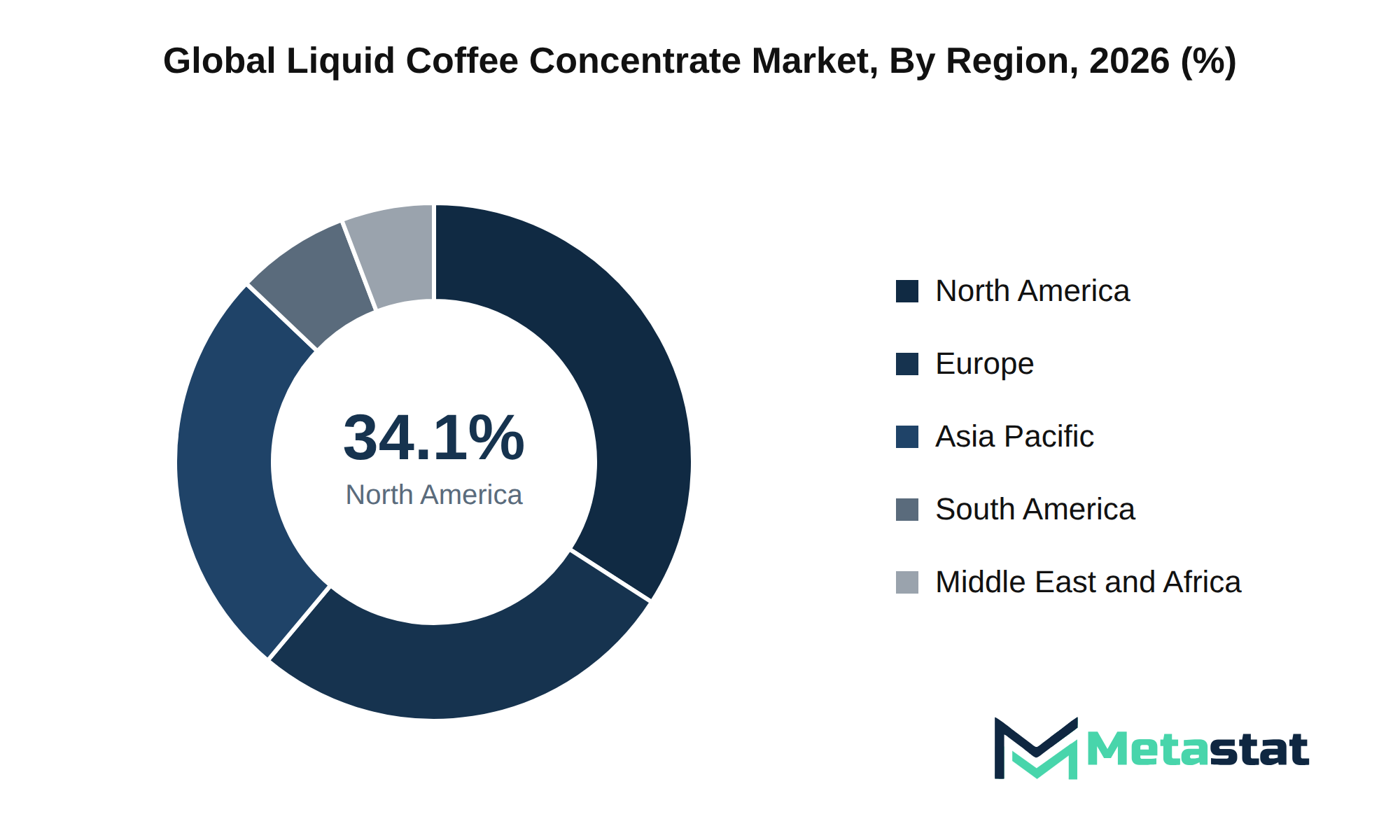
Demand for liquid coffee concentrate in North America is propelled by the region's strong coffee culture and preferences for innovative beverage formats. The market benefits from increasing consumer inclination toward ready-to-drink (RTD) coffee options and convenient packaging solutions. The anticipated market size of USD 1,473.4 million by 2033 highlights significant growth in this sector.
34.1% of the global market share in 2025 illustrates North America's significant presence in the liquid coffee concentrate landscape. The countries of the United States, Canada, and Mexico serve because key contributors to this growth, driven by factors including evolving consumer behavior and rising demand for diverse coffee experiences.
Segment expansion within the liquid coffee concentrate market shows strong performance in various categories. The Cold Brew Extraction format shows notable growth potential, with a projected increase reaching USD 2,366.6 million by 2033. This uptick aligns with changing consumer preferences for smooth and less acidic coffee options, enhancing market appeal.
In terms of packaging formats, bottles have emerged because a popular choice, with expectations to reach USD 1,460.6 million by 2033. Such preferences relate to consumers' demand for convenience and portability in beverage consumption. The increasing interest in sustainable packaging further encourages innovation and adaptation among producers in the region.
The presence of established market players, including Finlays, Nestlé S.A., and Starbucks Corporation, contributes to a competitive landscape defined by continuous innovation and product differentiation. These companies actively invest in local sourcing and production, aligning with consumer trends toward regional authenticity and quality.
Market dynamics in Europe for liquid coffee concentrate reflect an evolving landscape influenced by consumer preferences and regulatory frameworks. Germany, France, the UK, Italy, Spain, and Russia contribute significantly to the regional market share, projected at 27.00% in 2025. The popularity of cold brew extraction methods aligns with a growing trend toward premium coffee experiences, capturing the interest of both households and cafés.
Adoption of liquid coffee concentrate is driven by a desire for convenience in preparation and enhanced flavor profiles in various applications, including ready-to-drink products. The presence of established brands and local vendors encourages competitive pricing strategies, supporting market expansion across diverse channels. Regional participants leverage localized manufacturing to minimize costs, improve supply chain efficiencies, and respond swiftly to changing consumer demands.
Investment in infrastructure modernization supports increased production capabilities and distribution networks. The steady rise of specialty coffee culture heightens demand within cafés and restaurants, leading to innovative product offerings. Emerging market front-runners are likely to capitalize on this trend, further strengthening the liquid coffee concentrate market's position within the broader beverage sector.
The Asia-Pacific region demonstrates a strong growth trajectory in the Liquid Coffee Concentrate market, with a projected market share of 26.0% in 2025. Factors driving this expansion include increasing urbanization and a rising number of outlets serving coffee-based beverages in countries like China, Japan, and India, leading to higher consumption rates. The growing popularity of cold brew coffee has led to increased demand, particularly among younger consumers who prioritize convenience and flavor variety.
Countries including South Korea and Australia play important roles in the regional market, with lively café cultures accelerating the adoption of liquid coffee concentrate products. Emerging markets within Southeast Asia present significant opportunities for growth, characterized by changing consumer preferences toward ready-to-drink coffee options, which enhance market penetration in these developing territories.
Investment in local manufacturing and supply chain regionalization supports the availability of liquid coffee concentrate products, catering to the increasing demand for convenience. The competitive landscape comprises various domestic and international players, each adapting to local tastes and preferences to capture market share. Vendors continually innovate packaging and product offerings to attract health-conscious consumers, further expanding the overall market.
Strengthened consumer interest in liquid coffee products and increasing regional investments position the Asia-Pacific market for sustained growth, contributing to the global market for liquid coffee concentrate.
Market dynamics in South America exhibit specific characteristics that influence the Liquid Coffee Concentrate market. With a market share of 7.1% in 2025, the region is a key component of the overall industry landscape, driven by strong consumer preferences in countries including Brazil and Argentina.
The increasing adoption of liquid coffee concentrate in South America stems from evolving consumer tastes and preferences for convenient beverage options. This trend resonates in urban areas where busy lifestyles prompt a greater demand for quick-to-consume products. Local manufacturers are responding by enhancing product offerings and distribution strategies, which supports the market's expansion.
Brazil, a prominent player, demonstrates robust production capabilities and an established coffee culture that nurtures the market. Argentina, on the other hand, shows a growing interest in specialty coffee products, which further boosts the market's potential. Efforts towards infrastructure modernization and localized manufacturing increase regional competitiveness, enabling suppliers to better meet consumer demands.
Emerging trends including sustainability and health consciousness are influencing purchasing behavior in South America. The Liquid Coffee Concentrate market experiences shifts in consumer preferences toward organic and ethically sourced coffee products. Such trends not only cater to local preferences but align with global market demands, providing avenues for growth and innovation within the region.
Overall, the South American market for liquid coffee concentrate highlights a unique blend of cultural influences, economic factors, and consumer trends that shape its development. Continued investment in local manufacturing capabilities and the adaptation of products to meet regional preferences will be critical for capturing the evolving demands of consumers in this market.
The Liquid Coffee Concentrate market in the Middle East and Africa is characterized by a growing share of the global market in 2025. Countries including Saudi Arabia, UAE, and South Africa contribute significantly to market dynamics, driven by increasing consumer demand for convenient beverage options and growth in urbanization. Strong retail networks and emerging distribution channels enhance market accessibility, improving product penetration.
Infrastructure modernization enhances local production capabilities and improves supply chain efficiencies. Investments in localized manufacturing and strategic entry barriers enable domestic players to meet growing demand. Cultural preferences for coffee consumption further influence market trends, with a rising interest in specialty coffee beverages among consumers.
Vendor consolidation trends lead to strategic partnerships and alliances among major players, contributing to competitive dynamics within the market. Domestic market participants actively engage in product innovation to capture emerging consumer segments, thereby strengthening their market position. The Liquid Coffee Concentrate market is well-positioned for incremental growth through 2033, driven by evolving consumer preferences and regional economic development initiatives.
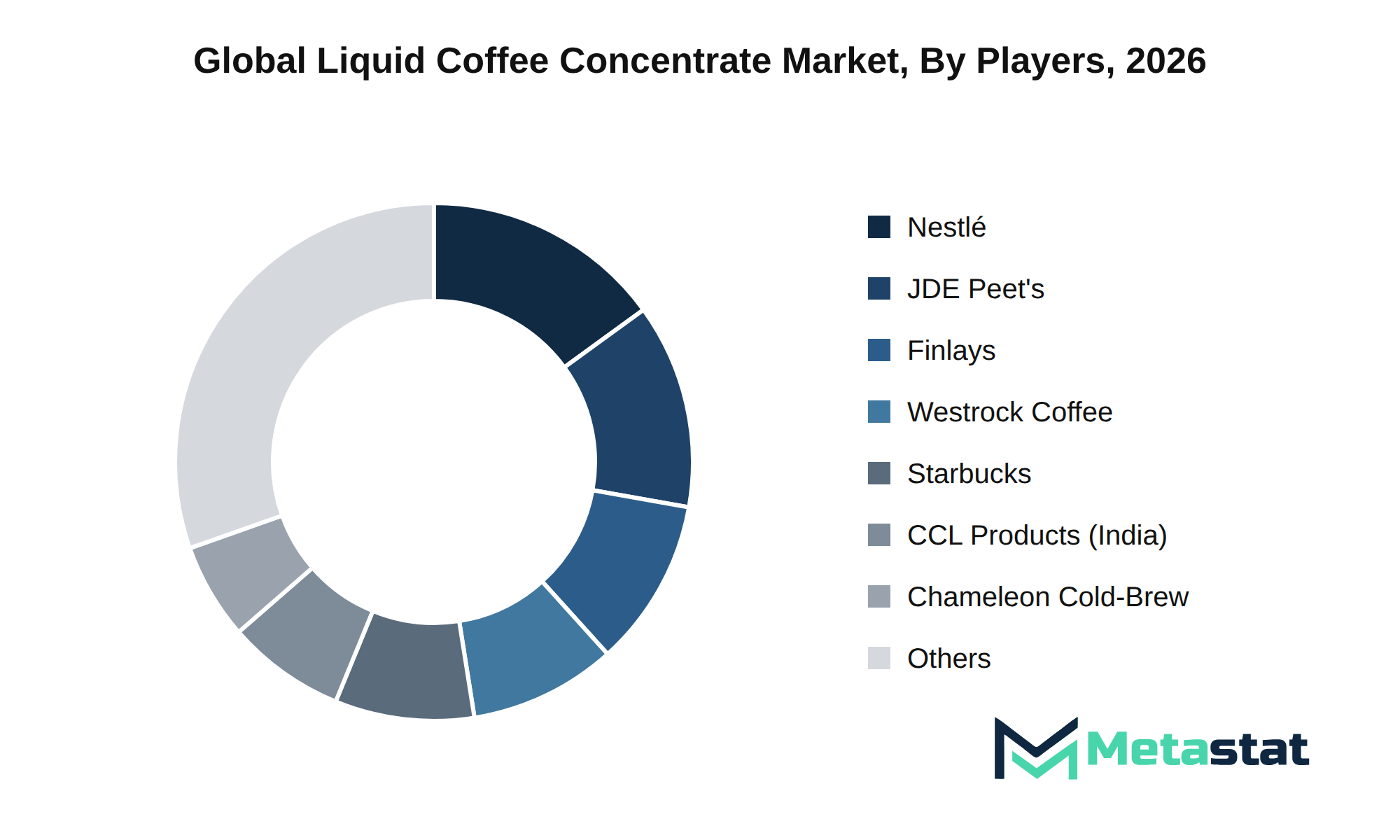
The Liquid Coffee Concentrate market experiences significant dynamics driven by various strategic behaviors among key players. Companies including Nestlé S.A. and Starbucks Corporation emphasize product differentiation, leveraging established brand equity and extensive distribution networks to enhance market penetration. This competitive positioning allows these firms to maintain a strong foothold in the market while navigating shifting consumer preferences toward premium and specialty coffee products.
Strategic alliances and joint ventures play a crucial role in the competitive landscape. Collaborations between companies like JDE Peet's N.V. and local producers enable access to regional markets and innovative products, enhancing customer retention strategies. Players including Westrock Coffee Company and Chameleon Cold-Brew focus on research and development pipelines, developing proprietary technologies that create a barrier to entry for new entrants. This focus on innovation ensures sustained growth and a competitive edge in the Liquid Coffee Concentrate market.
The threat of new entrants remains a consideration for established players. Companies including CCL Products (India) Limited and Finlays continuously evaluate supply chain dominance and procurement leverage to mitigate potential disruptions from startups. The market's structure, characterized by significant switching costs and established brand loyalty, provides a protective advantage against emerging competitors.
Looking forward, the competitive outlook for the Liquid Coffee Concentrate market appears robust. Key players, including Ground Up Coffee & Tea and PROVA, are expected to continue adapting go-to-market strategies to align with evolving consumer demands. This adaptability, combined with strategic growth vectors, positions these companies favorably for future market opportunities.
Market size is forecast to rise from USD 2,972.4 million in 2025 to over USD 4,539 million by 2033. The base case presents a growth trajectory at a 5.4% CAGR, reflecting stable demand for liquid coffee concentrate. Economic cycles and macroeconomic factors influence downstream demand, particularly in key sectors including food service and retail. Structural consumption shifts toward convenience and ready-to-drink options drive innovation and adaptation in product offerings.
In the bull case scenario, increased consumer interest in premium and specialty coffee products results in accelerated growth beyond the projected CAGR. Conversely, in a bear case, economic downturns or increased input costs dampen growth prospects, emphasizing the need for strategic adaptability among market participants. Continuous investment in research and development plays a critical role in advancing next-generation technologies and enhancing product life cycles.
Regulatory evolution and compliance timelines impact operational strategies, with firms focusing on meeting imminent standards for sustainability and quality. Geopolitical realignments and global supply chain shifts necessitate robust logistics and sourcing strategies to mitigate risks associated with disruption. Strategic capital allocation and infrastructure commitments determine competitive positioning, while emerging white-space opportunities in underserved segments highlight areas for future growth in the liquid coffee concentrate market.
The report strategically identifies and profiles the key market players and analyses their core competencies in each sub-segment of the Liquid Coffee Concentrate market.
Report Attributes | Details |
Study Period | 2021-2033 |
Base Year | 2025 |
Estimated Year | 2026 |
Forecast Period | 2026-2033 |
Historical Period | 2021-2025 |
Growth Rate | CAGR 5.4% from 2026 to 2033 |
Revenue Unit | USD million |
Segmentation | By Brewing / Extraction Method, Coffee Base, Packaging Format, End User, and Region |
By Region | North America (By Brewing / Extraction Method, Coffee Base, Packaging Format, End User, and Country)
|
Europe (By Brewing / Extraction Method, Coffee Base, Packaging Format, End User, and Country)
| |
Asia Pacific (By Brewing / Extraction Method, Coffee Base, Packaging Format, End User, and Country)
| |
South America (By Brewing / Extraction Method, Coffee Base, Packaging Format, End User, and Country)
| |
Middle East and Africa (By Brewing / Extraction Method, Coffee Base, Packaging Format, End User, and Country)
|
Find answers to common questions about this report
The Liquid Coffee Concentrate market size was valued at USD 2,972.4 million in 2025.
The Liquid Coffee Concentrate market is projected to grow at a CAGR of 5.4% during the forecast period from 2026 to 2033.
The North America Liquid Coffee Concentrate market size is estimated to reach USD 1,473.4 million by 2033.
Cold Brew Extraction leads the Liquid Coffee Concentrate market, with a projected value of USD 2,366.6 million by 2033, representing the highest growth among the brewing methods.
Shifts in demographic patterns drive the Liquid Coffee Concentrate market, with increased consumption stemming from a preference for convenience among busy urban consumers. technological integration enhances productivity, allowing producers to meet rising demand while maintaining operational efficiencies. These factors contribute to the market's growth, appealing to evolving consumer preferences for unique flavors and convenient packaging.
North America holds the dominant share of the Liquid Coffee Concentrate market, with a value of USD 1,473.4 million projected for 2033, representing 34.1 percent of the total market.
Regulatory challenges, including stringent compliance requirements and legal mandates, complicate product development and market entry, increasing operational costs for manufacturers. Macroeconomic headwinds, including economic downturns and inflationary pressures, suppress consumer spending behavior, further restraining market growth. Supply chain disruptions and competition from alternative offerings contribute to these constraints.
Shifts in demographic patterns favor product adoption in the Liquid Coffee Concentrate market. Increased urbanization and a growing preference for convenience drive demand, particularly among busy consumers. the aging population seeks accessible beverage options, further enhancing the appeal of liquid coffee concentrates.
The Liquid Coffee Concentrate market is estimated to reach a valuation of USD 4,539 million by 2033.
Key players in the Liquid Coffee Concentrate market include Finlays, JDE Peet's N.V., Nestlé S.A., Westrock Coffee Company, CCL Products (India) Limited, and Starbucks Corporation.
The analysts below cover Food and Beverages research at Metastat Insights.
LEAD ANALYST
Utkarsh Khirodkar is a Lead Market Research Analyst at MetaStat Insight, specializing in market intelligence, technology sector assessments, and competitive strategy.

LEAD PRINCIPAL ANALYST, PHARMA AND HEALTHCARE
Food and Beverages · Healthcare · Healthcare IT · Medical Devices
Ajay Devgire is the Lead Healthcare Analyst at MetaStat Insight, leading strategic research and market intelligence initiatives across the global healthcare domain.

SENIOR RESEARCH ANALYST
Biotechnology · Food and Beverages · Medical Devices · Packaging
Snehal Pasalkar is a Research Analyst at MetaStat Insight, operating at the intersection of life sciences research, competitive strategy, and market intelligence.
Our group needed clearer visibility into out-of-autoclave processing timelines for high-temperature thermoplastic composites. MetaStat Insight delivered an objective assessment that contrasted automated fiber placement scrap rates with traditional thermoset prepreg layup cycles. The supplier landscape mapped out primary resin suppliers and tape slitting capacity across France, Germany, and Japan with solid technical accuracy. Their analyst handled our questions on precursor supply risks during an unscheduled inquiry call, providing clear, unembellished context.
Evaluating sensor fusion reliability across harsh operating environments can be tricky without field-validated data. The study on agricultural autonomous guidance systems clearly separated stereo vision setups from automotive-grade solid-state LiDAR. We appreciated the regional infrastructure analysis, specifically around RTK network density across North America and South America. During our follow-up consultation, the MetaStat Insight team walked through tier-two perception software partnerships, giving our engineering leads a practical basis for vendor shortlisting.
Analyzing the transition from natural gas to green hydrogen in iron ore reduction requires realistic infrastructure timelines. Meta stat insight supplied a detailed regional assessment of DRI plant conversion costs and scrap metal availability in North America and Western Europe. Their report carefully examined pellet quality specs and electrical grid access constraints without making oversimplified market assumptions. The research material served as a practical reference during internal technology roadmap discussions.
Explore related market intelligence reports worth reading alongside this one.