
LEAD ANALYST
Utkarsh Khirodkar is a Lead Market Research Analyst at MetaStat Insight, specializing in market intelligence, technology sector assessments, and competitive strategy.

Mexico Frozen Potato Products Market Size, Share, By Product Type (French Fries, Tikki, Potato Wedges, Potato Bites, Smileys, and Others), By Distribution Channel (B2B, Supermarkets, Hypermarkets, Convenience Stores, Departmental Stores, Online, and Others), By End Use (Food Services, Retail, QSR, and Households), Industry Analysis, Growth, Trends, and Forecast, 2026-2033
Report ID
MSI-4562
Published
February, 2026
Pages
301 Pages
Format
Report Details
Choose Your License
Mexico Frozen Potato Products Market
The Mexico Frozen Potato Products market size is valued at USD 874.3 million in 2025.
The market is projected to grow from USD 965.5 million in 2026 to USD 1,953.9 million by 2033, exhibiting a CAGR of 10.6% during the forecast period. Moreover, the market volume is estimated to reach 1,316.2 kilotons by 2033.
Mexico Frozen Potato Products market was valued at USD 874.3 million in 2025 and is projected to reach USD 1,953.9 million by 2033, at a CAGR of 10.6% during the forecast period.
Key trends driving growth: Rising preference for convenient, quick-service meals across urban households and foodservice outlets, strong expansion of fast-food chains and casual dining formats driving steady demand for frozen fries and potato snacks.
Key opportunities include increasing penetration of modern retail, cold storage infrastructure, and e-commerce grocery platforms.
Key insight: Mexico frozen potato products market growth remains anchored in foodservice expansion and convenience demand, while future momentum depends on supply stability and health-oriented product differentiation.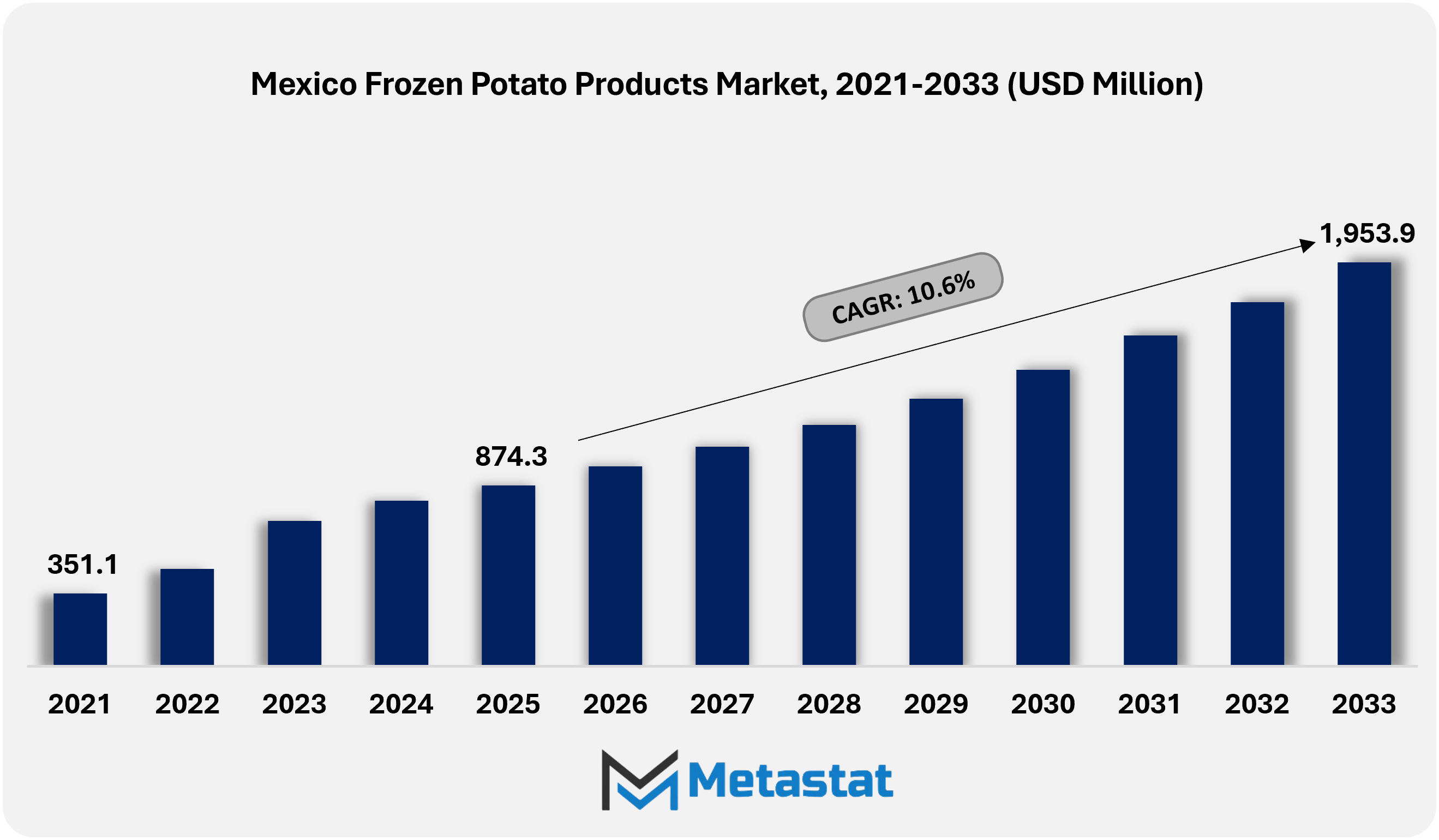
The Mexico frozen potato products market is set for sustained expansion through 2033, supported by changes in foodservice operations, retail execution, and sourcing strategies. Category adoption is extended beyond quick service restaurants into casual dining, airline catering, institutional catering, and ready-meal operators, supported by portion consistency and menu standardization.
Supply networks are likely to recalibrate toward localized cold-chain optimization rather than extended cross-border logistics. Manufacturers will emphasize the development of adaptive storage infrastructure near major consumption centers, enabling greater inventory response during seasonal demand changes. Product development efforts will focus on improved texture consistency, controlled oil absorption and optimized cut formats suited to specific cooking equipment. These advancements will help operators reduce preparation losses while maintaining consistent presentation standards across multiple outlets.
The growing preference for convenient, quick-service food will continue to shape purchasing behavior in urban households and foodservice outlets. Time-efficient food options support consistent consumption patterns, while standardized flavors and portion control appeal to commercial kitchens. Within the Mexico frozen potato products market, faster-paced urban lifestyles will support repeat purchase cycles through the forecast period.
Strong expansion of fast-food chains and casual dining formats will underpin long-term volume stability. The necessities of menu consistency encourage reliance on frozen fries and potato snacks. Franchise growth in tier-one and tier-two cities will generate repeat purchase needs, support supply contracts and production planning in line with future outlet proliferation forecasts.
Volatility in potato charges related to weather variability and agricultural supply constraints will impact cost systems. Irregular rainfall, temperature adjustments and yield fluctuations can position pressure on margins. Price volatility will challenge forecast accuracy, prompting manufacturers to adjust sourcing strategies and inventory management models to protect operational continuity.
Growing consumer concern around processed food intake and nutritional perception of frozen products will impact consumer sentiment and category penetration. Clean-label awareness campaigns shape purchase decisions, particularly among health-focused segments. Without nutritional assurance, category acceptance is weakened, which calls for transparent labeling and ingredient communication to support category credibility.
Distribution reach will be reinforced through modern retail expansion, cold storage infrastructure build-out, and wider adoption of e-commerce grocery platforms. Improved logistics performance reduces the risk of spoilage and helps national availability. Digital grocery adoption will expand visibility for frozen potato offerings, supporting manufacturers reach consumers seeking reliability and assortment variety.
The Mexico Frozen Potato Products market is segmented based on Product Type, Distribution Channel, and End Use.
French Fries segment is valued at USD 601.1 million in 2026 and is projected to reach USD 1,225.8 million by 2033, at a CAGR of 10.7% during the forecast period.
French fries will maintain a strong position in the Mexico frozen potato products market due to increasing demand from food service chains and urban dining formats. Technological improvements in freezing methods will support texture retention and extended shelf life. Future consumption will reflect a growing preference for standardized tastes and efficient preparation.
Tikki segment is valued at USD 73.5 million in 2026 and is projected to reach USD 150.8 million by 2033, at a CAGR of 10.8% during the forecast period.
Tikki will gain wider acceptance through fusion menus and evolving snack habits. Manufacturers will focus on consistent quality and portion control to support commercial kitchens. Future product development will focus on convenient cooking formats, which will support wider inclusion in retail freezers and organized food outlets.
Potato Wedges segment is valued at USD 147.3 million in 2026 and is projected to reach USD 310.7 million by 2033, at a CAGR of 11.2% during the forecast period.
Potato Wedges will continue to expand due to premium presentation and menu diversification. Food operators will increasingly adopt wedges for differentiated offerings. Advanced seasoning technologies and improved freezing stability will drive long-term demand, supporting placement in modern retail and food service supply chains.
Potato Bites segment is valued at USD 57.9 million in 2026 and is projected to reach USD 112.9 million by 2033, at a CAGR of 10.0% during the forecast period.
Potato bites will be in line with future snacking trends, with an emphasis on compact size and quick preparation. Packaging innovation will increase portability and storage efficiency. Growth will continue to be supported by cafeteria and quick-service formats demanding uniform products with minimal preparation time and controlled wastage.
Smileys segment was valued at USD 41.6 million in 2026 and is projected to reach USD 75.9 million by 2033, at a CAGR of 9.0% during the forecast period.
Smileys will maintain relevance through visual appeal and child-centric meal planning. Manufacturers will refine the size and cooking performance to ensure consistency. Future demand will originate from households and institutional buyers who will prefer easy cooking and attractive food formats within frozen storage solutions.
Others segment is valued at USD 44.0 million in 2026 and is projected to reach USD 77.7 million by 2033, at a CAGR of 8.5% during the forecast period.
Others frozen potato formats will support innovation pipelines through experimental shapes and seasoning profiles. Product testing in specific food service outlets will lead to limited launches. Long-term prospects will depend on adaptation to regional taste expectations and compatibility with automated kitchen equipment.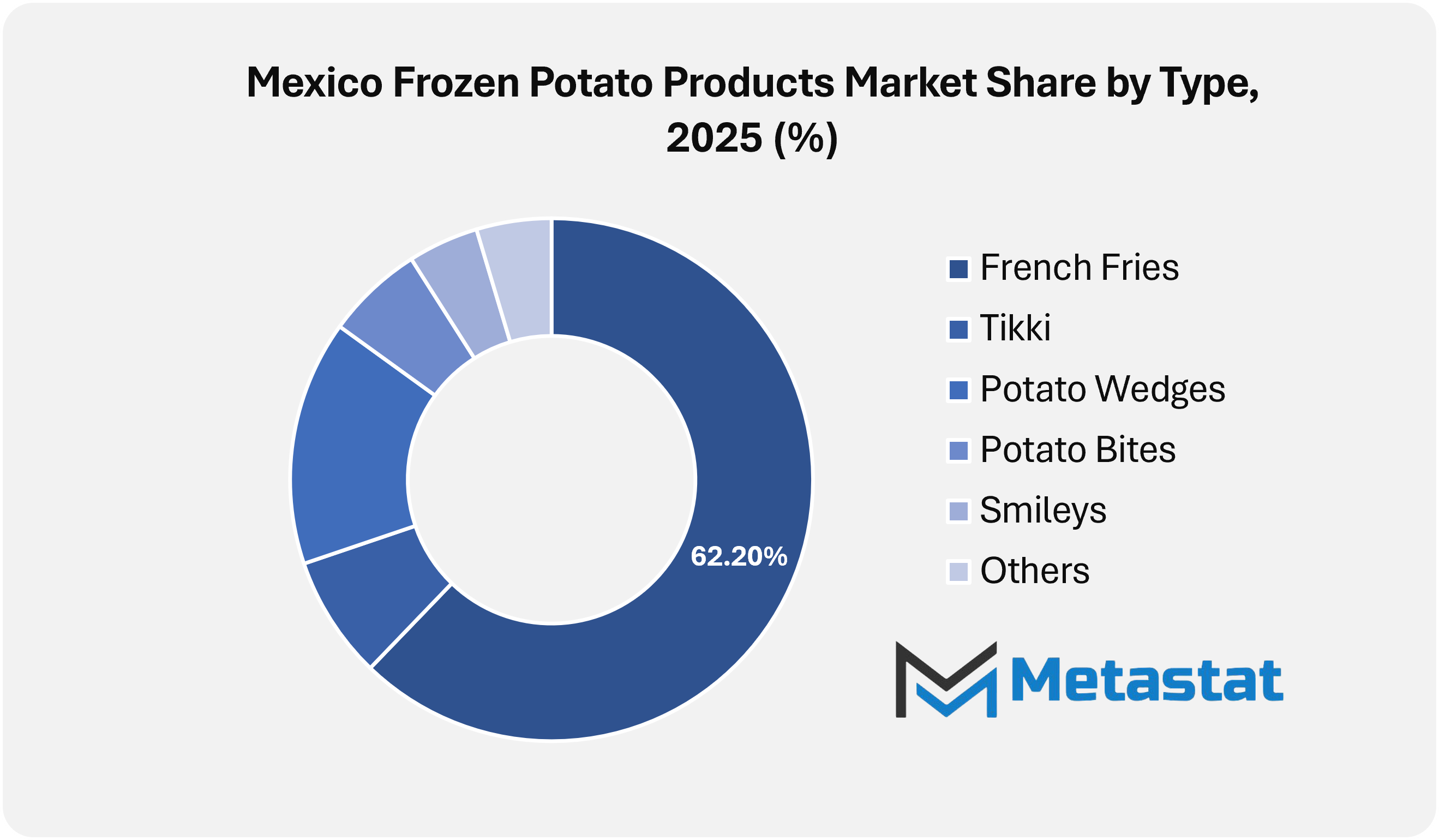
Business to Business segment is projected to reach USD 712.2 Million by 2033, at a CAGR of 11.1% during the forecast period.
Business to business distribution will be strengthened through long-term supply contracts and centralized purchasing systems. Manufacturers will invest in logistics optimization to meet wholesale demand. Future growth will depend on reliability, pricing stability and compliance with food safety requirements among commercial buyers.
Supermarkets and Hypermarkets segment is projected to reach USD 807.3 Million by 2033, at a CAGR of 10.6% during the forecast period.
Supermarkets and hypermarkets will continue to be major volume contributors through expansion of freezer space and private label offerings. Consumer exposure to different types of packs will increase testing rates. Future strategies will focus on promotional bundling and improved cold chain efficiency across the nationwide retail network.
Convenience Stores segment is projected to reach USD 114.3 Million by 2033, at a CAGR of 9.7% during the forecast period.
Convenience stores will experience increased penetration of frozen potatoes due to extended operating hours and compact meal solutions. Smaller packaging formats will get preference. Distribution strategies will focus on rapid replenishment and local demand forecasting to support continuous availability.
Departmental Stores segment is projected to reach USD 78.2 Million by 2033, at a CAGR of 8.5% during the forecast period.
Departmental stores will support selective growth through premium frozen food sections. Product placement near ready-to-cook categories will influence purchasing behavior. Future performance will depend on brand visibility, organized shelving and integration with seasonal promotional campaigns.
Online segment is projected to reach USD 152.6 Million by 2033, at a CAGR of 11.3% during the forecast period.
Online channels will expand through better cold delivery infrastructure and subscription-based grocery services. Digital platforms will encourage repeat purchases through convenience and assortment visibility.
Others segment is projected to reach USD 89.3 Million by 2033, at a CAGR of 8.2% during the forecast period.
Other distribution channels will include institutional supply formats and specialty food outlets. Customized logistics models will support specific demand. Long-term contribution will be moderate, supported by targeted sourcing agreements and localized distribution partnerships.
Food Services segment is projected to reach USD 787.2 million by 2033 and held a 40.2% share in 2025.
Food services, supported by menu standardization and high-throughput kitchens, will remain a core consumption sector. Use of frozen potatoes will support cost predictability and preparation efficiency. Adoption will increase over the forecast period with automation and expansion of organized food establishments.
Retail segment is projected to reach USD 486.3 million by 2033 and held a 25.2% share in 2025.
Retail demand will grow through increased freezer ownership and meal planning habits. Manufacturers will focus on family-sized packs and clear cooking instructions. Future sales will reflect convenience-driven shopping patterns and improved in-store visibility.
Quick Service Restaurants segment is projected to reach USD 483.4 million by 2033 and held a 23.9% share in 2025.
Quick service restaurants will continually increase volume through standardized recipes and centralized sourcing. Frozen potatoes will support product speed and uniform quality. Future expansion of branded outlets will increase demand at national and regional locations.
Households segment is projected to reach USD 197.0 million by 2033 and held a 10.7% share in 2025.
Households' consumption will expand due to time-efficient cooking preferences and extended product shelf life. Frozen potato items will integrate into regular meal preparation. Future growth will be in line with urban lifestyles and increasing acceptance of frozen food solutions.
The Mexico frozen potato products market continues to attract attention, supported by evolving eating habits and rising preference for convenient meal solutions. Urban lifestyles, longer working hours, and wider exposure to global food culture will encourage consumers to choose frozen potato items. Quick service restaurants and casual dining operators across Mexico increasingly rely on frozen fries, wedges, and other potato formats to maintain consistency and reduce preparation time.
Manufacturers operating in Mexico focus on enhancing product quality, shelf life, and delivery reliability. Lamb Weston Holdings, Inc. and McCain Foods Limited maintain strong positions through large-scale processing capacity and long-term relationships with foodservice chains. Farm Frites International B.V. and Aviko B.V. support market growth through customized cuts and formats designed for local preferences. Simplot Global Food, LLC and Cavendish Farms Corporation support distribution reach while maintaining strict quality controls across sourcing and processing stages.
Competitive intensity remains high, supported by the presence of both global and regional suppliers. AJC International, Inc., EcoFrost NV, and Global Fries BV contribute via flexible sourcing models and export-targeted strategies. Bem Brasil adds competition through value-driven offerings suited to price-sensitive segments. Brands invest in cold chain logistics to ensure product integrity from processing facilities to retail freezers and restaurant kitchens.
Future growth of Mexico's frozen potato products market will rely on product innovation and deeper penetration into smaller cities. Key players will focus on healthier alternatives to frying, low oil absorption, and improved potato varieties suited to frozen processing. Strategic partnerships with restaurant chains and distributors will assist in quantity boom. Over time, consistent best, efficient delivery networks and version to neighborhood taste options will form long-time period achievement in the aggressive panorama.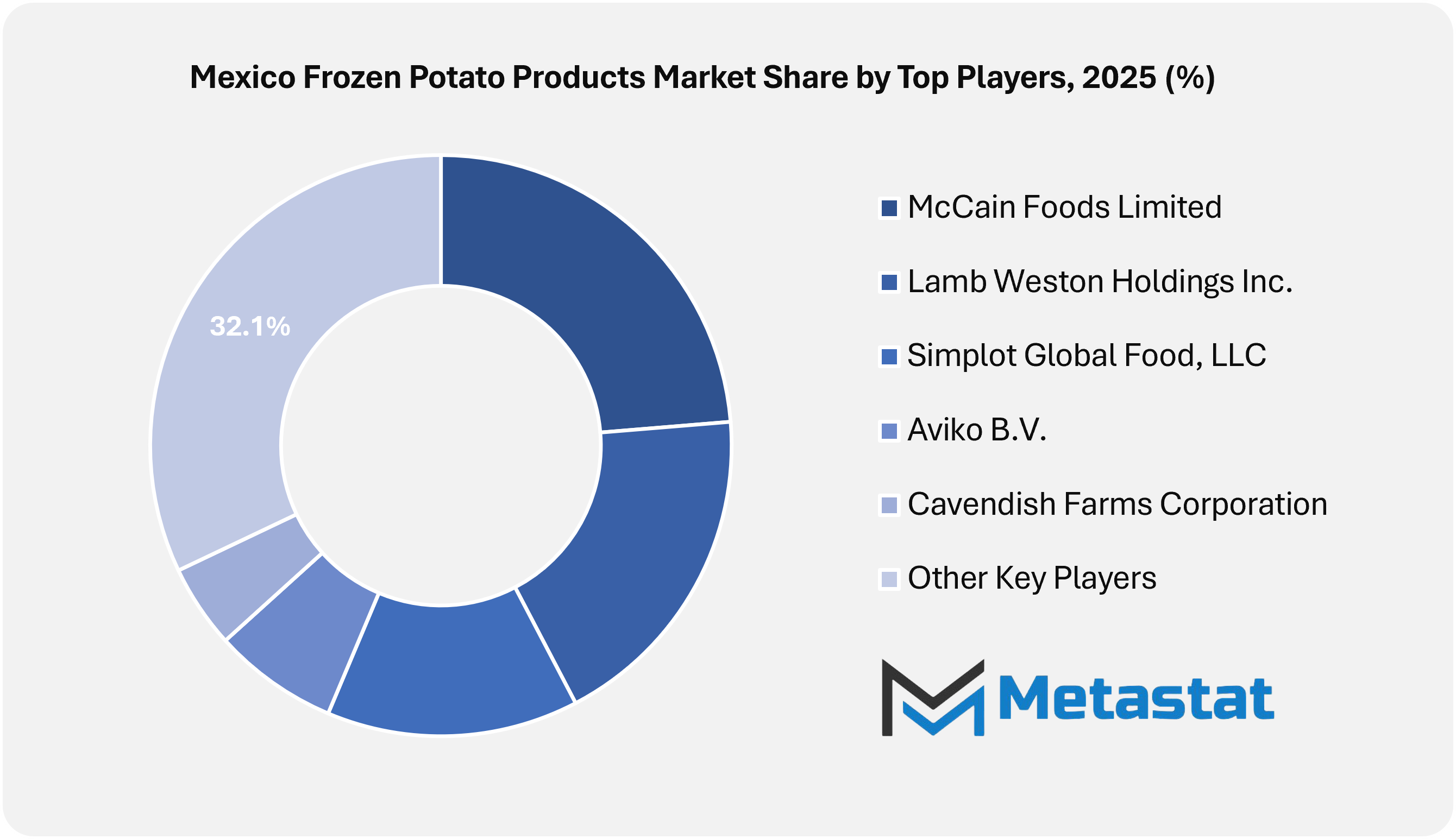
Market size is forecast to rise from USD 874.3 million in 2025 to over USD 1,953.9 million by 2033.
The Mexico Frozen Potato Products market will also align more closely with regulatory expectations around food safety traceability and labeling transparency. Readiness for compliance will influence supplier selection ahead of price sensitivity. Sustainability stories will emerge through integrated water management programs and waste reduction initiatives at the processing stages.
This research report categorizes the Frozen Potato Products market based on key segments and regions, forecasts revenue growth, and analyses trends in each submarket. The report analyzes the key growth drivers, opportunities, and challenges influencing the Frozen Potato Products market. Recent market developments and competitive strategies such as expansion, product launches, product development, partnerships, mergers, and acquisitions have been included to draw the competitive landscape in the market.
The report strategically identifies and profiles the key market players and analyses their core competencies in each sub-segment of the Frozen Potato Products market.
|
Report Attributes |
Details |
|
Study Period |
2021-2033 |
|
Base Year |
2025 |
|
Estimated Year |
2026 |
|
Forecast Period |
2026-2033 |
|
Historical Period |
2021-2025 |
|
Growth Rate |
CAGR 10.6% from 2026 to 2033 |
|
Revenue Unit |
USD million |
|
Sales Volume Unit |
Kilotons |
|
Segmentation |
By Product Type, Distribution Channel and End Use |
|
By Product Type |
|
|
By Distribution Channel |
|
|
By End Use |
|
Find answers to common questions about this report
The Metastat Insight study indicates that the Mexico Frozen Potato Products market size was USD 874.3 million in 2025.
The Mexico Frozen Potato Products market is likely to grow at a CAGR of 10.6% over the forecast period (2026-2033).
French Fries is the leading product type segment in the Mexico market.
Rising preference for convenient, quick-service meals across urban households and foodservice outlets are key driving factors, boosting the market.
Volatility in potato prices linked to climate variability and agricultural supply constraints will hamper market growth within the forecast period.
Mexico Frozen Potato Products market is estimated to reach USD 1,953.9 million by 2033.
Top players operating in the Frozen Potato Products industry include Lamb Weston Holdings Inc., McCain Foods Limited, Farm Frites International B.V., Aviko B.V., and Simplot Global Food.
The analysts below cover Food and Beverages research at Metastat Insights.
LEAD ANALYST
Utkarsh Khirodkar is a Lead Market Research Analyst at MetaStat Insight, specializing in market intelligence, technology sector assessments, and competitive strategy.

LEAD PRINCIPAL ANALYST, PHARMA AND HEALTHCARE
Food and Beverages · Healthcare · Healthcare IT · Medical Devices
Ajay Devgire is the Lead Healthcare Analyst at MetaStat Insight, leading strategic research and market intelligence initiatives across the global healthcare domain.

SENIOR RESEARCH ANALYST
Biotechnology · Food and Beverages · Medical Devices · Packaging
Snehal Pasalkar is a Research Analyst at MetaStat Insight, operating at the intersection of life sciences research, competitive strategy, and market intelligence.
When evaluating distributed energy resource management systems, standard research summaries tend to gloss over the operational differences between front-of-the-meter utility deployments and behind-the-meter industrial sites. The MetaStat Insight report addressed those distinctions directly, especially regarding software interoperability standards and grid interconnection backlogs. The five-year market sizing across regional transmission organizations provided actionable context for our grid modernization strategy.
Most industry reports on warehouse automation bundle autonomous mobile robots and fixed conveyor installations into the same top-level numbers, which complicates advisory work. This study split the market cleanly by payload tiers, navigation technology, and fleet management software layers. The regional forecast for Western Europe gave our team defensible adoption benchmarks when evaluating capital allocation for logistics clients, saving us days of secondary data scrubbing.
Analyzing the transition from natural gas to green hydrogen in iron ore reduction requires realistic infrastructure timelines. Meta stat insight supplied a detailed regional assessment of DRI plant conversion costs and scrap metal availability in North America and Western Europe. Their report carefully examined pellet quality specs and electrical grid access constraints without making oversimplified market assumptions. The research material served as a practical reference during internal technology roadmap discussions.
Explore related market intelligence reports worth reading alongside this one.