
LEAD ANALYST
Utkarsh Khirodkar is a Lead Market Research Analyst at MetaStat Insight, specializing in market intelligence, technology sector assessments, and competitive strategy.

Global Micro Turbojet Engines Market Size, Share, By Type (Single-shaft Turbojet Engines, Twin-shaft Turbojet Engines, Recuperated Turbojet Engines, High Bypass Ratio Micro Turbojets and Low Bypass Ratio Micro Turbojets), By Application (Target Drones, Unmanned Aerial Vehicles (UAVs), Experimental Aircraft, Personal Jet Projects, Academic Research Aircraft and Missile Propulsion (Training/Target Systems) and Micro-sat Launch Systems (First-stage booster concepts)), Industry Analysis, Growth, Trends, and Forecast, 2026-2033
Report ID
MSI-4559
Published
November, 2026
Pages
282 Pages
Format
Historical
Base year
Forecast
Forecast period
Report Details
Market Valuation: Valued at $58 Million in 2025, projected to reach $117.7 Million by 2033 at a 9.2% CAGR.
Dominant Segment: The twin-shaft turbojet engines segment leads the market, driven by advancements in design and efficiency that enhance performance metrics.
Geographic Lead: Asia Pacific holds the largest market share at 43.6%, supported by strong regional investments in aerospace technologies and increasing demand for advanced propulsion systems.
What's Inside: The report provides a comprehensive analysis of market dynamics, competitive landscape, and detailed forecasts segmented by type and application, covering the period from 2026 to 2033.
Rising Adoption: The UAV segment is projected to grow significantly, reaching USD 44.7 million by 2033, fueled by the increasing implementation of drones in military and commercial sectors.
Choose Your License
Global Micro Turbojet Engines Market
The global Micro Turbojet Engines market was valued at USD 58 million in 2025 and is projected to reach USD 117.7 million by 2033, growing at a CAGR of 9.2% over the forecast period.
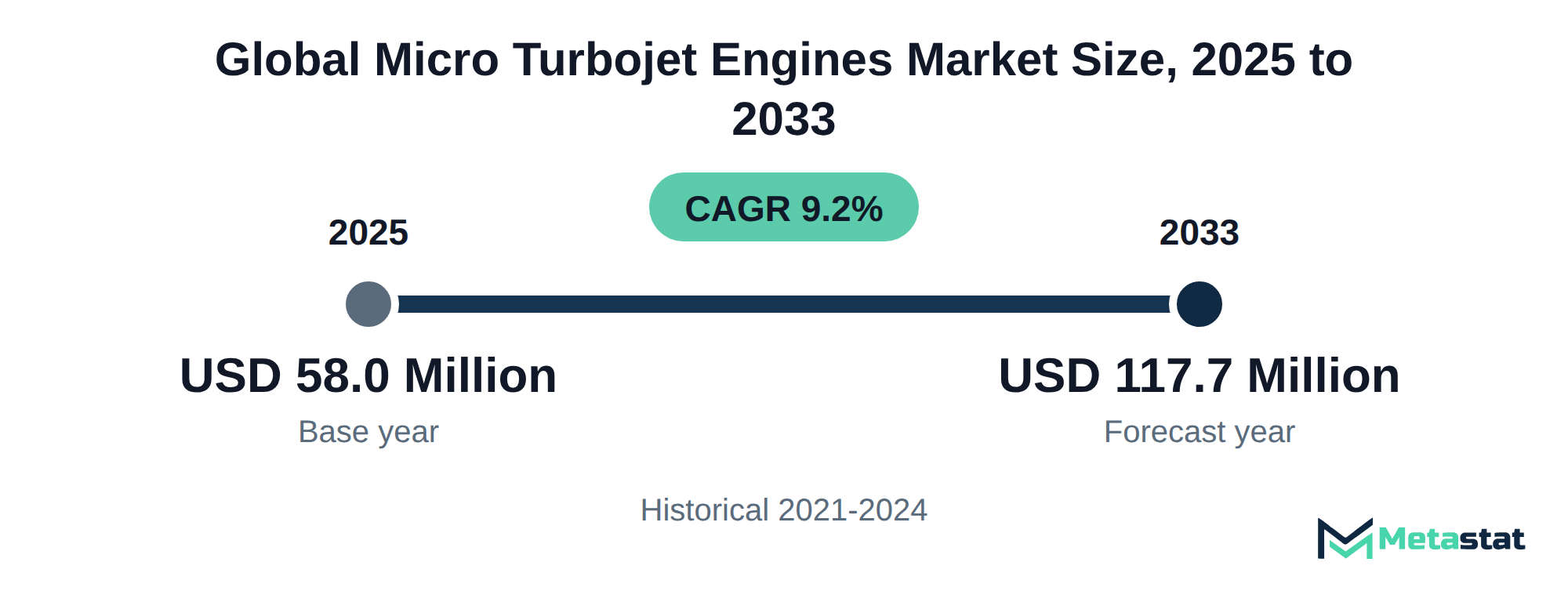
The Micro Turbojet Engines market encompasses a range of propulsion systems used in various applications, primarily targeting drones, unmanned aerial vehicles, and experimental aircraft. Buyers invest in these engines due to their efficient performance, compact size, and versatility. The growing demand for advanced aerospace technologies drives expenditures, with manufacturers aiming to enhance their offerings to meet the evolving needs of customers.
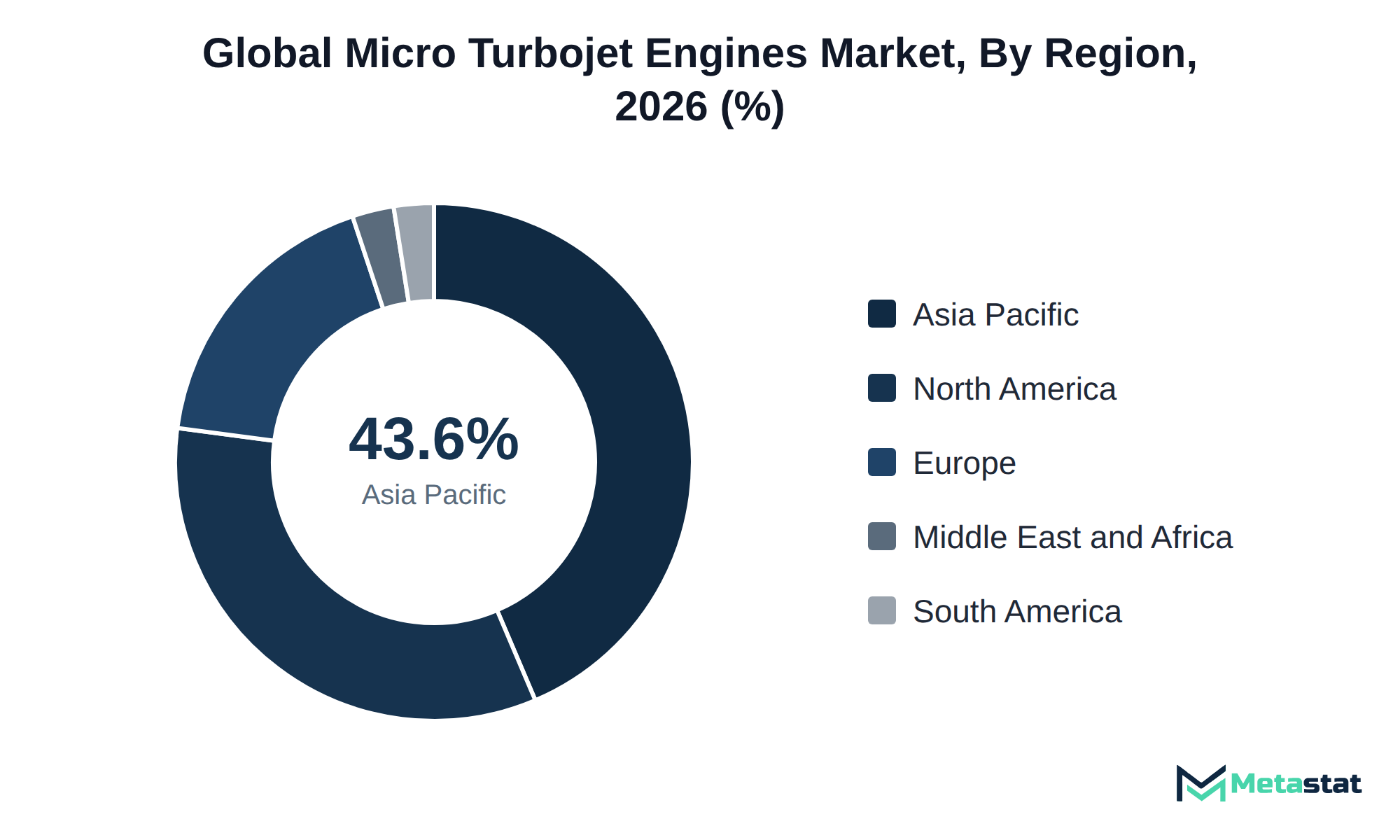
Rising investment in drone technology and defense applications drives growth in the micro turbojet engines market. The segment of twin-shaft turbojet engines holds the most value, reflecting advancements in design and efficiency. In terms of regional distribution, Asia Pacific represents the largest share, accounting for 43.6% of the market. North America holds 33.5% of the market in 2025, with the US leading in 2026.
Technological advancements in micro turbojet engines contribute significantly to market expansion. Enhanced performance parameters, including reduced weight and improved fuel efficiency, attract buyers across various sectors. These engines are becoming more prevalent in the aerospace industry, while competition intensifies, encouraging the development of innovative solutions that align with market demands.
The Micro Turbojet Engines market features various propulsion systems designed for applications including target drones, unmanned aerial vehicles, and experimental aircraft. Buyers invest in these engines primarily to enhance performance, efficiency, and operational capabilities across diverse aviation sectors. The increasing demand for advanced aerial systems and the growing trend towards automation in aviation drive significant expenditures in this market.
Escalating demand for unmanned aerial vehicles (UAVs) propels market growth, and this application segment is expected to capture substantial value by 2033. Asia Pacific leads in market share with 43.6%, reflecting strong regional activity and investment in aerospace technologies. North America is projected to hold 33.5% of the market in 2025, with the US contributing significantly to this figure. This regional dynamism highlights the importance of localized innovation and production capabilities.
The Twin-shaft Turbojet Engines segment stands out as the most valuable within the market, driven by their superior performance and efficiency characteristics. Producers continue to improve engine capabilities to meet rising performance and reliability expectations across applications. The ongoing transition towards more sophisticated aerial systems shapes the competitive landscape of the Micro Turbojet Engines market.
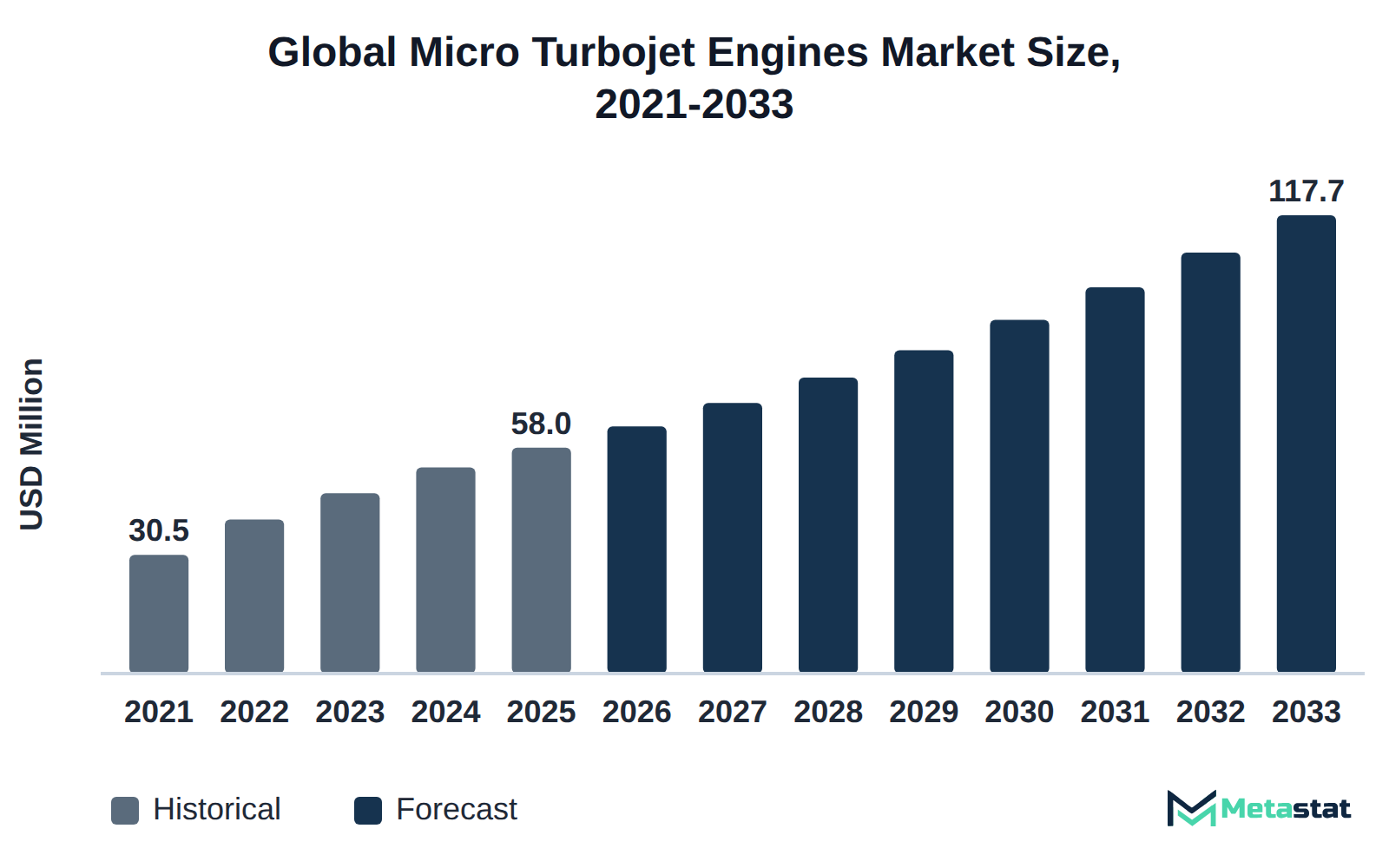
The adoption of micro turbojet engines in unmanned aerial vehicles (UAVs) and target drones is experiencing significant growth, driven by advancements in technology and increasing military and commercial applications. The UAV segment alone is projected to reach a value of USD 44.7 million by 2033, reflecting a compound annual growth rate (CAGR) of 9.6%. This growth results from the demand for more efficient propulsion systems that enhance flight performance and operational capabilities.
Micro turbojet engines offer advantages including lightweight design and high thrust-to-weight ratios, making them suitable for various applications, including loitering munitions and target drones. The ongoing development of these engines aligns with the trend toward more autonomous and precision-guided systems in military operations. Incorporating micro turbojet engines improves the endurance and range of these platforms, contributing to their increasing appeal across several sectors.
The growing reliance on UAVs in both military and commercial sectors, including commercial drone services, creates opportunities for manufacturers operating in the micro turbojet engines market. Producers focusing on developing high-efficiency turbojet solutions capitalize on this trend, positioning their offerings to meet the evolving requirements of modern aerospace applications. Strategic investments in research and development enhance competitiveness while addressing the unique challenges posed by diverse operational environments.
In the Micro Turbojet Engines market, buyers increasingly seek options that enhance fuel efficiency while optimizing thrust-to-weight performance. The focus on compact turbine design has resulted in significant advancements, particularly in twin-shaft turbojet engines, which are projected to reach a value of USD 61.6 million by 2033. These engines offer improved performance metrics, making them attractive for applications in unmanned aerial vehicles (UAVs) and target drones.
The rise in demand for high-performance engines influences pricing strategies and contract models within the market. Buyers frequently prefer flexible payment options, including leasing and performance-based contracts, which align costs with operational outcomes. Such models allow customers to manage expenses effectively while accessing advanced technology.
Better compact turbine design and fuel efficiency attract new buyers and push existing customers to upgrade their systems. The overall evolution of technology in the market supports competitive pricing, ultimately contributing to growth and broader adoption of micro turbojet engines across various aerospace applications.
The growing emphasis on high-speed unmanned aerial systems drives significant demand within the Micro Turbojet Engines market, particularly in defense and aerospace applications. The increasing usage of Unmanned Aerial Vehicles (UAVs) reflects this trend, with a projected market value reaching USD 44.7 million by 2033. This shift highlights the recognition of UAVs for their ability to execute critical operations while minimizing human risk.
Advancements in technology and the rising need for surveillance, reconnaissance, and precision strikes enhance the appeal of these systems. Defense contractors and aerospace manufacturers express heightened interest in turbojet engines that enable rapid deployment and extended operational ranges, aligning with military strategies focused on agility and efficiency. High-speed performance in UAVs enables operators to address a variety of missions, including intelligence gathering and combat support. Counter-UAS systems are a related defense segment aimed at countering unmanned aircraft.
Suppliers invested in developing high-performance turbojet engines stand to benefit from this increasing demand. Buyers prioritize speed, reliability, and operational cost-effectiveness, and the market dynamics evolve, driving innovation and attracting significant investments. This growing segment reflects a shift within the aerospace sector toward efficient engine technologies that meet the distinct requirements of modern defense operations.
Manufacturers of micro turbojet engines focus on enhancing reliability and reducing costs through advanced engineering and production techniques. The Twin-shaft Turbojet Engines segment illustrates this approach, with an expected market value of USD 61.6 million by 2033 and a compound annual growth rate (CAGR) of 9.4%. This growth signals a commitment among manufacturers to invest in technologies that improve durability and performance while controlling production expenses.
Efforts to leverage automation and precision manufacturing contribute significantly to achieving these goals. By integrating advanced materials and manufacturing methods, companies streamline production, which reduces waste and improves output quality. Reliability serves as a selling point, catering to buyers in sectors including unmanned aerial vehicles (UAVs), which anticipate high-performance standards. With the UAV application segment projected to reach USD 44.7 million by 2033, the market's emphasis on reliability supports stronger customer trust and enhances overall competitiveness.
Manufacturers of micro turbojet engines actively address cost, reliability, and production scalability through innovative strategies. These advantages strengthen their market positions and stimulate demand across applications, which drives growth within the micro turbojet engines market.
Growing interest in unmanned aerial vehicles (UAVs) drives significant demand within the market. This increase stems from advancements in drone technology and a shift toward autonomous systems, sparking interest among defense, agriculture, and commercial sectors. Buyers recognize the potential of UAVs for diverse applications, including surveillance, reconnaissance, and cargo delivery, leading to increased investments in these technologies. The anticipated market value for UAV applications is projected to reach USD 44.7 million by 2033, highlighting the strong revenue potential for manufacturers. Rising demand for UAVs translates into heightened competition among suppliers, encouraging innovation and improvements in engine performance. Consequently, companies within the Micro Turbojet Engines market focus on delivering high-efficiency solutions that align with the evolving needs of end-users, further driving growth opportunities.
Recent developments in turbine technology significantly enhance the performance of micro turbojet engines. Micro turbojets are compact gas turbines, so the wider gas turbine industry shares the same underlying technology. Suppliers increasingly focus on innovations that drive improvements in fuel efficiency and thrust-to-weight ratios, aligning with the growing demand from various sectors, including defense and aerospace. The introduction of advanced materials and manufacturing techniques supports the creation of lighter and more efficient engines. High bypass ratio micro turbojets are gaining traction, providing superior performance characteristics for applications including unmanned aerial vehicles. Ongoing advancements in compact turbine designs allow for greater adaptability across different platforms, further expanding the market. Enhanced fuel efficiency translates into lower operational costs, attracting a wider range of buyers. Growth in this segment contributes to the overall expansion of the micro turbojet engines market, ensuring that suppliers remain competitive while meeting customer expectations. Continued technology development keeps shaping the market and supports sustained growth and innovation in the years ahead.
High acquisition costs present a significant barrier in the Micro Turbojet Engines market, particularly impacting small-scale operators and startups. These buyers face challenges securing sufficient funding to invest in advanced propulsion systems, resulting in slower uptake and smaller order sizes. The market's premium pricing for high-efficiency engines deters potential customers, leading to delays in technology adoption and replacement cycles. For instance, experimental aircraft developers and personal jet projects prioritize budget constraints, which limits their ability to invest in the latest micro turbojet technologies. This constraint ultimately hinders growth within the overall market, affecting the pace of innovation and the competitive landscape. Price sensitivity among these buyer groups reflects a broader challenge in adopting micro turbojet engines, impacting long-term market expansion. The market remains influenced by the need for cost-effective solutions to encourage wider usage among potential customers.
Fluctuations in input costs significantly challenge suppliers within the Micro Turbojet Engines market. Variability in raw material prices, particularly for advanced alloys and composite materials, directly impacts production expenses. Rising costs influence profit margins, leading suppliers to reevaluate pricing strategies and potential cost-saving measures. In response, suppliers invest in supplier relationships to secure more stable pricing and explore alternative materials that offer similar performance metrics at lower costs. Several manufacturers increase their focus on vertical integration to gain more control over their supply chains, enhancing cost predictability. Continuous efforts to improve operational efficiency contribute to mitigating the financial pressures stemming from input cost variability. How suppliers address input cost fluctuations shapes market dynamics and affects both pricing and overall competitiveness within the industry.
Target drones present a significant growth opportunity within the Micro Turbojet Engines market, reflected by a compound annual growth rate of 8.9%. Increasing military and commercial interest in target drones necessitates more efficient and powerful propulsion systems, creating demand for micro turbojet engines specifically designed for these applications. These engines provide the necessary thrust and performance required for diverse missions, including training exercises and weapon system evaluations.
The rising adoption of target drones among defense forces drives manufacturers to innovate and enhance their products, ensuring higher reliability and efficiency. This focus on performance aligns with the broader trend toward advanced unmanned systems, enabling expanded operational capabilities. The market for micro turbojet engines is expected to benefit from this trend, with manufacturers responding proactively to the specific requirements of target drone applications.
The Global Micro Turbojet Engines market is segmented based on Type, Application.
Single-shaft Turbojet Engines segment is valued at USD 12 million in 2026 and is projected to reach USD 21.6 million by 2033, at a CAGR of 8.7% during the forecast period. These engines primarily serve applications in target drones and experimental aircraft, where compact size and high thrust-to-weight ratio are crucial. The segment experiences heightened demand due to the increasing focus on lightweight propulsion systems for advanced aerial applications. Compared to other segments, Single-shaft Turbojet Engines exhibit slower growth than Twin-shaft Turbojet Engines, which is projected to grow at a CAGR of 9.4%. This distinction reflects the differing technological requirements and performance characteristics sought by buyers in various aerospace applications. Overall, the Single-shaft Turbojet Engines segment remains a vital contributor to the evolving dynamics of the Micro Turbojet Engines market.
Twin-shaft turbojet engines serve primarily unmanned aerial vehicles (UAVs) and target drones, benefiting from increasing demand in defense and research sectors. The segment distinguishes itself through a focus on enhanced efficiency and thrust capabilities, appealing to buyers seeking advanced propulsion systems. Growth is driven by technological advancements that improve performance metrics, attracting more investments. The higher CAGR of 9.4% for twin-shaft turbojet engines contrasts with other segments, highlighting its competitive advantage and potential for significant market penetration. Demand for these engines intensifies due to their adaptability to various mission profiles, making them attractive to manufacturers pursuing advanced solutions.
Recuperated Turbojet Engines segment is expected to reach USD 12.3 million by 2033. These engines primarily serve applications requiring enhanced fuel efficiency and reduced emissions, appealing to industries focused on sustainability and cost-effectiveness. Demand stems from sectors including aerospace and defense, where performance optimization is crucial. Growth in this sub-segment is driven by technological advancements that enhance fuel efficiency, attracting manufacturers and operators seeking improved operational performance. Compared to other types, including Twin-shaft Turbojet Engines, this segment exhibits slower growth, with a compound annual growth rate of 8.4%. This positions Recuperated Turbojet Engines as a viable option for buyers emphasizing environmental considerations and long-term cost savings, despite the overall competitive dynamics in the market.
High Bypass Ratio Micro Turbojets segment is projected to grow at a CAGR of 8.4% during the forecast period. This segment finds application in personal jet projects and experimental aircraft, primarily driven by enthusiasts and research institutions seeking enhanced performance metrics. Growth in this segment is driven by technological advancements leading to improved fuel efficiency and reduced emissions, appealing to environmentally conscious buyers. High Bypass Ratio Micro Turbojets differ from other types within the market by focusing on maximizing the bypass ratio, which increases efficiency and decreases noise. This technology positions them as a competitive option compared to lower-bypass alternatives, with a growing share in applications that prioritize performance and sustainability. The forecast indicates substantial growth potential, further enhancing the overall appeal of the segment in the context of the Micro Turbojet Engines market.
Low Bypass Ratio Micro Turbojets serve specific applications requiring compact and efficient engines. These engines find utility in personal jet projects and experimental aircraft, catering to niche markets that prioritize lightweight and high-performance solutions. Demand in this segment is influenced by advancements in micro turbine technologies that enhance operational efficiency and thrust capabilities. Compared to other types, including Twin-shaft Turbojet Engines, Low Bypass Ratio engines appeal to buyers focused on versatility and lower operational costs, leading to different pricing strategies. This segment offers opportunities for innovation, particularly in fuel efficiency and weight reduction, promoting growth in the market.
Target Drones segment is valued at USD 12.8 million in 2026 and is projected to reach USD 23.2 million by 2033, at a CAGR of 8.9% during the forecast period. This segment primarily serves military and defense sectors where precision training and operational testing are essential. Demand for target drones arises from advancements in military technology and the increasing focus on training efficiency, driving investments in unmanned systems. Compared to other applications like Unmanned Aerial Vehicles (UAVs), which have a CAGR of 9.6%, the growth rate for target drones remains slightly lower. However, the focus on cost-effective training solutions and the need for reliable target systems drives robust market interest. Developing technologies in propulsion systems enhance the effectiveness of target drones, differentiating them from other micro turbojet engine applications.
The Unmanned Aerial Vehicles (UAVs) segment is estimated to reach USD 44.7 million by 2033, at a CAGR of 9.6% during the forecast period. UAVs serve various applications in military surveillance, agricultural monitoring, and logistics. Demand for UAVs is driven by the increasing implementation of drones in both commercial and defense sectors, where enhanced operational capabilities are prioritized. Compared to other segments, UAVs benefit from a faster growth trajectory, supported by advancements in drone technology and increasing adoption across industries. This segment's notable growth reflects heightened interest in unmanned systems, which are increasingly employed for tasks including surveillance and package delivery. Personal jet projects and experimental aircraft experience slower growth rates.
Expected to reach USD 8.3 million by 2033, the Experimental Aircraft segment serves niche markets focused on innovation and advanced aviation technologies. This segment caters primarily to research institutions, aerospace engineers, and academic projects aiming to explore new flight concepts and validate experimental designs. Demand for micro turbojet engines in experimental aircraft is projected to grow steadily, driven by technological advancements, including improvements in propulsion efficiency and weight reduction. The segment demonstrates a slower growth rate compared to others, with a compound annual growth rate (CAGR) of 7.9%. Unlike more mainstream applications including unmanned aerial vehicles, experimental aircraft entail higher customization and lower production volumes, influencing pricing structures and buyer dynamics. In the competitive landscape, investments continue to flow toward innovative engine designs and performance enhancements tailored for these specialized aircraft. These engines are also relevant to the broader small aircraft engines industry.
Personal Jet Projects segment is projected to grow at a CAGR of 7.9% during the forecast period. This segment finds application among enthusiasts and individuals seeking to develop personal and private aviation solutions. Demand for personal jets is driven by increasing interest in aviation and the desire for customized flying experiences. Unique technological advancements, including improvements in engine efficiency and weight reduction, support this segment's growth. Compared to other applications like Unmanned Aerial Vehicles (UAVs), which reach a projected value of USD 44.7 million by 2033, Personal Jet Projects capture a smaller share of the market. However, the focus on personal jets emphasizes customization and exclusivity, differentiating it from broader UAV applications that cater to commercial or military needs.
Academic Research Aircraft serve various purposes within institutions and organizations dedicated to aviation research and development. These aircraft contribute to experimental designs, testing new technologies, and training future engineers and pilots. Demand for micro turbojet engines in this segment stems from an increasing emphasis on innovation in aerospace education and research initiatives. The segment distinguishes itself from others by targeting niche buyers, including universities and research facilities, which pursue specialized requirements and lower volume acquisitions. Compared to other applications, Academic Research Aircraft experience slower growth due to funding constraints and regulatory hurdles affecting educational programs. Nevertheless, advancements in micro turbojet technology encourage academic institutions to invest in modern capabilities, enhancing their research potential and competitiveness in the market.
Missile propulsion systems, primarily used in training and target applications, are central to defense sectors and military training programs. These systems require high-performance micro turbojet engines to ensure precision and reliability during operations. Demand for such propulsion systems arises from the growing need for advanced military capabilities and enhanced training methods. This demand links the segment to the wider rocket and missile industry. Increasing investment in defense technology significantly drives the segment's growth. Compared to other applications, this segment experiences more stable demand due to its essential role in national security and defense readiness. The market benefits from advancements in propulsion technologies, leading to improved efficiency and performance standards. The micro turbojet engines market adapts to these technological changes, ensuring that missile propulsion remains a vital area of focus for military applications.
Micro-sat Launch Systems function as first-stage booster concepts in space exploration and satellite deployment. This segment attracts interest from aerospace companies and research institutions focusing on innovative launch methods. Key developments in lightweight materials and propulsion technologies drive demand for micro turbojet engines, providing efficient and cost-effective solutions for launching small satellites. Unlike other segments, this application involves higher price sensitivity due to technical complexities and the need for precision engineering. Suppliers face challenges in meeting specific performance criteria and regulatory requirements set by space agencies. These factors create a unique market environment, distinguishing micro-sat launch systems from other applications in the broader Micro Turbojet Engines market.
Based on geography, the Global Micro Turbojet Engines market is divided into North America, Europe, Asia-Pacific, South America, Middle East, and Africa.
Demand in the North American Micro Turbojet Engines market is driven by a strong defense sector, particularly in the United States, where military applications and drone technologies gain traction. Significant investment in research and development enhances capabilities across various applications, positioning manufacturers to capitalize on emerging opportunities. By the end of 2033, North America is projected to reach USD 33.4 million. The region held a 33.5% share of the global market in 2025, highlighting its importance in the industry. Increased adoption of unmanned aerial vehicles among defense contractors and the growing interest in personal jet projects further support market growth. Infrastructure improvements and advancements in aerospace technologies enhance production efficiencies, allowing suppliers to meet rising demand effectively.
Europe represents a significant player in the Micro Turbojet Engines market, with a share of 17.8% in 2025. Countries including Germany, France, the UK, Italy, Spain, and Russia contribute to this landscape, primarily driven by advancements in aerospace technology and defense applications. The demand for micro turbojet engines stems from various sectors, particularly unmanned aerial vehicles (UAVs) and target drones, which are increasingly used for surveillance and reconnaissance missions. Regulatory frameworks within Europe emphasize innovation and efficiency, further propelling the market's expansion. Investment in research and development within the aviation sector enhances capabilities and positions European players competitively on a global scale. Growth in the micro turbojet engines market attracts attention from both established manufacturers and emerging companies.
Asia-Pacific holds a 43.6% share of the Micro Turbojet Engines market in 2025. The region's strong emphasis on technological advancements in aerospace significantly influences demand, particularly among industries focusing on defense and unmanned systems. Countries within this region, including China and India, prioritize military applications, driving growth in the Unmanned Aerial Vehicles (UAVs) segment, which is projected to reach USD 44.7 million by 2033. Australia and Japan invest substantially in research and development, enhancing capabilities in experimental aircraft, which serves niche markets focused on innovation. The overall growth in the micro turbojet engines sector continues to gain momentum, supported by increasing demand for efficient propulsion systems across various applications in the region.
Growth in the Micro Turbojet Engines market within South America focuses on sectors including defense and aerospace applications. Brazil and Argentina represent key countries, reflecting increased investments in unmanned aerial vehicles and target drone technologies. The need for advanced propulsion systems in military training and surveillance projects drives demand in these nations. Economic factors influence the market, including fluctuations in currency values, which impact import costs for high-tech components. By 2025, South America will account for a 2.5% share of the global market, indicating the region's potential for expansion. Strategic partnerships among local manufacturers and international firms enhance product offerings and reduce costs, creating a competitive environment. The market outlook is optimistic, with anticipated growth in innovative applications and emerging technologies within South America.
The Micro Turbojet Engines market experiences growth in the Middle East and Africa, primarily driven by increasing investments in defense and aerospace sectors. Countries including Saudi Arabia and the UAE prioritize advanced aviation technologies, resulting in heightened demand for innovative propulsion solutions. The focus on military applications, including unmanned aerial vehicles and target drones, contributes to market expansion. South Africa represents another key player with ongoing developments in defense capabilities. The regulatory environment creates a competitive landscape, promoting partnerships and collaborations among industry players. With a market share of 2.6% in 2025, the region reflects growing interest in micro turbojet engines, driven by strategic initiatives and increased funding for aviation projects.
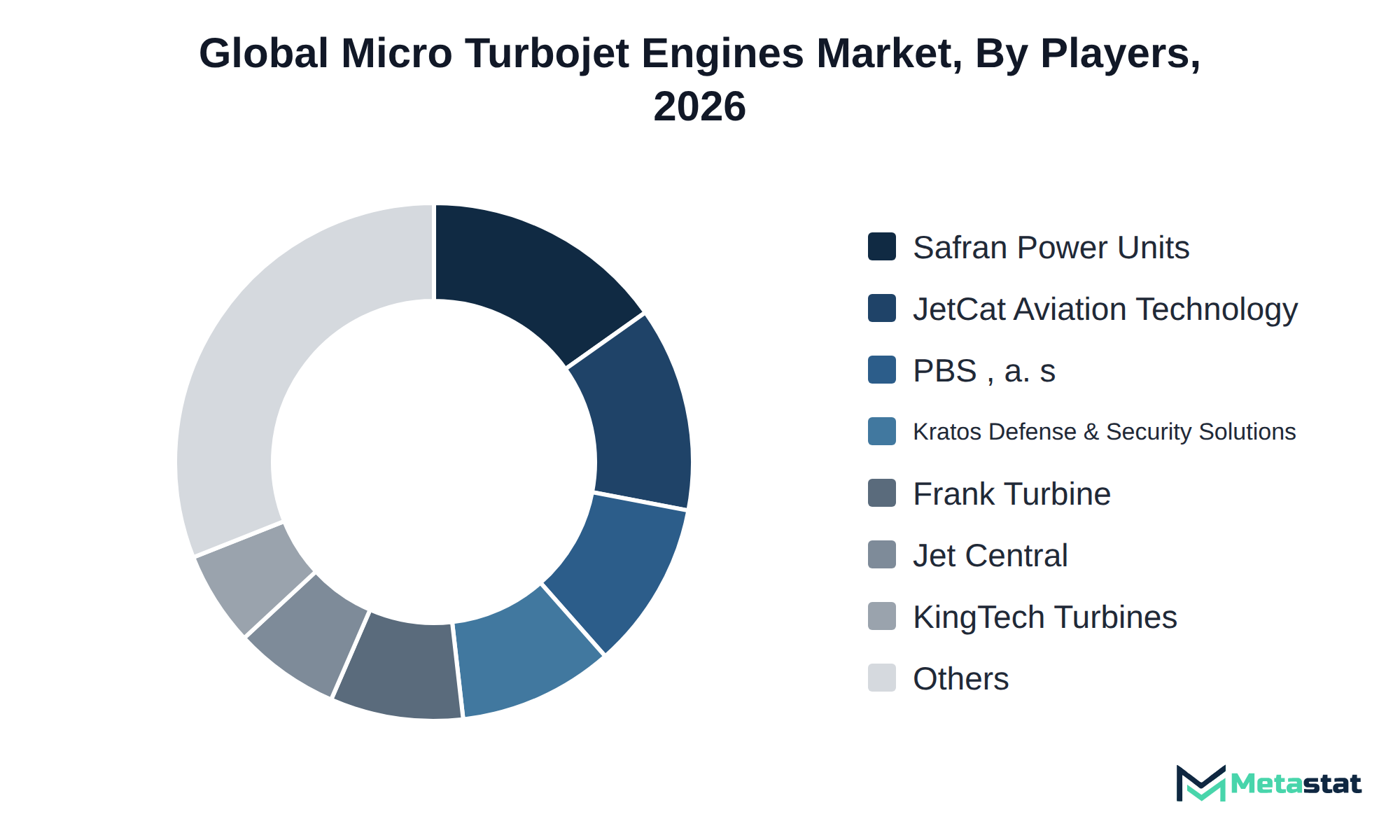
Competition in the Micro Turbojet Engines market occurs among various companies focusing on different types of turbojet engines and applications. Companies including JetCat Aviation Technology Co., Ltd. and PBS Group, a. s. emphasize innovation in single-shaft and twin-shaft turbojet engines, catering to specific buyer preferences for performance and reliability. Other players, including AMT Netherlands B.V. and Frank Turbine, concentrate on specialized applications, including unmanned aerial vehicles (UAVs) and target drones, addressing distinct consumer demands.
Buyers evaluate options based on factors including price, certification, customization, and service quality. Companies like Kratos Defense & Security Solutions, Inc. and Xi'an Supersonic Aviation Technology Co., Ltd (SAT) provide tailored solutions to meet unique customer requirements, enhancing their competitive positioning. A focus on customer service and ecosystem integration supports market players in differentiating their offerings and securing customer loyalty.
Several developments will support this growth in the Micro Turbojet Engines market. First, expanding applications in Unmanned Aerial Vehicles (UAVs) will drive demand. By 2033, UAVs are projected to reach a market value of USD 44.7 million, reflecting a significant increase due to advancements in automation and increased military expenditures globally. Second, the emergence of Target Drones, with an expected value of USD 23.2 million by 2033, highlights a growing focus on defense and training needs, enhancing the market's overall demand. A primary risk that could hinder growth involves supply chain disruptions, which could increase costs and delay production timelines. Such disruptions particularly affect regions heavily reliant on imports, like North America and Europe, where demand for advanced micro turbojet technologies continues to rise. Addressing these factors will be essential for achieving the forecasted market size and sustaining growth.
By Type: Single-shaft Turbojet Engines, Twin-shaft Turbojet Engines, Recuperated Turbojet Engines, High Bypass Ratio Micro Turbojets, Low Bypass Ratio Micro Turbojets
By Application: Target Drones, Unmanned Aerial Vehicles (UAVs), Experimental Aircraft, Personal Jet Projects, Academic Research Aircraft, Missile Propulsion (Training/Target Systems), Micro-sat Launch Systems (First-stage booster concepts)
The report strategically identifies and profiles the key market players and analyses their core competencies in each sub-segment of the Micro Turbojet Engines market.
|
Report Attributes |
Details |
|
Study Period |
2021-2033 |
|
Base Year |
2025 |
|
Estimated Year |
2026 |
|
Forecast Period |
2026-2033 |
|
Historical Period |
2021-2025 |
|
Growth Rate |
CAGR 9.2% from 2026 to 2033 |
|
Revenue Unit |
USD million |
|
Segmentation |
By Type, Application, and Region |
|
By Region |
North America (By Type, Application, and Country)
|
|
Europe (By Type, Application, and Country)
|
|
|
Asia Pacific (By Type, Application, and Country)
|
|
|
South America (By Type, Application, and Country)
|
|
|
Middle East and Africa (By Type, Application, and Country)
|
Find answers to common questions about this report
The Micro Turbojet Engines market size was valued at USD 58 million in 2025.
The market is projected to grow at a CAGR of 9.2% during the forecast period from 2026 to 2033.
The North America Micro Turbojet Engines market size is estimated to reach USD 33.4 million by 2033.
The Twin-shaft Turbojet Engines segment leads the Micro Turbojet Engines market with a projected value of USD 61.6 million by 2033. This segment surpasses others in terms of revenue potential within the market.
Key drivers for the Micro Turbojet Engines market include the growing interest in unmanned aerial vehicles, which increases demand for efficient propulsion systems. Innovations in turbine technology enhance fuel efficiency and thrust-to-weight ratios, aligning with the needs of various sectors. Target drones exhibit a compound annual growth rate of 8.9 percent, reflecting significant growth potential.
High acquisition costs restrain growth in the Micro Turbojet Engines market, particularly affecting small-scale operators and startups that struggle to secure funding for advanced propulsion systems. Fluctuations in input costs, especially for advanced alloys and composite materials, challenge suppliers by impacting production expenses and profit margins.
Growing interest in target drones drives adoption in the Micro Turbojet Engines market. Increased military and commercial demand for efficient propulsion systems encourages manufacturers to innovate, enhancing product reliability and performance. This trend reflects a compound annual growth rate of 8.9 percent for target drones, supporting further market expansion.
The Micro Turbojet Engines market is estimated to reach a valuation of USD 117.7 million by 2033.
Key players operating in the Micro Turbojet Engines market include JetCat Aviation Technology Co., Ltd., PBS Group, a. s., AMT Netherlands B.V., Frank Turbine, Xi'an Supersonic Aviation Technology Co., Ltd (SAT), and Kratos Defense & Security Solutions, Inc.
The anticipated market value for target drones is projected to reach USD 23.2 million by 2033, reflecting significant growth potential in this application segment.
The analysts below cover Aerospace and Defense research at Metastat Insights.
LEAD ANALYST
Utkarsh Khirodkar is a Lead Market Research Analyst at MetaStat Insight, specializing in market intelligence, technology sector assessments, and competitive strategy.
Tracking ceramic matrix composite adoption in high-bypass aero engines requires strict attention to material qualification cycles and FAA airworthiness testing milestones. The MetaStat Insight team provided a detailed timeline of silicon carbide fiber manufacturing capacity and commercial foundry lead times. Having clear visibility into upstream thermal barrier coating supply helped us stress-test our long-term component procurement strategy.
Transitioning ultra-class mining haul trucks to alternative power requires concrete data on remote hydrogen refueling infrastructure economics. The report evaluated megawatt-scale electrolyzer installation expenses, onsite storage safety mandates, and heavy-duty fuel cell stack degradation under continuous duty cycles. That technical rigor helped our engineers benchmark realistic total operating cost horizons for off-highway fleet decarbonization.
Enterprise zero-trust network rollouts are often slowed down by multi-cloud transit latency and proprietary hardware retirement schedules. This study provided realistic total cost of ownership models comparing cloud-delivered security edge solutions against traditional hardware refreshes. The analysis of contract renewal lengths and software maintenance fees gave us clear visibility into enterprise replacement cycles over the next three to five years.
Explore related market intelligence reports worth reading alongside this one.
Starting from
$2950
Starting from
$2950