
LEAD ANALYST
Utkarsh Khirodkar is a Lead Market Research Analyst at MetaStat Insight, specializing in market intelligence, technology sector assessments, and competitive strategy.

Nerve Repair and Regeneration Market Size, Share, By Type (Neurostimulation & Neuromodulation Devices, Internal Neurostimulation Devices, Deep Brain Stimulation, Spinal Cord Stimulation, Sacral Nerve Stimulation, Gastric Electrical Stimulation, Vagus Nerve Stimulation, External Neurostimulation Devices, Transcutaneous Electrical Nerve Stimulation, and Transcranial Magnetic Stimulation), By Application (Neurostimulation and Neuromodulation Surgeries, Direct Nerve Repair/Neurorrhaphy, Nerve Grafting, Stem Cell Therapy, and Others), By End User (Hospital & Clinics, Ambulatory Surgery Centers, and Others), Industry Analysis, Growth, Trends, and Forecast, 2026-2033
Report ID
MSI-2320
Published
February, 2026
Pages
302 Pages
Format
Report Details
Choose Your License
Nerve Repair and Regeneration Market
Nerve regeneration devices are used to restore damaged nerves to their function and used to treat peripheral nerve injuries. Nerve Repair and Regeneration devices are used for repair of nervous tissues, cells or cell products, and such mechanisms include generation of new neurons, glia, axons, myelin, and synapses.
Rising prevalence of neurological disorders is a key driving factor of the market. Some of the neurological disorders include Alzheimer's Disease, Brain Tumors, Epilepsy, Parkinson's Disease and others. According to the World Health Organization (WHO), around 44 million people worldwide living with Alzheimer's disease. According to the Alzheimer's Association, more than 5 million Americans have Alzheimer's. An estimate of 5.8 million Americans age 65 and older are living with Alzheimer's dementia in 2020. The global prevalence of tumors in the nervous system in males and females was 3.6 and 2.5 per 100,000, respectively. In 2020, an estimated 23,890 adults in the United States will be diagnosed with tumors in the brain. According to the World Health Organization (WHO), 60 million people worldwide have epilepsy, which makes it one of the most common neurological diseases. According to the Parkinson's Foundation, More than 10 million people worldwide are living with Parkinson's Disease. Around 60,000 Americans are diagnosed with Parkinson's Disease each year. However, the high cost of nerve repair and regeneration devices might hamper market growth. The nerve repair and regeneration devices can cost upto $5,000 to $300,000. Moreover, increasing investment by the companies for research and development of nerve repair and regeneration devices would provide lucrative opportunities for the market in the coming years.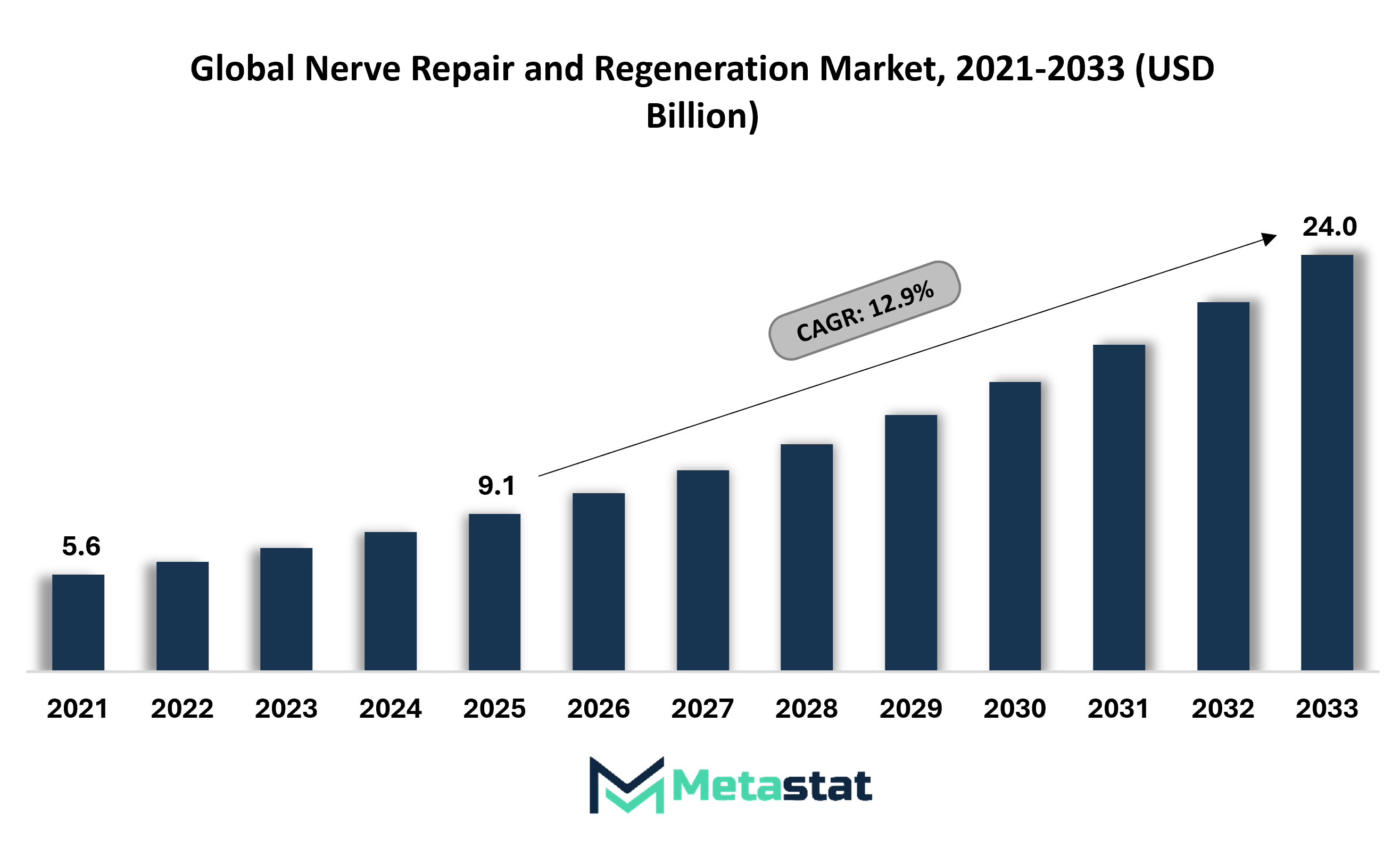
The global nerve repair and regeneration market are mainly classified based on type, application, and end user. Type is further segmented into Neurostimulation & Neuromodulation Devices and Biomaterials. By application, the market is divided into Neurostimulation and Neuromodulation Surgeries, Direct Nerve Repair/Neurorrhaphy, Nerve Grafting, Stem Cell Therapy, and Others. By end user, the market is further divided into Hospital & Clinics, Ambulatory Surgery Centers, and Others.
Based on type, Neurostimulation & Neuromodulation Devices segment is valued at USD -10.3 billion in 2026 and is projected to reach USD -24 billion by 2033, at a CAGR of 12.9% during the forecast period. Neurostimulation and neuromodulation devices are divided into internal neurostimulation devices and external neurostimulation devices. Internal neurostimulation devices have been further bifurcated into Deep Brain Stimulation, Spinal Cord Stimulation, Sacral Nerve Stimulation, Gastric Electrical Stimulation, and Vagus Nerve Stimulation. External neurostimulation devices have been further segmented into Transcutaneous Electrical Nerve Stimulation and Transcranial Magnetic Stimulation. Spinal Cord Stimulation showed significant growth in 2019, owing to the increasing clinical studies on spinal cord stimulation (SCS) and commercialization of new spinal cord stimulation (SCS) system by the companies. For instance, Boston has introduced the Spectra WaveWriter Spinal Cord Stimulator (SCS) System in Europe. The Spectra WaveWriter SCS System is the first system for the treatment of chronic pain to combine paresthesia-based and sub-perception therapy simultaneously.
By Application,. Neurostimulation and Neuromodulation Surgeries segment is projected to reach USD 10.8 billion by 2033, at a CAGR of 13.7% during the forecast period.
By End User, Hospital & Clinics segment is projected to reach USD 16.3 billion by 2033.
Based on geography, the global nerve repair and regeneration market is divided into North America, Europe, Asia-Pacific, South America, and Middle East & Africa. North America is further divided in the U.S., Canada, and Mexico, whereas Europe consists of the UK, Germany, France, Italy, and Rest of Europe. Asia-Pacific is segmented into India, China, Japan, South Korea, and Rest of Asia-Pacific. The South America region includes Brazil, Argentina, and the Rest of South America, while the Middle East & Africa is categorized into GCC Countries, Egypt, South Africa, and Rest of Middle East & Africa.
North America was dominating the nerve repair and regeneration market in 2019, due to the partnership between companies to develop and market nerve repair and regeneration products, commercialization of technologically advanced nerve repair and regeneration products, and increasing regulatory approval of nerve repair and regeneration devices. For instance, Checkpoint Surgical, Inc., has received Breakthrough Device designation from the U.S. Food and Drug Administration (FDA) for the Checkpoint brief electrostimulation therapy (BEST) system. The Checkpoint BEST system is designed to provide electrical stimulation of peripheral nerves to promote nerve regeneration, with the goal of accelerating and improving patient recovery.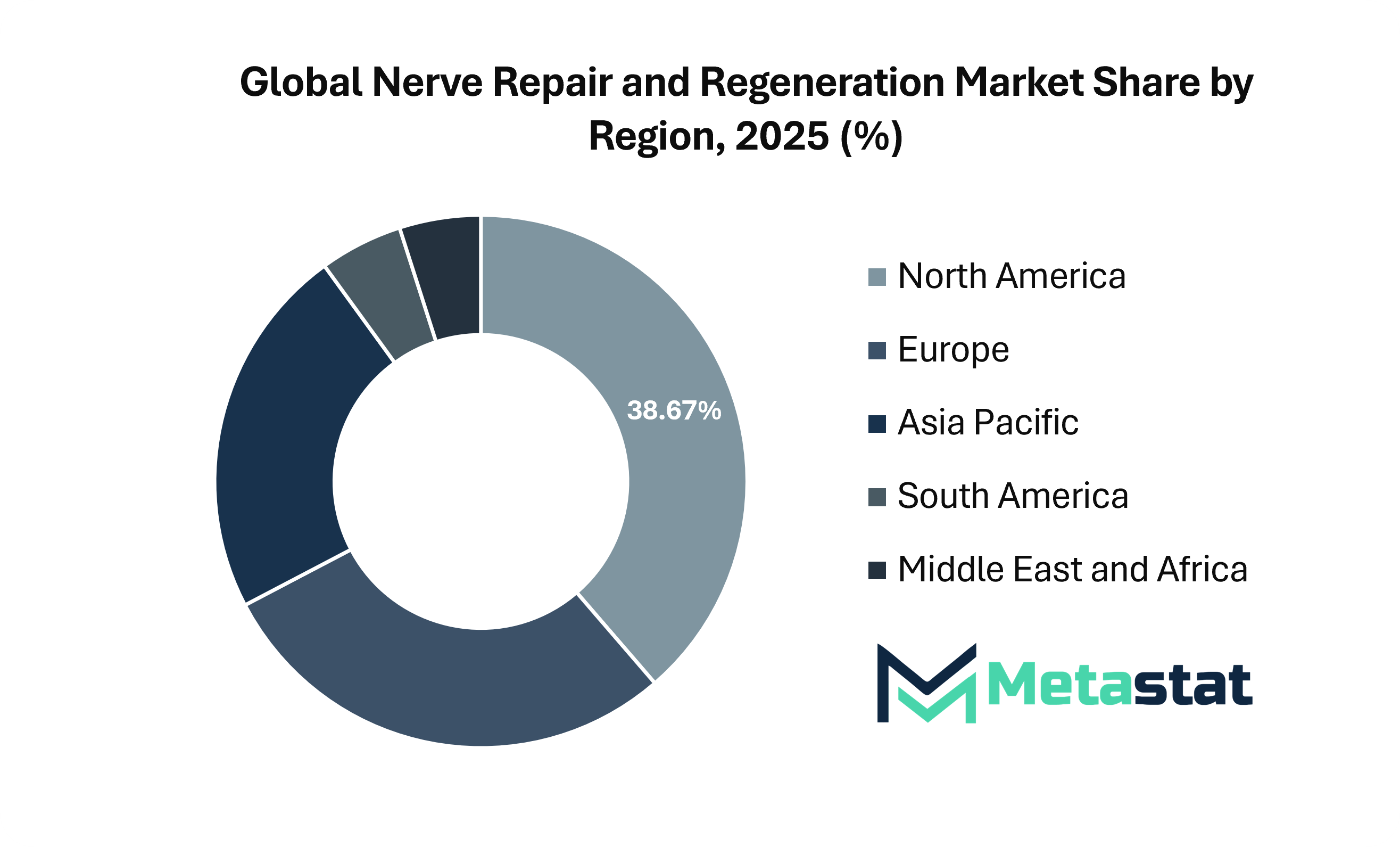
Key players operating in the nerve repair and regeneration industry include Abbott Laboratories, Medtronic, PLC, Boston Scientific Corporation, Integra LifeSciences, Baxter International, Inc., LivaNova, PLC, AxoGen, Inc., Nevro Corp, Soterix Medical, Inc., NeuroPace, Inc., Collagen Matrix, Inc, and Synapse Biomedical, Inc.
The collaboration between companies to conduct a research study on nerve repair and regeneration devices, commercialization of regulatory approved nerve repair and regeneration devices, and raising funds for the development of nerve repair and regeneration are some of the strategies adopted by the major companies. For instance, on September 24, 2019, Renerva, LLC, a medical device company have received two additional grants of $500,000 from the National Science Foundation (NSF) and the National Institutes of Health (NIH) to accelerate the development of their medical device products rapidly. The fund is used to expand its peripheral nerve repair technologies.
By Type
By Application
By End User
Key Global Nerve Repair and Regeneration Industry Players
|
Report Attributes |
Details |
|
Study Period |
2021-2033 |
|
Base Year |
2025 |
|
Estimated Year |
2026 |
|
Forecast Period |
2026-2033 |
|
Historical Period |
2021-2025 |
|
Growth Rate |
CAGR 12.9% from 2026 to 2033 |
|
Revenue Unit |
USD billion |
|
Sales Volume Unit |
Thousand Units |
|
Segmentation |
By Type, Application, End User, and Region |
|
By Region |
North America (By Type, Application, End User, and Country)
|
|
|
Europe (By Type, Application, End User, and Country)
|
|
|
Asia Pacific (By Type, Application, End User, and Country)
|
|
|
South America (By Type, Application, End User, and Country)
|
|
|
Middle East and Africa (By Type, Application, End User, and Country)
|
Find answers to common questions about this report
Top players operating in the Nerve Repair and Regeneration industry includes Abbott Laboratories, Medtronic, PLC, Boston Scientific Corporation, Integra LifeSciences, Baxter International, Inc., LivaNova, PLC, AxoGen, Inc., Nevro Corp, Soterix Medical, Inc., NeuroPace, Inc., Collagen Matrix, Inc, and Synapse Biomedical, Inc.
The Metastat Insights study reveals that the Nerve Repair and Regeneration market size was valued at USD 9.1 billion in 2025.
The Nerve Repair and Regeneration market is projected to grow at a CAGR of 12.9% during the forecast period from 2026 to 2033.
According to Metastat Insights analysis, the North America Nerve Repair and Regeneration market size is estimated to reach USD 8.4 billion by 2033.
The analysts below cover Medical Devices research at Metastat Insights.
LEAD ANALYST
Utkarsh Khirodkar is a Lead Market Research Analyst at MetaStat Insight, specializing in market intelligence, technology sector assessments, and competitive strategy.

LEAD PRINCIPAL ANALYST, PHARMA AND HEALTHCARE
Food and Beverages · Healthcare · Healthcare IT · Medical Devices
Ajay Devgire is the Lead Healthcare Analyst at MetaStat Insight, leading strategic research and market intelligence initiatives across the global healthcare domain.

SENIOR RESEARCH ANALYST
Biotechnology · Food and Beverages · Medical Devices · Packaging
Snehal Pasalkar is a Research Analyst at MetaStat Insight, operating at the intersection of life sciences research, competitive strategy, and market intelligence.
Analyzing the transition from natural gas to green hydrogen in iron ore reduction requires realistic infrastructure timelines. Meta stat insight supplied a detailed regional assessment of DRI plant conversion costs and scrap metal availability in North America and Western Europe. Their report carefully examined pellet quality specs and electrical grid access constraints without making oversimplified market assumptions. The research material served as a practical reference during internal technology roadmap discussions.
Integrating zero-trust access controls across legacy electronic health record systems involves complex compliance overhead. Team produced an analysis that clearly separated identity governance and administration tools from privileged access management platforms. Their evaluation of HIPAA and GDPR compliance features across cloud native solutions gave our architecture group clear baseline criteria. The custom data request regarding biometric authentication adoption in hospital networks was returned promptly with clear documentation.
Evaluating calorific value requirements and air permit compliance across municipal waste facilities requires localized data. Metastat Insight structured their analysis around operational throughput capacity and feedstock composition variations in Latin America and Eastern Europe. Their competitive mapping of sorting equipment vendors helped clarify technology differences between optical separators and heavy media systems. The study provided an objective baseline during our capital expenditure reviews.
Explore related market intelligence reports worth reading alongside this one.