
LEAD ANALYST
Utkarsh Khirodkar is a Lead Market Research Analyst at MetaStat Insight, specializing in market intelligence, technology sector assessments, and competitive strategy.

Nuclear Graphite Market Size, Share, By Type (Graphite, Carbonaceous, Pyrolysis of Graphite, Isotropic Graphite, and Graphite Containing Boron), By Application (Deceleration Material, Reflective Material, Enclosure, and Smelting Uranium Salt Crucible), Industry Analysis, Growth, Trends, and Forecast, 2026-2033
Report ID
MSI-3822
Published
June, 2025
Pages
314 Pages
Format
Report Details
Choose Your License
Nuclear Graphite Market
Global Nuclear Graphite market size is valued at USD 828.4 million in 2025 and projected to grow at a CAGR of 7.5% during the forecast period, reaching USD 1,461.5 million by 2033.
North America holds 37.4% in 2025 with US leading the market share in 2025.
Graphite segment account for a market share of 38.62% in 2025.
Key trends driving growth: Increasing demand for nuclear energy as a clean power source drives the need for nuclear graphite, along with technological advancements in nuclear reactors enhance the efficiency and safety of nuclear graphite applications.
Opportunities include development of next-generation nuclear reactors and fusion technology presents new applications for nuclear graphite.
Key insight: Next-generation reactor technologies are increasing the strategic importance of high-purity nuclear graphite across global nuclear energy projects.
The global nuclear graphite market is witnessing steady expansion, supported by rising deployment of advanced nuclear reactors and long-term energy security initiatives across major economies. Nuclear graphite plays a critical role in high-temperature gas-cooled reactors, molten salt reactors, and other next-generation nuclear technologies owing to its ability to withstand high temperatures, radiation exposure, and demanding chemical stability conditions. Governments are increasing investments in low-carbon power generation to reduce dependence on fossil fuels, strengthening the requirement for high-purity nuclear graphite materials. Modernization of aging nuclear infrastructure, along with new reactor development projects in countries such as China, India, and the U.S., continues to create a stable consumption outlook for nuclear-grade graphite products.
The market is also benefiting from technological advancements in graphite purification, precision machining, and isotropic graphite manufacturing. Manufacturers are focusing on ultra-high-purity graphite materials with improved neutron moderation properties, higher dimensional stability, and extended operating life for nuclear applications. Strict safety regulations and reactor performance standards have increased the importance of reliable graphite suppliers that meet global nuclear certification requirements. Research institutions and reactor developers are also exploring advanced reactor designs that rely on graphite moderators, reflectors, and structural components, creating new commercial opportunities for market participants. Strategic collaborations between reactor developers and graphite producers are further strengthening product innovation and supply chain resilience.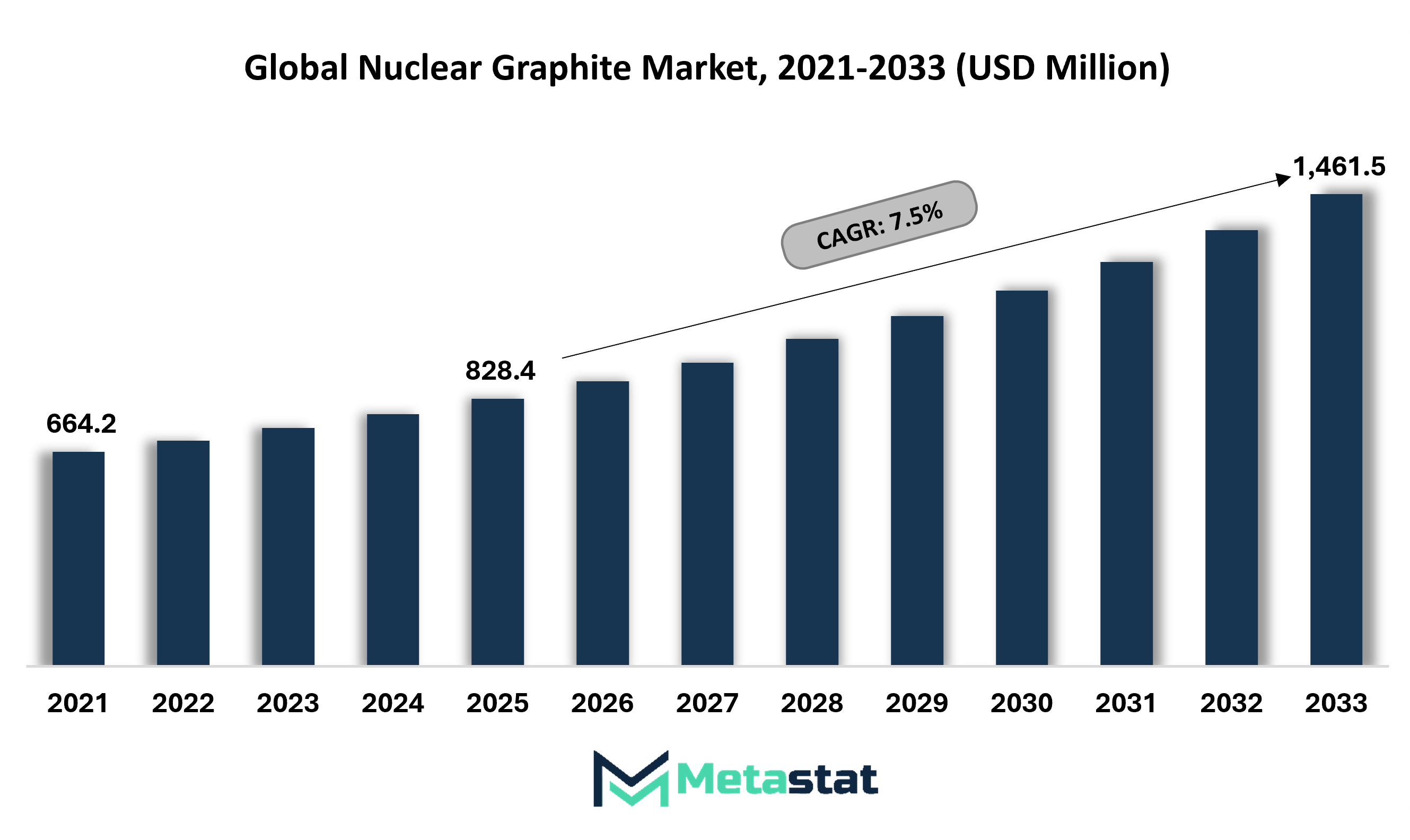
Increasing demand for nuclear energy as a clean power source drives the need for nuclear graphite.
Increasing adoption of nuclear energy for low-emission power generation continues to support the nuclear graphite market. Expansion of power infrastructure across developing economies is driving long-term reactor construction programs. Government-backed clean energy targets are encouraging increased investment in advanced nuclear systems, creating sustained consumption of high-performance graphite materials during future energy transitions.
Technological advancements in nuclear reactors enhance the efficiency and safety of nuclear graphite applications.
Rapid progress in reactor engineering is improving operational performance across modern nuclear facilities within the nuclear graphite market. Advanced graphite materials support stronger thermal stability, durability, and neutron moderation capabilities. Research institutions and reactor developers are focusing on safer reactor environments, encouraging wider application of refined graphite products in next-generation power generation technologies over the coming decades.
High production costs and stringent purity requirements limit the availability of nuclear graphite.
High production costs create major supply constraints across the nuclear graphite market. Strict purification requirements require highly controlled manufacturing environments, increasing operational spending for producers. Limited access to premium raw materials adds further pressure on supply chains. Future expansion plans will face delays owing to rising compliance costs linked with quality certification and nuclear-grade material qualification procedures.
Environmental and safety concerns related to nuclear energy impact the market growth for nuclear graphite.
Public concerns related to radioactive waste management continue to influence investment sentiment surrounding the nuclear graphite market. Regulatory authorities maintain strict environmental safety frameworks for nuclear projects, extending approval timelines for new facilities. Long-term monitoring requirements create additional financial burdens for industry participants, affecting production scalability and commercial growth prospects across several regions.
Development of next-generation nuclear reactors and fusion technology presents new applications for nuclear graphite.
Development of advanced nuclear reactors and fusion-based energy systems is creating promising growth avenues for the nuclear graphite market. High-temperature reactor designs require durable graphite components capable of operating under extreme thermal and radiation conditions. Scientific advancements in fusion research are encouraging material innovation, supporting future commercial applications where specialized graphite products will play a vital role in energy generation systems.
The Global Nuclear Graphite market is segmented based on Type and Application.
Graphite segment is valued at USD 339.9 million in 2026 and is projected to reach USD 562.9 million by 2033, at a CAGR of 7.5% during the forecast period.
Graphite materials account for a significant share of the nuclear graphite market owing to their high-temperature resistance, structural stability, and neutron moderation performance. Expansion of advanced nuclear infrastructure across developing economies is supporting wider graphite consumption. Research institutions continue to focus on durability enhancement, supporting future reactor performance under prolonged operating conditions.
Carbonaceous segment is valued at USD 299.0 million in 2026 and is projected to reach USD 483.2 million by 2033, at a CAGR of 7.1% during the forecast period.
Carbonaceous materials are gaining attention owing to their thermal endurance and chemical stability during nuclear operations. Manufacturers are investing in purification technologies to improve carbon consistency for sensitive reactor environments. Rising energy diversification programs across multiple countries are encouraging wider acceptance of carbonaceous nuclear materials for long-term operational reliability.
Pyrolysis of Graphite segment is valued at USD 186.2 million in 2026 and is projected to reach USD 328.1 million by 2033, at a CAGR of 8.4% during the forecast period.
Pyrolysis of graphite contributes to material refinement and improved reactor-grade quality across the nuclear graphite market. Advanced processing techniques support lower impurity levels, encouraging safer nuclear energy applications. Continuous technological improvement in thermal decomposition methods is creating opportunities for efficient graphite production suitable for next-generation nuclear facilities worldwide.
Isotropic Graphite segment is valued at USD 39.9 million in 2026 and is projected to reach USD 61.7 million by 2033, at a CAGR of 6.4% during the forecast period.
Isotropic graphite continues to gain importance across the nuclear graphite market owing to its uniform strength, superior thermal conductivity, and stable structural behavior under radiation exposure. Reactor manufacturers are increasingly seeking precision-engineered materials for complex nuclear environments. Ongoing innovation in isotropic processing methods is supporting future adoption across high-capacity nuclear power projects.
Graphite Containing Boron segment is valued at USD 16.5 million in 2026 and is projected to reach USD 25.7 million by 2033, at a CAGR of 6.6% during the forecast period.
Graphite containing boron supports radiation absorption functions across the nuclear graphite market, encouraging use in controlled nuclear operations. Increasing focus on reactor safety systems is strengthening commercial interest in boron-enhanced graphite materials. Product development activities continue to target improved neutron absorption capabilities for advanced nuclear engineering requirements across global power sectors.
Deceleration Material (Moderator) segment is projected to reach USD 284.7 million by 2033, at a CAGR of 7.3% during the forecast period.
Deceleration material applications hold significant value across the nuclear graphite market owing to efficient neutron slowing capabilities required during reactor operations. Rising investments in clean power generation support the adoption of graphite moderators in modern nuclear facilities. Material optimization programs continue to improve operational safety, thermal resistance, and long-term reactor sustainability worldwide.
Reflective Material segment is projected to reach USD 170.6 million by 2033, at a CAGR of 6.9% during the forecast period.
Reflective material applications within the nuclear graphite market support advanced neutron reflection performance, helping maintain reactor stability and controlled power output. Nuclear technology advancements are encouraging the use of highly durable reflective graphite products capable of withstanding extreme operating conditions. Future infrastructure expansion across emerging economies strengthens market potential for reflective nuclear materials.
Enclosure segment is projected to reach USD 617.9 million by 2033, at a CAGR of 7.7% during the forecast period.
Enclosure applications contribute to structural protection and containment performance across the nuclear graphite market. High thermal tolerance and mechanical strength support extensive utilization inside nuclear reactor chambers. Industrial manufacturers continue to develop advanced enclosure-grade graphite products capable of supporting enhanced safety requirements and long operational lifecycles across expanding nuclear energy infrastructure.
Smelting Uranium Salt Crucible segment is projected to reach USD 388.3 million by 2033, at a CAGR of 7.6% during the forecast period.
Smelting uranium salt crucible applications remain vital across the nuclear graphite market owing to graphite’s resistance to extreme temperatures and corrosive processing environments. Nuclear fuel production activities continue to drive the requirement for reliable crucible materials that support operational consistency.
Based on geography, the Global Nuclear Graphite market is divided into North America, Europe, Asia-Pacific, South America, Middle East, and Africa.
The United States is increasing investments in advanced nuclear reactor demonstration programs, supporting demand for nuclear graphite materials.
Growing focus on energy security and carbon reduction objectives in North America is encouraging long-term nuclear infrastructure development.
Europe is strengthening nuclear power policies following energy supply disruptions, with countries such as France and the UK accelerating reactor modernization and next-generation nuclear initiatives.
China’s large-scale nuclear reactor expansion plans are creating strong opportunities for nuclear graphite suppliers and component producers.
India’s growing electricity requirements and government-backed nuclear power programs are supporting future consumption of nuclear-grade graphite materials.
Emerging nuclear power initiatives, energy diversification strategies, and rising interest in low-carbon power generation are gradually creating long-term growth potential for nuclear graphite across the Middle East, Africa, and South America.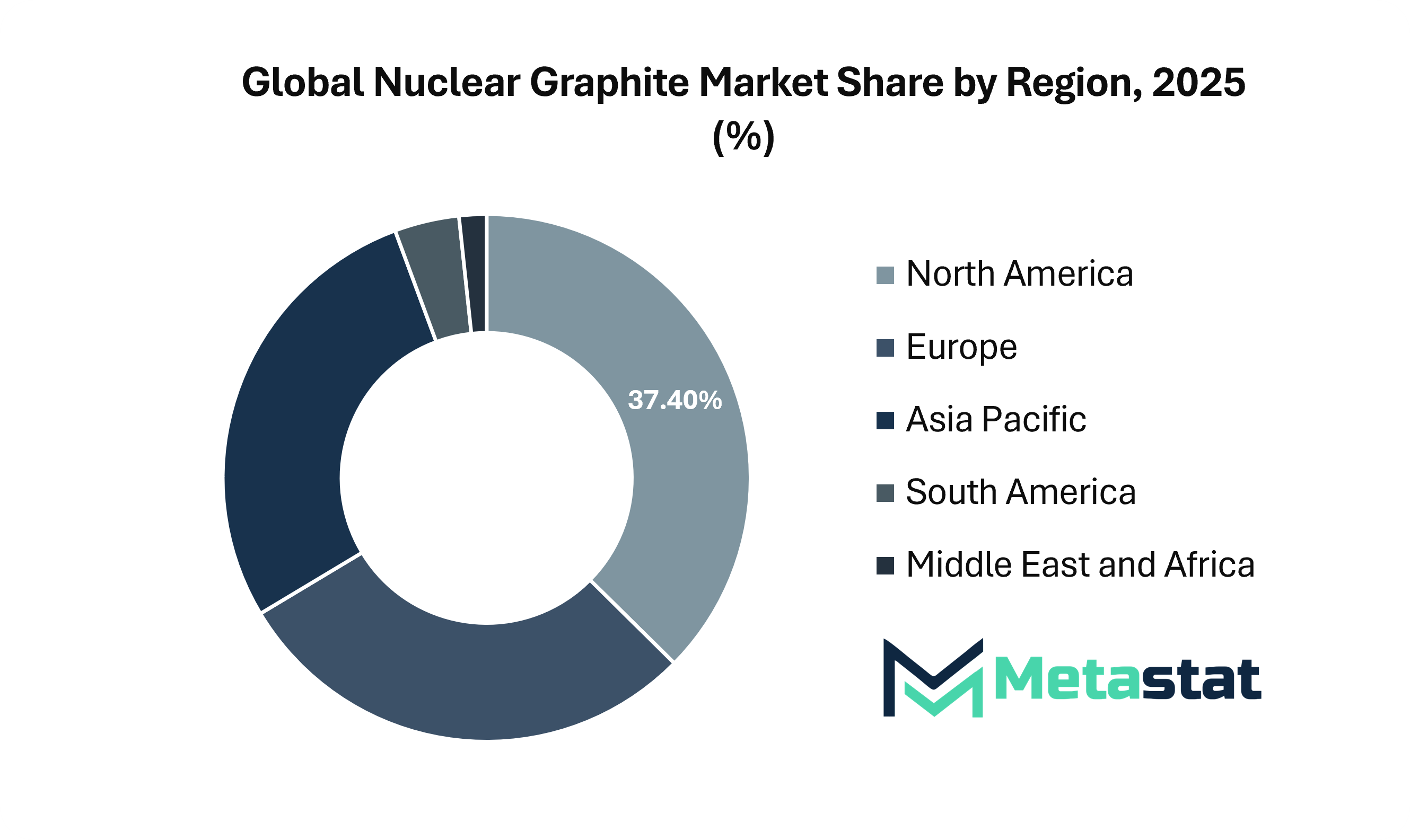
The Global Nuclear Graphite Market is gaining attention owing to the rising need for durable materials in nuclear power generation. Graphite plays an important role inside nuclear reactors owing to its ability to withstand high temperatures, support neutron moderation, and maintain structural reliability under radiation exposure. Countries investing in clean power are increasing research and development related to advanced reactor systems. The requirement for reliable reactor components has encouraged manufacturers to improve manufacturing quality, material consistency, and qualification standards. Rising energy consumption, carbon reduction targets, and the search for long-term power sources are supporting industry expansion. Several governments are also funding nuclear technology initiatives to reduce dependence on fossil fuel-based power generation.
Production activities linked with nuclear-grade graphite require controlled processing standards, robust testing methods, and continuous technological improvement. The market is receiving support from investments focused on reactor safety, durability, and material performance. Manufacturers are seeking to increase efficiency while reducing material waste during production. Several companies are strengthening partnerships with energy providers and research organizations to improve product performance. Growing interest in small modular reactors is also creating new business opportunities. Advanced graphite materials will gain wider adoption in these systems, supported by national priorities around energy security and reliable power generation.
Key organizations active in this industry include Amsted, Mersen, Ceylon Graphite, Double Peaks Graphite Sealing Materials, FangDa, Hexagon Resources, Ningbo Ruiyi Sealing Material, Schunk, SGL Carbon, Tokai Carbon, Toyo Tanso Co. Ltd., Urbix, and USG Gledco. These companies are focusing on product quality, material strength, purification capabilities, and research activities to improve their market position. Some companies are expanding production facilities, while others are increasing investments in mining and raw material supply. International collaborations and long-term supply agreements are helping companies strengthen distribution networks. Market participants are also working to meet strict safety requirements related to nuclear operations and industrial regulations across key regions.
The future outlook for the nuclear graphite market remains positive as electricity requirements continue to rise across developing and developed nations. Nuclear energy remains an important option for countries aiming to reduce emissions while maintaining stable power supply. Improved reactor technologies, supportive government policies, and increasing industrial investments will support further market expansion. Challenges linked with high production costs and strict approval processes remain, yet companies continue working on solutions through innovation and improved production techniques. Strong research activities and evolving global energy strategies will support steady progress, creating opportunities for suppliers, manufacturers, and technology providers worldwide.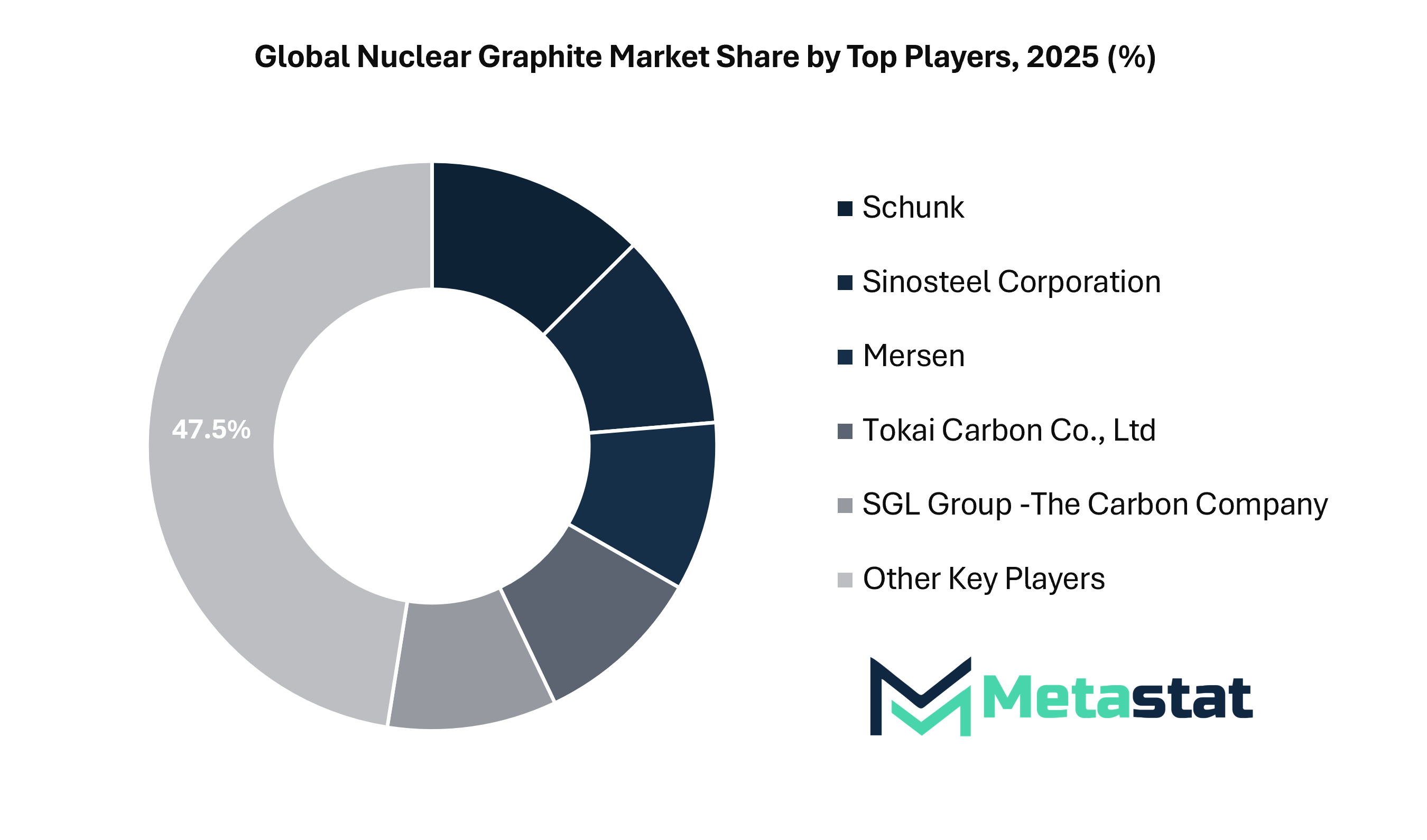
Market size is forecast to rise from USD 828.4 million in 2025 to over USD 1,461.5 million by 2033.
Future market expansion will remain closely linked with clean energy programs and the commercialization of small modular reactors across developed and emerging economies. Increasing concerns regarding carbon emissions, grid stability, and energy independence are encouraging governments to support nuclear energy investments through policy incentives, infrastructure funding, and advanced reactor demonstration programs.
This research report categorizes the Nuclear Graphite market based on key segments and regions, forecasts revenue growth, and analyzes trends across each submarket. The report evaluates key growth drivers, opportunities, and challenges influencing the Nuclear Graphite market. Recent market developments and competitive strategies such as expansion, product launches, partnerships, mergers, and acquisitions have been included to assess the competitive landscape.
The report strategically identifies and profiles the key market players and analyses their core competencies in each sub-segment of the Nuclear Graphite market.
|
Report Attributes |
Details |
|
Study Period |
2021-2033 |
|
Base Year |
2025 |
|
Estimated Year |
2026 |
|
Forecast Period |
2026-2033 |
|
Historical Period |
2021-2025 |
|
Growth Rate |
CAGR 7.5% from 2026 to 2033 |
|
Revenue Unit |
USD million |
|
Segmentation |
By Type, Application, and Region |
|
By Region |
North America (By Type, Application, and Country)
|
|
Europe (By Type, Application, and Country)
|
|
|
Asia Pacific (By Type, Application, and Country)
|
|
|
South America (By Type, Application, and Country)
|
|
|
Middle East and Africa (By Type, Application, and Country)
|
Find answers to common questions about this report
The Metastat Insights study shows that the Global Nuclear Graphite market size was USD 828.4 million in 2025.
The Global Nuclear Graphite market is expected to grow at a CAGR of 7.5% over the forecast period (2026-2033).
The Metastat Insights analysis shows that the North America Nuclear Graphite market size is estimated to be USD 541.5 million by 2033.
The Graphite is the leading type of segment in the Global market.
High production costs and stringent purity requirements limit the availability of nuclear graphite. will hamper the market growth within the forecast period.
North America region dominates the market.
Global Nuclear Graphite market is estimated to reach USD 1,461.5 million by 2033.
Increasing demand for nuclear energy as a clean power source drives the need for nuclear graphite. and Technological advancements in nuclear reactors enhance the efficiency and safety of nuclear graphite applications. are key driving factors, boosting the market.
Top players operating in the Nuclear Graphite industry includes Amsted, Carbone Lorraine, Ceylon Graphite, Double Peaks Graphite Sealing Materials, FangDa, Hexagon Resources, and Mersen Graphite
The analysts below cover Energy and Power research at Metastat Insights.
LEAD ANALYST
Utkarsh Khirodkar is a Lead Market Research Analyst at MetaStat Insight, specializing in market intelligence, technology sector assessments, and competitive strategy.

PRINCIPAL CONSULTANT - ENTERPRISE AI & EMERGING TECHNOLOGIES
Banking & Finance · Electronics and Semiconductor · Energy and Power · Healthcare IT · Information & Technology · Professional Services
Vijay Gunti is a Principal Consultant at MetaStat Insight, bringing over two decades of experience across enterprise digital transformation, technology strategy, and intelligent systems.

ENERGY & INFRASTRUCTURE INDUSTRY CONSULTANT
Automotive and Transportation · Electronics and Semiconductor · Energy and Power · Machinery & Equipment
Saurabh Vasant Ganvir consults for Energy & Infrastructure Industry at MetaStat Insight, specializing in renewable energy, solar EPC, and electric vehicle (EV) infrastructure markets.
Evaluating secondary resin quality across post-consumer packaging streams requires reliable technical segmentation. MetaStat Insight delivered an objective assessment that distinguished between extrusion-grade flake pricing and optical sorting throughput limitations across Western Europe. The competitive positioning breakdown for licensed depolymerization technology providers answered several questions during our feedstock feasibility audit. Their team clarified regional trade restrictions on mixed plastic scrap quickly when our team submitted follow-up requests.
Evaluating sovereign cloud deployments for core banking platforms demands a clear view of data residency regulations and migration exit strategies. MetaStat Insight delivered an exhaustive review of regional latency tolerances, mainframe decommission milestones, and third-party vendor concentration risk. The regulatory compliance mapping across European and Asian financial jurisdictions gave our team a dependable baseline for multi-cloud infrastructure discussions.
Replacing petrochemical surfactants with bio-based alternatives requires realistic timelines on industrial precision fermentation scaling. The market research broke down commercialization timelines, feedstock sugar price sensitivities, and regional cosmetic ingredient regulatory approvals in Europe and East Asia. That supplier readiness mapping gave our formulations team reliable context when comparing renewable chemical sourcing roadmaps.
Explore related market intelligence reports worth reading alongside this one.