
LEAD ANALYST
Utkarsh Khirodkar is a Lead Market Research Analyst at MetaStat Insight, specializing in market intelligence, technology sector assessments, and competitive strategy.

Global Organic Illipe Butter Market Size, Share, By Product Type (Refined Illipe Butter and Unrefined Illipe Butter), By Application (Skin Care, Hair Care, Lip Care, Color Cosmetics, Soaps and Cleansers, and Others), By Sales Channel (Direct Sales and Indirect Sales), Industry Analysis, Growth, Trends, and Forecast, 2026-2033
Report ID
MSI-5694
Published
November, 2026
Pages
258 Pages
Format
Historical
Base year
Forecast
Forecast period
Report Details
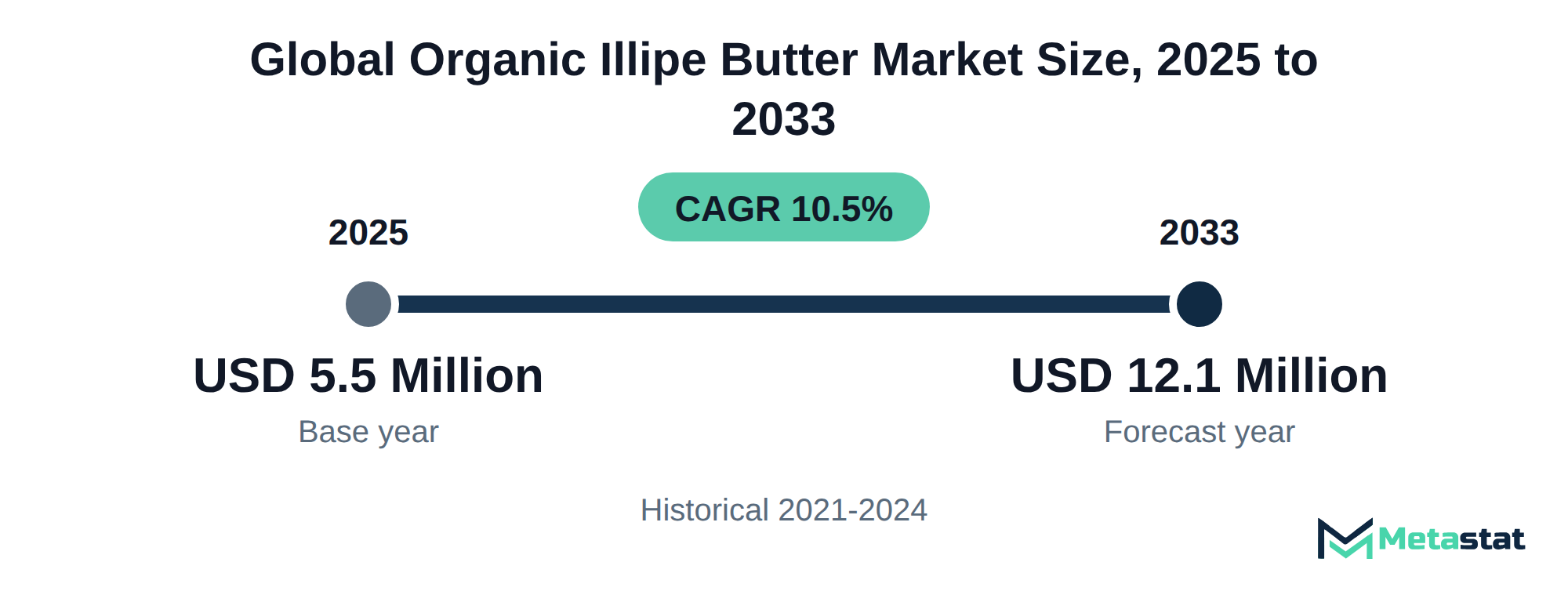
Market Valuation: Valued at $5.5 Million in 2025, projected to reach $12.1 Million by 2033 at a 10.5% CAGR.
Dominant Segment: Refined Illipe Butter leads the market, driven by its widespread use in high-end cosmetic formulations that cater to health-conscious consumers seeking natural ingredients.
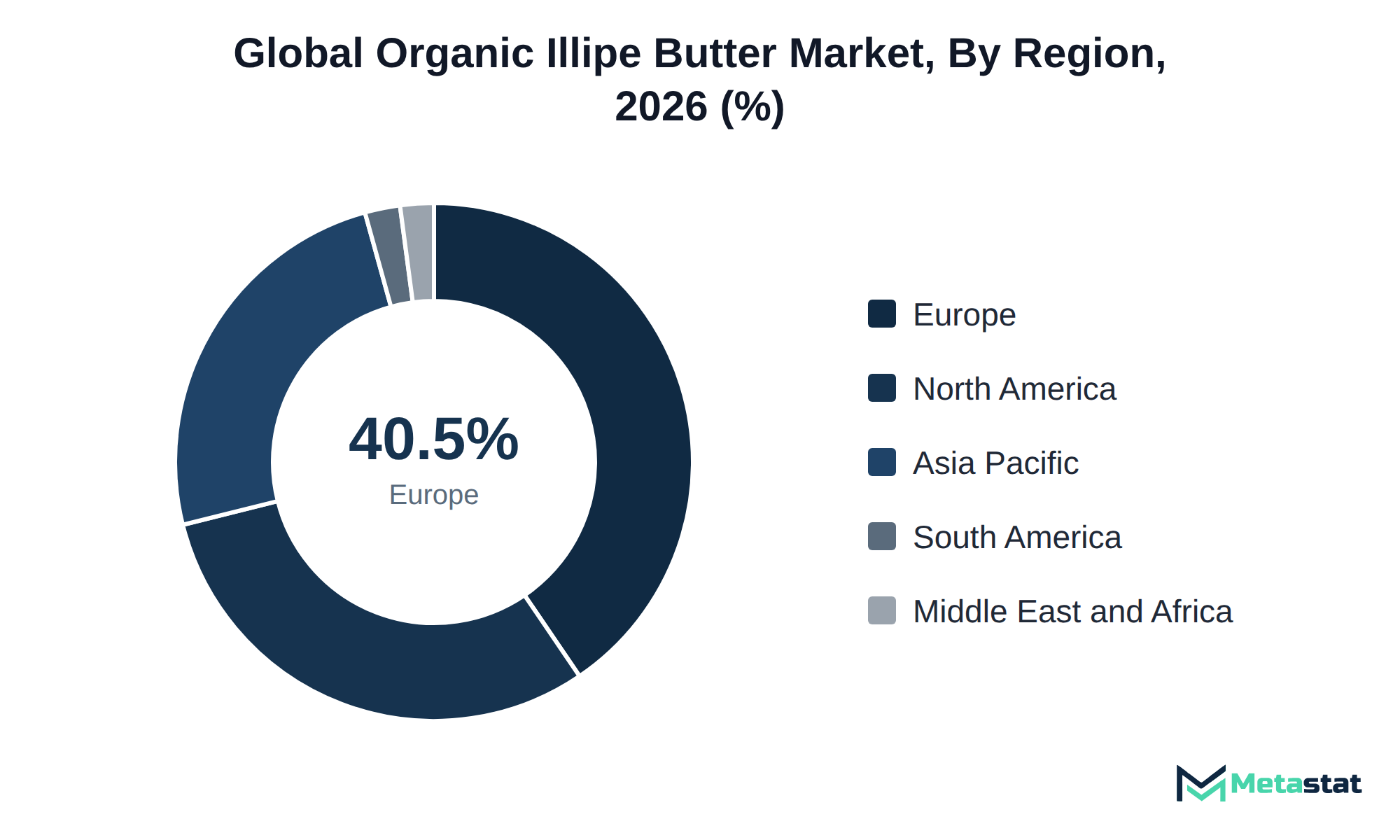
Geographic Lead: Europe is the leading region with a 40.5% market share in 2025, supported by strong consumer preference for organic and sustainable products in the personal care sector.
What's Inside: The report provides detailed competitive coverage, analysis of market dynamics, and forecasts from 2026 to 2033, focusing on trends in product types, applications, and sales channels.
Emerging Applications: The hair care segment is projected to grow significantly, with a CAGR of 11.9%, as consumers increasingly seek organic ingredients for moisturizing and nourishing hair formulations.
Choose Your License
Global Organic Illipe Butter Market
The global Organic Illipe Butter market was valued at USD 5.5 million in 2025 and is projected to reach USD 12.1 million by 2033, growing at a CAGR of 10.5% over the forecast period.
The Organic Illipe Butter market encompasses a variety of products derived from the seeds of the Illipe tree, primarily used in cosmetics and personal care formulations. Buyers invest in these products for their emollient properties, which enhance skin hydration and provide a luxurious feel in formulations. The market attracts interest from manufacturers focused on skin care, hair care, and color cosmetics, who seek natural and organic ingredients to meet consumer demand for clean beauty products.
Growth in the market is driven by the rising consumer preference for natural and organic ingredients in personal care products. Among the segments, Refined Illipe Butter holds the largest value, reflecting its widespread use in high-end cosmetic formulations. Europe leads regional market share with 40.5%, followed by North America, which holds 30.6% of the market in 2025, with the US leading in 2026.
Increased awareness of the benefits of natural products significantly influences demand for Organic Illipe Butter. Consumers are more conscious of product ingredients, and manufacturers are compelled to adapt their offerings, leading to strong growth within the industry. The market is projected to grow at a compound annual growth rate of 10.5% from 2026 to 2033.
Demand for Organic Illipe Butter stems from its properties, which suit applications in the personal care and cosmetics industries. Buyers invest in this market due to the natural and organic certifications that align with the growing consumer preference for sustainable and eco-friendly products. Increasing awareness regarding the benefits of natural ingredients in skincare and haircare formulations drives spending, with consumers prioritizing health and environmental concerns when selecting personal care items.
Among the various segments, Refined Illipe Butter holds the largest value, reflecting its widespread acceptance and utilization in diverse applications, particularly in skin care and hair care products. Steady growth in demand for organic and natural alternatives in personal care products significantly influences market expansion, particularly in regions with higher disposable incomes and awareness of wellness trends.
Market growth is propelled by the increasing incorporation of Organic Illipe Butter in formulations aimed at moisturizing and nourishing skin and hair. This trend aligns with consumers seeking effective solutions without harsh chemicals. The steady rise in demand for high-quality ingredients in the cosmetics sector supports the market's growth, making it a key part of the broader organic personal care landscape.
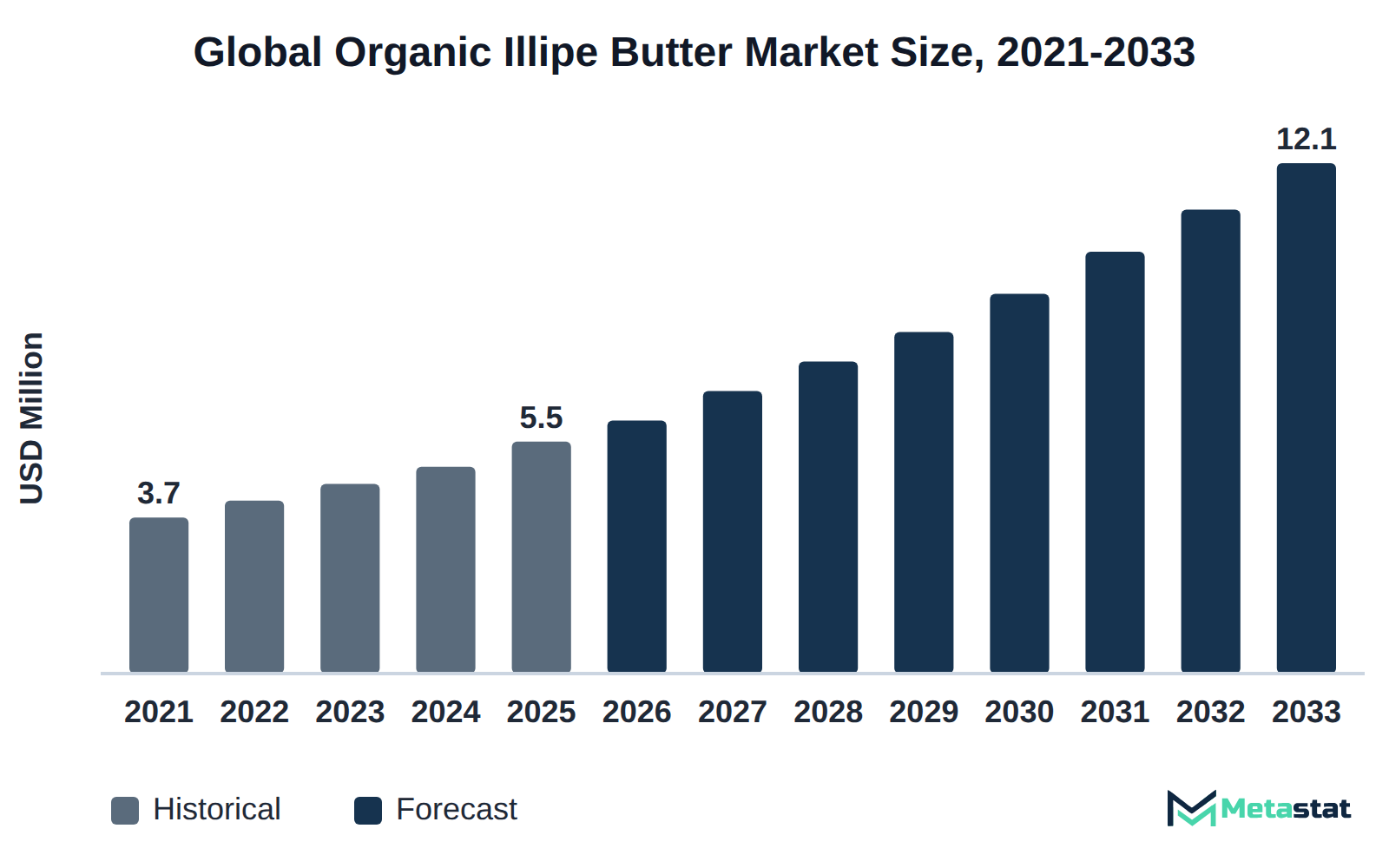
Refined organic illipe butter has emerged as a preferred ingredient for fragrance-sensitive skin care formulations, addressing the growing demand for hypoallergenic and soothing products among consumers. This preference aligns with market trends, where the refined illipe butter segment is projected to achieve a compound annual growth rate (CAGR) of 11.2%, increasing from USD 4.5 million in 2026 to USD 9.4 million by 2033.
The growing awareness surrounding skin sensitivities has driven formulators to seek refined organic skincare ingredients that meet stringent consumer safety standards. This demand shift reflects a larger industry trend towards clean beauty, where products free from synthetic fragrances appeal to health-conscious consumers. Refined organic illipe butter has natural emollient properties that enhance skin hydration without the risk of irritation, making it suitable for sensitive skin care lines.
The focus on refined organic illipe butter supports commercial outcomes, with brands that use this ingredient differentiating themselves in a saturated market. The organic illipe butter market stands to benefit from this trend, as consumers increasingly favor formulations that prioritize skin health, which supports growth for manufacturers committed to clean ingredient sourcing.
Purchasing practices for wild-harvested illipe nuts in the Organic Illipe Butter market focus on traceability and pricing models that reflect sustainable sourcing. The increase in consumer awareness surrounding ethical sourcing drives buyers to prioritize suppliers who adhere to traceability protocols. In the context of Borneo's supply chains, tracking the origin of illipe nuts ensures compliance with environmental standards and enhances product credibility.
Buyers often need long-term contracts, which lock in prices that favor both suppliers and purchasers. Such contracts provide stability in pricing, mitigating risks associated with fluctuating raw material costs while supporting a reliable supply chain.
Building strong relationships with suppliers who prioritize transparency and environmental stewardship positions buyers to benefit from consistent quality and supply. The emphasis on traceability within Borneo's illipe nut supply chains enhances market competitiveness, enabling participants to use their commitment to sustainability in their marketing strategies.
The demand for high-melting botanical butters in solid hair care and lip product formulations is rapidly increasing. This growth is driven by consumer preferences for natural and sustainable ingredients that enhance product performance and provide superior moisturizing benefits.
Consumers seeking effective and eco-friendly solutions prioritize solid formulations that incorporate ingredients like Organic Illipe Butter. This product's unique melting properties allow for smooth application and long-lasting hydration, appealing to those focused on quality and efficacy. The market for solid hair care and lip products calls for suppliers to innovate and incorporate high-melting botanical butters into their offerings, which attracts environmentally conscious buyers.
With the Organic Illipe Butter market expanding, manufacturers who respond to these trends stand to gain significant competitive advantages. Using refined ingredients including Illipe Butter in solid formulations enhances brand loyalty and increases market share among health-conscious consumers.
Verification of organic certification for Illipe butter involves a detailed review of documentation provided by suppliers. Buyers should request certifications from recognized bodies that validate organic practices. In the Organic Illipe Butter market, transparency regarding sourcing and production methods significantly influences purchasing decisions. For instance, refined Illipe butter, projected to grow from USD 4.5 million in 2026 to USD 9.4 million by 2033, emphasizes the importance of verified organic practices to meet increasing consumer demand for sustainability.
Buyers should scrutinize the supply chain for traceability, ensuring that every link adheres to organic standards. Legitimate suppliers often display their organic certifications on product labels and websites. The rising popularity of organic skincare products highlights the necessity for buyers to maintain high sourcing standards, contributing to brand reputation and consumer trust. Validating organic certification protects consumers and supports growth in the market, reflecting a commitment to quality and ethical sourcing.
Growing consumer preference for natural and organic ingredients drives increased spending in the Organic Illipe Butter market. Consumers prioritize products that avoid synthetic chemicals, improving demand for organic options. This shift influences purchasing decisions, particularly among buyers in the skin care and hair care sectors, who seek gentle and effective formulations. Product volumes rise alongside market prices, reflecting this change in consumer behavior. The skin care application segment is projected to experience significant growth, with demand for organic illipe butter in this area expected to increase from USD 2.6 million in 2026 to USD 5.1 million by 2033, reflecting the influence of this buyer group shift. This trend indicates a broader commitment to sustainability and health-conscious choices, ultimately benefiting manufacturers and suppliers who adapt to these evolving preferences.
Heightened awareness regarding product ingredients encourages further investment in organic formulations, facilitating innovation within the market.
Improvements in supply chain efficiency contribute significantly to growth within the Organic Illipe Butter market. Enhanced sourcing practices and processing techniques streamline operations, allowing suppliers to reduce costs while maintaining product quality. The adoption of digital tools and technologies, including inventory management systems and data analytics, supports better forecasting and reduces waste, benefiting both suppliers and buyers in this competitive landscape.
Investments in sustainable practices enhance brand reputation and attract environmentally conscious consumers. Suppliers focusing on ethical harvesting and transparent sourcing practices capture the interest of buyers prioritizing sustainability. This evolving supply chain dynamic enables suppliers to meet growing demand without compromising quality, thereby driving revenue growth in the market. Overall, the combined effect of these efficiencies and practices supports a robust trajectory for Organic Illipe Butter, responding to rising consumer interest in natural and ethically sourced ingredients.
Price sensitivity among buyers limits demand for organic illipe butter, particularly within the personal care sector. Higher raw material costs associated with organic ingredients lead to increased prices for final products, deterring price-conscious consumers. Smaller brands and manufacturers, especially those focusing on skin care and hair care applications, feel the impact most acutely, resulting in smaller order sizes and slower uptake of organic formulations. While larger brands absorb costs more effectively, smaller players often struggle to maintain competitive pricing. This price pressure restricts the potential for significant expansion within the organic illipe butter market, stalling the introduction of new products that could attract a broader consumer base. The challenge remains critical in regions where purchasing power is relatively low, contributing to a cautious approach among buyers toward investing in premium organic raw materials.
Suppliers of Organic Illipe Butter encounter significant margin pressure due to rising input costs. The increase in global demand for natural and organic ingredients leads to heightened competition for raw materials, specifically illipe nuts, which drives prices upward. Consequently, suppliers experience challenges in maintaining profitability while fulfilling customer demands for high-quality products. Rising costs of sustainable sourcing practices further exacerbate this issue, making it difficult for suppliers to keep profit margins intact.
In response to these pressures, many suppliers explore partnerships with local growers to secure stable supply chains and negotiate better pricing. Innovations in extraction and processing methods contribute to reducing costs, thereby enhancing efficiency. By investing in technology and sustainable practices, suppliers strive to balance profitability with increasing demand for organic ingredients in the market.
The hair care segment presents significant growth potential within the market. With a projected compound annual growth rate (CAGR) of 11.9%, this segment reflects increasing demand for organic ingredients in hair care formulations. Consumers increasingly seek natural alternatives, driving brands to incorporate Organic Illipe Butter into products designed for moisturizing and nourishing hair. This shift aligns with broader trends favoring clean beauty and sustainability, appealing to environmentally conscious consumers.
The formulation of Organic Illipe Butter specifically for hair care applications offers unique properties that enhance product performance. Its high melting point and emollient characteristics contribute to improved texture and effectiveness in formulations. Using these advantages, brands differentiate their offerings and position themselves competitively in the expanding hair care market. This growth opportunity supports increased revenue and attracts investments into sustainable sourcing and production methods.
The Global Organic Illipe Butter market is segmented based on Product Type, Application, and Sales Channel.
Refined Illipe Butter is primarily used in skin care formulations, serving consumers seeking natural and effective moisturizers. Strong demand for refined types arises from their suitability for sensitive skin, appealing primarily to cosmetic brands targeting health-conscious consumers. Key factors driving this segment's growth include increasing consumer awareness regarding ingredient transparency and the rising trend toward clean beauty products. Compared to unrefined varieties, which have a lower CAGR of 8.1%, refined Illipe Butter offers enhanced sensory characteristics and stability, making it a preferred choice among manufacturers aiming for premium positioning in the market.
Unrefined Illipe Butter segment is estimated to reach USD 2.7 million by 2033, at a CAGR of 8.1% during the forecast period. This segment finds application in various cosmetic products, particularly appealing to consumers seeking natural formulations, which encourage the purchase of unrefined variants. Growing interest in organic ingredients supports the segment's growth, driven by consumers increasingly aware of the benefits of using less processed ingredients. Compared to refined Illipe Butter, unrefined options often command a lower price point, appealing to budget-conscious buyers. The segment's projected CAGR of 8.1% suggests steady demand, although it remains slower than the refined segment's anticipated growth of 11.2%. This difference reflects varying buyer preferences and price sensitivity among consumers within the market.
Skin care applications use organic illipe butter primarily in moisturizing creams, lotions, and treatments targeting various skin concerns. Products in this category appeal to health-conscious consumers seeking natural and organic ingredients for personal care. Demand is driven by increasing awareness surrounding the benefits of plant-based ingredients in skin health and beauty, alongside a growing trend toward clean beauty. Compared to other segments, Skin Care enjoys a strong growth trajectory, supported by higher price points and consumer willingness to invest in effective skin solutions. The segment's expansion highlights a shift toward premium, functional, and eco-friendly products, setting it apart from other segments experiencing slower growth, including Hair Care.
Hair Care applications are projected to reach USD 2.5 million by 2033, at a CAGR of 11.9% during the forecast period. This segment is primarily involved in the formulation of shampoos, conditioners, and various styling products, attracting consumers who prioritize hair health and nourishment. Strong demand arises from the growing trend toward natural ingredients, compelling manufacturers to incorporate organic illipe butter due to its moisturizing and conditioning properties. Compared to other segments, including Skin Care, which is expected to grow at a CAGR of 10%, the Hair Care segment shows a faster growth trajectory, indicating a robust shift in consumer preferences toward effective, natural solutions. Higher product pricing in the Hair Care segment reflects premium positioning, catering to consumers willing to invest in quality hair care solutions.
Lip Care segment is expected to reach USD 1.7 million by 2033. This segment finds applications in lip balms, glosses, and other cosmetic products aimed at keeping lips hydrated and protected. Consumers seeking natural ingredients drive demand, with a particular focus on organic formulations that enhance lip health. The segment benefits from the rising popularity of clean beauty trends, which emphasize the avoidance of synthetic additives. Unlike segments including Skin Care, which has a projected value of USD 5.1 million by 2033, the Lip Care segment experiences slower growth, reflecting a more niche market. The anticipated CAGR of this sub-segment stands at 11.9%, indicating robust interest among specific consumer demographics while maintaining distinct differentiation from broader personal care applications. The market continues to evolve, emphasizing organic certifications and sustainability in product offerings.
Color Cosmetics segment is projected to grow at a CAGR of 11% during the forecast period. This segment primarily serves the cosmetics manufacturing industry, with formulations used for products including foundations, blushes, and other color cosmetics. Consumers increasingly favor natural ingredients, prompting brands to include organic components like illipe butter to attract health-conscious buyers. Demand in this segment experiences upward momentum driven by rising awareness regarding skin-friendly and eco-friendly products. Compared to other segments, Color Cosmetics is positioned for faster growth due to its appeal among younger demographics seeking innovative and sustainable beauty solutions. With an anticipated value of USD 2.5 million by 2033, this segment exhibits significant potential for expansion, catering to evolving consumer preferences that prioritize natural formulations over synthetic alternatives.
Soaps and Cleansers serve essential personal care products, used for maintaining hygiene and cleanliness. These formulations attract consumers focused on using high-quality, natural ingredients. Demand for organic solutions in this segment reflects a broader trend toward eco-friendly and health-conscious purchasing decisions.
Growing awareness of the harmful effects of synthetic ingredients significantly influences consumer choices. This shift pushes manufacturers to incorporate organic illipe butter into their soaps and cleansers, enhancing product appeal to health-conscious buyers. Compared with other application segments, soaps and cleansers offer an opening for innovation and differentiation through organic ingredients. Increased focus on sustainability drives demand steadily, establishing a solid consumer base for organic illipe butter in this segment. The market demonstrates a growing preference for products that promote skin health without harmful chemicals, shaping future development within the personal care industry.
Others (Food Formulations and Deodorants) involves the use of organic illipe butter in various food products and personal care deodorants, appealing to health-conscious consumers. This segment finds applications among manufacturers who prioritize natural ingredients in their formulations, contributing to a growing market for organic personal care products. Demand for clean label products influences this segment significantly. Consumers increasingly seek transparency regarding ingredient sourcing and formulation practices. Competition from synthetic alternatives poses challenges, yet rising awareness of health benefits associated with natural ingredients supports growth. Compared to other segments like skin and hair care, this segment experiences slower growth due to higher production costs and barriers to consumer education, which impact adoption rates. The market continues to evolve while suppliers innovate and adapt to changing consumer preferences.
Direct Sales segment is valued at USD 3.9 million in 2026 and is projected to reach USD 8.2 million by 2033, at a CAGR of 11.1% during the forecast period. This segment serves primarily to supply organic illipe butter directly to manufacturers in the personal care and cosmetics industries, including skin care and hair care product developers. The demand within this segment is driven by a growing emphasis on sourcing directly from producers, allowing manufacturers to ensure quality control and establish stronger supplier relationships. Direct Sales differentiates itself from Indirect Sales through faster growth, reflecting a trend among buyers toward direct sourcing for better quality assurance and cost management. While Indirect Sales is projected to reach USD 3.9 million by 2033 at a CAGR of 9.2%, Direct Sales shows a stronger trajectory, indicating a shift in purchasing strategies in the market.
This segment primarily serves distribution channels for organic illipe butter products, targeting buyers including retailers and wholesalers who seek to expand their portfolios with natural ingredients. The increasing consumer demand for sustainable and organic cosmetic products drives a notable shift towards indirect sales methods. Compared to the Direct Sales segment, which is projected to grow at a CAGR of 11.1%, the Indirect Sales segment demonstrates slightly slower growth. The preference for purchasing through various retail outlets influences buyer behavior, allowing retailers to offer a broader selection of products. Direct sales focus on personal relationships and direct engagement with consumers, enhancing sales growth through targeted marketing strategies. The market emphasizes the importance of availability and accessibility of organic products to meet rising consumer expectations.
Based on geography, the Global Organic Illipe Butter market is divided into North America, Europe, Asia-Pacific, South America, Middle East, and Africa.
The United States, Canada, and Mexico drive demand for Organic Illipe Butter, particularly in the personal care sector. Consumer preference for natural and organic ingredients in cosmetics and skin care products contributes significantly to market growth. North America is projected to reach USD 3.6 million by the end of 2033, reflecting a focus on sustainable sourcing and environmentally friendly formulations. The market benefits from a well-established distribution network, enhancing accessibility for consumers. Increased awareness regarding the benefits of organic ingredients supports demand for organic illipe butter across various applications, including skin care and hair care. A strong retail presence of health and beauty products in this region facilitates market penetration, aligning with the growing trend of clean beauty products among consumers.
Demand for organic illipe butter in Europe derives primarily from the skin care and hair care industries, which emphasize natural ingredients. Significant consumer preference for organic and sustainable products drives growth in these sectors. The market benefits from strict regulatory standards concerning product safety and quality, enhancing consumer trust and facilitating sales across various channels. Countries including Germany, France, and the UK lead in adopting organic ingredients, reflecting a growing trend toward eco-friendly formulations. With a projected share of 40.5% of the global market in 2025, Europe remains a crucial player, demonstrating robust demand for both refined and unrefined illipe butter products. Increased awareness of the benefits of organic ingredients further fuels market expansion.
Demand for organic illipe butter in Asia-Pacific stems from the growing personal care sector, particularly in skin care and hair care applications. Rising awareness of natural and organic ingredients drives consumer preferences in countries including China, Japan, and India. The region's expanding middle class influences purchasing behavior, leading to increased demand for premium personal care products. The market benefits from the significant population base, with younger consumers seeking innovative and effective formulations. Infrastructure improvements in distribution channels, particularly in South Korea and Australia, enhance product availability. The Asia-Pacific region holds a significant market share in 2025, contributing to the overall growth of the organic illipe butter market, which is projected to expand significantly through 2033.
In South America, the Organic Illipe Butter market experiences unique dynamics driven by consumer preferences for natural and organic products. Brazil and Argentina lead the demand, primarily within the personal care sector, including hair and skin care applications. The market share in this region is 2.2% in 2025, reflecting growing awareness of the benefits of organic ingredients among consumers. Regional infrastructure supports the distribution of organic products, with an increasing number of retail outlets focusing on natural offerings. The market is poised for growth due to rising disposable incomes and an expanding middle-class population, driving demand for premium personal care products. This growth trajectory positions South America as a region of interest for companies looking to invest in the organic illipe butter segment.
Demand for organic illipe butter in the Middle East and Africa remains low, with a market share of 2.1% in 2025. The personal care sector, particularly skin and hair care, drives interest in this product due to its natural properties. Saudi Arabia and the UAE represent key markets, influenced by a growing preference for organic ingredients among consumers. South Africa presents a rising trend in natural and organic products, enhancing market potential. However, limited awareness and higher costs compared to conventional alternatives impede broader adoption. In this context, the organic illipe butter market is expected to develop steadily, supported by evolving consumer preferences and increased investment in natural product formulations.
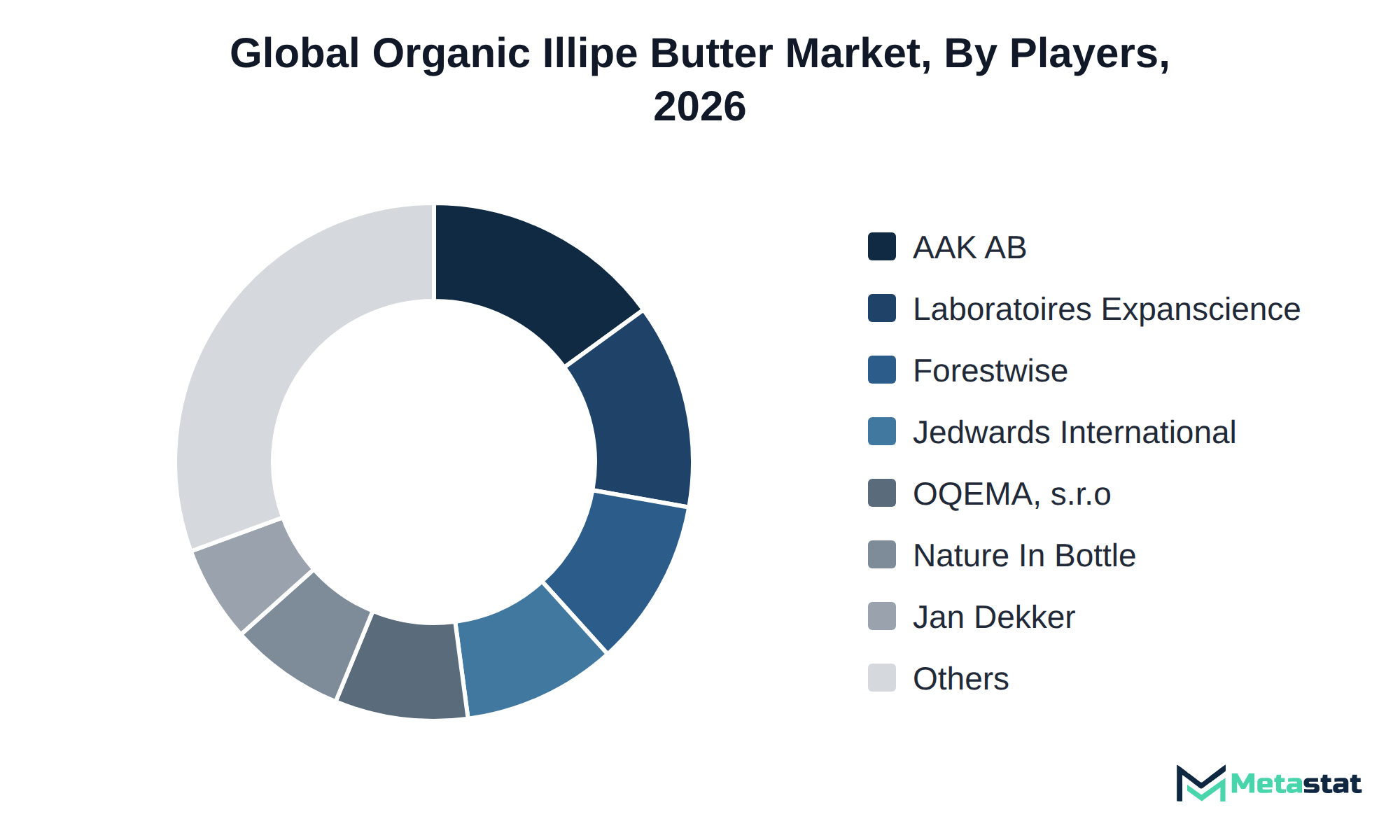
Competition within the Organic Illipe Butter market revolves around product offerings, pricing strategies, and the ability to meet buyer preferences. Companies position themselves based on product quality, certifications, and customization options. Buyers increasingly prioritize these factors when selecting suppliers.
Forestwise focuses on sustainable sourcing and high-quality products, appealing to environmentally conscious consumers. Laboratoires Expanscience emphasizes innovation in formulations, targeting the skin care application segment. AAK AB specializes in providing tailored solutions for various industries, enhancing its competitive edge within the market.
This growth relies on several developments within the Organic Illipe Butter market. First, the rising demand for refined illipe butter within the skin care segment is projected to drive significant sales. By 2033, this segment is anticipated to reach USD 5.1 million, reflecting a compound annual growth rate of 10%. Second, the expansion of direct sales channels, which is expected to rise to USD 8.2 million by the same year, supports broader market access and consumer engagement. The growing interest in natural ingredients within the hair care and color cosmetics applications strengthens the market outlook. Potential challenges exist that could hinder growth. Economic downturns or fluctuating raw material costs restrict investment in production capacity, limiting availability. These factors could particularly impact the unrefined illipe butter segment, projected to reach USD 2.7 million by 2033. Achieving the forecasted market size depends on driving demand through product innovation and effective distribution strategies while navigating economic uncertainties.
By Product Type: Refined Illipe Butter, Unrefined Illipe Butter
By Application: Skin Care, Hair Care, Lip Care, Color Cosmetics, Soaps and Cleansers, Others (Food Formulations and Deodorants)
By Sales Channel: Direct Sales, Indirect Sales
The report strategically identifies and profiles the key market players and analyses their core competencies in each sub-segment of the Organic Illipe Butter market.
Report Attributes | Details |
Study Period | 2021-2033 |
Base Year | 2025 |
Estimated Year | 2026 |
Forecast Period | 2026-2033 |
Historical Period | 2021-2025 |
Growth Rate | CAGR 10.5% from 2026 to 2033 |
Revenue Unit | USD million |
Segmentation | By Product Type, Application, Sales Channel, and Region |
By Region | North America (By Product Type, Application, Sales Channel, and Country)
|
Europe (By Product Type, Application, Sales Channel, and Country)
| |
Asia Pacific (By Product Type, Application, Sales Channel, and Country)
| |
South America (By Product Type, Application, Sales Channel, and Country)
| |
Middle East and Africa (By Product Type, Application, Sales Channel, and Country)
|
Find answers to common questions about this report
The Organic Illipe Butter market size was valued at USD 5.5 million in 2025.
The market is projected to grow at a CAGR of 10.5% during the forecast period from 2026 to 2033.
The North America Organic Illipe Butter market size is estimated to reach USD 3.6 million by 2033.
Refined Illipe Butter leads the Organic Illipe Butter market with a projected value of USD 9.4 million in 2033, surpassing Unrefined Illipe Butter.
Growing consumer preference for natural and organic ingredients drives increased spending in the market. Improvements in supply chain efficiency contribute significantly to growth, allowing suppliers to reduce costs while maintaining product quality.
Europe holds the dominant share of the Organic Illipe Butter market, accounting for 40.5 percent in 2025. This figure surpasses that of North America, which holds a share of 30.6 percent.
Price sensitivity among buyers limits demand for Organic Illipe Butter, particularly within the personal care sector. Higher raw material costs drive up prices for final products, resulting in smaller order sizes and slower uptake of organic formulations. Suppliers face margin pressure due to rising input costs, complicating efforts to maintain profitability while meeting customer demands.
Several factors favor adoption in the Organic Illipe Butter market. Growing consumer preference for natural and organic ingredients drives demand, while heightened awareness regarding product ingredients encourages investment in organic formulations. This trend attracts environmentally conscious buyers and supports innovation within the industry.
The Organic Illipe Butter market is estimated to reach a valuation of USD 12.1 million by 2033.
Key players operating in the Organic Illipe Butter market include Forestwise, Laboratoires Expanscience, Jedwards International, Inc., OQEMA, s.r.o., AAK AB, Nature In Bottle, Jan Dekker, ICSC A/S, and A&A Fratelli Parodi S.p.A.
The analysts below cover Food and Beverages research at Metastat Insights.
LEAD ANALYST
Utkarsh Khirodkar is a Lead Market Research Analyst at MetaStat Insight, specializing in market intelligence, technology sector assessments, and competitive strategy.

LEAD PRINCIPAL ANALYST, PHARMA AND HEALTHCARE
Food and Beverages · Healthcare · Healthcare IT · Medical Devices
Ajay Devgire is the Lead Healthcare Analyst at MetaStat Insight, leading strategic research and market intelligence initiatives across the global healthcare domain.

SENIOR RESEARCH ANALYST
Biotechnology · Food and Beverages · Medical Devices · Packaging
Snehal Pasalkar is a Research Analyst at MetaStat Insight, operating at the intersection of life sciences research, competitive strategy, and market intelligence.
Decarbonizing industrial thermal processes hinges on refrigerant regulations and compressor efficiency limits. Metastat Insights delivered a thorough market analysis that evaluated natural refrigerants like CO2 and hydrocarbons against synthetic low-GWP alternatives. The breakdown of utility incentives and grid capacity constraints across key European manufacturing hubs offered valuable perspective. The follow-up conversation with their sector analysts addressed our specific questions on mechanical vapor recompression systems efficiently.
Assessing 200mm wafer transition schedules and substrate supply bottlenecks requires precise technical intelligence. MetaStat Insight supplied an actionable breakdown comparing planar and trench MOSFET architectures across automotive and industrial drive markets. The regional capacity estimates for Asia-Pacific foundries helped clarify lead-time uncertainties during our strategic planning session. When we needed additional clarification on high-purity raw material sourcing, their analyst team responded with helpful context within twenty-four hours.
Tracking maintenance cycle demand for secondary flight display units and terrain collision avoidance systems across regional jet fleets involves complex aftermarket dynamics. MetaStat Insight provided practical analysis separating airline retrofit programs from OEM forward-fit production schedules in North America and Southeast Asia. The supplier matrix highlighted component obsolescence timelines without resorting to vague generalizations. The dataset served as a dependable reference during our annual program review meetings.
Explore related market intelligence reports worth reading alongside this one.