
LEAD ANALYST
Utkarsh Khirodkar is a Lead Market Research Analyst at MetaStat Insight, specializing in market intelligence, technology sector assessments, and competitive strategy.

Global Ostomy Care Products Market Size, Share, By Product Type (Ostomy Bags and Pouches, Skin Barriers and Baseplates, Ostomy Accessories, Ostomy Belts and Hernia Support Products, Skin Protection and Sealing Products, Ostomy Irrigation Products, Others), By Ostomy Type (Colostomy, Ileostomy, Urostomy, Others), By Care Setting (Home Care, Hospitals, Outpatient Clinics, Long-Term Care Facilities), By Distribution Channel (Institutional Procurement, Specialist Home Delivery Suppliers, Physical Pharmacies and Medical Supply Stores, Online Retail), Industry Analysis, Growth, Trends, and Forecast, 2026-2033
Report ID
MSI-5507
Published
October, 2026
Pages
269 Pages
Format
Historical
Base year
Forecast
Forecast period
Report Details
Market Valuation: Valued at $4,189.4 Million in 2025, projected to reach $6,239 Million by 2033 at a 5.1% CAGR.
Dominant Segment: Ostomy bags and pouches lead the market, driven by their essential role in daily management for ostomy patients. This segment's significance is underscored by its substantial revenue generation and consistent demand.
Geographic Lead: North America is projected to dominate the market, holding 31.6% in 2025, with the US anticipated to lead in 2026 due to its robust healthcare infrastructure and an aging population.
What's Inside: The report provides comprehensive insights into market dynamics, including product types, care settings, distribution channels, and competitive analysis, covering the forecast period from 2026 to 2033.
Emerging Trends: The online retail segment is expected to grow at a CAGR of 9.8%, reflecting a shift towards digital purchasing channels that enhance accessibility and convenience for consumers.
Market Drivers: Increasing awareness of ostomy care and technological advancements in product design are key factors propelling market growth, enhancing patient comfort and health outcomes.
Choose Your License
Global Ostomy Care Products Market
The global Ostomy Care Products market was valued at USD 4,189.4 million in 2025 and is projected to reach USD 6,239 million by 2033, growing at a CAGR of 5.1% over the forecast period.
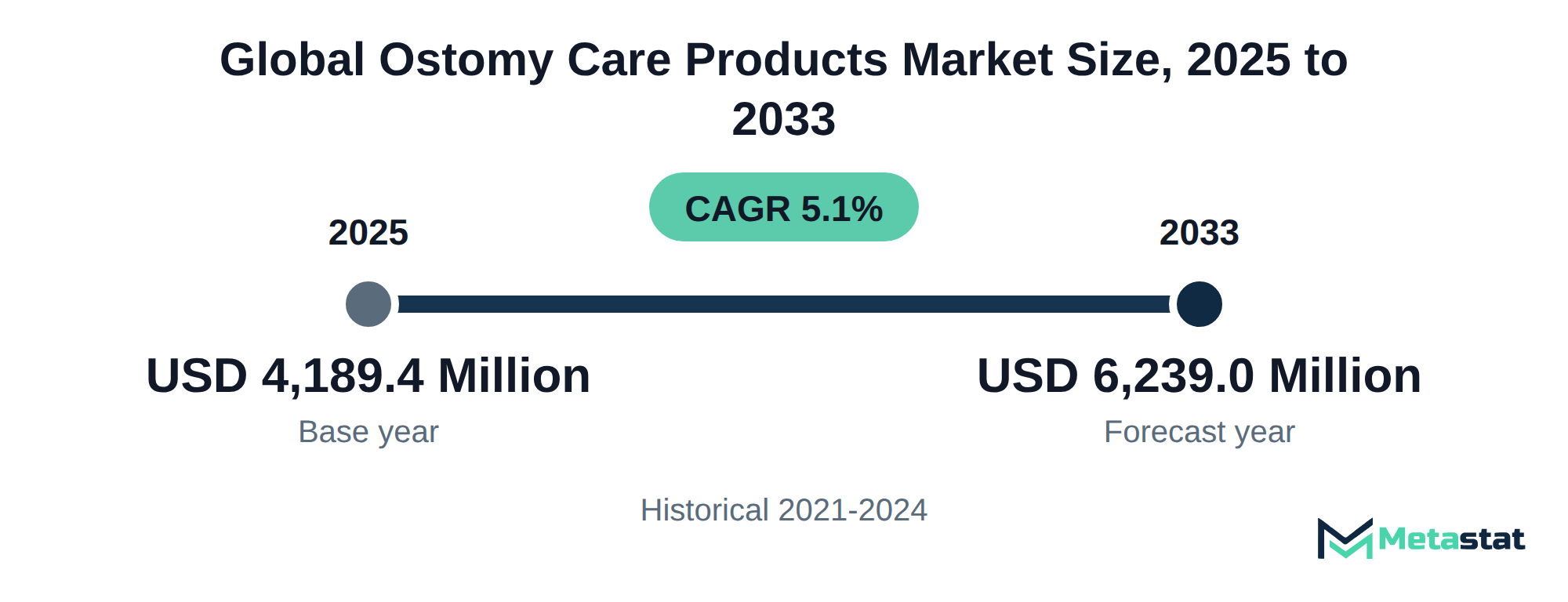
The Ostomy Care Products market encompasses a range of medical supplies designed to support individuals with ostomies. This includes ostomy bags, skin barriers, and accessories that enhance the quality of life for patients. Buyers invest in these products due to the critical need for effective and reliable solutions for managing ostomy care, which significantly impact health outcomes and comfort levels.
Growth in the market is driven by increasing awareness of ostomy care and advancements in product technology. Among the various product types, ostomy bags and pouches represent the largest segment, highlighting their importance in daily management for ostomy patients. North America holds 31.6% of the market in 2025, with the US leading in 2026, reflecting strong healthcare infrastructure and a growing aging population requiring ostomy products.
The rising prevalence of colorectal cancer and inflammatory bowel diseases contributes to market expansion, driven by these conditions often necessitating ostomy procedures. These conditions are also addressed through gastroenterology products used in diagnosis and treatment. The Ostomy Care Products market is projected to grow at a compound annual growth rate of 5.1% over the forecast period, fueled by innovations and enhanced patient education regarding ostomy management.
The Ostomy Care Products market includes various medical supplies essential for individuals with ostomies, focusing on comfort and effective management of their conditions. Buyers invest in these products to enhance their quality of life and facilitate daily activities. Key consumer groups include hospitals, outpatient clinics, and home care settings, driven by the need for reliable and effective solutions that promote patient well-being.
Growth in the market is influenced by several factors, with increasing awareness of ostomy care among patients and healthcare providers being a significant driver. The segment of ostomy bags and pouches generates the highest revenue, demonstrating strong demand due to their critical role in patient care. North America holds 31.6% of the market in 2025, with the US leading in 2026, contributing to the overall expansion of the market.
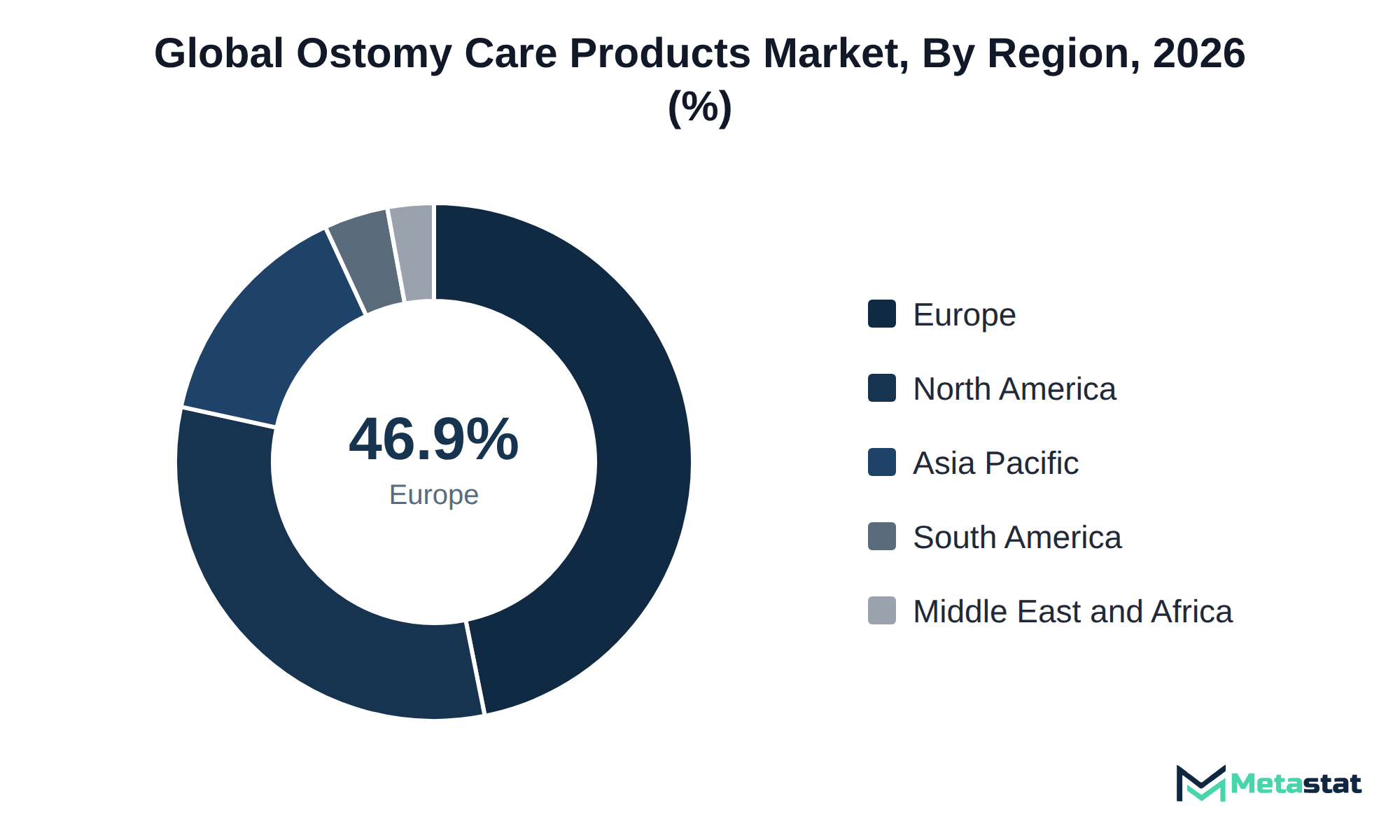
Technological advancements in product design and materials enhance the functionality and comfort of ostomy products, further supporting market growth. Europe accounts for the largest share of the market at 46.9%, reflecting strong demand for innovative solutions. The emphasis on improving patient outcomes positions the market for continued expansion and investment opportunities.
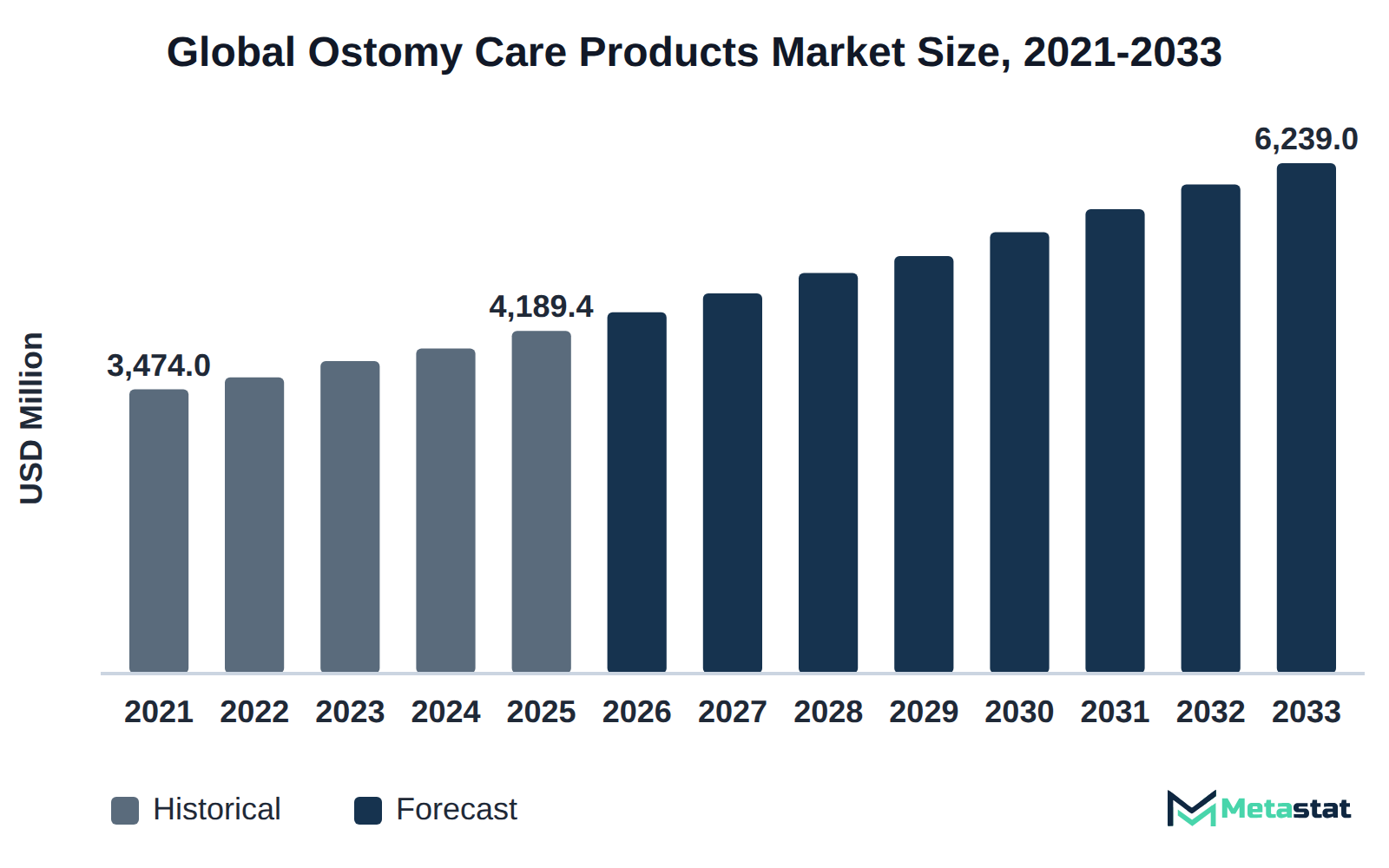
Convex ostomy pouches and moldable barriers represent critical advancements in the Ostomy Care Products market, enhancing patient comfort and reducing complications associated with ostomy care. These products provide a secure fit that accommodates changes in body contours, significantly improving adherence and minimizing leakage. The adoption of convex pouches has shown a notable increase, with the segment projected to reach USD 3,235.5 million by 2033, reflecting a compound annual growth rate (CAGR) of 4.4%.
This growth results from heightened awareness among healthcare providers and patients regarding the benefits of these specialized products. Convex pouches, designed to manage stomas that are flush or retracted, deliver superior performance compared to traditional flat pouches. Moldable barriers adapt to various stoma shapes and sizes, promoting a customized fit that enhances user satisfaction.
The commercial implications of this shift are significant. Increased demand for convex and moldable products drives investment in manufacturing and innovation within the sector. While the market continues to evolve, suppliers focusing on these advancements capture a larger share, thereby improving their competitive position. The integration of convex ostomy pouches and moldable barriers into product offerings enhances overall care and expands the potential for revenue growth in the market.
Reimbursement models for ostomy care products significantly influence buyer purchasing decisions. The pricing structure for these products often relies on contracts with healthcare providers and health and medical insurance payers. Standard reimbursement rates for ostomy bags and pouches are essential for hospitals and home care providers. In 2026, the market for ostomy bags and pouches is projected to reach USD 2,389.8 million, emphasizing the importance of securing favorable reimbursement terms to enhance profitability.
Buyers typically engage in negotiations with suppliers to establish contracts that reflect both volume and pricing. Institutional procurement channels, accounting for USD 1,493.1 million in 2026, enable bulk purchasing, which reduces costs per unit. The involvement of specialist home delivery suppliers ensures that patients receive the necessary products on time, impacting adherence to treatment plans. These suppliers implement subscription models or recurrent supply agreements, ensuring a steady revenue stream while providing convenience for patients.
Reimbursement and pricing strategies within the ostomy care products market significantly affect buyer behavior and market dynamics. Understanding these factors is essential for suppliers aiming to optimize their sales processes and enhance customer satisfaction while addressing the unique needs of ostomy patients.
Specialist home delivery services and online purchasing have gained traction among buyers of ostomy supplies due to the convenience and accessibility they provide. The shift toward online retail aligns with changing preferences of consumers seeking a more streamlined procurement process. The online retail segment is expected to experience a compound annual growth rate of 9.8%, reflecting the growing inclination toward digital platforms for purchasing medical supplies.
In 2033, the market expects online retail to contribute significantly to the overall distribution of ostomy care products, with a projected value of USD 2,484.4 million. This figure illustrates the increasing reliance on digital channels, particularly for individuals requiring ostomy care. Buyers benefit from the discreet nature of online shopping, eliminating the potential stigma associated with purchasing these products in physical stores.
While consumers prioritize privacy and convenience, specialist home delivery services have emerged as a vital channel for the ostomy care products market. Enhanced logistics and tailored services offered by these suppliers support timely delivery, ensuring that individuals receive their supplies when needed. This trend highlights the importance of accommodating the distinct needs of buyers, ultimately driving growth in the market.
Choosing between one-piece and two-piece ostomy systems involves various factors that impact user preference and comfort. The one-piece system combines the pouch and skin barrier into a single unit, while the two-piece system separates these components. Users often favor one-piece systems for their simplicity and ease of use, particularly during travel or when time constraints arise. Conversely, two-piece systems provide flexibility and convenience for users who prefer to change the pouch without replacing the entire barrier, which is advantageous for extended wear.
Market data indicates that the home care segment accounts for significant adoption, with a projected market value of USD 3,079.6 million by 2033. This growth highlights the importance of user-friendly products catering to those managing ostomy care at home. The choice between one-piece and two-piece systems directly influences the overall user experience and satisfaction, which ultimately affects purchasing decisions. Users seek products that enhance their quality of life, making understanding the specific benefits of each type of system essential for suppliers in the market.
Demographic shifts drive heightened demand for ostomy care products, particularly among older adults undergoing surgical interventions. Factors including an aging population and rising awareness of ostomy procedures contribute to increased patient volumes, leading to expanded purchasing activity within the healthcare sector. Surgical care facilities and home healthcare providers increasingly invest in ostomy solutions to enhance patient quality of life and improve overall health outcomes. This growth reflects the ongoing transition toward more effective management options for individuals with ostomies, resulting in increased demand for innovative products that meet patient needs.
Mature healthcare systems focus on improving patient outcomes, encouraging the adoption of advanced ostomy care products. Enhanced product offerings support this shift, enabling healthcare providers to deliver better care while managing operational costs.
Advancements in technology drive significant investment in product development within the market. Suppliers focus on enhancing product performance and user experience through innovative designs and materials. This trend reflects a commitment to addressing the unique needs of ostomy patients, particularly in the areas of comfort, skin protection, and functionality. Companies actively engage in research and development, leading to the introduction of new products that offer improved features, including enhanced odor control and better adhesive properties. These innovations support growth in the Ostomy Care Products market by attracting new customers and retaining existing ones. Competition intensifies, prompting manufacturers to emphasize differentiating their offerings, which leads to a broader selection of products and an overall expansion of market reach. Enhanced product offerings address patient needs and align with healthcare providers' goals of improving patient outcomes, resulting in greater adoption across various care settings.
Price sensitivity among buyers substantially affects the market. High costs associated with ostomy care products deter potential users, particularly among low-income individuals and those without adequate insurance coverage. The financial burden of ongoing purchases for necessary supplies results in slower uptake and smaller order volumes. Long-term users of ostomy products prioritize affordability, influencing their decision-making processes regarding product replacements and upgrades. This phenomenon is particularly evident in regions with limited healthcare resources, where buyers exhibit caution in their purchasing patterns. Consumers often opt for lower-cost alternatives or delay replacements, resulting in limited growth opportunities for premium product lines. Developing cost-effective solutions for price-conscious buyers widens market access and improves adoption rates across diverse demographics.
The rising costs of raw materials significantly affect profitability for suppliers in the Ostomy Care Products market. Fluctuations in prices for essential components, including ostomy bags and skin barriers, intensify operational challenges. Suppliers experience increased difficulty in maintaining competitive pricing while ensuring quality, leading to shrinking profit margins. In response, many suppliers explore alternative sourcing strategies and enhanced manufacturing efficiencies to mitigate these pressures. Investment in innovative production techniques contributes to reducing costs and improving product quality. Collaboration with raw material providers becomes essential to secure stable pricing and supply chains. These proactive measures enable suppliers to adapt to market dynamics and sustain their competitive edge. Continued vigilance regarding input costs remains a priority to ensure long-term viability and growth in the Ostomy Care Products market.
Ostomy belts and hernia support products represent a significant growth opportunity within the market, particularly due to their projected compound annual growth rate (CAGR) of 6.5%. This segment addresses the increasing demand for supportive products that enhance user comfort and aid in managing complications related to ostomies. The rising prevalence of hernias among ostomy patients drives purchasing decisions, reflecting an unmet need for effective solutions. Anticipated growth aligns with broader trends in personalized healthcare, where patients increasingly seek tailored products that address specific conditions. Investing in the development and marketing of these products could yield substantial financial returns for manufacturers. Targeting regions with higher incidences of hernias, including North America and Europe, could maximize market penetration and revenue generation. The strategic focus on this segment aligns with evolving consumer preferences for integrated solutions that enhance quality of life for ostomy patients.
The Global Ostomy Care Products market is segmented based on Product Type, Ostomy Type, Care Setting, and Distribution Channel.
Ostomy bags and pouches serve individuals with ostomies, providing essential support for waste management. Demand for ostomy bags and pouches is expected to rise due to increasing surgical interventions and the growing prevalence of conditions leading to ostomy procedures. This segment differentiates itself from others, including skin barriers and accessories, with a relatively higher market share and stable pricing. The projected CAGR of 4.4% indicates solid growth but remains slower than the Skin Barriers and Baseplates segment, which experiences a CAGR of 5.3%. A focus on patient comfort and product innovation influences the competitive landscape in the market.
Skin Barriers and Baseplates segment is estimated to reach USD 1,305.8 million by 2033, at a CAGR of 5.3% during the forecast period. These products create a protective barrier between the skin and the ostomy pouch, minimizing irritation and ensuring comfort for users. Patients undergoing ostomy procedures, particularly those managing colostomies or ileostomies, rely on these products to maintain skin health and enhance overall quality of life. The segment experiences growth driven by increasing awareness of skin-related complications associated with ostomies, which emphasizes the importance of effective management solutions. Compared to other products in the market, Skin Barriers and Baseplates exhibit a moderate growth rate, reflecting consistent demand for skin protection and care. This segment's stability stems from an established need among patients, contrasting with the more dynamic trends observed in accessory segments, which often see higher fluctuations in demand.
Ostomy Accessories segment is expected to reach USD 549.7 million by 2033. This segment includes various items that facilitate improved functionality and comfort for individuals managing ostomies. Common users include patients recovering from surgical procedures, healthcare providers, and caregivers. One primary force driving growth in this segment stems from increasing awareness regarding the availability and benefits of ostomy accessories, contributing to enhanced patient quality of life. Compared to other product segments, the Accessories segment exhibits a slower growth rate, primarily due to the niche market it serves and the specific needs of users seeking tailored solutions. In contrast, other segments including Ostomy Bags and Pouches experience more rapid growth, with a projected CAGR of 4.4% through 2033, reflecting broader demand for essential ostomy care products.
Ostomy Belts and Hernia Support Products is projected to grow at a CAGR of 6.5% during the forecast period. These products provide essential support for individuals with ostomies, enhancing comfort and security. Primarily used by patients recovering from ostomy surgeries, they help manage post-operative complications, including hernias. The growing prevalence of surgeries requiring ostomies drives demand for these products, with increasing awareness of their benefits encouraging adoption among healthcare providers and patients alike. In contrast to other segments, this category experiences faster growth due to a rising focus on patient comfort and the need for durable solutions. The market sees significant investments aimed at advancing product functionality and design, differentiating it from segments including Ostomy Bags and Pouches, which, while important, do not enjoy the same level of rapid expansion.
Skin Protection and Sealing Products include essential components that enhance the comfort and effectiveness of ostomy care. These products primarily serve individuals with ostomies, ensuring skin integrity around the stoma and preventing leaks. A significant driver of this segment stems from rising awareness regarding skin health and the importance of maintaining a secure and leak-proof seal, which is crucial for user confidence and comfort. In comparison with other segments, the demand for Skin Protection and Sealing Products reflects slower growth due to established preferences for traditional ostomy bags and pouches, which dominate consumer purchasing choices. Manufacturers in this segment focus on innovation and quality to differentiate their offerings, catering to a niche market that prioritizes skin protection in ostomy management.
Ostomy irrigation products facilitate a unique method of managing ostomies, particularly for individuals seeking to maintain optimal health and hygiene. These products are primarily used by patients with specific needs, including those with colostomies who require irrigation to control bowel movements. Demand for ostomy irrigation products is influenced by the growing emphasis on patient autonomy and self-management, leading to increased adoption among users seeking effective alternatives to traditional methods. Compared to other segments, this category experiences slower growth due to its specialized nature and relatively higher costs associated with equipment and training. Patients often face barriers to access, including limited awareness and availability, which impacts the segment's penetration in the broader ostomy care landscape. This sub-segment stands out by addressing a specific user requirement while evolving with advancements in product technology.
Closure clamps, pouch vents, and stoma caps represent essential components within the ostomy care ecosystem. These products enhance the functionality and security of ostomy systems, primarily benefiting individuals who have undergone ostomy surgeries. Users value these accessories for their role in improving comfort and confidence in everyday activities. Increasing awareness of ostomy care, coupled with an aging population requiring surgical interventions, drives demand for these accessories within the Ostomy Care Products market. Unlike the more prominent categories including ostomy bags and pouches, this sub-segment focuses on specialized items that offer unique benefits, often purchased in conjunction with primary products. The growing emphasis on personalized care and product innovation supports positive growth prospects for this sub-segment, distinguishing it from others that experience varying rates of adoption and market dynamics.
Colostomy segment is valued at USD 1,957.5 million in 2026 and is projected to reach USD 2,677.1 million by 2033, at a CAGR of 4.6% during the forecast period. This segment is primarily used by individuals who undergo a colostomy procedure, which involves the surgical creation of an opening in the abdominal wall for the elimination of waste. Demand for colostomy products is driven by rising surgical procedures and an increasing prevalence of colorectal disorders. Compared to other ostomy types, the colostomy segment demonstrates moderate growth relative to ileostomy, which experiences a higher CAGR of 5.6%. The distinct needs related to colostomy care, including tailored products for comfort and ease of use, differentiate this segment from urostomy and other segments. These needs support sustained demand and emphasize the importance of product innovation within the market.
Ileostomy segment is estimated to reach USD 2,350.8 million by 2033, at a CAGR of 5.6% during the forecast period. This segment primarily serves individuals who have undergone surgical procedures resulting in the creation of an ileostomy, necessitating specialized products for effective management of waste elimination. The demand within this segment is driven by increasing awareness and education regarding ostomy care, promoting better health outcomes for patients. Compared to the colostomy segment, which grows at a CAGR of 4.6%, the ileostomy segment shows a stronger growth trajectory, reflecting a higher adoption rate of advanced products tailored for this user group. This rapid growth is influenced by the specific needs of ileostomy patients for comfort and support, distinguishing it from other ostomy types in the market.
Urostomy segment is expected to reach USD 1,124.9 million by 2033. This segment caters to individuals who have undergone urostomy procedures, which involve the diversion of urine from the bladder to an external pouch. Related urinary management needs are also addressed by incontinence devices. Related urinary management needs are also addressed by incontinence devices. Primary drivers for growth in this segment include rising awareness of urostomy care among patients and healthcare providers, leading to increased adoption of innovative products. Urostomy products typically offer higher pricing compared to other ostomy types, driven by the specialized needs of users for comfort and functionality. This segment is projected to have a CAGR of 5.6%, positioning it as a notable growth opportunity within the market. The combination of rising healthcare expenditure and a growing aging population further enhances demand for urostomy solutions, distinguishing it from the colostomy and ileostomy segments, which experience different growth trajectories.
Projected growth for the Others (Jejunostomy, Cecostomy) segment occurs at a CAGR of 6% during the forecast period. This segment includes products tailored for individuals who undergo specific types of surgical procedures, providing essential support for managing their ostomies. Demand for this segment arises from patients requiring specialized care, driven by the increasing prevalence of conditions necessitating these surgeries. Compared to other ostomy types, this segment experiences relatively steady growth, underpinned by the need for tailored solutions for patients with unique ostomy requirements. The unique needs of this patient group drive innovation and the development of specialized products, differentiating it from segments like colostomy and ileostomy, which show higher overall market values. The market focuses on improving quality of life for patients through advancements in product design and functionality.
The Home Care segment is valued at USD 2,070.7 million in 2026 and is projected to reach USD 3,079.6 million by 2033, at a CAGR of 5.8% during the forecast period. This segment primarily serves individuals recovering from ostomy surgeries who require ongoing support for their daily management and post-acute care. The increasing prevalence of chronic diseases among the aging population significantly enhances demand for these products. Compared to other care settings, the Home Care segment experiences higher growth due to greater emphasis on patient independence and convenience. This consumer preference drives purchasing patterns, positioning Home Care as a vital component of the Ostomy Care Products market. In contrast, hospital settings exhibit slower growth due to reliance on institutional procurement and clinical services.
Hospitals segment is estimated to reach USD 1,980.2 million by 2033, at a CAGR of 4.2% during the forecast period. This segment serves patients undergoing ostomy procedures and requires a range of specialized products for effective care. Key factors driving growth within this segment include an increasing number of surgical procedures and heightened awareness of ostomy care among healthcare professionals. Compared to Home Care, which is anticipated to grow at a higher CAGR of 5.8%, the Hospitals segment experiences relatively lower growth, influenced by longer recovery periods associated with hospital stays. The need for effective management and support for patients during their hospital stay emphasizes the importance of this segment in the overall Ostomy Care Products market.
Outpatient Clinics segment is expected to reach USD 759.9 million by 2033. This segment focuses on providing ostomy care products for patients receiving treatment and ongoing care in outpatient settings, facilitating patient recovery and management of ostomy needs. The increasing demand for effective wound care products and post-operative management drives growth in this segment, with providers focusing on innovative solutions to enhance patient comfort and care efficiency. Compared to other care settings, outpatient clinics experience distinct dynamics, characterized by a projected compound annual growth rate (CAGR) of 4.2%. The segment's growth reflects a shift towards outpatient care models, highlighting the emphasis on convenient and accessible services for patients. The trend toward early discharge from hospitals fuels the demand for outpatient ostomy care products, contributing to the segment's prominence in the overall market.
Long-Term Care Facilities segment is projected to grow at a CAGR of 4.7% during the forecast period. This segment primarily serves residents requiring ongoing medical care and support due to chronic illnesses or disabilities. The increasing aging population drives demand for ostomy care products in these aged care facilities, where maintaining patient comfort and hygiene is essential. Compared to other segments, the Long-Term Care Facilities segment experiences slower growth, reflecting the longer-term nature of care and the specific needs of this demographic. Facilities prioritize purchasing decisions based on cost-effectiveness and the quality of products that enhance patient outcomes. Regulatory requirements for patient care standards influence product selection, making compliance critical for suppliers in this segment and impacting pricing strategies and market dynamics. The market continues to expand, focusing on innovations that improve care delivery and patient quality of life.
Institutional Procurement segment is valued at USD 1,493.1 million in 2026 and is projected to reach USD 1,964 million by 2033, at a CAGR of 4% during the forecast period. This segment primarily serves healthcare institutions, including hospitals and long-term care facilities, which require continuous and reliable supplies of ostomy care products for patient management. The steady demand from healthcare providers drives growth in this segment, particularly due to an increasing prevalence of ostomy surgeries. Institutional Procurement exhibits slower growth relative to other distribution channels in the market, with online retail expected to grow at a CAGR of 9.8%. This slower growth results from established supplier relationships and bulk purchasing requirements that limit rapid shifts in procurement practices. The segment helps ensure that healthcare facilities are well-equipped to provide necessary care services.
Specialist Home Delivery Suppliers segment is estimated to reach USD 2,484.4 million by 2033, at a CAGR of 5.4% during the forecast period. This segment provides essential products to individuals managing ostomies, facilitating access to various ostomy care supplies directly to their homes. Key drivers of growth in this segment include the increasing preference for home-based healthcare solutions and the rising awareness of ostomy care options among patients. Compared to other distribution channels, Specialist Home Delivery Suppliers typically cater to a more specific consumer base, focusing on personalized service and convenience. This segment demonstrates a faster growth trajectory relative to channels like Physical Pharmacies and Medical Supply Stores, which experience slower growth due to traditional purchasing behaviors. Overall, the demand for specialized home delivery services reflects broader trends in the healthcare sector toward more consumer-centric care models, emphasizing ease of access and tailored support for patients in managing their conditions.
The Physical Pharmacies and Medical Supply Stores segment is expected to reach USD 1,016.3 million by 2033. This segment primarily serves individuals requiring ostomy care products, including those recovering from surgeries. Growth is driven by increasing awareness of ostomy care among healthcare professionals and patients. Physical pharmacies facilitate immediate access to essential products, differentiating themselves from online retail channels, which often rely on delivery times. This segment's growth rate aligns closely with the overall market, reflecting steady demand for reliable access to ostomy supplies. The forecasted expansion in this channel highlights the ongoing commitment to improving quality of life for ostomy patients while ensuring they have the necessary products readily available. The market seeks to meet this demand by enhancing the availability of products in physical locations and addressing the needs of users who prefer in-person consultations for product selection and support.
Online Retail segment is projected to grow at a CAGR of 9.8% during the forecast period. This segment serves individuals who require ostomy care products and prefer the convenience of online shopping from the comfort of their homes. Growing internet penetration and increasing awareness of ostomy care have fueled demand for online sales channels, enabling patients to access many products easily. Unlike other distribution channels, including Institutional Procurement, which will experience a CAGR of 4%, Online Retail benefits from a larger customer base seeking accessibility and convenience. While several suppliers establish online platforms, competitive pricing and product offerings enhance its appeal. The growth of the Online Retail segment reflects shifts in consumer purchasing behavior, emphasizing the importance of digital solutions in the Ostomy Care Products market.
Based on geography, the Global Ostomy Care Products market is divided into North America, Europe, Asia-Pacific, South America, Middle East, and Africa.
Demand for ostomy care products in North America experiences significant support from an aging population and increasing prevalence of chronic diseases. Key buyer groups, including hospitals and home care settings, drive purchasing decisions, reflecting a focus on improving patient outcomes and enhancing quality of life. Regulatory frameworks in the region emphasize patient safety and product efficacy, contributing to the market's expansion. North America holds a 31.6% share of the global market in 2025. Projected growth will lead the market to reach USD 1,879.2 million by the end of 2033. The robust healthcare infrastructure across the United States, Canada, and Mexico further strengthens the region's position, facilitating access to innovative ostomy care solutions that meet diverse patient needs.
Europe holds 46.9% of the global ostomy care products market in 2025. Key drivers of demand include the increasing prevalence of colorectal diseases, which necessitate effective management solutions. Countries including Germany, France, and the UK lead in product adoption due to well-established healthcare systems and strong patient support initiatives. Innovative technologies and development in ostomy care products positively influence market growth. Regulatory support for high-quality medical devices ensures the availability of advanced products, enhancing patient outcomes. The region's focus on home care solutions reflects changing patient preferences, creating opportunities for growth in this segment. By 2033, the European market is projected for substantial expansion, driven by rising awareness and improved healthcare access.
Demand for ostomy care products in Asia-Pacific stems from a rising prevalence of chronic diseases requiring ostomy procedures, particularly in countries like China and India. This region's healthcare infrastructure is evolving, with increasing investments in healthcare facilities and services aimed at improving patient outcomes. Innovative healthcare programs and government initiatives focusing on chronic disease management contribute significantly to market growth. The expanding aging population fuels demand for ostomy care solutions, ensuring that patients receive necessary support for their conditions. South Korea's advanced medical technology and Japan's robust healthcare system further enhance the market's prospects. The region is expected to capture 14.7% of the global market share by 2025, reflecting its critical role in the Ostomy Care Products market.
Demand for the Ostomy Care Products market in South America is driven by increasing healthcare access and growing awareness of ostomy care among patients and healthcare providers. Countries like Brazil and Argentina exhibit a significant need for specialized products due to the rising incidence of gastrointestinal diseases and an aging population. The market faces unique challenges, including limited healthcare resources and uneven distribution of medical supplies across urban and rural areas. The regional share of the global market stands at 4.00% in 2025, reflecting growth potential. Strategic investments in healthcare infrastructure, along with education initiatives for both patients and healthcare practitioners, enhance the market's development. Continued efforts are required to ensure improved accessibility and affordability of ostomy products throughout South America.
In the Middle East and Africa, the ostomy care products market presents unique characteristics driven by rising healthcare expenditures and increasing awareness of ostomy care among patients. Countries including Saudi Arabia and the UAE experience growing demand due to government initiatives aimed at enhancing healthcare services and facilities, contributing to improved access for patients requiring ostomy products. South Africa represents another key player, with a steady increase in chronic disease prevalence necessitating ostomy procedures. This region highlights the potential for growth in product adoption and distribution channels, particularly through institutional procurement and specialist home delivery suppliers. Overall, the market is expected to expand, driven by the region's commitment to improving healthcare infrastructure and patient support services.
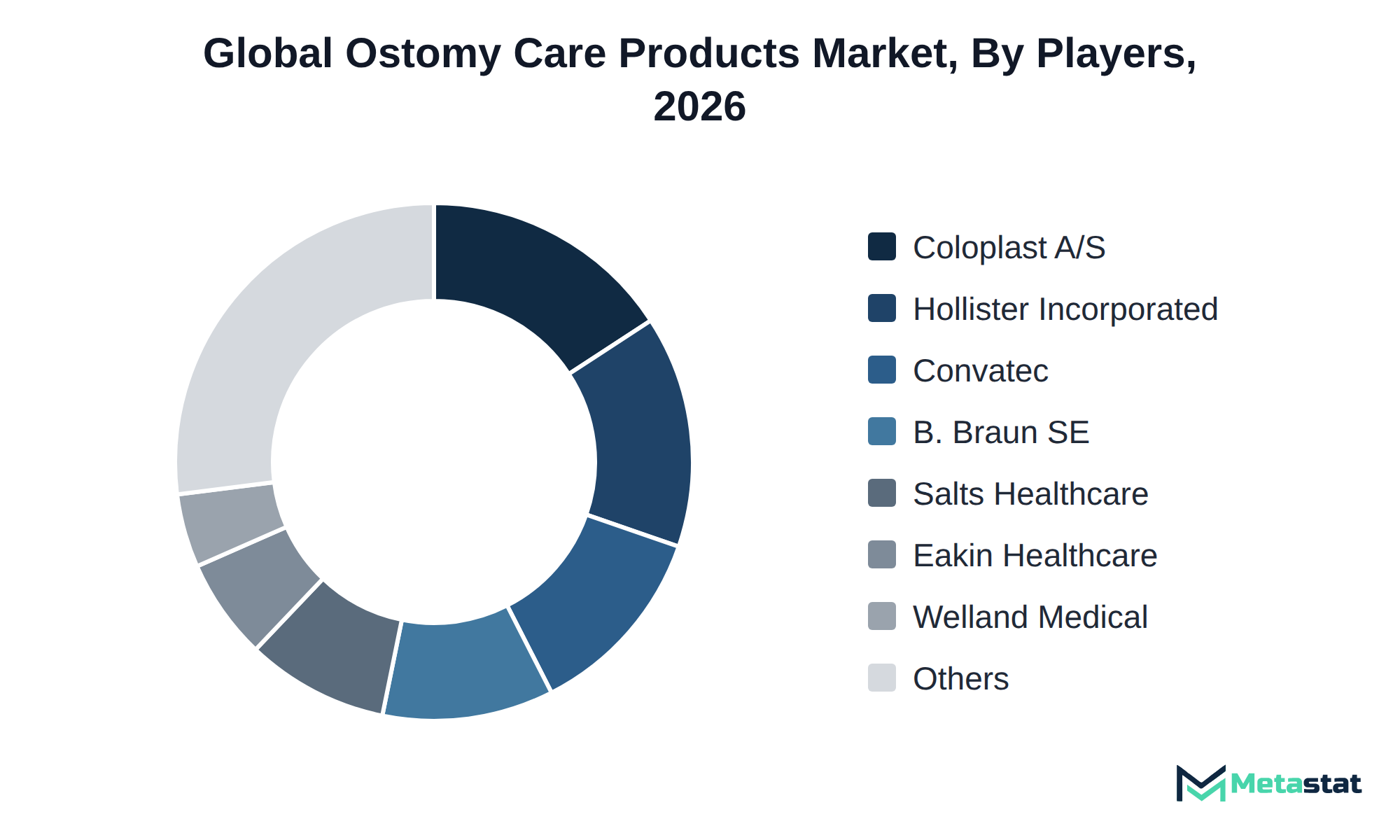
Competition in the Ostomy Care Products market involves various companies adopting different strategies to meet consumer demands. Key factors influencing buyer choices include price, product certification, customization options, and the overall service ecosystem provided by suppliers.
Coloplast A/S and Hollister Incorporated focus on supplying varied ostomy bags and pouches to address diverse consumer requirements. Convatec Group PLC emphasizes innovative skin barriers and baseplates, enhancing user comfort and protection. Other players, including B. Braun SE and Salts Healthcare Ltd., prioritize comprehensive service offerings and product reliability, appealing to healthcare providers and end-users.
Companies like Eakin Healthcare Group and Welland Medical Ltd. use customization to meet specific patient needs. Unora GmbH and ALCARE Co., Ltd. enhance their market presence through strategic pricing and effective distribution channels. This competitive environment drives ongoing innovation and improvement across the Ostomy Care Products market.
For the market to achieve USD 6,239 million, several developments are necessary. First, growth in the home care segment will drive demand, supported by an increasing preference for at-home management of ostomy care. Second, advancements in product types, particularly in ostomy bags and pouches, will enhance user comfort and convenience. Ostomy bags and pouches are expected to grow from USD 2,389.8 million in 2026 to USD 3,235.5 million by 2033, achieving a CAGR of 4.4%. The main risk that could hinder this growth involves disruptions to the healthcare supply chain, which could affect production and availability of key products. This risk impacts all segments, particularly in regions like North America and Europe, where demand remains high. Overall, a combination of consumer preference shifts and product innovation will support the expansion of the Ostomy Care Products market, while external risks are managed effectively to maintain growth momentum.
By Product Type: Ostomy Bags and Pouches, Skin Barriers and Baseplates, Ostomy Accessories, Ostomy Belts and Hernia Support Products, Skin Protection and Sealing Products, Ostomy Irrigation Products, Others (Stoma Caps, Pouch Vents, Closure Clamps)
By Ostomy Type: Colostomy, Ileostomy, Urostomy, Others (Jejunostomy, Cecostomy)
By Care Setting: Home Care, Hospitals, Outpatient Clinics, Long-Term Care Facilities
By Distribution Channel: Institutional Procurement, Specialist Home Delivery Suppliers, Physical Pharmacies and Medical Supply Stores, Online Retail
The report strategically identifies and profiles the key market players and analyses their core competencies in each sub-segment of the Ostomy Care Products market.
|
Report Attributes |
Details |
|
Study Period |
2021-2033 |
|
Base Year |
2025 |
|
Estimated Year |
2026 |
|
Forecast Period |
2026-2033 |
|
Historical Period |
2021-2025 |
|
Growth Rate |
CAGR 5.1% from 2026 to 2033 |
|
Revenue Unit |
USD million |
|
Segmentation |
By Product Type, Ostomy Type, Care Setting, Distribution Channel, and Region |
|
By Region |
North America (By Product Type, Ostomy Type, Care Setting, Distribution Channel, and Country)
|
|
Europe (By Product Type, Ostomy Type, Care Setting, Distribution Channel, and Country)
|
|
|
Asia Pacific (By Product Type, Ostomy Type, Care Setting, Distribution Channel, and Country)
|
|
|
South America (By Product Type, Ostomy Type, Care Setting, Distribution Channel, and Country)
|
|
|
Middle East and Africa (By Product Type, Ostomy Type, Care Setting, Distribution Channel, and Country)
|
Find answers to common questions about this report
The Ostomy Care Products market size was valued at USD 4,189.4 million in 2025.
The market is projected to grow at a CAGR of 5.1% during the forecast period from 2026 to 2033.
The North America Ostomy Care Products market size is estimated to reach USD 1,879.2 million by 2033.
Ostomy Bags and Pouches lead the market with a value of USD 2,389.8 million in 2026. This segment surpasses others in terms of revenue generation.
Demographic shifts, particularly an aging population and rising awareness of ostomy procedures, drive heightened demand for ostomy care products. Advancements in technology lead to significant investment in product development, enhancing performance and user experience.
Europe holds the dominant share of the Ostomy Care Products market, accounting for 46.9 percent in 2025. This figure reflects the largest regional contribution compared to other regions.
Price sensitivity among buyers substantially affects market growth, as high costs associated with ostomy care products deter potential users, particularly low-income individuals and those without adequate insurance coverage. The rising costs of raw materials significantly impact profitability for suppliers, leading to operational challenges and shrinking profit margins.
Several factors favor adoption in the ostomy care products industry. Demographic shifts, particularly an aging population requiring surgical interventions, drive demand. Increased awareness of ostomy procedures leads to higher patient volumes, prompting healthcare facilities to invest in effective ostomy solutions. Enhanced product offerings and technological advancements further support this trend, improving patient outcomes and encouraging adoption.
The Ostomy Care Products market is estimated to reach a valuation of USD 6,239 million by 2033.
Key players operating in the Ostomy Care Products market include Coloplast A/S, Hollister Incorporated, Convatec Group PLC, B. Braun SE, Salts Healthcare Ltd., Eakin Healthcare Group, Welland Medical Ltd., and Medline.
The analysts below cover Medical Devices research at Metastat Insights.
LEAD ANALYST
Utkarsh Khirodkar is a Lead Market Research Analyst at MetaStat Insight, specializing in market intelligence, technology sector assessments, and competitive strategy.

LEAD PRINCIPAL ANALYST, PHARMA AND HEALTHCARE
Food and Beverages · Healthcare · Healthcare IT · Medical Devices
Ajay Devgire is the Lead Healthcare Analyst at MetaStat Insight, leading strategic research and market intelligence initiatives across the global healthcare domain.

SENIOR RESEARCH ANALYST
Biotechnology · Food and Beverages · Medical Devices · Packaging
Snehal Pasalkar is a Research Analyst at MetaStat Insight, operating at the intersection of life sciences research, competitive strategy, and market intelligence.
Most industry reports on warehouse automation bundle autonomous mobile robots and fixed conveyor installations into the same top-level numbers, which complicates advisory work. This study split the market cleanly by payload tiers, navigation technology, and fleet management software layers. The regional forecast for Western Europe gave our team defensible adoption benchmarks when evaluating capital allocation for logistics clients, saving us days of secondary data scrubbing.
Analyzing the transition from natural gas to green hydrogen in iron ore reduction requires realistic infrastructure timelines. Meta stat insight supplied a detailed regional assessment of DRI plant conversion costs and scrap metal availability in North America and Western Europe. Their report carefully examined pellet quality specs and electrical grid access constraints without making oversimplified market assumptions. The research material served as a practical reference during internal technology roadmap discussions.
Integrating zero-trust access controls across legacy electronic health record systems involves complex compliance overhead. Team produced an analysis that clearly separated identity governance and administration tools from privileged access management platforms. Their evaluation of HIPAA and GDPR compliance features across cloud native solutions gave our architecture group clear baseline criteria. The custom data request regarding biometric authentication adoption in hospital networks was returned promptly with clear documentation.
Explore related market intelligence reports worth reading alongside this one.
Starting from
$2950