
LEAD ANALYST
Utkarsh Khirodkar is a Lead Market Research Analyst at MetaStat Insight, specializing in market intelligence, technology sector assessments, and competitive strategy.

Global PC Peripherals Market Size, Share, By Product Type (Monitors, Printers and Scanners, Keyboards, Mice and Other Pointing Devices, Audio Devices, Webcams and Video Capture Devices, External Storage Devices, Docking Stations and USB Hubs, Gaming Controllers and Simulation Peripherals), By Connectivity (Wired Only, Wireless Only), By End Use (Personal, Commercial), By Distribution Channel (Direct Sales, Retail Sales, Value-Added Resellers and System Integrators), Industry Analysis, Growth, Trends, and Forecast, 2026-2033
Report ID
MSI-5573
Published
October, 2026
Pages
278 Pages
Format
Historical
Base year
Forecast
Forecast period
Report Details
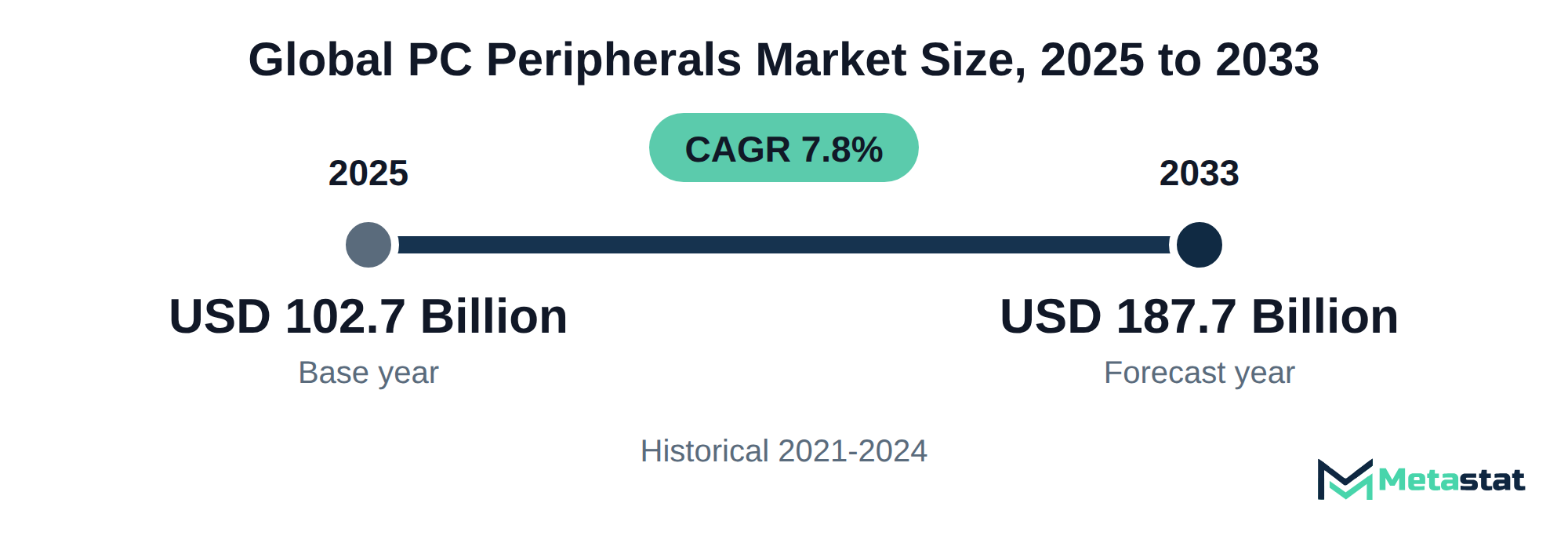
Market Valuation: Valued at $102.7 Billion in 2025, projected to reach $187.7 Billion by 2033 at a 7.8% CAGR.
Dominant Segment: Monitors lead the PC Peripherals market, driven by the increasing demand for high-resolution displays essential for both work and leisure activities.
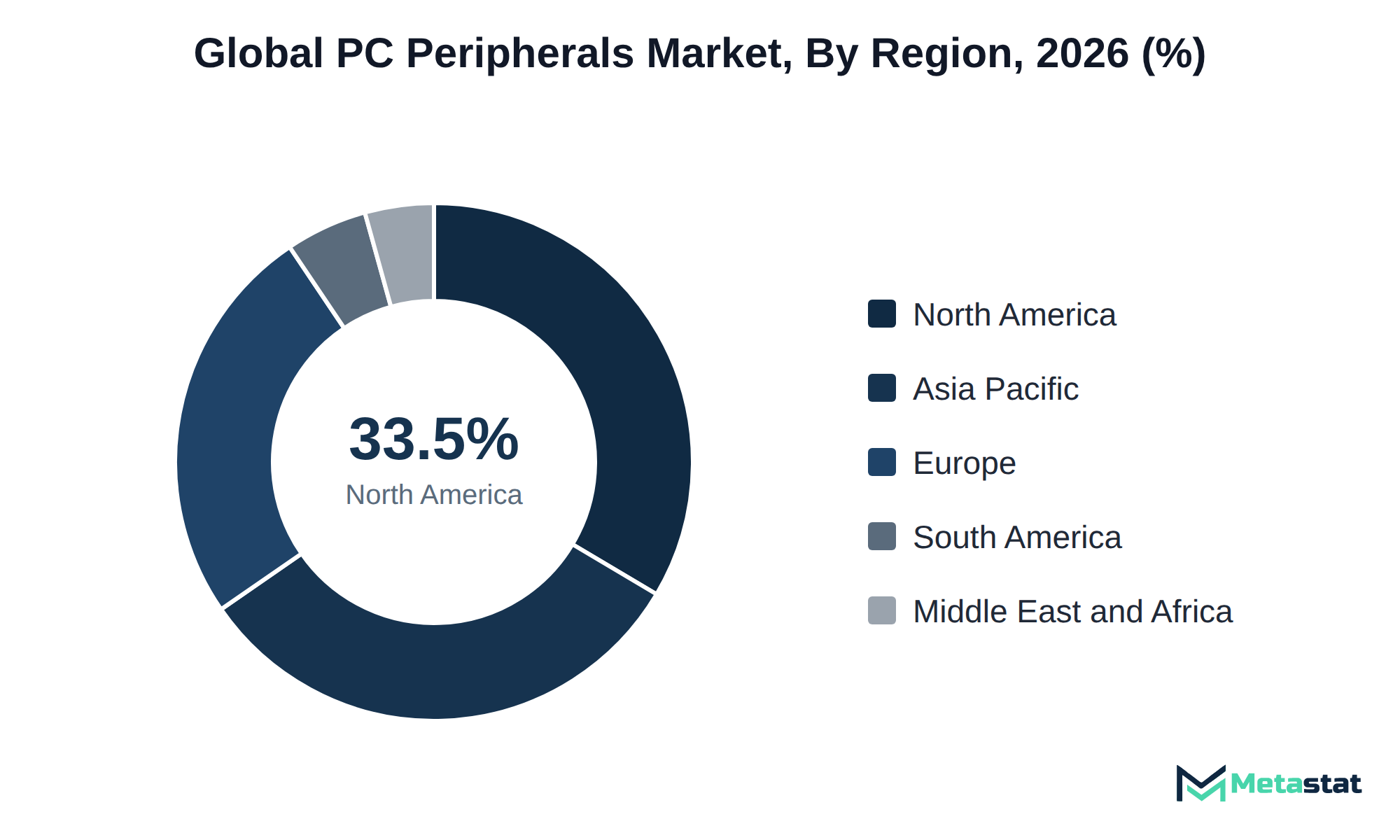
Geographic Lead: North America holds a significant share of the market, accounting for 33.5% in 2025, supported by strong purchasing power and a developed retail infrastructure.
What's Inside: The report provides a comprehensive analysis of the competitive landscape, market segmentation by product type, connectivity, end use, and distribution channels, along with detailed growth forecasts.
Emerging Technologies: The rise of USB4 and Thunderbolt docking stations is reshaping enterprise accessory purchasing, reflecting a shift towards enhanced connectivity and performance.
Consumer Trends: The growing focus on hybrid work environments drives demand for AI-enabled webcams and headsets, as companies invest in high-quality audio and visual tools for remote collaboration.
Choose Your License
Global PC Peripherals Market
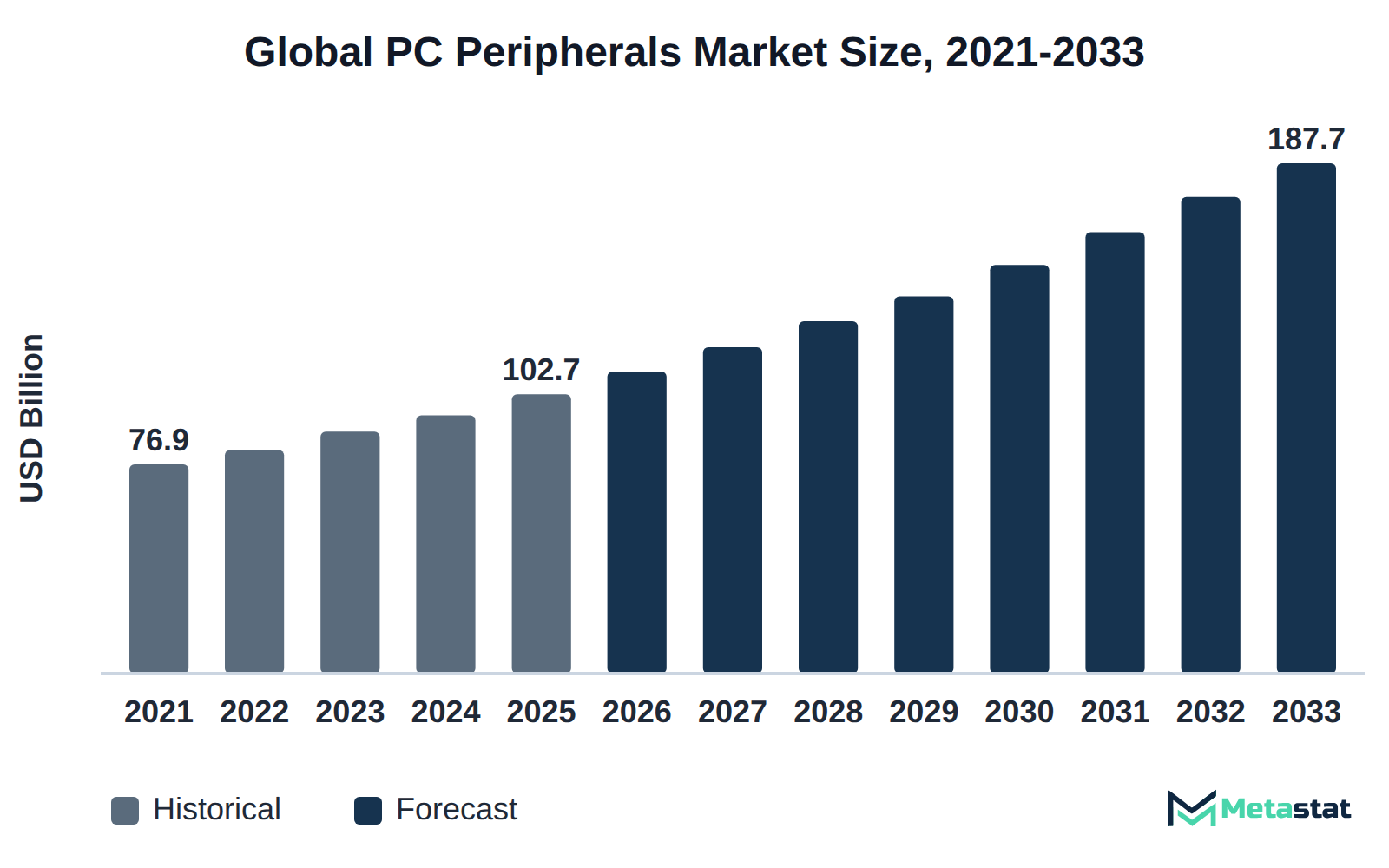
The global PC Peripherals market was valued at USD 102.7 billion in 2025 and is projected to reach USD 187.7 billion by 2033, growing at a CAGR of 7.8% over the forecast period.
The PC Peripherals market encompasses a variety of devices essential for enhancing the functionality and user experience of personal computers. Buyers invest in these peripherals to improve productivity, communication, and entertainment. The growing adoption of remote work and online education has further fueled demand for these products, driven by individuals and organizations seeking reliable and efficient tools to support their activities.
Growth in the market is driven by technological advancements, particularly in product design and connectivity options. Monitors represent the segment with the highest value, reflecting the increasing need for high-resolution displays for work and leisure. North America holds 33.5% of the market in 2025, with the US leading in 2026. This region benefits from strong purchasing power and a highly developed retail infrastructure that gives buyers access to many peripheral products.
Digital transformation continues across various industries, and the demand for innovative PC peripherals is expected to rise. The increasing emphasis on remote collaboration and virtual communication drives investments in high-quality audio and visual devices. These trends point to a strong outlook for the PC Peripherals market.
The PC Peripherals market includes a diverse range of products that enhance the functionality of personal computers. Buyers invest in these peripherals to improve productivity, gaming experience, and overall interaction with computing devices. Key segments within the market include monitors, printers, keyboards, and mice, each serving specific user requirements across personal and commercial environments.
Market growth is driven by the increasing demand for high-quality displays and efficient input devices, particularly within the personal segment. Monitors emerge as the most valuable segment, demonstrating significant revenue generation potential. Following North America, the Asia Pacific region accounts for a significant share, reflecting strong demand for peripherals in rapidly growing economies.
The need for advanced connectivity solutions continues to drive market expansion, especially with the rise of wireless technology. The shift towards wireless peripherals supports user convenience and flexibility, encouraging adoption among various consumer groups. Diverse applications and the shift toward wireless peripherals position the PC Peripherals market for significant growth in the coming years.
Recent advancements in USB4 and Thunderbolt docking stations significantly influence purchasing decisions within the PC Peripherals market. The rapid adoption of these technologies reflects a shift towards enhanced connectivity and data transfer speeds, which are crucial for modern enterprise environments. For instance, the anticipated value of USB4 and Thunderbolt docking stations is projected to rise, with the wired and wireless segment expected to reach USD 106.8 billion by 2033.
This evolution supports the increasing demand for high-performance peripherals among commercial users, who require reliable and efficient solutions for their connectivity needs. The integration of USB4 and Thunderbolt standards facilitates the connection of multiple devices, enhancing productivity and simplifying workspace organization. Enterprises investing in these advanced docking stations experience improved operational efficiency, reducing downtime and enabling more effective collaboration among teams.
The growth in demand for these docking stations demonstrates a broader trend towards sophisticated accessory solutions in the market. Innovation matters here because businesses need accessories that deliver both efficiency and performance. While more enterprises recognize the advantages of adopting USB4 and Thunderbolt technologies, the market continues to expand, driving investment and competition within the sector.
Investment in OLED and high-refresh-rate monitors significantly influences purchasing decisions among PC gamers, who prioritize performance and visual fidelity. Growing demand for immersive gaming experiences drives buyers toward advanced monitor technologies and shapes their purchasing behavior. Premium monitors with OLED display panels offer superior picture quality and faster refresh rates, catering to high-end gaming needs.
In the PC Peripherals market, the segment of monitors is projected to grow from USD 33.2 billion in 2026 to USD 57 billion by 2033, reflecting a compound annual growth rate of 8%. This rapid expansion highlights the willingness of consumers to invest in high-performance displays that enhance gaming experiences. Purchasers typically seek flexible payment options, including financing plans and subscription models, enabling them to acquire top-tier monitors without significant upfront costs.
Buyers often compare pricing across various retail and online platforms, leveraging competitive offers to secure the best value. Retail sales channels matter in this dynamic, with a projected value of USD 92.5 billion by 2033, which shows how much consumers rely on accessible purchasing avenues. This competitive environment encourages a focus on value-added services, including extended warranties and customer support, which further influence purchasing decisions in the market.
Demand for AI-enabled webcams and headsets in the PC Peripherals market increases significantly, reflecting the growing trend of hybrid work environments. Companies prioritize high-quality audio and visual tools, including business headsets, to enhance remote communication and collaboration, leading to increased investments in these technologies. The rise of hybrid work creates distinct needs among commercial users who seek integration with existing systems and enhanced user experience.
By 2033, the commercial segment of the market is expected to reach USD 91.5 billion, illustrating the lucrative opportunity for suppliers focusing on advanced audio and video solutions. Businesses require devices that offer superior functionality, including noise cancellation features, real-time image optimization, and intuitive interfaces that ensure ease of use for employees. This demand drives innovation among manufacturers, encouraging the development of products tailored to the specific requirements of corporate customers.
Ultimately, the expansion of AI-enabled webcams and headsets provides a competitive advantage for organizations investing in advanced collaboration tools. Enhanced communication capabilities lead to improved productivity, employee satisfaction, and overall business performance, reinforcing the position of these products within the evolving PC Peripherals market.
Wireless peripherals that effectively balance low latency with extended battery life have become increasingly sought after in the PC peripherals market. These devices provide reliable connectivity while minimizing interruptions, crucial for applications requiring precision and responsiveness. For example, wireless-only peripherals are projected to reach a value of USD 15.7 billion by 2033, reflecting the growing demand for these high-performance options.
Advanced technologies, including Bluetooth 5.0 and proprietary wireless protocols, contribute to reduced latency in wireless devices. This improvement allows for real-time communication between peripherals and computers, essential for gamers and professionals in design and engineering fields. Innovations in battery technology allow these devices to maintain prolonged operational periods without frequent recharging, addressing a critical concern among users.
While the demand for efficient wireless solutions continues to grow, manufacturers are likely to invest in enhancing both latency and battery life. This focus drives product development and shapes competitive strategies within the market. The intersection of performance and convenience positions these wireless peripherals as key products driving future growth in the PC peripherals market.
Increased commercial demand for high-performance peripherals drives substantial spending from businesses. Organizations prioritize enhanced productivity, leading to significant adoption of advanced devices including monitors and high-quality printers. This shift fuels a replacement cycle, with companies upgrading outdated equipment to improve efficiency and employee satisfaction. The market experiences growth, with commercial end-use projected to reach USD 91.5 billion by 2033, reflecting an annual growth rate of 8.4%. Advanced technology helps businesses support operational goals and stay competitive.
The ongoing transition toward hybrid work models expands demand for PC peripherals, as businesses aim to provide employees with versatile and efficient tools. Enhanced features in devices, including better connectivity and ergonomic designs, further drive purchasing decisions among commercial buyers.
Advancements in wireless technologies significantly influence consumer preferences in the PC Peripherals market. The introduction of wireless-only devices with improved connectivity options enhances the user experience by eliminating the constraints of wired connections. Growing adoption of Bluetooth 5.0 and Wi-Fi 6 technologies enables higher data transfer rates and reduced latency, essential for productivity and entertainment. Consumers increasingly favor products that offer integration with other smart devices, driving demand for peripherals that facilitate this connectivity.
The market observes substantial growth in wireless keyboards, mice, and audio devices, reflecting a shift in user expectations toward convenience and mobility. Enhanced battery life in wireless peripherals presents an attractive feature, allowing for extended use without frequent recharging. The steady evolution of wireless technology supports the proliferation of versatile products tailored to various consumer needs. Manufacturers investing in advanced wireless solutions gain a significant competitive advantage, which shapes the dynamics of the PC Peripherals market.
Price sensitivity significantly impacts demand within the PC Peripherals market, particularly among personal users and small businesses. Higher prices of advanced peripherals lead to slower uptake and smaller order volumes, with these buyers prioritizing budget constraints. The necessity for cost-effective solutions results in delayed replacement cycles for existing devices, restricting overall market growth. This financial pressure influences purchasing decisions, prompting consumers to opt for lower-priced alternatives or defer investments in higher-end products. Consequently, the market faces challenges in expanding its customer base, particularly in segments where economic considerations dominate. Maintaining competitive pricing strategies is essential for suppliers to address these buyer concerns and support market expansion.
Suppliers in the PC Peripherals market face rising input costs, impacting overall profitability. Fluctuations in raw material prices, particularly for components used in manufacturing peripherals, strain margins and challenge financial stability. Increased demand for high-quality materials drives up production costs, compelling suppliers to evaluate and adjust pricing strategies. In response, many suppliers adopt cost-efficient manufacturing practices, seeking to streamline operations without sacrificing quality. Collaborations with material suppliers to secure fixed pricing agreements further mitigate financial pressures. These strategies allow for better management of production expenses while maintaining competitive pricing in a market characterized by vigorous competition. Without effective responses to these challenges, suppliers risk diminished profit margins, hindering investment in innovation and the development of next-generation products.
The ongoing adjustments in production practices reflect a proactive stance toward ensuring long-term sustainability within the market. Suppliers remain focused on enhancing operational efficiency, supporting overall growth despite the pressures posed by increasing material costs. These adaptations are essential for suppliers to keep a competitive edge as material costs rise.
Personal usage of PC peripherals represents a significant growth opportunity within the market, with a projected compound annual growth rate (CAGR) of 7.2% from 2026 to 2033. This growth is driven by an increasing focus on remote work and home entertainment, prompting consumers to invest in high-quality devices including monitors, keyboards, and mice. By 2033, the value of personal peripherals is expected to reach USD 96.3 billion, reflecting changing consumer preferences toward enhanced performance and functionality.
The shift toward personal usage impacts manufacturers, requiring them to innovate and diversify product offerings. Enhanced features including improved ergonomics, customizable options, and advanced connectivity cater to the evolving needs of consumers. This segment's expansion will significantly influence overall market dynamics, increasing competition among suppliers who seek to capitalize on the growing demand for personal peripherals.
The Global PC Peripherals market is segmented based on Product Type, Connectivity, End Use, and Distribution Channel.
Monitors are essential devices for displaying visual content across various computing environments, used predominantly by personal and commercial users. The increasing demand for high-resolution displays and advancements in screen technology drive growth in this segment. Companies focused on gaming and professional applications drive up the adoption of monitors, distinguishing them from other peripheral segments that experience slower growth rates. The anticipated CAGR of 8% for this segment outpaces growth in devices like keyboards and scanners, highlighting the unique market dynamics and consumer preferences for enhanced visual experiences.
Printers and Scanners segment is estimated to reach USD 42.1 billion by 2033, at a CAGR of 5.3% during the forecast period. These devices serve critical functions across both personal and commercial environments, enabling users to produce physical copies of digital documents and images. The growing emphasis on digitization and remote working influences demand, particularly among businesses seeking efficient document management solutions. Compared to other segments, Printers and Scanners experience slower growth, partly due to competition from digital alternatives that reduce reliance on printed materials. However, ongoing advancements in printing technology, including enhanced energy efficiency and multifunctional printer capabilities, support incremental demand. The segment's growth trajectory contrasts with the rising demand for high-performance devices like monitors and gaming peripherals, which enjoy faster adoption among consumers and businesses alike.
The keyboards segment is expected to reach USD 13.5 billion by 2033. This segment includes a wide variety of devices used for text input, primarily by personal and commercial users. Demand for keyboards is driven by the growing need for efficient computing in both home and office environments. The segment exhibits a compound annual growth rate (CAGR) of 7.2%, positioning it for stable growth relative to other peripherals, including printers and scanners, which face a lower CAGR of 5.3%. The increasing trend toward ergonomic and customizable keyboard designs further enhances appeal among users seeking improved comfort and productivity. Enhanced features, including backlighting and wireless connectivity, differentiate this segment, attracting both casual users and gamers, who often favor high-performance devices. Market dynamics reflect significant shifts toward personal usage, fueling expansion and innovation in keyboard technologies.
The Mice and Other Pointing Devices segment is projected to grow at a CAGR of 8.2% during the forecast period. These devices serve essential functions in personal and commercial computing environments, enabling users to navigate software interfaces efficiently. Demand for these peripherals receives a boost from increased remote working and online gaming activities, which necessitate enhanced precision and user control. Gaming mice are one example of devices that meet this demand for precision and user control. The segment differs from others in its group, including Printers and Scanners, which exhibit a lower growth rate of 5.3%. The shift towards wireless solutions in this segment aligns with trends in consumer preferences, while competitive pricing strategies drive adoption among personal and commercial users. This segment’s growth trajectory reflects evolving consumer expectations and technological advancements that push manufacturers to innovate continuously.
Audio devices enhance the user experience by delivering high-quality sound for various applications, including gaming, music playback, and video conferencing. Gaming headsets and headphones are one example for users who value immersive audio. These devices cater to both personal and commercial users, with demand driven by the increasing popularity of multimedia content and the need for immersive audio experiences. The growth of remote work and online communication has further accelerated the adoption of audio peripherals. In contrast to other product types, audio devices experience a unique consumer base that prioritizes sound quality and functionality. Compared to segments like printers and scanners, which exhibit a slower growth rate, audio devices benefit from innovation in wireless technology, enhancing convenience and usability. This dynamic sector within the market responds to evolving consumer preferences for portability and advanced features.
Webcams and video capture devices serve essential tools for video conferencing, content creation, and streaming applications. They cater primarily to professionals, educators, and gamers who require reliable video input for communication and entertainment purposes. Conference cameras also support video conferencing, a core application for this segment. The surge in remote work and online learning has heightened the demand for high-quality video capture solutions, driving growth within this segment. Increased accessibility of high-resolution and AI-enabled features enhances user experiences, enticing consumers to invest in advanced devices. Compared to other segments, webcams and video capture devices typically experience faster growth due to their integral role in facilitating virtual interactions. This growth contrasts with traditional peripherals, which often face slower adoption rates due to established usage patterns. Overall, continuous advancements in technology and shifting consumer preferences position this segment for robust expansion in the coming years.
External storage devices provide essential solutions for data storage needs across various user groups, including personal users and businesses. Growing reliance on digital data drives demand for high-capacity external drives, enabling users to back up, transfer, and store large volumes of information efficiently. Data backup and recovery is one use case behind this demand. Factors influencing this segment include technological advancements in storage solutions, enhancing data transfer speeds and reliability. Increased adoption of remote work and digital content creation further increases the need for portable storage devices. Compared to other segments, external storage devices attract more price-sensitive buyers, influencing pricing strategies in the market. This segment's growth trajectory aligns with broader trends in data management, reflecting a shift toward higher-capacity, user-friendly storage solutions.
Docking stations and USB hubs are essential connectivity solutions that let users expand the functionality of their computers and other devices. Professionals in commercial settings employ these products to streamline workflows and enhance productivity by providing easy access to multiple peripherals. Advancements in wireless connectivity create opportunities for increased adoption, allowing users to connect devices without the clutter of cables. This segment stands out with a focus on providing convenient solutions for both personal and commercial users, differentiating it from other product types in the market. The rising demand for device integration fuels growth, while user preferences for higher performance and ease of use drive innovation in the segment.
Gaming controllers and simulation peripherals serve dedicated gaming experiences for users, enhancing immersion and control. These devices cater primarily to gamers seeking high-performance tools, including pro gaming controllers, for competitive play and entertainment. Demand for innovative features, including customizable controls and enhanced haptic feedback, drives growth in this segment. Gamers increasingly prioritize products that offer superior performance and comfort, prompting manufacturers to invest in advanced technologies. Compared to other product types, gaming controllers experience faster market acceptance due to the rapid pace of gaming trends and consumer interest in interactive entertainment. This segment distinguishes itself through its focus on specialized user preferences, resulting in a unique market dynamic that emphasizes quality and performance.
Graphics tablets, external optical drives, and smart card readers enhance user interaction and data management capabilities. Graphics tablets serve creative professionals in digital art and design, providing precision and responsiveness. External optical drives cater to users requiring physical media access, while smart card readers enable secure transactions and identification verification, appealing to both personal and commercial sectors. Demand for these peripherals is driven by an increasing reliance on digital creativity and security solutions. Within the wider landscape of product types, this sub-segment experiences slower growth compared to others, primarily due to niche applications and varying consumer awareness. The unique functionality of these devices differentiates them from standard peripherals, capturing specific user needs across diverse settings. The market continues to evolve, reflecting technological advancements and shifting consumer expectations.
The Wired Only segment is valued at USD 48.4 billion in 2026 and is projected to reach USD 65.2 billion by 2033, at a CAGR of 4.4% during the forecast period. This segment serves primarily users requiring stable and consistent connectivity, which includes both personal and commercial applications. Demand stems from industries where latency reduction and reliability remain critical, including gaming, professional audio, and video production. The Wired Only segment differs from the Wireless Only and Wired and Wireless segments, which experience higher growth rates and broader adoption among casual users. Sectors like commercial IT and healthcare focus on wired connections, which emphasizes the essential nature of reliability in performance. This focus leads to slower growth than the faster-growing segments that use advancements in wireless technology. The market continues to adapt to evolving user requirements while maintaining a strong base in traditional wired solutions.
Wireless Only segment is estimated to reach USD 15.7 billion by 2033, at a CAGR of 8.9% during the forecast period. This segment serves various applications for users seeking high mobility and convenience, particularly in personal and commercial settings. The increasing trend towards remote working and online activities fuels demand for wireless peripherals, allowing users to operate devices without the constraints of cables. Unlike Wired Only solutions, which grow at a CAGR of 4.4%, Wireless Only solutions attract buyers seeking flexibility and ease of use. The superior convenience offered by wireless devices enhances their appeal, especially to tech-savvy consumers and businesses focusing on modern workplace efficiency. This growing preference for wireless connectivity reinforces its position as a prominent segment in the PC Peripherals market.
This segment provides users with the flexibility to connect devices through both wired and wireless means, catering to diverse preferences and operational needs. Businesses and personal users increasingly seek versatile connectivity solutions, driving demand in this segment. The growing trend towards remote work and gaming enhances the popularity of these products. With a compound annual growth rate (CAGR) of 8.9%, this segment exhibits faster growth compared to Wired Only, which has a CAGR of 4.4%. The segment differentiates itself by catering to a wider audience that prioritizes convenience and efficiency, highlighting its significance in the broader PC Peripherals market.
Valued at USD 59 billion in 2026, this segment is projected to reach USD 96.3 billion by 2033, at a CAGR of 7.2% during the forecast period. Personal usage of PC peripherals primarily consists of devices required for home computing, gaming, and personal productivity. Increasing reliance on technology for remote work and entertainment drives demand from individual consumers. This segment stands apart from the commercial segment, which targets businesses and enterprises, often resulting in different pricing dynamics and purchasing patterns. While both segments experience growth, the personal segment shows a stronger expansion trajectory due to rising online activities and digital content consumption. The market benefits from ongoing advancements in technology, providing consumers with enhanced functionality and features that improve the user experience.
Commercial usage is estimated to reach USD 91.5 billion by 2033, at a CAGR of 8.4% during the forecast period. This segment caters primarily to businesses requiring reliable and efficient PC peripherals for daily operations, including offices and other professional environments. Demand in this segment is driven by the increasing need for enhanced productivity and collaboration tools, with organizations adopting advanced peripherals to improve workflow efficiency. Compared to the Personal segment, which grows at a CAGR of 7.2%, the Commercial segment experiences faster growth, reflecting greater investment in technology by enterprises. The ongoing digital transformation and shift towards remote work further fuel this expansion, with businesses investing in high-quality peripherals to support flexible work arrangements. Strong demand from commercial buyers positions this segment for substantial growth.
Direct Sales segment is valued at USD 31.1 billion in 2026 and is projected to reach USD 56.6 billion by 2033, at a CAGR of 9% during the forecast period. This segment facilitates direct transactions between manufacturers and consumers, primarily serving individual buyers and small to medium-sized enterprises seeking convenience and personalized service. The growth of e-commerce and digital marketing strategies drives demand for direct sales channels, allowing consumers to purchase products directly from manufacturers. This segment exhibits faster growth compared to others in the distribution channel category, with the Direct Sales segment's CAGR significantly outpacing segments like Retail Sales, projecting a CAGR of 7.4%. The preference for online shopping enhances the position of this segment, aligning with consumer trends favoring accessibility and efficiency in purchasing PC peripherals. The market continues to evolve, responding to shifts in consumer behavior and technological advancements in sales methodologies.
Retail Sales segment is estimated to reach USD 92.5 billion by 2033, at a CAGR of 7.4% during the forecast period. This segment primarily facilitates the purchase of PC peripherals through physical stores and online platforms, catering to both individual consumers and businesses. Demand driven by increasing consumer preference for hands-on product evaluation influences this segment's growth. Compared to other distribution channels, Retail Sales exhibits a higher growth rate, supported by the convenience of direct purchasing. The competitive landscape in this channel emphasizes the importance of in-store promotions and digital marketing strategies, impacting pricing dynamics and product availability. The market continues to adapt to evolving consumer behavior, prioritizing customer engagement and experience to enhance sales performance.
Value-Added Resellers and System Integrators segment is expected to reach USD 38.6 billion by 2033. This segment serves businesses that require tailored solutions, often integrating multiple components to meet specific operational needs. The driving force behind this segment includes increasing demand for customized technology solutions, particularly in commercial environments where efficiency and reliability are critical. This segment differs from direct sales and retail sales due to its focus on providing value-added services alongside products. With a projected CAGR of 9% during the forecast period, this segment exhibits faster growth than many others, highlighting a strong trend towards integrated solutions in the PC Peripherals market.
Based on geography, the Global PC Peripherals market is divided into North America, Europe, Asia-Pacific, South America, Middle East, and Africa.
Demand in North America is driven by the growing adoption of advanced technologies across various sectors. The United States, Canada, and Mexico show increasing investments in digital infrastructure that support the deployment of PC peripherals. End users in commercial sectors prioritize high-performance peripherals for enhanced productivity and efficiency. The region is projected to reach USD 59.7 billion by the end of 2033. Regulatory standards promoting energy efficiency influence purchasing decisions, particularly in the commercial segment. The market features a strong presence of established players, facilitating competitive pricing and innovation. The focus on remote work and digital communication further accelerates demand for PC peripherals, contributing to robust market growth.
Demand within the PC Peripherals market in Europe is influenced by robust industrial sectors, including technology, education, and gaming. Countries including Germany and France exhibit high adoption rates of advanced peripherals among commercial enterprises, driven by an increasing emphasis on remote working solutions and digital transformation initiatives. Regulatory efforts supporting green technologies further enhance the appeal of energy-efficient devices, setting a distinct pathway for market growth. The region holds a 25.2% share of the global market in 2025, reflecting its significant contribution to overall demand. Advances in wireless technologies and the growing need for multimedia capabilities in personal use cases support the trend towards higher-value peripherals. Continued investment in infrastructure, particularly in broadband and connectivity solutions, positions Europe favorably for sustained expansion in the PC Peripherals market.
Rapid technological advancements in countries including China, Japan, and India drive significant growth in the PC Peripherals market. The increasing adoption of advanced computer systems in various sectors, including education and gaming, intensifies demand for peripherals. South Korea and Australia contribute to this trend by emphasizing high-quality hardware and accessories. Southeast Asia's expanding middle class enhances consumer purchasing power, leading to a surge in personal and commercial peripheral sales. Infrastructure improvements facilitate easier access to the market. With a projected market share of 31.8% in 2025 and anticipated growth, the market position in this region reflects a dynamic environment for manufacturers and suppliers.
Demand for PC Peripherals in South America experiences growth driven by increasing consumer adoption and expanding technology infrastructure. Brazil and Argentina lead the region in demand, with significant purchases from personal and commercial sectors. The market benefits from a growing middle class with rising disposable incomes, which enhances purchasing power for various peripherals. Regional investments in digitalization and e-commerce further stimulate the market. The ongoing transition towards remote work and online education reflects the heightened need for peripherals. The market share in South America is projected to reach 5.1% in 2025, reflecting the region's unique position within the global framework.
Growth in the PC Peripherals market within the Middle East and Africa is fueled by increasing demand for advanced technology in various sectors, including education, healthcare, and finance. Countries including Saudi Arabia and the UAE prioritize digital transformation initiatives, enhancing the market's potential. The region's share of the global market stands at 4.3% in 2025, demonstrating its significance in the overall landscape. South Africa contributes significantly, with investments in infrastructure supporting the adoption of peripherals. Challenges related to cost constraints impact procurement strategies within this market. However, the ongoing shift towards remote work and e-learning creates opportunities for expansion and innovation.
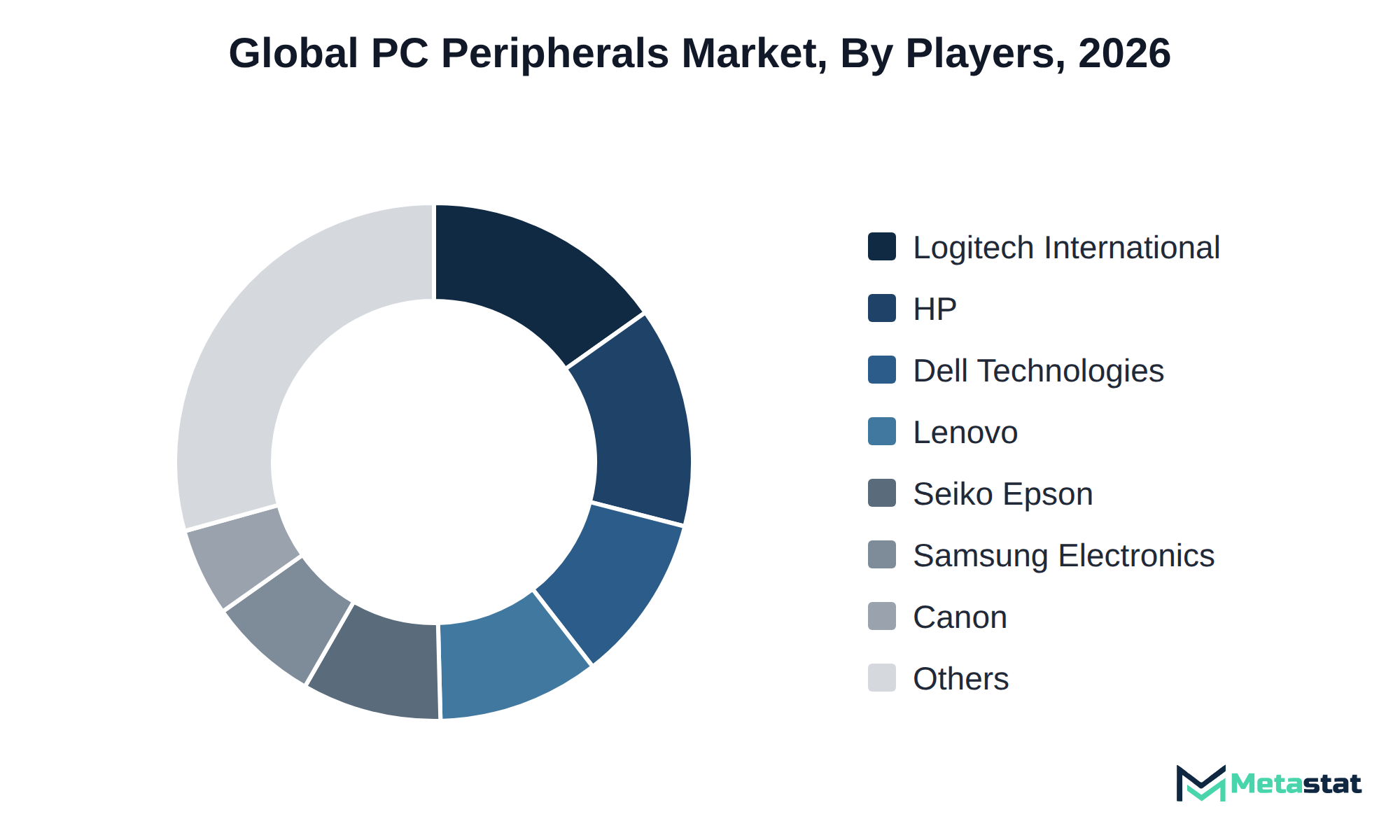
Companies within the PC Peripherals market compete on various fronts, including product offerings, pricing strategies, and customer service. Key differentiators include the level of customization available to buyers, the breadth of product ecosystems, and adherence to certification standards. Price sensitivity remains a significant factor for consumers and businesses, driving competition among providers.
Logitech International S.A. emphasizes innovation in gaming peripherals and high-quality audio devices, appealing to both professional gamers and casual users. HP Inc. focuses on a comprehensive range of printers and scanners, catering to diverse commercial and personal needs. Dell Technologies Inc. stands out in the market with a strong offering of monitors and direct sales channels, ensuring a robust customer experience.
Other notable players including Samsung Electronics Co., Ltd. and Canon Inc. offer a variety of peripherals that integrate well within their established product ecosystems, enhancing user convenience and satisfaction. Competitive dynamics in the market reflect a blend of established brands aiming to capture new segments and emerging players striving to differentiate through unique features and competitive pricing.
Achieving this growth hinges on several key developments within the PC Peripherals market. First, increasing adoption of monitors, projected to reach USD 57 billion by 2033, will drive substantial revenue growth. This demand stems from both personal and commercial users seeking enhanced visual experiences. Second, the connectivity segment is expected to see significant advancements, particularly in wired and wireless devices, which could support a projected value of USD 106.8 billion. This growth will rely on consumer preferences shifting towards more versatile connectivity options. A main risk to this optimistic forecast involves potential supply chain disruptions, which could delay the availability of peripherals, particularly in regions like North America, where the market is substantial. Such disruptions could create challenges in meeting the rising demand, thus impacting overall market growth.
By Product Type: Monitors, Printers and Scanners, Keyboards, Mice and Other Pointing Devices, Audio Devices, Webcams and Video Capture Devices, External Storage Devices, Docking Stations and USB Hubs, Gaming Controllers and Simulation Peripherals, Others (Graphics Tablets, External Optical Drives, Smart Card Readers)
By Connectivity: Wired Only, Wireless Only, Wired and Wireless
By End Use: Personal, Commercial
By Distribution Channel: Direct Sales, Retail Sales, Value-Added Resellers and System Integrators
The report strategically identifies and profiles the key market players and analyses their core competencies in each sub-segment of the PC Peripherals market.
Report Attributes | Details |
Study Period | 2021-2033 |
Base Year | 2025 |
Estimated Year | 2026 |
Forecast Period | 2026-2033 |
Historical Period | 2021-2025 |
Growth Rate | CAGR 7.8% from 2026 to 2033 |
Revenue Unit | USD billion |
Segmentation | By Product Type, Connectivity, End Use, Distribution Channel, and Region |
By Region | North America (By Product Type, Connectivity, End Use, Distribution Channel, and Country)
|
Europe (By Product Type, Connectivity, End Use, Distribution Channel, and Country)
| |
Asia Pacific (By Product Type, Connectivity, End Use, Distribution Channel, and Country)
| |
South America (By Product Type, Connectivity, End Use, Distribution Channel, and Country)
| |
Middle East and Africa (By Product Type, Connectivity, End Use, Distribution Channel, and Country)
|
Find answers to common questions about this report
The PC Peripherals market size was valued at USD 102.7 billion in 2025.
The market is projected to grow at a CAGR of 7.8% during the forecast period from 2026 to 2033.
The North America PC Peripherals market size is estimated to reach USD 59.7 billion by 2033.
Monitors lead the PC Peripherals market with a projected value of USD 57 billion by 2033. This segment demonstrates the highest growth potential, driven by an anticipated compound annual growth rate of 8 percent.
Increased commercial demand for high-performance peripherals drives substantial spending from businesses, reflecting a shift toward advanced devices to enhance productivity. Personal usage of PC peripherals represents a significant growth opportunity, fueled by the rising focus on remote work and home entertainment.
North America holds the dominant share of the PC Peripherals market, with a value of USD 59.7 billion projected for 2033, representing 33.5 percent of the total market.
Price sensitivity significantly impacts demand, particularly among personal users and small businesses, leading to slower uptake of advanced peripherals. Rising input costs for suppliers further challenge overall profitability, straining margins and hindering investment in innovation.
Factors favoring adoption in the PC Peripherals industry include increased commercial demand for high-performance devices, driven by a focus on productivity and employee satisfaction. The transition toward hybrid work models contributes to expanding demand, while personal usage is projected to grow, reaching USD 96.3 billion by 2033.
The PC Peripherals market is estimated to reach a valuation of USD 187.7 billion by 2033.
Key players operating in the PC Peripherals market include Logitech International S.A., HP Inc., Dell Technologies Inc., Lenovo Group Limited, Canon Inc., Seiko Epson Corporation, and Brother Industries, Ltd.
The analysts below cover Electronics and Semiconductor research at Metastat Insights.
LEAD ANALYST
Utkarsh Khirodkar is a Lead Market Research Analyst at MetaStat Insight, specializing in market intelligence, technology sector assessments, and competitive strategy.

PRINCIPAL CONSULTANT - ENTERPRISE AI & EMERGING TECHNOLOGIES
Banking & Finance · Electronics and Semiconductor · Energy and Power · Healthcare IT · Information & Technology · Professional Services
Vijay Gunti is a Principal Consultant at MetaStat Insight, bringing over two decades of experience across enterprise digital transformation, technology strategy, and intelligent systems.

PRINCIPAL CONSULTANT - QUALITY SYSTEMS & COMPLIANCE
Electronics and Semiconductor · Machinery & Equipment · Professional Services
Omkar Phadtare is an Industry Consultant at MetaStat Insight, specializing in quality systems, regulatory compliance, and standards benchmarking to drive data-driven market intelligence and strategic industry research.

ENERGY & INFRASTRUCTURE INDUSTRY CONSULTANT
Automotive and Transportation · Electronics and Semiconductor · Energy and Power · Machinery & Equipment
Saurabh Vasant Ganvir consults for Energy & Infrastructure Industry at MetaStat Insight, specializing in renewable energy, solar EPC, and electric vehicle (EV) infrastructure markets.

LEAD CONSULTANT - COMMUNICATION, TELECOM, AND IT
Electronics and Semiconductor · Information & Technology · Machinery & Equipment · Professional Services
Ravindra Sathe Consultants for Communication, Telecom, and IT at MetaStat Insight. He leads the firm's industry research initiatives across telecommunications infrastructure, digital connectivity, enterprise networking, and emerging information technology domains.
When planning edge sensor rollouts across refinery environments, generic IoT reports typically miss the harsh-environment certification bottlenecks. MetaStat Insight gave an objective evaluation of ATEX and Class 1 Division 2 hardware availability, along with realistic five-year maintenance cycle cost projections. The comparison of wireless mesh versus private cellular backhaul helped our team pressure-test network reliability models for remote processing facilities.
In the biological seed treatment space, registration timelines vary drastically between the European Union, Brazil, and North America. The MetaStat Insight research handled these cross-border regulatory barriers with genuine nuance, mapping commercialization pathways alongside historical field adoption rates. The segmentation between microbial strains and biochemical active ingredients was particularly well structured.
Our team was tracking whether regional recycling infrastructure could realistically absorb the growing volume of lithium iron phosphate batteries over the next decade. The report did a solid job separating announced hydrometallurgical plant capacity from active, permitted operational throughput. That distinction made the feedstock availability projections and regional recovery rate models far more credible than standard commercial overviews.
Explore related market intelligence reports worth reading alongside this one.