
LEAD ANALYST
Utkarsh Khirodkar is a Lead Market Research Analyst at MetaStat Insight, specializing in market intelligence, technology sector assessments, and competitive strategy.

Shaking Incubators Market Size, Share, By Product Type (Benchtop Shaking Incubators, Floor-Standing Shaking Incubators, Stackable Shaking Incubators, CO₂ Shaking Incubators, and Others), By Automation Level (Manual Control, Semi-Automated, and Fully Automated), By Application (Microbiology, Cell Culture, Biochemistry, Molecular Biology, and Others), By End-User (Pharmaceutical, Biotechnology Companies, Academic, Research Institutes, Hospitals, Diagnostic Laboratories, and Others), Industry Analysis, Growth, Trends, and Forecast, 2026-2033
Report ID
MSI-4701
Published
April, 2026
Pages
315 Pages
Format
Report Details
Choose Your License
Shaking Incubators Market
Global Shaking Incubators market size is valued at USD 1,322.6 million in 2025 and projected to grow at a CAGR of 7.5% during the forecast period, reaching USD 2,357.4 million by 2033.
North America accounted for 31.9% of the global market revenue generation.
The Benchtop Shaking Incubators segment accounted for 34.0% of the global market in 2025.
Key trends driving growth: Increased biopharma, biotech, and microbiology culture workloads in research, process development, and QC along with higher adoption of controlled-agitation incubation for reproducible growth and mixing in flasks and microplates.
Opportunities include stackable CO2-capable and refrigerated shaker-incubators with connectivity and data logging aligned with cell culture and biologics workflows.
Key insight: Rising investment in life sciences research and biopharmaceutical production is strengthening demand patterns in the Global Shaking Incubators Market.
The Global Shaking Incubators Market is part of the broader laboratory equipment and life sciences instrumentation industry, where precision-controlled environments support advanced biological and chemical research. Beyond routine laboratory applications, the market is expanding into specialized use cases that require consistent orbital motion, stable temperature control, and contamination-controlled incubation conditions. Research institutions are increasingly relying on shaking incubators to support synthetic biology studies, personalized medicine research, and cell-based therapy development. These systems play an important role in microbial culture growth and support complex co-culture studies designed to simulate biological responses under controlled agitation conditions.
Over the coming years, biopharmaceutical manufacturers are expected to integrate shaking incubators into modular and flexible production environments developed for small-batch biologics and rapid vaccine development. Academic laboratories are also adopting advanced programmable models to study gene expression patterns under varying environmental conditions. Environmental research centers are using these systems to cultivate microorganisms capable of degrading industrial waste, thereby supporting bioremediation research under controlled conditions. Food technology laboratories are further utilizing shaking incubators to evaluate fermentation efficiency and strain stability for alternative protein development.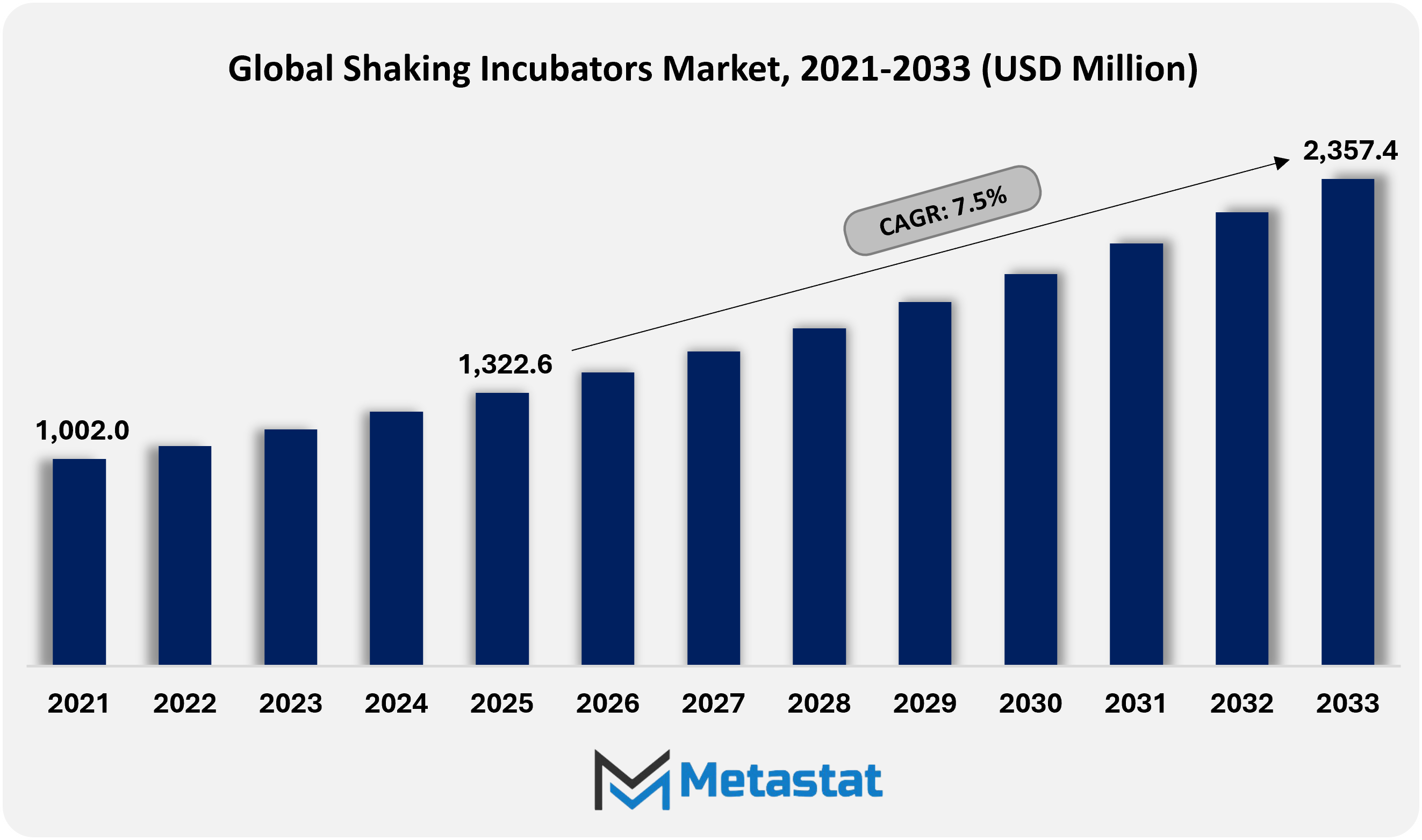
Increased biopharma, biotech, and microbiology culture workloads in research, process development, and QC.
Rising investment in biologics, vaccines, and microbial research is increasing laboratory culture workloads across research, pilot production, and quality control environments. Expansion of advanced therapy pipelines and stricter validation requirements are strengthening the need for reliable incubation systems capable of maintaining uniform operating conditions. The Global Shaking Incubators Market is benefiting from higher laboratory throughput requirements and the growing importance of consistent microbial cultivation across biopharmaceutical and life sciences applications.
Higher adoption of controlled-agitation incubation for reproducible growth and mixing in flasks and microplates
Controlled agitation combined with stable temperature regulation supports uniform cell propagation and efficient nutrient distribution in flasks and microplates. Laboratories are placing greater emphasis on repeatable growth conditions to improve experimental reliability and regulatory alignment. The Global Shaking Incubators Market is expanding with rising demand for programmable systems that maintain defined RPM ranges and stable incubation conditions across a wide range of workflows.
High equipment cost and service complexity tied to temperature uniformity, RPM accuracy, and long-run reliability
High acquisition costs remain a notable challenge for precision-engineered shaking incubators owing to advanced sensors, calibrated drive systems, insulation requirements, and long-term performance expectations. Maintenance requirements related to temperature uniformity, RPM accuracy, and operating reliability also require specialized technical support. These factors will limit adoption across smaller laboratories with constrained budgets and lower service capabilities.
Lab footprint, vibration control, and heat-rejection constraints, especially for refrigerated and stacked systems
Laboratory space limitations, vibration management requirements, and heat dissipation challenges can restrict installation of large-capacity, refrigerated, and stacked shaking incubator systems. Facilities with compact layouts often require careful infrastructure planning before deployment of advanced units. Market adoption in such settings depends on optimized equipment design, energy efficiency, and structural stability aligned with laboratory expansion needs.
Stackable CO2-capable and refrigerated shaker-incubators with connectivity and data logging aligned with cell culture and biologics workflows
Next-generation stackable shaking incubators with CO2 control, refrigeration, connectivity, and integrated data logging are expected to create strong opportunities across cell culture and biologics workflows. These systems support advanced research and production environments that require environmental precision, documentation, and process visibility. The Global Shaking Incubators Market is likely to benefit from growing adoption of smart incubation platforms developed for scalable laboratory automation and digital workflow integration.
The Global Shaking Incubators market is classified based on Product Type, Automation Level, Application, and End-User.
Benchtop Shaking Incubators segment is valued at USD 482.5 million in 2026 and is projected to reach USD 760 million by 2033, at a CAGR of 6.7% during the forecast period.
Benchtop shaking incubators are expected to maintain strong demand across laboratories with limited space and rising experimental activity. Their compact footprint, operational efficiency, and improving digital control capabilities support adoption across research institutes, academic laboratories, and routine testing facilities. Future product development is likely to focus on enhanced temperature stability, smart sensing functions, and cloud-enabled monitoring to improve workflow efficiency and experimental consistency.
Floor-Standing Shaking Incubators segment is valued at USD 362.6 million in 2026 and is projected to reach USD 585.1 million by 2033, at a CAGR of 7.1% during the forecast period.
Floor-standing shaking incubators are well positioned to support high-volume sample processing across pharmaceutical manufacturing facilities and advanced research laboratories. Their larger chamber capacities and improved load-handling capabilities contribute to better productivity in demanding operating environments. Product improvements centered on predictive maintenance, calibration support, and long-term performance reliability are expected to strengthen adoption across commercial laboratory settings.
Stackable Shaking Incubators segment is valued at USD 311.8 million in 2026 and is projected to reach USD 544.3 million by 2033, at a CAGR of 8.3% during the forecast period.
Stackable shaking incubators are gaining relevance as laboratories seek to optimize vertical space while expanding experimental capacity. Modular configurations and independent chamber controls allow users to run parallel studies under different operating conditions within the same footprint. Future demand will be supported by advances in vibration control, energy efficiency, and centralized monitoring systems suited for multi-project research environments.
CO₂ Shaking Incubators segment is valued at USD 147.8 million in 2026 and is projected to reach USD 269.2 million by 2033, at a CAGR of 8.9% during the forecast period.
CO2 shaking incubators are becoming increasingly important in cell-based research and biologics development, where controlled gas concentration and environmental stability are essential. These systems support sensitive culture applications by combining agitation with CO2 regulation, humidity control, and contamination management. Continued innovation in chamber design and process monitoring is expected to strengthen their role across advanced life sciences workflows.
Others segment is valued at USD 115.7 million in 2026 and is projected to reach USD 198.7 million by 2033, at a CAGR of 8% during the forecast period.
Other product variants within the Global Shaking Incubators Market include customized incubator systems developed for specialized temperature ranges, research protocols, and niche laboratory requirements. Demand for hybrid models that combine cooling, shaking, and advanced control features is increasing across emerging scientific applications. Material innovation and interface improvements are further extending functionality across newer research domains.
Manual Control segment is projected to reach USD 958.1 million by 2033, at a CAGR of 5.9% during the forecast period.
Manual control shaking incubators continue to serve cost-sensitive laboratories and early-stage research settings where basic operational requirements remain sufficient. These systems support standard experimental workflows with straightforward control features and lower acquisition costs. Gradual inclusion of digital displays, alarms, and improved usability features is enhancing their relevance while preserving affordability.
Semi-Automated segment is projected to reach USD 896.8 million by 2033, at a CAGR of 7.6% during the forecast period.
Semi-automated shaking incubators provide a balance between operational flexibility and improved performance. Features such as programmable shaking speed, temperature scheduling, and data logging are helping laboratories improve reproducibility and reduce manual intervention. Growing demand for efficient and user-friendly equipment will support wider adoption of these systems across academic and commercial laboratories.
Fully Automated segment is projected to reach USD 502.6 million by 2033, at a CAGR of 11% during the forecast period.
Fully automated shaking incubators are reshaping laboratory operations through integrated sensors, intelligent control systems, and centralized monitoring capabilities. These systems support high-value applications where precision, traceability, and process consistency are critical. Adoption is expected to rise across pharmaceutical manufacturing and advanced research environments that require reliable documentation and regulatory alignment.
Microbiology segment is projected to reach USD 689.1 million by 2033.
Microbiology remains a core application area for shaking incubators owing to continued focus on pathogen research, microbial cultivation, and antimicrobial development. Stable temperature conditions combined with uniform agitation help ensure reliable growth environments for microorganisms. Advanced monitoring and control features are further improving suitability for large-scale culture studies and research-intensive microbiology workflows.
Cell Culture segment is projected to reach USD 655.8 million by 2033.
Cell culture applications are expanding with rising activity in regenerative medicine, biologics production, and cell-based research. Shaking incubators designed for these workflows offer precise environmental control, contamination management, and reliable agitation to support sensitive cell lines. Ongoing improvements in chamber design, monitoring systems, and automation features are strengthening their use across complex laboratory settings.
Biochemistry segment is projected to reach USD 403.4 million by 2033.
Biochemistry applications benefit from shaking incubators that provide stable incubation and consistent mixing for enzyme reactions, protein studies, and related analytical workflows. Reliable shaking patterns and temperature control improve reproducibility across both research and commercial laboratories. Advancements in calibration, programming, and monitoring are supporting broader use in technically demanding biochemistry environments.
Molecular Biology segment is projected to reach USD 368.5 million by 2033.
Molecular biology workflows are expected to support steady demand for shaking incubators as genetic research, recombinant studies, and diagnostic development continue to expand. Uniform agitation and controlled incubation conditions are important for maintaining process reliability across a range of molecular applications. Integration with laboratory data systems is also improving traceability and documentation efficiency.
Others segment is projected to reach USD 240.7 million by 2033.
Other applications within the Global Shaking Incubators Market include environmental testing, food safety research, and agricultural biotechnology. These use cases are supporting steady demand for flexible incubation systems capable of handling diverse sample types and operating conditions.
Pharmaceutical and Biotechnology Companies segment is projected to grow at a CAGR of 8.6% during the forecast period.
Pharmaceutical and biotechnology companies will remain a major revenue-generating end-user group owing to extensive use of shaking incubators in drug discovery, biologics development, and laboratory-scale production workflows. Demand from this segment is supported by the need for validated, high-performance, and compliant equipment. Integration of digital monitoring and analytics is also improving process efficiency and supporting quality-focused laboratory operations.
Academic and Research Institutes segment is projected to grow at a CAGR of 7% during the forecast period.
Academic and research institutes continue to expand procurement of shaking incubators to support growing scientific funding, interdisciplinary research, and laboratory modernization programs. Reliable and flexible equipment remains essential for research programs across microbiology, molecular biology, and cell-based studies. Wider adoption of connected and digitally enabled systems is also improving data visibility and experiment management across institutional laboratories.
Hospitals and Diagnostic Laboratories segment is projected to grow at a CAGR of 6.6% during the forecast period.
Hospitals and diagnostic laboratories are adopting shaking incubators to strengthen microbiological testing, clinical research, and infectious disease analysis capabilities. These users require stable growth environments, contamination control, and dependable operating performance for time-sensitive workflows. Product improvements that enhance throughput, precision, and reliability are expected to support continued use across this segment.
Others segment is projected to grow at a CAGR of 6.4% during the forecast period.
Other end users within the Global Shaking Incubators Market include contract research organizations and food testing laboratories. Growing emphasis on quality control, compliance, and laboratory modernization is supporting procurement across these facilities. Expansion of testing infrastructure in developing markets is also expected to create new demand opportunities over the forecast period.
Based on geography, the Global Shaking Incubators market is divided into North America, Europe, Asia-Pacific, South America, Middle East, and Africa.
North America Shaking Incubators Market is set to expand at a CAGR of 7.5% within the forecast period, reaching a market size (TAM) of USD 721.8 million by the end of 2033.
In North America, robust biotechnology and pharmaceutical R&D funding drives constant demand for superior shaking incubators throughout study laboratories and scientific centers.
In North America, rising investment for existence sciences studies and enlargement of college laboratory infrastructure quickens procurement of precision-managed shaking incubator systems.
Europe benefits from a mature life sciences ecosystem, robust research capabilities, and ongoing investment in laboratory modernization.
In Asia Pacific, increasing biopharmaceutical production capacity creates huge growth opportunities for high-potential shaking incubators in production and study environments.
In the Asia Pacific, increasing authorities' support for biotechnology innovation and the boom of educational studies institutes open new avenues for technologically upgraded shaking incubator adoption.
Across the Middle East, Africa, and South America, slow development of healthcare studies infrastructure and growing recognition of clinical and microbiological research strengthen long-time period call for potential for shaking incubators.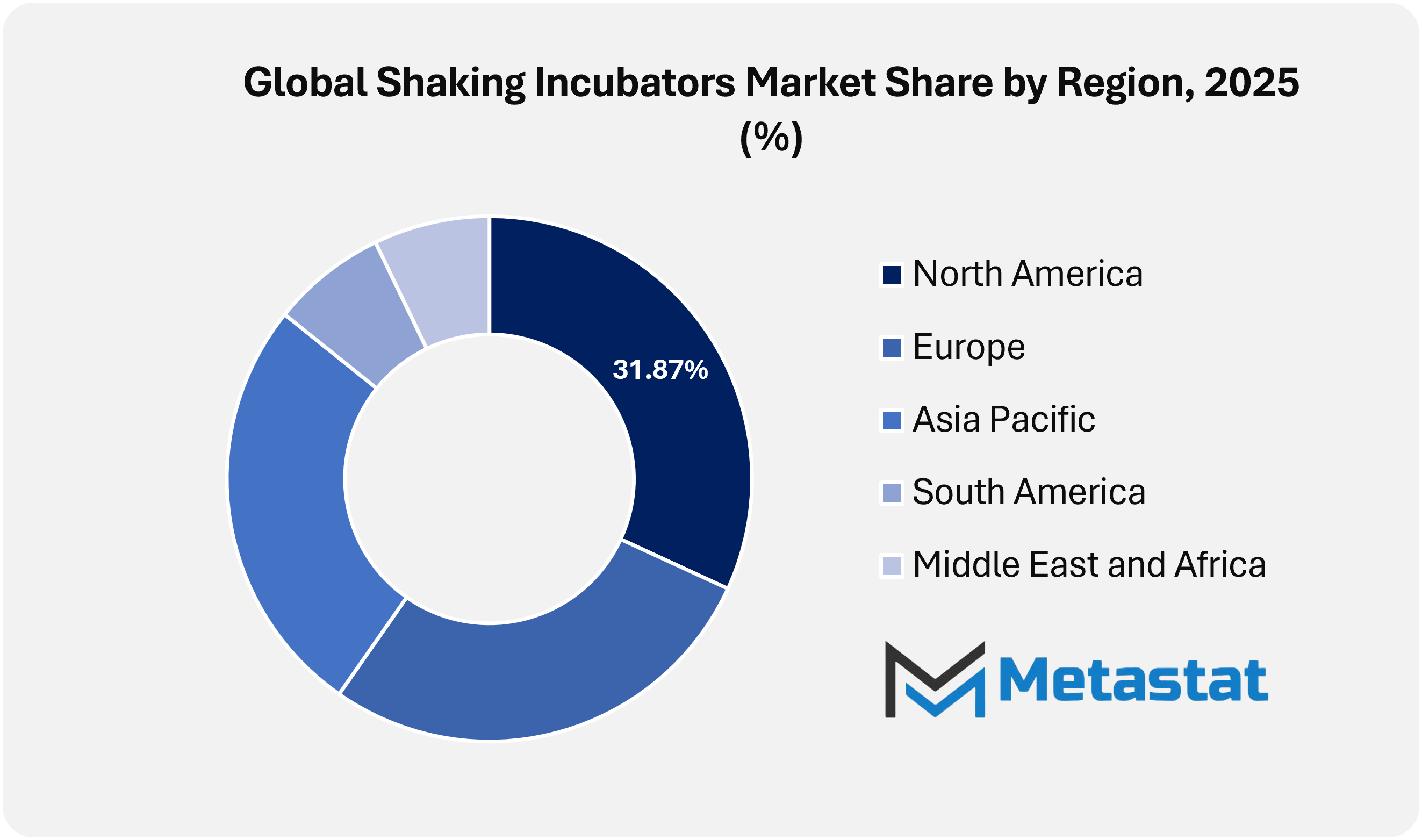
The global shaking incubators market is growing steadily as laboratories place greater importance on precision, reproducibility, and workflow efficiency across research and production activities. These systems are widely used in microbiology, cell culture, molecular biology, and pharmaceutical research, where stable temperature control and uniform agitation are essential. By supporting consistent incubation conditions along with effective oxygen transfer and nutrient distribution, shaking incubators remain a critical component of modern laboratory operations. Demand is expected to stay strong with continued expansion in biotechnology research, vaccine development, and academic scientific activity across developed and emerging markets.
Pharmaceutical and biotechnology companies are increasing investment in research and development, which continues to support demand for advanced laboratory equipment. Universities and research institutes are also upgrading laboratory infrastructure to improve experimental precision and operational efficiency. Modern shaking incubators increasingly feature digital control panels, programmable settings, energy-efficient designs, and improved safety functions. Manufacturers are also focusing on compact footprints to suit laboratories with space constraints while maintaining high performance. The addition of automation and remote monitoring capabilities is further strengthening adoption in facilities that require ongoing process visibility and reliable performance tracking.
Several companies are actively contributing to market development through product innovation, distribution expansion, and strategic partnerships. Major participants include Thermo Fisher Scientific Inc., Eppendorf SE, INFORS HT AG, Adolf Kühner AG, Sartorius AG, Benchmark Scientific, Inc., OHAUS Corporation, IKA-Werke GmbH & Co. KG, Corning Incorporated, and Jeio Tech Co., Ltd. Other important competitors include Yamato Scientific Co., Ltd., BEING Scientific Inc., Amerex Instruments, Inc., SCILOGEX, LLC, Labnet International, Inc., Boekel Scientific, Crystal Technology & Industries, Inc., Grant Instruments Ltd., Cole-Parmer Instrument Company, LLC, and Wuxi NEST Biotechnology Co., Ltd. Additional market participants such as SciQuip Ltd., Inheco GmbH, Avantor, Inc., Labwit Scientific, Biosan SIA, Taitec Corporation, Labtron Equipment Ltd., Bionics Scientific Technologies Pvt. Ltd., Boxun Medical, Shanghai Zhicheng Analytical Instrument Manufacturing Co., Ltd., and CARON Scientific & Services, Inc. continue to strengthen competition through regional expansion and product enhancement.
Market size is forecast to rise from USD 1,322.6 million in 2025 to over USD 2,357.4 million by 2033.
Automation and digital monitoring are expected to reshape laboratory workflows, with shaking incubators increasingly integrated into centralized data systems that support real-time process visibility. Connected laboratory management platforms are likely to improve tracking of agitation speed, temperature stability, and operating consistency, allowing researchers to replicate experimental conditions more effectively across facilities. Hospitals, research laboratories, and biotechnology centers are expected to increase adoption of compact and advanced shaking incubator systems to support specialized testing, pathogen research, and high-value biological workflows.
This research report categorizes the Shaking Incubators market based on key segments and regions, forecasts revenue growth, and analyses trends in each submarket. The report analyses the key growth drivers, opportunities, and challenges influencing the Shaking Incubators market. Recent market developments and competitive strategies such as expansion, product launch, partnership, merger, and acquisition have been included to draw the competitive landscape in the market.
The report strategically identifies and profiles the key market players and analyses their core competencies in each sub-segment of the Shaking Incubators market.
|
Report Attributes |
Details |
|
Study Period |
2021-2033 |
|
Base Year |
2025 |
|
Estimated Year |
2026 |
|
Forecast Period |
2026-2033 |
|
Historical Period |
2021-2025 |
|
Growth Rate |
CAGR 7.5% from 2026 to 2033 |
|
Revenue Unit |
USD million |
|
Sales Volume Unit |
Units |
|
Segmentation |
By Product Type, Automation Level, Application, End-User, and Region |
|
By Region |
North America (By Product Type, Automation Level, Application, End-User, and Country)
|
|
Europe (By Product Type, Automation Level, Application, End-User, and Country)
|
|
|
Asia Pacific (By Product Type, Automation Level, Application, End-User, and Country)
|
|
|
South America (By Product Type, Automation Level, Application, End-User, and Country)
|
|
|
Middle East and Africa (By Product Type, Automation Level, Application, End-User, and Country)
|
Find answers to common questions about this report
High equipment cost and service complexity tied to temperature uniformity, RPM accuracy, and long-run reliability will hamper the market growth within the forecast period.
North America region dominates the market.
The Global Shaking Incubators market is expected to grow at a CAGR of 7.5% over the forecast period (2026-2033).
Top players operating in the Shaking Incubators industry include Thermo Fisher Scientific Inc., Eppendorf SE, INFORS HT AG, Adolf Kühner AG, Sartorius AG, Benchmark Scientific, Inc., and OHAUS Corporation.
The Benchtop Shaking Incubators is the leading type segment in the Global market.
Global Shaking Incubators market is estimated to reach USD 2,357.4 million by 2033.
The Metastat Insights analysis shows that the North America Shaking Incubators market size is estimated to be USD 721.8 million by 2033.
Increased biopharma, biotech, and microbiology culture workloads in research, process development, and QC and Higher adoption of controlled-agitation incubation for reproducible growth and mixing in flasks and microplates are key driving factors, boosting the market.
The Metastat Insights study shows that the Global Shaking Incubators market size was USD 1,322.6 million in 2025.
The analysts below cover Healthcare research at Metastat Insights.
LEAD ANALYST
Utkarsh Khirodkar is a Lead Market Research Analyst at MetaStat Insight, specializing in market intelligence, technology sector assessments, and competitive strategy.

LEAD PRINCIPAL ANALYST, PHARMA AND HEALTHCARE
Food and Beverages · Healthcare · Healthcare IT · Medical Devices
Ajay Devgire is the Lead Healthcare Analyst at MetaStat Insight, leading strategic research and market intelligence initiatives across the global healthcare domain.
Tracking ceramic matrix composite adoption in high-bypass aero engines requires strict attention to material qualification cycles and FAA airworthiness testing milestones. The MetaStat Insight team provided a detailed timeline of silicon carbide fiber manufacturing capacity and commercial foundry lead times. Having clear visibility into upstream thermal barrier coating supply helped us stress-test our long-term component procurement strategy.
Transitioning ultra-class mining haul trucks to alternative power requires concrete data on remote hydrogen refueling infrastructure economics. The report evaluated megawatt-scale electrolyzer installation expenses, onsite storage safety mandates, and heavy-duty fuel cell stack degradation under continuous duty cycles. That technical rigor helped our engineers benchmark realistic total operating cost horizons for off-highway fleet decarbonization.
Enterprise zero-trust network rollouts are often slowed down by multi-cloud transit latency and proprietary hardware retirement schedules. This study provided realistic total cost of ownership models comparing cloud-delivered security edge solutions against traditional hardware refreshes. The analysis of contract renewal lengths and software maintenance fees gave us clear visibility into enterprise replacement cycles over the next three to five years.
Explore related market intelligence reports worth reading alongside this one.