
LEAD ANALYST
Utkarsh Khirodkar is a Lead Market Research Analyst at MetaStat Insight, specializing in market intelligence, technology sector assessments, and competitive strategy.

Global Smart Lock Market Size, Share, By Lock Type (Deadbolt Locks, Mortise Locks, Cylindrical Lever and Knob Locks, Rim Locks, Smart Cylinders and Retrofit Lock Operators, Padlocks), By Communication Protocol (Bluetooth, Wi-Fi, Thread, Z-Wave, Zigbee), By End-Use Industry (Residential, Hospitality, Offices and Retail, Industrial and Storage Facilities, Healthcare, Education), By Distribution Channel (Direct Sales, Distributors and Wholesalers, Physical Retail Stores, E-commerce), Industry Analysis, Growth, Trends, and Forecast, 2026-2033
Report ID
MSI-5595
Published
October, 2026
Pages
253 Pages
Format
Historical
Base year
Forecast
Forecast period
Report Details
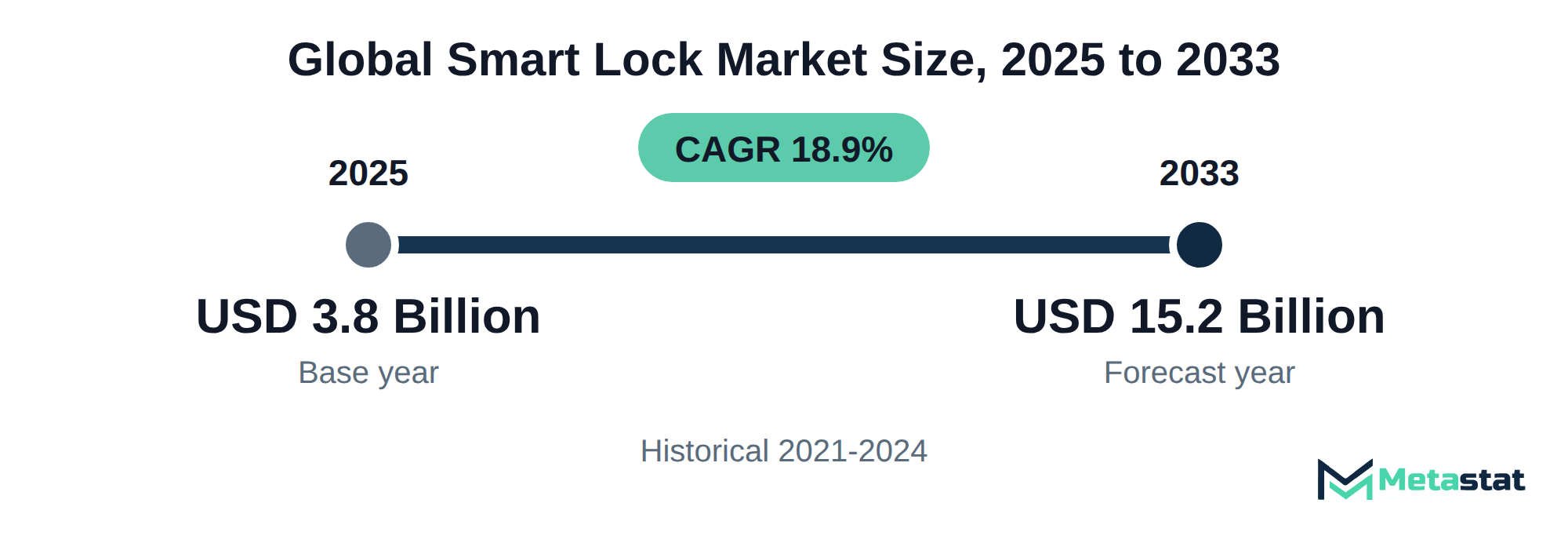
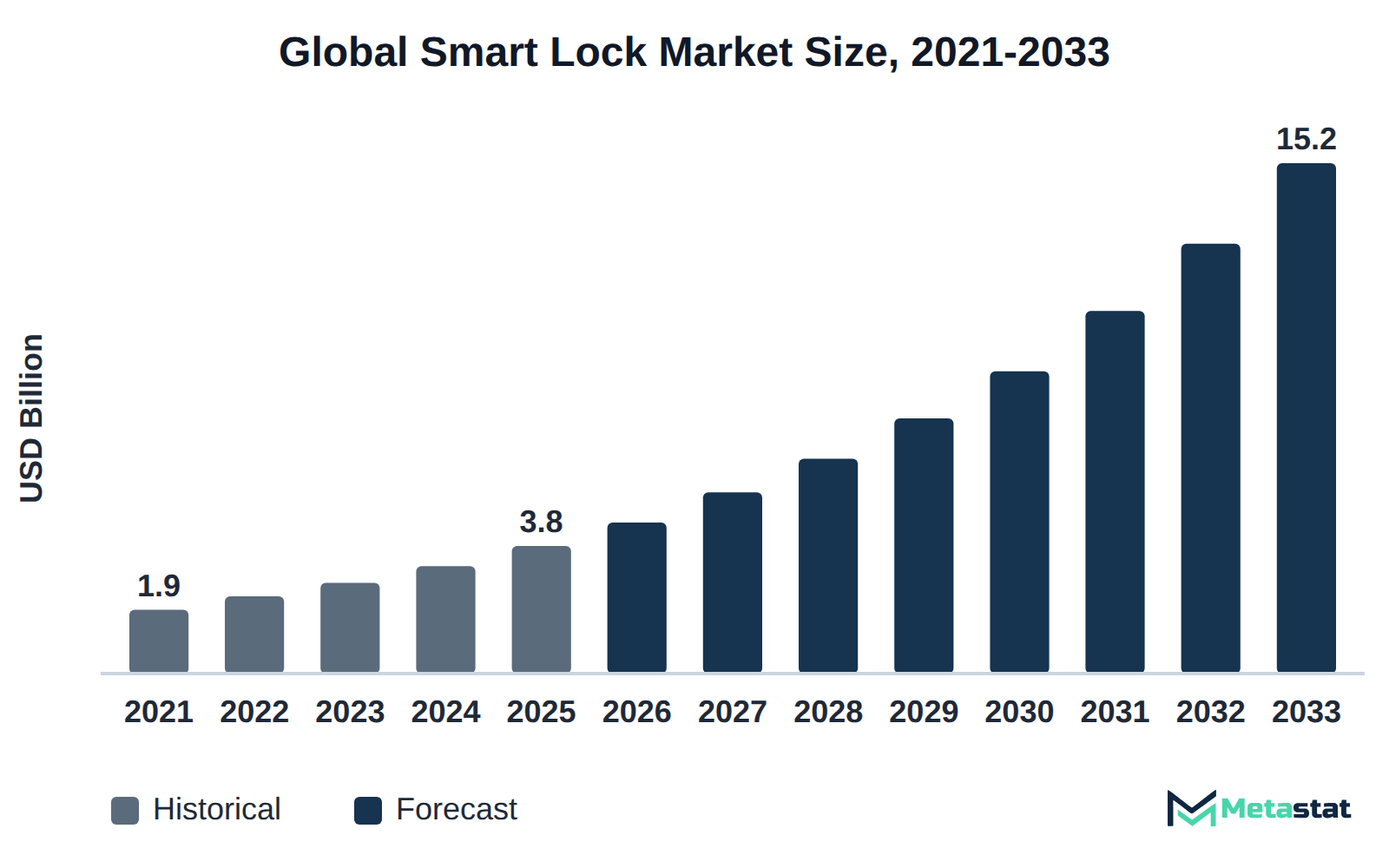
Market Valuation: Valued at $3.8 Billion in 2025, projected to reach $15.2 Billion by 2033 at a 18.9% CAGR.
Dominant Segment: The deadbolt locks segment leads the market, driven by consumer preference for robust security options in residential applications. This segment is projected to reach USD 5.7 billion by 2033, reflecting the increasing focus on home safety.
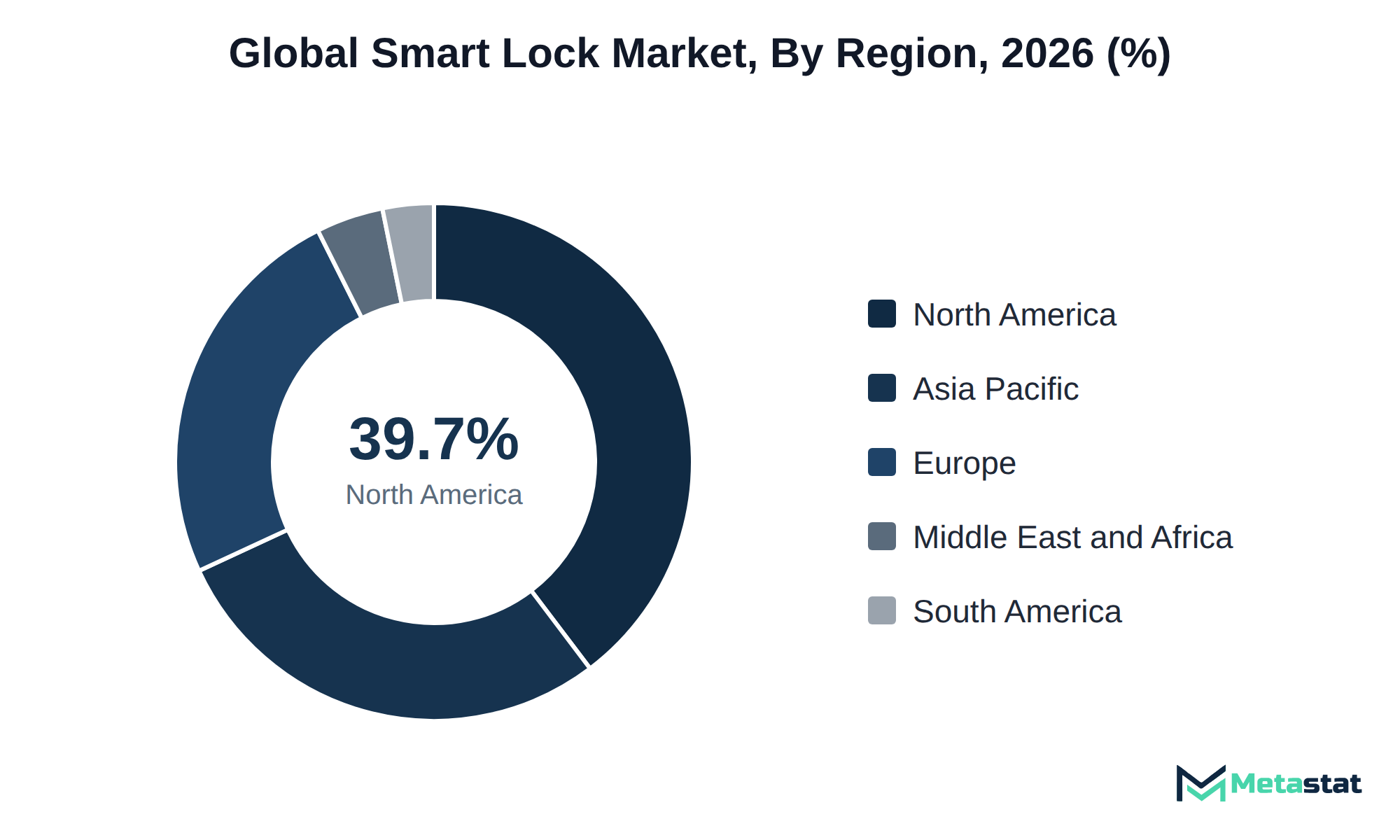
Geographic Lead: North America holds the largest market share at 39.7% in 2025, with the US expected to lead in growth due to the expansion of smart home technology and consumer demand for integrated security solutions.
What's Inside: The report offers a comprehensive analysis of the Smart Lock market, including competitive coverage, detailed segmentation by lock type, communication protocol, end-use industry, and distribution channel, along with forecasts through 2033.
High Growth in Hospitality Sector: The hospitality sector is projected to grow at a CAGR of 20.9% through 2033, driven by the need for enhanced security and streamlined check-in processes in hotels and vacation rentals.
Wi-Fi Technology Enhances Functionality: Wi-Fi technology is expected to reach USD 5.3 billion by 2033, significantly enhancing smart lock functionality by enabling remote access and control, appealing to tech-savvy consumers.
Choose Your License
Global Smart Lock Market
The global Smart Lock market was valued at USD 3.8 billion in 2025 and is projected to reach USD 15.2 billion by 2033, growing at a CAGR of 18.9% over the forecast period.
The Smart Lock market encompasses various locking mechanisms that enhance security and convenience in residential, commercial, and industrial applications. Buyers invest in these innovative solutions to improve access control, integrate with smart home systems, and enhance safety. The increasing emphasis on security features and the growing trend of automation in locking systems drive spending in this sector.
Growth in the market is fueled by rising demand for advanced security solutions, particularly in residential settings. Deadbolt locks represent the largest segment by value, reflecting consumer preference for strong security options. North America holds 39.7% of the market in 2025, with the US leading in 2026. The expansion of smart home technology further accelerates adoption, driven by consumers seeking effective integration of security devices.
Regional dynamics significantly impact the Smart Lock market, with North America holding the largest share compared to Europe and Asia Pacific. Europe accounts for 24.5%, while Asia Pacific holds 28.4% of the market. The need for enhanced security in urban areas, coupled with the proliferation of smart devices, positions these regions for continued growth in smart lock adoption.
The Smart Lock market caters to evolving demand for enhanced security by building advanced technologies into the user experience. Buyers invest in smart locks for features including remote access, real-time monitoring, and integration with smart home ecosystems. The increasing need for security in residential and commercial spaces drives the adoption of these innovative locking solutions, reflecting a shift towards smart technology in everyday applications.
The market experiences significant growth driven by rising consumer awareness regarding security and convenience. The residential segment stands out with the highest value, fueled by increasing home automation trends and the desire for enhanced safety measures. The region benefits from high purchasing power and a strong inclination towards adopting advanced security solutions.
Technological advancements continue to shape the competitive landscape, enabling manufacturers to introduce more sophisticated products. The growing inclination towards e-commerce platforms for purchasing smart locks enhances accessibility for consumers, contributing to market expansion. Investment in smart lock technologies is expected to stimulate further development, enhancing appeal across various end-use industries.
Matter-over-Thread compatibility significantly influences purchasing decisions within the Smart Lock market. This innovative protocol supports integration between various smart home devices, enhancing user experience through increased interoperability. The deployment of Matter-over-Thread allows smart locks to connect more efficiently with home automation systems, addressing consumer demand for streamlined functionality and ease of use.
Consumers show heightened concern about battery life, particularly the longevity and maintenance of smart lock systems. Extended battery life becomes crucial for buyers, particularly for residential applications, where convenience and reliability are essential. The residential segment is projected to experience substantial growth, reaching USD 7.7 billion by 2033, reflecting the increasing preference for smart lock systems that minimize maintenance and maximize efficiency.
The emphasis on Matter-over-Thread compatibility, combined with advancements in battery technology, shapes purchasing behavior. Buyers prioritize smart locks featuring these attributes, ultimately ensuring improved customer satisfaction and driving long-term adoption within the market. This evolution creates opportunities for manufacturers to differentiate their products, strengthen competitive positioning, and improve profitability.
The compatibility of mortise and rim locks significantly influences retrofit installation costs within the Smart Lock market. Retail prices for mortise locks are projected to reach USD 4.4 billion by 2033, reflecting an increasing demand for their secure installation options. Retrofit installations of smart locks often require specific door modifications, which add to the overall expense. Mortise locks typically require more complex door preparations compared to rim locks, resulting in higher labor costs and material expenses for homeowners and contractors.
Residential buyers, particularly in the renovation segment, frequently face decisions based on the type of existing door hardware compatibility. Installation costs for retrofitting mortise locks, driven by their need for precise fitting, surpass those for rim locks. Buyers factor in these installation costs when evaluating smart lock options, leading to variations in purchasing decisions. Compatibility and retrofit expenses are a key consideration for contractors and individual consumers, and they influence the adoption of smart locks in residential environments.
Temporary mobile keys facilitate a contactless check-in experience for guests in rental properties, addressing the increasing demand for convenience and safety among travelers. This trend aligns with the growing adoption of smart locks in the residential sector, projected to reach USD 7.7 billion by 2033, reflecting a compound annual growth rate of 18.2%. The implementation of temporary mobile keys allows property owners to provide guests with easy access, enhancing customer satisfaction while reducing the need for physical key exchanges.
The rise of the sharing economy and the increased prevalence of short-term rentals significantly drive this trend. Hosts recognize the need for secure and user-friendly solutions that cater to the preferences of tech-savvy travelers, ensuring that their properties remain competitive in the market. Temporary mobile keys simplify the check-in process and strengthen security, because property owners can deactivate keys remotely once a rental period concludes. This operational efficiency generates cost savings and improves overall property management for owners.
Choosing a smart lock in South Africa requires careful consideration of various factors, particularly the communication protocol. Smart locks employ different communication methods, including Bluetooth, Wi-Fi, and Z-Wave, which affect functionality and compatibility with other smart home devices. For instance, Wi-Fi-enabled smart locks are projected to reach a value of USD 5.3 billion by 2033, reflecting their popularity among consumers seeking reliable internet connectivity and remote access features.
Understanding the implications of each communication protocol is crucial for buyers. Bluetooth locks offer direct connectivity to smartphones for localized control, while Wi-Fi locks facilitate remote access from anywhere with internet service. This flexibility is important for users who prioritize convenience and security. In the smart lock market, selecting the appropriate communication method influences the overall user experience, including ease of installation and integration with existing smart home systems.
Investing in a smart lock that aligns with specific needs significantly enhances home security. By evaluating the communication protocols available, buyers in South Africa maximize the benefits of smart locks while ensuring their investment meets future smart home compatibility requirements.
The growing concern for home security drives increased demand for smart locks among residential buyers. Homeowners prioritize securing their properties against potential break-ins, leading to higher spending on advanced locking mechanisms. Shifts in consumer behavior emphasize the need for enhanced security measures, prompting buyers to invest in smart locks that offer features like remote monitoring and access control. The shift towards smart technologies in home security positions the Smart Lock market for strong expansion throughout the forecast period.
Wi-Fi technology significantly enhances the functionality of smart locks, facilitating remote access and control via smartphones or other connected devices. This communication protocol allows users to monitor and manage locks from anywhere, improving convenience and security. Increased availability of high-speed internet and Wi-Fi-enabled devices drives demand for smart locks equipped with this technology, particularly among tech-savvy consumers seeking advanced home automation solutions.
The integration of Wi-Fi technology in the Smart Lock market supports connectivity with home security systems and other smart devices, enabling comprehensive smart home ecosystems. This feature appeals to homeowners and renters focused on convenience and integrated security solutions. While the market expands, manufacturers prioritize Wi-Fi compatibility in their product offerings, enhancing competitiveness while meeting growing consumer expectations.
Price sensitivity significantly affects demand for smart locks, particularly among residential buyers. Many consumers prioritize budget considerations when selecting locking solutions, leading to slower adoption rates of advanced smart locks. High upfront costs associated with purchasing smart locks, coupled with ongoing expenses for installation and maintenance, deter potential buyers. This restraint is pronounced in regions with lower disposable income, where consumers exhibit reluctance to invest in innovative technologies. The market experiences a prolonged decision-making process, resulting in smaller order volumes and delayed replacements of traditional locking systems. Price sensitivity influences market growth by limiting the reach of premium products, ultimately affecting the competitive dynamics within the Smart Lock market. Buyers in the residential segment often seek cost-effective alternatives, which hampers the overall expansion of advanced locking solutions.
Rising input costs represent a significant challenge for suppliers within the Smart Lock market. Factors including increasing prices of raw materials and components directly influence manufacturing expenses. Suppliers face pressure to maintain competitive pricing while ensuring quality and innovation in their offerings. This situation often results in margin compression, compelling suppliers to explore alternative sourcing strategies or process optimizations to mitigate the impact of rising costs.
In response, suppliers are investing in advanced manufacturing techniques and technologies aimed at enhancing efficiency. Automation and streamlined production processes help reduce overall costs, enabling suppliers to maintain profitability. Such automation aligns with broader smart manufacturing practices. Partnerships with material suppliers and vertical integration strategies allow for better control over raw material costs. These proactive measures contribute to the ongoing viability of suppliers within the market during fluctuating input expenses.
The hospitality sector represents a significant opportunity for growth within the Smart Lock market. Increasing demand for enhanced security and streamlined check-in processes drives the adoption of smart locking solutions in hotels and vacation rentals. The segment is projected to experience a compound annual growth rate (CAGR) of 20.9% through 2033, reflecting the rising need for innovative access control solutions in this industry. Smart locks facilitate contactless check-ins, improving guest experiences while ensuring property security. With technology advancements, smart locks equipped with Bluetooth and Wi-Fi capabilities allow integration into existing property management systems. This growth in the hospitality sector aligns with broader trends of digitization and automation, positioning it as a vital contributor to overall market expansion. Smart locks in hospitality venues reflect a focus on safety and customer satisfaction, which gives businesses that prioritize advanced security measures a competitive advantage.
The Global Smart Lock market is segmented based on Lock Type, Communication Protocol, End-Use Industry, and Distribution Channel.
Deadbolt Locks segment is valued at USD 1.8 billion in 2026 and is projected to reach USD 5.7 billion by 2033, at a CAGR of 17.7% during the forecast period. This type of lock serves primarily residential customers seeking enhanced security solutions. The increasing focus on home safety drives demand for deadbolt locks, differentiating this segment from others due to its specific use in residential applications. Compared to mortise locks, which have a higher CAGR of 20.1%, deadbolt locks exhibit growth influenced by the push for smart home technologies. The segment's emphasis on security features aligns with rising consumer expectations and supports strong adoption in the residential sector. Strong growth potential exists, fueled by technological advancements and innovative designs. These factors collectively position the segment for sustained expansion throughout the forecast period.
Mortise Locks segment is estimated to reach USD 4.4 billion by 2033, at a CAGR of 20.1% during the forecast period. This type of lock is widely used in both residential and commercial settings, providing enhanced security through its sturdy design and installation method. Rising demand for secure access solutions drives significant interest in mortise locks, particularly among homeowners and businesses prioritizing safety. Unlike cylindrical locks, mortise locks offer a more secure fit into the door, making them a preferred choice for various applications. The segment demonstrates faster growth compared to other lock types, driven by an increasing preference for high-security options. Innovative features associated with mortise locks attract buyers seeking advanced locking solutions, positioning this segment favorably within the overall market.
Cylindrical Lever and Knob Locks segment is expected to reach USD 1.3 billion by 2033. This segment primarily serves residential users seeking a blend of convenience and security in access control solutions. Demand for these locks is driven by the rising focus on home automation and integration with smart home systems. This segment is projected to expand at a slower growth rate compared to other segments, with a compound annual growth rate (CAGR) of 18.2%, reflecting a steady yet less aggressive adoption trend. In contrast, Mortise Locks exhibit a faster growth trajectory at a CAGR of 20.1%, appealing to markets requiring higher security levels, including commercial applications. Users prioritize pricing and ease of installation when selecting cylindrical lever and knob locks, distinguishing them from other lock types in both market position and consumer profile.
Rim Locks segment is projected to grow at a CAGR of 19.9% during the forecast period. Typically used in residential applications, these locks provide a combination of security and ease of installation. The increasing focus on home security drives adoption among homeowners and property managers. Rim locks differ from other lock types due to their straightforward installation, which appeals to a wide range of buyers, particularly those seeking cost-effective solutions. The segment offers competitive pricing compared to others, making it an attractive option for budget-conscious consumers. The growing trend of smart home integration further increases demand for rim locks, encouraging manufacturers to innovate and enhance functionality for this segment.
Smart Cylinders and Retrofit Lock Operators incorporate advanced locking technology designed for both new installations and upgrading traditional locking systems. This segment appeals to homeowners, property managers, and businesses seeking an efficient transition to smart locking solutions that enhance security and convenience. Demand for this sub-segment is driven by increasing awareness of smart home technology and the growing emphasis on home automation. The rise of remote access capabilities facilitates broader adoption among users who prioritize control over their security systems. Compared to other lock types, this segment offers unique advantages including ease of installation and retrofit compatibility, appealing to those seeking cost-effective upgrades without extensive renovations. This adaptability sets it apart from traditional lock types, allowing straightforward integration into existing door hardware.
Padlocks serve versatile locking solutions designed for a range of applications, including securing gates, lockers, and bicycles. Commercial and residential users frequently rely on these products for their simplicity and effectiveness. The segment benefits from increasing awareness about personal security, driving demand for reliable locking mechanisms. In addition, the wide availability of padlocks through various distribution channels, including e-commerce, enhances accessibility. Unlike other lock types, padlocks feature a unique combination of portability and affordability, appealing to budget-conscious buyers. This segment's growth potential remains steady, although it does not exhibit the same rapid expansion seen in segments like Mortise Locks, which cater to evolving technological demands. The padlock's enduring popularity lies in its straightforward design and ease of use, factors that contribute to its continued relevance in the broader market.
Cabinet, locker, and server-rack locks serve specific applications in residential and commercial environments, providing secure access to valuable items and sensitive information. These solutions find use in homes, offices, and data centers, where security is critical. Demand in this segment derives from increasing security awareness and the need for robust protection against unauthorized access. Compared to other types of locks, the growth trajectory remains moderate, primarily reflecting the niche application of these solutions. In contrast to more widely adopted categories, including residential locks, this segment attracts a more specialized buyer demographic focused on security and functionality, influencing purchasing decisions. The market continues to evolve with advancements in technology, addressing the demand for enhanced security features and integration with smart systems.
Bluetooth technology is valued at USD 1.8 billion in 2026 and is projected to reach USD 4.9 billion by 2033, at a CAGR of 15.7% during the forecast period. This communication protocol is widely used in residential settings, allowing users to control smart locks via mobile applications, thus enhancing convenience and accessibility. The increasing demand for wireless connectivity drives growth in this segment, particularly among tech-savvy consumers who prioritize easy integration with their devices. In contrast to other communication protocols like Wi-Fi, which is expected to exhibit a higher CAGR of 19.3%, Bluetooth offers a lower price point and ease of installation, appealing to budget-conscious buyers. Adoption of Bluetooth technology remains supported by ongoing advancements in mobile applications, ensuring consistent growth within the Smart Lock market.
Wi-Fi segment is estimated to reach USD 5.3 billion by 2033, at a CAGR of 19.3% during the forecast period. This segment serves critical functions in various applications, primarily for residential and commercial users seeking advanced connectivity and remote control capabilities. Demand for Wi-Fi-enabled smart locks arises from the increasing emphasis on home security and convenience, particularly among tech-savvy consumers who prioritize integrated solutions. Compared to other communication protocols, Wi-Fi technology typically offers a faster data transfer rate and broader range, resulting in higher user satisfaction. The anticipated growth in this segment highlights the shift towards more sophisticated locking solutions, driven by evolving consumer preferences and technological advancements. Continued innovation in Wi-Fi connectivity supports this trend, enhancing the versatility and functionality of smart locks.
Thread segment is expected to reach USD 2.5 billion by 2033. This communication protocol facilitates device connectivity within smart home ecosystems, appealing primarily to tech-savvy homeowners and developers focused on interoperability. Strong demand for effective integration between devices fuels growth in this segment, significantly benefiting from the increasing adoption of smart home technologies. The Thread segment differentiates itself with a solid CAGR compared to other communication protocols like Z-Wave, which shows a lower growth rate of 12.1%. Enhanced security and low power consumption further drive its appeal, making it a preferred choice for manufacturers seeking to offer reliable smart lock solutions. The market's overall expansion supports the increasing prevalence of smart locks in various residential and commercial settings.
Z-Wave technology is projected to grow at a CAGR of 12.1% during the forecast period. Primarily applied in residential applications, Z-Wave enables communication between smart locks and home automation systems, allowing users to manage access remotely. This segment attracts buyers focused on security and convenience, particularly homeowners seeking integration with other smart home devices. Increasing consumer awareness about home automation drives growth in this segment. Z-Wave differentiates itself from other communication protocols due to its lower power consumption and strong mesh network capabilities, which enhance connectivity in large homes. With a projected market value reaching USD 2.5 billion by 2033, this segment presents significant potential for expansion, contributing to overall demand in the smart lock market.
Zigbee technology is a vital component in smart lock solutions, particularly for applications that prioritize energy efficiency and secure wireless communication. This protocol is predominant in residential settings, enabling users to control and monitor locks through compatible devices. Demand for Zigbee smart locks stems from the increasing interest in integrated home automation systems. This segment distinguishes itself from others within the Communication Protocol group through its emphasis on low-power consumption and robust security features. While Bluetooth and Wi-Fi technologies gain traction due to their widespread use, Zigbee offers a unique advantage in scenarios requiring numerous interconnected devices. In this market, Zigbee technology is favored for its ability to enable effective communication between multiple smart home devices.
This sub-segment encompasses proprietary RF and cellular technologies used in smart locks. These solutions target a variety of applications, including residential and commercial sectors, where enhanced security is essential. Demand for proprietary RF and cellular technologies stems from the increasing focus on integrating smart home devices and enhancing remote access capabilities. Innovations in communication technologies drive growth, providing users with options that offer higher data security and reliable connectivity. Compared to segments like Wi-Fi and Bluetooth, proprietary RF and cellular solutions often cater to niche markets, focusing on specific security needs and offering unique features tailored to particular user groups. This differentiation contributes to varied pricing strategies and adoption rates across the broader market.
The residential segment is valued at USD 2.4 billion in 2026 and is projected to reach USD 7.7 billion by 2033, at a CAGR of 18.2% during the forecast period. This segment targets homeowners and tenants seeking enhanced security and convenience. Key drivers include the increasing trend of smart home technology adoption and heightened awareness of home security. Compared to other segments like hospitality, residential applications experience a different buying pattern, often relying on individual customer preferences rather than bulk purchasing. Product innovations focused on user-friendly interfaces and integration with other smart home devices are crucial for maintaining growth in this segment. With the growing emphasis on security features and remote access capabilities, the residential segment is expected to gain significant traction in the market.
Hospitality segment is estimated to reach USD 3.1 billion by 2033, at a CAGR of 20.9% during the forecast period. This segment primarily serves hotels and accommodations, facilitating secure access for guests and staff. Increased focus on enhancing guest experiences drives demand in this sector, highlighting the importance of secure entry systems. Unlike other segments, the hospitality sector experiences faster growth due to rising adoption of smart technologies aimed at improving operational efficiency and guest satisfaction. This segment stands out with rapid technological advancements, emphasizing the integration of smart locks that provide features like mobile access and remote management. These features form part of broader smart hospitality technology used by hotels to manage guest access. Such innovations position the hospitality segment as a leader in the Smart Lock market, ensuring a heightened focus on security while enhancing the overall guest experience.
The Offices and Retail segment is expected to reach USD 1.8 billion by 2033. This segment serves various businesses, including corporate offices and retail establishments, focusing on securing premises and managing access control. The growing emphasis on security and convenience drives demand in this sub-segment, particularly due to the increasing adoption of smart technologies in commercial spaces. With a projected CAGR of 17.4%, this segment demonstrates a steady growth rate compared to other segments. Enhanced security solutions tailored for commercial needs differentiate this segment from the residential market, which experiences a higher growth rate. The rising trend in integrating smart locks with building management systems further supports market expansion, pushing businesses to invest in modern security technologies that streamline operations and enhance safety.
Industrial and Storage Facilities segment is projected to grow at a CAGR of 17.4% during the forecast period. This segment primarily targets warehouses, factories, and storage units, where secure access is critical for protecting assets and ensuring operational efficiency. Adoption of smart locks in this sector is driven by increasing demand for enhanced security solutions and growing trends in automation within industrial environments. Compared to other segments, this area experiences a moderate growth rate, influenced by unique security requirements and the need for integration with existing security systems. The focus on improved monitoring and access control in industrial settings highlights the importance of adopting advanced locking technologies. With a projected market value reaching USD 1.8 billion by 2033, this segment contributes significantly to the overall growth of the Smart Lock market.
Healthcare applications employ smart lock technology to enhance security in medical facilities, ensuring restricted access to sensitive areas and protecting patient information. Adoption is driven by increasing demand for improved safety measures and the need for compliance with strict regulatory standards in healthcare environments. Compared to other segments in the market, the Healthcare sector experiences a strong push toward innovation, particularly in integrating advanced locking systems with electronic health records and monitoring solutions. This segment differentiates itself through higher security needs and distinct buyer profiles, including hospitals and clinics, which prioritize reliability and efficiency. These factors contribute to a competitive landscape where advanced features and compliance drive purchasing decisions.
Educational institutions employ advanced locking systems to enhance security and streamline access management for students, staff, and visitors. These solutions often incorporate features like remote access and monitoring, tailored to the unique needs of schools, universities, and training centers. The increasing emphasis on campus safety and the adoption of smart technologies drive growth in this segment. The shift towards digital education spurs demand for efficient and secure access solutions. Compared to other segments, including residential and hospitality, this segment exhibits a different pace in growth due to varying budget allocations and priorities among educational institutions. The focus on enhancing safety and efficiency in educational environments sets it apart, alongside specific regulatory requirements that influence purchasing decisions. The market is expected to respond to these evolving demands while integrating innovative access control technologies.
This sub-segment focuses on government and public facilities, which prioritize security and access control. Government buildings, educational institutions, and public infrastructure rely on advanced locking solutions to ensure safety and efficient management of access. Increasing security concerns drive the demand for smart locks in these environments, where monitoring and control of access points are critical. Compared to other segments, this sub-segment emphasizes reliability and compliance with regulations, often leading to higher specifications and costs. Adoption of smart lock technology in government and public facilities involves rigorous standards for performance and security, differentiating it from residential or commercial applications. While other segments experience rapid growth rates, the unique requirements of government applications often lead to more measured implementation timelines, contributing to steady yet significant demand in the market.
Direct Sales segment is valued at USD 1.3 billion in 2026 and is projected to reach USD 4.5 billion by 2033, at a CAGR of 19.7% during the forecast period. This channel facilitates direct transactions between manufacturers and end-users, particularly appealing to residential customers seeking tailored solutions. Rapid adoption of smart home technologies contributes significantly to this segment's growth, with homeowners prioritizing enhanced security and convenience. Unlike other channels, Direct Sales offers a more personalized experience, allowing buyers to interact directly with manufacturers, ensuring product understanding and satisfaction. This segment outpaces others in the Distribution Channel category, reflecting a trend toward increased consumer engagement and direct purchasing power. The market is expected to continue evolving, aligning with consumer preferences for direct access to innovative locking solutions.
Distributors and Wholesalers segment is estimated to reach USD 5 billion by 2033, at a CAGR of 16.7% during the forecast period. This segment facilitates the sale of smart locks to various end-users, including residential, commercial, and industrial customers. The growth of this segment is driven by increasing demand for smart security solutions, which encourages suppliers to expand their offerings. Compared to other distribution channels, the Distributors and Wholesalers segment has a broader reach, enabling it to cater to diverse buyer groups while maintaining competitive pricing structures. This segment exhibits a stable growth trajectory, reflecting overall momentum within the market while adapting to shifts in consumer preferences for advanced security technologies.
Physical Retail Stores segment is expected to reach USD 1.6 billion by 2033. This segment serves retailers seeking to enhance security and convenience for customers through smart lock solutions, primarily in physical storefronts. The growing emphasis on customer experience alongside security drives the demand for advanced locking systems within retail environments. Comparatively, this segment exhibits a slower growth trajectory than E-commerce, which capitalizes on online shopping trends and technological integration. While E-commerce is projected to grow at a CAGR of 22.6%, Physical Retail Stores face challenges related to maintaining foot traffic and adapting to shifting consumer behaviors. Retailers increasingly invest in smart lock technology to streamline access control and enhance overall security, contributing to the segment's development in the Smart Lock market. These investments align with smart retail initiatives in physical storefronts.
E-commerce segment is projected to grow at a CAGR of 22.6% during the forecast period. This distribution channel facilitates online sales of smart locks, appealing to tech-savvy consumers and businesses seeking convenience and efficiency. The rise of online shopping has propelled demand, especially among residential and commercial buyers looking for advanced security solutions. Rapid technological advancements in e-commerce platforms enhance user experience, enabling integration of smart lock systems. Unlike traditional retail channels, the E-commerce segment demonstrates faster growth due to its accessibility and lower overhead costs. This segment enables broader reach, allowing consumers to compare products and prices easily. The market continues to expand while the shift toward digital purchasing habits influences buying behavior in various sectors.
Based on geography, the Global Smart Lock market is divided into North America, Europe, Asia-Pacific, South America, Middle East, and Africa.
North America has a major influence on the Smart Lock market, with a projected value of USD 5.2 billion by the end of 2033. This region accounts for 39.7% of the global market share in 2025, driven by growing demand in residential and hospitality sectors. The increasing focus on home automation and security enhancements influences adoption rates among consumers and businesses. Technological advancements in smart lock features facilitate integration with smart home ecosystems, further driving demand. The commitment to improving building security standards and regulations supports the expansion of the market. In this environment, the United States, Canada, and Mexico stand out as key markets, with rising investments in smart technologies shaping the future of access control solutions.
Europe holds a 24.5% share in the Smart Lock market, accounting for USD 1,004.1 million of the global value in 2025. Countries including Germany, France, the UK, Italy, and Spain demonstrate high adoption rates of smart locking technologies, driven primarily by increasing security concerns and advancements in home automation. The hospitality industry stands out in this region, where establishments seek enhanced security and operational efficiency through smart lock integration. Regulatory initiatives focused on improving safety standards in commercial buildings further stimulate market growth. The growing trend of smart home technology adoption supports demand across residential applications. Innovations in communication protocols, particularly Wi-Fi and Bluetooth, are expected to enhance connectivity and user experience within the smart lock segment.
Asia-Pacific demonstrates significant potential in the Smart Lock market, primarily driven by increasing demand for advanced security solutions in residential and commercial sectors. Countries including China and India lead the way in adopting innovative technologies, supported by urbanization and rising disposable incomes. Japan's focus on enhancing home automation systems further supports market growth. The region benefits from growing interest in smart home devices, where Wi-Fi and Bluetooth communication protocols dominate the segment. With a market share of 28.4% in 2025, Asia-Pacific is expected to contribute substantially to global revenue through 2033. Smart locks in hospitality and industrial applications offer varied use cases, which attract investment and increase competition among key players.
In South America, the Smart Lock market experiences notable growth driven by increasing urbanization and the demand for enhanced security solutions. The residential sector, particularly in Brazil and Argentina, highlights key user groups that prioritize advanced locking systems. Infrastructure development within urban centers supports market expansion, facilitating easier access to innovative technologies. By 2025, South America is projected to hold a 3.2% share of the global market. The integration of smart lock technology in new residential constructions reflects the growing trend toward automation and security. Emerging preferences for e-commerce distribution channels allow consumers to access a wider range of smart lock options, further contributing to growth in this region.
The Smart Lock market experiences gradual growth in the Middle East and Africa, driven by increasing investments in security technologies across various sectors. Countries including Saudi Arabia and the UAE prioritize advanced security solutions in residential and commercial applications, enhancing the demand for smart locks. Concerns regarding safety and access control in urban areas increase the need for reliable locking systems. South Africa contributes to market expansion, focusing on modernizing infrastructure and adopting smart technologies. With a market share of 4.2% in 2025, this region reflects an emerging interest in integrating smart lock systems into daily operations, influencing both residential and commercial sectors.
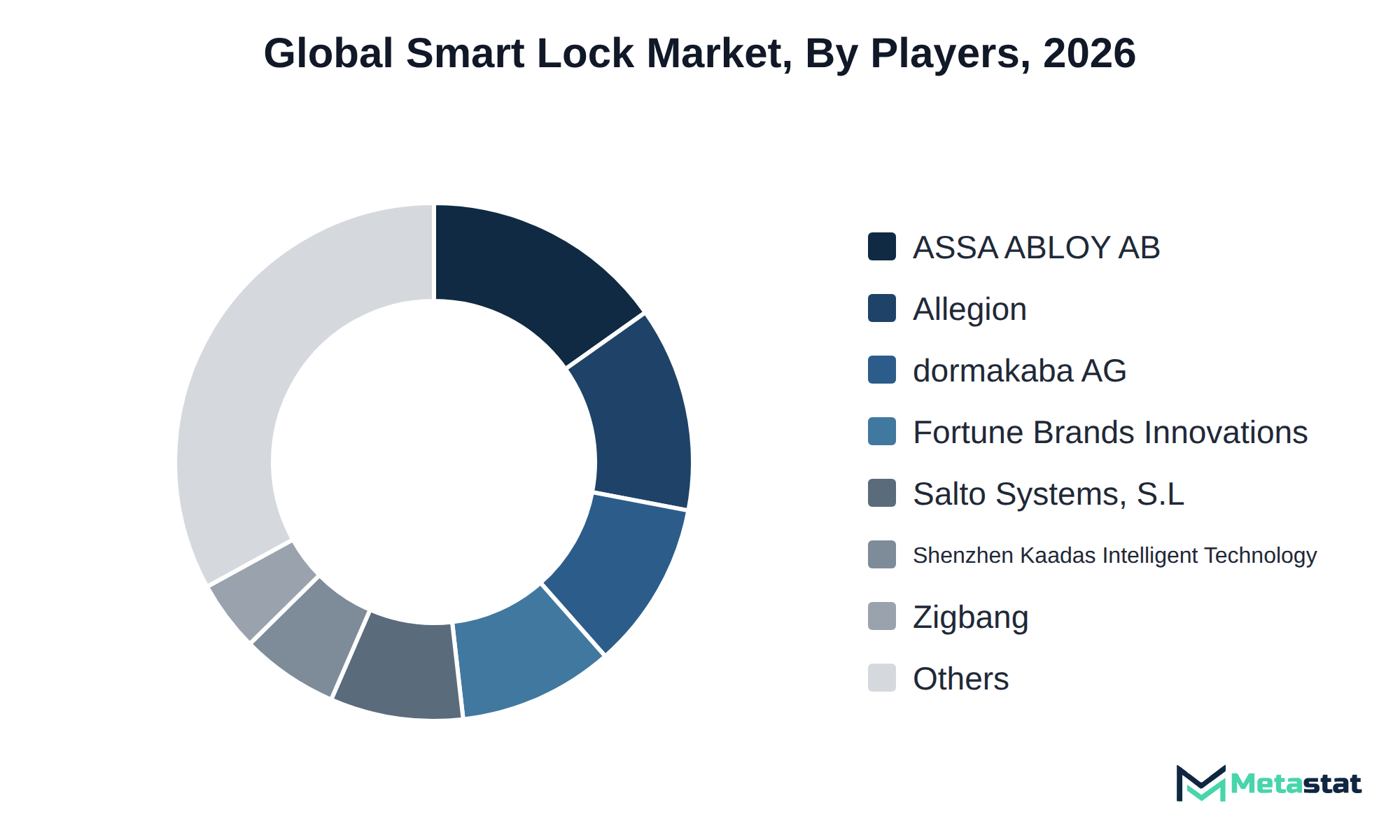
In the Smart Lock market, companies compete on multiple fronts, including price, customization, certification, and service quality. Buyers increasingly prioritize these factors when selecting smart lock solutions, leading firms to align their offerings with specific customer needs.
ASSA ABLOY AB and Allegion plc place significant emphasis on certification and security features, appealing to buyers in sectors requiring stringent compliance. Meanwhile, dormakaba Holding AG focuses on customization options, allowing clients to tailor solutions to their specific environments.
Shenzhen Kaadas Intelligent Technology Co., Ltd. and Xiaomi Corporation use competitive pricing to capture market share among cost-sensitive consumers. The increasing trend towards smart home ecosystems enhances the positioning of companies like Aqara LLC and Lockly, Inc., which integrate their products with broader home automation systems.
Achieving this growth hinges on several critical developments within the Smart Lock market. First, the residential sector, representing a significant share of demand, is projected to expand rapidly, driven by increasing consumer preference for smart home technologies. The adoption of Bluetooth and Wi-Fi communication protocols will enhance product connectivity, further supporting growth within this segment. The hospitality industry is expected to embrace smart lock solutions, enhancing security and guest convenience, which will contribute to overall market expansion.
Potential risks could hinder this progress. Supply chain disruptions and rising component costs challenge manufacturers, leading to delays in product availability. Such conditions could adversely affect the growth trajectory of the market. The competitive landscape in North America, which leads in market share, will require continuous innovation and adaptation to maintain an edge. While the forecast for the Smart Lock market remains positive, attention to these developments and risks will be crucial for achieving projected growth.
By Lock Type: Deadbolt Locks, Mortise Locks, Cylindrical Lever and Knob Locks, Rim Locks, Smart Cylinders and Retrofit Lock Operators, Padlocks, Others (Cabinet, Locker and Server-Rack Locks)
By Communication Protocol: Bluetooth, Wi-Fi, Thread, Z-Wave, Zigbee, Others (Proprietary RF and Cellular)
By End-Use Industry: Residential, Hospitality, Offices and Retail, Industrial and Storage Facilities, Healthcare, Education, Others (Government and Public Facilities)
By Distribution Channel: Direct Sales, Distributors and Wholesalers, Physical Retail Stores, E-commerce
The report strategically identifies and profiles the key market players and analyses their core competencies in each sub-segment of the Smart Lock market.
Report Attributes | Details |
Study Period | 2021-2033 |
Base Year | 2025 |
Estimated Year | 2026 |
Forecast Period | 2026-2033 |
Historical Period | 2021-2025 |
Growth Rate | CAGR 18.9% from 2026 to 2033 |
Revenue Unit | USD billion |
Segmentation | By Lock Type, Communication Protocol, End-Use Industry, Distribution Channel, and Region |
By Region | North America (By Lock Type, Communication Protocol, End-Use Industry, Distribution Channel, and Country)
|
Europe (By Lock Type, Communication Protocol, End-Use Industry, Distribution Channel, and Country)
| |
Asia Pacific (By Lock Type, Communication Protocol, End-Use Industry, Distribution Channel, and Country)
| |
South America (By Lock Type, Communication Protocol, End-Use Industry, Distribution Channel, and Country)
| |
Middle East and Africa (By Lock Type, Communication Protocol, End-Use Industry, Distribution Channel, and Country)
|
Find answers to common questions about this report
The Smart Lock market size was valued at USD 3.8 billion in 2025.
The market is projected to grow at a CAGR of 18.9% during the forecast period from 2026 to 2033.
The North America Smart Lock market size is estimated to reach USD 5.2 billion by 2033.
The leading segment in the Smart Lock market is Deadbolt Locks, projected to reach USD 5.7 billion by 2033. This segment demonstrates a compound annual growth rate of 17.7 percent from 2026 to 2033.
The growing concern for home security drives increased demand for smart locks among residential buyers. The hospitality sector represents a significant opportunity for growth, with rising demand for enhanced security and streamlined check-in processes.
North America holds the dominant share of the Smart Lock market, accounting for 39.7 percent in 2025. This region is projected to reach USD 5.2 billion by 2033.
Price sensitivity significantly impacts demand, particularly among residential buyers, leading to slower adoption rates of advanced smart locks. Rising input costs represent a challenge for suppliers, influencing manufacturing expenses and resulting in margin compression.
The hospitality sector presents a significant opportunity for smart lock adoption, driven by the need for enhanced security and efficient check-in processes. Projected growth of 20.9% through 2033 highlights the rising demand for innovative access control solutions in hotels and vacation rentals, contributing to overall market expansion.
The Smart Lock market is estimated to reach a valuation of USD 15.2 billion by 2033.
Key players operating in the Smart Lock market include ASSA ABLOY AB, Allegion plc, dormakaba Holding AG, Fortune Brands Innovations, Inc., Salto Systems, S.L., and Honeywell International Inc.
The analysts below cover Electronics and Semiconductor research at Metastat Insights.
LEAD ANALYST
Utkarsh Khirodkar is a Lead Market Research Analyst at MetaStat Insight, specializing in market intelligence, technology sector assessments, and competitive strategy.

PRINCIPAL CONSULTANT - ENTERPRISE AI & EMERGING TECHNOLOGIES
Banking & Finance · Electronics and Semiconductor · Energy and Power · Healthcare IT · Information & Technology · Professional Services
Vijay Gunti is a Principal Consultant at MetaStat Insight, bringing over two decades of experience across enterprise digital transformation, technology strategy, and intelligent systems.

PRINCIPAL CONSULTANT - QUALITY SYSTEMS & COMPLIANCE
Electronics and Semiconductor · Machinery & Equipment · Professional Services
Omkar Phadtare is an Industry Consultant at MetaStat Insight, specializing in quality systems, regulatory compliance, and standards benchmarking to drive data-driven market intelligence and strategic industry research.

ENERGY & INFRASTRUCTURE INDUSTRY CONSULTANT
Automotive and Transportation · Electronics and Semiconductor · Energy and Power · Machinery & Equipment
Saurabh Vasant Ganvir consults for Energy & Infrastructure Industry at MetaStat Insight, specializing in renewable energy, solar EPC, and electric vehicle (EV) infrastructure markets.

LEAD CONSULTANT - COMMUNICATION, TELECOM, AND IT
Electronics and Semiconductor · Information & Technology · Machinery & Equipment · Professional Services
Ravindra Sathe Consultants for Communication, Telecom, and IT at MetaStat Insight. He leads the firm's industry research initiatives across telecommunications infrastructure, digital connectivity, enterprise networking, and emerging information technology domains.
In the biological seed treatment space, registration timelines vary drastically between the European Union, Brazil, and North America. The MetaStat Insight research handled these cross-border regulatory barriers with genuine nuance, mapping commercialization pathways alongside historical field adoption rates. The segmentation between microbial strains and biochemical active ingredients was particularly well structured.
Our team was tracking whether regional recycling infrastructure could realistically absorb the growing volume of lithium iron phosphate batteries over the next decade. The report did a solid job separating announced hydrometallurgical plant capacity from active, permitted operational throughput. That distinction made the feedstock availability projections and regional recovery rate models far more credible than standard commercial overviews.
Tracking capacity expansion in single-use bioprocessing requires dependable data on raw material availability and cleanroom-grade polymer supply chains. The competitive landscape chapter gave a grounded evaluation of secondary component suppliers across North America and Asia-Pacific rather than simply reprinting press releases. Having that level of supplier benchmarking helped clarify dual-sourcing considerations for our clinical pipeline planning.
Explore related market intelligence reports worth reading alongside this one.