
LEAD ANALYST
Utkarsh Khirodkar is a Lead Market Research Analyst at MetaStat Insight, specializing in market intelligence, technology sector assessments, and competitive strategy.

UK Aluminium Doors and Windows Market Size, Share, By Product Type (Casement Windows, Tilt-and-Turn Windows, Sliding Windows, Fixed Windows, Hinged and Pivot Doors, Sliding Doors, Bi-Fold Doors), By Thermal Break Technology (Thermally Broken Systems, Non-Thermally Broken Systems), By Project Type (New Construction, Replacement and Refurbishment), By End-Use Sector (Residential, Commercial, Institutional, Industrial), Industry Analysis, Growth, Trends, and Forecast, 2026-2033
Report ID
MSI-5604
Published
October, 2026
Pages
302 Pages
Format
Historical
Base year
Forecast
Forecast period
Report Details
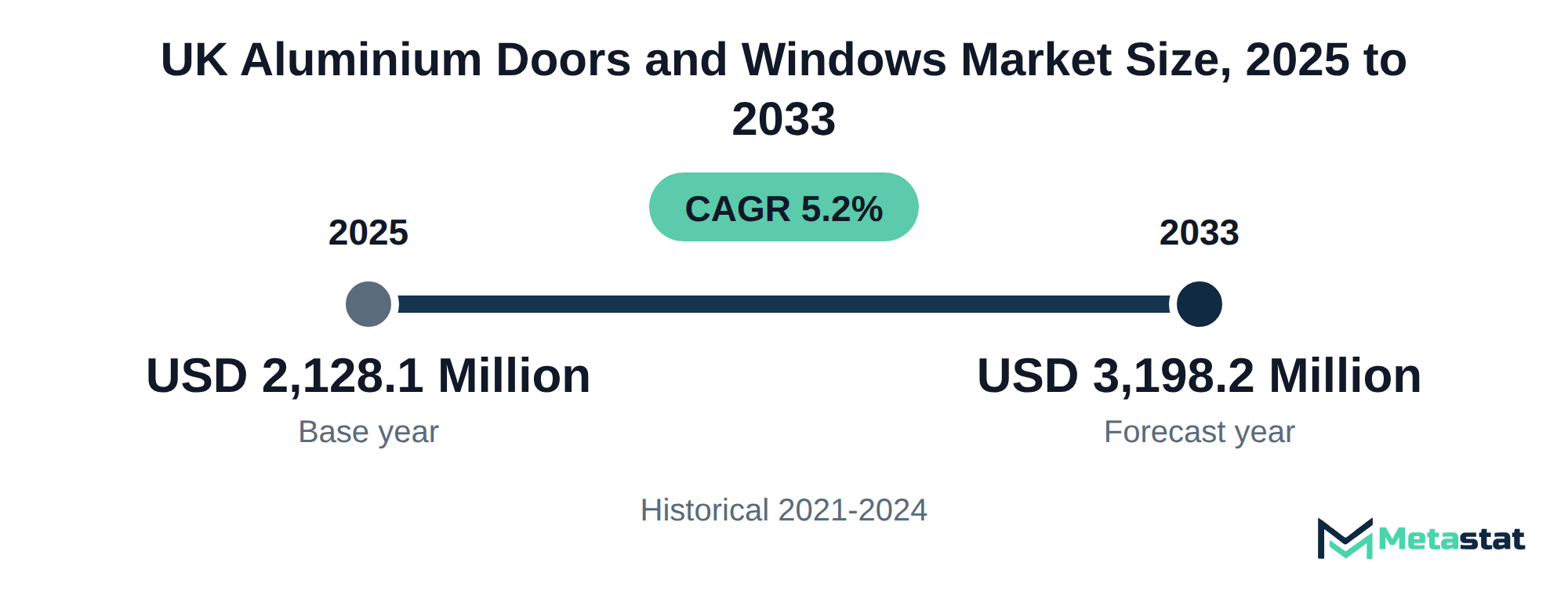
Market Valuation: Valued at $2,128.1 Million in 2025, projected to reach $3,198.2 Million by 2033 at a 5.2% CAGR.
Dominant Segment: The Thermally Broken Systems segment leads the market, driven by increasing demand for energy-efficient solutions that enhance insulation and reduce heating costs.
Geographic Lead: The North American sector exhibits the highest revenue share, fueled by continuous investments in construction and renovation projects that emphasize sustainability.
What's Inside: This report provides an in-depth analysis of market dynamics, competitive landscape, and detailed forecasts, covering various product types and end-use sectors.
Emerging Trends: The residential sector is witnessing significant growth, particularly in energy-efficient products, as homeowners prioritize sustainability and modern design in their purchasing decisions.
Price Sensitivity: Buyers exhibit a strong price sensitivity, impacting the adoption of premium aluminium doors and windows, as rising material costs lead to a preference for budget-friendly alternatives.
Choose Your License
UK Aluminium Doors and Windows Market
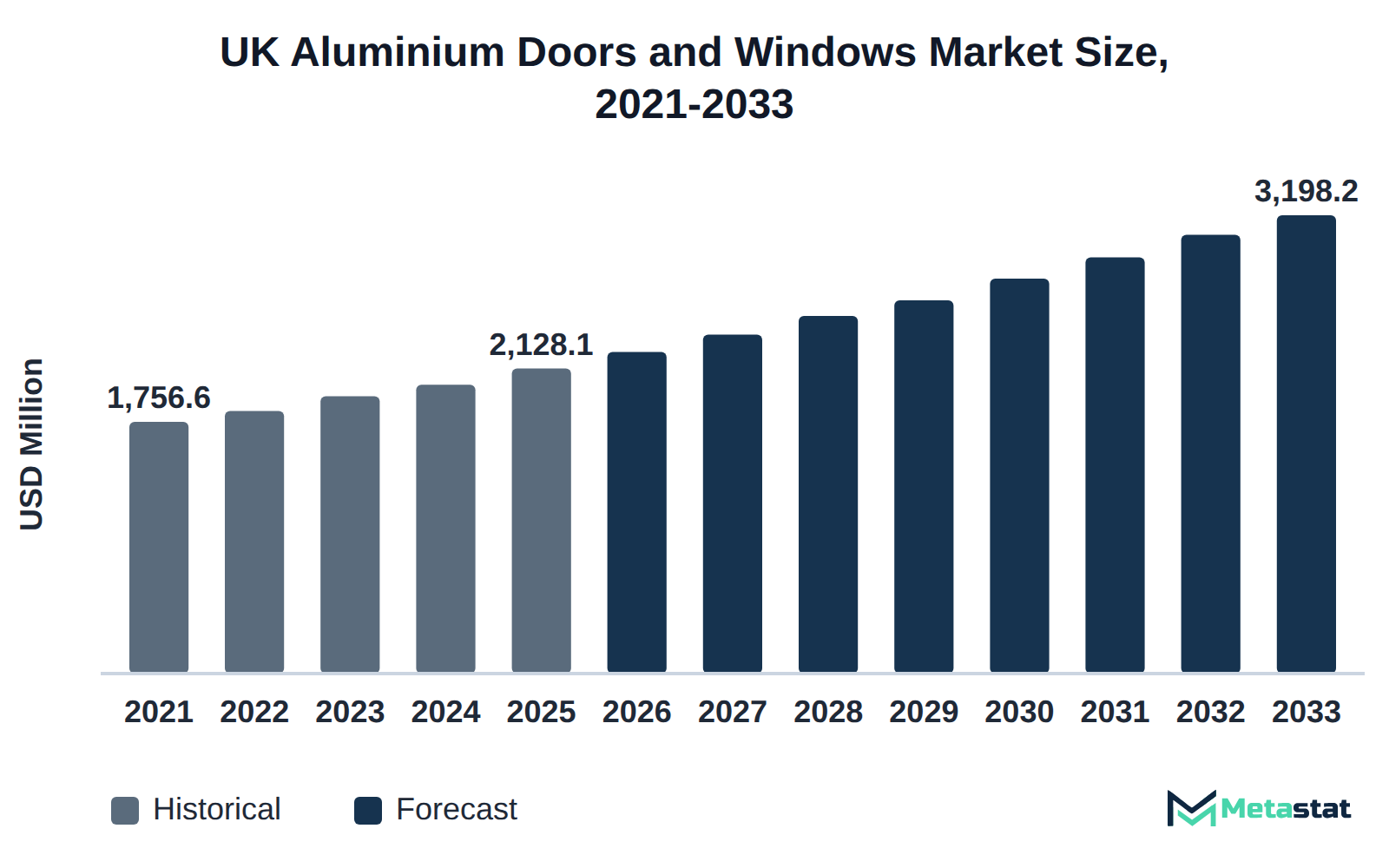
The UK Aluminium Doors and Windows market was valued at USD 2,128.1 million in 2025 and is projected to reach USD 3,198.2 million by 2033, growing at a CAGR of 5.2% over the forecast period.
The UK Aluminium Doors and Windows market encompasses a range of products designed for residential, commercial, and industrial applications. Buyers invest in these products primarily for their durability, aesthetic appeal, and energy efficiency. The market serves various sectors, including new construction and refurbishment projects, reflecting a growing emphasis on sustainable building practices and modern design elements.
Growth within the market is fueled by increasing demand for energy-efficient solutions, particularly in the residential sector, which represents the largest share of revenues. The segment of Thermally Broken Systems holds the highest value, driven by the need for improved insulation and thermal performance in buildings. This focus on energy efficiency aligns with broader environmental goals and regulations aimed at reducing carbon footprints.
Among the regions, the market displays significant activity, with the North American sector leading in terms of revenue share. Continuous investments in construction and renovation projects in this region contribute to its dominance. A key growth driver is the rising emphasis on sustainability, influencing purchasing decisions across various buyer groups.
The UK Aluminium Doors and Windows market encompasses various product types, including casement windows, sliding doors, and bi-fold doors. In residential settings, homeowners prioritize high-quality materials that enhance property value and contribute to energy savings. Commercial and institutional buyers focus on durable solutions that meet regulatory standards while delivering longevity and low maintenance costs.
Growth in the market is driven by increasing demand for energy-efficient solutions, reflecting heightened environmental awareness and regulatory pressures. Thermally broken systems stand out, significantly contributing to overall market revenue. The residential end-use sector holds a significant share, highlighting the focus on sustainable living and modern design preferences among homeowners.
Regions throughout the UK present varying dynamics, with urban areas often exhibiting greater demand due to higher population densities and construction activities. The northern regions display significant potential for growth, driven by ongoing infrastructure projects and a push for refurbishment in older buildings. Consequently, investment in the market is expected to increase, supporting advancements in technology and design.
Slimline aluminium windows represent a significant trend within the UK Aluminium Doors and Windows market, reflecting a shift towards elegant and minimalistic design in residential specifications. This trend aligns with growing consumer preferences for contemporary aesthetics, which increasingly favour slimmer profiles that allow for more natural light while maintaining structural integrity.
The market for slimline aluminium windows is projected to expand alongside the broader residential sector, particularly as homeowners seek products that enhance energy efficiency and complement modern architecture. For instance, the residential segment is expected to see growth from USD 1,131.5 million in 2026 to USD 1,721.3 million by 2033, with a compound annual growth rate (CAGR) of 6.2%. This increase indicates strong demand for innovative window solutions that meet both functional and aesthetic requirements.
Commercially, the rise of slimline designs contributes to competitive differentiation among manufacturers. Firms compete on price and design appeal, along with energy-saving features. Delivering products that incorporate advanced thermal break technology enhances performance, making slimline aluminium windows an attractive option for builders and homeowners focused on sustainability and style in their living spaces.
Thermally broken systems enhance energy efficiency within the UK Aluminium Doors and Windows market. These systems use a thermal break to separate internal and external materials, significantly reducing heat transfer. Insulating glass units fitted with a warm edge spacer apply the same principle at the glazing edge, which helps limit heat loss around the glass perimeter. The adoption of such systems is projected to grow, with revenues expected to rise from USD 2,002.9 million in 2026 to USD 2,983.3 million by 2033, reflecting a compound annual growth rate of 5.9%. This trend aligns with increasing regulations mandating energy-efficient building practices.
Pricing models for thermally broken systems incorporate installation costs, material quality, and manufacturer specifications. Buyers typically engage in direct negotiations with suppliers, ensuring competitive pricing based on project scale and complexity. This flexibility in contract models allows buyers to secure advantageous terms, vital for maintaining budget control on larger construction projects. Such financial strategies enable buyers to adopt newer technology while meeting energy standards.
The incorporation of recycled aluminium represents an additional consideration in the market. This material has gained traction due to its environmental benefits and growing consumer demand for sustainable options. Recycled content also ties the market to the wider green aluminium supply chain. Incorporating recycled aluminium in glazing systems enhances the appeal of products, attracting environmentally conscious buyers. The strategic focus on sustainability aligns with market trends and yields cost savings, further driving revenue growth in the UK Aluminium Doors and Windows market.
Sliding and pivot doors in the UK Aluminium Doors and Windows market present unique challenges related to hardware loads and securing access. These door types often require strong framing and reliable locking systems, particularly in high-traffic areas. The market forecast indicates that sliding doors will reach a value of USD 230.6 million by 2033, reflecting a significant investment in this segment.
The increased adoption of sliding and pivot doors within residential and commercial settings drives demand for specialized door hardware solutions capable of supporting their weight and usage frequency. Buyers seek products that enhance aesthetic appeal while providing long-term durability and security. Companies focusing on high-performance locking mechanisms will find growing opportunities as safety concerns become critical, particularly in urban environments.
Investment in advanced materials and engineering solutions to address the load requirements for these doors influences cost structures and operational efficiency. Manufacturers that prioritize innovation in hardware design position themselves favorably in the competitive landscape of the market, ultimately contributing to overall growth and consumer satisfaction.
Energy efficiency stands out as a primary consideration for buyers in the UK Aluminium Doors and Windows market during refurbishment projects. Refurbishments increasingly focus on enhancing insulation to reduce energy consumption and improve overall building performance. This mirrors wider energy retrofit activity in existing buildings. This growing preference for thermally broken systems underlines the demand for products that offer superior thermal performance and compliance with energy efficiency regulations.
Aesthetics strongly influence the selection process. Homeowners and industry professionals prioritise designs that complement existing architecture while providing modern functionality. The versatility of aluminium frames allows for a wide variety of styles, which enhances appeal in refurbishment projects. Focusing on energy-efficient and aesthetically pleasing options drives sales and establishes a competitive edge in the UK Aluminium Doors and Windows market.
The shift towards energy-efficient solutions significantly influences spending patterns among residential buyers. Increased awareness of environmental issues and rising energy costs drive homeowners to seek high-performance windows and doors that enhance energy conservation. This transition highlights a growing preference for thermally broken systems, which provide better insulation and reduce heating expenses. Such changes in buyer behavior increase demand for aluminium doors and windows and encourage suppliers to innovate and offer advanced solutions that meet these emerging requirements. The market adapts to cater to eco-conscious consumers, ultimately enhancing its competitive landscape. This trend towards sustainability shapes the direction of the UK Aluminium Doors and Windows market.
Product diversification enhances competitive positioning
In response to evolving consumer preferences, market players are diversifying their product ranges to enhance competitive positioning. Manufacturers introduce innovative designs and materials to meet the demands of various buyer segments. Enhanced options, including bi-fold doors and sliding windows, cater to both aesthetic and functional requirements, supporting increased adoption across residential and commercial applications. The emergence of customized solutions fulfills specific consumer needs, driving market growth. Companies expanding their offerings contribute to an anticipated revenue increase in the UK Aluminium Doors and Windows market, creating a dynamic environment for competition and investment.
Advancements in materials and manufacturing processes significantly enhance the appeal of aluminium doors and windows in the market. Innovations around thermal break technology deliver increased insulation performance, driving interest among eco-conscious consumers. These improvements support the production of highly efficient thermally broken systems, which directly contribute to energy savings and lower utility costs for homeowners. The trend towards sustainability influences both residential and commercial sectors, motivating buyers to invest in high-performance products that align with environmental goals.
The introduction of smart technology integration into aluminium windows and doors enhances their functionality and attractiveness. Features including automated opening systems and smart locks offer convenience and security, appealing to tech-savvy consumers. These technological advancements differentiate products in the UK Aluminium Doors and Windows market, reinforcing demand and driving competitive dynamics among suppliers. The emphasis on energy-efficient and technologically advanced solutions positions the market for sustained growth throughout the forecast period, with consumer preferences increasingly aligning with innovative offerings.
Price sensitivity among buyers introduces a significant restraint within the UK Aluminium Doors and Windows market. Rising material costs increase overall prices for aluminium products, impacting buyers in the residential sector who prioritize budget-friendly solutions. This sensitivity leads to slower uptake of higher-end options, with many consumers opting for lower-cost alternatives or delaying replacements altogether. Consequently, the demand for premium aluminium doors and windows experiences limitations, creating a challenging environment for suppliers aiming to capture this segment. Residential buyers frequently assess various options against budget constraints, resulting in smaller orders and hesitancy toward premium features. The ongoing economic climate further exacerbates this sensitivity, affecting the overall growth trajectory of the market.
Rising input costs pose a challenge for suppliers in the UK Aluminium Doors and Windows market. Price increases for raw materials including aluminium and other components directly impact profitability. Aluminium billets, which extruders convert into frame profiles, form part of this raw material exposure. Suppliers face difficulties in maintaining competitive pricing while managing these input costs. In response, many suppliers implement strategic sourcing practices, focusing on long-term contracts to stabilize prices and mitigate fluctuations. Several suppliers invest in technological advancements that enhance operational efficiency, aimed at reducing production costs. These strategies allow suppliers to maintain margins despite external pressures, ensuring continued service delivery within the market. Improvement in cost management practices supports supplier competitiveness and accommodates customer demand for quality products at reasonable prices.
The residential sector presents a significant opportunity within the UK Aluminium Doors and Windows market, driven by shifting consumer preferences towards energy-efficient housing. Increased awareness of sustainability and energy conservation among homeowners fuels this trend. The focus on energy-efficient products, particularly thermally broken systems, aligns with the growing demand for eco-friendly solutions. Buyers prioritize long-term savings on energy bills, making this segment appealing for manufacturers developing innovative products tailored to residential needs. The combination of rising environmental consciousness and government initiatives further enhances market potential. Meeting this demand provides manufacturers with an avenue for growth, driving increased investment in product development and marketing tailored to residential applications.
The UK Aluminium Doors and Windows market is segmented based on Product Type, Thermal Break Technology, Project Type, and End-Use Sector.
Casement Windows segment is valued at USD 680.1 million in 2026 and is projected to reach USD 933.2 million by 2033, at a CAGR of 4.6% during the forecast period. This type of window is widely used in residential buildings, offering a blend of aesthetic appeal and functionality. Demand for casement windows is driven by the increasing focus on energy efficiency, prompting homeowners to invest in products that minimize energy loss. Sealing the opening sash with quality weather strip helps limit air leakage in this window type. Compared to other product types, including Tilt-and-Turn Windows, which grow at a faster rate of 6.1%, casement windows experience moderate growth. Their pricing typically aligns with mid-range offerings, making them accessible to a broader audience while delivering energy efficiency benefits. The segment's growth is expected to be supported by ongoing trends in home renovation and the desire for improved thermal performance in residential properties.
Tilt-and-Turn Windows segment is estimated to reach USD 429.2 million by 2033, at a CAGR of 6.1% during the forecast period. These windows serve various purposes, including ventilation and space efficiency, making them popular among residential and commercial sectors. Demand for tilt-and-turn systems is driven by their versatility and ease of operation, appealing to buyers seeking both functionality and aesthetics. Compared to other segments, including Sliding Windows, which have a projected growth rate of 6.1%, Tilt-and-Turn Windows exhibit faster growth due to their unique design features and strong performance in diverse environments. The ongoing emphasis on energy efficiency and sustainable building practices contributes to increased adoption rates, enhancing their market positioning.
Sliding Windows segment is expected to reach USD 230.6 million by 2033. These products provide an effective solution for maximizing natural light and ventilation in both residential and commercial applications. The demand for sliding windows stems from their aesthetic appeal and functional advantages, particularly in urban areas where space efficiency is crucial. This segment has a compound annual growth rate (CAGR) of 4.6% and exhibits slower growth compared to the Tilt-and-Turn Windows segment, which has a CAGR of 6.1%. Growth in sliding windows is driven by the increasing preference for modern architectural designs and the growing emphasis on energy efficiency in building projects. Homeowners and builders seek products that enhance energy performance while offering ease of use and maintenance.
Fixed windows are projected to grow at a CAGR of 4.7% during the forecast period. Typically found in residential buildings, these windows provide an unobstructed view while maintaining thermal efficiency. Increasing demand for energy-efficient housing drives growth in this segment, making it particularly appealing to homeowners focused on reducing energy consumption. In comparison to other segments, fixed windows generally feature a lower price point than tilt-and-turn windows, which are expected to achieve a CAGR of 6.1%. The preference for fixed windows often stems from their aesthetic appeal and minimal maintenance requirements, especially in new construction projects. Buyers in this segment, primarily residential property owners, prioritize both energy efficiency and design, leading to steady growth in demand. The fixed windows segment reflects a significant area of opportunity in the UK Aluminium Doors and Windows market, particularly in light of ongoing trends towards sustainable building practices.
Hinged and pivot doors offer versatile entry door systems, commonly found in both residential and commercial applications. These doors provide ease of access and complement various architectural styles, appealing to homeowners and builders alike. The growing emphasis on energy efficiency drives adoption, with many consumers prioritizing insulation and durability in their selections. This segment differs from others, including sliding doors, which cater to different aesthetic preferences and functionality, reflecting variations in demand dynamics. Compared to sliding doors, hinged and pivot doors often face less competition in space-constrained urban settings where sliding options excel. The market for hinged and pivot doors thrives on trends toward modern design and functionality, with consumers seeking high-quality materials and innovative designs.
Sliding doors are a versatile option for both residential and commercial spaces, often chosen for their aesthetic appeal and ability to facilitate indoor-outdoor transitions. These products are popular among homeowners looking to enhance natural light and improve accessibility. Demand for sliding doors is driven by trends favoring large openings and expansive views, aligning with consumer preferences for open-concept living. Large glazed panels make advanced glass specifications more important for thermal performance. Compared to other product types, sliding doors experience slower growth relative to segments including tilt-and-turn windows, which benefit from a higher CAGR. However, the unique functionality of sliding doors distinguishes them, catering to specific design needs, particularly in modern architecture where space efficiency and style are prioritized. This segment’s focus on innovative design and functionality presents opportunities for manufacturers to explore advanced materials and features that enhance energy efficiency and the user experience.
Bi-Fold Doors offer a flexible and modern solution, frequently used in residential settings to create open spaces and enhance natural light. These doors are popular for their aesthetic appeal and functionality, allowing smooth transitions between indoor and outdoor environments. The increasing preference for open-plan living spaces drives demand for Bi-Fold Doors, particularly among homeowners seeking to maximize their home’s value. Unlike traditional door options, Bi-Fold Doors generally command a higher price point due to their design and construction quality. This segment’s growth is influenced by evolving trends in home design and renovation, appealing to buyers prioritizing both style and energy efficiency. The segment's distinct characteristics differentiate it from other products in the range, positioning it as a unique choice for discerning consumers in the UK Aluminium Doors and Windows market.
Reversible windows and revolving doors comprise a diverse offering within the product type segment. These options frequently serve both residential and commercial sectors, enhancing accessibility and aesthetic appeal. A trend toward more flexible design solutions drives interest in this segment, particularly among architects and builders seeking to create versatile spaces that adapt to various needs. Unlike standard window solutions, reversible windows facilitate improved ventilation and natural light, offering a unique advantage in urban environments. The segment faces competition from other window types, including casement and sliding windows, which hold greater market visibility. However, the growing emphasis on innovative architectural designs creates a conducive environment for reversible windows and revolving doors, ensuring their integration in modern building projects within the UK Aluminium Doors and Windows market.
Thermally broken systems primarily serve residential, commercial, and institutional sectors, enhancing energy efficiency through improved thermal insulation. The growing emphasis on sustainability and energy-saving installations drives this segment. Clients prefer thermally broken systems due to their superior performance compared to non-thermally broken systems, which are projected to reach USD 214.9 million by 2033. The competitive advantage in terms of energy efficiency and reduced heating costs positions this segment favorably within the market, ensuring continued demand from environmentally conscious buyers.
Non-Thermally Broken Systems segment is estimated to reach USD 214.9 million by 2033, at a CAGR of -1.7% during the forecast period. This segment primarily serves residential and commercial sectors, where cost considerations drive product selection. Buyers in these sectors prioritize budget constraints, making non-thermally broken options appealing due to lower initial costs compared to thermally broken counterparts. A trend toward enhanced energy efficiency shapes demand within the market; however, non-thermally broken systems face challenges in competing against products that offer superior thermal insulation. The lower growth rate in this segment, at -1.7%, contrasts with the positive CAGR of thermally broken systems, highlighting a potential shift in buyer preferences toward energy-efficient solutions. Overall, this segment's performance reflects varying priorities among buyers and changing dynamics in the UK Aluminium Doors and Windows market.
New Construction segment is valued at USD 964.4 million in 2026 and is projected to reach USD 1,335.6 million by 2033, at a CAGR of 4.8% during the forecast period. This segment primarily serves construction companies and real estate developers focusing on residential and commercial building projects. Demand for durable, energy-efficient aluminium solutions drives growth, particularly among environmentally conscious buyers prioritizing sustainability. Compared to Replacement and Refurbishment, which is anticipated to grow at a CAGR of 5.5%, New Construction presents a slower growth rate, influenced by market conditions and regulatory standards. The ongoing trend towards innovative building designs contributes to the appeal of aluminium doors and windows, creating opportunities for suppliers to enhance their offerings.
Replacement and Refurbishment segment is estimated to reach USD 1,862.6 million by 2033, at a CAGR of 5.5% during the forecast period. This segment caters to property owners seeking to upgrade or replace existing aluminium installations for improved aesthetics, functionality, and energy efficiency. Replacement installations also rely on construction sealants to close the joint between the new frame and the existing wall opening. Driven by trends in home improvement and sustainability, demand arises from both residential and commercial sectors. Increased focus on energy-efficient solutions contributes to growth, with consumers prioritizing eco-friendly options. Compared to new construction, this segment experiences slower growth, reflecting the varying pace of renovation projects versus new builds. The Replacement and Refurbishment segment emphasizes cost-effectiveness and the ability to enhance property value while aligning with the broader goals of the UK Aluminium Doors and Windows market.
The residential segment of the UK Aluminium Doors and Windows market primarily serves homeowners undertaking new residential construction and those engaged in renovations. The growing emphasis on energy efficiency and aesthetic appeal drives demand for aluminium doors and windows in residential settings. Unlike the commercial sector, which prioritizes durability and security, residential applications focus on design flexibility and integration with home aesthetics. The residential segment is expected to experience stronger growth compared to the commercial sector, projected to grow at a CAGR of 4.3%. This difference highlights the distinct priorities of residential buyers within the wider market.
The commercial segment is estimated to reach USD 899.7 million by 2033, at a CAGR of 4.3% during the forecast period. This segment encompasses aluminium doors and windows specifically designed for commercial buildings, including offices, retail spaces, and other business environments. Increased demand for energy-efficient solutions in commercial architecture drives growth, with businesses prioritizing sustainability in their constructions. Unlike the residential sector, which focuses on aesthetics and residential preferences, the commercial segment emphasizes durability and functional design. The anticipated growth rate of 4.3% reflects ongoing investments in commercial real estate, necessitating high-quality aluminium products that meet strict building codes and energy standards. This segment's distinct requirements differentiate it from other segments, including residential, where growth rates are higher due to evolving consumer trends.
The Institutional segment is expected to reach USD 431.1 million by 2033. This segment serves educational institutions, healthcare facilities, and government buildings, where durability and safety are critical. Demand within this segment is driven by increasing investments in public infrastructure and the need for modernization of aging facilities. The Institutional segment experiences slower growth compared to Residential, which is expected to grow at a CAGR of 6.2%. Cost is a major factor, driven by budget constraints in public projects that influence the choice of materials and design. Institutional buyers prioritize long-term performance and maintenance costs, differentiating this segment from others that focus more on aesthetic appeal and energy efficiency. The market adapts to these unique requirements, shaping the development and application of aluminium doors and windows tailored for institutional use.
Projected to grow at a CAGR of 4% during the forecast period, the industrial end-use segment is essential in various manufacturing processes and facilities. Companies operating in sectors including manufacturing, warehousing, and logistics utilize aluminium doors and windows for durability and ease of maintenance. Demand for energy-efficient solutions in industrial settings drives the adoption of thermally broken systems, enhancing overall energy performance. This segment's growth trajectory remains slower than the residential sub-segment, which anticipates a CAGR of 6.2%. The focus on sustainability and regulatory pressures for improved energy performance further shape the landscape. The market benefits from increasing investments in industrial infrastructure, presenting opportunities for growth and expansion in supplier capabilities and product offerings.
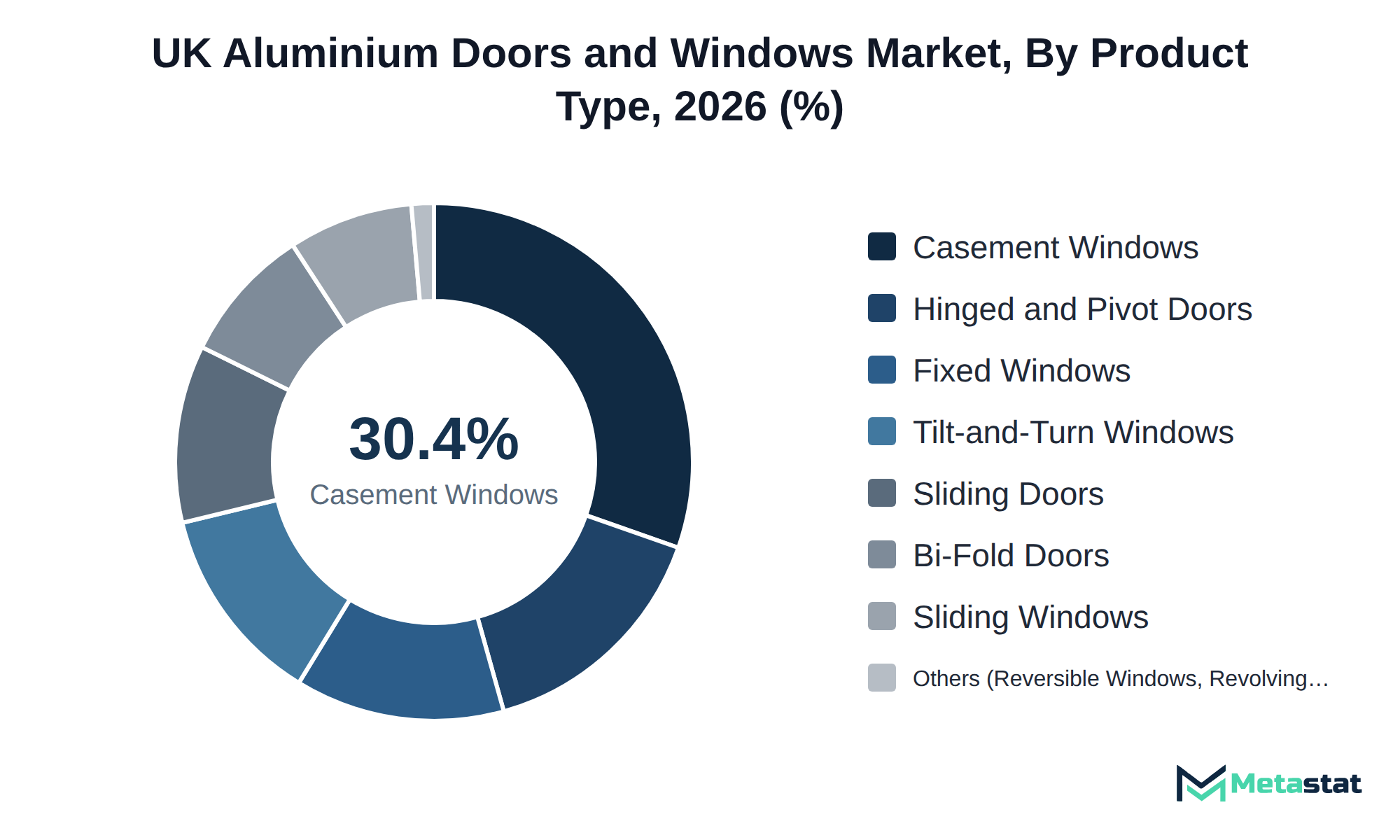
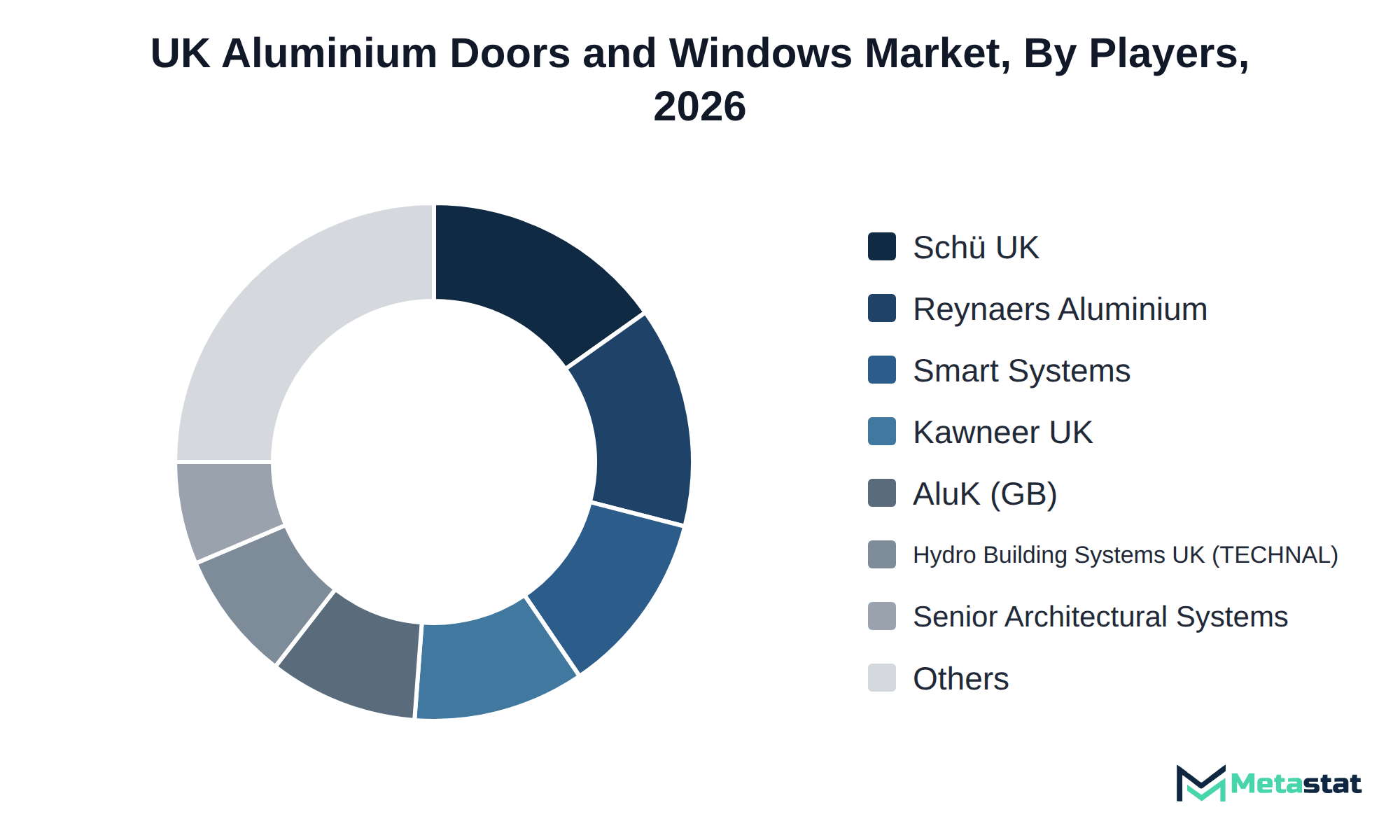
In the UK Aluminium Doors and Windows market, companies compete across various strategies, focusing on product differentiation, pricing, and service offerings. Buyers select products based on factors including quality, customization, certification, and post-sale service, reflecting diverse preferences in the marketplace.
Smart Systems Limited emphasizes innovative thermal break technology, providing thermally broken systems that enhance energy efficiency. Reynaers Aluminium Limited focuses on high-quality architectural solutions, catering to both residential and commercial sectors. Schüco UK Limited combines advanced design with sustainable materials, positioning itself as a provider of energy-efficient systems.
AluK (GB) Limited prioritizes customization and flexibility, appealing to buyers seeking tailored solutions for specific projects. Senior Architectural Systems Limited leverages a strong service network, ensuring ongoing support for clients throughout the project lifecycle. This competitive landscape continues to evolve, influenced by technological advancements and shifting consumer demands within the market.
Achieving this growth requires significant developments in the UK Aluminium Doors and Windows market. Strong growth in demand for residential applications, driven by increasing housing projects and urbanization, is essential. Advancements in thermally broken systems, projected to expand from USD 2,002.9 million in 2026 to USD 2,983.3 million by 2033, will enhance energy efficiency in buildings. This technological shift aligns with rising energy regulations and consumer preferences for sustainable products. Economic uncertainties pose a risk to this growth trajectory. Fluctuations in raw material prices and supply chain disruptions could hinder production and increase costs, impacting profit margins. Both the new construction and replacement sectors are sensitive to these economic factors, affecting overall market performance. Addressing these challenges while capitalizing on growth opportunities within the residential and thermally broken systems segments will be crucial for the market's continued expansion.
By Product Type: Casement Windows, Tilt-and-Turn Windows, Sliding Windows, Fixed Windows, Hinged and Pivot Doors, Sliding Doors, Bi-Fold Doors, Others (Reversible Windows, Revolving Doors)
By Project Type: New Construction, Replacement and Refurbishment
By End-Use Sector: Residential, Commercial, Institutional, Industrial
The report strategically identifies and profiles the key market players and analyses their core competencies in each sub-segment of the Aluminium Doors and Windows market.
Report Attributes | Details |
Study Period | 2021-2033 |
Base Year | 2025 |
Estimated Year | 2026 |
Forecast Period | 2026-2033 |
Historical Period | 2021-2025 |
Growth Rate | CAGR 5.2% from 2026 to 2033 |
Revenue Unit | USD million |
Segmentation | By Product Type, Thermal Break Technology, Project Type, End-Use Sector, and Region |
Find answers to common questions about this report
The Aluminium Doors and Windows market size was valued at USD 2,128.1 million in 2025.
The market is projected to grow at a CAGR of 5.2% during the forecast period from 2026 to 2033.
The leading segment in the Aluminium Doors and Windows market is Thermally Broken Systems, with a projected value of USD 2,983.3 million by 2033. This segment outpaces Non-Thermally Broken Systems, which is expected to reach USD 214.9 million in the same year.
Increased awareness of sustainability and energy conservation among homeowners drives demand for energy-efficient aluminium doors and windows, particularly thermally broken systems. The residential sector presents significant growth potential, projected to increase from USD 1,131.5 million in 2026 to USD 1,721.3 million by 2033.
Price sensitivity among buyers introduces a significant restraint within the market, as rising material costs increase overall prices for aluminium products. This sensitivity leads to slower uptake of higher-end options, affecting demand for premium aluminium doors and windows.
Increased consumer awareness of sustainability and energy conservation significantly drives adoption in the UK Aluminium Doors and Windows market. The residential sector's projected growth highlights the demand for energy-efficient products, particularly thermally broken systems, aligning with buyers' preferences for long-term savings on energy bills.
The Aluminium Doors and Windows market is estimated to reach a valuation of USD 3,198.2 million by 2033.
Key players operating in the Aluminium Doors and Windows market include Smart Systems Limited, Reynaers Aluminium Limited, Schüco UK Limited, AluK (GB) Limited, Senior Architectural Systems Limited, Hydro Building Systems UK Limited (TECHNAL), and Kawneer UK Limited.
The residential segment is projected to grow from USD 1,131.5 million in 2026 to USD 1,721.3 million by 2033, reflecting a compound annual growth rate of 6.2 percent.
Key trends include a shift towards energy-efficient solutions, increased demand for thermally broken systems, and the introduction of smart technology integration into products.
The analysts below cover Chemicals and Materials research at Metastat Insights.
LEAD ANALYST
Utkarsh Khirodkar is a Lead Market Research Analyst at MetaStat Insight, specializing in market intelligence, technology sector assessments, and competitive strategy.

INDUSTRY CONSULTANT - CHEMICALS & ADVANCED MATERIALS
Chemicals and Materials · Machinery & Equipment · Packaging
Amit Gadhekar Consultant for Chemicals and Materials at MetaStat Insight, directing sector-specific intelligence, research, and strategic consulting across global chemical and processing markets.
Transitioning ultra-class mining haul trucks to alternative power requires concrete data on remote hydrogen refueling infrastructure economics. The report evaluated megawatt-scale electrolyzer installation expenses, onsite storage safety mandates, and heavy-duty fuel cell stack degradation under continuous duty cycles. That technical rigor helped our engineers benchmark realistic total operating cost horizons for off-highway fleet decarbonization.
Enterprise zero-trust network rollouts are often slowed down by multi-cloud transit latency and proprietary hardware retirement schedules. This study provided realistic total cost of ownership models comparing cloud-delivered security edge solutions against traditional hardware refreshes. The analysis of contract renewal lengths and software maintenance fees gave us clear visibility into enterprise replacement cycles over the next three to five years.
Scaling antibody-drug conjugate manufacturing hinges on contract manufacturing availability for high-potency active ingredients. The MetaStat Insight analysis looked closely at global cleanroom slot constraints, bioconjugation batch failure rates, and supply chain redundancies between the US, Europe, and India. The supplier capability matrix proved genuinely useful for our team when mapping secondary source options across our clinical pipeline.
Explore related market intelligence reports worth reading alongside this one.
Starting from
$2950