
LEAD ANALYST
Utkarsh Khirodkar is a Lead Market Research Analyst at MetaStat Insight, specializing in market intelligence, technology sector assessments, and competitive strategy.

US Foodservice Tableware (Dinnerware) Market By Material Type (Porcelain, Ceramic, Glass, Stainless Steel, Wood, and Others), By Product Type (Plates, Bowls, Cups, Saucers, Drinkware, Serving Platters, and Others), By End-user (Restaurants, Hotels, Resorts, Cafeterias, Catering Services, and Others), By Distribution Channel (Direct Sales, Distributors, Wholesalers, and Online Retail), Industry Analysis, Size, Share, Growth, Trends, and Forecast, 2024-2031
Report ID
MSI-2601
Published
February, 2026
Pages
252 Pages
Format
Report Details
Choose Your License
US Foodservice Tableware Market
The US Foodservice Tableware (Dinnerware) market is estimated to reach $3,661.2 Million by 2031; growing at a CAGR of 5.0% from 2024 to 2031.
The US Foodservice Tableware (Dinnerware) market, as elucidated in the comprehensive report by Metastat Insight, paints a vivid picture of a dynamic and influential sector that transcends mere utensils and plates. This market, valued for its ability to mirror and contribute to the evolving landscape of the foodservice industry, is a realm of innovation and adaptation.
Metastat Insight's report delves into the intricate details of the market, offering insights into the prevailing trends and factors that shape its trajectory. It captures the nuances of an industry where functionality and aesthetics intertwine seamlessly, reflecting the changing preferences and demands of both consumers and businesses engaged in the foodservice sector.
In the vast landscape of foodservice tableware, the market exhibits a kaleidoscope of offerings, ranging from classic ceramic dinnerware to avant-garde alternatives crafted from sustainable materials. As the report unfolds, it unveils the various materials and designs that define the present state of the market, showcasing a melange of choices that cater to the diverse needs of restaurants, cafes, and hospitality establishments across the country.
One cannot overlook the resilience and adaptability inherent in this market. The ebb and flow of consumer preferences are met with a symphony of innovations from manufacturers and designers, ensuring that the US Foodservice Tableware market remains a beacon of versatility. This adaptability is not just about aesthetic trends; it extends to functionality, with an increasing emphasis on durability, stackability, and ease of maintenance to meet the demands of high-paced commercial kitchens.
Metastat Insight's report underscores the significance of sustainability in shaping the future of foodservice tableware. With a growing consciousness towards eco-friendly practices, the market witnesses a surge in demand for tableware crafted from recycled materials, bamboo, and other sustainable alternatives. This shift reflects a broader trend in the industry where businesses are increasingly aligning with environmentally conscious practices.
The competitive landscape of the US Foodservice Tableware market is nothing short of a vibrant marketplace where established players and emerging contenders engage in a perpetual dance of innovation. The report shows the strategies used by key industry players to stay ahead of the curve, whether through collaborations with renowned chefs for exclusive tableware lines or leveraging technology for enhanced production efficiency.
Beyond the tangible elements, the report also encapsulates the intangible factors influencing the market. It delves into the impact of cultural shifts, such as the rise of food influencers and the social media driven 'Instagrammable' dining experience. These societal changes have a ripple effect on the type of tableware demanded by establishments, shaping not just the products but the entire dining ambiance.
The US Foodservice Tableware market report by Metastat Insight not only serves as a snapshot of the industry's current state but also as a forecast of its potential trajectories. The insights provided transcend statistical figures, offering a narrative that speaks to the ever-evolving nature of the market. It is a narrative that unfolds beyond profit margins and market shares, capturing the essence of an industry that continually reinvents itself to align with the pulse of contemporary dining trends.
The US Foodservice Tableware market stands as a testament to the intricate dance between tradition and innovation, practicality and aesthetics. It is a marketplace where plates and utensils are not mere tools but integral components that contribute to the holistic dining experience. As Metastat Insight's report unravels the layers of this market, it invites stakeholders to appreciate the richness and dynamism inherent in an industry that goes beyond the dinner table, leaving an indelible mark on the very fabric of culinary culture in the United States.
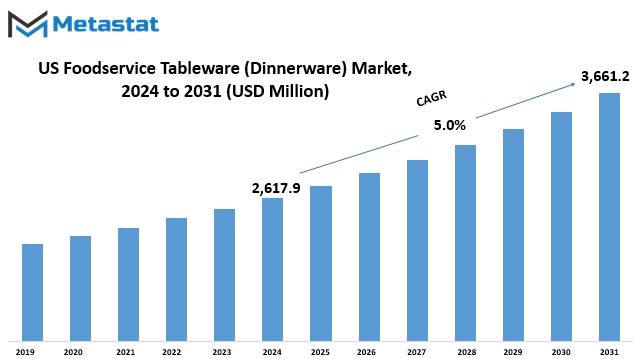
The US foodservice tableware (dinnerware) market experiences growth influenced by various factors. The expansion of the foodservice industry in the United States plays a pivotal role in driving the demand for tableware. With more restaurants and eateries emerging, the need for appropriate serving items increases, contributing to the market's positive trajectory.
Cultural diversity and the popularity of fusion cuisine further amplify this demand. As people show an increasing interest in diverse cuisines and fusion dishes, there is a corresponding desire for unique and aesthetically pleasing tableware to enhance the overall dining experience. This cultural and culinary diversity acts as a significant growth factor for the market.
However, certain challenges impede the market's seamless growth. Price sensitivity is a notable concern, especially for smaller foodservice establishments. High-quality tableware often comes with a hefty price tag, leading to budget constraints for these businesses. Additionally, environmental concerns have become prominent, particularly with traditional disposable tableware. This has prompted a shift towards sustainable alternatives, despite potential higher initial costs, reflecting a growing awareness of ecological impacts.
Amid these challenges, there lies an opportunity for market growth through sustainability initiatives. The rising awareness of environmental issues creates a favorable environment for manufacturers to develop and market eco-friendly and biodegradable tableware solutions. These initiatives align with the preferences of conscientious consumers and businesses, presenting a lucrative avenue for the market in the upcoming years.
The US foodservice tableware market is intricately tied to the growth of the foodservice industry, cultural diversity, and environmental considerations. While challenges like price sensitivity and environmental concerns exist, proactive sustainability initiatives can pave the way for a promising future in the market.
The US Foodservice Tableware market is divided into Material Type, with Porcelain/Ceramic, Glass, Stainless Steel, Wood, and Others being the key segments. This segmentation allows for a more detailed understanding of the various materials used in dinnerware within the foodservice industry. Each material brings its unique characteristics and qualities to the table, influencing the choices made by businesses in the sector.
Porcelain/Ceramic, known for its delicate appearance and durability, is a popular choice for establishments aiming to create an elegant dining experience. The use of glass adds a touch of sophistication, offering transparency and showcasing the culinary presentation. Stainless Steel, valued for its robustness and resistance to corrosion, is favored in settings where durability is paramount, such as busy kitchens or casual dining venues.
Wooden tableware introduces a natural and rustic element, providing a warm and inviting atmosphere. The category labeled as Others encompasses a variety of materials that might not fit neatly into the primary classifications but contribute to the diversity of choices available.
Understanding these material distinctions is essential for businesses in the foodservice industry. It enables them to align their tableware choices with the desired ambiance, durability requirements, and overall aesthetic goals. As the market continues to evolve, staying informed about the unique qualities of each material type empowers businesses to make informed decisions that cater to the diverse preferences of their clientele.
The US Foodservice Tableware, specifically in the Dinnerware sector, is segmented by different product types. These include Plates, Bowls, Cups and Saucers, Drinkware, Serving Platters, and Others. This categorization allows for a more nuanced understanding of the market, making it easier to analyze and address specific consumer needs.
Dinnerware is an essential component of the foodservice industry, providing not just utility but also contributing to the overall dining experience. Plates, for instance, are fundamental and diverse, serving as the foundation for presenting various dishes. Bowls cater to a different set of culinary delights, offering a versatile vessel for soups, salads, and more.
Cups and Saucers add a touch of sophistication to beverage service, enhancing the visual appeal of the overall presentation. Drinkware encompasses a broader range, including glasses and mugs, playing a pivotal role in how beverages are enjoyed. Serving Platters, on the other hand, serve a more communal purpose, facilitating the sharing of dishes and fostering a sense of togetherness.
The category of Others captures miscellaneous items that contribute to the dining experience, such as specialty serving utensils or unique table accents. This comprehensive segmentation sheds light on the diversity within the US Foodservice Tableware market, reflecting the varied demands of consumers and the industry’s commitment to meeting those demands with a diverse range of products.

The US Foodservice Tableware (Dinnerware) market exhibits a diversified landscape, catering to various end-user segments. In 2022, the Restaurants sector led the way with a valuation of 857 USD Million, showcasing its prominence in the market. Simultaneously, Hotels and Resorts also played a substantial role, contributing significantly with a valuation of 743.9 USD Million during the same period.
Cafeterias, as another key end-user category, carved out a considerable niche with a market value of 359.4 USD Million in 2022. The significance of Catering Services should not be overlooked, as it accounted for a noteworthy segment valuation of 268 USD Million during the same timeframe. Beyond these major categories, the market also encompassed an “Other” segment, which held a value of 143.9 USD Million in 2022.
This diverse array of end-user segments underscores the dynamic nature of the US Foodservice Tableware market, where each category plays a distinctive role in contributing to the overall market landscape. Such variability in segment values reflects the nuanced preferences and demands within the foodservice industry, emphasizing the need for versatile tableware solutions to meet the varied requirements of different establishments.
In the US Foodservice Tableware market, the distribution channels play a pivotal role in shaping its landscape. One key aspect to consider is the segmentation of this market based on distribution channels. In 2022, the Direct Sales segment boasted a valuation of 422.8 USD Million, showcasing its significant contribution to the overall market dynamics. The Distributors/Wholesalers segment, with a noteworthy valuation of 1474.9 USD Million in the same year, holds a substantial position in this market's ecosystem.
Another player in this tableau is the Online Retail segment, which made its mark with a valuation of 474.6 USD Million in 2022. This digital avenue has become increasingly influential in the foodservice tableware market, offering a convenient and accessible channel for consumers.
As we dissect these figures, it becomes evident that the distribution channels intricately shape the market dynamics, each contributing to the overall value in its unique way. Direct Sales, Distributors/Wholesalers, and Online Retail form the pillars of this market, showcasing a diverse landscape that caters to various consumer preferences and business models.
In the ever-evolving landscape of the foodservice tableware market, these distribution channels act as conduits, connecting manufacturers with end consumers. The Direct Sales channel, with its face-to-face interactions, has a personalized touch, fostering direct relationships. On the flip side, Distributors/Wholesalers bridge the gap, efficiently supplying a wide array of tableware to meet diverse demands.
The Online Retail segment, riding the wave of digital transformation, provides a seamless and efficient shopping experience. As consumers increasingly embrace online platforms, this segment continues to grow, reshaping the traditional dynamics of the foodservice tableware market.
The US Foodservice Tableware market, propelled by the dynamics of Direct Sales, Distributors/Wholesalers, and Online Retail, reflects a vibrant and adaptive industry. These distribution channels are not just conduits of products; they are essential threads in the intricate fabric of a market that caters to the varied needs and preferences of consumers.
In the US Foodservice Tableware (Dinnerware) market, various key players contribute to the vibrant competition within the industry. These influential companies include CAC China, Fortessa Tableware Solutions, Front of the House (FOH), G.E.T. Enterprises, LLC, Anfora, Turgla, Diversified Ceramics, HF Coors, Libbey Inc, THE ONEIDA GROUP, Porland, RAK Porcelain, Steelite International USA Inc, The Fiesta Tableware Company, Tuxton China, Inc., Villeroy & Boch AG, Vista Alegre Atlantis, SA, Churchill China (UK) Ltd., Costa Nova Professional, BauscherHepp, Inc., Edward Don & Company, TriMark USA, LLC, and The Wasserstrom Company, along with Clark Associates, Inc. (Webstaurant).
These companies play a crucial role in shaping the Foodservice Tableware industry, each bringing its unique strengths and offerings to the table. From CAC China's distinctive products to the innovative solutions provided by Fortessa Tableware Solutions, the market showcases a diverse array of options for businesses in the foodservice sector.
Front of the House (FOH) stands out with its commitment to delivering quality tableware solutions, while G.E.T. Enterprises, LLC, focuses on meeting the evolving needs of the market. Anfora and Turgla contribute to the market with their specialized offerings, catering to various preferences and requirements.
Diversified Ceramics, HF Coors, and Libbey Inc further enrich the market with their extensive product lines, providing a wide range of choices for businesses in the foodservice sector. THE ONEIDA GROUP and Porland bring their expertise and innovation to the table, influencing the industry's trajectory.
In this competitive landscape, RAK Porcelain, Steelite International USA Inc, and The Fiesta Tableware Company add their unique flavors, contributing to the overall vibrancy of the Foodservice Tableware market. Tuxton China, Inc., Villeroy & Boch AG, and Vista Alegre Atlantis bring a touch of elegance and sophistication to the industry.
Costa Nova Professional, BauscherHepp, Inc., and Edward Don & Company play significant roles in addressing the diverse needs of the market. TriMark USA, LLC, The Wasserstrom Company, and Clark Associates, Inc. (Webstaurant) round out the list, contributing to the competitive dynamics of the US Foodservice Tableware (Dinnerware) market. These competitive players collectively shape the landscape of the Foodservice Tableware industry, offering a wide range of choices and solutions for businesses engaged in the dynamic world of foodservice.
Find answers to common questions about this report
US Foodservice Tableware (Dinnerware) market is valued at $2,617.9 million in 2024.
US Foodservice Tableware (Dinnerware) market is estimated to grow with a CAGR of 5.0% from 2024 to 2031.
US Foodservice Tableware (Dinnerware) market is estimated to reach $3,661.2 million by 2031.
Top players operating in the Foodservice Tableware (Dinnerware) industry includes CAC China, Fortessa Tableware Solutions, Front of the House (FOH), and Others.
The analysts below cover Consumer Goods research at Metastat Insights.
LEAD ANALYST
Utkarsh Khirodkar is a Lead Market Research Analyst at MetaStat Insight, specializing in market intelligence, technology sector assessments, and competitive strategy.
In the biological seed treatment space, registration timelines vary drastically between the European Union, Brazil, and North America. The MetaStat Insight research handled these cross-border regulatory barriers with genuine nuance, mapping commercialization pathways alongside historical field adoption rates. The segmentation between microbial strains and biochemical active ingredients was particularly well structured.
Our team was tracking whether regional recycling infrastructure could realistically absorb the growing volume of lithium iron phosphate batteries over the next decade. The report did a solid job separating announced hydrometallurgical plant capacity from active, permitted operational throughput. That distinction made the feedstock availability projections and regional recovery rate models far more credible than standard commercial overviews.
Tracking capacity expansion in single-use bioprocessing requires dependable data on raw material availability and cleanroom-grade polymer supply chains. The competitive landscape chapter gave a grounded evaluation of secondary component suppliers across North America and Asia-Pacific rather than simply reprinting press releases. Having that level of supplier benchmarking helped clarify dual-sourcing considerations for our clinical pipeline planning.
Explore related market intelligence reports worth reading alongside this one.