
LEAD ANALYST
Utkarsh Khirodkar is a Lead Market Research Analyst at MetaStat Insight, specializing in market intelligence, technology sector assessments, and competitive strategy.

Global Yeast-Derived Collagen Market Size, Share, By Collagen Type (Type I, Type III, Type V, Type XVII, Others), By Product Architecture (Full-Length Collagen, Collagen Fragments and Peptides), By Physical Form (Powders, Aqueous Solutions, Hydrogels), By Application (Cosmetics and Personal Care, Medical Aesthetics, Wound Care and Tissue Engineering, Cell Culture and Research, Food and Nutrition), Industry Analysis, Growth, Trends, and Forecast, 2026-2033
Report ID
MSI-5566
Published
October, 2026
Pages
296 Pages
Format
Historical
Base year
Forecast
Forecast period
Report Details
Market Valuation: Valued at $133.2 Million in 2025, projected to reach $321.5 Million by 2033 at a 11.6% CAGR.
Dominant Segment: Type III collagen leads the market, driven by its effectiveness in enhancing skin elasticity and hydration, making it a preferred choice for manufacturers in cosmetics and medical aesthetics.
Geographic Lead: North America is the leading region, projected to hold 27.9% of the market in 2025, with the US driving growth due to strong demand for innovative cosmetic formulations and advanced medical treatments.
What's Inside: The report includes comprehensive analyses of market dynamics, competitive landscape, and detailed forecasts from 2026 to 2033, covering various segments such as collagen types, product architecture, and applications.
Market Opportunity for Type III Collagen: The Type III collagen segment is expected to grow at a CAGR of 10.9%, reflecting rising consumer interest in skin health and anti-aging products, positioning it as a significant growth driver in the market.
Advancements in Yeast Fermentation Techn: Technological innovations in yeast fermentation are enhancing the quality and variety of collagen products, allowing manufacturers to offer competitive pricing and meet rising consumer demand for effective and sustainable solutions.
Choose Your License
Global Yeast-Derived Collagen Market
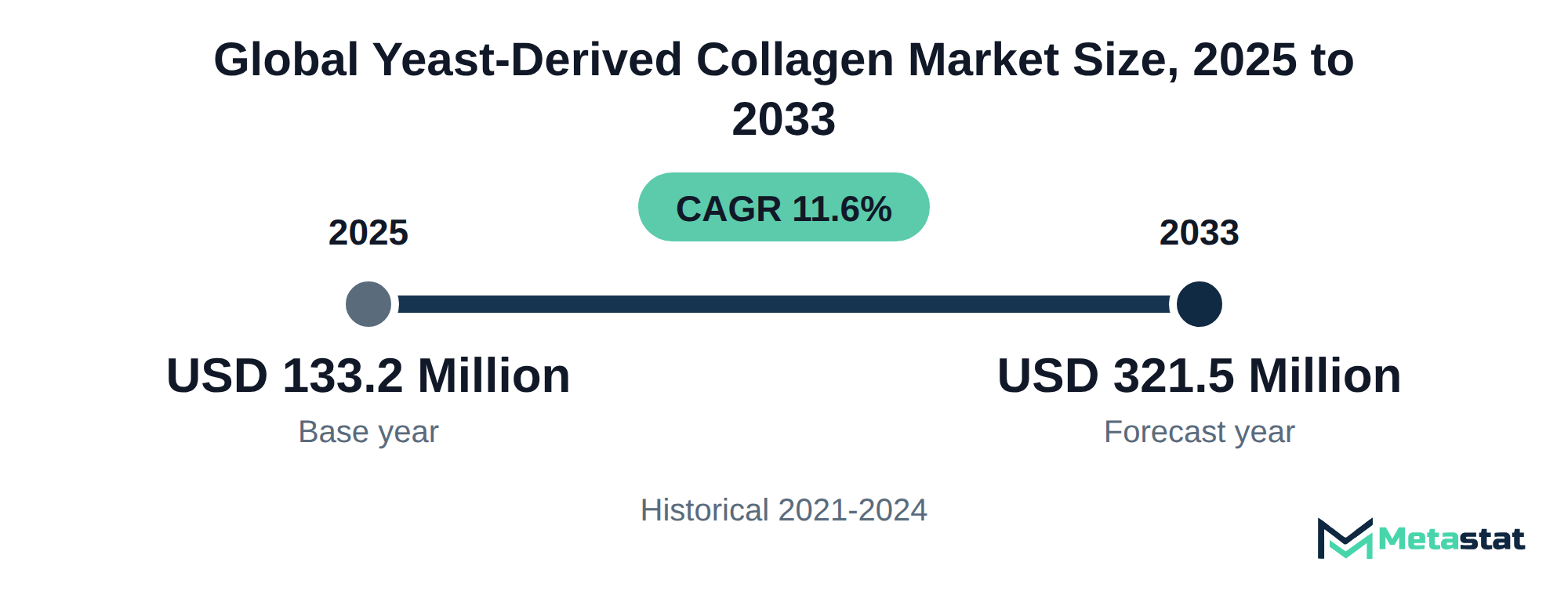
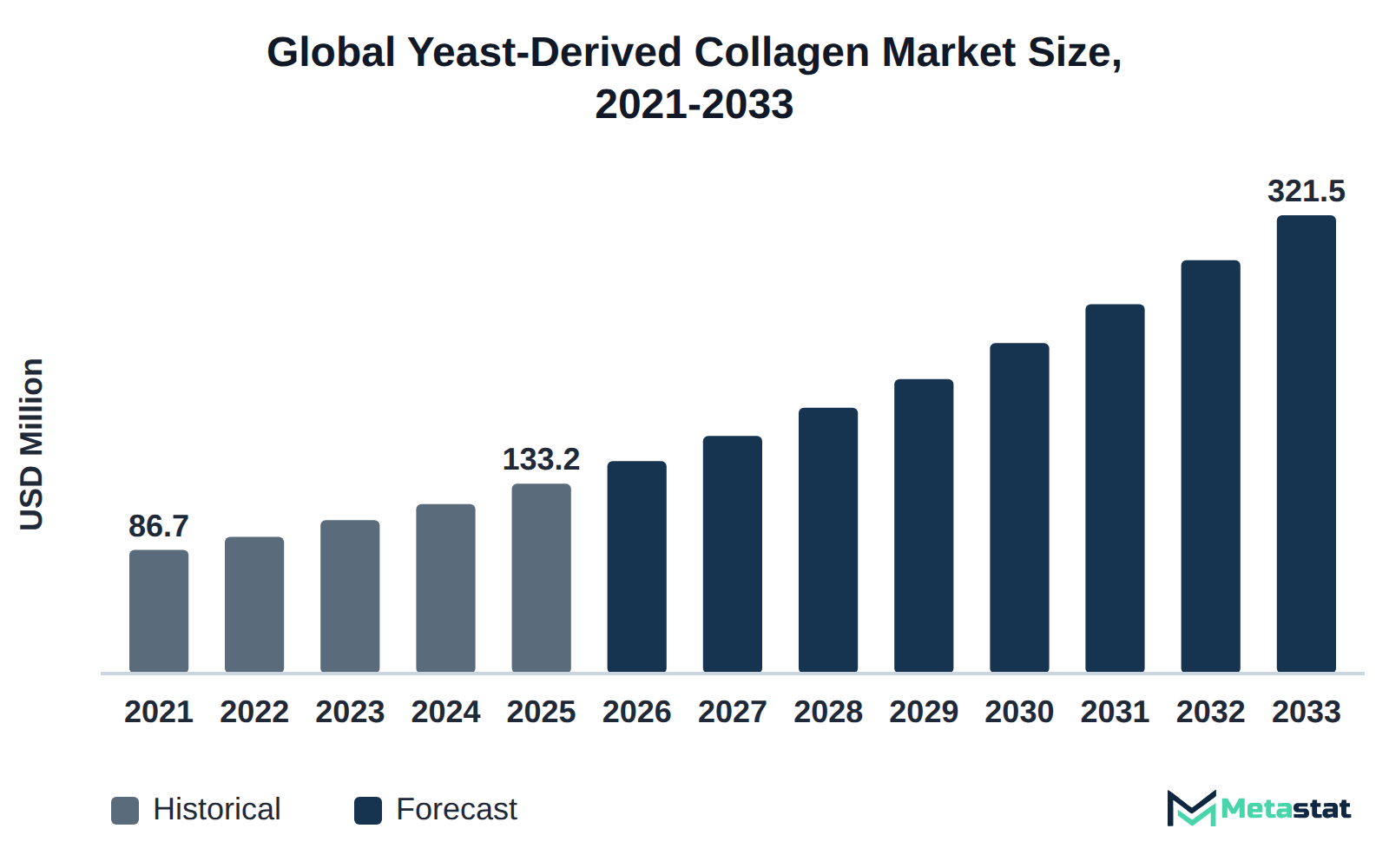
The global Yeast-Derived Collagen market was valued at USD 133.2 million in 2025 and is projected to reach USD 321.5 million by 2033, growing at a CAGR of 11.6% over the forecast period.
The Yeast-Derived Collagen market covers products derived from yeast that serve applications in cosmetics, medical aesthetics, and tissue engineering. Buyers invest in these products due to the growing demand for natural and effective ingredients that enhance skin health and support tissue regeneration. The market reflects an increasing focus on sustainable and plant-based alternatives, aligning with consumer preferences for environmentally friendly options.
Factors driving growth in the market include rising awareness of the benefits of collagen in personal care and medical applications. Type III collagen represents the segment with the most significant value, appealing to manufacturers seeking effective solutions for skin elasticity and aging. North America holds 27.9% of the market in 2025, with the US leading in 2026. This region's robust demand stems from a strong emphasis on innovative cosmetic formulations and advanced medical treatments.
Investment in research and development remains critical for the market, enabling companies to create diverse product offerings tailored to consumer needs. The expansion of applications in wound care and tissue engineering further drives growth, with healthcare providers increasingly adopting collagen-based solutions for improved patient outcomes. These dynamics help stakeholders identify emerging opportunities in the yeast-derived collagen market.
The Yeast-Derived Collagen market attracts investment from various sectors due to its versatile applications in cosmetics, medical aesthetics, and tissue engineering. Buyers prioritize these products for their ability to enhance skin health, promote healing, and improve overall well-being. The growing demand for natural and effective ingredients drives spending, reflecting a shift towards sustainable solutions in personal care and healthcare products.
Growth in the market is supported by increasing consumer awareness of the benefits of collagen, particularly in the beauty and wellness segments. Among the different segments, Type III collagen holds the highest value, as it is widely recognized for its role in skin elasticity and hydration. This region's strong focus on innovative cosmetic products and medical applications drives robust demand for yeast-derived collagen.
One main factor contributing to market expansion includes the rising popularity of clean-label products, which emphasizes transparency and natural sourcing. This trend aligns with consumers seeking effective solutions without synthetic additives. The market's future remains promising, with ongoing innovations expected to further enhance the appeal of yeast-derived collagen across various applications.
The emergence of yeast-fermented Collagen III fragments in high-performance skin care products represents a significant advancement within the Yeast-Derived Collagen market. This approach uses the properties of yeast fermentation to improve the bioavailability and efficacy of collagen fragments. The demand for Collagen III is projected to increase. Its application in cosmetics and personal care grows from USD 71.3 million in 2026 to USD 143 million by 2033, a compound annual growth rate (CAGR) of 10.4%. This trend indicates a shifting preference among consumers toward formulations that prioritize skin health, driven by growing awareness of the benefits associated with collagen in skin rejuvenation.
Incorporating yeast-fermented Collagen III fragments provides manufacturers with a competitive edge, enabling them to meet escalating consumer expectations for effective and sustainable skin care solutions. The ability of these fragments to improve skin elasticity and hydration aligns with increasing demand for natural and clean beauty products. While the market expands, companies that adopt this technology are likely to enhance their market positioning and improve revenue streams, capturing the interest of health-conscious consumers seeking premium skin care options.
Pricing dynamics for full-length recombinant collagen proteins in the Yeast-Derived Collagen market reflect specific trends among buyers in cell culture and tissue engineering. The average cost for full-length collagen products is expected to rise from USD 37.8 million in 2026 to USD 89.4 million by 2033, representing a compound annual growth rate (CAGR) of 13.1%. This upward trajectory in costs is attributed to rising demand for high-quality collagen in sophisticated applications like tissue engineering, which requires precise formulations and manufacturing processes.
Buyers typically engage in long-term contracts with suppliers to secure stable pricing and guarantees of quality. These contracts often include clauses that account for fluctuations in raw material costs, ensuring that suppliers maintain consistent pricing despite market volatility. Suppliers benefit from predictable revenue streams while buyers gain the advantage of price stability.
The growing emphasis on research and development in cell culture further influences purchasing decisions, leading buyers to favor suppliers who demonstrate robust quality control and adherence to regulatory standards. These factors shape procurement strategies across the yeast-derived collagen market.
Medical aesthetics producers seek high-quality yeast-derived collagen for its superior properties compared to traditional sources. The purification process for yeast-derived collagen involves multiple stages, including extraction, filtration, and concentration, ensuring a high purity level that meets stringent industry standards. This segment is projected to reach USD 94.4 million by 2033, highlighting the growing demand for high-purity collagen in aesthetic applications.
Efficient production techniques, including fermentation processes, allow for high scalability, making yeast-derived collagen an attractive choice for manufacturers. These processes result in lower environmental impact and reduced production costs, enhancing profit margins. Producers who optimize their purification methods differentiate themselves in a competitive landscape, addressing the needs of buyers who prioritize sustainability and quality.
The yeast-derived collagen market expands, with suppliers focusing on innovative production methods that capture a larger share. The ability to provide consistent, high-quality products strengthens supplier relationships with manufacturers in the medical aesthetics sector. This dynamic creates opportunities for growth and investment in advanced purification technologies, enabling suppliers to meet evolving consumer demands.
Yeast-derived collagen offers distinct advantages over vegan collagen boosters, particularly in its structural composition and effectiveness. While vegan collagen boosters rely on plant-based ingredients to stimulate the body's natural collagen production, they do not contain collagen itself. In contrast, yeast-derived collagen delivers actual collagen proteins, providing a more direct approach to enhancing skin elasticity and overall skin health. The market experiences increasing interest in collagen sources that offer superior bioavailability.
This growth indicates a strong preference among consumers for products that provide authentic collagen, aligning with the growing demand for effective anti-aging solutions. The commercial consequence of this shift highlights a potential increase in market share for businesses offering yeast-derived collagen products, as they cater to a more discerning consumer base seeking tangible benefits.
Growing consumer awareness regarding health and wellness significantly drives demand for yeast-derived collagen products. This trend reflects a shift among buyers, particularly in the cosmetics and personal care sectors, where consumers increasingly seek effective ingredients that promote skin health and anti-aging benefits. Investment in yeast-derived collagen is fueled by the rising popularity of natural and sustainable ingredients in beauty products. The market experiences a notable increase in volume and pricing dynamics, reflecting heightened demand for premium products. By 2033, the market is projected to reach USD 321.5 million, underlining a strong growth trajectory driven by consumer preferences for high-quality, effective solutions in personal care.
Technological innovations in yeast fermentation enhance the production of yeast-derived collagen, leading to improved quality and variety of collagen products. The use of advanced fermentation techniques increases the efficiency of collagen extraction from yeast, resulting in higher yields and lower production costs. This improvement benefits manufacturers by allowing them to offer competitive pricing in the Yeast-Derived Collagen market. The growing availability of diverse collagen types, including Type I and Type III, appeals to the cosmetic and medical aesthetics industries, which seek high-quality ingredients for formulating effective products.
While these advancements continue, consumer demand for effective and sustainable collagen sources drives further investment in research and development. Suppliers focusing on innovation in fermentation processes differentiate their offerings and gain market share. The trend toward sustainability and natural ingredients emphasizes the importance of yeast-derived collagen in meeting consumer preferences, supporting growth within the market.
Price sensitivity among buyers significantly impacts the adoption of yeast-derived collagen, particularly within the cosmetics and personal care segment. High production costs associated with yeast-derived collagen contribute to high retail prices, deterring smaller companies from integrating these products into their offerings. This situation results in slower uptake of yeast-derived collagen compared to more affordable alternatives. Brands focused on cost-sensitive consumers often favor conventional collagen sources, limiting their willingness to explore yeast-derived options. Consequently, the market experiences delayed replacement cycles, with brands hesitating to invest in higher-priced ingredients. This constraint restricts overall market growth, affecting revenue potential across various applications.
The medical aesthetics sector faces similar challenges. Practitioners prioritize cost-effective solutions for their clients, influencing their choice of materials. High prices for yeast-derived collagen, compared to more established options, slow down the transition toward innovative formulations that could enhance treatment outcomes. Cost considerations therefore drive market dynamics and shape future trends.
Rising input costs for sourcing high-quality raw materials present significant challenges for suppliers in the yeast-derived collagen market. This increase in costs stems from fluctuations in the availability of essential ingredients and processing materials, which impact overall production expenses. Suppliers face pressure to maintain profit margins while managing these rising costs, prompting several to seek cost-effective alternatives or optimize production processes to enhance efficiency. Investments in improved manufacturing technologies support these efforts, allowing suppliers to mitigate the impact of higher material costs. In this competitive environment, suppliers that successfully adapt their strategies to address input cost challenges position themselves more favorably in the market. This adaptability influences overall growth and creates a more resilient supply chain within the industry.
The demand for Type III collagen illustrates a significant growth opportunity within the yeast-derived collagen sector. This segment is projected to achieve a compound annual growth rate (CAGR) of 10.9% through 2033, highlighting its rising importance in cosmetic and medical applications. Growing consumer interest in skin health and anti-aging products drives this trend, with Type III collagen known for its superior benefits in maintaining skin elasticity and hydration. The cosmetics and personal care application, with an expected value of USD 143 million by 2033, is a leading market segment that benefits from Type III collagen's advantages. Producers focusing on incorporating this collagen type into their formulations expect enhanced market penetration and increased revenue streams, supporting overall market growth.
This focus on Type III collagen aligns with increasing investment in product innovation and development, particularly in the cosmetics industry. The yeast-derived collagen market evolves, addressing the specific needs of consumers seeking effective anti-aging solutions and offering a pathway for sustained growth. The integration of Type III collagen into product offerings will likely enhance competitive positioning, driving demand in the coming years.
The Global Yeast-Derived Collagen market is segmented based on Collagen Type, Product Architecture, Physical Form, and Application.
Type I segment is valued at USD 41.9 million in 2026 and is projected to reach USD 85 million by 2033, at a CAGR of 10.6% during the forecast period. This type primarily finds application in cosmetics and personal care, where it is favored for its excellent skin-firming properties. Factors including increasing consumer focus on anti-aging products significantly drive growth in this segment. Compared to Type III collagen, which exhibits a higher projected value of USD 168.5 million by 2033, Type I maintains a competitive position due to its widespread usage and established reputation in skincare. The segment's comparatively steady growth reflects robust demand from manufacturers seeking high-quality ingredients for their formulations. Rising interest in natural and effective beauty solutions advances the segment's attractiveness to various buyers in the market.
Type III segment is estimated to reach USD 168.5 million by 2033, at a CAGR of 10.9% during the forecast period. This collagen type serves vital functions in various applications, particularly in medical aesthetics and cosmetic formulations. The demand for Type III collagen arises from its effectiveness in enhancing skin elasticity and hydration, appealing to beauty brands and consumers focused on anti-aging products. Growing awareness among consumers regarding the benefits of this collagen type supports its expansion, particularly in the cosmetics sector, which exhibits higher price sensitivity. Compared to other collagen types, Type III experiences faster growth, reflecting its specific utility in high-performance skincare applications. Market dynamics highlight the importance of innovation in extraction techniques and product development, further driving adoption across multiple buyer segments.
Type V segment is expected to reach USD 18.2 million by 2033. This collagen type finds application in various fields, including cosmetics and personal care. Demand for Type V collagen stems from its unique properties, which enhance the formulation of beauty products aimed at improving skin elasticity and hydration. Buyers, including cosmetic manufacturers and medical aesthetic practitioners, increasingly adopt this type due to its beneficial effects on skin health. The growth of this segment is driven by rising consumer interest in products that offer natural-looking results, leading to a CAGR of 15.4%. In contrast to Type I and Type III collagen, which exhibit lower growth rates, Type V collagen caters to a niche market focused on specialized applications. This makes it a distinctive choice in the broader yeast-derived collagen landscape.
Type XVII segment is projected to grow at a CAGR of 15.4% during the forecast period. This sub-segment finds application in advanced medical aesthetics and tissue engineering products, serving healthcare professionals and cosmetic specialists. The increasing demand for non-invasive treatment options drives growth in this segment, reflecting a shift in consumer preferences toward effective yet less invasive solutions. The segment stands out due to its faster growth rate compared to other collagen types, including Type I and Type III, which experience lower CAGRs of 10.6% and 10.9%, respectively. Higher performance attributes in medical applications drive this differential growth. Anticipated advancements in collagen extraction technologies further enhance product quality, appealing to a broader customer base within the healthcare sector. This also differentiates the segment from other collagen types that cater to various applications in the cosmetics and personal care industry. Demand for Type XVII collagen is expected to reflect increasing investment in innovative healthcare solutions.
Type II, IV, and VII collagens represent a unique category within the broader collagen market. These types are used primarily in specialized applications, including advanced medical treatments and certain cosmetic formulations, appealing to niche segments of buyers focused on efficacy and quality. The growth of this segment is influenced by increasing research into the therapeutic benefits of these specific collagen types, particularly in regenerative medicine and skincare. Compared to other types, the market for these collagens experiences slower growth due to their specialized nature and higher production costs. Unique properties set them apart, catering to buyers who prioritize functionality and performance in their collagen sources, differentiating them from more common types including Type I and III.
Full-length yeast-derived collagen is used mainly in cosmetics and medical aesthetics, where it promotes skin elasticity and hydration. User demand is driven by the growing trend toward natural and effective beauty solutions, generating interest from manufacturers focused on high-quality formulations. Comparatively, Full-Length Collagen exhibits a higher growth rate than other collagen types, reflecting its distinct appeal and efficacy in cosmetic applications. The emphasis on product purity and effectiveness enhances its market position, allowing it to stand out against collagen fragments and peptides, which feature lower growth rates at 11.1%. The strategic focus on Full-Length Collagen aligns with evolving consumer preferences for premium ingredients in the yeast-derived collagen market.
Collagen Fragments and Peptides segment is estimated to reach USD 232.1 million by 2033, at a CAGR of 11.1% during the forecast period. These collagen derivatives serve various applications, particularly in the cosmetic and personal care sectors, where they enhance skin elasticity and hydration. Consumer interest in anti-aging solutions fuels demand for these products, with increasing investments in research and development driving innovation. Compared to other segments, Fragments and Peptides demonstrate a more dynamic growth trajectory, reflecting broader acceptance and preference among buyers seeking effective ingredients. This sub-segment offers a unique advantage due to its higher bioavailability and efficacy, setting it apart from full-length collagen options, which experience a different adoption curve. The Collagen Fragments and Peptides segment stands out due to its specific applications and favorable market conditions.
The Powders segment is valued at USD 89.1 million in 2026 and is projected to reach USD 181.4 million by 2033, at a CAGR of 10.7% during the forecast period. This form primarily serves the cosmetics and personal care industries, where it is used for its benefits in enhancing skin elasticity and hydration. Rising consumer demand for effective beauty products drives the adoption of powders, particularly among manufacturers of skincare formulations. Compared to other segments, powders demonstrate a greater growth trajectory, attributed to their versatile applications and higher price points. In contrast, aqueous solutions and hydrogels appeal to different consumer preferences but lack the same market momentum. The increasing emphasis on clean beauty and natural ingredients supports further growth in this sub-segment of the Yeast-Derived Collagen market.
Aqueous Solutions segment is estimated to reach USD 106.5 million by 2033, at a CAGR of 11.9% during the forecast period. This form of yeast-derived collagen finds widespread application in cosmetics and personal care, where it is used for its hydrating and skin-repairing properties. Demand is driven by the increasing consumer focus on skincare and the efficacy of aqueous solutions in delivering collagen benefits. Compared to other segments, including Powders, Aqueous Solutions exhibit faster growth due to their versatility and enhanced absorption characteristics. The segment's growth trajectory supports the overall expansion of the market, reflecting the shift in consumer preferences toward effective and convenient beauty solutions.
The hydrogels segment is expected to reach USD 20.2 million by 2033. Hydrogels serve multiple applications, particularly in wound care and tissue engineering, where their unique properties enable effective healing and regeneration. Demand for hydrogels primarily arises from the healthcare sector, where an increasing focus on advanced wound care solutions drives innovation. This segment experiences faster growth compared to other physical forms, with competitors focusing on developing high-performance hydrogels that cater to specific medical needs. The CAGR for hydrogels contributes to the overall expansion of the Yeast-Derived Collagen market, with significant potential for adoption driven by advancements in biotechnology and rising health awareness among consumers.
Others (Sponges, Films and Fibres) segment is projected to grow at a CAGR of 15.8% during the forecast period. This segment finds application in diverse markets, particularly in medical aesthetics and wound care, where flexible and adaptable materials are essential. The growing emphasis on biocompatible materials drives demand for this segment, appealing to developers focused on innovative solutions. Companies prioritize the creation of advanced materials that meet stringent regulatory standards, differentiating this segment from others due to its high growth potential. With a CAGR higher than full-length collagen and aqueous solutions, the segment reflects significant opportunities for manufacturers aiming to capture emerging market needs. The utilization of sponge and fiber forms in wound care results in effective healing solutions, further enhancing the attractiveness of the segment to healthcare providers and consumers. Demand for these specialized products supports growth in the yeast-derived collagen market.
This segment caters primarily to the cosmetics industry, where it is incorporated in products including anti-aging creams, moisturizers, and serums. Demand for yeast-derived collagen is driven by increasing consumer preference for natural and effective skincare ingredients. This specific segment experiences significant growth due to rising consumer awareness of the benefits of collagen in enhancing skin elasticity and hydration. The unique formulation of yeast-derived collagen, compared to animal-derived sources, appeals to a broader audience seeking vegan and cruelty-free options. This differentiation positions the cosmetics and personal care segment for significant expansion within the yeast-derived collagen market.
Medical Aesthetics segment is estimated to reach USD 94.4 million by 2033, at a CAGR of 12% during the forecast period. This segment primarily serves the cosmetic and aesthetic industries, focusing on procedures that enhance physical appearance. Demand stems from increasing interest in non-surgical aesthetic procedures, which highlight immediate results with minimal recovery time. Competition within this segment intensifies as advancements in technology improve product effectiveness and safety. Medical Aesthetics differs from segments including Cosmetics and Personal Care, which grow at a slower pace with a CAGR of 10.4%. The market for Medical Aesthetics demonstrates a stronger growth trajectory and typically commands higher prices, reflecting its specialized nature and the expertise required for application.
The Wound Care and Tissue Engineering segment is expected to reach USD 42.6 million by 2033. This segment focuses on the development of products that aid in the healing of wounds and facilitate soft tissue regeneration, primarily used by healthcare providers and medical professionals. The increasing prevalence of chronic wounds and surgical procedures drives demand for innovative treatments in this area. Compared to other segments, the Wound Care and Tissue Engineering segment experiences moderate growth, influenced by advancements in medical technology and materials. The effective application of yeast-derived collagen formulations enhances healing processes, distinguishing this segment from others that cater to cosmetic or nutritional applications. The market anticipates consistent investment in research and development, ensuring that products meet the evolving needs of healthcare providers and patients.
The Cell Culture and Research segment is projected to grow at a CAGR of 10.9% during the forecast period. This segment serves vital functions in scientific and clinical settings, primarily used by researchers and medical professionals for various applications, including drug development and regenerative medicine. The increasing demand for alternative sources of collagen, driven by the need for sustainable and ethical research materials, supports this segment's growth. Compared to other segments, including Cosmetics and Personal Care, which is projected to reach USD 143 million by 2033, the Cell Culture and Research segment targets a narrower audience focused on specific scientific applications. This distinction, along with the emphasis on quality and sourcing of raw materials, sets the segment apart within the market.
Food and Nutrition applications use yeast-derived collagen in various dietary supplements and functional foods. Manufacturers serve health-conscious consumers seeking nutritional benefits, including improved skin elasticity and joint support. The segment benefits from rising consumer awareness regarding the advantages of collagen supplementation, particularly among athletes and aging populations. The demand for protein-rich products fuels growth in this area. Compared to other segments, including Cosmetics and Personal Care, this segment experiences slower growth, driven by a complex regulatory environment related to food safety and labeling. The segment faces competition from alternative protein sources, impacting its market position. Overall, Food and Nutrition applications contribute to the broader Yeast-Derived Collagen market through innovations and the introduction of new formulations aimed at enhancing health benefits.
Based on geography, the Global Yeast-Derived Collagen market is divided into North America, Europe, Asia-Pacific, South America, Middle East, and Africa.
Projected growth in North America signals significant opportunities within the Yeast-Derived Collagen market. The region benefits from robust demand driven by industries including cosmetics and personal care, and medical aesthetics. Regulatory support for innovative skincare solutions further stimulates market expansion. The United States, Canada, and Mexico represent key players focused on enhancing product offerings to meet consumer preferences for high-quality, sustainably sourced collagen. Investment in research and development continues to rise, facilitating advancements in product formulations. North America is projected to reach USD 84.8 million by the end of 2033, accounting for 27.9% of the global market share in 2025.
Europe represents a significant market for yeast-derived collagen, driven largely by its application in cosmetics and personal care. Countries including Germany, France, and the UK show robust demand for high-quality, natural ingredients in beauty products. The region emphasizes regulatory frameworks that prioritize safety and efficacy, influencing purchasing decisions among manufacturers. Sustainability trends strongly influence consumer preferences within Europe, with consumers gravitating towards eco-friendly and health-conscious options. This cultural shift supports the market's expansion, with an expected value of USD 133.2 million in 2025. By 2033, the market's share in Europe is projected to remain influential, underpinning growth across various applications including medical aesthetics and wound care.
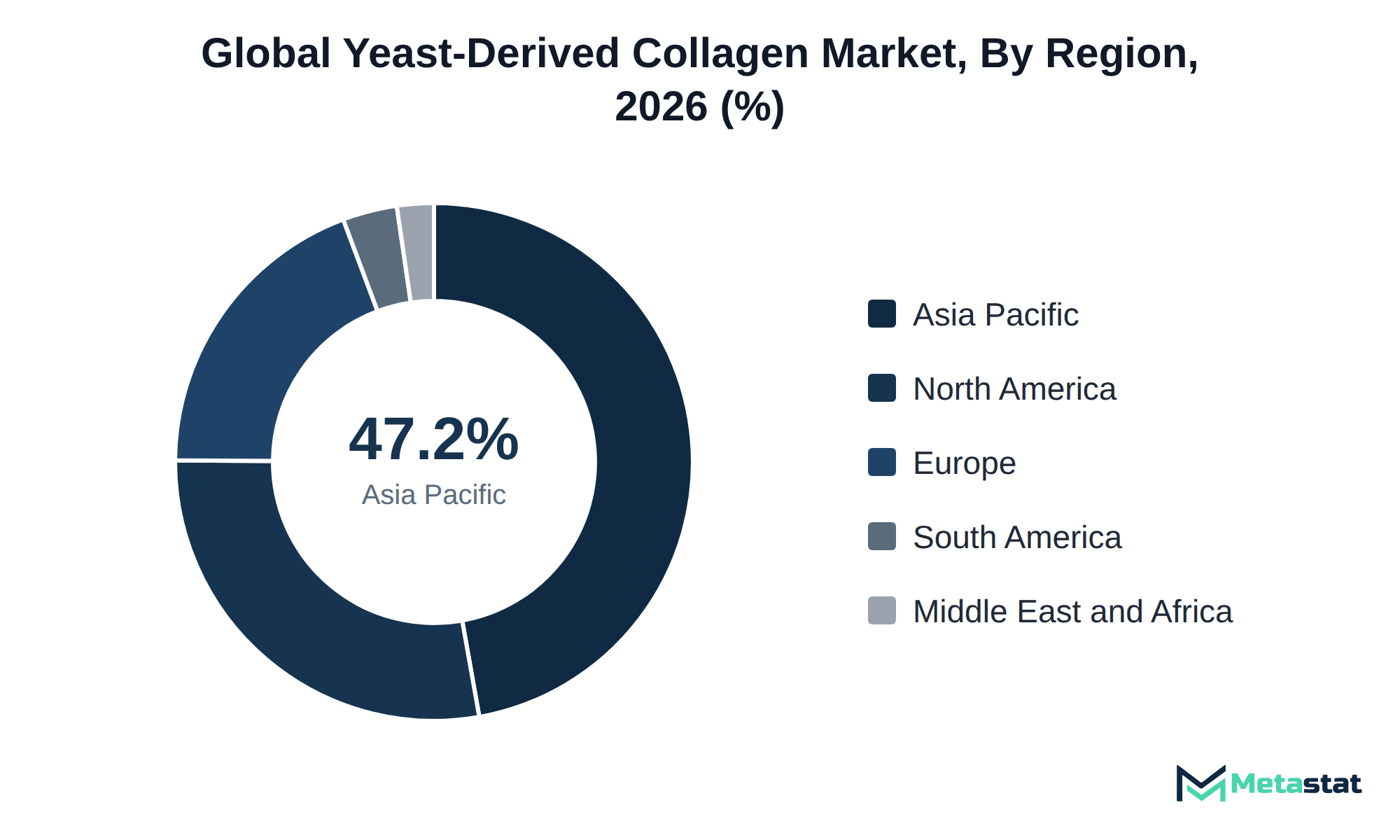
Asia-Pacific stands out in the yeast-derived collagen market, accounting for 47.2% of global market share in 2025. Countries including China, Japan, and India drive significant demand due to the increasing popularity of collagen in cosmetics and personal care applications. The region benefits from a robust manufacturing infrastructure, facilitating the production and distribution of collagen-based products. Rising consumer awareness regarding the benefits of collagen, particularly in skin health and anti-aging solutions, fuels market growth. Australia and South Korea contribute to advancements in medical aesthetics, with innovative applications emerging in wound care and tissue engineering sectors. The market is expected to expand through 2033, driven by evolving consumer preferences and increasing investments in research and development.
Demand for yeast-derived collagen in South America is primarily driven by the cosmetics and personal care industries, with Brazil and Argentina leading the market. Increasing awareness of the benefits of collagen in skincare products contributes to this demand. The market share for South America stands at 3.4% in 2025, reflecting the region's growth potential. Challenges related to the regulatory environment and production costs impact overall market dynamics. Investment in local manufacturing capabilities could enhance supply chain efficiency. The market is projected to benefit from rising consumer interest in natural and sustainable ingredients, aligning with global trends for health and wellness. Investment in research and development is expected to stimulate innovation in product applications within the yeast-derived collagen market.
The Middle East and Africa represent a small but emerging market for yeast-derived collagen, contributing 2.3% to global market share in 2025. The growing beauty and personal care industries in countries like Saudi Arabia and the UAE drive demand for collagen-based products, particularly in cosmetics and medical aesthetics applications. Increasing consumer awareness regarding the benefits of collagen has spurred market interest. The region's infrastructure for biotechnology and manufacturing enhances local production capabilities, while lower competition compared to other regions creates opportunities for new entrants. South Africa's expanding healthcare sector presents potential for increased adoption of collagen in medical applications. Overall, the yeast-derived collagen market in this region is expected to experience gradual growth, driven by evolving consumer preferences and expanding industry applications.
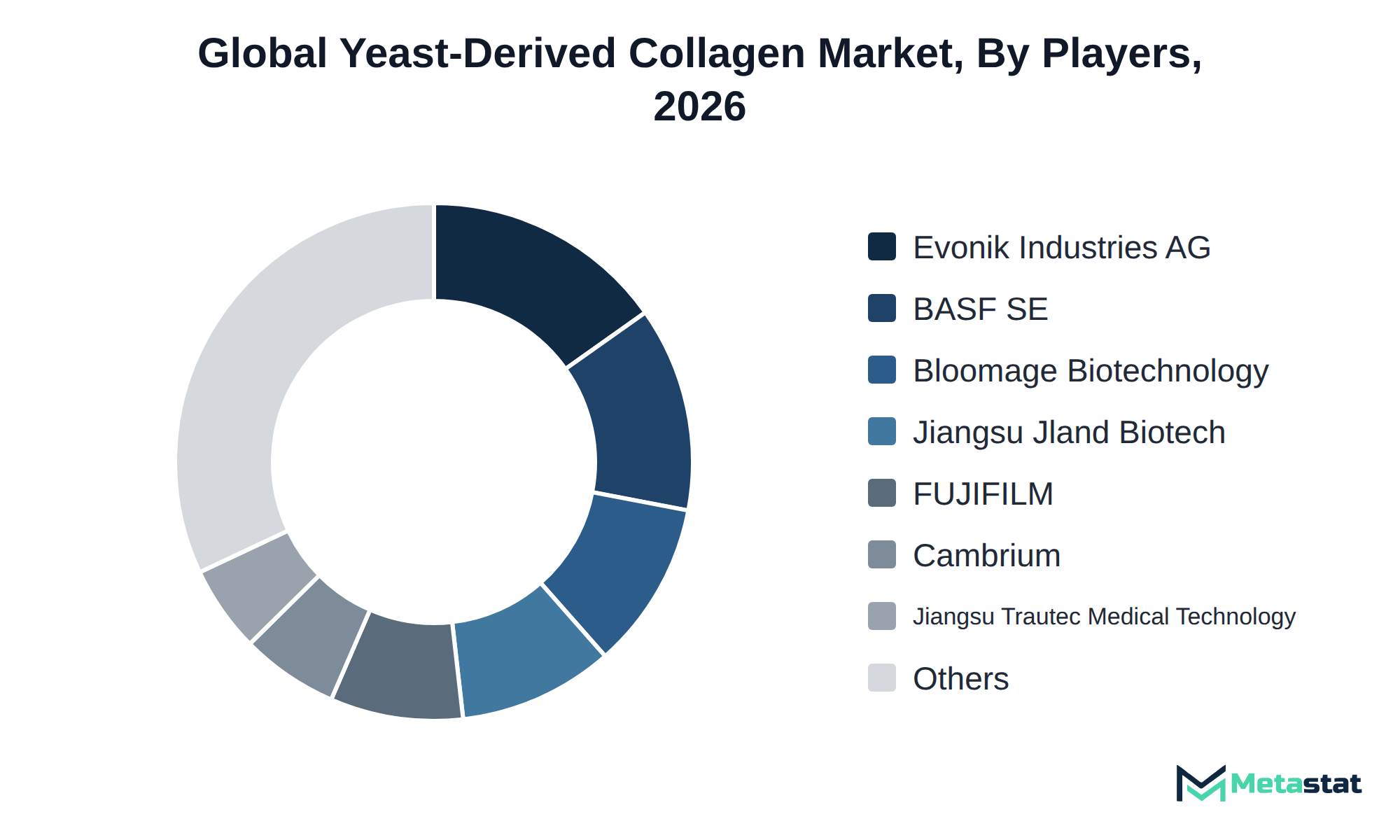
The competitive environment within the Yeast-Derived Collagen market highlights the presence of key players focused on various strategies to strengthen their market positioning. Segmentation occurs primarily through product offerings, with companies specializing in different collagen types, product architectures, and applications. Buyers prioritize factors including price, certification, customization, and overall service quality when selecting suppliers.
Jiangsu Jland Biotech Co., Ltd. emphasizes the development of innovative products in the collagen segment, particularly focusing on Type I and Type III collagen types. Evonik Industries AG concentrates on providing high-quality collagen fragments and peptides, catering to the growing demand in medical aesthetics. Bloomage Biotechnology Corporation Limited invests in research and development to enhance its offerings in the cosmetics and personal care application segment, aligning with consumer preferences for effective skin care solutions.
Growth in the Yeast-Derived Collagen market relies on several developments. First, the increasing adoption of Type III collagen, projected to reach USD 168.5 million by 2033, drives demand among cosmetics and personal care applications. Second, the expansion of full-length collagen, with a forecast growth to USD 89.4 million, supports both medical aesthetics and skin care products. Lastly, advancements in product formulation, particularly in powders and aqueous solutions, enhance the appeal of yeast-derived collagen across multiple industries, contributing to broader market penetration. A significant risk exists from potential supply chain disruptions, which could hinder production capabilities and delay market realization. This risk particularly affects regions like Asia Pacific, where a high percentage of production occurs. Therefore, while the Yeast-Derived Collagen market is expected to grow substantially, close attention to these developments and risks will shape the trajectory of market expansion.
By Collagen Type: Type I, Type III, Type V, Type XVII, Others (Types II, IV and VII)
By Product Architecture: Full-Length Collagen, Collagen Fragments and Peptides
By Physical Form: Powders, Aqueous Solutions, Hydrogels, Others (Sponges, Films and Fibres)
By Application: Cosmetics and Personal Care, Medical Aesthetics, Wound Care and Tissue Engineering, Cell Culture and Research, Food and Nutrition
The report strategically identifies and profiles the key market players and analyses their core competencies in each sub-segment of the Yeast-Derived Collagen market.
Report Attributes | Details |
Study Period | 2021-2033 |
Base Year | 2025 |
Estimated Year | 2026 |
Forecast Period | 2026-2033 |
Historical Period | 2021-2025 |
Growth Rate | CAGR 11.6% from 2026 to 2033 |
Revenue Unit | USD million |
Segmentation | By Collagen Type, Product Architecture, Physical Form, Application, and Region |
By Region | North America (By Collagen Type, Product Architecture, Physical Form, Application, and Country)
|
Europe (By Collagen Type, Product Architecture, Physical Form, Application, and Country)
| |
Asia Pacific (By Collagen Type, Product Architecture, Physical Form, Application, and Country)
| |
South America (By Collagen Type, Product Architecture, Physical Form, Application, and Country)
| |
Middle East and Africa (By Collagen Type, Product Architecture, Physical Form, Application, and Country)
|
Find answers to common questions about this report
The Yeast-Derived Collagen market size was valued at USD 133.2 million in 2025.
The market is projected to grow at a CAGR of 11.6% during the forecast period from 2026 to 2033.
The North America Yeast-Derived Collagen market size is estimated to reach USD 84.8 million by 2033.
Type III leads the Yeast-Derived Collagen market with a projected value of USD 168.5 million by 2033, based on its growth potential compared to other types.
Growing consumer awareness regarding health and wellness drives demand for yeast-derived collagen products, particularly in the cosmetics and personal care sectors. The trend toward sustainability and natural ingredients highlights the importance of yeast-derived collagen in meeting consumer preferences, supporting growth within the market.
Price sensitivity among buyers significantly impacts market adoption, particularly in the cosmetics and personal care segment. High production costs associated with yeast-derived collagen result in increased retail prices, deterring smaller companies from integrating these products into their offerings.
Several factors favor adoption in the yeast-derived collagen industry. Growing consumer awareness regarding health and wellness drives demand for effective ingredients, particularly in cosmetics and personal care. technological innovations in yeast fermentation enhance production efficiency, leading to improved quality and competitive pricing.
The Yeast-Derived Collagen market is estimated to reach a valuation of USD 321.5 million by 2033.
Key players operating in the Yeast-Derived Collagen industry include Jiangsu Jland Biotech Co., Ltd., Jiangsu Trautec Medical Technology Co., Ltd., Evonik Industries AG, Bloomage Biotechnology Corporation Limited, BASF SE, Cambrium GmbH, ProColl Limited, and H.T.L. SAS (HTL Biotechnology).
Yeast-derived collagen finds applications in cosmetics and personal care, medical aesthetics, wound care, and tissue engineering. The cosmetics segment is projected to reach USD 143 million by 2033, highlighting its significance in beauty products.
The analysts below cover Biotechnology research at Metastat Insights.
LEAD ANALYST
Utkarsh Khirodkar is a Lead Market Research Analyst at MetaStat Insight, specializing in market intelligence, technology sector assessments, and competitive strategy.

SENIOR RESEARCH ANALYST
Biotechnology · Food and Beverages · Medical Devices · Packaging
Snehal Pasalkar is a Research Analyst at MetaStat Insight, operating at the intersection of life sciences research, competitive strategy, and market intelligence.
Replacing petrochemical surfactants with bio-based alternatives requires realistic timelines on industrial precision fermentation scaling. The market research broke down commercialization timelines, feedstock sugar price sensitivities, and regional cosmetic ingredient regulatory approvals in Europe and East Asia. That supplier readiness mapping gave our formulations team reliable context when comparing renewable chemical sourcing roadmaps.
Tracking ceramic matrix composite adoption in high-bypass aero engines requires strict attention to material qualification cycles and FAA airworthiness testing milestones. The MetaStat Insight team provided a detailed timeline of silicon carbide fiber manufacturing capacity and commercial foundry lead times. Having clear visibility into upstream thermal barrier coating supply helped us stress-test our long-term component procurement strategy.
Transitioning ultra-class mining haul trucks to alternative power requires concrete data on remote hydrogen refueling infrastructure economics. The report evaluated megawatt-scale electrolyzer installation expenses, onsite storage safety mandates, and heavy-duty fuel cell stack degradation under continuous duty cycles. That technical rigor helped our engineers benchmark realistic total operating cost horizons for off-highway fleet decarbonization.
Explore related market intelligence reports worth reading alongside this one.