
Explore the crucial factors that impact pricing and cost dynamics in the Precision Machining market, helping buyers make informed decisions.
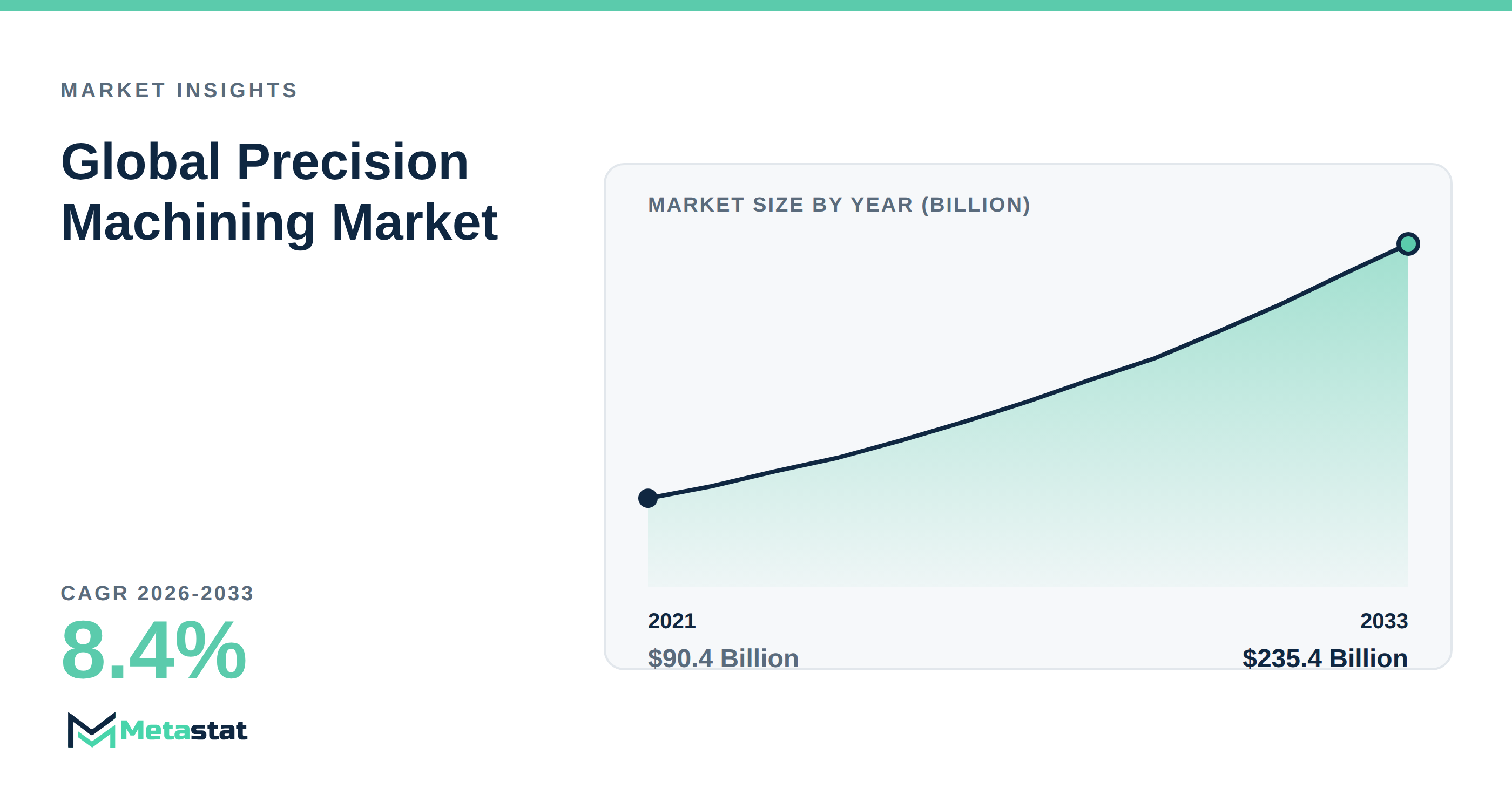
The Precision Machining market is experiencing substantial growth, with a valuation of USD 123.4 billion in 2025 anticipated to expand to USD 235.4 billion by 2033. Understanding the various factors driving costs and pricing provides buyers with insights into areas where they exert leverage over expenses and enhance their negotiating positions.
1. Technological advancements drive automation costs
Technological integration significantly influences cost dynamics in the Precision Machining market. Companies are investing heavily in advanced manufacturing technologies, including automation and artificial intelligence, resulting in significant initial expenditures. These investments ultimately enable higher operational efficiency and reduced long-term production costs. Buyers should recognize that, while upfront costs are substantial, the long-term savings derived from enhanced productivity provide leverage for negotiating favorable contract terms.
2. Supply chain dynamics impact pricing stability
The ongoing reshoring and nearshoring trends within the Precision Machining market notably affect supply chain dynamics. By emphasizing local sourcing, manufacturers aim to reduce operational uncertainties linked to international logistics. This shift allows buyers to negotiate better pricing, because shorter lead times and reduced costs encourage suppliers to adopt competitive pricing strategies. However, fluctuations in raw material availability stills introduce volatility, underlining the importance of maintaining strategic supplier relationships.
3. Regulatory compliance shapes operational costs
Adherence to stringent regulatory standards directly impacts operational costs within the Precision Machining market. Manufacturers often invest in advanced technologies to meet compliance requirements, leading to increased production expenses. Buyers should understand that suppliers who prioritize compliance typically account for these costs in their pricing models. Familiarity with a supplier's compliance strategies empower buyers during negotiations, particularly when seeking competitive pricing without compromising quality.
4. Material costs influence production expenditures
Raw material expenses play a significant role in determining overall production costs in the Precision Machining market. The growing utilization of advanced and composite materials, particularly in the aerospace and medical sectors, presents unique challenges associated with machinability and tool wear dynamics. Buyers leverage their purchasing power by collaborating with suppliers to optimize material sourcing strategies, ultimately affecting pricing structures and addressing the impact of fluctuating material costs.
5. Market competition drives pricing flexibility
Intense competition among manufacturers in the Precision Machining market fosters an environment of pricing flexibility. Companies strive to differentiate themselves through enhanced operational capabilities and tailored solutions for clients. Buyers capitalize on this competitive pressure by soliciting quotes from multiple suppliers, enabling them to negotiate more favorable pricing terms. Staying informed about market players and their offerings allows buyers to effectively leverage competition because a strategic advantage.
6. Customization demands increase operational complexity
The rising demand for customized machining solutions introduces complexities that significantly impact operational costs. Industries including automotive and aerospace require precision-engineered components tailored to specific applications, often resulting in higher production costs. Buyers seeking bespoke solutions should factor these associated expenses into their negotiations. Recognizing the value of customization in relation to broader market dynamics allows buyers to strengthen their negotiating positions with suppliers.
7. Skilled labor shortages affect operational pricing
The Precision Machining market faces challenges stemming from skilled labor shortages, which drive up operational costs. Companies encounter increasing difficulties retaining experienced professionals, leading to higher expenses for training and recruitment. Buyers should remain aware of this dynamic, because suppliers pass these costs onto clients. Acknowledging the impact of labor challenges on pricing provides buyers with insights into the broader cost structure and potential strategies for negotiation.
In summary, the cost and pricing landscape of the Precision Machining market is shaped by various interrelated factors. By gaining an understanding of the influence of technological advancements, supply chain dynamics, regulatory compliance, material costs, market competition, customization demands, and labor shortages, buyers navigate negotiations more effectively. This strategic awareness promotes improved decision-making when selecting suppliers and managing costs in an evolving market. For further insights and forecasts, see the Global Precision Machining Market.
Tags
About the Authors

LEAD ANALYST
Utkarsh Khirodkar is a Lead Market Research Analyst at MetaStat Insight, specializing in market intelligence, technology sector assessments, and competitive strategy.

INDUSTRY CONSULTANT - CHEMICALS & ADVANCED MATERIALS
Chemicals and Materials · Machinery & Equipment · Packaging
Amit Gadhekar Consultant for Chemicals and Materials at MetaStat Insight, directing sector-specific intelligence, research, and strategic consulting across global chemical and processing markets.

PRINCIPAL CONSULTANT - QUALITY SYSTEMS & COMPLIANCE
Electronics and Semiconductor · Machinery & Equipment · Professional Services
Omkar Phadtare is an Industry Consultant at MetaStat Insight, specializing in quality systems, regulatory compliance, and standards benchmarking to drive data-driven market intelligence and strategic industry research.

ENERGY & INFRASTRUCTURE INDUSTRY CONSULTANT
Automotive and Transportation · Electronics and Semiconductor · Energy and Power · Machinery & Equipment
Saurabh Vasant Ganvir consults for Energy & Infrastructure Industry at MetaStat Insight, specializing in renewable energy, solar EPC, and electric vehicle (EV) infrastructure markets.

LEAD CONSULTANT - COMMUNICATION, TELECOM, AND IT
Electronics and Semiconductor · Information & Technology · Machinery & Equipment · Professional Services
Ravindra Sathe Consultants for Communication, Telecom, and IT at MetaStat Insight. He leads the firm's industry research initiatives across telecommunications infrastructure, digital connectivity, enterprise networking, and emerging information technology domains.