
LEAD ANALYST
Utkarsh Khirodkar is a Lead Market Research Analyst at MetaStat Insight, specializing in market intelligence, technology sector assessments, and competitive strategy.

Global Absorbent Hygiene Products Market Size, Share, By Product Type (Baby Diapers & Training Pants, Sanitary Pads & Panty Liners, Tampons, Adult Incontinence Pads & Pants, Maternity Pads & Absorbent Postpartum Underwear, Nursing Pads, Personal Care Wipes, Menstrual Underwear and Absorbent Underpads), By Usage Type (Disposable and Reusable & Washable), By Distribution Channel (Supermarkets & Hypermarkets, Pharmacies & Drugstores, Online Stores, Convenience Stores & Traditional Retail and Direct Institutional Sales), By End-Use Setting (Households, Hospitals & Maternity Centers, Long-Term Care & Assisted Living Facilities, Childcare Centers and Others), Industry Analysis, Growth, Trends, and Forecast, 2026-2033
Report ID
MSI-5575
Published
October, 2026
Pages
284 Pages
Format
Historical
Base year
Forecast
Forecast period
Report Details
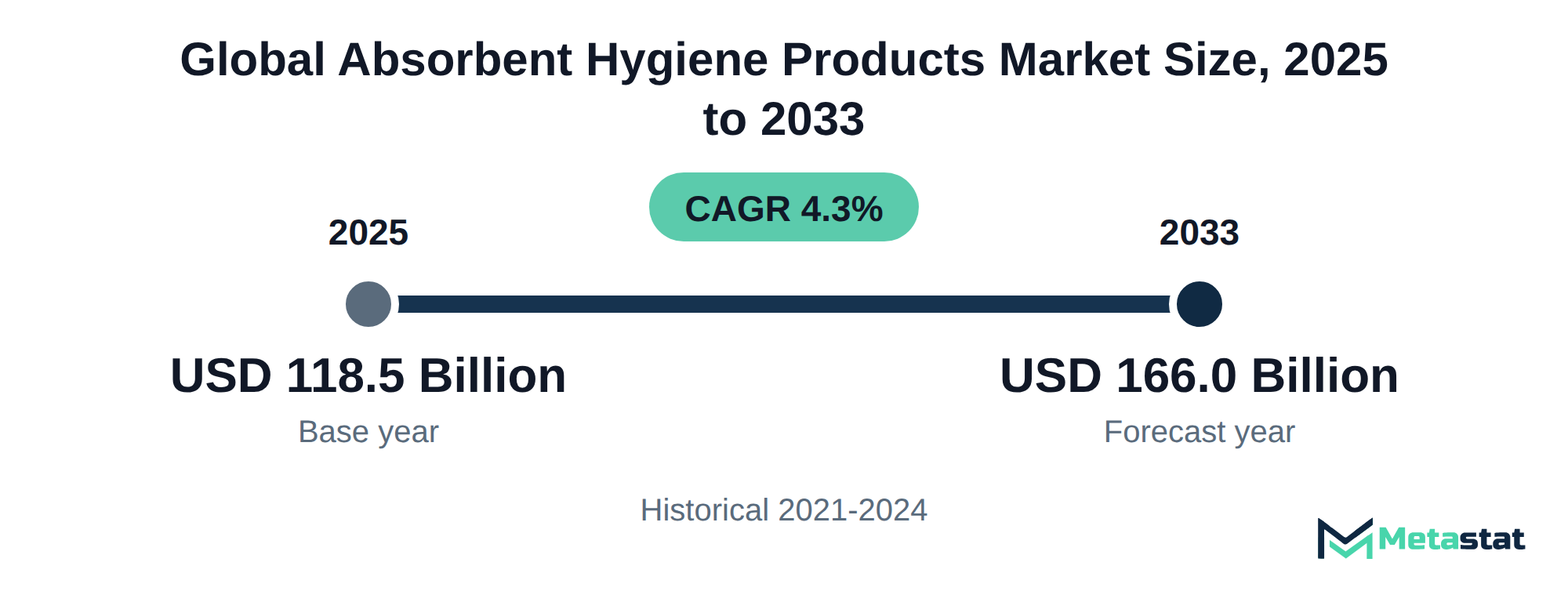
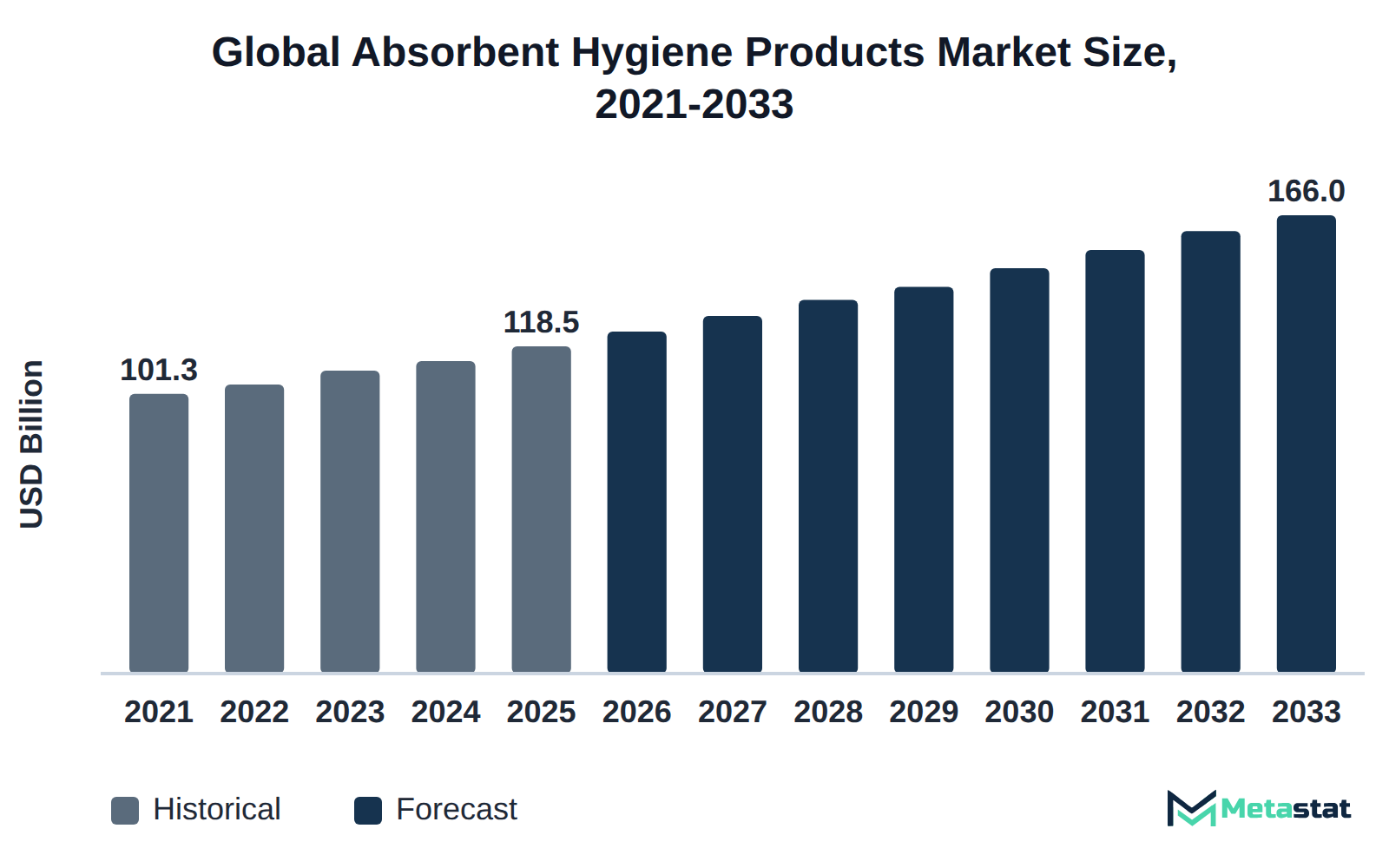
Market Valuation: Valued at $118.5 Billion in 2025, projected to reach $166 Billion by 2033 at a 4.3% CAGR.
Dominant Segment: Baby Diapers & Training Pants lead the market, driven by rising birth rates and changing parental attitudes towards child care.
Geographic Lead: Asia Pacific holds the largest market share at 39.5%, influenced by a growing population and increasing urbanization.
What's Inside: The report provides a comprehensive analysis of market segmentation by product type, usage type, distribution channel, and end-use setting, along with competitive coverage and growth forecasts.
Growth in Reusable Products: The reusable and washable segment shows significant potential, with a projected CAGR of 13.1%, driven by increasing consumer awareness of sustainability.
Technological Advancements: Innovations in product design, such as thinner diaper cores and leakproof underwear, enhance comfort and efficacy, appealing to health-conscious consumers.
Choose Your License
Global Absorbent Hygiene Products Market
The global Absorbent Hygiene Products market was valued at USD 118.5 billion in 2025 and is projected to reach USD 166 billion by 2033, growing at a CAGR of 4.3% over the forecast period.
The Absorbent Hygiene Products market covers products designed for personal hygiene and comfort, including baby diapers, sanitary pads, and adult incontinence products. Buyers invest in these products primarily due to the essential nature of hygiene in daily life, alongside growing awareness of health and wellness. Higher disposable income in various regions further drives consumer spending on quality hygiene products.
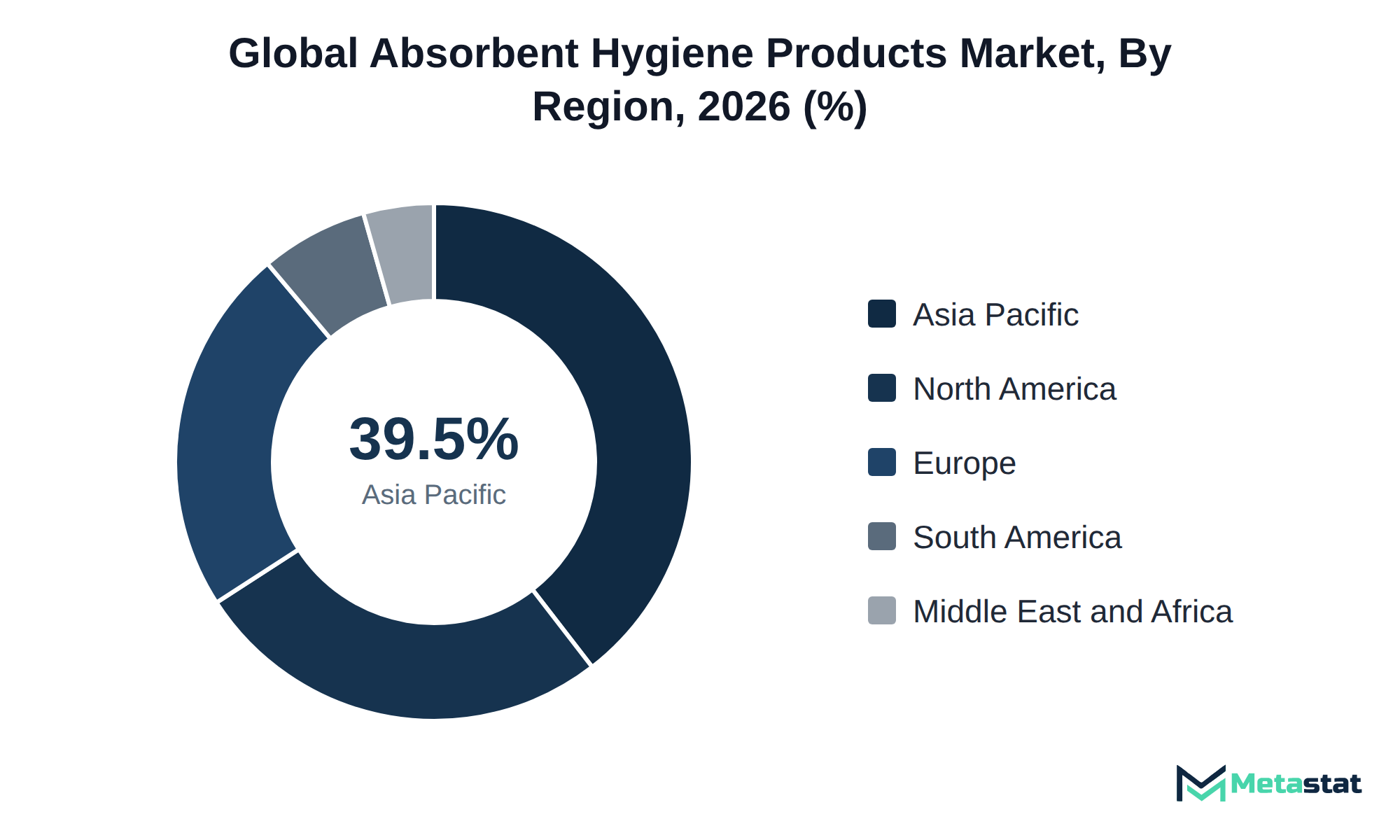
Among the segments, Baby Diapers & Training Pants contribute the highest value, reflecting significant demand driven by rising birth rates and changing parental attitudes towards child care. In terms of regional performance, Asia Pacific holds the largest share at 39.5%. North America holds 26.3% of the market in 2025, with the US leading in 2026. The shift toward disposable products shapes market dynamics, as consumers prioritize convenience in personal care.
The expanding e-commerce sector supports market growth by giving consumers easier access to many absorbent hygiene products. This shift toward online shopping matches changing consumer preferences, as convenience and speed become key factors in purchasing decisions. Growing awareness of sustainability in product offerings shapes the market, prompting manufacturers to innovate and cater to environmentally conscious consumers.
The Absorbent Hygiene Products market addresses the essential requirements of consumers for personal hygiene, convenience, and comfort. Buyers invest in these products due to growing awareness regarding health and hygiene, alongside increasing disposable incomes that encourage spending on quality products. The market includes various categories including baby diapers, sanitary pads, and adult incontinence solutions, each catering to specific consumer needs.
Growth in the market is driven by the rising demand for innovative and high-quality hygiene products. The segment of baby diapers and training pants holds the most significant value, reflecting an ongoing trend towards premium offerings that enhance comfort and performance. The Asia Pacific region exhibits the largest share at 39.5%, influenced by a growing population and increasing urbanization.
The need for advanced hygiene solutions continues to shape consumer preferences. The adult incontinence segment, with a projected compound annual growth rate of 6.4%, highlights the increasing focus on targeted products for specific demographics. This trend indicates a shift towards more specialized offerings that address the unique needs of various consumer groups.
The introduction of postpartum pads and nursing pads significantly expands the application of absorbent hygiene products beyond traditional menstrual care. This shift reflects the growing awareness of maternal health and postpartum needs, with an increasing number of women seeking specialized products for comfort and hygiene during the recovery period. The postpartum pads segment, including maternity pads and absorbent postpartum underwear, enhances product offerings aimed at new mothers, catering to their specific requirements.
In the Absorbent Hygiene Products market, investment in the development of these specialized products has gained momentum. The nursing pads segment, while smaller, captures attention due to its projected growth rate of 4.8%. This trend indicates a critical shift in consumer focus toward products that support maternal and infant care, thereby driving demand across the market. Companies that innovate in this space by integrating advanced materials and ergonomic designs are likely to gain a competitive edge.
The commercial consequences of this shift toward postpartum and nursing products highlight revenue opportunities within the absorbent hygiene products sector. By addressing the unique needs of postpartum women, brands capture a share of an underserved market segment, thereby increasing brand loyalty and overall market penetration. The anticipated growth in this area reinforces the potential for expanded product portfolios and innovative marketing strategies focused on maternal health.
The introduction of thinner diaper cores and leakproof underwear significantly influences purchasing decisions in the Absorbent Hygiene Products market. These innovations enhance comfort and efficacy, appealing to health-conscious consumers. A notable example involves the segment of baby diapers and training pants, projected to grow from USD 61.9 billion in 2026 to USD 76.7 billion by 2033, reflecting a compound annual growth rate of 3.1%. This trend highlights the importance buyers place on product quality and performance.
Pricing strategies in the market align with evolving consumer expectations. Many manufacturers adopt competitive pricing models to attract customers focused on value while ensuring high product standards. The strategic introduction of advanced features, including moisture-wicking materials and ergonomic designs, positions products as premium offerings. Buyers increasingly prioritize quality, influencing their willingness to invest in higher-priced options that provide better performance. The emphasis on innovation directly affects revenue and market share for companies adapting to these changing consumer preferences.
Online subscription services and institutional supply contracts significantly reshape purchasing behavior in the Absorbent Hygiene Products market. These purchasing routes appeal to buyers seeking convenience and consistency, particularly in sectors including healthcare. The increasing focus on hygiene in hospitals and maternity centers drives demand for reliable supply sources, with such facilities requiring assurance of adequate product availability to support patient care.
In 2033, hospitals and maternity centers are projected to require USD 11.9 billion in absorbent hygiene products. This figure highlights the importance of sustained procurement strategies, as these buyers aim to maintain high standards of hygiene while managing costs effectively. Institutional clients negotiate contracts that ensure bulk purchasing and favorable terms, minimizing supply chain disruptions and supporting healthcare supply chain management.
The shift toward online subscriptions further enhances accessibility for consumers and institutions, facilitating regular deliveries of essential products. This model attracts health-conscious buyers who prioritize hygiene and convenience within their purchasing decisions, ultimately encouraging growth in the market. Suppliers that adapt to these buying patterns can strengthen their positions and respond to the needs of diverse buyer groups.
The cost and performance comparison between disposable and reusable hygiene products shows significant distinctions that influence buyer decisions in the Absorbent Hygiene Products market. Disposable products, which represent a substantial segment of the market, are convenient and readily available. The disposable category is projected to grow from USD 118.8 billion in 2026 to USD 153.8 billion by 2033, reflecting a compound annual growth rate (CAGR) of 3.8%. This growth indicates a strong consumer preference for ease of use and immediate disposal, which are key factors for busy households.
In contrast, reusable hygiene products present economic and environmental benefits. The market segment for reusable and washable items is anticipated to reach USD 12.1 billion by 2033, with a CAGR of 13.1%. While the initial investment for reusable items is higher, long-term savings occur due to reduced need for frequent purchases. This aspect attracts environmentally conscious consumers who prioritize sustainability in their purchasing decisions. Understanding these cost dynamics is essential for buyers aiming to balance price sensitivity with performance needs in the Absorbent Hygiene Products market.
The rising awareness regarding personal hygiene contributes significantly to demand among consumers, particularly within households and healthcare settings. Shifts in consumer behavior, driven by heightened health consciousness, lead to increased usage of various absorbent hygiene products. This increase reflects a growing recognition of the importance of hygiene in infection control and in maintaining comfort. The disposable segment, projected to grow from USD 118.8 billion in 2026 to USD 153.8 billion by 2033, acts as a key driver for the market, highlighting the urgency surrounding hygiene practices. Enhanced marketing efforts and product innovations further reinforce this trend, ensuring that consumers prioritize hygiene and convenience in their purchasing decisions. Ongoing demographic changes, including an increase in the aging population, further increase demand for absorbent hygiene products, particularly in adult incontinence solutions. Continued growth in this segment reflects changing consumer needs within the Absorbent Hygiene Products market.
Technological advancements and improved formulations enhance product effectiveness, catering to specific consumer preferences. This focus on innovation supports market expansion and attracts diverse consumer segments. Strengthened demand reflects broader societal trends toward health and wellness, prompting manufacturers to develop tailored solutions that meet consumer expectations.
Innovation within absorbent hygiene products drives improvements in product functionality and user experience. Advancements in materials and design technologies have enabled manufacturers to create highly absorbent, lightweight, and discreet products that appeal to a broad consumer base. The integration of superabsorbent polymers and advanced fluid distribution systems enhances the efficiency of both baby diapers and adult incontinence products, expanding their market appeal.
Consumer preferences increasingly favor products that offer enhanced comfort, skin-friendliness, and efficacy. The introduction of skin-friendly materials reduces the risk of irritation and allergic reactions, boosting the attractiveness of absorbent hygiene products. Manufacturers focusing on these technological enhancements position themselves strategically within the market, responding to the demand for higher-quality products driven by evolving consumer expectations.
These innovations contribute to a competitive environment, challenging existing players to adapt and invest in research and development. Companies that prioritize technological advancements position themselves to capture market share, facilitating growth within the overall absorbent hygiene products market.
Rising raw material costs create challenges for the Absorbent Hygiene Products market, particularly impacting price-sensitive consumer segments. Manufacturers experience increased expenses in sourcing essential components, which translates to higher retail prices. Consumers, particularly within households and lower-income demographics, often exhibit resistance to price increases, leading to smaller order sizes and delayed product replacement. This trend results in slower market growth, particularly for disposable products that dominate the sector. The demand for premium and organic variants does not offset the overall impact on sales volume, limiting opportunities for less-established brands aiming for market penetration. This restraint holds back the adoption of innovative solutions, as companies prioritize competitive pricing to maintain consumer interest.
Fluctuations in input costs create challenges for suppliers in the Absorbent Hygiene Products market. Significant variations in prices for raw materials, including absorbent fibers and polymers, impact production expenses. Increased costs pressure suppliers to maintain competitive pricing while ensuring quality standards, affecting overall profitability. Suppliers are responding by investing in cost-efficient production techniques and sourcing alternative materials to mitigate the impact of these fluctuations. This strategic focus supports cost optimization while maintaining product integrity. Suppliers frequently explore partnerships with raw material providers to secure better pricing and stable supply chains, which further enhances operational resilience. These initiatives drive innovation in materials and processes, ultimately influencing the market's growth trajectory and competitive position.
The reusable and washable segment displays significant growth potential within the Absorbent Hygiene Products market, with a projected CAGR of 13.1% through 2033. This growth stems from increasing consumer awareness regarding sustainability and environmental concerns, prompting buyers to seek alternatives to disposable products. The demographic shift towards eco-conscious purchasing behavior drives interest among families and individuals looking for cost-effective solutions. Reusable hygiene products, including menstrual underwear and washable pads, address the demand for sustainable choices while providing comparable performance to traditional disposable options. The focus on reusable products aligns with health and environmental trends, presenting an opportunity for brands to innovate and expand their offerings. Marketing campaigns highlighting the benefits of these products enhance market penetration and consumer acceptance.
Incorporating these products into mainstream retail channels will facilitate their accessibility, enhancing growth prospects within this segment. The growing emphasis on eco-friendly practices within various industries supports the adoption of reusable hygiene products, positioning this category for substantial revenue growth in the coming years.
The Global Absorbent Hygiene Products market is segmented based on Product Type, Usage Type, Distribution Channel, and End-Use Setting.
This segment provides essential hygiene solutions for infants and toddlers, catering to parents looking for effective options to manage their children's needs. The growth of this segment is driven primarily by increasing birth rates in various regions, particularly in developing countries, alongside growing awareness regarding child hygiene. Compared to other segments, including Sanitary Pads & Panty Liners, which exhibit a higher CAGR of 4.1%, Baby Diapers & Training Pants experience more moderate growth. The need for convenience and advanced features in diaper design creates distinctions in purchasing patterns, influencing brand loyalty among consumers seeking the best options for their children.
Sanitary Pads & Panty Liners segment is estimated to reach USD 33.4 billion by 2033, at a CAGR of 4.1% during the forecast period. These products serve the vital function of menstrual hygiene for women, with usage prevalent in households, schools, and public spaces. Growing consumer awareness regarding hygiene practices drives demand for this segment, particularly in regions with increasing disposable income and access to such products. Compared to other segments, the Sanitary Pads & Panty Liners segment exhibits moderate growth, influenced by innovations in design and materials that enhance comfort and absorption. This segment shows slower growth than Adult Incontinence Pads & Pants, which has a projected CAGR of 6.4%. The market for sanitary pads remains competitive, with various brands offering diverse product ranges tailored to different consumer preferences and needs, ensuring continued relevance and expansion.
The tampons segment is expected to reach USD 5 billion by 2033. Women primarily use tampons for comfortable and discreet protection during their menstrual cycle. This segment experiences growth driven by increased awareness surrounding menstrual health and product innovation, including organic and environmentally friendly options. Compared to other product types, tampons exhibit a slower growth rate, reflected in a projected CAGR of 4.1%, resulting in lower expansion compared to segments like adult incontinence pads, which hold a CAGR of 6.4%. Pricing factors influence consumer choices; tampons often come at a premium compared to alternatives like sanitary pads. The market sees differing buyer preferences based on age, lifestyle, and health considerations, shaping purchasing patterns across various demographics.
Adult Incontinence Pads & Pants segment is projected to grow at a CAGR of 6.4% during the forecast period. Within the wider incontinence devices category, these pads and pants address the needs of individuals experiencing incontinence, offering comfort and reliability. The primary users include elderly individuals and those with specific medical conditions requiring effective absorption solutions. A strong demand driver for this segment arises from the increasing aging population, which enhances the market's growth trajectory. Heightened awareness surrounding incontinence issues increases acceptance and encourages purchases. Compared to other product categories, Adult Incontinence Pads & Pants demonstrate a faster growth rate, reflecting a significant demand shift towards specialized hygiene solutions. While the market evolves, product innovation and improved comfort levels differentiate this segment from traditional absorbent offerings. Consumer preferences favor effective and discreet solutions, positioning this segment for sustained growth and investment attraction.
Maternity pads and absorbent postpartum underwear serve essential functions for women following childbirth. These products provide comfort and protection during the postpartum period, catering to new mothers requiring reliable absorbent solutions. Rising awareness regarding maternal health and hygiene significantly drives demand, particularly from health-conscious consumers. Unlike other segments, maternity pads feature specialized designs for enhanced comfort and safety, appealing to a distinct buyer base focused on postpartum needs. This segment experiences different growth dynamics compared to others, with innovations targeting increased functionality and performance. Competing segments experience steady demand, while maternity products exhibit unique growth potential due to the increasing emphasis on maternity care and post-delivery hygiene among healthcare providers and new mothers. The Absorbent Hygiene Products market benefits from these trends that shape consumer preferences and product offerings.
Nursing pads are absorbent products designed to provide comfort and hygiene for breastfeeding mothers. These pads absorb leakage from the breast, ensuring that clothing remains dry and reducing the risk of skin irritation. The primary users of nursing pads include new mothers who require discreet protection during lactation. Rising awareness of maternal hygiene and the importance of breastfeeding support drives demand for this product segment. Compared to other segments, nursing pads represent a niche market with specific buyer needs, distinguishing them from broader categories including baby diapers and sanitary pads. The nursing pads segment typically features a lower price point and focuses on consumer education regarding breastfeeding practices. This emphasis on specialized usage ensures the segment's relevance within the wider context of the Absorbent Hygiene Products market.
Personal care wipes serve multiple functions, including cleaning and personal hygiene, appealing to a broad consumer base, including households and healthcare professionals. The demand for convenience drives the growth of this segment, reflecting a preference for ready-to-use products that offer quick and effective cleaning solutions. The increasing emphasis on hygiene practices, particularly during health crises, significantly influences sales. Compared to other product types, personal care wipes often face higher pricing due to their convenience and packaging, resulting in slower growth relative to more traditional absorbent products. Innovations in formulations and green packaging options are crucial factors, catering to environmentally conscious consumers. These factors differentiate this segment, contributing to its unique position within the absorbent hygiene products market.
Menstrual underwear serves as a contemporary alternative for menstrual hygiene management, appealing primarily to environmentally conscious consumers. This segment targets women who seek sustainable options, emphasizing comfort and convenience during menstruation. Growing awareness of environmental issues drives demand for such products, with users increasingly preferring reusable feminine hygiene products over traditional disposable options. Unlike other absorbent products, menstrual underwear features a higher price point due to its reusable nature, placing it in a different category within the product landscape. The unique positioning of menstrual underwear highlights its potential for growth in the Absorbent Hygiene Products market, attracting a niche audience focused on sustainability and innovation. This segment aligns with shifting consumer preferences toward eco-friendly products while differentiating itself through its specific use case and targeted buyer demographic.
Absorbent Underpads are designed for use in various care settings, providing protection for surfaces and users from moisture and spills. Primarily used in healthcare settings, these products serve individuals with incontinence or those requiring assistance for personal hygiene. Growing demand arises from aging populations and increased health awareness among caregivers. The target demographic includes hospitals, long-term care facilities, and households with aging family members, differentiating this sub-segment from others in terms of usage context and pricing strategies. Compared to other product types, Absorbent Underpads typically achieve a steady growth rate, driven by the increasing prevalence of chronic illnesses and the need for hygiene in caregiving environments. The cost structure remains competitive, reflecting ongoing advancements in absorbent technologies and materials.
This segment includes single-use products primarily designed for personal hygiene, appealing to consumers in households and healthcare settings. Increased health awareness and convenience drive demand within this segment, reflecting a shift toward hygienic solutions. Disposable products offer advantages including ease of use and reduced maintenance, contrasting with the reusable segment, which displays a higher growth rate of 13.1%. The market for disposable products remains sensitive to pricing, impacting its growth trajectory compared to other segments. Continuous innovation in materials and design enhances the user experience, contributing to sustained interest in disposable hygiene products. The disposable segment plays an important role in overall market dynamics.
This segment primarily serves consumers seeking sustainable options in absorbent hygiene products, appealing to environmentally conscious buyers across households and childcare centers. The increasing shift toward eco-friendly products drives demand for washable alternatives, influencing purchasing decisions among consumers seeking long-term cost savings and reduced environmental impact. Compared to other segments, the Reusable & Washable segment experiences faster growth, reflecting changing consumer preferences and a growing awareness of sustainability issues. This segment diverges from traditional disposable products, which face pricing pressures and fluctuating raw material costs, positioning the reusable options as an attractive choice for cost-conscious buyers focused on minimizing their ecological footprint.
Supermarkets & Hypermarkets segment is valued at USD 40.5 billion in 2026 and is projected to reach USD 48.7 billion by 2033, at a CAGR of 2.7% during the forecast period. This channel is essential in distributing absorbent hygiene products to consumers, primarily serving families and individuals seeking convenience and accessibility. The steady demand within this segment is driven by the increasing preference for one-stop shopping experiences. Compared to other distribution channels, Supermarkets & Hypermarkets typically feature a lower price point for products, appealing to budget-conscious buyers. This segment experiences slower growth than Online Stores, which benefit from rising e-commerce adoption and consumer inclination towards digital shopping. The market continues to evolve with a focus on enhancing in-store experiences, including promotions and product placements, which strengthen customer engagement and satisfaction.
Pharmacies & Drugstores segment is estimated to reach USD 25.6 billion by 2033, at a CAGR of 3.3% during the forecast period. This segment serves customers seeking absorbent hygiene products for convenience, accessibility, and immediate purchase. Consumers typically prefer pharmacies and drugstores for health-related products, resulting in consistent demand. The growing awareness of hygiene and personal care products significantly influences this segment's performance. Compared to other distribution channels, pharmacies and drugstores experience slower growth, reflecting a more stable and established market presence. In contrast, online sales channels exhibit a higher growth rate, driven by changing shopping behaviors and the increasing popularity of e-commerce. The Pharmacies & Drugstores segment has a significant impact on the overall dynamics of the absorbent hygiene products market.
The Online Stores segment is expected to reach USD 58 billion by 2033. This channel facilitates the purchase of absorbent hygiene products through digital platforms, catering to a growing base of consumers who prioritize the convenience of online shopping. Increasing internet penetration and a shift towards e-commerce drive this segment's growth, particularly among younger demographics who value convenience and discretion. The segment shows a significant growth trajectory compared to traditional retail channels, driven by changing consumer behaviors and preferences. Online shopping platforms often offer competitive pricing and a broader range of products, attracting budget-conscious consumers. This segment experiences a higher growth rate than others, reflecting a shift in purchasing preferences within the Absorbent Hygiene Products market.
Convenience Stores & Traditional Retail segment is projected to grow at a CAGR of 1.8% during the forecast period. This segment caters primarily to consumers who seek immediate access to absorbent hygiene products for personal care needs. The convenience and quick purchasing options provided by these stores attract various demographics, including busy parents and health-conscious individuals. A prevailing driver for this segment involves increasing consumer preference for quick shopping experiences, enhancing foot traffic in these locations. Compared to other distribution channels like Supermarkets & Hypermarkets, this segment exhibits slower growth due to limited product range and higher prices for on-the-shelf items. The Absorbent Hygiene Products market benefits from the steady demand generated by these retail formats, ensuring continued relevance in a competitive landscape.
Direct Institutional Sales involve the distribution of absorbent hygiene products to various institutions, including hospitals, nursing homes, and childcare facilities. This segment caters primarily to healthcare providers and care facilities, ensuring a consistent supply of essential products for patient care and hygiene. The rising demand for improved healthcare services and increasing awareness of hygiene standards drive this segment's growth. Institutions prioritize bulk purchasing to manage costs effectively, leading to different pricing structures compared to retail channels. Direct Institutional Sales experience a slower growth trajectory than other segments, reflecting the more stable but less dynamic nature of institutional purchasing decisions compared to consumer buying patterns. Various hospitals and long-term care facilities have expanded their reliance on these products to maintain hygiene and comfort for residents, significantly impacting purchasing strategies.
Specialty Baby Stores and Department Stores serve distribution channels for various absorbent hygiene products, targeting consumers who prefer personal shopping experiences. These stores cater to parents seeking specific baby care items, including diapers and training pants. The unique shopping environment encourages customer interaction with products, influencing purchasing decisions. Demand within this segment is driven by growing awareness of product quality and safety among parents, alongside the desire for convenient access to a variety of brands. Compared to larger retailers, this segment experiences slower growth due to a more niche market focus, relying heavily on localized consumer preferences. The absorbent hygiene products market benefits from the specialized offerings available in this channel, providing tailored solutions that differ from mass-market options provided by supermarkets and hypermarkets.
Households segment is valued at USD 104 billion in 2026 and is projected to reach USD 135.1 billion by 2033, at a CAGR of 3.8% during the forecast period. This segment provides daily hygiene solutions for families, encompassing products like diapers for infants and sanitary pads for women. Key factors driving growth include increasing awareness of personal hygiene and rising consumer spending on premium products. This segment exhibits slower growth compared to others, including Adult Incontinence Pads & Pants, which has a CAGR of 6.4%. The market sees a diverse range of buyers, predominantly families, who prioritize comfort and quality in their purchasing decisions. These trends indicate strong demand for innovative and effective hygiene solutions, thus supporting overall expansion in the market.
Hospitals & Maternity Centers segment is estimated to reach USD 11.9 billion by 2033, at a CAGR of 5.9% during the forecast period. This segment primarily caters to healthcare facilities, providing essential absorbent hygiene products for new mothers and infants. Demand in this segment is driven by increasing birth rates and heightened awareness regarding maternal and infant health. Compared to other segments, the Hospitals & Maternity Centers segment exhibits strong growth due to rising healthcare standards and the growing focus on comfortable and hygienic care for mothers and newborns. This segment's growth rate of 5.9% stands in contrast to other segments with varying performance, reflecting its critical nature in healthcare settings. The Absorbent Hygiene Products market experiences significant investment in product innovation tailored to meet the unique needs of hospitals and maternity centers.
Long-Term Care & Assisted Living Facilities segment is expected to reach USD 12.8 billion by 2033. This segment primarily serves the elderly and individuals with disabilities, requiring absorbent hygiene products for daily comfort and health management. Demand for these products is driven by an increasing aging population and a growing focus on improving quality of life for residents in care settings such as assisted living facilities. This segment experiences a faster growth trajectory compared to others, reflecting a CAGR of 5.9%. The segment distinguishes itself through higher pricing, attributed to specialized products designed for enhanced absorbency and comfort, which address the unique needs of users. These factors significantly impact the overall dynamics of the absorbent hygiene products market.
Childcare Centers segment is projected to grow at a CAGR of 4.8% during the forecast period. This segment focuses on providing absorbent hygiene products tailored for infants and toddlers in childcare environments. Facilities that care for young children require these products to ensure hygiene and comfort, making them vital in settings where young children spend extended periods. Growing awareness of child hygiene and increased enrollment in childcare facilities contribute to demand in this segment. Compared to other segments, including households, the Childcare Centers segment experiences slower growth due to limited purchasing power and budget constraints within childcare institutions. The focus on safety and quality in product offerings differentiates this segment, driving manufacturers to innovate solutions suited to the specific needs of childcare environments. The Absorbent Hygiene Products market continues to evolve to meet these demands, ensuring quality and reliability in childcare settings.
Other settings, including workplaces, schools, and public facilities, require absorbent hygiene products for effective management of hygiene needs. These products help maintain cleanliness and comfort for individuals in various environments, including offices, educational institutions, and communal locations. The demand for these products stems from rising awareness of health and hygiene standards, especially in public spaces. Enhanced focus on employee and student well-being significantly drives the growth of this segment. Compared to other segments, including households, this sub-segment experiences slower growth due to fluctuating budget allocations for hygiene supplies in institutional settings. In contrast to households, where purchasing is typically driven by individual consumer needs, the dynamics in workplaces and schools involve institutional procurement processes, influencing the overall cost and accessibility of products. The Absorbent Hygiene Products market continues to evolve, reflecting changing priorities among consumers and institutions alike.
Based on geography, the Global Absorbent Hygiene Products market is divided into North America, Europe, Asia-Pacific, South America, Middle East, and Africa.
The North American market demonstrates strong demand for Absorbent Hygiene Products. A combination of factors drives this, including a growing population and increased awareness of hygiene and health. The demand is particularly prominent in the United States, Canada, and Mexico, where consumers prioritize quality and convenience in their purchases. With the market projected to reach USD 41.2 billion by the end of 2033, the focus on high-quality products remains a critical component of consumer preferences. Retail structures, including supermarkets and pharmacies, function effectively in meeting consumer needs, while online sales channels expand rapidly. The region's 26.3% share of the global market in 2025 highlights its significant role within the industry. Innovations in product design and sustainability initiatives increasingly influence purchasing decisions among consumers in North America, shaping the future of the Absorbent Hygiene Products market.
The Absorbent Hygiene Products market in Europe is influenced by a combination of demographics, lifestyle changes, and increasing health awareness among consumers. Rising purchasing power and a growing emphasis on hygiene drive demand across various buyer groups, particularly among young families and health-conscious individuals. Countries like Germany and France exhibit strong preferences for premium products, while a focus on sustainability shapes purchasing decisions throughout the region. The market share in Europe is projected at 23.00% in 2025, reflecting steady growth driven by the increasing adoption of innovative products and eco-friendly solutions. Regulatory support for health and hygiene initiatives further enhances market conditions. This overall environment creates a competitive atmosphere, encouraging manufacturers to enhance product offerings and expand distribution channels to meet diverse consumer needs.
Asia-Pacific commands a share of the market, accounting for 39.5% in 2025. Rapid urbanization and rising disposable incomes in countries like China and India drive demand for absorbent hygiene products. The growing awareness of hygiene among consumers, particularly in developing regions, fuels the market's expansion. Increasing participation of women in the workforce creates additional demand for sanitary products, especially in urban areas.
Online retail platforms in the region enhance product accessibility, catering to a tech-savvy consumer base. The presence of major manufacturers and regional brands facilitates competitive pricing, benefiting consumers. In Rest of Asia Pacific, the market experiences growth due to increased investments in healthcare infrastructure and rising birth rates, particularly in Southeast Asia. Government initiatives promoting women's health and hygiene education play a crucial role in shaping market dynamics.
Brazil and Argentina serve key markets for absorbent hygiene products, driven by demographic shifts and increasing urbanization. Rising awareness of personal hygiene and the growing population contribute to an expanding consumer base, influencing purchasing patterns. The market's growth reflects heightened demand for disposable products, particularly in households and healthcare settings. Infrastructure improvements, including better distribution channels, enhance product accessibility across the region. The market in South America represented a share of 6.7% globally in 2025. Companies focus on developing innovative solutions tailored to local preferences and needs, ensuring alignment with evolving consumer expectations. This focus allows them to capture significant market opportunities while navigating the competitive landscape.
In the Middle East and Africa, the absorbent hygiene products market demonstrates unique characteristics influenced by local demographics and consumer behavior. Increased urbanization in countries including Saudi Arabia and the UAE contributes to a growing demand for modern hygiene solutions, particularly among young families. Rising awareness of health and hygiene drives an increasing preference for premium products, propelling market expansion. South Africa represents a significant segment of the market, driven by both retail and institutional purchases. With a market share projected at 4.4% in 2025, ongoing investments in healthcare infrastructure and distribution channels enhance product availability. This regional dynamic supports the overall growth of the absorbent hygiene products market, presenting opportunities for both established brands and new entrants.
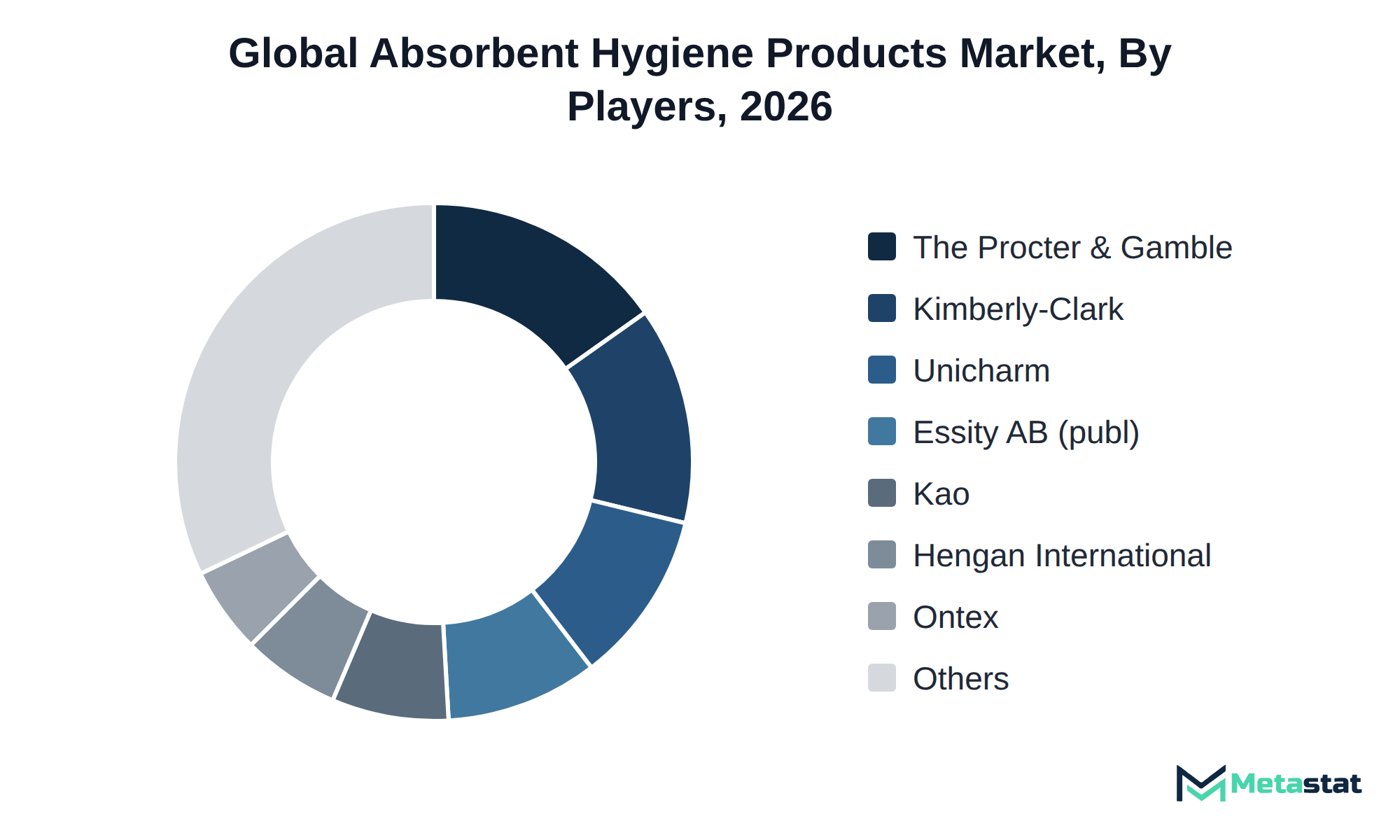
In the Absorbent Hygiene Products market, companies employ various strategies to gain traction and meet consumer demands. The field divides primarily between major players focusing on mass production and smaller firms emphasizing niche markets or innovative products.
Buyers choose products based on factors including price, certification, customization, and overall service. The Procter & Gamble Company emphasizes brand loyalty and product innovation, while Kimberly-Clark Corporation positions itself on sustainable product offerings. Unicharm Corporation leverages advanced technology to enhance user experience in its product lines.
Essity AB (publ) focuses on a diverse portfolio that caters to different consumer needs, while Kao Corporation emphasizes the use of environmentally friendly materials. Hengan International Group Company Limited capitalizes on a strong regional presence, providing cost-effective options across various segments.
Ontex Group NV and First Quality Enterprises, Inc. focus on expanding their distribution networks, enhancing accessibility for consumers. These strategic moves reflect the competitive dynamics within the market, fulfilling the unique requirements of various buyer groups.
This growth relies on several key developments, particularly in the Asia Pacific region, which holds the largest market share at 39.5%. The increasing birth rates and rising consumer awareness regarding hygiene products drive demand for baby diapers and training pants, which are projected to grow from USD 61.9 billion in 2026 to USD 76.7 billion by 2033 at a 3.1% CAGR. Meanwhile, disposable products are expected to expand from USD 118.8 billion in 2026 to USD 153.8 billion by 2033, supported by convenience and ongoing innovations within the segment.
However, potential risks including fluctuating raw material costs could hinder growth. These costs impact production expenses across the industry, particularly affecting segments like sanitary pads and panty liners, which are forecasted to reach USD 33.4 billion by 2033, growing at a 4.1% CAGR. The Absorbent Hygiene Products market faces challenges in maintaining competitive pricing while ensuring product quality and sustainability. Overall, these factors will play crucial roles in determining whether the market achieves its projected size by 2033.
By Product Type: Baby Diapers & Training Pants, Sanitary Pads & Panty Liners, Tampons, Adult Incontinence Pads & Pants, Maternity Pads & Absorbent Postpartum Underwear, Nursing Pads, Personal Care Wipes, Menstrual Underwear, Absorbent Underpads
By Usage Type: Disposable, Reusable & Washable
By Distribution Channel: Supermarkets & Hypermarkets, Pharmacies & Drugstores, Online Stores, Convenience Stores & Traditional Retail, Direct Institutional Sales, Others (Specialty Baby Stores, Department Stores)
By End-Use Setting: Households, Hospitals & Maternity Centers, Long-Term Care & Assisted Living Facilities, Childcare Centers, Others (Workplaces, Schools, Public Facilities)
The report strategically identifies and profiles the key market players and analyses their core competencies in each sub-segment of the Absorbent Hygiene Products market.
Report Attributes | Details |
Study Period | 2021-2033 |
Base Year | 2025 |
Estimated Year | 2026 |
Forecast Period | 2026-2033 |
Historical Period | 2021-2025 |
Growth Rate | CAGR 4.3% from 2026 to 2033 |
Revenue Unit | USD billion |
Segmentation | By Product Type, Usage Type, Distribution Channel, End-Use Setting, and Region |
By Region | North America (By Product Type, Usage Type, Distribution Channel, End-Use Setting, and Country)
|
Europe (By Product Type, Usage Type, Distribution Channel, End-Use Setting, and Country)
| |
Asia Pacific (By Product Type, Usage Type, Distribution Channel, End-Use Setting, and Country)
| |
South America (By Product Type, Usage Type, Distribution Channel, End-Use Setting, and Country)
| |
Middle East and Africa (By Product Type, Usage Type, Distribution Channel, End-Use Setting, and Country)
|
Find answers to common questions about this report
The Absorbent Hygiene Products market size was valued at USD 118.5 billion in 2025.
The market is projected to grow at a CAGR of 4.3% during the forecast period from 2026 to 2033.
The North America Absorbent Hygiene Products market size is estimated to reach USD 41.2 billion by 2033.
The leading segment in the Absorbent Hygiene Products market is Baby Diapers & Training Pants, with a projected value of USD 76.7 billion by 2033. This segment surpasses others in terms of revenue generation within the market.
Rising awareness regarding personal hygiene significantly contributes to demand, particularly in households and healthcare settings. The increasing focus on sustainability drives interest in reusable and washable products, presenting opportunities for brands to innovate and expand their offerings.
Rising raw material costs create challenges for the market, particularly impacting price-sensitive consumer segments. Increased expenses in sourcing essential components lead to higher retail prices, resulting in smaller order sizes and delayed product replacement among consumers.
The Absorbent Hygiene Products market is estimated to reach a valuation of USD 166 billion by 2033.
Key players operating in the Absorbent Hygiene Products market include The Procter & Gamble Company, Kimberly-Clark Corporation, Unicharm Corporation, Essity AB (publ), Kao Corporation, Hengan International Group Company Limited, and Ontex Group NV.
The reusable and washable segment displays significant growth potential, with a projected CAGR of 13.1% through 2033.
The aging population significantly drives demand for adult incontinence products, reflecting a growing need for effective solutions in this demographic.
The analysts below cover Healthcare research at Metastat Insights.
LEAD ANALYST
Utkarsh Khirodkar is a Lead Market Research Analyst at MetaStat Insight, specializing in market intelligence, technology sector assessments, and competitive strategy.

LEAD PRINCIPAL ANALYST, PHARMA AND HEALTHCARE
Food and Beverages · Healthcare · Healthcare IT · Medical Devices
Ajay Devgire is the Lead Healthcare Analyst at MetaStat Insight, leading strategic research and market intelligence initiatives across the global healthcare domain.
Our team was tracking whether regional recycling infrastructure could realistically absorb the growing volume of lithium iron phosphate batteries over the next decade. The report did a solid job separating announced hydrometallurgical plant capacity from active, permitted operational throughput. That distinction made the feedstock availability projections and regional recovery rate models far more credible than standard commercial overviews.
Tracking capacity expansion in single-use bioprocessing requires dependable data on raw material availability and cleanroom-grade polymer supply chains. The competitive landscape chapter gave a grounded evaluation of secondary component suppliers across North America and Asia-Pacific rather than simply reprinting press releases. Having that level of supplier benchmarking helped clarify dual-sourcing considerations for our clinical pipeline planning.
When evaluating distributed energy resource management systems, standard research summaries tend to gloss over the operational differences between front-of-the-meter utility deployments and behind-the-meter industrial sites. The MetaStat Insight report addressed those distinctions directly, especially regarding software interoperability standards and grid interconnection backlogs. The five-year market sizing across regional transmission organizations provided actionable context for our grid modernization strategy.
Explore related market intelligence reports worth reading alongside this one.