
LEAD ANALYST
Utkarsh Khirodkar is a Lead Market Research Analyst at MetaStat Insight, specializing in market intelligence, technology sector assessments, and competitive strategy.

Global Aerospace Fluoropolymers Market Size, Share, By Polymer Type (PTFE, FKM, ETFE, FEP, PVDF, PFA and Others), By Application (Wire and Cable Insulation, Seals and Gaskets, Hoses and Tubing, Films and Interior Laminates, Coatings and Others), By Aerospace Platform (Commercial Fixed-Wing Aircraft, Military Fixed-Wing Aircraft, Business and General Aviation Aircraft, Rotary-Wing Aircraft, Spacecraft and Launch Vehicles and Others), By Material Supply Form (Powders, Pellets and Granules, Dispersions, Gumstock and Precompounds and Others), Industry Analysis, Growth, Trends, and Forecast, 2026-2033
Report ID
MSI-2439
Published
November, 2026
Pages
283 Pages
Format
Historical
Base year
Forecast
Forecast period
Report Details
Market Valuation: Valued at $777 Million in 2025, projected to reach $1,252.4 Million by 2033 at a 6.1% CAGR.
Dominant Segment: The commercial fixed-wing aircraft segment leads the market, driven by the ongoing expansion of the aviation industry and the demand for lightweight, durable materials.
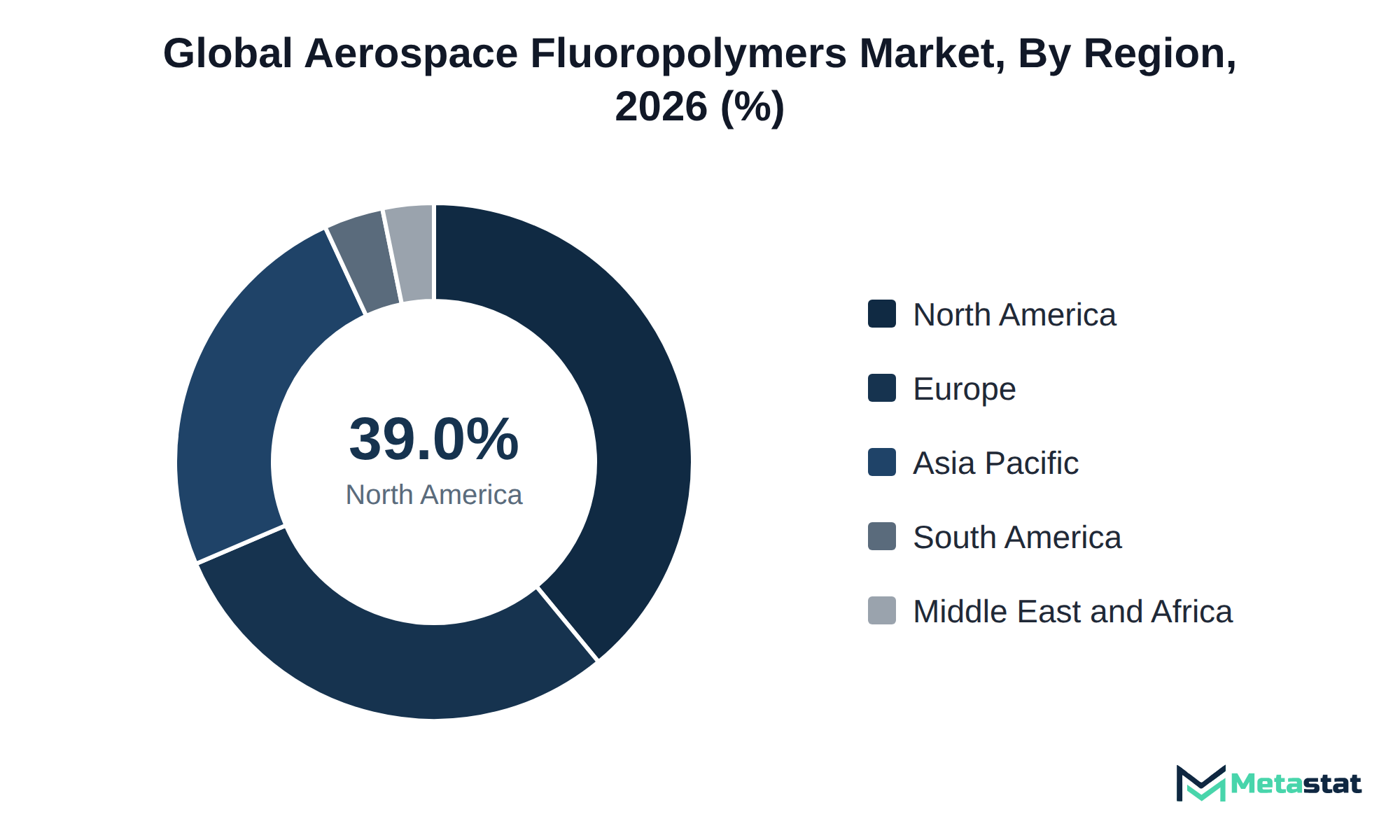
Geographic Lead: North America is the leading region, holding 39.0% of the market in 2025, largely due to its advanced aerospace manufacturing infrastructure and technological innovations.
What's Inside: The report provides comprehensive coverage of the competitive landscape, detailed analyses of market dynamics, and a forecast window extending to 2033.
High Growth Areas: Wire and cable insulation is a significant growth area, projected to expand from USD 297.2 million in 2026 to USD 462.5 million by 2033, reflecting a CAGR of 6.5%.
Material Innovations: Advancements in fluoropolymer formulations enhance performance metrics, with a focus on improving reliability and lifespan in challenging aerospace environments.
Choose Your License
Global Aerospace Fluoropolymers Market
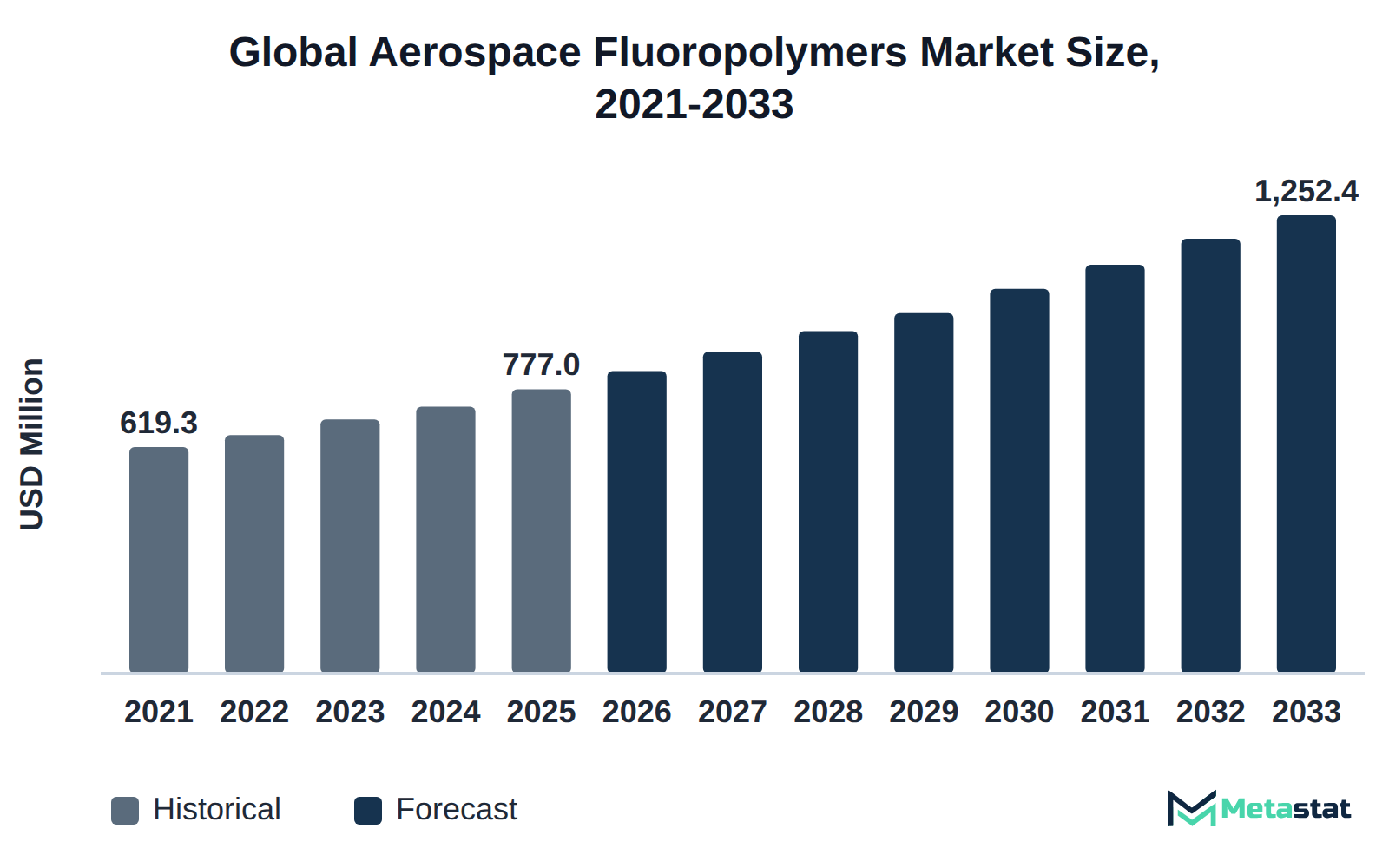
The global Aerospace Fluoropolymers market was valued at USD 777 million in 2025 and is projected to reach USD 1,252.4 million by 2033, growing at a CAGR of 6.1% over the forecast period.
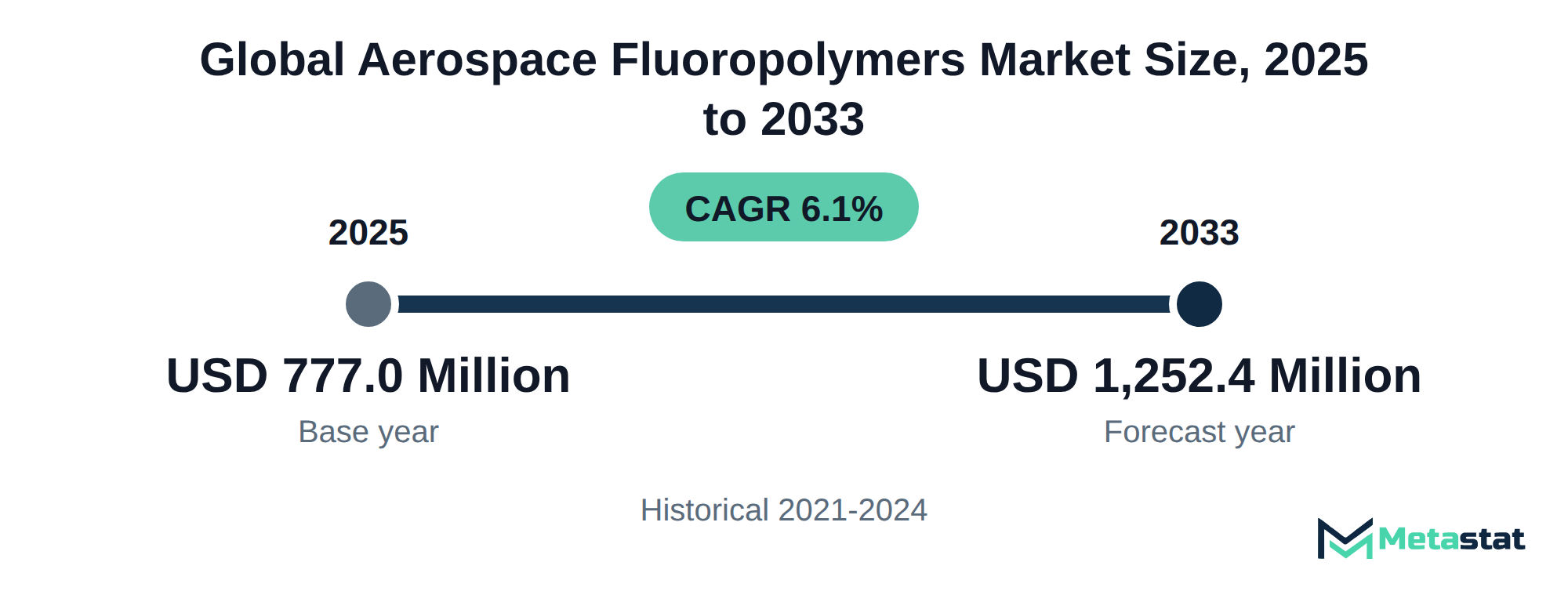
The Aerospace Fluoropolymers market encompasses a range of high-performance polymers used in various aerospace applications. Buyers invest in these materials due to their superior properties, including high thermal resistance, chemical stability, and low friction. Aerospace manufacturers require these materials for critical applications such as wire and cable insulation, seals, and gaskets to ensure safety and reliability in aircraft operations.
Growth in the market is driven by increasing demand for lightweight and durable materials in the aerospace sector. The commercial fixed-wing aircraft segment represents the most substantial value within the market, reflecting the ongoing expansion of the aviation industry and commercial aircraft manufacturing. North America holds 39.0% of the market in 2025, with the US leading in 2026. North America's advanced aerospace manufacturing infrastructure and technological innovations contribute significantly to its market share.
Investment in research and development fuels growth by enabling advanced fluoropolymer formulations that meet stringent aerospace standards. The demand for high-performance materials continues to rise, driven by the need for enhanced fuel efficiency and reduced emissions in aircraft design. The growing focus on sustainability within the aerospace sector supports the adoption of innovative materials, positioning the market for continued expansion.
The Aerospace Fluoropolymers market addresses the demand for specialized polymers in the aerospace sector, essential for applications requiring high thermal stability, chemical resistance, and lightweight properties. Buyers invest in these materials to enhance the performance and longevity of aerospace components, particularly in critical environments. The market serves various applications, including wire and cable insulation, seals, gaskets, and tubing, which are crucial for operational efficiency and safety in aviation.
Growth in the market is driven by advancements in aerospace technologies, which necessitate materials that withstand extreme conditions while providing reliability. Among the segments, PTFE holds the largest value due to its superior properties, contributing significantly to overall market performance. This region's strong aerospace manufacturing base fuels demand for high-performance fluoropolymers.
The need for lightweight and durable materials to improve fuel efficiency and reduce emissions drives the market's expansion. Aerospace manufacturers increasingly focus on sustainability and operational efficiency, leading to rising demand for innovative fluoropolymer solutions. This trend supports significant growth in the coming years.
ETFE (ethylene tetrafluoroethylene) and PTFE (polytetrafluoroethylene) represent advanced insulation options for high-density aircraft wiring, prioritizing performance under demanding conditions. The Aerospace Fluoropolymers market reflects a growing preference for these materials, driven by their superior thermal stability and resistance to chemicals, which significantly enhances the operational lifespan of electrical components in aircraft.
PTFE, in particular, is projected to grow from USD 411.4 million in 2026 to USD 605.4 million by 2033, achieving a compound annual growth rate (CAGR) of 5.7%. This growth results from PTFE's strong dielectric properties and ability to maintain performance in extreme temperatures, making it suitable for critical applications in commercial fixed-wing aircraft, military fixed-wing aircraft, and rotary-wing aircraft.
ETFE, while slightly newer to the aerospace sector, is gaining traction due to its lightweight nature and excellent mechanical properties. This polymer is expected to become increasingly important in applications including wire and cable insulation, where space and weight optimization is necessary for high-density wiring systems. The preference for ETFE and PTFE for insulation contributes to improved energy efficiency and safety in aircraft design, giving manufacturers a significant competitive edge.
Low-temperature seals in aerospace fuel and hydraulic systems require precise material selection for optimal performance under challenging conditions. Fluorinated elastomers (FKM) and polytetrafluoroethylene (PTFE) offer superior resistance to fuel and hydraulic fluids, contributing to their increasing adoption in these applications.
Buyers in the aerospace sector engage in long-term contracts with suppliers to ensure consistent quality and availability of low-temperature seals. Pricing structures vary based on contract length, volume commitments, and specific performance requirements. The integration of advanced materials, including FKM and PTFE, influences pricing due to their specialized properties and manufacturing processes.
The market for seals in aerospace applications emphasizes the importance of reliability and operational efficiency. With seals projected to reach USD 346.7 million by 2033 within the seals and gaskets application segment, buyers prioritize suppliers with proven track records of delivering high-performance solutions. The competitive landscape requires suppliers to adopt pricing strategies that balance quality and cost-effectiveness, further shaping buyer-supplier relationships within the Aerospace Fluoropolymers market.
PVDF (Polyvinylidene Fluoride) and PVF (Polyvinyl Fluoride) films improve the durability and lightweight characteristics of aircraft interiors. These materials provide superior resistance to chemicals, UV radiation, and weather conditions, making them ideal for applications in various aerospace settings. The Aerospace Fluoropolymers market indicates a noteworthy focus on lightweight materials, with significant demand for components that contribute to fuel efficiency and performance.
In particular, the application of PVDF films in wire and cable insulation is projected to reach USD 462.5 million by 2033. This growth reflects an increasing commitment from manufacturers to adopt advanced materials that meet stringent aviation requirements while maintaining low weight. Buyers in commercial aviation prioritize these films for their ability to enhance operational efficiency and reduce overall maintenance costs.
The integration of PVF films into aircraft interiors improves aesthetics and contributes to the overall safety and longevity of the aircraft. With a rising emphasis on reducing the weight of aircraft components, the Aerospace Fluoropolymers market aligns with the industry's goals of enhancing fuel efficiency and lowering emissions. Investment in PVDF and PVF films gives aerospace manufacturers an advantage in meeting evolving regulatory standards and customer expectations.
Qualifying fluoropolymers for flight-critical components involves rigorous aerospace materials testing and compliance with industry standards. Aerospace manufacturers emphasize the importance of material performance under extreme conditions, including temperature fluctuations and exposure to various chemicals. The qualification process involves assessing the mechanical, thermal, and chemical resistance properties of fluoropolymers. For example, polytetrafluoroethylene (PTFE) is projected to reach USD 605.4 million by 2033, highlighting its significance in applications including seals and gaskets.
This growing demand reflects the increasing need for reliable materials that withstand the rigors of flight. Manufacturers invest in extensive testing protocols to ensure that fluoropolymers meet the specific requirements set by aviation authorities. These protocols typically include accelerated aging tests, tensile strength evaluations, and resistance checks against fuel and hydraulic fluids. The commitment to safety and reliability in the aerospace fluoropolymers market enhances market credibility and customer trust.
Growing adoption of lightweight materials in aerospace applications drives increased spending on fluoropolymers. Manufacturers focus on enhancing fuel efficiency and performance, prompting a shift towards materials that reduce overall aircraft weight. Commercial fixed-wing aircraft production, one of the largest segments, requires advanced materials to meet stringent efficiency regulations while maximizing payload capacity. This transition supports a surge in demand for polymers like PTFE and FKM, known for their performance in critical applications including seals and insulation. The increased focus on fuel efficiency encourages aerospace manufacturers to invest in innovative materials, which raises fluoropolymer volumes across the sector.
Innovations in fluoropolymer formulations improve performance metrics in aerospace applications. Enhanced resistance to extreme temperatures and aggressive chemicals drives manufacturers to adopt advanced materials, improving the reliability and lifespan of aircraft components. High-performance variants including FKM and ETFE feature prominently in manufacturing processes, providing superior solutions for challenging aerospace environments. Using these materials reduces maintenance costs and increases operational efficiency.
Developments in manufacturing techniques contribute to the expansion of the Aerospace Fluoropolymers market. The adoption of additive manufacturing processes enables customization and optimization of components, addressing specific operational requirements. Suppliers that use these advanced techniques gain competitive advantages by delivering tailored solutions to major aerospace manufacturers. This evolution in production capabilities encourages the adoption of fluoropolymers across various aerospace platforms, supporting market expansion.
High prices for aerospace fluoropolymers create obstacles for various buyers, particularly manufacturers working within budget constraints. The high costs associated with these advanced materials lead to slower adoption rates in certain applications, hindering potential growth in the market. Aerospace companies, particularly those involved in commercial fixed-wing aircraft, face pressure to minimize operational expenses while striving for high-performance components. The current price landscape results in smaller order volumes and delayed replacement of older materials, impacting overall efficiency and competitiveness. Buyers explore alternative materials or technologies that provide adequate performance at lower costs, further restraining market expansion. Together, these factors make buyers cautious about investing in aerospace fluoropolymers, which affects long-term growth in the market.
Input cost fluctuations impact supplier profitability. The rising expenses of raw materials strain margins for companies operating in the Aerospace Fluoropolymers market. These fluctuations stem from global supply chain disruptions and increased demand for high-performance materials, compelling suppliers to reassess their sourcing strategies. Suppliers respond by exploring alternative materials and optimizing production processes to enhance cost efficiency. Innovation in manufacturing techniques reduces reliance on expensive inputs, allowing for competitive pricing structures. However, these strategies require significant investment in research and development, potentially impacting short-term profitability.
Competition intensifies within the market, and maintaining a balance between cost control and product quality emerges as a strategic priority for suppliers. Enhanced collaboration with raw material producers ensures a more stable supply chain, further supporting operational resilience. Suppliers must address input cost pressures to sustain profitability as the Aerospace Fluoropolymers market grows.
Wire and cable insulation stands out as a significant growth area within the market, driven by increased demand for advanced insulation materials in aerospace applications. The segment is projected to expand from USD 297.2 million in 2026 to USD 462.5 million by 2033, reflecting a compound annual growth rate of 6.5%. This growth results from manufacturers focusing on lightweight, high-performance materials that enhance safety and efficiency in aircraft design. The ongoing trend toward sophisticated aerospace platforms calls for improved electrical insulation properties, particularly in commercial fixed-wing aircraft, which employ wire and cable systems extensively. The Aerospace Fluoropolymers market is positioned to capitalize on this need, offering products that meet rigorous safety and performance standards. This opportunity favors investment in specialized fluoropolymer formulations for wire and cable insulation.
The Global Aerospace Fluoropolymers market is segmented based on Polymer Type, Application, Aerospace Platform, and Material Supply Form.
PTFE serves essential functions in applications including wire and cable insulation, seals, and gaskets, mainly for aerospace manufacturers requiring high-performance materials with excellent thermal stability and chemical resistance. Demand for PTFE is driven by increasing reliance on lightweight components in aerospace design, promoting enhanced fuel efficiency and performance. Compared to other polymer types, PTFE exhibits a moderate growth rate, characterized by a stable demand profile and competitive pricing, making it an attractive option for various buyers. Innovations in formulations and processing technologies ensure that this segment remains relevant amid shifting market dynamics.
FKM is estimated to reach USD 239.6 million by 2033, at a CAGR of 6.7% during the forecast period. This polymer type is used primarily in applications including seals and gaskets, where resistance to aggressive chemicals and high thermal stability are crucial. Aerospace manufacturers, particularly those focusing on commercial fixed-wing aircraft and military applications, drive the demand for FKM due to its superior performance characteristics. The growing emphasis on lightweight and durable materials aligns with the aviation industry's shift toward enhanced efficiency. FKM distinguishes itself from other polymer types through its faster growth rate, supported by its expanding role in aerospace applications. The increasing necessity for reliable sealing solutions in harsh environments highlights this segment's significance within the overall market dynamics.
ETFE is anticipated to reach USD 156.3 million by 2033. This polymer type finds extensive applications in aerospace, particularly for wire and cable insulation, seals, and gaskets, predominantly used by manufacturers of commercial and military aircraft. The segment benefits from a growing emphasis on lightweight materials, which enhances fuel efficiency and performance. This demand is driven by the need for advanced thermal and chemical resistance in aerospace applications. Compared to other polymer types, ETFE shows strong growth potential, with a compound annual growth rate (CAGR) of 6.7%. In contrast, PTFE exhibits a lower CAGR of 5.7%, reflecting differences in material properties and cost structures that influence buyer choices and adoption rates. The market continues to evolve as innovations in polymer technology drive enhanced performance and greater adoption across the aerospace sector.
FEP (Fluorinated Ethylene Propylene) is projected to grow at a CAGR of 5.5% during the forecast period. This polymer is employed primarily for wire and cable insulation, seals, and gaskets in aerospace applications. The increasing demand for high-performance materials that offer excellent chemical resistance and thermal stability drives the growth of this segment. The FEP segment differentiates itself from other polymer types, including PTFE and FKM, through its unique properties while maintaining a competitive pricing structure. The versatility of FEP makes it attractive for various applications in both commercial and military aerospace platforms. While manufacturers seek to enhance operational efficiency and reliability, the performance characteristics of FEP position it favorably against alternatives in the market.
PVDF (Polyvinylidene Fluoride) features prominently in aerospace applications, providing high-performance flexibility and durability. This polymer is used in wire and cable insulation, seals, and gaskets, where its excellent resistance to chemicals and temperature extremes enhances operational safety and reliability. Demand for PVDF is driven by the increasing focus on lightweight materials in aerospace design, contributing to overall efficiency and performance improvements. Compared to other polymer types, PVDF faces unique competition from materials including PTFE and FKM, each offering distinct advantages in specific applications. The market dynamics show a higher emphasis on PVDF's properties among specific buyers, including manufacturers of commercial fixed-wing aircraft, who prioritize both performance and cost-effectiveness. Continued innovations in material formulation are expected to influence PVDF’s standing in the market, allowing it to meet evolving aerospace requirements with improved functionality and application versatility.
PFA (perfluoroalkoxy alkane) is a specialized fluoropolymer known for its excellent thermal stability and chemical resistance. This polymer finds applications in various aerospace components, particularly in environments requiring high performance under demanding conditions. Aerospace manufacturers employ PFA for its properties that support the reliability and longevity of critical parts. Demand for PFA is driven by the increasing focus on lightweight and efficient materials within the aerospace sector, aligning with broader trends toward enhanced performance and safety. Compared to other fluoropolymers, PFA typically commands a higher price point due to its unique characteristics and processing capabilities. This segment appeals to specific buyers seeking superior performance in niche applications, distinguishing it from other polymers that do not meet the stringent requirements of aerospace applications.
FFKM (Perfluoroelastomer), PCTFE (Polychlorotrifluoroethylene), PVF (Polyvinylidene Fluoride), and ECTFE (Ethylene Chlorotrifluoroethylene) serve specialized roles in various aerospace applications. These materials excel in areas requiring strong chemical resistance and thermal stability, making them suitable for demanding environments. Buyers include aerospace manufacturers focusing on components subject to extreme conditions, including seals and gaskets, which rely on these specialized fluoropolymers for durability. Demand for these materials is driven by increasing complexity in aerospace systems that require advanced performance characteristics. Compared to other segments like PTFE and FKM, this sub-segment experiences distinct performance advantages but operates at a higher price point, influencing buyer decisions. The aerospace fluoropolymers market continues to evolve, with ongoing research into new formulations enhancing the properties of these critical materials.
Wire and Cable Insulation segment is valued at USD 297.2 million in 2026 and is projected to reach USD 462.5 million by 2033, at a CAGR of 6.5% during the forecast period. This segment finds application in aerospace for protecting electrical wires and cables from environmental factors, ensuring reliability and safety. Growth in this segment is driven by increasing demand for advanced insulation materials, particularly in commercial fixed-wing aircraft and military fixed-wing aircraft. The segment's growth rate outpaces that of other segments, reflecting robust interest from manufacturers focused on enhancing the durability and performance of insulation products. Compared to seals and gaskets, which have a CAGR of 6.3%, the Wire and Cable Insulation segment offers a more substantial growth trajectory, highlighting its critical role in the Aerospace Fluoropolymers market.
Seals and Gaskets segment is estimated to reach USD 346.7 million by 2033, at a CAGR of 6.3% during the forecast period. This segment provides effective sealing solutions for various aerospace applications, including fuel systems, hydraulic systems, and environmental control systems. Aerospace manufacturers increasingly favor fluoropolymers for their excellent chemical resistance and high-temperature stability. Demand for these materials gains momentum due to the push for more reliable and efficient systems in aircraft design, influencing manufacturers' purchasing decisions. Compared to other applications, the growth rate of seals and gaskets outpaces segments like Hoses and Tubing, reflecting a stronger focus on ensuring leak-free operations and enhanced safety in aerospace environments. The current trajectory shows that the market's need for high-performance sealing solutions drives continued investment in this segment.
Hoses and tubing segment is expected to reach USD 215.9 million by 2033. This segment plays a critical role in transferring fluids and gases across various aerospace applications, serving manufacturers of commercial and military aircraft. The segment's growth is driven by stringent safety and performance standards, which increase demand for high-quality materials capable of withstanding extreme conditions. In comparison to other applications, hoses and tubing experience relatively strong growth due to rising investments in aircraft maintenance and upgrades, further aligning with industry requirements for reliable and durable components. The CAGR for this sub-segment stands at 5.5%, reflecting a steady increase in demand for advanced materials that enhance performance and safety. While the aerospace fluoropolymers market evolves, this segment remains vital for ensuring operational efficiency and compliance with regulatory frameworks.
Films and Interior Laminates segment is projected to grow at a CAGR of 5.4% during the forecast period. This segment finds applications primarily in the production of lightweight and flexible interior components for aircraft, enhancing aesthetics and functionality. Aerospace manufacturers use these films and laminates for cabin interiors, ensuring durability and resistance to environmental factors. Demand for these materials is influenced by the increasing focus on reducing overall aircraft weight, which enhances fuel efficiency. Compared to other applications like Wire and Cable Insulation, which focuses on higher growth, the Films and Interior Laminates segment offers steady growth opportunities due to its specific performance requirements and the unique characteristics of the materials involved. The market shows strong interest from buyers seeking high-performance materials that contribute to safety and comfort in aerospace environments.
Coatings provide a crucial role in protecting surfaces in aerospace applications, delivering resistance against various environmental stresses. These coatings are employed by manufacturers of aircraft components and systems to enhance durability and performance. Increased regulations regarding environmental protection drive demand for advanced coatings, pushing producers to develop more effective and sustainable solutions. Compared to other applications, coatings often command higher prices due to their specialized formulations and the need for enhanced performance, influencing the purchasing decisions of buyers focused on quality and compliance with industry standards. By advancing technologies and addressing regulatory pressures, the coatings segment is projected to see significant engagement from various stakeholders within the aerospace fluoropolymers market.
This sub-segment encompasses applications including bearings, bushings, and filter membranes, which serve critical roles in aerospace systems. These components require materials that provide high resistance to wear, chemicals, and extreme temperatures. Aircraft manufacturers and maintenance providers apply these materials to ensure operational reliability and safety in various aerospace applications. Demand for these components derives from ongoing advancements in aerospace technology and the push for more efficient systems. The increasing focus on performance and longevity in aerospace applications distinguishes this sub-segment from others that prioritize cost over specialized performance characteristics. The Aerospace Fluoropolymers market reflects this trend, highlighting the importance of material selection in enhancing the overall functionality and durability of aerospace components.
Commercial Fixed-Wing Aircraft segment is valued at USD 445.6 million in 2026 and is projected to reach USD 655.8 million by 2033, at a CAGR of 5.7% during the forecast period. This segment finds application in large-scale commercial airliners, providing critical components that ensure efficient operation and safety. The growth of this segment is driven by increasing air travel demand and the need for advanced materials that enhance aircraft performance. Compared to other segments, the Commercial Fixed-Wing Aircraft segment demonstrates a strong growth trajectory, supported by significant investments in newer aircraft technologies. Factors including the push for fuel efficiency and the ongoing development of environmentally friendly aircraft technologies drive growth. With a focus on innovation, manufacturers strive to provide lightweight and durable solutions tailored for the commercial aviation sector. This differentiation positions the segment uniquely within the wider Aerospace Fluoropolymers market.
Military Fixed-Wing Aircraft segment is estimated to reach USD 247.1 million by 2033, at a CAGR of 5.7% during the forecast period. This segment finds applications primarily in defense-related aviation, where durable materials are essential for components that withstand challenging operational conditions. Demand for advanced materials, particularly fluoropolymers, arises from military procurement strategies focused on enhancing aircraft performance and longevity. The growth trajectory for this segment remains steady, driven by ongoing military modernization programs worldwide. Compared to other segments, including Commercial Fixed-Wing Aircraft, this segment experiences slower growth, reflecting its niche requirements and specific buyer profiles. The specialized needs of military applications often result in higher price points for fluoropolymers, emphasizing the importance of performance and reliability in defense contracts. Overall, the Military Fixed-Wing Aircraft segment plays a critical role in the Aerospace Fluoropolymers market, contributing to advancements in both technology and materials applied in defense aviation.
Business and General Aviation Aircraft segment is expected to reach USD 123 million by 2033. This segment serves private and business aviation needs, fulfilling requirements for smaller aircraft used for transportation and logistical purposes. Growth in this sector is driven by a rising trend in private air travel and advancements in aviation technology that enhance the appeal of smaller aircraft. Compared to Commercial Fixed-Wing Aircraft, this segment experiences slower growth due to its niche market position, yet it remains essential for private aviation demands. The sector presents unique challenges in sourcing materials that comply with stringent aerospace regulations while balancing cost-effectiveness. Increased investment in general aviation infrastructure is expected to boost demand for specialized materials, affecting overall trends in the Aerospace Fluoropolymers market. The market sees an influence from emerging technologies focused on improving fuel efficiency and performance in business aviation.
Rotary-Wing Aircraft segment is projected to grow at a CAGR of 5.7% during the forecast period. This segment primarily serves military and commercial aviation, applying aerospace fluoropolymers for critical applications including insulation, seals, and tubing. The increasing demand for advanced rotorcraft and helicopter technologies drives growth in this segment, reflecting a broader trend toward enhancing performance and safety in aviation. Regulatory requirements concerning material performance and safety further influence buyer decisions, compelling manufacturers to adopt high-quality materials. Compared to other aerospace platforms, the Rotary-Wing Aircraft segment targets a niche market where specialized properties of fluoropolymers are crucial, distinguishing it from the broader Commercial Fixed-Wing Aircraft segment, which experiences a different growth trajectory and application scope. The market for aerospace fluoropolymers continues to expand, reflecting ongoing investments in rotorcraft innovations.
Spacecraft and Launch Vehicles encompass specialized applications crucial for aerospace exploration and satellite deployment. Stakeholders in this segment include government space agencies and private aerospace manufacturers, focusing on developing advanced technologies for outer space missions. Growth in this segment is driven by increasing investment in space exploration and satellite communication systems. Such demand for innovation leads to the integration of high-performance materials that withstand extreme conditions. Compared to other aerospace platforms, the spacecraft and launch vehicles segment typically commands higher prices due to stringent requirements for safety and reliability. This differentiation supports a strong competitive landscape, where manufacturers emphasize superior product performance to meet the evolving needs of their clients. The Aerospace Fluoropolymers market is expected to experience steady growth in this segment due to these factors, with ongoing advancements in materials technology enhancing overall capabilities.
This sub-segment encompasses uncrewed aircraft and advanced air mobility aircraft, which rely on innovative technologies for efficient operation. These applications attract interest from aerospace manufacturers and technology developers who prioritize enhanced mobility and reduced operational costs. Current advancements in autonomous flight systems and electric propulsion drive growth in this segment. The demand for uncrewed aircraft has surged, fueled by increasing interest in air taxis and drone logistics solutions. This sub-segment stands out within the broader aerospace platform categorization due to its emphasis on next-generation technologies and applications, presenting unique challenges and opportunities compared to traditional fixed-wing and rotary-wing segments. The aerospace fluoropolymers market is expected to see evolving requirements in materials that support the lightweight and durable characteristics essential for these advanced aircraft.
Powders segment is valued at USD 296.3 million in 2026 and is projected to reach USD 435.3 million by 2033, at a CAGR of 5.7% during the forecast period. This segment finds extensive application in aerospace for producing components that require high-performance characteristics, including thermal resistance and chemical stability. Aerospace manufacturers, particularly those focused on fixed-wing and rotary-wing aircraft, apply powders for various applications, including powder coatings and components. The growing demand for lightweight and durable materials drives expansion within this segment, with an increasing focus on energy efficiency in aerospace designs. Compared to other segments, including pellets and granules which are projected to reach USD 418.6 million by 2033, powders offer unique qualities that cater to specific high-performance requirements, establishing a distinct position in the Aerospace Fluoropolymers market. This differentiation supports ongoing investments in research and development to enhance product capabilities.
Pellets and Granules segment is estimated to reach USD 418.6 million by 2033, at a CAGR of 6.5% during the forecast period. This segment is primarily applied in applications requiring high-performance materials that offer thermal stability, chemical resistance, and low friction properties. Industries including aerospace depend on pellets and granules for manufacturing components like seals and gaskets, enhancing durability and reliability in demanding environments. The segment experiences growth driven by increasing adoption of lightweight materials aimed at improving fuel efficiency in aerospace vehicles. Compared to other segments, Pellets and Granules demonstrate a competitive growth rate, with a higher CAGR than FEP and lower price sensitivity, attracting buyers focused on performance over cost. The market reflects a solid commitment to advanced material technologies that meet stringent aerospace standards.
Dispersions segment is expected to reach USD 141.3 million by 2033. This sub-segment encompasses liquid formulations that provide excellent surface coverage and adhesion, commonly used in applications including coatings and adhesives for aerospace components. Demand drivers include the increasing emphasis on lightweight materials and improved performance characteristics in aerospace applications, which push manufacturers toward advanced solutions. In comparison to other material supply forms, dispersions exhibit a different pricing structure and user preference, targeting specific industrial needs. The CAGR for dispersions is projected to remain competitive within the broader landscape of the Aerospace Fluoropolymers market, influenced by ongoing technological advancements and evolving customer requirements. Unlike powders and pellets, which cater to bulk applications, dispersions focus on delivering precision and specialty performance, appealing to niche markets and specific applications.
Gumstock and Precompounds segment is projected to grow at a CAGR of 6.5% during the forecast period. This segment finds application in the manufacture of seals and gaskets, primarily used in aerospace components, where durability and resistance to extreme temperatures are essential. Demand for this segment is driven by the increasing need for high-performance materials that withstand challenging operational environments. Compared to other material supply forms, Gumstock and Precompounds remains competitive due to its specialized properties, despite lower overall growth rates compared to segments like Pellets and Granules, which are expected to reach USD 418.6 million by 2033. The market for Gumstock and Precompounds ensures the reliability and performance of critical aerospace applications, reflecting ongoing advancements in material technology.
This sub-segment includes solutions and specialty pastes in various aerospace applications, providing unique properties essential for specific use cases. Solutions often serve in coating and sealing applications, while specialty pastes find their function in specialized construction processes. Demand for this segment is driven by technological advancements necessitating high-performance materials, attracting buyers from sectors focused on innovation and efficiency. Compared to other segments, this sub-segment experiences slower growth due to its niche applications, which cater to specific aerospace requirements. Buyers seeking high performance in particular applications prioritize quality over cost, indicating that pricing dynamics differ from other segments targeting broader application scopes. The Aerospace Fluoropolymers market continues to expand, with innovations in this sub-segment supporting growth and positioning it as a vital component in specialized aerospace projects.
Based on geography, the Global Aerospace Fluoropolymers market is divided into North America, Europe, Asia-Pacific, South America, Middle East, and Africa.
The aerospace industry in North America stands out due to its technological advancements and extensive infrastructure supporting aerospace parts manufacturing. The demand for aerospace fluoropolymers is driven by the robust commercial and military aviation sectors, with significant investments in both new aircraft development and retrofitting existing fleets. Key players in the United States, Canada, and Mexico focus on high-performance materials, enhancing the durability and efficiency of aircraft components. North America is projected to reach USD 465.4 million by the end of 2033, reflecting strong growth potential in the market. The increasing emphasis on lightweight materials for improved fuel efficiency further drives demand for aerospace fluoropolymers, positioning this region for sustained expansion in the coming years.
Demand in Europe for the aerospace fluoropolymers market derives primarily from the aviation and defense industries. Countries including Germany, France, and the UK exhibit strong investments in aerospace manufacturing, emphasizing innovative materials that support performance and safety standards. Regulatory frameworks emphasizing sustainability and emissions reduction drive the adoption of fluoropolymer applications, particularly in wire and cable insulation. The region is anticipated to capture 29.5% of the global market share in 2025, reflecting significant growth driven by advancements in technology and materials science. Investments in infrastructure to enhance production capabilities contribute to the competitive positioning of European manufacturers in the global landscape.
The Asia-Pacific region holds a share of 24.5% in the Aerospace Fluoropolymers market for 2025, driven by the growing demand from various sectors, including aerospace and automotive. Countries like China and India exhibit a surge in aerospace manufacturing, supported by substantial investments in infrastructure and technology development. In Japan, advancements in lightweight materials enhance performance in aerospace applications, prompting increased adoption of fluoropolymers. South Korea's commitment to enhancing its aerospace capabilities contributes to a robust market environment. The region's focus on innovative technologies and high-performance materials supports continuous growth, positioning the market favorably for the forecast period through 2033.
In South America, specific demand for the Aerospace Fluoropolymers market emerges from the aviation and defense sectors, particularly in Brazil and Argentina. The region's projected market share stands at 3.7% in 2025, reflecting growth driven by local manufacturers focusing on innovative aircraft solutions. Key players in the market strive to enhance product performance and reduce costs, influencing procurement strategies across various industries. Regulatory frameworks promoting technological advancements support market opportunities. Investment in infrastructure improvements for aerospace manufacturing is expected to strengthen this sector, enhancing the demand for fluoropolymers. The market is anticipated to experience growth in applications including wire and cable insulation and seals and gaskets, contributing to overall revenue expansion.
The aerospace sector in the Middle East and Africa experiences unique dynamics influencing the Aerospace Fluoropolymers market. Key demand stems from countries like Saudi Arabia and the UAE, where robust investments in aviation infrastructure drive expansion. South Africa's growing aerospace manufacturing industry further contributes to regional growth. Regulatory frameworks supporting local production enhance competitiveness, while import dependence on fluoropolymer materials presents a challenge. The region's market share in the global landscape reflects ongoing development. The market is expected to evolve, reflecting advancements in aerospace technologies and increasing adoption of innovative materials across various applications.
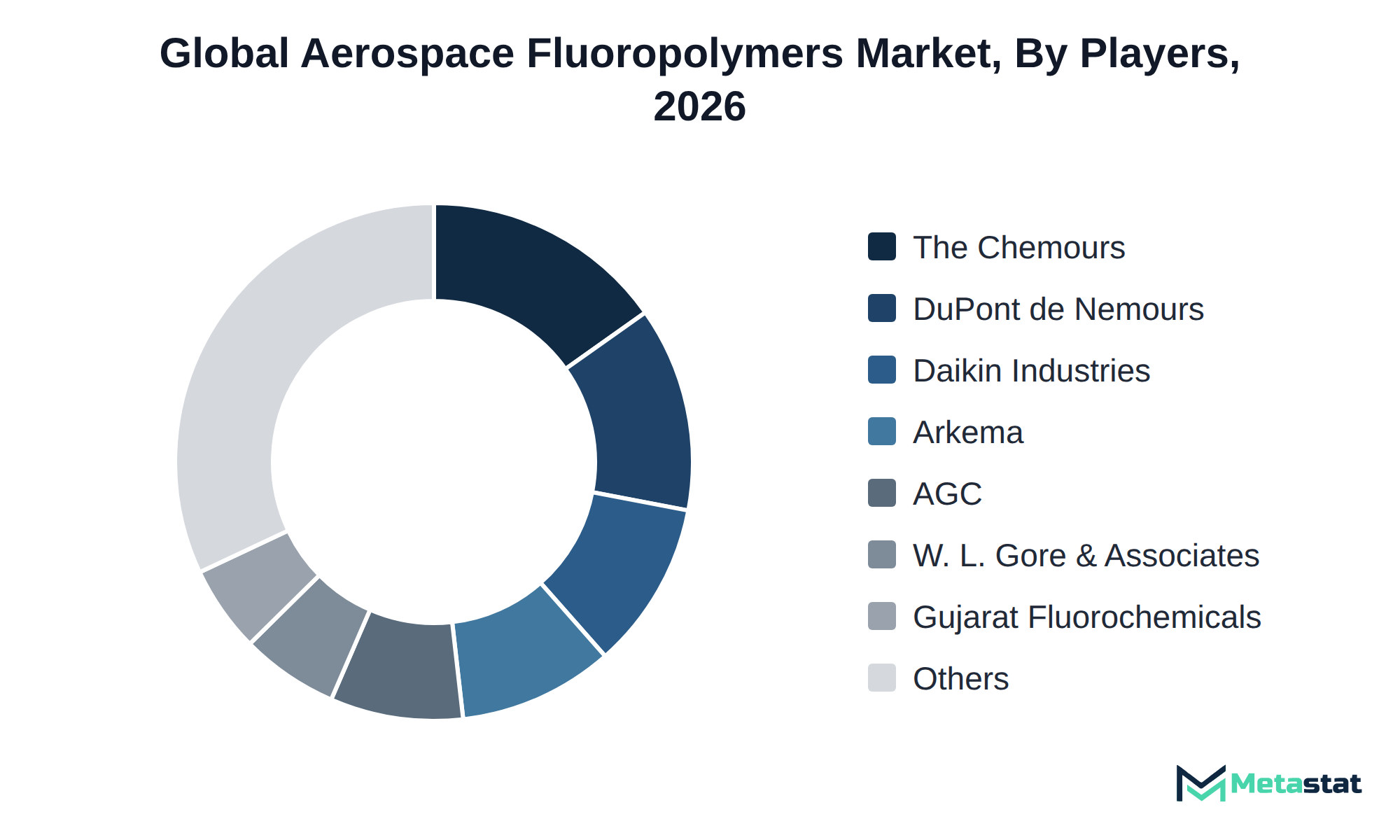
The Aerospace Fluoropolymers market features various companies employing distinct strategies. Major players excel in different segments, including fluorochemical manufacturing and specialty applications. The Chemours Company focuses on high-performance materials, driving advancements in polymer types and applications.
Competition centers on factors including price, certification, customization, and customer service. Buyers increasingly favor suppliers who provide comprehensive support and robust ecosystems. Companies like W. L. Gore & Associates, Inc. and Arkema S.A. emphasize innovative solutions tailored to specific aerospace needs, enhancing their market positions.
Successful players adapt to evolving buyer preferences by offering specialized products and services. For instance, AGC Inc. prioritizes the production of unique material supply forms, while Gujarat Fluorochemicals Limited invests in competitive pricing strategies to attract a diverse client base. The market evolves with an increased emphasis on sustainability and compliance with aerospace standards.
Achieving this target relies on several key developments in the Aerospace Fluoropolymers market. First, the increasing demand from the commercial fixed-wing aircraft segment is expected to drive sales, fueled by ongoing advancements in aircraft technology and a growing focus on fuel efficiency. The transition towards wire and cable insulation applications will further support market growth, particularly in regions including North America, which holds a significant market share. Expanding production capacities by established players in the market plays a critical role in meeting the rising demand for fluoropolymers. However, potential risks exist that could hinder growth. Price volatility of raw materials remains a concern, affecting profitability and production schedules. If these costs rise sharply, manufacturers face challenges in maintaining competitive pricing and market share. The balance between supply and demand will play a critical role in determining whether the market reaches the projected USD 1,252.4 million by 2033.
By Polymer Type: PTFE, FKM, ETFE, FEP, PVDF, PFA, Others (FFKM, PCTFE, PVF, ECTFE)
By Application: Wire and Cable Insulation, Seals and Gaskets, Hoses and Tubing, Films and Interior Laminates, Coatings, Others (Bearings, Bushings, Filter Membranes)
By Aerospace Platform: Commercial Fixed-Wing Aircraft, Military Fixed-Wing Aircraft, Business and General Aviation Aircraft, Rotary-Wing Aircraft, Spacecraft and Launch Vehicles, Others (Uncrewed Aircraft, Advanced Air Mobility Aircraft)
By Material Supply Form: Powders, Pellets and Granules, Dispersions, Gumstock and Precompounds, Others (Solutions, Specialty Pastes)
The report strategically identifies and profiles the key market players and analyses their core competencies in each sub-segment of the Aerospace Fluoropolymers market.
|
Report Attributes |
Details |
|
Study Period |
2021-2033 |
|
Base Year |
2025 |
|
Estimated Year |
2026 |
|
Forecast Period |
2026-2033 |
|
Historical Period |
2021-2025 |
|
Growth Rate |
CAGR 6.1% from 2026 to 2033 |
|
Revenue Unit |
USD million |
|
Segmentation |
By Polymer Type, Application, Aerospace Platform, Material Supply Form, and Region |
|
By Region |
North America (By Polymer Type, Application, Aerospace Platform, Material Supply Form, and Country)
|
|
Europe (By Polymer Type, Application, Aerospace Platform, Material Supply Form, and Country)
|
|
|
Asia Pacific (By Polymer Type, Application, Aerospace Platform, Material Supply Form, and Country)
|
|
|
South America (By Polymer Type, Application, Aerospace Platform, Material Supply Form, and Country)
|
|
|
Middle East and Africa (By Polymer Type, Application, Aerospace Platform, Material Supply Form, and Country)
|
Find answers to common questions about this report
The Aerospace Fluoropolymers market size was valued at USD 777 million in 2025.
The market is projected to grow at a CAGR of 6.1% during the forecast period from 2026 to 2033.
The North America Aerospace Fluoropolymers market size is estimated to reach USD 465.4 million by 2033.
The leading segment in the Aerospace Fluoropolymers market is PTFE, with a projected value of USD 605.4 million by 2033. This segment demonstrates significant growth potential, driven by its applications across various aerospace platforms.
Growing adoption of lightweight materials in aerospace applications drives increased spending on fluoropolymers. Innovations in fluoropolymer formulations significantly improve performance metrics, enhancing resistance to extreme temperatures and aggressive chemicals, which encourages manufacturers to invest in advanced materials.
North America holds the dominant share of the Aerospace Fluoropolymers market, with a projected value of USD 465.4 million in 2033, representing 39 percent of the total market. This regional leadership is based on its significant contribution to overall market revenue.
High prices for aerospace fluoropolymers create obstacles for buyers, particularly manufacturers working within budget constraints. Input cost fluctuations impact supplier profitability, straining margins and compelling suppliers to reassess their sourcing strategies.
The ongoing demand for advanced insulation materials in aerospace applications supports the adoption of fluoropolymers, particularly in wire and cable systems. Manufacturers prioritize lightweight, high-performance materials that enhance safety and efficiency, creating opportunities for specialized fluoropolymer formulations tailored to meet rigorous standards.
The Aerospace Fluoropolymers market is estimated to reach a valuation of USD 1,252.4 million by 2033.
Key players operating in the Aerospace Fluoropolymers market include The Chemours Company, Daikin Industries, Ltd., AGC Inc., Arkema S.A., DuPont de Nemours, Inc., W. L. Gore & Associates, Inc., and Gujarat Fluorochemicals Limited.
The analysts below cover Aerospace and Defense research at Metastat Insights.
LEAD ANALYST
Utkarsh Khirodkar is a Lead Market Research Analyst at MetaStat Insight, specializing in market intelligence, technology sector assessments, and competitive strategy.
Standard industry briefs frequently blur the operational distinctions between isobaric pressure exchangers and centrifugal turbines. In this study, MetaStat Insight categorized mega-scale desalination tenders across the GCC and Mediterranean basins by membrane replacement frequencies and salinity tolerances. Their primary research helped us evaluate local content requirements in Saudi Arabia and the UAE without relying on marketing literature. We found the segment-level equipment replacement estimates grounded and well-reasoned throughout.
The technical breakdown of ISO 20022 migration readiness across correspondent banking corridors was remarkably thorough. Rather than treating cross-border corporate payments as a single block, the report drew a useful distinction between multilateral netting platforms and domestic instant payment rails across ASEAN economies. MetaStat Insight highlighted regulatory constraints on foreign exchange liquidity management that many publications gloss over. The research material offered practical clarity for our platform development roadmap.
Our group needed clearer visibility into out-of-autoclave processing timelines for high-temperature thermoplastic composites. MetaStat Insight delivered an objective assessment that contrasted automated fiber placement scrap rates with traditional thermoset prepreg layup cycles. The supplier landscape mapped out primary resin suppliers and tape slitting capacity across France, Germany, and Japan with solid technical accuracy. Their analyst handled our questions on precursor supply risks during an unscheduled inquiry call, providing clear, unembellished context.
Explore related market intelligence reports worth reading alongside this one.
Starting from
$2950
Starting from
$2950